World Maritime University World Maritime University
The Maritime Commons: Digital Repository of the World Maritime
The Maritime Commons: Digital Repository of the World Maritime
University
University
World Maritime University Dissertations Dissertations
11-5-2017
A critical evaluation of how free trade zones and maritime
A critical evaluation of how free trade zones and maritime
activities impact on port development: a case study of the port of
activities impact on port development: a case study of the port of
Kingston
Kingston
Nicolas Kareem Spence
Follow this and additional works at: https://commons.wmu.se/all_dissertations Part of the International Trade Law Commons
Recommended Citation Recommended Citation
Spence, Nicolas Kareem, "A critical evaluation of how free trade zones and maritime activities impact on port development: a case study of the port of Kingston" (2017). World Maritime University Dissertations. 566.
https://commons.wmu.se/all_dissertations/566
WORLD MARITIME UNIVERSITY
Malmo, Sweden
A CRITICAL EVALUATION OF HOW FREE TRADE ZONES AND
MARITIME ACTIVITIES IMPACT ON PORT DEVELOPMENT A CASE
STUDY OF THE PORT OF KINGSTON
By
NICOLAS SPENCE
Jamaica
A dissertation submitted to the World Maritime University in partial
fulfilment of the requirements for the award of the degree of
MASTER OF SCIENCE
In
MARITIME AFFAIRS
(SHIPPING MANAGEMENT AND LOGISTICS)
2017
ii
DISSERTATION DECLARATION FORM
I certify that all the material in this dissertation that is not my own work has been identified, and that no material is included for which a degree has previously been conferred on me. The contents of this dissertation reflect my own personal views, and are not necessarily endorsed by the University.
(Signature):
(Date): 09/18/ 2017
Supervised by: Fabio Ballini
iii
Acknowledgment
The successful completion of this research is the culmination of the efforts from various persons with whom I have had the pleasure to work and study with. Firstly, I would like to express my sincere gratitude to my research supervisor Professor Fabio Ballini for his motivation, critical
evaluation and kind support. I was made a better student and researcher after his guidance, furthermore I would like to show my appreciation to the library staff for facilitating my numerous queries and the dissertation preparations training which they provided significantly improved the quality of the presentation of the research. Importantly I would like to thank my fellow class mates for the peer review which they had provided. In addition, I would also like to thank the corporate planning
iv
ABSTRACT
Title of Dissertation: A CRITICAL EVALUATION OF HOW FREE TRADE ZONES AND MARITIME ACTIVITIES IMPACT ON
PORT DEVELOPMENT WITH A CASE STUDY OF THE PORT OF KINGSTON.
Degree: MSc
This dissertation is a study to reveal the degree of impact which free trade zone operations and maritime activities impact on the development of the Port of Kingston. Furthermore, provides a clarification as to the growth of the global economy, causes a significant demand for port capacity. Therefore, additional investment in port infrastructure is required for ports in order for them to maintain their viability and success. Importantly based on the results of the logistics performance index and the doing business report has proven Jamaica competitive in maritime industry in the Latin American and Caribbean region due to its geostrategic location and the efficient services provided at the port. Moreover, the policies implemented by the government specifically the special economic zone act 2016 created an enabling business environment which benefits investors, shipping lines, maritime stakeholders and free trade zone operators.
Additionally, with the use of various statistical tools this research was able to prove that a country is able to develop its economy through the implementation of free trade zones around its ports of entry. Hence the zones attract foreign direct investment and increase employment numbers. Moreover, the combination of an efficient transshipment port fully integrated with the free trade zones is the ideal combination for economic development. Consequently, the Eviews regression model revealed that vessel arrival numbers, free zone values and cargo volumes definitely contribute to port development. Summarily the research presents three scenarios in which the administration of the port of kingston should evaluate in order to main continued growth of the port.
v
Table of Contents
DISSERTATION DECLARATION FORM ... ii
Acknowledgment ... iii
ABSTRACT ... iv
Table of Contents ... v
Table of figures ... Error! Bookmark not defined. List of Tables ... vi
List of Abbreviations ... vii
Chapter 1: Introduction ... 1
1.1 Background to the study ... 1
1.2 Motivation ... 3
1.3 Problem Statement... 4
1.4 Objectives ... 4
1.5 Research Questions ... 5
1.6 Hypotheses ... 5
1.7 Expected Results ... 5
1.8 Key Assumptions... 5
1.9 Limitations ... 6
1.10 Outline of Dissertation ... 6
Chapter 2: Literature Review ... 8
2.1 Drivers of Port Development ... 12
2.2 Methodology... 17
Chapter 3: Free Trade Zone Development ... 20
3.1 The History of Free Trade Zones. ... 20
3.2 International applications of free trade zones. ... 21
3.3 Integration of Free Trade Zones in the Caribbean ... 22
3.4 National application of Free Trade Zones to Jamaica ... 23
Chapter 4: The Connectivity of the Port of Kingston ... 24
vi
4.2 Columbia ... 29
4.3 Cuba ... 30
4.4 Dominican Republic ... 31
4.5 Panama ... 32
4.6 Trinidad & Tobago ... 33
4.7 Logistics Connectivity ... 34
Chapter 5: Free Trade Zone Analysis ... 39
5.1 Hypotheses ... 43
5.2 Regression Analysis ... 44
5.3 Correlation Analysis ... 46
5.4 Scatter Plot analysis... 46
Chapter 6: Conclusion ... 50
6.1 Recommendations ... 52
6.2 List of References ... 54
List of Tables Table 1: Regional Port Characteristics……….28
Table 2: Comparative Analysis of Major Caribbean Ports ………....……….33
Table 3: Regression Analysis ………. 45
Table 4: Pearson Correlation Coefficient Table………...46
vii
List of Abbreviations
CARICOM Caribbean Community
DPW Dubai Port World
ECLAC Economic Commission for Latin America and the Caribbean
EU European Union
FDI Foreign Direct Investment
FTZ Free Trade Zone
ICT Information Communication Technology
IDB International Development Bank
IIC Inter-American Investment Bank
KCT Kingston Container Terminal
LPI Logistics Performance Index
MICAF Ministry of Industry Commerce Agriculture and Fisheries
MTO Mobile Terminal Operator
NAFTA North Atlantic Free Trade Agreement
PAJ Port Authority of Jamaica
SEZ Special Economic Zone
TEU Twenty-foot EQUIVALENT
UNCTAD United Nations Conference on Trade and Development
UNDP United Nations Development Program
US United States
VAT Value Added Tax
Chapter 1: Introduction
A critical evaluation of how Free Trade Zones and Maritime activities impact on port development a case study of the Port of Kingston.
1.1 Background to the study
The American Investment Corporation (IIC), acting on behalf of the Inter-American Development Bank (IDB) Group, had signed a US$265 million financing package with Kingston Freeport Terminal Limited in June 2014. The project was to optimize and expand the terminal capacity of the Port of Kingston, so as to maintain the port’s ability to handle larger ships which will pass through the expanded Panama Canal. This new development had resulted in ports along the US East Coast and within the Caribbean region commencing expansion and modernization plans in anticipation of increased amounts of large ships, which would traverse the Panama Canal. The upgraded terminal will manage increased vessel volumes, expanding capacity from 2.8 to 3.2 million Twenty-Foot Equivalent Units (TEUs) per year within the next six years. The project will contribute to strengthen Jamaica's relevance in global trade and foster private sector activity and foreign direct investment (FDI) (IDB Annual Report. 2016).
2
Maritime transport significantly contributes to the well-being of nations through the impact of economic and social factors which sustain the world trade system. Furthermore, numerous ports now aim to become regional hub ports the whereby, achieving a higher market share which encourages competition (Lee, Cullinane. 2016). Logistics play a vital role in the development any country's economy, therefore companies spend considerable amounts of money to procure supplies and conduct related distribution services on a routine basis. This can be considered as logistics costs which are a recurring expense for business. This business cost occurs throughout the lifespan of a business, which in turn contributes significantly value to the economy. Logistics also enables the movement and flow of goods, which further leads to the facilitation of the sale of goods and services which form the basis for economic transactions (Stock, Lambert, Grant & Ellram, 2006).
Moreover, the process of economic growth for an undeveloped country is closely linked to the improvement of internal accessibility through port infrastructure. Policymakers are encouraged to provide employment opportunities in the maritime sector being that it ensures fast, reliable and cost-effective shipping services to the countries traders (Gould, Taff, et al, 1963). Logistics performance remains a common criterion for businesses which aim to fully globalize their operations. Thus firms utilize global strategies whereby their products which are destined for international markets are produced where cost-effective components and labors can be found. This business strategy is further supported by political arrangements with the aim to support trade (Ballou,1999).
3
Nevertheless, world trade growth occurs innately as a result of growing industrial activity and other factors which normally form part of a nation’s economic development. Therefore, economic growth can be stimulated and controlled by national and international policy structure. (Alicke, 2007). International companies conduct offshore sourcing of materials through effective logistics management while taking into consideration geographic locations. The production of international companies can be done anywhere globally and logistics enable the viability of these activities, with the result being the growth of world trade.
Importantly the success of a global business is supported by ocean or air container shipping. This provides effective country-to-country connectivity, which fits into the interests of global business who seek to gain competitive advantage. (Coyle, Bardi, Langley, 2003). The growth of global supply chains is closely linked to global trade, this is the result of the expansion of consumption and production in new locations globally. Logistics hubs facilitate the manufacturing and distribution of goods. Furthermore, global logistics hubs process goods by facilitating exchange between various modes of transport which include; sea, air, rail, road, and waterway. Logistics hubs are strategically located around the world. They provide businesses with a platform for optimized distribution process for goods from suppliers to end users. Logistics hubs allow distribution flexibility to businesses by enabling them to readily adjust to new paradigm shifts in the existing market in a timely manner, as well as providing multiple channels for distribution to newly emerging markets through a reduced management and cost-saving delivery process (Chin, Yo, 2016).
1.2 Motivation
4
Therefore the economic interests of the shipping lines would be secured meanwhile the port would gain from the increased vessel traffic. The multiplier effect of the increased vessel traffic will be seen where the port authority will have increased revenues through the various tariffs which include; port and docking charges. This type of maritime arrangement can further enhance the ambitions of the Port of Kingston to transition into a global logistics hub and outperform competing ports. Additionally, this research will also reveal the level of influence which free trade zones and maritime activities influence port development.
1.3 Problem Statement
Jamaica’s shipping industry has experienced prolonged stagnation in growth. Therefore, shipping operators, manufactures along with commercial and private importers and exports have been exposed to delays in receiving their cargo. Frequently these maritime stakeholders have been subjected to unfavorable storage and port charges high administrative fees and lack of cargo security as well as procedural hurdles for the clearing of cargo. These issues are combined with outdated are insufficient port infrastructure. Furthermore, these challenges have resulted in major operating problems for the carriers which call to the Port of Kingston, causing them to divert their operations to other shipping friendly ports. These problems have also caused manufacturers to move their operations from Jamaica to locations which are conducive to commercial and private cargo movements. Therefore, in order to alleviate the loss of manufacturers and facilitate large ocean carriers using the Port of Kingston significant development is required. Moreover, the development should be led by the integration of Free Trade Zones and the innovation related maritime activities.
1.4 Objectives
The intention of the research is to discuss and outline the factors which influence port development and outline the extent to which the implantation of Free Trade Zone operations and maritime activities complement port development thus the objectives are:
● Identify how the Port of Kingston fit into the global supply chain.
● Evaluate regional competition to Jamaica’s port development.
● Outline the government of Jamaica has for FTZ expansion.
5
1.5 Research Questions
The research is tasked to provide a critical response to the following questions:
● What are the push and pull factors which drive port expansion?
● How the cargo volumes moving through the FTZ stimulates port expansion?
● Who are Jamaica’s main competitors in FTZ development?
● What are the challenges associated with port development in Jamaica?
● How can Jamaica improve its participation in the global supply chain? 1.6 Hypotheses
If Jamaica can improve and develop existing Free Trade Zone and maritime activities this will result in significant increase in port development. This development should be capitalized to achieve the counties main port becoming a global logistics hub.
1.7 Expected Results
The results of the findings of this research are expected to reveal the factors which are needed to enable Free Trade Zone to complement port development. The research is also expected to outline a practical approach to increase cargo volumes into Jamaica’s ports. Additionally, results from the research are expected to clearly articulate the economic relationship between trade and port development. The trade dynamics for the Caribbean and America’s regions should be identified.
Expected results will further reveal the main logistics principles which need to be implemented by Jamaica to successfully increase its cargo volumes and associated logistics services. The finding will also show how Jamaica can improve its vessel calls by increased operations through free trade zone operation. Finally, the research will determine if port expansion is either positively or negatively influenced by free trade zone operations and maritime activities.
1.8 Key Assumptions
6
Furthermore, this research is also reliant on the major investments in Free Trade Zone’s currently being done in the Port of Kingston by private sector groups within the maritime sector of Jamaica. This research is being conducted on the premise that major shipping lines have decided to make Jamaica a logistics hub due to the attraction of value-added services cluster development and increased cargo output to be derived from the Free Trade Zones in the country. 1.9 Limitations
This research is expected to encounter limitations in its execution, the possible constraints are likely to occur in the following areas.
Restricted access to information from government agencies.
Restricted access to information from private stakeholders who operate in the local maritime sector.
Insufficient time to capture all related information of trade patterns and cargo flow dynamics.
1.10 Outline of Dissertation
This dissertation has been structured in the following chapters to guide the reader from concept to implementation.
Chapter 1: This chapter outlines the background information of the Port of Kingston and the drive by the government of Jamaica to look at the development of a logistics hub, the chapter also contains the motivation of the research, the problem statement, the objectives, the research questions, hypothesis, expected results, key assumptions and limitations.
7
Chapter 4: The connectivity of the Port of Kingston is analyzed and the logistical competitiveness of Jamaica is reviewed. Furthermore, a comparison of competing ports in the Caribbean is conducted including an assessment of their free trade operations.
Chapter 5: An in-depth analysis is conducted on the case study of Port of Kingston to reveal the analytical applications of statistical methods used to determine the relationship of specific variables within the Port of Kingston, while seeking to explain the relationship which they have to the development of the Port of Kingston.
8
Chapter 2: Literature Review
Free Trade Zones are areas where goods which are imported or landed, handled, processed assembled, manufactured or reconfigured and re-exported with companies deriving various benefits. These benefits include tax exemptions and simplified administrative procedures and duty-free imports of raw materials parts and equipment. Furthermore, FTZ's are located around major seaports international airports and national borders and locations which provide a geographic advantage for trade. The relaxed regulations, limited taxes and reduced oversight in FTZ's provide considerable opportunities for business to play a critical role in global trade by driving economic growth and facilitating increasing international trade and investments. FTZ's are aimed at stimulating export and enable production and commerce to attract foreign direct investment and foster technological and economic development (Kozakiewicz, 2015). Furthermore, the Kish Island in the Persian Gulf of the coast of Iran has developed a FTZ. The administrators of the FTZ have been able to create a balance between the operation of economic activities and utilization of the population and the preservation of the environment. The sustainability in management ensures proper spatial planning and a harmonization of employment while preserving the environment (Pak, Majd,2011).
9
Moreover, the creation of FTZ’s in local areas, equally creates convincing growth in the port sector while providing employment benefits. The creation of free trade zones, are often done in locations which are in close proximity to ports or airport. These areas are used for trading and export activities, importantly FTZ’s perform an integral function in the development of international trade by facilitating transit and delivery of goods and enabling of economic activities.
Free Trade zones are differentiated based on the measure of control exercised by the customs authorities. FTZ’s accommodate the storage of non-community goods, which have specific points of access for entry and exit condition under customs supervision. Free Trade Zones do not isolate good and these goods can be stored for without time limitations. Additionally, goods which are stored in FTZ’s can be further processed through industrial and commercial activities. This can be done for their conservation, presentation resale or re-export, based on the authorization of the customs authorities. Furthermore, the payment of import duties on the goods stored in FTZ’s are suspended until the goods are outside the zone. In the case of the, EU (European Union), goods located in the free trade zone destined to other countries is value- added tax exempted (VAT), although they are physically present within the customs territory (Quaglia, 2015).
Importantly FTZ’s are the result of policy instruments of governments to promote export oriented foreign direct investment (FDI). Hence large manufacturing companies are encouraged to establish logistics and distribution centers around ports to improve their competitiveness. This is done through value-added offerings which are available by locating within these zones. Ports and maritime activities function as a stimulus for the initial stages of urban growth. Additionally, port development in China has shown a strong correlation between urban economic growth (OECD, 2011). Free Trade Zones over the 20th century have undergone changes caused by growth in world trade and transport efficiency.
10
The innovation of free trade zones has been to facilitate cross-border trade by removing obstacles imposed by national customs regulations. FTZ’s encourage the accelerated turnaround of ships by reducing administrative procedures of customs agencies. FTZs have proven to be beneficial to both the importers and exporters, through the reduction of labor and tax related costs. Furthermore, the employment opportunities created by free trade zones help to reduce unemployment problem in the less developed economies (Economy Watch, 2010).
The economic growth of a country is undoubtedly likely to its ability to generate international trade, which in turn drives the demand for sea transport. This is exemplified by the relationship between seaborne trade and economic growth (Lee, Lee,2016). Specifically, in the case of Alabama USA, economic development has led to the growth of ports, intermodal centers, highways, railroads, energy production and delivery systems. The benefits derived from FTZ’s have an economic multiplier effect. Local business become suppliers to operators within the zones positively contributing to the zones profitability. Furthermore, employment is increased and maintained. The local suppliers and vendors gain or maintain their geographical advantage.
The governments gain from the operations of the zone through the taxation of the economic activity that directly or indirectly results from manufacturing and distribution operations conducted within the zones. Generally, these economic activities are conducted by international companies to increase their competitiveness. This is often done through the building and expansion of the infrastructure associated with trade, mainly port facilities (Jones, 2006).
11
Moreover numerous ports within the Latin American and Caribbean region have commenced expansion projects of their ports based on forecasted port capacity developments intensifying from years 2025 to 2030, as a result of these estimated capacity developments up to 2030. Ports therefore have to adjust their existing capacity of existing infrastructure such as terminals and equipment to alleviate problems of congestion which may emerge (ITF, 2017). Importantly within the Caribbean region port infrastructure development is a facilitator of maritime transport growth and therefore has an integral link with transport supply chain. The region has two global transshipment centers, they are Port of Kingston Jamaica and Freeport Bahamas. Kingston has efficient and competitive quayside operations, good TEU movements, storage and handling and related services, with customs comparable to that of global standards. Moreover, Kingston is integrated into the global liner service which affirms the emergence of Port of Kingston becoming a transshipment hub. Therefore, the Port of Kingston has grown to a level is to capitalize on the opportunities of being a global logistics hub (Sanchez, Wilmsmeier, 2009).
12
The present business environment requires, companies to search for opportunities to improve efficiency and increase bottom-line savings. Therefore, for many large manufacturing and production companies to achieve global reach they tapping into the efficiencies of global supply chains. The primary challenge for many international companies have been customs and logistics expenses relating to the import and export of finished goods and raw materials. These costs have been considered to be an unavoidable expense of doing business. However efficient supply chain operations streamline the sourcing of materials in one location which and then manufactured in another location, therefore the use of FTZ’s have become cost-saving strategies to get goods to market. In the case of Taiwan, their free trade area is considered to an area outside of the customs territory, the government in order to enhance trade, had eliminated numerous barriers and introduced clearance schemes and multiple incentives to encourage businesses within the FTZ. Benefits from these incentives include value-added processing, the hiring of foreigners, tax exemption and financial services (Newton, 2016).
Moreover for companies to achieve both supply chain efficiency and cost savings, FTZ’s, can be utilized for distribution and manufacturing. Many countries offer FTZs to companies operating within their borders to increase trade, tariffs, taxes, and other barriers to trade. In addition to offering supply chain benefits, companies can benefit by having an integrated supply chain structure. Multinational companies conducting operations globally can use FTZs (KPMG, 2009).
2.1 Drivers of Port Development
Developed ports have adapted to globalization, whereby these ports are retrofitted to accommodate the ever increasing growth in cargo traffic volumes. Moreover, with the privatization of the managing ports, this has resulted in international groups taking control in the handling of the complete operations and management of the port. Simultaneously shipping lines contend with ports to adjusting to their evolving operation strategies. Thus in order to remain efficient and profitable, these shipping lines try to extended their networks by integrating larger ships into their fleets.
13
Furthermore, the maritime industry has grown progressively over the years meeting the expectations of the demand of port capacity which is projected to increase proportionally in the future. These forecasts are based on current existing port infrastructures not adequately meeting the existing demand for port throughput. Therefore, to avoid excessive congestion at the port additional investment in port infrastructure is both practical and justifiable in the near future (Paralo, 2016).
Additionally international companies have applied the business practices of offshoring aspects of their productions either through utilizing subsidiaries or external outsourcing or alliance partners. The operating strategy of many of these firms incorporate their supply chain which has become largely, fragmented and geographically dispersed. This trend had presented lucrative economic opportunities for developing countries because they are targeted by international companies for the outsourcing of their processing and manufacturing activities which reduce cost and access to resources. The return benefit gained for the developing country is being better integration into the global value-chains by becoming exporters of commodities or of machinery (Leung, 2015).
Moreover, port infrastructure is critical in the integrating and coordinating globalized production, whereby ports have to provide the service of enabling goods to be transported from other countries to be brought to market. The gains which are achieved from adequate physical infrastructure are enhanced supply chain networks, improved integration and coordination of global production process. Moreover, adequate development of transport infrastructure is integral justifying the location of economic activities. International companies tend to be positioned around logistics hubs to ensure fast and reliable delivery of their products to the end user. Additionally, a country’s stage of development is proportionally tied to the capacity and the of its port (Bong-Ming, 2012).
14
International trade is mainly reliant on the efficiency and effectiveness of the port operation. Therefore, ports continuously have to innovate their operations to improve port functions, by coordinating transport and communications along with the development of innovative business models that enhance both shipping and port operations. Ports mainly serve as the interface between maritime shipping activities and economic systems (Cullinane, Wilmsmeier, 2008).
The Latin American and Caribbean region can be considered to be an emerging region for global container trade although it accounts for a relatively small portion of the world container trade reaching numbers of 7.2% in 2013. However, in recent years’ growth of container traffic in the region has resulted in significant challenges to the ports in terms of infrastructure development, trade policy framework. Over time ports have developed from being mainly a bridge between ocean carriers and logistics networks. Innovation has led to changes in the role of main players in the maritime sector having to adapt by becoming facilitators of development responding to demands of trade led by shipping lines. This is more apparent in the case of the port authorities. Ports now have to be able to readily respond to the changes in market developments while having to contend with increasing size of vessels (UNSCAP, 2015).
15
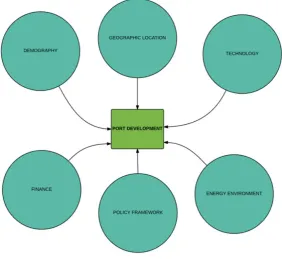
Hence energy and environmental factors are also key factors which influence port development whereby fuel cost which fundamentally impacts on transport cost lead to higher incentives for cost savings and consolidation. Additionally, climate change policies result in consorted efforts for more environmentally friendly transport models, whereby the impact of these results in higher incentives for cost savings and consolidations which position the maritime sector to become the preferred means of transportation as opposed to other modes of transport.
Technology innovation is a very integral component which drives port development. Whereby it is the means by which applications are implemented to improve the transportation operation, this results in a considerable reduction of administrative procedures through information and communication technology (ICT). This ultimately improves the processing of documentation and data flexibility. The economy is also a major driver for port expansion through the impact of economic growth globalization of production and consumption. This result in the subsequent impact on leading to a profound increase transportation demand, causing a measurable reduction in shipping costs creating the ideal environment for economies of scale. These conditions shape the increasing demand for transportation demand over long distances.
16
Figure 1: Drivers of Ports Development
Source: Rodrigue, 2010
Logistics hubs are conceptualized in a 5th generation port framework, they conduct operations at the back of the port which are done in free trade zones and logistics parks. Furthermore, manufacturing is seen as a key component to maritime logistics chains, whereby through the connection of the ports high value-adding flexibility can be offered to the manufacturing process. Therefore, in advanced free trade zones and logistics parks these logistics functions are further supported by the inbound cargo to the hinterland which maximises the synergies between the port and free trade zone (Khalid, 2014).
17
2.2 Methodology
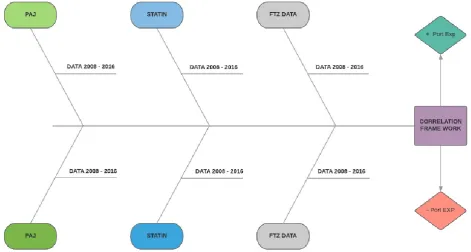
In conducting this study, a quantitative research format will be used to perform a comprehensive evaluation to determine the nature of the influence which the Kingston Free Trade Zone, and maritime activities have on the development of the Port of Kingston. To effectively achieve the objectives of this research a correlation framework will be adopted, whereby a regression analysis along with other statistical tools will be used to guide the findings of the research. Furthermore, the dependent variable will be the port’s capacity represented in TEU, while the independent variables will be cargo volumes, vessel arrival numbers and FTZ value of the trade. The primary data source will be derived from the established database of the Port Authority of Jamaica (PAJ).
The data provided will include vessel arrivals to the Port of Kingston from the last nine years as well as the types and volumes of cargo which had been handled. Furthermore, data will also be used from the Statistical Institute of Jamaica (STATIN) which will reveal Jamaica’s GDP and economic performance for the last nine years with the focus placed on trade numbers particularly import and export.
18
Importantly this is done to guide the port development process with a focus on the hub and spoke dynamics. The second stage of this research will utilize relevant secondary data by comparative analysis of Free Trade Zones in other countries to find trends and pattern which can explain the relationship between the variables of port expansion and free trade zones, which will support the findings for achieving the stated aims and objectives of the research.
The secondary data sources will comprise of graphs, pictures, and related shipping literature which will be intensively utilized to effectively evaluate Jamaica's current response the developments of international shipping. The secondary data sources will indicate the trade flow dynamics of Jamaica in response to its regional rival competitors. This research will execute a context analysis of related publication, initiatives, and proclamations by the government of Jamaica and related state agencies of Jamaica. This will be done to draw focus to the modernization and development plans for Jamaica’s Free Trade Zone development. Detailed, articles and publications from the World Bank, the International Monetary Fund, and the United Nations Convention on trade and development (UNCTAD) will be integrally used to highlight the direction of growth and innovation for the shipping industry of Jamaica. Finally, various periodicals and reports from respected international shipping and business organizations will be used to provide supplemental perspective to the data analysis process.
19
Figure 1.2: Conceptual Framework
20
Chapter 3: Free Trade Zone Development
3.1 The History of Free Trade Zones.
The emergence of free trade zones, originates to the terms of free harbours, which can be traced to being established more than 2,000 years ago. Modern developments results in a change, from free harbours to free trade zones. This is directly linked to exponential growth in world trade and improvements in transport efficiency. FTZ’s act as instruments of
commercial policy and development, they have evolved and adapted to the economic realities and conditions of participating countries from around the world. Furthermore, FTZ are constantly adjusting to the changing demands of the public and private sector regularly reinventing itself.
FTZ’s over the last fifty years have been used intensely by developing countries as a means to encourage export oriented FDI. There was an emergency of FTZ’s in 1997 whereby and estimated 850 zones were being operated in both developed and developing countries. Additionally, the number of FTZs had continued to increase. There has been a proven study which reveals that there is a strong correlation between the establishment of FTZs and strong export performance (World Bank, 2015).Moreover FTZs differentiate based on the nature of their operations, this is evidenced by the wide variety of activities performed in the zones. The more commonly used terms are free trade zone, export processing zone, special economic zone, and industrial free zone all of which have similarities in their function. The
characteristics of these zones are fenced-in industrial estates specializing in manufacturing for export and offering the occupants free-trade conditions and a liberal regulatory environment (World Bank, 2013).
21
The usual benefits of FTZ’s include improved business infrastructure. Within a defined area operators are provided with enhanced infrastructure and services in comparison to the rest of the country. In addition to land, office space, utilities, logistics services, business services and other facilities. The operators also have flexible business regulations.
Streamlined customs services through one-stop shopping for permits and investment applications. Labour and other business related legislation is generally more flexible compared to the laws and regulations applied to business located elsewhere in the host country. The FTZ’s are chosen as a location for business activities moving offshore, away from the markets where the finished products are sold in search of a low or lower cost manufacturing basis.
Companies located within the zones produce mainly or exclusively for foreign markets. The main factors of the FTZ’s are the incentive packages offered to foreign
investors. These include unlimited duty drawbacks or exemptions from import duties on raw materials, intermediate inputs and capital goods used in the production of exported products exemptions from the payment of sales tax on exported products as well as on all goods and services domestically purchased and used in their production (Guoqing, 2016).
3.2 International applications of free trade zones.
The relationship between the free trade zone operations and economic growth are supported but the economic principle that all countries, have assets which can be leveraged to produce goods and services for their domestic markets or to compete overseas in a cost competitive manner. Furthermore, where trade policies which enable the flow of goods and services, this increases the competition among countries. Free Trade Zones are mainly used by multinational corporations to establish production plants to produce goods which include clothing, shoes, and electronics.
22
These special economic zones (SEZs) have been established in many countries as testing grounds for the implementation of liberal market economy principles. SEZs are viewed as instruments to enhance the acceptability and the credibility of the transformation policies and to attract domestic and foreign investment (World Bank, 2011).
3.3 Integration of Free Trade Zones in the Caribbean
23
3.4 National application of Free Trade Zones to Jamaica
Jamaica has provided many incentives to attract foreign direct investment in the area of special economic zones and free trade zones. Furthermore countries such as Mexico and Southeast Asia countries use FTZ’s to generate economic development. FTZ’s are industrial areas created with the intention to assist the country in diversifying its economy and move from dependency on agricultural exports towards greater industrialization. The proposed benefits from the SEZ strategy are, earning foreign exchange, boosting the export sector, expanding job opportunities, raising the standards of local industries, creating backward linkages with the local economy, and promoting the country's industrialization. The activities which were promoted in the FTZ included offshore data processing and office administration including back-office operations. Additionally, they included global production of goods which are produced for the international market. Jamaica, like many developing countries, have tried to replicate the success of Mexico and Southeast Asia that have used SEZ’s as a development strategy (Leith, Dunn, 1999).
Caribbean countries expanded FTZ operations in the 1970s and 1980s, centered on the production of garments for export to the USA. A small amount FTZ produced goods were exported to the EU, and most garment exports from the region operate under US tariffs. In the 1990s this type of investment expanded to include data-entry and data-processing industries specifically in the case of Jamaica. The government drafted legislation such as the special economic zone act of 2014 which enables companies producing for export without trade barriers.
Furthermore, the governments of Jamaica have established national body to promote and regulate FTZ’s. Through these zones Jamaica offers investors a special package of incentives that consists of financial services such as tax holidays, unrestricted reparation of profits low cost of development, duty-free imports and exports, special low-cost
infrastructure, efficient communication facilities and access to a developed port. The package is a production subsidy that allows foreign investors to operate more cost-effectively than they would in their own country. These incentives are regulated by the Jamaica Free Zone
24
Chapter 4: The Connectivity of the Port of Kingston
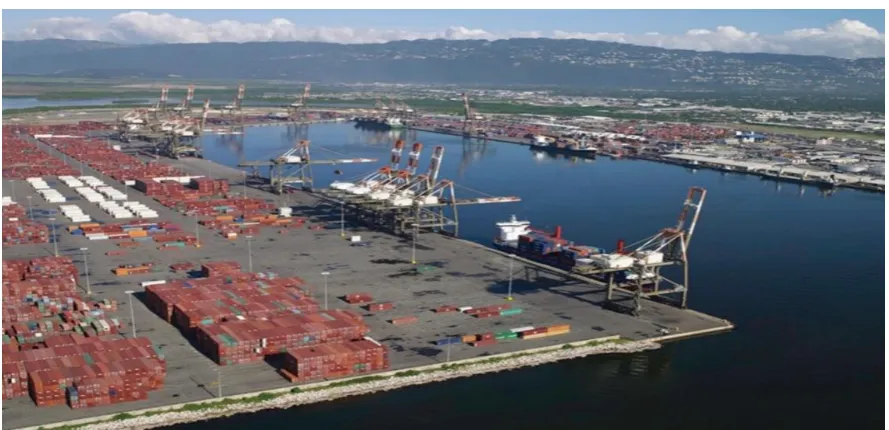
The Port of Kingston is situated in the Kingston Harbour, it is currently ranked as the world's seventh natural harbor and comprises of a nearly landlocked area of water ranging over ten miles in length and two miles in width, it is illustrated in Figure 1.3. The primary terminal in the Port of Kingston is the Kingston Container Terminal (KCT), which is owned by the Port Authority of Jamaica. The Port of Kingston has a geostrategic location, within the major maritime trading routes of the Caribbean region. The location is further strengthened by its close proximity to the Panama Canal which provides Jamaica with the opportunity to fit directly into the global value chain.
Conversely, The KCT is one of the Caribbean region's premier transshipment hub, consisting of three terminals with a berth face draft of 13 meters, and a capacity of 2.8 million TEU's. The terminal is expected to undergo expansion to increase its present capacity to meet an improved standard goal of 3.2 million TEU. The major driving force behind this expansion is the port’s current operator which is the container shipping line, CMACGM. The shipping line has entered into a thirty-year port concession arrangement with the Government of Jamaica and has invested over US$600 million in THE upgrade and expansion program (Port Authority Annual Report, 2015).
Figure 1.3: Aerial Picture of the Port of Kingston
25
North Terminal
•535 meters of berth
•47 hectares’ container yard space •6 Post Panamax Cranes
West Terminal
•1300 meters of berth
•5 Post Panamax gantry cranes •82 hectares container space
South Terminal
•475 meters of berth
•65 hectares of container yard space •4 Super post Panamax Cranes
Figure 1.4: Expansion of Kingston Container Terminal
Source: Port Authority of Jamaica 2016.
26
Developing economies share of world throughput increased by 0.2% to an approximate 71.9%. This has continued the trend of a global rise in developing countries share of world container throughput. The two main drivers of this process have been the increased participation in global value chains and the continued increase of containers for transporting dry bulk cargo. Furthermore, the performance of the ports and terminals have significantly affected the country's trade competitiveness.
The primary determinant of this performance is dependent on the type of cargo handling equipment and landside access channel the port has for operations. Moreover, increases in terminal and port efficiency contribute to meaningful reductions in transport cost (Review Maritime Transport, 2015). The liner connectivity of a country reflects its access to global trade. Its measurement is significantly influenced by its link to other countries. Furthermore, Jamaica’s liner connectivity also plays a vital role in vessel traffic at its ports.
27
Figure 1.5 Caribbean Ports Liner Shipping Connectivity
Source: UNCTADSTAT,2016.
Figure 1.5 illustrates the growth of liner connectivity of the main ports in the Caribbean region. The results show that Jamaica and the Dominican Republic have performed similarly from the year 2012 to 2016. This makes the Dominican Republic Jamaica’s closest competitor for liner services. However, Trinidad and Tobago, Cuba and the Bahamas had low liner connectivity over the observed period. This is attributed to the inadequate capacity of their ports to attract larger vessels as well the insufficient policies to increase vessel arrivals. Moreover, Panama and Colombia both showed higher levels of liner connectivity. This can be explained based on their proximity to the Panama Canal combined with modern and efficient ports. These factors attract more shipping lines these country therefore increasing their liner connectivity.
28
Additionally, the quay will be lengthened to 2.4 km and its berths deepened to 15.5 m, to provide adequate maneuvering room for vessels up to 14,000 TEU, which is anticipated to call at the terminal. Further infrastructural development will take place in the form of the addition of 14 new gantry cranes and 60 port riders (Lloyds list. Maritime intelligence, 2017). Free zone operations in Jamaica date as far back as 1976 with the establishment of the Kingston Free Zone, the free zone regime has transitioned into a SEZ regime evidenced by the SEZ Act 2016, in order to remain compliant with WTO requirements. This regime is designed to encourage foreign direct investment and promote export growth and create new employment. The value proposition that the free zones offer to operators include easy access to air and seaports, duty-free benefits, minimal customs procedures, large skilled workforce and telecommunication, logistics and transportation services (JSEZA, 2016).
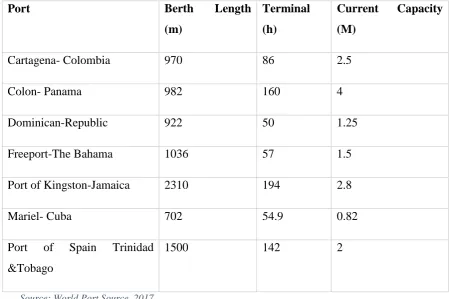
Table 1- Regional Port Characteristics
Source: World Port Source, 2017
Table 1 displays a detailed outlined of the terminal areas of the main shipping ports in the Caribbean region. It can be observed that the ports which has TEU capacity of over 2 million have large terminal space, this includes the ports of; Colon, Cartagena, and Port of Kingston. However, ports which have a limited capacity of below 2 million TEU’s have limited terminal space. It stands to reason that the terminal space of a port influences its capacity.
Port Berth Length (m)
Terminal (h)
Current Capacity (M)
Cartagena- Colombia 970 86 2.5
Colon- Panama 982 160 4
Dominican-Republic 922 50 1.25
Freeport-The Bahama 1036 57 1.5
Port of Kingston-Jamaica 2310 194 2.8
Mariel- Cuba 702 54.9 0.82
Port of Spain Trinidad &Tobago
29
4.1 The Bahamas
The Freeport Container Port operates a sophisticated computerized facility with modern security features. It also offers comprehensive support services with advanced technology for the container vessels which call to the port. Furthermore the port has developed into an efficient container terminal that forms part of the Hutchison Ports chain. In addition, its location makes it well suited as a transshipment hub to service the US East Coast, with no deviation from the major east-west trade lanes. Moreover, the port has achieved steady growth in recent years, which has been attributed to its main clients which include Maersk line and Mediterranean shipping, whom both form the 2 M alliance. This has resulted in a constant flow of TEU volumes to the port. Moreover, MSC has also now gained a large shareholding interest in the Freeport Container Port (FCP).
In anticipation of increased cargo volumes which are to be attributed to the expanded Panama Canal, rapid port infrastructural developments have been undertaken. These include the inclusion of three electric straddle carriers to improve yard performance in 2015. While there are no company taxes, the Bahamas offers free zone incentives, including exemptions from stamp duty and import/export duties for qualifying transactions. (Lloyds list Maritime intelligence, 2015). Further improvements included major refurbishment to stacking areas, particularly of roadways, in order to improve straddle carrier travel efficiency and reduce potential damage to yard equipment. FCP’s operators have invested in nine post-Panamax cranes and one super-post-Panamax crane, as well as the widening of the entrance channel of the port to 16 meters in order to facilitate the larger vessels transiting the Panama Canal. The terminal also houses a free trade zone complex and a terminal that spans over 49 hectares of land which has the capacity to handle 1.5 million TEU annually. (World Port Source, 2016).
4.2 Columbia
30
The Port of Cartagena's main operator is the Sociedad Portuaria Regional de Cartagena (SPRC). SPRC is a private company which operates two container terminals in Cartagena Bay, the Magna Terminal and the Contecar Terminal, along with distribution centers and other maritime-related businesses. The terminal has expanded and retrofitted into an integrated container terminal, which handles both regional transshipment as well as domestic traffic. Cartagena is the regional hub for the shipping lines Hamburg Sud (HSD) and also has a limited presence of CMA-CGM and HLD. These shipping lines account for more than 80 percent of SPRC's volume, with the remainder divided among Maersk, MSC, Evergreen, Marfret, King Ocean and others lines. The port was to make major developments in 2016, however this had been delayed, due to port volume numbers revealing a potential weakening of demand, despite the pending expansion of the Canal (World Port Source, 2016). The port is inland connections to the Bogota Free Trade Zone. Which is centrally located within the capital city and is connected to the airport. Its operators benefit from having 0% on social equity tax, in additional incentives include 0% value added taxes on raw material imports with a 15% corporate tax (Healy, 2017).
4.3 Cuba
31
4.4 Dominican Republic
Caucedo is a private container terminal operated by Dubai Port World (DPW). The terminal is located 25 kilometers east of Santo Domingo, in close proximity to the international airport and adjacent to the central free trade zone. The terminal is a modern facility with new port infrastructure, which commenced operation in December 2003. The port has developed a track record of being one the most efficient port in the Caribbean, whereby it had achieved a port productivity of 41 moves per hour in 2012. Additionally, the port has sought to expand its existing structure by adding an additional 300 meters of land in order to improve the berthing space to 900 meters. Moreover, this has been done to accommodate the newer container vessels being constructed (DPW Annual report, 2016). The terminal has a free trade zone, located in Punta Caucedo, 25 kilometers from the city of Santo Domingo. The Port of Caucedo main drivers for efficiency, is the combination of land, air, and ocean transportation, this integrated system the objective of the terminal administrator’s goals of projecting the Port of Caucedo as a strong competitor in international maritime markets.
In addition to being a global leader in terminal operations and development DP World has integrated logistics services into the operations of the port. The dynamism and knowledge of DP World has been integral for Caucedo, to have achieved such extraordinary levels of efficiency and productivity. DP World Caucedo has achieved good ranking on the liner connectivity indexes in the Caribbean region. In light of this the port has handled more than 1.68 Million TEUs annually. Furthermore, this port handles about 60% of the seaborne trade of the Dominican Republic.
32
4.5 Panama
Colon Container Terminal is located in the Atlantic entrance of the Panama Canal particularly in the Coco Solo North, province of Colon. Due to its strategic location it has become an ideal point for transshipment of cargo going inbound or outbound from the Colon Free Zone. The Colon Container terminal CCT serves the regional markets of the Caribbean, North, South and Central America with shipments particularly originating from the Far East Asia. The infrastructure of the terminal comprises of 74.33 hectares, with an access channel of 16.4 meters’ draft and a turning basin of 600 meters in radius for vessel’s turnaround. Additionally, the port infrastructure includes four container berths, thirteen quay cranes and other yard equipment which allows the port to handle a capacity of 2.4 million TEU. The breakwater entrance 200 meters wide allowing vessels into Manzanillo Bay. The expansion plan includes additional container storage areas near the actual port site as well as additional equipment for more efficient container handling operations.
Additionally, the port is mainly dedicated to receive and handle containers, furthermore 75% of the cargo is for transshipment. The terminal is appropriately equipped to handle the current volumes of arriving cargo, an existing idle capacity allows potential customers to bring cargo to the seaport and benefit from its closeness to the railroad terminal, which is a short distance by road. Colon Container Terminal handled 502,706 TEUs in 2014 with 64.2% of total throughput as transshipment. In 2015, TEUs movements increased 57.1% reaching 789,663 TEUs, with 77.6% as transshipment movements. Furthermore, in 2016 the total throughput decreased 19.9% reaching 632,845 TEUs with transshipment operations as 75.9% of total movements.
The connection of the Panama Canal to the Port of Kingston is of significant
33
4.6 Trinidad & Tobago
The Port of Spain (POS) is essentially a government owned and operated port, with the business unit of the Port Authority of Trinidad and Tobago managing the operations of the port. The port is accessed via the Grier Channel, which creates significant restrictions on ship size due to navigation constraints on ship turns. The road access to the port is through the main access road to the capital city of Port of Spain, creating traffic and congestion delays for trucks entering and exiting the port during rush hours. The total marginal berth length of the port estimated to be 2,000 meters, which provides roughly over 1,500 meters for cargo handling for the eight berths at the port. There are only three container berths. POS has embarked on a complete upgrade and maintenance project to improve the efficiency and productivity as well as improving the existing infrastructure.
Hence in 2015, the port has started to receive vessel arrivals from the Hyndau Glovis Line. The shipping line started to capitalize on the central distribution of the Port of Spain, the eastern Caribbean and South American countries for its which is a ro-ro line and general cargo operations. (World Port Source. 2017). Moreover, Free Trade Zone are conducted near the port with operators given incentives including no customs duties for manufacturing. Goods imported into these zones are also treated as extra-regional imports. Additionally, these incentives are graded based on the nature of the operations being conducted and are subjected to the control of the ministry of finance. (MOFTT, 2016).
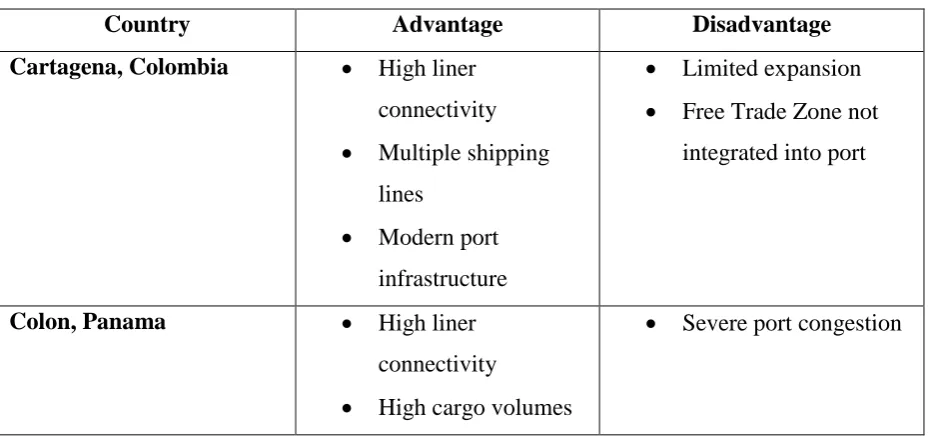
Table 2. Comparative Analysis of Major Caribbean Ports
.
Country Advantage Disadvantage Cartagena, Colombia High liner
connectivity
Multiple shipping lines
Modern port infrastructure
Limited expansion
Free Trade Zone not integrated into port
Colon, Panama High liner connectivity
High cargo volumes
34
Integration of Free Trade Zone
Dominican Republic Modern port infrastructure
Integrated free trade zones
Good internal logistics
Stable liner connectivity
Inadequate trade policies
Prolonged time for customs clearance
Port of Kingston, Jamaica Integrated logistics networks
High port efficiency
Good strategic location
Insufficient customs procedures
Limited port infrastructure
Mariel, Cuba Strategic location
Strong legislation
Integrated Free Trade Zone
Higher barriers to entry
Low liner connectivity
Insufficient port infrastructure Port of Spain, Trinidad &
Tobago
Connected to free trade zone activities
Provides
transshipment from Eastern Islands
Limited intermodal connection.
Limited Vessel Access
Source, Author 2017.
4.7 Logistics Connectivity
35
36
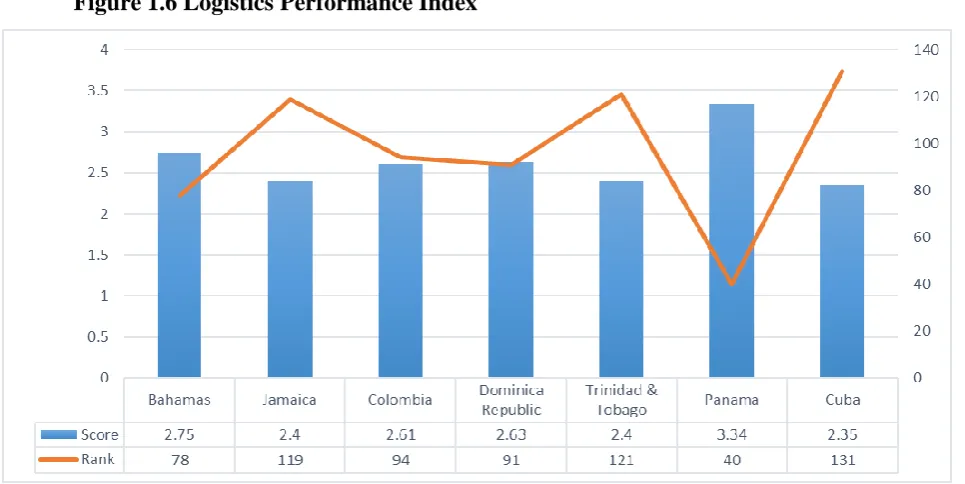
Figure 1.6 Logistics Performance Index
Source: The World Bank 2017
The LPI 2016 as illustrated in Figure 1.6, is used to reveal the level of logistics connectivity in comparison to its major competitors in Latin America and Caribbean region. When analyzed, the LPI has illustrated that Jamaica is presently ranked at 119 with an LPI score 2.40, while the main rivals to the country Panama and Colombia had achieved significantly higher LPI rank being 40 and 94 respectively. These high rankings could be attributed to their proximity to the Panama Canal, as well as their developed inland logistics connections.
However, Jamaica had shown reasonable progress in comparison the rest of the Caribbean countries this is mainly attributed to the high level in port infrastructure development which the country is currently undergoing. Furthermore, Jamaica has implemented new trade legislation particular that of the SEZ ACT 2016 this has had a significant impact in attracting international companies to conduct their operations within the country. Importantly Jamaica’s proximity to the Panama Canal and to east to west trade lanes complements the countries logistics connectivity.
37
Their performance can be explained by their highly developed port infrastructure along with integrated modes of transport which are supported by the high volumes of trade originating from there free trade zone. The results of the LPI prove that there is a relationship between Logistics performance and port infrastructural development.
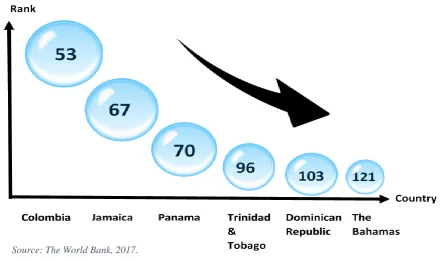
Figure 1.7 Doing Business Ranking of Caribbean Countries
Source: The World Bank, 2017.
The doing business ranking is as illustrated in Figure 1.7, and is a primary indicator of the level of business competitiveness of a country. It measures objectively the business regulations across the economies of countries at both the sub-national and regional level while reflecting the trade levels within these countries. Economies are subsequently ranked on the ease of doing business from 1- 90. A high ease of doing business reveals that the regulatory framework within that country is conducive to enabling business.
38
39
Chapter 5: Free Trade Zone Analysis
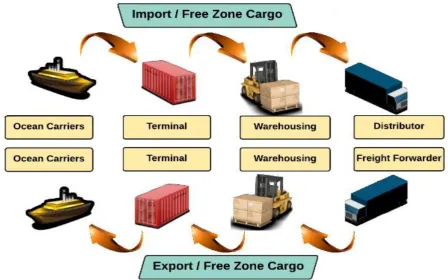
The Port Authority of Jamaica had commissioned the development of a commercial free trade zone and distribution hub in 2014. This facility was dedicated to providing logistics and business solutions for clients within the North, Central and South American markets. The activities within the free trade zone would involve warehousing, assembling operations, logistics services, distribution and value-adding services, for the operator within the zones illustrated in Figure 1.8.
In addition, goods which have been discharged at the terminal would be moved from the terminal to the free trade zone for logistics activities. These activities entailed stripping, repackaging and consolidating. The goods would be then forwarded to the companies’ clients anywhere in the world duty-free. Accordingly goods can also be fully manufactured within the free trade zone. The Kingston FTZ conduct its operation., on lands adjacent to the Kingston Container Terminal as a result, the Kingston Container Terminal functioning as a logistics hub, which further enhances the capacity and reach of the operations to distant markets in an efficient and business conducive manner (PAJ, 2016).
Figure 1.8 Free Zone Cargo Flow Chart
40
Logistics providers have to now cater to the needs of shippers, by adjusting their systems to offer efficient and environmentally conducive systems which enable supply chains with high logistics quality to expand the focus of operations from the seaports to the hinterland. Furthermore, a regulatory framework through legislations and incentives and financial support from policymakers are critical in order to ensure efficiency is achieved to maintain competitive advantages against rival port hinterlands (Taylor, Francis, 2017).
Figure 1.9 Kingston Free Trade Zone Activities
Source: Port Authority of Jamaica, 2017.
41
In light of the developments in international trade and the common trend of industrial distribution, it can be accepted that these developing trend significantly influence the developments of logistics facilities as they contribute to their competitiveness and attractiveness (Cullinane and Song, 1998). Thus the use of FTZ’s zones by shippers provides the applicability of features which are found in logistics zones, along with the same operations that are done in logistics centers, freight terminals, distribution centers, warehouses, intermodal terminals and international transport terminals.
The nature of operations done within these designated areas is mainly sanctioned for the transport of goods to be distributed to both the local and international markets on a commercial basis by the operators within these zones (Song, Panayides. 2015). The Logistics center provides various advantages and chief among these are cost reduction whereby goods which are processed within the zones they require circulation warehousing and administrative and other associated cost are greatly reduced. Further activities which take place within the logistics zone include cargo transshipment, cargo synchronization, business facilitation and trade (UNESCAP, 2002).
However, a fundamental requirement to ensure the successful operation of a logistics zone is its location should be in close location to a nodal point of a transportation network, which has adequate infrastructure to enable intermodality and logistics and transportation services. Moreover, logistics zones are established conventionally as a catalyst for foreign direct investment due to its feature of being international free trade zones. Presently modern port logistics systems have moved from beyond simply the loading and unloading of cargoes to and from a vessel, to providing value-adding services apart from the basic operations of warehousing packaging, storage and providing intermodal transportation (Song, Panayides, 2012).
42
Based on this intense competition among ports, this condition has presented to major shipping lines with an advantageous bargaining option which allows them to negotiate for concessions for dedicated terminals as well as for determining ports of call due to their growth in bargaining power.
Consequently, ports are now being faced with having reduced bargaining power, the result of which means that port now have provided to specific needs of the shipping line whereby over features in their ports which include providing deep-water ports, ensuring quality services, productivity, efficiencies, adequate hinterland infrastructure connectivity which include rail and road. Additional requirements of shipping lines often include ports to offer lower port tariffs, quick vessel turnaround times, accommodation for super large vessels and associated quality services. Due to trend towards containerization, larger vessels, consolidated their operations providing shipping lines with more leverage.
Therefore, the evolving requirements of major shipping lines to ports are based on their leverage of container traffic which they can provide to that port. However, in the eventuality where a port is unable to completely satisfy the requirements of the shipping line the port in most cases tends to lose its major clients. Furthermore, port and container terminal operators are as result constantly under strong pressure from their clients, this results in them reluctantly having to take part in the competition among other rival ports to both retain and attract new clients. Ports are now driven to actively enhance their productivity by investing a significant amount of money into the port development in order to remain agile and competitive and successful.
43
Logistics zones also provide value-added logistics which is a combination of logistics and industrial activities which are done in order to meet specified customer requirements. Moreover, these operations are conducted as much as possible downstream in the supply chain. Hence value-added logistics (VAL) provides the manufacturer with increased flexibility as well as reduced logistics costs, obsolescence risks and import duties. VAL comprises of the following activities which include product configuration, blending and mixing, adding parts, packaging, labeling, sterilizing, preparing documentation, billing customers, customer service by phone, quality control, repairs and the handling of returned goods.
FTZ cover large areas, which can include residential areas such as hospitals, schools and other supporting facilities of businesses and infrastructures. Moreover, free trade zones promote FDI by enabling a good business environment while offering several incentives, globally accepted labor regulations with allowed repatriation and reduction of taxation for foreign investment. These zones are governed outside of national regulation catering to the appropriate nature of the facility within the type of zone. Importantly all economic activities allowed in the zone is outside of customs territory. Moreover, FTZ, which are established often function as a microcosm of a country. A free trade zone is focused on international trade, especially value-added logistic activities involving light manufacturing and processing (ESCAO,2005).
5.1 Hypotheses
44
5.2 Regression Analysis
The regression analysis is a statistical tool which is used to determine if a relationship exists among variables. The technique models and analyze the trends and patterns of the variables to reveal the extent to which the dependent variable is influenced by the changes in the independent variables (Raykov, Marcoulides, 2013). The dependent variable is the TEU monthly values of the Port of Kingston and the independent variables include the vessel arrival figures, Monthly cargo volumes at the port and the free zone value of commodities every month the data set ranges from January 2008 to December 2016. The conduct this group regression analysis to determine to what degree in the dependent variable TEU is influenced or explained by the independent variables cargo volumes, free zone values and vessel arrival numbers. The Econometrics Views software (EVIEWS) is a data analytics software and statically modeling will be used to run a multiple regression to determine if there exist variances (Eviews, 2017). The multiple regression formulae as follows.
𝑌 = 𝑎 + 𝑏1 𝑋1 + 𝑏2 𝑋2 + 𝑏3 𝑋3 + 𝑢
𝑌 =TEU 𝑋1 =Cargo Volumes
𝑋2 = Free Zone Value