Immunochemistry and Mutation Analysis
A Thesis Submitted for the D egree
of
Doctor of Philosophy
in the
Faculty o f Medicine
by
Richard John Lipscombe
Institute o f Child H ealth
London
All rights reserved
INFORMATION TO ALL USERS
The quality of this reproduction is dependent upon the quality of the copy submitted.
In the unlikely event that the author did not send a complete manuscript
and there are missing pages, th ese will be noted. Also, if material had to be removed, a note will indicate the deletion.
uest.
ProQuest 10055347
Published by ProQuest LLC(2016). Copyright of the Dissertation is held by the Author.
All rights reserved.
This work is protected against unauthorized copying under Title 17, United States Code. Microform Edition © ProQuest LLC.
ProQuest LLC
789 East Eisenhower Parkway P.O. Box 1346
Mannose Binding Protein (M B?) is a serum lectin believed to play a role in innate immunity by specifically recognising foreign carbohydrate structures, and evolutionary studies have shown that MBP is an ancient molecule found in species as diverse as shark and man. Previous w ork has linked human MBP deficiency with a common opsonisation defect that predisposes to frequent infections during infancy, and associated low protein levels with a point m utation in codon 54 o f the MBP gene.
The investigations described here extend our knowledge o f MBP deficiency from its original discovery in Caucasians into other population groups using both functional and quantitative ELISA procedures. MBP deficiency was found in the Chinese and was associated with the codon 54 mutation, whereas in Gambians (West Africa) a new point m utation was discovered in codon 57. Both mutations are predicted to disrupt the structure o f the collagenous region o f MBP. The frequencies o f the structural M BP gene mutations were investigated in these populations by PCR followed by restriction enzyme digestion, oligospecific hybridisation, or direct sequencing, and compared with serum protein concentrations for each group. This showed conclusively that the Eurasian and A frican mutations account for most o f the observed low MBP levels. The geographical distribution o f the mutations was further investigated by studies on a range o f populations including Xhosa (South Africa), San Bushmen (Namibia), and inhabitants from Papua New Guinea and Vanuatu (South West Pacific).
"There is something fascinating about science. One gets such wholesome returns of conjectures out of such trifling investment of fact."
Mark Twain
F or his guidance and encouragement I am indebted to Prof. Mac Turner. The countless hours o f enjoyable and fruitful discussions, together with the opportunity to experience research as many hope it should be performed will be amongst my fondest memories o f these studies.
I am grateful to Dr. Michiko Sumiya for technical advice and helpful discussions throughout this work, and specifically her contributions to the DNA analyses detailed in Chapters 5 and 6. I would also like to express my thanks to all those who provided samples for the population studies. In particular I would like to acknowledge Dr. Y.L. Lau for providing the material that started these investigations, and a roof over my head during the Hong Kong typhoon season.
There are so many others who have also contributed during this time that acknowledging all by name is not practicable. However, I hope that those involved will see themselves below.
The inhabitants of the Immunochemistry Laboratory, both past and present, have always made working enjoyable and provided help whenever needed. Their humour - loud, subtle and pathetic - has never failed.
Others who I would like to thank are my colleagues from Coram Fields, not least the indomitable centre forward, my numerous office companions, and those ever present individuals that have made life on the 5th floor tick (most o f the time!).
This work would not have been possible without the generous financial support o f Action Research.
Abstract ...
2
Acknowledgements...
4
List of Figures and T a b le s... 10
Abbreviations... 12
C h a p te r
1:
I N T R O D U C T IO N ...14
H istory, N om enclature and Phylogeny of M annose Binding Protein . . 16
Interpreting the Carbohydrate Co d e... 18
L e c t i n s ... 18
C-type L e c t i n s ... 19
S-type Lectins ... 21
Other Types o f Lectin ... 22
C o l l e c t i n s ... 23
The Structure o f MBP ... 25
The Biochemistry and Genetics o f M B P ... 26
Surfactant Proteins A (SP-A) and D (SP-D) ... 28
Bovine Conglutinin and CL-43 ... 29
The Structure o f the Carbohydrate Recognition D o m a in ... 29
The Control o f Carbohydrate Specificity ... 31
Assembly of the Subunits ... 32
Destruction o f Foreign Particles ... 36
The Lectin P a th w a y ... 37
T h e C ollectin R e c e p t o r ... 37
T h e C o m m o n O p so n ic D e f e c t ... 39
The Role of MBP in Host De f e n c e... 41
MBP D e f ic ie n c y ... 41
Aims of Investigations Described in this Thesis ... 43
C h a p te r 2: M E T H O D O L O G Y ... 44
Reagents and Ma t e r i a l s... 45
Buffers and Solutions ... 48
Subjects and Sa m p l e s... 51
Me t h o d s... 53
2.1 A n tib o d ie s... 53
2.2 Antibody P u rific a tio n ... 53
2.3 Determination o f Monoclonal Antibody Subclass ... 53
2 .4 Biotinylation o f P r o t e i n s ... 53
2.5 Assay for M annan Binding C3b Opsonins ... 54
2.6 Assays for Mannose Binding Protein ... 54
2.7 Polyacrylamide Gel Electrophoresis (P A G E )... 55
2.7.1 Native PA G E... 55
2 .7 .2 SDS-PAGE... 55
2.8 Immunoblotting ... 56
2.9 Gel F iltr a tio n ... 56
2.10 Sucrose Density C e n trifu g a tio n ... 57
2.11 DNA Isolation ... 58
2.12 Polymerase Chain Reaction ( P C R ) ... 58
2.13 Enzyme Digestion of PCR P r o d u c t ... 59
2.14 Sequencing o f D N A ... 59
2.15 Oligonucleotide L a b e llin g ... 59
Chapter 3:
ENZYME LINKED IMMUNOSORBENT ASSAYS
FOR MBP: DEVELOPMENT AND COM PARISON...
62
In tr o d u c tio n... 63
ELISA Form at ... 63
M eth od ology and R esults ... 64
Reagents and M aterials ... 64
B u f f e r s ... 65
Assay Types and C o n d itio n s ... 65
Standardisation o f A s s a y s ... 67
Binding C o e f fic ie n ts ... 69
Correlation between Assays for M B P ... 70
D i s c u s s i o n ... 74
Chapter 4:
THE COMMON OPSONIC DEFECT
- AN INTERNATIONAL PHENOM ENO N...
76
In tr o d u c tio n... 77
R e s u l t s... 77
Chinese Children: C3b Opsonic Capacity and MBP Levels ... 77
MBP Concentrations in Chinese Children o f Differing Age ... 80
Pilot Investigation o f Reduced MBP Levels in Chinese D o n o r s ... 82
D is c u s s i o n... 82
Chapter 5:
PARALLEL SELECTION OF
MUTATIONS IN THE MBP G E N E ... 84
In tr o d u c tio n... 85
R e s u l t s... 85
Genotype and Opsonic C a p a c ity ... 96
D i s c u s s i o n ... 96
Chapter 6:
AN INSIGHT INTO THE
EVOLUTION OF MUTATIONS IN THE MBP GENE ...101
In tr o d u c tio n ... 102
N o m e n c la tu re ...102
Techniques for DNA Mutation A n a ly s is ... 103
R e s u l t s... 103
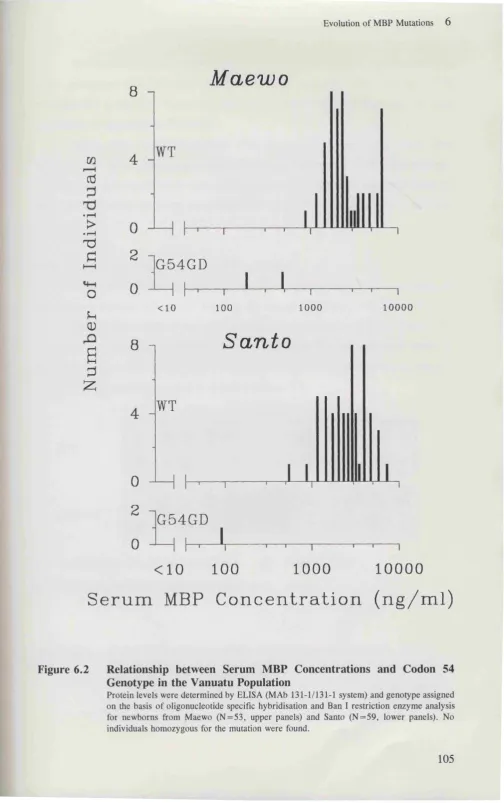
MBP Levels and Genotype in Populations from the South West Pacific . . 103
MBP Levels and Genotype in African P o p u la tio n s...106
Comparison of MBP Concentrations in all Populations S t u d i e d ... 110
D i s c u s s i o n... 112
Chapter 7:
PHYSICOCHEMICAL ANALYSIS
OF PHENOTYPIC VARIANTS OF M B P ... 118
In tr o d u c tio n... 119
N o m e n c la tu re ...120
R e s u l t s... 120
Native P A G E ...120
SDS-PAGE ...121
Gel F i l t r a t i o n ...125
Sucrose Density Centrifugation ...128
MBP protein patterns in individuals having mutations in codons 54, 57 and 52 o f the MBP gene ...131
Scanning Densitometry ... 133
Investigation s ... 140
Primary Im m u n o d eficien cy... 140
Haemophilus Influenzae
Meningitis and Osteitis ...141A t o p y ... 143
Systemic Lupus Erythematosus (SLE) ...143
Otitis M e d i a ... 144
M a ln u tritio n ... 144
D is c u s s i o n ... 148
Chapter 9:
GENERAL DISCUSSION AND FUTURE PERSPECTIVES . . 150
Appendices... 159
A: Ca r b o h y d r a t e s: St r u c t u r e a n d Is o m e r i s m ... 160
B: Ad d r e s s e s o f Su p p l i e r s... 163
Bibliography...164
1.1 Polypeptide Structure of the C ollectins... 24
1.2 Molecular Structure of the C ollectins... 24
1.3 Intron/Exon Structure of the Human MBP G e n e ... 27
1.4 Sugar and Calcium Binding to the MBP Carbohydrate Recognition Domain . . . . 30
1.5 The Trimeric Head of an MBP F ib ril... 33
1.6 Pathways of Complement Activation and O psonisation... 38
1.7 MBP Levels and Genotype in Families of Patients with the Common Opsonic D e fe c t... 42
2.1 Superdex 200 Column Calibration... 57
3.1 ELISA Standard C u rv e s ... 68
3.2 Correlation of Measurements used to Quantify MBP L e v e ls... 69
3.3 Comparison of Mannan Capture Assay Systems ... 71
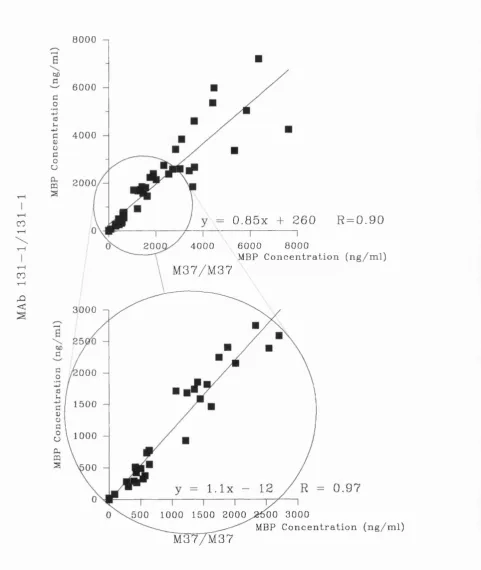
3.4 Comparison between the Symmetrical M37 and MAb 131-1 S y ste m s ... 73
4.1 Comparison of Functional C3b Opsonic Capacity and MBP Levels in Chinese C hildren... 78
4.2 Correlation between MBP Levels and Functional C3b/C3bi Opsonic Capacity in Chinese Children ... 79
4.3 Distribution of MBP Concentrations in Chinese Newborns... 80
4.4 Correlation between MBP Levels and Functional C3b/C3bi Opsonic Capacity in Chinese Newborns ... 81
5.1 Distribution of MBP Concentrations in Eurasian Populations ... 86
5.2 Distribution of MBP Concentrations in Gambian P opulations... 88
5.3 DNA Sequencing of the MBP Codon 57 M utation... 89
5.4 Restriction Enzyme Digestion Sites of the MBP M utations... 90
5.5 Ban I and Mbo II Digestion of the PCR P ro d u c t... 90
5.6 Relationship between Serum MBP Concentrations and Codon 54 Genotype in Eurasian Populations... 92
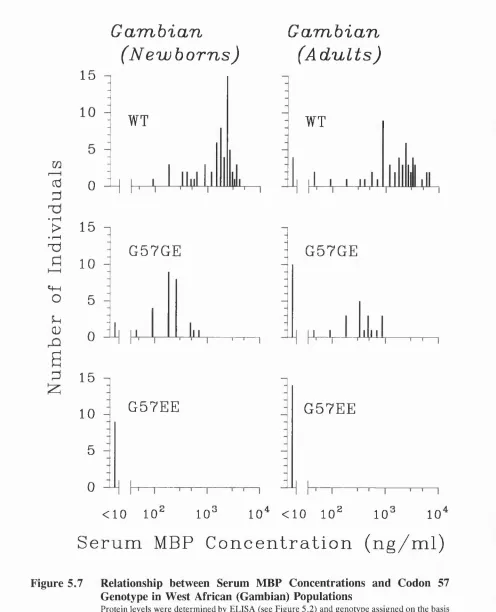
5.7 Relationship between Serum MBP Concentrations and Codon 57 Genotype in West African (Gambian) Populations... 93
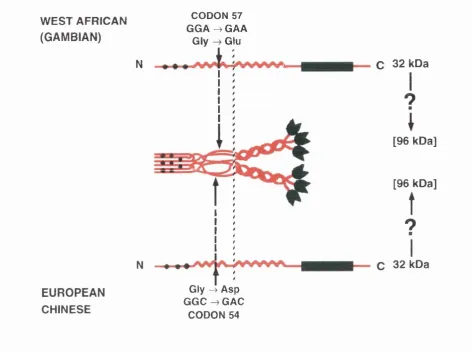
5.8 Model of the Disruption of MBP Structure Caused by the Codon 54 and 57 M utations... 98
Xhosa (S. Africa) Population... 107
6.5 Distribution of MBP Concentrations in the Nigerian Population ... 108
6.6 Relationship between Serum MBP Concentrations and Genotype in the San Bushmen ... 110
6.7 Tree of Human Relatedness... 113
6.8 Global Occurrence of Common MBP Mutations and Possible D ispersion... 116
7.1 Native PAGE and Immunoblotting Analysis of Whole S e r a ... 121
7.2 SDS-PAGE and Immunoblotting Analysis of Whole Sera ... 122
7.3 Comparison of Antibodies used to Detect MBP following SDS-PAGE ... 124
7.4 Superdex 200 Gel Filtration of Whole Serum Followed by SDS-PAGE Analysis and Immunoblotting with Anti-MBP M A b ... 126/7 7.5 Calibration of Sucrose Density Centrifugation G rad ients... 128
7.6 Separation of MBP Moieties by Sucrose Density Centrifugation ... 129
7.7 Separation of M B P ^ and MBPq54dd by Sucrose Density Centrifugation... 130
7.8 MBP Mutation Analysis by SDS-PAGE and immunoblotting ... 132
7.9 Scanning Densitometry Analysis of SDS-PAGE Separations of MBP ... 134
8.1 Distribution of MBP Levels in
H. Influenzae
Meningitis Patients... 1428.2 Distribution of MBP Levels in Malnourished Gambian C h ild re n ... 146
9.1 X-ray Crystal Structure of a Mutated Collagenous H e lix ... 157
Tables
3.1 Reagents and Conditions for Human MBP ELISA Systems ... 663.2 ELISA Coefficients of V ariation... 67
3.3 Correlations between ELISA Systems used to Measure M B P ... 72
4.1 MBP Concentrations in Chinese C h ild re n ... 81
5.1 Gene Frequencies for the Codon 54 and Codon 57 M utations... 91
5.2 Serum MBP Concentrations in Caucasian, Chinese and Gambian Sub populations ... 94
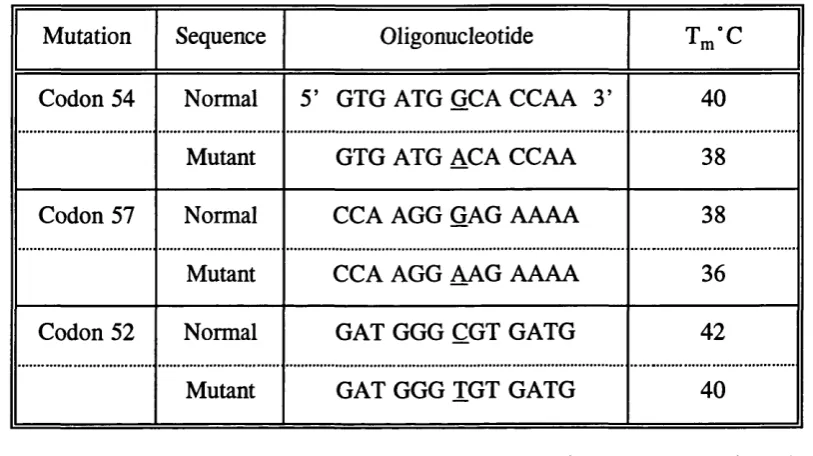
6.1 Oligonucleotide Probes used to Detect MBP DNA M utations... 103
6.2 Frequencies of Codon 54 and Codon 57 Mutations in all Populations Studied . . . 109
6.3 MBP Concentrations in Xhosa, San and Vanuatu Subpopulations... I l l 6.4 Median Population Levels of MBP ... 112
7.1 Analysis of MBP banding patterns... 133
aa amino acid
AA acrylamide
Asp (D) aspartic acid
Arg (R) arginine
B.C. binding coefficient
bp base pairs
BP before present
Bis bisacrylamide
ClqR C lq receptor
(collectin receptor) C52/54/57 codon 52/54/57
Cys (C) cysteine
CRD carbohydrate recognition
domain
CRP C-reactive protein
C.V. coefficient of variation
DNA deoxyribosenucleic acid
dNTP deoxynucleotidetriphosphate
ECL enhanced chemiluminescence
EDTA ethenediamine tetra-acetic
acid
EGF epidermal growth factor
ELISA enzyme linked
immunosorbent assay
FPLC fast protein liquid
chromatography g a r goat anti-rabbit
immunoglobulin
GlcNAc N-acetyl-D-glucosamine
Gly (G) glycine
Glu (E) glutamic acid
Hib
Haemophilus influenzae
type b IgE/G/M MAb MAC MASP MBP NC OPD P PAb PAGE PBS(-T) PCR PNG R RaRF RMM (Mr)
S20.W
S a m
SDS SLE
SP-A SP-D SSC
T . A
TAE TBE TE VBS(++)
immunoglobulin E/G/M monoclonal antibody membrane attack complex MBP associated serine protease
Mannose binding protein nitrocellulose
o-phenylene diamine probability
polyclonal antibody polyacrylamide gel electrophoresis
phosphate buffered saline (plus Tween-20)
polymerase chain reaction Papua New Guinea correlation coefficient Ra-reactive factor relative molecular mass sedimentation coefficient sheep anti-mouse immunoglobulin
sodium dodecyl sulphate Systemic Lupus
Erythematosus Surfactant protein A Surfactant protein D standard saline citrate half-life
tris acetic acid EDTA tris boric acid EDTA tris EDTA
INTRODUCTION
History, Nomenclature and Phylogeny of M annose Binding Protein . . . . 16
Interpreting the Carbohydrate Co d e... 18
L e c t i n s ... 18
C-type L e c t i n s ... 19
S-type Lectins ... 21
Other Types of Lectin ... 22
C o l l e c t i n s ... 23
The Structure o f MBP ... 25
The Biochemistry and Genetics of M B P ... 26
Surfactant Proteins A (SP-A) and D (SP-D) ... 28
Bovine Conglutinin and CL-43 ... 29
The Structure o f the Carbohydrate Recognition D o m a in ... 29
The Control of Carbohydrate Specificity ... 31
Assembly o f the Subunits ... 32
Aspects of Innate Im m u n it y... 34
T h e C o m p le m e n t S y s t e m ... 34
The Classical Pathway ... 34
The Alternative P a th w a y ... 35
Destruction of Foreign Particles ... 36
The Lectin P a th w a y ... 37
T h e C ollectin R e c e p t o r ... 37
T h e C o m m o n O p so n ic D e f e c t ... 39
The Role of MBP in Host De f e n c e... 41
1
In t r o d u c t i o n
The human immune system is a complex array of many components, each acting to provide the host with defence against infection. The elements which have been studied in most detail are those constituting the adaptive system, that is to say the soluble immunoglobulins produced by B lymphocytes, and the T lymphocytes. These produce a specific response
adapted
to each infectious agent that the host encounters. However, before this system is engaged many important non-adaptive immunological mechanisms must be breached. These together constitute the innate, or inborn, immune system, which is the first line o f defence against foreign organisms and includes components such as the skin barrier, soluble complement proteins, lysozyme and phagocytes.Many infectious agents (for example bacteria and viruses) contain carbohydrate structures that can be recognised by a particular class of proteins known as lectins. Furtherm ore, these carbohydrate moieties are characterised by subtle variations which distinguish them from the native carbohydrates found in the host. Mannose binding protein (MBP), the subject of this thesis, is a lectin believed to play a part in the innate arm o f host defence by recognising these foreign carbohydrate patterns, and then interacting with other components o f the innate response system. In humans MBP is secreted into the serum by the liver and binds to carbohydrate structures in a calcium dependent manner. Additionally, MBP is a member o f a family o f proteins, termed the collectins (Malhotra
et a l ,
1992), which contain a lectin domain and a collagenous segment (reviewed in Holmskovet a l
, 1994), and constitute a subdivision of the broader C-type lectin superfamily (Drickamer, 1989).subsequently, the components o f the innate immune system which interface functionally with MBP, namely the complement system and an MBP-specific cell surface receptor. Finally, a clinical defect in innate immunity relating to the role o f MBP in host defence will be introduced together with the initial accounts o f MBP deficiency.
As a preface to these topics some o f the terminology and evolutionary aspects of MBP will first be considered.
History, Nomenclature and Phylogeny
of Mannose Binding Protein
Human MBP was first reported in 1983 both in a preparation from liver (Wild
et
a l.
, 1983) and also in serum (Kawasakiet a l.
, 1983). Prior to that identical or analogous molecules had been described on several occasions in rabbit liver (Kawasakiet a l,
1978), rabbit serum (Kozutsumi
et a l ,
1980), rat liver (Townsend & Stahl, 1981; Mizunoet a l ,
1981; Maynard & Baenziger, 1982) and mouse serum (Iharaet a l ,
1982(3). Subsequently, the existence o f two similar yet discrete mammalian forms was first reported in the rat (Drickamer
et a l.,
1986); there is no evidence o f a second human form.As a consequence o f these discoveries the molecule is known by several names. It was initially termed mannan binding protein (Kawasaki
et a l ,
1978) and is also frequently called mannose binding protein (first used by Wildet a l.,
1983). Furthermore, it has been referred to as the core-specific lectin (Brownellet a l.,
1984), as part o f the complex Ra-reactive factor (RaRF)(Iharaet a l ,
1982^), and has been given the code MBL (mannose binding lectin) in genetic databases. Additionally, it is likely that MBP is one o f the /3-inhibitors of influenza A virus - heat labile serum factors, first reported in the 1940’s and found to neutralise viral infection (Anderset a l.,
1990). The traditional abbreviation as "MBP" is a simple way o f avoiding the mannan/mannose conflict, and will be used throughout.In t e r p r e t i n g t h e Ca r b o h y d r a t e Co d e
Lectins
Nature has three basic building blocks: amino acids, nucleotides and monosaccharides. O f these it is the sugars (monosaccharides) that provide by far the greatest variation in assembly o f higher order structures. The large number o f different saccharides can combine via isomeric linkages into complex branched structures offering an enormous diversity in carbohydrate composition. For example, two units o f a single monosaccharide can assemble in 11 different configurations, whereas in the same circumstances a single dipeptide or dinucleotide would result. Furtherm ore, 4 different monosaccharides could produce 35,560 unique molecules (Sharon & Lis, 1989).
The presence o f carbohydrates, either as independent structures or in the form of glycosylated proteins, is now considered an important feature o f many living organisms. These molecular forms are known to occur both intra- and extra-cellularly in animal and plant life (Barondes, 1984; Drickamer, 1988; W eir, 1989).
The variety o f structure and occurrence strongly imply that polysaccharides must encode some form o f information. The class o f molecules that can decode this is known as the lectins.
The term lectin was first used by Boyd in 1954 and is derived from the latin "lectus", meaning chosen or selected. An early definition was proteins that agglutinate cells and/or precipitate polysaccharides and glycoproteins (Goldstein
et a i ,
1980). Additionally, the requirement for a non-immune origin was specified to distinguish this group from the immunoglobulins. As time has progressed and the field broadened the definition has become less restricting. Lectins are now perceived as proteins which selectively bind to specific carbohydrate structures without being enzymes or antibodies (Barondes, 1988). In contrast to the early ideas several lectins are now known to play important roles in the action o f the mammalian immune system.isolation o f the membrane bound asialoglycoprotein receptor, also referred to as the galactosyl receptor or rat hepatic lectin (Ashwell & M orell, 1974). Meanwhile the first vertebrate lectin to be characterised had been described in the eel (Springer & Desai, 1971) and far ranging research was under way to uncover the importance o f the carbohydrate code. Since these studies a widespread role for lectins has been found and postulated, ranging for example, from bacteria and protozoa, where carbohydrate binding sites on the surface o f the organism are known to aid infection o f the host through adherence to mammalian cells (Sharon & Lis, 1989), to additional roles in cell clearance, lymphocyte migration, and cell differentiation and growth in mammals (Feizi, 1985).
To assist classification of the highly specific types o f lectin that have been described several categories have been introduced, and will now be considered in more detail.
C-type Lectins
The distinguishing feature of this class o f proteins is their dependence on calcium for their ability to bind sugars. The carbohydrate recognition domain (CRD) is characterised by 14 invariant and 18 highly conserved amino acids (Drickamer, 1988). The whole domain contains between 115 and 130 residues and its conformation is maintained by important disulphide bonding and the chelated Ca^^ ions. There are normally two calcium binding sites and four disulphide bonded cysteines per domain. The structural details o f the CRD will be considered in depth in a later section. The functional CRD is attached to a variety o f effector domains, which can be used as a basis for classification (Bezouska
et a l ,
1991; Drickamer & Taylor, 1993). The principal categories are the transmembrane receptors, the soluble collectins, the surface bound selectins, and the free CRDs.assembly o f the complex-type polysaccharides from the core outwards: mannose (reptiles), GlcNAc (birds) and galactose (mammals)(Lee
et a l ,
1994). A further human hepatic receptor is found on the resident liver macrophages (Kupffer cells) and is specific for fiicose and galactose.Other transmembrane receptors with the CRD consensus sequence are found on natural killer cells, but their binding characteristics have yet to be resolved accurately. Additionally, there is CD23, the low affinity IgE Fc receptor found on lymphocytes. The interaction o f CD23 with IgE is not considered to be mediated by the CRD, however, a new ligand for the receptor, CD21, has recently been shown to implicate the CRD (Aubry
et a l ,
1992). The macrophage mannose receptor could also be included here, although it contrasts with the other proteins by having a multiple number of CRD-like domains in one single polypeptide chain whereas all the other protehis have one. M oreover, it is the carboxy-terminus of this receptor that is situated inside the membrane (Type I transmembrane). The receptor is functionally similar to serum MBP in its specificity for mannose and ability to bind yeasts and parasites directly, but in addition it can signal the secretion of a number of inflammatory mediators. There are eight CRD- like modules in total, the fourth and fifth having the highest sequence consensus with the CRD o f MBP, and it is the combination o f them all that gives the receptor its binding affinity (Ezekowitzet a l ,
1990).The collectins, o f which MBP is one, encompass a subfamily o f C-type soluble polymeric lectins where the CRD is linked to a collagenous domain. They are considered in detail below.
was illustrated by X-ray crystallography o f E-selectin. Here, in crystals which contained both the EGF domain and the CRD very little interaction between the two regions was found (Graves
et a l ,
1994).An additional group of multi-domain proteins that do not fit into any o f the above categories are the proteoglycans, formerly called mucopolysaccharides, which are structural constituents o f the extracellular matrix and rich in polysaccharide. There are three which are known to possess a CRD: aggrecan found in cartilage, versican produced by fibroblasts, and neurocan found in the brain. These also contain EGF-like domains and complement regulatory repeats, plus the specialised regions for the covalent attachment o f glycosaminoglycans (repeating disaccharide units involved in the retention o f water within the tissue). The role of the proteoglycan CRD is not understood, but all o f these proteins have an amino acid sequence consistent with galactose binding and aggrecan may interact with the galactose substituents o f collagen type II (Day, 1994).
The free CRDs are a diverse group of proteins containing just the isolated binding domain. In invertebrates such lectins have been isolated from the sea urchin - echinoidin (Giga
et a l ,
1987), acorn barnacle - lectins 1 and 2 (Muramoto & Kamiya, 1986; M uramoto & Kamiya, 1990), and fly (Takahashiet a l ,
1985). This group is distinct in evolutionary terms from the vertebrate free CRDs found principally in the pancreas and related to the H IP/PA P protein (over-expressed in liver cancer)(Lasserreet a l ,
1994). Free CRDs have also been found in snake venom, as antifreeze protein in arctic fish serum (Ng & Hew, 1992) and as other unclassified mammalian forms, such as tetranectin, a serum protein that binds plasminogen o f the inflammation enzyme system (Fuhlendorffet a l ,
1987). The specificity o f these CRDs is diverse, reflecting the different environments in which they must function.The vertebrate free CRDs are all encoded by four exons and contrast with the single exon coding for the CRD in the collectins and selectins and the three exons found for the membrane bound receptors. This implies independent evolution o f these CRDs.
S-type Lectins
The common structural feature o f these lectins is a consensus sequence in the carbohydrate recognition domain o f 19 invariant and 36 conserved residues and this has been found in several species (Drickamer & Taylor, 1993). The name S-type lectins was derived from the stability brought to this group by the presence o f thiol groups, since oxidative conditions generally inhibit their binding activity. They have also been referred to as the soluble tissue lectins and any membrane association is principally due to carbohydrate binding o f membrane components such as glycolipids or glycoproteins. S- type lectins tend to be multivalent, readily forming dimers as illustrated by recent X-ray crystallographic analyses (Bourne
et a l
, 1994), and most have similar molecular masses, in the 14-16kDa range (Drickamer, 1988).Lectins o f this class are widely distributed, being detected in tissues as diverse as muscle and brain (Barondes, 1984). They are extensively found in intracellular locations, however, some functional S-type lectins have recently been found in the oxidising extracellular matrix, e.g. galectin-3 (formerly known as IgE-binding protein), which may be involved in immune regulation (Liu, 1993). No traditional signal transport sequence has been reported for any S-type lectin so the extracellular activity o f the 31kDa galectin- 3 has been proposed to follow a vesicle exporting process.
It is likely that soluble lectins mediate cellular activity, either through interactions within the cytoplasm, or by binding cell surface glycoproteins.
Other Types of Lectin
The mannose 6-phosphate receptors, classified as P-type lectins again contain a novel CRD (Drickamer & Taylor, 1993). As with the C-type macrophage mannose receptor there are multiple recognition sites on one molecule, in the form o f 15 calcium independent and one calcium dependent site, thus giving an appearance analogous to the collectins.
The existence of several structurally independent sets of animal lectins, plus the apparently unrelated plant lectins and the bacterial carbohydrate binding proteins (Drickamer, 1988) implies that there has been strong pressure for lectins to evolve multiple times. Furthermore, as typified by C-type lectins, the variety o f environments in which they function does provide an impressive display of the ability o f organisms to adapt and utilise carbohydrate interactions.
Collectins
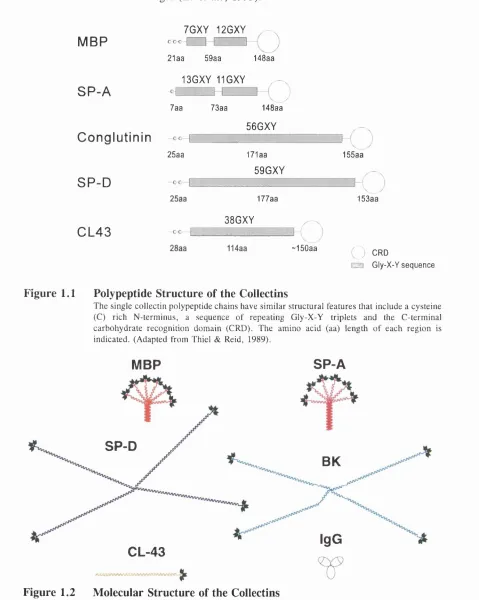
M B ? is a member o f a unique class o f C-type lectins with a complex structure based on collagen helices connected to CRDs. As a consequence o f these features they have been termed collectins (Malhotra
et al
. , 1992) and are structurally similar to the well characterised complement protein C lq (reviewed in Reid, 1983). Additionally, the collectins interact with the collectin or C lq receptor, which is discussed in a later section. The current members of this family are the lung surfactant proteins SP-A and SP-D, and the serum proteins MBP, conglutinin and CL-43; the first three have been found in several mammalian species, however, the latter two are known only in bovine forms.show them to be far from rigid (Lu
et al
. , 1993).MBP
SP-A
Conglutinin
SP-D
CL43
7GXY 12GXY
21aa 59aa 148aa
13GXY 11GXY
c|
7aa
25aa
73aa 148aa
56GXY
171aa
59GXY
155aa
177aa 153aa
38GXY
~150aa
O CRD
r z j Gly-X-Y sequence
Figure 1.1 Polypeptide S tructure of the Collectins
The single collectin polypeptide chains have similar structural features that include a cysteine (C) rich N-terminus, a sequence o f repeating Gly-X-Y triplets and the C-terminal carbohydrate recognition domain (CRD). The amino acid (aa) length o f each region is indicated. (Adapted from Thiel & Reid, 1989).
MBP
SP-A
SP-D
BK
IgG
CL-43
Figure 1.2 M olecular Structure of the Collectins
The similarity in primary structure o f the proteins is o f interest. Conglutinin and bovine SP-D show 78% identity (Lim
et al
. , 1993), whereas between bovine and human SP-D there is61%
identity, and between bovine and rat 65% identity. It is possible that conglutinin could represent a recent duplication o f the SP-D gene found only in cows (Kolble & Reid, 1993). CL-43 also displays close similarity to bovine SP-D and conglutinin, showing 70% and 74% identity respectively (Limet a l ,
1994).The Structure of MBP
Human MBP is a homopolymer based on identical 30kDa polypeptide chains, which contain 228 amino acids, plus a 20 residue signal peptide removed prior to secretion (Summerfield & Taylor, 1986; Taylor
et al.
1989). As mentioned above, three o f these chains associate into a subunit, with a collagenous triple helical fibril (composed o f 19 Gly-X-Y repeats from each chain) and a carboxy-terminal globular head containing three carbohydrate recognition domains (CRDs). The lectin domain provides the specificity for oligosaccharide structures on microorganisms, particularly D-mannose, N- acetyl glucosamine and L-fucose (Summerfield & Taylor, 1986; Weiset al.,
1992), whereas the collagenous domain is believed to be responsible for interactions with other proteins involved in host defence.The Biochemistry and Genetics of MBP
Studies on MBP secreted from rat hepatocytes have shown that it is synthesised in the endoplasmic reticulum and then transported to the golgi prior to secretion. The half-life (T%) of secretion is 4 hours, which is long compared to other secretory proteins (Ti/^ = 1 hour for albumin). Several processes occur in the golgi - hyroxylation o f proline and lysine residues within the collagen region, followed by glycosylation o f a hydroxy lysine that increases molecular mass by 2kDa, polymerisation and attainment of carbohydrate binding activity (Colley & Baenziger, 1987a;
b).
These modifications do not affect assembly, but do affect secretion (Colley & Baenziger, 1987c), and have been shown in part to occur in human MBP (Colleyet al
. , 1988).Once in the circulation turnover of serum MBP in the rat is relatively fast, with a Ti/^ o f 1.6 days compared to the average o f 3.0 days for serum proteins. The dissociation constant for carbohydrate binding has been measured at 2xlO'^M to mannan and ôxlO'^M to E. coli (assuming M j.=600,000)(0ka
et a l ,
1988; Kawasakiet a l ,
1989). This binding shows an interdependence on both the pH and the Ca^"*" concentration (Loeb & Drickamer, 1988).The serum and liver forms of rat MBP (MBP- A and C) show 56% homology, and human MBP has features of both - the 3 cysteines and acute-phase nature o f the serum MBP, and the larger N-terminus and interruption at the 8th Gly-X-Y repeat of liver MBP (Sastry & Ezekowitz, 1993). The overall homology of the rat forms with human MBP is 52% (serum) and 61% (liver)(Taylor
et a l ,
1989).The gene for human MBP is located on chromosome 10 (Taylor
et al
. , 1989; Sastryet al
. , 1989). The intron/exon structure o f the 7kb human gene closely resembles that o f rat liver MBP (MBP C), and comprises four exons, each encoding a different domain o f the protein. These regions can be separated into the N-terminal cysteine-rich domain (exon 1), the collagen domain (exons 1 and 2), the neck region (exon 3), and the C-terminal carbohydrate recognition domain (exon 4) (Tayloret al.,
1989)(Figure 1.3).of an MBP pseudogene (MBP-B) in the rat, showing strong identity to exons 3 and 4 of the serum and liver forms (Drickamer & McCreary, 1987), although this may merely represent CRD homology with the corresponding domains of other C-type lectins. The probability of gene duplication and shuffling giving rise to these similar proteins seems high.
251
117
69
3 . 1 k b
Tl 643
A l 1.2kb
o
800
4
: I t " " - - Z
0 i
DNA5'UT
RNA
3'UT
c c c
AAAAAAMAAAAr
P r o t e i nC ys-rich C ollagenous N eck CRD
Figure 1.3 Intron/Exon S tructure of the H um an MBP Gene
The gene contains four exons, represented by boxes, with the length o f each segment shown in base pairs (Sastry et a l , 1989). The RNA contains a large untranslated (UT) region and codes for the protein domains indicated.
1991).
The regulatory motifs and genetic data suggesting an acute phase nature are supported by a study showing increased serum levels o f MBP following either surgery or severe malaria, where MBP concentrations were found to rise 2 to 3-fold (Thiel
et al
. , 1992).Surfactant Proteins A (SP-A) and D (SP-D)
The surfactant proteins are an integral part o f the lipid-protein layer that controls surface tension at the air-fluid interface o f the lung. In addition some o f these components may play a role in pulmonary host defence. The properties o f SP-A and SP-D have recently been reviewed by Reid & Turner (1994) and Haagsman (1994).
SP-A has been found in several mammalian species, and in humans, at a concentration o f 3mg/100mg phospholipid, is the most abundant lung surfactant protein. It has a structure similar to that o f hexameric MBP, although SP-A differs in that it is composed o f two polypeptide chain types. It is predominantly produced by the surfactant secreting alveolar epithelial type II cells and its primary role is likely to be in the maintenance o f the surfactant layer (surfactant homeostasis). In the presence o f Ca^'*' SP- A can self aggregate, possibly by binding interactions involving the CRD, and cause the aggregation of phospholipid vesicles.
The principally tetrameric and much larger SP-D is present in the surfactant at approximately one tenth the level o f SP-A. In purified form it has been demonstrated to assemble into higher order polymers, with up to 32 globular heads emanating from the central hub (Crouch
et a l ,
1994). SP-D is less surfactant-like than SP-A, showing less affinity for phospholipids, and appears more involved in defence against inhaled pathogens (Hartshornet at.,
1994; Takayamaet a l ,
1994).Bovine Conglutinin and CL-43
Conglutinin (reviewed in Jensenius
et a l
, 1994) is the structural homologue of SP-D, although the tetrameric subunits differ slightly in having a slight kink early in their collagenous regions. Conglutinin is known to play a role in host defence through its ability to agglutinate erythrocytes, and this interaction is mediated via the complement fragment iC3b deposited on cells, specifically by carbohydrate on the oj-chain o f iC3b. This binding only occurs once the C3 molecule has been catalytically cleaved to this form , thus illustrating the importance o f the folding of the carrier protein in lectin- carbohydrate interactions. Conglutinin is known to interact with phagocytic cells during the inunune response, and it is again possible that this occurs via the collectin receptor.CL-43 has only been found as single subunits and, to date, no functional purpose has been described, although it is known to bind the collectin receptor
in vitro.
Both of these bovine proteins show sugar binding specificity similar to MBP (Lovelesset al
. ,1989; Holmskov
et a l ,
1993).The Structure of the Carbohydrate Recognition Domain
The tertiary structure o f a C-type CRD was first determined in 1991 by X-ray crystallography o f the isolated domain of rat serum MBP (MBP-A) produced in a bacterial expression system (Weis
et al
. , 1991&). Further studies in which the CRD was crystallised complexed with carbohydrate, and subsequent mutational analysis o f the residues located in the vicinity of the binding pockets have established the critical residues involved in carbohydrate recognition, and shown why the observed consensus sequence is important (Weiset al
. , 1992; lobstet al
. , 1994). Figure 1.4 shows two views o f the sugar binding and second calcium chelation sites. Here the 3-OH o f mannose is hydrogen bonded to MBP residues G lul85 (carbonyl group) and A snl87 (amine group), while the 4-OH sugar group binds to G lul93 (carbonyl) and Asn205 (amide). Both hydroxy groups also interact with the Ca^^, which is additionally coordinated by the carbonyl groups from side chains of the four residues mentioned above and by Asp 206. Mutagenesis studies have also shown that His 189 is important for mannose binding, since the loss o f the His 189 /î-carbon which interacts by van der Waals forces with the C-4 of mannose causes a 5-fold loss o f binding affinity (lobstet a l ,
1994). The interaction shown between the C51 o f Ile207 and mannose C- 6 is due to weak van der Waals forcesdomain.
MAN
HIS 189
A SN 205 GLU 185
ASN 187
ASN 187
GLU 193
ILE 207 GLU 185
ASN 205
GLU 193
ASP 206
Figure 1.4 Sugar and Calcium Binding to the M BP C arbohydrate Recognition Domain
The two orientations show the critical residues that are involved in interactions with the oligosaccharide (mannose) and Ca^+ (large grey sphere). White, black and light grey spheres represent carbon, oxygen and nitrogen, respectively. In the view on the left the lines show calcium coordination (long dash) and hydrogen bonds (short dash), and in the right view , van der Waals interactions (dotted). (From Weis et al., 1992 and lobst et a i , 1994).
These structures for rat MBP provide a model for the CRDs of all C-type lectins, however, numerous modifications are to be expected given the variations in protein sequence found within the domain. By way of example, the subsequent crystallisation of the CRD domain of E-selectin has detected some differences in the coordination of Ca^^ (Graves et al. , 1994). Selectins have only one calcium binding site, and this shows exact sequence homology with that of site two in rat serum MBP (the MBP coordinating residues G lul85, Asnl87, Glul93, Asn205 and Asp206 equate to E-selectin Glu80, Asn82, Glu88, Asnl06 and Asp 106) (Weis et al., 1991^). Consequently it was predicted that the selectins would bind sugars in an identical manner to MBP (Weis et al. , 1992). However, despite the similarity, slight changes in protein folding allowed one residue Asn83 (MBP equivalent Asp 188) that binds the second Ca^"^ in MBP to act as a coordination site in place of Glu88 (MBP equivalent Glul93) (Graves et al., 1994).
CRDs showed some differences.
It is noteworthy that the C-type CRD in which the cation directly interacts with the ligand is fundamentally different from that of other known lectins. As already discussed, the S-type lectins are cation independent, and in the legume lectins, such as concanavalin A, the bound metal cations (calcium and manganese, or another transition metal) act to hold the ligand binding site together and position amino acids for binding, but do not interact directly with the sugar (Sharon, 1993).
The Control of Carbohydrate Specificity
MBP binds to a variety of sugars, and as the origin o f its name suggests the preferred ones are the primary components o f mannan, namely D-mannose and N-acetyl- D-glucosamine (GlcNAc)(Kawasaki
et a l ,
1978). The structures o f these and related sugars are illustrated in Appendix A. All the collectins bind monosaccharides containing equatorial 3- and 4- OH groups and consequently other sugars to which MBP will bind are D-glucose and N-acetyl-D-mannosamine, plus L-fucose via its 2- and 3- hydroxy groups (Colleyet a l
, 1988; Holmskovet a l
, 1994). The binding o f L-fucose is possible because on rotation its hydroxy groups align directly with those o f the D-pyranose groups(Weis
et a l ,
1992),In the case o f human MBP the binding is believed to be directed at the terminal (non-reducing) residues and can be blocked by capping the terminal group with galactose (this has an axial 4-OH group and is known not to bind MBP) (Childs
et a l ,
1989). The two forms o f rat MBP have different specificity, the serum form (MBP-A) behaves like human MBP, whilst the hepatic form (MBP-C) preferentially binds core mannose residues, although it also binds terminal fucose (Childset a l ,
1990). The specificity of the liver form o f MBP explains the early description o f the core-specific lectin prepared from rat hepatocytes (Brownellet a l
, 1984), however, the specificity o f the serum form does not agree with the binding characteristics reported for RaRF. This complex, and therefore MBP, has been widely identified in the sera o f many species and the binding site reported as thecore
GlcNAc residues o f the lipopolysaccharide o f Ra-strain salmonella (Iharaet a l ,
1982a). Additionally, there are other contradictory reports of human MBP binding core rather than peripheral sugars (Summerfield & Taylor, 1986).carrier protein may influence carbohydrate presentation and therefore affect biological specificity (Solis
et a l ,
1994).The detailed crystal structures now available have permitted the precise binding sites o f the monosaccharides to be modelled and provide an explanation o f why a particular ring system is preferred. Structural differences between some key sugar residues are highlighted in Appendix A. The critical importance o f individual residues within the CRD for sugar binding was shown by the engineering o f a new ligand specificity for the rat MBP domain (Drickamer, 1992). Site directed mutagenesis was used to replace two of the conserved residues found in the mannose binding lectins (in rat MBP G lul85 and A snl87, shown in Figure 1.4) with corresponding residues conserved in C-type CRDs known to preferentially bind galactose (Gin and Asp). This successfully generated galactose binding activity, which was subsequently improved by further changes - mutating His 189 to Trp increased affinity, and a further 5 amino acid insertion led to an actual specificity for galactose. This type o f analysis permits an understanding o f how all the C-type CRDs function, since the final m utant amino acid sequence and specificity was analogous to the rat hepatic lectin, and the Trp intermediate resembled the proteoglycan aggrecan (lobst & Drickamer, 1994).
Assem bly o f th e Subunits
reassemble after heat dénaturation (Hoppe et a i, 1994). In contrast, corresponding sections of MBP will not assemble (Weis & Drickamer, 1994), although the neck plus CRD does form stable trimers in solution (Schweinle et a i, 1993). Examination of the amino acid sequence that would result from a a-helical coil for SP-D, conglutinin and CL-43 shows that strong hydrophobic interactions are possible between the residues on the inside of the coil. The same alignment is not as favourable for MBP, with some hydrophobic residues pointing outwards, which would explain the lack of stability of the isolated neck region (Hoppe & Reid, 1994). Crystallisation of the trimeric head plus neck unit has shown, however, that these hydrophobic residues on the outside of the coil are stabilised by contact with a hydrophobic region in the CRD of the adjacent anticlockwise chain (Sheriff et a i, 1994). The resulting structure shown in Figure 1.5 has the binding sites of the three CRDs separated by between 45Â (human)(Sheriff et al. , 1994) and 53Â (rat)(Weis & Drickamer, 1994). The distance between the sites suggests that extended carbohydrate structures would be required for multi-point attachment of the heads. Such structures are found on many pathogens.
Figure 1.5 The Trimeric Head of an MBP Fibril
A s p e c t s o f I n n a t e Im m u n ity
The Complement System
Complement is a major part of the human immune system that is responsible for defence against foreign particles and the clearance of immune complexes. Its actions "complement" the role of antibodies in the destruction of invading microorganisms. The complement system which was first described in the 1890s consists of about thirty plasma proteins, with new members still being discovered. Complement is fundamentally activated by either of two distinct enzyme cascade systems called the Classical and Alternative pathways (reviewed in Law & Reid, 1988; Walport & Lachmann, 1993). However, the interaction of MBP with complement, initially discovered through its ability to activate the classical pathway, could be considered as introducing a new route of activation - the Lectin pathway.
These pathways fulfil several roles, enhancing opsonisation of alien particles and later merging as the complement cascade follows the single lytic (or terminal) pathway that ultimately leads to cell lysis. The term complement cascade arises from the chain reaction-like process where each step initiates the next, but importantly, this process is strictly controlled by a number of regulatory molecules. Significantly, the complement cascade interacts with other enzyme cascades which control coagulation, kinin generation (involved in the regulation of vascular permeability), and fibrinolysis (in which wound healing is promoted and inflammatory regulators such as plasmin are produced)(Male & Roitt, 1989).
The Classical Pathway
also contains a catalytic subunit - two molecules of each o f the serine proteases C lr and C ls , arranged C ls - C lr-C lr- C ls (Arlaud
et a l ,
1990; 1993). The binding of C lq leads to activation o f these proenzymes, and subsequently, to cleavage o f the next complement component C4, which exists as two isotypes, C4A and C4B that have slightly different activity. This process involves autoactivation o f C lr to its active form , which then activates C ls , and that in turn acts on C4 and subsequently C2. The process o f cleavage o f C4 produces C4a (an anaphylatoxin) and the labile C4b containing an active thioester which can react with amine (mainly the C4A isotype and peptides) or hydroxy groups (mainly the C4B isotype and carbohydrates) on the surface o f the complement activator (Law & Dodds, 1990). C2 in the presence o f active C ls , is cleaved forming the fragment C2a which contains a serine esterase catalytic site. Association o f C2a with the bound C4b leads to the formation o f the "C3 convertase" C4b2a, which cleaves C3 via the action of the catalytic site on C2a. C3, like C4, contains a thioester and following the action o f a C3 convertase is converted to C3b which binds to any suitable nearby surface. The action o f C l is controlled by two proteins: the C l-inhibitor, which binds and inactivates C l r and C ls; and factor J, which dissociates the C l complex into its subunits (Nicholsen-W ellaret al
. , 1991).T he A ltern ativ e P athw ay
Activation o f the alternative pathway depends on a constant low level turnover of C3 in body fluids (Bamum & Volanakis, 1990). This can occur by the action of serum proteases, low level hydrolysis, or any disturbance o f the C3 molecule that results in the exposure o f its internal thioester bond. Under physiological conditions the thioester has a half life (T1/2) o f 230 hours and slow hydrolysis to C3(H2 0) leads to conformational
and functional changes in C3. The new species can form a complex with factor B that is magnesium cation dependent. It is this procedure that constitutes the initiation step in the pathway. Next factor D (another serine protease) catalyses cleavage of factor B releasing the N-terminal, 30kDa, Ba fragment. The C3(H2 0)Bb complex has C3 convertase
factor H influences the stability o f C3bBb, accelerating its dissociation into C3b and Bb. Factor H also acts as a cofactor for factor I, promoting cleavage o f C3b to yield an inactive form, iC3b, that is no longer able to bind to factor B. To prevent attack o f host cells both the classical and alternative pathways are inhibited by three membrane bound regulatory molecules, complement receptor type 1 (C R l; C3b/C4b receptor; CD35), decay accelerating factor (DAP; CD55) and membrane cofactor protein (MCP; CD46). These all behave analogously to factor H by suppressing the action o f the C3 convertases (M organ & M eri, 1994).
Destruction of Foreign Particles
The classical and alternative pathways converge at this activation of C3, the most abundant complement component (concentration
ca
Im g/m l). The splitting o f C3 produces C3a, a small 77 residue anaphylatoxin fragment and the much larger C3b (approximately 175kDa), in which a large conformational change occurs, exposing the highly labile thioester(Jn
2=
60/xs in serum). Many interactions are possible at this point,but to progress towards cell lysis the classical and alternative pathway complexes, C4b2a and C3bBb, must covalently bind C3b. This results in a new enzyme specificity - the C5 convertases, the actions of which are also inhibited by the membrane bound regulatory proteins. It is currently considered that C3b forms a covalent dimer with the surface bound C4b or C3b o f the C3 convertases (Kinoshita
et a l ,
1988). C5 binds to these dimers and is catalytically cleaved by the complex releasing the C5a anaphylatoxin and C5b, the first member o f the terminal or lytic pathway.C5b binds non-covalently to C6 and C7, producing a complex, C5b-7, which is
hydrophobic in nature and can insert itself into lipid bilayers. The binding o f C8 further
enhances this process and leads to the polymeric assembly o f C9 within the membrane. This final membrane attack complex (MAC), C5b-9, causes lesions in the lipid membrane and ultimately results in cell lysis. To prevent attack of host cells there are two known inhibitors o f MAC assembly: CD59 and homologous restriction factor (HRF).
groups and is believed to be via the classical pathway (Ikeda
et a l ,
1987; Luet a l ,
1990; Superet a l ,
1990), however, it is also claimed that MBP can activate the alternative pathway (Schweinleet a l ,
1989). Additional w ork with RaRF has further suggested that the classical pathway is involved (Jiet a l ,
1988).It is known that the serine protease components of C l, C lr and C ls , can interact w ith MBP bound to a mannan coated surface and initiate cleavage o f C4, in the absence o f C lq (Ohta
et a l ,
1990; Luet a l ,
1990). The affinity of C lr/s for MBP appears similar to that for C lq , although it is only the larger polymeric forms o f MBP that will activate C lr efficiently (Luet a l ,
1990). The relative biological importance o f this mechanism has been brought into question by the discovery o f a novel C ls-lik e molecule, termed MBP associated serine protease (MASP) (Matsushita & Fujita, 1992). MASP appears to circulate with MBP, bound in a calcium dependent manner, and autoactivates upon binding o f the lectin. The stoichiometry o f this interaction and the actual serum concentration of MASP remain to be established. Further evidence for this novel activation pathway for MBP comes from studies on RaRF in the mouse. The minor component o f this complex, referred to as PlOO, has been shown to cleave C4 (Jiet a l ,
1993), and has now been isolated and found to be a new serine protease similar to C lr and C ls (Takahashi
et a l ,
1993; Takayamaet a l ,
1994). It seems probable that murine PlOO and human MASP are equivalent, and given the phylogenetic diversity established for RaRF (Kawakamiet a l ,
1984) MASP activation of MBP appears to be universal amongst vertebrates.The recognition o f a new lectin pathway for the independent activation o f the complement system by MBP appears to be gaining acceptance (Thiel, 1992; Reid & Turner, 1994), but the ability o f the other collectins to act through this or an analogous pathway awaits investigation.
A summary o f the pathways o f complement activation is shown in Figure 1.6.
The Collectin Receptor
Formerly referred to as the C lq receptor (C lqR ), the term collectin receptor was coined in 1993 (Malhotra
et a l ,
1993&). This receptor has been shown to bind several members o f the collectin family including MBP, conglutinin and SP-A (M alhotraet a l ,
A lternative C lassical L E C T IN
Pathway Pathway Pathway
Foreign Surface C A R B O H Y D R A TE
C 3, Factor B
C -R cactive Protein
SP-A , SP-D , C onglutinin
M B P
C lq
C O L L E C T IN R eceptor
Phagocytic cells
M A S P
C lr,s
C2, C4
J
C3 activation
I
Receptors : C R l, CR 2, CR3 for C3 fragments
+
Lytic Pathway
Figure 1.6 Pathways of Complement Activation and Opsonisation
The alternative, classical and lectin pathways o f complement merge at the activation o f C3 and ultimately lead to opsonophagocytosis or cell lysis. Some o f the principal components o f the pathways are illustrated above. (The properties o f the complement receptors (CR) are reviewed in Lachmann et al. 1993).
& Kunkel (1972), and it was later shown that binding was via the collagenous region of the molecule (Arviex et al. , 1984). Given the homologous collagen domains found in the collectins it is presumed that they interact with the receptor in the same manner. The majority of work with the receptor has utilised C lq and since the relative interactions of MBP, SP-A and C lq with the receptor are similar (Malhotra et al. , 1990), any properties reported for the C lqR are presumed to apply directly to interactions involving the collectins.
The murine distribution o f the C lq R is similar to that found for humans (Erdei, 1990). The effects of receptor-ligand interactions include enhanced phagocytosis and immunoglobulin secretion, and neutrophil mediated cytotoxicity (oxygen radical stimulation), although there is evidence that the latter is not triggered by MBP or SP-A (Goodman & Tenner, 1992).
The characterization o f the collectin receptor has been complicated by two factors: prim arily the anomalous behaviour o f the receptor when analysed by different procedures (Erdei & Reid, 1989), and additionally, by the existence o f a further receptor for C lq , now known to bind to the globular head of this molecule (Ghebrehiwet
et a l
, 1994). The purified collectin receptor has an apparent molecular mass o f 56kDa under reducing conditions, and contains 15-20% carbohydrate (Malhotra & Sim, 1989). M oreover, C lq R shares a high degree o f sequence homology and immunological cross-reactivity with calreticulin, a Ca^"^ storage protein (Malhotraet al
. , 1993^). Calreticulin is released from neutrophils during inflammation and is able to bind to MBP (and more favourably C lq ). There is speculation that this interaction may cause immune complex formation and a subsequent stimulation o f the immune response (Eggletonet a l ,
1994).The bonding between the receptor and the collectins is thought to be ionic, since lower salt strengths are preferred. The precise point of interaction has been proposed as the "bend" region, as evidenced by the presence of a cluster o f charged residues at this point in C lq , MBP and SP-A. In conglutinin this cluster is near the N-terminus and is lost in a truncated form o f the molecule which does not bind the receptor (M alhotra
et
a l ,
1993a).The Common Opsonic Defect
T h e R o l e o f
MBP
in H o s t D e f e n c e
As detailed in the above sections MBP has a structure that enables it to recognise particular foreign organisms and facilitate their clearance from the circulation both by activating the complement system and interacting directly with a specific cell surface receptor. The importance o f these processes was illustrated by the linking o f the clinical common opsonic defect with low levels o f MBP (Super
et a l ,
1989), and a concurrent study in which the protein was shown to function as an opsonin in the phagocytosis of gram-negative bacteria bearing mannose rich polysaccharides (Kuhlmanet a l ,
1989). Several subsequent investigations have addressed the function o f M BP in host defence.MBP has been shown to play a role in the complement mediated neutralisation of influenza virus (Anders
et a l ,
1994). This protection was lost for a mutant viral strain in which a glycosylation site for high-mannose carbohydrate was missing; MBP was proposed to act by binding this oligosaccharide chain and thereby blocking access to the adjacent cell binding domain (Anderset a l ,
1990). Fellow collectins SP-D and conglutinin have similarly been shown to function as opsonins for influenza (Hartshornet a l ,
1993; Anderset a l ,
1994). Complement activation has also been observed following MBP binding to HIV envelope glycoproteins (Haurumet a l ,
1993) and inhibition o f viral infection has been reported (Ezekowitzet a l ,
1989). However, a role in host defence is unclear since the laterin vitro
study used concentrations o f M BP far in excess o f physiological levels, and another investigation has shown that carbohydrate- mediated interactions may actually be the basis o f viral infection (Larkinet a l ,
1989). A similar enhancement o f infection by MBP has also been reported for herpes simplex virus in mice (Fischeret a l ,
1994).Further
in vitro
studies on yeasts have shown MBP to have no effect on the phagocytosis o fCryptococcus neoformans
(Levitze t a l ,
1993) and to actually inhibit the phagocytosis o fCandida albicans
by murine macrophages (Kitzet a l ,
1992). Set against this is the complement mediated bactericidal properties o f MBP against Ra strains o fSalmonella
(Iharaet a l ,
1982a).MBP Deficiency
the common opsonic defect was established (Sumiya et a l , 1991). Family studies, centred on individuals presenting with frequent infections and the opsonic defect, suggested that a point mutation at base 230 of exon 1 of the MBP gene was associated with low concentrations of the protein (Figure 1.7). The mutation changed codon 54 from GGC to GAG and at the protein level resulted in the replacement of glycine, from the fifth Gly-X-Y collagenous repeat, with the much larger aspartic acid. It was further suggested that this substitution would disrupt the secondary structure of the protein, thereby preventing its secretion, or making it vulnerable to degradation once in the circulation, and consequently lead to low concentrations of serum MBP.
2 0 0 0 n
1 6 0 0
a
o
• nH
cd
-t-j Ü CD
Ü
Ü O O (X m S
1 2 0 0
8 0 0
4 0 0
-0
-G l y / -G l y
I I . . .
G l y / A s p
^ *
A s p / A s p
G e n o t y p e
Figure 1.7 M BP Levels and Genotype in Families of Patients w ith the Common Opsonic Defect
A
im s o fI
n v e s t ig a t io n sD
e s c r ib e d inT in s T
h e s isThe following Chapters describe investigations aimed at furthering our knowledge on various aspects o f hum an MBP and its deficiency. These include:
► The developm ent o f ELISA procedures for measurement o f hum an MBP ► A study o f the common opsonic defect in the Chinese population
► A n evaluation o f the frequencies of mutations in the M BP gene in several population groups
METHODOLOGY
Re a g e n t s a n d Ma t e r i a l s ... 45
Bu f f e r s a n d So l u t i o n s ... 48
Su b j e c t s a n d Sa m p l e s... 5 i