PREFERENTIAL PROCUREMENT AND EMERGING
ENTERPRISES
By
Nkwananchi John Hlakudi
A dissertation submitted to the Faculty of Commerce, Law and Management, University of the Witwatersrand, in fulfilment of the requirements for the degree of Master of Management by Research and
Dissertation.
i
ABSTRACT
The policies of the previous dispensation created racial disparities in South Africa and resulted in a need for transformation of public procurement systems to enable historically disadvantaged individuals (HDIs) to access government procurement opportunities. The Preferential Procurement Policy (PP Policy) was adopted to regulate preferential procurement in government in order to accelerate the award of procurement opportunities to companies that are owned by HDIs. The purpose of the research was to investigate the benefits of preferential procurement to HDIs in the light of the perception that the PP Policy is not achieving its objectives. The qualitative methodology was used to collect and analyse the data using the case study design. The research revealed that, although the results of implementing the policy are still below the expected outcomes due to stringent legislative requirements and corruption, many emerging HDI-owned enterprises benefit from preferential procurement opportunities. The study further contends that the achievement of the intended objectives of PP Policy can be improved by reviewing the model of implementation of the policy, improving awareness and accountability of the key stakeholders and providing unconditional support for SMMEs.
ii
DECLARATION
I declare that this dissertation is my own, unaided work. It is submitted in fulfilment of the requirements of the degree of Master of Management by Research and Dissertation in the University of the Witwatersrand, Johannesburg. It has not been submitted before for any degree or examination in any other University.
______________________ Nkwananchi John Hlakudi October, 2012
iii
DEDICATION
I dedicate this work to my daughter, Bohlale Pebetse, for her birth during the time of writing this research report was not a coincidence, but gave me joy, revived my energy and instilled the positive thought in me that I can achieve anything.
And last but foremost, to my late grandmother, Pheladi A Ngwato, who has been the backbone of my life from birth through to University during the difficult times when the brunt of poverty threatened my gateway to success.
iv
ACKNOWLEDGEMENTS
To my parents, whose many sacrifices empowered me, especially my father, who always encouraged me to study further.
To my partner, the mother of my child, for her assistance in typing certain parts of this work.
The positive thoughts of all people around me instilled confidence and encouraged hard work.
To my employer, Gauteng Provincial Treasury, for the funding provided to complete this work.
To the academic staff at the University of the Witwatersrand, their guidance and academic insight enlightened my knowledge.
This work could not have been completed without Laureen Bertin, who agreed to edit this work under stringent timelines.
My greatest gratitude goes to my supervisor, Dr Horácio Zandamela, for his guidance and patience during the research process.
The ancestors: their power and blessings are extraordinary.
Not forgetting the Almighty, His glory and power is supreme to make all things happen.
v
LIST OF ABBREVIATIONS
ATM Automatic Teller Machine BAC Bid Adjudication Committee
BBBEEA Broad Based Black Economic Empowerment Act BBC Black Business Council
BEECom Black Economic Empowerment Commission BEC Bid Evaluation Committee
BEE Black Economic Empowerment
BMF Black Management Forum
BSC Bid Specification Committee
CPAR Country Procurement Assessment Review
CSR Case Study Research
DAC Departmental Acquisition Council DED Department of Economic Development DTI Department of Trade and Industry
ECDP Emerging Contractor Development Programme
EEA Employment Equity Act
ESME Exempted Small and Micro Enterprises
FMCG Fast Moving Consumer Goods
GDF Gauteng Department of Finance GDP Gross Domestic Product
GEP Gauteng Enterprise Propeller GNU Government of National Unity GPG Gauteng Provincial Government GSSC Gauteng Shared Services Centre
GT Gauteng Treasury
HDI Historically Disadvantaged Individual/s ISCOR Iron and Steel Corporation
ICT Information and Communications Technology
LED Local Economic Development
vi
NCCA National Contract Cleaners Association NSBA National Small Business Act
NT National Treasury
OECD Organisation for Economic Co-operation and Development OoP Office of the Premier
PPP Public Private Partnerships
PPPFA Preferential Procurement Policy Framework Act PP Policy Preferential Procurement Policy
PPR Preferential Procurement Regulations
PSIRA Private Security Industry Regulatory Authority QSE Qualifying Small Enterprises
RDP Reconstruction and Development Programme RFQ Request for Quotation
SABC South African Broadcasting Corporation
SCM Supply Chain Management
SCOPA Standing Committee on Public Accounts SEDA Small Enterprise Development Agency SMME Small, Medium and Micro Enterprises SOE State Owned Enterprises
SSA Statistics South Africa USA United States of America
vii
TABLE OF CONTENTS
ABSTRACT ... I DECLARATION ... II DEDICATION ... III ACKNOWLEDGEMENTS ... IV LIST OF ABBREVIATIONS ... V TABLE OF CONTENTS ... VII LIST OF TABLES ... XI LIST OF FIGURES ... XIII LIST OF MAPS ... XIIICHAPTER ONE ... 1
INTRODUCTION AND BACKGROUND ... 1
1.1.INTRODUCTION ... 1
1.2.THE LEGACY OF APARTHEID ... 2
1.3.PROCUREMENT REFORM AND THE POLICY ENVIRONMENT ... 5
1.3.1. RDP White Paper, 1994 ... 6
1.3.2. White Paper on National Strategy for the Development and Promotion of Small Businesses in South Africa, 1995 ... 7
1.3.3. The Ten Point Plan on procurement reform ... 8
1.3.4. National Small Business Act, 1996 ... 8
1.3.5. Constitution of the Republic of South Africa Act, 1996 ... 9
1.3.6. Green Paper on Public Sector Procurement Reform in South Africa, 1997 ... 9
1.3.7. Preferential Procurement Policy Framework Act, 2000 ... 10
1.3.8. Broad Based Black Economic Empowerment Act, 2003 ... 11
1.3.9. Codes of Good Practice for BBBEE, 2007 ... 11
1.3.10. Country Procurement Assessment Review, 2003 ... 12
1.3.11. Gauteng Strategy for Broad Based Black Economic Empowerment (BBBEE Strategy) ... 13
1.3.12. Other SMME development initiatives ... 14
1.4.BLACK ECONOMIC EMPOWERMENT ... 15
1.4.1. Beneficiaries of empowerment ... 16
1.5.PROFILE OF GAUTENG PROVINCE ... 22
1.6.SMALL,MEDIUM AND MICRO ENTERPRISES ... 24
1.7.PROFILE OF SMMES ... 29
1.8.THE SERVICES SECTOR ... 32
1.8.1. The structural shift to the service economy ... 34
1.8.2. Contribution of services to the economy... 36
1.8.3. Structure of services output ... 37
1.8.4. The cleaning services sector ... 39
1.8.5. The security services sector ... 40
1.9.PROBLEM STATEMENT ... 45
1.10.PURPOSE STATEMENT ... 46
1.11.RESEARCH QUESTIONS ... 46
viii
1.13.LIMITATIONS OF THE STUDY ... 47
1.14.STRUCTURE OF THE RESEARCH REPORT ... 48
1.15.SUMMARY ... 50
CHAPTER TWO ... 53
LITERATURE REVIEW ... 53
2.1.INTRODUCTION ... 53
2.2.SMMES AND SOCIO-ECONOMIC OBJECTIVES ... 55
2.3.BUSINESS SUCCESS FACTORS ... 57
2.4.SMME SUPPORT... 58
2.5.CONSTRAINTS TO BUSINESS SUCCESS ... 60
2.6.REASONS FOR STARTING A BUSINESS ... 62
2.7.AFFIRMATIVE ACTION ... 63
2.8.PROCUREMENT ... 65
2.8.1. Principles of procurement ... 68
2.8.1.1. Cost effectiveness ... 69
2.8.1.2. Competitiveness ... 70
2.8.1.3. Efficiency and effectiveness ... 70
2.8.1.4. Transparency ... 71
2.8.1.5. The combating of abuse ... 71
2.8.1.6. Accountability ... 72
2.8.1.7. Fairness ... 72
2.8.1.8. Equity ... 73
2.8.2. Preferential procurement system ... 73
2.8.3. Methods used to implement preferential procurement ... 76
2.8.3.1. Set-asides ... 76
2.8.3.2. Qualification criteria ... 77
2.8.3.3. Contractual conditions ... 77
2.8.3.4. Offering back ... 77
2.8.3.5. Product or service specification ... 78
2.8.3.6. Preferences at the short-listing stage ... 78
2.8.3.7. Tender evaluation criteria... 78
2.8.3.8. General assistance ... 78
2.9.SUPPLY CHAIN MANAGEMENT ... 79
2.10.SUMMARY ... 81 CHAPTER THREE ... 83 RESEARCH METHODOLOGY ... 83 3.1.INTRODUCTION ... 83 3.2.RESEARCH APPROACH ... 85 3.3.RESEARCH DESIGN ... 89
3.4.RESEARCH FOCUS AND SAMPLING ... 93
3.5.DATA COLLECTION ... 95 3.5.1. Primary data ... 95 3.5.1.1. Individual interviews ... 95 3.5.1.2. Focus groups ... 97 3.5.2. Secondary data ... 97 3.6.DATA ANALYSIS ... 98
3.6.1. Preparing field notes and transcripts ... 99
3.6.2. Theme identification ... 99
ix
3.7.VALIDITY AND RELIABILITY ... 100
3.8.ETHICAL CONSIDERATIONS ... 103
3.8.1. Informed consent ... 103
3.8.2. Privacy, anonymity and confidentiality ... 104
3.9.SUMMARY ... 104 CHAPTER FOUR ... 106 PRESENTATION OF FINDINGS ... 106 4.1.INTRODUCTION ... 106 4.2.PROCUREMENT OPPORTUNITIES OF GSSC ... 107 4.3PROCUREMENT OPPORTUNITIES OF GT ... 112
4.4.INTERVIEW RESPONSES FOR RESEARCH QUESTION ONE ... 117
4.4.1. The meaning of preferential procurement ... 117
4.4.2. The evaluation and award of tenders ... 118
4.4.3. Targets to achieve PPPFA objectives ... 120
4.4.4. Programmes to promote small businesses owned by HDIs ... 122
4.4.5. Challenges of implementing PP Policy ... 124
4.4.6. The costs of preferential procurement ... 126
4.4.7. The challenges facing HDI-owned enterprises ... 127
4.5.INTERVIEW RESPONSES FOR RESEARCH QUESTION TWO ... 129
4.5.1. The application of PPPFA in procurement ... 129
4.5.2. The procurement cycle... 130
4.5.2.1. Need identification stage ... 130
4.5.2.2. Tender advertisement stage ... 130
4.5.2.3. Tender closing stage ... 131
4.5.2.4. Tender evaluation stage ... 131
4.5.2.5. Tender award stage ... 131
4.5.3. The alignment of procurement processes and PP Policy ... 134
4.5.4. The review of procurement procedures ... 135
4.6.RESPONSES OF THE FOCUS GROUPS ... 136
4.7.SUMMARY ... 137
CHAPTER FIVE ... 138
ANALYSIS OF FINDINGS ... 138
5.1.INTRODUCTION ... 138
5.2.LIMITED RESOURCES ... 139
5.3.TRANSFORMATION OF STRATEGIC SECTORS ... 141
5.4.INCONSISTENT PREFERENTIAL PROCUREMENT LEGISLATION ... 141
5.5EMERGING ENTREPRENEURIAL CAPACITY ... 143
5.6.MARKET ACCESS ... 144
5.7.THE SUPPORT ENVIRONMENT ... 147
5.8.PREFERENTIAL PROCUREMENT PROCEDURES ... 148
5.9.PROCUREMENT FRAUD AND CORRUPTION ... 149
5.10.SUMMARY ... 150
CHAPTER SIX ... 152
CONCLUSION AND RECOMMENDATIONS ... 152
6.1.INTRODUCTION ... 152
6.2.SYNOPSIS OF PREVIOUS CHAPTERS ... 153
x
6.3.1. Limited management involvement ... 155
6.3.2. Limited knowledge of preferential procurement targets ... 156
6.3.3. The procurement processes remain rule-driven ... 156
6.3.4. Inadequate SCM authority ... 157
6.4.ANSWERS TO RESEARCH QUESTIONS ... 157
6.5.RECOMMENDATIONS ... 159
6.5.1. Review of PP Policy ... 159
6.5.2. Improving awareness and accountability ... 160
6.5.3. Unqualified support for SMMEs ... 161
6.5.4. Future research ... 162
6.6.RESEARCH SUMMARY AND POLICY IMPLICATIONS ... 162
LIST OF REFERENCES ... 165
APPENDICES ... 176
APPENDIX 1:INDIVIDUAL PARTICIPANT INFORMATION SHEET ... 176
APPENDIX 2:PARTICIPANT CONSENT FORM:INDIVIDUAL INTERVIEWS ... 177
APPENDIX 3:TAPE RECORDING CONSENT FORM:INDIVIDUAL INTERVIEWS ... 178
APPENDIX 4:INDIVIDUAL INTERVIEW QUESTIONS ... 179
APPENDIX 5:FOCUS GROUP INFORMATION SHEET ... 180
APPENDIX 6:FOCUS GROUP CONSENT FORM ... 181
APPENDIX 7:TAPE RECORDING CONSENT FORM:FOCUS GROUP ... 182
APPENDIX 8:PROCUREMENT EXPENDITURE OF GSSC FOR 2007/2008 FINANCIAL YEAR .... 183
APPENDIX 9:PROCUREMENT EXPENDITURE OF GSSC FOR 2008/2009 FINANCIAL YEAR .... 184
APPENDIX 10:PROCUREMENT EXPENDITURE OF GSSC FOR 2009/2010 FINANCIAL YEAR .. 185
APPENDIX 11:PROCUREMENT EXPENDITURE OF GT FOR 2007/2008 FINANCIAL YEAR... 186
APPENDIX 12:PROCUREMENT EXPENDITURE OF GT FOR 2008/2009 FINANCIAL YEAR... 187
APPENDIX 13:PROCUREMENT EXPENDITURE OF GT FOR 2009/2010 FINANCIAL YEAR... 188
xi
LIST OF TABLES
Table 1.1 Classification of the definition of SMMEs according
to the NSBA 27
Table 1.2 Percentage contribution of micro, very small,
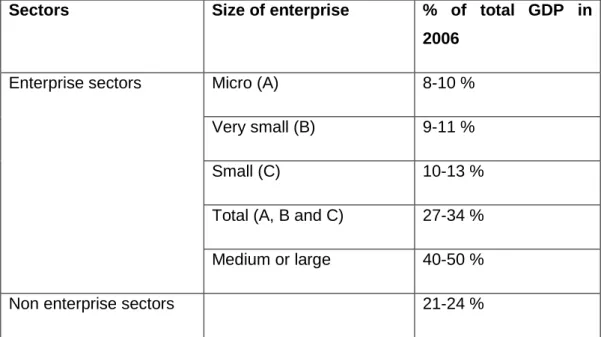
small, and medium / larger firms to GDP, 2006 30 Table 1.3 Provincial distribution of SMMEs in the formal and
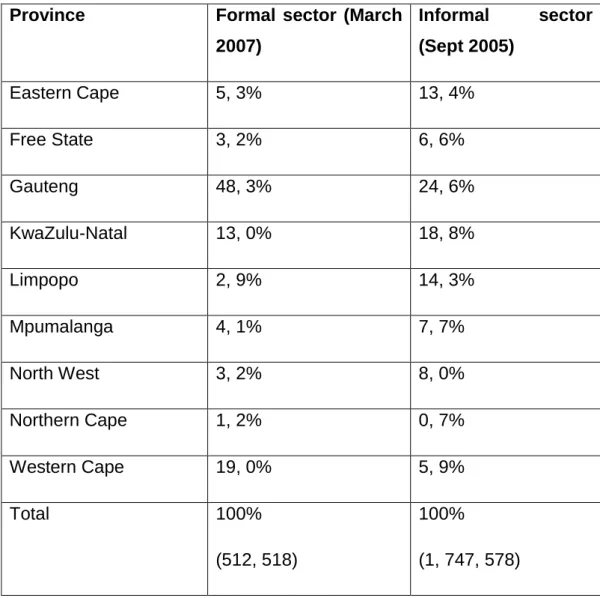
informal sectors 31
Table 1.4 South Africa‟s average annual percentage growth
in output per sector 36
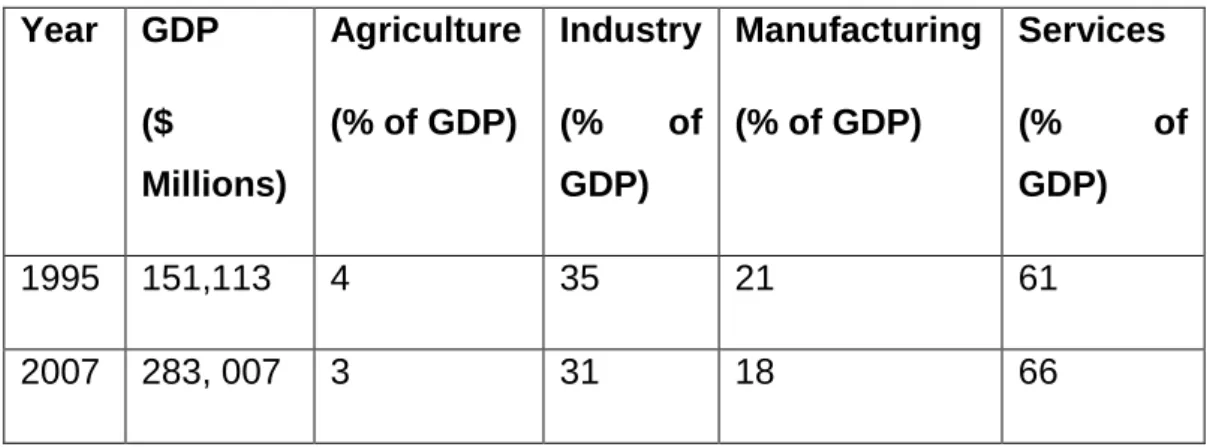
Table 1.5 Structure of services output 37
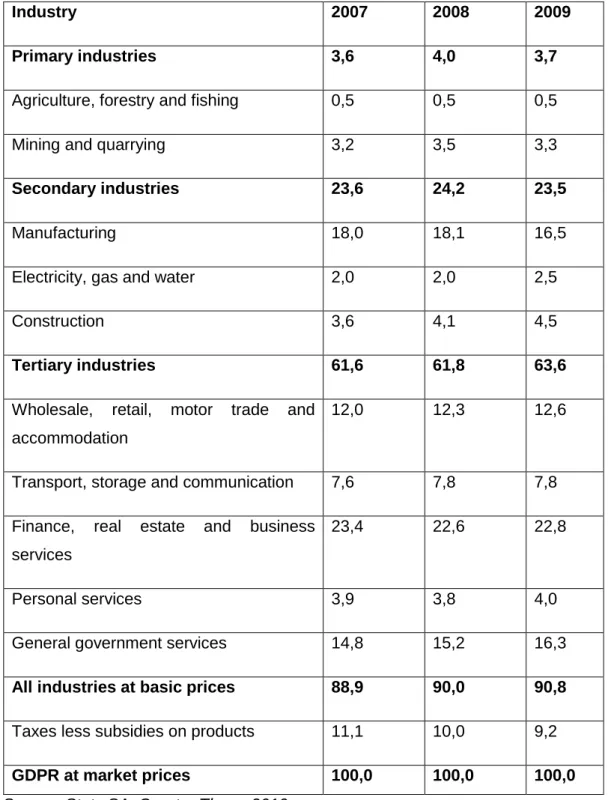
Table 1.6 Percentage contribution by sector to Gauteng GDP 38 Table 1.7 Number of businesses registered nationally in
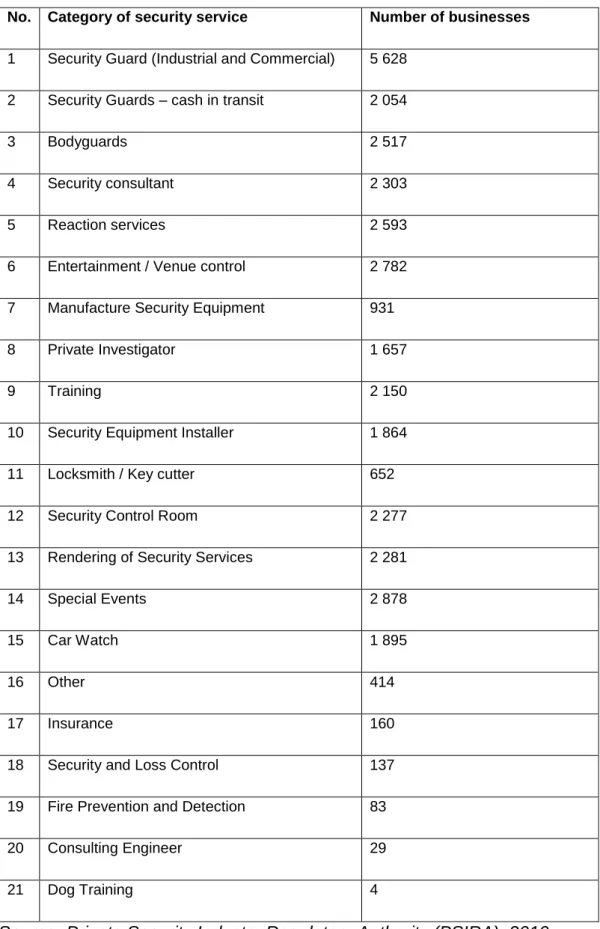
different categories of security service providers 42 Table 1.8 Provincial breakdown of active registered security
service businesses in South Africa 43
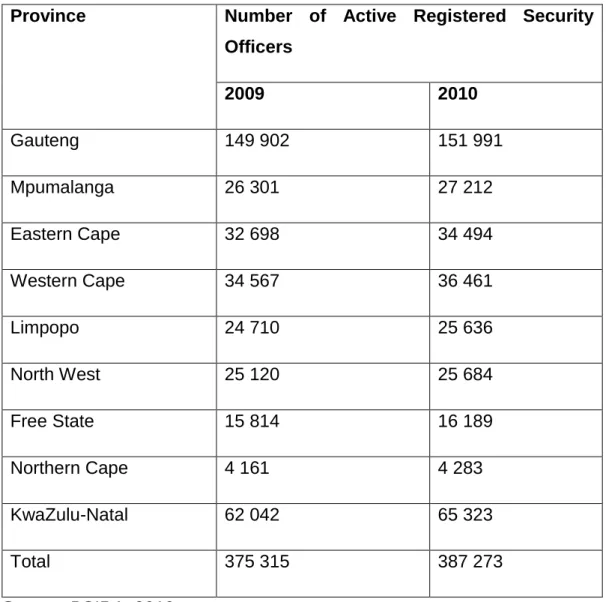
Table 1.9 Provincial breakdown of active registered security
officers in South Africa 44
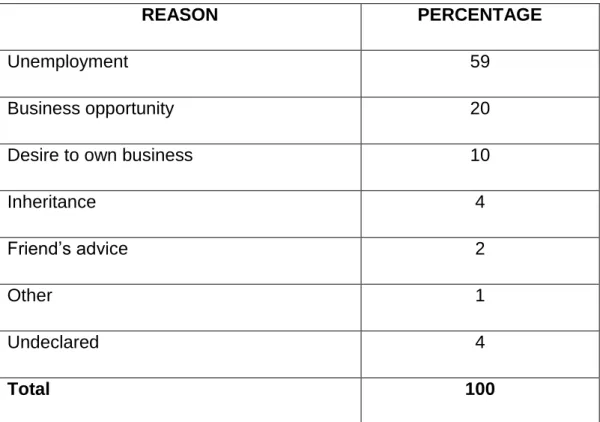
Table 2.1 Reasons for starting a business 62
Table 4.1 Performance of the GSSC in terms of the percentage of contracts awarded to HDIs during
the three financial years 107
Table 4.2 Performance of the GSSC in terms of the percentage of procurement expenditure to HDIs
during the three financial years 108
Table 4.3 Contracts awarded by GSSC versus procurement
expenditure for 2007/2008 financial year 109
Table 4.4 Contracts awarded by GSSC versus procurement
expenditure for 2008/2009 financial year 109
Table 4.5 Contracts awarded by GSSC versus procurement
xii
Table 4.6 Average contracts awarded by GSSC versus average procurement expenditure over three years
(2007/2008; 2008/2009; 2009/2010) 111
Table 4.7 Performance of GT in terms of the percentage of contracts awarded to HDIs during the three
financial years 112
Table 4.8 Performance of GT in terms of the percentage of procurement expenditure to HDIs during the three
financial years 113
Table 4.9 Contracts awarded by GT versus procurement
expenditure for 2007/2008 financial year 114
Table 4.10 Contracts awarded by GT versus procurement
expenditure for 2008/2009 financial year 115
Table 4.11 Contracts awarded by GT versus procurement
expenditure for 2009/2010 financial year 115
Table 4.12 Average contracts awarded by GT versus average procurement expenditure over three years
(2007/2008; 2008/2009; 2009/2010) 116
Table 4.13 Preferential procurement targets 120
Table 5.1 Combined average contracts awarded versus average procurement expenditure of GDF over
xiii
LIST OF FIGURES
Figure 3.1 Summary of the research methodology 84
Figure 4.1 The procurement cycle 133
LIST OF MAPS
1
CHAPTER ONE
INTRODUCTION AND BACKGROUND
1.1. Introduction
Since 1994 the Government of National Unity (GNU) has introduced different measures to promote the participation of historically disadvantaged individuals (HDI) in the economy, which include the Preferential Procurement Policy Framework Act (PPPFA) and the Broad Based Black Economic Empowerment Act (BBBEEA). Organs of state in the national, provincial and local spheres of government have been implementing the two policies to achieve their socio-economic objectives which include, amongst others, the development of Small, Micro and Medium Enterprises (SMMEs) through various measures including preferential procurement. Since the introduction of the two policies, the government has not assessed the progress made by state institutions to achieve the objectives of preferential procurement. Furthermore, there is some public perception that preferential procurement does not assist emerging HDI owned enterprises to access government opportunities as envisaged by the PPPFA.
On the basis of the above, the researcher took a decision to conduct a study to assess the opportunities provided by preferential procurement to small enterprises that are owned by HDIs in Gauteng. The focus of the research is on cleaning and security services. The research also investigated government procurement processes and procedures that enable the implementation of preferential procurement. The research provides mechanisms in the form of findings and recommendations that will assist government institutions to provide more opportunities to small enterprises in the country. The research also contributed to the development of knowledge in the field of Public Procurement and Supply
2
Chain Management (SCM) for use by academics and practitioners responsible for the implementation of PPPFA and BBBEEA.
The research report covers a range of topics in relation to the research problem under consideration. A history of discriminatory policies and practices of the apartheid government and the current legislative framework governing preferential procurement provide the first part of the background to the study. The second part of the background is based on the profile of Gauteng Province, the profile of SMMEs, and finally the contribution made by the services sector to the South African economy, with special emphasis on security and cleaning services. The problem statement, purpose statement and research questions are stated in the final part of the chapter. The chapter concludes by outlining the significance of the research, the limitations that were encountered during the research and the framework of this research report.
1.2. The legacy of apartheid
According to De La Harpe (2009) the tendency of discrimination against the indigenous people is traced back to the period when the European community settled in South Africa (1652–1910). This tendency of discrimination was pioneered by Europeans during the period of Dutch rule (De La Harpe, 2009: 241). The nature and magnitude of these discriminatory practices created a dependency syndrome to the extent that more than 70% of the population is disempowered by the lack of an enabling environment (Mabeta, 1991: 2). In 1994 only five per cent of the population, mostly whites, owned 88% of the nation‟s wealth (Asaf, Cato, Jawoko, and Rosevear, 2010: 22).
Furthermore, a job reservation policy aimed at improving the lives of Afrikaans white South Africans was implemented in all State-Owned
3
Enterprises (SOEs) including the Post Office, Iron and Steel Corporation (Iscor), Transnet, and South African Broadcasting Corporation (SABC), as well as state departments. According to Erasmus, Swanepoel, Schenk, Van der Westhuizen, and Wessels (2005: 160) the pre-1994 public service was mainly characterised by its divisions on the basis of race and gender, and its lack of representativeness.
The inequalities created by such discriminatory practices of the apartheid regime are still prevalent in South Africa today and result in the black population bearing the brunt of unemployment and poverty (Asaf, et al., 2010: 6). Due to this history of discrimination, unfair practices and marginalisation of people, various groups in society were denied the privilege of being economically active within the government procurement system (Bolton, 2006: 198). The majority of black citizens were not given equivalent opportunities to their white counterparts to participate in the economy of the country (Bolton, 2006: 198). The representation of black people in government was also restricted under the 1983 Constitution of the Republic of South Africa which established the tri-cameral system of government, thereby discouraging the participation of black people in government policy-making process. The diverse needs of black people, women, and people living with disabilities were severely neglected.
Small businesses which were mostly run by women were meant to produce products for subsistence, and were mainly based in agriculture. According to Mabeta (1991: 33) measures were taken to eradicate, restrict and control the growth of black entrepreneurship in South Africa. Such businesses were not recognised by the apartheid government as formal institutions that can provide services to the government. Montsho (2000: 12) further contends that black businesses emerged and developed in the informal sector because of the repressive legislation of the apartheid government against black entrepreneurship. There is a view that
4
systematic and institutionalised racism in South African society continues to restrict the access of black businesses to the public and private sector contracts required to grow black businesses into a new and dynamic force in the economy (Brown, Gqubul and Mosala, 2001: 40; Londt, 2005: 101).
The researcher believes that the discriminatory practices of the past apartheid government were evident in all sectors of the economy and all socio-economic spheres. According to Marais and Coetzee (2006: 112) the past segregationist legislation extended to most areas of life including access to participation in the economy. In the labour market, job reservation laws prohibited black people from occupying certain positions in the industry and government. Black trade unions were not recognised by the then labour relations system. These practices left a legacy that continues to be experienced by black people in the country today inasmuch as it often becomes difficult for black people, black-owned enterprises and SMMEs to compete with white-owned entities on an equal basis. The nature of government contract awards was also skewed towards the larger and well-established enterprises and the participation of small and medium enterprises owned by HDIs was neglected during the apartheid era (Bolton, 2007: 42).
Due to these apartheid practices, the South African economy is still characterised by an economy that comprises what has become known as the “first” and “second” economies. The second economy represents the previously disadvantaged groups of society comprising mainly black people. It is becoming extremely difficult for the two sectors of the economy to compete for economic opportunities under the democratic government. Southall (2006: 175) attributed this state of affairs to the democratic South Africa that created a new form of capitalism based on the policy of Black Economic Empowerment (BEE) that benefits a wealthy elite with political connections. According to Brand, Du Preez and Schutte
5
(2007: 188) this current state of economic disparities in South Africa challenges the government to implement innovative solutions that promote business development and create employment opportunities.
The legacy of apartheid presented the GNU elected in 1994 with many challenges. It was looking forward to building the nation and the economy by promoting a non-racial and non-sexist country whereby all people share in the economic resources of the country. To achieve this, government could not avoid addressing the many challenges and inequalities that were inherited. This required the government to prudently put policies in place to encourage socio-economic transformation. To this effect, measures were put in place to redress these socio-economic imbalances to facilitate the growth and development of a country based on the participation of all people.
1.3. Procurement reform and the policy environment
The Reconstruction and Development Programme (RDP) White Paper (1994) is the first policy document adopted under the GNU that attempted to catalyse the process of transformation in all sectors of the economy including government, trade and industry. Following the RDP White Paper (1994), the government introduced an affirmative action policy in 1998 to deal with discriminatory practices in employment. The Skills Development Act No. 97 of 1998 was also enacted to encourage investment by institutions in the development and training of people as the most important assets in any industry.
The government introduced the PPPFA to advance the interests of HDIs in sourcing government contracts with the intention of meeting RDP goals which include, amongst others, the promotion of SMMEs. The BBBEEA was also introduced to address the empowerment of black people, youth
6
and women in the economy through various strategies that included preferential procurement in both the public and the private sectors. Institutional support programmes were put in place to give support to emerging enterprises to increase their participation in the economy.
All these initiatives have a foundation from the Constitution of the Republic of South Africa (Act No. 108 of 1996). Despite all these initiatives to transform the socio-economic life of people and to achieve more integrated shared growth and development of the nation, the policies have encountered resistance from certain minority groups who regard these initiatives as reverse discrimination. Notwithstanding such resistance, the country is slowly undergoing a process of integrated socio-economic development. According to Bolton (2007: 42), the government embarked on a reform process of the government procurement system immediately after the end of apartheid in 1994. These procurement reforms and the policy framework governing SCM in the country provide more information on the background to the research. The policy environment for public sector procurement and preferential procurement reforms in South Africa is outlined in the following policy initiatives.
1.3.1. RDP White Paper, 1994
According to the RDP White Paper (1994) the aim of the RDP was to increase the participation of black people in the economy and to ensure that existing ownership patterns become less concentrated, more racially inclusive and that SMMEs account for a substantially larger part of economic activity. As a result, the RDP further aimed to address the discriminatory practices of the past that have left a legacy of inequality. In the RDP White Paper (1994), growth in employment can be enhanced through government support to small and medium enterprises.
7
The RDP White Paper (1994) further identified the key areas of support to SMMEs as, amongst others, access to marketing and procurement and the encouragement of inter-firm linkages. The government committed to facilitate entry of entrepreneurs into opportunities which arise from the RDP investments which include the sale, installation and servicing of domestic appliances and wiring, construction and related manufacturing and service activities. Moreover, the government committed itself to encourage entrepreneurs to seek technical training and joint ventures with the formal sector (RDP White Paper, 1994).
1.3.2. White Paper on National Strategy for the Development and Promotion of Small Businesses in South Africa, 1995
In March 1995 the GNU published a White Paper on National Strategy for the Development and Promotion of Small Businesses in South Africa. The national strategy aimed to, amongst others, create an enabling environment for small businesses, address the legacy of apartheid-based disempowerment of black businesses, support the advancement of women in all business sectors, create long term jobs, stimulate sector-focused growth, and level the playing fields for smaller and bigger businesses. The White Paper also recommended the enactment of the National Small Business Act and the Transactional and Procurement Act.
According to the White Paper (1995: 30) small businesses regard market constraints and the inability to sell their products and services as one of the most serious obstacles to establishing a business and ensuring growth beyond mere subsistence level. The White Paper further recommended the need to adjust public procurement practices at national, provincial and local government level, and by parastatals, in order to facilitate the granting of a proportion of contracts to black-owned or -controlled enterprises, and encourage small business tendering for such contracts.
8
The White Paper also acknowledged that the establishment of legislation laying down certain conditions and principles about set-asides for small enterprises, non-discriminatory public sector procurement rules and incentives for big businesses for sub-contracting to small enterprises could accelerate progress and lead to participation among all firms rather than only a few progressive ones (White Paper on National Strategy for the Development and Promotion of Small Businesses in South Africa, 1995).
1.3.3. The Ten Point Plan on procurement reform
As part of South Africa‟s initiatives to introduce new reforms in government procurement, the Ten Point Plan was introduced in November 1995 as a set of interim strategies to further the procurement reform process. The previous Tender Board policies and procedures favoured the larger and better established entrepreneurs and therefore did not create an environment that allows easy access for SMMEs into the mainstream procurement activities funded by the public sector (Ten Point Plan, 1995: 3). The plan introduced a set of ten strategies which include, amongst others, preferential procurement that aimed to give preference points to companies owned by people disadvantaged by racial discrimination in the previous political dispensation of apartheid, as well as women entrepreneurs when competing for government contracts (Ten Point Plan, 1995: 7).
1.3.4. National Small Business Act, 1996
The National Small Business Act (NSBA) No. 102 of 1996 was enacted to promote support to small businesses in the Republic. The NSBA introduced a standard definition of SMMEs which categorises businesses per sector or industry. The NSBA further made provision for the establishment of Ntsika Enterprise Promotion Agency, which aimed to
9
expand, co-ordinate and monitor the provision of training, advice, counselling, and financial and non-financial support to small businesses. The agency also aimed to facilitate market access for small enterprises and strengthen their capacity to successfully compete in the broad economy.
1.3.5. Constitution of the Republic of South Africa Act, 1996
In terms of section 217 of the Constitution of the Republic of South Africa Act No. 108 of 1996, any organ of state in the national, provincial and local spheres of government that procure for goods and services must do so in accordance with a system which is fair, transparent, equitable, competitive, and cost-effective. This section also allows these organs of state to implement a procurement policy providing for categories of preferences in the allocation of contracts and the advancement and protection of persons or categories of persons disadvantaged by unfair discrimination.
1.3.6. Green Paper on Public Sector Procurement Reform in South Africa, 1997
As part of the procurement reform initiatives in the country, the Ministry of Finance and the Ministry of Public Works established a task team with funding from the World Bank that produced the Green Paper on Public Sector Procurement Reform to make the tendering system more easily accessible to SMMEs. According to the Green Paper (1997) the government‟s aim was to transform the public procurement process in order to achieve its socio-economic objectives within the ambit of good governance. The socio-economic objectives through the procurement system includes access to tendering information and the simplification of tender documents, break-out procurement, awarding of tenders in terms of
10
a development objective mechanism, drafting of an affirmable SMME participation programme, promoting employment-intensive practices, affirming marginalised sectors of society in construction projects, and the development of an affirmable procurement policy (Green Paper on Public Sector Procurement Reform in South Africa, 1997: 6).
1.3.7. Preferential Procurement Policy Framework Act, 2000
The Preferential Procurement Policy Framework Act No. 5 of 2000 was enacted to give effect to section 217 (3) of the Constitution of the Republic of South Africa (1996) which requires the national legislation to prescribe a framework within which preferential procurement will be implemented. The Act prescribes in detail categories of persons referred to as Historically Disadvantaged Individuals (HDIs) who qualify for preference in the allocation of contracts which include people who did not have franchise in national elections prior to the implementation of the 1983 Constitution and/or the Interim Constitution of 1993. This included women and people living with disabilities. The Act also aims to promote the attainment of RDP goals which include, amongst others, the development of SMMEs.
The Preferential Procurement Regulations (2001) were introduced to put practical measures in place and prescribe the threshold values for the implementation of the PPPFA. Due to the challenges posed by the inconsistency between the BBBEEA and the PPPFA, the new Preferential Procurement Regulations (2011) that attempt to merge the two policies were issued and became effective from 7 December 2011. The new regulations do not change the value given to preferential procurement, but rather attempt to encourage transformation in companies by incorporating all the seven elements of BBBEE into the preferential procurement system.
11
1.3.8. Broad Based Black Economic Empowerment Act, 2003
The Act prescribes a legislative framework for the promotion of BEE in order to realise the constitutional right to equality, increase broad-based and effective participation of black people in the economy, and promote a higher growth rate, increased employment, more equitable income distribution, promote economic unity of the nation, protect the common market, and promote equal opportunity and equal access to government services. The PPPFA and the BBBEEA have been enacted to achieve similar objectives of redressing economic imbalances of the past, including the promotion of equal distribution of economic resources of the country. The BBBEEA also aims to include the private sector to contribute to BEE through various strategies such as the development of small enterprises.
1.3.9. Codes of Good Practice for BBBEE, 2007
The Codes of Good Practice for BBBEE (2007) identify the following seven elements of BBBEE:
Ownership element (Code Series 100) which measures the effective ownership of enterprises by black people.
Management control element (Code Series 200) which measures the effective control of enterprises by black people.
The employment equity element (Code Series 300) which measures initiatives intended to achieve equity in the workplace in terms of the Employment Equity Act (EEA) No. 55 of 1998 and BBBEEA.
The skill development element (Code Series 400) which measures the extent to which employers carry out initiatives designed to develop the competencies of black employees.
12
The preferential procurement element (Code Series 500) which measures the extent to which enterprises buy goods and services from suppliers with strong BBBEE procurement recognition levels.
The enterprise development element (Code Series 600) which measures the extent to which enterprises carry out initiatives intended to assist and accelerate the development and sustainability of other enterprises.
The socio-economic development and sector specific contributions element (Code Series 700) which measures the extent to which enterprises carry out initiatives that contribute towards socio-economic development or sector-specific initiatives that promote access to the economy for black people.
Enterprises are measured against the above seven elements to determine their level of contribution to BBBEE in South Africa. The preferential procurement element is the focus of this research and will be discussed in detail in chapter two.
1.3.10. Country Procurement Assessment Review, 2003
The Country Procurement Assessment Review (CPAR) was a joint initiative between the South African Government and the World Bank (2003) to study and analyse the existing public procurement system in South Africa and to recommend suitable actions to improve the economy, efficiency, predictability and transparency of the procurement process. Similar to the Green Paper on Public Procurement Reform in South Africa (1997), the CPAR also justifies the need for the preferential procurement system on the basis of the disparities caused by the apartheid system. South Africa is faced with a dual economy: one, which used to be the “mainstream” economy, led by a relatively small minority of European origin (13 per cent of the approximately 45 million population), and another “emerging economy” subscribed to largely by people of African descent.
13
The objective of preferential procurement is to merge the dual economies into a more productive and more competitive economy over time (World Bank, 2003: 21).
1.3.11. Gauteng Strategy for Broad Based Black Economic Empowerment (BBBEE Strategy)
The BBBEE Strategy recognises that SMMEs are a major lever for BBBEE, providing opportunities to increase meaningful black participation in economic activities, especially by black women, co-operatives and designated groups. Furthermore, sustainable enterprise development will expand the productive capacity of the economy and act as an engine of job creation.
The strategy further integrates the following interventions to create a favourable environment for enterprise development:
Creating a favourable procurement opportunities and suitable tender specifications for SMMEs and promote set-asides for SMME participation in procurement.
Supporting small business development in high-growth sectors and the growth of SMMEs owned and managed by black people and black women, in particular the youth, the disabled, and co-operatives. This intervention aims to embed SMME priorities into sector growth plans and Gauteng Provincial Government‟s (GPG) procurement practices.
Providing financial and non-financial support including access to procurement opportunities and contract guarantees. The Gauteng Enterprise Propeller (GEP) was set up to assist in this regard (BBBEE Strategy, 2005: 12).
14
GPG established the above measures to further the objectives of PP Policy in the province in order to empower the HDI-owned enterprises. All these measures are based on the creation of procurement opportunities for SMMEs that are owned by HDIs, which the research aimed to investigate.
1.3.12. Other SMME development initiatives
According to the Government Communications (2005: 173) there are an estimated three million small businesses in South Africa including businesses of an informal nature. The Department of Trade and Industry‟s (DTI) small business programme ensures that all sector-development policies incorporate the development, growth and investment measures with regard to maximising small business‟s contribution to the overall economy. The programme‟s initiatives focus on, amongst others, cross-cutting and sectoral initiatives, the introduction and review of small-business-specific incentives, improved access to finance/capital, improved access to information and advice, and promoting entrepreneurship among the youth and women.
The National Department of Public Works was mandated to establish a separate public entity in the construction industry which will be responsible for, amongst others, ensuring the growth and development of emerging sectors (Government Communications, 2003/2004: 180). The Emerging Contractor Development Programme (ECDP) was established as a sub-programme of the Construction Industry Development Programme. The programme (ECDP) awarded contracts for 1 653 small projects with a total value of R146 million to historically disadvantaged enterprises and individuals in 2003. The majority of these enterprises were SMMEs. Contracts to the value of R791 million were awarded to emerging enterprises under the ECDP in 2003/2004, of which R88 million was
15
allocated to women-owned enterprises. The majority of small enterprises awarded contracts under the ECDP in 1999 were involved in the support side of the industry, primarily providing horticultural and cleaning services (Government Communications, 2003/2004: 180).
1.4. Black Economic Empowerment
The Black Business Council (BBC) was appointed in 1998 to establish BEE legislation, and the state established the Black Economic Empowerment Commission (BEECom) to develop and implement BEE policies in the country (Asaf, et al., 2010: 22). The idea of BEECom arouse out of a resolution taken at the Black Management Forum (BMF) national conference in Stellenbosch, from 14 to 15 November 1997. The prevailing view at the conference was that black people should direct and take charge of a new vision for BEE, a process that, until then, had been conceptualised, controlled and driven by the private sector. The BEECom was then formally established in May 1998 under the auspices of the BBC, an umbrella body representing 11 black business organisations.
Government at national, provincial and local spheres, and state-owned enterprises (SOE) procure goods and services worth more than R110 billion a year. However, it is difficult to estimate what portion goes to small and medium businesses and black entrepreneurs because of poor, and in many instances, non-existent monitoring and evaluation of contract awards. For this reason Brown, et al., (2001) recommended that the government must take appropriate steps to award contracts to SMMEs and black-owned enterprises to expedite their growth and development. There are a number of aspects to address in order to reach the growth and development objectives, which include enterprise development and deregulation (Londt, 2005: 149).
16
Londt (2005) supports the public perception that HDI-owned enterprises do not access preferential procurement opportunities in spite of the implementation of Preferential Procurement Policy (PP Policy). Such lack of access is attributed to racism in society. However, the researcher focused on access to preferential procurement opportunities with the assumption that racism is no longer a problem.
According to the DTI (2004a) BEE is defined as a coherent and integrated socio-economic process that directly contributes to the economic transformation of South Africa and brings about significant increases in the number of black people who own, manage and control business activities in the country, and also helps to reduce income inequalities. In South Africa the term BBBEE was coined in order to make economic empowerment a more inclusive process. BBBEE means the economic empowerment of all black people including women, workers, youth, people living with disabilities, and people living in rural areas (DTI, 2004a).
1.4.1. Beneficiaries of empowerment
The apartheid South Africa promoted the discrimination of black people in all sectors of the economy. The democratic South Africa introduced policies such as the EEA, the PPPFA and the BBBEEA to redress these imbalances of the past. However, the three policies provide different interpretations of the beneficiaries of empowerment. It is therefore important to attempt to conceptualise the empowerment beneficiaries from these three legislative prescripts.
In the workplace, the EEA has been enacted to promote fair treatment and eliminate discrimination in employment, and also to implement affirmative action measures to redress disadvantages in employment experienced by designated groups in order to ensure their equitable representation in all
17
occupational categories and levels in the workforce. The beneficiaries of employment equity legislation are people from designated groups. The EEA defines designated groups as black people, women and people with disabilities. All women and people living with disabilities irrespective of race or colour are regarded as people from designated groups. The EEA further defines black people as a generic term which means Africans, Coloreds and Indians.
The PPPFA was enacted to give effect to section 217 of the Constitution of the Republic of South Africa (Act No. 108 of 1996) to provide a framework for the implementation of preferential procurement in government. The PPPFA aims to advance HDIs and promote the achievement of RDP goals. In terms of the Preferential Procurement Regulations (2001) HDI means a South African citizen who, due to the apartheid policy that had been in place, had no franchise in national elections prior to the introduction of the Constitution of the Republic of South Africa, 1983 (Act No. 110 of 1983) or the Constitution of the Republic of South Africa, 1993 (Act No. 200 of 1993), and/or who is a female, and/or who has a disability, provided that a person who obtained South African citizenship on or after the coming into effect of the interim constitution, is deemed not to be a HDI.
The PPPFA regulations adopted a different approach in identifying the beneficiaries of empowerment in that they cover all South African citizens rather than a narrow definition in the EEA that specifically refers to Africans, Coloreds and Indians only. The PPPFA definition covers all South African citizens who did not have the right to vote in national elections prior to the 1993 Interim Constitution, irrespective of nationality. According to Pauw and Wolvaardt (2009: 82) the PPPFA definition of HDI is not based on race, but on the nature of the discrimination that people were subjected to in the past.
18
The PPPFA definition also includes timeframes that must be used to identify people as HDIs. Only people who were born prior to the 1993 Interim Constitution are regarded as HDIs. Any South African citizens, regardless of race or colour, who were born after the coming into effect of the Interim Constitution, are not covered by the PPPFA as HDIs.
The BBBEEA was also enacted to promote economic transformation to enable meaningful and effective participation of black people in the economy. Similar to the EEA, the BBBEEA also defines black people as a generic term which means Africans, Coloureds and Indians. Section one of the BBBEEA further defines broad-based black economic empowerment as the economic empowerment of all black people including women, youth, workers, people with disabilities and people living in rural areas. According to the Draft Codes of Good Practice for BBBEE (2004) the beneficiaries of BBBEE shall be black people, who would encompass black women, black workers, black youth, black people with disabilities and black people living in rural areas. This wording of the draft codes can be construed to exclude black men from the beneficiaries of empowerment.
According to the DTI (2007) black people include only natural persons who are citizens of the Republic of South Africa by birth or descent, or are citizens of the Republic of South Africa by naturalisation:
a) Occurring before the commencement date of the Constitution of the Republic of South Africa Act of 1993, or
b) Occurring after the commencement date of the Constitution of the Republic of South Africa Act of 1993, but who, without the apartheid policy, would have qualified for naturalisation before then.
19
This means that people who obtained South African citizenship by naturalisation after the coming into effect of the Interim Constitution of the Republic of South Africa qualify as black people for the purpose of BBBEE only if those people would have qualified for citizenship prior to the Interim Constitution if it was not because of the apartheid policy or there was no apartheid policy that prevented them from becoming citizens. Conversely, people who obtained South African citizenship by naturalisation after the coming into effect of the Interim Constitution of 1993 are not regarded as black people for the purposes of BBBEE if those people would not have qualified for citizenship prior to the 1993 Interim Constitution without the apartheid policy. The further implication of this definition is that South African citizens by birth or descent enjoy unlimited benefits of BBBEE irrespective of their date of birth.
The EEA and PPPFA do not make a special provision for the empowerment of youth and black people living in rural areas although the PPPFA Regulations make provision for the development of enterprises located in rural areas. This results in inconsistencies among the three prescripts of empowerment. The fact that youth are not explicitly stated as one of the targeted groups for empowerment under both the EEA and PPPFA has serious implications for policy implementation. This means that people who are classified as youth in terms of their age cannot receive any form of preference over the other groups in society when implementing either the EEA or the PPPFA. The youth are therefore given the same treatment as other groups of people. However, a youth from the designated group according to the EEA or a youth who is regarded as a HDI under the PPPFA is given preference not according to the classification of youth, but rather for being part of the designated groups or a HDI. This is contrary to the BBBEEA which makes special provision for youth as one of the beneficiaries of empowerment.
20
Another inconsistency is encountered with regard to Africans. The EEA and the BBBEEA define black people as a generic term which includes Africans, Coloureds and Indians. There are many groups of people who can be classified as Africans. In simple terms the word Africans means people from Africa. It is not explicit in the EEA and the BBBEEA whether Africans refers to South African citizens only, or to all people of Africa, or to all people of African descent. The definition of HDI further allows for the advancement of people who are not black (a white female or a white male who is disabled) whereas the BBBEEA does not (Marais and Coetzee, 2006: 121).
Neither the BBBEEA nor the EEA make reference to Chinese people who have been living in South Africa prior to 1993 Interim Constitution. The general approach in implementing the empowerment legislation in South Africa excluded Chinese people for years until a High Court decision changed the interpretation of legislation in relation to the definition of black people for the purposes of empowerment. In the case of the Chinese Association of South Africa versus the Minister of Labour, the High Court decided that the Chinese people fall within the ambit of the definition of „black people‟ in section one of the EEA and section one of the BBBEEA.
Montsho (2000: 16) noted some dissatisfaction amongst Asian, Indian and Coloured people who were not in favour of the use of the word “Black” as it is too Africanist and often excludes them from the current privileges enjoyed by blacks. This dissatisfaction arose out of the fact that these populations were also discriminated against in the past, and hence deserve the same privileges as blacks. The definition of an HDI in the PPPFA does not exclude Chinese, Indian, Asian and Coloured people per se, although practitioners responsible for the implementation of the procurement policy in government have erred by excluding these groups
21
of people from enjoying the benefits of empowerment since the coming into effect of the PPPFA.
The beneficiaries of empowerment should be reviewed from the EEA, PPPFA and BBBEEA to arrive at one standard definition. South Africa cannot monitor and assess the progress made to redress the imbalances of the past if the targeted groups for empowerment remain inconsistent from the different legislative prescripts. Although the custodians of EEA, PPPFA and BBBEEA are three different entities, the continued use of three competing sets of legislation is unlikely to yield positive results for South Africa. In examining the competing legislation between the PPPFA and BBBEEA, Pauw and Wolvaardt (2009) concluded that: “In as far as the preferential procurement element of Act 53 of 2003 and its subordinate legislation is a procurement system, it appears to be unconstitutional”.
In light of this inconsistency, the National Treasury (2007) issued an instruction to all Accounting Officers and Accounting Authorities to apply the current PPPFA and the Preferential Procurement Regulations (2001) until such time that the revised Act is officially enacted by Parliament and the revised regulations pertaining to PPPFA aligned with the Codes of Good Practice for BEE are promulgated by the Minister of Finance (National Treasury, 2007). This situation resulted in the implementation of the PPPFA as the only legitimate policy for preferential procurement in government until 07 December 2011 when the revised regulations became effective. It is on this basis that this research project addresses the matter of preferential procurement as specified by the PPPFA and its regulations.
As the research is based in the Gauteng Province of South Africa, an examination of the Province is important.
22
1.5. Profile of Gauteng Province
Gauteng is one of the nine provinces of South Africa situated in the north-eastern part of the country, and is landlocked, being adjoined by Limpopo in the north, Mpumalanga in the east, Free State in the south, and North West in the west. The borders of the province are depicted in Map 1.1 below. The province constitutes 1,4% of the country‟s total land area (Stats SA, 2003). The province is regarded as the country‟s economic heartland, with its Gross Geographic Product rated at 34% of the National Gross Domestic Product (GDP).
The province has three metropolitan municipalities and two district municipalities. The metropolitan municipalities are City of Johannesburg, City of Tshwane and Ekurhuleni. The district municipalities are West Rand and Sedibeng. These municipalities are the five main regions of the province. West Rand District has four local municipalities (Westonaria, Randfontein, Mogale City, and Merafong), while Sedibeng District has three local municipalities (Midvaal, Emfuleni and Lesedi). The City of Tshwane incorporated the former Metsweding District that had two local municipalities (Kungwini and Nokeng Tsa Taemane). The integration was effective from the day of the 2011 local government elections, 18 May 2011. The Member of the Executive Council (MEC) responsible for local government in Gauteng issued a notice in the Government Gazette for the disestablishment of all three municipalities in Metsweding region to integrate them under City of Tshwane (Department of Local Government and Housing, 2010).
There are eleven provincial departments in Gauteng, namely: Education, Finance, Economic Development, Infrastructure Development, Roads and Transport, Local Government and Housing, Health and Social Development, Sports, Arts, Culture and Recreation, Agriculture and Rural Development, Community Safety, and the Office of the Premier. The
23
number rises to 12 if the Gauteng Provincial Legislature is included. The research is based on Gauteng Department of Finance (GDF) as a case study. GDF was established in 2010 as a merger between the former Gauteng Shared Services Centre (GSSC) and Gauteng Treasury (GT). The structure of GDF provides for two main divisions, Treasury and Shared Services, which represents the former two departments (GSSC and GT).
The total population of the province is estimated at 11 191 700 which accounts for 22,4% of the country‟s population (Stats SA, 2010). The majority of people in the province are females (5 597 000) as compared to males (5 594 700). The province is inhabited by people from diverse cultural backgrounds from all the provinces of the country as well as from other countries. The majority of the people live in the three metropolitan areas of the province, with City of Johannesburg housing approximately 37% of the total population of Gauteng (Stats SA, 2001). In 2001 the majority of the population was black (74%) followed by white people (20%), coloured people (4%) and an Indian/Asian population of 3% (Stats SA, 2001).
The majority of people who were not working in 2001 were black at 32%, followed by coloureds at 23%. The Indian/Asian population and white population have lower proportions of unemployed at 8,1% and 4,6% respectively. The proportion of people employed in the formal sector in Gauteng was 87% in 2001 excluding the agricultural sector (Stats SA, 2001). The working age population of Gauteng was employed in wholesale and retail at 19%, social services at 19%, insurance at 16%, manufacturing at 15%, and private households at 11% (Stats SA, 2001). In Gauteng 21,4% of employees earned less than R800 a month as compared to the national percentage of 33% on the same salary scale. A total of 78,4% of employees in Gauteng earned more than R801 a month,
24
as compare to 67% nationally. About 2,9% of employees in Gauteng earned more than R25 000 a month, compare to 1,6% nationally (Stats SA, 2001).
Map 1.1: Map of Gauteng
Source: www.google.co.za, 2011
1.6. Small, Medium and Micro Enterprises
It is difficult to arrive at a standard definition of small business as they differ in many ways, i.e. some businesses may be small in terms of labour employed but may be large in terms of turnover or profits or any other criteria used to define small business.
25
According to Phago and Tsoabisi (2010: 155) SMME establishments in South Africa refer to small businesses or enterprises. This means any entity, whether or not they are incorporated or registered under any law, consisting mainly of persons operating small enterprise concerns in any economic sector, and established for the purpose of promoting the interests of small enterprises, are considered SMMEs (Phago and Tsoabisi, 2010: 155).
The SMME sector is divided into three main components, i.e. micro enterprises, small enterprises and medium sized enterprises. The micro sector includes small firms called survivalists or very small enterprises, which are operated by individuals who cannot find employment and the aim of entering into business is to generate at least some income, normally below the poverty line, for survival of their families. According to Tustin (2003: 37) survivalist enterprises do not have salaried employees as they comprise only the owner. The characteristics of the survivalist enterprise sector comprise a large mix of micro ventures engaged in hawking, street vending, subsistence farming and a wide range of other low productivity, legal and illegal activities in the informal sector (Tustin, 2003: 37).
Micro enterprises are exempt from paying Value Added Tax (VAT) if their annual earnings are less than R300 000. However, the threshold for compulsory VAT registration was increased from R300 000 to R1 million with effect from 1st March 2009 (South African Revenue Service, 2009). The annual turnover tax for micro enterprises with annual turnover of up to R1 million was adjusted with effect from March 2011 to be payable only if turnover exceeds R150 000 (Gordhan, 2011). Micro enterprises are also exempt from labour legislation requirements and apply their own accounting procedures (Institute of Risk Management of South Africa, 2006).
26
An adequate definition of SMMEs can only be developed by incorporating both the qualitative and quantitative attributes in the definition. Qualitative attributes include management structure and decision-making, control and independence of ownership, financial practice and trading style. Quantitative parameters include market share, turnover, number of people employed, size of capital invested, net worth, value added, and volume of production (Hodgetts and Kuratko, 1995). Similarly, the key issues that must be considered to determine if an enterprise is an SMME are: entrepreneurial orientation, management and ownership, labour status, informal or semi-formal economy, and the size of an entity (DTI, 2005-2007).
In terms of section 1 of the NSBA (1995, Act No. 102) small business refers to a separate and distinct business entity, including co-operative enterprises and non-governmental organisations, managed by one owner or more, including its branches or subsidiaries, if any, which is predominantly carried in any sector or subsector of the economy, which can be classified as micro, a very small, a small or a medium enterprise. According to Hugo, Badenhorst-Weiss, Biljon, and Van Rooyen (2006: 336) small businesses are usually owner managed and employ a total of between five and fifty full-time employees. The total annual turnover can range between R150 000 to R40 million (Hugo, et al., 2006: 336). The SMME Forum (2004, cited in Ramodumo, 2007) defined a SMME as “an enterprise which is majority owned and managed by previously disadvantaged individuals”. This definition was adopted for the purposes of this research.
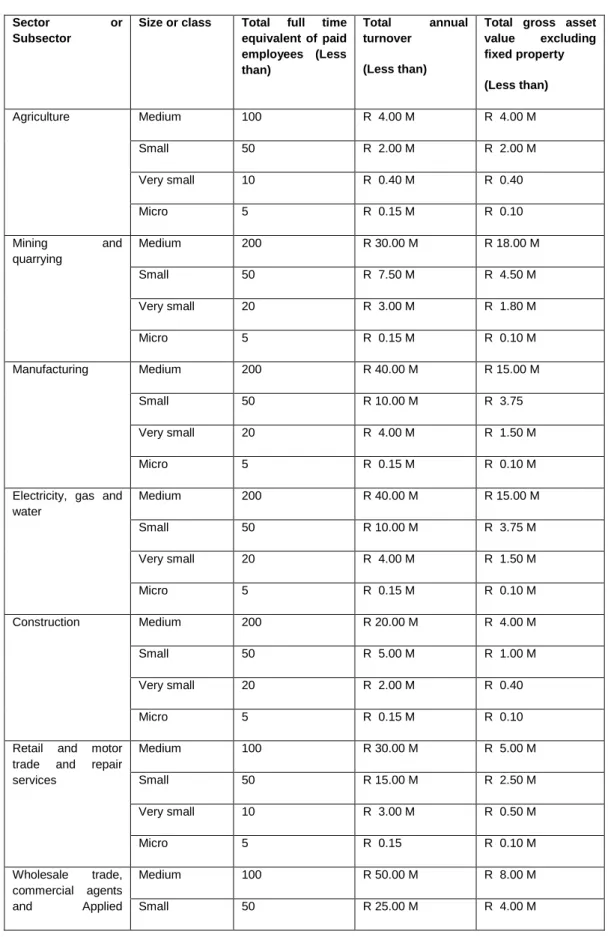
The table below defines SMMEs in terms of the economic sector in which entities operate, size, employment, annual turnover, and gross asset value.
27
Table 1.1: Classification of the definition of SMMEs according to the NSBA, 1996
Sector or Subsector
Size or class Total full time equivalent of paid employees (Less than) Total annual turnover (Less than)
Total gross asset value excluding fixed property (Less than) Agriculture Medium 100 R 4.00 M R 4.00 M Small 50 R 2.00 M R 2.00 M Very small 10 R 0.40 M R 0.40 Micro 5 R 0.15 M R 0.10 Mining and quarrying Medium 200 R 30.00 M R 18.00 M Small 50 R 7.50 M R 4.50 M Very small 20 R 3.00 M R 1.80 M Micro 5 R 0.15 M R 0.10 M Manufacturing Medium 200 R 40.00 M R 15.00 M Small 50 R 10.00 M R 3.75 Very small 20 R 4.00 M R 1.50 M Micro 5 R 0.15 M R 0.10 M Electricity, gas and
water Medium 200 R 40.00 M R 15.00 M Small 50 R 10.00 M R 3.75 M Very small 20 R 4.00 M R 1.50 M Micro 5 R 0.15 M R 0.10 M Construction Medium 200 R 20.00 M R 4.00 M Small 50 R 5.00 M R 1.00 M Very small 20 R 2.00 M R 0.40 Micro 5 R 0.15 M R 0.10
Retail and motor trade and repair services Medium 100 R 30.00 M R 5.00 M Small 50 R 15.00 M R 2.50 M Very small 10 R 3.00 M R 0.50 M Micro 5 R 0.15 R 0.10 M Wholesale trade, commercial agents and Applied Medium 100 R 50.00 M R 8.00 M Small 50 R 25.00 M R 4.00 M
28
Services Very small 10 R 5.00 M R 0.50 M Micro 5 R 0.15 M R 0.10 M Catering, accommodation and other trade Medium 100 R 10.00 M R 2.00 M Small 50 R 5.00 M R 1.00 M Very small 10 R 1.00 M R 0.20 M Micro 5 R 0.15 M R 0.10 M Transport, storage and communications Medium 100 R 20.00 M R 5.00 M Small 50 R 10.00 M R 2.50 M Very small 10 R 2.00 M R 0.50 M Micro 5 R 0.15 M R 0.10 M Finance and business services Medium 100 R 20.00 M R 4.00 M Small 50 R 10.00 M R 2.00 M Very small 10 R 2.00 M R 0.40 M Micro 5 R 0.15 M R 0.10 M Community, social and personal services Medium 100 R 10.00 M R 5.00 M Small 50 R 5.00 M R 2.50 M Very small 10 R 1.00 M R 0.50 M Micro 5 R 0.15 M R 0.10 M Source: NSBA, 1996
The above definition confirms the views of Gunaratne (2008: 8) that the criteria used to categorise SMMEs are mostly arbitrary as small businesses differ substantially across sectors, and that there is no universally accepted definition of small business.
The DTI (2007) made another classification of enterprises that have a significant implication on the definition of SMMEs as prescribed by the NSBA. The codes classify enterprises according to two broad categories of Qualifying Small Enterprises (QSEs) and Exempted Small and Micro-Enterprises (ESMEs). The QSEs are companies with an annual total turnover of between R5 million and R35 million. The QSEs are required to
29
comply with at least four of the seven elements of the BEE scorecard. The ESMEs are companies with an annual total turnover of R5 million or less. The ESMEs are exempted from complying with the BBBEEA and its codes of good practice and they enjoy a deemed BEE recognition of a level four contributor. Unlike the NSBA, the BEE Codes use annual turnover of companies as the only valid criteria to classify enterprises as SMMEs.
As Gunaratne (2008: 6) observes, “organisations in different parts of the world have developed their own criteria to define small businesses to suit their own situations”, the DTI also introduced the QSEs and ESMEs scorecards to ease the implementation of BEE.
The NSBA, the BBBEEA, the Codes of Good Practice for BBBEE and the research (Gunaratne, 2008; Tustin, 2003) undertaken in the field of SMME development provide different approaches to the definition of small enterprises. Some support the use of both qualitative and quantitative approaches to arrive at a concise definition while others support a one-sided approach. When the rules of precedence are applied to determine the appropriate policy that must be used to define SMMEs, the provisions of the BBBEEA and its Codes of Good Practice will always prevail. However, it is questionable for the Codes of Good Practice for BBBEE to prevail over the NSBA as an act of parliament. The DTI, as the custodian of BBBEE policy, must review both the BBBEEA and the NSBA to derive a standard definition (DTI, 2007).
1.7. Profile of SMMEs
The small enterprise sector makes up about 95% of all enterprises in South Africa, which is a combination of formal and informal activities. The total number of firms registered for VAT and enterprises in the informal sector ranges between 1.8 million and 2.5 million. If rural subsistence