ContentslistsavailableatScienceDirect
Thinking
Skills
and
Creativity
jo u r n al hom e p ag e : htt p : / / w w w . e l s e v i e r . c o m / l o c a t e / t s c
Making
L2
learners’
reasoning
skills
visible:
The
potential
of
Computer
Supported
Collaborative
Learning
Environments
Mei
Lin
a,∗,
Anne
Preston
a,c,
Ahmed
Kharrufa
b,
Zhuoran
Kong
aaSchoolofEducation,CommunicationandLanguageSciences,KingGeorgeVIBuilding,NewcastleUniversity,NewcastleuponTyne,NE1
7RU,UK
bOpenLab,SchoolofComputingScience,89SandyfordRoad,NewcastleUniversity,NewcastleuponTyne,NE18HW,UK cLecturerinTechnologyEnhancedLearning,CentreforHigherEducationResearchandPractice,KingstonUniversity,London,UK
a
r
t
i
c
l
e
i
n
f
o
Articlehistory:
Received10February2016
Receivedinrevisedform31May2016 Accepted21June2016
Availableonline2July2016 Keywords:
Higherorderthinking Reasoningskills Criticalthinking
Computersupportedcollaborativelearning environment
a
b
s
t
r
a
c
t
ThispaperexplorestheuseofComputerSupportedCollaborativeLearningEnvironments (CSCLE)asmultimodalspacesforpromotingcriticalthinkingforEnglishasSecond Lan-guageLearning(L2)educationfrommultipleperspectives(Technology,ThinkingSkillsand Interaction).Theexplorationfocusesontheuseofamultitouchtabletop,andan accompa-nyingapplicationcalledDigitalMysteries,asaffordancesinCSCLE’sformakingreasoning skill-basedthinkingvisibleforL2learninginHigherEducation.
DespitetheworldwidepromotionofteachingthinkinginL2education,itisnotalways easyforteacherstoidentifythetypesofthinkingskillsbeingtargetedinL2 pedagogi-caltasks.Totheauthors’knowledge,littleempiricalinteractionalevidenceisavailableto demonstratecriticalthinkinginL2learnertalkduringgroupwork.Thispaperexamines interactionsamongthreegroupsofChineseEnglishLanguagelearnersatahigher educa-tioninstitutioninaCSCLE.Videodatawerecollectedofstudents’thinking-in-actionwhilst engaginginmultimodalinteractionsintheenvironment.Resultsshowthatnew technolo-giescanprovideinnovativeandempiricallydrivenwaysinwhichL2learners’thinking isexternalisedandhowcriticalreasoningcanbetracked,promoted,evaluatedand self-regulated.ThefindingssuggestthatcollaborationsinaCSCLEcansupportthecompletion oftasksembeddinghighlevelsofcognitivecomplexitybyL2learnerswitheffectiveuseof limitedcognitiveresources.Thisleadstoanumberofrecommendationsaboutintegrating theteachingofcriticalthinkingskillsintotheL2classroomusingCSCLEtechnologies.
©2016TheAuthors.PublishedbyElsevierLtd.ThisisanopenaccessarticleundertheCC BYlicense(http://creativecommons.org/licenses/by/4.0/).
1. Introduction
Criticalthinkinghasbeenrecognisedasoneofthekeyskillsforcitizensinthe21stcentury.However,howtointegrate teachingcriticalthinkingintosecondlanguage(L2)classroomscanbemorechallengingtolanguagepractitionersthanthose ofothersubjects.EmpiricalstudiesofChinesecollegestudentshavefoundthatstudentsofnon-Englishmajorsperform betterthanthoseofEnglishmajors incriticalthinkingtests.Thisobserved‘absenceofcriticalthinking’(Huang,1998) wasalsoreportedofstudentsfromothernon-Englishspeakingcountries,andanoveremphasisonlanguageskillsandon
∗ Correspondingauthor.
E-mail addresses: [email protected] (M. Lin), [email protected] (A. Preston), [email protected] (A. Kharrufa), [email protected](Z.Kong).
http://dx.doi.org/10.1016/j.tsc.2016.06.004
1871-1871/©2016TheAuthors.PublishedbyElsevierLtd.ThisisanopenaccessarticleundertheCCBYlicense(http://creativecommons.org/licenses/by/ 4.0/).
memorisationintheteachingEnglishasaforeignlanguage(He,1999;Sanavi&Tarighat,2014)wasclaimedtobeoneof maincauses.
WithEnglishbeingboththesubjectofandmeansforlearning,andmeansforthinkingandcommunication,adequate languageskillsofstudentshavebeenalongstandingconcernorevenscepticismforteacherstointroducehigherorder thinkingtaskstosecondlanguagelessons(Wen&Zhou,2006).Equally,lackoflanguageskillsandvocabularytendstobe citedbystudentsasonemainreasonforpreventingthemtakingactivepartindiscussions(Lee,2004),causingacognitive block(Peng,2014),orblankorfrozenbrain(Chen,2010)evenforstudentswithintermediateorhigherleveloflanguage proficiency(Kim,2006).Empiricalstudiesonstudents’willingnesstocommunicatefoundthatskillsinreasoningandcritical thinkingcouldinfluencestudents’abilitytoinitiateorcarryoncommunicationinaL2(Peng,2014).Thisledustoquestion whetherreportedproblemsinoralcommunicationareduetolanguagedeficiencyorcognitiveoverloadinvolvedinthe processesofconceptualisationandrepresentationofideas.
Inthispaper,thus,wewillexaminethecognitivecomplexityofcriticalthinkingtasksinL2throughtheuseofdigital technology.TheanalysisallowsustoexploretheextenttowhichaffordancesofComputerSupportedCollaborativeLearning environments(CSCLEs)canfacilitateL2students’collaborativemanagementofcompetingcognitivefactorstodeveloptheir reasoningskillsorally,andviathinkinginaction.Analysedepisodesofinteractioninthesolvingofdigitalmysteriesare usedtoillustratethepresenceofcriticalthinkingandreasoningthroughL2learnertalkduringgroupwork.Wefinishwith pedagogicalimplicationsandsuggestionsforteachingcriticalthinkingwithnewtechnologies.
2. CognitivecomplexityofreasoninginL2&CSCLEs 2.1. Criticalthinkingandreasoning
Abilitiestoanalyse,evaluate,andinferarerecognisedascoreskillsincriticalthinking(Ennis,2011;Halpern,2003; Moseleyetal.,2005;PaulandElder,2012).PaulandElder(2012)believethatcriticalthinkinginvolvesthreeinterwoven phases–analysingthinking,evaluatingthinking,andimprovingthinking.Theystressthatthequalityofthinkingisdependent onabilitiestoreasonandreasonwell.Thisimpliesthatlearningtoreasonisfundamentaltodevelopthesecoreskills.Jewell’s taxonomy(Table1)providesasimpleframeworkfocusingspecificallyonreasoninginvolvedincriticalthinking(cf.Ennis, 2011;Halpern2003;PaulandElder,2012).Jewelldefinesreasoningas“purposefulthinking.Itordersinformationinorderto producearesult”(1996,p.5).Hisframeworkidentifiesmainfunctionsofreasoningandstrategiesto‘helpstudentsachieve thepurposeofreasoning...anddevelopthedispositionsorhabitsofmindwhichinturntofacilitatetheongoingprocessof enquiry(Moseleyetal.,2005,p.172).Thecleardescriptionsandexplanationsofthepurpose,strategiesanddispositionsof reasoningofferamodeltointerpretandanalyseverbalreasoninginL2.Webelievethatthisisoneofthemostundervalued andpoorlydevelopedsetofskillsforL2learnersspecifically.Mostrelevanttothisstudyare:theextenttowhichtechnology fostersexplicitconstructionofarguments(B3);considerationsofthesupportingtheevidence(B4)anddeepeningstudents’ enquiryandunderstandingthroughcommunityofinquiry(B1).Enquiryandunderstandingarepresented(byJewell)asthe superordinategoalsofreasoning(Moseleyetal.,2005,p.172),andarecentraltothetechnologicalapplicationusedinthis study.
Table1
Jewell’sreasoningtaxonomy(Jewell,1996). SectionATheObjectivesofReasoning 1. Toplan
2. Toproblemsolve 3. Todecide 4. Torecommend 5. Tocommunicate SectionBReasoningStrategies 1. TheCommunityofInquiry 2. Modelconstruction 3. Argumentconstruction 4. ConsideringtheEvidence 5. Moralreasoning
SectionCReasoningDispositions 1. Questionownposition
2. Seekandofferjustificationforviews 3. Adoptalternativemodels
2.2. ReasoningandcomplexityintheL2
ThinkingcriticallyintheL2entailsacomplexcognitiveprocess,whichmightnotalwaysbemadeexplicittoteachersand
learnersinHigherEducationcourses.Drawingoncognitivehypothesistheories,Robinson(2005)suggeststhatcognitive
complexityofpedagogicaltaskscanbeexaminedbycognitive,interactionalandlearnerfactors(Table2).Accordingto Robinson,iftasksrequiredualormultiplesimultaneousstepstocomplete,referringtoeventsthathappenedinthepast ornotatpresent,ordemandreasoning,theyaremorecomplexcognitivelythanthoserequiringsinglesteptocomplete, referringtoeventshappeninghereandnow,orwithnodemandforreasoning.Inhisview,unavailabilityofplanningtime forthetasks,numberoftasksstudentsneedtobeperformedsimultaneously,andlackofpriorknowledgeofthetaskscan alsoincreasethetaskcomplexity.
Table2
Atriadoftaskcomplexity,taskconditionsandtaskdifficultfactors(Robinson,2005,p.5). Taskcomplexity (cognitivefactors) Taskconditions (interactionalfactors) Taskdifficulty (learnerfactors) a) Resource-directing
e.g. +/−fewelements +/−Here-and-Now +/−noreasoningdemands a) Participantsvariables e.g. open/closed one-way/two-way convergent/divergent a) Affectivevariables e.g. motivation anxiety confidence b) Resource-dispersing e.g. +/−planning +/−singletask +/−priorknowledge b) Participantsvariables e.g. same/differentgender
familiar/unfamiliar power/solidarity
b) Abilityvariables e.g. workingmemory
intelligence aptitude
BasedonRobinson’scriteria,abletoactivelyparticipateindiscussions,whichmostL2learnersreportedproblemswith,
canbeinterpretedasacognitivelycomplextaskbecauseofmultipleprocessinginherentinthisperformance(Baralt,2015).
Beforestudentscanparticipateindiscussions,theyneedtobeabletojudgecredibilityofwhatisbeingpresentedand respondaccordingly.Thisrequiresthemnotonlytounderstandthepointspresentedbyotherspeakers,butalsolisten criticallysoastoanalysethepointsorargumentsbeingpresented(Bloom&Krathwohl,1956;Paul&Elder,2012).Dueto thetransitoryandtemporarynatureofspokeninformation,theyalsohavetoholdtheinformationintheirmemoryinorder toprocessitforanalysisandevaluation.Thesemultipleandsimultaneoustasksofcomprehension,memorisation,recall, analysisandevaluation,andconstructionofwell-reasonedresponseswillinevitablycompeteforattentional,memoryand informationprocessingspaceintheirworkingmemory,andcognitiveresources.Planningtheirresponseonthespotwould addtotheexistingcomplexityofdiscussiontasks.Thus,aseeminglysimplediscussiontaskcanbeveryhighintermsof cognitivecomplexity.Therefore,‘don’tknowwhattosay’mightnotbesolelyduetolinguisticdeficiency,buttothecognitive complexityofthetasksaswellaseffectiveandefficientmanagementoftheuseoflimitedcognitiveresources.Increasingly technologieshavebeenusedtomediatelearningofsecondlanguage.Researchoncomputermediatedcommunication(CMC) suggeststhatCMCcanalleviateconstraintsonworkingmemorywhenperformingcognitivelycomplexlanguagelearning tasksinvolvingfacetofaceinteractions(Baralt,2015).
2.3. Computersupportedcollaborativelearningenvironments
TheincreaseinaccesstonewtechnologiesineducationoffersnewopportunitiesforL2learners.Thereisnowan abun-danceofinternet-basedapplicationsandmaterialsforindividualL2learnerstodeveloptheirlinguisticskills.Althoughnot asabundant,thereareagrowingnumberofdigitaltechnologieswhichenableandfacilitateL2learningthrough collabo-rativeactivitiesandthefacilitationofknowledgeandexpertisesharing.ReferredtoasComputerSupportedCollaborative Learning(CSCL)(Lee,2004;Lund,2008),thisareaofresearchanddevelopmentisseentoholdmanylearningbenefitssuchas increasedsatisfaction,improvementinacademicachievement,andthedevelopmentofhigherorderthinkingskills(Resta& Laferriere,2007).MostresearchinthefieldofCSCLhasfocusedoncollaborationthroughremoteandsynchronousor asyn-chronouscommunication(Hilligesetal.,2007)withfacetofacecommunicationreceivinglessattention.ForL2learners whodesireandneedtolearnalanguageforstudyorworkinanotherlanguagewherecomplexfacetofacecommunication isessential,facetofaceComputerSupportedCollaborativeLearningEnvironments(CSCLE,henceforth)arguablyholdbetter opportunitiesforL2learners.
Theuseofadigitaltabletopinthisenvironmentprovidesafocusforouradvancedinvestigationintotheaffordancesof CSCLEsforpromotingthinkingskillsforsecondlanguagelearners.Oneofthedistinguishingfeaturesofadigitaltabletopis itslarge-horizontalinteractivesurfacewhichintegratessimultaneousmulti-usersupport(Higgins,Mercier,Burd,& Joyce-Gibbons,2012;Kharrufa&Olivier,2010).Digitaltabletopapplicationscanintegratemultipleaffordances.Theyenabledirect manipulationoflearningcontentorinformation(eitherbypenortouch)andthis,combinedwithlargehorizontaldesign, enableslearners’awarenessofactionsandparticipationlevels.
Thenotionofthetabletopbeingpartofanenvironmenttakesthefocusawayfromatechnology-drivenperspectiveto onewhichconsiderslearningprocessesasamultimodallearningexperience.Thisperspectivetreatslearningasaholistic
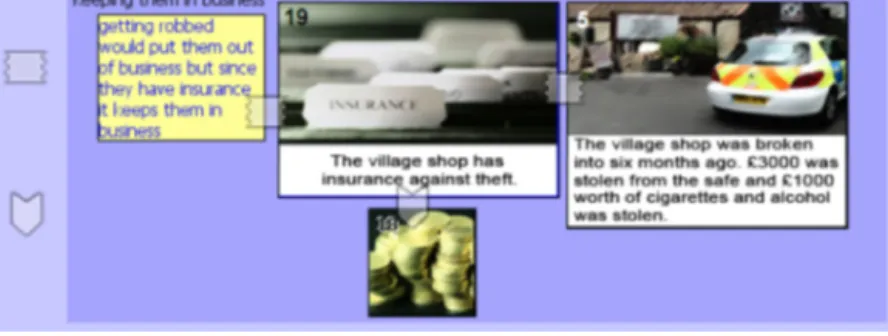
Fig.1. Apapermystery:IsPaulgoingtostartsmoking?(LinandMacKay,2004).
experiencewherebyinteractionsarenotonlybetweenlearnersandthetabletopbutalsobetweenlearnersthemselves.The environmentsisaco-locatedmultimodallearningspacewherelearningbehavioursandprocessesareinextricably inter-twinedwithtechnologicaltools.Assuch,weconceptualiselearningassituatedwithinSocioculturaltheoriesofsecond languagelearning(Lantolf,2003;Lantolf&Thorne,2006).Recentworkinthedesignandimplementationofdigital table-toptechnologyhasshowntheuniqueaffordancesthatthesenewtechnologiescanhaveonpromotingpeercollaboration andlearningviastructuredtasks,externalisationtools,feedbackandreflectionprompts,face-to-facecollaboration, multi-synchronousinteraction,andincreasedparticipationawareness(Dillenbourg&Traum,2006;Kharrufa,Leat&Olivier,2010; Martinez-Maldonado,Collins,Kay,&Yacef,2011).Thereislessknownabouttheaffordancesoftheseenvironmentsfor pro-motingcriticalthinkingofsecondlanguagelearnersmorespecifically.Emergingempiricalstudiesontechnology-assisted gainsoncriticalthinkingskillsforL2learnerstendtofocusmoreontheoutcomesbutlessontheprocess,andthelatter wouldbenefitbothteachersandlearners.Heslopetal.(2015)offeraholisticlenstoexaminethenatureandqualityof collaborativeinteractionsovertimeacross8groupsofstudentsusingmultitouchtabletops.Thisisbasedonananalysisof ‘decisionpoints’bringingstudentstogethertocollaborate.Hence,thecurrentstudyalsoextendsthescopeoftheaffordances ofdigitaltabletoptechnologyandapplicationsforpromotingcriticalthinkingforL2learnersmorespecificallyasatoolfor makingthinkingexplicit.
Inthefollowingsection,wepresentadetailedintroductiontotheDigitalMysteriesapplicationusedaspartofourstudy intotheaffordancesofCSCLEsinsupportingL2learnerstomanagecognitivecomplexityindevelopingtheirreasoningskills inanoraltask.
3. DescriptionsofDigitalMysteriestask
DigitalMysteries(DMhenceforth)(Kharrufa,Leatetal.,2010)isacomputer-basedlearningapplicationdesignedto promotecollaborationandhigherlevelthinkingskillsformultipleusers.Itisbasedonapaper-basedmysterieslearning approachwhichwascreatedforthedevelopmentandassessmentofstudents’higherlevelthinkingskills(Leat&Nichols, 2000).Inthepaper-basedversion(Fig.1),studentsaregivenanumberofslipsofpapercontainingfacts,background infor-mation,abstractideas,andsomeredherrings.Centraltothelearningbenefitofamysteryinthiscontextisthatstudentsare askedtousethisinformationtoansweranopenquestionthatdoesnothaveonerightanswerandthroughthemanipulation ofslipstosolvethemystery,thecognitiveprocessesofthestudentsaremadeevident.
Duringtheprocessofsolvingamystery,studentsengageindiscussionstoexpresstheirideaswhichcanleadtolevelsof thinkingthattheywouldn’tnormallyachievealone.Thismakesitpossibleforanobservertoassessthelevelofthinkingof thestudentsthroughcarefulobservationofthestudentswhileengagedintheactivity(Leat&Nichols,2000).Thesequalities ledboththeSynergyNetteam(e.g.Higginsetal.,2012;Mercier&Higgins,2014),andKharrufa,Olivier,andLeat(2010)(in theirworkonDigitalMysteries)tobuilddifferentdigitalinterpretationsofmysteriestocombinetheaffordancesofdigital technologyandthoseofthemysterytaskitself.
ThemaindesignfeaturesforDMare:externalizationofthinking(ormakingthinkingvisible),encouragingcollaboration, andpromotingfeedback,reflectionandmetacognition(Kharrufa,Olivieretal.,2010).Thesegoalsareachievedbyintroducing externalizationtools,switchingbetweenparallelinput(allstudentsattendtothesamepieceofinformationoraspectinthe
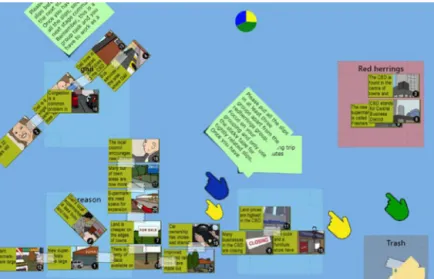
Fig.2.Externalizationtools:namedgroup(darkbluearea),normalandarrowstickytapes,andnotetools.(Forinterpretationofthereferencestocolour inthisfigurelegend,thereaderisreferredtothewebversionofthisarticle.)
interactionwiththeapplication),singleinput(individualstudentscanattendtoaparticularaspect),enforcedcollaboration (consensuspoints),structuringthetaskintostages,andprovidingadedicatedreflectionstage.
3.1. DMdesignfeatures
Thefollowingsectiondetailsthesedesignfeaturesandhowtheylinktolearningbenefits.
3.1.1. Externalizationofthinking
Externalisationofthinkingistomakethinkingvisibletooneselfandtoothers.Onelimitationofpapermysteriesas regardsexternalisationofthinkingisthatwhenstudentsputslipsinpiles,ornexttoeachother,theydonotnecessarily havetoexplaintheiractionstoeachother,anditisnotpossibleforanobservertomakesenseofthelayoutoftheslips (Fig.1).InDM,NamedgrouptoolandRelationorStickytapetoolwerespecificallydesignedtoaddressthis(Fig.2).Named grouptoolallowsthecreationofexplicitgroupsandasksstudentstoenteranameforthenewgroup.Allstudentshaveto agreeonthename,andtheprocessofcreatingandnaminggroupsislikelytotriggerusefulmomentsofdiscussion.Relation orStickytapetoolmakesitpossibleforstudentstolinktwoormoreslipstogetherusingeitheranormalshapestickytape (toindicatenormalrelation)orarrowshapedstickytape(toindicatecausalortemporalrelation).Usingthestickytapescan triggerusefuldiscussionsrequiringstudentstoexplainwhytheythinktheslipsarerelatedanddiscussthetypeofrelation (thetypeofstickytapetouse).
Theuseofthesetoolsnotonlytriggersusefultask-relateddiscussions,butalsomakesthestudents’thinkingmorevisible thusmoreaccessibletoanexternalobserversuchasanotherstudentorateacher-facilitator.Thisprovidesopportunitiesfor providingricherfeedback.
3.1.2. Encouragingcollaboration
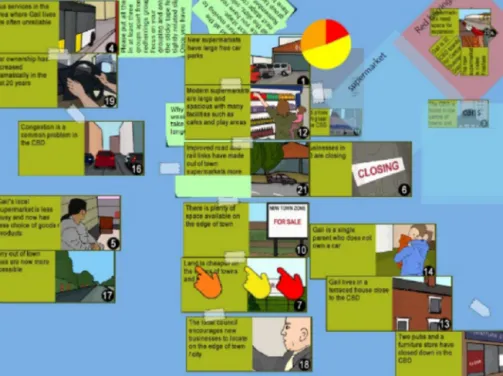
DMusesthreespeciallydesignedfeaturestopromotecollaboration.Inthecaseofthisstudy,theuseofapen-based tabletopversionoftheapplication(ratherthanamulti-touchone)makesitpossibletoidentify(ordistinguishbetween) usersaseachstudentusesadifferentpentodirectlyinteract(selectandmoveobjectsaroundonthetabletopsurface)which isrecordedbytheapplicationandpresentedbacktostudentsinreal-timeintheformofapiechartoftheirindividual contributionsshownonthetabletop(seeFig.3).Thisfeaturealsocomplementsandbenefitsfromthelearningbenefitsof externalisationofthinkinggivenitsassociatedpresentationfunction.
Secondly,collaborationisalsoenhancedthroughcollaborativecoupling,thewayinwhichtabletopsupportsagroupof studentstoinstantaneouslymovebetweenindividualandgroupworkinthetaskwhichisalsovisibletoallparticipants. Collaborativecouplingallowsparallelinput(e.g.allstudentscaninteractwiththeslipsatthesametime)aswellassingle input(e.g.providingsinglesoftkeyboardfortextentry).
Athirddesignfeatureistheuseofenforcedcollaborationinteractiontoolswhichareinitiatedatkeydecisionpoints suchasenteringathematicgroupnameinthegroupingstage(Fig.4)oratmovementsbetweenstages(see3.2).Enforced collaborationcanbeviewedasconsensuspointsrequiringallstudentstoagreethroughdirectinteractionusingthepensto confirmtheirparticipationinthegroupleveldecisions.
3.2. Structuringthetask
Whenhigherachievingstudentssolveapapermystery,theytypicallygothroughthreestages:readingtheslips,putting theslipsingroups,thenbuildingabranched(orwebbed)sequencethatreflectstheirreasoning.Accordingly,DMguidesthe studentsthroughasimilarstructurebutwithanumberofenhanceddesignfeatures.
•ReadingStage:DMenablesstudentstoresizeandmovetheslips.Slipsinitiallyappearinasmallunreadablesizeand studentscannotproceedtothenextstageunlessallslipshavebeenread(madepossiblebydirectlymanipulatingtheslips withthepenstomakethemlarger).
•GroupingStage:Thisstageprovidesthenamedgrouptool,thenormalstickytape,andthenotetool.Studentscannot proceedunlessallslipsareputinatleastthreegroups.Theaimistoencouragestudentstoorganizeandcategorize information(i.e.lookattheproblemfromtheperspectiveofinformationcategories).
•Sequencingstage:Thisstageintroducesthearrowshapedstickytapeinadditiontotheprevioustool.Studentsareexpected totaketheslipsoutoftheirgroupsandstartbuildingalayoutusingnormalandarrowstickytapesthatreflectstheir reasoningabouttheproblemandsupportstheiranswer.Theaimistoencouragestudentstolookattheinformationfrom adifferentperspectivefocusingoncausalandtemporalrelations.
Inadditiontopeerfeedbackduringtheprocess,structuringtheapplicationintostages,allowsfortheprovisionoffeedback tostudentsatincrementalpointsduringthetask.Thesecanoccurinbetweenstagesthroughstudent-initiateddiscussion andviatheDMapplicationviainter-stagereflectiveprompts(Kharrufa,Olivieretal.,2010).Aftercompletingallthestages, thestudentsareaskedtotypetheirwrittenanswerintotheapplicationandafteraconsensuspoint,proceedtothereflection stage.
AlthoughtheDigitalMysteriesapplicationwasnotspecificallydesignedforL2learners,whenusedwithinthecontextof aCSCL,itholdsanumberoffeatureswhichweidentifiedasshowingitsrelevanceforusewithL2learnersmorespecifically inthisstudy:
Fig.3.DigitalMysteriesinterfacewithpiechartofcontributions.
1)itallowsstudents’thinkingtobecomeexternalisedonthetable,soitcanbeviewedbystudentsthemselvesandothers, whichleadstomanipulate,modifyandmediateeachother’sthinking;
2)withtheinformationaccessibleonthetableandpresentedinfrontofthestudents,itallowsstudentstotalkaboutevents thathappenedinthepastasiftheyarehapping‘Here-and-Now’(Robinson,2005).Morespecificallyrelevanthereisthat studentsusetheircognitiveresourcesmoreeffectivelytoprioritisecognitiveresourcestothinkratherthanrecallingand memorisinginformation;
3)withtheinformationandmapoftheirthinkingonthetable(‘brainsonthetable’)(Leat&Nichols,2000),itallowsstudents tothinksimultaneouslyaswellasinteractively.
4. Researchdesign
Thissectionintroducesthestudydesignandresearchmethodstakentoaddresstheoverarchingresearchquestionof theextenttowhichCSCLEscansupportL2learnersintheirmanagementofcomplexitywhilstdevelopingreasoningskills inoraltasks.
Toanswerthismainquestion,threesub-questionsareconsidered: 1)WhatkindsofreasoningskillsareemphasisedandpromotedintheCSCLE?
2)HowdoestheCSCLEsupport‘thinkinginaction’intermsoftheorganisationofreasoningskills?
3)Basedonanswerstotheabove,whataffordancesintheCSCLE,whichincludesatabletopapplication,canbeidentified asspecificallysupportingthemanagementofcomplexityforL2learners?
4.1. Participants
NinepostgraduatesfollowingaMastersprogrammeinAppliedLinguisticsandTESOL(2013–2014)participatedinthis study.Theywereagedbetween21and29andhadachievedanIELTsscoreof6.5–7.Priortoparticipatinginthisstudy,they wereintroducedtotheDMtabletopapplicationaspartofamoduleonThinkingSkillsinSecondLanguageLearning.Whilst therearerecognisedlimitationsinsamplesizeasthestudyinvolvedonlyninestudents,ourresearchquestionsfocused onaholisticapproachtothenatureandqualityofmultimodalinteractionasitisconstructedinthemoment-to-moment dynamicsoftheenvironment.Inthecasethatwehadsoughtto‘quantify’instantiationsofpre-specifiedbehaviours,we believealargersamplesizewouldhavebeenmoreappropriate.
TheninestudentswererandomlydividedintothreegroupsandworkedonthesameDMtaskonce,butseparately.The DMuserguidewassenttotheparticipantspriortothedatacollection,anddetailedinstructionsonhowtousetabletopwere givenbeforeparticipantsstartedtheDMtask.Thenamesofthestudentsinthispaperarepseudonyms.Fullethicalclearance wasobtainedandwritteninformedconsentwasprovidedbytheparticipantsforthispublicationandanyaccompanying images.
4.2. TheDMtask
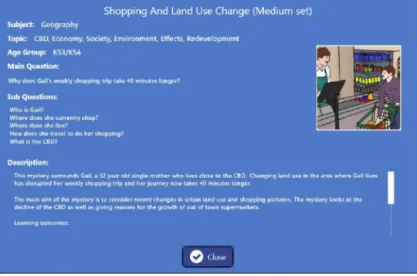
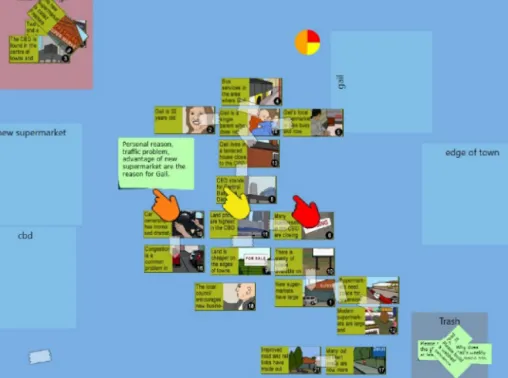
ThetopicoftheDMtaskusedinthisstudywas‘ShoppingandLandUseChange’,whichdescribesascenariothata supermarketinthecitycentrehastomovetotheedgeofthecitybecauseoftheshortageofavailableland.Twenty-one individualdigitalslipswereavailableonthetabletopandparticipantswereaskedtoanswer‘WhydoesGail’sweekly shoppingtriptake40minlonger?’(Fig.5).Theslipsincludeacoupleofredherringsandafewkeyfactors.Studentswere askedtocomeupwithreasonsthemselves.Theycompletedthetaskmainlyguidedbytheinstructionsonthetabletopor byusingtheirowninitiative.Aftercompletingthetask,theywereaskedtogiveaverbalpresentationoftheiranswersto thequestion.
4.3. Datacollectionmethods
Observationmethodsprovidedthemainsourceofdataforthestudywhichallowedustoviewtheprocessesinvolved inthestudents’completionoftheDMtaskthroughmultiplelenses.ForeachoftheDMsessions(n=3)twovideocameras capturedtheverbalandnon-verbalcommunicationintheenvironmentfromtwodifferentphysicalangles.Audio-recordings servedasadetailedrecordofverbalcommunicationwhichenhancedtheproductionofmultimodaltranscriptions.Aswell astheaudioand videostreams,thedigitaltabletoprecordedinteractionlogsofallactivitiestakingplaceonthetable consistingofindividualandgroupcontributionsateachstage.Whentriangulatedwithinteractionlogdata,theobservation dataprovideduswithadetailedviewoftheroleandqualityofthemediationofreasoningskillsintheCSCLE.
4.4. Dataanalysisapproach
Inkeepingwiththeholisticapproachwetooktoconceptualisinglearninginthisenvironment,theapproachtodata analysiswascarriedoutbyviewingthesessionsthroughthreedifferentlenses:thinking-in-action,useofreasoningskills andfinally,intermsofthespecificdesignfeaturesofthetabletopapplication.Thefirsttwoanalyticallensesweredesigned
Fig.5.Taskdescriptionfor‘WhydoesGail’sweeklyshoppingtriptake40minlonger?.
toexplorethequalityofL2learners’managementofcomplexityintheapplicationofreasoningskillsintheenvironment (constructedthroughtheinteractionsofthestudentswiththetabletop,theDMapplicationandeachother).Thethirdaimed toascertaintowhatextentthedesignfeaturesmorespecificallyinfluencedthelearningprocesses.
4.4.1. Thinking-in-action
Thelensofthinking-in-actionwasusedtoanalysethevisibilityofreasoningskillsasevidencedinverbalandnon-verbal communicationintheoverallstructureandorganisationofthetask.Inaddition,thinking-in-actionwasusedtocomplement themoredetailedanalysisofspecificepisodeswhichexemplifiedspecificfunctionsofreasoningskillswhenusingthesecond lens.Here,‘thinkinginaction’isconcernedwiththemultiplemodesthroughwhichtheinteractionisconstructed.Itmakes theassumptionthatmeaning-makingisembeddedinthephysicalandsocialinteractionin,aroundandwiththetechnology andassuch,suchcanbeviewedasanapproachtostudying‘embodiedcognition’(Jewitt,2009).Thisapproachcanbe synthesizedwithestablishedworkintheL2learningsciencesgrowingoutofsocioculturalperspectivesonL2learningsuch asthatofVanLier(2004).
4.4.2. Presenceofreasoningskills
Jewell’s(1996)reasoningframeworkwasadaptedtointerpretpresenceofstudents’reasoningskillsinthreetranscribed sessionsofDM.SituatedincommunityofInquiry(Lipman,2003),Jewell’sframeworkexemplifiesbehavioursincluding objectives,strategiesanddispositionsinvolvedinreasoningprocesseswithingroups.Itprovidesusefulguidancetoidentify relevantepisodeswithevidenceofreasoningskillsandcarryoutdetailedanalyseoftypesofreasoningskillsandabilities toevaluateandinfer.Theemphasisinthispartwasonaninvestigationofthefunctionbetweenthestudentswhilesolving themysteryasopposedtoform.
Onceidentified,thedevelopmentofreasoningskillswerefurthercodedandanalysedaccordingtomultimodalfeatures representing‘thinking-in-action’intheinteractionrevealedthroughvideodataandinteractionlogsasdescribedin4.3. 5. Resultsanddiscussion
Thissectionbeginswiththeoverallstructureandorganisationofthesessionstoprovideaquantitativeoverviewofthe visibilityof‘thinkinginaction’inthedevelopmentofreasoningskillsduringthetask.
5.1. Thinking-in-action
Intermsoftheoverallstructureandorganisationofthesessions,providinganindicationofoverallvisibilityofreasoning skills,thereareanumberofmeasuresusedtoevidence‘thinking-in-action’.Inthefirstinstance,Fig.6showsthetotalnumber ofparticipantturnsproducedbytheparticipantsineachgroup.Aparticipantturnisdefinedandusedinthecaseofthis analysisasaninteractionaleventwhichiscollaborativelyconstructedbyparticipantsoutofoneormoreTurnConstructional Units(TCUs).Itisimportanttonoteherethatthewayturnsaretakenandconstructedinthesessionvariedaccordingto howtheirproducerdesignedtheir‘thinkinginaction’inmultiplemodes.Thatis,itcouldhavebeenaverbalisedturnof talkorothersocialactionwhichiscarriedoutnon-verballyorwithbothnon-verbalandverbalactionsbeingcarriedout simultaneouslyandthusembodiedinteraction.ThenatureandqualityoftheturnsareexploredinmoredetailinSection 5.2.
Fig.6.Totalnumberofparticipantturnspergroup.
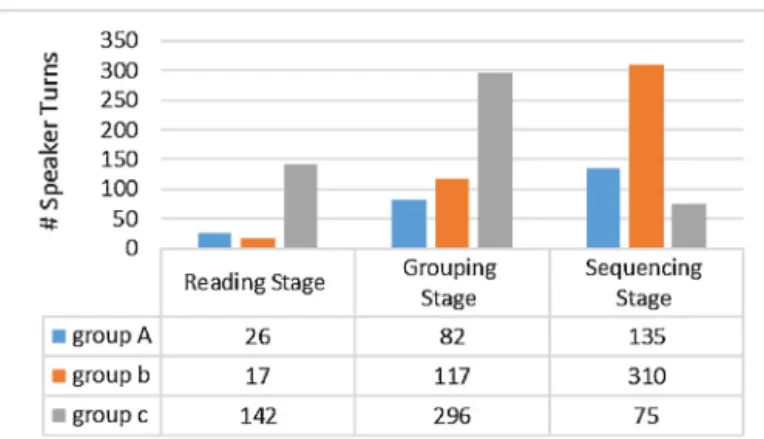
Fig.7. Distributionofparticipantturnspergroupandateachstage.
Fig.8.Meanlengthofparticipantturnspergroup.
Fig.7showstheoveralldistributionofinteractionsmeasuredintermsofnumberofparticipantturnsatthedifferent stagesofreading,groupingandsequencingduringtheDMtask.Fig.8showsthemeanlengthofparticipantturns,measured inwords.Fig.9displaysthetotaltimetakentocompletethetaskfromtheinitiationofthereadingstagetothegroup consensusthattheanswerhadbeenreachedattheendofthesequencingstage.
Thecompletionofeachstageforindividualgroupswasevidencedviainteractionlogswhenstudentsusedtheapplication featuretomovebetweenstages(consensuspoints).Observationdataalsoshowedthatstudents’discussionswerenotalways confinedbythenatureofthestage.Likewise,studentstendedtocombinereadingandgroupingactionsratherthanrigidly finishingreadingbeforebeginninggrouping,andsequencing.Havingsaidthat,thedifferencesindicatedbythenumberof turnsgiveagoodindicationofhowlongeachgroupengagedindiscussionsatindividualstages.
5.2. Useofreasoningskills&thinkinginaction
Inthissection,thenatureandqualityofreasoningskillsarethefocus,andcomplementedbyananalysisof‘thinking inaction’intermsofmultimodalbehaviour.Together,functionandformofreasoningskillshighlighthowreasoningskills weremadevisibletoandbythestudentsastheymanagedthecomplexityofthetaskintheCSCLEwhilstusingtheL2. 5.2.1. Comprehension
AttheReadingstageoftheDM,studentswereinstructedtoenlargeandreadeachoftheslipsprovided.Inthis con-text,comprehensionofthecontentintheslipswereaprerequisiteofanalysisandevaluation(Bloom&Krathwohl,1956). Intermsofcognitivedemand,itisatasklowincognitivecomplexity,requiringcomprehensionofthedigitalslips pro-videdonthetabletopandwithnointentionalforreasoningembeddedinthedesign(+singletask;+Here-andNow;−no reasoning)(Robinson,2005).BothGroupsAandBenlargedandreadslipsindividuallywithlimitedinteractionwitheach other(Fig.7),andquicklymovedtogroupingtask.Incontrast,GroupCdecidedtoreadtogether.Whilereading,theywere tryingtoevaluatetheusefulnessofeachofthestatements.Episode1:Thecaseofusefuloruselessinformation.
ParticipantTurns ReasoningSkills
1Wen: Let’sreadtogether,whichisthefirstone? Proposeaplan
2Zhi: Busserviceinthisareaareoftenunreliable,yeah,that’smaybethereason. (Read) Evaluate
Justputtheuseful informationthere,andthe uselessthere,okay?
3Wen&Lin Okay
4Lin Ithinkthisoneisuseless Evaluate
5Zhi: Notuseful? QueryLin’sevaluation
6Lin: Yeah Confirm
7Zhi: Andlocalcouncilencouragesnewbusinessestolocateontheedgeoftown Readtocheck
8Wen: forthedevelopment. JoinZhiwithreading
9Lin: Maybereasonable. Adoptalternativeview
11Lin: Soputhere.Whatabout this?
Invitepropositions
12Zhi: It’soneofthereasons Evaluate
13Lin: Yeah((Dragsslip)) Agree
14Zhi: WhydoesGailweeklyshoppingtriptake. RevisitthetaskQ
15Wen: 40minlonger?Carownershiphasincreased... (Read)
16Lin: Ithinkthisisreasonableforthatlongertime. Conclude
(Numbersrefertoparticipantturnlinesfromthetranscripts).
AsillustratedinEpisode1,studentswerediscussingtheusefulnessofthestatements(Turns2,4and16)onebyone. Interactionsshowthatenlargeableslipsencouragedjointreadingandfacilitatedthinking.Theuseofdeicticexpressions ‘this,that,here,there’indicatedasharedcontextofpresentedinformationonthetabletop,whichbringstheevents Here-and-Now(Robinson,2005)forreferencing.Thereferencinginreturneasesmentalworkload,allowingstudents’morespace toconcentrateonevaluations.
5.2.2. Analyticalskills
Theabilitytoidentifyrelationsisoneofthebasicanalyticalskillsforcriticalthinking.AttheGroupingstage,students wereaskedtocreateatleastthreegroups.Togroupslips,studentsnotonlyneededtounderstandthecontentinaslip,but alsowereabletocompareandcontrast,seekingsimilaritiesanddifferencesbetweenandamongtheslips.Itishigherin cognitivecomplexitythancomprehension,asitinvolvedmorethanonestepstocompletethetask(+fewelements;−single task;+reasoning)(Robinson,2005).Manyexamplesinthedatasuggestthatsomeoftherelationsareeasytorecognise, whileothersmightnotbethatobvious.Episode2isanexamplewherevisibilityofstudentthinkingismediatedinthe environmentthroughcollaborativecouplingandtheaffordanceofoff-tablereasoning.
VideodatashowsthatstudentsinEpisode2wereveryquickandassertiveindecidingthatunreliablebusservices isoneofcontributingfactorsto‘longertime’,whilethestatementsofCBD,localcouncilandGailareuseless informa-tion(1–4)asevidencedinthelogatTurn8.Theslipsdisplayedonthetabletopdrewstudentsintoactiveengagementin examining,discussingandidentifyingrelationsbetweenslipsthroughcollaborativecoupling(6–12).Parallel,aswellas collaborative,thinkingwasobserved,movingbetweenindividualthinking,thinkingtogether,andmediatingeachother’s thinking.Theuseofdiscoursemarkersof‘Oh,Isee’(9)suggestalightbulbmomentwhenlisteningtoWen’sreasoning, Zhi suddenlyrealises thatsomeofthestatementstheyputin theuselesscategorycouldberelated tothekey infor-mationintheusefulcategory.Asa result,theyretrievedthestatementoflocalcouncilfromtheuselesscategoryand putitintheusefulcategory.Collaborativelytheyestablishedthat‘alittlebitfarsupermarket’wasthecausalreasonfor ‘longertime’.Intermsofreasoningskills,weseeintentionaluseoflogicsubordinators‘so,because’tomarkcauseand effect.OveralluseoftheL2waseconomical, asstudentsallknewwhichslipsthespeakerwasreferringtoevenifshe didnotspellthecontentoutinfull.Wen,ontheotherhand,usedprovidedinformationcreativelyinconceptualisingher reasoning.
M. Lin et al. / Thinking Skills and Creativity 22 (2016) 303–322
Episode2:Thecaseoftherelatedinformation.
ParticipantTurns Reasoningskills
1Zhi: CBDstandsfor...thisis... Invitepropositions
2Lin: No. Evaluate
3Zhi: Notuseful(Drag). Agree
4Lin: Thisisnot,right?Notrelated. Evaluate
5All: (Readslips)
6Lin: Whataboutthis? Invitepropositions
7Wen: It’sreallyabout,soheshoulddriveoutsidethecitytogetmorefromthesupermarketbecausethelocaloneishaving lesschoicesofgoods.
Reasonwith‘so’
Lin et al. / Thinking Skills and Creativity 22 (2016) 303–322 315
9Zhi: Oh,Isee,maybesomeof
theslidesarerelated because...
Alightbulbmoment Reasonwith‘because’
10Lin: Alittlebitfarsupermarket. Reason
11Zhi: Yeah.
12Lin: Soittakesalittlebitlongertime. Concludewith‘So’
13Zhi: Yeah,maybenotthatdirect,that’sadirectanswer. Agree
5.2.3. Causalreasoning
WhatisobviousfromtheexamplesinEpisode1and2isthatrelationscanbeanalysedfrommorethanoneperspectives. Arrowstickytapesprovideanexternaldevicetomediatestudents’casualreasoning(Vygotsky,1978).AttheSequencing stage,studentswereaskedtoidentifykeyslipsthatcouldgivethemasequencetoanswerthequestion.Thistaskishigher incognitivecomplexitythancomprehensionandgrouping,asstudentsarerequiredtofindoutcausalrelationswithina pairorbetweenpairsofstatementsbeforetheycanputpairsofcausaleffectinaninferencingandlogicorder.Sequencing demandsmultipleapplicationsofthecognitiveprocessesinvolvedintheidentificationandreasoningofcausalrelations, andtheadditional‘+’isusedtoillustratethedegreeofthecomplexity(++fewelements;++reasoning)(Robinson,2005). Groupinteractionshowsthatstudentsfoundithardtodecidecausalrelations.Physicallyusingarrowstickytapesto con-nectselectedstatementsforcedstudentstodecidewhichwas‘cause’andwhichwas‘effect’,whichinturnexternalised students’interpretationsofcausalrelationsonthetabletop,makingitvisibleandaccessibleforevaluation,reflectionsand modificationseitherbythemselvesorbypeers.Episode3exemplifieshowstudentsidentifiedachainofcausalrelations withthehelpofarrowstickytapes.
Episode3:Thecaseofcausalrelationship.
ParticipantTurns ReasoningSkills
1Tan: Ithink,maybe,thesupermarket,em,was,emwastransferredtoanother,to theedgeofthecity,soshouldtakemoretimetogotothatsupermarket.
Identifycauseandeffect
2Yang: Yeah,butwhythesupermarketmovestoother,sobecausewehave. Identifyeffect
3Tan Becausethepriceofthelandinthecity. Identifycause
4Yang: Yeah,so.
5Tan: So,let’slinktheinformation.
6Tan&Yang (Connectslips)
InEpisode3,studentsidentifiedtwopairsofcausalrelations.Yang’squestioningofwhythesupermarketmovedtothe edgeoftownledthemtoseethecausalrelationsbetweenthetwopairs.Supermarketmovingoutofthecityisthecausefor takinglongertimeinthefirstpair,butisalsotheeffectofthehighpriceoflandinthecityinthesecondpair.Theylinked thestatementstoconfirmtheirreasoning.
5.2.4. Logicalreasoning
Episodes1–3showincreasedmanagementofcomplexityinactionsrangingfromcomprehension,groupingtoanalysing causalrelations.Thebiggestchallengeforthestudentsistosequenceidentifiedpairsofcauseandeffectinalogicalorder, thoughampleexamplesinthesessionsshowedthatstudentswereabletofigureoutcausalrelationsamongtwoorthree slips.SequencingrepresentsthehighestcognitivedemandtaskintheDM(++fewelements,++reasoning,−singletask,+prior knowledge)(Robinson,2005).Itrequiresmulti-tasksofidentifyingcausalrelationswithinandbetweenpairs,reasoningand selectingthemostrelevantreasonstojustifythecausalrelationsto‘thelongertime’,retrievingpreviouslyidentifiedcausal pairs,orseekingnewrelations.Ananalysisofgroups’answersto‘WhydoesGail’sweeklyshoppingtake40minlonger?’ revealedthatallthegroupsreportedkeyfactors.However,itistheirabilitytoseeoveralllinksbetweenpreviouslyidentified individualcausallinksandabilitytoputthemlogicallyinaninferencingchainthathasdifferentiatedtheiranswers.Thisis showninourcomparisonofthefinalgroupanswers(Figs.10,11and12respectively).
Episode4:GroupA’sanswer.
ParticipantTurns ReasoningSkills
1Facilitator: Well,thisgobacktoyourrecordingsonthescreen.Wouldyouliketogiveme somesummariesabouthowyoufoundtheanswer,theanswerofwhyGail’s weeklyshoppingtakeminuteslonger.
2Li: Er.becauseofthebusservices Reason1
3Wang&Zha: It’snotreliable CompleteLi’sreason1
4Facilitator: Yeah,and...
5Zha: Andthesupermarketisbuiltintheruralarea,soittakeslongtimetogetto there.
Reason2+conclusionwith‘so’ 6.Facilitator: Therearealsoreasonsforthesupermarkettomove,sowhat’sthereasons?
7Li: (Be)CausethelandpricesintheCBDisveryhigh(Reason3),andthereare congestionproblems(Reason4),andIthinkgovernmentencouragesthe businesstomovefromthecitycentretotheedgeofthetown(Reason5)
Reason3 Reason4 Reason5
8Wang: Morespaceforparking Reason6
9Li: Andthelandpricesischeaper Reason7
10Zha: Andthefacilitiesaremuchmoreinthearea. Reason8
Episode4showsthatGroupA’sanswerconsistsofalistofreasons.Studentsreportedkeyfactors,howevermostof thesefactorswerelooselyconnectedwithnoindicationofcausalrelationsapartfromone(5).Acloseexaminationoflisted reasonsrevealsthat6–8areallaboutthenewsupermarket,while3–5areaboutCBD.Althoughusingtheirownwordsin constructingtheiranswers,theyfailedtostatethelogicalrelationsbetweenthesecitedreasonsexplicitly.Limiteduseof reasoningwordswasalsonoted.
IncomparisontotheanswergivenbyGroupA,GroupC’sanswernotonlyincludesmostofthekeyinformationbutis alsoorganisedbycausalrelations.
Episode5:GroupC’sanswer
ParticipantTurn ReasoningSkills
1Facilitator: So,cangivemeasummarytoanswerthequestion,yes? 2Lin: Er,Iwillanswerthisone,
er,becauseGaildoesn’townhisowncar,herowncar,andthere,maybeshe needmoretimetotakethepublictransportation(Reason1),andthebus services,andalsoabouttherearemoreandmorecarsinthecitycentre,sothe congestionisaseriousproblem(Reason2),sotheseresultinthebusservice intheareawhereGailisnotverygood(Reason3),sosheneedmoretimeon theroad,er,nonono,onherwaytothesupermarket,sothat’swhytake 40minlongerokay?
Reason1+conclusion Reason2+conclusion with‘so’
Reason3+main conclusion 3Facilitator: Youallagreewiththat?Doyouwanttoaddsomething?
4Zhi: Yeah,IthinkalotofreasonthatleadstotheonlychoiceofGailthatshehasto gotothesupermarket,er,farawayfromCBD,
Reason4+conclusion
Justlikeallthereasons leadtohere
becauseofthereasonswhythesupermarketneedtomoveoutoftoCBD,and thenshehasto,shehaslesschoicesinthelocalsupermarket,sosheneedsto gotothesupermarketfurtherfromherhome,andthat’sthereason.
Episode5showstwosubsetsoftheargument.LinconcentratedonGail,believingthatnothavingacarwasthereasonthat causedGail40minlongerfortheweeklyshoppingtrip.However,shefailedtojustifywhyGailhadtogotothesupermarket farfromherhomeinthefirstplace.Weseeafterteacher’sfacilitation(3),ZhiaddedreasonsthatleadGailtodohershopping atthebigsupermarketoutoftown.Shepointedtothepilesofslipsindicatedbythediscoursemarker‘Here’tosupporther reasoning,thoughdidnotmakeanyexplicitreferencetothelogicalrelationsbetweenthetwosubsetsofreasoning.Infact theymissedcheappriceoftheland,amainreasonformovingthesupermarketoutofcitycentre.Theabilitytosynthesise logicalrelationsbetweenalltheslipsallowedGroupBtooutperformGroupC.
Episode6:GroupB’sanswer.
ParticipantTurn ReasoningSkills
1Tan: Ah,Ihavenew,Ihaveanewideaem,becausebeforethesupermarketmoved tothenewplace,Gailcouldbuythingsneartoherhouse.
Reason1+conclusion 2Yang: Yes
3Tan: However,whenittransferstoanewplace,sheshould,em,takemore,em. Reason2+conclusion
4Yang: Yes,Yes,allofthereasonscausehertooklongtime. Findsupportingevidence
5Liu: Iknow,Iknow.
6Yang: Whatdoyouthinkso? Inviteconfirmation
7Tan: Em,letmethink. Think
8Yang: Yeah.
9Tan: Thisiswhyshecoulduselesstime,em,before Intermediateconclusion(IC)
10Yang: Yeah,yeah.
12Yang: Yeah. Acknowledge
13Tan: Soshehavetotakepublictransportation. Conclusion3
14Yang: Yeah. Acknowledge
15Tan: Buttherearesome
reasonsaboutthe transport
Findsupporting evidence
Here. Fetchevidence
17Tan: Er,so.
18Yang: BusserviceintheareaGaillivesareoverunreliable. Reason4
19Tan: Yeah,maybe,thisisoneofthereasonstothemainquestion,Ithink. Mainconclusion
20Liu: Singleparent Reason5
21Yang: Doesn’thaveacarisalso...No,no,Idon’tthinkthis.Thisisimportantbecause shedoesn’thaveacarisalsoimportantwhychoosesbeside...
Examinecausesand relations
22Liu Singleparentright? Repeatreason5
23Tan: Becauseshedoesnotownacar. Repeatreason3
24Yang: Em,Iunderstand.Howaboutlikethis,because,let’ssay,becauseGailisa singlemother,shedoesnotownacar,that’swhyshechoosesthesupermarket besideherhome,right?Butbecauseofthesereasons,newsupermarketmoves toothercity,andthen,sheneedstotakebus,tookbustothesupermarket,and alotofcongestionsalso,asalotofcongestions,and,that’swhyittooklonger time.AmIright?
APennydropmoment Constructanargument
25Liu: Areyoumakingaconclusion? 26Tan: Iagree.
27Yang: CanyourepeatwhatIsaid?
28Tan: It’sGailisasinglemother,andshedoesnothaveacar,soshedecidedtogoto thesupermarketthatisclosetoherhome,however,therearesomepolicyand advantagesforthesupermarkettotransfertothenewplace,soshehas.And also,thisisanotherquestion,em,anotherreasonthatshefindthatthereis, em,thesupermarketislessbusy,andhavelesschoicesofgoodsandproducts, soshedecidedtogotothenewsupermarket.However,thetransportation thereisreally,but,yeah,maybe,yesthetransportationisserious,soittakes longertimeforhertogotosupermarket.
Episode7illustratesprocessesoftheconstructionofreasoning,ahighlevelofcognitivecomplexitytaskengagedby studentsinGroupB.Theyneedtoconsidermanydifferentfactsandfactors;ontopofreasoning,theyhadlittleplanning timeinconstructingtheiranswer(Robinson,2005).Beforemovingtoexaminefactorsthatcouldhavecaused‘longertime’, asshowninFig.12,theyinvestigatedreasonsthatGailneededlesstimeforherweeklyshoppingbeforethesupermarket movedtotheedgeofthecity,whichledthemarriveatanintermediateconclusion(9)(VandenBrink-Budgen,2000),There areevidencesthatthetabletopassistedandmediatedstudents’reasoning,logicalthinking,andargumentconstructionby providinganoverviewoftheirthinking,accesstoretrieveinformationfrommultiplecategories(15and16),andlanguage inputtoarticulatetheirreasoninginL2.Studentswereobservedworking‘offtable’,examininglogicalrelationswithinand betweentopicsoftheneworoldsupermarket,betweenthecarownershipandtrafficproblems,betweenGailandthenew andoldsupermarketwhensuddenlyapennydropmomentoccurred.Suddenly,allthepiecesofinformationfellintoits
Fig.10.GroupA’sanswerfromtheinteractionlog.
Fig.11.GroupC’sanswerfromtheinteractionlog.
placeandYangsawthelinksofallthecausalpairs.Sheverbalisedherlineofreasoninginonebreath(24).Shewasso engagedinconstructingherreasoningwithoutrealisingittilltheend.Productionofreasoningseemstohaveexhaustedall hercognitiveresources,shecouldn’trememberwhatshehadimprovisedandaskedherpeerstorepeatwhatshehadjust said(27).ItisnotedinYang’sreasoningthatsheusedcognitiveresourcesselectively.Yangdidnotspecifyindividualreasons whythenewsupermarketmovedtotheedgeofthecity,referringthemas‘becauseofthesereasons’(24)sothatshecould concentrateonherargument.Intherepeatedversion,however,weseeallthegapswerefilled,andrelevantconnectors wereaddedtomaketheargumentself-explanatory.
Fig.12.GroupB’sanswerfromtheinteractionlog.
5.3. Technologicaldesignfeaturesandreasoningskills
HerewediscussthefindingsintermsoftheaffordancesoftheDigitalMysteriesandtabletopmorebroadly.Thephysical formfactorofthetabletopplayedapositiveroleinprovidinganatural,face-to-facestyleofcommunication(Higginsetal., 2012;Kharrufa&Olivier,2010).Thelargehorizontalsurfaceprovidedagoodcommonfocalpointfordiscussingcontent. Thiswasmadeevidentbytheuseofwords‘here’,‘there’,‘all‘these’aboutreasonswhy’andtherichuseofdeicticgestures (i.e.pointing)whenreferringtocontent.
SpecificdesignfeaturesoftheDigitalMysteriesapplicationplayedanimportantroleinencouraginganddriving discus-sionstopromotetheuseofhigherlevelthinkingskills,particularlythegroupingdesignfeatureandthenormalandarrow shapedstickytapes.
Theuseofastructuredactivitywithdistinctgroupingandsequencingstagesaimsatencouragingstudentstoexaminethe informationfromtwodifferentperspectivesfirstintermsoforganizinginformation,thenmovingtoahigherlevelofthinking focusingoncausalrelations.Theinteractionanalysisshowedhow,inmovingfromgroupingtosequencingstage,students draggedslipsoutofthecategoriestheygeneratedatthegroupingstageandcompletelyreorganisedthemtoalignwithanew perspective.Moreimportantly,havingadedicatedsequencingstagewitharrowshapedstickytapesspecificallydesigned toindicatecausalrelations,forcedstudentstothinkcarefullyaboutthereasonsorconsequences.Thetranscriptsreveala numberofexamplesofhowselectingthearrowshapedstickytapeledstudenttore-examinetheirpreviousinterpretations anddecisions.
5.4. Limitationsandfuturework
OurworkhasshownhowapplicationssuchasDigitalMysteriesonmultitouchtabletopsallowtasksandinteractions tobestructuredwithinthecontextofsecondlanguagelearning.Alimitationofthispaper,duetospaceandscope,isthe omissionofanyspecificfocusonopportunitiesforteacherobservationandassessmentaspartofthevalueoftabletops formakingthinkingexplicit.ThisisanareawhichiscentraltotheaffordancesofCSCLE’sasdigitaltabletopapplications likeDMsallowlearneractivitytobeloggedforformativeandsummativeassessment.Inotherwork,wehaveexploredthe valueofotherapplicationssuchasCo-locatedCollaborativeWriting(CCW)whichmaturedfromascaffoldingmechanism forplanning,toatoolforimplementingplanning(Heslopetal.,2015).Weintendtofollowupthestudyreportedinthe paperwithaspecificfocusonteacheraswellaspeerassessment.
6. Conclusionsandimplications
InthispaperwehavedemonstratedthatcriticalthinkingandreasoningintheL2isofhighlevelofcognitivecomplexity, andthecompletionoftasksofhighlevelcognitivecomplexityinaCSCLEclearlypromptsstudentstoarticulatetheirthinking
andimportantly,makeitvisible.Interactionalevidenceconfirmsthatstudentsusedanalytical,evaluativeandreasoningskills andthedigitaltabletopassistedstudents’processofthinkingcriticallyandself-regulatingtheirthinkingbehaviours.While theyconstantlycross-referencedeachotherforpropositionsorideasduringtheprocessofreasoning,itistheeffortthey madeinquestioningtheirownpositionandseekingorofferingjustificationsofothers’views(Jewell,1996)thatdeepened theirexplorationofvariousrelations.Theseactionshavethepotentialtoleadtoimprovedoutcomes.Pedagogically,this impliesaneedtonurturestudents’criticalthinkingdispositionsthroughmakingthinkingvisibleinordertodeveloptheir criticalthinkingskills(Zin&Wong,2014).
IntermsofthemanagementofcognitivecomplexityincriticalthinkingtasksinL2,thisstudyshowshowataskcanbe structuredtoascertainaprogressioninthedemandofcognitiveresources(Robinson,2005).Thefindingsanddiscussions concerningtheaffordancesoftheenvironmentindicatethatseparatingcomprehensionandgroupingtasksofthestatements easedthementalworkload.Likewise,thegroupingsub-taskletstudentsrehearsetheirinterpretationsofrelationsamong statements,sowhenthetimecametosequencethem,studentshadalreadyworkedwiththecontenttwice.Therefore, theydidnotenterthetaskcold.Dealingwithonethingatatime notonlyreducescognitivedemand(deBono,2000; Robinson,2005),butalsoimprovestheefficiencyofusingcognitiveresources.Forthatreason,wewouldarguethatwith carefulsequencing,itispossibletoincreasethecognitivecomplexityoflearningtaskswithreducedmentalworkloadin informationprocessing.
Ourstudyalsoshowshowtechnologywithawell-developedinstructionaldesignusedwithinaCSCLEcanfacilitatetask completionwhichishighincognitivecomplexity.Usingdigitalcognitivetoolssuchasstickytapescanpushstudentstothink moreandbemorelogical.ThetabletopfacilitatedmultimodalinteractionsinCSCLEandenhancedthinking-in-actioninthis face-to-facecommunicationcontext.Thetangiblemappingmirrorsstudents’thinking-in-action,andmadeiteasyforthem toshare,review,andreflectontheirthoughts.Equally,thecontentondisplayassistedthinking-in-actionandverbalisation ofthoughts.Thenaturalandcreativeuseoflanguageintheinteractionsuggeststhatthecontentondisplaydecreasesthe burdenonL2learners’workingmemorybyreducingthedemandofsearchingforwordstotransfertheirthoughtsinto speech.ThissupportsSkehan’s(2015)claimthatmanagingandeasingcognitiveresourcesmakeslimitedworkingmemory workbetterinL2performanceinhighcomplexitytasks.
Educationalexperienceisasignificantpredictorofthedevelopmentofstudentcognitivecomplexity(Simmonsa,2014). Thisstudysupportsargumentsthatstudentscanbetrainedtothinkcritically(Sanavi&Tarighat,2014)inCSCLEs,which allowforfacetofacecommunicationasitspecificallyencouragestalkandthepromotionofthinkingskills.Applications suchasDigitalMysteriescanplayasignificantroleinthisformoftraining.Giventheemphasisthatcriticalandcreative thinkingplacesontheimplicitandexplicitsecondlanguageeducationcurriculum,languageeducatorsmaybenefitfrom developingabroaderunderstandingofcognitivecomplexityoflearningtasksspecificallyinCSCLEsinordertohelpstudents makethetransitionsassociatedwithincreasingcognitivecomplexity(DeLoach&Greenlaw,2007).Appropriateandrelevant mediationisneededtopromotestudentcriticalthinking,includinglearningenvironmentswhichencourageandsupport makingcriticalthinkingvisible,teachingvocabularyofcriticalthinkingtoenablestudentstoarticulatetheirthinking,and instructions ofusingspecificterminology tomaketargetedcritical thinkingskillsexplicit(Kabilan,2000).Tothisend, webelievethattheintegrationoftheteachingofcriticalthinkingskillsandmorespecificallyreasoningskillsintotheL2 classroomcanbesupportedthroughnewtechnologies.Ratherthansomethingthatisdonetostudents,theuseoftechnology shouldbeviewedaspartofabroaderecologyoftheL2classroomwheretheaffordancesoftheenvironmentasawhole, includingpeers,teacherandtechnologycometogether.
Acknowledgements
Datasupportingthispublicationisnotopenlyavailableduetoethicalconsiderations.Accessmaybepossibleunder appro-priateagreement.Additionalmetadatarecordathttp://dx.doi.org/10.17634/141304-5.PleasecontactNewcastleResearch [email protected].
References
Baralt,M.(2015).Workingmemorycapacity,cognitivecomplexityandL2recastsinonlinelanguageteaching.InZ.Wen,M.B.Mota,&A.McNeill(Eds.), WorkingMemoryinSecondLanguageAcquisitionandProcessing(pp.248–269).Bristol:SecondLanguageAcquisition.
Bloom,B.,&Krathwohl,D.(1956).Taxonomyofeducationalobjectives:theclassificationofeducationalgoals.NewYork:Longman.
Chen,M.H.(2010).InfusingthinkingskillsintoanL2classroom:acasestudyofaninnovationinaTaiwaneseuniversity(PhDthesis).NewcastleUniversity. deBono,E.(2000).Sixthinkinghats.PenguinBooksLtd.
DeLoach,S.B.,&Greenlaw,S.A.(2007).Effectivelymoderatingelectronicdiscussions.JournalofEconomicEducation,38(4),419–434. http://dx.doi.org/10.3200/JECE.38.4.419-434
Dillenbourg,P.,&Traum,D.(2006).Sharingsolutions:persistenceandgroundinginmultimodalcollaborativeproblemsolving.JournaloftheLearning Sciences,15(1),121–151.
Ennis,R.H.(2011).TheNatureofcriticalthinking:anoutlineofcriticalthinkingdispositionsandabilities. http://faculty.education.illinois.edu/rhennis/documents/TheNatureofCriticalThinking51711000.pdf Halpern,D.(2003).Thought&knowledge:anintroductiontocriticalthinking(4thed.).LawrenceErlbaumAssociates. He,Q.X.(1999).Onthereformsofforeignlanguageeducation.ForeignLanguageTeachingandResearch,24–28.
Heslop,P.,Preston,A.,Kharrufa,A.,Balaam,M.,Leat,D.,&Olivier,P.(2015).Evaluatingdigitaltabletopcollaborativewritingintheclassroom.Proceedings ofhuman-computerinteractionINTERACT2015,531–548.SpringerInternationalPublishing.
Higgins,S.,Mercier,E.,Burd,L.,&Joyce-Gibbons,A.(2012).Multi-touchtablesandclassroomcollaboration.BritishJournalofEducationalTechnology,43(6), 1041–1054.http://dx.doi.org/10.1111/j.1467-8535.2011.01259.x
Hilliges,O.,Terrenghi,L.,Boring,S.,Kim,D.,Richter,H.,&Butz,A.(2007).Designingforcollaborativecreativeproblemsolving.Creativity&Cognition,7, 137–146.
Huang,Y.S.(1998).Chinesethinkingabsence.ForeignLanguagesandTheirteaching,7(1),19.
Jewell,P.(1996).Areasoningtaxonomyforgiftededucation.Paperpresentedatthefusingtalents:proceedingsofthe6thnationalconferenceongifted educationAustralianassociationfortheeducationofthegiftedandtalented.
Jewitt,C.(2009).Routledgehandbookofmultimodalanalysis.London:Routledge.
Kabilan,M.K.(2000).Creativeandcriticalthinkinginlanguageclassrooms.TheInternetTESLJournal,6(6).
Kharrufa,A.,&Olivier,P.(2010).Exploringtherequirementsoftabletopinterfacesforeducation.InternationalJournalofLearningTechnology,5(1),42–62. Kharrufa,A.S.,Leat,D.,&Olivier,P.(2010).DigitalMysteries:designingforlearningatthetabletop.ProceedingsoftheACMinternationalconferenceon
interactivetabletopsandsurfacesACMITS’10,197–206.
Kharrufa,A.S.,Olivier,P.,&Leat,D.(2010).Learningthroughreflectionatthetabletop:acasestudywithDigitalMysteries.Proceedingsofworldconference oneducationalmultimedia,hypermediaandtelecommunications,EdMedia’2010,2010(1),665–674.
Kim,S.(2006).AcademicoralcommunicationneedsofEastAsianinternationalgraduatestudentsinnon-scienceandnon-engineeringfields.Englishfor SpecificPurposes,25(4),479–489.
Lantolf,J.P.,&Thorne,S.L.(2006).Socioculturaltheoryandsecondlanguageacquisition.InB.vanPatten,&J.Williams(Eds.),Theoriesinsecondlanguage acquisition(pp.201–224).Mahwah,NJ:Erlbaum.
Lantolf,J.P.(2003).Intrapersonalcommunicationandinternalizationinthesecondlanguageclassroom.InA.Kozulin,V.S.Ageev,S.Miller,&B.Gindis (Eds.),Vygotsky’seducationaltheoryinculturalcontext(pp.349–370).Cambridge:CambridgeUniversityPress.
Leat,D.,&Nichols,A.(2000).Brainsonthetable:diagnosticandformativeassessmentthroughobservation.AssessmentinEducation:Principles,Policy& Practice,7(1),103–121.
Lee,L.(2004).Learners’perspectivesonnetworkedcollaborativeinteractionwithnativespeakersofSpanishintheUS.LanguageLearning&Technology, 8(1),83–100.
Lin,M.,&MacKay,C.(2004).Thinkingthroughmodernforeignlanguages.Cambridge:ChrisKingtonPublishing. Lipman,M.(2003).Thinkingineducation.Cambridge:CambridgeUniversityPress.
Lund,A.(2008).Wikis:acollectiveapproachtolanguageproduction.ReCALL,20(1),35–54.
Martinez-Maldonado,R.,Collins,A.,Kay,J.,&Yacef,K.(2011).Whodidwhat?whosaidthat?Collaid:anenvironmentforcapturingtracesofcollaborative learningatthetabletop.ProceedingsoftheACMinternationalconferenceoninteractivetabletopsandsurfaces.ACM,2011,172–181.
Mercier,E.M.,&Higgins,S.E.(2014).Creatingjointrepresentationsofcollaborativeproblemsolvingwithmulti-touchtechnology.JournalofComputer AssistedLearning,30(6),497–510.http://dx.doi.org/10.1111/jcal.12052
Moseley,D.,Baumfield,V.,Elliot,J.,Gregson,M.,Higgins,S.,Miller,J.,etal.(2005).Frameworksforthinking.Cambridge:CUP. Paul,R.,&Elder,L.(2012).Criticalthinking:toolsfortakingchargeofyourlearningandyourlife.Boston:Pearson.
Peng,J.(2014).WillingnesstocommunicateintheChineseEFLuniversityclassrooms:anecologicalperspective.Bristol:MultilingualMatters. Resta,P.,&Laferriere,T.(2007).Technologyinsupportofcollaborativelearning.EducationalPsychologyReview,19(1),65–83.
Robinson,P.(2005).Cognitivecomplexityandtasksequencing:studiesinacomponentialframeworkforsecondlanguagetaskdesign.International ReviewofAppliedLinguisticsinLanguageTeaching,43(1),1–32.
Sanavi,R.V.,&Tarighat,S.(2014).Criticalthinkingandspeakingproficiency:amixed-methodstudy.TheoryandPracticeinLanguageStudies,4(1),79–87. Simmonsa,C.(2014).Graduatesocialworkeducationandcognitivecomplexity:doespriorexperiencereallymatter?JournalofTeachinginSocialWork,
34(3),235–247.
Skehan,P.(2015).Workingmemoryandsecondlanguageperformance.InZ.Wen,M.B.Mota,&A.McNeill(Eds.),Workingmemoryinsecondlanguage acquisitionandprocessing(pp.189–205).Bristol:MultilingualMatters.
VanLier,L.(2004).TheecologyandsemioticsofLanguageLearning:asocioculturalperspective.Boston;London:KluwerAcademicPublishers. VandenBrink-Budgen,R.(2000).Criticalthinkingforstudents:learntheskillsofcriticalassessmentandeffectiveargument(3rded.).Oxford,UK:Howto
BooksLtd.
Vygotsky,L.(1978).Mindinsociety.Cambridge,MA:HarvardUniversityPress.
Wen,Q.F.,&Zhou,Y.(2006).ReviewofthedevelopmentEnglishmajorsthinkingability.ForeignLanguageResearch,2006(5).
Zin,Z.M.,&Wong,BeeEng.(2014).RelationshipbetweencriticalthinkingdispositionsandcriticalreadingskillsofMalaysianESLlearners.TheAsianEFL Journal,41–68.