“Performance and cost evaluation of Organic Rankine Cycle at
different technologies”
(Master thesis)
By:
Reza Rowshanzadeh
Sustainable energy engineering master student
Department Of Energy Technology
KTH, Sweden
Abstract
ORC as a power generation method from medium and low thermal grade heat sources is currently a
strong player in the market. Unprecedented energy demand, more environmental concerns and
abundant low grade heat have motivated great actions for ORC usage. In this study, various fields which
ORC can cost effectively be applied is evaluated and relevant cost reduction options are suggested.
By considering different applications, classification on produced power range and heat source
temperature is implemented. Used medium, applied equipment and the cost of the system are
investigated. Reasons on how the ORC can cost effectively fit into each system is presented. Influence of
ORC application on cost, thermal and in some cases exergy efficiencies, system payback time, internal
rate of return and net present value depending on rival technologies have been studied to support the
idea. In section ΙΙ with more details, case of rather low temperature grade ORC especially with solar
based heat source is studied. A computer model is developed to compare thermal and exergy
efficiencies, output power and turbine size factor as cost and performance indicators for different
conditions.
Biomass and geothermal based ORC along with solar ORC with storage system can be considered as
renewable resources in an acceptable cost to produce power. Waste heat recovery opportunities same
as, waste heats in steel, cement, oil and gas, glass and vehicles industries and internal combustion
engines are strongly recommended. Micro scale ORCs as modular units in home and office usages,
remote areas power generation for about 2 billion people who do not have grid connected electricity in
addition to solar desalination micro units and ORC in ocean thermal energy conversion are proven to be
interesting applications of micro ORCs. ORC as bottoming cycle of recuperative or high pressure ratio gas
turbines, micro gas turbines and fuel cells are also considered as other cost effective options. Moreover,
it was shown that using ORC in combination with cooling and heating systems will improve the
performance and decrease the cost of system. From computer model it was concluded that degree of
superheats, evaporator and condenser pressures, fluid type and mass flow rates on ORC, heat sources
and heat sinks sides, pumps efficiency, turbine types, etc, have significant effect on ORC performance
and cost.
Nomenclature:
ORC Organic Rankine cycle Tpp Pinch point temperature CHP Combined heat and power
CCHP Combined cooling, heat and power
HEF Heat exchangers factor SF Turbine size factor IC Internal combustion kW Kilowatts
MW Megawatts ele Electricity Th Thermal
Exeloss1 Exergy loss in evaporator
Exeloss2 Exergy loss in expander
Exeloss3 Exergy loss in condenser
H Enthalpy
VCS Vapor compression system
PGU Power generation unit
SOFC Solid oxide fuel cells
Twater3 Intermediate fluid
exhaust temperature from pre‐heater
PEMFC Proton Exchange Membrane Fuel
Cells
MOFC Molten oxide fuel cells
NPV Net present value IRR Internal rate of return PBT Payback time
Subscripts:
1 State after pump 2 State after evaporator
3 State after turbine 4 State after condenser
eff0 Optical efficiency of collector
a,b collector constants
T0 Ambient temperature
Tint Heat transfer fluid temperature
Degree of superheat in evaporator
Tpp Pinch point temperature
Tpp1 First Evaporator pinch point
temperature
Tpp2 Second Evaporator pinch point
temperature
Tppc Condenser pinch point temperature
Table of contents
Abstract ... 1 Nomenclature: ... 0 : Applications ... 4 1‐ Introduction ... 4 1‐1 Purposes ... 7 1‐2 Overview on Methodology ... 7 1‐3 Background ... 8 1‐4 Initial classification ... 92‐ Biomass related applications of ORC, rather higher grade heat applications ... 11
2‐1 Comparison of ORC in biomass CHP plant with gasification and IC engines ... 12
2‐2 Biomass digestion plant waste heat recovery ... 17
3‐ Micro scale application of ORC down to 1KW ... 19
3‐1 Micro scale CHP, mainly solar and biomass based, ORCs ... 19
3‐2 Cost of the system ... 21
3‐3 Small scale ORC for solar desalination units ... 23
3‐4 ORC as bottoming cycle of micro gas turbines ... 24
3‐5 Ocean thermal energy conversion technology ... 25
4‐ Geothermal applications ... 26
4‐1 Low enthalpy geothermal applications: ... 26
4‐2 Geothermal power from waste heat of oil and gas wells ... 27
5‐ Waste heat recovery applications of ORC ... 29
5‐1 Waste heat from Steel industry ... 31
5‐1‐1 Exergy analysis ... 32
5‐2 Ceramic industry ... 34
5‐3 Cement industry ... 34
5‐4 ORC in vehicles ... 36
6‐ ORC as bottoming cycle in combined power cycles ... 37
7‐ Waste heat recovery in fuel cells ... 39
7‐2 ORC as bottoming cycle of Solid oxide fuel cell ... 41
7‐3 Thermo‐electric power generation ... 43
7‐4 Fuel reforming by waste heat ... 43
7‐5 Cogeneration arrangement of fuel cell ... 44
8‐ Gas‐cooled nuclear power plant with closed Brayton cycle combined with ORC ... 45
9‐ Solar thermal electricity generation ... 47
9‐1 Solar thermal electric production system with PCM storage ... 47
9‐2 Cost of Solar based ORC ... 49
‐ In depth study: ... 50
1‐ More detailed case studies – Cost reduction and performance improvement of ORC ... 50
1‐1 Effect of superheating on ORC performance ... 51
1‐2 Exergy losses and efficiency ... 53
1‐3 ORC speed ... 55
1‐4 Turbine selection ... 56
1‐5 Turbine size factor ... 58
1‐6 Pump efficiency ... 60
1‐7 ORC fluid mass flow ... 61
1‐8 Heat exchangers ... 63
1‐9 Boilers – evaporators ... 63
1‐10 Regenerator ... 64
1‐11 Working fluid ... 65
2‐ Optimization of Micro ORC as CHP or CCHP system mainly based on solar energy ... 66
2‐1 System details and alternatives for ORC ‐ CHP system ... 66
2‐2 Working fluids ... 67
2‐3 Heat transfer area ... 68
2‐4 Optimized temperature based on Collector and ORC efficiencies ... 68
2‐5 Effect of degree of superheat ... 71
2‐6 Condenser temperature and Pressure ... 71
3‐ Optimization of ORC for cooling purposes ... 73
CONCLUSIONS ... 77
Future work ... 78
A‐ APPENDIX ... 82
A‐1 Computer model ... 82
A‐2 Definition of terms ... 90
Figures: Figure 1: Normal ORC T‐S diagram ... 4
Figure 2: Variable phase turbine blades in comparison with normal turbine blades. ... 6
Figure 3: ORC market share for different heat sources ... 8
Figure 4: Combined heat and power plant using ORC in combination with Biomass combustion system ... 13
Figure 5: Combined heat and power production using gasification and internal combustion engines ... 14
Figure 6: Comparison of ORC and gasification based combined heat and power plant based on initial cost ... 15
Figure 7: ORC and gasification based combined heat and power comparison in return of investment based on current value. ... 16
Figure 8: Layout of biomass digestion plant waste heat recovery ... 18
Figure 9: Hybrid solar and gas driven combined heat and power cycle with ORC ... 20
Figure 10: Electricity price for a 5kW micro ORC system (1Ct means 0.01 €/KWh) ... 21
Figure 11: Small scale solar – ORC desalination unit ... 23
Figure 12: ORC as bottoming cycle of a micro gas turbine ... 24
Figure 13: Typical binary geothermal plant and its ORC unit ... 26
Figure 14: Steel industry typical waste heat sources and their potential ... 32
Figure 15: Cost effective application of ORC in three waste heat recovery applications ... 35
Figure 16: ORC in vehicles ... 36
Figure 17: Gas turbine as bottoming cycle of fuel cell ... 40
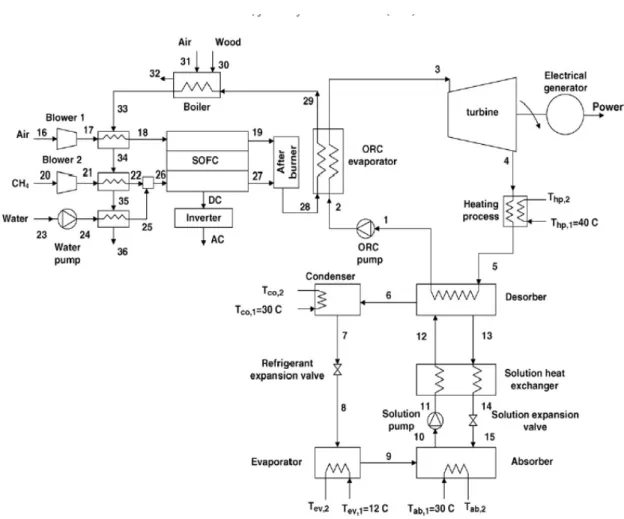
Figure 18: Solid Oxide fuel cell, ORC Trigeneration system possible lay out ... 42
Figure 19: Waste heat recovery from Solid Oxide fuel cell to reform fuel for Polymer electrolyte membrane fuel cells. ... 43
Figure 20: ORC usage in Gas‐cooled nuclear power plant with closed Brayton cycle. ... 46
Figure 21: Solar based ORC general sketch. ... 48
Figure 22: Superheating effect on total efficiency and work out put ... 51
Figure 23: Turbine and expander selection based on power range ... 57
Figure24: A‐ Normal boiler system B‐ Boiler system with possibility of wet vapor outlet ... 64
Figure 25: ORC in CHP system ... 67
Figure 26: Solar ORC ... 68
Figure 27: Effect of collector temperature on system performance ... 70
Figure 28: ORC for cooling devices ... 73
Figure 29: Evaporation and pre‐heating processes ... 74
Figure 30: Wet, Isentropic and dry fluid ... 92
Figure 31: Blade shape of radial inflow turbine ... 93
Figure 33: Axial turbine ... 94
Figure 34: Screw expanders ... 95
Figure 35: A basic fuel cell ... 96
Tables: Table 1: Classification of ORC application based on power, heat source temperature and producers ... 10
Table 2: Cost reduction options in biomass ORC ... 12
Table 3: A 10kW ORC box information ... 22
Table 4: ORC in comparison with steam cycle for gas turbine bottoming cycle ... 38
Table 5: Heat recovery options from fuel cells ... 44
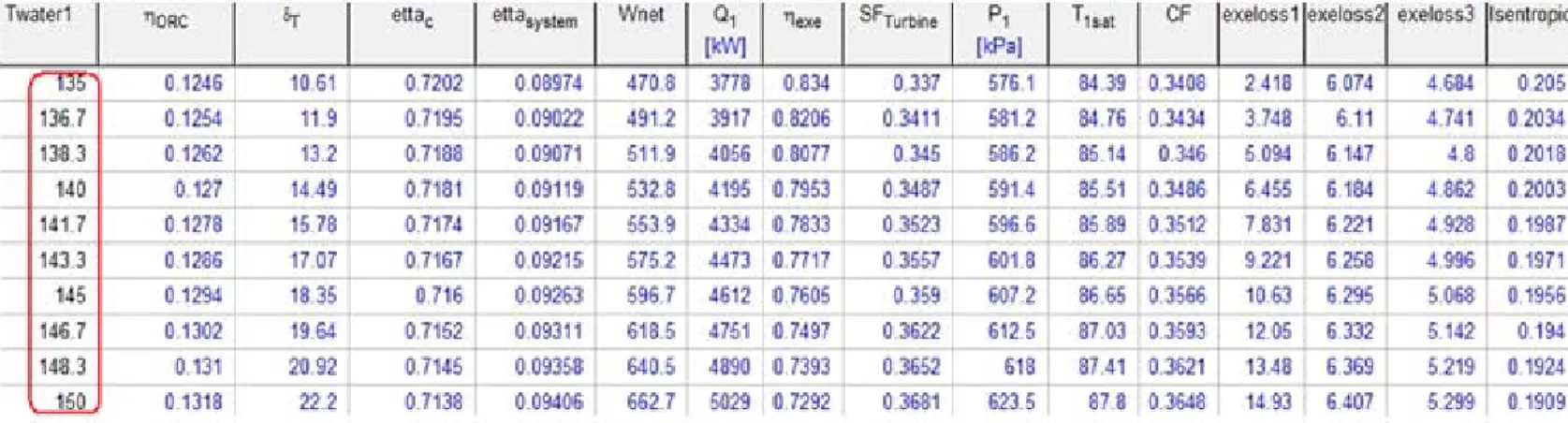
Table 6: Effect of pinch point temperature on exergy loss in evaporator (exeloss1) ... 54
Table 7: Low heat source temperature ORC (ORC cycles with heat source temperature of mostly less than 150°C). ... 54
Table 8: Exergy efficiency changes with degree of superheat ... 54
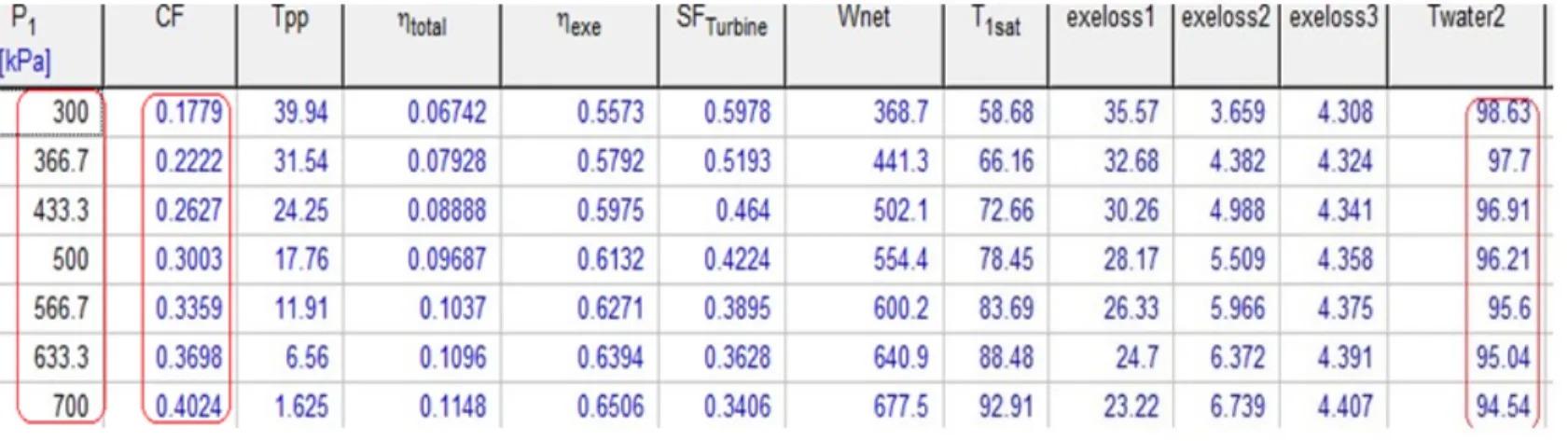
Table 9: Turbine size factor variation with evaporator saturation temperature and degree of superheat (Tpp is pinch point temperature in evaporator and T is degree of superheat) ... 58
Table 10: Isentropic flow ratio change with pinch point and degree of superheat modifications ... 59
Table 11: Effect of pump efficiency on evaporator pressure and total cycle efficiency ... 60
Table 12: Variation of ORC thermal efficiency with mass flow ... 61
Table 13: Heat source fluid mass flow variation effect on ORC efficiency and output power ... 62
Table 14: Solar Collector data ... 69
Table 15: Effect of intermediate fluid temperature on collector, ORC and total system performance ... 70
Table 16: Effect of constant superheat on turbine size factor (SF) and Heat exchangers factor (HEF) ... 71
Table 17: Effect of condenser temperature on ORC efficiency and output power ... 72
Table 18: Effect of evaporator pressure on CF ... 75
Table 19: Mass flow rate effect on CF and ORC performance ... 75
Table 20: R227ea ORC performance for cooling ... 76
Table 22: R245fa ORC performance for cooling ... 77
Ι
:
Applications
1
Introduction
Nowadays due to 40% predicted increase in energy consumption of the world, more environmental concerns
and less dependency on fossil fuels, demand for sophisticated power supply options is greatly increased.
Environmental concerns will be in form of global warming, acid rains, air, water and soil pollution, ozone
depletion, forest devastation and radioactive substances emissions.
Utilizing waste heats along with attempts to derive energy out of renewable resources as low grade thermal
heat sources have motivated the use of ORC.
ORC or Organic Rankine cycle basically resembles the steam cycle according to working principles. In ORC,
Water is replaced with a high molecular mass fluid with lower degree of boiling temperature in comparison
with water. Fluid characteristics make ORC favorable for applications of low temperature heat recovery
(normally less than 400°C).
In Figure 1, a T‐S diagram of ORC is depicted. As normal ORC, pre‐heater (2‐3) which preheats the working fluid, evaporator (3‐4) which changes the phase of working fluid from liquid to vapor by gaining heat from the
heat source, super heater (4‐5) which will superheat the working medium by adding more heat from heat
source, turbine (5‐6) which expands the working fluid and extract power from it, de‐superheater (6‐7) which
will form saturated vapor fluid at condenser inlet from superheated fluid after turbine, condenser(7‐1) that
removes the heat from fluid and make it liquid and pump (1‐2) that increases the liquid pressure are main
components. Entire process can be repeated to produce continuous power.
Figure 1: Normal ORC T‐S diagram
Source: Wikipedia1
1
Wikipedia; available at: http://en.wikipedia.org/wiki/File:Ideal_and_real_organic_rankine_cycle.jpg: 17.10.2010.
These and additional components like regenerator will be more studied in chapter ΙΙ‐1, “More detailed case
studies – Cost reduction and performance improvement of ORC” and also in apendix, section A‐2.
ORC has several advantages over steam cycle. It is known that working fluids in ORC has higher molecular
weight than water. This will increase mass flow rate of fluid for the same sizes of turbine. More mass flow rates
will give better turbine efficiencies and less turbine losses (Drescher, D. Bruggemann, 2007). Moreover, turbine
efficiency which is about 85% is kept efficient in part load applications and the system can be started faster. Most importantly, boiling point of ORC fluids are less than water; hence, they can be applied in lower
temperatures.2 (For more information about mass flow rate in turbine and losses please see the appendix A‐2,
turbine losses).
There are some other alternatives for power generation from low temperature heat sources. Kalina cycle and
transcritical CO2 power cycles are two important examples.
Due to gliding temperature for Kalina cycle working medium in evaporation and decreasing temperature during
condensation, better heat transfer from heat source and to the heat sink is expected. This causes better
efficiency for Kalina cycle. However, to achieve this, higher maximum pressure shall be maintained in the Kalina
cycle in comparison with ORC and this makes the cycle to be more expensive. More components same as
absorber and separator is needed, turbine needs to be multistage or have a high rotational speed and since the
medium is a mixture and normally is from water and Ammonia, it is deemed to be corrosive. All in all, these will
result in bulkier system, more components and higher electricity price from Kalina cycle in comparison with
ORC. 3
Transcritical power cycles can also be used to generate electricity from low temperature heat sources same as
vehicles exhaust, geothermal and solar energy resources. Phase change, same as Kalina cycle, occurs in non‐
constant temperature which will enhance the heat transfer. One of important working mediums is C02 with 4‐
10 times more slope in vapor pressure diagram in comparison with many fluids which will give proper heat
transfer criteria for the cycle.
Transcritical power cycle produces more power than ORC and gains better efficiencies. One important obstacle
on the way of its improvement was that the medium has properties in between liquid and the gas. This delayed
the development of the cycle due to lack of appropriate expander which works in variable phase situation. Due
to very recent achievements in variable phase turbines this technology is available today. Arrangement of the
turbine is same as normal impulse axial turbines; however, special shape of the blades will pass the small liquid
droplets with the gas and will minimize the erosion. In Figure 2 the variable phase turbine blade and a normal
turbine blade have been depicted.
2
U. Drescher, D. Bruggemann, Fluid selection for the organic Rankine cycle (ORC) in biomass power and heat plants,
Applied Thermal Engineering 2007; 27: 223–228
3 Paola Bombarda a, Costante M. Invernizzi, Claudio Pietra, Heat recovery from Diesel engines: A thermodynamic
Figure 2: Variable phase turbine blades in comparison with normal turbine blades.
Source: GRC Transactions, Vol. 33, 2009. 4
In comparison of a real geothermal project using R134a as a variable phase cycle and an ORC based geothermal
plant, it was concluded that the overall cost including the power cycle can be brought down from 4000$/kWe
in ORC based technology to 3000$/kWe in variable phase power cycle. 3
Nano‐structured metal‐organic heat carriers can also be used to enhance the ORC overall performance and
reduce the ORC cost. US Department of Energy’s Pacific Northwest National Laboratory (PNNL) is one of players
in research and developments on the issue. A new project on low temperature geothermal based power
generation is under investigation by the aforementioned institute.5
Nano‐structured metal‐organic heat carriers are Biphasic fluids with rapid expansion and contraction
capabilities. When they get heat, the thermal‐cycling of the biphasic fluid will run a turbine to produce
electricity. Due to their features and better heat delivery from heat source, they can produce more power in
ORC unit and they can increase the power generation capacity to near that of a conventional steam cycle. By
applying them cost per produced unit of electricity can be reduced. Their development is under study and it is
hoped that they will be more known and applied in near future (Phil Welch, Patrick Boyle, 2009). 4
4 Phil Welch, Patrick Boyle; available at:
http://www.energent.net/documents/Geothermal_Resources_Council_2009_Paper.pdf; available at:
5
1
1
Purposes
Demand for sophisticated and affordable power generation systems, security of electricity supply in each
country and environmental concerns encourage the investigation for cost effective ORC. It is an environmental
friendly option to meet this important need. Rural electricity provision for nearly 2 billion people and better
waste heat recovery of different industries in addition to Renewable based power generation can benefit from
this.
Moreover, a comprehensive study on different applications of cycle in different technologies cannot be found
and preliminary study shows that ORC applications have been overlooked in many areas. These all give great
impetus for this study. As a result, this master thesis is aimed to be a study on economically feasible
applications of Organic Rankine cycle and solutions to improve its performance and cost.
It is targeted that a market analysis be performed to identify cost effective applications of cycle in different
technologies. Classification on produced power range and heat source quality and temperature is set to be
implemented to recognize the technology, used working fluids and applied equipment.
Each component and process of the cycle in introduced technology will be studied and suggestions will be
made to reduce the overall cost, improve the efficiency and power output of cycle. Recommendations for
enhancement of solar based ORC system should be given in rather detailed manner. Introduced improvement
options are better to be expandable for many other applications to promote the system performance and
reduce the costs.
1
2
Overview
on
Methodology
By searching internet commercial websites, digital libraries, brochures from manufacturer and via contacting
related companies, necessary data is collected. It includes costs, configurations, power and temperature
ranges, and special considerations regarding each ORC technology.
Then the gathered data has been sorted and classified. During the evaluation, life cycle cost of ORC, quality and
quantity of produced energy and ORC properties as well as its initial cost has been taken into account. Then the
components of ORC have been well recognized and some recommendations have been proposed for cost
reduction opportunities. In each application, other technologies which can be used alternatively have been
introduced and compared with ORC. This causes better understanding of whole system and to identify most
proper technology in each application. In some cases the comparison shows the advantages of ORC more
clearly.
To reach aforementioned goals, equipment of ORC shall be selected properly. The working fluid, ORC speed of
turbo machineries, degree of superheat, working minimum and maximum temperatures and pressures are
A computer model for thermal and exergy efficiencies, heat transfer factor and turbine size is built. The outputs
give information on cycle performance and cost as mostly some non dimensional numbers. Then, effect of
selecting components with different characteristics and ORC features has been studied on them.
1
3
Background
It is believed that idea of ORC as power generation system from low heat sources was first presented in 1961
by Israeli solar engineers Harry Zvi Tabor and Lucien Bronicki. 6
In Figure 3 it is shown that current market share of Biomass ORC is a dominant share and Geothermal which
used to be the most significant part is in second position currently. Waste heat recovery in different industries
which is in third place can be applied to numerous industries and solar ORC still have a huge potential to be
flourished. This technology, due to lack of awareness, currently is only 1% of ORC market. Biomass based
application is so developed since it is the only proven technology for decentralized applications to gain powers
up to 1MWel from solid fuels like biomass.10
From 1980s which ORC has been available in the market, more than 200 projects with total power of about
2000 megawatts of electricity have been installed. This is while that rate of ORC usage has been
unprecedentedly soared in recent years. This shows a promising future for ORC market in near future.
Figure 3: ORC market share for different heat sources
Source: Fifth European conference, Economics and management of energy in industries.7
6 Wikipedia, the free encyclopedia; available at: http://en.wikipedia.org/wiki/Organic_Rankine_Cycle#References; as
accessed: 19.06.2010.
7 Sylvain Quoilin and Vincent Lemort; available at:
http://www.labothap.ulg.ac.be/cmsms/uploads/File/ECEMEI_PaperULg_SQVL090407.pdf; as accessed: 01.05.2010
Biomass ORC 48%
Geothermal ORC
31%
Waste heat recovery
20%
Solar applications
1
4
Initial
classification
After evaluation of gathered information, preliminary calcification of ORC applications is summarized as here
bellow:
‐ Biomass based ORC
‐ Micro scale ORC which includes small CHP ORC, Solar desalination unit, ORC as micro gas turbine
bottoming cycle and Ocean thermal energy conversion technology for ORC applications
‐ Geothermal ORC
‐ ORC for waste heat recovery of some industries, e.g.: Steel, cement and ceramic industries or internal
combustion engines or vehicles waste heat recovery
‐ ORC as bottoming cycle of Gas turbine
‐ Fuel cell based ORC
‐ Solar ORC –Larger solar power plants using ORC with possibility of storage systems
‐ ORC in nuclear power plants
‐ ORC for cooling
In Table 1 several main ORC producers, power range, temperature range and brief used technology is
mentioned.
Table 1: Classification of ORC application based on power, heat source temperature and producers
Source: European conference, Economics and management of energy in industries.8
Infinity turbine produces 250 KWe ORC and recently 10 KWe ORC boxes from this company are available in the
market. Free power in UK is another producer of small ORC units. Opcon in Sweden can also be added to this
endless list. ORMAT and Turboden are some other important manufacturers.
In next chapters applications of ORC will be studied.
8 Sylvain Quoilin and Vincent Lemort; available at:
2
Biomass
related
applications
of
ORC,
rather
higher
grade
heat
applications
Due to high availability of Biomass as solid fuel for power generation, this option has been increasingly under
development. Rather proper part and full load efficiency at small scale biomass based power generation plants
attracts attention for ORC usage. Moreover, ORC cycle acts more economically in smaller powers since less
safety measures are applied at lower powers and temperatures. As a result, Biomass based ORC has a large
market share of the technology beside Geothermal and waste heat recovery applications.
Biomass based ORC differs in some aspects with usual known ORCs and this requires accurate and elaborative
study on the subject.
Boilers in biomass applications are heated up to 450°C and 60 – 70 bars which require expensive materials in
design of equipment. When ORC is used in the system, biomass boilers are heated up to 300°C which are less
costly than normal biomass boilers. However, this is rather high temperature in ORCs. This will give a great
opportunity of using the system as combined heat and power cycle which will be discussed later.
Cooling side of condenser in biomass applications can be used in district heating systems as heat supply. This
makes another difference with normally practiced ORC applications since the temperature of condenser may
reach up to 100°C.
Carnot efficiency for typical biomass based ORC with heat source temperature of about 300°C and heat sink
temperature of 100°C is about 35% which means that this application has higher potential for thermal
efficiencies in comparison with normal ORCs with Carnot efficiencies of usually about less than 25%.
One important restriction is the maximum allowable working temperatures of about 400°C. In these high
temperatures working fluids are prone for dissociation and instability due to chemical reactions in working
fluids which occur in high temperatures. Furthermore, the maximum pressure in Biomass ORC is normally kept
bellow 20 bars to avoid expensive safety measures and materials. If large amount of heat is available,
superheating will be the solution to keep the higher pressure of system bellow 20 bars.
In ORC applications better efficiencies are when less superheat is done and reasonable higher evaporation
temperature and pressure are selected. This will be well discussed in (SectionΙΙ: chapter 1). To keep the
superheat in an acceptable range, the system should be optimized for maximum pressure (SectionΙΙ: Chapter
1), of section and for biomass based operations, around 20 bars is normally suggested.
For biomass based ORC applications, using Alkylbenzenes family and specially Butylbenzene as working fluid are
The aforementioned issues related to Biomass based ORC usage is summarized in table 2 and some
considerations have been added to give important suggestions on cost reduction options.9
Items to be
implemented
Keep the maximum
working pressure bellow
20 bars
Maximum working temperature
Reasons for cost
reduction
Less safety measures
will be needed, less
material cost Increases efficiencies Considerations Excessive superheat shall be prohibited to keep evaporator
pressure high enough*
However, in case of high
available heat, to keep
the evaporator max.
pressure bellow 20 bars
superheat will be
done**
Optimization should be
performed. Excessive increase in
not interesting.*
Table 2: Cost reduction options in biomass ORC
*For more details see chapter ΙΙ‐1.
**Available heat source can be used in both evaporator and super heater. If more fraction of heat is used in
evaporator, higher temperature and pressure in evaporator will be achieved. Since evaporator pressure above
20 bars will raise the cost of material and safety measures, if this pressure is reached in evaporator, more fraction of input heat will be used in super heater. Otherwise, it is interesting to limit the superheat. This can be
done by designing the evaporator and super heater and pressure after the pump in a well manner. For super
heating effect and adjusting pump pressure see chapters ΙΙ‐1 and ΙΙ‐6.
2
1
Comparison
of
ORC
in
biomass
CHP
plant
with
gasification
and
IC
engines
In biomass gasification, biomass will be converted to Hydrogen and Carbon Monoxide (Syngas) which is a
suitable fuel. Gasification is an efficient and rather low cost energy conversion method to harness biomass
energy and produce electricity.(For more information see APPENDIX: A‐2).
9 Ulli.Drescher, Dieter.Bru¨ggemann, Fluid selection for the Organic Rankine Cycle (ORC) in biomass power and heat plants,
Another option to extract biomass energy is biomass combustion. As depicted in Figure 4, the biomass is
combusted and a medium (Here thermal oil) delivers heat to vapor generator of ORC unit. Then power will be
produced in ORC unit. Waste heat of ORC condenser can be used in district heating system. This heat can also
be used in an absorption chiller (tri‐generation) to produce cooling as well as heat and power, depending on
demands. Even produced power from ORC can be used in vapor compression chiller. Adding district heating
and absorption chiller will increase the total thermal efficiency of whole plant. In Figure 4, ORC fluid after
expander will be used in regenerator. In this device (regenerator), remained amount of heat in ORC fluid after
turbine will be used to pre‐heat the fluid before entering the ORC evaporator (vapor generator).
In a typical plant with 30 MWh/year heat production and net generated electrical power of 4.6 MWh/year,
total efficiency of more than 80% is achieved and using 38.240 MWh/year of natural gas is avoided that results
in the prevention of carbon‐dioxide emissions to about 10000 tons per year (A.Rentizelas, S. Karellas, E.Kakaras,
I.Tatsiopoulos, 2009).
The Figure 4 shows how the ORC system will be fit in the combined heat and power system based on
biomass combustion.
Figure 4: Combined heat and power plant using ORC in combination with Biomass combustion system
Source: Energy Conversion and Management 2009 10
Combined heat and power plant using ORC in combination with Biomass combustion system can be compared
with combination of biomass gasification and internal combustion engines. In Figure 5, gasification system with
IC engines is depicted. In the latter system (gasification based system), biomass is converted to Syngas (CO and
10 A.Rentizelas, S. Karellas, E.Kakaras, I.Tatsiopoulos. Comparative techno‐economic analysis of ORC and gasification for
H2) in gasifier, and then the produced gas (fuel) is cleaned and is burned in an IC engine. Waste heat of the
system can be used for district heating. Both systems can produce heat and power; however they differ in
some aspects as here bellow. (Definition of gasification is mentioned in Appendix, section A ‐2).
Figure 5: Combined heat and power production using gasification and internal combustion engines
Source: Energy Conversion and Management 20099
First, electricity to heat ratio in gasification and IC engines is more than double in comparison with CHP plant
using ORC in combination with Biomass combustion. Gasification based system needs about 30 ‐ 40% more
biomass to achieve rather same heat production.
Secondly, since gasification deals with higher temperatures, more losses occur in heat transfer system, hence,
more nominal power is expected to compensate losses and give the same heat output. To clarify this, forward
heating pipe in gasification type is about 120 °C and in ORC type is 90°C.
All above mentioned issues will give a little more total efficiency for combined heat and power cycles using ORC
rather than gasification (A.Rentizelas, S. Karellas, E.Kakaras, I.Tatsiopoulos, 2009), however, better electrical
efficiency in gasification based case will make the industry owners to select the technology based upon their
electricity or heat demand.9
Considering electricity and heat prices as an example in Greece10, due to more electricity generation in
gasification based system, this technology gives twice net present value in comparison with ORC based CHP
plant (A.Rentizelas, S. Karellas, E.Kakaras, I.Tatsiopoulos, 2009); however, much more initial investment is
needed for gasification based system which means not so lower payback time and not so higher internal rate of
return for the technology. Definition of terms “net present value”, “internal rate of return” and “payback time”
is mentioned in section A‐2. 10
ORC in combined heat and power system has about 20% less internal rate of return and about 25% more
payback time in comparison with gasification based system. Gasification has about two times the net present
value since the effect of revenue from electricity generation is more important in this economical factor. The
Figure 6 shows the initial cost break down for two technologies. 9
Figure 6: Comparison of ORC and gasification based combined heat and power plant based on initial cost
Source: Energy Conversion and Management 20099
Figure 7: ORC and gasification based combined heat and power comparison in return of investment based on
current value.
Source: Energy Conversion and Management 20099
District heating system in case of ORC needs higher pipe diameters since the temperature is lower. This
increase is about 5‐6% in cost. However, more necessary biomass preparation will cost about 40% more in
gasification case. Furthermore, ORC is much more known system and is available in packages which make it
easier and safer to work with. This system has half cost for operation and maintenance and has less operational
risk in comparison with Gasification based technology. ORC only needs a weekly operator inspection and just
better to be checked twice in a year by producer.
To conclude from economical comparison, ORC in combined heat and power technology has a little less
internal rate of return and just small amount of more payback time in comparison with gasification based
technology. As mentioned, due to more electricity production, gasification based system will return more
revenue, has higher net present value and is more interesting when long time investment, more electricity and
more revenue is considered over 20 years of its lifetime.
However, heat to electricity price ratio will help in selecting the right technology. Closer prices for heat and
electricity, more demand for heat, interests for lower risk, more safety, less installation time and low available
initial budget might give enough impetus for ORC application and to disregard high income and more electricity
generation from gasification system. 9
2
2
Biomass
digestion
plant
waste
heat
recovery
Currently extracting biogas energy in biomass digestion process is not so economically active and efficient
method. The most important reason is huge amount of waste heat which cannot be used in district heating
system since the plants are normally in remote areas and it is not practical to transfer heat economically for
rather far distances.
Using ORC and producing electricity from biomass digestion plant waste heat can improve the efficiency of the
plant, produce base load electricity and help in more clean power generation.
In Figure 7 a schematic of an already installed system is depicted.
Figure 8: Layout of biomass digestion plant waste heat recovery
Source: Applied Thermal Engineering 2009 11
According to Figure 8, extracted biogas from Biomass (2) is combusted in engines (1). Compressed air from
turbo generator (3) and cooling water heat is utilized to heat the digester. Oil will be used to extract heat from flue gas of combustion (9) which will give heat to ORC fluid (10‐12). The ORC fluid can be heated or even super
heated normally in a single heat exchanger which is well known as evaporator (11‐12).
An implement cost evaluation on added ORC system shows that for a typical 500KW biomass digestion plant,
additional 35KW electricity can be produces by an extra investment of 4800$/kW. Assuming more than 7500
hours of full operation, 15 years of life for system and interest rate of about 5%, it will yield 0.074 $/kWh
electricity which is quiet lower than normal biomass based electricity price of about 0.17 $/kWh.11
11 A. Schuster, S. Karellas, E. Kakaras, H. Spliethoff. Energetic and economic investigation of Organic Rankine Cycle
3
Micro
scale
application
of
ORC
down
to
1KW
3
1
Micro
scale
CHP,
mainly
solar
and
biomass
based,
ORCs
In many places of the world, same as Africa and south Asia, great number of people do not have access to grid
connected electricity. The population nearly reaches 2 billion people.
Heat from Solar, biomass and geothermal energy or waste heats in small scales can help in providing clean and
cost effective electricity in remote areas. Using ORC in this concept will be a turning point.
Moreover, goals to reduce green house gas emission till 2020, has motivated large investment in new cleaner
sources of energies. Buildings as one of main energy consumers can also benefit from ORC. Electricity from
solar energy is one solution. Photovoltaic systems which have the greatest share of current market are rather
costly to be used. Besides, more flexibility and availability of power source persuade other solar based
technologies:
One novel idea is to use gas and solar hybrid combined heat and power cycles in very small scales for domestic
and even remote houses or in offices. This system main energy source is solar energy which is abundant in
many places. Since ORC unit input is heat, when solar energy is not available a gas burner or other heat source can be added to increase the availability of system. It is a cheaper solution than PV based electricity generation. Cost and performance of solar based ORC will be compared with solar P‐V in chapter 9 and more details are given in SectionΙΙ, 2.
To clarify the micro ORC advantages it is worthwhile to mention that square root of optimum power for ORC is
proportional to inverse of ORC speed which is turbine pump rotational speed. Weight to power ratio will be
more in case of higher powers since the ORC speed will be less. In other word, it is beneficial to optimize
number of installed ORCs units rather than using single unit to reach interested power while the cost of
additional unit and additional produced power is considered.
All in all, Ability to fulfill undeveloped and remote areas needs of heat and electricity, incorporating waste heat
utilization in overall system and less losses and costs for electricity transmission lines will motivate the use of
micro scale ORCs which can be driven by heat from solar energy, small amount of gas, biomass, waste heat, etc.
In Figure 9, one set of designed micro combined heat and power is depicted. ORC is the core of system.
Moreover, In Figure 24, another CHP plant which uses micro ORC as supplementary power generation system is
shown, however on that system boiler is not using solar energy directly.
Figure 9: Hybrid solar and gas driven combined heat and power cycle with ORC
Source: Applied Thermal Engineering 12
Illustrated system in Figure 8 can be run by a heat source down to 25kW. When the energy from sun suffices,
the system uses only solar energy. The alternative heat source which might be a gas burner increases the
availability of the system while solar energy is not sufficient. It can replace the solar energy and produce up to
100% heat input (25kW).
Evacuated glass tube solar collector is connected to compact brazed heat exchanger which is used as
evaporator of ORC unit. A heat pump is added to solar collector to use its waste heat which is not used in ORC
evaporator. The pump of this unit needs to be accurate; as a result a double diaphragm pump is chosen.
Turbine speed is 60000 rpm here. The ORC working fluid in this power range and low temperatures of about
90°C is chosen to be HFE‐301. This fluid has low boiling temperature in 3‐4 bars as 75°C, is not flammable as
12 W. Yagoub, P. Doherty, S.B. Riffat. Solar energy‐gas driven micro‐CHP system for an office building. Applied Thermal
other equivalent fluids and is relatively dry after expansion. This fluid is not listed as volatile organic
compounds which influence climate significantly and has no ozone depletion potential (gpo.gov, 2002). ORC
evaporator will generate vapor of 3‐4 bars and then run the micro turbine rather efficiently.13
Normally 10% of input heat (typically 2.5kW) can be recovered in condenser and be used for heating purposes
same as space heating. This gives total cycle efficiency of 17% and electrical efficiency of system is about 7.5%. More details about this system is given in SectionΙΙ, 2.11
3
2
Cost
of
the
system
Results from an economical analysis (A. Schuster, S. Karellas, E. Kakaras, H. Spliethoff , 2009) on rather the same micro CHP unit with 5kW electricity production and efficiency of 8% are shown in economical performance
curve in Figure 10. The here bellow graph shows electricity production price based on heat price and
operational hours. In this Figure, vertical line depicts operational hours, horizontal line shows heat price. (Heat
price/revenue shows the price of heat, since this system consumes heat and some amount of its waste heat
(typically 10%) is used for heating purposes, this number affects its total revenue). Price of produced power is
shown in Ct (1Ct means 0.01 €/KWh). Using the system for about 7500 hours will yield about 0.105€/KWh for
electricity production while typical heat price is assumed to be 0.09€/KWh.12
Figure 10: Electricity price for a 5kW micro ORC system (1Ct means 0.01 €/KWh)
Source: Applied Thermal Engineering.14
13 gpo.gov; available at: http://www.gpo.gov/fdsys/pkg/FR‐2002‐03‐22/html/02‐6848.htm; as accessed: 01.10.2010.
14 A. Schuster, S. Karellas, E. Kakaras, H. Spliethoff. Energetic and economic investigation of Organic Rankine Cycle
Micro ORC CHP unit applications in remote areas which uses solar or biomass energy as heat source will
decrease the electricity price down to about 0.14 $/KWh that is quiet lower than diesel based electricity price
of 0.3$/KWh. They can be a solution to heat and electricity demands and will significantly help in decreasing
the C02 emission. This is another advantage of system which decreases the tax of system and can have
revenues for clean electricity generation with low emission (Infinity turbine 2010).
One other great improvement in micro ORC technology is 10KW ORC power boxes. They are compact, safely
operational systems and commercially available technology. They can be joined to many heat sources same as
waste heat recovery in industries, solar collector or small biomass boilers. A system with its specifications and
cost is showed in Table 3 (Infinity turbine, 2010). Technology Produced power range Heat source temperature range Turbines Heat Exchangers Working fluid Size Company or institute working on Cost Micro ORC 10KW Around 100°C Lysholm Turbine – 60% of cost Compact brazed heat exchangers R134a, R245fa, R22, Other refrigerants 0.6*1.5*1.5 (m3) Infinity turbine 25000$ ‐ 2500$/KW
Table 3: A 10kW ORC box information
Source: Infinity turbine. 15 15
3
3
Small
scale
ORC
for
solar
desalination
units
Great progress on membrane technology has made reverse osmosis as pioneer option in desalination systems.
In this technology, a selective membrane removes large molecules from the pressurized solution. To apply
pressure on solution, a pump is used. This pumps requires power to be run and this can be supplied by an ORC unit.16
One good incentive to use ORC as driver of desalination unit is that high pressure pump of saline water to
membrane unit can be coupled with ORC turbine directly (EX is coupled to HPP in Figure 11) and this reduces
the losses in conversion systems which convert electricity to rotational speed and vice versa. To clarify this, in
PV based desalination unit electricity is produced and this will run the pump, however, in system of Figure 11
since turbine is coupled with turbine directly, generator is not used and rotational speed is inserted to pump
directly and this is a more efficient way.
So far using parabolic trough system and screw expander as driver has been best economical option even more
appropriate than PV driven systems (Can be 40‐60% less expensive than P‐V based system).55
To have a solar ‐ ORC desalination unit as in Figure 11, a collector system, ORC and desalination unit shall be
connected. The heat transfer medium in collector system is pumped water which will deliver the heat from
collector (ETC) to ORC evaporator (EV). The turbine in ORC subsystem (EX) will drive a high pressure pump
(HPP) from desalination subsystem and this pump will provide water to membrane (RO). A hydraulic turbine
(HT) will use remained pressure of fluid coming from the membrane to run a small pump (P3).14
Figure 11: Small scale solar – ORC desalination unit
Source: Applied Energy16
Performing an exergy analysis and defining a term called thermodynamic performance will help in analyzing
different configuration and fluids for the system. Thermodynamic performance will be defined as exergy of
outgoing flow to energy input of each sub‐system. This will show importance of evaporator and proves that
16 B.F. Tchanche, Gr. Lambrinos, A. Frangoudakis, G. Papadakis. Exergy analysis of micro‐organic Rankine power cycles for a
biggest exergy loss occurs in expander due to thermal and radial leakage losses. Besides, it is shown that (B.F.
Tchanche, Gr. Lambrinos, A. Frangoudakis, G. Papadakis, 2010) regenerator (device which transfers heat from
vapor fluid after expander to liquid fluid going to evaporator) especially in isentropic fluids like R134a will not
add to better performance of system; because, it is seen that in some performed experiment the fluid
temperature after regenerator will be less than fluid temperature in pump outlet.
3
4
ORC
as
bottoming
cycle
of
micro
gas
turbines
Environmental and energy demand concerns especially in non interruptible applications same as in hospitals or
remote areas has caused an unprecedented interest in micro turbines application for power generation. Micro
gas turbines as rival for internal combustion engines are one potential option. Lower efficiencies of about 30%
have motivated more research on the issue. One genius solution is combining the micro gas turbine with ORC
to reach higher efficiencies of about 40%. This is even true for small power generations of about 100 KW for
micro gas turbines and about 35 kW for ORC.15In more general view, micro gas turbines gas power can be up to
150kW. ORC power will increase accordingly since the waste heat from micro gas turbine will increase with its
power.
In Figure 12 it is shown that exhaust gas from gas turbine which has temperature of about 250‐300°C is
combined with an ORC unit to produce extra power. The heat transfer from gas turbine to ORC evaporator
occurs at heat recovery vapor generator (Red area).
Figure 12: ORC as bottoming cycle of a micro gas turbine
Source: Alureiter; Wikipedia60
For this technology choosing of working fluid and best turbine are the key points. Except than some physical
evaporator pressure, the more the boiling temperature of fluid is closer to exhaust gas temperature the better
power output will be the result (Costante Invernizzi, Paolo Iora, Paolo Silva, 2007).
With respect to turbine efficiency, normally two factors are considered. Ratio between volumetric flow rate of
outgoing and incoming fluid in addition to size factor are key parameters in choosing the right turbine. This will
be discussed in chapter Ι‐1. Some candidate working fluids for this application can be found in Costante
Invernizzi, Paolo Iora, Paolo Silva, (2007)17. For gas turbine exhaust temperatures of 300°C,
esa-methyl-disiloxane is suggested by authors.
Based on normal ORC cost of about 3500$/KW in 50 – 100 KW power range and micro gas turbine cost of about
1500 $/KW, total system cost will be about 2100$/KW. By this investment efficiency of the system will be
increased from 30% to about 40.17
3
5
Ocean
thermal
energy
conversion
technology
Ocean thermal energy can be utilized to drive an ORC. Warm see water can be used in evaporator while colder
water in deeper parts of sea can be used in condenser. Small scale ORCs with possibility for low thermal heat source usages are suitable for this option.18
Temperature differences in evaporator and condenser are normally low and in order of 20°C. Working fluids
can be refrigerants and benzene series fluids. This technology is in demonstration phase and is not highly
commercially attractive yet (S.K. Wang, T.C. Hung, 2010).19
17 Costante Invernizzi, Paolo Iora, Paolo Silva. Bottoming micro‐Rankine cycles for micro‐gas turbines. Applied
Thermal Engineering 2007; 27:100‐110.
18 T.C. Hung, S.K. Wang, C.H. Kuo, B.S. Pei, K.F. Tsai, A study of organic working fluids on system efficiency of an ORC using
low‐grade, Energy 2009; 35: 1403–1411.
19
S.K. Wang, T.C. Hung, available at:
http://esd2010.ueuo.com/esd2010cd/papers/S%2003/S%2003.4_Renewable%20Energy%20from%20the%20Sea.pdf; as
4
Geothermal
applications
4
1
Low
enthalpy
geothermal
applications:
Geothermal energy as stored energy in earth is assumed to be a renewable source to produce clean electricity
especially in remote and prone areas. Normally the geothermal wells have temperatures of between 50 – 350
°C.
To gain higher temperatures in earth, deeper wells are required and this makes the overall cost higher. High
temperature wells are used in flash steam power plants. In this method, water is injected into geothermal wells
and this water gains heat from the earth. As a result, steam is produced and will run a steam cycle. These
resources can be used in combined heat and power cycle if temperature is higher than 150°C.
ORC technology has widened the use of lower temperature wells. Nowadays, mostly medium temperature
resources of 100 ‐220°C using binary technology have been utilized. In binary system, electricity production unit
works in a separate cycle which is in heat transfer with the wells. As depicted in Figure 13, hot water from
geothermal wells goes into hot side of evaporator and will heat the ORC fluid. Then ORC unit will produce
power from this gained heat. Since the water from the well does not circulate in power unit this method has
least pollution (The pollution is due to existence of toxic materials in water of geothermal wells)
Figure 13: Typical binary geothermal plant and its ORC unit
Sources: Boyle, G, 2004 and 1 Stephan Uhlig, Geotec, 2010.
Utilization of lower geothermal wells of about 70 – 100 °C is under intensive investigation. Wells with these
temperatures are available in many places of the world; hence, progress in using them will provide vast
potential for geothermal based ORC units to produce power. To achieve this, effective and efficient heat
exchangers should be used to minimize the heat losses.
Little temperature difference of less than 10 °C between forward and return lines in low temperature wells
necessitates large heat exchangers area and high mass flow rates. These requirements make the system rather
tough to be economically designed.
Since heat extraction from low temperature well needs high heat exchanger area, it would not be wrong to
assume that most of the costs from low temperature binary power plants are due to heat exchangers. Having
systems with efficient and optimum heat exchangers would be giant step forward in improving the cost
effectiveness of system. Titanium flat plate heat exchangers which have good heat transfer and are compact
and can be suggested (Kontoleontos E., Mendrinos D., Karytsas C, 2010).20,21Regarding the working fluids,
Isobutane (R600a) and R134a are recommended by Kontoleontos E., Mendrinos D., Karytsas C, (2010).
Due to recent progresses in ORC technology, geothermal ORC in low temperatures (about 70 – 100 °C) is
economical nowadays. However some special techniques will help in making the system more economically
viable. One novel idea is to use an absorption chiller in contact with cycle condenser. The idea is to use the ORC
condenser as chiller evaporator. This will decrease the condenser temperature. Having less condenser
temperature will give more temperatures difference between heat source and heat sink which results in better
Carnot efficiency for ORC unit. This is easily proven: If Carnot efficiency is defined as temperature difference of
heat source and heat sink divided by heat source temperature, it is clear that by fixed heat source temperature;
less heat sink temperature connected to condenser will give better Carnot efficiencies.
Other ideas same as using Nano‐structured metal‐organic heat carriers can be helpful to enhance the ORC
overall performance and reduce the ORC cost. This is a great area for research and development purposes.
(Nathanael Baker, 2009).22
4
2
Geothermal
power
from
waste
heat
of
oil
and
gas
wells
Introducing low energy utilization power cycles will make it possible to produce geothermal power from oil and
gas wells waste heat.
National Renewable Energy Laboratory in USA believes that these geopressured resources can be potentially
used to produce 70 000 MW of electricity which accounts for 10% electricity consumption of whole country.
Southern Methodist University is working on using produced hot water from oil and gas wells in united states
to meet demands of some millions households.
20
Stephan Uhlig, Geotec Consult; available at: http://geoheat.oit.edu/bulletin/bull23‐1/art6.pdf; as accessed: 27.04.2010.
21Kontoleontos E., Mendrinos D., Karytsas C; available at: http://www.lowbin.eu/public/CRES‐
Optimized%20geothermal%20binary%20power%20cycles.pdf; as accessed: 07.10.2010.
22
Using available oil and gas infrastructure make this option extremely interesting. Wells which are drilled for
petroleum extraction normally have temperatures of above 100°C. Large amount of produced hot water from
these wells which reach millions of liters are currently deemed waste. ORC units can produce electricity from
waste heat in these hot waters from oil wells. Produced electricity can be used on site or be fed to grid.
Normally the transmission infrastructure is already available near the wells and electricity can be�