All Regis University Theses
Winter 2016
Comparing the Knowledge, Skills and Attitudes of
Newly Hired Nursing Staff Before and After
Implementation of a Quality and Safety
Competency-Based Nursing Orientation Program
Dana LuskFollow this and additional works at:https://epublications.regis.edu/theses
This Thesis - Open Access is brought to you for free and open access by ePublications at Regis University. It has been accepted for inclusion in All Regis University Theses by an authorized administrator of ePublications at Regis University. For more information, please [email protected].
Recommended Citation
Lusk, Dana, "Comparing the Knowledge, Skills and Attitudes of Newly Hired Nursing Staff Before and After Implementation of a Quality and Safety Competency-Based Nursing Orientation Program" (2016).All Regis University Theses. 840.
Doctor of Nursing Practice Projects RHCHP Theses, Capstones, Final Projects
Winter 1-2016
Comparing the Knowledge, Skills and Attitudes of
Newly Hired Nursing Staff Before and After
Implementation of a Quality and Safety
Competency-Based Nursing Orientation Program
Dana LuskFollow this and additional works at:https://epublications.regis.edu/rhchp_dnp_etd
This Thesis - Open Access is brought to you for free and open access by the RHCHP Theses, Capstones, Final Projects at ePublications at Regis University. It has been accepted for inclusion in Doctor of Nursing Practice Projects by an authorized administrator of ePublications at Regis University. For more information, please [email protected].
Recommended Citation
Lusk, Dana, "Comparing the Knowledge, Skills and Attitudes of Newly Hired Nursing Staff Before and After Implementation of a Quality and Safety Competency-Based Nursing Orientation Program" (2016).Doctor of Nursing Practice Projects. 3.
Comparing the Knowledge, Skills and Attitudes of Newly Hired Nursing Staff Before and After Implementation of a Quality and Safety Competency-Based Nursing Orientation Program
Dana Lusk
Submitted In Partial Fulfillment of the Doctor of Nursing Practice Degree Rueckert-Hartman College for Health Professionals
Loretto Heights School of Nursing Regis University
Denver, CO January 24, 2016
i
Copyright © 2016 by, Dana Lusk. All rights reserved. No part of this work may be reproduced, stored in a retrieval system, or transmitted in any form or by any means, electronic, mechanical, photocopying, recording, or otherwise, without the author’s prior written permission.
This material is the result of work supported with resources and the use of facilities at the Denver VA Medical Center and VA Eastern Colorado Health Care System. The views expressed in this work are the views of the author do not necessarily represent the views of the Department of Veterans Affairs or the United States Government.
ii
Executive Summary
Comparing the Knowledge, Skills and Attitudes of Newly Hired Nursing Staff Before and After Implementation of a Quality and Safety Competency-Based Nursing Orientation Program
Problem
There was a lack of content regarding quality and patient safety in an urban Veterans Administration (VA) health care system nursing orientation program. A Department of Veterans Affairs culture of safety survey indicated frontline VA nursing staff scored lower in the safety culture dimensions compared to other VA health care professionals. Developing a curriculum for nursing orientation incorporating the six Quality and Safety Education for Nurses (QSEN) competencies and utilizing a trans-theoretical approach guided by Marilyn Ray’s theory of bureaucratic caring and Albert Bandura’s self-efficacy theory was developed to offer a solution.
Purpose
The purpose of this project is to determine if a theory-guided, competency-based, nursing orientation program will increase the self-reported self-efficacy of the knowledge, skills and attitudes associated with the six QSEN competencies and learner satisfaction of newly hired nursing staff within an urban, Veterans Administration health care system.
Goals
The goals of this project are to redesign the nursing orientation program to increase quality and safety content in the nursing orientation curriculum; increase learner satisfaction of nursing orientation; and ensure compliance with the VA and Office of the Inspector General standards regarding competency validation of nursing competency, and improve the facility culture of safety.
Objectives
The objectives of this project are to develop a nursing orientation program within the framework of the existing orientation program; develop a QSEN competency validation form; administer the Nursing Quality and Safety Self-Inventory (NQSSI) as a pre and posttest of the participants in nursing orientation and a post Utilization-Focused Evaluation before and after implementation to compare for any differences in the self-efficacy or learner satisfaction of newly hired nursing staff.
Plan/Method
Causal-comparative/case control design with a comparative group using interrupted time series pretest, posttest and approximately 30 day post-posttest.
Outcomes and Result
Results of the NQSSI found no significant difference in all of the KSAs of the six QSEN competencies between the control and intervention groups except for post-posttest results for Knowledge in the Quality Improvement competency. Significantly higher satisfaction is found in the intervention group who had the Quality and Safety Competency-Based Nursing
Orientation compared to the control group with usual nursing orientation in all areas except for the classroom being conducive to learning. Differences were found in some of the results of the NQSSI regarding years of experience and having had QSEN in nursing school. Those with 0-3 years of experience or had QSEN in nursing school scored lower in some of the KSAs than those with more experience or those who did not have QSEN or were not sure. There are no
iii
Acknowledgements
This project would not be possible without the following individuals:
• My Regis University Capstone Chair, Dr. Alma Jackson for her inspiration and support without whom this topic and project would never had become a reality.
• My Faculty Advisor, Dr. Patricia Cullen for all of her words of wisdom and encouragement.
• My mentors at the VA: Dr. Eric Rodger, who acted as my DNP Clinical Mentor and Dr. Sarry Moscatel, who acted as the VA Faculty Investigator.
• Dr. Cheryl Krushke for her help with “the numbers.” I will always remember her words: “Look at the data; it tells the story.”
• My loving and supportive husband for putting up with my “melt downs” and “I can’t do this.” He believed in me even when I did not.
Especially loving and heartfelt thanks to Dr. Marilyn “Dee” A. Ray, whose generosity in providing her time and counsel to me regarding her theory of bureaucratic caring was an
amazing gift. She breathed new life into this project when she read and critiqued my paper. Her wisdom and loving spirit helped me to see her vision of looking at caring beyond the humanistic caring of the nurse-patient relationship, but also to the economic-legal-political caring of the nurse administrator within the complex, bureaucratic healthcare system. I will forever treasure our time together.
iv Table of Contents Table of Contents Copyright Page... i Executive Summary ... ii Acknowledgements ... iii Table of Contents ... iv List of Tables ... vi
List of Figures ... vii
List of Appendices ... viii
Problem Recognition and Definition ...3
Statement of Purpose ...3
Problem Statement ...3
Project Significance, Scope and Rationale ...4
Significance...4
Scope and Appropriatness...5
Rationale ...5
Theoretical Foundation ...6
Review of Evidence ...14
Background ...14
Systematic Review of the Literature ...16
Project Plan and Analysis ...23
Market and Risk Analysis ...23
v
Stengths, Weakness, Opportunities and Threats ...24
Community and Veteran Health Administration Resources and Sustainablity ...28
Stakeholders and Target Market ...29
Capstone Project Team ...31
Cost Benefit Analysis and Budget ...31
Project Objectives ...33
Mission and Vision ...33
Goals, Outcomes and Objectives ...34
Evaluation Plan ...35
Logic Model ...37
Population and Sampling Parameters ...37
Method ...38
Human Subjects Protection ...39
Data Analysis Plan ...40
Project Findings and Results ...41
Limitations ...49
Recommendations and Implications for Change ...50
vi
List of Tables
Table 1. Related Definitions of QSEN Competencies and Differential Caring ...9
Table 2. SWOT Analysis for QSC-BNO Project...27
Table 3. Capstone Project Budget ...32
Table 4. Frequency Data of Sample ...41
Table 5. Years of Experience Pairwise Comparison ...47
vii
List of Figures
Figure 1. Theoretical Framework for QSC-BNO ...13
Figure 2. PRISMA Diagram of Literature Review ...18
Figure 3. Lewins Driving and Restaining Forces ...24
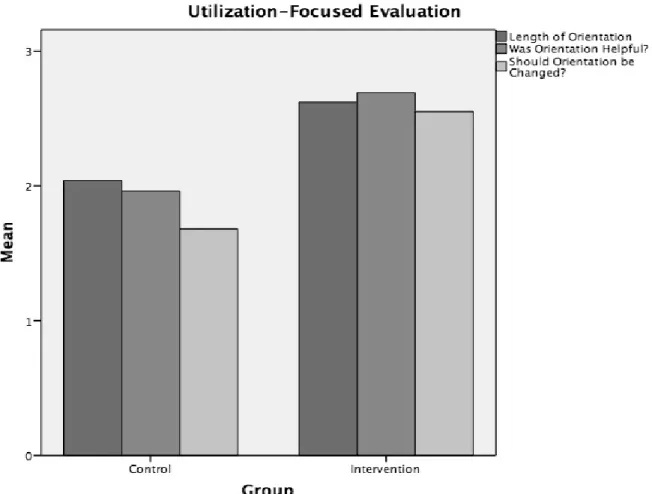
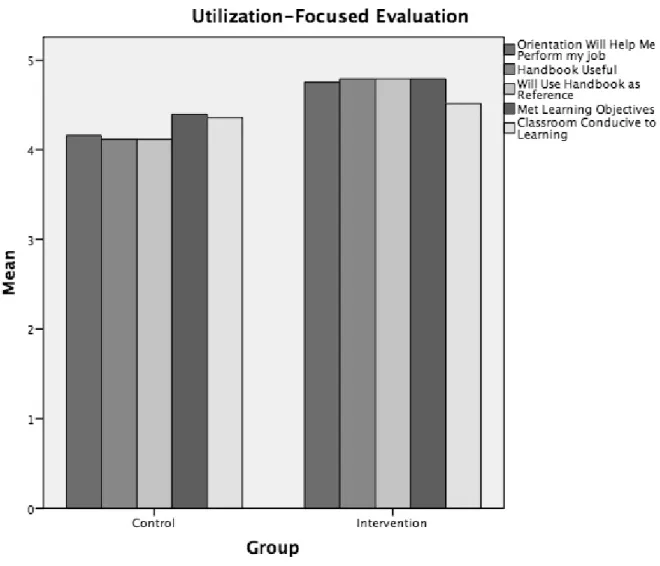
Figure 5. Chi Square Test of Independence Between Group Comparison of U-FE ...44
viii
List of Appendices
Appendix A. Summary Table of Literature Review ...64
Appendix B. Quality and Safety Competency-Based Nursing Orientation Curriculum ...67
Appendix C. QSEN Nursing Orientation Competency Form ...94
Appendix D. DNP Project Logic Model ...105
Appendix E. Conceptual Model for DNP Project ...106
Appendix F. Nursing Quality and Safety Self-Inventory (NQSSI) ...107
Appendix G. Permission to Use the NQSSI Tool ...109
Appendix H. Utilization-Focused Evaluation Tool ...110
Appendix I. Study Participant Information Sheet ...111
Appendix J. NQSSI Mann-Whitney U Data for Control and Intervention Groups ...114
Appendix K. Comparison Utilization-Focused Evaluation of Control/Intervention Groups ...126
Appendix L. Analysis of the NQSSI Results for the Variables of Interest...130
Appendix M. DNP Project Timeline ...133
Appendix N. Approval from the Colorado Multiple Institutional Review Board (COMIRB) ....134
Appendix O. VA ECHCS Acknowledgment of Quality Improvement Project...135
Appendix P. Approval from the Regis University Institutional Review Board ...136
Appendix Q. CITI Training Certificate for COMIRB ...137
Appendix R. CITI Training Certificate for Regis University ...138
Comparing the Knowledge, Skills and Attitudes of Newly Hired Nursing Staff Before and After Implementation of a Quality and Safety Competency-Based Nursing Orientation Program
When referring to quality and safety in healthcare, these terms are often interconnected with term care (i.e., quality care or safe patient care). Caring is a nurturing behavior and as such, may seem out of place in large hierarchical, formal organizations where resources, roles, rules, regulations and policies are decided and implemented from officially designated authorities (Ray, 1989). If healthcare systems are functioning within a bureaucratic culture, how can the concept of caring in regards to quality and safety become integral to institutional political, legal, economic, or financial viability? How do we define quality care or safe patient care within bureaucratically organized systems? Caring has become associated with the essence or dominant concept within the epistemology of professional nursing working within these bureaucratic organizations (Ray, 1989). In examining the concept of caring in nursing, Morse, Solberg, Neander, Bottorff, and Johnson (2013) found a divergence between those who view caring as a process of interaction or interpersonal versus caring as interventions. The authors concluded these divergent views of caring are manifested when nurses view their work as being controlled by organizational authority and limiting their time spent in providing interpersonal caring
activities with patients in order to be more efficient and focus on interventions as care. This is to ensure nursing care is as economically viable as possible while nurses are struggling to provide the more interpersonal or interaction side of caring. This divergent view results in professional dissatisfaction, and nurses’ fear of spending less time with patients may result in unsafe care (Morse et al., 2013). Dr. Marilyn Ray’s theory of bureaucratic caring explains these divergent views by informing us how bureaucratic culture differentiates caring depending on
substantive theory of differential caring categories within bureaucratic caring (political,
economic, legal, technological, educational, social, spiritual and ethical) provides understanding these are not divergent views of caring after all but are actually part of the whole of which the whole is part. According to Dr. Ray, this is the holographic theory of bureaucratic caring, grounded in Complexity Science, which reveals the mutual process of organizational,
environmental and individual caring into a holistic meaning of culture of caring and culture of safety (M. Ray, personal communication, September 25, 2015). So the methods within the teaching/learning environment in introducing the policies, procedures and philosophies of the organization, the new nurses are actually exposed to the connections of differential caring. This is also the educational caring of the clinical nurse educator according to bureaucratic caring (Ray, 1989).
According to Bandura (2009), orientation and training for newly hired employees should be designed to prepare them for their roles they were hired into and the structure and culture of the organization. New employees with low self-efficacy prefer specific and “prescriptive training, which tells them how to perform the roles” and tasks assigned (Bandura, 2009, p. 181). Whereas those with high self-efficacy prefer orientation, which will enable them to be innovative in their roles and bring experience and ideas that may improve customary practice. According to Hodges and Hansen (1999), a well-designed competency-based nursing orientation is learner-centered by focusing on the individual employee’s ability to perform their new role. A traditional orientation program tends to be structured solely on the cognitive knowledge
regarding the new role and is more subject-centered. In providing a learner-centered orientation, an assessment of the learner’s competencies will determine an individualized orientation for each employee (Hodges & Hansen, 1999). Additionally, a competency-based nursing orientation
program, which is learner-centered, may improve the employee’s orientation experience and sense of welcome to the organization.
Problem Recognition and Definition Statement of Purpose
The aim of this quality improvement study is to determine if a theory-guided
competency-based nursing orientation (QSC-BNO) program increased the reported self-efficacy of the knowledge skills and attitudes (KSA’s) associated with the six QSEN
competencies and learner satisfaction of newly hired nursing staff within an urban, Veterans Administration (VA) health care system.
Problem Statement
A need was identified to address low culture of safety scores by frontline VA nurses (Office of Quality & Safety and Value, 2012; Singer et al., 2009; Sculli et al., 2013), while also standardizing the process to validate nursing competencies (Department of Veterans Affairs & Office of the Inspector General, 2012), while improving the quality and safety of patient care. A redesigned nursing orientation program and a nursing competency policy to incorporate the QSEN competencies have been developed. The policy addresses how nursing competencies are developed and validated using the QSEN competencies and associated KSAs. The first steps in this policy are the validation of the initial competencies in the orientation period of newly hired nursing staff. This will be accomplished through a quality and safety competency-based nursing orientation (QSC-BNO) program. The problem statement associated with this practice issue in PICO format:
P: Newly hired nursing staff at an urban VA health care system.
C: Usual general nursing orientation.
O: Improved self-reported self-efficacy of knowledge, skills and attitudes (KSAs) in providing quality and safe patient care and learner satisfaction.
The question this project aims to answer is: Will newly hired nursing staff at an urban VA health care system, after the implementation of a quality and safety competency-based nursing
orientation program, compared to newly hired nursing staff prior to implementation, demonstrate improved self-reported self-efficacy of knowledge, skills and attitudes in providing quality and safe patient care to veterans and learner satisfaction?
The null hypothesis: There is no difference between self-rated knowledge, skills and attitudes and learner satisfaction of newly hired nursing staff before and after implementation of the QSC-BNO.
Project Significance, Scope and Rationale Significance
The IOM and the QSEN Institute have revealed a set of core competencies that should be required of all health care professionals to provide quality and safe care to patients (Greiner & Knebel, 2003; Sherwood & Barnsteiner, 2012). Therefore, it seems essential to redesign a quality and safety competency-based orientation program, based on those competencies, to
improve the quality and safety of the care provided to the veterans at a VA urban medical center. There is a gradual movement underway to incorporate the IOM and QSEN competencies into practice within the Veterans Health Administration (VHA), which is evidenced by the QSEN and IOM language in the initiatives of the VA Quality Scholars Fellowship Program (Patrician et al., 2012), which began accepting pre- and post-doctoral nurses as fellows into the program in 2011.
Project Scope and Appropriateness
This Doctor of Nursing Practice (DNP) capstone is a quality improvement (QI) project to determine the effectiveness of a redesigned competency-based nursing orientation program, as evidenced by comparing nursing self-efficacy and learner/participant satisfaction. This will be achieved by measuring the self-rated scores by newly hired nursing staff of their KSAs related to the QSEN competencies using the Nurses Quality and Safety Self-Inventory tool (NQSSI) (Piscotty, Grobbel, & Abele, 2013) and a utilization-focused evaluation by the participants. The scores of the NQSSI will be obtained using a pretest and posttest methodology. The learners will also conduct a utilization-focused evaluation on the last day of General Nursing Orientation (GNO) to measure satisfaction of the participants with the program. The scores of the NQSSI and the utilization-focused evaluations will be compared to those of newly hired nursing staff prior to the implementation of the quality and safety competency-based program.
This scholarly capstone project demonstrates an essential DNP role of operationalizing theory in clinical practice by: 1) Focusing on an evidence-based solution to an identified clinical practice problem; 2) Being specific to one particular health care system and not generalizable, though may be applied in other settings; and 3) Demonstrating the “scholarship of integration and application” by bringing “life to theory and reality to research in the context of the real world” (Zaccagnini & White, 2011, p. 453).
Rationale
The rationale for this capstone project is to serve as a pilot program to assess the effectiveness of a QSC-BNO program and the feasibility of a future expansion to a preceptor program for unit-based orientation. The GNO program for newly hired nursing staff is the ideal
place to begin this initiative to utilize the QSEN competencies and the associative KSAs for the entire nursing service at VA ECHCS and not just newly-hired nursing staff.
Theoretical Foundation
Integration of the six Quality Safety Education for Nurses (QSEN) competencies into a competency-based nursing orientation using a trans-theoretical approach by combining Ray’s theory of bureaucratic caring and Bandura’s self-efficacy theory provides a framework to redesign a quality and safety competency-based nursing orientation program. Both theories address organizational culture and effectiveness with Ray focusing on holographic caring in an organizational culture (Coffman, 2006; Ray & Turkel, 2010; Ray and Turkel, 2012) and Bandura on achieving individual self-efficacy and competency to improve organizational effectiveness (Bandura, 1982, 2009, & 2014). Through the understanding of complexity science as it relates to self-efficacy theory, as Ray does in her theory of bureaucratic caring (Ray & Turkel, 2012), then the connection of increasing individual self-efficacy of newly hired nurses during their
orientation results in increasing organizational efficacy of the whole (Manojlovich, 2005; Bandura, 2009; Bumann & Younkin, 2012), regarding quality and safe patient care. The attainment of competencies by an individual nurse, such as those described by QSEN, may be achieved through the theory of self-efficacy developed by Albert Bandura (Bumann & Younkin, 2012). Combining personal interest with extrinsic rewards for personal mastery will result in the attainment of personal competence among those who have high self-efficacy (Bandura, 1982). Bandura’s theory, when applied to nursing orientation, suggests nurses with high self-efficacy would engage in activities and attain competence in providing quality and safe patient care even if they believe the circumstances in doing so is wrought with insurmountable obstacles (Bandura, 2009).
Marilyn Ray’s grounded theory of bureaucratic caring seems to be the ideal theoretical framework to inform bureaucratic systems, such as the VHA, how a caring culture is able to exist within an extremely complex, holistic and dynamic organization. As with many large health care organizations, the VHA has a hierarchical structure with a penchant for authoritative power and control in order to effectively function not only in caring for the sick and injured, but also as a technical-politico-economic and legal organization (Davidson, Ray, & Turkel, 2011). The theory of bureaucratic caring has continued to evolve as a holographic theory from the new science of Complexity Science and quantum theory, which provides a deeper understanding of complex systems thinking (Ray & Turkel, 2012). The field of theoretical physics, complex or quantum theory, explains the interconnectedness of all existence where the whole and the part are one and the same (Porter-O'Grady & Malloch, 2011). According to Porter-O’Grady and Malloch (2011) complex or quantum theory also informs us of the impact of any change occurring within an organization; even the smallest change will eventually effect the whole organization.
Bureaucratic caring theory helps us to understand the concept of caring within a complex, holistic and dynamic health care bureaucracy such as the VHA. Bureaucratic caring theory began through the discovery of what Ray (1989) identified and defined as the substantive theory of differential caring within health care organizations. The categories of differential caring are political caring, economic caring, legal caring, technological caring, educational caring, social caring, spiritual and religious caring and ethical caring (Ray, 1989; Ray & Turkel, 2010). Individuals in different roles or positions within the culture of a health care organization will have varying meaning or methods of operationalizing caring (Ray, 1989; Turkel, 2007). The Theory of Bureaucratic Caring describes the dialectical synthesis of caring in terms of
humanistic, social, educational, ethical and religious-spiritual and the antithesis of caring in terms of economic, political, legal and technological to create a caring wholeness within a bureaucracy (Ray, 1989). Ray and Turkel (2010) illuminate how differential caring is able to exist within the culture of the bureaucracy by illustrating how the nurse on the oncology unit is practicing holistic and spiritual caring, while the nurse in the critical care unit is practicing technological caring, and the nurse administrator is practicing economic caring by assuring economic viability of the organization. In bureaucratic caring the differentiated caring parts (social-cultural, spiritual-ethical, technological, legal, political, educational, or economic) described above are allowed to exist simultaneously thus co-creating an organizational
wholeness of caring. If the differentiated caring parts are actually reflections or single fractals within a multifractal or interconnected whole, then caring is no longer the antithesis of the bureaucracy, but is a synthesis of the whole (Coffman, 2006).
The categories of differential caring categories in bureaucratic caring theory are relatable to each of the following six competencies as defined by the QSEN Institute (QSEN Institute, 2014; Cronenwett et al., 2007; Turkel, 2007): 1) Patient-centered care (PCC) is related to the differential caring categories of social-cultural caring and spiritual-ethical caring. 2) Teamwork and collaboration (T&C) is related to the differential caring category of political caring. 3) Evidence-based practice (EBP) is related to the differential caring category educational caring. 4) Quality improvement (QI) is related to the caring category for QI is economic caring. 5) Safety (S) is related to the differential caring category for physical caring and legal caring. 6) Informatics (I) is related to the differential caring category is technological-physiological caring. Table 1 illustrates the relationship between the six QSEN competencies and the eight categories of differential caring.
Table 1.
Related Definitions of QSEN Competencies and Differential Caring. QSEN
Competency
Definition (qsen.org) Differential
Caring Category Definition/Meaning of Caring (Turkel, 2007, p. 59) Patient Centered Care (PCC)
“Recognizes the patient or designee as the source of control and full partner in providing compassionate and coordinated care based on respect for patient’s preferences, values, and needs.”
Social-Cultural Caring
“Ethnicity and family structures; intimacy with friends and
family; community; social interaction and support; understanding relationships; involvement, and intimacy; and structures of cultural groups, community and society.”
Spiritual-Ethical Caring
“Holism and integration of body, mind, and spirit.
Spirituality involves creativity and choice and is revealed in attachment, love and
community. The ethical imperatives of caring that join with the spiritual relate to our moral obligation to others.” Teamwork
and Collaboration
“Function effectively within nursing and
inter-professional teams, fostering open
communication, mutual respect, and shared
decision-making to achieve quality patient care.”
Political Caring
“Political factors and the power structure within healthcare administration influence how nursing is viewed in healthcare and include patterns of
communication and decision making in the organization; role and gender stratification among nurses, physicians, and
administrators; union activities, including negotiation and confrontation.”
Evidence-Based Practice
“Integrate best current evidence with clinical expertise and patient/family preferences and values for delivery of optimal health care.”
Educational Caring
“Formal and informal
educational programs, use of audiovisual media to convey information, and other forms of teaching and sharing
Quality Improvement
“Use data to monitor the outcomes of care processes and use improvement methods to design and test changes to continuously improve the quality and safety health care systems.”
Economic Caring
“Money, budget, insurance systems, limitations, and
guidelines imposed by managed care organizations and, in general, allocation of scarce human and material resources to maintain the economic viability of the organization.”
Safety “Minimizes risks of harm to
patients and providers through both system effectives and individual performance.”
Legal Caring “Responsibility and accountability; rules and principles to guide behaviors, such as policies and procedures; informed consent; rights to privacy; malpractice and liability issues; client, family, and professional rights; and the practice of defensive medicine and nursing.”
Physical Caring
“Related to physical state of being, including biological and mental patterns.
Informatics “Use of information and technology to communicate, manage knowledge,
mitigate error, and support decision-making.”
Technological/ Physiological
Caring
“Non-human resources, such as the use of machinery to
maintain the physiological well-being of the patient, diagnostic tests, pharmacological agents, and the knowledge and skill needed to utilize these
resources. Also included with technology are computer-assisted practice and documentation.”
Operationalization of the theory of bureaucratic caring in providing quality care and patient safety within the organization occurs by defining quality and safety within the categories of differential caring in Ray’s theory (Turkel, 2007). According to Turkel (2007), the “theory of bureaucratic caring arose from the decisions that were made and related to the organizational structure in terms of the ability to make choices of balancing the system demands with
humanistic patient care needs” (p. 61). If, within a part of the organization, nursing staff were demonstrating competent KSAs associated with the six QSEN competencies then, according to Ray’s bureaucratic caring and complexity theory, the part will become the interconnected whole and competent quality and safe patient care will also be part of the whole bureaucratic culture of care (Porter-O'Grady & Malloch, 2011).
Bandura’s self-efficacy theory, which is founded within the framework of social
cognitive learning theory, may also have an impact on organizational outcomes and effectiveness particularly in the orienting and training newly hired employees. Self-efficacy is defined as the belief in one’s ability to perform a task or behavior successfully (Bandura, 2006). Four sources of information influence the individual’s perceived self-efficacy: 1) enactive mastery; 2) social modeling; 3) social persuasion and social influences that one possesses certain capabilities; and 4) somatic and affective information to judge their capability, strength and vulnerability
(Bandura, 1982). These beliefs held by the individual as to their ability will determine the likelihood of whether or not they will be motivated to perform a given activity regardless of their experience or lack of experience with the particular activity. A person with high self-efficacy will not be dissuaded from potential failure and will confidently attempt to perform the activity. On the other hand, another person with low self-efficacy will be dissuaded and will not perform the activity due to concern of a possible poor outcome (Bandura, 2009).
For organizational effectiveness, newly hired employees usually receive orientation and/or training to prepare them for their role. According to Bandura (2009), employees with low self-efficacy prefer detailed training, with detailed instructions on how to perform tasks within their role. Conversely, employees with high self-efficacy prefer training that allows for innovation, experimenting and role development. These self-efficacious individuals take
initiative in their own self-development to formulate ideas to improve outcomes in their work environment (Bandura, 2009). In developing a competency-based orientation curriculum for new nursing staff, it is important to apply the principles of perceived self-efficacy, to ensure success in integrating both low self-efficient and high self-efficient new nurses into the organization.
In Ray’s Theory of Bureaucratic Caring, when the part or an individual enacts caring, then the organization as a whole is responsive to and achieves caring (Coffman, 2006; Turkel, 2007). By using Bandura’s precepts of self-efficacy to achieve collective-efficacy within the organization then, according to Ray’s theory, if the individual achieves self-efficacy of a competency, then the collective or the whole achieves collective-efficacy (Bandura 2013;
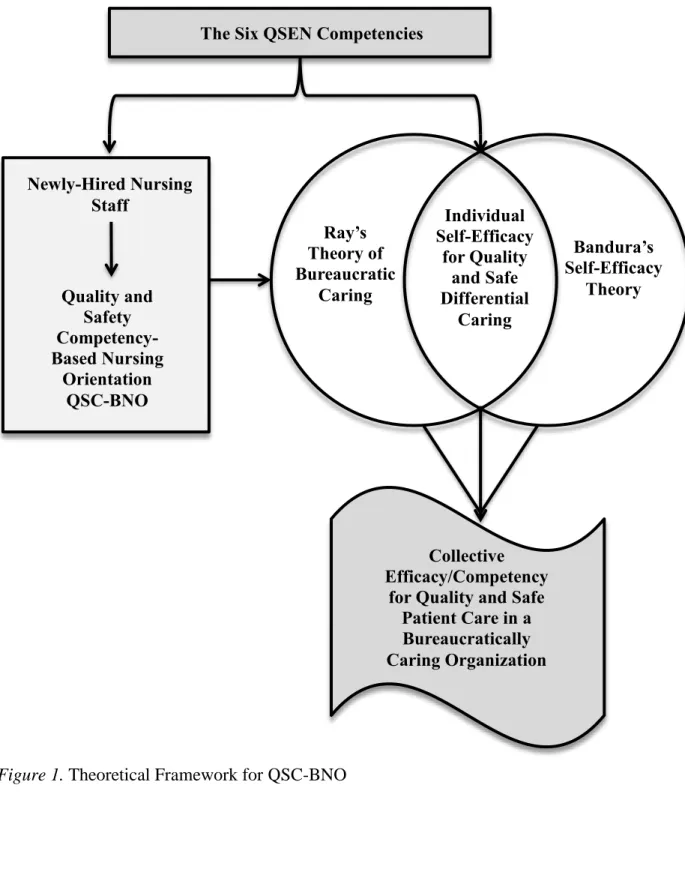
Nielsen, Yarker, Randall, & Munir, 2009). By operationalizing the structural framework of both of these theories, while integrating these theoretical constructs using the QSEN competencies, then the development of a trans-theoretical model for a quality and safety competency-based nursing orientation program is realized. The blending of these two organizational theories to form the theoretical framework for this project is represented in the theoretical framework of quality and safety competency-based nursing orientation (Figure 1).
Figure 1. Theoretical Framework for QSC-BNO Ray’s Theory of Bureaucratic Caring Bandura’s Self-Efficacy Theory Individual Self-Efficacy for Quality and Safe Differential Caring The Six QSEN Competencies
Collective Efficacy/Competency
for Quality and Safe Patient Care in a Bureaucratically Caring Organization Newly-Hired Nursing Staff Quality and Safety Competency-Based Nursing Orientation QSC-BNO
Review of Evidence Background
Among the Quality Chasm series of published reports by the Institute of Medicine (IOM), is the Health Professions Education: A Bridge to Quality (Greiner & Knebel, 2003). This
landmark report lays a foundation for radical change in the education of health care professionals by identifying five core competencies that all health care professionals must possess in order to practice quality and safe patient care (Greiner & Knebel, 2003). The five competencies are: provide patient-centered care, work in interdisciplinary teams, employ evidenced-based practice, apply quality improvement, and utilize informatics. According to Sherwood and Barnsteiner (2012) the IOM focus is on competencies for all health care professionals, for improvement in quality and safety. However, due to the unique work practices of nurses in an increasingly complex and chaotic health care environment and their close proximity to patients, nurses have a higher degree of direct impact to issues associated with patient safety (Page, 2004; Sherwood & Barnsteiner, 2012). Responding to the IOM report, the Quality and Safety Education for Nurses (QSEN) Initiative was developed and funded through a grant by the Robert Wood Johnson Foundation to transform nursing education and address the quality and safety climate in health care (Sherwood & Barnsteiner, 2012; Cronenwett et al., 2007). The QSEN initiative adapted the five IOM core competencies by identifying and defining six core competencies for nurses: Patient-centered care (PCC), teamwork and collaboration (T&C), evidenced-based practice (EBP), quality improvement (QI), Safety (S), and Informatics (I) (Sherwood & Barnsteiner, 2012). A Delphi study of nursing educators and leaders further identified associated knowledge, skills and attitudes (KSAs) as learning objectives under each of the six QSEN competencies (Barton, Armstrong, Preheim, Gelmon, & Andrus, 2009; Sherwood & Barnsteiner, 2012). A
Delphi study of nursing educators and leaders further identified associated knowledge, skills and attitudes (KSAs) as learning objectives under each of the six QSEN competencies (Barton, Armstrong, Preheim, Gelmon, & Andrus, 2009).
According to a Veterans Health Administration (VHA) survey, frontline VA nurses working at the bedside report significantly lower scores on their responses on the culture of safety dimensions compared to other VA health care professionals (Office of Quality & Safety and Value, 2012; Singer et al., 2009). Additionally, a report from the Office of the Inspector General (OIG) found inconsistencies in how nursing competencies are validated among 29 VA facilities surveyed by their inspectors (Department of Veterans Affair & Office of The Inspector General, 2012).
The traditional nursing department orientation for newly hired staff at the VA Eastern Colorado Health Care System (VA ECHCS) consisted of five days of didactic content regarding policies and procedures, nursing documentation and a series of return demonstration skills checklists. There was also a paucity of content regarding patient safety and quality care in the previous orientation curriculum. A recent Department of Veterans Affairs culture of safety survey conducted in 2011 reported frontline VA nurses predominantly working at the bedside had significantly lower scores on their responses related to the safety culture dimensions compared to other VA health care professionals (Office of Quality & Safety and Value, 2012; Singer et al., 2009). This is of concern when considering the 2000 Institute of Medicine (IOM) report, To Err is Human, which attributed approximately 98,000 deaths per year due to
preventable adverse events (PAE) in hospitals and clinics throughout the United States (IOM, 2000). Thirteen years later, those numbers in U.S. health care facilities have not improved, and according to James (2013), the deaths per year estimate due to PAE may actually range from
210,000 to 400,000 when using alternate epidemiological methods of weighted averages to determine more accurate rates. In contrast, Rosen et al. (2010) did not find a statistically
significant relationship between culture of safety and hospital safety performance in study of 30 VA hospitals using a linear regression model. Of interest though, Rosen et al. did find that frontline employee perceptions of a “just culture” of blamelessness and recognition of safety achievement was associated with improved patient safety outcomes, whereas, senior
management perceptions did not. Even though this study indicated that a culture of safety might not influence safety outcome, frontline employee perceptions do, thus providing an additional argument for the importance of implementing a Quality and Safety Competency-Based Nursing Orientation (QSC-BNO) program.
Systematic Review of the Literature
Searches for literature related to the practice issue of utilizing QSEN in developing a newly hired orientation program were obtained using CINAHL, Journals at OVID, Medline, Google Scholar and Cochrane, electronic databases as well as searches within the intranet of the Veterans Health Administration. The literature search of the electronic databases was conducted from August 2013 to March 2014. Key words used for the searches were: quality and safety, QSEN, competency-based orientation, nursing orientation, evaluation of nursing orientation, measuring competency, assessing nurse competency, bureaucratic caring and self-efficacy. Initial search from key word search and snowballing technique yielded 172 articles. Snowballing technique is defined by Garrard (2011) as the discovery of further references within the papers or books previously found during the initial search. The search in the Cochrane database yielded no meta-analysis or randomized controlled trials pertaining to the practice issue. Review of the articles resulted in 121 exclusions due to lack of relevance or only remote relevance to the
practice issue (Levy & Ellis, 2006). Full texts of the remaining 51 articles selected were
reviewed in entirety to determine if they met the following inclusion criteria: Published in a peer-reviewed journal; primary focus on new-hire nursing orientation and/or new graduate nurses; key issues addressed in the articles include quality and safety in nursing, competency-based
teaching/orientation, effectiveness and evaluation of new hire orientation programs, self-efficacy theory and theory of bureaucratic caring. The review resulted in the exclusion of 11 additional articles due to not meeting the prescribed inclusion criteria listed above, and one article was excluded due to poor quality. Thirty-nine studies remained for the final literature review. The PRISMA diagram of literature review is shown in Figure 2 (Moher, Liberati, Tetzlaff, Altman, & The PRISMA Group, 2009). The Seven Tiered Level of Evidence was used to weigh the
strength of the evidence in the literature reviewed (Melnyk & Fineout-Overholt, 2011; Rodgers, Williams, & Oman, 2011). (See Appendix B for a summary of the literature review).
Figure 2. PRISMA Diagram of Literature Review (Moher, et al., 2009)
Findings in the Literature
Nursing orientation. Bashford, Shaffer, and Young (2012); found a correlation between patient safety and nursing orientation. Results of a mix-method study demonstrated the efficacy and reported high value of an intial competency-based assessement by the nurses. Additional literature also supporting competency-based nursing oreintation to begin with a self-assesment of
In cl u d e d Id e n ti fi ca ti o n Scr e e n in g El ig ib ili ty
Records identified through database searching
(n = 167)
Additional records identified through other sources
(n = 5) Records screened (n = 172) Records excluded (n = 121) Full-text articles assessed for eligibility
(n = 51)
Full-text articles did not meet inclusion criteria (n=11). One
article
excluded due to poor quality
(Total n=12 excluded)
Articles included (n = 39)
competency is learner focused and more relevent to the needs of the individiual (Hodges, 1999 & Cowperthwaite, Schutt-Aine, Herranen, & Sorribes, 2012). Practice-centered learning strategies may also include a competency-based orientation, which begins with a self-assessment of competencies by the newly hired nurse (Bashford, Shaffer & Young, 2012). The strategy of providing a competency-based orientation is to enable the nurse educator to individualize the orientation in partnership with the newly hired nurse and the preceptor (Tyler et al., 2012). The literature also demonstated a strong relationship to quality nursing orientation and retention of nursing staff (Bowers, Bennett, Schneider, and Brunner, 2009). Quality nursing orientation programs that provide a sense of belonging is critical to successful employer-employee
relationships, which has a direct impact on recruitment and retention of nursing staff (Baxter, 2010 & Brakovich, 2012). According to Kennedy, et al (2012), learner-focused, practice-centered learning strategies by nurse educators in professional development roles increased nursing staff retention up to 90%.
Quality and Safety Education for Nurses (QSEN). In academic settings, QSEN has been transforming the delivery and outcome of nursing education (Cronenwett et al., 2007; Altmiller, 2011). A national Delphi study of experts in nursing education further identified associated knowledge, skills and attitudes (KSAs) as learning objectives under each of the six QSEN competencies (Barton, Armstrong, Preheim, Gelmon, & Andrus, 2009; Sherwood & Barnsteiner, 2012). Sullivan, Hirst, and Cronenwett (2009) conducted a study to measure graduating nursing students’ perceptions of the content (knowledge) of quality and safety education they received, their preparedness (skills) and their perceptions (attitudes) of the importance of the QSEN competencies. The results of the study show that the graduating students scored high in preparedness, and they believe the QSEN competencies to be important
in professional practice. What is important to note is the competencies of which the students feel least prepared are evidenced-based practice, quality improvement and teamwork and
collaboration (Sullivan et al., 2009). This gap in the bridge to practice is not limited to newly graduated nurses. Dycus and McKeon (2009) measured quality and safety competencies of professional pediatric oncology in a health care system implementing QSEN competencies. The tool these investigators used for this study is the Quality Improvement Knowledge, Skills and Attitudes (QulSKA) survey, which has an inner-item correlation coefficient of Chronbach’s alpha 0.839. The findings were similar to the Sullivan et al. (2009) study in that it showed experienced nurses also scored lowest in teamwork and collaboration and quality improvement processes and tools. These two studies are indicative of the need for clinical nurse educators in the practice setting to consider the benefit of implementing QSEN into nursing orientation, education and competency development. A logical consequence of the results of these two studies is for nurse educators and preceptors of newly hired nursing staff to ensure high quality teaching/learning experiences in quality improvement and teamwork/collaboration.
Durham and Sherwood (2008) advise nursing educators in academia, clinical settings and professional development to integrate learning strategies, which are interactive and stimulate knowledge, skills and attitudes in clinical reasoning and judgment necessary for quality and safe patient care. An example of a strategy to integrate quality and safety into a nursing orientation program is utilizing case studies with participant role-play in low fidelity simulation (Durham & Sherwood, 2008). By incorporating QSEN competencies into nursing orientation and
competency development, it is familiarizing professional staff with the QSEN language of the nursing students they precept on the units; which has the benefit of strengthening academic partnerships (Didion, Kozy, Koffel, & Oneail, 2013). Additional strategies involve techniques
such as presenting a patient scenario and asking participants to role-play a handoff report or to notify a physician using Situation-Background-Assessment-Recommendation (SBAR)
communication technique. All of these teaching strategies examples involve some form of learner-focused activities.
Patient safety and quality care. Richardson and Storr (2010) conducted a systematic review of the literature to determine if a direct link exists between nursing and patient safety. The authors found the literature to support evidence of nursing’s role in patient safety through nursing leadership, empowerment, teamwork and collaboration. However, the number of quality studies in this area is limited due to research regarding patient quality and safety in nursing care is not yet fully developed. The authors concluded from their review of the literature, the role of nurses within health care organizations places them in the ideal position to avert preventable, adverse errors. This makes it essential to develop well-designed studies using tools and interventions, which measure and support nurses’ unique role in quality and safe patient care (Richardson & Storr, 2010). Hartmann et al. (2009) performed a stratified randomized
controlled study of Veterans Health Administration employees to assess the relationship between organizational culture and the safety climate among VA hospitals nationally. Another study by Rosen et al. (2010), examined the relationship between the safety climate of VA health care facilities and patient safety indicators. Overall, the findings in this study did not find any significant association between hospital safety climate and patient safety indicators. However, the results of the study did find correlations of “fear of blame and punishment” with decubitus ulcers and postoperative complications. Rosen et al. (2010) also found low “psychological safety” was significant for failure to rescue. Interesting to note, the results showed a variation of scores between senior management and frontline workers was significant for failure to rescue.
Both studies examining safety climate agreed the higher the hierarchical culture is within an organization, the poorer the patient safety outcomes (Hartmann et al., 2009) or the Patient Safety Indicators (Rosen et al., 2010).
In addition to the results of the two previous studies regarding the safety climate of hospitals and patient safety outcomes, Singer et al. (2009) conducted a study comparing VA hospitals to non-VA hospitals in a cross-sectional study. The authors found being a part of a large health care system did not have an effect on safety climate of individual facilities. The analysis also found safety climates to be better in non-VA hospitals versus VA hospitals (Singer et al., 2009).
Theory of bureaucratic caring and self-efficacy theory. The review of the literature regarding the theory of bureaucratic caring and self-efficacy theory was given in detail in the section on Theoretical Framework.
The overall picture gleaned from the review of the literature, related to general nursing orientation, suggests it should be interactive and learner-focused with emphasis on quality improvement and teamwork/collaboration. Combining the above strategies with practice-centered, competency-based learning to include a competency-based assessment with a learning plan individualized to the nurses’ knowledge, skills and attitudes, has the potential to improve learning outcomes and nursing efficacy in practicing quality and safe patient care, and ultimately in improving care throughout the whole organization (Ray & Turkel, 2014). Additionally, there was paucity in the literature on incorporating QSEN into professional, post-licensure practice. No literature was found examining developing a new-hire nursing orientation program
curriculum and initial competency validation program. The evidence used for developing this program was a compilation of literature addressing nursing orientation programs and QSEN
articles from academia with the focus on the nursing student populations.
Project Plan and Evaluation Market/Risk Analysis
The organization where this project was conducted is the Denver VA Medical Center, which is in the VA Eastern Colorado Health Care System (ECHCS), located in Denver,
Colorado. The facility is a 252 bed general medical and surgical hospital, which offers inpatient and outpatient services. The VA ECHCS is a teaching facility and is affiliated with a nearby medical school and several area schools of nursing (VA Eastern Colorado Health Care System, 2013). VA ECHCS is part of the Veterans Health Administration (VHA), which is the largest integrated health care system in the United States (Department of Veterans Affairs, 2011). The motto of the Veterans Health Administration comes from a line taken from Abraham Lincoln’s second inaugural address: “To care for him who shall have borne the battle and for his widow and his orphan” (Lincoln, 1865). Lincoln’s message continues to inspire employees of the VA to remember the importance of their work in caring for our nation’s heroes.
Driving and Restraining Forces
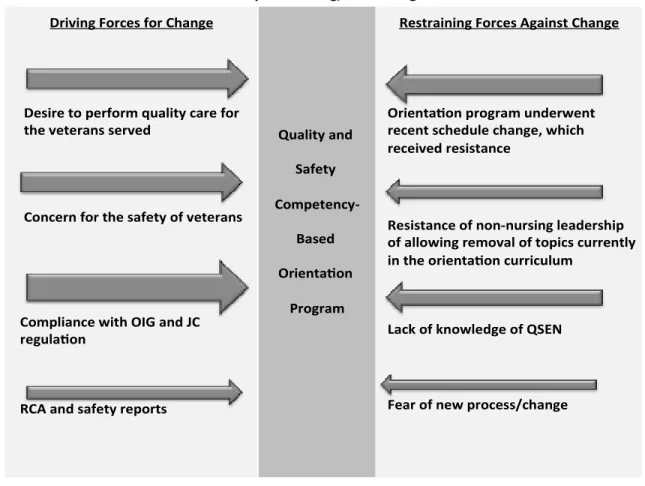
The success of this capstone project may be judged by the long-term impact of how nursing competency and orientation is conducted at the system and unit level within the nursing department. This means a cultural as well a procedural change in the environment. One tool for assessing organizational readiness to make decisions to enact change is the Force Field Analysis, which was developed by the well-known social psychologist, Kurt Lewin (Mind Tools, 2013). Lewin’s original intent of the Force Field Analysis from his change theory was to assess for social change, but business and organizations have adapted this model to make decisions to enact change based on the likelihood of success (Figure 3). Bozak (2003) explains the importance of
assigning weight to each of the driving and restraining forces. This will enable those involved in the decision to implement change to strategize where to focus the energy to weaken the
restraining forces and strengthen the driving forces. The bureaucratic caring theorist, Ray (2011) reinforced through knowledge of complexity science, how relational self-organization and transformation emerge within choices made in networks of relationships. “How organizations either thrive or disintegrate or fail to transform due to the efficacy of its lack of human and spiritual-ethical caring” (M. Ray, personal communication, September 25, 2015).
Figure 3. Lewin’s Driving and Restraining Forces for QSC-BNO (Mind Tools, 2013).
Strengths, Weakness, Opportunities, and Threats (SWOT)
According to Fortenberry (2010), a SWOT analysis is a tool to examine or assess internal (strengths and weakness) and external (opportunities and threats) market forces and the positive
Market Analysis – Driving/Restraining Forces Driving Forces for Change
Desire to perform quality care for the veterans served
Concern for the safety of veterans
Compliance with OIG and JC regula on
RCA and safety reports
Quality and Safety Competency-Based Orienta on Program
Restraining Forces Against Change
Orienta on program underwent recent schedule change, which received resistance
Resistance of non-nursing leadership of allowing removal of topics currently in the orienta on curriculum
Lack of knowledge of QSEN
or negative effects these forces may place on the organization’s strategic plan or marketing plans. A SWOT analysis was conducted for the purpose of assessing and anticipating internal and external forces that may impact the success of this project (Table 1).
Strengths. Education for nursing staff is encouraged by nursing leadership and 20 hours per nurse per year is calculated into the staffing matrix. A new Associate Chief Nurse of
Research and Education has renewed a commitment to encourage nursing led research and quality improvement projects. Nursing leadership is supporting the effort to implement shared governance, which has paved the way for the development of a comprehensive nursing policy and procedure on nursing competency and development. This policy is the foundation of introducing the QSEN competencies and associated KSA’s to the nursing department. The approval of this policy has garnered support from nursing leadership to design a competency-based nursing orientation program competency-based on the six QSEN competencies.
Weaknesses. Top-down situational management is currently the leadership structure and style of the facility, including the nursing department. Policies at the local level are often driven by directives from Central Office in Washington D.C. that may or may not apply to issues at the local level. Change can be very slow with many barriers and resistance within the current culture, particularly when change involves a major procedural shift, such as how nursing competencies are developed and validated.
Effective collaboration between nursing staff and attending physicians or medical residents, regarding patient care issues need improvement and is a symptom of the current top-down management structure. This is also true of all interdisciplinary collaboration within the organization. Results from Department of Veteran Affairs all employee surveys report
compared to other disciplines (Office of Quality & Safety and Value, 2012).
Opportunities. In the SWOT analysis, opportunities are identified from an external exam of outside positive influences on the business of the organization (Fortenberry, 2009). The Veterans Health Administration has medical centers and clinics across the country, which provides VA personnel access to a very large national database of patient outcomes regarding safety and quality. Along with the large internal VA database, the Denver VA medical center is a teaching facility affiliated with a university medical school and health science center.
Another opportunity regarding the development of a Quality and Safety Competency-Based Nursing Orientation program is the nursing students and newly graduated nursing staff’s exposure to QSEN in their pre-licensure nursing programs. The preceptors and nursing staff have frequent interactions with these nursing students and new graduates as they conduct their clinical practicums and/or new hire orientation on the nursing units, which in turn increases their exposure to QSEN. An external opportunity for this project is the discovery of the NQSSI tool, which will be used as the survey tool for this project. This tool has a very high internal validity of Chronbach’s Alpha 0.93 (Piscotty, Grobbel, & Abele, 2013).
Threats. Threats that may affect the QSC-BNO program include budget constraints, lack of knowledge regarding QSEN and cumbersome hiring practices. Congress has oversight on the budget of the VA and its affiliates (Panangala, 2012), which contributes to difficulty
appropriating resources or supplies for some educational opportunities, which could impact this project’s budget as well as a potential deleterious effect on the sample size. Another potential threat to the sample size is the cumbersome hiring process at the national level, which impacts ability to hire nursing staff at the local level. Threats of government shutdowns by congress and funding issues coupled with a very long hiring process may discourage qualified applicants from
accepting an offered position, thus decreasing the number of newly hired nursing staff. In addition to the budget constraints are the lack of exposure and knowledge of QSEN.
Related to the QSEN competencies, nurses with five or more years of experience may not have been exposed to QSEN, which could be a threat to the project if these nurses are the preceptors and/or managers of newly hired nursing staff. Educating these nurses on the QSEN
competencies and knowing how to validate the KSA’s will be essential for the success of this project and future expansion of the competency-based orientation to the unit-level. Another potential threat is using the NQSSI tool for measuring nursing self-efficacy related to the knowledge, skills and attitudes associated with QSEN. This tool was developed and validated for nursing students and has not been validated in post-licensure, professional staff.
Table 2.
SWOT Analysis for QSC-BNO Project (Fortenberry, 2010).
SWOT Analysis In te rn al Strengths
• Leadership support of the project • Nursing led research encouraged
• Transitioning from the design phase to the implementation phase of nursing shared governance
• 20 hours per nurse per year is added to staffing matrix for education
• New push to encourage nursing led research and QI projects
Weaknesses • Unpredictable sample size
• Sample size is dependent on Human Resources hiring factors
• Lack of knowledge of nursing staff and leadership of QSEN
• Change is very slow and usually met with resistance
• Preceptor program following General Orientation is not standardized
E
xte
rn
al
Opportunities
• Association with local schools of nursing using QSEN competencies
• Access to national databases of patient outcomes regarding safety and quality • Most nursing students in clinical rotations
at VA ECHCS are exposed to QSEN Competencies and KSAs in their academic programs
• NQSSI tool has high internal validity
Threats
• Experienced new hire nurses have not been exposed to QSEN
• Recent government budget constraints continue to effect hiring
• Cumbersome and long hiring process at the national level inhibits quality applicants from being hired locally
• The NQSSI has proven validity in the nursing student population only
Community and Veteran Health Administration Resourcesand Sustainability
There are at least three other VA health care systems that have also integrated QSEN into their competency development program located in Iowa, New York and Florida. Open dialog among nurse educators throughout the VA system is enhanced through a web-based discussion workgroup and monthly national calls. Collaboration with these resources has resulted in gaining insight from “lessons learned” as well as the sharing of information such as competency forms and institutional policies.
Internal resources for this project are based on an already existing infrastructure. There is classroom space available with training computers, which has been reserved six months out for the planned nursing orientation dates. Additionally there are two-master’s prepared nurse educators developing the competency validation tools with input from the unit-based nurse educators and nurse managers. Consultation with the VA Research and Development
Department is available as well as access to a research nurse scientist to assist with methodology and statistical questions.
Valuable community resources via community partnership with academic-practice partnership will also strengthen the integration of QSEN into professional practice. The staff nurse, who learns to provide high quality clinical education to nursing students through an academic-practice partnership, must also be well versed in the six QSEN competencies and their associated KSAs. The six QSEN competencies are now part of the curriculum in many schools of nursing, therefore well known to the student nurses who are on the nursing units during their clinical rotations (Sherwood & Barnsteiner, 2012). Didion, Kozy, Koffel, and Oneail (2013) described their experience with using QSEN to enhance both the student’s learning and the nursing staff’s knowledge in quality and safe patient care as part of their academic-practice
partnership in Ohio. The collaboration between the faculty of the school of nursing, leaders of the facility, staff nurses and the students resulted in a successful teaching/learning partnership. With the nursing staff having a more responsible role with the nursing students than they did in the traditional role of preceptor to the student, the outcome resulted in the nursing students having a more meaningful clinical experience in which they were able to integrate more as a member of the team on the unit (Didion et al., 2013). Increasing the knowledge of the nursing staff and preceptors at VA ECHCS of the QSEN competencies has the potential of enhancing the clinical experience of nursing students.
Stakeholders and Target Market
The primary stakeholders and target market for this project are newly hired nursing staff at all education levels at VA ECHCS in positions, which require them to attend General Nursing Orientation (GNO). Nursing staff practicing under services other than nursing, such as nurse practitioners or those working in remote outpatient clinics, historically do not attend GNO. Primary stakeholders also include the veterans served and their families who are receiving nursing care from the newly hired nursing staff. The veteran patients are the primary
beneficiaries when nursing staff practices quality and safe patient care. This project is being developed to ensure the safety and quality care that these veteran patients should expect.
The secondary stakeholders are the unit nurse managers, nurse educators, preceptors and staff nurses. The input regarding the curriculum development and competency development of these stakeholders is essential for the long-term success and sustainability of this project. It is primarily the nurse manager who will benefit from the outcomes of the staff nurse with a higher level of self-efficacy and competence in providing safe and quality patient care.
The demographics of the primary stakeholders (nursing staff) at this urban VA health care system are closely aligned with the fiscal year 2012 national nursing data of all VA facilities (Office of Nursing Service, 2013):
Nursing staff by skill mix:
Registered Nurses 60.7%
Nurse Practitioners 5.4%
Clinical Nurse Specialists 0.6%
Licensed Practical/Vocational Nurse (LPN/LVN) 16.3%
Registered Nurses in a direct care role by level of education:
Nursing diplomas 8.4% Associate Degree 28.1% Bachelors (BSN) 47.3% Bachelors (non-nursing) 6.9% Masters (nursing) 5.5% Masters (non-nursing) 3.4% Doctorate (nursing) 0% Doctorate (non-nursing) 0.3% Professional degree 0.1%
Highest level of Education for all VA RNs:
Baccalaureate degree (nursing and non-nursing) 46%
Masters or Doctorate 22.7%
Registered Nursing staff eligible for retirement as of fiscal year 2012 by role:
Advanced Practice Registered Nurse 35.3%
Direct Care 23.4%
Hospital Support 36.6%
Approximately 650 nurses report to the nursing department. In addition to the primary and secondary stakeholders discussed above, are those stakeholders who are indirectly affected by the outcome of this project. These are the quality and safety department personnel, as well as the administrative and executive leadership of the organization.
Capstone Project Team
The capstone team at this urban VA ECHCS is comprised of the Doctor of Nursing Practice (DNP) student, who is the lead in initiating this project and the primary investigator during implementation. Additional members providing the DNP student with extremely valuable input and expert advice are the unit-based and service level nurse educators, Associate Chief Nurse of Research and Education, and the DNP Clinical Mentor. Additional support was provided by staff within the Research and Development Department at VA ECHCS.
Cost Benefit Analysis and Budget
All of the costs associated with this project, other than the costs of consulting with the nurse scientist did not exceed the usual costs in providing monthly General Nursing Orientation at VA ECHCS. Therefore, no additional funding source was needed. Some of the cost incurred by the primary investigator was envelopes for the study information letter, surveys and a one year rental cost for the student SPSS software package. The estimated cost of orientation for 30 newly hired nursing staff is represented in the cost analysis in Table 3.
Table 3.
Capstone Project Budget
Category Details Cost
Printing 30 Orientation books 70 pages with binding $500
Orientation workbooks- unbound $250
5 days salary for nursing staff Average salary of newly hired nursing staff for 5 days + benefits, approx. $1,182 x 60
$71,352
16 weeks salary for 2 master’s prepared nurse educators
One week class preparation and one week of class. Salary + benefits approx. $3,252 x 16
$52,032
Indirect cost Operating cost of building/hospital $10,000
1 box of 100 letter size envelopes For dissemination and return of pretest/posttest surveys
$28
SPSS software Statistical software $100
4 hours with nurse scientists Review statistics and method for project $800
Total $135,062
The most visible cost benefit of re-designing the nursing orientation program and of high interest to administration is retention cost of nursing staff and particularly registered nurses (RN). Brakovich and Bonham (2012) made this argument from the results of surveys given to nurses who were newly hired. The nurses agreed that a quality nursing orientation program with skilled preceptors increases nurses’ satisfaction. Increase nursing satisfaction translates to higher retention rates. A report from the Robert Wood Johnson (RWJ) Foundation (2009), states the average cost of replacing an RN ranges from $22,000 to $64,000. This wide range is due to different hospital markets or the specialty of the nurse. This report also emphasizes that two-thirds of the direct cost of replacing a full-time equivalent (FTE) RN is in the temporary filling of the vacancy during the posting, hiring and orienting phase of bringing in a newly hired nurse. The estimated cost of hiring 30 newly hired nursing staff during the hospital-wide orientation phase at VA ECHCS is approximately $208,750, compared to the cost of replacing 30 nurses (using a conservative amount of $32,000 per FTE RN as an average) is $960,000. If those 30
nurses were satisfied with the nursing orientation program and stayed as a result, the facility would save $751,000 over a span of one year.
Another benefit, which is more difficult to calculate, is the decreased cost associated with preventable adverse medical errors. It is difficult to prove a negative, but the literature suggests nurses are in positions and roles within the health care team to be the drivers of a quality and safety agenda (Richardson & Storr, 2010). Data from 2008 reports the annual cost of PMEs in the United States to be approximately $19.5 billion (Andel, Davidow, Hollander, & Moreno, 2012). No published data could be found for the estimated cost to individual health care facilities. However, as Andel et al. (2012) states, the cost of providing quality and safe patient care is much less.
Project Objectives Project Mission and Vision
The mission of this project is to redesign an orientation program for newly hired nursing staff within an urban VA health care system to ensure individual and collective self-efficacy of newly hired nursing staff related to competence in their ability to provide quality and safe patient-centered care to veterans and their families.
The vision of this project is to provide a new-hire nursing orientation experience, which results in quality and safe patient care by:
Promoting professional development of the nursing staff, which fosters innovation in the delivery of quality and safe patient care within a theory-guided framework of Bureaucratic Caring Theory (Ray, 2014).