Continuation and Prophylactic Treatment of
Bipolar Disorder
Verinder Sharma, MD, FRCPC1, Lakshmi N Yatham, MBBS, FRCPC, MRCPsych2, David RS Haslam, MSc, MD3,
Peter H Silverstone, MD, FRCPC, MRCPsych4, Sagar V Parikh, MD, FRCPC5, Raymond Matte, MD, FRCPC6,
Stanley P Kutcher, MD, FRCPC7, Vivek Kusumakar, MBBS, FRCPC, MRCPsych8
Objectives: To summarize the evidence for efficacy from published literature of biological treatments in the continuation and maintenance phases of bipolar disorder, as well as the recommendations about different treatment options made by the working group within the Bipolar Sub-Committee of the Canadian Network for Mood and Anxiety Treatments (CANMAT).
Methods: A review of relevant published literature and proceedings of international conferences was conducted. The quality of evidence was assessed and classified according to the Periodic Health Examination criteria. Treatment recommendations of the working group were based on quality of evidence, a consensus of expert views, and the opinions of psychiatrists and family physicians from across Canada.
Results: There is overwhelming evidence for the efficacy of lithium in the prophylaxis of bipolar disorder. The evidence for carbamazepine is less robust. There are no published double-blind studies with adequate numbers of subjects treated with divalproex sodium.
Conclusions: During and at the end of the continuation phase it is recommended that mood stabilizers should remain the mainstay of therapy and that other treatments should be gradually discontinued or maintained only if there is valid reason to do so. Efficacious maintenance treatment can reduce morbidity and mortality significantly and improve patients’ quality of life.
(Can J Psychiatry 1997;42 Suppl 2:92S–100S)
Key Words: continuation, maintenance, prophylaxis, exacerbation, bipolar disorder, lithium, divalproex sodium, carbamazepine, neuroleptic, electroconvulsive therapy
T
he continuation phase of the illness (also called the early stable phase) is defined as commencing once euthymia and resolution of psychosis have been achieved. The duration of this phase is usually between 6 and 12 weeks and is followed by a maintenance or prophylactic phase. Bipolar disorder is a chronic illness characterized by relapses, recur-rences, and remissions.Recurrence has been reported to be associated with sub-stance dependence (1–5), the presence of psychotic features (1–3), and family history of schizoaffective disorder with manic features or mania (2,6,7). Duration of illness does not seem to correlate with the rate of recurrence (1,6). There is suspicion, however, based on schizophrenia research, that duration of illness before treatment is instituted may have a direct relationship with increased deficits and reduced treat-ment response. Available evidence suggests that electrocon-vulsive therapy (ECT) does not affect the rate of recurrence (8). Five-year and 4-year follow-up studies have failed to find the number of prior mood episodes to be a predictor of the number of subsequent episodes (1,6). Subsyndromal symp-toms have been observed in 50% of patients in a 3-year Manuscript received April 1997, revised and accepted July 1997.
1Assistant Professor and Director, Mood Disorders Unit, Department of Psychiatry, University of Western Ontario, London, Ontario.
2Assistant Professor and Director, Mood Disorders Clinical Research Unit, Department of Psychiatry, University of British Columbia, Vancouver, Brit-ish Columbia.
3Resident, Department of Psychiatry, Dalhousie University, Halifax, Nova Scotia.
4Associate Professor, Department of Psychiatry, University of Alberta, Ed-monton, Alberta.
5Assistant Professor, Department of Psychiatry, University of Toronto; Head, Bipolar Clinic, Clarke Institute of Psychiatry, Toronto, Ontario. 6Associate Professor (Clinical) and Head, Outpatient Services and Mood Disorders Clinic, Department of Psychiatry, University of Sherbrooke, Sher-brooke, Quebec.
7Professor and Head, Department of Psychiatry, Dalhousie University, Hali-fax, Nova Scotia.
8Associate Professor and Head, the Division of Child and Adolescent Psy-chiatry; Director, Mood Disorders Group, Department of Psychiatry, Dal-housie University, Halifax, Nova Scotia.
Address for correspondence: Dr V Sharma, Mood Disorders Unit, University
of Western Ontario, London Psychiatric Hospital, 850 Highbury Avenue, PO Box 2532, London, ON N6A 4H1
Can J Psychiatry, Vol 42, Supplement 2
treatment study, and these were associated with an approxi-mately fourfold increase in risk of relapse (9). Naturalistic study has also observed the rate of relapse to correlate posi-tively with the number of interepisode symptoms (10,11).
Predictive models have been used to study the cost (expo-sure to lithium) versus benefit (prevention of relapse) (12). The mortality of patients with untreated bipolar illness is 2 to 3 times higher than that of the general population; bipolar patients receiving treatment have a higher suicide risk when compared with the normal population (13). About one-quar-ter of bipolar patients attempt suicide (14).
To avoid psychopharmacotherapy that would induce unwanted side effects and be ineffective for target symptoms, clinicians must be able to determine which agent is most likely to be effective. Studies conducted to determine the predictors of response to treatment, however, have been mainly uncontrolled. In addition, in lithium studies the term “relapse” has been poorly defined (15), and the intraindi-vidual treatment response is variable from one episode to the next (16). The predictive validity of applying predictors of lithium antimanic potential to prophylactic therapy is uncer-tain (17,18). Patients whose pattern of illness is mania fol-lowed by depression respond to lithium prophylaxis in approximately 80% of cases compared with a response rate of 25% to 30% in patients with a depression followed by mania and then a well interval pattern (15,19–21). Available data regarding prediction of prophylactic response to both divalproex and carbamazepine are weak and clinically not useful. Estimation of the risk of recurrence of mood episodes is less than precise.
Quality of Evidence and Recommendations
The quality of evidence is per the Periodic Health Exami-nation format. The classification of recommendations from the working group is the product of expert opinions and a consensus process and reflects a global impression based on the quality of evidence for efficacy, adverse effects, tolerabil-ity, and acceptability of a given treatment for the patient.
Treatment during Continuation or Early Stable Phase
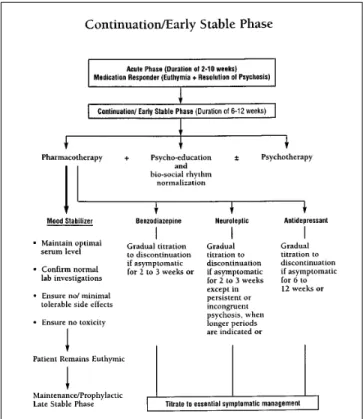
Treatment recommendations for the continuation or early stable phase of acute mania are discussed below and illus-trated in an algorithm (Figure 1). Psychoeducation continues, with or without the addition of concomitant psychotherapy, during this phase of illness recovery. The range of available psychosocial interventions is discussed by Parikh and others in a previous article in this publication (22). Psychoeducation and psychotherapy are particularly important in fostering a collaborative approach in treatment with the patient. During this period, optimum serum levels of mood stabilizers are maintained, normal laboratory investigations are confirmed, and side effects are eliminated or minimized. The recom-mended approach to the use of mood-stabilizing agents
during this phase will be discussed in the maintenance phase section of these guidelines.
The suggested adjustments to adjunctive medications dur-ing this phase of the illness are as follows:
Benzodiazepines
A systemic evaluation of benzodiazepines as prophylactic agents in bipolar disorder has not been conducted. Chronic use of these agents is associated with tolerance, dependence, and withdrawal (23–26). Administration in the elderly increases the risk of potentially fatal accidents secondary to impaired coordination (27,28). The absence of prophylactic efficacy and attendant risks associated with long-term use support the gradual titration of these agents to either discon-tinuation or the minimal effective dose necessary for essential symptomatic management.
Typical Neuroleptics
In the absence of evidence to support continued use in maintenance therapy and in the presence of the possibility of sustaining serious side effects (29–34), gradual reduction and eventual discontinuation of these agents during this phase of treatment is recommended unless there is a clear clinical indication to continue with the medication, for example, persistent psychotic symptoms. The lowest dose possible should be used for essential symptomatic management. After
Figure 1. Continuation phase treatment algorithm reproduced
a risk–benefit analysis, and if appropriate, attempts should be undertaken to discontinue these agents gradually.
Atypical Neuroleptics
Although risperidone and olanzapine may have better long-term side effect profiles, there are no currently available data for long-term efficacy of these agents in prophylaxis of bipolar mood disorder with the exception of a small case series for risperidone (35). An attempt should be made, there-fore, to reduce and discontinue these agents within a few weeks of remission of acute symptoms. Clozapine is usually reserved for severe refractory bipolar disorder patients, and hence it may need to be continued during the maintenance phase of treatment (36–38).
Antidepressants
The duration of antidepressant administration during this phase cannot be derived from empirical evidence and is based on clinical judgement. Continuation of antidepressant therapy should exceed what would have been the duration of an episode in the absence of treatment. Where applicable, an estimation of this treatment interval can be based on the duration of previous depressive episodes. In the absence of such a history, a 6- to 12-week course is recommended when the patient is already on a mood stabilizer (39). Under the cover of a mood stabilizer, gradual downtitration over a 2- to 4-week period would be advisable in patients with antidepres-sant-induced mania, increased cycle acceleration, or precipi-tation of a mixed state (39). Although mood may have improved, gradual reduction of the antidepressant dose may be appropriate if the patient is experiencing intolerable side effects, especially if compliance is threatened.
ECT
The relapse rate after ECT administered during the acute phase and followed by lithium or antidepressant therapy is approximately 20% (40). Continuation ECT is indicated for patients who respond poorly to continuation medications or prefer ECT. During the continuation phase of the illness, ECT is usually indicated once weekly and the interval gradually decreased to once a month. Incomplete responders and those with a recurrent course may warrant more frequent ECT than at a monthly interval (40).
Summary of Continuation Phase Treatment
Acute-phase treatment can usually last from 2 to 10 weeks, and the end of the acute phase is defined as the point when the patient reverts to euthymia and the psychotic symptoms are resolved. The acute phase of treatment presents opportu-nities for psychoeducation of family and friends and for building a collaborative therapeutic relationship with the patient. The patient is often only able to tolerate and digest focal bits of psychoeducational information during the acute phase.
Significant psychoeducational and psychotherapeutic interventions commonly and appropriately occur in the con-tinuation phase, which lasts for a further 6 to 12 weeks. Normalization of biological and social rhythms is also an essential part of management. Mood-stabilizing medication is the mainstay of pharmacotherapy. Neuroleptics and ben-zodiazepines, used for acute behavioural suppression or for rapid control of manic behavioural dyscontrol, need to be gradually discontinued over 2 to 3 weeks after symptom control has been achieved. Neuroleptics need to be continued well beyond the acute phase only if there are persistent or incongruent psychotic symptoms. Similarly, antidepressants can be gradually discontinued over 6 to 12 weeks after the remission from bipolar depression provided that the patient continues to be on a mood stabilizer. If there is a previous history of the patient’s symptoms being exacerbated every time neuroleptics, antidepressants, or other psychotropic medications are discontinued, however, there is justification in continuing these medications in addition to mood stabi-lizers during this phase and beyond. The clinician and patient should constantly weigh the benefits versus risks of continu-ing or discontinucontinu-ing treatments. This is also the phase for active discussion with the patient and family about long-term treatment and the benefits and risks of prophylactic treatment. Serum medication levels and monitoring of bodily sys-tems should be done as clinically indicated in the continu-ation phase.
Treatment during Maintenance or Prophylactic Phase (Late Stabilization Phase)
Estimation of the risk of recurrence of mood episodes is less than precise. Early studies with lithium (17) and more recent unpublished studies with divalproex and lithium (Bowden and others 1996, papers at the American and Cana-dian Psychiatric Association meetings) suggest that these mood stabilizers may yield prophylactic benefit in moderate to severe illness, but there is a subgroup of patients, some with mild illness, who may not benefit from prophylactic treat-ment. There is no consensus, however, about how to identify this subgroup accurately or make reliable predictions.
Definitive indications for the commencement of long-term maintenance treatment with mood stabilizers and the duration of this therapy are not available. The decision to proceed with indefinite maintenance pharmacotherapy after a single manic episode has been supported by decision analysis, which ana-lyzed the costs (that is, lithium exposure) and the benefits (that is, preventing relapse). Long-term lithium treatment has also been associated with a significant reduction in the mor-tality rate in patients with bipolar disorder (41).
The authors of these guidelines suggest that the continu-ation phase psychoeduccontinu-ation, biosocial rhythm normaliza-tion, and pharmacotherapies be continued for not less than 6 months (preferably for 12 months) in those with a low risk
and indefinitely in those with moderate to high risk of recur-rence. Though empirical evidence has been inconsistent, variables proposed as presenting greater than a low risk of relapse in manic patients include poor occupational advance-ment prior to index episode (3), poorer psychosocial support (42,43), symptoms of depression (44), longer duration of illness (45), presentation of a mixed (46) or rapid-cycling state (47), comorbidity including history of alcoholism (1,3,48), psychotic features (1,6,49,50), and early (7) or late (45) age of onset. Moderate to high risk of recurrence is often dictated by the severity of illness and a strong family history of bipolar disorder. The assessment of moderate to high risk in a patient willing to accept maintenance treatment is an indication for psychoeducation, stabilization of biosocial rhythm, and prophylaxis pharmacotherapy of an indefinite duration. Treatment with benzodiazepines, neuroleptics, and antidepressants during the continuation or early stabilization phase has been discussed previously.
Long-term maintenance treatment with mood stabilizers is outlined below, and Table 1 presents the quality of evidence as per the Periodic Health Examination classification, as well as the recommendations for treatment made by the working group. The algorithm for treatment during this phase is shown in Figure 2.
Lithium
The prophylactic efficacy of lithium monotherapy has been demonstrated in controlled studies. Lithium maintenance
therapy reduces both the frequency and severity of mood elevation and depression episodes in bipolar patients (51–59). Compared with placebo, the maintenance effect of lithium may reduce the recurrence of a major affective episode to 20% to 40% within 2 to 3 years of follow-up (51,52,54,60,61). The mean risk of recurrent major affective episodes of either polarity has been reported to be, on average, sixfold lower with lithium than with placebo (62). Noncompliance in uncontrolled clinical samples is probably associated with the higher rates of mood dysregulation or major episode relapse (63). The target range of lithium is to maintain a serum level of 0.8 to 1.1 mmol/L. The effects of a lithium serum level between 0.6 and 0.8 mmol/L are currently being studied, but there are no published data. At serum levels of between 0.4 and 0.6 mmol/L, the risk of relapse is increased by about 250% (62). The target serum lithium level would need to balance the risk of higher rates of relapse with the risk of side effects and thus noncompliance. Serum lithium levels in the lower range (0.4 to 0.6 mmol/L) carry a higher risk of relapse, but there is likely increased risk of noncompliance at the higher range (0.8 to 1.0 mmol/L) (58,64). Lithium dosing in the elderly requires that particular consideration be given to issues of tolerability due to changes in renal clearance.
Table 1. Prophylaxis Treatment Quality of evidencea Working group classification of recommendationb Lithium 1 A Divalproex 2.3 B Carbamazepine 1 C
Lamotrigine and gabapentin na na
Lithium + divalproex 3 B
Lithium + carbamazepine 3 C
Divalproex + carbamazepine 3 C
Typical neuroleptic 1 D
Atypical neuroleptic 2.3 C
ECT maintenance therapy 2.3 C
aQuality of evidence rating system: 1 At least one randomized controlled trial.
2.1 Well-designed controlled trial without randomization.
2.2 Well-designed cohort or case-controlled studies, preferably multicentre or from more than one research group.
2.3 Very significant results from uncontrolled trials from more than one centre comparing results with and without intervention.
3 Opinions of respected clinical authorities based on clinical experience, descriptive studies, or reports of expert committees.
bClassification of recommendations:
A Good support for the intervention to be considered in clinical practice. B Fair support for the intervention to be considered in clinical practice. C Poor support for the intervention to be considered in clinical practice. D Fair support for the intervention to be excluded from clinical practice. E Good support for the intervention to be excluded from clinical practice.
Figure 2. Maintenance phase treatment algorithm for bipolar disorder
Many patients will respond poorly to maintenance therapy with lithium (65). Inadequate efficacy includes partial remis-sion, resolution of one but not the other phase of illness, and relapse following a euthymic period. A favourable lithium response is associated with a family history of bipolar illness and a previous mania–depression–euthymia sequence of illness (65,66). Factors that are somewhat predictive of a poorer response to lithium include rapid-cycling course and substance abuse (4) and a negative familial affective style (67,68). The quality of evidence for lithium maintenance therapy is “1,” and the working group classified their recom-mendation as “A” (see Table 1).
Divalproex Sodium
The prophylactic efficacy of divalproex monotherapy in the prevention of bipolar episode relapse has been demon-strated in moderate to severe illness in a recent prospective, randomized placebo-controlled trial comprised of parallel placebo, lithium, and divalproex interventions over a one-year period (Bowden 1996, unpublished observations). The facts that the follow-up in this trial was for a period of only one year and that the detailed results are unavailable, how-ever, have prompted the committee to conclude that the efficacy of divalproex as a prophylactic agent in bipolar illness has not been proved at this stage, although many centres are using this agent for prophylaxis. At this time, the only published evidence comes from open studies (69–71). The quality of evidence, therefore, is “2.3,” and the classifi-cation of recommendation, “B.”
Carbamazepine
The prophylactic efficacy of carbamazepine has been demonstrated in both uncontrolled and double-blind cross-over comparisons with lithium and in double-blind, random-ized placebo-controlled studies (72–74). Duration of follow-up, sample size, heterogeneity of the diagnosis, and confounding effects of concurrent medication all jeopardize the validity of its reported efficacy as a prophylactic agent in the treatment of bipolar disorder. Limited evidence of long-term prophylactic efficacy, including possible development of tolerance, poor patient acceptability, and rare, although serious, hematological side effects detract from the routine prophylactic use of this agent as an alternative to lithium (59,75–77). Maintenance use of carbamazepine as mono-therapy or adjunctive mono-therapy may be appropriate if initially proved to be effective in patients who responded poorly to lithium. The quality of evidence for carbamazepine treatment in this phase is “1.” The classification of recommendation made by the working group was “C” in view of limited evidence of long-term prophylactic efficacy, including pos-sible development of tolerance, poor patient acceptability, and rare but serious hematological side effects.
ECT
Evidence of the prophylactic efficacy of long-term ECT has been contaminated by the concurrent administration of psychopharmacologic agents. Maintenance ECT may decrease the frequency and duration of major mood episode relapses. Possible indications for maintenance ECT include rapid relapse after ECT, relapse despite adequate maintenance medication, precipitous relapse of severe ill-ness, inability to tolerate prophylactic medication, prior his-tory of more favourable response to ECT as compared with maintenance medication, and patient preference in the setting of noncompliance with medication. Effective use of mainte-nance ECT in case studies has been reported, but no controlled trials have been published (40,78). (Quality of evidence: “2.3”; classification of recommendation: “C.”)
Typical Neuroleptics
Minimal and methodologically limited evidence exists for the prophylactic efficacy of neuroleptics as mood stabilizers in bipolar disorder (29–32). Interpretation of these results is complicated by a small placebo-controlled crossover trial, with limited power to detect a difference, which reported depot neuroleptic administration to have no treatment value as a prophylactic agent in bipolar patients (33). Patients with mood disorders may be at a relatively high risk of developing tardive dyskinesia following treatment with these agents (34). The quality of evidence for typical neuroleptics is high (“1”), but the classification of recommendation was “D” because of concerns about long-term side effects such as tardive dyskinesia.
Atypical Neuroleptics
Uncontrolled trials and case studies report an effective role for clozapine in the continuation and maintenance phases of patients who had been refractory to therapy with conventional adjunctive agents (36–38). The prophylactic potential of ris-peridone in the treatment of bipolar disorder has also not been rigorously studied and remains uncertain. There is, however, a report of a small case series indicating the usefulness of risperidone in the maintenance treatment of bipolar disorder (35): quality of evidence, “2.3”; classification of recommen-dation, “C.”
Miscellaneous Treatments
A recent study with a small number of patients showed that those treated with a combination of lithium and divalproex (see Table 1) were significantly less likely to suffer a relapse or recurrence than patients treated with lithium and placebo (78). Although there are not adequate published data to guide clinicians about the value and efficacy of combining other mood stabilizers, experienced clinicians note that this can be a useful strategy, particularly in the refractory patient.
The prophylactic efficacy and associated risks of calcium channel blockers, thyroxine augmentation, and novel anti-convulsant agents (lamotrigine and gabapentin) remain
unproved by rigorous investigation (75,80–82). Insufficient evidence exists to support specific recommendations regard-ing the long-term use of these agents. If stability and euthymia are achieved with one of these agents in a refractory patient, however, it would be inadvisable to discontinue these medi-cations for at least 1 to 2 years. In the absence of systematic and valid data, the working group could not make any recom-mendation for the use of these agents in the prophylaxis of bipolar disorder.
Special Populations
There is little in the way of published work at the extremes of the age range, but open studies with adolescents and the elderly suggest that mood stabilizers are an effective treat-ment (83,84) in acute mania. Although lithium can be effec-tive in young people, there is some evidence that divalproex may be more effective in adolescent populations not only because mixed states and rapid cycling are more common in this age group but also because the side effects of lithium may be less acceptable to them (83). In the elderly, bipolar disorder is more commonly associated with medical and neurological difficulties. Although the anticonvulsants may be more acceptable to some of these patients, lithium may be as efficacious in this group (62). The specific issues of differen-tial response by age or medical and neurological status have not been adequately studied. There is also no published work of well-designed studies of mood stabilizers in the prophylac-tic treatment of young people and the elderly.
The decision whether or not to use medications, particu-larly mood stabilizers, during pregnancy begins with a risk–benefit exercise in which the patient and her family should be fully involved (84). The risks of teratogenicity, which are present with all the mood stabilizers, although lithium likely poses a slightly lower risk, should be weighed against the risks of an illness recurrence, suicide, or the inability to look after self and the unborn child. If the patient’s previous course of illness has been good with low severity and frequency of episodes, a planned pregnancy without mood stabilizers may be considered, with a gradual discon-tinuation of medication and a 4-week medication-free period before conception. Elective use of ECT, neuroleptics, and selective serotonin reuptake inhibitors in the first trimester can pose a lower relative risk to the fetus compared with mood stabilizers (85,86).
If a mood stabilizer must be used in the first trimester of pregnancy, clinicians should consider folic acid supplements with anticonvulsants and also monitor for teratogenicity using appropriate investigations. Mood stabilizer dose may need to be raised as the blood and fluid volume increases during pregnancy to maintain a therapeutic serum level. If mood stabilizer is being continued during delivery, the doses need to be reduced drastically in order to avoid the toxicity caused
by decreasing blood and fluid volumes immediately follow-ing childbirth.
The immediate postpartum period carries with it a greater than 50% risk of recurrence or exacerbation (87). Hence it is advisable to recommend reinstituting mood stabilizer treat-ment if this had been discontinued earlier, or ensuring that serum therapeutic levels are achieved and maintained. All mood stabilizers are secreted through breastmilk. There are pooled data to suggest that the medication or metabolites secreted through breastmilk do not pose a significant imme-diate risk to the newborn (86). Nevertheless, there are no long-term data available to rule out conclusively any behav-ioural effects on the developing child exposed to mood stabi-lizers during the newborn period. It is a common practice, therefore, to recommend discontinuing breastfeeding of the newborn if this is clinically appropriate.
Discontinuation of Pharmacotherapy
The risk of recurrent bipolar episodes for those who dis-continue lithium treatment has been reported in a metaana-lysis to be as much as 28 times greater per month than for those who continue with lithium therapy (88). If lithium is to be discontinued for whatever reason, it should be withdrawn gradually over several weeks because studies suggest that the 5-year overall risk of recurrence in the rapid-discontinuation (< 2 weeks) group was 1.77 times higher (94.1%) than in the gradual-discontinuation group (53.3%). The 5-year rates of recurrence were 96% and 73% in bipolar type I and 91% and 33% in bipolar type II after rapid and gradual discontinuation, respectively (21).
The effects of abrupt discontinuation of anticonvulsants, antidepressants, benzodiazepines, and neuroleptics have not been systematically studied, although there is growing evi-dence in clinical practice that abrupt discontinuation pro-vokes relapse. Whenever possible, gradual pharmacotherapy discontinuation over one month or more would be prudent.
Summary of Maintenance or Prophylactic Phase Treatment
If the patient has remained stable through the continuation phase of treatment, the clinician, patient, and family need to consider the value of prophylactic mood stabilizer treatment, which can reduce morbidity and mortality risks and improve the quality of life. The decision (see Figure 2) is relatively easier in patients who have had recurrent episodes, whose illness is very severe, or who have a strong family history of bipolar disorder. It is difficult, if not impossible, to predict accurately the minority of patients diagnosed with bipolar disorder who will never have a further mood disorder episode. Thus the recommendation for prophylactic treatment should be the rule. There should be very good reason not to recom-mend robust prophylactic treatment in a patient with a clear diagnosis of bipolar disorder. Apart from in the rare patient
who cannot tolerate any treatment, the decision to recom-mend indefinite prophylaxis may be deferred in patients with a single episode of hypomania with no history of depression and no family history of bipolar disorder. Even with these patients, however, every effort should be made to ensure mood stabilizer treatment for about a year. When medication is being discontinued, it should be done on a gradual basis over about 3 months, but not less than one month. Patients who discontinue treatment should have access to regular monitoring, rapid reassessment, and treatment if required.
Lithium is the medication with proved prophylactic effi-cacy in bipolar disorder. It has been used in large numbers of patients, been tested in double-blind conditions, and been used over many years. It has demonstrated efficacy in classi-cal, nonrapid-cycling, and nonmixed states, as well as in primary bipolar disorder, at serum levels of 0.8 to 1.1 mmol/L. There is growing evidence from several open studies that divalproex has significant prophylactic efficacy similar to lithium. At 2 recent conferences, the results of a double-blind multicentre study comparing lithium, divalproex, and pla-cebo in the prophylaxis of bipolar disorder showed that dival-proex and lithium had equal efficacy and were superior to placebo in patients with moderate to severe illness. This study is as yet unpublished. Divalproex may also be useful in early-onset bipolar disorder and in secondary bipolar disor-der. There is some good evidence that carbamazepine has prophylactic efficacy, but more recently, its efficacy has come into question in long-term use and in rapid-cycling conditions. It too, like divalproex, is useful in secondary bipolar disorder.
Few patients manage a lifetime of bipolar disorder with monotherapy. Most require short- or long-term polytherapy with mood stabilizers and/or ECT. A very small subgroup of patients may be totally refractory to mood stabilizers and may require maintenance ECT or an atypical neuroleptic like clozapine.
Serum levels of medication and other monitoring of bodily systems should be conducted as clinically indicated, but no less than once every 6 months.
Early Symptom Exacerbation
Subsyndromal mood dysregulation that does not satisfy major mood episode criteria is common in bipolar disorder. The differentiation between intermittent subsyndromal symptoms, which are the precursor of an impending acute episode, and a period of symptoms unrelated to a major mood episode can be difficult. Subsyndromal symptoms with depressive features have been described as often resolving without intervention (9,89). Those subsyndromal symptoms which are hypomanic in nature may have a greater risk of evolving into full affective episodes (9,89). Optimally, the patient and his or her significant others should be prepared in advance to recognize the precipitating factors and early
manifestations of such episodes so as to facilitate prompt reassessment and appropriate intervention.
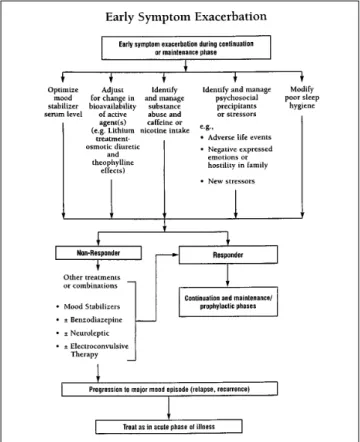
A recommended approach to the management of early symptom exacerbation is outlined in an algorithm (Figure 3). Should the patient tolerate an elevation of the existing mood stabilizer to the upper 20% of the therapeutic range, this may obviate additional pharmacologic augmentation. Insomnia may represent either a precipitant and/or an early symptom of mania. Nonresponders to the initial management strategies outlined in Figure 3 may require short-term pharmacologic augmentation or ECT (9,89). Such augmentation may include periodic use of a benzodiazepine to promote sleep with the intention of avoiding the precipitation of a major mood epi-sode (90–92).
These guidelines have applied a classification previously used to standardize the definition of unipolar depression treatment phases (93). If symptoms meet the criteria for an acute episode following a period equal to or greater than 8 weeks of remission, it is considered to be a recurrence, whereas an acute episode within an 8-week period of the onset of remission would be considered a relapse. Progression to a major mood episode requires the initiation of treatment for the acute phase of illness.
Figure 3. Treatment algorithm for early symptom exacerbation
Summary of Treatment of Symptom Exacerbation
It is not uncommon for patients who have been in remis-sion to have exacerbations of symptoms. This may remain at a subthreshold level or, commonly, herald a full-blown epi-sode of a mood disorder. Patients, families, and support networks need education and training to recognize symptom exacerbations. Patients may not recognize symptom exacer-bations and may depend on supportive family, friends, or clinicians to do so. Patients should have rapid access to reassessment. Identifying and managing psychosocial pre-cipitants or stressors, ensuring adequate sleep, dealing with alcohol and substance abuse, ensuring optimum serum levels of medication, and ruling out adverse drug interactions are important. Nonresponders to these measures may require the addition of other relevant biological and psychosocial inter-ventions to produce a remission and to prevent the entry into another acute illness phase.
References
1. Tohen M, Waternaux CM, Tsuang MT. Outcome in mania: a 4-year prospective follow-up of 75 patients utilizing survival analysis. Arch Gen Psychiatry 1990;47:1106–11.
2. Consensus Development Panel. NIMH/NIH consensus development conference state-ment, mood disorders: pharmacologic prevention of recurrences. Am J Psychiatry 1985;142:469–76.
3. Tohen M, Waternaux CM, Tsuang MT, Hunt AT. Four-year follow-up of twenty-four first episode manic patients. J Affect Disord 1990;19:79–86.
4. Aagaard J, Vestergaard P. Predictors of outcome in prophylaxis lithium treatment: a 2-year prospective study. J Affect Disord 1990;18:259–66.
5. Himmelhoch JM, Garfinkel ME. Mixed mania, diagnosis and treatment: sources of lithium resistance in mixed mania. Psychopharmacol Bull 1986;22:613–20. 6. Winokur G, Coryell W, Keller M. Endicott J, Mueller T. A prospective follow-up of
bipolar and primary unipolar affective disorder patients. Arch Gen Psychiatry 1993;50:457–65.
7. Winokur G, Kadrmas A. A polyepisodic course in bipolar illness: possible clinical relationships. Compr Psychiatry 1989;30:121–7.
8. Winokur G, Coryell W, Keller MB, Scheftner WA. Relationship of electroconvulsive therapy to course in affective illness: a collaborative study. Eur Arch Psychiatry Neurol Sci 1990;240:54–9.
9. Keller MB, Lavori PW, Kane JM, Gelenberg AJ, Rosenbaum JF, Walzer EA, and others. Subsyndromal symptoms in bipolar disorder: a comparison of standard and low serum levels of lithium. Arch Gen Psychiatry 1992;49:371–6.
10. Goodnick PJ, Fieve RR, Schlegel A, Baxter N. Predictors of interepisode symptoms and relapse in affective disorder patients treated with lithium carbonate. Am J Psychiatry 1987;144:367–9.
11. Goodnick PJ, Fieve RR, Schlegel A, Kaufman K. Interepisode major and subclinical symptoms in affective disorder. Acta Psychiatr Scand 1987;74:597–600.
12. Zarin DA, Pass TM. Lithium and the single episode. Med Care 1987;25 Suppl 12:76S–84S.
13. Muller-Oerlinghausen B, Ahrens B, Grof P, Lenz G, Schou M, Simhandl C, and others. The effect of long-term lithium treatment on the mortality of patients with manic-de-pressive and schizoaffective illness. Acta Psychiatr Scand 1992;86:218–22. 14. Weissman MM, Bruce ML, Leaf PJ, Florio LP, Holzer CE. Affective disorders. In:
Robins LN, Regier DA, editors. Psychiatric disorders in America: the Epidemiologic Catchment Area study. New York: Free Press; 1990. p 53–80.
15. Grof P, Hux M, Grof E, Arato M. Prediction of response to stabilizing lithium treat-ment. Pharmacopsychiatry 1983;16:195–200.
16. Stokes PE, Shamoian CA, Stoll PM, Patton MJ. Efficacy of lithium as acute treatment of manic-depressive illness. Lancet 1971;1:1319–25.
17. Prien RF, Caffey EM Jr, Klett CJ. Factors associated with lithium responses in the prophylactic treatment of bipolar manic-depressive illness. Arch Gen Psychiatry 1974;31:189–92.
18. Grof P, Lane J, MacCrimmon D, Werstiuk E, Blajchman M, Daigle L, and others. Clinical and laboratory correlates of the responses to long term lithium treatment. In: Schou M, Stromgren E, editors. Origin, prevention and treatment of affective disorders. London: Academic Press; 1979. p 28–40.
19. Kukopulos A, Reginaldi D, Laddomada P, Floris G, Serra G, Tondo L. Course of manic-depressive cycle and changes caused by treatment. Pharmakopsychiatr Neuro-psychopharmakol 1980;13:156–67.
20. Haag H, Heidorn A, Haqag M, Greil W. Sequence of affective polarity and lithium response: preliminary report on Munich sample. Prog Neuropsychopharmacol 1986;11:205–8.
21. Faedda GL, Tondo L, Baldessarini RJ, Suppes T, Tohen M. Outcome after rapid vs gradual discontinuation of lithium treatment in bipolar disorders. Arch Gen Psychiatry 1993;50:448–55.
22. Parikh S, Kusumakar V, Haslam D, Matte R, Sharma V, Yatham LN. Psychosocial interventions as an adjunct to pharmacotherapy in bipolar disorder. Can J Psychiatry 1997;42 Suppl 2:74S–78S.
23. Rickels K, Schweizer E, Case G, Greenblatt DJ. Long-term therapeutic use of ben-zodiazepines, I: effects of abrupt discontinuation. Arch Gen Psychiatry 1990; 47:899–907.
24. Schweizer E, Rickels K, Case G, Greenblatt DJ. Long-term therapeutic use of ben-zodiazepines, II: effects of gradual taper. Arch Gen Psychiatry 1990;47:908–15. 25. Miller NS, Gold MS. Abuse, addiction, tolerance, and dependence to benzodiazepines
in medical and nonmedical populations. Am J Drug Alcohol Abuse 1991;17:27–37. 26. Busto V, Sellers EM, Naranjo CA, Cappell HD, Sanchez-Craig M, Simpkins T. Patterns
of benzodiazepine use and dependence. Br J Addict 1986;81:87–94.
27. Ray WA, Griffin MR, Schaffner W, Baugh DK, Melton LJ III. Psychotropic drug use and the risk of hip fracture. N Engl J Med 1987;316:363–9.
28. Ray WA, Griffin MR, Downey W. Benzodiazepines of long and short elimination half-life and the risk of hip fracture. JAMA 1989;262:3303–7.
29. Kielholz P, Terzani S, Poldinger W. The long-term treatment of periodical and cyclic depressions with flupenthixol decanoate. Int Pharmacopsychiatry 1979;14:305–9. 30. Ahlfors UG, Baastrup PC, Dencker SJ, Elgen K, Lingjaerde O, Pedersen V, and others.
Flupenthixol decanoate in recurrent manic-depressive illness. Acta Psychiatr Scand 1981;64:226–37.
31. White E, Cheung P, Silverstone T. Depot antipsychotics in bipolar affective disorder. Int Clin Psychopharmacol 1993;8:119–22.
32. Lowe MR, Batchelor DH. Depot neuroleptics and manic depressive psychosis. Int Clin Psychopharmacol 1986;(1 Suppl 1):53S–62S.
33. Esparon J, Kolloori J, Naylor GJ, McHarg AM, Smith AHW, Hopwood SE. Comparison of the prophylactic action of flupenthixol with placebo in lithium treated manic-depres-sive patients. Br J Psychiatry 1986;148:723–5.
34. Sernyak MJ, Woods SW. Chronic neuroleptic use in manic-depressive illness. Psycho-pharmacol Bull 1993;29:375–81.
35. McIntyre R, Young LT, Hasey G, Patelis-Siotis I, Jones BD. Risperidone treatment of bipolar disorder [letter]. Can J Psychiatry 1997;42:88–90.
36. Suppes T, McElroy SL, Gilbert J, Dessain EC, Cole JO. Clozapine in the treatment of dysphoric mania. Biol Psychiatry 1992;32:270–80.
37. Banov MD, Zarate CA Jr, Tohen M, Scialabba D, Wines JD Jr, Kolbrener M, and others. Clozapine therapy in refractory affective disorders: polarity predicts response in long term follow-up. J Clin Psychiatry 1994;55:295–300.
38. Zarate CA Jr, Tohen M, Baldessarini RJ. Clozapine in severe mood disorders. J Clin Psychiatry 1995;56:108–12.
39. Sachs GS. Treatment-resistant bipolar depression. Psychiatr Clin North Am 1996;19:215–36.
40. Monroe R. Maintenance electroconvulsive therapy. Electroconvulsive Therapy 1991;14:947–60.
41. Muller-Oerlinghausen B, Muser-Causemann B, Volk J. Suicides and parasuicides in a high-risk patient group on and off lithium long-term medication. J Affect Disord 1992;25:261–70.
42. O’Connell RA, Mayo JA, Eug LK, Jones JS, Gabel RH. Social support and long term lithium outcome. Br J Psychiatry 1985;147:272–5.
43. O’Connell RA, Mayo JA, Flatow L, Cuthbertson B, O’Brien BE. Outcome of bipolar disorder on long-term treatment with lithium. Br J Psychiatry 1991;159:123–9. 44. Morgan HG. The incidence of depressive symptoms during recovery from hypomania.
Br J Psychiatry 1972;120:537–9.
45. Zis AP, Grof P, Webster M, Goodwin FK. Prediction of relapse in recurrent affective disorder. Psychopharmacol Bull 1980;16:47–50.
46. Keller MB, Lavori PW, Coryell W, Andreasen NC, Endicott J, Clayton PJ, and others. Differential outcome of pure manic, mixed/cycling, and pure depressive episodes in patients with bipolar illness. JAMA 1986;255:3138–42.
47. Dunner DL, Patrick V, Fieve RR. Rapid cycling manic depressive patients. Compr Psychiatry 1976;18:561–6.
Clinical Implications
• Prophylactic treatment of bipolar disorder with mood stabilizers can reduce morbidity and mortality.
• Prophylactic treatment can also improve quality of life. Limitations
• The evidence to support the use of carbamazepine and dival-proex sodium for prophylaxis of bipolar disorder is limited.
48. Black DW, Winokur G, Hulbert J, Nasrallah A. Predictors of immediate response in the treatment of mania: the importance of comorbidity. Biol Psychiatry 1988;24:191–8. 49. Tohen M, Tsuang MT, Goodwin DC. Prediction of outcome in mania by
mood-congru-ent or mood-incongrumood-congru-ent psychotic features. Am J Psychiatry 1992;149:1580–4. 50. Coryell W, Endicott J, Keller MB. Outcome in patients with chronic affective disorder:
a five-year follow-up. Am J Psychiatry 1990;147:1627–33.
51. Baastrup PC, Poulsen JC, Schou M, Thomsen K, Amdisen A. Prophylactic lithium: double blind discontinuation in manic-depressive and recurrent-depressiv e disorders. Lancet 1970;2:326–30.
52. Stallone F, Shelley E, Mendlewicz J. The use of lithium in affective disorders, III: a do ub le -b li nd st ud y o f p rophylaxis in bipolar illness. Am J Psychiatry 1973;130:1006–10.
53. Prien RF, Klett CJ, Caffey EM Jr. Lithium carbonate and imipramine in prevention of affective episodes: a comparison in recurrent affective illness. Arch Gen Psychiatry 1973;29:420–5.
54. Prien RF, Caffey EM Jr, Klett CJ. Prophylactic efficacy of lithium carbonate in manic-depressive illness: report of the Veterans Administration and National Institute of Mental Health Collaborative Study Group. Arch Gen Psychiatry 1973;28:337–41. 55. Prien RF, Klett CJ, Caffey EM Jr. Lithium prophylaxis in recurrent affective illness.
Am J Psychiatry 1974;131:198–203.
56. Prien RF, Himmelhoch JM, Kupfer DJ. Treatment of mixed mania. J Affect Disord 1988;15:9–15.
57. Fieve RR, Kumbarachi T, Dunner DL. Lithium prophylaxis of depression in bipolar I, bipolar II and unipolar patients. Am J Psychiatry 1976;133:925–9.
58. Gelenberg AJ, Kane JM, Keller MB, Lavori P, Rosenbaum JF, Cole K, and others. Comparison of standard and low serum levels of lithium for maintenance treatment of bipolar disorder. N Engl J Med 1989;321:1489–93.
59. Price L H, Heninger GR. Lithium in the treatment of mood disorders. N Engl J Med 1994;331:591–7.
60. Coppen A, Noguera R, Bailey J, Burns BH, Swani MS, Hare EH, and others. Prophy-lactic lithium in affective disorders. Lancet 1971;2:275–9.
61. Cundall RL, Brooks PW, Murray LG. A controlled evaluation of lithium prophylaxis in affective disorders. Psychol Med 1972;2:308–11.
62. Baldessarini RJ, Tondo L, Suppes T, Faedda GL, Tohen M. Pharmacological treatment of bipolar disorder throughout the life cycle. In: Shulman KI, Tohen M, Kutcher SP, editors. Mood disorders across the life span. New York: Wiley-Liss; 1996. p 299–338. 63. Guscott R, Taylor L. Lithium prophylaxis in recurrent affective illness: efficacy,
effectiveness, and efficiency. Br J Psychiatry 1994;164:741–6.
64. Maj M, Starace F, Nolfe G, Kemali G. Minimum plasma lithium levels required for effective prophylaxis in DSM-III bipolar disorder: a prospective study. Pharmacopsy-chiatry 1986;19:420–3.
65. Keck PE Jr, McElroy SL. Outcome in the pharmacologic treatment of bipolar disorder. J Clin Psychopharmacol 1996;16 Suppl 1:15S–23S.
66. Maj M. Clinical prediction of response to lithium prophylaxis in bipolar patients: a critical update. Lithium 1992;3:15–21.
67. Solomon D, Keitner G, Miller I, Shea M, Keller M. Course of illness and maintenance treatments for patients with bipolar disorder. J Clin Psychiatry 1995;56:5–13. 68. Miklowitz DJ, Goldstein MJ, Nuechterlein KH, Snyder KS, Mintz J. Family factors and
the course of bipolar affective disorder. Arch Gen Psychiatry 1988;45:225–31. 69. Calabrese JR, Woyshville MJ, Kimmel SE, Rapport DJ. Predictors of valproate response
in bipolar rapid cycling. J Clin Psychopharmacol 1993;13:280–3.
70. Schaff MR, Fawcett J, Zejecka JM. Divalproex sodium in the treatment of refractory affective disorders. J Clin Psychiatry 1993;54:380–4.
71. Lambert PA, Venaud G. Comparative study of valpromide versus lithium in treatment of affective disorders. Nervure 1992;5(2):57–65.
72. Ballenger JC, Post RM. Carbamazepine in manic-depressive illness: a new treatment. Am J Psychiatry 1980;137:82–90.
73. Okuma T, Inanaga K, Otsuki S, Sarai K, Takahashi R, Hazama H, and others. Preliminary double-blind study on the efficacy of carbamazepine in prophylaxis of manic-depressive illness. Psychopharmacology 1981;73:95–6.
74. Post RM, Denicoff KD, Frye MA, Leverich GS. Re-evaluating carbamazepine prophy-laxis in bipolar disorder. Br J Psychiatry 1997;170:202–4.
75. Prien RF, Gelenberg AJ. Alternatives to lithium for preventive treatment of bipolar disorder. Am J Psychiatry 1989;146:840–8.
76. Post RM, Leverich GS, Rosoff AS, Altshuler LL. Carbamazepine prophylaxis in refractory affective disorders: a focus on long-term follow-up. J Clin Psychopharmacol 1990;10:318–27.
77. Denikoff KD, Meglathery SB, Post RM, Tandeciarz SI. Efficacy of carbamazepine compared with other agents: a clinical practice survey. J Clin Psychiatry 1994;55:70–6. 78. Kramer B. Maintenance electroconvulsive therapy in clinical practice. Convuls Ther
1990;6:279–85.
79. Solomon DA, Ryan CE, Keitner GI, Miller IW, Shea T, Kazim A, and others. A pilot study of lithium carbonate plus divalproex sodium for continuation and maintenance treatment of patients with bipolar 1 disorder. J Clin Psychiatry 1997;58:95–9. 80. Dubovsky SL. Calcium antagonists in manic-depressive illness. Neuropsychobiology
1993;27:184–92.
81. Dubovsky SL, Buzan R. The role of calcium channel blockers in the treatment of psychiatric disorders. CNS Drugs 1995;4:47–57.
82. Patsolos PN. New antiepileptic drugs: a review of their current status and clinical potential. CNS Drugs 1994;2:40–77.
83. Papatheodorou G, Kutcher SP. Treatment of bipolar disorder in adolescents. In: Schulman KI, Tohen M, Kutcher SP, editors. Mood disorders across the life span. Wiley-Liss; 1996. p 159–86.
84. Packer S. Family planning for women with bipolar disorder. Hospital and Community Psychiatry 1992;43:479–82.
85. Altshuler LL, Cohen LS, Szuba MP, Burt VK, Gitlin M, Mintz J. Pharmacologic management of psychiatric illness during pregnancy: dilemmas and guidelines. Am J Psychiatry 1996;153:592–606.
86. Stowe ZN, Nemeroff CB. Psychopharmacology during pregnancy and lactation. In: Schaatzberg AF, Nemeroff CB, editors. Textbook of psychopharmacology. Washington (DC): American Psychiatric Press; 1995. p 823–35.
87. Cohen LS, Sichel DA, Robertson LM, Heckscher E, Rosenbaum JF. Post partum prophylaxis for women with bipolar disorder. Am J Psychiatry 1995;152:1641–5. 88. Suppes T, Baldessarini RJ, Faedda GL, Tohen M. Risk of recurrence following
discontinuation of lithium treatment in bipolar disorder. Arch Gen Psychiatry 1991;48:1082–8.
89. Fava GA, Kellner R. Prodromal symptoms in affective disorders. Am J Psychiatry 1991;148:823–30.
90. Wehr TA, Sack DA, Rosenthal NE. Sleep reduction as a final common pathway in the genesis of mania. Am J Psychiatry 1987;144:210–4.
91. Wehr TA. Sleep loss: a preventable cause of mania and other excited states. J Clin Psychiatry 1989;50 Suppl 3:8S–16S.
92. Wehr TA, Goodwin FK. Phase advance of the circadian sleep-wake cycle as an antidepressant. Science 1979;206:710–3.
93. Frank E, Prien RF, Jarrett RB, Keller MB, Kupfer DJ, Lavori PW, and others. Conceptualization and rationale for consensus definitions of terms in major depressive disorder: remission, recovery, relapse, recurrence. Arch Gen Psychiatry 1991;48:851–5.
Résumé
Objectifs : Résumer les résultats relatifs à l’efficacité d’après la littérature publiée sur les traitements biologiques pendant les phases de stabilisation et d’entretien du trouble bipolaire, de même que les recommandations sur les différentes possibilités de traitement qui émanent du groupe de travail au sein du sous-comité du trouble bipolaire du réseau canadien pour les traitements de l’humeur et de l’anxiété (Canadian Network for Mood and Anxiety Treatments - CANMAT).
Méthodes : Nous avons examiné la littérature pertinente publiée au sujet de divers traitements biologiques et avons établi un rapport sur le consensus du groupe de travail, qui est fondé sur l’opinion d’experts, de même que sur une vaste consultation des psychiatres et des médecins de famille dans l’ensemble du Canada.
Résultats : Tout indique que le lithium est efficace à des fins de prophylaxie du trouble bipolaire. Les preuves de l’efficacité de la carbamazépine sont moins solides. Il n’existe aucune étude à double insu comportant un nombre de sujets suffisant pour tirer des conclusions à l’égard du traitement au divalproex sodique.
Conclusions : Pendant la phase de stabilisation et à la fin de celle-ci, on recommande de conserver les psychorégulateurs comme traitement principal et d’abandonner graduellement les autres traitements ou de les conserver seulement pour un motif valable. Un traitement d’entretien efficace pourra réduire la morbidité et la mortalité de façon significative et améliorer la qualité de vie des patients.