Re-presenting the Past: Authenticity
and the Historical Novel
A novel and exegesis
by Richard Carroll
BA (UQ), Honours First Class (QUT)
Creative Writing and Literary Studies Discipline
Creative Industries Faculty
Queensland University of Technology
Submitted as a requirement of the degree of Doctor of Philosophy
Keywords
Aboriginal people, appropriation, authenticity, Brisbane, creative writing process, culture studies, fact/fiction dichotomy, genre studies, historical novel, historiography, literary studies, practice-led research, protocols for
non-Indigenous authors, Queensland history, representation, research and aesthetics in fiction, Tom Petrie, whiteness, white writing black.
Abstract
The practice-led project consists of a 51,000 word historical novel and a 39,000 word exegesis that explores the defining elements of historical fiction and the role it plays in portraying the past. The creative work Turrwan (great man), tells the story of Tom Petrie, an early Queensland settler who arrived at the Moreton Bay Penal Colony in 1837 at the age of six. Tom was unusual in that he learnt the language of the local Turrbal people and was accepted as one of their own. The novel explores relationships between the Aboriginal people and settlers with the aim of heightening historical awareness and understanding of this divisive era in Queensland’s history. I believe that literature has neglected the fictionalising of the early history of Brisbane and that my novel could fill this gap.
The project is a combination of qualitative and practice-led research: qualitative through the exegesis which consists of mainly discursive data, and practice-led through the creative work. In response to questions raised in the process of writing the story, the investigation explores the historical novel in an attempt to better understand the nature of the genre and how this knowledge could inform the creative work. My research brings together diverse aspects of writing a historical novel in an original way through its examination of
authenticity as a common thread. The main findings of the research are: paucity of novels set in early Brisbane and its surrounds; a definition of the historical novel; an insight into the role authenticity plays in historical fiction; reasons
why historical novelists are under fire from some contemporary Australian historians; suggested protocols for non-Indigenous authors writing about the Indigenous people of Australia; how writing about a culture other than one’s own can benefit both cultures; the impact of the research on the writing process and; how Tom Petrie’s Reminiscences of Early Queensland influenced the writing of the novel.
Table of Contents
Abstract …..………...……....….iii
List of Illustrations ………...………...…….vii
Statement of Original Authorship ………..……….viii
Acknowledgements ………...………...…...ix
Creative Work: Turrwan ………...……...1
Exegesis: Re-presenting the Past: Authenticity and the Historical Novel ...214
1. Introduction ...………...……215
1.1 The Novel and Brisbane ….………....…222
1.2 Methodology ...244
2. The Historical Novel ……….………...…..251
2.1 The Fact/Fiction Dichotomy ...……..………...….252
2.2 Defining the Genre ……….………...……...258
2.3 Authenticity ...……….……...…...263
2.4 Fictive History ……….…...…..272
3. White Writing Black ……….………...…..278
3.1 Whiteness and Representation …...….………280
3.2 Appropriation, Theft and Misrepresentation ...…………291
3.3 Author, Audience and Authenticity …...……..295
3.4 Absence Versus Inclusion …………...…...298
3.5 On the Right Track: Journey to the Stone Country ..…...302
4. Writing the Novel ……….……..314
4.1 From Film Script to Novel ………...…....316
4.2 A Sense of Place ………...……321
4.3 Reminiscences: A New Look at an Old Document ...…...325
4.4 Creating Plausible Characters ………...344
5. Conclusion ………...………363
6. Appendix A: Timeline ...……….………...……..369
7. Appendix B: Illustrations ...374
8. Works Cited ….……….…………...…..380
List of Illustrations
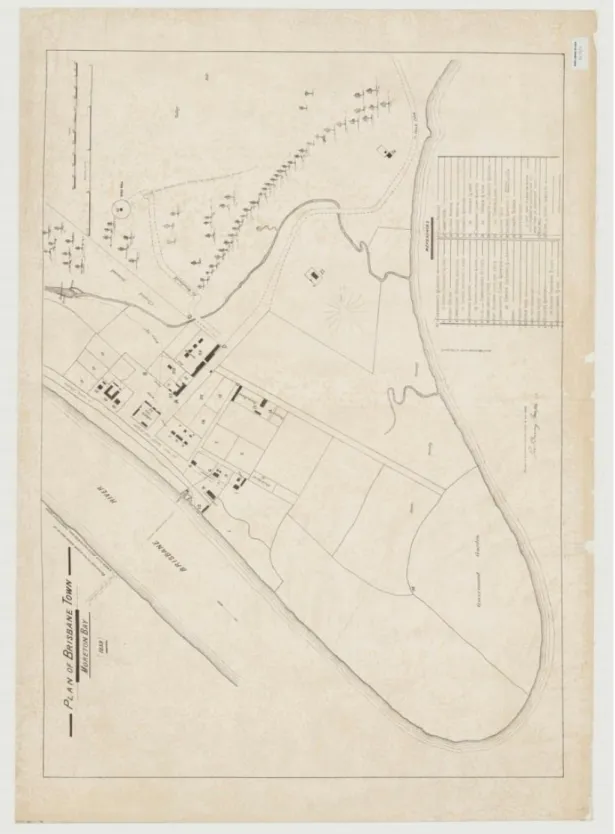
Figure 1 — Plan of Brisbane Town .………...…..…....….4
Figure 2 — Tom Petrie ...374
Figure 3 — Brisbane 1844 ……….……….………..……...…...…375
Figure 4 — Aboriginal Huts ...375
Figure 5 — Dundalli ….………...…...….376
Figure 6 — Treadmill ………...…376
Figure 7 — View of Brisbane 1835 ………....…...….377
Figure 8 — Petrie Family House, Queen St Brisbane ……….….….377
Figure 9 — Murrumba Homestead ………...377
Figure 10 — Journal Entry ………...……..378
Statement of Original Authorship
The work contained in this thesis has not been previously submitted to meet requirements for an award at this or any other higher education institution. To the best of my knowledge and belief, the thesis contains no material previously published or written by another person except where due reference is made.
QUT Verified Signature Richard James Carroll
Acknowledgements
Principal Supervisor: Dr Kári Gíslason Associate Supervisor: Dr Susan Carson Fran Whittred
Uncle Joe Kirk Shane Carroll
Final Seminar Panel Chair and Panel members
Foreword
Eighteen thousand years ago the sea rose to engulf the coastal plain that extended to what are now Stradbroke and Moreton Islands in south-east Queensland. As a result of this cataclysmic event, the Brisbane River and the bay as we know them today came into being. According to archaeological evidence, Aboriginal people were present along the coast for approximately fourteen thousand years prior to the flooding of the coastal plain.
The Aboriginal people saw themselves as integral to, and responsible for, the land they inhabited. They knew their country intimately – their survival depended on their knowledge of flora, fauna, landscape and
weather. Country, for want of a better word, encompasses the spiritual world where the landscape comes alive through spiritual beings and ancestors; it embraces all aspects of the Aboriginal people’s relationship to the physical nature of their environment. Country is perpetuated through every aspect of daily life and particularly in ritual, dance, song, stories and art. The
Australian Indigenous peoples considered themselves as custodians of the earth and its creatures. They were an integral and vital part of a multitude of interdependent bonds within the universe, and their attachment to where they lived was their essence. They believed that those who destroy country, destroy themselves. However, the English colonisers saw the world
differently and had no time for what they dismissed as superstition. To them, there was only one law—their own. And they could not understand, or chose
not to, that the people they had invaded might also have their rules and regulations.
This is the story of Tom Petrie, an early Queensland settler who arrived at the Moreton Bay Penal Colony in 1837 at the age of six. Tom was unusual in that he learnt the language of the local Turrbal people and was accepted as one of their own. Tom acted as guide, messenger, interpreter, explorer, timber cutter and surveyor for the white settlement. With the help of Dalaipi, a Turrbal clan leader, he established the property of Murrumba in the North Pine area where the town of Petrie was later named after him. The Petrie family played an important part in the development of south-east Queensland. Tom’s father Andrew was the superintendent of works for the penal colony, the first free settler and a major builder in the new town, while Tom’s elder brother John became the first mayor of Brisbane in 1859.
The land that our white ancestors conquered was not an empty
wasteland. Australia was inhabited by peoples who had lived and developed on our island continent since time immemorial. Through the reconciliation process we have come to recognise this heritage but there is still much to be done. Relations between black and white on Queensland’s early frontier were complex, with misunderstandings on both sides. Turrwan recounts those troubled times in an attempt to foster discussion and hopefully contribute in some way to the emergence of a balanced view of the events that forged this state.
I now once More hoisted English Colours, and in the Name of His Majesty King George the Third took possession of the whole Eastern coast from the above Latitude down to this place by the Name of New South Wales together with all the Bays, Harbours, Rivers, and Islands,
situated upon the said Coast.
Captain James Cook, 22 August 1770
January 26 is a day that commemorates the armed invasion of our lands. In 1788, the British fleet landed on our soil and laid claim to land that was sovereign to 500 indigenous tribes. Every inch of our land had its own name and own Dreaming story. In 1901, The Australian nation was proclaimed on land that had not been ceded or surrendered by the traditional owners. The so
called “Australian” flag means nothing to Aboriginal people. In fact, it is a symbol of oppression.
Sam Watson, ‘The Courier Mail’ January, 2006
The frontier is never
somewhere else. And no stockades can keep the midnight out.
Norman MacCaig, ‘Hotel Room, 12th Floor’
*Aboriginal and Torres Strait Islander peoples are respectfully advised that this work contains the names of deceased people.
ONE
1909 Murrumba
The old chair groans with my weight, the greying wood still solid beneath the scars of a long life overlooking the garden, and before that, in the house in Brisbane. Grandmother’s chair has held bodies of all shapes and sizes, often more than one at a time. The children were the ones who inflicted the most damage; myself more than the rest. I used the chair as a prop in games that ended with this piece of furniture a victim of attack by spear, waddy,
boomerang, musket and pistol. Not when my father was around. Such acts of mistreatment would have called forth the strap if my father ever caught me.
Lining the road that climbs the rise to the house are the hoop, bunya and kauri pines I planted as seeds over forty years ago, now magnificent giants. Clumps of tall bamboo rustle and sway in the breeze, a stark contrast to their neighbours. They provide an exotic background to the bougainvillea, the rich
purples and violets etched on their trunks. A family of quails bobs across the lawn, suddenly skittering for cover beneath the bushes as a grey goshawk swoops down to perch in a silky oak, its yellow talons clawing the branch. It seems that all the small birds in the vicinity have gathered to attack the hostile intruder; in a fury of chattering and chirping, the bravest dive-bomb the
predator. The hawk disdains all attentions for some time, its eyes searching the bushes for a sign of the quails. A near miss from a clacking magpie rouses him from his perch. He flies languorously off, the feathered mob chasing him across the river until they disappear and peace is restored.
I built the house on a low knoll overlooking the North Pine River to the south, with Brisbane some sixteen miles in the distance. “Murrumba,” I had named it, “a good place” in the local dialect. The surrounding countryside is mostly open timbered land dominated by tall eucalypts and hoop pine. The aboriginal people used to regularly burn the area to make it easier to catch the kangaroos and other animals that came to feed on the rich grasses that sprang up after the fire. The river itself is clothed in dense scrub where ferns and vines abound amongst the she-oaks and black bean trees.
My younger sister Isa sits beside me, a blanket covering her lower body, despite the heat. We both know we have little time left. We often sit together for hours, remembering old times. My wife Elizabeth pampers us with tea and fresh-baked scones.
It was hard work: I built this homestead, the barns and sheds, the fences, the gardens. I could never have done it, though, without all my willing workers:
my brothers Andrew and George, and my friends—Wanangga, Dalaipi, Mindi-Mindi, King Sandy. They are all long gone, only Dal-ngang is left.
TWO
1858
My friends Dal-ngang and his father Dalaipi helped me choose the best place to settle. Dalaipi was head man and rainmaker of the North Pine clan. He had rejected the white man’s temptations of grog and tobacco when he had seen the effect they had on his people. He could see that resistance was futile. The whites were too many and too powerful; they would take his land whether he liked it or not.
“Before the whitefellow came,” Dalaipi once told me, “we wore no dress, but knew no shame, and were all free and happy. There was plenty to eat and it was a pleasure to hunt for food. Then, when the white man came among us, we were hunted from our ground, shot, poisoned, and had our daughters, sisters, and wives taken from us. Could you blame us if we killed the white man? If we had done likewise to them, would they not have murdered us?” he
asked. “But you are different, Tommy. You are one of the people. If you are looking for land to raise cattle and to provide a home for your family, this is where you must come,” he was solemn as he said this. “I know you will respect our sacred sites and our way of life.”
With Dal-ngang, I spent days riding the country looking for a likely place. I had listened to Dalaipi’s discourses about the virtues of his land and had guessed the old man’s ploy. I knew he wanted me to take up the land where the clan lived–it was common sense. However, it was then part of the Whiteside run owned by the Griffins. Would they let me move in? As chance would have it, we came across John Griffin accompanying a dray loaded with timber at the North Pine upper crossing. He was an impressive figure, sitting on his horse, Terra, like a monument. The aboriginals kept well away from this horse, as it seemed to have a great dislike for their race and would kick and bite anyone with a black skin. I remember Griffin’s face was shadowed by a wide-brimmed hat. He had a rifle by his side and two pistols across his saddle. We got to talking about the land and I said I would like to graze some cattle in the area.
John looked at Dal-ngang, who had backed away from the vicious horse, and drew me aside. “You should talk to Mother about this,” he said. “We can’t make a go of this place because of the blacks. The buggers keep spearing our cattle, and no one is safe.” His hands tightened on the rifle.
“Why not go and see her now, then,” I said, turning my horse to the west where the Whiteside station lay. I left John where he stood. “You’re mad, Petrie,” I thought I heard him shout as we left.
Mrs Griffin said she was more than willing to leave me the land that stretched from Sideling Creek to the coast. It was too dangerous to run cattle there, she told me. If I thought I could do it, good luck to me. We sorted out the details of our agreement, then Mrs Griffin invited me to stay for lunch. I
declined, as I was in a hurry to get back to Brisbane to tell Elizabeth the news that I had managed to secure some of the best land in the colony.
THREE
1837 Moreton Bay
I stood on the deck of a paddle steamer as it threaded its way through the narrow, deep channel between two large islands where the shifting sands awaited the mariner. I closed my eyes and inhaled the scent of vegetation and land mixed with the brine of the sea. The trip from Sydney had been long and rough and I was looking forward to being on solid ground again. I felt the breeze on my face as I listened to the gulls squabbling for scraps in the ship’s wake. When I opened my eyes I saw we were entering the calmer waters of a sheltered bay.
I made my way to where my father was talking to the captain in his cabin, studying a map on the desk. Father was a big man and known for his energy. He disliked those he called fools. Now he waited for Captain Griffin, who would later set up the Whiteside run, to explain their situation.
“We’ll be arriving at Dunwich on Stradbroke Island shortly. The pilot boat is waiting to take you up the river tomorrow,” he said.
I turned back towards the water where I spotted twotriangular black fins not far from the boat. “Father, come quick,” I called.
“That’s enough,” he said. “You know better than to interrupt. Wait until I’m finished.”
I sulked at the door and Father returned to the map. “You were saying we have to take the pilot boat up the river to the town, Mr Griffin.”
The captain tapped his finger on the map. “That’s right. There’s too much sand in the river mouth here for a steamer this size. We’ll transfer your luggage at Dunwich, where you’ll spend the night. The boat will leave first thing in the morning and you’ll be at the settlement in no time.”
“Good. Thank you, Captain.”
Father turned towards me, raising an eyebrow. I spun around and ran. I was jumping up and down, clinging to the ship’s rails when Father emerged on deck. My brothers John and Walter were standing beside me. Isa was below with Mother. I saw my father arriving and pointed at the water. “Look father. Look. Sharks,” I shouted.
John and Walter grabbed me and hoisted me off my feet. “How about a swim, eh?”
I let out a yell, struggling.
“Act your age John. And you Thomas, come down from there. Now!” Father was not amused.
My brothers released me, and I jumped down to the deck. Father turned towards the bow. We were approaching Dunwich wharf, a narrow jetty that thrust some one hundred and fifty yards out from the shore. Built out of rocks by convicts some years before, the jetty allowed big ships to dock and offload their cargo. Where it met the shore, the structure was flanked on the left by stone-strewn mud. To the right, a narrow beach of yellow sand disappeared around a rocky point. A small hut at the end of the causeway stored tools and acted as a shelter. Further back in a cleared area stood a larger slab hut. Beyond the camp, thick scrub lay on the hillsides like a worn, shredded blanket.
“Go fetch your mother and sister, Thomas. And be quick about it, we’re almost there,” Father ordered.
I disappeared inside, glad for something to do. My excitement carried me towards the family’s cabin, where I told Mother of our arrival before rushing back on deck. I would say I was my mother’s favourite. Her soft heart saved me many times. She straightened her bonnet, taking one last look at the cabin the family had shared from Sydney. Seven berths had been crammed into the tiny cabin, but it did have modern conveniences. The wash stand provided fresh water from a cistern on the wall. You could turn the water on with a small brass cock and then the waste was piped overboard. Mother particularly liked the bells hanging outside the doors of the cabins. When rung, each had a
distinctive sound so that the steward in his pantry would know who required his services. She turned and made her way above.
Soldiers and convicts milled about on the wharf, waiting to unload the cargo. The prisoners wore the standard convict attire of grey calico trousers with buttons on the side, which allowed them to be worn over leg irons; plus a shirt, grey jacket and leather cap. The clothes were stamped with broad
arrowheads indicating they were government property; the word ‘felon’ was printed on the jacket. The captain edged the James Watt towards the end of the wharf. Two sailors threw ropes to waiting convicts and the captain ordered the engines stopped as the boat was secured at its berth.
I wanted to be first ashore. I shot off the boat onto the stone jetty, nearly knocking one of the convicts into the water. It was Grayson, though I didn’t know his name at the time. He was a big man, even bigger than Father. He stumbled backwards towards the edge of the wharf; he was afraid. He twisted his head around and saw the dark water beneath him. At the last moment, he managed to grab a post to stop himself falling.
“You little bugger,” he muttered. He recovered quickly and leapt at me, but I ducked out of his way.
“Lay off, Grayson,” called one of the soldiers, “or you’ll feel the bite of the whip!”
The soldier need not have struck Grayson, but he thrust the butt of his rifle in his rib. The convict rubbed his bruised flesh through the rough tissue of his prison garb. He glared at me, but kept his distance.
I was shaken, and as quickly as I could I joined the rest of the family as they disembarked, and watched the convicts transfer our luggage to the much
smaller pilot boat. Father’s eyes were drawn to a sizeable stack of timber which he said was red cedar, a valuable cargo. He would supervise its loading on the
James Watt for its return trip to Sydney. We hadn’t properly arrived yet and he was already at work.
“Get back to your job,” said the soldier, once again pushing Grayson with his rifle. The convict cursed and then he made his way onto the boat to help unload. I could see he was hampered by a pain where the rifle butt had struck. He looked at Father. “Petrie,” he said. His eyes swung from Father to me and back, then he was gone.
***
The following morning, the family made their way down to the wharf. Stars were still visible as the eastern sky brightened, the dull grey of night gradually transmuting into a rust-flecked dawn. It was August and the air was brisk.
Convicts, Grayson among them, sat waiting at the oars. The pilot boat headed into the bay and we were soon passing islands of mud and coral covered in low scrub. Gulls, gannets, sea eagles and cormorants, amongst others, rent the morning air with their cries and dove into schools of fish that flashed below the sun-burnished water. As we crossed a broad swathe of ocean grass in a shallow area, I saw a strange creature in the crystal-clear water. “Look at that thing,” I cried. “What is it?” I asked nobody in particular. The huge, slate-grey fish was many times bigger than myself. It swam lazily, feeding on the lush green grass which it chewed with its large rough lips. It propelled itself through the water with its fluked tail and used the flippers just behind and below its
head to manoeuvre. Cow-like eyes presided over a snout shaped like that of a mournful bulldog.
“The blackfellas call them dugong,” said the pilot. “Some of them are huge, up to ten feet long, but they’re mostly harmless. They’re good eating, if you ever get the chance.”
The mood on the boat sobered as we approached the low-lying, dense green shore. In the distance to the north, small, spikey hills poked at the sky. We glided smoothly between sand and mud banks where numerous birds waded in the shallow water looking for a meal. A pelican landed with a flutter of its huge wings, a fish tail sticking out of its distended bill. We passed an island on our left where I saw a number of aboriginal people sitting around a fire just up from the beach.
At last, we turned into the river proper where mangroves stood like strange creatures anchored to the mud by a tangle of sinewy legs. As the sharp blue of the sky narrowed above us, the dank odour of decay exuded by the vegetation and mud permeated the air. Beyond the thick river growth, ancient eucalypts and tall pines lined the horizon. Father recognised the hoop pine; it was being used extensively for ships’ spars, houses and furniture, he said. The widespread stands of pine in the area had been a major factor in the decision to settle, first at Red Cliff Point on the bay and then the present site further inland. As he embraced the scene around him, Father remembered a convict he had met in Sydney. The man had been at the original settlement and had told him of his
trip up the river to the new site at Brisbane. He had described it as a “veritable garden of Eden.”
The river and surrounding bush teemed with life; I heard whistles, hoots, chirps and many other unknown sounds that filled the air around us. I watched spellbound as long-beaked kingfishers darted and swooped, their scarlet breasts flashing. A family of black swans sailed gracefully by, while a flock of noisy, multi-coloured lorikeets squawked overhead. Occasionally, I caught glimpses of dark figures in the areas where the bush was thinner; smoke drifted in lazy columns from hidden campfires. Every now and then, a burst of golden incandescence broke the verdant monotony—a winter-flowering wattle tree, father informed me. Its perfume wafted across the water.
Progress was slow and tedious as sand bars and the tides delayed the boat’s passage. At the rate we were travelling it would be night before we reached the town, I thought. At the start of the trip, I had been fascinated by each new vista. I had watched my three brothers take their place at the oars—in later years, they would be quite good at rowing and winning races on this same river. But as the day dragged on, I grew weary and bored.
It seems cruel to me now, but behind my parents’ backs, safe in the knowledge he couldn’t touch me, I made faces at Grayson, the man whose injury I had helped to cause. The rest of the family was absorbed by the
scenery. I was six, and it seems I had already forgotten how frightened Grayson had made me feel at the wharf.
Suddenly, a black man appeared at the edge of a clearing on the bank, watching the boat advance along the river. The soldiers tightened their grip on their rifles and kept their eyes on the figure, ready to fire at the least
provocation. There could be more of them hiding in the trees, I thought with apprehension, but also I was glad of the diversion.
I focused Father’s telescope on the aboriginal who stood motionless, as though planted in the ground; he was a young man and well-built, his head covered in ebony curls. The dark eyes that stared back at me. I can remember that his probing gaze made me uneasy, as though it was the black man holding the telescope and looking inside my head. I examined the strong face, the broad forehead and nose, the heavy lips encased in a beard; his chest was beaded with horizontal lines of scars.
Through the telescope I could see two vicious-looking spears the black man was holding in his right hand. A band of string made from kangaroo hair (as I would later learn) encircled the man’s waist, holding a long, curved piece of wood in place; otherwise, he was naked. I glanced at my mother who had raised her hand to her face as though to block out the sight. He must be a warrior, I thought. I instinctively moved closer to Mother as the boat pulled slowly past him.
The man on the shore was Dundalli, whose name means “wonga pigeon.” Many years later, he laughed when he told me of his detailed
assessment of our craft and its passengers. First, he had carefully scrutinised the red and white-clothed soldiers holding their muskets in readiness. He then
examined the rowers leaning into their oars and sweeping them back for another stroke that propelled us. He could see by their dress that most of them were convicts.
He noticed me looking at him. The big man at the front, three youths, a young girl and a woman who was probably their mother, were the only other passengers. More and more whites were coming to his traditional land and Dundalli was not happy. Some of his people thought they were the magui, ghosts of ancestors returning to the heart of their family, but he did not believe it. The discussions around the campfires had been long on this subject, but he knew the ancestors would never act the way these strangers did, with no respect for the law. The elders had told him to observe and do nothing. For the
moment, he did as ordered.
For once, I sat quietly. I had seen blacks before in the streets of Sydney, but no one like the man on the shore. I looked to see what my father was doing. By the time I returned my gaze to the shore, the man was gone.
As the boat pulled out of range of where the black man had been, everyone relaxed a little, but all eyes surveyed the scrub on the banks with some trepidation. Then the river began to twist and turn upon itself. The sun was low in the western sky when we passed cultivated land on the bank to our right and high brown cliffs lined the water to the left. We rounded yet another bend to the welcome sight of the settlement. A number of small craft were plying back and forth across the river.
My tiredness vanished as we drew towards the river bank. Before me stood the town of Brisbane, a harsh prison, miles from any other form of civilisation, inhabited by some of the worst criminals England had produced. I appraised the buildings and the layout of my new home. To the right of the wharf lay a long narrow shed my father told me was the boat house. A
substantial two-storey building made from stone stood about fifty yards further back, huddling into the hill that wrapped it on three sides. I listened as my father explained that it had taken ten convicts, working in irons it must be said, four months to dig out the rock and to lay the foundations for what was the Commissariat Store where the colony’s provisions were jealously guarded. A road ran away to the left up the slight grade. Above it on the rise stood a magnificent fig tree that I imagined climbing. With its massive buttress roots and trunk, it towered like a sentinel, dwarfing the one-storied building that housed the chaplain. The commandant’s house was along the ridge to the right of the Commissariat. I had watched Father study crude plans of the town in Sydney before we left and the layout of the colony was sketched in his mind. He pointed out and named each of the buildings. Sounds of hammering and sawing came from our left where the road from the wharf ran past the military barracks and the lumber yard. This would be the focus of Father’s attention for some time to come. Further along the river bank were the hospitals for the soldiers and convicts and then the surgeon’s house. In the distance behind the lumber yard, the convict barracks loomed, a forbidding stone structure some three stories high and about one hundred yards long, surrounded by a high wall.
A team of oxen hauling a huge load of timber crawled down towards the wharf, their hooves churning the dust. The bullock driver cracked his whip above the heads of his beasts and whistled at them to keep moving. On the top of a ridge just beyond the settlement stood the squat conical shape of a
windmill, the giant sails immobile despite the fresh breeze. Gangs of convicts guarded by soldiers—the aboriginals called them ‘diamonds’ because of their red and white uniform—toiled in the vegetable gardens to the rear of the buildings.
I had conjured up visions of the settlement as a smaller version of Sydney, but that was definitely not the case. Our new home was tiny in comparison, no more than a scratch on the sub-tropical landscape where luxuriant forests and scrub pressed in upon the township, threatening to
swallow it. Despite a sense of mild disappointment, I was eager to explore and to get to know this place.
Father had warned that strict rules would apply. There was to be no fraternising with the convicts or aboriginal people and we were never to go about the colony alone or leave its confines. Father had reassured Mother that the large garrison of soldiers would guarantee our safety. As I was to learn, Brisbane had been, and still was, a harsh, cruel place for the convicts.
FOUR
Father dispatched a soldier to let the commandant know we had arrived and turned to the unloading of our luggage. Captain Fyans came down and introduced himself, and then we set off on foot to the only accommodation available in the colony, the old female factory. We went up the slope and passed between the lumber yard and the military barracks and started down the main road that would one day become Queen St. Opposite the formidable convict barracks, soldiers toiled in a garden. A track to the government garden we had seen from the boat ran off to the right past some barns and the piggery. Another track passed behind the barracks across a wooden bridge up to the mill on the ridge. The creek that supplied the town with water trickled listlessly alongside the road, awaiting the summer rains. Commandant Fyans explained that the water situation was always precarious through the winter months and the precious commodity would have to be rationed. A few hundred yards
further along on the right we could see a high brick wall with a squat tower in each corner. A wide tiled roof was all that was visible of our quarters.
“I know it’s not the most pleasant of abodes, but it is clean and you should be comfortable enough,” Fyans said with some embarrassment. “All the other buildings in the settlement are full or required for other purposes.” He didn’t mention the fact that no one had thought to build a dwelling for the new clerk of works before his arrival. Father didn’t either. Instead, he put his arm around Mother to comfort her. The thought of occupying a building once housing female prisoners upset her.
We went through the gate into the compound and were greeted, if you can call it that, by the sight of a long range of barred windows fixed into the grim stone of the building. My mother would have to make a home of this place. Many years later when it was demolished to make way for the new Post Office, Father called it a terrible hole. “I can feel the presence of the women who have been incarcerated here, the walls remember their suffering,” Mother said in a soft voice as we explored the building. Until shortly before our arrival, thirty to forty women convicts and their children had been squashed into the spacious stone rooms where they washed the male prisoners’ laundry, made and repaired prison clothes, and fabricated soap, candles, ropes and caulk for the ships. Despite the discomfort, Mother never nagged Father, as she knew how busy he was. But it’s impossible for me to look back over these early days without thinking of her suffering.
In the end, we had to wait a year and a half before the new house was built further along Queen St on the other side of the creek. The day we moved was a blessing for Mother. She shrugged off her melancholy to organise and direct the convicts assigned to the task.
Father was kept so busy with his work he had little time to draw up plans for a house, our only way out of the factory. Once he had repaired the windmill, he had turned to the task of supervising the lumber yard. The records he found in the yard’s office were a mess and he needed someone to sort them and get them up to date. At the time, there were only about one hundred and fifty male convicts and sixty or seventy female convicts left, as the government was looking to close the prison down. There were no free men to help my father.
Fifty of the better-behaved felons worked in the lumber yard and were freed of their chains. Father could not find one of the present lot with the abilities he sought for his clerk and had to press upon the commandant his need to speak to the other prisoners. One of Father’s favourite stories, those he told me whenever we went over the days of living in the female factory, was how he eventually found Peg-leg Kelly.
Kelly was in the hospital recovering from a failed escape, and missing a leg. Father realised straight away that the man was educated and grilled him on his background. Kelly was reticent at first–what did this man want
brow-beating him in his sick-bed? He was feeling sorry for himself. “I just want to be left in peace,” he told Father.
“I’m looking for a clerk,” Father said, and the convict’s spirits lifted. But Gilligan, a convict overseer and the official flogger had paid him a visit right after the operation on his leg, when he was still drifting in a haze of pain, to remind him of what awaited him when he was well enough to stand.
“Our man Gilligan has taken quite a dislike to me, I’m afraid,” he said. “You cannot imagine what it is like, living in constant fear for one’s life,” he told Father. “There are many ways an overseer can fabricate crimes or misdemeanours and have you whipped for it.” Father nodded. He knew from experience that this was true. Gilligan had become more and more obsessed with Kelly and eventually had the pleasure of flaying his back a hundred times for so-called “insolent behaviour.” He could not contemplate suffering another flogging and decided to take his chances on the outside in the bush with the blacks. Some of the lags had managed it and by all accounts had been well received by the tribes. “I felt it was my only chance; to stay in the prison meant certain death. Unfortunately, I didn’t get far before I fell and broke my bloody leg.”
Father listened to Kelly with interest, watching him all the time. I believe he was a good judge of men and knew the Irishman wasn’t lying. He reassured Kelly that he would do his utmost to have the flogging cancelled. He would talk with the commandant, who was a reasonable man. My father was opposed to flogging and thought the convict’s missing leg was punishment enough. And he needed Kelly at the yard to get started on the records. He couldn’t be lying in hospital with a raw back. Major Cotton, who had replaced
Fyans soon after our arrival, would be in his office and had to be informed at once.
Father’s only physical flaw was a bad leg, which was due to an accident with a horse when he was a lad. Perhaps it was part of his sympathy for Peg-leg that he’d been injured in this way. He was riding along a street in Edinburgh when his horse shied at a cab and his leg became tangled in the spokes of the carriage’s high wheel. The leg was a mess and never healed properly. It didn’t slow him down, at least not until later in his life when he suffered constantly from a sore that wouldn’t heal.
Much to the fury of Gilligan, Father got his way and Kelly escaped the brute’s clutches. Peg-leg was forever grateful, and served him faithfully for many years at the yard, and later, on his release, in the same role in Father’s building business. He was a regular guest at our table and greatly appreciated the food, lavishing praise on Mother’s cooking. “Ah, but this is fare worthy of a king, Mrs Petrie,” was one of his stock comments as he patted his full belly. He charmed us all, in particular Isa who adored Peg-leg from the day he picked her up and swung her around the room. Isa squealed and was out of breath when he put her down. He apologised to Mother, winking at Isa, who beamed back. She could sit for hours listening to his fabulous tales of Ireland, of magicians, kings and princesses, of knights slaying fire-breathing dragons, and the green of the land. One of the favourites was the Legend of the White Trout. I can still see Peg-leg on the sofa with Isa on his knee and hear the lilting Irish as he told the tale:
Once upon a time, a beautiful lady lived in a castle by a lake. She was to be married to a handsome prince but he was murdered by a vile creature who threw him in the lake. Now, the story goes that she was so sad and pined so much for her prince that the fairies came to fetch her. Then, one day, something extraordinary came to pass: a white trout appeared in the stream. ..
***
Peg-leg was given the task of furthering my education. This turned out to be quite difficult, as I was not inclined to spend hours poring over figures and books. There were too many exciting alternatives to fill the day. Poor old Peg-leg tried his best. He had a soft spot for me; I think he recognised in me the free spirit he had himself been at the same age, and so only insisted I do some work each day before I could escape to explore the yard. He loved children and couldn’t bring himself to chide us and we made the most of it. Peg-leg may have found it difficult instilling the finer virtues of mathematics and literature in me, but I would pester him with questions about all the exotic places he had visited and the many adventures I imagined he must have had. The one question I wanted to ask was why he had been sent to prison. I asked Father about Kelly but he would say nothing on the subject. One day I screwed up my courage and put the question to him directly. He looked at me bemused and replied that he was seen by the English as an enemy to their rule in his country. He had been arrested and charged with acts against the crown, and finally sentenced to the
colonies where he would no longer be a hindrance. I didn’t understand all he said, however, I was satisfied with knowing he wasn’t a common thief or murderer, and my admiration for the man grew. I suppose his sense of rebellion was in part my own.
***
We saw little of Father in those first months, as his work engulfed him. In order to compensate for his absence he would try to incorporate the family in his travels when it was practical. One day he had Tom Brooks, a convict, bring the government spring-cart to the women’s factory and we all bundled aboard, including Mother. Father, John, Andrew, and Walter would ride horses. The cart was an ungainly, wooden contraption with two large wheels and pulled by a black and white ox called Tinker. Father was going to inspect the records at the Eagle Farm Prison, which was five miles from town to the north-east. It was where the women convicts were kept, with the exception of some older ones who stayed in town as servants to the officers.
Peg-leg later regaled me with some of the stories of the goings on in our current residence before the women were segregated from the men. “There were very few women in the colony and they were much sought after, as one can understand,” he said. “In Brisbane, some of the matrons ran the female prison like a brothel, catering for the needs of the soldiers and even some of the officers.The biggest scandal of all was when Doctor Cowper, who enjoyed his spirits, was caught with his pants down in the factory and was dismissed from his post,” Peg-leg roared with laughter at the memory. The wooden fence was
easily breached by those seeking the favours of the women within, so the commandant built a brick wall that now surrounded our old quarters. But even that wasn’t enough, so he moved the women to Eagle Farm.
We were in a festive mood as the timbered countryside opened onto a field where five women were working in a line, hoeing weeds between the young corn plants that stretched in rows parallel to the road. I wasn’t looking at the women; instead my eyes scanned the high wooden structure that pierced the horizon at the end of the field. It would be difficult to escape over the top of those spikes, I thought. The women looked up when they heard the cart approach. Their two guards ordered them to get on with it and they dutifully lowered their heads to the task. They were dressed in similar clothes to the male convicts, the grey of their uniform like drab smudges on the fresh green of the sprouting corn. It was only when we passed close to them that I noticed the irons on their legs.
“Look,” I whispered to Ma. “They’re wearing chains.” I had come to associate chains with Grayson, and our exchange at the wharf.
Mother looked at the forlorn convicts and shook her head. “That women could be reduced to this,” she said. The woman closest to the road stopped working and stood staring at us as we passed. With what seemed an angry gesture, she whipped the red scarf she was wearing off her head to reveal her prickly skull. She glared at us in defiance until one of the soldiers put his hand on her shoulder and turned her back to her work. Brooks urged Tinker towards
the forbidding structure of the fort. We were silent, each with our thoughts, digesting the degrading spectacle.
Brooks turned the cart into a track a short distance from the gate and we continued to the river; Father would join us there later for lunch. The huge gate in the eighteen foot high wall swung open to reveal a second lower wall inside the first. Father was lost from sight as the door banged shut behind him. We spent an enjoyable day playing and exploring by the water. The older boys went for a swim while Isa and I hunted for crabs and mussels along the bank. Mother laid a blanket on the grass under a shady tree and prepared lunch. Thankfully, when Father came for us in the afternoon and we drove home, the women were on the far side of the field. That evening, I overheard my parents talking about the women convicts. “It’s inhuman, Andrew. You must put a stop to it,” Mother said.
The punishment meted out to the women, besides the chains and head-shaving, included solitary confinement, Father told Mother. He said he would have a word with Cotton.
Father had always been against harsh punishment and later told me stories about our time in Sydney and his first direct experiences with convicts when he was Superintendent at the Goat Island prison. Grayson, I discovered, was also there at the time. I have worried that I or my father was to blame for how Grayson came to treat us, and whether it was during those Sydney years that we inadvertently produced the concentration of Grayson’s hatred upon us. Father had only been doing his job, but the convict couldn’t see that.
FIVE
1831-37 Sydney
My Father Andrew was one of fifty-two Scottish craftsmen or “mechanics,” as they were called in those days, carefully selected by the Reverend John
Dunmore Lang based on personal recommendations from churchmen and other prominent citizens of the city of Edinburgh. Father was a carpenter and stone-mason with rudimentary skills in surveying and architecture; he was also thought to be a man of impeccable character, and had worked for some well-known firms in Edinburgh, which pleased Lang no end. Both my parents were healthy and restless, well-suited to settle in a foreign land, though I believe Father was the more adventurous of the two, and more capable of adapting to life in the colony. He was ambitious; conditions in Scotland were stifling, the colonies offered opportunity.
However, both Mother and Father had wounds. They had lost little James, their third-born son who was only four when he passed away less than a year before we moved to Sydney. Mother was three months pregnant with me at the time. Perhaps the bereavement motivated her to back Father in this new
venture; the conditions had to be better in New South Wales for raising her family than they were in Scotland, where wages were low.
Father, Mother, my older brothers John, Andrew and Walter, and myself, sailed from Greenock on the Stirling Castle, a five hundred ton brig bound for Sydney. It was June, 1831. Mother often reminisced about the trip and how she met Captain James Fraser and his wife Eliza. “We became great friends by the time we arrived in Australia,” she said with a far-away look in her eyes. “Eliza made quite a name for herself after the Stirling Castle was wrecked on the Great Barrier Reef,” She added with a measure of pride. It seems Mother fell under the younger woman’s charm and that Eliza, too, saw something in Mother that she liked.
I have read Eliza’s account of her time with the aboriginals and was shocked by the way she claims they treated her. I met and spoke with the Butchulla people who took her in after the shipwreck and death of her husband on Fraser Island. Fraser says she was beaten and otherwise maltreated by the women. ”The white woman’s story is not true,” an elder told me. “If it had not been for the Butchulla women, Eliza Fraser would not have lived,” he said. Surviving members of the crew also said they had been well treated by the blacks.
In later years I would draw my mother’s ire when I disparaged her friend. “I dislike the way Fraser has embellished her tale at the expense of the aboriginals for personal gain,” I once said in exasperation. “Stories of this type plant the image of the Aboriginal people as brutal, primitive savages in the minds of Europeans, which in turn justifies their need to tame the ‘wild’ men and women, and if necessarily, eliminate them altogether.”
Mother dismissed my argument. “Nonsense, don’t be so pompous,” she said. “You don’t know Eliza like I do.” And that was the end of the matter.
On the trip out from Scotland, Father had found a friend in George Ferguson, Lang’s master builder. Together with Lang, they had gone over the plans for the Australian College, percolating through the hundreds of details involved in mapping out the road to successful completion of the project. Father and George formed a partnership a couple of years later and Father was able to do some private work. However, life wasn’t easy in those first years. Father was paid £2/week, half of which went to repay the £75 cost of the voyage for the family. 10 shillings/week went to pay rent for a small cottage on the
outskirts of town. Food was expensive and we had to pay for water, too. Mother had to cope with all the domestic issues and look after four children while father worked on the college.
We weren’t very well nourished in the early years, as Mother stretched the meagre income to cover all our needs. The quality and quantity of food she procured from the markets was never enough for four growing boys. And then we had a new sister, Isabella, but she was breast-fed as we all had been. All the
same, we never went without: the Scots’ community supported each other in the difficult times.
Father worked as a clerk for the military before he got his chance to try out his ideas for prison reform when he was appointed Convict Superintendent on Goat Island, offshore from Balmain. The prison was a staging point for convicts who had committed a second offence and were on their way to the brutal penitentiaries of either Moreton Bay or Norfolk Island, not much of a choice, if they’d had that privilege. “I know that man,” Father had said after the incident on the wharf on our arrival at Dunwich. “His name is Grayson. He was on his way to Brisbane when I met him,” Father frowned at the memory. Father abolished flogging, except for one or two instances, and improved the
prisoners’ diet by having vegetables delivered every day. Just the same,
conditions were atrocious, and the majority of the inmates were in a sorry state, suffering from scurvy, under-nourishment, festering sores, dysentery and countless other ailments. Rather than whip the convicts in his charge with the ‘cat,’ Father flailed them with lessons on morality and reward through physical labour.
Grayson, it seems, was one of those prisoners who would test any man’s patience to the limit, for he was one of the few who were flogged during
Father’s time there. “He attacked and injured a guard, a crime that had to be punished,” Father explained. Almost any prison superintendent in the colony apart from my father would have ensured Grayson suffered much more than he did. All I know for certain is what my father has told me. “Grayson deserved
what he got, and on balance was a lucky man,” he said, and I believed him. But Grayson could not see it that way.
***
The arrival of Major George Barney, a military engineer of distinction, would set Father on the path to Brisbane. Barney took over from Laidley as Father’s boss and put him to work on a number of important projects around the settlement. Father proved his worth and Barney recommended him for the position of Clerk of Works for the Moreton Bay Penal Colony, for which we would soon be leaving. I can understand my father wanting to go to Brisbane. I think he saw opportunity in the untapped resources, such as timber that was found in abundance in Moreton Bay. And Mother had lost another son, little William, aged two, not long before we left Sydney. Perhaps once again she felt that conditions would be better elsewhere, I can’t say. I know my elder brothers were excited, as I was, at the idea of going to the notorious penal settlement.
SIX
1837 Brisbane
It didn’t take me long to settle in and make the acquaintance of the locals. My best friend was an aboriginal called Wanangga, right from the start. He told me I wasn’t like the other white boys in the town. When he had approached some older boys they spat at him and threw stones that drew blood. “Black savage.” “Nigger.” “We don’t want your sort here,” they yelled as he turned and raced away. His father Yabba explained that there were many bad men in the town who would not think twice about ending his young life if the mood took them. He saw the guns the soldiers carried and knew that they could kill a person from far away. Despite the danger, Yabba told Wanangga he must learn the ways of the whites, so that their people might better understand them. Unlike Dundalli, who did his best to resist the encroachment of the whites,
agreed or not. “They do not know our laws, nor we theirs,” his father often said. Wanangga didn’t mind. He enjoyed learning to speak English, albeit at a
rudimentary level for the moment.
Wanangga told me he had overheard the elders discussing the arrival of a new family in the colony, a non-military family. He said his interest was aroused when they mentioned children and that the family were moving into what was once the women’s prison; he would investigate. Unlike his parents, he had known the presence of the whites since his birth. His mother often went into town with the hope that the whites would give her some flour or sugar, much prized by their people. The Turrbal, or the Duke of Yorks’ clan as the locals were later known, bore the brunt of the arrival of the whites at Brisbane. To Wanangga, the site of the town was called meanjin, meaning the land in the shape of a spike, because of the way it jutted into the river. Their camp at Barrambin was only two miles from where the town was built. This was a semi-permanent living place, as they did not need to wander far to fill their needs. The Turrbal people had lived in the area for centuries, if not thousands of years. Unlike the inland tribes who followed the seasons in search of food, the Turrbal were more or less settled, living off the ready supply of fish, seafood,
kangaroos, goannas, birds, other wildlife, roots, grasses and herbs. I remember that what mattered to me at the time was the immediate feeling that I was joining a community that had been here before us.
I remember the day I first met Wanangga. I was playing in the yard behind the women’s factory not long after our arrival in the colony, when a
black boy about the same age as me, but a bit taller, appeared at the gate. His face, pock-marked with smallpox scars, was creased in a grin. He was skinny. The ripped, dirty brown pants he was wearing were held in place with a tattered cord. He made a sign with his hand, inviting me to join him. I looked towards the house where I could see Mother moving about inside, otherwise we were alone. Distant sounds of men working filtered to us on the breeze.
The boy turned and walked in the direction of a nearby stand of trees and I followed a short distance behind. When we were out of sight of the house, the boy stopped and faced me.
“The whites call me Jimmy,” he said, pointing to his chest. “But my name is Wanangga. Intangan? What’s your name?” he asked, his eyes fixed on
the ground.
“You speak English?”
“Ya-wai. Yes. I learnt from whitefella Andy,” Wanangga replied,
smiling. “What’s your name?” he persisted. “I’m Tom. Where do you live?”
“That way,” Wanangga pointed north. “Not far,” he added. “You come see.”
I glanced nervously over my shoulder. What if Mother should come looking for me, I thought. “We’ll have to be quick,” I said. “Let’s go.”
Wanangga said, “Follow me,” and we moved off.
We passed through a gap in the mangroves and crossed the creek where it was reduced to a few inches of sluggish, muddy water. Once out of the creek
bed, the terrain was steep. We threaded our way between ghost-white eucalypts, golden wattle, tall pines and dozens of other species of trees, vines and shrubs, following a well-worn path up and over the hill. I saw and heard all sorts of birds; the scrub turkey scratching in the litter under the trees for grubs, the shrill lash of the whip bird’s distinctive cry coming from the thick undergrowth, the noisy, colourful parrots. Giant lizards scurried out of our way and climbed the nearest tree. This was the first time I had ventured into the bush since our arrival and I remember feeling intimidated by the raw vitality of the country we were moving through. I suppressed the thought I was breaking one of Father’s rules. It wouldn’t be the first time. We crossed another ridge and emerged from the forest and scrub into an open wooded area that sloped gently down to a creek where I could see a number of shelters made from bark, leaves and timber scattered among the trees. Smoke rose from small fires close to the entrances of the huts.
Some women were weaving dilly bags from reeds while others were preparing food, pounding roots into mush, the repetitive “thunk” resounded throughout the camp. Children ran between the trees, chasing each other in some kind of game. Excited shouting came from a pool in the creek where more children splashed about. A group of men sat under a tree chatting quietly; beside them five or six mangy-looking dogs were asleep in the shade. We approached a hut where a man sat cross-legged by the fire, fixing me with eyes the colour of the night.
Wanangga addressed the man in his own language before turning back to me. “This is my father, Yabba,” Wanangga made the introductions. “I told him you are my friend. He says welcome to our land.”
The Turrbal have always called me “Tommy”—if I remember correctly that’s how Wanangga introduced me to his father that day—and the name stuck. The old man was curious and wanted to know all about me and my family, where we came from, why we were there. I answered as best I could through Wanangga, but I started to worry about the time. I didn’t want to be rude, only I had already been away from the house too long. I told Wanangga to thank his father and that I was sorry, I had to get back to the house before I was missed.
Over the following months Wanangga and I became firm friends. I helped him improve his English and he instructed me in the Turrbal language. “Tambur,” he had said in my first lesson, indicating his mouth. He laughed at
my attempt to pronounce the word, and I had to repeat it until he was satisfied I had it right. “Tiar,” the teeth were next. So the lessons went. Every day I learnt
new words and was soon able to express myself and make myself understood. On one of my visits to York’s Hollow, Yabba decided it was time I learnt more about his people, so he told me the story about how life on Earth began, the first of many tales he would later recount. Wanangga acted as interpreter.
Yabba started speaking. I sat straight and listened carefully. Yabba’s voice was unusual, with its strange beat and alien words as a background to
Wanangga’s interpretation in broken English accompanied by expansive gesticulations. I imagined the Rainbow Serpent in all its splendour awakening to plough the land. She travelled all over the land, shifting boulders and leaving her track everywhere she went. I saw the frogs answer the serpent’s call to come out and could almost feel the reptile’s tickle. The tickling made the frogs laugh and water poured from their mouths to fill the Rainbow Serpent’s tracks. A vision of lakes fed by magnificent rivers passed before my eyes. Beside me, Isa was asleep.
Yabba paused to take a breath and was about to continue when we heard a cry. “Tom. Isa. Where are you? You’ve got to come home before Father!”
I jumped to my feet. “Thank your father for the story, but we have to go. That’s my brother Walter looking for us.” I woke Isa, dragged her by the arm and took off towards the voice.
“Damn, Tom. You know what Father’s like if you’re not there when he gets home,” said Walter as we ran up to him.
This time we were lucky. We arrived back at the house before our father, and avoided his questioning about our whereabouts. But we couldn’t avoid Mother.
“Oh Tom, where have you been?” Mother allowed her annoyance to show. “Your father will be home any minute. You should tell me before you wander off, you could get lost. Get inside now, go on,” she said.
I lay in bed that night staring at the ceiling. I was aware for the first time that I loved where we were, and that my new friends would be an important
part of my life from there on. I no longer knew for certain where my place was, only that at the very least it had been divided between our house and the
possibilities that existed in York’s Hollow. ***
The following day, Wanangga and I made for our secret place at the foot of a massive fig tree down by the river. I found my usual spot and settled down between the buttresses with my back against the trunk. I was warm in the tree’s embrace and I thought of the story that Yabba had started telling us.
Wanangga couldn’t resist a jibe. “Yesterday you ran off like a wallaby being chased by a hunter,” he laughed. “You missed the second part of the story.” Wanangga was a natural story teller and was soon into his stride. He reminded me of how the Rainbow Serpent had made the rivers and lakes and then the grass and trees began to grow. I imagined the wallabies, kangaroos, snakes, lizards, the emu and other birds awakening to follow the Mother of Life to take up their places on the land or in the air. I had seen them often enough in the bush around the house. The Rainbow Serpent laid down her laws and punished those who disobeyed by turning them to stone to form mountains and hills. I knew about punishment and I wondered what it would be like to turn to stone. I saw the mountains and hills watching over the tribes as they searched for food. The Rainbow Serpent rewarded those who obeyed her laws by turning them into humans, with each person having a totem of an animal, bird or reptile depending on where they came from. To ensure there would be food for all, the people were not allowed to eat their own totem. Wanangga stopped talking and
a silence fell on the two of us. Now, after many repetitions and more
experience, I know the story well. That day I had only just begun my education, one that Yabba had recognized as necessary. It would be some time before I understood the complexity of the laws and, I suppose, my inability to repay the education that I was being given. Perhaps Yabba was wrong. Perhaps I couldn’t understand.
Wanangga taught me much more than the language. He taught me to move and think. He gave me lessons on how to stalk. I copied his movements as he passed through the bush in silence, carefully placing one foot in front of the other, avoiding twigs and leaves and using the cover of bushes and trees to evade detection by our prey. He showed me where to look for every kind of moving creature—in the litter on the ground, in and under logs, the bark and branches of trees. The world is full of life if you know where to look. We hunted possums in the trees, climbing to where the animals slept soundly in a fork high above the ground. We dived in the creeks for crayfish, searching the dark nooks under the banks where they liked to hide. Together, we cut bark from a tree and built a canoe. We went fishing, hunted turtles and collected mussels on the creek and river banks. One day, we lay unmoving in the short grass by the river as a family of ducks waddled around us. I didn’t dare even blink, they were so close. Wanangga sprang into action and grabbed a bird in each hand. The remainder of the ducks scattered.
Back at the camp we devoured our prize, freshly cooked on the fire, the greasy juice covering our face and hands. It was my first sample of native
cooking. In Sydney, meat had never been plentiful, and certainly nothing as good as charcoal-roasted duck. We had such fun together. I suppose in a way it was a young boy’s dream come true. Every day was an adventure when I was with my aboriginal friends. And the nights around the campfire, listening to tall tales and jokes. Watching the blacks miming, and they were good at it. They liked to imitate the magui they knew, especially the convicts in their chains, the strutters, the snobs, the snivellers, and the story tellers.
SEVEN
My best convict friend was Andy who called around to the women’s factory the day after we arrived in Brisbane with a load of fresh vegetables, for which Mother was grateful. When we were later established Mother would often hand out packages of meat, sugar, tea or bread to the convicts, who called my mother “Aunty Mary.”
I wanted to meet Andy because Wanangga knew him; they were mates. He took me to where Andy lived and made the introductions. He looked old to me, but was probably in his late twenties, nothing exceptional to look at; lank brown hair fell across his forehead almost hiding the blue-grey of his eyes. Of average height and build, he seemed to have the knack of blending into his surroundings so that people rarely noticed him. And that’s the way he liked it.
We walked down to the river and sat on the bank. “I was the only son of a lock-keeper in the fens of Lincolnshire,” said Andy, in answer to my question.
“My mother left when I was still a toddler and my father did his best to raise me before the alcohol took over completely.”
Andy had learnt to fend for himself, catching fish and eels on the river, sometimes doing odd jobs such as helping with the harvest, weeding and other menial tasks. When his money and meagre supplies ran out he would pilfer whatever he needed from his neighbours without a qualm. “At the age of seventeen,” Andy told me, “I was caught stealing turnips from a neighbour’s farm and sentenced to fourteen years in the colonies. On the night I was taken, the farmer was lying in wait armed with a musket.” He had suspected Andy for a long time and was happy to resolve the issue at last.
From Sydney he was sent to the prison at Port Macquarie where a soldier had tried to feel him up and Andy had belted him one. So they sent him to Moreton Bay in 1830 and he’d been here ever since. He had learnt that the best way to survive was to become an exemplary prisoner. He told the soldiers he was a gardener and they had put him to work growing vegetables. Over the years, he had been gradually allowed more freedom and now came and went as he pleased.
The convict’s hut was perched in the fork of a huge tree overlooking the river, the cornfields and gardens. Built from odd bits of bark and wood, it looked like a giant bird’s nest. The original resident of the hut had been
released after serving his sentence and Andy was given the job of guarding the crops. From his lookout in the tree, Andy had a clear view across the river to Kangaroo Point. “That’s where the thieves will come from to steal the corn,” he
said, pointing across the water. “But I’m ready for them,” he boasted, waving an old flint pistol that he would fire to sound the alarm and bring the soldiers running.
Andy had special rights as a prisoner and led a relatively easy life. For some reason, he liked the company of my brothers, Andrew and Walter, and me. Probably because we appreciated his cooking. He had made a grater from a piece of tin punched with holes and nailed to an old board which he used for making cornmeal. “It’s a secret,” he warned us. “If they catch me with the corn I shall be flogged. No one must know.” We boys would take turns keeping watch as he cooked up a meal under the bridge across the creek near our house, then join him for the illicit feast. Andy loved nothing better than fishing. I knew his favourite spots and would find him sitting quietly, his line in the water. We never spoke much on those occasions as we enjoyed a companionship in silence.
Andy was called the “crow-minder” and didn’t wear chains like the others in the cornfield. I loved accompanying him as he walked through the corn with a wooden “clapper,” making enough racket to waken the ancestors, let alone scare the crows and cockatoos. On one such occasion, I spotted Grayson working in the fields and asked Andy if he knew him.
Andy told me that the convicts, led by Grayson, had once killed one of the aborigines, skinned and stuffed him, then attached their work to a stake in the centre of the field, a gruesome scarecrow that ensured the crop was safe for some time. “I swear on me mother’s grave it’s true,” he said, smiling at my
disgust. “He’s a hard nut, that bugger. Used to be a stand-over man for some criminals in London,” Andy continued. I was getting another kind of education now. Grayson had done all right until someone fingered him to the police and he got sent down for fourteen years, the same as Andy. Grayson, I discovered, had been backwards and forwards between Brisbane and Sydney. He had first arrived here around the same time as Captain Logan who recognised the brute for what he was, and treated him viciously. Grayson, said Andy, hated him for having witnessed his humiliation before Logan.
Perhaps making it worse, it was during Logan’s reign that Andy had perfected his ability to pass unperceived and thus survived unscathed. Some of those unfortunate enough to taste the cat wielded under Logan’s orders told me how they had been flogged for the slightest offence such as talking back to one of the supervisors, prisoners like themselves who thrived on the cruelty they could mete out to their fellow inmates. They, and the flogger, had to be on their guard of course, for many of the prisoners would have gladly slit their throat.
“Logan was proud of his achievements in the colony, having built the Commissariat Store, the barracks and other buildings,” Andy told me. “He was due to leave for a new post in India in 1830 and decided on a last trip into the country.” Accompanied by a couple of soldiers and some convicts, Logan followed the Brisbane River up