FROM THE GROUND UP:
BALANCING THE NSF ASTRONOMY PROGRAM
Report of the National Science Foundation
Division of Astronomical Sciences
Senior Review Committee
October 22 2006
TABLE OF CONTENTS
Executive Summary ... 4
1. Introduction... 8
1.1 The Senior Review... 8
1.2 NSF Support of Ground-Based Astronomy ... 9
1.3 Proposed Program... 10
1.4 Senior Review Challenges ... 12
1.5 This Report... 14
1.6 Acknowledgments... 15
2. The Scientific Landscape... 16
2.1 The Revolution in Technology ... 16
2.2 The New Cosmos ... 18
2.3 Societal Impact... 24
3. Observations and Principles... 26
3.1 Optimizing the Science ... 26
3.2 Optimizing the Workforce ... 27
3.3 The Public Dividend ... 28
3.4 Bridging Artificial Divisions ... 29
3.5 Engaging the University Community ... 31
3.6 Astronomy without Borders... 31
4. Current Program... 34
4.1 Budget and Staffing ... 34
4.2 Grants Program ... 35
4.3 Optical-Infrared Facilities... 35
4.4 Radio-Millimeter-Submillimeter Facilities... 41
4.5 Solar Facilities ... 46
5. Recommended Base Program ... 49
5.1 Grants Program ... 49
5.2 Optical-Infrared Base Program ... 50
5.3 Radio-Millimeter-Submillimeter Base Program... 55
5.4 Solar Astronomy Base Program... 56
6. Recommended Transition Program ... 58
6.1 Optical-Infrared Transition Program ... 58
6.2 Radio-Millimeter-Submillimeter Transition Program ... 62
6.3 Solar Transition Program... 66
7. Future Program ... 69
7.1 The Scientific Challenge... 69
7.2 The Operations Challenge... 69
7.3 The Strategic Challenge... 71
7.4 Towards a Coherent National Astronomy Enterprise... 77
7.5 Summary and Future Reviews ... 80
Appendix A. Acronyms ... 83
Appendix B. Senior Review Committee... 87
Appendix C. Charge to the Senior Review... 88
The Charge... 89 Appendix D. Meetings of Senior Review ... 90 Appendix E. Town Meetings ... 91
Executive Summary
Astronomy – the scientific study of the universe and its contents – has furnished some remarkable discoveries in recent years, from new planets around nearby stars to black holes at the far reaches of the universe, to the tiny gravitational ripples that grew to form the structure that we see around us today. The science is driven by observations made using new telescopes, especially those located at ground-based observatories. However, this confluence of revolutionary scientific opportunities and new technology has led to an historically unprecedented demand on the development and operation of astronomical facilities. The National Science Foundation’s Astronomy Senior Review Committee was charged with examining the Division of Astronomical Sciences portfolio of facilities and other selected, discretionary activities with the goal of redistributing roughly $30M of annual spending, roughly 15 percent of the total budget and 25 percent of the budget currently spent on facilities. The committee considered the balance of investment between the support of current research activities and the development of necessary future facilities as specified in National Research Council studies over the past five years. This process of renewal within strict budgetary limits is essential for maintaining the remarkable rate of scientific discovery in astronomy, although it comes with great cost.
Specifically, the Committee was charged with establishing criteria for developing its recommendations. It chose to do this in the form of six Principles:
1. Optimizing the Science. The prime criterion, when making difficult choices
between operating existing facilities and investing in new ones, is maximizing the integrated science impact for the overall US financial investment.
2. Optimizing the Workforce. The implementation of the proposed program should
consider diverse workforce needs within the Division of Astronomical Sciences-supported observatory system and should provide for the training of the next generation of scientists and engineers. The observatories should seize opportunities for operating with higher efficiency.
3. The Public Dividend. Public awareness of astronomical discoveries, the
observatories that produce them, and the personnel who are responsible for them, are a critical part of the current AST program that must be maintained.
4. Bridging Artificial Divisions. In order to complete its ambitious proposed
program, the entire astronomical community needs to work together and to combine its many resources and strengths.
5. Engaging the University Community. The US astronomical facilities and the US
university enterprise should align their strategic goals to enhance the research and education activities of the entire system.
6. Astronomy without Borders. The increasingly international character of
astronomical research should be recognized and strategic cooperation should be pursued where advantageous or necessary in the construction and operation of next generation large facilities.
In making its recommendations, the Committee has chosen to distinguish a Base
Program, consisting of those components of the current program that should be preserved over the next five years and a Transition Program that comprises elements where
significant changes are proposed. These programs can be loosely subdivided into an optical-infrared (OIR) component, a radio-millimeter-submillimeter (RMS) component and a solar astronomy component.
There are four Recommendations for the Base Program:
1. Grants Program. The Division of Astronomical Sciences should anticipate that
pressure on the grants program will intensify over the next five years and should be prepared to increase its level of support to reflect the quality and quantity of proposals.
2. Optical-Infrared Astronomy Base Program. The Optical-Infrared Astronomy
Base program should be led by the National Optical Astronomy Observatory. It should deliver community access to an optimized suite of high performance telescopes of all apertures through Gemini time allocation, management of the Telescope System Instrumentation Program and operation of existing or possibly new telescopes at Cerro Tololo Inter-American Observatory in the south and Kitt Peak National Observatory or elsewhere in the north. The balance of investment within the Base Program should be determined by the comparative quality and promise of the proposed science. In addition, there should be ongoing support of technology development at independent observatories through the Adaptive Optics Development and the Advanced Technologies and Instrumentation Programs.
3. Millimeter-Submillimeter Astronomy Base Program. The
Radio-Millimeter-Submillimeter Base program should comprise the Atacama Large Millimeter Array, the Green Bank Telescope and the Expanded Very Large Array operations together with support for University Radio Observatories and
technology research and development through the Advanced Technologies and Instrumentation program.
4. Solar Astronomy Base Program. The Synoptic Optical Long-term Investigations
of the Sun facility is the only current solar astronomy facility that should remain in the Base Program in the Advanced Technology Solar Telescope era.
In order to implement a forward-looking, large-facility program and act rapidly on new scientific opportunities, it will be necessary to develop new technology and release resources by reducing support to some existing facilities.
There are three recommendations for the Transition Program:
5. Optical-Infrared Astronomy Transition Program. Gemini operations will
continue through 2012. Decisions on new Gemini instrumentation and
negotiations for operation beyond 2012 should be guided by a comparison with the cost, performance, and plans of other large optical telescopes. The National Optical Astronomy Observatory should plan to reduce its major instrumentation, data products, administrative and science research staff over the next five years and concentrate on executing its base program more efficiently. Growth in
support of a Giant Segmented Mirror Telescope and a Large Survey Telescope should be paced by Federal project choices and the schedule for Major Research Equipment and Facilities Construction account funding as well as progress by the partners in these projects.
6. Radio-Millimeter-Submillimeter Astronomy Transition Program. The National
Astronomy and Ionosphere Center and the National Radio Astronomy
Observatory, which are heavily subscribed by other communities, should seek partners who will contribute personnel or financial support to the operation of Arecibo and the Very Long Baseline Array respectively by 2011 or else these facilities should be closed. Reductions in the cost of Green Bank Telescope operations, administrative support and the scientific staff at the National Radio Astronomy Observatory should be sought. US participation in the international Square Kilometer Array program, including precursor facilities, should remain community-driven until the US is in a position to commit to a major partnership in the project.
7. Solar Astronomy Transition Program. The National Solar Observatory should
organize an orderly withdrawal of personnel and resources, including the Synoptic Optical Long-term Investigations of the Sun telescope, from Kitt Peak/Tucson and Sacramento Peak and start to close down operations at these sites as soon as the Advanced Technology Solar Telescope funding begins. It should also consolidate its management and science into a single headquarters. Support of the Global Oscillations Network Group project should cease one year after the successful deployment of the Solar Dynamics Observatory.
Although the Senior Review was not charged with addressing the nature or
implementation of the proposed future AST program, it found that it was impossible to carry out its task in isolation. As a result of reflecting upon the relationship between the current and proposed programs the Committee presents five additional findings:
1. The Scientific Challenge. Proper maintenance of current facilities while
simultaneously developing and beginning operation of the proposed new facilities is infeasible under any reasonable expectations for federal budget support based on past funding levels. The cuts that are recommended here are as deep as they can be without causing irreparable damage and will only allow a start to be made on the new initiatives. The scientific promise of the proposed new facilities is so compelling and of such broad interest and importance that there is a strong case for increasing the overall AST budget to execute as much of the science as possible.
2. The Operations Challenge. Major astronomical observatories typically take at
least a decade to plan, construct and commission. They are usually operated for several decades. The full costs of operating, maintaining, upgrading, exploiting, and decommissioning them are many times the costs of construction. Realistic life cycle costing for the observatories that are under construction or consideration is an essential part of planning.
3. The Strategic Challenge. Construction on the Advanced Technology Solar
is a strong scientific case for proceeding with the Giant Segmented Mirror Telescope, the Large Survey Telescope and the Square Kilometer Array projects as soon as feasible thereafter. A realistic implementation plan for these projects involves other agencies and independent and international partners. Some choices need to be made soon; others can await the conclusions of the next decadal survey. Much work is needed, scientifically, technically and diplomatically, to inform this plan.
4. Towards a Coherent National Astronomy Enterprise. In order to meet the
challenge of (multi-)billion dollar, ground-based optical-infrared and radio observatories, there will have to be strong collaboration between the federal and independent components of the US astronomical enterprise and firm leadership by AST. A high-level commission addressing optical-infrared facilities provides one way to start to bring together the diverse components of the national program to realize the full potential of the US system.
5. Future Reviews. Balancing the demands of the current program against the
aspirations of the future program is an ongoing obligation. The Senior Review process should be implemented as a standard practice within the Division of Astronomical Sciences and should be a consideration included in the next decadal survey.
1. Introduction
1.1 The Senior Review
Over the past few decades, astronomers have transformed our view of the universe and made fundamental and dramatic changes to our understanding of it. The list of
astronomical discoveries made over the past half-century rivals the triumphs of previous centuries when the basic laws of classical dynamics were established and applied to the solar system. Astronomers, supported wholly or partially by the National Science Foundation (NSF1), have measured precisely the large-scale dynamical properties of the universe by observing microwave background fluctuations, supernova explosions, clusters of galaxies, and gravitational lenses and thereby have shown convincingly that the universe mostly comprises two mysterious substances: dark matter and dark energy. Closer to home, they have probed the interior of the sun and demonstrated that it radiates neutrinos with finite masses. In between these distance extremes, astronomers have discovered extra-solar planets and new dwarf planets within our solar system and described in some detail how such planets and their parent stars are born. They have detected black holes, hot stellar remnants, and cool stars in abundance and come to some understanding of stellar life and death. General relativity has been tested with extreme precision and protons and gamma rays of enormous energy detected from cosmic sources. Astronomers are starting to perceive how galaxies begin their lives. These advances have opened up new fields of scientific inquiry that are now being actively exploited by the community of astronomers, which itself has grown and is becoming a more representative cross section of the American public.
NSF initiatives in new facilities and technology have been so enormously effective that the pace of discovery should continue for several decades. However, the cost of maintaining top quality research over all the subfields of astronomy now outstrips
available resources and it is necessary to make difficult choices between many productive facilities and fields in order to optimize the research output from the whole program. In October 2005, the first NSF Astronomy Senior Review Committee2 (SR) was convened and charged3 to examine the NSF Division of Astronomical Sciences (AST) investment portfolio, balancing the needs of the ambitious new program proposed in the National Research Council (NRC) 2001 Decadal Survey “Astronomy and Astrophysics in the New Millennium” (AANM) and the 2003 report “Connecting Quarks with the
Cosmos” (CQC)4 with the support of existing facilities and technology development under the constraint that the AST budget grow no faster than inflation for the rest of the decade. The SR was instructed to accept the priorities and recommendations of
1
A list of acronyms can be found in Appendix A. 2
See Appendix B 3
See Appendix C 4
A federal implementation plan issued by Office of Science and Technology Policy (OSTP) entitled “A 21st Century Frontier of Discovery: The Physics of the
community reports and not to attempt to allocate future resources. A target of $30M by 2011 was suggested for the redistribution from lower priority components of the current program to resources for developing and operating new facilities. The SR was asked to frame its recommendations in the context of the larger US and international astronomy program. In order to address this task, the SR studied the current NSF portfolio in ground-based astronomy that is now summarized.
1.2 NSF Support of Ground-Based Astronomy
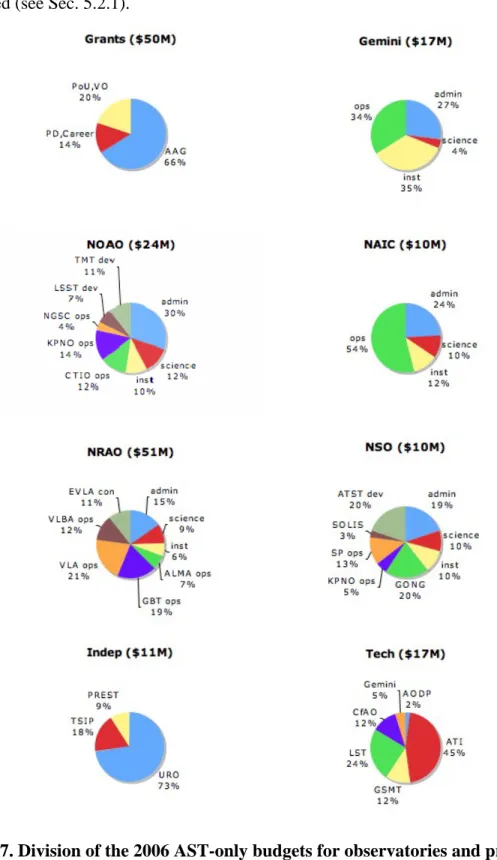
NSF is the major, federal steward for US ground-based astronomy.5 The total 2006 AST budget, (excluding MREFC funding and $8M in NSF-wide initiatives) is $191M, an increase of roughly two thirds over two decades (Fig. 1).6 Expenditures are dominated by the support of five national observatories:
• The Gemini Observatory (Gemini) is operated on behalf of the International Gemini Partnership by the Association of Universities for Research in Astronomy, Inc.
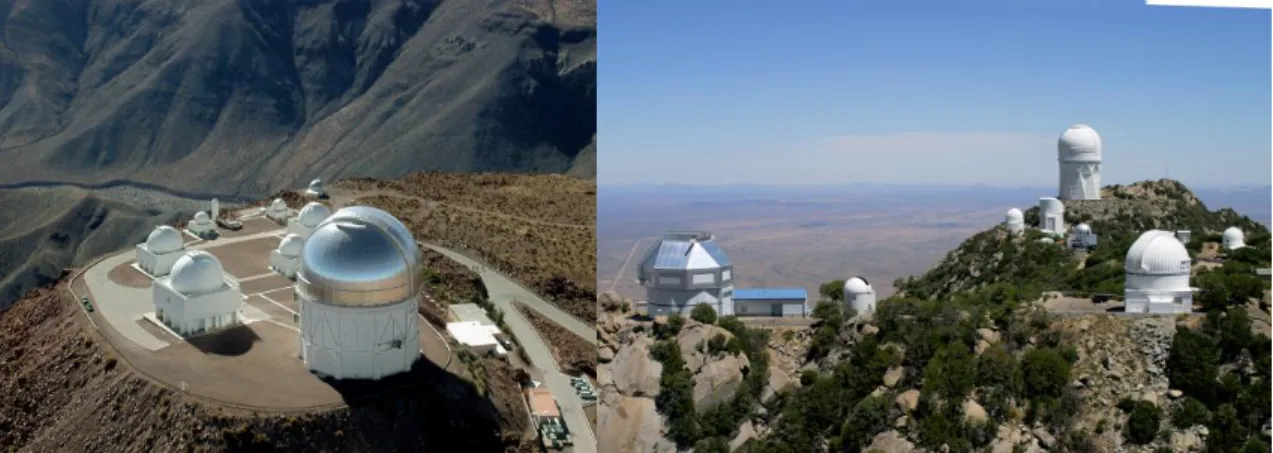
(AURA) and supports two 8m optical telescopes, one in each hemisphere. The current AST operations and development budget is $17M, half of the total Gemini budget. • The National Optical Astronomy Observatory (NOAO) is also managed by AURA and operates several telescopes on Cerro Tololo and Cerro Pachon in the southern hemisphere and on Kitt Peak in the north, and also serves as the portal to Gemini for U.S. observers. Its current budget is $24M.
• The National Astronomy and Ionosphere Center (NAIC) is operated by Cornell University and runs the Arecibo Observatory. Its current budget is $12M comprising $10M from NSF/AST and $2M from NSF/Division of Atmospheric Sciences (ATM). • The National Radio Astronomy Observatory (NRAO) is managed by Associated
Universities, Inc. (AUI) and operates the Very Large Array (VLA), the Very Long Baseline Array (VLBA), and the Green Bank Telescope (GBT) and has started to provide operating funds for the Atacama Large Millimeter Array (ALMA). Its current budget is $51M, including ALMA operations but excluding ALMA construction, which has a 2006 budget of $49M from MREFC.
• The National Solar Observatory (NSO) is also managed by AURA. It operates telescopes on Kitt Peak and Sacramento Peak and six worldwide Global Oscillations Network Group (GONG) stations. Its AST budget is $10M.
In addition, NSF supports research grants ($50M), comprising $33M for the Astronomy and Astrophysics Research Grants Program (AAG), $7M for the CAREER and
postdoctoral grants programs and $10M associated with the Physics of the Universe (PoU), the Virtual Observatory (VO) and other targeted programs. The budget for technology development is $17M, distributed over several programs including $8M for
5
Astronomy will be taken to include solar astronomy and those parts of planetary science that fall under AST throughout this report.
6
All costs quoted in this report are rounded and inflated where necessary to the nearest $M(2006). All budgets are annual for 2006 and include only AST contributions unless otherwise stated.
the Advanced Technologies and Instrumentation Program (ATI). Finally, grants to independent observatories total $11M, including $8M for the University Radio Observatory program (URO) and $3M to OIR observatories through the Telescope System Instrumentation Program (TSIP) and the Program for Research and Education with Small Telescopes (PREST).
Figure 1. Distribution of AST funds in 1987 and 2006. “Grants” includes Career, Postdoc, PoU and VO programs. “Tech” includes AODP, ATI, CfAO programs as well as support for technology development for Gemini, GSMT and LST. “Indep” denotes support of independent radio observatories through the URO program and optical observatories through TSIP and PREST. The 1987 budget excludes VLBA construction and the 2006 budget excludes ALMA construction.
The distribution between grants, technology, OIR, RMS and solar components has remained constant to one or two percent over the past two decades, if one allows for the transfer of OIR technology development from the NOAO budget to separate programs. Ground-based astronomy is also supported through collaborative AST ventures involving NSF-Physics, National Aeronautics and Space Administration (NASA) and Department of Energy (DOE) as well as the Smithsonian Institution, US Air Force (USAF), US Naval Observatory (USNO), NASA, National Research Lab (NRL) and Defense Advanced Research Projects Agency (DARPA) for specific programs. In addition, some ground-based astronomy, specifically involving gravitational radiation, neutrinos and Very High Energy gamma rays is supported by NSF-Physics and is not considered here.
1.3 Proposed Program
Strategic planning in astronomy has been guided strongly by a sequence of five decadal surveys. The most recent decadal survey, AANM, recommended realization of the following new initiatives in ground-based astronomy:
• Major Projects
1. A Giant Segmented Mirror Telescope (GSMT) 2. An Expansion to the VLA (EVLA)
3. A Large Synoptic Survey Telescope (LSST)7 • Moderate Projects
1. The Telescope System Instrumentation Program (TSIP) 2. An Advanced Technology Solar Telescope (ATST)
3. Technology development for the Square Kilometer Array (SKA) 4. A Combined Array for Research in Millimeter Astronomy (CARMA) 5. A Very Energetic Radiation Imaging Telescope Array System (VERITAS) 6. A Frequency Agile Solar Radio Telescope (FASR)
7. A South Pole Submillimeter wave Telescope (SPST)8 • Small Projects
1. The National Virtual Observatory. This is now known as the Virtual Observatory (VO), reflecting its international nature.
2. The Laboratory Astrophysics Program 3. A LOw Frequency ARray (LOFAR)
4. A Theoretical Astrophysics Postdoctoral Fellowship Program.
5. An expansion of the Synoptic Optical Long-term Investigations of the Sun (SOLIS).
These recommendations were ranked within size category but not between categories. The decadal study process, heretofore, has only set priorities for new facilities and programs, with limited consideration given to operating costs and generally no consideration given to existing facilities.
AANM also recommended the SR process9 and strongly advocated adequate funding of the unrestricted grants program.10
Following AANM and in the context of dramatic scientific developments at the beginning of the 21st century, CQC addressed science at the interface between physics and astronomy. Inter-agency collaboration on major projects was also strongly endorsed. The two unranked CQC recommendations relevant to AST are:
• To measure the polarization of microwave background fluctuations in order to study a putative inflationary epoch in the early universe.
• To construct LSST7 in order to study dark energy.
A 2005 NRC “letter report” (Chair, Meg Urry), affirmed the priorities of AANM and CQC.
Also relevant is the most recent decadal survey for planetary science,
7
Subsequently generalized to a Large Survey Telescope (LST) 8
Subsequently call the South Pole Telescope (SPT) 9
“ Cross disciplinary competitive reviews should be held about every 5 years for all NSF astronomy facilities. In these reviews, it should be standard policy to set priorities and consider possible closure or privatization.”
10
“…new initiatives should not be undertaken at the expense of the unrestricted grants program.”
• New Frontiers in the Solar Systems An Integrated Exploration Strategy (NFSS, 2003. Chair, Mike Belton),
which supported the LST, and that for solar physics,
• The Sun to the Earth - and Beyond: A Decadal Research Strategy in Solar and Space Physics (SEB, 2002. Chair, Lou Lanzerotti)
which endorsed ATST and FASR and discussed the synergy between ground- and space-based observatories.
In addition to these four NRC reports, there have been two recent studies requested by AST and commissioned by AURA and AUI discussing Optical-InfraRed (OIR) and Radio-Millimeter-Submillimeter (RMS) astronomy respectively.
• Strategies for Evolution of US Optical/Infrared Facilities (SEUOIF, 2005. Chair, Catherine Pilachowski).
This report recommended that NSF support GSMT technology and that a choice for federal investment be made in 2008 between a Thirty Meter Telescope option (TMT) and a 22m alternative, the Giant Magellan Telescope (GMT). In addition, two possible implementations of the LST, the single aperture LSST and the 4-aperture Pan-STARRS (PS4) alternative, were identified and it was also expected that a choice would be made by NSF over the next several years. The report also reaffirmed the long-term value of the VO.
• Report of the Radio, Millimeter and Submillimeter Planning Group (RMSPG, 2005. Chair, Martha Haynes).
This report advocated support of Cosmic Microwave Background (CMB) research, ALMA, CARMA, the second phase of EVLA, GBT, Arecibo, VLBA, SKA, the independent radio observatories, and low frequency arrays to study the epoch of re-ionization.
Out of the above proposed projects, EVLA (Phase 1), SOLIS, TSIP, CARMA, and VO are underway. VERITAS is also under construction but awaits permission to move onto Kitt Peak. While LOFAR is being constructed in the Netherlands, without US
participation, US groups are independently pursuing parallel goals with several smaller projects. A South Pole Telescope for microwave background observations is supported by NSF Office of Polar Programs. GSMT and LST development have also been
supported.
1.4 Senior Review Challenges
Carrying out a SR, in order to recommend an optimal balance between the current and the proposed program, is complicated because many facilities are operated collaboratively. Some collaborations were established under binding international agreements, like Gemini and ALMA. Other facilities are US-owned but have a large fraction of foreign Principal Investigators owing to their unique capabilities and the US “Open Skies” policy – the allocation of telescope observing time based not on citizenship or residence but purely on scientific merit. Other facilities, including independent radio observatories, are associated with US universities. In addition, there are observatories constructed with
funds from the Keck Foundation and Carnegie Institution and operated by university and other private consortia, where support for the development of new instrumentation is provided by AST under the TSIP program, in exchange for community-competed telescope time. The ATI and Major Research Instrumentation (MRI) programs also support technology and instrument development at independent observatories and, here, the return of observing time is not a requirement. Finally, there are also collaborations between different agencies. In each of these cases, several stakeholders may have to agree to modify existing agreements or to align objectives and schedules for future initiatives.
An additional factor that will recur often in this report is the high cost of running current and proposed facilities. Indeed ongoing costs are the single, largest challenge to the future of observational astronomy. Their importance was spelled out in AANM, but they have been included unevenly in subsequent strategic planning. A common rule of thumb is that the ongoing, annual running cost of a facility is ten percent of the capital cost in fixed year dollars. In AANM, it is proposed that this ten percent comprises seven percent for operations and three percent for new instrumentation and minor facility upgrades. In addition, it is argued that three (five) percent of capital costs must be set aside to support the science from large (moderate) facilities for each of the first five years of operation, with a smaller allowance in subsequent years. The cost of running facilities in other countries appears to be at least ten percent of capital cost, after correcting for accounting differences.
Actual performance figures are instructive. The current total running cost of Gemini is 17 percent of the capital cost ($200M in total)11 and it is proposed to increase this fraction to 22 percent by the end of the decade, in order to construct new instruments. This is over twice the rule of thumb. By contrast, the perceived cost of running independent
observatories is usually less than that of running similar national facilities for several reasons including the relative stability of the user community, the lower level of support services deemed acceptable and the hidden subsidy of faculty and science staff salaries. For example, the two Keck telescopes, which had capital costs of $240M, and the two Magellan telescopes, with capital costs of $85M, both have running cost to capital cost ratios of roughly eight percent which are much smaller.
Turning to radio telescopes, the 26 year old VLA is the most economical facility by these criteria as its annual12 running costs are $11M or three percent13 of its inflated cost of $360M. This partly reflects its age, the delay in upgrading and the fact that it involves many similar telescopes, which can introduce economies of scale and may make operations relatively cheaper. By contrast the operations costs of the GBT are $10M or 12 percent of the construction costs of $85M.
Whichever rule is adopted, the integrated operations burden is large because most observatories have long lives. The VLA remains the premier radio interferometer in the world and will be about 40 years old when the SKA might be completed. ALMA is already planned as a 40 year observatory. Applying the ten percent rule over forty years
11
AST paid for half the capital cost and is responsible for half the running cost. 12
See Sec. 4 for an explanation. 13
to a facility quintuples the life-cycle cost. In a steady state, with several telescopes in simultaneous operation, the running costs dominate the capital costs. Furthermore, while capital costs may be derived from private benefactors, the running costs are historically of less interest to private patrons, so they are likely to fall upon the federal agencies. Roughly two thirds of the AST budget ($130M) is already spent supporting existing facilities. Looking ahead, funds for additional running costs will have to be found. The current estimate of the US share of ALMA annual operations is $30M, including some provision for upgrading. This is only six percent of the US share of the capital costs ($500M) and well below the ten percent rule for running costs. ATST is projected to cost NSF $145M and the operating costs to AST are estimated as $10M. Although, this is consistent with the seven percent operations rule, there is no provision here for upgrading the instrumentation which suggests that ATST support could also be under-estimated. The larger version of GSMT, TMT, is advertised to cost $750M. If NSF were to have to pay all of the operating and new instrumentation costs, this would amount to $75M per year, adopting the ten percent rule or about $150M per year, scaling from Gemini. A similar rule applied to a one third share of SKA adds a further $35M per year. LSST, the larger of the two LST choices is estimated to cost $300M in total and AST would have to find $14M per year for its share of operations, assuming the partners fund their share. Although each of these estimates deserves scrutiny and could change following detailed costing, the sum of the annual operating and upgrading costs of the projected and desired new facilities probably lies in the $150-250M range. To this should be added the cost of carrying out the science, roughly a further $50-70M. The AST budget would have to increase by more than a factor of 2 to 2.5 to absorb these commitments. Addressing the challenge of operating future facilities does not lie within the SR charge. However, it has framed the discussion leading to the recommendations below regarding current facilities. These considerations motivate AST and challenge the astronomical community to close existing facilities. However, savings are generally not realized as soon as a facility is scheduled for closure. Some telescopes will be very hard to dismantle and many observatories were constructed under agreements that the land will be returned to its natural state, involving expensive environmental and cultural studies followed by implementation. Additional costs involve staff severance and relocation, which are hard to estimate, but may be considerable. In many cases, the greatest savings to AST and the best service to the astronomical community will be found in keeping facilities operating at higher efficiency and with external contributions.
1.5 This Report
In the following section we present a brief summary of the scientific landscape of the AST program that is intended to provide a context for the various observatory programs and the choices that are being recommended. The charge to the SR requested that it define and describe the principles that underlie its recommendations. These are discussed in Sec. 3. The current program is summarized in Sec. 4. Those elements of the existing program that are recommended to continue at roughly present levels over the next five years are called the “Base Program” and are discussed in Sec. 5, while those for which AST funding is recommended to change significantly are part of the “Transition Program” which is covered in Sec. 6. It is not within the purview of the SR to make
recommendations on the future program. Nevertheless, the committee had to understand the options under consideration in order to make its recommendations and these
deliberations led to some Findings, which are presented in Sec. 7.
1.6 Acknowledgments
This report relied heavily on several sources of input. The Directors of the five observatory managements received requests from NSF for detailed information
concerning the scientific rationales for each element of the observatory operation along with defensible costs associated with both continued operation and closure. They each responded with major publications that have been widely consulted not just by the SR, but also by the user community.14 They also each met twice with the committee.15 These meetings were all frank and constructive. A subsequent request for supplementary data issued by the committee in November was promptly addressed. The US astronomical community also rose to the challenge of providing input to the SR over the course of seven “town meetings”16 and by posting written opinions to the Senior Review website. Several hundred thoughtful communications have been heard and read. The SR also acknowledges the contribution of Virginia Trimble who shared useful data on bibliographic metrics that helped the committee to understand better the value and shortcomings of this approach to comparing facilities. A draft version of this report was carefully reviewed by five anonymous readers who all made constructive suggestions to improve its presentation. Finally, this review has required an immense amount of work by the AST staff, notably Wayne Van Citters and Eileen Friel, who have been extremely patient as the committee struggled to understand a very complicated network of research dependencies and obligations.
This report is the sole responsibility of the SR. However, it would have been a much weaker document without the assistance of all the above to whom the committee offers its sincere thanks.
14
Focus on the Future: Transforming the U.S. Ground-based OR/IR System, Report to the NSF Senior Review, July 29, 2005
(http://www.noao.edu/dir/seniorreview/).
National Solar Observatory, Response to the National Science Foundation, Division of Astronomical Sciences, Review of Senior Facilities, August 2005
(http://www.aura-astronomy.org/nv/NSO%20Senior%20Review.pdf).
Gemini Observatory Report to the NSF-AST Senior Review, submitted to the NSF by AURA, July 31, 2005
(http://www.aura-astronomy.org/nv/NSF_Gemini_Senior_Review_Rpt.pdf). National Radio Astronomy Observatory, 2005 NSF Senior Review
(http://www.nrao.edu/pr/NewsColumn/SeniorReview/seniorreview.shtml).
NAIC Science in the Twenty-First Century: Report to the NSF Senior Review, July 2005 (http://www.naic.edu/~astro/NSF_Senior_Review.shtml).
15
A record of committee meetings is given in Appendix D. 16
2. The Scientific Landscape
This is a time of exciting and ongoing discovery in astronomy. The story that unfolds below could not have been written with the same degree of confidence and authority ten years ago. The scientific impact from remarkable recent developments in technology and advances in astronomical capability has now placed astrophysics and cosmology on a secure physics-based foundation. Many of these advances, as indicated below, have been made possible using facilities and researchers supported by NSF.17
2.1 The Revolution in Technology
Progress in astronomy has been fueled by the application of modern technology to the ancient craft of observing the sky. Today, telescopes image cosmic sources across the entire electromagnetic spectrum; from 10-meter wavelength radio waves to 100 zeptometer (10-19m) gamma rays. Indeed, exploration of the universe is no longer
confined to the electromagnetic spectrum. Cosmic neutrinos and relativistic protons with macroscopic energies almost a billion times those accelerated at Fermilab have already been detected and searches are underway for dark matter particles and gravitational radiation. NSF has been at the cutting edge, supporting research at each of these frontiers. Within NSF, AST has been primarily engaged in supporting telescopes that observe the electromagnetic spectrum at radio, millimeter, submillimeter, near-infrared and optical wavelengths.
The size of telescopes has also increased substantially; the total collecting area of optical telescopes around the world, with apertures as large as 10 meters, has more than tripled in the past 15 years. Plans are underway to construct optical telescopes with diameters of 30m, or even larger. At radio wavelengths, collecting area of single telescopes is still dominated by Arecibo (roughly 70,000m2) and, for interferometers, by the VLA (roughly 104m2).18 ALMA, presently being constructed, will have a collecting area of roughly 6000m.2 Larger aperture means improved sensitivity to fainter objects and increased clarity of images. However, it is not just the size of a telescope that matters; the gain in efficiency that results from performing many functions simultaneously and the ability to measure spectra and monitor rapid variation are also important figures of merit.
Many new techniques are under development. Advances in adaptive optics (AO), such as those being made using the Gemini telescopes, hold promise to transform the next
generation of large aperture, ground-based, optical telescopes by correcting for the time-dependent distortion caused by the Earth’s atmosphere. These techniques achieve impressive angular resolution, routinely better than 50 milliarcseconds in the near infrared, matching the resolution obtained by the VLA and “radio adaptive optics” as pioneered by NRAO. Long baseline interferometry at millimeter wavelengths, using the VLBA, can achieve a thousand times better angular resolution. In addition, advances in
17
The five observatory submissions to the SR contain excellent and more extensive scientific narratives.
18
The Indian “Giant Metre-Wave Radio Telescope” has three times the collecting area of the VLA but cannot observe above a frequency of 2 GHz.
spectroscopic methods and instrumentation have increased the scientific reach of today’s telescopes immensely by improving spectral precision, efficiency, and multiplex
capability.
Detectors are also improving. Gone are the photographic plates of old; today’s telescopes are outfitted with digital electronic array detectors that increase a hundredfold the
sensitivity and efficiency of optical and infrared light detection (Fig 2a). Superconducting Tunnel Junction Photodetectors introduce the capability to measure a spectrum on a single pixel. At radio and millimeter wavelengths, the development of advanced
bolometric and Microwave Monolithic Integrated Circuits promise analogous capabilities and gains in performance.
Figure 2. (a) On the left, large format CCD cameras in the future will supercede modest sized cameras of the past such as this 64 Megapixel NOAO optical camera by two to three orders of magnitude allowing rapid and efficient surveying of the sky and deep integrations to reveal distant parts of the universe. The number of pixels in “cameras” at millimeter and infrared wavelengths are similarly
undergoing rapid development and will open new opportunities. [Image credit: NOAO/AURA/NSF] (b) Large computer clusters such as the one shown on the right and deployed at the NSF National Center for Supercomputing at the University of Illinois are used for astrophysical processes and cosmology as well as for analysis of large data sets. NSF is supporting the development of the VO to provide effective and efficient access to the digital archives of astronomical images and spectra. [Image credit: NCSA/University of Illinois]
Information processing, coupled with modern digital electronics, allows automation in many aspects of data acquisition, telescope operation and the ability to collect very large data sets with ease and skill. The internet and modern computation capabilities place the data and analysis tools for these large data sets at the fingertips of researchers, students and amateur astronomers around the world (Fig. 2b). These advances have enabled wide field telescopes to conduct semi-automated surveys of large fractions of the visible sky, revealing the structures of the universe on the grandest scales and detecting transient events. There have been parallel developments in space astronomy. Today, observations
from the ground and from space are regarded as highly complementary and are often combined to reveal far deeper insights than can be obtained from one single wavelength or technique.
All of the above advances have revolutionized the way scientists approach astronomy in the modern era. Yet, astronomy remains a technologically young field in the sense that further great gains in sensitivity, angular resolution, spectral resolution, time resolution, and accuracy are achievable and affordable. As a consequence, discovery space will continue to be opened up well beyond the horizon of this report.
2.2 The New Cosmos
2.2.1 Cosmology
This multiplication in the number of windows on the universe has allowed astronomers and physicists to uncover deep and fundamental truths about the nature of the universe and to observe previously unimagined cosmic phenomena. Armed with a wealth of data gathered using these tools, astronomers have synthesized a standard, cosmological model. We now understand that the universe began expanding 13.7 billion years ago and that the rate of expansion is increasing due to an unidentified “dark energy,” which accounts for 74 percent of the matter-energy of the universe. In addition, there is a second unknown component called “dark matter” which accounts for 22 percent of the universe and whose gravitational effects are evident in studies of galaxy dynamics (pioneered using NOAO telescopes). Dark matter and energy do not fit within the standard model of elementary particle physics and are suspected to comprise new fundamental particles and fields whose detection has eluded all modern particle accelerator experiments. The next generation of particle accelerators may reveal the secrets of the elementary building blocks of nature and the presently unknown physics that lies beyond the standard model. The elucidation of these properties and principles will, in turn, enhance our understanding of the earliest moments of the universe. Ordinary matter, the matter that forms luminous stars, planets, interstellar gas and living beings, makes up the remaining four percent of the universe. One of the great surprises in astronomy has been the revelation that stars account for only about one per cent of the mass of the universe they were once thought to dominate.
Cosmologists are concerned with more than just measuring mass, length, and time. They are also historians who have pieced together a remarkable story of the expanding
universe from the earliest moments of the big bang to the present day. It is conjectured that, soon after the big bang, the universe underwent a period of rapid expansion, called inflation, that allowed our present universe to reach its enormous size. As the universe continued to expand and cool, elementary particles were somehow left over to form the ordinary matter of today. By the time the universe was a few minutes old, it was mostly in the form of hydrogen, helium, radiation, and inert particles called neutrinos. This is the epoch of nucleosynthesis and it is understood well. The universe was quite opaque at this time and remained so until it was almost four hundred thousand years old when it quickly became transparent. This is the epoch of recombination and its radiation, now reaching us, we call the microwave background radiation. Again, we have a good understanding of this epoch. Exquisitely precise measurements of tiny fluctuations in this background
radiation, made from telescopes on the ground and in space, describe the fluctuations in the distribution of dark matter in the early universe.
Figure 3. This diagram shows a computer simulation of the level of emission of the 21cm wavelength spin flip transition of hydrogen in a slice (vertical axis) of the early universe during the interval when first stars and galaxies form from 300 to 600 million years after the big bang, corresponding to redshifts (zobs) from 15 to 9. The
emission level in milliKelvins is given by logarithmic scale on the right. Probing this epoch of the first stars for this quantum emission and a number of other approaches is a frontier research topic.[Image credit: Mellema 2006.]
When the universe was perhaps a few hundred million years old, at the end of an era called the dark ages, dark matter concentrations had grown enough under the influence of gravity to trap ordinary matter to form the very first stars. These first generation stars produced ultraviolet radiation that converted the atoms of hydrogen back into a plasma of protons and electrons. The details of this epoch of (re-)ionization remain poorly
understood (Fig. 3). The first galaxies formed around this time and quickly developed massive black holes in their nuclei. These black holes accreted gaseous fuel which radiated more ultraviolet radiation as quasars - the most powerful type of active galactic nucleus (henceforth AGN). Following reionization, more and more of the plasma was converted into the stars and galaxies we observe today.
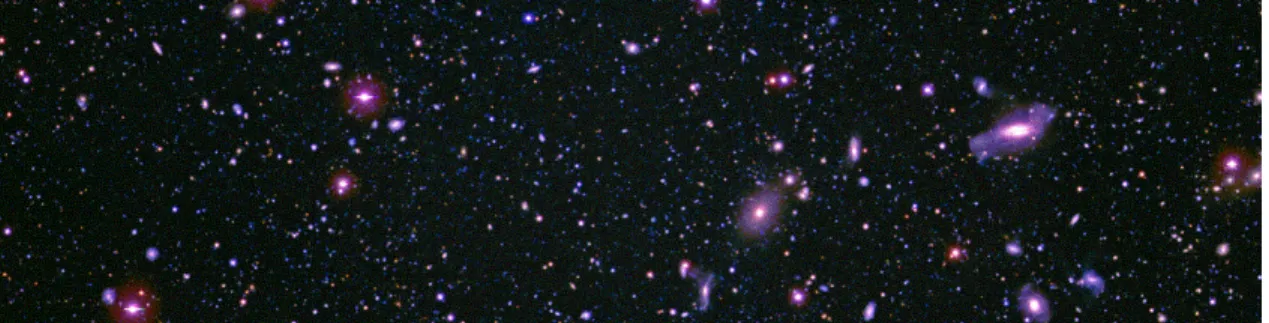
Figure 4. The realm of galaxies from a deep survey of galaxies across a wide angular field with the NOAO Mayall 4m telescope. Imaging and redshift surveys allow astronomers to chart the evolution of galaxies through cosmic time. [Image credit: B.Jannuzi, A.Dey, NDWFS team/NOAO/AURA/NSF]
The structure of the universe is also revealed in the distribution of galaxies. Large optical and radio surveys of the sky (led by NOAO and NRAO, respectively), have shown that galaxies are not randomly distributed; instead, most are found in groups and clusters which are part of larger-scale structures known as sheets and filaments, separated by giant voids (Fig. 4). Remarkably, it is possible to relate this structure in the modern universe directly to the microwave background fluctuations from the ancient universe.
Ultimately, it is hoped to relate polarization measurements of the fluctuations back to their quantum mechanical seeds formed during the epoch of inflation. This standard model of the universe provides the context for all other astronomical research.
2.2.2 Stars and Planets
The sun is considered a rather ordinary star in the Galaxy. It is important to humanity, of course, because it creates a habitable zone in which life can flourish, at least on Earth. The sun is a magnetically active star with a 22-year cycle modulated by its interior dynamo. The sun's magnetically active surface heats its corona to millions of degrees and powers an outflowing wind of energetic particles (Fig. 5a). Space “weather,” a direct consequence of the magnetic behavior of the sun, influences the heliosphere and the planets, including life on Earth. Solar flares and coronal mass ejections, in particular, interfere with human spaceflight, communications, power transmission grids, and navigation systems. A major objective of NSO’s program is to understand and some day predict, the sun’s effects. Consequently, solar physicists monitor the sun's interior properties and surface magnetic regions (such as sunspots) throughout the magnetic cycle.
Beyond these pragmatic concerns, the sun provides an astrophysical laboratory to study how plasma and magnetic fields behave under extreme conditions, as well as a proving ground for the physics that underlies much of stellar astronomy. For example, detailed measurements of naturally occuring seismic oscillations in the sun led to the validation of the standard model of stellar interior structure (Fig. 5b). Yet, terrestrial observations failed to record the predicted flux of the elusive, subatomic particles called neutrinos expected from nuclear burning in the sun's core. The resolution of the disagreement was that these neutrinos come in three types with finite mass and can change their type. These are profound results for physics with implications for cosmology and an important
example of interconnectivity in science.
Stars are the powerhouses and chemical factories of the Galaxy. Like people, stars are born, they mature and they die. One of the crowning achievements of 20th century science was the development of a theory that accurately accounts for stellar structure and evolution as well as the formation of the chemical elements. According to this theory, the subsequent life history of a star is essentially determined by its birth mass. Consequently, unraveling the mystery of star formation is critical to understanding the origin and
evolution of all stellar systems, including galaxies. Stars provide the energy necessary for the development of life and for driving biological evolution, which has occurred on at least one planetary system accompanying a star. Understanding star formation is
therefore a fundamental step toward understanding the origin of both planets and life.
Figure 5. (a) On the left, the dark and light regions of the solar image delineate opposing polarities of the magnetic field on the surface of the sun in this NSO SOLIS magnetogram. Nearby opposing magnetic fields annihilate each other and lead to dramatic solar flares that produce energetic particles that can severely perturb satellites and terrestrial communications. (b) On the right is an image of a solar oscillation mode analyzed using the GONG telescope. (Blue denotes rising motion and red falling motion.) Modal analysis of these data provides solar physicists with direct measures of the interior temperature, density, energy generation, and heat transfer properties of the sun. [Image credit:
NSO/AURA/NSF]
Most star formation appears to take place in Giant Molecular Clouds, the largest and coldest objects in the Galaxy. As they are opaque to visible light, they are best studied at infrared and millimeter wavelengths. Techniques developed for investigating these clouds provide a means of studying both star formation in distant galaxies and the origin of galaxies. Star formation studies are also relevant to the earliest cosmological epochs when the very first stars were formed in nascent galaxies.
Although planetary science is popularly associated with space missions, there is a long and distinguished tradition of fundamental discovery that have been with ground-based telescopes supported by AST. One of Arecibo’s main accomplishments has been to use active radar mapping to measure surface topographies and rotation rates of Mercury, Venus and the Moon. The Gemini telescope has recently been able to study the
meteorology of Saturn’s largest moon, Titan. However, the discovery that has attracted the most recent attention is of large numbers of dwarf planets that can be larger than Pluto.
Another recent and exciting discovery of recent years has been of nearly 200 extra-solar planets orbiting nearby stars similar to our sun. These planets have a range of properties quite different from the planets in our solar system. The challenge now is to image bloated, newborn planets and to observe their dynamical interactions with the disks of
gas, dust and rocks out of which they grow. These studies will help us understand how our solar system came into being.
All of this research is relevant to the growing field of astrobiology, which has the primary goal of understanding the nature and incidence of life in the universe. Like the big
questions of cosmology, the ancient philosophical questions of “What is life?” “Where did humans come from?” and “Are we alone?” are proving amenable to scientific study and starting to furnish some secure answers.
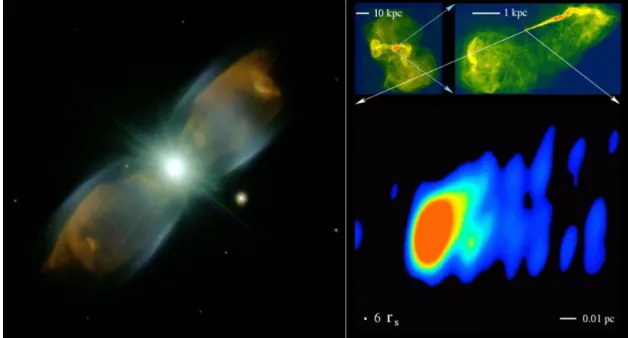
Figure 6. (a) On the left is a multicolor image of the planetary nebula M2-9 made using the adaptive optics system on Gemini North. This image reveals remarkable details in the dynamic gas outflows from a dying star. It is thought that our sun might meet a similar fate in 4-5 billion years. Understanding the death of stars of different masses is an important goal for both stellar evolution studies and as tools for probing the distant universe. [Image credit: Gemini Observatory/Travis Rector, U. Alaska, Anchorage] (b) On the right are radio images of a nearby galaxy, M87, containing a three billion solar mass black hole in its nucleus. This black hole and its surrounding disk of gas create a pair of outflowing jets. The lower millimeter wave image of the innermost portion of the jets was made using the VLBA; the VLA was used for the upper two radio images, on larger scale. The jets in M87 are observed at infrared, optical, X-ray, and TeV gamma ray energies and their nature can only be understood by combining observations throughout the electromagnetic spectrum. [Image courtesy of NRAO/AUI and W. Junor, J. Biretta and M. Livio.]
Turning from the origins of stars and planets to their endpoints, we know that stars evolve, swelling to form “giants” which engulf most of their planets. Eventually the most massive stars die in supernova explosions, which form neutron stars and black holes. Neutron stars are only ten km in radius and can spin rapidly - over 600 rotations per second. These pulsars (which are extensively studied using the Arecibo and Green Bank telescopes), have provided wonderful tools for testing fundamental physics and for probing interstellar space. (Occasionally, they come with planets.) A minority of
supernova explosions, perhaps those that form black holes, create gamma ray bursts - brilliant flashes of gamma rays of duration from seconds to minutes that can be seen across the universe. Like black holes, neutron stars can be extremely luminous when they accrete gas from stellar companions.
Less massive stars evolve more slowly and less dramatically into white dwarfs, shedding much of their mass as spectacular nebulae (Fig. 6a). Sometimes these white dwarfs blow up completely, in a different type of supernova explosion when they accrete gas from companion stars. (These white dwarf supernovae have turned out to be useful tools for measuring cosmological distance, a technique pioneered at CTIO, and provided the first strong evidence for dark energy.) All supernova explosions form expanding shells of gas that heat the interstellar gas and disseminate heavy elements throughout the Galaxy. These elements provide raw material for the next generation of stars, planets, and ultimately life. Supernova remnants are also the site of acceleration of most cosmic ray particles; cosmic rays that have an impact on life by inducing genetic mutations.
2.2.3 Galaxies and their Nuclei
The great advances in our understanding of the structural and evolutionary properties of stars form a basis for research in the formation and evolution of galaxies. Galaxy shapes and mass distributions are related to their formation conditions through hierarchical mergers and infall of gas. Despite great advances, a comprehensive understanding of galactic evolution over the lifetime of the universe remains a major challenge. Huge surveys of galaxies in the nearby universe are furnishing statistical information on the properties of local galaxies. The next step is to extend these surveys to galaxies at great distances that we see at a time when the universe was much younger. In this way we can reconstruct the empirical history of galaxy formation and evolution. We can begin to understand how much structure in the universe, particularly on small scales, is associated with clumps of dark matter from which most of the luminous gas has been expelled by supernova explosions, rendering the clump invisible. This research has long been carried out using NOAO telescopes and is becoming a priority for Gemini.
A new element in the story of galaxy evolution has been introduced in recent years with the discovery that most normal galaxies, including our own, harbor in their nuclei
massive black holes, with masses ranging from millions to billions of solar masses. Most black holes are dormant now and are best studied by their gravitational effects on the surrounding stars. However, in the past, many were AGN when they were supplied with gaseous fuel. This has two observable consequences. The first is that as the gas spirals inward onto the central black hole, it releases some of its gravitational energy in the form of radiation. This process is nearly a hundred times more efficient than the nuclear reactions that occur within stars. The most powerful black holes, called quasars, outshine the stars of their host galaxies by factors of many thousands.
The second consequence is that many active black holes generate powerful outflows or winds and pairs of jets traveling with speeds close to that of light, as exhibited by the VLA and VLBA (Fig. 6b). These jets can inflate giant double radio sources outside the host galaxy. It is now clear that these outflows are intimately involved in galaxy
evolution and formation. They provide a natural feedback mechanism, which moderates the rate of star formation and provides a major heat source for the circumgalactic gas.
The environmental impact that evolving stars have on the interstellar medium is mirrored by the impact that evolving galaxies have on the intergalactic medium. As VLA
observations have shown, these effects are particularly apparent inside the giant clusters, where thousands of galaxies are bound by an enormous concentration of dark matter and hot, X-ray-emitting gas.
2.2.4 AST Role
As this brief sketch makes clear, AST has had a major role in the rapid growth in our understanding of the cosmos. An important feature of this research is its
interconnectivity. Cosmic objects do not form and evolve in isolation. Consequently, they are rarely observed and considered in isolation or at one wavelength. To give one out of countless examples, astronomers today find and study the properties of rich clusters of galaxies using deep optical and radio galaxy surveys, x-ray observations, measurements of local reductions in the microwave background, studies of gravitational lensing and optical spectroscopy. The results of these investigations impact our understanding of the properties of dark matter and dark energy.
Through its support of telescopes observing throughout the electromagnetic spectrum and a highly competitive grants program, AST has actively fostered multi-wavelength
astronomy. It has also supported a very productive theory program that has uncovered general principles and unsuspected connections between disparate sets of observations.
2.3 Societal Impact
America’s failure in technical and scientific education at early levels is now universally recognized and is regarded as a national emergency that threatens the future prosperity and security of the whole country. This is the theme that underpins the recent American Competitiveness Initiative.19 Astronomy is in a unique position among the hard sciences to help recruit the next generation for the nation’s science and technology workforce as it is highly visual, rapidly moving, and generates countless news articles, popular books, and TV documentaries. Roughly a quarter of a million undergraduates per year take an astronomy course in the US. Fortunately, astronomy fosters aprofessional culture that respects and encourages outreach and formal and informal education at all levels, with participants ranging from practicing researchers to K-1420 teachers to amateur
astronomers.21 Indeed, these activities form an important part of the basis for any federal support of astronomical research.
In addition to the scientific connections with the disciplines of physics, chemistry, and biology outlined above, astronomy has also had a direct impact on the Nation’s technical infrastructure. This has occurred through the development of devices (e.g. sensitive detectors for all astronomical wavebands) and techniques (e.g. adaptive optics) that have found broad applicability. Astronomers continue to challenge industry to address
problems of some generality in a high visibility environment. Many PhD astronomers
19
See http://www.whitehouse.gov/stateoftheunion/2006/aci/
20
K-14 includes two years of college before specialization. 21 Additional information on the workforce may be found at
seek employment in high technology and computing industries. Their training in problem solving at the cutting edge of physical understanding is a highly sought-after attribute by industrial, commercial, and financial employers. In these ways, astronomy has stimulated advances in imaging, data analysis, data mining, communications technology, and
3. Observations and Principles
The committee was charged to develop its recommendations “based on well-understood criteria established by the committee and articulated to the community.” After extensive committee discussion and consultation with the astronomical community and the
management of the national observatories, the SR arrived at the following fundamental observations and principles.
3.1 Optimizing the Science
3.1.1 Observations
The SR was confronted with several choices between supporting existing facilities that continue to produce excellent science and that enjoy a committed user base, or
developing new facilities with greater capabilities that may become operational in the future. While such transformations seem both necessary and inevitable for progress, they require sacrifices both from individuals and institutions. Astronomical facilities should plan for a natural life cycle ending, in every case, with closure. In an era when the level of aspirations relative to resources is higher than it has ever been, this means that some facilities must be closed long before they no longer produce important research and that some very promising initiatives must be deferred. This choice is faced regularly in peer proposal review. The most important criterion that should govern all such choices is optimization of the overall potential for science and discovery - the net contribution to the breadth and depth of human knowledge.
In an ideal world, any new facility would be constructed rapidly and the user community from any predecessor facility would quickly migrate to it and perform superior science. However, in the real world, new facilities are often very expensive and technically complex, with considerable construction and operating costs, which may involve delays and de-scoping. In the interim, there might be a user community lacking telescope access for many years. This would lead to an interruption in the flow of students and
researchers that could damage science in the long run. Alternatively, the new facility might serve a quite different community.22
Assessing the scientific impact of existing facilities is important but necessarily subjective. The five observatories provided to the committee a wealth of statistical
material on user demographics, efficiency of operations, publications and citations, which informed the SR’s deliberations. However, publication and citation practices vary widely between fields of comparable quality and these statistics, although instructive, should be used with circumspection.
In addition to performance metrics, the other major considerations are facility and operations costs. Given a choice between two facilities producing comparable science, priority presumably would be given to the one that was cheaper to run. Again, much
22
The SR saw no requirement to match new facilities to the subfields or observatories of those slated for closure. It also took the view that the existence of a user community was an insufficient criterion for maintaining or replacing a telescope.
information was provided by the five observatories. The true cost of running a telescope is difficult to assess in the presence of many hidden subsidies and the reality that most employees have multiple responsibilities. In assessing costs, it is also necessary to consider the possibility of enormous divestiture costs for some major facilities that might have to be borne by the rest of the AST science program. The overall impact on science of a closure could be far more than the loss of the facility and its staff.
These observations led to the first principle:
3.1.2 Principle 1
The prime criterion, when making difficult choices between operating existing facilities and investing in new ones, is maximizing the integrated science impact for the overall US financial investment.
3.2 Optimizing the Workforce
3.2.1 Observations
The flood of unprecedented astronomical discovery is not just a consequence of new technology or happenstance. It is a direct reflection of the efforts of over a thousand FTEs23 - scientists, technical staff, administrators and other personnel - who are supported by AST funding in the five observatories and the nearly two thousand scientists and engineers who receive partial support through the grants program.24 Indeed, the dominant item in each observatory budget is staff salaries. Generally, observatory staff members have served their organizations with professionalism, diligence and loyalty, often for decades. They represent a human investment and asset that would be difficult and expensive to replace. However, some transformations must occur and upheavals are unavoidable. As the AST program evolves, some people will relocate, some will learn new jobs, and some will be replaced by new employees bringing new skills to bear on astronomical problems. Fortunately, AST is not facing a genuine budget cut, but a reallocation of resources, and that offers some flexibility. The transition to developing and operating new facilities requires management organizations that can handle relocation of personnel or responsibilities so as to ensure that these facilities are operated efficiently.
A longstanding issue is the need for a scientific staff within the national observatories. On the one hand, there are great benefits to having regular users involved in the day to day, and night to night running of major telescopes and the planning of the next generation facilities. They have a far better appreciation than non-users of the subtle
23
In this estimate, personnel who are partially supported by the NSF are partially counted.
24
A different measure of the size of the astronomical community is the membership of the American Astronomical Society which increased from around 4500 in 1985 to 6500 in 1995 and has remained roughly constant over the past decade, although there has been significant growth in the astrophysics division of the American Physical Society.
choices that have to be made to optimize the scientific use of a facility. In addition, it has long been argued that theorists, who are conspicuously under-represented in national facilities, would bring fresh perspectives to the program. On the other hand, the support of a scientific staff is a significant part of the budget for NOAO and NRAO, while similar observatories, both public and independent, are operated almost exclusively by a
technical staff. The SR recommendations on the scientific staff have to be handled on a case by case basis.
The AST program has supported the education and training of many generations of scientists and engineers at the undergraduate, graduate, and postdoctoral level by providing the facilities and resources for hands-on experience. It has also been at the vanguard of increasing the proportion of women entering physical science. These individuals have gone on to varied successes in academia, observatory support, industry and commerce. The development and operation of next generation astronomical facilities requires concomitant investment in the development of next generation personnel and the retention of key individuals with highly specialized skills and abilities. This leads to our second Principle:
3.2.2 Principle 2
The implementation of the proposed program should consider diverse workforce needs within the Division of Astronomical Sciences-supported observatory system and should provide for the training of the next generation of scientists and engineers. The
observatories should seize opportunities for operating with higher efficiency.
3.3 The Public Dividend
3.3.1 Observations
Astronomy does not belong to astronomers alone. The discoveries from giant telescopes in remote locations belong as much to the public, which has financed them, as they do to the scientific community. They belong, especially, to the young, whose exposure to science and its benefits is enhanced considerably by the dissemination of astronomical results. Astronomers have long recognized the importance of their field in education and public outreach (E/PO). They have also been creative in finding new ways to reach larger communities and have cooperated well with media professionals. Foremost in these efforts have been the E/PO efforts at the five observatories. For example, the Visitor Centers at Arecibo, Green Bank, and the VLA are major attractions and present modern astronomy in an exciting manner to diverse communities. In addition to a popular visitor center at Kitt Peak, NOAO has innovative schemes that allow night-time access to working optical telescopes for members of the public. Gemini has pioneered new approaches to engaging K-14 teachers in their program. The national observatories also have highly effective summer student and dynamic teacher training programs. As outlined in AANM, astronomy has a proud record of attracting under-represented minorities into science. Any facility closures will likely impact the E/PO component of astronomy and this should be considered along with the science impact. Our third Principle is:
3.3.2 Principle 3
Public awareness of astronomical discoveries, the observatories that produce them, and the personnel who are responsible for them, are a critical part of the current AST program that must be maintained.
3.4 Bridging Artificial Divisions
3.4.1 Observations
The historical development of astronomy in the United States was underwritten by federal, state, and significant private funding sources. Consequently, it has suffered many tensions, sometimes resulting in artificial divisions. These tensions often are useful to exploit as they foster concentration on development of the most urgently needed and sophisticated techniques in specific areas. However, they can also lead to inefficiency and missed scientific opportunities. Examples of these divisions include:
• Physics and astronomy. Historically, these fields have drifted apart and then
together again several times. In recent years, as discussed at length in CQC, there has been a strong confluence, especially in cosmology and high-energy astrophysics. This has greatly benefited astronomy through the influx of skilled experimentalists,