ACCOUNTING AND MONEY LAUNDERING
GAJINDRANATH MAHARAJ
A DISSERTATION SUBMITTED TO THE FACULTY OF GRADUATE STUDIES IN PARTIAL FULFILMENT OF THE REQUIREMENTS FOR
THE DEGREE OF DOCTOR OF PHILOSOPHY
Graduate Program in ADMINISTRATION YORK UNIVERSITY TORONTO, ONTARIO March 2019 © Gajindranath Maharaj 2019
ii
Abstract
This study sheds light on some aspects of money laundering and the role of accounting by examining how does money laundering persist and continue to increase or go undetected for extended periods of time given the institutional settings of increasing regulation, increasing monitoring and control systems at financial institutions, and increasing attention by accounting professionals. The study consists of three individual papers all connected to the common theme of accounting and money laundering. This area of research is important for several reasons. First, the problem of money laundering is a global problem, it occurs in both developed and developing countries, and in some cases, money is moved across borders to be laundered. The propagation of money laundering facilities furthers criminal activity. One of the aims of this research program is to help shed light on the mechanisms and practices used to facilitate money laundering, with a focus on accounting techniques. Second, the research seeks to understand what happens within financial institutions, and how their systems and processes, given the tight controls, allow money to be laundered. Third, does anti-money-laundering regulation deter money laundering activity? This research agenda has implications beyond the research community. By understanding how money laundering strategies work, how accounting is implicated, and the impact of regulators and regulation, the research can be used to help prevent and detect money being laundered—which can then lead to a reduction in the crimes that generate the proceeds to be laundered.
iii
Acknowledgments
I would like to first thank the members of my supervisory committee, Dr. Dean Neu, Dr. Jeff Everett and Dr. Kiridaran (Giri) Kanagaretnam who has been a constant support throughout my PhD program. I owe a special thanks to Dean, my supervisor, whose active supervision and mentoring was key to the dissertation being written. Dean’s training, guidance and example have been invaluable. One could not ask for a better supervisor. Additionally, thanks to Linda Thorne, Amin Mawani, and Eileen Fisher whose courses provided me with insights to research and writing which I would not have acquired without their teaching. And thanks to the faculty and staff of the Schulich School of Business. The author gratefully acknowledges the considerable financial support of both the Schulich School of Business and York University over the years of this program.
iv
Contents
Abstract ... ii
Acknowledgments... iii
Table of Contents ...iv
List of Tables ...vi
List of Figures ... vii
1 Introduction ... 1
1.1 General Theory ... 6
1.2 Summary #1 – Illicit Financial Flows, Accounting and Auditing: A View from Practice ... 8
1.3 Summary #2 – Money laundering and Accounting ... 10
1.4 Summary #3 – Facilitating Money laundering: The Role of banks ... 12
1.5 Discussion Summary Points ... 16
2 Illicit Financial Flows, Accounting and Auditing: A View from Practice ... 19
2.1 Abstract ... 19
2.2 Introduction ... 19
2.3 Theoretical Framing ... 30
2.4 Methodology and Data ... 37
2.5 Analysis ... 39
2.5.1 Accounting Professionals and a Failure to Perform ... 49
2.5.2 Independence & Ethical Dilemmas ... 52
2.5.3 Legislation and Accountancy ... 55
2.5.4 A Few Good Accountants Required ... 58
2.5.5 Forging an Auditor ... 60
2.6 Discussion ... 61
3 Money Laundering and Accounting ... 66
3.1 Abstract ... 66
3.2 Introduction ... 68
3.3 Current Literature ... 72
3.4 Theoretical Framing ... 81
3.5 Analysis ... 85
3.5.1 Sources of Illicit cash flows ... 85
3.5.2 Vulnerabilities & Money Laundering Methods ... 102
v
3.6.1 Internal—Turning a blind eye ... 115
3.6.2 External—Regulators shaping the field ... 119
3.6.3 Crime Networks and the Value of Accounting Capital ... 120
3.6.4 Crime Networks’ Adaptability ... 124
3.7 Conclusion ... 126
4 Facilitating Money Laundering: The Role of banks ... 129
4.1 Abstract ... 129
4.2 Introduction ... 129
4.3 Theoretical Framing ... 133
4.4 Data & Method ... 140
4.5 The Institutional Context ... 141
4.6 The Changing Regulatory Landscape ... 143
4.7 Analysis ... 153
4.7.1 Designing Internal Controls ... 153
4.7.2 Creating Process Visibility ... 163
4.7.3 Skillful Practice ... 170
4.8 Discussion ... 174
4.9 Conclusion ... 178
5 Future Research & Discussion ... 180
vi
List of Tables
Table 2. 1 Journal of Money Laundering Control: Selected Articles-Year, Volume and Issue ... 38
Table 3. 1 Drug sales and other crimes in selected industrialized countries ... 96
vii
List of Figures
Figure 1. 1 Diagram showing relations of tension in the field. ... 4
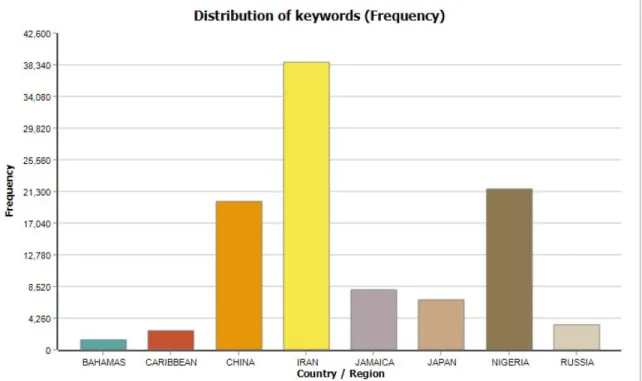
Figure 2. 1 Keyword distribution by Country ... 41
Figure 2. 2Keyword % distribution over time by country ... 41
Figure 2. 3Most frequently used terms by country over time ... 42
Figure 2. 4 Most frequently used keywords ... 42
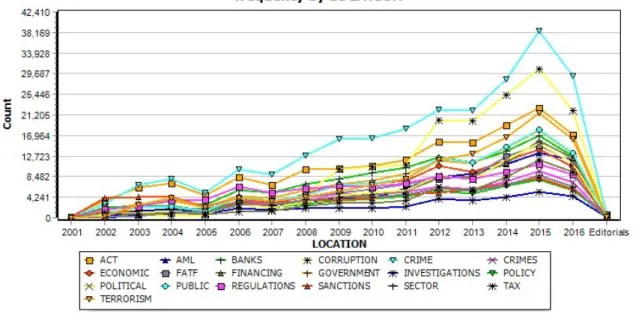
Figure 2. 5 Frequency of keywords over time in the Journal of ML ... 43
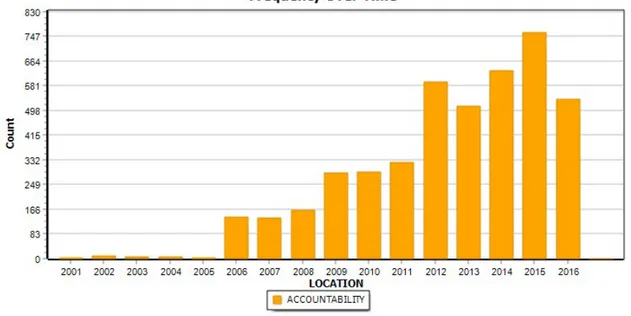
Figure 2. 6 Frequency of “Accountability” over time ... 44
Figure 2. 7 Frequency of “Accountancy” over time ... 44
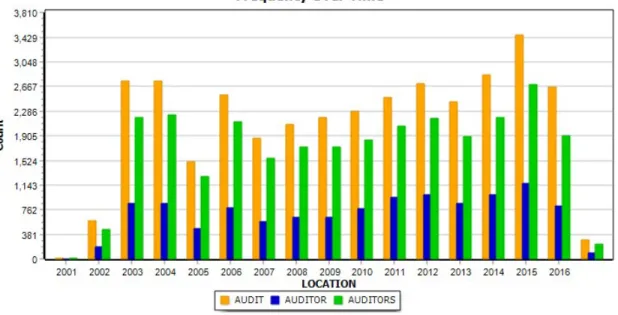
Figure 2. 8 Frequency of “Audit”, “Auditor”, & “ Auditors” over time ... 45
Figure 2. 9 Proximity of “Accountancy” to keywords ... 46
Figure 2. 10 Proximity of “Audit” to keywords ... 47
1
1 Introduction
Over the past few decades there has been a concerted effort to prevent and detect illicit financial flows on a global scale. Large institutional actors such as the United Nations Office on Drugs and Crime (UNODC), the World Bank and the IMF, and Transparency International, have all been engaged on the forefront of data collection and research in areas such as drug use and its supply chain, which generate large amounts of cash to be laundered. The data collection and research assist and support international cooperation, and inform policy choices (UNODC, 2017), particularly in developing nations.
It is estimated that the amount of money laundered annually ranges anywhere from two to five percent of global GDP, or $800 billion to $2 trillion US dollars (UNODC, 2018). Even at the low end of the estimate, these numbers present a serious problem. Laundered money in large volumes not only skews economic growth but also erodes the rule of law, creating a cycle of continuous corruption and money laundering. Being able to successfully launder the proceeds from criminal activity in many cases requires an in-depth knowledge of accounting instruments and technologies, accounting control systems, and a network of professionals who understand the rules and have the skill sets to work around the rules.
Prior research has pointed out that accountants have joined the fight against corruption (Everett, Neu, & Rahaman, 2007), and institutional actors such as the International Federation of Accountants and the Association of Chartered Certified Accountants, have also made this claim (ICAEW, 2002; IFAC, 2015; Kirtley, 2016; Tomlinson, 2017). There is also a growing body of research in fraud and corruption that recognizes the importance of context-specific work dealing with professionals and their influence on corrupt practices (Cooper, Dacin, & Palmer, 2013).
2
Although there has been some research focused on context (Mitchell, Sikka, & Willmott, 1998; Arnold & Sikka, 2001; Cooper, Neu, & Lehman, 2003; Barrett, 2004; Lehman & Okcabol, 2005; Neu, Gomez, Graham, & Heincke, 2006; Everett, Neu, Rahaman, 2007; Compin, 2008; Clikeman, 2009; Neu, Everett, Rahaman, 2012; Neu, Everett, Rahaman, & Martinez, 2013 Neu, Rahaman, &, Everett, 2013; Power, 2007; Power, 1999;2010;2013), there is still a significant amount of work to be done to understand how accounting and its associated technologies, instruments, and control systems either constrain or enable business activities and corrupt practices.
Criminal activity such as the illegal drug trade, human trafficking, fraud, and government corruption all have detrimental effects on human life and society. These global problems should not be underestimated; their activities generate proceeds for criminal groups whose goal is to be able to utilize the funds legally or launder the proceeds. The United Nations Office on Drug and Crime reports that the amount of money laundered annually continues to increase (UNODC, 2011). This leads us to the primary question of this research program:
How does money laundering persist and continue to increase or go undetected for extended periods of time given the institutional settings of increasing regulation, increasing monitoring and control systems at financial institutions, and increasing attention by accounting professionals?
This area of research is important for several reasons. First, the problem of money
laundering is a global problem, it occurs in both developed and developing countries, and in some cases, money is moved across borders to be laundered. The propagation of money laundering facilities furthers criminal activity. One of the aims of this research program is to help shed light on the mechanisms and practices used to facilitate money laundering, with a focus on accounting techniques. Second, the research seeks to understand what happens within financial institutions,
3
and how their systems and processes, given the tight controls, allow money to be laundered. Third, does anti-money-laundering regulation actually deter money laundering activity?
This research agenda has implications beyond the research community. By understanding how money laundering strategies work, how accounting is implicated, and the impact of regulators and regulation, the research can be used to help prevent and detect money being laundered—which can then lead to a reduction in the crimes that generate the proceeds to be laundered. Our teaching can also be enhanced in a manner that produces accountants with a greater scope of knowledge and skills. The fight against corruption partially depends on accountants who can have a significant impact on the social relations of power (Everett, 2015) with the ability to put systems in place that prevent and detect negative practices from being propagated.
This research program also has a more personal dimension: I grew up in Trinidad, the most southerly island in the Caribbean, a country whose prosperity is highly dependent on the price of oil. Trinidad is also a short boat trip away from Venezuela. Over the years I have seen corrupt governments siphon funds from the country with no action taken, witnessed the drug trade taking over street corners, and watched as young women have turned to crude lifestyles—just to mention a few of the negative impacts of corruption and drugs.
Given that the research question is quite broad in scope, with many social actors involved, the social praxeology of Bourdieu (Bourdieu & Wacquant, 1992) is introduced as a starting point to outline a field of focus, with the major players shown below. Tensions or conflict can occur between any pair of social actors in
4
Accounting Actors & Accounting Organizations Regulators Customers (Includes money Launderers) Financial Institutions & MCS
Figure 1. 1 Diagram showing relations of tension in the field.
either a horizontal or vertical direction, but tensions may not always exist between pairs. For tension or conflict to occur between any pair, the groups must have different motivations and different views about financial transactions or how the money is moved. In one sense we can say their values are different and oppose each other on the same subject. Although researchers and institutional investors can influence the field, they are viewed as situated on the periphery of this field acting as information agents, both supplying information to their peers and to the public.
Accounting actors can be seen in many ways and have been seen differently over time, but regardless of the different views, we cannot discount the role of accounting actors in helping to maintain social order. Prior research has highlighted some of these, such as, to name a few, Everett et al. (2015), Neu, Cooper, & Everett (2001), Cooper (2002), Sikka & Willmott (1995a,1995b, 1997a, 1997b, 2010).
This research aims to highlight some of the tensions that may exist among different groups in the field associated with money laundering, and how these tensions may lead to spaces that permit money laundering and other negative practices to fester and grow, going undetected for extensive periods of time. The research program also focuses on the adaptive nature of accounting
5
practices and management control systems in the fields where corruption and money laundering occur. The research shows how skillful accounting and auditing practices are used, and how they can be propagated within the financial sector to facilitate business transactions with stakeholders, while simultaneously adapting to the changing regulatory environment.
The dissertation consists of three separate but related studies based on the original diagram of tensions as follows: The first study, intended to set the stage for the practices of accounting and auditing research examines how accounting researchers situate “accounting” and “auditing” in the academic field of journal publications, and how accountants and auditors are viewed through the research lens as they operate in the practical field. In other words, the paper looks at “What are researchers observing about accountants and auditors and how they practice?” This paper highlights some of the tensions researchers face in crafting publications, while simultaneously being objective about how accounting professionals perform. The second paper focuses on how networks utilize the accounting technologies and instruments to facilitate the money laundering process. Paper three focuses specifically on the adaptive nature of accounting control systems within the banking sector and shows how accounting control system and MCS are used to facilitate the money laundering process. Building on this body of research, as internal control system failures become public knowledge, future research will take the process one step further, looking at the role of regulatory action and the impact it has on investors’ responses the choice of theory is presented next, followed by a summary of the three main papers and their contributions. The thesis is summed up at the end of the introduction.
6
1.1 General Theory
First, theory provides us with a lens to help us understand the world and a set of conceptual tools to challenge the practices we observe. Our research begins with the ‘common sense’ notion that increasing regulation, with more and better banking control systems, tighter controls, more accountants, and even more elaborate ethical codes of conduct, should lead to better prevention and detection of money laundering practices. Yet contrary to this ‘common sense’ view, we observe that, despite these changes in the institutional settings of more regulation, tighter control systems and so on, money laundering continues to persist and increase. These conflicting views present some challenges to our understanding of money laundering, how it works, and what the
mechanisms are that allows it to continue to thrive under these conditions.
To help us think through these issues in a productive way, our research employs Bourdieu’s conceptual tools and theory of practice. Bourdieu emphasizes that theory is a means of not only viewing and understanding existing practice but is also a means of challenging practice (Bourdieu, 1996a). Bourdieu’s theoretical conceptual of field, capital, and habitus have been in organizational studies and in the accounting literature for some time. These three concepts, according to
Bourdieu, cannot be considered or used independently of each other (Bourdieu & Wacquant, 1992). Field and the accompanying habitus and capital are used to make sense of social space in societies, and the practical action within it (Bourdieu, 1985) along with changing social conditions (Bourdieu, 1996a).
“A field consists of a set of objective, historical relations between positions anchored in certain forms of power (or capital), while habitus consists of a set of historical relations deposited
7
within individual bodies in the form of mental and corporeal schemata of perception, appreciation, and action” (Bourdieu & Wacquant, 1992).
Social actors are positioned within a field based on their possession of capital or power that is relevant or valued to the purpose of the field. Over time, these positions produce in agents and institutions particular ways of acting, speaking, and thinking (Bathmaker, 2015). Habitus also links past fields to present fields through individual actors who move from one field to the next
(Emirbayer & Johnson, 2007) and the concept of habitus offers a powerful means of linking macro-level and micro-level processes together in organizational theory.
Although this research thesis utilizes Bourdieu’s concepts, the research does not advocate that these concepts are the only useful way to theorize or view this work; however, Bourdieu’s concepts do provide a good starting point for analysis and provide an opportunity to raise questions and to identify the tensions that may exist in the field of money laundering.
8
1.2 Summary #1 – Illicit Financial Flows, Accounting and Auditing: A View from Practice
This study examines how accounting and auditing is situated in the field of money laundering as seen by the researchers in the field. Through a content analysis of over 475 articles published from 2001 to 2016 in the Journal of Money Laundering Control the study looks at the how accounting and auditing practices are viewed to play a role in illicit financial flows, and how detailed the role is documented.
The paper’s analysis identifies five primary themes through the analysis, namely: (1) Accounting professionals and a failure to perform, (2) Independence and ethical dilemmas, (3) Legislation and accountancy, (4) A few good accountants required, and (5) Forging an auditor. This thematic analysis contributes to the literature in several ways:
First, it looks specifically at the research published in a specific journal of practice and draws attention to how accounting and auditing is situated within the literature. This focus is important to researchers as it pin-points the specific ways accounting is being used in corruption and money laundering, while pointing to where opportunities exist for further accounting research. The paper builds on the recent body of research on fraud and corruption, be it the fight against corruption by large institutional organizations (Uddin & Hopper, 2001; 2003; Loft & Aggestam-Pontoppidan, 2007; Annisette, 2004; Neu, Gomez, Graham, & Heincke, 2006) or fraud with a specific focus on individual wrong-doing such as in Albrecht, Albrecht, Albrecht, & Zimbelman (2011), Brody, Melendy, & Perri (2012), and Hoffman & Zimbelman (2009).
Second, the paper shows how accountants and auditors are viewed through the lens of researchers in the field and highlights some of the biases faced by researchers in the production of
9
accounting research. This is important since it helps to identify how the information content of research is values differently in different fields, the perceived value of research in academia is different than its value to practice. And third, the paper highlights themes that shows a view from academic research almost contrary to what the accounting bodies and transnational organizations portray, and the research sometimes calls into question the high ethical standards that professional accountancy bodies espouse.
10
1.3 Summary #2 – Money laundering and Accounting
This study focuses on accounting and the accountant’s role in the complex relationships between organized crime and the mechanisms for moving illicit financial flows into legal financial systems. Recognizing that being able to launder criminal proceeds helps to propagate criminal activities, the paper contributes to the body of research on corruption (Mitchell, Sikka & Willmott, 1998; Everett, Neu & Rahaman, 2007; Compin, 2008; Neu, Everett, Rahaman & Martinez, 2012; Cooper, Dacin, Palmer, 2013 ) by providing supporting evidence highlighting why such negative behaviors persist despite regulation and strong anti-corruption barriers (Neu et al, 2012).
First, we highlight some of the major areas of the production of money to be laundered: fraud, organized crime and drugs, the drug supply chain, corruption along the supply chain, and politically exposed persons and public corruption. Then the paper shows some methods of moving bulk cash into the financial system and highlights the financial system’s vulnerability to money laundering. The case studies on two banks— Ocean Bank and Zions Bank—highlight how a bank’s internal controls provide opportunities to money launderers; the case studies also contribute to the existing literature by discussing several factors that ultimately lead to money laundering.
The paper discusses how banks’ responses to regulators’ allegations regarding issues of internal control deficiencies have become standardized, with banks neither admitting nor denying the issue of internal control problems, which leads to propagating internal control practices ultimately leading to money laundering. The paper also discusses how the response by regulators have become routine, with a lack of urgency. Regulators have become accepting of the shortfalls of banks and there is no real penalty for banks with deficient internal controls. The paper then
11
able to structure the transactions and (ii) to become recognized as someone who can perform the tasks of money laundering. And lastly, the paper discusses crime network adaptability from the perspective of the value of the accountant and how accountants, either from within the crime network or as a contract firm, position themselves with the capital necessary to sustain the crime network and money laundering.
The paper also adds to the practice literature by highlighting some of the standard
transactions and accounting techniques used by money launderers, with the hope that these can be used to detect money laundering activities at an early stage. There are many other areas where corruption and crime networks operate which are specific to different contexts and these must be studied to ultimately uncover more reasons for money laundering to persist. Technological
advancement has created new opportunities for money laundering and the crime networks. This is an important area for future research, as technology will more and more be accessed to propagate crime activity and money laundering. The paper also proposes that by understanding how new crime networks come into existence, and how networks specifically focused on money laundering strategies gain the capital necessary for survival, we can be a step closer to preventing such networks from operating.
12
1.4 Summary #3 – Facilitating Money laundering: The Role of banks
The current study examines the adaptive nature of Management Control System (MCS) practices within the banking industry; more specifically how control practices respond to changed money laundering regulations, but in ways that attempt to maintain a client-friendly focus. This study examines how the HSBC Group utilized the information from the external environment in developing parts of its internal control system and how internal control systems are used to create a system of visibility of its processes while facilitating business practices. The paper has also shown how in this particular situation, the illusion of objectivity was created by providing a paper trail supporting particular issues that were raised. Starting from the premise that success in this industry partially depends on (i) the treatment or classification of the monies based on the rules and
regulations of the industry, and partially on (ii) the in-depth knowledge and skills possessed by the actors involved, pertaining to the MCS within the financial institution. We have looked at both MCS design and practices as a second-order response to regulation.
Although we attempt to isolate three key areas—i.e. designing internal controls, process visibility, and skillful practices—these are not isolated from each other but are in fact closely intertwined with one another. Skillful practices, both emergent and conscious, affect the design of MCS and create process visibility. The evidence from our analysis shows how MCS practices both respond to regulations and are learned through practice and memos.
By analyzing internal control design from an environment risk perspective, we have shown how HSBC selectively utilizes the environment risk information produced by third parties. For many years it has been known that Mexico is a high-risk jurisdiction pertaining to drug trafficking and money laundering, yet this information was accidentally omitted from the country’s risk rating. But
13
we also see how omitting the information has put HSBC in a position of advantage in two ways: First, this accidental omission coupled with unexplained discretion has reduced the risk rating sufficiently to allow all existing clients of the Mexican affiliate to have access to US dollar correspondent accounts, thus increasing the potential for cash flow between the two affiliates and ultimately between the two countries. And second, this process created a visible system for the regulators showing that HSBC has performed its due diligence and that the operating practices are legitimate. We show how different control systems, which would normally be expected to work as a disadvantage, was turned into an advantage by HSBC’s policy treatment, allowing its employees to treat all affiliates as if they met the standard of the US affiliate. This analysis shows how the perceptions of a field changes given different rules. Prior to the merger, Mexico was seen as a high-risk environment, but once assimilated into HSBC, the business practices continue as if, by the mere act of acquisition, the Mexican affiliate became the same as the other affiliates. Internal policies are a part of structures and this process shows how closely policy and practice are linked within this context. Knowing the policy was accepted, the practices simply followed. The policies are part of the material arrangements within the system (Schatzki, 2005; Ahrens & Chapman, 2007, Neu et al, 2012) and have restructured how the field is seen by the employees. The internal control was shaped by the risk assessment information and in turn, the internal controls are shaping practice.
On one hand, the analysis of the Mexican affiliate highlights the role of discretion in offering decision-making flexibility, s given the information presented; n the other hand, our analysis of the Iranian transactions shows that they strived toward a point of no discretion. These differences demonstrate that creating a system of visibility is dependent on the consumers of the information. The HSBC case has also shown that the use of information and discretion can be used
14
to shape strategy. Simon (1995) argued that strategy is both planned and emergent, a notion supported by our analysis of the Mexican and Iranian transactions.
The analysis highlights the use of form-based transactions and its role in instituting a practice. The form-based process creates process visibility, but only on the part of the process highlighted by the information present on the form. In other words, parts of the process and information are also hidden or made invisible by the use of forms. HSBC created a system of visibility by using standardized forms from an established and institutionalized practice. The
Society for Worldwide Interbank Financial Telecommunication code also known as the SWIFT information processing system is used by most financial institutions. Forms only allow specific fields to be filled out, and the training HSBC provided to its client not only guaranteed a fixed process, it also determined the language to be used and specifically shows what information should not be provided. This is another example of using artifacts to structure and organize the field. The form helps to organize the field in several ways. First, the form determines what information is collected and placed on the form and also what information is omitted. Second, the form becomes digital archival records that are auditable. This provides a permanent system of visibility, giving the appearance of a transparent system. Training on the use of the forms restructures the capital in the field by changing the knowledge required for specific roles. And finally, the use of the form is geared towards eliminating human interaction—which would involve discretion—and replacing it with a preference for straight-through processing.
This analysis also shows that knowledge of control system design facilitates business processes by allowing those with the specific knowledge the ability to work within and around the rules of the system. Using Bourdieu’s notion of the field and power, we observe that individual actors with this knowledge (capital) are able to work with internal control systems to change the
15
field, resulting in a position of power or advantage. The increased position of power occurred on two levels: First, although there was the constant tension between the Group affiliates pertaining to the treatment of Iranian transactions, the European affiliate proceeded without being challenged. And second, the analysis also showed that being able to work within and around the Office of Foreign Assets Control (OFAC) regulations placed HSBC in a position of competitive advantage with the Iranian banks.
In this instance, the MCS was built around the artifacts and interpretations of particular forms, records, policies, and processes which were not only used to create a system of visibility, but also used in some cases, to create a sense of illusion. While a system of visibility was being created among banking affiliates, using processes such as U-turn transactions and straight-through processing, a sense of illusion was being created for the OFAC and regulators by documenting issues, and using external law firms for legal verification of processes. In addition to highlighting the role of MCS practices in facilitating these negative practices, the line of research touches upon the broader practices of visibility and illusion. Inherently, as particular aspects of a process are illuminated, other aspects become less visible and, in some cases, a more visible process may not allow actors to focus attention on the important aspects. We have shown how the use of form-based transactions cause attention to be focused on fields for correctness while eliminating other aspects of the transaction that could cause a flag to be raised and the transaction halted.
16
1.5 Discussion Summary Points
How does money laundering persist and continue to increase or go undetected for extended periods of time given the institutional settings of increasing regulation, increasing monitoring and control systems at financial institutions, and increasing attention by accounting professionals?
The research question as stated above has generated additional questions of focus for the individual research papers. The papers examined different aspects of the field of money laundering from multiple means of production through: the accounting techniques and networks set up;
regulation and reporting requirements and practices; influence of customers and regulators on the banking process; and how banks work around the rules in an attempt to satisfy customer needs.
The research started from the premise that when tensions exist within the field, pockets or spaces are created which allow money laundering to fester and grow undetected for extended periods of time and has further considered how accounting practices become standardized and embedded as part of the money laundering process. Although each paper has its individual
contributions, there are a few points worth discussing as part of the overall thesis. The research has also looked at management control systems and its use in identifying “red flags”, and has shown how these very systems, set up to identify routine suspicious activity, can be used to by-pass these identifications and allow negative or corrupt activities to persist. In one sense, this can be seen as enabling practices (Neu et al., 2006; Miller & Rose, 1990) that banks perform to facilitate “normal business transactions”.
While paper one has helped us to better understand how accountants and auditors are viewed through the lens of researchers, it is somewhat surprising to find that tensions exist within this sub-field. What is being said in the practice journal is different than what is being said by the professional accounting bodies. This analysis encourages us to think more carefully about how we
17
utilize the information we acquire through research and how we inform practicing accountants of the research findings. To help in the fight against corruption and money laundering, researchers must join the fight with practicing accountants and share the findings in a positive light. While the research has shown how skillful practice is being used to propagate negative practices, we can utilize the research to strengthen the institutional training programs in accountancy. We should also consider highlighting more of the positive work accountants are currently doing in the fight against corruption.
Although it may be clear that context matters—as shown in paper two and paper three using the HSBC case study—paper three brought to light a struggle for position within the regulatory bodies themselves. The regulatory structure is a field on its own and I believe this research has only touched the surface of how the battle for position, and complacency within the regulatory bodies, help to create the spaces that allow negative practices to persist. This research is not advocating that this is intentional by any means; however more research in this area may help to reduce the negative behaviors. One of the future studies proposed is the work on “red flags”— how they are generated and how the information is used. The HSBC case study also encourages us to reconsider the process of moving money itself, and how human intervention in the process at a high level can make negative practices routine, in a manner that allows the transactions to occur in plain sight. For example, the research showed how customers and bank employees are trained to fill out forms to by-pass the checks put in place to create red flags. In other words, fabrication of information became the institutionalized practice for working around the regulatory rules and reporting systems.
Future research intends to analyze the impact of regulatory actions on banks and how the penalty and future earnings potential of the bank is seen by investors; and how investors’
18
perceptions of banks have changed over time, with respect to money laundering and other negative practices that affect society.
In sum, the research has identified some areas that help propagate negative practices and money laundering. The diagram of the field and the possible tensions have helped to focus the research, but like all research endeavors, there are limitations to the findings. This research is based on archival data only. Interviewing regulatory personnel as well as bank personnel dealing with AML represents another future research opportunity. The research methods used in the individual studies were selected based on the information available and the type of analysis the data lends itself to. The first study uses a mix of quantitative word count analysis coupled with qualitative research; papers two and three are primarily qualitative based.
Among the benefits of this research thesis is the ability to take some of the findings to practice and have a direct impact on the way we teach and engage in the fight against corruption and money laundering. Some areas of future research have been identified and hence this thesis provides a good spring-board to future work.
19
2 Illicit Financial Flows, Accounting and Auditing: A View from Practice 2.1 Abstract
This study examines how accounting and auditing is situated in the field of money laundering as seen by the researchers in the field. Through a content analysis of over 475 articles published from 2001 to 2016, the study looks at the how accounting and auditing practices play a role in illicit financial flows, and how detailed the role is documented. The paper shows how accountants and auditors are viewed through the lens of researchers in the field, and highlights some of the biases faced by researchers in the production of accounting research for the purpose of journal publication.
2.2 Introduction
“Always follow the money” has been sound advice in law enforcement and political circles for decades. Nevertheless, tracking the flows of illicit funds generated by drug trafficking and organized crime and analyzing the magnitude and the extent to which these are laundered through the world’s financial systems remains a daunting task (UNOCD, 2011) .
Money laundering facilitates a broad range of serious underlying criminal offences and ultimately threatens the integrity of the financial system (U.S. Department of Treasury, 2013) while propagating negative behaviors that further erode social structures. Although the true amount of laundered funds cannot be known, the UNODC estimates laundered money to be between two and five percent of global GDP, which amounts to somewhere between USD 1.51 and 3.78 Trillion annually.
20
The phrase “money laundering” is used to describe the process by which the sources of the funds are concealed for the purpose of introducing the funds into the legal financial system and out of the reach of anyone who may have a claim on the funds. Tax evasion is often coupled with money laundering since the process often involves moving and investing funds outside the reach of governments and tax authorities.
The process of money laundering can be quite complex and may involve several
professional groups (e.g. lawyers, accountants, real estate professionals, businesses, and financial institutions) working together to achieve the goal. It has been argued that—similar to the larger field of corruption—skillful accounting practice and social networks are utilized to achieve a particular goal (Neu et al, 2012). The money laundering process can be viewed as situated in a field where success demands accounting capital (Bourdieu, 1989a), technical accounting expertise, and the practical skills needed to facilitate the process.
Professional accountants and auditors are perceived as possessing, among other qualities, a high level of rigorous educational training and accounting-specific knowledge, high ethical
standards, and a strict code of ethics (AICPA, 2018), primarily acquired by participating in
institutions that possess the authority to deliver a particular level of educational qualifications, and hence can be recognized by others as possessing the powers to officially accredit the individuals with an accounting professional designation. Another group of professionals possessing the skill-sets and technical abilities similar to professional accountants are those performing or occupying accounting positions but do have the professional designation. Not possessing the designation does not make the individuals less skillful or less knowledgeable about accounting practices, but the designation itself can be used as a barrier and it may, in some ways act to exclude these individuals without the designation from certain social or economic benefits (Chua & Poullaos,1998),
21
particularly if the existing members of the institution subscribe to the notion that the designation makes then part of a somewhat elite group with access to certain social and economic privileges. In one way we can look at the designation being used as an exclusionary device, such as setting up a monopoly over the field and only giving access to those possessing the accounting designation (Macdonald, 1985; Walker, 1991). Not only does the profession seek to restrict access to resources to those possessing the designation but they also attempt to keep out individuals possessing the designation but who are from other groups or jurisdictions (Annisette, 2017).
The topic and methods of restricting access to accounting resources or the field of accounting in general is important as it sets a tone for whose voice is being heard. One way of restricting access to the field of accounting practice is to limit the voice of individuals, or to limit the conversations individuals can participate in, or by restricting speakers only to those authorized or possessing the capital demanded by the field to allow participation. These social conditions of communication first restrict access to the conversations, then act to sustain the institutions which originally endowed individuals with the power, capital, and credentials to participate in the conversations, and to possibly change the conversations.
As mentioned earlier, money laundering and the illicit flow of funds is a major problem and can have serious and devastating effects on communities. The focus on anti-money laundering (AML) and combating the financing of terrorism (CFT) has seen a global response: Transparency International and it’s work with the National Integrity System (Doig & McIvor, 2003), the IMF, the World Bank, and United Nations Office on Drug and Crime have all set up programs to provide technical assistance to countries by working with governments, central banks and finance
22
changing the knowledge or capital in the field1, and accounting and auditing techniques are used for setting up controls in AML programs. These accounting and auditing techniques change the knowledge and practices in the field and hence change the capital in the field.
The sources of money to be laundered are vast but on a very basic level it includes some form of controls weakness or deficiency, or a level of corruption that helps to facilitate the process. This intrinsic nature of corruption and money laundering has been recognized by several
institutional actors over the years (Everett et al., 2007) leading to several major changes; the International Monetary Fund has, for example, adopted a new governance framework with four major elements, the first of which assesses a country’s governance structure pertaining to
corruption, anti-money laundering, and the threat of terrorist financing (IMF, 2018). The OECD has also worked with the Financial Action Task Force (FATF) to publish documentation as a guidance to tax and anti-money laundering authorities (OECD, 2015), and the International Organization of Supreme Audit Institutions (INTOSAI) Working Group on the Fight Against Corruption and Money Laundering (WGFACML) began working on “Social control” and how to engage citizens in the fight against corruption (INTOSAI, 2018). Other organizations such as the United Nations, and the World Bank have been part of the fight for decades (Everett et al., 2007).
While the focus by large institutional actors in the field of money laundering and the fight against corruption has increased significantly (Zamorano, 2000; Everette et al., 2007), and
although individual accounting organizations may have reasons to limit participation in their conversations, there appears to be a united front, at least on a high level, that accounting bodies and
1Capital and field relates to the praxeology of Pierre Bourdieu. Bourdieu’s concepts of field, capital,
habitus, doxa, and symbolic violence, and his understanding of language are linked to current organizational literature and theory (Everett, 2002)
23
their associated actors must stand at the forefront of this fight against corruption (ICAEW, 2002; Everette et al., 2007). And as the fight has changed over time, in part due to enhanced technology, financial instruments, education and methodological know-how, so too has the academic research into the field of corruption and money laundering changed
The role of International Organizations (IOs) in standard setting and policy making has been recognized in the academic literature by authors such as Pollack (2003), Barrett (2007) and many others. It has been suggested that, among other things, IOs help to improve governance, reduce transaction costs, improve information sharing, and provide for neutral monitoring of existing contracts, commitments and policies (Pollack, 2003; Hawkins et al., 2006). The OECD challenged International Organizations to join the fight against corruption by first stating that some of the greatest challenges faced today transcend national boundaries; among these challenges are tax evasion, terrorism, and illicit financial flows (OECD, 2015). The OECD then facilitated a process for international organizations to participate in the development of standards and policies that would help to address these global challenges. Among the fifty IO respondents were the UN, IMF, and the IFAC. Twenty-two IOs were related to the UN and fourteen of those respondents belong to the system of UN Organizations. The IFAC is the only accounting body to participate (OECD, 2016). This process of simultaneous privatization and internationalization of governance (Buthe & Mattli, 2012) allows the participating IOs to assist with standards and policies that would be recommended for adoption by all OECD members.
Speaking to the World Congress of Accountants at the Vatican in November 2014, Pope Francis encouraged accountants and other professionals to find solutions to issues facing
24
that accountants are well positioned in their work and practice to make a significant difference to the major issues facing communities.
“Economy and finance are dimensions of human activity and can be occasions of encounter, of dialogue, of cooperation, of recognized rights and of services rendered, of dignity affirmed in work. But in order for this it is necessary to always place man with his dignity at the centre, countering the dynamics that tend to homologize everything and place money at the apex. When money becomes the end and the motive of every activity and of every venture, then the utilitarian perspective and brute logic — which do not respect people — prevail, resulting in the widespread collapse of the values of solidarity and respect for the human being”. (Francis, 2014)
In November 2016, the out-going president of IFAC issued an open letter to Pope Francis outlining some details on how the accounting profession continues to assist with the fight against financial fraud and corruption, along with some of the improvements the profession has made. The outgoing IFAC president Olivia Kirtley, a former chair of the American Institute of CPAs wrote: “Serving the public interest is at the very heart of IFAC’s mission—and combatting fraud and corruption is clearly a public interest issue where our profession can provide valuable skills and expertise”. (Kirtley, 2016)
The letter explains that the analytical and forensic skills of professional accountants, along with knowledge of how to implement strong internal control processes, can make a real difference in combatting corruption activities and temptations, and in increasing the flow of resources to support economic growth (Kirtley, 2016). Given these skills, one of the major areas of improvement is to accelerate the capacity-building process of developing countries. The strong code of ethics is also highlighted as a key to implementing strong governance practices. Another key area in which the IFAC’s efforts have intensified to combat fraud and corruption is in their campaigning for
25
governments to develop more transparent and complete information, including use of International Public Sector Accounting Standards (IPSAS) (Kirtley, 2016). The desire to serve the common good is also highlighted, and there is a request to the Pope to assist in supporting two major reforms the IFAC believes would have a tremendous positive impact on fraud and corruption:
1. More rigorous, transparent accounting by all governments worldwide; and
2. Coordinated international action to implement stronger whistleblower protections for all citizens.
According to the IFAC, accountants have been actively involved in the fight against corruption for more than a century (Tomlinson, 2017). In 2014, the IFAC commissioned an independent study by the Centre for Economics and Business Research (CEBR). The three-part report highlights the role of the IFAC and the importance of the accountancy profession and its contribution to the global economy. The studies highlight the role of professional accountants as part of the governance architecture that tackles corruption and correlates accountants’ positive impact with the number of qualified accountants in the workforce. The study also points to the robust international Code of Ethics, comprehensive educational requirements, and ongoing monitoring and oversight
mechanisms, saying these aspects of the profession act in the public interest to reduce corruption and fraud (IFAC, 2015).
The academic research in the area of corruption and fraud, as demonstrated through the publications, plays a highly significant role as it informs and is informed by practice in the field. More specifically, one of the ways accounting actors have engaged in the fight against corruption is through academic research. Accounting researchers are embedded in this field of research, as it has become more evident that corruption and, in many cases, the associated fraud is context-specific (Everett et al., 2007; Neu et al., 2013; Cooper et al., 3013). Hence universal or
over-26
arching rules more often than not fail to get to the root of the problems. Through current research, accounting researchers attempt to add to the fight against corruption such as the works of
Transparency International with the NIS (Doig & McIvor, 1999; 2003), the Contraloria General de la Republica and the project of introducing new auditing practices (Espejo, Bula, & Zarama, 2001), and Kimbro (2002), who examined the quality of legal and accounting systems using macro
economic data, just to name a few. This paper adds to the research on the fight against corruption and money laundering by shedding light on the practices that help to propagate corruption and money laundering; it also looks at the use of accounting and auditing as seen by academic researchers, and in doing so makes recommendations for future research and the possibility of changes to practice that will help prevent and detect money laundering and corrupt activities. Although the field of corruption can be seen to encompass the academic research being performed, this study views academic research as a specific subset to the larger field of corruption—
particularly since access to each field, and what is at stake in the field of academic research, is different than what is at steak in the practical field of corruption.
This study is motivated to better understand how accounting and auditing are situated within the field of research and practice by analyzing publications within the field. In other words, “where is the accounting” within the literature and how its use has changed over time when
looking at money laundering and the prevention or fight against money laundering. The paper looks specifically at how accountability, accounting and auditing are used to depict what is occurring in practice, and how this depiction of accounting and auditing has changed over time. The changing accounting and auditing capital help to create the visibility (Miller 1990, P 317) or shed light (Neu et al, 2015) on the processes and structures that allow the money laundering process to occur. To understand how accounting and auditing is situated within the field, and how
27
this has changed over time, the present study looks at prior research papers from the perspective of researchers and practitioners in the field of money laundering control. The present study attempts to map out a portion of the field of accounting research by examining how various groups of researchers use “accountability, accounting, accountancy, auditing, auditor” and other roughly synonymous terms to show how accounting and auditing is situated or located within the field. Hence, the study attempts to analyze the field of accounting research that deals specifically with money laundering control with the goal of showing structural changes over time. Drawing on Bourdieu’s notions of field, habitus, and capital (Bourdieu, 1990; Bourdieu & Wacquant, 1992), the study utilizes the idea that academic journals carry on a conversation, one that changes when there is a crisis or rupture in the larger or more widespread field (Cooper et al., 2005). The study also looks at the various sub-fields in the academic accounting literature that pertains to money laundering and anti-money laundering, with the view that various categories of research exists within the larger body of research on corruption and money laundering. This is an attempt to depict how the accounting researchers disentangle or shed light on changes in practice that have occurred, and is continuously occurring, as the capital in the field changes.
This study follows many previous works that have looked at how accounting researchers view and analyze a particular field. Cooper et al (2005) challenged the views and interpretations by accounting researchers on their responses to the vast amount of corporate financial scandals in the prior years. Cooper et al (2005) utilizes Bourdieu’s institutional framework for their argument and encourages researchers to place the subject of research within the broader field, instead of simply placing the subject as an isolated incident. In their discussion of business ethics and the field of corruption, Everett et al. (2007) examines the anti-corruption field by reviewing academic and think tank reports, books, and papers dealing with the topic of corruption. By using a Foucaultian
28
and virtue ethics framing, Everett et al. (2007) points out the problem of corruption is not at all clear in part due to the field’s actors having different ways of seeing the problem. Money
laundering and the practices that go along with it belong to the larger group of corruption and the practices that sustain these negative behaviors. Neu et al. (2001) draws on the prior research on intellectual’s efficiency and utilizes case studies to look at accounting within public policy struggles. Their paper shows the importance of having a network of allies to overcome the producer/consumer dichotomy that typically exists in the field of research. Neu et al. (2001) also highlight the importance of adding a temporal dimension to our research. In a review of white-collar crime and the role of accounting and accountants, Compin (2008) compiles a typology of varying illegal activities along with the level of accounting knowledge required in each category. By using agency theory to foreground his argument, Compin (2008) also shows how accounting knowledge can be used in both the fight against crime by providing information with clarity, and how the use of accounting knowledge may prevent crime and, on the other hand, how accounting skills and knowledge can be successfully incorporated into financial crime networks to facilitate the money laundering process.
This paper looks at publication in The Journal of Money Laundering Control2 over time.
The publisher Emerald publishing states “The Journal of Money Laundering Control is the only quarterly, peer-reviewed journal designed to provide detailed analysis and insight on the latest issues in the law, regulation and control of money laundering and related matters”3. This journal
2 http://emeraldgrouppublishing.com/products/journals/journals.htm?id=jmlc
3The Journal of Money Laundering Control is the only quarterly, peer-reviewed journal designed to provide detailed analysis and insight on the latest issues in the law, regulation and control of money laundering and related matters.
29
provides access to a fair mix of researchers who are close to the topic and area of money
laundering. While some researchers such as Cooper et al (2006) and Tinker (1984) and others are critical of how accounting research should be conducted and interpreted, others such as Parker (1994) has been more accepting or less critical in that respect.
This paper’s analysis contributes to the literature in several ways. First, it looks specifically at the research published in a specific journal of practice and draws attention to how accounting and auditing is situated within the literature. This focus is important to researchers as it pin-points the specific ways accounting is being used in corruption and money laundering and shows where further accounting research has to be done. Second, the paper builds on the recent body of research on fraud and corruption, be it the fight against corruption by large institutional organizations (Uddin & Hopper, 2001; 2003; Loft & Aggestam-Pontoppidan, 2007; Annisette, 2004; Neu, Gomez, Graham, & Heincke, 2006), and fraud with a specific focus on individual wrong-doing, such as Albrecht, Albrecht, Albrecht, & Zimbelman (2011), Brody, Melendy, & Perri (2012), and Hoffman & Zimbelman (2009). Other research primarily focused on fraudulent activity as seen through the eyes of economic theories (e.g. agency theory) such as Peroz, Park, & Pastena (1991)
The journal's authors include not only leading scholars, but those directly involved at policy and operational levels in fighting money laundering.
Coverage includes, but is not restricted to:
The legal risks faced by banks and other intermediaries in complying with the law
Disrupting organised crime and terrorist organisations
New trends and techniques
Underground banking systems
Laundering with virtual money
The World Bank's Stolen Assets Recovery Programme
The use of financial intelligence
30
Dechow, Sloan, & Sweeney (1996) and Compin (2008). And after the corporate accounting scandals of 2002 (e.g. Enron, WorldCom, Parmalat), auditing research and auditing linked to the fraud triangle such as Wolfe & Hermanson (2004), Norman, Rose, & Rose (2010) and Morales, Gendron, and Guénin-Paracini (2013), and the context-specific research that looks at the
mechanisms, knowledge, and tools that accountants and auditors enlist to either engage in corrupt activities or utilize to prevent corrupt activities (Mitchell, Sikka, & Willmott, 1998; Arnold & Sikka, 2001; Cooper, Neu, & Lehman, 2003; Barrett, 2004; Lehman & Okcabol, 2005; Neu, Gomez, Graham, & Heincke, 2006; Everett, Neu, Rahaman, 2007; Compin, 2008; Clikeman, 2009; ; Neu, Everett, Rahaman, 2012; Neu, Everett, Rahaman, & Martinez, 2013 Neu, Rahaman, &, Everett, 2013; Power, 2007; Power, 1999;2010;2013). Finally, this research contributes to our understanding of how the accounting conversations occur within a journal and how researchers can join the conversation, with an eventual impact on accounting in practice.
The paper proceeds as follows: The next section discusses the theoretical framing and the field within which this research is situated. Following this the paper discusses the method and data used and then the analysis of the data highlighting key findings. The paper then concludes with a discussion of the findings, applicable theory, and comments on future research.
2.3 Theoretical Framing
The area of corruption and money laundering can be viewed in many ways with multiple sub-fields where money laundering occurs, depending on one’s interest in the field. For example, we can separate the field where money laundering occurs into the sub-fields defined by major groups performing the actions to launder money as well as those engaged in attempting to prevent money laundering. Another sub-field can be defined by the physical activities and processes of
31
money laundering and anti-money laundering as the core, and the associated or periphery sub-field containing the processes and activities leading to the conversations, documentation, articles, journals, and associated literature that is written to help change the core field. This sub field, although acting in ways to change the core field, is also changed by the processes and actions within the core field. This paper views the field as the latter case for two primary reasons. First, the data used in this analysis consists primarily of articles published by academics working in the field of research on money laundering and corruption. The research tends to focus on what is actually occurring in the core field and hence the research is changed by the events in the core field, while simultaneously the researchers are attempting to change the core field by making
recommendations. Second, the sub-field also holds specific capital which does not extend to the core field, but which is valued in the academia.
The paper begins with the theoretical concepts of Bourdieu who sets out a field as a network of social relations. The field is the arena in which the social actors compete for capital (Everett, 2002). The capital in a field is not just economic or material. Economic capital is only one form of the capital in the field of money laundering. Actors within the field of money laundering continuously strive to retain their economic capital or gain control of economic capital, but there are other forms of capital needed in this field. Bourdieu (1991) emphasizes the less tangible but highly valued skills, knowledge, and qualifications known as cultural capital. It is our belief that within a field, those with the superior cultural capital will be in demand and may become “known”, or at minimum will be sought out by those requiring the service. Both the areas of money
laundering and anti-money-laundering possesses these forms of cultural capital.
Institutionalized or certified capital, a form of cultural capital refers to the actual certificate. Those who are officially certified in a process or possesses a document stating the qualification are
32
viewed as possessing this institutional capital. This form of capital is important in the field of anti-money-laundering and counter terrorist financing primarily due to the requirements of the
institutions employing the persons for the roles. The gate keepers of these organizations, such as financial institutions and regulatory bodies, have minimum requirements for career postings, which usually contain a clause for a certificate, i.e. a specific form of institutionalized capital. The
flipside of this process is the view from the money launderer’s point. Does the launderer require the person performing the tasks to possess a certificate or is the possession of the knowledge more important? In this particular process it may be much more important that the goal of the money launderer is to retain the economic capital and other benefits associated with the wealth, and hence the launderer is not necessarily concerned with certificates.
The theoretical concepts of Bourdieu as applied to organizational and accounting research is not new. Accounting researchers have successfully applied the concepts of field, capital, and habitus in various settings to help explain why particular fields operate, sustain, or change in particular ways. For example, Bourdieu’s concepts have been applied to the diverse roles of accounting actors, organizations, and institutions in the following ways: the actors involved in financing, production, and consumption of services in the field of health care where relative power and access to resources vary among actors (Kurunmäki, 1999); the social project to institutionalize the accounting profession in France (Ramirez, 2001); professional accountancy and
institutionalization (Edwards & Walker, 2010; Annisette, 2017; Poullaos, 2016; Annisette & Trivedi, 2013; Hammond, Clayton & Arnold, 2009); tracking and classifying consumer behavior (Fourcade & Healy, 2013); and tax audit process, tax regulation, and tax accountants (Louise & Oats, 2012; Boll, 2014; Radcliffe, Spence, Stein & Wilkinson, 2018).
33
While some researchers have also applied Bourdieu’s theory of practice to Government settings (Neu, 2006; Neu et al., 2013; Joyce, 2014; Killian, 2015), others have focused on inter-firm alliances (Mahama & Chua, 2016), the role of inscriptions (Qu & Cooper, 2011), visual images (Davidson, 2010), and corporate social responsibility (Archel, Husillos & Spence, 2011; Malsch, 2013). And there is a growing body of research on organizational works such as
management control systems (Chenhall, Hall & Smith, 2010), budgeting (Bryer, 2014), organizational practices of the management accountant (Lambert & Pezet, 2010), and organizational applications (Kornberger & Mourtisen, 2011; Boedker & Chua, 2013) where Bourdieu’s theory of practice has strong explanatory powers.
One other main area where Bourdieu’s theories have been applied is in the production of legitimacy. Studies have focused on how social accounting legitimizes the company (Killian & O’Regan, 2016) and the production of such legitimacy (Oakes, Townley & Cooper, 1998) in auditing (Power, 2003) and assurance (Andon, Free & Sivabalan, 2014); and in academic research (Edwards, Dean, Clarke & Wolnizer, 2013; Lukka & Granlund, 2002; Whittington, 2011). This paper aims to add to the body of literature on the application of Bourdieu’s practice theory to research; more specifically it builds on the legitimizing process and academic research.
The researchers in the field of anti-money-laundering and corruption are the ones directly engaged in the field described above. This paper looks at the field created by The Journal of Money Laundering Control. This is a separate field where the struggles are not only about the
interpretation of field concepts, nor only about access to the field of money laundering itself. Researchers are also faced with the struggle for access to the journal. Generally, to be published, researchers join a conversation occurring in the journal at the time. This could be an ongoing conversation or a change in conversation as set by the language or tone of an editor. If a researcher
34
attempts to shift a conversation and that shift is not recognized by her peers, then the conversation may not change, preventing access to the field. Equally important is the notion that researchers in this field get to name what is important (Cooper, 2005) in this field. In other words, these
researchers shed light or illuminate what is important, their decisions on research topics help to decide what practices are focused on, and the researchers have the opportunity to suggest what the main areas are that should be worked on in the core field of anti-money-laundering and corruption.
Journal publications are a form of currency in the academic field in the sense that publications are often a requirement of university researchers; the volume and location of
publications may also be a significant factor. The journal in which the publication resides helps to define the agent’s capital portfolio, which ultimately gets compared to some set standard or to the portfolio of other agents in the same field. This objectified form of cultural capital can then be exchanged or helps to build other forms of capital (Bourdieu, 1986). In this case publications can eventually be used to change one’s position in the field—such as a promotion—which can then be parlayed into economic capital. The type of journal and it’s ranking may also dictate the mobility of agents within the field (Bourdieu, 1972) and may also dictate the authority with which the agent is given to speak to a particular topic. The greater the number of publications and higher the status of the journal, the more authority and mobility allowed within the field.
The authors and researchers in the academic field, through their publications and the conversations they joined in the journals, are given the power and authority in the field, but according to Bourdieu, he or she does not create that power and authority; instead, that power and authority is part of the social institution (Bourdieu, Thompson, Raymond, & Adamson, 1994); it is not only the publication itself that has made the difference but also the current position of the agent within the field, as well the social relations or networks that the agent or actor is involved with.
35
In the field of linguistics, Austin has argued that utterances such as “I do” at a wedding ceremony spoken in the presence of the granting powers, or “I name this ship…” while smashing a bottle of Champaign on some part of the ship, can be viewed as more than simply the state of affairs. Viewed as ways of acting and participating in the ritual (Austin & Urmson, 1965) these uttered words are often accepted as a result of the institutional structure in which they are
embedded—giving the utterances more power, authority and meaning without which they would not have the same power, authority, and meaning. According to Bourdieu, we cannot separate the institution which defines the conditions from the utterances themselves, as this separation would render the words almost meaningless. In the field of the production of academic literature for journal publication, the existing institutional setting matters. The journal, ensuing conversation, other researchers who have participated in the conversation, and access to resources, are just a few of the things that are a part of the context and would help to give authority to the authors or
researchers.
Academic research in the field of money laundering and corruption brings together theory, prior research, and some activities or relations in practice. It attempts to elucidate the practical world by drawing on past research and theories. Practice is key to this particular body of research, as it is the relations between practice and the institutions within which these practices are
embedded that form the situational context to be analyzed. The production of research publications in the field of money laundering and corruption are always produced in particular contexts, for particular markets. Journals can be viewed as markets. The properties of these markets, such as the conversations within the journal, the consumers, and the products that are valued within the
specific journal, vary within journals or markets. In any given market or journal, the value of some products is weighted more highly than in others, and part of the skill-sets of academic researchers