ScholarWorks
Walden Dissertations and Doctoral Studies Walden Dissertations and Doctoral StudiesCollection
2019
Employee Perceptions of Fairness in Performance
Appraisals and Job Satisfaction
Simon-Davies Amenyenu Nutakor
Walden University
Follow this and additional works at:https://scholarworks.waldenu.edu/dissertations Part of theBusiness Administration, Management, and Operations Commons, and the Management Sciences and Quantitative Methods Commons
This Dissertation is brought to you for free and open access by the Walden Dissertations and Doctoral Studies Collection at ScholarWorks. It has been accepted for inclusion in Walden Dissertations and Doctoral Studies by an authorized administrator of ScholarWorks. For more information, please [email protected].
Walden University
College of Management and TechnologyThis is to certify that the doctoral dissertation by Simon-Davies Amenyenu Nutakor
has been found to be complete and satisfactory in all respects, and that any and all revisions required by
the review committee have been made. Review Committee
Dr. Jean Gordon, Committee Chairperson, Management Faculty Dr. Robert DeYoung, Committee Member, Management Faculty Dr. Barbara Turner, University Reviewer, Management Faculty
Chief Academic Officer Eric Riedel, Ph.D.
Walden University 2019
Abstract
Employee Perceptions of Fairness in Performance Appraisals and Job Satisfaction by
Simon-Davies Amenyenu Nutakor
MPhil, Walden University, 2019 MPS, Cornell University, 2004 MPA, University of Ghana, 1999
BA (Hons.), KNUST, 1993
Dissertation Submitted in Partial Fulfillment of the Requirements for the Degree of
Doctor of Philosophy Management
Walden University May 2019
Business and management researchers have shown that performance appraisals have continued to remain a standard component of the human resource management (HRM) function and play an integral role in contributing to employee performance and job satisfaction levels. Recent researchers indicated that employees have continued to hold negative views about the degree of fairness and accuracy of appraisals, thus rendering the process a mere routine and periodic ritual detrimental to organizational efficiency and growth. The purpose of this study was to add to what is a paucity of data on perceptions of fairness of employees and examine the employee perceptions of fairness in
performance appraisals related to job satisfaction. The conceptual framework for this study was rooted in organizational justice and motivational theory. Research questions examined the perceptions of employees of performance appraisals on job satisfaction. Qualitative data were collected in this multiple case study using face-to-face interviews of 20 participants. Data were organized, coded, and analyzed for emergent themes and patterns that aligned with the research questions. Research findings showed that employee perceptions of performance appraisals are critical and remain an invaluable component of the human resource function to benefit management executives and should include basic knowledge and employee input in the appraisal design and process.
Implications for possible positive social change may include enhanced insights, knowledge, and understanding of the perceptions of performance appraisals that may enhance management decisions through fair, just, and accurate employee appraisals that will positively translate to job satisfaction.
Employee Perceptions of Fairness in Performance Appraisals and Job Satisfaction by
Simon-Davies Amenyenu Nutakor
MPhil, Walden University, 2019 MPS, Cornell University, 2004 MPA, University of Ghana, 1999
BA (Hons.), KNUST, 1993
Dissertation Submitted in Partial Fulfillment of the Requirements for the Degree of
Doctor of Philosophy Management
Walden University May 2019
I dedicate this work to Eseli, Elinam, Awoenam, Mawusi, and Mawunyo, without whose constant support and encouragement, I would have been unable to attain this vision. To all my brothers and sisters whom I am honestly grateful for my close friends who believed in me and encouraged me to stay the course. This work is also dedicated to my parents who inculcated in me the love and passion for learning and encouraged me to share knowledge gained as an obligation to all mankind. They taught me that education is a privilege, once attained can never be taken away. Thank you for being an inspiration and the foundation of who I am today. My sincere love to you all.
A journey of this magnitude has brought many wonderful people into my life without whose support my vision and dream would not have been possible. I must first extend my sincere gratitude to my wife, Eseli, who willingly and single-handedly gave her time and spent endless hours to support the family while I embarked on this journey. Your dedication and belief in me gave me the strength, zeal, and motivation to
accomplish this dream even when I had thought it impossible.
I will not remiss to extend gratitude to my committee, the two incredibly talented instructors who embody all I strived for through this journey. Special recognition is to my Mentor/Chair, Dr. Jean Gordon, who accepted and availed herself to provide invaluable advice and tremendous guidance every step of the way and patiently worked with me throughout the process. No amount of words can truly express my appreciation to you. I was privileged and honored to have Dr. Robert DeYoung, my Methodology Expert and committee member, who spent enormous amount of time to provide detailed feedback until completion. I am grateful to Dr. Barbara Turner, the University Research Reviewer for her contribution. I greatly appreciate the contribution that each of you made in the creation of this work. I learned a lot of lessons and would forever remain grateful.
A special thank you to colleagues who gave me materials to support this work especially, Mr. and Mrs. Parby for their special assistance which I cannot mention here.
Lastly, I want to acknowledge God Almighty for granting me the strength, intelligence, courage, and direction to see my dream come true to finally walk the stage of recognition in academia. To him be the Glory.
i
List of Tables ... vi
List of Figures ... vii
Chapter 1: Introduction to the Study ...1
Introduction ...1
Background of the Study ...2
Problem Statement ...8
Purpose of the Study ...9
Research Question ...10
Conceptual Framework ...10
Herzberg’s Two-Factor Theory of Motivation ... 10
Equity Theory ... 11
Nature of the Study ...12
Definitions...14
Assumptions ...16
Scope and Delimitations ...16
Limitations ...17
Significance of the Study ...18
Significance to Practice... 18
Significance to Theory ... 19
Significance to Social Change ... 20
ii
Introduction ...23
Literature Establishing the Relevance of the Research ...24
Literature Search Strategy...25
Conceptual Framework ...26
The Equity Theory ... 29
The Two-Factor Theory of Herzberg ... 39
Performance Appraisals, Effectiveness, and Management ...43
Origin and Current State of Performance Appraisals ...45
Benefits and Attributes of Performance Appraisal ...47
Performance Appraisal Perceptions ...48
Rater and Ratee Performance Appraisal Accountability ...50
Employee and Supervisor/Manager Perceptions of Appraisals ...52
Ratees’ Fairness Perceptions per Raters’ Distorted Appraisal Outcomes ...53
Factors Associated With Performance Appraisals ...56
Performance Appraisal Essentials...57
Performance Appraisal Metrics, Attitudes, and Behavioral Sensitivity ...58
Performance Appraisal Feedback Outcomes ...59
Job Satisfaction and Performance Appraisal Relationship ...611
Job Satisfaction and its Origin ...65
Factors Associated With Job Satisfaction ...666
iii
Introduction ...71
Research Design and Rationale ...72
Role of the Researcher ...82
Research Methodology ...83
Population and Setting ... 87
Sampling and Participant Selection ... 88
Expert Panel………...89
Protection of Participant Rights ... 91
Instrumentation ... 93 Data Collection ...95 Data Analysis ...97 Evidence of Quality ...98 Issues of Trustworthiness ...99 Credibility ... 100 Transferability ... 101 Dependability ... 102 Confirmability ... 103
Ethical Procedures and Informed Consent ...103
Summary ...105
Chapter 4: Results ...107
iv
Population and Sample ...109
Sample Size ...110
Instrumentation, Interview Protocol and Guide ...111
Sampling Strategy and Participant Demographics ...111
Data Collection ...115
Data Saturation...118
Transcription ...118
Coding of Data ...119
Data Analysis ...120
Theme 1: Perceptions of Fairness ... 126
Theme 2: Perceptions of Job Satisfaction ... 127
Theme 3: Perceptions of Performance Appraisals ... 129
Theme 4: Reasons for Unfair Perceptions ... 134
Theme 5: Recommendations to Improve Fairness Perceptions ... 137
Evidence of Trustworthiness...141
Credibility ... 141
Transferability ... 142
Dependability ... 143
Confirmability ... 144
Ethical Considerations and Procedures ...144
v
Theme 1: Participants' Perceptions of Fairness ... 148
Theme 2: Participants' Perceptions of Job Satisfaction ... 149
Theme 3: Participants' Perception of Performance Appraisals ... 149
Theme 4: Participants' Reasons for Unfair Perceptions ... 151
Theme 5: Participants' Recommendations to Improve Fairness Perceptions ... 152
Study Results ...153
Summary ...154
Limitations of the Study...155
Recommendations for Future Research ...157
Implications...158
Significance to Practice... 160
Significance to Theory ... 161
Significance to Positive Social Change ... 162
Conclusion ...164
References ...166
Appendix A: Letter of Cooperation and Statement of Understanding ...214
Appendix B: Letter of Cooperation from a Research Partner: Permission to use Organization, Premises and Subjects ...215
Appendix C: Letter of Appreciation for Participation ...217
Appendix D: Informed Consent for Participants ...218
vii
Table 1. Participant Demographics ... 113 Table 2. Frequency Table of top 10 Keywords/Terms ... 125
viii
Figure 1. Conceptual framework of employee performance appraisal ...35 Figure 2. Conceptual framework establishing the relationship between the fairness
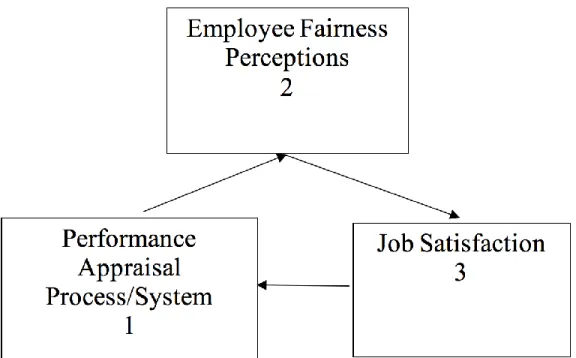
perceptions of performance appraisals on job satisfaction ...43 Figure 3. Illustration of parent and child nodes as primary themes and subthemes based on the constructs and research questions for data analysis ...122
Chapter 1: Introduction to the Study Introduction
Performance appraisals (PA) have remained a standard component of the human resource management (HRM) function given the widespread belief that they contribute to organizational productivity and efficiency. However, researchers have suggested that employees and supervisors hold negative views on the appraisal process and its degree of fairness (Kim & Holzer, 2016). This research is important as it may contribute to
understanding the perceptions that employees hold about PAs. It may also provide a practical framework for promoting fairness perceptions of performance evaluations and how they relate to perceived job satisfaction.
This study included recommendations on how stakeholders may apply the findings as a practical measure to developing performance appraisal systems. Through the fairness perceptions of performance appraisals, employees may develop attitudes and behaviors that could positively impact individual performance and contribute to enhanced levels of job satisfaction (Dzansi, Chipunza, & Dzansi, 2016). The study is important given the number of researchers who suggested job satisfaction is a precursor of
organizational promise and a fundamental organizational goal of employee’s perceptions of personal commitment to fairness in the workplace (Behzad & Habib, 2015; Jonathan, 2013; Yang, 2016). The results of this study provided information that applies to human resource managers and professionals or practitioners of organizations in private, public, and government agencies.
The outcome of the study provided a basis for managers and employees to discuss the importance of work-related issues that might not otherwise be addressed. It was expected that both managers and subordinates would report the experiences as positive and relevant when an appraisal is conducted fairly. It would encourage supervisors to focus on goals and work activities by addressing existing problems and overcoming barriers to improved work performance and enhancement of job satisfaction (Ali, 2016). The study would enable agencies to provide workers with recognition for efforts and to identify staff individual training and development needs. Employees would view the appraisal interview as the only opportunity available to them for having an exclusive and uninterrupted period with the supervisor who is influential in determining job satisfaction through recognition of work achievements.
Chapter 1 serves as a roadmap to guide the readership in understanding the background, problem, purpose, and conceptual framework, nature of the study, definition of the terms, assumptions, scope and delimitations, and the limitations of the study. A concise description of the various subsections or subtopics of the critical significance of the research area within each of the major areas of the research is also provided.
Background of the Study
The current study was an effort to build on recommendations of other studies outlined in a research article on employee perceptions and the value of performance appraisals. Further research and review of the topics on perceptions of employee PAs on job satisfaction provided the basis for the need to conduct this study based on the
purposes. This research is relevant and applies to a health care organization, based on the outcomes and investment returns of the PA systems in organizations that tend to
implement the PA process.
PAs have become an essential element of the business process of measuring and managing performance and are widely considered to be a valuable HRM function (Radebe, 2015). The appraisal system has become an invaluable tool utilized by managers and supervisors to manage and motivate employees to work effectively by providing recognition and rewards such as promotion, pay awards, bonuses, or the delay of promotion of employees, based on their performance for satisfaction (Joseph, 2014; Owoyemi & George, 2013; Park, 2014). PAs have traditionally, been used worldwide as a means of measuring workers’ performance, goals setting for the future, and the
identification of areas of employee professional training and development needs
(O’Boyle, 2013). It continues to remain one of the most crucial human resource practices with the goal of assessing employee performance and contributions intended to impact the individual positively, and the organization’s long-term effectiveness (Aleassa, 2014).
Organizations adopt PA systems for several reasons including the management of employee development, selection, retention, and training (Deepa, Palaniswamy, & Kuppusamy, 2014). Some agencies apply the PA system to help estimate staffing requirements and numbers, promotion, compensation and benefits packages, bonuses, incentives, demotions, dismissals, tenure, training, development of employees and counselling needs, performance pay and rewards, and to protect the organization from employment related litigation to ensure employee competence (Cappelli & Conyon,
2016; Chouhan, Chandra, Goswami, & Verma, 2016; Deepa & Kuppusamy, 2016; Owoyemi & George, 2013).
PAs play an integral role in contributing to employee performance and level of job satisfaction with the performance appraisal method utilized (Chandhana & Easow, 2015). The appraisal process is also used for employee development purposes to communicate feedback on the strengths and weaknesses, uncover individual training needs, identify gaps in employee performance, evaluate human resource efficiency and involvement in recruitment and selection, and in reducing the number of employee grievance (Ahmed, 2015; Hauck, 2014).
The process often entails the assessment of the workers’ performance, based on the judgments and views of managers and subordinates or peers, and even workers themselves (Prasad, 2015). PA will generally refer to a process by which workers’ job performance is assessed with reference to quality, quantity, cost, or time. It is a
systematic and periodic process used to evaluate the productivity and employee job performance about pre-established benchmarks, organizational goals, and objectives.
PAs provide human resource management with information upon which to base decisions for improving motivation, job satisfaction, organizational commitment, and productivity. Radebe (2015) contended that the appraisal phenomenon has been
perceived as instrumental in enhancing the performance and development of employees, thus positively impacting service delivery. The literature revealed that the perceptions of employees constitute a critical role in the performance appraisals on job satisfaction. The fairness perceptions of performance evaluations have become the focus of performance
appraisal research. Organizations need to harness positive worker perceptions of fairness of performance assessments to cope with the animosity surrounding performance
evaluation systems. Researchers have adopted the social exchange theory in studies that have explored such perceptions and how they impact work-based relationships (Bal, De Cooman, & Mol, 2013). The perceptions of both employees and supervisors of
performance appraisals remain critical to the appraisal process and constituted the main issue of this study. Researchers have claimed the process is circuitous, though the perceptions of fairness assessments influence employee behavior, performance, and job satisfaction (Saunila & Ukko, 2012; Tsai & Wang, 2013).
Akkas (2015) argued that successful managers incorporate daily performance reviews and provide feedback to employees to identify areas for improvement and to measure the steps towards the desired enhanced performance. Organizations need to design a practical framework that will ensure fairness perceptions of performance
evaluations on job satisfaction. To date, the value and fairness of the PA process remains questionable. Although the performance assessment interview has remained a paramount feature in the range of human resource (HR) functions for decades, there are limitations in the extent to which they improve employee attitudes (Hosain, 2016). The contention is based on prior research, despite the rhetoric of performance appraisals and its influence on job performance and commitment (Budworth, Latham, & Manroop, 2014).
Efficient performance assessment systems may not only inspire workers in improving their performance, but also contribute to the overall performance of the organizations. Yet appraisal systems in the civil service, referred to as the Annual
Confidential Report (ACR) systems, may arguably be inefficient and fail to enhance employee development and learning experiences (Purohit & Martineau, 2016). PAs are utilized to communicate to employees the value they bring to the organization; but, some argued that the rewards and outcomes do not reflect the true value and contribution of individual workers (Neu Morén, 2013). The perceived fairness of performance appraisal is mediated by job satisfaction and ultimately influenced overall commitment (Singh & Mishra, 2016).
Shrivastava and Purang (2016) emphasized in the findings of a study on performance measurement, the significance of fairness perceptions of employees in shaping employee assessment outcomes versus the intent and design of the human resource system and found that satisfaction with the evaluation system further enhances job satisfaction. Although the evaluation system has been deemed as an indispensable management tool for providing support for decision-making, still numerous undertakings have failed to achieve the desired impact. Workers’ reactions to a performance appraisal, and the process of review, have been acknowledged to have a considerable effect on the whole outcome, accuracy, fairness, and success (Iqbal, Akbar, & Budhwar, 2015).
The assessment reviews have failed to transform individual perceptions about the work performed. Dissatisfaction with the process has also been linked to work
dissatisfaction, reduced organizational commitment, and higher intentions of quitting the job (Dusterhoff, Cunningham, & MacGregor, 2014). Despite the widespread use of performance appraisals worldwide, there remains growing criticism of the effectiveness of the concept in improving performance. The frequency with which the evaluation of
performance must be conducted has also remained a source of controversy and constant debate in both management practice and research (O’Boyle, 2013). The ineffectiveness or failure of performance evaluations has drawn criticism since the cost of implementing PA systems outweigh the benefits and some argue that resources would be better utilized by developing accurate and efficient approaches to communication for evaluating
performance to reflect on job satisfaction (Vasset, 2014). Jääskeläinen and Sillanpää (2013) reported contradictory views on the challenges and underlying cause for the unsuccessful development of appropriate performance appraisal systems.
There is substantial proof in the existing management literature on the connection between employee fairness PA perceptions and job satisfaction. Earlier researchers revealed that performance evaluation knowledge has a significant effect critical to worker attitudes involving job satisfaction, organizational commitment, and confidence in
workplace management (Sumelius, Björkman, Ehrnrooth, Mäkelä, & Smale, 2014). This gap has led to the performance appraisal practice being considered by some to be a yearly ritual of mere form filling exercises. Although various researchers have emphasized the apparent importance of performance evaluations, contemporary researchers are unable to furnish a whole structure for assessing the effectiveness of the system of PAs (Iqbal et al., 2015). Its influence in enhancing employee fairness perceptions, and its relationship to effectiveness and efficiency, have also been overlooked in current research (Saunila & Ukko, 2012). Most employees continue to perceive the evaluation system as unfair, inaccurate, and a mere annual ritual (Sanyal & Biswas, 2015). The situation has resulted
in the need for research to explore employees’ fairness perceptions of the process of PAs and how they influence organizational-level outcomes.
Problem Statement
PAs have remained a standard component of the human resource management function because organizations benefit significantly from their application, as fairness perceptions may contribute to job satisfaction in terms of job performance in high-performing organizations (Harrington & Lee, 2014; Kuranchie-Mensah & Amponsah-Tawiah, 2016). Yet, employees and supervisors have expressed negative reactions to the process due to the absence or lack of its effectiveness (Ekpe, Daniel, & Ekpe, 2013; Kim & Holzer, 2016). Although implemented worldwide (Monsur & Akkas, 2015), the fairness perceptions present management scholars with a dilemma (Kromrei, 2015; Stepanovich, 2013).
Perceptions of appraisals have not been sufficiently fair to improve job satisfaction with only 6% of employees perceiving them as fair and effective
(Teckchandani & Pichler, 2015). The fairness perceptions of appraisals decrease after reviews in approximately 60% of cases (Teckchandani & Pichler, 2015). According to Teckchandani and Pichler (2015), the process has more often left both supervisors and employees dissatisfied, although the main goal of PA is to provide feedback for
improving performance and align employee performance with organizational objectives. Goh (2012) argued that 70% of appraisal initiatives have failed despite empirical proof that employee perceptions and managerial practices shape individual behaviors (Taneja, Srivastava, & Ravichandran, 2015).
The general business management problem was that unfair perceptions of PAs could create challenges (Kampkötter, 2016). The specific research problem was that employees and executives agree that appraisals have failed to accurately reflect
professional abilities and performance (Swanepoel, Botha, & Mangonyane, 2014). This lack of understanding of employee perceptions of evaluation systems provided the
justification for this case study. Although there is prior research on PAs, there is a paucity of literature investigating the perceptions of employees of performance evaluations on job satisfaction, thus calling for the development of a comprehensive performance appraisal system for all workers and the need for this study (Bhurtel & Adhikari, 2016). I investigated employee perceptions of performance assessments on job satisfaction.
Purpose of the Study
The goal of this research was to examine how employee perceptions of PAs can be improved to enhance job satisfaction by exploring the perceptions of fairness of employee performance appraisal systems on job satisfaction within a healthcare organization. This case study approach was intended to offer deeper contextual insight into the perceptions of fairness of evaluation processes on reported levels of job satisfaction in health care organizations. PA was described as “a structured formal
interaction between a subordinate and superior in the form of a periodic interview (annual or semi-annual) to evaluate work performance” (Manoharan, Muralidharan, &
Deshmukh, 2011, p. 722). The study was geared towards providing information that may be used by managers in healthcare organizations to improve PA systems to enhance the levels of job satisfaction as a critical performance indicator because researchers have
shown that perceptions of the PA process are influenced by factors related to individual levels and relationships (Sumelius et al., 2014).
Research Question
I developed the following research questions based on the conceptual framework of the study. The central research question was: What are employee perceptions of fairness of performance appraisals on job satisfaction in healthcare organizations? The related subquestion was: What are the reasons that lead to unfair perceptions of
performance appraisals?
Conceptual Framework
The conceptual framework for this study was rooted in Adams’s equity theory (1963, 1965), and the two-factor theory of motivation (Herzberg, 1959). Hamlett (2014) described the organizational justice theory as the study of fairness at work. It concerns employees’ perceptions of fairness within an organization since organizational justice has a positive influence on PA satisfaction (Bin Abdullah, Anamalai, Ismail, & Ling, 2015). According to the theory, there are three components to justice: distributive, procedural, and interactional justice that interacts with employee levels of job satisfaction (Hamlett, 2014).
Herzberg’s Two-Factor Theory of Motivation
Herzberg (1959) developed the two-factor theory of motivation, also known as the dual-factor or motivation-hygiene theory. The theory argued that two factors affect the motivation and satisfaction of employees (Herzberg, 1959; Ozguner & Ozguner, 2014).
the motivation factor and job context as the hygiene factor (Bogicevic, Yang, Bilgihan, & Bujisic, 2013; Herzberg, 1959). Herzberg’s model proposed that a continuum exists ranging from no satisfaction to satisfaction while a second continuum exists ranging from dissatisfaction to satisfaction (Herzberg, 1959; Worlu & Chidozie, 2012). Herzberg also identified three types of employees: satisfied, dissatisfied, and those with an absence of dissatisfaction or no satisfaction (Bogicevic et al., 2013; Herzberg, 1959).
When the motivation needs are fulfilled based on workers’ perceptions of accuracy and fairness with a performance assessment, they would not result in worker dissatisfaction, but to satisfaction or the absence of satisfaction. When the motivation needs are not achieved due to a lack of perceived fairness and accurate perceptions of fairness of their appraisals, they would lead to worker dissatisfaction or no-satisfaction. The unavailability of hygiene needs would lead to worker dissatisfaction, but their attainment would result in worker no-satisfaction. The assumption is that if employees could achieve good performance on the job and accomplish goals through the fairness and accurate perceptions of their performance assessments, they would be more likely to experience job satisfaction (Masum, Azad, & Beh, 2015).
Equity Theory
The equity theory is a model used to explain employee perceptions about fairness issues (Rowland, 2013). It describes the thought processes that employees utilize in determining the legitimacy or legality of managerial decisions. According to Adams (1963, 1965), fairness refers to how much people become aware of or compare,
determinant of job satisfaction and performance is the extent of equity or inequity recognized by a worker in the workplace. Perceived fairness refers to a person’s assessment of whether an endeavor versus the results received is just, acceptable, and practicable (Tseng & Kuo, 2014).
The essence of the model involves a general comparison of an employee’s assessment of the fairness of personal circumstances through a comparison with individuals in a similar circumstance (Folger, 2013). The focus of this study may help close the gap in existing literature on employee perceptions of fairness of the
performance evaluation process and how it influenced job satisfaction. The two theories constituted the conceptual basis of this qualitative exploratory multiple case study.
Nature of the Study
A qualitative exploratory case study design was employed to gather in-depth contextual data on the employee perceptions of PAs on the levels of job satisfaction. A multiple case study was employed as the primary technique to serve as a blueprint for ensuring the reliability of the study (Yin, 2014). The data gathering procedure involved face-to-face interviews with individual employees and human resource professionals to form the unit of analysis within the organization as a single case in determining the case with the use of structured and semistructured, open-ended interview questions validated to afford participants the opportunity to convey their views and present detailed
elaboration on data not previously envisaged as relevant. The interviews were recorded, coded, and analyzed for accuracy with the verbatim transcription of accounts of
Data were analyzed by describing the case, and themes identified to advance detailed information (Yin, 2014). A nonrandom purposive sampling method was adopted with an estimated sample size of a minimum of 15 to 18 participants or at which
saturation occurred. The research approach also included in-depth analysis of the interview transcriptions after each interview session to produce satisfactory sampling outcomes to ensure the accuracy of data, analysis, and the testing of participants’ understanding of the phenomenon through honest responses. The research protocol involved a set of comprehensive guidelines and procedures that were utilized in
conducting the study, the research instrument, and the guidelines for analyzing data. Data obtained from the interviews and observations were coded using the NVivo software of qualitative analysis to ensure the secure identification and discovery of emerging themes and patterns for analysis.
Ethical considerations for the study included instituting sufficient measures to guarantee the protection and safety of participants. Participants were informed about the objectives of the investigation because it involved the study of human subjects, including any interventions that may likely affect the voluntary participation of the sampled
employees in the interview process. There was full disclosure prior to receiving informed consent to protect the dignity of participants including their confidentiality. Interpretation of data was conducted following the qualitative approach in selecting the case(s) to ensure the reliability of the study.
Definitions
Fairness/equity/justice: The notion that a decision or action is morally right according to ethics, equity, or law and consists of events and situations in the everyday lives of individuals across a variety of contexts (Tabibnia, Satpute, & Lieberman, 2008).
Job performance: Job performance was described as actions required and identified by the workers’ job description consequently authorized, evaluated, and recompensed by the employer and the individual’s ability to successfully perform within the framework of normal constraints and available resources (Jamal, 2007).
Job satisfaction: By job satisfaction, reference was made to a pleasurable positive state of mind or emotional, affective response towards diverse facets of one’s job because of the appraisal of one’s work or work experience (Körner, Wirtz, Bengel, & Göritz, 2015; Nazir, Akram, & Arshad, 2014).
Perception: This referred to the state of being, ability, act, or process of becoming aware or the ability to understand using the mind, senses, discernment, intuitive
recognition, or acknowledgment in relation to rational, moral, or ethical values, or insights that involved acquiring, receiving, selecting, transforming, and organizing information supplied or received by our senses and sensory stimulation into a consistent and relevant picture of the real-world situation (Norman & Kabwe, 2015).
Performance appraisal feedback: In the context of this research, PA feedback was used to refer to the communication of corrective assessment information that provides helpful information or criticism to an employee to improve performance as an
with the results used to ensure the fair distribution of rewards as a key factor of equity perception which entails individual progress to help clarify roles (Pittman, 2003).
Performance appraisal/evaluation/measurement/assessment: For the purpose of this research, the terminologies are used interchangeably, and described as a structured formal interaction between a supervisor and subordinate in the form of an annual or semiannual periodic interview for evaluating work performance through a review to identify the strengths, weaknesses, opportunities, and threats involving the steps of observing and assessing employee performance, recording the assessments, and
providing feedback to employees (Agbola, Hemans, & Sumaila, 2011; Kampkkter, 2014; Swanepoel et al., 2014).
Performance management: In the context of this research, the terminology was defined as a continuous strategic and integrated process used to identify, measure, and develop the capabilities of individuals or teams, in alignment with the strategic goals of the organization for sustained success as part of the management philosophy through coordinated strategies (Lutwama, Roos, & Dolamo, 2017; Mahapal, Dzimbiri, & Maphosa, 2015).
Performance rating: Used as the criteria to differentiate between good and poor behavior (Dusterhoff et al., 2014).
Ratee: This term, which was also used interchangeably as appraisee or evaluee was used to refer to a person (usually the worker, employee, or subordinate) who is being evaluated or assessed by another person (usually a manager, supervisor, or superiors) or
about whom a judgment is being made in an appraisal review or interview to discuss the employee’s progress, aims, and needs at work.
Rater: This term, which was used interchangeably as appraiser or evaluator, referred to a person (usually a manager or supervisor) who evaluates or determines the rating of the other person (usually the worker or employee) in an appraisal review or interview to discuss the employee’s progress, aims and needs at work.
Assumptions
The study was grounded on four fundamental assumptions. It was assumed that participants would understand the research questions and provide appropriate responses to them. It was expected that participants would answer the interview questions with honesty and truthfulness to reflect their actual perceptions of PAs, devoid of the fear of victimization of their supervisors. It was also assumed that participants would be knowledgeable enough and possess the requisite work experience to participate in the research project. Lastly, it was assumed that participants’ perceptions of PAs were meant to impact policy as a change management tool and not as a mere routine or ritual.
Scope and Delimitations
The extent or scope of this exploratory qualitative case study was intended to be limited to employee perceptions of fairness associated with PA in influencing job
satisfaction. The choice of participants was based on the proximity of the organization to the researcher and called for the scheduling of face-to-face interviews. The interview questions were purposely designed based on the qualitative methodology and intent within the context of the research questions. It is hoped that members would go the extra
mile by volunteering additional information as performance appraisals were often based on personal experience with the phenomenon.
Organizational policies on performance evaluations such as monetary adjustment considerations, the timing of the study, and delivery of results remained out of the scope of the study. Demographic characteristics such as gender, age, time of employment, marital status, economic status, and other organizational considerations (compensation, promotions, vacation, or annual, and sick leave) remained beyond the scope of the study. The research was designed to focus on workers who were employed at one of the several sites of a conglomerate or owned by a parent organization and conducted throughout a limited time within the course of the study. Information concerning the perceptions of fairness of performance appraisals and the impact on employee job satisfaction were obtained via structured and semistructured, open-ended, face-to-face interview questions.
Limitations
The study was designed to use an exploratory qualitative multiple case study. As the researcher, I was the principal instrument for gathering data, analysis, and
interpretation. My subjectivity and biases as the researcher were acknowledged during the data gathering process, analysis, and interpretation (Frankfort-Nachmias & Nachmias, 2008). I maintained a reinforced consciousness of the self to minimize the subjectivity and biases regarding the tendency to be subjective and impartial or unbiased during the entire process of data collection. Another limitation of the study was the estimated modest sample size of 15 to 18 participants until saturation based on only one
(Yin, 2014). The exception was that the study assumed the form of a cross case analysis instead of several groups as multiple cases to allow for easy generalization (Yin, 2014).
The collection of self-reported data based on the proposition that information gathered in the field accurately represented and reflected the actual situation to inform all organizations following the analysis for easy generalization also posed as a limitation of the study. The reason was that self-reported data are believed to face credibility concerns regarding whether the study can attain the proposed objective of furnishing an alternative framework for the existing performance appraisal process.
Significance of the Study
I intended for this study to offer a deeper contextual understanding of employee fairness perceptions of performance assessments on job satisfaction. Researchers have stipulated that a connection existed between performance evaluation and job satisfaction. I examined the current state of performance evaluations and its potential contributions to advance knowledge in the management discipline. I assessed the contribution of accurate and fairness perceptions of performance appraisals and management of the process on job satisfaction. The evaluation of the significance of the research was intended not only to reduce the gap in the management literature but also explore the connection between the perceptions of the phenomenon of performance appraisal and job satisfaction.
Significance to Practice
In the research outcome would be a likely contribution of an alternative framework for management and human resource departments and professionals in organizations and agencies to assess workers to improve the implementation of effective
management decisions such as promotions, allocation of merit rewards, compensation, training and development needs, transfers, and terminations (Khan, 2013). A study on the impact of performance appraisal justice on the effectiveness of pay-for-performance systems established that perceived fairness of appraisal criteria was significantly and positively associated with performance efficiency (Kim, Bongdam-eup, & Gyeonggi-do, 2016). The results of the study are intended to also offer greater insights into the PA process and with recommendations regarding employee selection criteria for professional training and development needs.
The results of the study could serve as an indication to workers that the
organization is interested in genuine employee performance development (Elliott, 2015), and impact positively on individual employee commitment, job satisfaction, and
wellbeing (Bin Abdullah, Anamalai, Ismail, & Ling, 2015; Demir, 2016; Yang, 2016). It could also present an opportunity for both managers and subordinates to identify and acknowledge individual employee training and development requirements by linking them to performance results and future career goals of workers (Anitha & Saranya, 2014). The study may also serve as a consistent training needs audit for the whole agency or establishment. The performance measurement data could be utilized in monitoring the attainments of the institution’s induction and recruitment practices to measure the general
quality of the labor force, its improvement, or decline (Yadav & Sushil, 2013).
Significance to Theory
Results of the study may contribute to practical insights of the perceptions of fairness of employee performance evaluations on job satisfaction by providing new data
and information to fill gaps within the conceptual framework based on the application of organizational justice and the motivational theories. The outcome of this study has the potential of aiding scholarly research on employee fairness perceptions of PAs on job satisfaction including adding to the body of knowledge in the literature. The study could provide information on how to ensure fairness and equity of performance assessments and the possible elimination of inaccurate and unfair workers perceptions of the performance appraisals.
Significance to Social Change
The topic may have depth and potential for facilitating positive social change as the outcome of the study may generate credible data on best practices for measuring the performance of employees for improved management decisions, policy formulation, and guidance for top management executive. The results could serve as a policy document to guide managers in all fields of specialization. Information may also be provided to organizations and agencies with ample evidence for improving on the fairness
perceptions of PA on job satisfaction. Additional insight into the perceptions of fairness of performance evaluations on job satisfaction could also be furnished in the results of the research in support of the performance management literature to add to the body of knowledge and impact positive social change.
An important benefit of this multiple case study would be an improvement in communication among management and employees, determination and provision of a career path for employees, encouragement of hard work, performance improvement, and improvement in the decision-making capabilities of organizational management (Khan &
Singh, 2016). The findings of the study would stimulate and advance social change by helping HR professionals, practitioners, managers, and organizations to gain more understanding of how employee perceptions of PAs could be conducted to ensure improved job satisfaction.
Summary and Transition
I explored the perceptions of fairness of employees of PA systems on job
satisfaction in a healthcare organization. The PA literature was largely representative of quantitative studies conducted from the perspective of management; however, there was a need also to understand performance evaluations from the worker’s perspective or both manager and worker perspectives using a qualitative approach. Organizational leadership must understand how to sustain the values of achievement and exploit them for the mutual benefit of employees and management. Because further education and training have been contended to have the capability of enforcing better job performance and improve employee engagement, emphasis should be placed on their design and values (Cappelli & Conyon, 2016).
The data collected have the potential of furnishing information towards
understanding employee perceptions of fairness of appraisals on job satisfaction through the current research. This qualitative case study was needed to bridge the gap in the current literature and intended to explore the perceptions of fairness of employee PAs on job satisfaction in a healthcare environment.
Chapter 2 of the study included a review of current and extant seminal literature on PAs to understand why and how performance appraisals are undertaken. I examined
PA as an instrument for ensuring accountability and managing change for organizational growth and development and provided an overview of the theoretical foundations of the phenomenon. The chapter also includes a description of some of the methods used to obtain feedback, and factors that impacted performance appraisal outcomes about job satisfaction. Further challenges associated with the implementation of the phenomenon such as raters, ratees, and their fairness perceptions were examined. The review of the literature revealed further that though the appraisal exercise continued to evolve, the little or paucity of the literature indicated that employee perceptions of its fairness had
Chapter 2: Literature Review Introduction
PAs have continued to dominate discourse in the management literature and continue to remain a major concern in organizations as they are central to the HRM function (Arogundade & Olasunkanmi-Alimi, 2015). It is a basic and indispensable component of performance management which involves a systematic evaluation of employee job performance and setting standards as part of the business process (Radebe, 2015). Performance evaluation policy has been regarded by HRM professionals and organizations as an effective career development management tool for managers and employees that guide employees through corporate advancement.
Appraisals enable employees to obtain a clearer understanding of expectations for progression (Bhurtel & Adhikari, 2016; Mathew & Johnson, 2015). However, an
effective PA policy and system have presented employees and managers a challenge in contributing to motivational, cognitive, and behavioral factors (Akinbowale, Lourens, & Jinabhai, 2014). PA is an essential instrument for effective management, although little has been explored to assess its impact on employee attitudinal outcomes (such as job satisfaction), growth and development because of a perceived development, as well as lack of its fairness and inaccuracy (Buvaneswari & Mujeeb Rahman, 2015). Earlier researchers revealed that an organization’s performance management system was hindering its effectiveness and this situation called for a new process to improve trust in responsible supervisors at every level (Hauck, 2014). Although it has been regarded as problematic, PA is deemed necessary in organizational management because when
employees perceive it to be fair, it produces positive behavior and vice versa (Ibeogu & Ozturen, 2015).
Organizations are continuously searching for a bias-free and integrated
performance assessment and management systems to achieve business excellence, attain organizational goals, and to sustain and survive competition in the long-run (Sanyal & Biswas, 2015). Effective appraisals depend on the perceptions of employees of their appraisals to be fair regarding both procedure and interaction with their respective
appraiser. Achieving the highest possible performance standards involves evaluating staff performance and responding appropriately to performance issues while simultaneously providing corrective feedback (Clarke, Harcourt, & Flynn, 2013).
This chapter is an overview on the literature search strategy, literature establishing the relevance of the research, conceptual framework, historical perspective of
performance appraisals, and the perceptions of employees about job satisfaction. Other sections of the chapter include performance appraisal feedback outcomes and methods, rater/ratee accountability of performance appraisals, a review of the research
methodology, rationale for using a case study design, and a summary of the chapter. Literature Establishing the Relevance of the Research
The literature establishing the relevance of this research include information obtained from the in-depth review, synthesis, and analysis of the literature presented further in this chapter and the literature review conducted about performance appraisals. The reviews of the performance management literature which framed the relevance and justification for conducting this research (Sanyal & Biswas, 2014). Recommendations
have been made that further qualitative research on the perception and values of performance appraisals be conducted, as workers and top management executives in organizations needed to better understand and design improved performance appraisal systems.
Literature Search Strategy
The purpose of this literature review was to analyze current research on
performance appraisals. Information for review of the literature was obtained by utilizing several libraries and electronic databases including search engines. The databases
included scholarly and peer-reviewed journals, websites, theses, and dissertations that were available electronically, and reference lists of relevant articles, as well as research documents. The principal electronic databases that were utilized for the review included Academic Search Premier, EBSCO, ABI/INFORM, ProQuest, Psyche INFO, LexisNexis Academic, PsycARTICLES, Emerald Insight socINDEX with full text and publishers’
databases such as Springer, Elsevier JSTOR and ISSN,all of which were maintained
from the Walden University database.
Boolean search terms such as perceptions and fairness, performance appraisals
and fairness, performance measurement and fairness, performance evaluations on job satisfaction, employee perceptions of performance appraisals, performance appraisals, and employee perceptions, performance assessments, and employee perceptions on job satisfaction, equity fairness perceptions were utilizedin searching the databases. These
search terms and keywords included variations thatevolved throughout the iterative
measurement, performance assessment, performance evaluation, and performance appraisal.
Following this search method, the items that emerged were examined in terms of
relevance. Relevancein this context means that the database would select items and
prioritized them based on their relevance to the search terms or key terms. I scanned and selected those that met my needs or those that met my reading interest in relation to my study. Within the selected articles, other keywords would be suggested and those were then entered into the search engines along with date ranges.
Google Scholar was also used extensively to supplement the researched databases through the creation of alerts based on several search criteria that returned a lot of related recent articles and academic sources that were not revealed in the searches within the academic databases. With the information gathered from Google Scholar, the publication data would be entered into the Walden Library databases to confirm the document’s existence and standing as an academic, peer-reviewed, refereed, or scholarly work. The databases were searched from inception through 2018 for relevant and latent peer-reviewed published citations specifically for the last 3-5 years to ensure the analysis of recent articles related to the research topic to meet the 85/15% requirement for the dissertation.
Conceptual Framework
Merriam (2009) contended that the conceptual framework affects every aspect of the study from determining how to frame the problem and the purpose of how the data are collected. Ravitch and Riggan (2012) explained that a conceptual framework enables
the research to make reasoned defensible choices, match research questions with those choices, align analytic tools with research questions that thereby guide the data
collection, analysis, and interpretation (Monaghan, Sanders, Kelly, Cogen, & Streisand, 2011). Without a conceptual framework, there would be no way of making reasoned decisions during the research process (Bloomberg & Volpe, 2012; Marshall & Rossman, 2011; Maxwell, 2005).
Equity theory, perception theory, organizational justice, and the two-factor theory constituted the conceptual frameworks of this study. The theories provided the
framework for assessing the complex divergent views regarding the fairness perceptions of employees about job satisfaction. The theories provided critical relevance in business practice to management research (Devlin, Roy, & Sekhon, 2014; Khaldoun, Ababneh, Hackett, & Schat, 2014; Kim, Lin, & Leung, 2015).
The literature about organizational justice is concerned with the knowledge and understanding of the relationship between people’s perceptions of fairness, behavior, and
attitudes at the workplace, as applied to performance assessments (Kim et al., 2015).
Employees’ work commitment has also been associated with the outcome of performance assessments regarding organizational justice (Bobocel & Mu, 2016). There is empirical evidence concerning the interaction between distributive, procedural and interactional perceived justice, and satisfaction that called for the need to focus on distributive justice to nurture satisfaction because distributive justice moderates the relationship between satisfaction with loyalty (Bahri-Ammari & Bilgihan, 2017).
Perceived organizational injustice increases employees’ tendency to engage in
organizational deviance (Balogun, 2017; Kim et al., 2015). It was expected to have
several studies that began in the 1980s demonstrating a robust understanding between fairness perceptions and organizational commitment, although organizational justice was found to partially influence job satisfaction (Karakose, 2014). Organizational justice (distributive, procedural, interactional, or interpersonal) influences performance appraisal satisfaction (Karakose, 2014).
Job satisfaction and trust in workers towards PA are needed for improved performance (Bin Abdullah, Anamalai, bt Ismail, & Ling, 2015). Workers who are satisfied with their jobs were more likely to be innovative, creative, and initiate
breakthroughs to enhance their job performance while on the contrary, employees who are dissatisfied with their jobs became irritable, tense that often led to inefficiency and other negative effects on the process of performance assessments (Usop, Askandar, & Langguyuan-Kadtong, 2013).
This research was framed mainly within the organizational justice theory (Adams, 1963, 1965) and the two-factor or dual motivational theory (Herzberg, 1959). These theories became the overarching theories and the basis of a complex set of processes that constituted the conceptual framework of the study as a means of stimulating, preserving,
and directing human behavior, attitude, and perceptions (Khaldoun et al., 2014).
Understanding the connection between the two theories was important to this study and may support arguments that motivation is a basic condition for the success of the PA
process. A highly-motivated workforce is indispensable to the attainment of sustained high-performance outcomes (Harrington & Lee, 2014).
Organizations with more satisfied and contented employees tend to be more effective as happy employees are more likely to be productive workers (Pajibo &
Adjabeng, 2015). Researchers have argued that to motivate employees, organizations and employers could encourage employees to work efficiently through PAs based on
individual and group performance relating to reward systems, internal promotion based on merit and other types of incentives to support and sustain the interest of employees (Nzoka, 2015). These theories were chosen because they are considered the most relevant under constant research aimed at reflecting the conceptual underpinnings and
methodological framework adopted to demonstrate the comparative findings of the exploratory dimensions to cover the research on the perceived fairness of PAs. The theories reviewed were developed in the middle of the century between the 1950s and 1960s and utilized as the basis for the conceptual framework.
The Equity Theory
Adams’s equity theory involves organizational justice-distributive justice, procedural justice, and interactional justice (Devlin et al., 2014; Khaldoun et al., 2014;
Kim et al., 2015; Worthington & Devlin, 2015). The theory states that people will be
better motivated if they are handled or treated equitably and de-motivated if they are treated inequitably (Kuranchie-Mensah & Amponsah-Tawiah, 2016). It is a theory that describes relational satisfaction regarding justice perceptions of fair or unfair distribution of resources within interpersonal relationships, which has continued to remain a major
concern for social scientists since the 1960s (Agyare, Yuhui, Mensah, Aidoo, & Opoku Ansah, 2016; Indriani, 2015).
Adams, in developing the theory, propounded that employees seek fairness regarding their contribution to an organization and what they gain in return specifically from the organization in terms of what they think other employees’ contribution have been and what the organization offers in return to those employees remain unfair (Agyare et al., 2016). Bobocel and Mu (2016) referred to this theory as involving people’s
perceptions of fairness of outcomes received from the organization (distributive justice); people’s perceptions of the fairness of procedures by which decisions are made
(procedural justice); and people’s perceptions of the quality of information and personal treatment received from decision making agents (interactional justice). According to Bobocel and Mu, management theorists have identified procedural and interactional justice as directly relevant to the study of the fairness of the PA process while distributive justice has relevance in team-based appraisals such that procedural justice deals with rules and formal processes and the degree to which they are perceived to have been followed.
The findings of a study revealed that job satisfaction mediated the relationship between procedural and distributive justice and turnover intention, as both have significant impact on worker’s intention to leave a job (Masum et al., 2016), while interactional justice had no significant effect on job satisfaction or turnover intention (Bayarçelik & Findikli, 2016). Workers who perceived less than fair distribution of extrinsic outcomes experienced heightened intention to leave, compared to those who
perceived fair distribution hence overall satisfaction partially mediated the relationship (Hurst, Scherer, & Allen, 2016). If workers suffer low job satisfaction, their
dissatisfaction relatively threatens their job performance (Moghadam, Peiravian, Naderis,
Rajabzadeh, & Reza Rasekha, 2014).It has also been contended that if an employee likes
his or her job, then it could be said that the employee is satisfied with the current job and if he or she dislikes the present job then it could be said that he or she is not satisfied with the present job (Saqib, Khan, & Khan, 2015).
Adams’s equity theory becomes particularly relevant to this study on the perceptions of fairness of PAs. Tahar-Kedem (2014), utilized Adams’s equity theory along with Herzberg’s two-factor theory, to investigate the underlying assumptions of whether motivation is essential in creating new lifestyles that calls for the need to find out how increased understanding of the perceptions of PAs may facilitate the development of a more accurate, efficient, and effective PA processes or systems to attain ultimate success in performance evaluations and management of employees at the workplace in the various organizations. It could also be a tool of guaranteeing human rights and the prohibition of discrimination at the workplace (Kim & Holzer, 2016).
Drawing on the equity theory, it was hypothesized in a study that the perceptions of workers about their ability to contribute relative to peer bias negatively influenced their satisfaction with the outcomes of the PA process (Kobussen, Kalagnanam, & Vaidyanathan, 2014). Equity, trust, and transparency were considered essential elements of management and governance (Wu, Ma, & Yu, 2017).
The perceptions of fairness, job satisfaction, and organizational commitment are believed to be connected to citizenship behavior (Raza et al., 2015). The perception of employees about fairness in the workplace is referred to as organizational justice. Organizational justice could be evaluated through distributive justice (related to the outcomes), procedural justice (related to the process), and interactive justice (related to the interpersonal interactions (Faheem & Mahmud, 2015). Adams (1963) indicated that unfair treatment impacted employees negatively, and increased the chances of deviant behavior in the workplace (Mathew & Johnson, 2015).
Organizational justice. Organizational justice is central to understanding employee’s perceptions and reactions to the entire performance management process through PA (Govender, Grobler, & Joubert, 2015). Justice is based on ethical and moral principles, and respect for human values susceptible to justice, using fair value
procedures (Delshad, Kolouie, & Ali, 2016). Current trends in the management literature emphasized the role of justice in the employee performance evaluation process because increased employee performance tended to represent an important objective of
organizations to sustain business success (Rusu, Avasilcăi, & Huţu, 2016). A holistic system of evaluating employee performance becomes necessary for various reasons including the challenges of the process, and the complexity of its assessment towards job satisfaction (Lyde, Grieshaber, & Byrns, 2016).
There is substantial research that examined the impact of organizational justice perceptions on employee behavior and the role of the effectiveness of managers as organizational justice involves employee’s perceptions of fairness with which employees
are treated by the organization (Paramanandam, 2013). Any negative behavior towards the appraisal system that arises from employee perceptions is viewed as the source of conflict and unhappiness. When employees perceive appraisals to be fair, it generates positive behavior and vice versa. On the contrary, employees’ feeling of injustice during decision-making and implementation may result in psychological challenges including anxiety, stress, and depression (Turhan, Köprülü, & Helvaci, 2016). Injustice seemed to be more detrimental to white-collar workers than to blue-collar workers due to the different kinds of relationships with their supervisors within the organizational context (Herr et al., 2015). Herr et al. (2015) explained that it meant that the relationship of white-collar workers tended to be more strongly associated with expectations and
obligations beyond the formal contract. Sometimes the relationship became even stronger only among women employees of the organization (Ford, 2014).
The results also supported procedural justice as playing a dominant role over distributive and interactional justice. Employees who perceived themselves or peers as recipients of organizational justice to the greater extent reported greater benefits and expressed higher levels of acceptance and better evaluation outcomes that supported procedural justice as playing a dominant role over distributive and interactional justice (Zoghbi-Manrique-de-Lara, & Ting Ding, 2017).
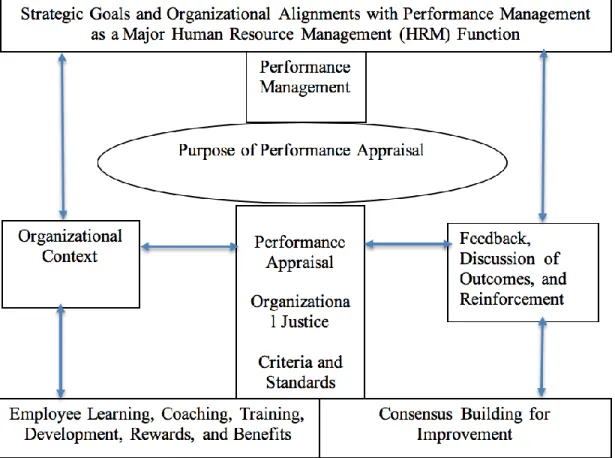
Researchers have highlighted the significant role of performance appraisals in strategic human resource management within the organizational context. Rusu et al. (2016) presented a model of a conceptual framework of employee PA that utilized the contextual factors within the human resource management function. The model in Figure
1 illustrates the role of organizational justice factors, performance criteria, and standards, consensus building agreements, feedback outcomes and employee development and training as a basis for a customized, flexible, and meaningful employee performance appraisal systems and processes to enhance individual and organizational overall performance.
Figure 1. Conceptual framework of employee performance appraisal. Adapted from the Annals of the University of Oradea: Fascicle of Management and Technological
The entire view of respondents in another study conducted, showed a positive rating towards distributive justice, procedural justice, and interpersonal justice in performance appraisal, while rating positively, the PA metrics that defined high
satisfaction with the appraisal system (Ibeogu & Ozturen, 2015). Employees place great emphasis on justice due to its relevance for important reasons, as fairness ensures that rewards are predictable and controllable (instrumental reasons), shows that ratees or recipients are valued and respected (relational reasons), and that fair treatment is a moral imperative owed by every worker (moral reason; Galanakis et al., 2015). It is not
surprising that the fairness perceptions of work outcomes, procedures, and interpersonal considerations could determine employee behavior about job satisfaction, organizational commitment, and attitudes such as citizenship behavior and job performance (Yang, Bauer, Johnson, Groer, & Salomon, 2014).
As empirical support, subjectivity increases fairness perceptions when the entire focus on subjective measures is relatively low, but subjectivity reduces fairness
perceptions when the entire emphasis on subjective measures is relatively high (Voußem, Kramer, & Schäffer, 2016). The practical implication is that supervisors of employees could boost employee performance through the proposition of utilizing organizational justice with an emphasis on their fair interaction with subordinates and teams (Khan, Anjum, Ul Amin, & Aftab, 2016). Scholars are of the view that the level of employees in an organization tended to influence their fairness perceptions while those at high levels have high perceptions of distributive, procedural, and interactional justice (Githui & Wario, 2013; Tsai & Wang, 2013).
Perceived justice and trust among employees could influence the effectiveness of the execution of the PA process and their trust towards management, and the organization tends to have a direct effect towards improving job satisfaction among employees (Bin Abdullah, Anamalai, bt Ismail, & Ling, 2015). Previous researchers on the interaction patterns between procedural and distributive fairness generally supported the fair process and impact that fair procedures and processes tended to ameliorate negative reactions to adverse decision outcomes (Lilly & Wipawayangkool, 2017). Distributive and procedural justice have a more significant influence on the ethical behavior of workers of
organizations than informational and interpersonal justice (Shah, Anwar, & Irani, 2017); so, workers’ perception of organizational justice thus became regarded as one of the main features in obtaining insights into human behavior in the organizational context (Rahman, Haque, Elahi, & Miah, 2015).
Perception theory. The theory explores the perceptions of fairness of employee performance appraisals at the workplace. It becomes critical to consider how workers perceive information collected about people, processes, and outcomes, and how their understanding impacts their decision making. According to Norman and Kabwe (2015), perception is about acquiring, receiving, selecting, transforming, and organizing
information supplied or received by senses that could be described as a process whereby people choose, organize, and interpret sensory stimulation into a consistent and relevant picture of the real-world situation. Perceived fairness is a critical dimension of PA for employee motivation and job satisfaction (Iqbal et al., 2015). Norman and Kabwe maintained that although some workers considered the same sensory input as one or the