Mindfully Managing Life Experiences Together by
Devon C. Kardel
A thesis submitted in partial fulfillment of the requirements for the degree of
Master of Science (Psychology)
in the University of Michigan–Dearborn 2018
Master’s Thesis Committee:
Acknowledgements
Table of Contents
Acknowledgements……….……..i
List of Tables………vi
List of Appendices………...vii
Abstract………...viii
Chapter I, Introduction………1
Trauma………...1
PTSD……….………….2
Characteristics of PTSD……….3
Cognitive Changes as a Result of PTSD………6
PTSD Comorbidity with Other Types of Distress Disorders……….7
Risk Factors………8
Relationships and trauma………...10
Significant Others of Those Who Have PTSD………..…………...13
Individual Treatment for PTSD……….………..14
Group Treatment for PTSD……….……….………17
Couples-based Treatments……….18
Mindfulness-based Treatment………21
Summary and Conclusions………..…...24
Measures………27
Demographics Form……….……..27
Dyadic Adjustment Scale (DAS) ………..27
Center for Epidemiological Studies Depression Scale (CESD)………….……...28
Generalized Anxiety Disorder 7-Item Scale (GAD7)………..………….28
PTSD Checklist for DSM-5 (PCL-5)……….28
Life Events Checklist for DSM-5 (LEC-5)………28
Five-Factor Mindfulness Questionnaire (FFMQ)………..……29
Interpersonal Reactivity Index (IRI)………..………29
Brief Mindfulness Questionnaire (BMQ)………..30
Procedure……….…..30
Data Collection and Storage………..………..….31
Chapter III, Results ……….………33
Hypothesis 1………...………34
Hypothesis 2………...………35
Hypothesis 3………..…35
Hypothesis 4………..36
Chapter IV, Discussion………...37
Hypothesis 1……….38
Hypothesis 2……….………40
Hypothesis 3………..42
Limitations………...43
Strengths………...……….44
Future Research Implications for Treatment……….……44
List of Tables
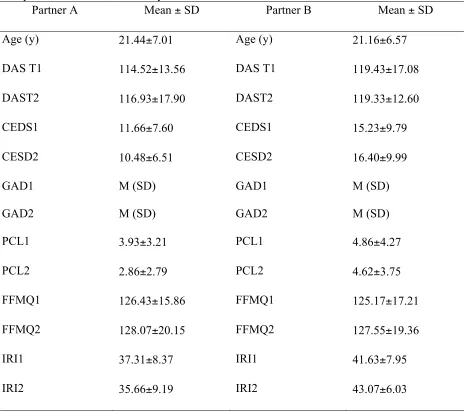
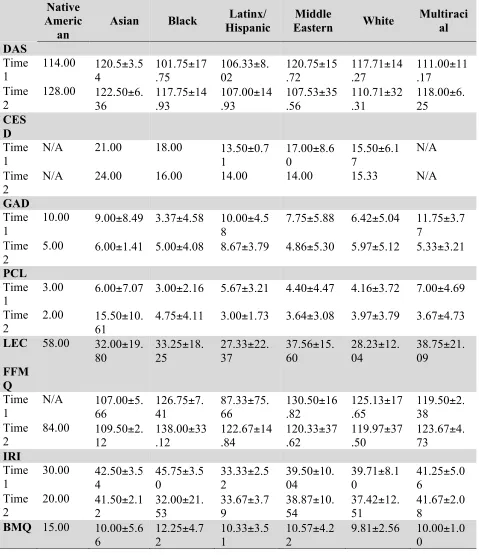
Table 1: Sample Characteristics and Study Variables Means/Standard
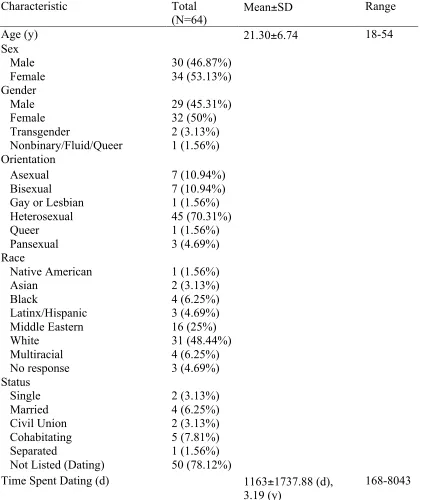
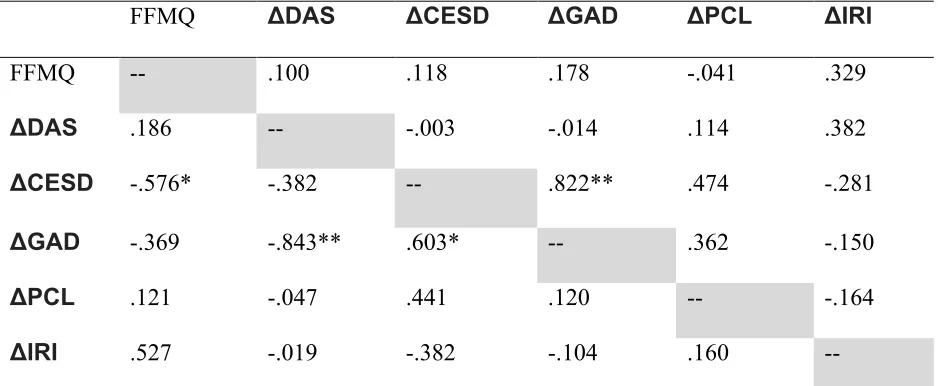
Deviations……….59 Table 2: Means and Standard Deviations by Race………..……..60 Table 3: Demographic Characteristics………..61 Table 4: Correlation between Mindfulness and Change in Psychological Distress…….62 Table 5: Correlations between Mindfulness and Change in Psychological Distress
With Trauma Considered for Partner A………..………..62 Table 6: Correlations between Mindfulness and Change in Psychological Distress
List of Appendices
Appendix A: Demographic Form………..………64
Appendix B: Dyadic Adjustment Scale (DAS) ………..……..77
Appendix C: Center for Epidemiological Studies Depression Scale (CES-D)………....………..69
Appendix D: Generalized Anxiety Disorder 7-item Scale (GAD-7) ………...……….70
Appendix E: PTSD Checklist for DSM-5 (PCL-5) ………..71
Appendix F: Life Events Checklist for DSM-5 (LEC-5) ………..72
Appendix G: Five-Factor Mindfulness Questionnaire (FFMQ) ………...………74
Appendix H: Interpersonal Reactivity Index (IRI) ………...………76
Appendix I: Brief Mindfulness Questionnaire (BMQ) ……….78
Appendix J: Consent Forms……….…..79
Appendix K: Recruitment Materials……….87
Appendix L: Psychoeducation Script………89
Appendix M: Mindfulness Pamphlet………...93
Appendix N: Meditation Scripts………..…95
Abstract
Up to 69% of the general population will experience a traumatic event across the lifetime (Resnick, Kilpatrick, Dansky, Saunders, & Best, 1993). Of this population, only
approximately 6.8% of people will go on to develop post-traumatic stress disorder (PTSD), while a larger subset will develop subthreshold symptoms of anxious, depressive, or post-traumatic stress disorders (Kessler, Berglund, et al., 2005; Kessler, Chiu, Demler, Merikangas, & Walters, 2005). Romantic relationships and social support have proven to be a powerful buffer against psychological distress (van der Kolk, Perry, & Hermann, 1991; Johnson & Rheem, 2012). Mindfulness meditation, rooted in Buddhism, has been increasing in popularity as a mental health tool and is used to treat depression, reduce stress, reduce anxiety, enhance self-perception, and assist into integrating mindfulness into everyday life (Bauer-Wu, 2010; Ledesma &
Kumano, 2009). Trauma tends to increase distress in both romantic partners which in turn can decrease relationship satisfaction. Lowering distress symptoms caused by trauma can help partners begin to rebuild relationship satisfaction. The present study examined couples and mindfulness in the context of trauma, looking to lower psychological distress while increasing relationship satisfaction and mindfulness behavior. Thirty-two (N=64) couples completed measures assessing relationship satisfaction, psychological distress, trauma history, and
Chapter I Introduction Trauma
Traumatic experiences can leave people feeling socially isolated, numb, or overly sensitized and have been associated with symptoms of depression, anxiety, and psychological distress. Experiences such as assault, serious medical conditions, war, natural disasters, and violence can create a lasting impact on a person, even if the trauma occurs many years
previously or during childhood (Sklarew & Blum, 2006). Research suggests that up to 69% of the general population will experience a potentially traumatic event (PTE)—such as sexual assault, a transportation accident, combat exposure, receiving a life-threatening medical
diagnosis, or experiencing natural disaster--throughout the lifetime (Resnick, Kilpatrick, Dansky, Saunders, & Best, 1993). Despite such a large number of people experiencing PTEs, only around 6.8% of the population will develop Post-Traumatic Stress Disorder (PTSD) following a
traumatic event (Kessler, Berglund, et al., 2005; Kessler, Chiu, Demler, Merikangas, & Walters, 2005), though people can also experience other types of psychological distress without reaching a diagnostic threshold. This means a PTE is a turning point, which considering other risk factors and individual diathesis, could lead the individual to develop psychopathology and increase their need for effective coping and stress management. Various clinical psychopathologies can
(Sayed, Iacoviello, & Charney, 2015). However, one of the most common disorders to occur following a PTE is PTSD.
PTSD
PTSD has a prevalence rate of 3.5% in the United States and encompasses 8.7% of the general population across the lifetime. People who develop PTSD can either witness or experience an event, learn of an event that happened to a close friend or family member, or be exposed to certain elements of a traumatic event (e.g. being a nurse in an emergency unit and often seeing critically injured patients; police officers repeatedly exposed to details of child abuse). Events associated with PTSD often involve threatened or actual death or assault, serious injury, or sexual violence (American Psychiatric Association, 2013; Monson, Resnick, & Rizvi, 2014). Following one of these PTEs, an individual who develops PTSD will experience
symptoms within the four DSM symptom categories of diagnostic criteria: re-experiencing (Criterion B), avoidance (Criterion C), negative changes in cognition and mood (Criterion D), and hyperarousal (Criterion E). Symptoms must persist for a duration of at least one month and cause distress to the individual (American Psychiatric Association, 2013) to be clinically diagnosed as PTSD. It is important to note that PTSD can have “delayed expression”, or symptoms may begin to occur months or even years after the trauma before diagnostic criteria can be met. Duration of symptoms may also vary, with some individuals recovering within three months—this happens in approximately one third of adults with PTSD—and other individuals maintaining clinically significant symptoms for several years. Other life events or PTEs can trigger a relapse of symptoms for the individual (American Psychiatric Association, 2013).
higher risk of PTSD (American Psychiatric Association, 2013), and at higher risk of sexual abuse by an individual close to them. Women also tend to internalize symptoms of PTSD more than men, and can experience more of a change in global beliefs and self-perception. Men tend to externalize symptoms of PTSD through means such as violence and aggression (Friedrich, Urquiza, & Beilke, 1986).
A few theoretical models of PTSD that explain the way distress from a traumatic event can develop into a disorder such as PTSD, depression, or anxiety, as not everyone who
experiences a PTE will develop psychopathology. Classical conditioning could explain the fear and distress in response to a traumatic event, and operant conditioning is a plausible cause for avoidant symptoms as well as negative changes in mood and cognition, the likelihood of certain emotions or situations causing fear arousal would prohibit people from engaging in activities that recreate that environment (Monson, Resick, & Rizvi, 2014). These ideas would also explain the relationship between trauma and anxiety as avoidance provides negative reinforcement, reducing anxiety following a stressor. According to Lang’s information-processing theory of anxiety development, repetitive exposure to a traumatic memory or flashback in a safe environment heightens anxious arousal and heightens anxiety and the fear response in the individual’s usual environment (Chemtob, Roitblat, Hamada, Carlson, & Twentyman, 1988). Also some social-cognitive studies theorize that a traumatic event completely changes an individual’s assumptions and constructs about the world and oneself are destroyed (McCann & Pearlman, 1990). The individual attempts to assign new meaning to themselves and the world, which can
understandably lead to anxiety and depression, as beliefs about things like safety, control, trust, and intimacy have now changed (Monson, Resick, & Rizvi, 2014).
Pinpointing some of the personal and social problems that individuals with the disorder can experience can come with a deeper understanding of the symptom clusters involved in PTSD diagnosis. Each of the different criterion capture a different facet of PTSD that some people may experience. Not all of the criterion need to be present for a diagnosis, but multiple symptoms may occur.
According to Criterion B, individuals experience intrusive symptoms related to the event, which begin after the event occurred. These intrusions can involve dream content, flashbacks (in which the person acts or feels as if the event were recurring), or psychological distress to certain cues (both internal and external) associated with the event (American Psychiatric Association, 2013). Monson, Resick, and Rizvi (2014) note that re-experiencing symptoms can occur in a wide variety, from fear of a car backfiring or fireworks due to it sounding like gunfire in the case of a combat veteran, or a rape survivor fearing taking showers due to feelings of vulnerability, lack of visual and auditory cues from outside the bathroom, and no obvious escape routes. Victims of PTSD have no control over these reactions to triggers, and often experience strong negative emotions regarding both the trigger and the reaction to it (Resick & Schnicke, 1992; Monson, Resick, & Rizvi, 2014). These strong reactions range from intense feelings of distress (e.g. depression, terror), to physiological reactions such as sweating, increased heart rate, and perspiration (Monson, Resick, & Rizvi, 2014).
Criterion C of PTSD symptomology involves persistent avoidance of any sort of cues or stimuli associated with the traumatic event after the event occurs (American Psychiatric
people with PTSD can find themselves slowly narrowing their lifestyles and experiences— avoiding reminders such as people, places, conversations, activities, objects, and situations, which can lead to restricted, lonely lifestyles (American Psychiatric Association, 2013). These avoidance behaviors can provide a temporary relief from negative emotions or re-experiencing symptoms, but can come with a cost of overall well-being. This experiential avoidance however can come at a cost, especially when it results in decreased social interaction and decrease in intimacy due to severity of symptoms.
Criterion D refers to negative changes to mood or cognitions associated with the
traumatic event, such as being unable to remember important details about the traumatic event, persistent and negative beliefs about oneself, others, or the world (e.g. “I am bad”, “The world is entirely dangerous.”), distorted cognitions about the cause or consequences of the event that result in self-blame or the blame of others, persistent negative emotional state, anhedonia,
detachment or estrangement from others, or a persistent inability to experience positive emotions (American Psychiatric Association, 2013). Trauma survivors can often report feeling numb, or having a flat affect. This “emotional numbing” can itself be a symptom, or be part of avoidance to prevent any strong negative emotions or re-experiencing (Monson, Resick, & Rizvi, 2014). Detachment can harm or even dwindle social support for the individual, and can even affect the ability to relate to others, tasks of daily living, and being productive. These persistent cognitions, especially ones of self-blame and result in an individual feeling strong emotions of shame or guilt, and leave them feeling very isolated (Monson, Resick, & Rizvi, 2014).
reckless/self-destructive behavior, hypervigilance, exaggerated startle response, concentration problems, and sleep disturbances (American Psychiatric Association, 2013). This hyperarousal is suggestive of trauma survivors being in a constant state of “fight or flight” to be ready for any new instances of threats or danger. This becomes an issue when the individual is primed for danger even in safe environments, and sustained hypervigilance is exhausting. Being in states of prolonged stress is damaging to overall physical health (Monson, Resick, & Rizvi, 2014; Kulka et al., 1990). Prolonged physiological stress is damaging to the brain and body, and although it is beyond the scope of this paper to review this literature, it should be noted that without effective coping/intervention there is the potential for physiological damage to occur due to emotional distress.
Cognitive changes as a result of PTSD
One important consequence of PTSD or distress after a PTE is the change in cognition that individuals can experience. Specifically, individuals report more mental defeat, negative appraisals of emotions/symptoms, perceived negative responses from others, avoidance
behaviors, and change in global beliefs from before the trauma. Researchers have identified that the overarching cognitive factor leading to symptom maintenance appears to be negative
feelings of inadequacy, individuals with PTSD can often struggle with interpreting social interactions, and can even perceive positive interactions as negative, or of pitiful intentions, or seeing the individual as weak, rather than an attempt at kindness or compassion (Dunmore, Clark, & Ehlers, 1999). Due to avoidance, detachment, and negative appraisals of social interaction, many individuals with PTSD will experience isolation and a lack of social support, which again exacerbates psychological distress and PTSD symptomology (Johnson &
Thompson, 2008; Gortst-Unsworth & Goldenberg, 1998).
PTSD comorbidity with other types of distress disorders
PTSD is comorbid with other psychological disorders up to 80%, often with disorders such as depressive disorders, panic disorders, anxiety disorders, and substance use disorders (Kessler, 1995). Past trauma can also predispose an individual to depression, suicidal behavior, substance use, fragile self-esteem, internalized aggression, somatic disturbances (i.e., insomnia or disordered eating), helplessness, pessimism, and dysregulation without meeting PTSD criteria (Sklarew & Blum, 2006). Some studies report that between 51-87% of people with PTSD also have major depressive disorder (MDD; Hankin, Spiro, Miller, & Kazis, 1999; Rytwinski, Scur, Feeny, & Youngstrom, 2013). Depressive symptoms are common following childhood traumatic events (Cloitre, Miranda, Stovall-McClough, & Han, 2005), and people who experience
severe symptoms than either disorder alone and create worse overall functioning for the individual (Bedard-Gilligan, Jakob, Doane, Jaeger, Eftekhari, Feeny, & Zoellner, 2015). Additionally, a history of any psychological trauma results in longer and more recurrent depressive episode (Zlotnick, Warshaw, Shea, & Keller, 1997).
Risk factors.
The type and the number of PTE(s) experienced by an individual has been found to predict symptom severity and disorder development (Andrews et al., 2015). A 1995 survey of 5,877 people where a majority of the sample reported a traumatic experience, 65% of men and 46% of women reported rape as their most distressing trauma, 39% reported combat exposure, 24% reported childhood neglect, and 22% reported childhood physical abuse, and half of respondents also indicated hey they had experienced multiple traumatic events (Kessler et al., 1995). Factors that increase an individual’s risk for PTSD prior to a trauma are a preexisting psychological disorder, gender (it is more prevalent in females), personality, low SES, low education, if an individual is a minority, if there is a previous traumatic experience, and if an individual has a family mental health history (Brewin, Andrews, & Valentine, 2000; Ozer, Best, Lipsey, & Weiss, 2003).
Whether an initial exposure to assault or a subsequent event caused elevated
psychopathology, or if a predisposition for psychopathology existed before the initial event is unclear, research shows that that polyvictimization—or experiencing multiple PTEs-- can grossly exacerbate psychopathology. Research on polyvictimization has found that certain types of trauma, specifically related to violence, increase symptomology of disorders such as
captivity--and among individuals whose careers often expose them to trauma (e.g. firefighters, police officers, emergency medical personnel), as well as survivors of rape, ethnic/political internment, and genocide (American Psychiatric Association, 2013).
Non-Hispanic Black and Hispanic people report higher levels of polyvictimization (and of different types of traumas, rather than the same type repeatedly) and mental health symptoms compared to Caucasians (Andrews et al., 2015), though the percentage of races/ethical
backgrounds that experience at least one traumatic event is fairly equal. (Read, Ouimette, White, Colder, & Farrow, 2011). There are also reports that different races/ethnic groups also
experience different types of traumatic events more frequently, such as African-Americans being more likely than Hispanics to be exposed to violence, child maltreatment, and crime
victimization while Hispanic-Americans are more likely to report child maltreatment, witnessing violence, and violence victimization than non-Hispanic Whites (Andrews et al., 2015).
In regards to gender, one study estimates that 66 million women in the United States alone have experienced a traumatic event, with 39% of those women experiencing physical assault, 32% experiencing completed rape, 31% experiencing sexual assault, 26% being the victim of a crime, 22% experiencing homicide of a family member or close friend, and 9% reporting natural or manmade disaster, accident, or injury (Resnick et al., 1993). However, Resnick and Kessler also found that natural disasters were less likely to be an antecedent to psychopathology compared to other PTEs (Monson, Resick, & Rizvi, 2014)
In a study conducted with Vietnam era veterans, 31% of male and 27% of female
events than the general population (Breslau, & Peterson, 2010). Also in the Vietnam era veteran study, 11% of men and 8% of women veterans reported significant distress below the threshold for a PTSD diagnosis (NVVRS; Kulka, et al., 1990). In a study conducted on veterans from Iraq and Afghanistan in more recent years, a linear relationship was seen between how many
firefights a solider had on duty and the severity of their PTSD. Being wounded or injured was also shown to produce more intense PTSD symptomology (Hoge, Castro, Messer, McGurk, Cotting, & Koffman, 2004, Hoge, Auchterlonie, & Milliken, 2006), supporting research that exposure to violence correlates to more severe psychopathology (Hodges et al., 2013).
Additionally, perceived severity of the trauma was found to be a maintenance factor, and was associated with symptom severity (Dunmore, Clark, & Ehlers, 1999). In a study conducted on veterans from Iraq and Afghanistan in more recent years, a linear relationship was seen between how many firefights a solider had on duty and the severity of their PTSD. Being
wounded or injured was also shown to produce more intense PTSD symptomology (Hoge, et al., 2004; Hoge, Auchterlonie, & Milliken, 2006), supporting research that exposure to violence correlates to more severe psychopathology (Hodges et al., 2013), as well as that the perceived severity of the trauma—especially in life threatening situations—can lead to more severe symptomology.
Relationships and Trauma
Aguirre, Smith-Osborne, & Granvold, 2012), and that a romantic partner’s support is negatively correlated with PTSD symptoms (Pietrzak et al., 2009; Feder at al., 2013; Schumm, Brigg-Phillips, & Hobfoll, 2006). In the general population, married individuals have lower rates of suicide than those who are divorced or separated (Goldsmith, 2002), implying the positive impact and vital source of protection against mental health risks that a healthy romantic relationship possesses.
Closeness and intimacy in a relationship are integral to feeling accepted, secure despite vulnerabilities, and feeling ultimately protected, nurtured, emotionally stronger, and less likely to be unable to cope with stresses presented (Cordova, 2009). It has been suggested that greater intimacy in a relationship leads to higher overall life satisfaction, (Cordova, 2009) and that best predictive factor of optimal global functioning, especially following a traumatic event, is whether or not the individual has another person whom can comfort them (van der Kolk, Perry, &
Hermann, 1991; Johnson & Rheem, 2012). In relationships where higher intimacy is reported, higher relationship satisfaction, higher self-esteem, higher sexual satisfaction, lower feelings of loneliness, lower rates of illness, and the ability to partake more frequently in forgiveness are also reported (Cordova, 2009).
After the emotional repercussions of trauma are considered, the need for safe emotional engagement with others, especially romantic partners, becomes additionally, urgently important. Romantic partner support is shown to reduce symptoms of PTSD, GAD, and depression in civilians in warzones as well as individuals exposed to a wide range of traumatic events (Mugisha et al., 2015; Neria et al., 2010; Kwako et al., 2011; Lian et al, 2014).
that when a spouse is unable to recognize the distress in their partner, the partner actually becomes additionally distressed, and the marital relationship may not be a protective factor, especially since in the case of veterans, marital relationships were reported to be the highest level of social support for the individual (Renshaw, 2010). With marital relationships being the highest level of social support, it is important that these relationships remain strong despite some
occasional hurt that is a normal part of a relationship. As we tend to feel most vulnerable with this person, being hurt may cause us to respond in a vengeful or hurtful way, or by withdrawing emotionally. Being able to respond in a compassionate way when one partner is hurt,
understanding both their emotions and your own but responding constructively helps build upon an intimate relationship (Cordova, 2009).
Emotional regulation and emotional display are essential, fundamental components of a healthy relationship (Johnson, 2004); however, these elements can be affected when one partner has experienced a trauma. As mentioned in the PTSD symptomology above, individuals who have experienced a trauma can become socially isolated and avoidant of emotionally arousing situations which can prevent emotional display or emotional engagement with a partner. If this safe emotional engagement is not possible, both personal consequences and relationship-related consequences can become even worse. Relationship problems and emotional isolation exacerbate post-traumatic distress and psychopathology, which feeds back into a relationship distress
reassuring or soothing during stressful situations. Also, having someone to soothe distress more easily helps an individual create their own self-soothing techniques (Neff, 2003) when they experience any distress.
Significant others of those who have experience PTE.
Despite the potential distress buffering role that significant others can play, romantic partners may inadvertently contribute to psychopathology. With disorder such as PTSD or depression, it could be easy for a partner to reinforce avoidance or maladaptive coping mechanisms as they may not have an adequate understanding of their partner’s symptoms or psychopathology (Boeding et al., 2013; Monson, Fredman, & Dekel, 2010), so including the partner in therapy so they know which behaviors to look out for, how to avoid reinforcing negative behaviors, and how to emotionally support their partner could provide more global, insightful support that individual therapy alone could not. Chambless (2012) suggests that bringing a romantic partner into therapy could not only help relationship problems, but give a patient with anxiety or distress more drive to remain in therapy.
either has PTSD or has experienced a trauma are more likely than non-traumatized couples to experience more crises and emotional aggression such as blaming or defensive distancing in therapy (Johnson & Rheem, 2012). So likely a therapy that incorporates the individual and their partner actively work toward creating a safe space such as mindfulness, would be beneficial for both individuals, as well as a type of therapy that could reduce PTSD, depressive, and anxiety symptoms overall.
Individual Treatment for PTSD
Many forms of individualized treatment for PTSD exist, and can be effective at treating PTSD. Four different types of therapy are predominant and empirically supported in treating PTSD: exposure-based treatment, skills-focused treatment, cognitive therapy, and combination treatments (Monson, Resick, & Rizvi, 2014).
For many individuals, exposure therapy is the first line of treatment as it has been shown to be an effective form of treatment for PTSD, and is effective across trauma types (Rauch, Eftekhari, & Ruzek, 2012). Exposure therapy began in the 1980s, and involves prolonged
more details being included each subsequent time this task is completed. Descriptions of the trauma are audio-recorded and replayed in session, and clients are assigned “homework” of listening to the recording and participating in in vivo experiences (Monson, Resick, & Rizvi, 2014). PE works through conditioning processed of habituation, extinction, and emotional processing changes that slowly desensitize clients to negative stimuli associated with the trauma (Rauch, Eftekhari, & Ruzek, 2012).
Skills-focused treatment, also known as stress-inoculation training (SIT), began as a technique to help rape survivors feel control over their fear and helping them cope (Kilpatrick & Amick, 1985; Kilpatrick, Veronen, & Resick, 1982). SIT employs several phases of therapy: preparation/psychoeducation followed by coping skills training. The preparation phase uses social learning theory to explain that fear and anxiety operate through a series of channels, the physical, the behavioral, and the cognitive channels (Lang, 1968). In the coping skills training phase, skills, a rationale for the skill, and a demonstration of the skill are taught to the client using problem areas in their life, and then the client assesses how that skill worked for them. Muscle relaxation and breathing control are common coping mechanisms used. Overall, skills-focused treatment helps clients to manage overwhelming negative feelings, control negative beliefs and thoughts directed at the self, and have the confidence and mental preparedness to engage in feared behaviors (Monson, Resick, & Rizvi, 2014).
examining how the trauma has reformed or confirmed their beliefs that the individual held prior to the trauma. In the case of CPT, the client has either changed details of the trauma to fit prior beliefs, or changed beliefs in a way that make sense in the context of their trauma (Resick, Monson, & Chard, 2007; Resick, Nishith, Weaver, Astin, & Feuer, 2002; Monson, Resnick, & Rizvi, 2014). Cognitive interventions help clients identify and challenge unrealistic thoughts and become more aware of emotions, thoughts, and events as well as their relationship between each other (Monson, Resick, & Rizvi, 2014).
Combination treatments for PTSD also exist such as cognitive-behavioral therapy (CBT), Skills Training in Affective and Interpersonal Relation (STAIR), Modification of Prolonged Exposure (MPE), and Eye Movement Desensitization and Reprocessing (EMDR). CBT is based on multiple things, such as the beliefs and behavioral mechanisms that are unique to specific disorders, as well as conceptualizing an individual client’s idiosyncrasies and patterns of thinking and behaving so that modifications to a client’s thinking and beliefs can create lasting emotional and behavior change that benefits them (Beck, 2011). STAIR and MPE go together in a two-phase treatment, with STAIR being a system that helps clients with affect regulation and interpersonal skills, skills required to benefit from a trauma-related intervention (Cloitre,
cognitively processing a trauma (Shapiro 1995; Shapiro, 1989). During an EMDR intervention, clients recall a trauma while the therapist elicits negative emotions and clients rate overall distress. Following this, therapists elicit positive cognitions that could be associated with the traumatic memory and clients rate how much they believe these positive associations. Then the therapist moves their finger back and forth in front of the client, and the client tracks this movement with their eyes while recalling the traumatic memory and focusing on any negative thoughts or feelings. The client then is asked to clear their mind and take a deep breath, and the process is repeated until the client reports low distress in the first step (Monson, Resick, & Rizvi, 2014). These modalities focus on the individual and are empirically supported to improve
outcomes, though it is important to consider that most individuals with PTSD feel very socially isolated, avoid emotional arousal, and withdraw from social situations (Monson, Resick, & Rizvi, 2014). Therefore, other modalities that focus on having others in therapy with the affected individual also show a lot of promise in reducing those distress symptoms.
Group Treatments for PTSD
Some studies have found that the best predictive factor of optimal global functioning following a traumatic event is whether or not the individual has another person whom can comfort them (van der Kolk, Perry, & Hermann, 1991; Johnson & Rheem, 2012), and social support is also shown to be negatively correlated with PTSD symptoms (Pietrzak, Johnson, Goldstein, Malley, & Southwick, 2009; Feder at al., 2013; Schumm, Brigg-Phillips, & Hobfoll, 2006). Therefore, group treatment, as opposed to individualized treatment, has several
engage and experience intimacy with others (Koss & Harvey, 2011). Social support is also shown to reduce symptoms of PTSD, GAD, and depression in civilians in warzones as well as individuals exposed to a wide range of PTEs (Mugisha, Muyinda, Malamba, & Kinyanda, 2015; Neria et al., 2010; Kwako et al., 2011; Lian et al, 2014). Having a group comprised of
individuals who have also experienced a trauma and are growing together can be the first step towards increased positive outcome expectancies.
Relational problems and emotional isolation exacerbate post-traumatic distress and psychopathology, which feeds back into a relationship distress through an unfortunate, often escalating cycle (Nelson & Wampler, 2000). Emotional regulation and emotional display are essential, fundamental components of a healthy relationship and arguably one of the most important components of any relationship (Johnson, 2004), but may be very difficult for
someone who has experienced a trauma. These difficulties may strain secure relationships, which often allow individuals to be more attuned to their own distress and reflect upon it without feeling overwhelmed (Mikulincer, 1995; Mikulincer & Florian, 1995). Group therapy can facilitate this. Having a secure relationship and a source of emotional support can change threat perception and assist with reassuring or soothing during stressful situations. Also, as noted above, having someone to soothe distress more easily helps an individual create their own self-soothing techniques (Neff, 2003) when they experience any distress. This research regarding relationships is indicative that intimate relationships where an individual feels safe and validated can play a powerful role in the healing process of individuals who have experienced a trauma. While individual therapy is undeniably effective, integrating other individuals into treatment can provide some additional benefits.
Cognitive-Behavioral Couple’s Treatments (CBCT) have been shown to work as well as individual psychotherapy in treating disorders such as depression and anxiety disorders and has been proven to increase relationship satisfaction (Daiuto, Baucom, Epstein, & Dutton, 1998; Jacobson, Dobson, Fruzzetti, Schmaling, & Salusky, 1991; O’Farrell & Fals-Stewart, 2000). Other methods of couples’ therapy such as Emotionally Focused Therapy (Brown-Bowers, Fredman, Wanklyn, & Monson, 2012), also works to relieve PTSD, anxiety, and depressive symptoms while increasing relationship satisfaction. Behavioral marital therapy (BMT) a form of couples’ therapy, helped treat wives’ depression as well as relationship distress as well as CBT did in simply targeting the disorder (Jacobson et al., 1991). A meta-analysis of couples’ therapy reports couples’ therapy is comparable to individual psychotherapy in improving depressive symptoms and is actually more effective than individual treatment in improving overall relationship satisfaction (Barbato & D’Avanzo, 2008). Since romantic partners are a large source of social support for individuals with mental health problems and tend to spend
on relationship distress, though they help psychopathology, and often do not affect the relationship directly (Baucom et al., 2014), implying that couples’ therapy could potentially better increase relationship satisfaction, and in turn additionally decrease psychopathology.
In trials of CBCT specifically geared toward PTSD, results showed CBCT improved individuals with disorders’ depressive and anxiety symptoms, but not PTSD symptoms (Monson, Schnurr, Stevens, & Guthrie, 2004; Forbes, Creamer, & Biddle, 2001; Van Etten & Taylor, 1998.) One study used cognitive behavioral couples’ treatment (CBCT) therapy for PTSD and saw no significant outcomes differences between partner mental health in the control and
experimental group (Shnaider, Pukay-Martin, Fredman, Macdonald, & Monson, 2014). Another controlled trial of CBCT for PTSD in a community sample additionally found no improvements in partner’s depressive or anxiety symptoms at the conclusion of the study (Monson et al., 2011), meaning that to improve a partner’s mental health, as well as an affected individuals PTSD, depressive, and anxious symptoms, a different empirically supported therapeutic approach may need to be taken. A new modality may be needed that more effectively improves both partners’ psychological symptoms.
In EFT, an effective mode of therapy for partners where one has experienced a trauma, a good technique to create a safe space and help soothe clients when discussing emotionally heavy information is to reflect client emotions, speak in a soft, slow voice, use simple words, and repetition in speech (Johnson & Rheem, 2012), so a modality such as meditation may prove effective in soothing both partners while creating an emotionally safe environment.
being able to identify your emotions and your partners, and respond with kindness rather than vengefulness can build upon an intimate relationship. Research has even shown when one couple becomes withdrawn, which can happen when one is hurt, this withdrawal from vulnerability is strongly predictive of relationship not working out than even conflict. However, if withdrawal can be used to center yourself before engaging in an open, compassionate discussion, it can be more useful (Cordova, 2009).
Mindfulness helps partners better empathize with each other during an argument, understand their partner’s experience and point-of-view, and comprehend their own emotions that they may not fully understand (Siegel, 2010). Mindfulness is especially useful in cases where one partner has rumination patterns that perpetuate high arousal (Siegel, 2014), symptoms consistent with both diagnoses PTSD (negative changes in cognition and mood; hyperarousal) and anxiety. In a randomized clinical trial of mindfulness and relaxation training, mindfulness led to significant decreases in ruminative thoughts (Jain et al., 2007). In a study with a sample of non-distressed, happy couples, mindfulness therapy increased couples’ feelings of intimacy and satisfaction in domains such as closeness, acceptance of one another, autonomy, and relatedness while also increasing individual optimism, spirituality, and relaxation while diminishing stress. Couples also maintained these benefits three months following the mindfulness intervention (Carson, Carson, Gil, & Baucom, 2004). If this outcome is possible with non-distressed couples, there is likely to be an effect when following a sample of distressed participants, or participants experiencing some type of psychopathology.
Mindfulness-based Treatment
experience; however, a treatment approach that is gaining attention and support in the literature is that of mindfulness. One study found PTSD symptoms were negatively linked to “acting with awareness” and nonjudgmental acceptance (Baer, 2004), which are part of the foundation of mindfulness, so it is clear mindfulness therapy could be very beneficial in teaching coping skills for these symptoms. Increases in psychological flexibility can help patients with
psychopathology learn situations when rumination is okay versus when attention should be focused elsewhere (Vujanovic, 2009). Mindfulness helps individuals to feel more in control of their current life experiences and become more in tune with their own bodies and minds as well as their needs. In addition to improvement of the self, mindfulness is associated with not only better health, but also higher relationship satisfaction (Brown, West, Loverich, & Biegel, 2007).
Mindfulness is a theoretical construct that involves awareness of a person’s current state of being, or being aware of a present reality. Mindfulness is composed of eight attitudes such as acceptance, compassion, letting it go, kindness, non-striving, trust, curiosity, and beginner’s mind. The therapeutic benefits come through non-judgment of a person’s experience and accepting that all parts of the human experience—good and bad—construct an individual’s worldview and identity. Both client and therapist are accepting of all thoughts and emotions a mindfulness mediation may bring, and experience a willingness to be in the moment, experience a moment, whether painful or pleasurable, and work on identifying thoughts, emotions, and sensations that arise (Germer, 2005). Through this process, individuals can become less
avoided. This greater openness to all experiences helps prevent avoidance that is common in disorders such as depression and anxiety (Fulton, 2005).
Mindfulness meditation, rooted in Buddhism, has been increasing in popularity as a mental health tool and is used in Mindfulness Based Cognitive Therapy (MBCT) to help treat depression, reduce stress, reduce anxiety, enhance self-perception, and assist into integrating mindfulness into everyday life (Bauer-Wu, 2010; Ledesma & Kumano, 2009) through small awareness exercises, or through tasks such as practicing diaphragmatic breathing.
Mindfulness based therapy enhances better present-centered awareness and
nonjudgmental acceptance of cognitions. Mindfulness involves attention on an object or thought and acknowledging and releasing distracting thoughts, emotions, and sensations (Garland, Gaylord, & Frederickson, 2011), for example through meditation. Meditation is a skill that individuals could practice at home, outside of a mental health clinic either alone or with their partner. In addition, mindfulness mediation is a safe form of treatment that has low risk, is inexpensive, and improves not only symptoms of stress and disorders but overall quality of life (Bauer-Wu, 2010). Mindfulness helps individuals to feel more in control of their current life experiences and become more in tune with their own bodies and minds as well as their needs.
One study examined self-compassion and the healing effect it has following trauma. Self compassion, or as the study explains, being kind and understanding toward oneself when facing distress, being mindfully aware of painful thoughts and feelings to prevent overthinking or rumination, and seeing your struggles as part of a much larger human experience (Neff, 2004), is negatively associated with depressive and anxiety symptoms (Neff, 2003). Self-compassion can also protect against psychopathology following a trauma, lowering symptoms such as
symptoms (Zeller, Yuval, Nitzan-Assayag, & Bernstein, 2014; Thompson & Waltz, 2008). The mechanism of why self-compassion in conjunction with social support reduce psychopathology is still largely not understood (Maheux & Price, 2015), but this theory of self-compassion impacting mental health sounds similar to the attitude of kindness represented in mindfulness.
Combining mindfulness and group therapy for PTSD has been shown in initial trials to decrease depressive and PTSD symptoms and increase mindfulness (Baer, 2003; Kimbrough, Magyari, Langenberg, Chesney, & Berman, 2010). Mindfulness-based Stress Reduction (MBSR) has been shown to produce significant improvement in mental health and well-being, and
arguably could be considered a form of exposure therapy (Baer, 2003). Mindfulness-based Cognitive Therapy (MBCT) has been shown to prevent depressive episodes, reduce depression recurrence for over 2 years, and improve GAD symptoms as well (King et al., 2013). MBSR for adults with a history of childhood sexual abuse lead to a self-reported decrease of depression and PTSD symptoms (Kimbrough, Magyari, Langenberg, Chesney, & Berman, 2010), and in
veterans when combined with their other treatment plans (Kearney, McDermott, Malte, Martinez, & Simpson, 2012). An 8-week pilot trial of a mindfulness based group therapy for PTSD saw adherence to treatment, good engagement in session exercises, and reduced overall PTSD symptoms, especially avoidance-based ones (King et al., 2013). Overall, there is currently not much research on mindfulness group therapy in the context of PTSD, but the initial findings and overall implications seem very promising.
Summary and Conclusions
upon relationship satisfaction and help increase social support. Mindfulness-based therapy can help increase empathy and foster healthier, less emotion-fueled communication between partners so there seems to be little doubt that a couple’s mindfulness-based therapy treatment could diminish both psychopathology and existing or residual relational problems. Empathy is especially important considering research showing that a partner not adequately understanding the other’s psychological distress actually produces additional distress (Renshaw, 2008). A partner understanding and empathizing—in the sense of being better at taking the perspective of their partner-- with the pain their partner is in could prove beneficial for both partners and help in both lowering distress and increasing relationship satisfaction.
As mentioned previously, when one romantic partner has a mental health disorder, it is likely that the other partner has developed anxious or depressive symptoms, while both partners have a lower quality of life. Mindfulness meditation could have a positive effect in all of these domains for both partners, reducing general psychological distress while also increasing
relationship satisfaction. Little research has been conducted to examine the association between relationship satisfaction, mindfulness, and psychological distress, however. Trauma tends to increase distress in both romantic partners which in turn can decrease relationship satisfaction. Lowering distress symptoms caused by trauma can help partners begin to rebuild relationship satisfaction.
Therefore, the goal of the current study is to increase romantic partners’ ability to be mindful in everyday living, help with perspective-taking and interpersonal sensitivity in
Chapter II Methods Participants
The sample was comprised of 64 undergraduate students and their romantic partner (N=64 individuals, 32 couples) in University of Michigan-Dearborn Introduction to Psychology courses who volunteer to participate in exchange for compensation. Eligibility criteria for the study included: being in a romantic relationship that has lasted a minimum of six months, both partners are over the age of 18, both partners must be willing to participate, both partners can read and write in English, and at least one partner must be a member of the SONA research participation system through the University of Michigan—Dearborn.
Measures
Demographics Form. (Appendix A) This 11-item form is a modified version of the 50-item UMB Comprehensive Demographics Questionnaire (Suyemoto et al., 2016). This modified demographic survey asks about age, sex, gender, relationship status, race, and experience with mindfulness and meditation while being considerate of individual complexities.
Dyadic Adjustment Scale (DAS). (Appendix B) The 32-item DAS is a self-report measure of relationship adjustment, assessing four main domains: partner agreement, relationship
may not be married but are in committed relationships (e.g., changing handling family finances to handling finances). Psychometric tests report adequate reliability (Graham, Liu, & Jeziorski, 2006; Spanier, 1976). Alpha for the current sample was .80.
Center for Epidemiological Studies Depression Scale (CES-D). (Appendix C) The CES-D is a 20 item self-report measure assessing depressive symptomology of the general population with a possible score between 0-60 (Radloff, 1977). Scores above 16 indicate depression.
Psychometric tests report adequate validity and reliability (Radloff, 1977; Eaton, Muntaner, Smith, Tien, & Ybarra, 2004; Murphy, 2002; Comstock & Helsing, 1976). Alpha for the current sample was .74.
Generalized Anxiety Disorder Questionnaire (GAD-7). (Appendix D) The GAD-7 is a seven item self-report questionnaire screening for severity of generalized anxiety disorder with a range of scores between 0-21, a score of 5 indicating mild anxiety, 10 indicating moderate anxiety, and 15 or above indicating severe anxiety (Spitzer, Kroenke, Williams, & Lowe, 2006). Alpha for the current sample was .88. (Swinson, 2006, Zhong et al., 2015).
The PTSD Checklist for DSM-5 (PCL-5). (Appendix E) The PCL-5 is a 20 item self-report questionnaire examining problems people can have in response to stressful experiences.
Respondents report whether in the past month they experience symptoms from within a range of “Not at all” to “Extremely”. Only four items (one from each DSM-5 symptom criterion scale) will be used for this study. (Weathers et al., 1994). The civilian version of this measure has also been used in college student populations with success (Price, Szafranksi, an Stolk-Cooke, & Gros, 2016). Alpha for the current sample was .78.
relationship to the event, whether it “Happened to me”, “Witnessed it”, “Learned about it”, “Part of my job”, “Not sure”, or “Doesn’t apply” to them. Events include natural disaster, serious accidents, assault, and combat exposure. (Weathers, 2013). Alpha for the current sample was .79. There is no formal scoring system for the LEC-5 (Weathers, 2013). However, in the current study, an informal score was created for each participant. This score used a 0-5 rating for each traumatic event on the checklist. Higher scores indicated that the individual had more direct experience with the event, thus increasing the likelihood of symptom development for the experience of the PTE.
Five Facet Mindfulness Questionnaire (FFMQ). (Appendix G) The FFMQ is a 39-item self-report questionnaire that consists of five subscales that assess observing, describing, acting with awareness, non-judging of inner experience, and non-reactivity to inner experience. Each item operates on a 5-point Likert scale of assessing if each scenario is rarely true to very often or always true. Higher scores indicate that an individual is more adept with mindfulness skills. Psychometric tests report adequate validity and reliability. (Bishop et al., 2004; Brown & Ryan,2003; Grossman et al., 2004). Alpha for the current sample was .87.
Separated by scale, alpha for the empathic concern scale was .25 and alpha for the perspective-taking scale was .44.
Brief Mindfulness Questionnaire (BMQ). (Appendix I) This measure contains four items and has not been validated or used in standard practice. The measure was created solely for use within this study to assess participants’ engagement in mindfulness during the two-week period between Time 1 and Time 2 and operates on a 5-point Likert scale. Alpha for the current sample was .83.
Procedure
The study involved two parts. Part one was an in-person session completed by the couple and part two is an in-person follow up two weeks after the first session. At the Time 1
appointment, the participant and their romantic partner came to the laboratory on the University of Michigan – Dearborn campus and were asked to verbally express eligibility based on criteria listed on SONA as well as read and sign a written consent form. At this time, participants and their partners created a “unique identifier” comprised of their birth month and phone numbers to identify the couple and to link Time 1 and Time 2 data.
Participants and their partners then independently completed a series of self-report questionnaires while seated in a manner that prevented them from seeing each others’ responses. Partners were also asked not to talk to each other during measure completion. Following the completion of the questionnaires was approximately A hour-long session comprised of
Two weeks after the couples’ participation in Time 1 of the study, each couple member returned to the lab for Time 2, the second part of the study. Time 2 included a subset of the of the same pre-mindfulness intervention measures which will include whether they practiced
mindfulness during the two-week period. Following completion of the measures, participants were debriefed and released.
Procedure was in place should a participant become visibly or unexpectedly distressed (e.g., uncontrollable tearfulness, visible symptoms of panic such as shaking, shortness of breath, or sweating) at any time during participation. If this occurred, the study was to be halted
immediately, and the participants would have been debriefed and walked to the counseling services in the University Center. This withdrawal from the study would have come without penalty. In addition, if the couple members become agitated (e.g., raised voices, acts of aggression) the study protocol will be stopped.
Data Collection and Storage
Couples’ Time 1 and Time 2 data were linked via eight-digit unique identifiers. The first four digits contained birth month of the participant followed by the last two digits of their phone number, and the last four digits will be the second participant’s information in the same format. These unique identifiers were used for data entry in SPSS and were separated from identifying information to ensure responses remained anonymous.
Chapter III Results
Prior to any data analysis, data were screened for missing data, outliers, and non-normalcy. In order to preserve sample size, outliers were left in the data set; however, analysis with and without these outliers showed similar findings. Means and standard deviations for the study can be found in Tables 1 and 2. Table 1 contains data comparatively by Partners A and B, and Table 2 contains data comparatively by race. Data analysis was conducted separately for each partner as the data was dyadic in nature and this helps reduce the non-independence of the data. It should also be noted that there were two lesbian couples who completed the study. Data from these couples were not statistical outliers so they were included in the split partner analysis. The data from the study includes 32 partner A participants and 32 partner B participants. Couples who did not return for Time 2 or who up between interventions were not included.
Examination of the demographics and study variables showed that couples were dating an average of 3.11 years (SD = 4.76 years). In the sample as a whole, only 25% (n=16) of the
sample had experience with mindfulness and 34% (n=22) engaged in some meditation. Examination of the demographics and study variables showed that on average, couples were dating an average of 3.19 years (SD = 4.76 years). In the sample as a whole, only 25% (n=16) of the sample had experience with mindfulness and 34% (n=22) engaged in some mediation. The sample was ethnically diverse with only 31 participants (48.44%) indicating that they identified as White, 16 (25%) identified as Middle Eastern, 4 (6.25%) identifying as Back, and the
Multiracial). The majority of participants reported that they were dating 78.12% (N= 50), but interestingly some participants reported other relationship categories. A full demographic profile of participants can be found in Table 3.
Although not a specific hypothesis of the study, examination of the data from the BMQ was conducted to estimate how often participants independently engaged in mindfulness meditation throughout the intervention. On item 3 of the BMQ, which asked whether participation in the study impacted the participant’s idea of what meditation/mindfulness is, participants responded with a means score of 2.81 out of 4, which indicates that even if participants did not consistently engage in mindfulness throughout the two-week period, they gained some knowledge about mindfulness and how it impacts them. This is especially important to consider as 75% of participants had no knowledge or experience with mindfulness prior to the study.
Given the study’s focus on mindfulness, relationship satisfaction, and distress in the context of trauma, trauma history was dichotomized using a median split. Although there are inherent difficulties with median split, in order to preserve sample size for the groups, this was decided to be the best option. Separate analyses were then conducted, as described below to better understand how the intervention impacted those who had trauma history or not on variables of relationship satisfaction, mindfulness, and distress.
Hypothesis 1: The study will increase romantic partners’ ability to be mindful in everyday living and increase relationship satisfaction.
reactivity index (perspective taking or empathic concern). Moreover, there was not a significant difference in scores on relationship satisfaction.
When examining this hypothesis separately for those who had experienced trauma and those who have not, results showed that there was a significant increase in relationship
satisfaction (t(12)= -7.23±6.70, p <.05) in partner A participants who had experienced trauma,
but not in partner B participants (partner A participants were predominately male).
Hypothesis 2: Symptoms of distress will be reduced between Time 1 and Time 2, particularly for those individuals who have experienced a trauma.
Next, the examination of distress was conducted. Paired sample t-tests showed that for partner A participants, there was a significant decrease in PTSD symptoms (see Table 1) as measured by the PCL from Time 1 to Time 2. No other significant differences were found between scores on measures of psychological distress between Time 1 and Time 2. When looking at those who have experience trauma and those who have not using the
dichotomized trauma variable, the significant decrease in Partner A PCL symptoms remained significant. No other differences were noted.
Hypothesis 3: Mindfulness will be associated with increases in relationship satisfaction and reduction in distress.
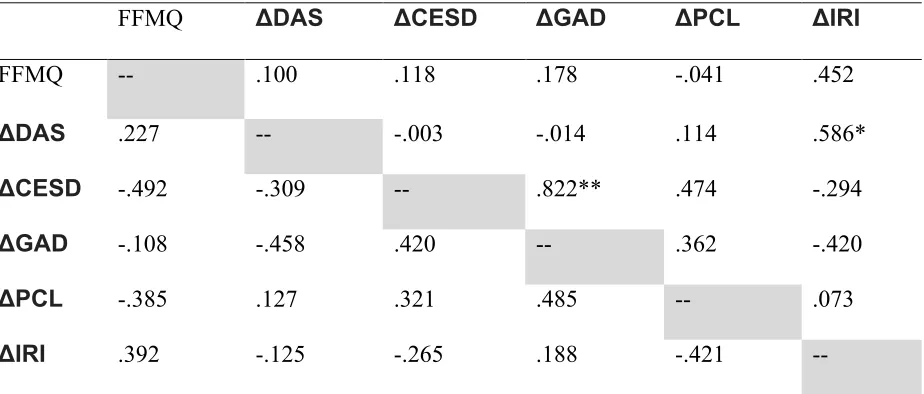
Bivariate correlations were then conducted with these change scores to examine their association to mindfulness (Time 2 as this was the most recent time point). Correlational analyses show that there were no significant associations between psychological distress and mindfulness. There was significant positive association between change in IRI and mindfulness for partner B participants; however all other associations to change scores were not significant.
Examination of the correlation between the change in variables from Time 1 to Time 2 between those who experienced trauma and those who did not can be found in Tables 5 and 6 respectively. These results show that in those individuals who experienced trauma, there was a significant negative correlation between mindfulness and the change in CESD for both partners (r = -.58, p < .05 and r = -.49, p = .05). These correlations were not significant for those who had not experienced trauma. Unfortunately, Fishers r to z transformations showed that the correlation for partner A between those who had experienced trauma and those who did not was statistically different (z=1.83, p<.05); the correlation coefficients from partner B were not statistically
different.
Hypothesis 4: Mindfulness will impact psychopathology symptoms and relationship satisfaction will act as a mediator between mindfulness and reduction in distress symptoms.
The final hypothesis for the study involved the potential mediating role of relationship satisfaction. Change in relationship satisfaction and also change in distress variables did not appear to be associated with FFMQ consistently, which would have been required to run
Chapter IV Discussion
Research suggests that up to 69% of the general population will experience a traumatic event during their lifetime (Resnick, Kilpatrick, Dansky, Saunders, & Best, 1993). The type of event and number of events experienced by an individual has been found to predict symptom severity and disorder development (Andrews et al., 2015; Hodges et al., 2013). Following a trauma, distress symptoms such as post-traumatic stress, anxiety, and depression can develop (Sklarew & Blum, 2006; Hankin et al., 2013; Kessler, 1995) and interfere with an individual’s life.
Meditation, a form of mindfulness practice, is a skill that individuals could practice at home, outside of a mental health clinic either alone or with their partner to decrease stress and negative emotion. Mindfulness meditation, has been increasing in popularity as a mental health tool and is used in Mindfulness Based Cognitive Therapy (MBCT) to help treat depression, reduce stress, reduce anxiety, enhance self-perception, and assist into integrating mindfulness into everyday life (Bauer-Wu, 2010; Ledesma & Kumano, 2009). Mindfulness based therapies can be especially effective in the context of traumatic events. These treatments have been associated with reduced PTSD symptom severity, anxious arousal, and anhedonia (Bernstein, 1986), and is also well-regarded as a mode of distress reduction (Garland, Gaylord, &
After the emotional repercussions of trauma are considered, the need for safe emotional engagement with others, especially romantic partners, becomes additionally, urgently important (Posey, 2009). Some studies have found that the best predictive factor of optimal global
functioning following a traumatic event is whether or not the individual has another person whom can comfort them (van der Kolk, Perry, & Hermann, 1991; Johnson & Rheem, 2012). Moreover, romantic partner support is also shown to reduce symptoms of PTSD, GAD, and depression in civilians in warzones as well as individuals exposed to a wide range of traumatic events (Mugisha et al., 2015; Neria et al., 2010; Kwako et al., 2011; Lian et al, 2014).
A meta-analysis of couples’ therapy reports couples’ therapy is comparable to individual psychotherapy in improving depressive symptoms and is actually more effective than individual treatment in improving overall relationship satisfaction (Barbato & D’Avanzo, 2008). Since romantic partners are a large source of social support for individuals with mental health
problems, and are particularly important in the context of trauma, it makes logical sense to use a coupes based approach to treatment of distress following trauma.
Despite the theoretical and empirical support between mindfulness based treatments and PTSD, there are only a few studies that examine this treatment modality in a couples format. Therefore, the current study looks to combine two existing and empirically supported therapy modalities to see if together they have a similar effect, or whether together they could have a more powerful effect. It was expected that a brief intervention would help not only improve relationship satisfaction, but also reduce distress in association to PTE. Overall, the results of the study did not support these hypotheses. Nonetheless the results can be examined for potential implications and provision of direction for future research.
The study’s first hypothesis predicted that couples would experience an increase in both mindfulness and relationship satisfaction between Time 1 and Time 2. Specifically, we expected to see increased levels of relationship satisfaction as well as increased scores on the FFMQ and IRI which examine mindfulness behaviors and characteristics. Unfortunately, there were not significant differences between Time 1 and Time 2 variables. Although change scores indicated that scores were at least moving in the expected direction, except for the IRI, results were typically not statistically significant. The IRI, as noted earlier, had a very low alpha even when separated by scale. This low-reliability scale may have impacted results, so the FFMQ was primarily used in analysis to assess mindfulness behaviors.
In addition to a small sample size, results may have been impacted by a restriction of
range in some variables. For instance, couples self-reported a high level of happiness in the
Time 1 measure, in fact they were actually happier than the statistical average presented for
happily married couples on the DAS scale [DAS Time 1 M=117, average DAS for happily
married couples is 114 (Graham, Liu, & Jeziorski, 2006)]. There may have been a ceiling effect for some of the interpersonal variables that were included as dependent measures.
following a trauma (Posey, 2009)-- is trying to be more mindful, the relationship may more secure and there may be an increased opportunity for additional intimacy and vulnerability, which could increase overall relationship satisfaction (Cordova, 2009). There are many possible reasons for why this may have happened, but more research may need to be done to see what current literature exists for couples therapy when the male partner has experienced a trauma.
The results for this hypothesis were surprising as current literature currently supports the role of mindfulness in couples’ therapy (Carson, Carson, Gil, & Baucom, 2004), so the factors above (sample size, homogenous sample, and brief intervention) may have had a significant effect on results. Albeit interesting, this finding should be interpreted with caution as when the sample was split in this way the same size was quite small and it may also be that this finding is simply due to Type 1 error.
Additionally, if participants were largely recruited for the study to receive course credit rather than to gain a new skill, there was little reinforcement for participants to consistently engage in mindfulness between interventions. Not only was the intervention a short introduction, but the majority of participants had no background in mindfulness (75% of participants had no knowledge/experience with mindfulness prior to the study). These aspects of the intervention may not have been sufficient, which would not result in a significant increase in mindfulness ability.
Hypothesis 2
reduction was symptoms of PTSD as measured by the PCL. This association also remained significant when those participants exposed to trauma were parceled out.
This finding is hopeful as mindfulness has been shown to be is effective in treating anxiety and PTSD (Bernstein, 1986; Garland, Gaylord, & Frederickson, 2011). This study’s finding was in line with this literature and adds some support to the use of mindfulness based couples’ treatments for individuals who have experienced PTEs. This may be particularly true for men, as this finding along with the relationship satisfaction changes were among the only significant changes noted as a result of the intervention.
It was interesting, however, that the other measures of distress were not impacted by the intervention. This is especially interesting to consider since the change scores between the depression and anxiety scales were correlated, though only the anxiety scales significantly decreased. The study examined a decrease in general distress in regards to trauma, but it should also be taken into consideration that at least half of the sample was comprised of undergraduates at the University of Michigan – Dearborn. In general, college students tend to have moderate levels of stress, and factors outside what the study considered may have contributed to overall distress and the perpetuation of it. Largely, the sample was homogenous in regards to age and academic status, so perhaps a larger or more varied sample would have provided a larger change in results, or further, participants who had a diagnosis of an anxious, depressive, or
post-traumatic stress disorder would have seen a larger change in psychopathology than participants who endorsed diagnostically subthreshold symptomology.
mindfulness as well as a and short introduction to diaphragmatic breathing and meditation, which may not have been sufficient enough to prepare participants for engaging in the process
independently. Hypothesis 3
The study expected that there would be an association between mindfulness and changes in distress and relationship satisfaction. These analyses showed that there was a change in interpersonal reactivity and mindfulness, but only for partner B participants (entirely female). This result, however, should be interpreted with caution as the reliability for the IRI was quite low for this study and conclusions should be tentative in nature. In Hypothesis 1 it was noted that males/Partner A saw an increase in relationship satisfaction and a possible explanation was that when both partners are being mindful, men may feel more emotionally secure and more satisfied in their relationship. This finding could potentially imply that when female partners are more mindful, the relationship feels more emotionally secure, and males could be more satisfied in their relationship. This relationship between males’ relationship satisfaction and females’ mindfulness ability could be arbitrary, and findings may be independent of one another. Again, results should be interpreted with caution and more research would have to be conducted to examine this relationship.
When looking at these associations between those who had trauma and those who did not, results showed that in those individuals who experienced trauma, there was a significant negative correlation between mindfulness and the change in CESD for both partners (r = -.58, p < .05 and r = -.49, p = .05). These correlations were not significant for those who had not
different (z=1.83, p<.05); the correlation coefficients from partner B were not statistically different.
The effect sizes for these associations were quite strong and it may have been that with a larger sample size this effect could be teased out. Effect can be impacted by small sample size and due to this, any effect found may not be generalizable to the larger population. Due to small sample, any effects found may have clinical significance for the purpose of the study, but further examination with a larger sample and compared to a control would need to be conducted to examine statistical significance and validity.
Hypothesis 4
The final hypothesis of the study expected to find that mindfulness was a mediator between mindfulness and psychological distress and would increase mindfulness behavior while decreasing psychological distress. According to the Kenny and Baron (1986) criterion for using multiple regression to find a mediator, since the first two hypotheses were not supported, the analysis could not be run.
Based on research and the current literature, these findings do not support a significant relationship, however, it is could be that future research that addresses some of the limitations of the study shows the expected associations. Or again, the study could imply no relationship with subthreshold symptomology, and a study looking at the effect on true diagnoses may be called for.
Strengths and Limitations of the Study