2018 International Conference on Computer, Communications and Mechatronics Engineering (CCME 2018) ISBN: 978-1-60595-611-4
Improved Method for Real-time Image Correction
Based on the Control Point
Lei CHEN, Wei-qi JIN and Xiao-yong JI
*School of Electronic Science and Engineering, Nanjing University, Nanjing, 210023, China
*Corresponding author
Keywords: Image distortion, Control point, Adaptive magnification.
Abstract. In order to correct the distortion of images taken by mobile phone and solve the problem caused by selecting control points in man-machine interaction, an improved real-time image correction method is proposed. Firstly, all corner points on the test image are identified by algorithm and control points are extracted automatically from them. Then, we calculate the correction coefficient and store them on the control point method. After the correction of the image, the effective region is adaptive amplified. The experiment shows that it can correct the image with trapezoid distortion quickly and effectively, and meet the expected functional requirements.
Introduction
With the development of mobile Internet technology, smart phones have become an indispensable part of people's work and life. It not only enriches people's life greatly and brings a lot of convenience, but also causes some problems that cannot be ignored. Many people rely too much on their mobile phones and look down at their smartphones whenever and wherever they want. Doing this so often can affect vision, damage the cervical spine and damage health. More seriously, these "phubbing" often ignore the potential safety hazards around them, resulting in various accidents and personal injury. Based this phenomenon, it is particularly important to develop a pedestrian security protection software based on the smartphone platform. One of the core of this software is that the front camera of the smart phone can collect the road image in front of the walker in real time while the "phubbing" are walking and using the mobile phone simultaneously, and then identify the road features of the image in the background and give warning prompts when danger is found.
Since there are distortions existing in the image captured by the mobile phone camera at a certain pitch angle. When the user uses the phone in the walking state, the phone will have a certain angle of tilt both in the horizontal and vertical directions, which will lead to the complex trapezoid distortion of the image taken, and affect the accuracy of subsequent image feature recognition [1].
The existing fast image correction method is based on the control point method, control points are selected by mouse click through human-computer interaction. The coordinate values of the selected points are arbitrary, and there are errors between the selected points and the ideal control points, which will lead to errors in the correction matrix coefficients, and ultimately lead to the decrease of the image distortion correction effect and recovery quality [2]. At the same time, due to the elevation angle of the mobile phone camera, the effective area of the image to be recognized will be compressed after the correction, which will affect the effect of subsequent recognition.
This paper improves the existing real-time image correction method, aiming at the existing application requirements and technical problems, which can realize the automatic extraction of control points and adaptive amplification of the effective area, and realizes the real-time correction of the image of the effective area in front of the mobile phone holder [3].
Real-time Image Distortion Correction Method Based on Control Points
Collect Standard Test Images
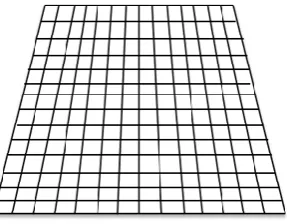
Figure 1. Board full of standard small squares.
Step 2: The adjustment range of the camera’s height and angle: take the lower left corner of mobile phone as the origin of coordinate system, take the long side of mobile phone as Y axis, the short side as X axis, When the phone is flat, Z-axis is perpendicular to the screen; pitch angle is the angle of mobile phone Y-axis rotates around X-axis, that is, the angle between the phone and the shooting plane, which is the angle between the optical axis of the camera and the vertical line of the shooting plane, Statistical analysis of its range mainly distributed in 10 to 45 degrees; the inclination angle is the angle of X-axis rotation around Y-axis, when holding the phone in the right hand, its range mainly distributed in 0 to 10 degrees, when holding the phone in the left hand, its range mainly distributed in -10 to 0 degrees. The height range of mobile phone’s camera is 110cm to 140cm.
Step 3: The adjustment rules of the camera’s height and angle: fix the mobile phone on the triangle bracket and adjust the camera to 110 cm, adjust the height in the interval of 1 cm, and adjust the rotation angle of X axis and Y axis in the interval of with 1 degree, record the height of the mobile phone camera and the rotation angle of X axis and Y axis.
Step 4: Collect a standard test image in real time, as shown in Figure 2.
Figure 2. Collect a standard test image in real time.
Extract Intersection
Identify all the intersections in the test image. The intersections are the corners of the image. Use the Harris algorithm to extract the corners of the image. The specific flow is as follows:
Step 1: Image preprocessing: After graying the collected Standard Test image, perform the Gauss smoothing filter.
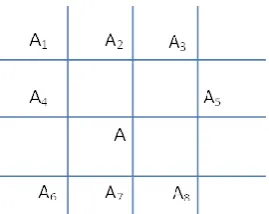
[image:2.595.233.377.435.547.2]Figure 3. Extract intersection.
Step 3: Calculate the gradient in the X direction and Y direction of each pixel I(x,y) using the transverse Prewitt difference template, defined as Ix and Iy.
Step 4: Calculate the product of the gradient by the following formula:
2
x x x
I I I
2
y y y
I I I
xy x y
I I I
2
x
I represents the gradient product of X direction, Iy2 represents the gradient product of Y
direction and Ixy represents the gradient product of X direction and Y direction.
Step 5: Use the Gauss window to filter Ix2,I2y,Ixy, and construct the autocorrelation matrix M.
The Gauss kernel function is w x y( , )exp( ( x2y2) /2). The elements M1, M and M2 3 is the autocorrelation matrix M are as follow:
2
1 x
M I w
2
2 y
M I w
3 xy
M I w
The autocorrelation matrix M is:
1 3
3 2
M M
M
M M
;
Step 6: Construct the corner response function RdetMk traceM( )2, k is the constant coefficient, traceM is the sum of the elements on the main diagonal line of matrix M. For each pixel selected in step 2, calculate its R value, select the maximum value Rmax, set the
threshold as Q R* max, Q is the constant coefficient, when the R value of a pixel is larger than the threshold, the pixel is determined as a candidate corner, the value of k and Q is generally 0.1.
Step 7: Local maximum suppression is applied to candidate corners, and a 3*3 window is used to filter the corners. The pixels whose R value is the maximum in eight-neighbor area is the corners.
Extract Control Point
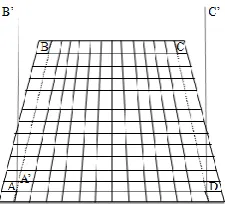
[image:4.595.237.350.150.257.2]After exacting all the intersections on the image, we need to find four vertices of the maximum distorted square contour that can be found in the image (as shown in figure 4, points A, B, C and D), and obtain the coordinates of the corresponding points in the corrected image according to the following methods. These four sets of points are the control points [4].
Figure 4. Extract control point.
Step 1: Let the upper left corner of the image be the origin of the coordinate system, vertically downward is the positive direction of the Y axis, and horizontally to the right is the positive direction of the X axis. Choose the intersection that has the maximum abscissa and the minimum abscissa from array h, that is the lower left intersection A in the image, define its coordinates as A(xa,ya). Then, extract all the intersections within +/-30 of their vertical coordinates, and treat them on the horizontal line, the Rightmost point is point D, define its coordinates as (xd,yd), the length of Line AD is L, and there are N intersections on the line;
Step2: Extract the intersection that has the maximum abscissa in the remaining intersections. Once again, extract all the intersections within +/-30 of their vertical coordinates, and treat them on the same horizontal line.
Calculate the slope of the line formed at each point and A the line whose slope is negative and the maximum is the line on the left side of the distorted square, define the point that forms this line with A as A’[5].
Step 3: Repeat step 2 and keep looking for the intersection that meets the conditions described in step 2 until the number of intersections on the line is N, and define the intersection at the top as B(xb,yb);
Step 4: Extract N-1 intersections whose abscissa is greater than B from intersections with a difference of less than 30. Define the intersection whose abscissa is the largest as C(xc,yc), and there are N intersection points on Line BC. At this point, A, B, C, D is the four vertices of the distortion square, store their coordinate values in the array d.
Step 5: Line AD is also the lower side of the standard square, and define its another two vertices as B’ and C’, their coordinate values are B’(xa,ya-L) and C’(xd,yd-L), store their them in array n [6].
Correct Images
Step 1: Use MATLAB’s function maketform to create the transformation structure TFORM. The parameters are the type 'projective' that you want to perform the transformation and the two arrays d and n obtained in the previous section. The structure will output a transformation coefficient, namely the correction coefficient k;
Adaptive Amplification of Effective Regions
[image:5.595.100.496.235.366.2]Step 1: The road information within 2m ahead is the phone needs to recognize. After the correction, we need to measure the ratio of the road within 2m distance directly in front of the walker to the whole image in the corrected image. The ratio is related to both the height of the shoot hd(which is related to walker’s height) and the angle of the shoot, but has nothing to do with the angle of the dip. Calculating the mathematical relationship between them is complicated so index is used. Each record in the table data saved on cell phone stores the height of the shoot hd, the pitch angle of the shoot, and the ratio of the effective region to the overall image in the corresponding situation t. Define the height and pitch angle as the index of each record, such as table 1 shown below:
Table 1. The index table shows the relationship between the ratio of the road within 2m distance directly in front of the walker to the whole image and the height and pitch angle.
1.10 1.11 1.12 1.13 1.14 1.15 …
10 100% 100% 100% 100% 100% 100% …
11 100% 100% 100% 100% 100% 100% …
… … … …
43 47.1% 46.9% 46.4% 45.9% 45.5% 45.3% …
44 45.6% 45.2% 44.9% 44.5% 44.1% 43.8% …
45 44.2% 43.2% 42.6% 42.3% 41.7% 41.2% …
Step 2: Take the middle point at the bottom of the image as the center, magnify the image, the magnification factor is 1/t, so that the subsequent image processing is the road information within 2m ahead.
Step 3: After the amplification is completed, the area beyond the image range is deleted, and then perform to image interpolation operations to obtain the corrected image of the effective road image within 2 meters ahead of the walker.
Experimental Analysis
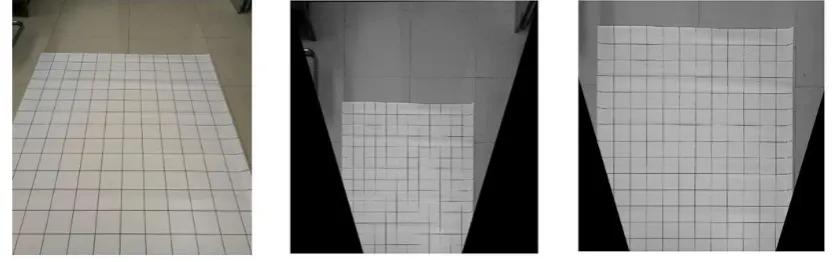
In this chapter, a large enough square is used to take the standard test image, and then calculate the correction coefficient based on the standard test image, magnify the image after the correction is completed. The results are as follows:
Experiment 1: the shooting height is 110 cm, the rotation angle of y - axis is 30 degrees, and the rotation angle of x - axis is 0.
Figure 5. The standard test image, its corrected image and magnified image in experiment 1.
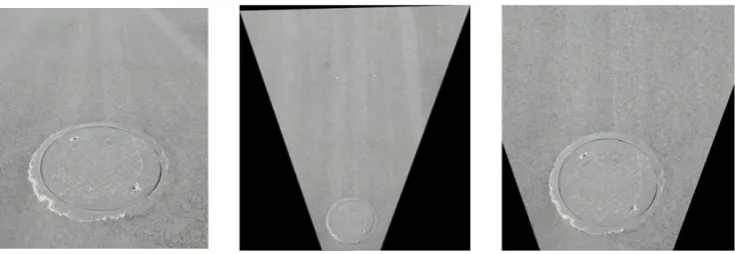
Experiment 2: the shooting height is 110 cm, the rotation angle of y - axis is 45 degrees, and the rotation angle of x - axis is 0. The image taken is the actual road.
Pitch angle hd/m
[image:5.595.87.505.562.693.2]Figure 6. The standard test image, its corrected image and magnified image in experiment 2.
The angle information used in the experiment is obtained in real time by using the directional sensor brought by the smart phone. From the experimental results, it can be seen that the algorithm proposed in this chapter can achieve fast correction of trapezoidal distortion image and meet the expected functional requirements. The algorithm can automatically extract the control points needed for calculating correction coefficients, and solve the problem caused by the selection of control points by human-computer interaction. At the same time, the effective area adaptive amplification method is applied to the corrected image, which corrects the effective area in front of walker in real time, and improves the efficiency and effect of recognition.
Summary and Outlook
This paper presents an improved method of real-time image correction based on control points, which can quickly and effectively correct trapezoidal distorted images, improves the real-time performance and correction effect of correction by automatically extracting control points, and meets the need of correct the effective area in front of walker in real time. It improves the safety protection function for “phubbing clan” and has a good practical application value. In the process of extracting control points, this method must ensure that the bottom edge of the distorted square and that of the standard square coincide, so it only corrects the distorted image generated by the rotation of the phone around the X-axis. In addition, as the mobile phone may rotate in the Z-axis direction when walking, the correction algorithm needs to be further improved to improve the accuracy of image processing.
References
[1] Kannala Juho, Brandt Sami S. A Generic Camera Model and Calibration Method for Conventional, Wide-Angle, and Fish-Eye Lenses[J]. IEEE Transactions on Pattern Analysis and Machine Intelligence, 2009, 28 (8): 1335-1340.
[2] Da - zhi Jiang, Qian Yu, Bing- yang Wang, et al. Research and overview of imaging nonlinear distortion in computer vision [J]. Computer Engineering, 2001, 27 (12): 108~110.
[3] Wagner Daniel, Reitmayr Gerhard, Mulloni Alessandro, Drummond Tom, Schmalstieg Dieter .Real-time detection and tracking for augmented reality on mobile phones. IEEE Transactions on Visualization and Computer Graphics. 2010.
[4] Shu-bin Zhang. Research on geometric distortion correction technology of text image[D]. Xi 'an: school of computer science and technology, xi'an university of electronic science and technology, 2007.
[5] Fei Xiao. Research and application of matching algorithm based on image feature extraction and feature point description [D]. University of electronic science and technology, 2013.