Energy Reduction By Using Binary Tree Based
Gateway In Wireless Sensor Network
Sachin Sharma1, Reena Chauhan2 1,2CSE Dept., ITM University
Abstract: In the recent years, WSN has become the most favourable field for the research and academia. In WSN, there are sensor nodes in the network which collect the data from the other nodes and forward it until it reaches to the destin ation or base station. In this paper, we propose a binary tree based gateway approach for saving energy of nodes by placing the base station outside the range. Then we performed the clustering on the basis of energy of each node and select cluster head. If the cluster head lose it energy then we apply gateway method to improve the whole process. By this, we create the binary tree and transfer the data from one node to another. MATLAB is used for the simulation of the entire process. In our results we proved that the energy consumption has improved.
Keywords— Wireless Sensor Network, Energy, Clustering, LEACH, HEED, DECA
I. INTRODUCTION
WSN is a universal and have ability to high infiltrate with many applications areas. It consists of nodes having limited detecting, computation, and Wi-Fi communications abilities. Sensor nodes normally sensed data and retransmit this data to the base station for example heat, vibration, motion, pressure, or pollutants.[1] In WSN, entire sensor nodes are operated by non-rechargeable battery. In many applications, it is complicated to change the battery owing to complex positioning of sensor nodes. An energy effective process of the ‘WSN’ is very essential for monitoring application and prolong lifetime of the network. Also, it is compulsory to have medium processing interval to stop delay in security applications like Industrial control, disaster monitoring, and military surveillance etc. For Energy efficiency and small latency within sensor networks ‘Tree’ and ‘Cluster’ based schemes are normally used. This paper, explained a cluster cantered approach. Mostly clustering algorithms designed for WSN, the key objective was small latency, energy efficiency and stability.[2]
Usually, Wi-Fi sensor nodes are arranged unsystematically and compactly in target area, mainly where the corporal environment is very tough that the macro-sensor counterparts cannot be deployed. After deployment, the network cannot operate accurately unless there is enough battery power. Overall, WSN can generate relatively huge amount of data, therefore the throughput can be decreased if data fusion can be utilized. For the reason that sensor nodes are efficiently deployed, WSN may produce redundant information from numerous nodes, and the redundant information may be joint to decrease transmission.
II. ENERGYEFFICIENCYWSN
Since power efficiency is very essential for WSN than any other networks, other researches have been done previously in WSN routing. Generally, data transmission in Wi-Fi communication consumes much power compare to data processing. When the nodes transmits large data then their battery power also decreased. To eliminate the data size the data fusion or aggregation techniques are used. In Data fusion the sensed data from various nodes are fused at some points appropriate for transmission in its decreased size. Even in the data aggregration concept there are two kinds of aggregation. First is data aggrgration fuses the data collected from many resources and transmit the concluding fused data in decreased size. But the trouble behind this scheme is it deficiency in accurateness and data security from many sensor nodes. The second approach combines the data from various sources under the single header and forward it to the base station. Here header packets combines and proceed it to the base station with no any alteration of actual data from the sensors. Therefore accurateness is enhanced. There are two schemes for Analysis the energy efficient WSN routing. These are, Clustering and Tree based approach
A. Clustering techniques
clustering depending routing protocols are DECA, HEED, LEACH, etc.
1) Leach:Low energy adaptive clustering hierarchy [9] uses the clustering principle to distribute the energy depletion all along its network. Here, network is alienated into Cluster heads and Clusters are chosen arbitrarily. The cluster head gathers data from nodes that are coming in its cluster. The stages included in every round within LEACH protocol.
2) Advertisement phase: This is initial stage in this protocol. The suitable cluster head nodes distribute a statement to the nodes approaching in its region to be a cluster member. The nodes grant the deal depending on the Received Signal Strength (RSS). Cluster set-up phase. In this step the nodes will be responding to their selected cluster heads.
3) Schedule creation: Afterward getting the nodes response the cluster head have to create a TDMA system and return to its cluster members to near them when they have to transmit their information to it.
4) Data transmission: The information gathered by the separate sensors will be specified to cluster head through its time interval and cluster members radio will be off to decrease its power consumption on all other time.
Multi cluster interference difficulty in the LEACH protocol was resolved by unique CDMA codes for every cluster. It supports to stop energy drain for the similar sensor nodes that has been selected as cluster leader, using randomization for every time cluster head will be altered. This is liable for accumulating information from its cluster members and fuse it. Finally every cluster head will be accelerating the fused data to the base station.
5) Heed: The main disadvantages of LEACH is the arbitrary selection of cluster head. In the bad case the CH nodes cannot be consistently distributed among the nodes and it will have its effect on the data gathering. To stop this arbitrary selection a new algorithm called HEED[6] was developed that chooses the CHs depend on remaining power level and communication charge. This protocol performed in following three phases,
a) Initialization phase: In this stage the primary CHs nodes Percentage will be specified to the nodes. It is denoted by the variable Cprob. Every sensor node calculates its prospect to develop CH through the formula, CHprob=Cprob * Eresidual/Emax where Eresidual to remaining power level of the concerned node, Emax relates to maximum battery power. Since heterogeneous sensor nodes Emax can differ for different nodes according to its functionality and capacity.
b) Repetition phase: Until CH node was found with the smallest transmission cost, this phase was iterated. If the node cannot discover the suitable CH, then the node was chosen as the CH.
c) Finalization phase: CH selection is concluded in this stage. The experimental CH now gets the concluding CH node.
6) DECA: It is improved Distributed Efficient Clustering approach [5]. Difference between the DECA and HEED is how the nodes make decision and the score calculation. The ateps includes in DECA are,
a) Start Clustering: All nodes in primary stage will calculate its score with function score=w1E+w2C+w3I. E corresponds to residual energy, C stands for node connectivity, and I stand for node identifier. After some delay period the score value will be specified to the adjacent nodes with node and cluster ID if the calculated score is high.
b) Receive Clustering Message: If node is getting the higher score value than it and if it is not attached to any cluster it receives the sender node as its CH
c) Actual announcement: When novel nodes and present nodes from other cluster using a new cluster head, the CHs ID, scorevalue and cluster ID must cluster a be transmitted.
d) Finalize Clustering: This is the same as HEED protocol that the new cluster with its head is finalized for all other nodes.
B. Tree Based Approach
Another energy efficient method of information routing on the network is tree based approach. A hierarchical manner of aggregation points are formed in this method which resembles the tree structure. The source nodes are leaves and the sink node is root. The data during transmitting gets combined in the central nodes itself. PEGASIS is the very popular protocol of energy efficient routing which follows this approach.
1) Pegasis: Though the LEACH protocols have presented a factor of 8 developments when equalled with its preceding protocols
further developments were completed by retransmitting the packets to the one neighbour of node. This method had been named as „Energy Efficient Collecting within Sensor Information System‟[7]. Here in PEGASIS energy efficient is achieved by
probability to retransmit the congregated information to the base station. In few applications when the particular sensor measurement is needed it fails to give it to base station. But apart from the function of the routing protocol we can make sensor network database to follow the multi resolution scheme where the combined data will be present in the root node and the finer data can be obtained by further tree traversal mechanism. Though the Directed Diffusion[13] and Rumor routing[10] schemes comes in the tree based approach concerning energy efficiency it absences behinds PEGASIS model.[4]
III.LITERATURESURVEY
Songtao Guo (2015) et al present that ResAll algorithm converges within a small number of iterations, and achieves optimal system energy efficiency by balancing energy efficiency, data rate, transmit power and power splitting ratio.[5]
Muh. Ahyar (2012) et al present that analyse energy depletion of WSN and routing packet by routing protocol depending multipath AOMDV and single path AODV over SMAC to find out the energy efficient between Both.[6]
Anil kumar (2012) et al present that MASP is expressed as integer linear programming difficulty and then solved with the help of improved ant colony optimization. Zone based partition is applied to perform the MASP scheme.[7]
Jun Xiao (2012) et al present that hybrid algorithm not only assures the great quality of network coverage, but also enhances the energy efficiency of sensors. Simulation outcomes prove its validity.[8]
Jeong Jeong (2012) et al present the Multi-Periodic Data Aggregation (MPDA) that is a cluster depending routing protocol [9] Nguyen Duy Tan (2015) et al present that proposed protocol can be improved about 70% and 20% in comparison with PEGASIS (Power-Efficient storing in Sensor Information System) and IEEPB (An Improved Energy-Efficient PEGASIS-Based) protocols, respectively.[10]
Xiying Yo (2014) et al present that deteriorating effects of invalid CSI on energy efficiency performance and transmission reliability in co-operative communication system. It is also presented that energy efficiency may be enhanced through error correcting codes if end-to-end signal to- noise ratio in a certain range.[11]
Kaushik Gotefode (2015) et al present that improve the performance of GSTEB protocols by balancing energy consumption which prolonging the lifetime of WSN.[12]
Roopashree H.R. (2015) et al present that new tree based approach named Protected Tree based Routing with Energy Efficiency or STREE with clustering estimation along with lightweight key communications device in hierarchical routing protocol. The result of the analysis was equated with typical SecLEACH to discover that planned system guarantee improved energy efficiency and protection.[13]
Laye Hadji Diakite (2013) et al presents that WSN, the efficiency of energy and bandwidth. Energy efficiency of air interface is the concern area to advance the communication of WSN. Energy efficiency enhance the duration of sensing devices utilized in WSN, which affect the overall life of the network.[14]
IV.PROPOSEDWORK
WSN is one of growing field of research for saving energy of nodes we propose a binary tree based gateway approach for saving energy of nodes. In this work first we put base station outside in our sensor area so that this base station behave like parent node or root node to all sensor. Now in sensor area we classify or divide the network into cluster each cluster contain sensor nodes. Selection of cluster head based on highest energy or density of nodes now in sensor area each cluster has cluster head, for saving data flow when cluster head energy low at mid of data forwarding condition for this we choose one gateway node that place in middle of two clusters and when cluster head become dead node it transfer the path information to next cluster head node and for tree construction we use one child binary node approach.
A. Algorithm procedure
Step1: create rectangular area Step2: place sensor nodes
Step3: place base station outside of area Step4: data transfer we select a cluster Step5: in each 800 round we change clusters Step6: if(energy>threshhold){
B. Neighbor selection
Step1: send hello packet Step2: check response Step3: calculate distance Step4: for( i=0;i<N;i++){
Neighbourpos(I,1) =id+1Distance(i,1) = sqrt((loc(id,1)*2-loc(id+1,1))) Midpoint = neighbordistance(I,1)/2 }
Step5: exit
C. Gateway node
Gateway node select for support, when cluster head energy down than for data transfer we choose another node for data transfer. Step1: if(energyofnode<threshold){ Find getwaynode() }
Step2: find gateway node() { If(node have neighbours){ Search highest energy
Find distance If(distance is less){
Node become gateway node}}} Step3: exit
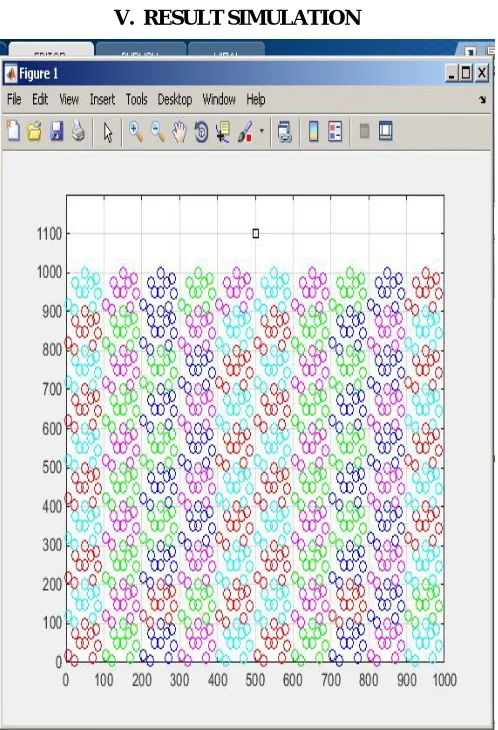
[image:5.612.188.437.338.703.2]V. RESULTSIMULATION
Figure 2. Data transfer through gateway node
Figure 3. Comparisiom of energy consumptiom
[image:6.612.199.425.512.706.2]VI.CONCLUSIONS
Wireless Sensor Network has many sensors and anchor nodes which performed the operations for the data transmission. In WSN, entire sensor nodes are operated by non-rechargeable battery. In many applications, it is complicated to change the battery owing to complex positioning of sensor nodes. For Energy efficiency and small latency within sensor networks ‘Tree’ and ‘Cluster’ based schemes are normally used. In the future, we can apply security techniques like AES or ECC to secure the data between the two cluster heads. We conclude that our proposed work has improved the network performance and efficiency.
REFERENCES
[1] Noor Zaman, Tung Jang Low and Turki Alghamdi,” Enhancing Routing Energy Efficiency of Wireless Sensor Networks”, ICACT Transactions on Advanced Communications Technology (TACT) Vol. 4, Issue 2, March 2015, pp: 587-595.
[2] Dilip D. Chaudhary and Dr. L.M.Waghmare,” Energy Efficiency and Latency Improving Protocol for Wireless Sensor Networks”, 2013International Conference on Advances in Computing, Communications and Informatics (ICACCI) IEEE, pp: 1303-1308.
[3] Zhao Han, Jie Wu, Jie Zhang, Liefeng Liu, and Kaiyun Tian,” A General Self-Organized Tree-Based Energy-Balance Routing Protocol for wireless sensor network”, ieee transactions on nuclear science, vol. 61, no. 2, april 2014, pp: 732-740.
[4] B.Baranidharan and B.Shanthi,” A Survey on Energy Efficient rotocols for Wireless Sensor Networks”, International Journal of Computer Applications (0975 – 8887) Volume 11– No.10, December 2010, pp: 35-40.
[5] Songtao Guo, Chunrong He, and Yuanyuan Yang,” ResAll: Energy Efficiency Maximization for Wireless Energy Harvesting Sensor Networks”, 2015 12th Annual IEEE International Conference on Sensing, Communication, and Networking (SECON), pp: 64- 72.
[6] Muh. Ahyar, Mohammad Yani, Elfisa and Riri Fitri Sari,” Comparison of Energy Efficiency and Routing Packet Overhead in Single and Multi Path Routing Protocols over S-MAC for Wireless Sensor Network”, 2012 UKSim-AMSS 6th European Modelling Symposium IEEE, pp: 406- 411.
[7] Anil kumar n v and anil thomas,” energy efficiency and network lifetime maximization in wireless sensor networks using improved ant colony optimization”, icccnt'i2 26th_28th july 20 12, coimbatore, india]
[8] Jun Xiao, Chenchen Qi and Lizhong Shu,” Research of Coverage Control Algorithm in Three-Dimensional Wireless Sensor Network based on Energy Efficiency”, 2012 24th Chinese Control and Decision Conference (CCDC) IEEE, pp: 3363- 3368
[9] Jeong Jeong, Se-Mi Kim, Chae-Seok Lee, and Jong-Deok Kim,” Multi-Periodic Data Aggregation Scheme Based on Interest for Energy Efficiency in Wireless Sensor Network”, 2012 9th International Conference on Ubiquitous Intelligence and Computing and 9th International Conference on Autonomic and Trusted Computing, pp: 918- 923
[10] Nguyen Duy Tan and Nguyen Dinh Viet,” SCBC: Sector-Chain Based Clustering Routing Protocol for Energy Efficiency in Heterogeneous Wireless Sensor Network”, 2015 International Conference on Advanced Technologies for Communications (ATC), pp: 314- 319.
[11] Xiying Yao, Qiang Gao and Li Fei,” Impact of outdated channel state information on energy efficiency of co-operative hybrid automatic repeat reQuest in wireless sensor networks”, IET Wireless Sensor Systems 2014, pp: 170–175
[12] Kaushik Gotefode and KishorKolhe,” Energy Efficiency in Wireless Sensor Network using Fuzzy rule and Tree Based Routing Protocol”, 2015 International Conference on Energy Systems and Applications (ICESA 2015), pp: 712- 717.
[13] Roopashree H.R. and Dr. Anita Kanavalli,” STREE: A Secured Tree based Routing with Energy Efficiency in Wireless Sensor Network”, 2015 International Conference on Computing and Communications Technologies (ICCCT’15) IEEE, pp: 25- 30