Technology (IJRASET)
Rating Of Product Using Data Mining Of Sales
Data
Pratik Pede1, Ankit Damania2, Gaurav Shah3, Satyajeet Ghole4
1,2,3,4
Department of Information Technology , Mumbai University,
Padmabhushan Vasantdada Patil Pratishthan’s College Of Engineering, Sion, Chunabhatti, Mumbai – 400022
Abstract - In this paper a new product rating approach for mathematically and graphically analyzing sales of same type of products from different manufactures and with most frequent combination of items is proposed. In product sales market there is no specific rating for product of same type and combination of product purchasing pattern. By this we retrieve the best combination of products with mathematically rating. By this rating and pattern we can make graphical representation of rating and combination of product of same type to compare them with other. Data mining provide more abstract knowledge to analyze business functionalities with retail product data. The purpose of product is to fulfill need of customer; based upon it there are different companies which manufacture products of same type, by analyzing it mathematically best one can be calculated thing such as customer satisfaction, product efficiency, popularity among them.
Keywords: Data Mining, Sales Report, Product rating, Frequent Item sets, Marketing.
I. INTRODUCTION
In this era of modern computing, the extraction of hidden predictive information from large databases is a powerful new technology with great potential to help companies focus on the most important information in their data warehouses. Data mining tools predict future trends and behaviors, allowing businesses to make proactive, knowledge-driven decisions. The automated, prospective analyses offered by data mining move beyond the analyses of past events provided by retrospective tools typical of decision support systems. Data mining tools can answer business questions that traditionally were too time consuming to resolve. They scour databases for hidden patterns, finding predictive information that experts may miss because it lies outside their expectations. This system is useful tool for giving product rating within same type of products e.g. Camera ( Sony , Canon etc) and finding the product which are sold together using web mining. Data mining of sales data gives frequent pattern of same type of product sales. It is like market basket analysis within same type of products and by representing this data graphically we get easily and quickly view type of customer. So we can target the customers which will increases sales and profit of organization. Knowing the rating of product that will attract more customers to purchase product and make decision quickly to buy products.
II. MULTIPLE DATABASES
Multiple databases is collection of multiple databases. These databases are from different location and sources. We collect these data in the form of sales report. We use multiple database mining for knowledge discovery and make decision according to improve sales. For Ex- of shopping mall, various outlets etc. There are thousands of data transactions from different sources and locations, for this purpose we use multi database
III. DATA MINING METHODS
A. Problem Statement
Suppose a customer A enters into the shop and customer sees product X,Y.Z. Customer buy product Y, because of previous frequent buying of product Y by other customers. But by this we can’t get the knowledge of behavior of customer A from database. We are using following algorithms.
B. Apriori Algorithm
Apriori algorithm is used for finding frequent patterns in database. It uses the database and association rule result to generate patterns.
C. Association Rule
Technology (IJRASET)
give ratings to the products following rules are used i.e. finding the confidence level of product from database. Individual products purchased by total number of customers.
Overall sales of each product.
By this get the product sold in increasing manner. Association of pattern of product sold together.
D. Product Rating For Retail Items
The PRRI algorithm is used to identify the top rated products based on the sales of the respective product and the total credit points accompanied by the product from the user. Here each customer gives rating for each products i.e., Cn (n) i= (1…n).
Where,
n – Number of products Cn - number of customers.
The Threshold applied in the algorithm is, Minimum number of customers=Mcn Minimum number of Credit Points=Mcp
The product will be considered for the rating if and only if it satisfies the above specified threshold value. Thus the appropriate credit points can be generated using, Cn(R) for all (n) i= (1…n).
For Example Consider.
For each item set in the product database {
Order the top products based on the top sales; }
Set count=0;
For each item set in product database {
If (count not equals to 15) {
Get the customer count i.e. Cn and the credit point’s i.e. Cp of the product; If (Cn>Mcn && Cp>Mcp)
{
Add the item set to top rated database; } Else { Skip; } }
For each item set in top rated database {
Display the Product Details; }
IV. EXISTING SYSTEM
Data mining applications are becoming increasingly popular for many applications across a set of very divergent fields. Analysis of
Technology (IJRASET)
In existing system, the organization only has the production report. In this report, we get the information about the quantity of products that are sold on daily basis. But as new customers come in market, they don’t have an idea of which product to be picked from the collection of products of the same type. Thus the customer picks random products and after using it if person does not find it efficient and this is the drawback of existing system
V. PROPOSED SYSTEM
In our System, we takes the rating from the user and also Generate rating from system by taking this further we calculate the average mathematical rating for a particular product. We also see which product sales more in the particular categories , by using above both behavior of customer and sales report we can give recommendation to the future customers and it will be very helpful to them for buying the products. The implementation of our project will be go through several steps in which there are following entities.
A. Entities
Admin:-Authenticate the user and manages the database. User:- Purchase the product and give the rating.
Sales Report:- we get the information about profit or loss of Company.
Product Report:-we get the information about the behavior of purchasing a product and its rating.
B. Entities Working In System
The entities working shows how the information flowing in system. This system consists of 4 level of system work which show different functionality of system and we also get to know about the output coming from the input data.
1) Admin And Users Relation: In this, we have two entities namely admin and user. In which admin manages the user, product and also manages stores. Users first have to register and then login in the system. Afterwards he can view the products and if he have interest then he can purchase the products.
2) Admin Management: In this process, admin manages the product, sales and inventory tables . Admin can view Product report monthly/yearly based upon the rating of customers.
3) Admin Manages Product: In this process, Admin can add or delete products from product table. and also he can view the products and its rating .
4) Admin Manages Sales: In this process, admin can do the work such as add sales and he can view quantity of sales product purchased by the customer and get the sales report.
VI. PLANNING
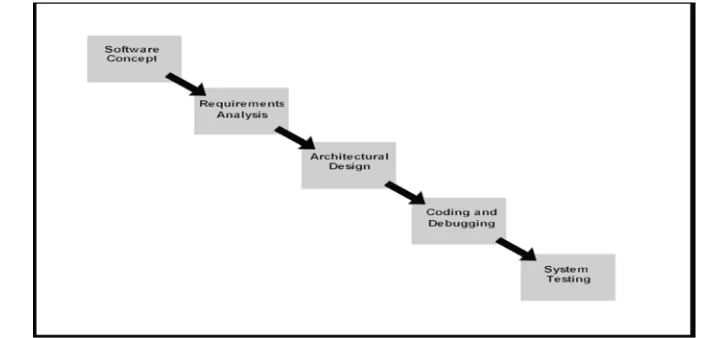
[image:4.612.124.477.545.714.2]The System Development planning is the process of developing information systems through investigation, analysis, design, implementation, and maintenance. The System Development Planning is also known as Information Systems Development or Application Development.
Technology (IJRASET)
Steps involved in the System Development:Below are the steps involved in the System Development. Each phase within the overall cycle may be made up of several steps:
A. System Concept
The first step is to identify a need for the new system. This will include determining whether a business problem or opportunity exists, conducting a feasibility study to determine if the proposed solution is cost effective, and developing a project plan. This process may involve end users who come up with an idea for improving their work. Ideally, the process occurs in tandem with a review of the organization's strategic plan to ensure that IT is being used to help the organization achieve its strategic objectives. Management may need to approve concept ideas before any money is budgeted for its development.
B. Requirements Analysis
Requirements analysis is the process of analyzing the information needs of the end users, the organizational environment, and any system presently being used, developing the functional requirements of a system that can meet the needs of the users. Also, the requirements should be recorded in a document, email, user interface storyboard, executable prototype, or some other form. The requirements documentation should be referred to throughout the rest of the system development process to ensure the developing project aligns with user needs and requirements.
Professionals must involve end users in this process to ensure that the new system will function adequately and meets their needs and expectations.
C. Architectural Design
After the requirements have been determined, the necessary specifications for the hardware, software, people, and data resources, and the information products that will satisfy the functional requirements of the proposed system can be determined. The design will serve as a blueprint for the system and helps detect problems before these errors or problems are built into the final system. Professionals create the system design, but must review their work with the users to ensure the design meets users' needs.
D. Coding and Debugging
Coding and debugging is the act of creating the final system. This step is done by software developer.
E. System Testing
The system must be tested to evaluate its actual functionality in relation to expected or intended functionality. Some other issues to consider during this stage would be converting old data into the new system and training employees to use the new system. End users will be key in determining whether the developed system meets the intended requirements, and the extent to which the system is actually used.
F. Maintenance
Inevitably the system will need maintenance. System will definitely undergo change once it is delivered to the customer. There are many reasons for the change. Change could happen because of some unexpected input values into the system. In addition, the changes in the system could directly affect the system operations. The system should be developed to accommodate changes that could happen during the post implementation period.
VII. ACKNOWLEDGEMENTS
No project can be completed without the proper guidance. We are grateful to this institute for having channelized our skills and energy and for encouraging us to work together with cooperation and co-ordination. We would like to offer my heart felt thanks and gratitude to our inspiring HEAD OF DEPARTMENT Prof.. Mahavir Devmane and PRINCIPAL Prof. Rajendra Sawant and also our Internal Guide Prof. Khandu Khot for being such a positive influence around us. We also thanks to our project partners and help of our well-wishers and colleagues. We are grateful to all the Non-Teaching staff and all our friends for giving us the helping hand.
VII. CONCLUSION
Technology (IJRASET)
minimum threshold using Association rule and rank the products. As an illustration, a sample Apriori operation research problem with customized data has been illustrated and solved based on the algorithm. It will help customer in decision making for buying any product.
REFERENCES
[1] Building an Association Rules Framework to Improve product Assortment Decisions “- Tom Brus etal, Department of Economic Science, Limburg University centre, Belgium , Data mining and Knowledge discovery , October 2013.
[2] Data mining for Customer Loyalty” – Richard Bolire – March 2011– Direct Marketing. [3] Marketing Literature” – Van der sper & Urissen -2010.
[4] analytics and data mining in retail industry – Groans’ blog.
[5] Implementation benefit to business intelligence using data mining techniques” – International Journal of Computing and Business research – Harvinder singh. [6] Integrated solutions for retailers – Feb’2004 – by Stephen Russel dephere. www.decision craft.com.
.
.