An existence of trapezoidal waveform of oscillating
motion from triangular pressure waveforms: The
case of an Oldroyd-B model
Rozaini Roslan,
Mohammed Abdulhameed and
Maselan Ali
Centre for Research in Computational Mathematics Universiti Tun Hussein Onn Malaysia 86400 Parit Raja, Batu Pahat, Johor, Malaysia
Abstract—Oscillating motion of Oldroyd-B flow in a capillary tube at a triangular sine and cosine pressure waveform is considered. An analytical solution of velocity field is obtained for an oscillating laminar flow, which can be used to determine the existence of trapezoidal waveform effect on the flow. When both triangular sine and cosine components are dominate, the oscillating flow can result in significant trapezoidal waveform performance. The dimensionless oscillating frequency, amplitude, and fluid material parameters, are primary factors affecting the flow performance of an oscillating flow in a capillary tube.
I. INTRODUCTION
Theoretical studies on the laminar oscillatory flow from a capillary tube have receive attention in the literature due to their applications in natural systems (respiratory system, circulatory system) as well as engineering systems (pulse com-bustors, reciprocating pumps). Several sinusoidal waveform profiles in a capillary tube have been studied to determine the oscillating pressure effect on the fluid flow. Richardson and Tyler [1] investigated Newtonian viscous flow in a capillary tube due to sinusoidal pressure waveform and revealed how the oscillating flow could result in a different velocity profile near the wall surface. Since then, diverse researches and studies have been devoted to oscillatory flow performance in capillary tubes. Rahaman and Ramkissoon [2] investigated viscoelastic upper convected Maxwell passed in the pipes and showed how the oscillating flow performance depend on the time-dependent pressure waveform of an arbitrary function. Hariharan et al. [3] reported a theoretical and experimental result of the peristaltic transport of non-Newtonian fluid, modeled as power law and Bingham fluid, in a diverging tube with different wall wave-forms: sinusoidal, multi-sinusoidal, triangular, trapezoidal and square waves. Results obtained suggest that square wave has the best pumping characteristics of all the waveforms, and the triangular wave has the worst characteristics. Yin and Ma [4] presented a novel analytical solution for velocity, temperature distributions and a Nusselt number for an oscillating laminar flow in a round pipe driven by a sinusoidal waveform. The result reveals that the dimensionless oscillating frequency, amplitude, and Prandtl number, have the direct effects on the heat transfer performance of an oscillating flow in a capillary tube.
Zhao and Cheng [5] showed that in addition to the sinusoidal waveform, other waveforms exist in an oscillating pipes such as the triangular waveform. The existence of triangular waveforms, made it necessary to further investigate the existence of other waveforms effect of oscillating motion on the flow rate performance of oscillating flow in a capil-lary tube. Recently, Yin and Ma [6] derived an analytical solution of laminar Newtonian flow with a triangular pressure waveform. Results reveal that the heat transfer coefficient of the oscillating flow depends on the fluid characteristics and oscillating waveform. The triangular waveform of oscillating motion can lead to a greater heat transfer coefficient.
Various rheological models have proposed and available to the literature to describe the rheological behavior of non-Newtonian fluids [7 −9]. One of this type of rheological model is the rate type fluid model described by Dunn and Rajagopal [7]. Oldroyd-B fluid is one of the subclasses of these fluid models that exhibit strange features such as elastic and memory effects exhibited by most polymer and biological fluid.
II. THEORETICAL MODELING
The Cauchy stress tensor T for an incompressible homo-geneous Oldroyd-B fluid is of the form:
T=−𝑝I+S, S+𝜆𝛿𝛿𝑡S=𝜇 [
A+𝛾𝛿𝛿𝑡A ] , (1) where 𝛿S 𝛿𝑡 = 𝑑S
𝑑𝑡 −LS−SL𝑇, 𝛿A
𝛿𝑡 = 𝑑A
𝑑𝑡 −LA−AL𝑇. (2) where−𝑝Iis the indeterminate spherical stress,Sis the extra-stress tensor, 𝜆is the relaxation time, 𝑑𝑡𝑑 is the material time differentiation, L is the velocity gradient, 𝑇 is the transpose operator, 𝜇 is the dynamic viscosity, A is the first Rivlin-Ericksen tensor and𝜆and𝛾are relaxation and the retardation time, respectively.
The flow is incompressible, the balance of the momentum in the absence of body forces is
𝜌𝑑𝑑𝑡u =−grad𝑝+ divT. (3) where the velocity is assumed to be of the form:
u=𝑢(𝑟, 𝑡)a𝑧, (4) where a𝑧 is the unit vector in the 𝑧−direction. Under the above considerations, Eq. (3) gives the following dimensional governing equations
𝜌 (
1 +𝜆∂𝑡∂ )
∂𝑢 ∂𝑡 =
(
1 +𝜆∂𝑡∂ ) (
−∂𝑝∂𝑧
)
+𝜇 (
1 +𝛾∂𝑡∂ )
( ∂2𝑢 ∂𝑟2 +
1 𝑟 ∂𝑢 ∂𝑟 ) . (5) The boundary conditions corresponding to (5) are:
∂𝑢
∂𝑟 = 0when 𝑟= 0, (6) 𝑢 = 0when 𝑟=𝑟0. (7) Consider the following non-dimensional quantities
𝑢∗ = 𝑢
𝑢𝑚, 𝑡
∗= 𝜐𝑡
𝑟2 0, 𝑟
∗= 𝑟
𝑟0, 𝜆∗
1 = 𝜐𝜆1𝑟2 0 , 𝛾
∗
3 =𝜐𝜆3𝑟2
0 , 𝐴0= 𝜇𝑢𝑚
𝑟2
0 , (8) where 𝑢𝑚 is the mean value of the velocity. Using expression (8) in (5) the dimensionless momentum and energy equations (after dropping the ∗notation):
(
1 +𝜆∂𝑡∂ )
∂𝑢 ∂𝑡 =
(
1 +𝜆∂𝑡∂ ) (
−∂𝑧∂𝑝
)
+
(
1 +𝛾∂𝑡∂ )
(
∂2𝑢(𝑟, 𝑡) ∂𝑟2 +
1
𝑟
∂𝑢(𝑟, 𝑡)
∂𝑟 )
, (9) while the boundary conditions in dimensionless form are
∂𝑢
∂𝑟 = 0 when 𝑟= 0, (10) 𝑢 = 0 when 𝑟= 1. (11)
A. Triangular (sine) pressure waveform
An infinite Fourier series describe the triangular sine pressure waveform is considered as the driving force of the investigated oscillating flow. The oscillating Oldroyd-B flow is driven by pressure difference with a trapezoidal sine waveform of amplitude 𝐴0 and frequency 𝜔, i.e.,
−∂𝑝∂𝑧 =𝐴0𝜋82
∞
∑
𝑛=1
(−1)𝑛−1
(2𝑛−1)2sin((2𝑛−1)𝜔𝑡), (12)
Here we need to solve (5) subject to (6) and (7) in the case where pressure gradient is given by (12).
Using (12) into (5), we obtained:
(
1 +𝛾∂𝑡∂ )
∂2𝑢 ∂𝑟2 +
1
𝑟 ∂𝑢 ∂𝑟 =
(
1 +𝜆∂𝑡∂ )
∂𝑢 ∂𝑡
−8𝜋𝐴02
(
1 +𝜆∂𝑡∂ )
∞
∑
𝑛=1
[𝑐𝑛sin(𝑁𝜔𝑡)], (13)
where 𝑐𝑛= (−1) 𝑛−1
𝑁2 and𝑁= (2𝑛−1).
Applying the Bessel transform [10], (13) becomes:
−(1 +𝛾∂𝑡∂)𝑠2
𝑚𝐽0[𝑢𝑡(𝑟, 𝑡)] = (
1 +𝜆∂𝑡∂ )
∂𝐽0[𝑢𝑡(𝑟, 𝑡)]
∂𝑡 − [ 8𝐴 0 𝜋2 (
1 +𝜆∂ ∂𝑡
) ∑∞
𝑛=1[𝑐𝑛sin(𝑁𝜔𝑡)] ]
×𝐽1(𝜆𝑛)
𝑠𝑚 , (14) where 𝐽0[𝑢𝑡(𝑟, 𝑡)] = ∫01𝑟𝑢𝑡(𝑟, 𝑡)𝐽0(𝑠𝑚𝑟)𝑑𝑟, 𝐽0(𝑠𝑚) = 0. Denote 𝐹(𝑠𝑚, 𝑡) =𝐽0[𝑢𝑡(𝑟, 𝑡)], then (14) becomes:
𝐹(𝑠𝑚, 𝑡) +
( 𝛾+𝑠12
𝑚 )
∂𝐹(𝑠𝑚, 𝑡)
∂𝑡
+ 𝜆
𝑠2 𝑚
∂2𝐹(𝑠 𝑚, 𝑡) ∂𝑡2 = [ 𝐴0 8 𝜋2 (
1 +𝜆∂ ∂𝑡
) ∑∞
𝑛=1[𝑐𝑛sin(𝑁𝜔𝑡)] ]
𝐽1(𝑠𝑚) 𝑠3
𝑚 . (15) Assuming the solution of (15) of the form:
𝐹(𝑠𝑚, 𝑡) =
∞
∑
𝑛=1
[𝐴𝑛cos (𝑁𝜔𝑡) +𝐵𝑛sin (𝑁𝜔𝑡)]. (16)
then (15) after rearranging yields:
⎡ ⎣ 𝐴𝑛
( 𝑁𝜋2𝑠3
𝑚−𝜆𝑁3𝜋2𝜔2𝑠𝑚)
+𝐵𝑛(𝑁2𝜋2𝜔𝑠𝑚+𝛾𝑁2𝜋2𝜔𝑠3𝑚 )
−256𝑐𝑛𝑁𝛾𝜔𝐽1(𝑠𝑚)
⎤ ⎦= 0
𝑠3
𝑚𝜋2 ,
⎡ ⎣ 𝐵𝑛
( 𝑁2𝜋2𝑠3
𝑚−𝜆𝑁4𝜋2𝜔2𝑠𝑚)
−𝐴𝑛(𝑁3𝜋2𝜔𝑠𝑚+𝛾𝑁3𝜋2𝜔𝑠3𝑚 )
+256𝑐𝑛𝛾𝐽1(𝑠𝑚)(𝜆2𝑁2𝜔2−1) ⎤ ⎦
𝑠3
By solving the system (17), the expression for 𝐴𝑛 and 𝐵𝑛 could be obtain as:
𝐴𝑛=−256𝑐𝑛𝑁𝛾𝜔𝐻1𝐽1𝑠 (𝑠𝑚)
𝑚𝜋2𝐻 , (18) 𝐵𝑛= 256𝑐𝑛𝛾𝑠𝑚𝐻2𝐽1𝜋2𝐻 (𝑠𝑚), (19) where
𝐻 = 𝑠4
𝑚+𝑁2𝜔2−2𝜆1𝑠𝑚2 𝑁2𝜔2+𝜆21𝑁4𝜔4
+2𝜆3𝑁2𝜔2𝑠2
𝑚+𝜆23𝑁2𝜔2𝑠4𝑚, (20) 𝐻1 = 1 +𝜆2
1𝑁2𝜔2−𝜆1𝑠2𝑚+𝜆3𝑠2𝑚, (21)
𝐻2 = 1 +𝜆1𝜆3𝑁2𝜔2. (22)
Hence, the expression for 𝐹(𝑠𝑚, 𝑡)can be written as: 𝐹(𝑠𝑚, 𝑡) =8𝜋𝐴02
∞
∑
𝑛=1 (
𝑐𝑛𝑁𝑄𝑛𝑚 𝐻
𝐽1(𝑠𝑚)
𝑠𝑚 )
, (23)
[image:3.612.372.565.103.405.2]where 𝑄𝑛𝑚=−𝑁𝜔𝐻1cos (𝑁𝜔𝑡) +𝑠2𝑚𝐻2sin (𝑁𝜔𝑡).
Fig. 1. Waveform effects on velocity distribution at𝐴0= 0.01and𝜔=𝜋
7
: (a) Newtonian fluid and (b) Oldroyd-B fluid
Applying the inverse Bessel transform
𝑢(𝑟, 𝑡) =16𝜋𝐴02 ∑∞
𝑚=1 [∞
∑
𝑛=1 (
𝑐𝑛𝑁𝑄𝑛𝑚 𝐻
)
𝐽0(𝑠𝑚𝑟)
𝑠𝑚𝐽1(𝑠𝑚) ]
. (24)
Fig. 2. Waveform effects on velocity distribution at𝐴0= 0.1and𝜔=𝜋
7
: (a) Newtonian fluid and (b) Oldroyd-B fluid
where 𝐽1 is the Bessel function of first kind of order one and 𝑠𝑚 is the eigenvalue of the Bessel function of first kind of order zero.
Making 𝜆=𝛾= 0,into (20)-(22), the case of Newtonian fluid, (24) becomes identical with that obtained by Yin and Ma [4].
B. Triangular (cosine) pressure waveform
In this case, an infinite Fourier series describe the triangular cosine pressure waveform is considered as the driving force of the investigated oscillating flow:
−∂𝑝∂𝑧 =𝐴0𝜋82
∞
∑
𝑛=0
cos((2𝑛+ 1)𝜔𝑡)
(2𝑛+ 1)2 . (25)
Using the same methodology in the preceding analysis, we obtain the velocity field as:
𝑢(𝑟, 𝑡) =16𝜋𝐴02 ∑∞
𝑚=1 [∞
∑
𝑛=1 (
𝑅𝑛𝑚 𝑁1𝐻
)
𝐽0(𝑠𝑚𝑟)
𝑠𝑚𝐽1(𝑠𝑚) ]
. (26)
where 𝑁1 = (2𝑛+ 1) and 𝑅𝑛𝑚 = 𝑁1𝜔𝐻1cos (𝑁1𝜔𝑡) + 𝑠2
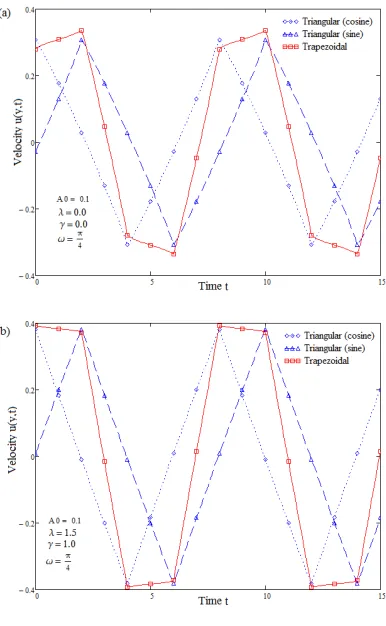
[image:3.612.103.299.329.640.2]Fig. 3. Waveform effects on velocity distribution at𝜔=𝜋
4 and𝐴0= 0.01
: (a) Newtonian fluid and (b) Oldroyd-B fluid
C. Velocity field: A Trapezoidal waveform solution
It is worth point out that the trapezoidal can be deduce as the sum between the triangular (sine) and triangular (cosine), i.e.
𝑢𝑡𝑟𝑎(𝑟, 𝑡) =𝑢𝑡𝑟𝑖(sin)(𝑟, 𝑡) +𝑢𝑡𝑟𝑖(cos)(𝑟, 𝑡). (27) where 𝑢𝑡𝑟𝑖(sin) is the solution given by (24) and 𝑢𝑡𝑟𝑖(cos) is the solution given by (26)
III. RESULTS AND DISCUSSION
The transient velocity given by (24), (26) and (27) are plotted in Figs. 1-4 for a Newtonian fluid for which𝜆=𝛾= 0 and an Oldroyd-B fluid for which 𝜆∕= 0 and 𝛾 ∕= 0. In all these figures, the trapezoidal waveform profile is generated from existing triangular waveform of the same amplitude and frequency. Also, from these figures, it is observed that the vari-ation for waveform effects with the classical Newtonian and Oldroyd-B fluids are distinct. The Oldroyd-B has the maximum waveform effect as compared with classical Newtonian fluid.
Figs. 1 and 2 illustrates the effect of the pressure os-cillating amplitude, 𝐴0, at 𝜔 = 𝜋
7, on the transient velocity
[image:4.612.373.566.102.415.2]distribution. As noted, the amplitude of the oscillating pressure
Fig. 4. Waveform effects on velocity distribution at𝜔=𝜋
4 and𝐴0= 0.1
: (a) Newtonian fluid and (b) Oldroyd-B fluid
significantly affects the transient velocity distribution. When the amplitude of the oscillating pressure is equal to 0.001 as shown in Fig. 1, the peak of the oscillating velocity distribution can reach 0.035, but when the amplitude of the oscillating pressure increases further to0.1 as shown in Fig. 2, the peak velocity can reach can reach 0.035. These results indicate that maximizing the oscillating amplitude can enhance velocity distribution for both triangular and trapezoidal waveforms.
Figs. 3 and 4 demonstrated the effect of frequency on an oscillating motion. By considering the higher value of the frequency different from the previous figures, i.e.,𝜔 = 𝜋
4.
These results indicate that maximizing the oscillating fre-quency can enhance velocity distribution. Large waveform effects are observed with the value 𝐴0 = 0.1 in Fig. 3 as compared with Figs. 3.
IV. CONCLUSIONS
Oldroyd-B fluid oscillating motions. Results show the existence of trapezoidal waveform of transient velocity distribution as a sum of sine and cosine triangular waveforms. For an oscillating flow driven by a triangular and trapezoidal waveforms, when the oscillating frequency increases or when the amplitude increases, the oscillating motion can enhance the velocity distribution. The waveform effect of an Oldroyd-B fluid is similar to the classical Newtonian. However, the Oldroyd-B fluid oscillating motion can result in a higher peak velocity.
ACKNOWLEDGMENT
The authors would like to acknowledge the financial sup-port received from the Universiti Tun Hussein Onn Malaysia (UTHM) GIPS/1157 and U112.
REFERENCES
[1] E.G. Richardson and E. Tyler. The transverse velocity gradient near the mouths of pipes in which an alternating or continuous flow is established. Proc. Phys. Soc., London, 42 : 115, 1929.
[2] K.D. Rahaman and H. Ramkissoon. Unsteady axial viscoelastic pipe flows.J. Non-Newtonian Fluid Mech., 57(1): 27–38, 1995.
[3] P. Hariharan, V. Seshadri and R. K. Banerjee . Peristaltic transport of non-Newtonian fluid in a diverging tube with different wave forms.Math. Comput. Modelling, 48(7): 998-1017, 2008.
[4] D Yin and HB Ma. Analytical solution of oscillating flow in a capillary tube.Int. J. of Heat and Mass Transfer, 66: 699–705, 2013.
[5] N Zhao, H Ma, and X Pan. Wavelet analysis of oscillating motions in an oscillating heat pipe. in: Proceedings of the ASME 2011 International Mechanical Engineering Congress and Exposition November 1117, 2011, Denver, Colorado, USA, IMECE2011-63632: 545–549, 2011. [6] D Yin and HB Ma. Analytical solution of heat transfer of oscillating flow
at a triangular pressure waveform.Int. J. of Heat and Mass Transfer, 70: 46–53, 2014.
[7] J.E. Dunn and K. R. Rajagopal. Fluids of differential type: critical review and thermodynamic analysis.Int. J. Eng. Sci., 33(5): 689-729, 1995. [8] J.G. Oldroyd. On the formulation of rheological equations of state.Proc.
R. Soc. London A., 200: 523-541, 1950.
[9] R. S. Rivlin and J. L. Ericksen. Stress-deformation relations for isotropic materials.J. Ration. Mech. Anal., 4(3): 323-425, 1955.