PERFORMANCE EVALUATION OF
BIODEGRADABLE METALWORKING FLUIDS
FOR MACHINING PROCESS
NORFAZILLAH BINTI TALIB
PERFORMANCE EVALUATION OF BIODEGRADABLE METALWORKING FLUIDS FOR MACHINING PROCESS
NORFAZILLAH BINTI TALIB
A thesis submitted in
fulfillment of the requirement for the award of the Doctor of Philosophy in Mechanical Engineering
Faculty of Mechanical and Manufacturing Engineering Universiti Tun Hussein Onn Malaysia
iii
ACKNOWLEDGEMENT
Alhamdulillah, first of all, all praises is for Allah SWT, the most gracious and the most merciful, who has given me His guidance and blessing in finishing this thesis, entitled “Performance Evaluation of Biodegradable Metalworking Fluids for Machining Process”.
I would like to convey my deepest gratitude to those who have assisted and inspired me in completing this study. I wish to express my sincere thanks to my supervisor Assoc. Prof. Dr. Erween Bin Abd. Rahim and my co-supervisor Dr. Ramdziah binti Md. Nasir for their continuous support, guidance and valuable suggestions throughout the progress of this study. I would also like to express my appreciation to Universiti Tun Hussein Onn Malaysia (UTHM), Johor and the Ministry of Education Malaysia for the financial support given through the Academic Staff Bumiputera Training Scheme (SLAB) during the period of study.
I am grateful and indebted to the academic and laboratory staffs of UTHM who either directly or indirectly helped or supported me in various ways during the experimental stages. Many thanks are also extended to all Precision Machining Research Center (PREMACH) group members, research fellows, and my precious friends.
ABSTRACT
v
ABSTRAK
TABLE OF CONTENTS
TITLE i
DECLARATION ii
ACKNOWLEDGEMENT iii
ABSTRACT iv
TABLE OF CONTENTS vi
LIST OF TABLES xii
LIST OF FIGURES xv
LIST OF SYMBOLS AND ABBREVIATIONS xxi
LIST OF APPENDICES xxvii
CHAPTER 1 INTRODUCTION 1
1.1 Background of study 1
1.2 Problem statement 3
1.3 Aim and objectives 6
1.4 Scopes of the research 6
1.5 Organization of thesis 8
CHAPTER 2 LITERATURE REVIEW 9
2.1 Introduction 9
2.2 Sustainable manufacturing 9
2.3 Metalworking fluids in machining process 12
2.3.1 Flood coolant 14
2.3.2 Dry machining 15
2.3.3 Minimum quantity lubrication 16
2.3.4 Cryogenic cooling 17
2.4 Metal cutting 18
2.4.1 Orthogonal cutting mechanism 18
vii
2.4.3 Cutting temperature 22
2.4.4 Chip formation 28
2.4.5 Tool chip contact length 30
2.4.6 Specific energy 32
2.4.7 Tool wear 33
2.5 Lubricant sources 37
2.5.1 Mineral-based lubricant 37
2.5.2 Synthetic-based lubricant 38
2.5.3 Vegetable-based lubricant 40
2.5.4 Polyol ester 44
2.6 Modification methods for vegetable-based
metalworking fluids 45
2.6.1 Chemical modification 46
2.6.2 Additive reformulation 50
2.6.3 Genetic modification 53
2.7 Physicochemical properties 54
2.7.1 Viscosity and viscosity index 54
2.7.2 Density 55
2.7.3 Flash point 55
2.7.4 Acid value 55
2.7.5 Water content 56
2.7.6 Lubricant storage (oxidative stability) 56 2.8 Tribological behaviour of vegetable-based
lubricant 57
2.9 Applications of vegetables-based metalworking
fluids in machining process 61
2.9.1 Turning process 68
2.9.2 Drilling process 72
2.9.3 Grinding process 74
2.9.4 Milling process 76
2.10 Effect of additive particles in lubricant for
machining processes 77
2.11 Jatropha oil as potential bio-based metalworking
2.12 Hexagonal boron nitride (hBN) as an additive in
metalworking fluid 81
2.13 Summary 85
CHAPTER 3 MODIFICATION OF CRUDE JATROPHA OIL FOR METALWORKING FLUID APPLICATION 87
3.1 Introduction 87
3.2 Experimental procedure 85
3.3 Material preparation 89
3.4 Development of modified jatropha oils as
bio-based metalworking fluids 90
3.4.1 Esterification process of crude jatropha oil 90 3.4.2 Determination of free fatty acid (FFA) value 92 3.4.3 Transesterification process of jatropha
methyl ester 94
3.4.4 Transesterification process of modified
jatropha oils 96
3.4.5 Mixture of MJOs with hexagonal boron
nitride (hBN) additive 98
3.5 Analysis of modified jatropha oil properties 100 3.5.1 Gas chromatography (GC) analysis 102
3.5.2 Density test (ASTM 4052) 104
3.5.3 Kinematic viscosity (ASTM D445) and
viscosity index (ASTM D2270) 105
3.5.4 Flash point (ASTM D93) 107
3.5.5 Acid value test (ASTM D664) 107
3.5.6 Water content (ASTM D2709) 107
3.5.7 Lubricants storage 108
3.6 Results and discussions of the development
of modified jatropha oils 109
3.6.1 Free fatty acids reduction by esterification
process 109
ix
3.6.5 Mixed with additive 118
3.7 Results and discussions of the physicochemical
properties of modified jatropha oils 120
3.7.1 Density 120
3.7.2 Viscosity and viscosity index 122
3.7.3 Flash point 127
3.7.4 Acid value 128
3.7.5 Water content 130
3.7.6 Lubricant storage (Oxidative stability) 131
3.8 Summary 136
CHAPTER 4 TRIBOLOGICAL BEHAVIOUR OF NEWLY
DEVELOP METALWORKING FLUID 137
4.1 Introduction 137
4.2 Experimental procedure 137
4.3 Four ball testing (ASTM D4172) 137
4.4 Tapping torque test (ASTM D5619) 143 4.5 Results and discussions of four ball test 144
4.5.1 Coefficient of friction 144
4.5.2 Friction torque 148
4.5.3 Wear scar diameter 150
4.5.4 Worn surface analysis 152
4.5.5 Surface roughness 158
4.5.6 Volume wear rate 162
4.6 Results and discussions of tapping torque test 164 4.6.1 Tapping torque and thrust force 164
4.6.2 Tapping torque efficiency 167
4.7 Summary 169
CHAPTER 5 EVALUATION OF MODIFIED JATROPHA OIL
IN ORTHOGONAL CUTTING PROCESS 170
5.1 Introduction 170
5.2 Experimental procedure 170
5.3 Workpiece materials: AISI 1045 171
5.4 Cutting tool 173
5.6 Minimum quantity lubrication unit 177
5.7 Cutting force measurement 178
5.8 Cutting temperature measurement 178
5.9 Chip thickness measurement 181
5.10 Tool chip contact length measurement 181
5.11 Specific energy consumption 182
5.12 Results and discussions 183
5.12.1 Cutting force 183
5.12.2 Cutting temperature 187
5.12.3 Chip thickness 192
5.12.4 Tool-chip contact length 196
5.12.5 Specific energy 203
5.13 Summary 205
CHAPTER 6 PERFORMANCES OF A MODIFIED JATROPHA OIL AS A BIO-BASED LUBRICANT
FOR GREEN MACHINING 207
6.1 Introduction 207
6.2 Experimental procedure 207
6.3 Workpiece materials: AISI 1045 209
6.4 Cutting tool 209
6.5 Experiment test set-up 210
6.6 Cutting force measurement 213
6.7 Cutting temperature measurement 213
6.8 Surface roughness measurement 214
6.9 Tool wear and tool life assessment 216
6.10 Wear mechanism analysis 218
6.11 Results and discussions 219
6.11.1 Cutting force 219
6.11.2 Cutting temperature 223
6.11.3 Surface roughness 225
6.11.4 Tool life 228
6.11.5 Wear mechanism 231
xi
CHAPTER 7 CONCLUSIONS AND RECOMMENDATIONS 242
7.1 Conclusions 242
7.2 Contributions of the research 244
7.2 Recommendations 244
REFERENCES 246
APPENDIX A 271
APPENDIX B 272
LIST OF TABLES
2.1 Biodegradability of oil-based lubricants 12
2.2 Advantages and disadvantages of MWFs 14
2.3 Examples of lubricant oils from mineral-based 38 2.4 Examples of lubricant oils from synthetic-based 39 2.5 Examples of lubricant oils from vegetable-based 40 2.6 Fatty acid structure of various vegetable oils 43
2.7 Additives in vegetable oils 51
2.8 Summary of the research in the application of vegetable- based oils as the metalworking fluids on different
machining process 63
2.9 Summary of the effects of various additive particles in
different machining processes 78
3.1 FFA range, alcohol volume and the strength of alkali 93 3.2 Specification of JME according to ASTM D6751 96
3.3 MJOs at various ratios of JME:TMP 97
3.4 MJOs at various composition of hBN 98
3.5 Physicochemical properties of hBN particles 98 3.6 The lubricant properties according to related standards 100 3.7 The lubricant properties from previous findings 100 3.8 The lubricant properties of MQL oils in the market 101
3.9 Required properties of MJOs 102
3.10 The samples of JME at different molar ratios 111 3.11 The properties of JME at different molar ratios 111 3.12 The physicochemical properties of the reproducibility
samples of E20T6 111
xiii
samples of MJO1 115
3.14 The physicochemical properties of the reproducibility
samples of MJO3 115
3.15 The physicochemical properties of the reproducibility
samples of MJO5 115
3.16 Compositions of product for the synthesis of JME with
TMP 118
3.17 The physicochemical properties for all samples 120
3.18 Density of lubricant’s sampling 121
3.19 Kinematic viscosity of lubricant’s sampling 125
3.20 Flash point of lubricant’s sampling 127
3.21 Acid value of lubricant’s sampling 129
3.22 Water content of lubricant’s sampling 130
4.1 Measurement conditions for surface roughness
measurement 142
4.2 Test parameter 143
4.3 Coefficient of friction of lubricant’s sampling 145
4.4 Friction torque of lubricant’s sampling 149
4.5 Wear scar diameter of lubricant’s sampling 151 4.6 Surface roughness of lubricant’s sampling 159
4.7 Volume wear rate of lubricant’s sampling 163
4.8 Tapping torque of lubricant’s sampling 165
4.9 Thrust force of lubricant’s sampling 165
4.10 Tapping torque efficiency for all lubricants 168
5.1 Elemental composition of AISI 1045 172
5.2 Mechanical properties and thermal properties of AISI 1045 172 5.3 Cutting tool geometry for orthogonal cutting 173 5.4 Machining conditions for orthogonal cutting 176 5.5 Cutting force of lubricant’s sampling at various feed rates
and cutting speeds 184
5.6 Cutting temperature of lubricant’s sampling at various
feed rates and cutting speeds 188
5.7 The average chip thickness of lubricant’s sampling
5.8 Shear angle of lubricant’s sampling at various feed
rates and cutting speeds 193
5.9 Tool chip contact length of lubricant’s sampling at
various feed rates and cutting speeds 198
5.10 Specific energy of lubricant’s sampling at various
feed rates and cutting speeds 204
6.1 Cutting tool geometry for turning 209
6.2 Machining conditions for turning 211
6.3 Measurement conditions for surface roughness
measurement 215
6.4 Tool wears criteria 217
6.5 Cutting force of lubricant’s sampling 220
6.6 The maximum cutting temperature of lubricant’s
sampling 224
6.7 Surface roughness of lubricant’s sampling 226 6.8 Tool life and tool failure modes for different lubricant
xv
LIST OF FIGURES
1.1 Metalworking fluids usage 2
1.2 Description of health effects on experts and workers
due to MWF’s exposure 4
1.3 The flow chart of the research scopes 7
2.1 Model-based sustainable manufacturing 11
2.2 Characteristics of sustainable machining 11
2.3 Component of metalworking fluids 13
2.4 Machining parameters 18
2.5 Three dimensional process of orthogonal cutting model 19
2.6 Two dimensional side view 19
2.7 Deformation zones in the cutting 21
2.8 Forces in metal cutting 22
2.9 Temperature measurement methods 23
2.10 Tool-workpiece thermocouple method 23
2.11 Embedded thermocouple method 24
2.12 PVD film method 24
2.13 Infrared pyrometer method 25
2.14 Infrared camera method 26
2.15 Heat generation zone 27
2.16 Distribution of temperature in the cutting zone 27
2.17 Types of chips 30
2.18 Tool-chip contact length regions 31
2.19 SEM image of the tool-chip contact length 31
2.20 Types of wear 34
2.21 Adhesion and attrition (plucking action) wear mechanisms 36
2.23 Applications of bio-based lubricant 37
2.24 Triglyceride structure 42
2.25 Oil modification methods 46
2.26 Various type of chemical modification process of
triglycerides 47
2.27 Two step acid-base catalysed transesterification chemical
formulation 47
2.28 Synthesis of TMP ester 48
2.29 The function of additives 51
2.30 Lubrication regime in Stribeck curve 59
2.31 Schematic of contacting interface in the presence of
oil with nanoparticles 60
2.32 Application of vegetable-based MWFs in machining process 62
2.33 Hexagonal boron nitride structure 82
2.34 SEM micrograph of hBN particles 82
2.35 3D Optical profilometer images of worn surface 84
2.36 Summary of literature review 86
3.1 Experimental flow chart 88
3.2 Synthetic ester (Unicut jinen) 89
3.3 Esterification reaction of jatropha oil with methanol 91
3.4 Set-up of esterification process 91
3.5 Separation process of esterified jatropha oil 92
3.6 Titration process set-up 93
3.7 Permanent pink colour of mixture solution from titration
process 93
3.8 Reaction of esterified jatropha oil with methanol 95
3.9 Separation process of JME 95
3.10 Separation of JME after washing process 96
3.11 Reaction of JME with TMP 97
3.12 Transesterification set-up for reaction of JME with TMP 97
3.13 SEM micrograph of hBN particles 99
3.14 EDS analysis of hBN particles 99
3.15 Gas chromatography (GC) device 103
xvii
chromatography analysis 103
3.17 Density test set 105
3.18 Viscometer 106
3.19 Pensky-Martens PMA 4 106
3.20 Coulometric KF titrator 108
3.21 The FFA values of CJO and esterified jatropha oil 109
3.22 Percentage yield of JME 112
3.23 The kinematic viscosity at 40 °C for modified jatropha oils 113 3.24 Bio-based MWFs at various ratios of JME:TMP 114
3.25 Percentage yield of MJOs 114
3.26 Gas chromatogram showing the position of each
group of esters namely JME, ME, DE, and TE for MJO5 117 3.27 Gas chromatogram showing the position of each
group of esters namely JME, ME, DE, and TE for MJO3 117 3.28 Gas chromatogram showing the position of each
group of esters namely JME, ME, DE, and TE for MJO1 118 3.29 Bio-based MWFs at various concentrations of hBN particles 119 3.30 Density values of the lubricants at 15 °C 121 3.31 The kinematic viscosity of CJO, SE and MJOs at
various temperatures from 30 to 100 °C 123
3.32 The kinematic viscosity of all samples at various
temperatures from 30 to 100 °C 124
3.33 The kinematic viscosity values at operating temperatures
of 40 and 100 °C and the calculated viscosity index value 125
3.34 The flash point value for all samples 127
3.35 The acid value for all samples 129
3.36 The water content value for all samples 130
3.37 Effect of long-term storage on acid value 133 3.38 Effect of long-term storage on kinematic viscosity at 40 ºC 134 3.39 The percentages of changes on acid value for various
types of lubricants 135
3.40 The percentages of changes on kinematic viscosity
for various types of lubricants 135
4.2 Four ball tester machine 139 4.3 Surface morphology of the steel ball material before
testing at 500x magnifications 140
4.4 EDS spectrum for new ball steel surface 140
4.5 Three stationary balls in the ball port 140
4.6` Schematic diagram of the four ball tester 141 4.7 Schematic diagram of tapping torque set-up 144
4.8 Tapping tool 144
4.9 Coefficient of friction for the sample of lubricants 146 4.10 Schematic diagram of lubrication film in MJO samples 146 4.11 Variation of friction torque for all samples 149 4.12 Variation of mean wear scar diameter for all samples 151 4.13 SEM micrographs of worn surface on the steel balls
at the magnifications of 50x and 500x 153
4.14 EDS spectra of worn surface of CJO 156
4.15 EDS spectra of worn surface of SE 156
4.16 EDS spectra of worn surface of MJO5 157
4.17 EDS spectra of worn surface of MJO5a 157
4.18 Variation of surface roughness of the worn surface for
all samples 159
4.19 AFM micrographs of worn surfaces 160
4.20 Variation of volume wear rate for all samples 163 4.21 Variation of average tapping torque and thrust force for
all samples 166
4.22 Relationships of tapping torque efficiency with
coefficient of friction for all samples 168
5.1 Experimental flowchart for orthogonal cutting process 171
5.2 AISI 1045 172
5.3 Kendex positive flat top insert, SPGN 120308 173 5.4 Modified Kennametal tool holder, CSDPN 2525M12 173
5.5 Orthogonal cutting set-up 175
5.6 Nozzle location 176
5.7 EcoSaver KEP-R MQL device 177
xix
5.9 Cutting force data evaluation system 179
5.10 FLIR T640 thermal imager camera 179
5.11 Image capture from orthogonal cutting process 180
5.12 Data extracted from recorded video 180
5.13 Chip thickness measurement 181
5.14 Nikon MM-60 tool makers measuring microscope 182 5.15 Tool maker microscope image at rake face 182
5.16 Cutting force results 184
5.17 Cutting temperature results 188
5.18 Chip thickness results 194
5.19 Shear angle results 185
5.20 Tool chip contact length results 198
5.21 Optical images of tool chip contact length 200 5.22 SEM micrograph of tool chip contact length 201
5.23 The specific energy results 204
6.1 Flowchart of experimental work for turning process 208 6.2 The uncoated cermet tool (TNGG220408R-UM) 210
6.3 Tool holder (MTQNR2525M22N) 210
6.4 Turning process set-up 212
6.5 Nozzle location 213
6.6 Image capture from turning process 214
6.7 Arithmetical mean of the profile (Ra) 215
6.8 Mahr roughness specimen plate 216
6.9 Four different locations of roughness at machined surface 216
6.10 Tool wears region 217
6.11 Scanning electron microscope (SEM) 218
6.12 The micrograph of new cutting tool 218
6.13 Variation of cutting forces 220
6.14 Variation of maximum cutting temperatures 224 6.15 Variation of average surface roughness (Ra) 226
6.16 Tool life for different lubricant samples 228 6.17 Progression of average flank wear (VBB) 229
6.18 Flank and rake face of the cutting tool for SE lubricant 232
6.20 Flank and rake face of the cutting tool for MJO5 lubricant 234
6.21 EDS analysis for MJO5 lubricant 234
6.22 Flank and rake face of the cutting tool for MJO3 lubricant 236 6.23 Flank and rake face of the cutting tool for MJO1 lubricant 236 6.24 Flank and rake face of the cutting tool for MJO5a lubricant 237
6.25 EDS analysis for MJO5a lubricant 237
xxi
LIST OF SYMBOLS AND ABBREVIATIONS
% - Percent, efficiency
µ - Micro
µ - Coefficient of friction µm - Micrometer
a - Radius of wear scar diameter ADDC - Antimony dialkyldithiocarbamate Al - Aluminium
Al2O3 - Aluminium oxide
AOCS - American Oil Chemist’s Society
ASTM - American Society for Testing and Material AW - Anti-wear
B - Boron
BHA - Butylated hydroxyl anisole BHT - Butylated hydroxyl toluene
BSTFA - N,O-Bis(trimethylsilyl)tri-fluoroacetamide BUE - Built-up-edge
C - Carbon C3H8O - 2-propanol
CAN - Canola oil CC - Coconut oil CH4O - Methanol
CJO - Crude jatropha oil cm - Centimeter
CNT - Carbon nanotube Co - Cobalt
cP - Centipoise CPO - Crude palm oil Cr - Chromium cSt - Centistoke
CTAB - Cetyltrimethylammonium bromide Cu - Copper
CVD - Chemical vapour deposition
d - Depth of cut DAQ - Data-acquisition DBDS - Dibenzyldisulfide
DBP - Dibutyl 3.5-di-t-butyl-hydroxy DE - Diester
DNA - Deoxyribonucleic acid DTC - Dithiocarbamates DTP - Zincdithiophosphates E - Elastic modulus EDS - X-ray spectrometer EHD - Elastohydrodynamic
EJME - Epoxidized jatropha methyl ester EJO - Esterified jatropha oil
EJRO - Epoxidized jatropha raw oil emf - Electro motive force
EP - Extreme pressure
EPME - Epoxidized pongam methyl ester EPRO - Epoxidized pongam raw oil
F - Friction force
FAME - Fatty acid methyl ester
Fc - Cutting force
Fe - Iron
FESEM - Field emission scanning microscope FFA - Free fatty acid
Fn - Normal force to friction
fr - Feed rate
xxiii
Ft - Thrust force
g - Gram
GC - Gas chromatography G-ratio - Grinding ratio H - Hydrogen
h - Hour
H2SO4 - Sulfuric acid
H3PO4 - Ortho-phosphoric acid
hBN - Hexagonal boron nitride HOSBO - High oleic soybean oil J - Joule
JME - Jatropha methyl ester k - Volume wear rate KOH - Potassium hydroxide l - Litre
L - Evaluation length
Lc - Total contact length
λc - Cut-off length
LCA - Life cycle analysis LN - Liquid nitrogen
Ls - Sliding length
m - Meter Mbar - Megabar ME - Monoester mg - Milligram min - Minute
MJO1 - Modified jatropha oil (3.1:1)
MJO1a - Modified jatropha oil (3.1:1) with 0.05wt.% of hBN particles MJO1b - Modified jatropha oil (3.1:1) with 0.1wt.% of hBN particles MJO1c - Modified jatropha oil (3.1:1) with 0.5wt.% of hBN particles MJO3 - Modified jatropha oil (3.3:1)
MJO5 - Modified jatropha oil (3.5:1)
MJO5a - Modified jatropha oil (3.5:1) with 0.05wt.% of hBN particles MJO5b - Modified jatropha oil (3.5:1) with 0.1wt.% of hBN particles MJO5c - Modified jatropha oil (3.5:1) with 0.5wt.% of hBN particles MJOs - Modified jatropha oil
Ml - Millilitre mm - Millimeter Mn - Manganese
MoS2 - Molybdenum disulphide
MPa - Megapascal
MQL - Minimum quantity lubrication MQLPO - MQL palm oil
MQLSE - MQL synthetic ester MWF - Metalworking fluid MWSD - Mean wear scar diameter
N - Newton, nitride, normality (strength of alkali)
N - Normal force to friction NaOCH3- Sodium methoxide
NaOH - Sodium hydroxide nm - Nanometer
NPG - Neopenthylglycol npi - Nanoparticle inclusions O - Oxygen
Ø - Shear angle Ø - Diameter º - Degree of angle ºC - Degree celsius OL - Ordinary lubricant P - Phosphorous PAO - Polyalphaolefins
PCR - Poly-merase chain reaction PE - Pentaerythritol
PG - Propyl gallate
xxv
PVD - Physically vapour deposited
r - Distance from the centre of the contact surface, r =3.67mm
R - Radius of the ball, resultant force - Density
ra - Chip thickness ratio
Ra - Surface roughness value
RBD - Refined, bleached and deodorised rev - Revolution
rpm - Revolution per minute RR - Roundup Ready
rtip - Maximum stylus tip radius
s - Second S - Sulphur SBO - Soybean oil
SCCO2 - Supercritical carbon dioxide
SE - Synthetic ester
SEM - Scanning electron machine Si - Silicon
SS - Sesame oil T - Friction torque
t - Sliding time, thickness of cutting tool TAN - Total acid number
TBHQ - Mon-tert-butyl-hydroquinone
tc - Deformed chip thickness
TE - Triester Ti - Titanium
TiO2 - Titanium dioxide
TMP - Trimethylolpropane TMPE - Synthetic lubricant
TMPTO - Trimethylolpropanetrioleate
to - Undeformed chip thickness
- Poisson ratio U - Specific energy
v - Kinematic viscosity V - Vanadium
VBB - Average flank wear
VB B max - Maximum flank wear
VBN - Maximum notch wear
Vc - Cutting speed
VI - Viscosity index vol. - Volume
vol.% - Percentage based on volume of oil
W - Applied load W - Tungsten
w - Width of cut
W1 - Weight pycnometer with sample
WC - Tungsten carbide
Wo - Weight of dried pycnometer
WSD - Wear scar diameter wt. - Weight
wt.% - Percentage based on weight of oil xGnPs - Exfoliated graphite nano-platelet ZDDP - Zinc dialkyldithiophosphates
α - Rake angle
xxvii
LIST OF APPENDICES
APPENDIX TITLE PAGE
A Example calculation in two step acid-base 271
catalysed transesterification process
CHAPTER 1
INTRODUCTION
1.1 Background of study
Sustainability has become an important element to be considered in manufacturing industry. Sustainability is commonly divided into three main pillars which are social, environment and economic. There are six factors that significantly affect the sustainable manufacturing; energy consumption, manufacturing cost, environmental effect, operational safety, personal health and waste reduction (Jawahir et al., 2013). It has enlightened the manufacturers in machining industries to shift their trend towards other potential alternative solutions that can replace the petroleum-based lubricant. Petroleum-based lubricants possess poor biodegradability, need high processing cost of recycling processes and cause environmental pollution and health problems. Recently, petroleum prices are fluctuating due to the decrease in total rate of crude oil output.
2
Salimon, 2011a). The aforementioned problems result in restraints for vegetable oil to be used as an industrial lubricant. Therefore, the modification of vegetable oil is crucially important in order to improve the crude oil efficiency. There are three types of modification that have been identified by Shashidhara & Jayaram (2010) which include reformulation of additives, chemical modification and genetic modification of oil seed.
[image:29.595.247.473.544.705.2]In the machining process, metalworking fluids (MWFs) is used for machining purposes, stamping processes and manufacturing of automotive components as shown in Figure 1.1. The absence of MWFs will result in acceleration of tool wear, residual stress, dimensional error and poor surface finish (Skerlos et al., 2008). The utilization of MWFs is more than 100 million gallons annually and the current worldwide consumption is approximately 640 million gallons (Marksberry & Jawahir, 2008). However, the usage of vegetable oil as MWF is still not widespread due to its limitation as mentioned earlier. Previous researchers have identified that MWFs made of rapeseed, palm, coconut and sunflower oils provided greater lubricating properties and showed comparable performance with currently used petroleum-based lubricant with regards to cutting force, cutting temperature, surface finish, tool wear and tribological behaviour (Belluco and Chiffre, 2004; Jayadas et al., 2007; Kuram et al., 2013c; Rahim and Sasahara, 2011a).
Rahim and Sasahara (2011b) proved that vegetable oil outperformed synthetic ester (SE) in terms of force, temperature, energy and power. They exposed that the properties of palm oil based on viscosity and viscosity index have influenced the machining performances. Research finding by Kuram et al. (2013a) also pointed out that the viscosity value affected the MWFs efficiency. Besides, MWFs made of vegetable oils offers good boundary lubrication with low coefficient of friction (COF) (Jayadas et al., 2007). In addition, Sales et al. (2006) highlighted that MWFs formed a thin film between cutting tool and workpiece surface that influenced reduction in friction and heat generation.
Hence, the development of new modification of vegetable oil is crucially needed to be applied as MWF. From the modification process, the oil’s properties can be enhanced and related to the machining performances outcomes. In this study, modified jatropha oils (MJOs) were selected to be used as sustainable MWFs for the machining process. In order to explore the reliability of these newly developed MWFs, the properties of MJOs on tribological behaviour and the machining performances were evaluated.
1.2 Problem statement
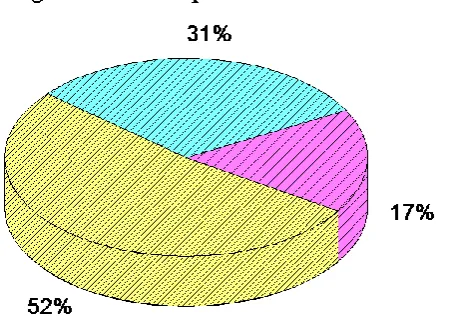
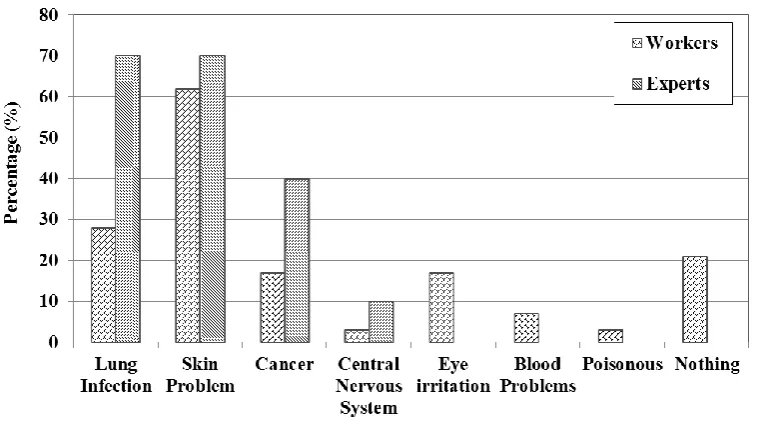
MWFs are used to reduce the generation of heat and friction at the tool-workpiece interfaces during the machining process. The conventional MWFs which consist of the combination of petroleum-based lubricant and additives are toxic to the environment and difficult to be disposed after the consumption (Erhan et al., 2006). The petroleum-based lubricant exhibited poor biodegradability and required high processing cost for recycling process. The widespread use of MWFs caused significant health and environmental hazards through their life cycle. As MWFs are complex in their composition, they may cause irritation or allergy to the skin, lungs, eyes, nose and throat. Moreover MWFs lead to more severe conditions such as dermatitis, acne, asthma, and a variety of cancers. Nicol & Hurrell (2008) reported that all occupational diseases of workers are due to skin contact with MWFs as shown Figure 1.2.
4
developments of synthetics oils, vegetable based-oil and solid lubricants (Lawal, 2013; Nguyen et al., 2012; Suhane, 2012). The growing demand for biodegradable materials opened an opportunity for using vegetable oil as a replacement to petroleum-based oils. This condition is due to the increasing awareness on sustainable elements in machining process that identified majority of the lubricant oil consists of non-sustainable elements (Pusavec et al., 2010).
[image:31.595.128.509.507.719.2]Therefore, MWFs made of vegetables oil are favourable as sustainable alternative to the conventional MWF. MWFs from vegetables oil served as an anti-wear and anti-friction medium due to strong interactions with the lubricant at the contact surfaces (Quinchia et al., 2014). Previous researchers indicated that vegetable oil exhibited higher lubricity, lower volatility as well as higher viscosity index and flash point when compared to mineral and synthetic oils (Lovell et al., 2006). MWFs from edible vegetable oils such as soybean, canola and sunflower oil have been widely studied by previous researches (Clarens et al., 2004; Erhan and Asadauskas, 2000; Kuram et al., 2010). Hence, aforementioned oils are planted in the four seasons countries such as United State and European. They are readily biodegradable and less costly than synthetic base-stocks. They also showed a considerably acceptable performance as lubricants and have been commercialized. However, the feedstock used from edible vegetable oils for biolubricant production may compete with the feedstock used for the food production thus contributes in high rising cost of
food (Gashaw and Teshita, 2014; Shamsuddin et al., 2015; Umaru and Aberuagba, 2012). Yet, the used of non-edible jatropha oil is preferable to substitute the petroleum base oil. Jatropha oil has extensively been studied for the usage as biofuel (Chhetri et al., 2008; Kombe et al., 2012; Okullo et al., 2012) and bio-lubricants such as for hydraulic fluids and engine oil (Resul et al., 2012; Imran et al., 2013; Zulkifli et al., 2014). Jatropha oil is a clean and renewable source of lubricant that cannot be used for the nutritional purposes. A main drawback found in crude jatropha oil (CJO) is that it has poor thermal-oxidative stability due to unsaturation in molecule that leads to oxidation reaction (Arbain and Salimon, 2011b). Therefore, it is crucially needed to chemically modify the CJO to improve the oil’s property. In addition, the use of jatropha oil as MWF is still not widespread and because of issue, further research relate to the development of bio-based MWFs is needed in investigating the potential properties of jatropha oil as MWF.
Moreover, MWF-based oils can be strengthened by the addition of various functions of additives. Previous studies used sulphur and phosphorous compounds as additives in vegetable oil lubricant (Belluco and Chiffre, 2004; Minami et al., 2007; Waara et al., 2001; Yan et al., 2012; Zeng et al., 2007). Eventhough, these compound influenced the machining performances by reducing friction and wear, there were poisonous to environment (Ji et al., 2012; Johnson and Hils, 2013). Therefore, boron and nitrite compounds have been found in numerous industrial applications because they are safe to be handled, non-toxic, no limitations on its operational uses, good thermal stability and high thermal conductivity (Reeves et al., 2013; Wan et al., 2015). The presence of boron and nitride compound in lubricant also enhanced the lubrication and tribological behaviours (Abdullah et al., 2013; Nguyen et al., 2012). However, there is limited study that discussed the effects of the boron and nitride compounds in tribological behaviours and machining performances.
6
1.3 Aim and objectives
The aim of this research was to study the performance of newly formulation of MJOs as bio-based MWFs. The main focus was emphasized on preparing the bio-based MJOs, analysing the properties of MJOs, examining the tribological behaviours and evaluating the machining performances. The specific objectives of this study are: i. To study the application of vegetable-based oils as MWFs in machining
process. (Related to Chapter 2)
ii. To develop a new formulation of MJO-based MWFs and to analyse the physicochemical properties at various molar ratios (jatropha methyl ester and trimethylolpropane) and addition with various concentrations of additive. (Related to Chapter 3)
iii. To examine the tribological behaviour of newly developed MJOs through four ball and tapping torque tests. (Related to Chapter 4)
iv. To evaluate the performances of newly developed MJOs in the orthogonal cutting process under minimum quantity lubrication method in terms of cutting force, cutting temperature, chip thickness, tool-chip contact length and specific energy. (Related to Chapter 5)
v. To justify the machinability criteria of the newly developed MJOs under minimum quantity lubrication method in terms of tool life, tools wear mechanism, cutting force, cutting temperature and surface roughness through turning process. (Related to Chapter 6)
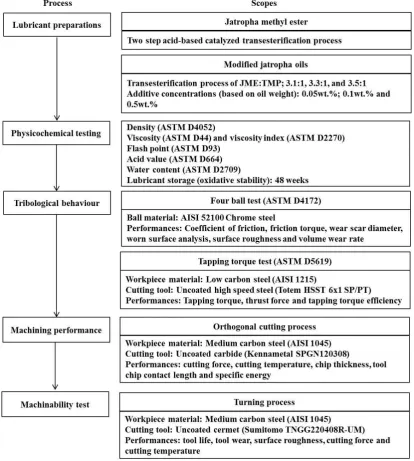
1.4 Scopes of the research
Figure 1.3: The flow chart of the research scopes
8
constant machining parameter to investigate the tool life, tool wear, cutting force, cutting temperature and surface roughness.
1.5 Organization of thesis
CHAPTER 2
LITERATURE REVIEW
2.1 Introduction
This chapter consists of reviews on literature related to the development and application of bio-based oils as metalworking fluids for machining process. The reviews can be organized into eleven main sections; i.e. sustainable manufacturing, metalworking fluids in machining process, metal cutting, lubricant sources, modification method for vegetable-based metalworking fluids, physicochemical properties, tribological behaviour, applications of vegetables-based metalworking fluids in machining process, effect of additive particles in metalworking fluids for machining processes, jatropha oil as potential bio-based metalworking fluid and hexagonal boron nitride (hBN) as an additive in metalworking fluid.
2.2 Sustainable manufacturing
Sustainability provides an understanding regarding the basic theories and applications of sustainability science about product life cycle engineering with the implementation of sustainable in social, economy and environment aspects (Jawahir
10
There are six elements which contribute in the sustainability of product include environmental effect, social impact (in terms of health, safety and ethics), functionality, resource utilization and economy, manufacturability and product’s recyclability and remanufacturability (Jawahir et al., 2013). In addition, Jawahir et al. (2013) also revealed that there are six elements affect the sustainability in manufacturing process; i.e. energy consumption, manufacturing cost, environmental impact, operational safety, personal health and reduction of waste material. Both sustainability elements in product and process were implemented in the blueprint for model-based sustainable manufacturing as shown in Figure 2.1. The concept of “6R” (reduce, reuse, recycle, recover, redesign and remanufacture) was introduced in sustainable manufacturing as the innovation based transformation from an open-loop, single life-cycle paradigm to a closed-loop, multiple life-cycle paradigm (Jawahir and Jayal, 2011). The implementation of sustainability principles in machining process encourages the industry to save money and improve the environmental and social performance. In this way, Jawahir and Jayal (2011) defined that sustainable machining techniques use less quantity of metalworking fluid, liquid nitrogen, vegetable oil or compressed air as a cooling-lubrication medium. The lubricants used in sustainable machining methods are totally biodegradable and eco-friendly. Chetan
et al. (2015) defined the various characteristics of sustainable machining techniques which increased awareness of the sustainability issues in machining as shown in Figure 2.2.
Skerlos et al. (2008) initiated that metalworking fluid (MWF) systems are excellent candidate to implement sustainable machining since simultaneous improvements of economic, environmental and health dimensions are possible and critically necessary. They suggested the development of gas-based minimum quantity lubrication (MQL) systems such as the development supercritical carbon dioxide (SCCO2) MWF. On the other hand, Kuram et al. (2013b) have suggested
Figure 2.1: Model-based sustainable manufacturing (Jawahir and Jayal, 2011)
Figure 2.2: Characteristics of sustainable machining
[image:38.595.215.423.336.532.2]12
2.3 Metalworking fluid in machining process
An increasing awareness with regards to sustainable aspect in the manufacturing industry leads to the consideration for renewable and biodegradable-based oils. Biodegradability shows the ability of MWF to be decomposed by microorganisms (Anand and Chhibber, 2006). Table 2.1 displays the biodegradability of some base lubricants. This property ensures the environmentally friendly of vegetable-based oil and modified vegetable-based oil, thus enhances the commercial value. Abdalla et al.
(2007) indicated a huge total of 320,000 tons of MWF had to be disposed every year, which acquires a high recycling cost. The complex formulation of MWFs generated fungi and bacteria which cause irritation or allergy upon skin contact (Bakalova et al., 2007). Furthermore, a long exposure to MWF causes serious health problems, such as lung infection, eye irritation and cancer (Nicol and Hurrell, 2008).
In addition, previous study indicated that 85% of the global lubricant consumption are petroleum-based oil (Pop et al., 2008). Further, Lukoil (2013) reported that, a global demand for liquid hydrocarbon would grow annually by 1.2%, and the quantity would reach 105 million barrels oil per day in 2025. The high demand of petroleum-based oils in the industry led to the research and development of environmentally friendly lubricants. Therefore, the bio-based MWF from vegetable oil has become crucial to be explored and developed as it is a safe and environmentally friendly type of oil. In addition, several methods have been developed for controlling the temperature and to reduce the friction in the cutting zone in order to increase the machining efficiency such as flood coolant, dry machining, minimum quantity lubrication method (MQL) and cryogenic coolant.
[image:39.595.133.506.691.751.2]During the machining process, MWFs penetrated into the cutting zone to provide sufficient lubrication and cooling effect. They reduced the friction between the tool-chip interfaces and adsorbed the heat generated associated with the reduction
Table 2.1: Biodegradability of oil-based lubricants (Anand and Chhibber, 2006) Types of lubricants Biodegradability (%), CEC-L-33-A-94 method
Mineral oil 20-40
Vegetable oil 90-98
Ester 75-100
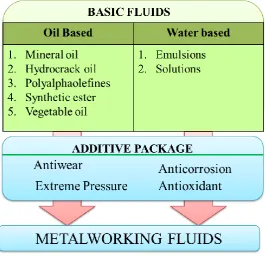
of power consumption. They removed debris or swarf from the work surfaces (Brinksmeier et al., 2015). MWFs are used as lubricant in machining processes to increase tool life, enhance machining efficiency and provide excellent surface quality and accuracy. There are two major components in MWFs which are basic fluid and an additive package as shown in Figure 2.3 (Winter et al., 2012). In general, conventional-based MWF (straight or neat oil) are mostly from petroleum-based oil. Synthetic ester and vegetable oil are currently used as a replacement of mineral oil. Furthermore, the addition of various types of additives is to improve the specific oil characteristic.
[image:40.595.187.453.465.721.2]MWF can be classified as straight oil, soluble oil, synthetic, semi-synthetic and vegetable-based oil as shown in Table 2.2. Semi-synthetic and fully- synthetic oils have been recently used due to their good lubrication and cooling behaviours. The semi-synthetic oil contains a combination of petroleum-based oil with additives that mixed with water and the fully-synthetic oil contains a combination of chemicals and additives that mixed with water (Rudnick and Erhan, 2013). Both petroleum-based oil and synthetic oil with the combination of various additives can be harmful to human and the environment due to their high toxicity, non-renewability and high disposal cost.
14
Table 2.2: Advantages and disadvantages of MWFs (Rudnick and Erhan, 2013) Types Descriptions Advantages Disadvantages Straight
oils
These products derived primarily from petroleum oils or animal and vegetable oils are occasionally used. These oils contain no water and used singly or in combination with or without additives. These oils are not diluted with water and offer excellent lubricants but having limited cooling capacity.
Excellent lubricity and rust control
Low cooling, fire hazard, create a mist/smoke, limited to low speed and
heavy cutting
operation
Soluble oils
There are actually oil-in-water
emulsions which are
combinations of 30%-85%
severely petroleum oils and emulsifiers that may include other additive.
Good lubricity and cooling
Rust control
problems, bacteria
growth and
evaporation losses
Semi-synthetics
These products concentrate contains water-soluble additive, emulsifiers and less than 20% petroleum oil
Good cooling, rust control and microbial control
Easily foam and contaminated by
other machine
fluids, stability is affected by water hardness
Synthetics There are contains no petroleum oil and form true solutions when diluted with water.
Excellent cooling, and microbial control,
non-flammable,
non-smoking, good corrosion control, reduced misting and foaming problems
Poor lubricity and easily contaminated by other machine fluids
2.3.1 Flood coolant
microbes which can endanger the human health (Kuram et al., 2013b). Therefore, several methods such as dry machining, MQL and cryogenic cooling are finding their ways as an alternative to the flood cooling.
2.3.2 Dry machining
Dry machining is a machining process without the presence of MWFs. This method offers several beneficial aspects with regard to environment and human health. Dry machining confirms workers’ health and a clean work environment. Moreover, dry machining reduces the machining cost cutting down the cost of purchasing the MWFs, reduces the disposal cost and provides less hazardous impact to environment. However, this method is not suitable to cut very hard materials and it highly dependent on the selection of appropriate cutting tools, cutting parameters, and types of workpiece material (Ghani et al., 2014).
Dry machining process indicates high friction at tool-workpiece interface, thus increases cutting temperature at the cutting zone stimulated with excessive tool wear and decreases tool life. Furthermore, the chips produced during machining cannot be carried away and deteriorating the machined surface. Tasdelen et al.
(2008) investigated the influenced of MQL compared with dry cutting in machining 100Cr6 through orthogonal turning test in terms of tool–chip contact and chip morphology. They found that the contact length decreased using MQL methods as compared to dry cutting for both short and long engagement time of the section at intermittent turning. This scenario was mainly due to cooling effect from air constituent in the aerosol flow. Furthermore, it can be seen that the chips produced in dry machining were wider than the chips produced in cutting using MQL.
16
2.3.3 Minimum quantity lubrication
Due to the negative effects of the flood coolant on environment and human health and limited material to cut in dry machining, the MQL or near dry machining (NDM) has shown greater effect in the machining process. In MQL, a combination of high pressure and oil are transported in the form of an aerosol (mist) to the cutting zone. Aerosols are generated by atomization process, which is the conversion of a bulk MWFs into a mist through the nozzle (Astakhov, 2008). Two types of MWF are typically used for MQL included vegetable oils and synthetic ester (Khan and Dhar, 2006; Suda et al., 2002). The reasons are these two types of MWF have high biodegradability and less toxic which lead to the environmental compatibility. The synthetic ester is commonly made from chemically modified vegetable oil has high boiling temperature and flash point and a low viscosity that promoted a thin lubrication film on the tool-workpiece interface to reduce friction and heat generation. Meanwhile, fatty acids alcohol synthesized from long-chained alcohols are made from natural raw materials or from mineral oils have lower flash point and high viscosity. The lubricating effects is very moderate, but they have better heat removal due to evaporation of heat (Weinert et al., 2004).
In recent times, nanofluids such as molybdenum disulphide (MoS2), carbon
nanotube (CNT), titanium dioxide (TiO2) and aluminium oxide (Al2O3) have been
used in MQL systems. The addition of nanofluid in MQL showed an improvement on thermal conductivity and heat transfer coefficient (Dixit et al., 2012). Zhang et al.
(2015) applied nanofluid containing MoS2 with a diameter of 50 nm in several types
of oil-based (liquid paraffin, palm oil, rapeseed oil, and soybean oil for grinding process. The grinding performances were compared in terms of cutting force, particle size, viscosity of nanofluids, and workpiece surface roughness. The experimental results revealed that the addition of MoS2 in soybean-based oil increased the
nanoparticle concentration and the nanofluid viscosity which corresponded to better lubricating property. However, the addition of MoS2 more than 6% deteriorated the
2.3.4 Cryogenic cooling
During cryogenic cooling, the liquid nitrogen (LN) at 196º is applied to the cutting zone. Nitrogen is odourless, colourless, non-toxic gas and evaporates into the air, which there is no MWF used to be disposed. Tazehkandi et al. (2015a) studied the machining of Inconel 740 using the application of LN and spray mode of biodegradable vegetable cutting fluid through turning process. The result showed that use of LN in a combination with spray mode of the cutting fluid and compressed air was more efficient that the flood mode in terms of cutting force and tool tip temperature. There was a reduction in the amount of tool wear which prevented the formation of built-up-edge. Moreover, by employing this method the consumption of the cutting fluid during turning process can be significantly reduced.
Furthermore Rahim et al. (2016) promoted supercritical carbon dioxide technique (SCCO2) of coolant in order to replace the usage of LN. They investigated
the cutting temperature, cutting force, chip thickness, tool-chip contact length and specific energy in orthogonal cutting of AISI 1045 using the approach of SCCO2
method of coolant. They revealed that using SCCO2, cutting temperature, cutting
force, chip thickness, tool-chip contact length and specific energy can be decreased significantly when compared to MQL method. They initiated that the carbon dioxide is a non-toxic gas and has excellent solubility with vegetable oils above its critical point (critical temperature = 31.2 °C, critical pressure = 7.38 MPa), much cheaper and easily availed as compared to LN. The carbon dioxide offers rapid expansion of supercritical solutions for coating and spraying applications. The SCCO2 produces a
homogenous and finely dispersed spray of dry ice and frozen oil particles at a few microns in size, thus provides sufficient heat removal and lubrication to the cutting zone.
18
2.4 Metal cutting
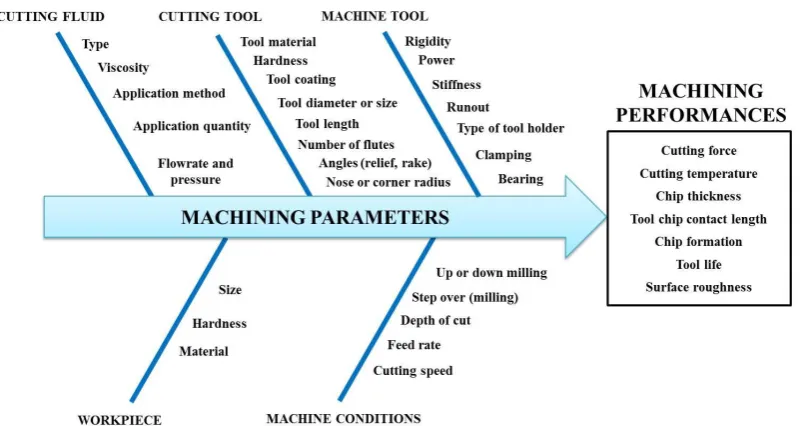
[image:45.595.123.524.241.454.2]Metal cutting is the process of removing unwanted material from workpiece to obtain a part with a certain desired shape and size with high dimensional accuracy and high quality surface finish. Machining performances are influenced by various machining parameters as shown in Figure 2.4. It can be divided into five main categories namely cutting fluid, cutting tool, machine tool, workpiece and machine conditions.
Figure 2.4: Machining parameters
2.4.1 Orthogonal cutting mechanism
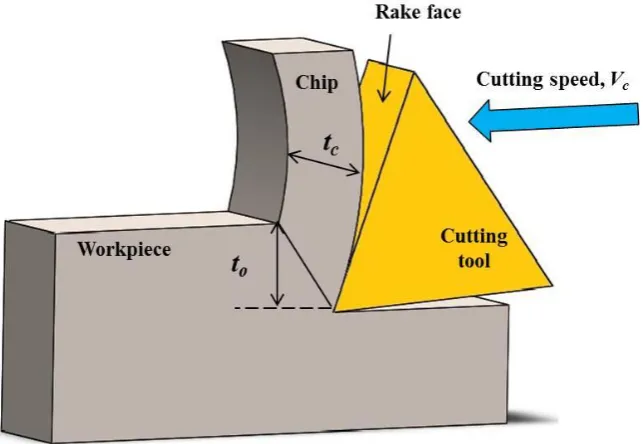
Figure 2.5: Three dimensional process of orthogonal cutting model (Groover, 2007)
Figure 2.6: Two dimensional side view (Groover, 2007)
been removed by the action of the tool is known as undeformed chip thickness, to
(Groover, 2007).
[image:46.595.150.489.367.539.2]20
the deformed chip has a different chip thickness (tc). The friction that occurs between
the chip and the tool significantly affects the cutting process. The huge amount of heat energy produces from this process will be transferred into the workpiece. The shearing action will takes place along the shear plane when the cutting tool is forced into the workpiece material. The chip is formed by shear deformation along a thin shear plan, oriented at shear angle () with the surface of the workpiece as shown in Figure 2.6. The relationship between shear angle and rake angle is expressed in Equation 2.1.
Shear angle, (º) = 𝑡𝑎𝑛−1
(
𝑟𝑎cos𝛼1−𝑟𝑎sin𝛼
)
(2.1)where, ra = Chip thickness ratio, ra =
𝑡𝑜 𝑡𝑐
to = Undeformed chip thickness
tc = Deformed chip thickness
α = Rake angle
The optimization of cutting tool geometry, cutting tool material, cutting speed, rake angle and cutting fluid are needed to reduce or minimize the friction. In the metal cutting operation, there are three locations of deformation, namely primary shear zone, secondary shear zone and tertiary shear zone, as shown in Figure 2.7 (Kiliçaslan, 2009).
Primary shear zone (A-B): The chip formation takes place firstly and mainly in this
zone as the edge of the tool penetrates into the work-piece. Material in this zone has been deformed by a concentrated shearing process.
Secondary shear zone (A-C): The chip and the rake face of the tool are in contact
from A to C. When the frictional stress on the rake face reaches a value that is equal to the shear yield stress of the work-piece material, material flow also occur on this zone.
Tertiary shear zone (A-D): When a clearance face of the tool rubs the newly
Figure 2.7: Deformation zones in the cutting (Kiliçaslan, 2009)
2.4.2 Cutting force
Cutting forces can be defined as the forces generated by friction in machining. The generated forces can be used to estimate the lubrication efficiency of the metalworking fluid. The generated friction is the resisting force of a workpiece material while it slides over the cutting tool and acts oppositely to the relative motion (cutting speed, Vc) of the surface. Figure 2.8 shows Merchant’s force diagram which
the forces acts on the chip during orthogonal cutting process. The cutting force (Fc)
is in the direction of cutting which in the same direction as the cutting speed and the thrust force (Ft) is perpendicular to the cutting force. Both, cutting force and thrust
force can be directly measured through force measuring device called dynamometer during the machining operation. Meanwhile, the other four forces components; friction force (F), normal force to friction (N), shear force (Fs) and normal force to
shear (Fn) can be calculated by Equations 2.2 to 2.5 (Groover, 2007);
F = Fc sin + Ft cos (2.2)
N = Fc cos- Ft sin (2.3)
Fs = Fc cos- Ft sin (2.4)
Fn = Fc sin + Ft cos (2.5)
22
Figure 2.8: Forces in metal cutting (Groover, 2007)
increased. The reduction of cutting force is due to the reduction of contact area at tool-chip interfaces which reduces the specific cutting energy. In addition, cutting force increases with the increase in feed rate. The reason is due to the increased chip load as the feed has been increased during the cutting process. Thicker chips formed as the feed rate increases which substantially increases the cutting force.
Moreover, Khan and Dhar (2006) stated that the cutting force significantly decreased using MQL method using vegetable-based oil. The usage of vegetable oil beneficially improves the workpiece quality and reduces friction and heat generation. The vegetable oil’s molecules have high absorption ability due to the long, heavy and dipolar in nature, create a strong lubrication film. Furthermore, greater molecular weight of vegetable oil stimulates less loss from vaporization and misting. Liu et al.
(2011) found that the usage of MQL method significantly reduced the cutting force. The oil’s droplets easily penetrated into the contact zone of the chip-tool-workpiece interface, led to the friction reduction.
2.4.3 Cutting temperature
Figure 2.9: Temperature measurement methods
[image:50.595.158.496.436.700.2]24
Figure 2.11: Embedded thermocouple method (Hadad and Sadeghi, 2013)
Figure 2.12: PVD film method (Shinozuka et al., 2008)
[image:51.595.195.441.368.480.2]REFERENCES
Abdalla, H. S., Baines, W., McIntyre, G., & Slade, C. (2007). Development of novel sustainable neat-oil metal working fluids for stainless steel and titanium alloy machining. Part 1. Formulation development. International Journal of Advanced Manufacturing Technology, 34, 21–33.
Abdalla, H. S., & Patel, S. (2006). The performance and oxidation stability of sustainable metalworking fluid derived from vegetable extracts. Journal of Engineering Manufacture, 220, 2027–2040.
Abdullah, M. I. H. C., Abdollah, M. F. Bin, Amiruddin, H., Tamaldin, N., Nuri, N. R. M., Hassan, M., & Rafeq, S. A. (2014a). Improving engine oil properties by dispersion of hBN/Al2O3 nanoparticles. Applied Mechanics and Materials,
607, 70–73.
Abdullah, M. I. H. C., Abdollah, M., Amiruddin, H., Tamaldin, N., & Nuri, N. R. M. (2013). Optimization of tribological performance of hBN/Al2O3 nanoparticles
as engine oil additives. Procedia Engineering, 68, 313–316.
Abdullah, M. I. H. C., Abdollah, M. F., Amiruddin, H., Tamaldin, N., & Nuri, N. R. M. (2014b). Effect of hBN/Al2O3 nanoparticle additives on the tribological
performance of engine oil. Jurnal Teknologi, 3, 1–6.
Ademoh, N. A., Didam, J. H., & Garba, D. K. (2016). Investigation of neem seed oil as an altanative metal cutting fluid. American Journal of Mechanical Engineering, 4(5), 191–199.
Adhvaryu, A., & Erhan, S. Z. (2002). Epoxidized soybean oil as a potential source of high-temperature lubricants. Industrial Crops and Products, 15(3), 247–254. Adhvaryu, A., Erhan, S. Z., & Perez, J. M. (2004). Tribological studies of thermally
and chemically modified vegetable oils for use as environmentally friendly lubricants. Wear, 257(3-4), 359–367.
247
the role of cutting fluids in machining and efforts to address associated environmental/health concerns. Machining Science and Technology, 10(1), 23–58.
Ahmad, A. L., Yasin, N. H. M., Derek, C. J. C., & Lim, J. K. (2011). Microalgae as a sustainable energy source for biodiesel production: A review. Renewable and Sustainable Energy Reviews, 15(1), 584–593.
Akbar, E., Yaakob, Z., Kamarudin, S. K., Ismail, M., & Salimon, J. (2009). Characteristic and composition of jatropha curcas oil seed from Malaysia and its potential as biodiesel feedstock. European Journal of Scientific Research, 29(3), 396–403.
Akowuah, J. O., Addo, A., & Kemausuor, F. (2012). Influence of storage duration of Jatropha curcas seed on oil yield and free fatty acid content. ARPN Journal of Agricultural and Biological Science, 7(1), 41–48.
Alias, N. H., Yunus, R., & Idris, A. (2011). Effect of additives on lubrication properties of palm oil-based trimethylolpropane ester for hydraulic fluid application. Proc. of the International Symposium & Exhibition in Sustainable Energy & Environment. Melaka, Malaysia: IEEE. pp. 89–93. Alias, N. H., Yunus, R., Idris, A., & Omar, R. (2009). Effects of additives on
oxidation characteristics of palm oil-based trimethylolpropane ester in hydraulics applications. European Journal of Lipid Science and Technology, 111(4), 368–375.
Al-Sabagh, A. M., Khalil, S. A., Abdelrahman, A., Nasser, N. M., Eldin, M. R. N., Mishrif, M. R., & El-shafie, M. (2012). Investigation of oil and emulsion stability of locally prepared metalworking fluids. Industrial Lubrication and Tribology, 64(6), 346–358.
Amalia, K. I., Yani, M., Ariono, D., Evon, P., & Rigal, L. (2013). Biodiesel production from jatropha seeds: Solvent extraction and in situ transesterification in a single step. Fuel, 106, 111–117.
Ambasta, B. K. (2008). Chemistry for engineers. New Delhi:Laxmi Publications. Anand, O. N., & Chhibber, V. K. (2006). Vegetable oil derivatives:
Environment-friendly lubricants and fuels. Journal of Synthetic Lubrication, 23(2), 91–107. Antonialli, A. Í. S., Filho, A. de A. M., Sordi, V. L., & Ferrante, M. (2012). The
153.
Arbain, N. H., & Salimon, J. (2011a). The effects of various acid catalyst on the esterification of jatropha curcas oil based trimethylolpropane ester as biolubricant base stock. Journal of Chemistry, 8(1), 33–40.
Arbain, N. H., & Salimon, J. (2011b). Synthesis and characterization of ester trimethylolpropane based jatropha curcas oil as biolubricant base stocks.
Journal of Science and Technology, 47–58.
Arora, G., Kumar, U., & Bhowmik, P. (2015). Vegetable oil based cutting fluids – green and sustainable machining - II. Journal of Material Science and Mechanical Engineering, 2(9), 1–5.
Artozoul, J., Lescalier, C., & Bomont, O. (2012). Experimental investigation of the temperature and stress distribution in tool-chip contact zone. Proc. of the 9th International Conference on High Speed Machining. Espagne, Spain: Science Arts & Métiers. pp. 19–24.
Astakhov, V. P. (2008). Ecology machining: Near-dry machining. In Davim, J. P. (Ed.). Machining: Fundamental and Recent Advances. Spain: Springer. pp. 195–223.
Astakhov, V. P., & Davim, J. P. (2008). Tool (Geometry and Material) and Tool Wear. In Davim, J. P. (Ed.). Machining: Fundamental and Recent Advances. Spain: Springer., pp. 29–57.
ASTM Standards (1991). Standard practice for calculating viscosity index from kinematic viscosity at 40. West Conshohocken, PA.: D2270-10.
ASTM Standards (1995). Standard test method for density and relative density of liquids by digital density meter. Philadelphia, PA.: D4052-95.
ASTM Standards (2011). Standard test method for wear preventive characteristics of lubricating fluid (four-ball method). West Conshohocken, PA.: D4172
ASTM Standards (1991). Standard test method for kinematic viscosity of transparent and opaque liquids (and calculation of dynamic viscosity). West Conshohocken, PA.: D445-12.
ASTM Standards (2011). Comparing metal removal fluids using the tapping torque test machine. West Conshohocken, PA.: D5619
ASTM Standards (2007). Standard test method for determination of water in petroleum products , lubricating oils , and additives by coulometric Karl
249
ASTM Standards (2004). Standard test method for acid number of petroleum products by potentiometric. West Conshohocken, PA: D664-11a
ASTM Standards (2015). Standard Specification for Biodiesel Fuel Blend Stock (B100) for Middle Distillate. West Conshohocken, PA: D6751 − 15a.
ASTM Standards (2002). Standard test method for flash point by Pensky-Martens closed cup tester. West Conshohocken, PA: D93-12.
Atadashi, I. M., Aroua, M. K., Abdul Aziz, A. R., & Sulaiman, N. M. N. (2012). The effects of water on biodiesel production and refining technologies: A review.
Renewable and Sustainable Energy Reviews, 16(5), 3456–3470.
Ay, M., Göncü, Y., & Ay, N. (2016). Environmentally friendly material : Hexagonal boron nitride. Journal of Boron, 1(2), 66–73.
Azhari, M., Resul, M. F. M. G., Yunus, R., Mohd. Ghazi, T. I., & Yaw, T. C. S. (2008). Reduction of fatty acids in crude jatropha curcas oil via an esterification process. International Journal of Engineering and Technology, 5(2), 92–98.
Bahi, S., Nouari, M., Moufki, A., Mansori, M. El, & Molinari, A. (2012). Hybrid modelling of sliding-sticking zones at the tool-chip interface under dry machining and tool wear analysis. Wear, 286-287, 45–54.
Bakalova, S., Doycheva, A., Ivanova, I., Groudeva, V., & Dimkov, R. (2007). Bacterial microflora of contaminated metalworking fluids. Biotechnology & Biotechnological Equipment, 21(4), 37–441.
Baş, H., & Karabacak, Y. E. (2014). Investigation of the effects of boron additives on the performance of engine oil. Tribology Transactions, 57(4), 740–748. Belluco, W., & Chiffre, L. De. (2004). Performance evaluation of vegetable-based
oils in drilling austenitic stainless steel. Journal of Materials Processing Technology, 148, 171–176.
Berchmans, H. J., & Hirata, S. (2008). Biodiesel production from crude jatropha curcas l. seed oil with a high content of free fatty acids. Bioresource Technology, 99(6), 1716–1721.
Bermingham, M. J., Palanisamy, S., Kent, D., & Dargusch, M. S. (2012). A comparison of cryogenic and high pressure emulsion cooling technologies on tool life and chip morphology in Ti-6Al-4V cutting. Journal of Materials Processing Technology, 212(4), 752–765.