Citation:
Greenan, P and Reynolds, M and Turner, P (2017) Training Transfer: the Case for ‘Implementation Intentions’. International Journal of HRD Practice, Policy and Research, 2 (2). ISSN 2397-4583 DOI: https://doi.org/10.22324/ijhrdppr.2.115
Link to Leeds Beckett Repository record: http://eprints.leedsbeckett.ac.uk/4363/
Document Version: Article
Creative Commons: Attribution-Noncommercial 4.0
The aim of the Leeds Beckett Repository is to provide open access to our research, as required by funder policies and permitted by publishers and copyright law.
The Leeds Beckett repository holds a wide range of publications, each of which has been checked for copyright and the relevant embargo period has been applied by the Research Services team.
We operate on a standard take-down policy. If you are the author or publisher of an output and you would like it removed from the repository, please contact us and we will investigate on a case-by-case basis.
International Journal of HRD Practice, Policy and Research 2017, Vol 2 No 2: 49-56 doi: 10.22324/ijhrdppr.2.115
Training Transfer: the Case for
‘Implementation Intentions’
Peter Greenan,
Huddersfield Business School
Martin Reynolds,
Leeds Business School
Paul Turner,
Leeds Business School
As organizations adopt a more inclusive or pluralistic approach to talent management, there is an emphasis on the engagement of a broader segment of the workforce to deliver both strategic and operational objectives. Accompanying this is investment in learning, training and development activity which is intended to enhance the achievement of the objectives based on the assumption of the effective transfer of training to improve performance or behavioural outcomes. Ensuring that training investment is converted to measurable outcomes is therefore a priority for many organizations and Return on Investment in Training (ROIT) is increasingly sought in the same way as for any other corporate investment. This article synthesizes developments in goal setting theory and highlights a limitation with regards to the theory being applied to the contemporary workplace. It proposes that implementation intentions and the associated ‘if/then’ plans offer the chance to mediate this. Key to these plans being successful is for them to be embedded at the learning design stage creating a clear link between the need for the learning/training and agreed objectives. A large part of the success of implementation intentions is that control of behaviour is given to situational cues in the workplace and these can be reinforced by supportive line managers and peers. But it is essential that they are also aware of the implementation intention plan in order to offer informed support. A holistic learning environment is key to the success of any intervention but given the importance of situational cues when considering implementation intentions it is vital that both learners and those who support them in the workplace are aware of the specific roles they play and the impact they have.
Key Words: training transfer, implementation intentions, line managers, return on investment
Introduction
In this paper we argue that, for training to be effectively transferred back into the workplace, clear goals should be supplemented by clear implementation intentions to make the training
work. Implementation intentions specify the actual behaviour to be performed in a specific
context; as opposed to goal intentions which specify what a person wants to achieve. Converting goals into actions, supported by the will and a plan to deliver, can be the differentiator in securing ROIT. The paper will begin by focusing on the transfer of training and the results of studies to date. Following this it will consider what implementation intentions are and provide some
evidence of their success in fields other than organization and management studies. Finally, we
will turn our attention to the implications for HRD practitioners and offer some guidance on how to successfully embed implementation intentions into learning, training, and development interventions.
The Transfer of Training — Evidence to Date
There has been a good deal of research about how training can be transferred effectively to the workplace. The focus has been on both input and output factors in which the transfer of training
is defined as “the extent to which, what is learned in training is applied on the job and enhances
job related performance” (Laker & Powell, 2011). Input factors tend to focus on elements such as trainee characteristics, training design, and the working environment. Output characteristics focus more on goal setting.
Input factors as key elements of the transfer of training
Trainee characteristics are the first input factor on which much of the analysis has taken place,
with the emphasis on individuals and their motivation to learn. Key trainee characteristics which
affected the ability to transfer included intellectual ability, self-efficacy regarding the training task, motivation level, job/career variables, and personality traits. Self-efficacy and motivation have been identified as key trainee characteristics (Cheng & Ho, 2001; Burke & Hutchins 2007;
Velada et al,, 2007; Martin, 2010 a and b; Grossman & Salas, 2011).
The second input factor to be considered is related to training design and is concentrated on incorporating key learning principles such teaching, stimulus variability, the timing of the training, whether the objectives are clearly communicated and understood, and whether the participants have been involved with designing the intervention (Martin, 2010 a and b).
Finally the work environment, consisting of social support offered by line managers and the opportunity to use new skills and behaviours, features strongly as an important aspect of the transfer of training. Line manager support is considered the most consistent factor explaining the relationship between the work environment and transfer and as one of the most powerful tools for enhancing transfer (Burke & Hutchins, 2007; Nijman et al., 2006). The supportive
behaviours displayed by managers have been identified as: discussing new learning, participating
in training, and providing encouragement and coaching, recognition, encouragement, rewards, and modelling trained behaviours (Grossman & Salas, 2011). This support can be emotional and instrumental and can occur before, during, and after training (Nijman et al., 2006). Peer support is an important aspect of the work environment and enhances training transfer by improving
employee’s feelings of self-efficacy and providing them with coaching and feedback (Martin,
Output factors used in facilitating the transfer of training to the workplace
In addition to inputs as factors that will influence the transfer of training, research and practice
have also focused on output factors which include the important elements of goal setting and commitment.
Goal setting is the first of the output considerations, the essence of which is that people who set and commit to specific goals outperform those who set vague goals (Brown et al., 2013). Specific
goals give focus and direct attention to activities relevant to attaining the goal (Seijts & Latham, 2012). Goals may include learning goals, behavioural outcome goals, distal outcome goals, and proximal plus distal goals (Brown & McCracken, 2010). Learning goals are used by individuals striving to understand something new or increase their level of competence in a given activity (Button et al., 1996). A behavioural outcome goal is characterized by an avoidance of challenges and performance deteriorates in the face of obstacles (Button et al., 1996). Behavioural goals are generally more associated with transfer of training (Chiaburu & Tekleab, 2005). Proximal and distal goals allow people to evaluate their ongoing goal directed behaviour and refocus their efforts if needed (Brown, 2005; Seijts & Latham, 2001; Weldon & Yun, 2000). Creating a sense of immediacy, providing a clear mark of progress leading to a sense of mastery, and allowing the distal goal to be recalibrated if needed are all reasons offered for the increased effectiveness provided by proximal goals (Weldon & Yun, 2000).
The second aspect of transfer of training outputs relates to goal commitment which is characterized by determination to expend effort towards a goal over time. Without commitment,
individuals are more likely to abandon the goal especially when faced with difficulties or obstacles. Several situational factors have been identified which could have an impact on commitment such as publicness (the extent to which significant others are aware of the goal), volition (the extent
to which an individual is free to engage in behaviour), and explicitness (as opposed to vague goals being set) (Hollenbeck & Klein, 1987). The most researched phenomena in terms of goal commitment is participation in setting the goal (Li & Butler, 2004) as this increases commitment to the goal. Given that goals enhance performance to a greater degree in easy, compared to complex, tasks and goal performance becomes weaker when hampered by context factors (Bipp & Kleingeld, 2010) the reliance on goal setting alone in contemporary workplaces could be a major factor why training does not transfer as contemporary workplaces are generally accepted to be Volatile, Uncertain, Complex, and Ambiguous (VUCA).
These two factors have influenced both research and practice into the area of the transfer of
training. However there is a further element, less well articulated, that is a critical factor in whether the transfer of training is effective. This is in respect of implementation intentions.
Implementation Intentions — Evidence to Date
Even though a goal may be clearly outlined, it will not energize people to pursue it if they have no idea how to go after it (Seijts & Latham, 2012). This notion of ‘how to go after it’ introduces
the concept of goal intentions, defined as “end states an individual wants to attain; they turn
will initiate behaviour Z) (Sheeran et al., 2005). Vagueness of the goal, lack of self-concordance
and failure to develop a specific action plan are considered reasons for non-achievement of
goals (Koestner et al., 2002). An implementation plan should take into account how to ensure persistence in the face of distractions and obstacles. Implementation intentions are formed to support the accomplishment of goals by specifying when, where, and how goal directed responses should be initiated. Identifying how to ensure persistence in the face of obstacles is one way
of mitigating the already identified limitation of goal setting theory which is that performance
becomes weaker when hampered by contextual factors.
This is important because Brandstatter et al. (2001) found that difficult goals without an implementation intention were completed in only 22% of the cases whereas difficult goals with
an implementation intention were completed in 62% of cases. Further studies on implementation intentions have focused on a variety of behaviours such as completing an assignment, continuing education, and regaining employment and all have provided evidence for the increased completion of goals based on these implementation plans. Whilst these studies indicate that implementation intentions have positive effects on goal achievement in areas unrelated to a work environment, Friedman and Ronen (2015) found that implementation intentions can also have a positive effect on transfer of training in a work environment. Results of this study indicated that those who formed implementation intentions provided the trained response to mystery shopper questions, on average seven times out of ten whereas those who did not form implementation intentions only provided the trained response on average four times out of ten, indicating that implementation intentions had led to greater transfer of training.
Considering implementation intentions as an alternative post training transfer intervention may
therefore mediate some of the limitations identified in goal setting theory and could lead to more
of the training transferring into the work role and affecting behaviour and performance. Having reviewed current literature, the paper will now consider the implications for practice of using implementation intentions to generate greater transfer of training.
Transfer of Training — Implications for Practice
The growing awareness of the need to secure a return on investment for training activity has led to an interest in how such an objective can be secured. Articulating implementation intentions, as a complementary activity to those of goal setting and commitment can help in this process and can be a successful post training transfer intervention. The foundation for this is that although
setting a goal is beneficial, the process ends once the goal has been set. Using evidence from
other disciplines where implementation intentions have led to successful completion of goals, the paper suggests that implementation intentions should now be considered with regards to successfully completing work based goals in relation to transfer of training.
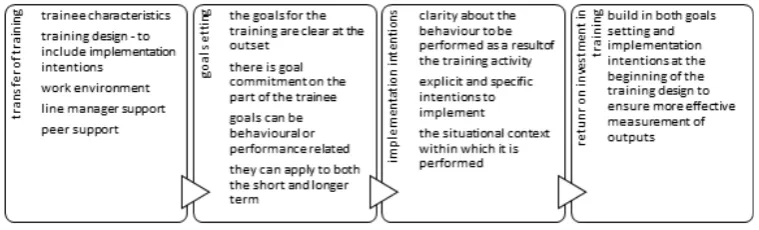
Figure 1 pulls together the various elements of goal setting and implementation intentions. There
are several implications for practice which need to be considered, however, if the full benefit to
both individuals and the organization are to be realized. These implications can be grouped into
Figure 1: The characteristics of, goal setting, implementation intentions, and the transfer of training
Process based implications consider the design phase of training interventions and should be considered, once the learning need analysis has been completed. Key considerations will be to:
• Ensure that the goals for the training activity are clear at the outset on the part of the organization and the individual. These can be both behavioural or performance goals and can apply to the short and longer term.
• Build in both goals and implementation intentions at the beginning of the training design to ensure more effective measurement of outputs.
• Allow time at the end of the training to fully brief participants on what the implementation intention is and how it relates to the behaviour change being sought by the training.
• Ensure that participants have clear plans specifying when, where, and how the goals are to be achieved, by whom and from where additional resources are needed to ensure their effective implementation.
• Take account of the specific context within which the training outputs are to be
implemented and build this into the implementation intention.
People based implications will consider various stakeholders who play a part in the initial
identification of the need for the training to take place followed by the design, delivery and
support of the training. Key considerations here will be:
• Support from senior people within the business to give backing to the need for the change in behaviour which the training will bring about.
• To ensure line manager involvement in both training design and outputs because
“determining before-and-after performance metrics usually requires the active co-operation
of line managers and this is not always forthcoming. Even where involvement in learning transfer is formally expected of managers, today’s ‘more from less’ pressures can mean that support is lukewarm” (CIPD, 2014).
• To ensure there is goal commitment on the part of the trainee in relation to behaviour or performance change; short or longer term. This will in part be down to a proper
identification of need so the ‘right’ people attend the course but will also be easier if
• The knowledge and ability of the training designers and deliverers to understand what implementation intentions are and how they can enhance the transfer of training. It might be that using implementation intentions is itself a need analysis of a new skill set required by HRD professionals.
These process and people based implications consider a functional and practical point
of view but the greatest implication for practice could be in the benefits obtained by the individual and the organization. Hamlin and Stewart (2011), identified four core purposes of HRD, identified in Table 1.
Core Purpose
1 Improving individual or group effectiveness and performance
2 Improving organizational effectiveness and performance
3 Developing knowledge, skills and competencies
4 Enhancing human potential and personal growth
Table 1: Four core purposes of HRD
The use of implementation intentions works to support each of these levels. As a post training intervention the more concerted focus on behaviour change will develop the individual’s knowledge, skills, and competencies but also, as they begin to see results will enhance their own personal growth and job satisfaction. As a consequence of this, organizational and group effectiveness will also improve.
Conclusion
References
Achtziger, A., Gollwitzer, P. M., & Sheeran, P. (2008). Implementation Intentions and Shielding Goal Striving From Unwanted Thoughts and Feelings. Personality and Social Psychology Bulletin, 34(3), 381–393.
Bipp, T., & Kleingeld, A. (2010). Goals setting in practice: The effects of personality and perceptions of the goal setting process on job satisfaction and goal commitment. Personnel Review, 40(3), 306–323. Brandstatter, V., Lengfeldeer, A., & Gollwitzer, P. M. (2001). Implementation intentions and efficient action
initiation. Journal of Personality and Social Psychology, 81(5), 946–960.
Brown, T. C. (2005). Effectiveness of Distal and Proximal Goals as Transfer-of-Training Interventions: A Field Experiment. Human Resource Development Quarterly, 16(3), 369-387.
Brown, T. C., & McCracken, M. (2010). Which goals should participants set to enhance the transfer of learning from management development programmes? Journal of General Management, 35(4), 27. Brown, T. C., McCracken, M., & Hillier, T. (2013). Using evidence-based practices to enhance transfer
of training: assessing the effectiveness of goal setting and behavioural observation scales. Human Resource Development International, 16(4), 374–389.
Burke, L. A., & Hutchins, H. M. (2007). Training Transfer: An integrative Literature Review. Human Resource Development Review 2007, 6(3), 263–296.
Button, S. B., Mathieu, J. E., & Zajac, D. M. (1996). Goal orientation in organisational research: a conceptual and empirical foundation. Organisational Behaviour and Human Decision Processes, 67(1), 26–48. Chartered Institute of Personnel and Development (2014). L&D is increasingly recognising the importance
of ROI, but there’s a problem. Retrieved from http://www2.cipd.co.uk/pm/peoplemanagement/b/weblog/ archive/2014/07/10/l-amp-d-is-increasingly-recognising-the-importance-of-roi-but-there-s-a-problem.aspx Cheng, E. W. L., & Ho, D. C. K. (2001). A review of transfer of training studies in the past decade. Personnel
Review, 30(1), 102–118.
Chiaburu, D. S., & Tekleab, A. G. (2005). Individual and contextual influences on multiple dimensions of training effectiveness. Journal of European Industrial Training, 29(8), 604–626.
Friedman, S., & Ronen, S. (2015). The effect of implementation intentions on transfer of training. European Journal of Social Psychology, 45(4), 409–416.
Grossman, R., & Salas, E. (2011). The transfer of training: what really matters? International Journal of Training and Development, 15(2), 103–119.
Hamlin, B., & Stewart, J. (2011). What is HRD? A definitional review and synthesis of the HRD domain, Journal of European Industrial Training, 35(3), 199-220.
Hollenbeck, J. R., & Klein, H. J. (1987). Goal Commitment and the Goal-Setting Process: Problems, Prospects, and Proposals for Future Research. Journal of Applied Psychology, 72(2), 212-220
Koestner, R., Lekes, N., Powers, T. A., & Chicoine, E. (2002). Attaining Personal Goals: Self-concordance plus implementation intentions equals success. Journal of Personality and Social Psychology, 83(1), 231–244.
Laker, D. R., & Powell, J. L. (2011). The difference between hard and soft skills and the relative impact on training transfer. Human Resource Development Quarterly, 22(1), 111–122.
Li, A., & Butler, A. B. (2004). The effects of participation in goal setting and goal rationales on goal commitment: an exploration of justice mediators. Journal of Business and Psychology, 19(1), 37–51. Martin, H. J. (2010a). Workplace climate and Peer Support as Determinants of Training Transfer. Human
Resource Development Quarterly, 21(1), 87-104.
Martin, H. J. (2010b). Improving training impact through effective follow-up techniques and their application. Journal of Management Development, 29(6), 520–534.
Nijman, D. J. J. M., Nijhof, W. J., Wognum, A. A. M. (Ida), & Veldkamp, B. P. (2006). Exploring differential effects of supervisor support on transfer of training. Journal of European Industrial Training, 30(7), 529-549.
Seijts, G. H., & Latham, G. P. (2012). Knowing when to set learning versus performance goals. Organizational Dynamics, 41(1), 1-6.
Sheeran, P., Webb, T. L., & Gollwitzer, P. M. (2005). The Interplay between Goal Intentions and Implementation Intentions. Personality and Social Psychology Bulletin, 31(1), 87–98.
Velada, R., Caetano, A., Michel, J. W., Lyons, B. D., & Kavanagh, M. J. (2007). The effects of training design, individual characteristics and work environment on transfer of training. International Journal of Training and Development, 11(4), 282–294.
Weldon, E., & Yun, S. (2000). The effects of proximal and distal goals on goal level, strategy development and group performance. Journal of Applied Behavioral Science, 36(3), 336-344.
The Authors
Peter Greenan is Senior Lecturer in Management and Human Resource Development and CMI
Programme Director at Huddersfield Business School. He is a Fellow of the Higher Education
Academy, a Chartered member of the CIPD and member of CMI.
Martin Reynolds is Professor of Management Practice at Leeds Business School. He has worked in UK higher education for nearly 40 years in a number of universities where he has held positions as Dean and PVC. Professor Reynolds has championed approaches to practice based management education in business schools and has led numerous initiatives in the area of work
based learning and specifically in-company degrees involving partnership between business and
business schools.