IJPSR (2011), Vol. 2, Issue 9 (Research Article)
Received on 19 May, 2011; received in revised form 12 June, 2011; accepted 17 August, 2011
QUALITATIVE AND QUANTITATIVE ESTIMATION OF GALLIC ACID AND ASCORBIC ACID IN POLYHERBAL TABLETS
N. V. Patel* and D. R. Telange
School of Pharmacy and Technology Management, SVKM’s Narsee Monjee Institute of Management Studies, Shirpur Campus, Dist. Dhule, - 425405, Maharashtra, India
ABSTRACT
An HPTLC method was developed for Qualitative and Quantitative Estimation of Gallic Acid and Ascorbic Acid in Polyherbal Tablets (Amalant and Sookshma Triphala Tablet) containing Embelica Officinalis, using precoated HPTLC silica gel 60 F254 as Stationary Phase and Mobile Phase for Gallic Acid is Toluene: Ethyl Acetate: Formic Acid (6:3:1v/v/v) and for Ascorbic Acid is Ethyl Acetate: Acetic Acid Glacial: Formic Acid: Water (6:1:1:2v/v/v/v). Detection and Quantification were performed densitometrically at λmax 254nm for Gallic Acid and Ascorbic Acid. The Standard Rf values of Gallic Acid and Ascorbic Acid are 0.34±0.01 and 0.60±0.01 respectively. The total peak areas of the Standards [Gallic Acid and Ascorbic Acid] and the corresponding peak areas of extracts were compared and the Gallic Acid content were estimated to be 3.01, 4.89% and 5.01% from Amla Powder, Amalant Tablet and Sookshma Triphala Tablet and the Ascorbic Acid were estimated to be 11.56%, 28.94%, 31.79% from Amla Powder, Amalant Tablet and Sookshma Triphala Tablet. INTRODUCTION: The fruits of Phyllanthus embelica
Linn. (Euphorbiaceae), commonly known in India as amla (Sanskrit name amalaki), are consumed as fruit or in the form of food products. This fruit also forms an important constituent of many Ayurvedic preparations such as chyavanprash and triphala and is regarded as one of the best rejuvenating herbs. It is a medium-sized deciduous tree found throughout India 1. The fruits are globular, fleshy, smooth, and striated, of yellowish-green color. They contain an obovate-obtusely triangular six-celled nut.
Traditionally, the fruit is useful as an astringent, cardiac tonic, diuretic, laxative, liver tonic, refrigerant, stomachic, restorative, alterative, antipyretic, anti-inflammatory, hair tonic, and digestive medicine 1, 2. It is used for a variety of ailments such as, anemia, hyperacidity, diarrhea, and eye inflammation, and anomalies of urine, leucorrhea, jaundice, nervine debility, liver complaints, and cough 3, 4.
It is reported to have hepatoprotective, antioxidant, antimutagenic, cytoprotective, antitumor, antifungal, antimicrobial, hypolipidemic, and antiatherosclerotic effects 4, 5, 6. The fruit contains two hydrolysable tannins Emblicanin A and B, which have antioxidant properties; one on hydrolysis gives Gallic Acid, Ellagic Acid, and Glucose, whereas the other gives Ellagic acid and Glucose 7, 8. These fruits are also considered as a rich source of ascorbic acid which have antioxidant property.
The High-Performance Thin Layer Chromatographic (HPTLC) method for qualitative and quantitative estimation of gallic acid and ascorbic acid in polyherbal tablets containing Embelica officinalis still has not been reported. The goal of the present work is to determine and quantitate the content of gallic acid and ascorbic acid in polyherbal tablets containing Embelica officinalis by using the HPTLC method.
Keywords:
Gallic Acid, Ascorbic Acid, Polyherbal Tablets,
TLC, HPTLC
Correspondence to Author:
Nirmal Vinod Kumar Patel
The Polyherbal tablets which are selected for qualitative and quantitative analysis are:
1. Amalant Tablet (Maharishi Ayurveda)
Contents: Each tablet contains Embelica Officinalis
201mg and 15 other ingredients.
Uses: Amalant offers a multi-pronged approach in the treatment of hyperacidity and acid peptic disorders. 2. Sookshma Triphala Tablet (Rasashala)
Contents: Each tablet contains Embelica Officinalis
242mg and 4 other ingredients.
Uses: It is used as Rakta Shodhak (Blood Purifier), Gilayu (Tonsillitis), Twachavikar (Dermatitis), and Jwar (Fever).
MATERIALS AND METHODS:
Chemicals and Reagents: Ascorbic Acid and Gallic Acid of analytical grade were purchased from Merck chemicals (Mumbai, India). A pure amla powder was procured from local market (Agrawal & co.) along with COA, Mumbai. Polyherbal tablets Amalant and Sookshma Triphala were procured from local market, Dhulia (Maharashtra) India. Methanol, Ethyl Acetate, Acetic Acid (Glacial), Formic Acid analytical grade solvents were obtained from Merck (Mumbai, India) and silica gel 60F254 precoated TLC aluminium plates purchased from Merck (Mumbai, India).
Preparation of Standard Solution:
1. Gallic Acid (100µg/ml): A stock solution of Gallic Acid was prepared by dissolving 10 mg of accurately weighed Gallic Acid in methanol and making up the volume to 100 ml with methanol. This concentration was used as the working standard for the HPTLC method.
2. Ascorbic Acid (100µg/ml): A stock solution of Ascorbic Acid was prepared by dissolving 10 mg of accurately weighed Ascorbic Acid in methanol and making up the volume to 100 ml with methanol. This concentration was used as the working standard for the HPTLC method.
Sample Preparation:
1. Amla Powder Extract: Accurately weigh 500mg of Amla Powder was extracted with 50ml of methanol by heating under reflux condition. The extract was filtered by Whatmann filter paper and used for TLC.
2. Amalant Tablet Extract: Accurately weigh 978.9mg (1 tab.) of Amalant Tablet was extracted with 50ml of methanol by heating under reflux condition. The extract was filtered by Whatmann filter paper and used for TLC.
3. Sookshma Triphala Extract: Accurately weigh 324.6mg (1 tab.) of Sookshma Triphala Tablet was extracted with 50ml of methanol by heating under reflux condition. The extract was filtered by Whatmann filter paper and used for TLC. Development of HPTLC Technique: The samples were spotted in the form of bands with Camag microlitre syringe on precoated silica gel plates 60F254 [20 X 10 cm] with 0.2 mm thickness, [E. Merck] using Camag Linomat V applicator. The plates were developed in a solvent system in CAMAG glass twin through chamber previously saturated with the solvent for 30 min, the distance was 8 cm. Subsequent to the scanning, TLC plates were air dried and scanning was performed on a Camag TLC Scanner in absorbance at 254 nm and operated by winCATS software 4.03 Version 10.
Gallic Acid and Ascorbic Acid Estimation in Polyherbal Tablets: Stationary Phase: Silica gel 60F254 plates, Mobile phase for Gallic Acid is Toluene: Ethyl Acetate: Formic Acid (6:3:1 v/v/v), Mobile Phase for Ascorbic Acid is Ethyl Acetate: Acetic Acid Glacial: Formic Acid: Water (6:1:1:2 v/v/v/v) Standard: Gallic acid 0.1mg/ml [10μl], Ascorbic Acid 0.1mg/ml [10μl] Sample: Amla Powder 10mg/ml [10μl], Amalant Tablet 4.15mg/ml [10μl], Sookshma Triphala Tablet 4.84mg/ml [10μl], Migration distance: 60 mm, Scanning wavelength: 254 nm, Mode of scanning: Absorption [Deuterium].
RESULTS AND DISCUSSION:
value and its area calculated was 152.98 at 100µg/ml of standard and sample concentration, The amount of gallic acid was found to be 3.01%. Amalant Tablet extract showed nine peaks (Fig. 4), the fourth peak Rf value (0.34) was coinciding with standard Rf value and its area calculated was 249.71 at 100µg/ml of standard and sample concentration, The amount of gallic acid was found to be 4.89%. Sookshma Triphala Tablet extract showed eight peaks (Fig. 5), the fourth peak Rf value (0.33) was coinciding with standard Rf value and its area calculated was 255.44 at 100 µg/ml of standard and sample concentration, The amount of gallic acid was found to be 5.01%.
[image:3.612.314.588.47.234.2]UNDER NORMAL LIGHT UNDER UV LIGHT (254nm)
FIG. 1:TLC OF GALLIC ACID STANDARD (SPOT A), AMLA POWDER EXTRACT (SPOT B), AMALANT TABLET EXTRACT (SPOT C), SOOKSHMA TRIPHALA TABLET EXTRACT (SPOT D)
[image:3.612.37.288.243.489.2]FIG. 2: HPTLC CHROMATOGRAM OF GALLIC ACID
[image:3.612.313.594.259.454.2]FIG. 3: HPTLC CHROMATOGRAM OF AMLA POWDER EXTRACT
FIG. 4: HPTLC CHROMATOGRAM OF AMALANT TABLET EXTRACT
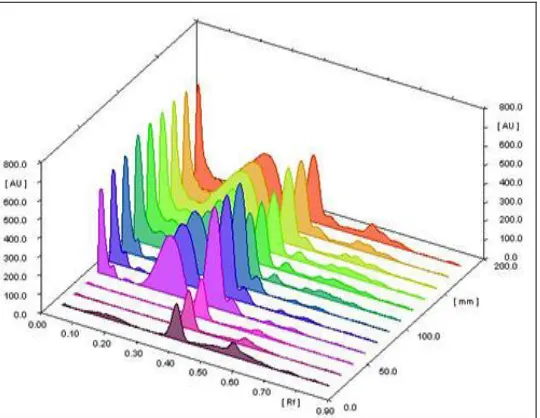
[image:3.612.295.592.484.686.2] [image:3.612.28.584.499.738.2]FIG 6: 3D VIEW OF CHROMATOGRAM OF GALLIC ACID, AMLA POWDER, AMALANT TABLET, SOOKSHMA TRIPHALA TABLET
Ascorbic Acid: The Rf value of Standard Ascorbic Acid was found to be 0.60 and peak area 2538.8 (Fig. 8). Amla powder extract showed three peaks (Fig. 9), the third peak Rf value (0.59) was coinciding with standard Rf value and its area calculated was 293.7 at 100µg/ml of standard and sample concentration, The amount of ascorbic acid was found to be 11.56%. Amalant Tablet extract showed five peaks (Fig. 10), the fifth peak Rf value (0.59) was coinciding with standard Rf value and its area calculated was 734.8 at 100µg/ml of standard and sample concentration, The amount of ascorbic acid was found to be 28.94%. Sookshma Triphala Tablet extract showed five peaks (Fig. 11), the fifth peak Rf value (0.60) was coinciding with standard Rf value and its area calculated was 807.1 at 100 µg/ml of standard and sample concentration, The amount of gallic acid was found to be 31.79%.
UNDER NORMAL LIGHT UNDER UV LIGHT (254nm)
[image:4.612.29.299.44.253.2]FIG. 7: TLC OF ASCORBIC ACID STANDARD (SPOT A), AMLA POWDER EXTRACT (SPOT B), AMALANT TABLET EXTRACT (SPOT C), SOOKSHMA TRIPHALA TABLET EXTRACT (SPOT D)
[image:4.612.313.589.84.504.2]FIG 8: HPTLC CHROMATOGRAM OF ASCORBIC ACID
FIG. 9: HPTLC CHROMATOGRAM OF AMLA POWDER EXTRACT
[image:4.612.312.588.528.732.2] [image:4.612.33.295.548.753.2]FIG 11: HPTLC CHROMATOGRAM OF SOOKSHMA TRIPHALA EXTRACT
FIG. 12: 3D VIEW OF CHROMATOGRAM OF ASCORBIC ACID, AMLA POWDER, AMALANT TABLET, SOOKSHMA TRIPHALA TABLET
ACKNOWLEDGEMENT: I am Thankful to School of Pharmacy and Technology Management, Narsee Monjee Institute of Management Studies, Shirpur Campus for helping me throughout my research work. CONCLUSION: In the present Study, Using the analytical method Gallic Acid and Ascorbic Acid were estimated qualitatively and quantitatively in polyherbal tablets containing Embelica Officinalis which can be used as quality control tool for estimation of these
phytoconstituents. The broad peaks of Amla Powder, Amalant Tablet, and Sookshma Triphala Tablet for Ascorbic Acid are due to high concentration of tablet extracts. Beside the presence of Gallic and Ascorbic Acid in Polyherbal Tablets containing Embelica officinalis extracts, so that our further research work will be oriented towards the determination of Astringent and Antioxident activity from the extracts of different polyherbal tablets.
REFERENCES:
1. Zhang Y, Tanaka T, Iwamoto Y, Yang C and Kouno I: Phyllaemblic Acid, A Novel Highly Oxygenated Norbisabolane from the Roots of Phyllanthus emblica. Tetrahedron Letters 2000; 41:1781-4.
2. Perianayagam J, Sharma S, Joseph A and Christina A: Evaluation of Anti-pyretic and Analgesic activity of Emblica Officinalis. Journal of Ethnopharmacology 2004; 95:83-5.
3. Calixto JB, Santos ARS, Filho VC and Tunes RA: A Review of the Plants of the Genus Phyllanthus: Their Chemistry, Pharmacology, and Therapeutic Potential. Journal of Medical and Biological Research 1998; 31:225-8.
4. Kroes BH, Van Den Berg JJ, Quarles Van Ufford HC, Van Dijk H and Labadie RP: Anti-inflammatory activity of Gallic Acid. Planta Medica 1992; 58: 499-5.
5. Ihantola-Vormisto A, Summanen J, Kankaanranta H, Vuorela H, Asmawi MZ and Moilanen E: Anti-inflammatory Activity of Extracts from Leaves of Phyllanthus emblica. Planta Medica 1997; 63:518-24.
6. Jose JK and Kuttan R: Antioxidant Activity of Emblica Officinalis. Journal of Clinical Biochemistry and Nutrition1995; 19:63-70. 7. Ghosal S, Tripathi VK and Chauhan S: Active Constituent of
Emblica officinalis: Part I. The Chemistry and Antioxidant effects of Two New Hydrolysable Tannins, Emblicanin A and B. Indian Journal of Chemistry 1996; 35:941-8.
8. Zhang YJ, Tanaka T, Yang CR and Kouno I: New Phenolic Constituents from the Fruit Juice of Phyllanthus emblica. Chemical and Pharmaceutical Bulletin 2001; 49:537-40. 9. Cimpoiu C, Jantschi L and Hodisan T: A New Method for Mobile
Phase Optimization in High-Performance Thin-Layer Chromatography (HPTLC). Journal of Planar Chromatography. 1998; 11:191-4.
10. Sethi PD and Charegaonkar D: Introduction In: Identification of Drugs in Pharmaceutical Formulations by Thin Layer Chromatography. CBS publishers and Distributors, New Delhi, Edition 2, 2008: 1-52.
11. Dr. Pulok K. Mukherjee. Quality Control of Herbal Drugs, An Approach to Evaluation of Botanicals, Pharmaceutical Publishers, 1st edition, 3rd reprint.; 2008: 426- 517.
[image:5.612.25.302.34.487.2] [image:5.612.27.301.262.488.2]