Facilitating a professional development programme for care home nurses in East London
Mercy Wasike, RN, MA, FHEA, Florence Nightingale Leadership Scholar, Assistant Divisional Director of Nursing – Central and North West London NHS Foundation Trust
Rozi Hamilton, RN, MSc, FHEA, Nurse Advisor – Inner East London Community Nursing Super Hub
Dr Darren Sharpe, Senior Research Fellow, University of East London, Institute for Health and Human Development and UCLP Researcher-in-Residence
Abstract
There is a need for the provision of professional development opportunities for nurses working within care homes in the UK especially at a time when there is a growing demand for nurses within both health and social care settings. This article presents the key findings from an evaluation of a short professional development programme that was offered to a group of care home nurses working in East London. The findings indicate that most of those who attended the programme reported that it was likely that their practice would improve as result.
Keywords: care home nurses, professional development
Introduction
This paper will provide a summary of key findings from the evaluation of the patient improvement project that was undertaken as part of a Florence Nightingale Foundation (FNF) Leadership Scholarship. The overarching aim of the patient improvement project was to develop a series of workshops that would be offered to care home nurses with a view to generating insights that could contribute to the work that is currently being undertaken across the wider system to support integrated approaches for the provision of good quality care for the older adult.
Background
The driving force behind this choice of a patient care improvement project was a passion for education and professional development. A routine visit by one of the authors to a care home that had offered pre-registration students a very positive experience during their clinical placement was instructive in the development of the programme design. During discussions with the registered manager, it emerged that the nurses who had been supporting the students did not hold a mentorship qualification. Bear in mind that mentorship is the qualification that tends to be offered to registered nurses within the NHS as soon as they have completed their requisite year of post-registration qualification experience. This was not being experienced by care home nurses, even though the skill base was evident. Reflecting on this concern the pressing question came into view , ‘how much more could we achieve if we offered organised opportunities for professional development?’
In response, we developed a bespoke professional development programme for care home nurses. The six-month programme, consisting of one-day workshops, focused on a wide range of topics. Our choice of content was focused on the following overarching aims:
• explore each nurse’s role as a leader in a complex system;
• identify and consider potential pathways for career development within the care home sector;
• gain a basic understanding of Quality Improvement methodology and how to carry out a QI project;
• develop ways to be more assertive and improve confidence when having crucial conversations.
Participants
An open invitation was made for registered nurses located in nursing care homes in the London boroughs of Newham, Tower Hamlets and Hackney. Fifteen learners were recruited through targeted publicity materials and word of mouth. All the development sessions occurred within NHS premises in Newham (with the exception of the simulation session, which took place in Waltham Forest).
All the learners were qualified nurses and had management responsibilities. Between them, the nurses on the programme have nursed for over 50 years. These nurses came to the development programme with a range of knowledge and experience of their sector. They were all able to contribute positively to the session discussions and activities, drawing on their lived work experience. All the learners came from outside the UK. Nearly half of the learners (43%) qualified in Eastern European countries (EU members), less than a third in the UK (29%) and the rest in parts of South Asia and the Caribbean. It is important to note that the Commonwealth nurses had been trained under the UK framework.
Evaluation process
The first stage of the evaluation was to undertake a rapid research review to understand the options for, and challenges to, job satisfaction and career progression for the migrant registered nurses. The goal was to establish a baseline for the evaluation and inform the development of the evaluation tools.
The second stage was the completion of sessional monitoring sheets, which were completed by all the participants at the end of each session. The goal was to capture the learners’ subjective assessment of their knowledge before and after the session, and their confidence about the module topic.
The third stage was two half-day observations of learning sessions. The goal of the observations was to see how learners became involved and engaged in the learning experience, as well as to determine the quality of the content and delivery.
The fourth stage was a series of semi-structured interviews with learners. Interviews were conducted over the telephone or online, and lasted 30 minutes on average. The goal of the interviews was to explore the learners’ accounts of career histories, their options and barriers to career progression and, finally, how the course is likely to support their career progressions.
Limitations of the evaluation
evaluation framework were not designed specifically to support or understand the needs of overseas Registered General Nurse (RGN) care home staff, despite all the learners coming from outside the UK. Thus, the findings and conclusions from this study cannot be deemed representative or generalisable to all RGN care home staff.
The data from the sessional monitoring forms were not triangulated with interviews with learners or with data obtained through observations. The findings therefore represent a detailed analysis of a single layer of a complex process, rather than a full cross section analysis of learners’ educational histories, current position, and length of career and career aspirations.
Results
‘All the speakers have been very good. They have been inspiring, empowering, and addressed the stigma around nursing in nursing homes.’ (Learner)
This section describes how the development programme was received by each of the learners, and considers the outcome/impact on increasing learners’ confidence and knowledge to advance their careers in the sector.
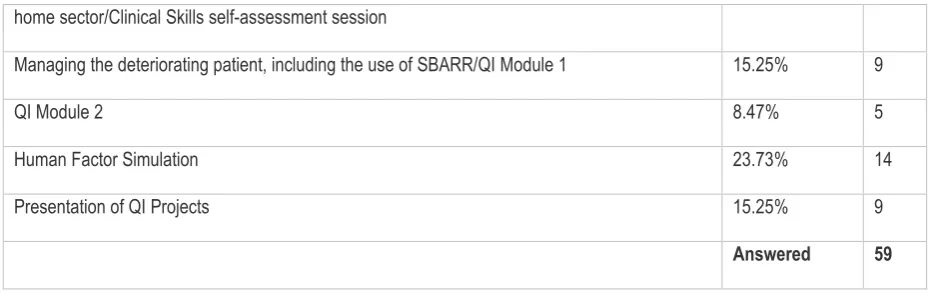
Fifteen learners took part in the programme, dipping in and out of the sessions dependent upon their work commitments (e.g. night shifts). Of the learners, 67% found out about the development programme through their care home manager and 33% found out directly from the programme coordinators. In total, 59 sessional monitoring sheets were completed collectively by the fifteen learners. Hence, about two thirds (n=59) of the sessional monitoring sheets were completed out of a possible 90. On closer inspection, 14 (24%) of mentoring sheets were completed by learners who attended the Human Factor Simulation session, making this the most reviewed of the sessions, in contrast to the 5 (9%) mentoring sheets completed by learners for the QI Module 2, the least reviewed session on the programme (see Table 2 and Figure 1). Learners raised concerns about the level and content of the QI sessions, which might be attributable to the lack of fidelity and low response rate linked to this session.
Reasons given for non-attendance included conflicts between work shifts, and work commitments. This is consistent with reasons highlighted within the literature (Cooper et al 2009, Spilsbury et al 2015).
Learner’s self-assessment of transferability of development into knowledge and practice
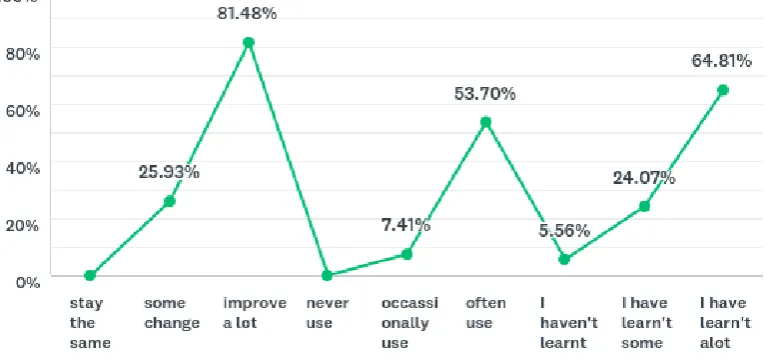
improve as a result of attending the training; 65% of the time learners also felt that they had learnt a lot of new information; and 54% of the time learners said that they would often use what they had learnt. Only 6% of the time did learners say that they did not learn any new information, and none of the learners reported that their practice would remain the same following exposure to the programme (see Table 3 and Figure 2). What is demonstrated is that the ideas, concepts and techniques shared with learners as part of the programme were relevant, valuable, valued and transferable into practice.
When learners were asked to rate their knowledge and confidence levels before and after each development session, a significantly high number of learners – 29% (n=23) to 53% (n=31), dependent on the session – reported that they came to the session with ‘some’ knowledge of the topic matter. In contrast, after the session learners reported that they felt ‘well informed’, with scores ranging from 40% (n=12) to 61% (n=35) dependent upon the session. We saw an average increase in learners’ self-reported knowledge and confidence levels of 4 to 11 points following their exposure to the development programme.
The programme consisted of different sessions, each making a unique contribution to the aims and objectives that we had in mind when we developed it.
The significant challenges for career progression
This section highlights the options and barriers in career progression for the learners. The learners identified a range of personal and organisational challenges resulting in their lack of advancement. The challenges included:
• how to focus on career progression when working in a busy care home where residents’ health and wellbeing should be the main focus;
• leadership in an unfamiliar culture while at the same time moving one’s family and creating a new support network in the adopted country;
• joining a new organization, new people and managing a team; delegation is one of the most important management skills but a constant area of difficulty; modelling themselves as credible leaders;
• managing a team of peers with the inevitable dilemma of establishing authority and altering the power dynamic from pre-existing relationships;
• keeping up with new legislation; keeping up with the paperwork; and feeling comfortable with salary and responsibilities.
‘My experience on the development course was very good, I recognize myself in most of the example/situations given by the trainers. The presentation and the content of the course was very good and useful. I achieved new skills and I feel more confident. We got the best trainer, made the
course more interactive, feeling free to share our opinion. I recommend it.’ (Learner)
Lessons to be learnt
The evaluation has reported on what works well and what could work better as part of the career development programme for care home nurses. Based on available evidence, it is clear that the learners will continue to experience a range of pull and push factors, which will have an impact on their morale and sense of professional identity.
Support for registered nurses undertaking leadership roles within care homes often does not include a clear career pathway. This is, partly, what the programme sought to explore, as the vision is for the system to work collaboratively in order to make a career in care homes just as attractive as its alternative of practising nursing in a hospital context. It does not come as much of a surprise then that all the nurses recognised that more clinical leadership development is needed for care home nurses to transition through practice into specialised roles such as the registered manager, advanced nurse practitioner or even tissue viability nurse specialist. They all felt that providing a career structure and opportunities for the care home nurse to become a clinical leader or a manager of health services should improve both recruitment and retention. They also felt that such an initiative should be supported by national bodies such as the RCN and NHS England.
The percentage of those who trained in the UK indicates that there is scope for UK-trained nurses to choose this as an area in which they can work. The provision of clear and consistent professional development opportunities could be one way in which the system could recruit and retain more ‘home-grown’ nurses within this vital sector.
The nurses also identified that the development programme would improve their practice and contribute towards the future development of their careers. The findings show that the development programme helped some of the nurses in becoming more confident. It also had a huge impact on their own professional self-image, as some of them reported that it made them feel more like ‘real nurses’, who are proud to care for a vulnerable group in society.
These lessons can be applied to any group of nurses who feel slightly demotivated by the clinical environment within which they work. A third cohort of care home nurses is due to start on the programme following the positive evaluation we received from the first cohorts. The vision is that those who complete the programme can begin to network and create a community of practice for themselves.
‘For the first time in my career I felt able to explain to my manager that I did not agree with a
decision they were making. I would not have been assertive enough to do so before I came on this
programme.’ (Leaner)
Conclusion
Despite the limitations that we previously identified, the findings presented here provide a rich picture of how the development programme was experienced. When considered in conjunction with other research, the findings provide further information about how career progression programmes could be promoted and used in practice, and how the complexity of RGN care home staff decision-making applies in relation to this.
Acknowledgements
The Burdett Trust for Nursing for their generosity in sponsoring the leadership scholarship.
Health Education England - North Central East London for providing a supportive environment.
East London Foundation Trust for making it possible for us to create such a successful partnership.
Dr Darren Sharpe was supported by the National Institute for Health Research (NIHR) Collaboration for Leadership in Applied Health Research and Care (CLAHRC) North Thames at Bart’s Health NHS Trust.
The views expressed are those of the author(s) and not necessarily those of the NHS, the NIHR or the Department of Health.
REFERENCES
Care England (2016) Teaching Care Home.
Cooper J, Levington A, Abbott S et al (2009) Partnerships for skills training in the care home sector. Primary Health Care Research and Development. 10, 4, 284-289. doi:10.1017/S146342360999020X
NHS England (2015) New care models. https://www.england.nhs.uk/new-care-models (Last accessed: 5 September 2018.)
Tolson D (2011) Improving nursing home practice: an international concern. Nursing Older People. 23, 9, 20-21.
QNI (Queen’s Nursing Institute) (2018) Transition to Care Home Nursing Resource. Queen’s Nursing Institute, London.
RCN (Royal College of Nursing) (2018) Care home resource launches.
https://www.rcn.org.uk/news-and-events/news/care-home-resource-launches (Last accessed: 5 September 2018.)
Appendix Tables and Figures
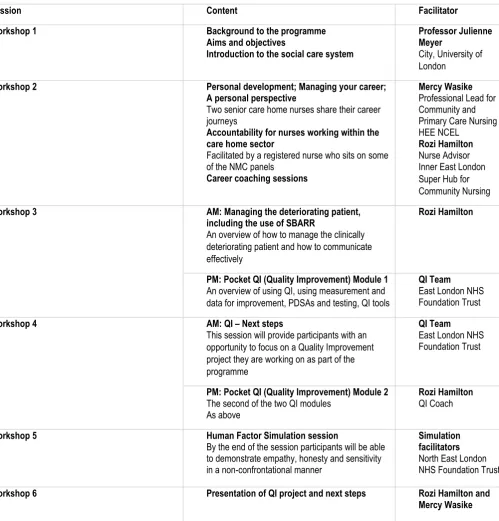
Table 1: Outline of the content of each workshop
Session Content Facilitator
Workshop 1 Background to the programme
Aims and objectives
Introduction to the social care system
Professor Julienne Meyer
City, University of London
Workshop 2 Personal development; Managing your career;
A personal perspective
Two senior care home nurses share their career journeys
Accountability for nurses working within the care home sector
Facilitated by a registered nurse who sits on some of the NMC panels
Career coaching sessions
Mercy Wasike Professional Lead for Community and Primary Care Nursing HEE NCEL
Rozi Hamilton Nurse Advisor Inner East London Super Hub for Community Nursing
Workshop 3 AM: Managing the deteriorating patient,
including the use of SBARR
An overview of how to manage the clinically deteriorating patient and how to communicate effectively
Rozi Hamilton
PM: Pocket QI (Quality Improvement) Module 1 An overview of using QI, using measurement and data for improvement, PDSAs and testing, QI tools
QI Team East London NHS Foundation Trust
Workshop 4 AM: QI – Next steps
This session will provide participants with an opportunity to focus on a Quality Improvement project they are working on as part of the programme
QI Team East London NHS Foundation Trust
PM: Pocket QI (Quality Improvement) Module 2 The second of the two QI modules
As above
Rozi Hamilton QI Coach
Workshop 5 Human Factor Simulation session
By the end of the session participants will be able to demonstrate empathy, honesty and sensitivity in a non-confrontational manner
Simulation facilitators North East London NHS Foundation Trust
Workshop 6 Presentation of QI project and next steps Rozi Hamilton and
[image:9.595.82.582.129.651.2]Mercy Wasike
Table 2: Session attendance rates
Name of session Responses
Introduction to the social care system 18.64% 11
home sector/Clinical Skills self-assessment session
Managing the deteriorating patient, including the use of SBARR/QI Module 1 15.25% 9
QI Module 2 8.47% 5
Human Factor Simulation 23.73% 14
Presentation of QI Projects 15.25% 9
[image:10.595.65.532.70.218.2]Answered 59
Table 3: How each taught session had a positive impact on how learners subjectively perceived their own increase in knowledge and skills
Statement of learners’ self-assessment providing evidence of transferability of knowledge into practice
Responses
I feel my practice will stay the same 0.00% 0
I feel that there will be some changes in my practice 25.93% 14
I feel that my practice will improve a lot 81.48% 44
I will never use what I have learnt 0.00% 0
I will occasionally use what I have learnt 7.41% 4
I will often use what I have learnt 53.70% 29
I haven't learnt any new information 5.56% 3
I have learnt some new information 24.07% 13
I have learnt a lot of new information 64.81% 35
Answered 54
[image:10.595.67.533.273.583.2]Skipped 5
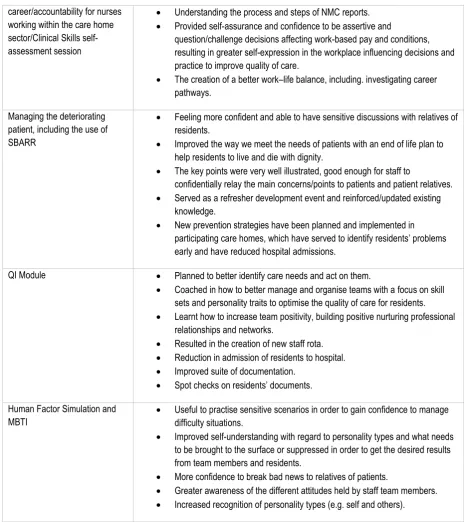
Table 4: How each session had a (positive) impact on how the learners subjectively perceived their own increase in knowledge and confidence
Name of session Outcome/impact
Introduction to the social care system
• Offered positive role models and good examples to follow in how to manage workplace challenges, resulting in increased confidence.
• Raised professional esteem for the vital clinical function performed in care homes as part of the complex health and social care system, resulting in increased self-confidence (motivation) and performance.
Personal development: managing your
career/accountability for nurses working within the care home sector/Clinical Skills self-assessment session
• Understanding the process and steps of NMC reports. • Provided self-assurance and confidence to be assertive and
question/challenge decisions affecting work-based pay and conditions, resulting in greater self-expression in the workplace influencing decisions and practice to improve quality of care.
• The creation of a better work–life balance, including. investigating career pathways.
Managing the deteriorating patient, including the use of SBARR
• Feeling more confident and able to have sensitive discussions with relatives of residents.
• Improved the way we meet the needs of patients with an end of life plan to help residents to live and die with dignity.
• The key points were very well illustrated, good enough for staff to
confidentially relay the main concerns/points to patients and patient relatives. • Served as a refresher development event and reinforced/updated existing
knowledge.
• New prevention strategies have been planned and implemented in participating care homes, which have served to identify residents’ problems early and have reduced hospital admissions.
QI Module • Planned to better identify care needs and act on them.
• Coached in how to better manage and organise teams with a focus on skill sets and personality traits to optimise the quality of care for residents. • Learnt how to increase team positivity, building positive nurturing professional
relationships and networks.
• Resulted in the creation of new staff rota. • Reduction in admission of residents to hospital. • Improved suite of documentation.
• Spot checks on residents’ documents.
Human Factor Simulation and MBTI
• Useful to practise sensitive scenarios in order to gain confidence to manage difficulty situations.
• Improved self-understanding with regard to personality types and what needs to be brought to the surface or suppressed in order to get the desired results from team members and residents.
• More confidence to break bad news to relatives of patients.
[image:11.595.64.529.67.590.2]• Greater awareness of the different attitudes held by staff team members. • Increased recognition of personality types (e.g. self and others).