Comparison of Solution Methods for some Classical Flow
Problems in Rarified Gas Dynamics
Ignatius N. Njoseh1, Alex Musa2
1
Department of Mathematics and Computer Science, Delta State University, Abraka, Nigeria
2
Department of Mathematics and Statistics, University of Port-Harcourt, Port-Harcourt, Nigeria Email: [email protected], [email protected]
Received July 216, 2013; revised August 19, 2013; accepted September 10, 2013
Copyright © 2013 Ignatius N. Njoseh, Alex Musa. This is an open access article distributed under the Creative Commons Attribution License, which permits unrestricted use, distribution, and reproduction in any medium, provided the original work is properly cited.
ABSTRACT
A comparison of two methods of solution to classical flow problem in rarefied gas dynamics was presented. The two methods were chosen to examine the effect of the following transport phenomena (pressure gradient and temperature difference) viz Poiseuille and Thermal creep respectively on the flow of rarefied gas. The governing equations were approximated using BGK model. It was shown that while the Discrete Ordinate Method could consider more values of the accommodation coefficients, the Finite Difference Method can only take accommodation coefficient of one. It was also shown that the flow rate has its minimum in both solution methods at Kn = 0.1 in the transition regime and that as
the channels get wider, the Thermal creep volume flow rates get smaller.
Keywords: Discrete Ordinate; Finite Difference; Pressure Gradient; Temperature Difference; Knudsen Number
1. Introduction
In the recent literature there is a growing interest to solve problems in rarefied gas dynamics. The reader is referred to [1-6], and other references therein for an overview of the recent work in this area. Earlier researches [7-12] solved rarefied gas dynamics problems using different methods. It has been shown that these methods yield good results. The main objective of this work is to do a comparison of two of the most widely used methods in the numerical study of rarefied gas flow problem: the Dis- crete Ordinate method (DOM) and the Finite Difference Method (FDM). Though the literature concerning our area of study is very intensive, we shall review a few of them.
Barichello, et al. [13] studied a version of the dis- crete-ordinates method to solve in a unified manner some classical flow problems based on the Bhatnagar, Gross and Krook model in the theory of rarefied gas dynamics. In particular, the thermal-creep problem and the viscous- slip (Kramer’s) problem are solved for the case of a semi-infinite medium, and the Poiseuille-flow problem, the Couette-flow problem and the thermal-creep problem are all solved for a wide range of the Knudsen number. Also Scherer and Barichello [14] studied an analytical version of the discrete-ordinates method, the ADO method, to solve two problems in the rarefied gas dy-namics field, which describe evaporation/condensation
between two parallel interfaces and the case of a semi- infinite medium. The modeling of the problems is based on a general expression which may represent four dif- ferent kinetic models.
In [15], the problem of heat transfer and temperature distribution in a binary mixture of rarefied gases between two parallel plates with different temperatures on the basis of kinetic theory was investigated. Under the as- sumptions that the gas molecules are hard spheres and undergo diffuse reflection on the plates, the Boltzmann equation was analyzed numerically by means of an ac- curate finite difference method, in which the complicated nonlinear collision integrals are computed efficiently by the deterministic numerical kernel method. As a result, the overall quantities are obtained accurately for a wide range of the Knudsen number. At the same time, the be- havior of the velocity distribution function is clarified with high accuracy.
discretized distribution function. The method is tested on both transient and steady flow problems of gases of arbi- trary statistics at varying relaxation times.
Also worthy of note are the works of [17-22] and other references therein.
2. The Linearized Boltzmann Equation
The non-linearity form of the Boltzmann equation is es- sential in application if the gas is far from thermal equi- librium. However, if the state of the gas is near thermal equilibrium, a linearized form of the Boltzmann equation will provide a reasonably accurate description of the transport phenomena. This form assumed that the per- turbation of the velocity distribution from its equilibrium form is small.
Following the work in [23] a linearized form of the Boltzmann equation was given as
2 2
0
0
2 0
3 2
2 2 2
3 3
2
2 2
d ,
, d
d exp ,
2 3 2 3
1 2
3 2 3 2
x x x x z
x z z
c c k R c K c c K
c h x c
c R h x c x
c c h x c
cc c c c
z
(1)
where h is a disturbance caused to the local Maxwellian, Rx is the relative density in the x-direction, Kx is the
temperature gradient in the x-direction,
1 2
2
m c v
KT
and
1 2 0
2
m KT
.
3. Discrete Ordinate Method
Consider the flow of rarefied gas in z-direction between two parallel plates separated by a distance d. the origin is chosen in the middle of the channel so that the coordinate y varies from
2
d
to
2
d
.
Following the linearized Boltzmann Equation (1), we seek the solution to the equation:
,
, 12 exp
2
,z
d
x Z x u Z x u u x
(2)For ,
2 2
d d x
and
,
, subject to theboundary conditions: 1) For Couette flow
,
1
,
Z a Z a (3)
,
1
,Z a Z a (4) 2) Poiseuille flow
2
, 1 , 2
Z a Z a a
(5)
2
, 1 , 2
Z a Z a a
(6) 3) Thermal flow
,
1
,
1 22 2
Z a Z a
1
(7)
,
1
, 1 22 2
Z a Z a
1
(8) Rewriting (2) we have
, ,
, , d
z
Z x Z x
x
Z x Z x
where
12exp 2 (10)
for , 2 2
d d x
and
,
.Define Wk = weight and k = nodes for 1, 2,
k ,N, then the integral term on the right hand side of (9) can be approximated to obtain
1
, ,
, ,
N
k k k k
k
z
Z x Z x x
W Z x Z x
(11)
for , 2 2
d d x
and
,
.To satisfy the requirements of the right hand side of (11) the left hand side was evaluated at the points
i
to obtain a system of differential equations
1
, ,
, ,
i i i
N
k k k k
k
z
Z x Z x x
W Z x Z x
(12)
and
1
, ,
, ,
i i i
N
k k k k
k
zZ x Z x x
W Z x Z x
(13)
, i
, i
exp x Z xv
(14) Substituting Equation (14) into Equations (12) and (13), we have
1
, ,
, ,
i
i i
N
k k i k
k
v v
v
W v v
(15)
and
1
, ,
, ,
i
i i
N
k k i k
k
v v
v
W v v
(16)
For convenience, let
v,i
,
1 2
, ,
, diagonals , , ,
i
i j j i N
v
W W M
Then (15) and (16) can be written as
1M I W W
v (17)
1M I W W
v
(18) where I is an N × N identity matrix
Now let
(19) and
(20) Adding (17) and (18) and substi
v,
, v,
, ,
T1 2 v, N
U
Y
tuting (19) gives
1
1 2
MY W U
v (21)
Subtracting (18) from (17) and substituting (20) gives 1MY Y
v (22) Eliminating Y from (21) and (22) we have
1 1
1
2MU D 2M WM MU
v (23) where
T with diagonal
2 2 2
1 2
diagonals , , , N
D
iplying (23) by a diagonal matri
Mult x
elements given by
12i i i
T W
21 2
D V X X
v
(25) where
V M TWT M and X TMU
With the elements is ade sym- m
1, ,2 ,
t t T
n write the eigenv ,tN
V m
a
etric and hence we ca lue in the form
T
2
D ZZ X X (26) where
2
1 1
V v
and
T1 1 2 2
1 2 1
, , , N N
N
W
W W
Z
Considering that the required eigenvalues has been ob- ta
I
ined in (26), a normalization condition is therefore im- posed, that is,
NW
1
, ,
k k k k
k
v v
(27)Hence the discrete ordinate solution is written as
1
, j e j j e j
i j j
j j i j i
Z x A B
v v
a x a x
N
v v
v v
(28)
1
, e j j
a x a x
N
v v
j j
i j j
j j i j i
v v
Z x A B
v v
e
(29)
where
Aj and
Bjou
are arbitrary constants to be determined from the b ndary conditions. vj is separa-
tion constants and is equal to the reciproca f the posi- tive square root of the eigenvalues as defined by (26), the separation constants
l o
vj will not be allowed to beequal to one of the quadrature points
j and a isthe arbitrary scaling constant which we ar ing as 2a
for the full channel width.
The problem based on (2) is “conservative” since e tak
d I
For this reason we expect that one of the eigenvalues defined by Equation (26) will tend to zero as N tends to infinity. Taking this fact into account, vN, which is the largest of the computed separation constants
vj willhave to be neglected, hence (28) and (29) are written as
1
1
, i i
Z x A B x
e j e j
a x a x
N
v v
j j
j j
j j i j i
v v
A B
v v
(24) we have
1
1
,
e j e j
i i
a x a x
N
v v
j j
j j
j j i j i
Z x A B x
v v
A B
v v
The constants
(31)
, , j
A B A and
Bjitions. Equat
will be deter-
mined from ions (30) and
(31) represent the discrete ordinate solutions.
To solve the problem of Couette, Poiseuille and Ther- mal creep, we consider the boundary conditions as de- fin nd write
the boundary cond
ed in (3) to (8) a
,
1
,
1
Z a Z a F (32) and
,
1
, 2
Z a Z a F (33) for From (32) and (33), we can
bou itions as stated in (3) to (8) as
0,
.
ndary cond
express the
1
F (34) and
2
F (35) for Couette flow,
2
1 2
F a (36) and
2
F 2a
2
(37) for Poiseuille flow and
21
1 1
2 2
F
(38)
and
22
1 1
2
F
2 (39)
for Thermal creep.
bstituting (30) and (31) into the boundary conditions (32) and (33), and evaluate at the quadrature points gives the system of linear algebraic equation
Su
s
, ,
1
1
2
i j j i j j
j
i
A B a F
2
e j a v
i
A N B
1
N
M
and
(40)
2 1
, ,
1
2
e 2
a N
vj
i j j i j j
j
i i
M A N B
A B a F
(41)
for i1, 2,,N, and the matrix elements
, 2 2
2
j i
i j j
j i
v
M v
v
(42) and
, 2 2
2
j i
v v
i j j
j i
N
v
(43) Adding (40) and (41) we have
2 1
, ,
1
1 2
2 e j
a N
v
j j i j i j
j
A A B M N
F F
ave
(44)
Subtracting (41) from (40) we h
2 1
, ,
1
1 2
e j 2
a N
v
j j i j i j
j
A B M N B a
F F
2
i
(45) for i1, 2,,N.
Solving (44) and (45) simultaneously to find the val- ues of the constants A, B,
Aj and
Bjrious pr
. Hence we can establish the solutions t va oblems as follows
For Poiseuille flow, we have Velocity profile
o the
1)
2 2
0
1 1 2
p
q a
Y
(46) where
1
N
0
Y A B
1
e j e j
a a
v v
j j
J
A B
(47)and
iseuille Volume Flow Rate 2) Po
21 2
1
2
1
2 1
2
1 2
1
e j a N
v
p j j j
j
Q A v A B
a
2a 3a
(48)
For Couette flow, we compute the stress given by
1 2
1 2 xz
P B and for Thermal Creep, we compute the Velocity profile
(49)
0
1T
2 1
2
1
2 1
2
a N
T j j
Q A v A
a
4. Finite Difference Method
zed two dimensional approach in [7] with the Bhatnagar-Gross-Krook Model (BGK) in [24, 25], the Boltzmann equation to be solved is reduce
1
j
e vj j
B (51)
Using the lineari
d to
2
0 3 2
2 2 2
0
3 2
2
d
exp
2
z z
x y z
h q h
y z
q F
h
F h
m h
kT
0
2 0
3
d 2h v F
d z F
(52) where
relative change in velocity distribution function , , the molecular volecity
, , the gas velocity
relative change in the particle density lative change in temperature the collision f
x y z
x y z
q q q q
re
requency
The perturbation terms and depend only on z (flow direction) and are related to the pressure and temperature gradient. They are
2 , 1
z z
T k v k d d
where is proportional to pressure gradient and is
boundary conditions are:
1
k k2
proportional to temperature gradient, and both are small compared to unity. The velocity of the reflecting molecules from the wall is specified by the Maxwellian distribution; then the
21 2 2
1 3
Sgn , ,
2 y 2
z z
d z k k k h
d d
(53) where
1, if 0
Sgn
1, if 0
y y
A solution in the form
y
, ,
0
1
,
z
y z y
d
(54
was sought where
)
20 1 2
5 2
k k h
(55)
Substituting Equation (54) into Equation (52) we have
1
d
, d
y y y
2
1 2 5 2
2
k k
h hqz
z
d d
(56)
Multiplying both sides of Equation (56) by
2 2
exp
z z x
h h
and integrating over full ranges, we have
2
1 2 2
d 1
2
d 2
y z
k k k
F
y
F h q h
y h d d d
(57)
where the function F is defined by
2 2
1
, h zexp z x ,
d dF y h y y x z
(58) oundary condi- tions
Integrating Equation (57) under the b
1
1
Sgn , , 0
2d y z
(59)
we have
1
1 1 2 2sgn
2 2
ex
y d d d
,
2
2 2
1
p d
y y
d
y z y
y
F y
k k k
h h q h
y t
he gas velocity qz is expressed by
(60)
When t
1 2
2
sgn z exp y d y
h
q y F h
(61) Equation (61) now reduces to
1 2
1 1 1
2 1
2 2 2
1 1
1 2
2 2
1 1
d
2 2
d z
d
d
d
h q y
1 2
2 2 2
1 z 1
d
k k
2 2 2
J h y t h q t
tdh dh k
J h y t t
(62)
n
J
where is defined by
2
0 exp d
n n
x
J y y
y
y Let 1 2 1 2 2 ,dh
1 1
2 , 2 ,
y h y T dh t
1 1 1 2 2 1 2 1 2 1 2 z ph q dh k k
T
(63) then Equation (62) will be written as two integral e quations, i.e.,
12 2
121 2
d 1
d
p d p J h y t t
(64)and
12 2
121 2 1 1 2 2 2 1 1 d 2 d d 2 d d
T d T J h y t t
whereJ h y t t
(65)
the inverse Knudsen number
From induc
Equation (63), we have the velocity of the gas ed by the pressure gradient as,
1 2 1 2 1 2 zP h q P (66) and that induced by temperature gradient as
1 2 1 2 1 2 2 zT T h q
(67) The volume flow rate is then given by
2 2 1 1 2 d d dP d zP
G q y y
p z
2 2 2 2 2 d2 4 h d
d
(68)
2 2
T d zT
1 1 2 2 2 2 0 2 2 d d d
4 4 d
d
T
G p q y y
T h n kd
z
(69)Expressing Equations (68) and (69) in non-dimen- sional form gives;
1 1 2 2 1 2 2 d 2 4 x P P x Q
(70)and
1 1 2 2 1 2 2 d 4 4 x T T Q x
(71)ectively.
Next, is to solve numerically the unknown functions The subscripts P and T imply Poiseuille flow and Thermal creep resp
and T
r to s
P
in Equations (64) and (65) orde olve Equations (64) and (
ference method was utilized after discretization as respectively. 65), a finite dif- In
1 1 2 1 1 1 0 1 d 1 2 k k nPh Pk n n
k J
(72)
1 1 2 1 2 2 2 1 12 2 n n
1 1 1 0 1 2 1 1 d k k n
Th Tk n n
k J J d
(73) where Pk is the stepwise function of P and Tk
e stepwise function of T
th
he cons nt value of the functions
T ta Pk and Tk on
each interval is interpreted as the value at the midpoint. The transcendental function T x has a singularity
when
According to the obvious way of differences, tions (72) and (73) reduce to the matrix
0. x
Equa-
1
0
1 for 0,1, 2, , 1
n
hk pk k
A n n
(74)1
0
for 0,1, 2, , 1
Tk n
hk h
k
B g n n
(75)where
2 2
1 2 2 2 2 2 1 2 1 d 2 k n n k n n hk hk h n A J n
(76)hk hk
A B (77) 1
2 2
2
1
1 2 1
d
2 2
h
h n
g J
n
(78) Integrating Equations (76) and (78) using ties of
the proper-
n
1 2
1 2
1 2
1 0
1 0
If
2
2
2
2 hk
h k
k h
A J n
n
k h
J n
n
(79)
1 1 2 2
0
hk If
2
h k
J n
(80)
Z
1 2
1 2
2
2 1 2
2 1
1
2 1
1 h
h n
g J
n
h n J
n
5. Numerical Results
Using LAPAK and LINPAC solvers, we obtained the following numerical results:
In Table 1, we compared the results of Poiseuille flow rate between discrete ordinate and finite difference me thods. In the table, the result with accommodation coef- ficient α = 1 was the only one presented. While discrete ordinate method could consider more values of the ac- commodation coefficients, the finite diffe
can only take accommodation coefficient of one. This is due to the fact that the discrete ordinate solution adopted the boundary conditions of diffuse and specular reflec- tions while the finite difference solution adopted the dif- ndition only. A range of in-
T
(81)
-
rence method
fuse reflection boundary co
verse Knudsen number from 0.001 to 100 was considered for both solutions, these values accommodated the slip flow, transition flow and the collisionless flow regime.
The results show an agreement of 96.6% within the slip and collisionless regime and 99.9% in the transition regime. The flow rate shows its minimum in both solu- tion methods at Kn = 1.0 in the transition regime. This
[image:7.595.88.289.81.327.2]result also agreed with that of Cercignani and Daneri in [9] where it was pointed out that the minimum occurs between 1.0 and 1.2 and the analytical solution as pre- sented in [26] and [27]. It was also observed that as the inverse Knudsen number gets very large, the volume flow rate shoots up drastically; reason was that the mean- free-path becomes larger.
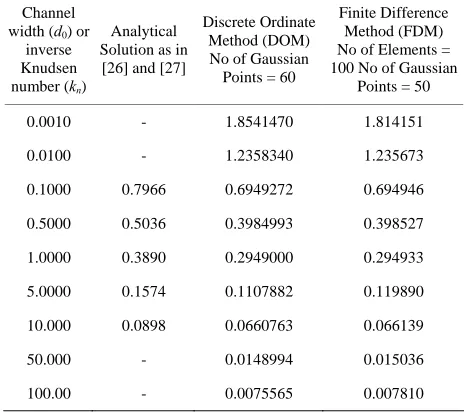
Table 2 was used to compare the Thermal Creep
Volume Flow Rate between the Discrete Ordinate and the Finite Difference methods. The same parameters in
able 1 were used as a basis for this comparison. That is,
accommodation coefficient α = l and an inverse Knudsen number in the range of 0.001 to 100. The result also shows an agreement of 96.6% within the slip and colli- sionless regime and 99.9% in the transition regime. It was noticed that as the channel gets wider the thermal creep volume flow rates gets smaller.
6. Conclusion
[image:7.595.307.540.259.466.2]Based on the discussions above, we therefore concluded that: the comparison shows that both schemes give simi Table 1. Comparison of Poiseuille Flow Rates between Dis- crete Ordinate Method and Finite Difference Method. Pa- rameter used: Accommodation coefficient α = 1.0000.
Channel width (d0) or inverse Knudsen number (kn)
Analytical Solution as in
[26] and [27]
Discrete Ordinate Method (DOM) No of Gaussian Points = 60
Finite Difference Method (FDM) No of Elements = 100 No of Gaussian
Points = 50
0.0010 - 4.274560 4.194779
0.0100 - 3.049685 3.049363
1.0000 1.5086 1.538678 1.538786
4 0.1000 1.9318 2.032716 2.032757 0.5000 1.5607 1.601874 1.601950
5.0000 1.9639 1.981093 1.981283 10.000 2.7350 2.768645 2.76850
50.000 100.00
- -
9.369976 17.69330
9.263045 17.06334 Table 2. Comparison of Thermal Creep Volume Flow Rates
betw iscrete O inate M d Fini nce
Me rameter sed: Acc co α =
1.0000. Channel wid
inver K num
Ana Solution as in [26] a
Discre Method ( No of
Points = 60
Finite Difference
Me )
No o
100 No of Gaussian P
een D rd ethod an te Differe
thod. Pa u ommodation efficient
th (d0) or se nudsen
ber (kn)
lytical nd [27]
te Ordinate DOM) Gaussian
thod (FDM f Elements = oints = 50 0.0010 - 1.8541470 1.814151
0 - 1.2
0 0.7966 0.6
0.5000 0.5036 0.3984993 0.398527
0898 0.0660763 0.066139 50.000 - 0.0148994 0.015036 100.00 - 0.0075565 0.007810
.0100 358340 1.235673
.1000 949272 0.694946
[image:7.595.306.538.528.734.2]la when computing e
m m
to c n
f ch m
comparable to the discrete ordinate solutions even up to 99% accuracy. However, differ
could not take accommodat ient of order greater than one because consi
bo cond
FER
S
[1] Hau alytica or Three-Dimensional ican ss of chanic,
ary 2012 p. 1-5.
aamech.org/PACAM
[2] Schere . F. Prol L. B. B “An
. Aoki, “Numerical Analysis of Rarefied Gas Flow induced around a Flat Plate with a Single Heated Side in s,” Proceedings of 27th Internatio fied Gas Dynamics r results
Knudsen nu give ex lows at a r
with the rang nite difference
es of the invers ethod was ab ber; the fi
ellent results elatively mu
le on Poiseuille a
shorter co
d Thermal creep putation and was the finite ence method ion coeffic
undary
of the ition.
deration of only the diffuse
RE
ENCE
E. B. ser, “An l Solution f Discrete Ordinates Problems,”
Amer Applied MeProceedings of
12th Trinidad,
Congre 2-6
Janu http://www.
, p
12/Documents/73.pdf C. S. r, J o Fihlo and arichello, Analytical Approach to the Unified Solution of Kinetic Equations in Rarefied Gas Dynamics. I. Flow Problems”. Zeitschrift für Angewandte Mathematik und Physik ZAMP, Vol. 60, No. 1, 2009, pp. 70-115.
[3] C. S. Scherer, J. F. Prolo Filho and L. B. Barichello, “An Analytical Approach to the Unified Solution of Kinetic Equations in the Rarefied Gas Dynamics. II. Heat Trans- fer Problems” Zeitschrift für Angewandte Mathematik und Physik ZAMP, Vol. 60, No. 4, 2009, pp. 651-687. [4] S. Taguchi and K
Rarefied Gas Dynamic
nal Symposium on Rare , Pacific Grove, 10-15 July 2010, pp. 790-795.
[5] V. A. Titarev, “Efficient Deterministic Modeling of Three-Dimensional Rarefied Gas Flow,” Communications in Computational Physics, Vol. 12, No. 1, 2012, pp. 162-192.
[6] J. Y. Yang, B. P. Muljadi, Z. H. Li and H. X. Zhang, “A Direct Solver for Initial Value Problems of Rarefied Gas Flows of Arbitrary Statistics,” Communications in Com-putational Physics, Vol. 14, No. 1, 2013, pp. 242-264. C. Cercignani, “Mathematical M
[7] ethods in Kinetic The- ory,” Plenum Press, New York, 1969.
[8] C. Cercignani “Rarefied Gas Dynamics: From Basic Concepts to Actual Calculations,” Cambridge University Press, Cambridge, 2000.
[9] C. Cercignani and A. Daneri, “Flow of Rarefied Gas be- tween two Parallel Plates,” Journal of Applied Physics, Vol. 34 No. 12, 1962. pp. 3509-3513
doi:10.1063/1.1729249
[10] C. E. Siewert and L. B. Barichello, “A Discrete-Ordinate Solution for Poiseuille Flow in Plan Channel,” Zeitschrift für Angewandte Mathematik und Physik ZAMP, Vol. 50, No. 6, 1999, pp. 972-981. doi:10.1007/s000000050189 [11] S. K. Stefanov, V. M. Roussinov and C. Cerciginani,
p.
between Non-Par-
, 2001, pp.
“Three-Dimensional Rayleigh-Benard Convection of a Rarefied Gas: DSMC and Navier-Stokes Calculations,” AIP Conference Proceedings of 24th International Sym-
posium on Rarefied Gas Dynamics, Vol. 762, 2004, p 529-534.
[12] Y. Sone, “Rarefied Gas Flow Induced
allel Plane Walls with Different Temperature,” In: M. Becker and M. Fiebig, Eds., Rarefied Gas Dynamics, DFVLR Press, Porz-Wahn, 1974.
[13] L. B. Barichello, M. Camargo, P. Rodrigues and C. E. Siewert, “Unified Solutions to Classical Flow Problems Based on the BGK Model,” Zeitschrift für Angewandte Mathematik und Physik ZAMP, Vol. 52, No. 3
517-534.
[14] C. S. Scherer and L. B. Barichello, “An Analytical Ap- proach to the Unified Solution of Kinetic Equations in Rarefied Gas Dynamics. III. Evaporation and Condensa-tion Problems,” Zeitschrift für Angewandte Mathematik und Physik ZAMP, Vol. 61, No. 1, 2012, pp. 95-117. [15] S. Kosuge, K. Aoki and S. Takata, “Heat Transfer in a
Gas Mixture between Two Parallel Plates: Finite-Differ- ence Analysis of the Boltzmann Equation,” 22nd Interna- tional Symposium on Rarefied Gas Dynamics, Sydney, 9-14 July 2000, pp. 289-296.
[16] B. P. Muljadi and J. Y. Yang, “Deterministic Solver for Rarefied Flow Problems of Gases of Arbitrary Statistics Based on the Semiclassical Boltzmann-BGK Equation,” 7th International Conference on Computational Fluid Dynamics, Big Island, 9-13 July 2012, p. 1404.
[17] R. D. M. Garcia and C. E. Siewert, “Particular Solutions of the Linearized Boltzmann Equation for A Binary Mix- ture of Rigid Spheres,” Zeitschrift für Angewandte Mathe- matik und Physik ZAMP, Vol. 59, No. 2, 2008, pp. 281- 292.
[18] C. Henri, “Couette Flow for a Gas with a Discrete Veloc- ity Distribution” Journal of Fluid Mechanics, Vol. 76, No. 2, 1976, pp. 273-287. doi:10.1017/S0022112076000633 [19] S. L. Lorenzani, A. Gibelli, A. Frezzotti, A. Frangi and C.
Cercignani, “Kinetic Approach to Gas Flows in Micro- channels,” Nanoscale and Microscale Thermophysical Engineering, Vol. 11, No. 1-2, 2007, pp. 211-226. doi:10.1080/15567260701333489
[20] S. K. Loyalka, “Motion of a Sphere in a Gas: Numerical Solution of the Linearized Boltzmann Equation,” Physics of Fluids A: Fluid Dynamics, Vol. 4, No. 5, 1992, p. 1049. doi:10.1063/1.858256
[21] S. Kubota and Y. Yoshizawa, “Couette Flow Problems by
cs, Vol. 152, No. 1, 1999, pp. 251-263.
Thirteen Moment Equations,” Proceedings of Rarefied Gas Dynamics, DFVLR Press, Porz-Wahn, 1974.
[22] C. E. Siewert, “A Discrete-Ordinate Solution for Heat Transfer in a Plan Channel,” Journal of Computational Physi
doi:10.1006/jcph.1999.6244
[23] M. M. R. Williams, “A Review of the Rarefied Gas Dy- namics Theory Associated with Some Classical Problems
elfor mall Amplitude Proc-in Flow and Heat Transfer,” Zeitschrift für Angewandte Mathematik und Physik ZAMP, Vol. 52, No. 3, 2001, pp. 500-516.
[24] P. L. Bhatnagar, E. P. Gross and M. Krook, “A Mod Collision Processes in Gases. 1. S
arefied Gas Past a Sphere on Physical Review, Vol. 94, No. 3, 1954, pp. 511-525. [25] S. Takata, Y. Sone and K. Aoki, “ Numerical Analysis of
a Uniform Flow of a R the Basis of the Boltzmann Equation for Hard-Sphere Mole- cules,” Physics of Fluids A: Fluid Dynamics, Vol. 5, No. 3, 1993, p. 716. doi:10.1063/1.858655
[26] S. K. Lokalka and K. A. Hickey, “Kinetic Theory of Thermal Transpiration and Mechanocaloric Effect: Planar
Flow of a Rigid Sphere Gas with Arbitrary Accommoda- tion at the Surface,” Journal of Vacuum Science & Tech- nology A, Vol. 9, No. 1, 1991, p. 158.
doi:10.1116/1.577119