S1
Supporting Information
CoS
2-Decorated Cobalt/Nitrogen Co-Doped Carbon Nanofiber
Networks as Dual Functional Electrocatalysts for Enhancing
Electrochemical Redox Kinetics in Lithium-Sulfur Batteries
Shanshan Yao*, † Cuijuan Zhang†, Ruiduo Guo†, Arslan Majeed†, Yanping He†,
Youqiang Wang†, Xiangqian Shen†, ‡, Tianbao Li‡, Shibiao Qin‡
†Institute for Advanced Materials, College of Materials Science and Engineering,
Jiangsu University, 301 Xuefu Road, Zhenjiang 212013, P. R. China
‡ Hunan Engineering Laboratory of Power Battery Cathode Materials, Changsha
Research Institute of Mining and Metallurgy, 966 Lushan South Road, Changsha 410012, P. R. China
Corresponding author: Shanshan Yao ([email protected])
Number of Pages: 11
Number of Tables: 2 (Table S1 and S2)
S2
Synthesis of CSCNC @Li2S6 electrode
The blank electrolyte was composed of 1M bis(trifluoromethanesulfonic acid) (LITFSI) and 2 wt% LiNO3 in 1:1 V/V 1,3-dioxolane (DOL)/1,2-dimethoxy-ethane
(DME). The Li2S6 catholyte solution was chemically synthesized by directly reacting
sulfur with stoichiometric Li2S (molar ration of S: Li2S is 5:1) in a blank electrolyte at
60 ℃ for 24 h to form 1M Li2S6 (molar concentration calculated based on sulfur
atom). The as-prepared CSCNC was punched into round disks with a diameter of 12 mm. The Li2S6 catholyte was added in the above as-synthesized membrane to form a
CSCNC@Li2S6 composite electrode. For comparison, CNC@Li2S6 electrode was also
assembled at the same condition and placed the assembled cells for overnight to wet the cathode thoroughly by the electrolyte. The sulfur mass of 7.11 mg corresponded to 34.5 μL of 1M Li2S6, and the sulfur mass of 14.22 mg was equal to 69 μL of 1M
S3
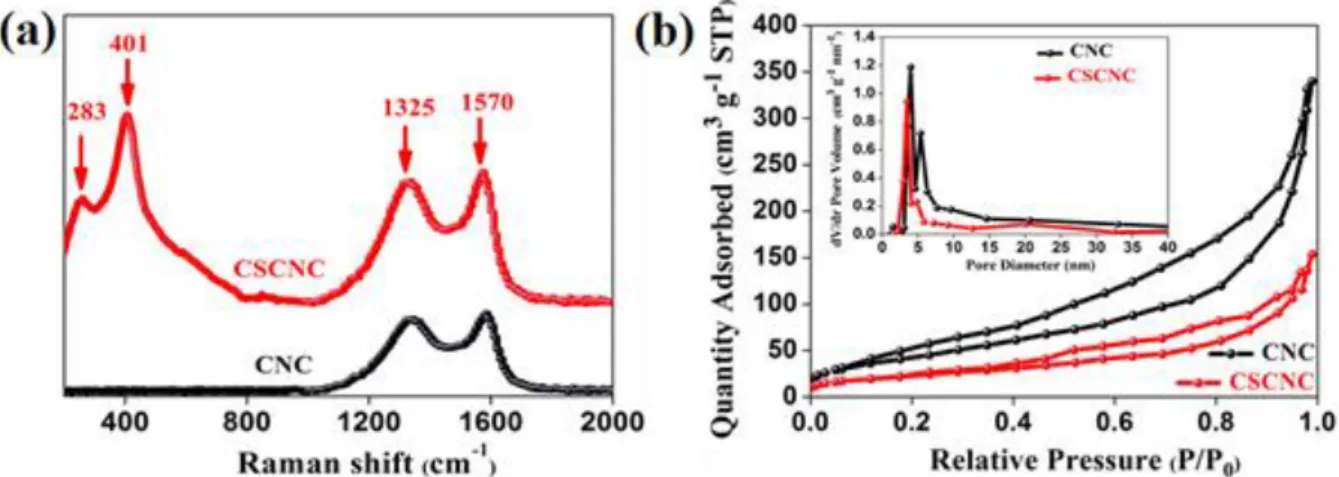
Figure S1 (a) Raman spectra and (b) N2 adsorption-desorption analysis of
CNC and CSCNC
S4
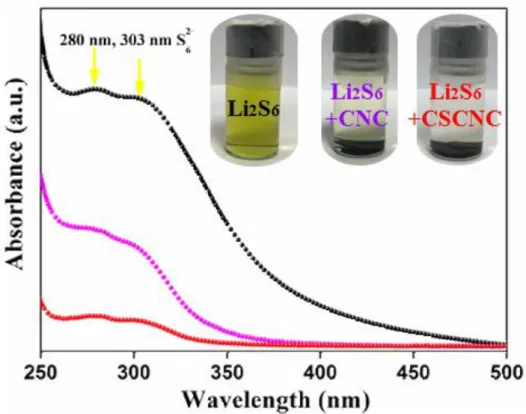
Figure S3 UV-vis spectra and associated color changes of the Li2S6 solution exposure
to CNC and CSCNC
Figure S4 Cycling performance of the CNC@Li2S6 and CSCNC@Li2S6 composite
S5
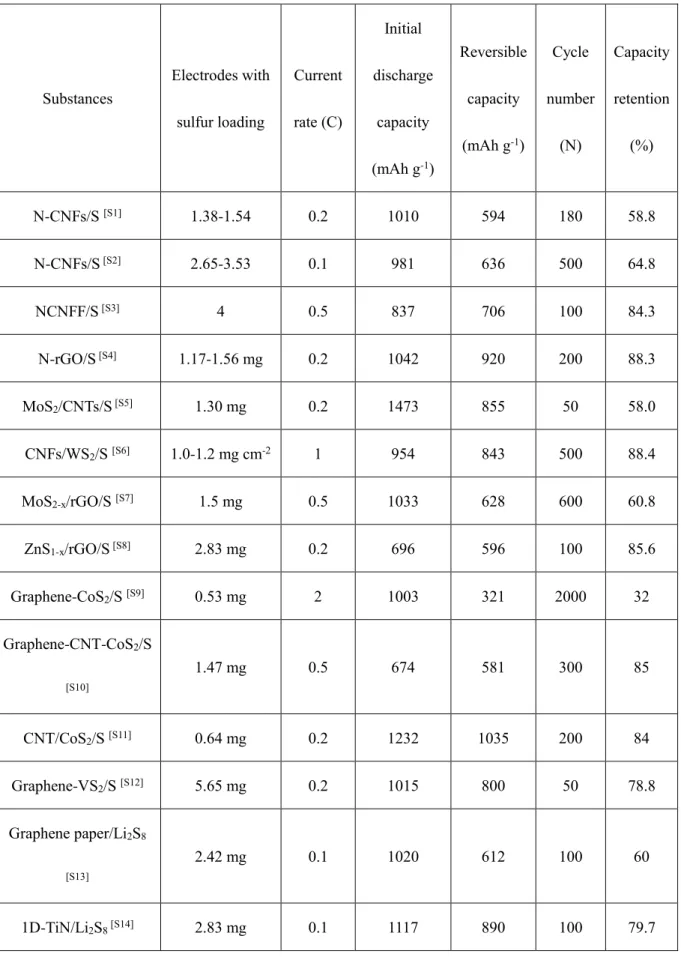
Table S1 The comparison of CSCNC with other host cathode materials in Li-S batteries Substances Electrodes with sulfur loading Current rate (C) Initial discharge capacity (mAh g-1)
Reversible capacity (mAh g-1)
Cycle number (N) Capacity retention (%)
N-CNFs/S [S1] 1.38-1.54 0.2 1010 594 180 58.8
N-CNFs/S [S2] 2.65-3.53 0.1 981 636 500 64.8
NCNFF/S [S3] 4 0.5 837 706 100 84.3
N-rGO/S [S4] 1.17-1.56 mg 0.2 1042 920 200 88.3
MoS2/CNTs/S [S5] 1.30 mg 0.2 1473 855 50 58.0
CNFs/WS2/S [S6] 1.0-1.2 mg cm-2 1 954 843 500 88.4
MoS2-x/rGO/S [S7] 1.5 mg 0.5 1033 628 600 60.8
ZnS1-x/rGO/S [S8] 2.83 mg 0.2 696 596 100 85.6
Graphene-CoS2/S [S9] 0.53 mg 2 1003 321 2000 32 Graphene-CNT-CoS2/S
[S10]
1.47 mg 0.5 674 581 300 85
CNT/CoS2/S [S11] 0.64 mg 0.2 1232 1035 200 84
Graphene-VS2/S [S12] 5.65 mg 0.2 1015 800 50 78.8 Graphene paper/Li2S8
[S13]
2.42 mg 0.1 1020 612 100 60
S6
CNF-rGO/Li2S6[S15] 4.23 mg 0.25 961 683 100 71.7 WS2- rGO-CNT/Li2S6
[S16]
0.96 mg 0.1 1227 1113 100 90.7
CNC@Li2S6[This work] 7.11 mg 0.2 1017 647 180 63.6 CSCNC@Li2S6 [This
work]
7.11 mg 0.2 1127 877 200 77.8
S7
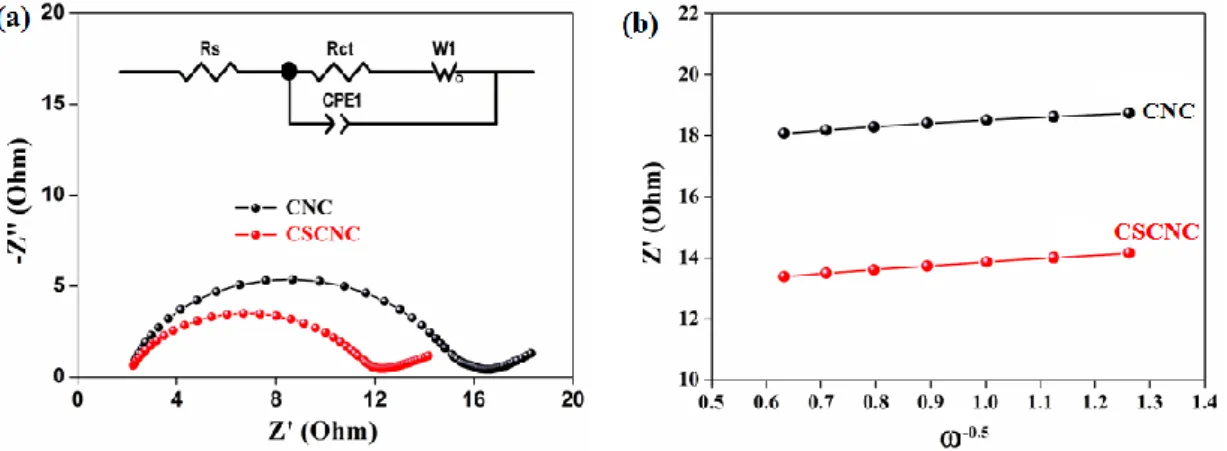
Figure S5 (a) Nyquist plots of EIS spectra of cells with CNC@Li2S6 and
CSCNC@Li2S6 (the insert was equivalent circuit) and (b) the dependence of Zre on
the reciprocal square root of the frequency ω-0.5 in the low-frequency region for two
composite electrodes
According to the Equation S1: 𝐷𝐿𝑖+ = 𝑅2𝑇2
2𝐴2𝑁4𝐹2𝐶2𝜎2 , the R and T represent the gas
constant (8.314 J mol-1 K-1) and the thermodynamics temperature (298.5 K), A
represents the practical surface area of the electrode (1.13 cm2), N represents the
electron number corresponding to the reaction of the lithium ions (N = 2), F represents the Faraday constant (9.65 × 10⁴ C mol-1), C represents the molar
concentration of lithium ions (1.29 mol cm-3). The σ represents Warburg diffusion
coefficient calculated according to the following Equation S2: 𝑍𝑟𝑒 = 𝑅1+ 𝑅2+
S8
Table S2 Impedance parameters of CNC@Li2S6 and CSCNC@Li2S6 electrodes
Samples Rs (Ω) Rct (Ω) DLi+ (cm2 s-1)
CNC@Li2S6 3.51 16.31 9.07 ×10⁻⁹
CSCNC@Li2S6 3.07 12.03 5.63 ×10⁻⁸
Calculate section:
The density of sulfur density is 2.07 g cm-3.
The mass of current collect is 4.37 mg.
The BET specific surface area of current collect is 147.3m2 g-1
The quality of the active substance sulfur is 7.11 mg
The total area of CSCNC: 4.37 mg × 147.3 m2 g-1= 0.64 m2 = 6400 cm2
The total volume of sulfur: 7.11 mg÷2.07 g cm-3 = 3.43 × 10⁻³ cm3
According to the TEM image after the cycle of CSCNC, We can assume that elemental sulfur was evenly coated on the surface of the fiber; therefor the thickness of the cover can be calculated as follows:
S9 References
(S1) Yang, J., Zhou, X. Y., Zou, Y. L., Tang, J. J., Wang, S. C., Chen, F., Wang, L. Y. Functionalized N-doped porous carbon nanofiber webs for a lithium-sulfur battery with high capacity and rate performance, The Journal of Physical Chemistry C 2014, 118, 1800-1807. DOI: 10.1021/jp410385s
(S2) Yao, Y. C., Liu, P., Zhang, Q., Zeng, S. Z., Chen, S. S., Zou, G. J., Zou, J. C., Zeng, X. R., Li, X. H. Nitrogen-doped micropores binder-free carbon-sulphur composites as the cathode for long-life lithum-sulphur batteries, Materials Letters 2018, 231, 159-162. DOI: 10.1016/j.matlet.2018.08.046
(S3) Ren, W. C., Ma, W., Zhang, S. F., Tang, B. T. Nitrogen-doped carbon fiber foam enabled sulfur vapor deposited cathode for high performance lithium sulfur batteries,
Chemical Engineering Journal 2018, 341, 441-449. DOI: 10.1016/j.cej.2018.02.057 (S4) Zegeye, T. A., Tsai, M. C., Cheng, J. H., Lin, M. H., Chen, H. M., Rick, J., Su, W, N., Kuo Jeffrey, C. F., Hwang, B. J. Controllable embedding of sulfur in high surface area nitrogen doped three dimensional reduced graphene oxide by solution drop impregnation method for high performance lithium-sulfur batteries, Journal of Power Sources2017, 353, 298-311. DOI: 10.1016/j.jpowsour.2017.03.063
(S5) Walle, M. D., Zeng, K., Zhang, M. Y., Li, Y. J., Liu, Y. N. Flower-like molybdenum disulfide/carbon nanotubes composites for high sulfur utilization and high-performance lithium-sulfur battery cathodes, Applied Surface Science 2019, 473, 540-547. DOI: 10.1016/j.apsusc.2018.12.169
S10
L., Li, Y. R., Xiong, J. Multi-Functional layered WS2 nanosheets for enhancing the
performance of lithium-sulfur batteries, Advanced Energy Materials 2017, 7, No. 1601843. DOI: 10.1002/aenm.201601843
(S7) Lin, H. B., Yang, L. Q., Jiang, X., Li, G. C., Zhang, T. R., Yao, Q. F., Wesley Zheng, G. Y., Lee, J. Y. Electrocatalysis of polysulfide conversion by sulfur-deficient MoS2 nanoflakes for lithium-sulfur batteries, Energy & Environmental Science 2017,
10, 1476-1486. DOI: 10.1039/C7EE01047H
(S8) Razaq, R., Sun, D., Wang, J., Xin, Y., Abbas, G., Zhang, J. H., Li, Q., Huang, T. Z., Zhang, Z. L., Huang, Y. H. Ultrahigh sulfur loading in ZnS1-x/rGO through in situ
oxidation-refilling route for high-performance Li-S batteries, Journal of Power Sources 2019, 414, 453-459. DOI: 10.1016/j.jpowsour.2019.01.038
(S9) Yuan, Z., Peng, H. J., Hou, T. Z., Huang, J. Q., Chen, C. M., Wang, D. W., Cheng, X. B., Wei, F., Zhang, Q. Powering lithium-sulfur battery performance by propelling polysulfide redox at sulflphilic hosts, Nano Letters 2016, 16, 519-527. DOI: 10.1021/acs.nanolett.5b04166
(S10) Zhou, G. M., Tian, H. Z., Jin, Y., Tao, X. Y., Liu, B. F., Zhang, R. F., Seh, Z. W., Zhuo, D., Liu, Y. Y., Sun, J., Zhao, J., Zu, C. X., Su, D. S, Zhang, Q. F., Cui, Y. Catalytic oxidation of Li2S on the surface of metal sulfides for Li-S batteries,
Proceedings of the National Academy of Sciences of the United States of America 2017, 114: 840-845. DOI: 10.1073/pnas.1615837114
(S11) Su, W. X., Feng, W. J., Wang, S. J., Chen, L. J., Li, M. M., Song, C. K. Electrocatalysis of polysulfide conversion via sulfur-cobalt CoS2 on a carbon
S11
nanotube surface as a cathode for high-performance lithium-sulfur batteries, Journal of Solid State Electrochemistry 2019, 23, 2097-2105. DOI: 10.1007/s10008-019-04301-w
(S12) Zhu, X. Y., Zhao, W., Song, Y. Z., Li, Q. C., Ding, F., Sun, J. Y., Zhang, L., Liu, Z. F. In situ assembly of 2D conductive vanadium disulfide with graphene as a high-sulfur-loading host for lithium-sulfur batteries, Advanced Energy Materials2018, 8, No. 1800201. DOI: 10.1002/aenm.201800201
(S13) Raghunandanan, A., Perisamy, P., Ragupathy, P. Surface-activated graphite paper for high-performance lithium-polysulfide batteries, ACS Sustainable Chemistry & Engineering 2019, 7, 276-284. DOI: 10.1021/acssuschemeng.8b03193
(S14) Beyene, A. M., Yun, J. H., Ahad, S. A., Moorthy, B., Kim, D. K. Polycrystalline 1D TiN based free-standing composite electrode for high performance of Li-polysulfide cells, Applied Surface Science 2019, 495, No. 143544. DOI: 10.1016/j.apsusc.2019.143544
(S15) Han, S. C., Pu, X., Li, X. L., Liu, M. M., Li, M., Feng, N., Dou, S., Hu, W. G. High areal capacity of Li-S batteries enabled by freestanding CNF/rGO electrode with high loading of lithium polysulfide, Electrochimica Acta 2017, 241, 406-413. DOI: 10.1016/j.electacta.2017.05.005
(S16) Huang, S. Z., Wang, Y., Hu, J. P., Lim, Y. V., Kong, D. Z., Zheng, Y., Ding, M., Pam, M. E., Yang, H. M. Mechanism investigation of high-performance Li-polysulfide batteries enabled by tungsten disulfide nanopetals, ACS Nano 2018, 12, 9504-9512. DOI: 10.1021/acsnano.8b04857