appendix
a
|
reading Foundational skills
The following supplements the Reading Standards: Foundational Skills (K–5) in the main document (pp. 14–16). See page 40 in the bibliography of this appendix for sources used in helping construct the foundational skills and the material below.
Phoneme-Grapheme correspondences
Consonants
Common graphemes (spellings) are listed in the following table for each of the consonant sounds. Note that the term
grapheme refers to a letter or letter combination that corresponds to one speech sound. Figure 8: Consonant Phoneme-Grapheme Correspondences in English
Phoneme Word Examples Common Graphemes (Spellings) for the Phoneme*
/p/ pit, spider, stop p
/b/ bit, brat, bubble b
/m/ mitt, comb, hymn m, mb, mn
/t/ tickle, mitt, sipped t, tt, ed
/d/ die, loved d, ed
/n/ nice, knight, gnat n, kn, gn
/k/ cup, kite, duck, chorus, folk, quiet k, c, ck, ch, lk, q
/g/ girl, Pittsburgh g, gh
/ng/ sing, bank ng, n
/f/ fluff, sphere, tough, calf f, ff, gh, ph, lf
/v/ van, dove v, ve
/s/ sit, pass, science, psychic s, ss, sc, ps /z/ zoo, jazz, nose, as, xylophone z, zz, se, s, x
/th/ thin, breath, ether th
/th/ this, breathe, either th
/sh/ shoe, mission, sure, charade, precious, notion, mission,
special sh, ss, s, ch, sc, ti, si, ci
/zh/ measure, azure s, z
/ch/ cheap, future, etch ch, tch
/j/ judge, wage j, dge, ge
/l/ lamb, call, single l, ll, le
/r/ reach, wrap, her, fur, stir r, wr, er/ur/ir /y/ you, use, feud, onion y, (u, eu), i
/w/ witch, queen w, (q)u
/wh/ where wh
/h/ house, whole h, wh
*Graphemes in the word list are among the most common spellings, but the list does not include all possible graph-emes for a given consonant. Most graphgraph-emes are more than one letter.
appendix
a
|
18
Vowels
Common graphemes (spellings) are listed in the following table for each of the vowel sounds. Note that the term
grapheme refers to a letter or letter combination that corresponds to one speech sound. Figure 9: Vowel Phoneme-Grapheme Correspondences in English
Phoneme Word Examples Common Graphemes (Spellings) for the Phoneme*
/ē/ see, these, me, eat, key, happy, chief, either ee, e_e, -e, ea, ey, -y, ie, ei
/ĭ/ sit, gym i, y
/ā/ make, rain, play, great, baby, eight, vein, they a_e, ai, ay, ea, -y, eigh, ei, ey
/ĕ/ bed, breath e, ea
/ă/ cat a
/ī/ time, pie, cry, right, rifle i_e, ie, -y, igh, -i
/ŏ/ fox, swap, palm o, wa, al
/ŭ/ cup, cover, flood, tough u, o, oo, ou
/aw/ saw, pause, call, water, bought aw, au, all, wa, ough /ō. vote, boat, toe, snow, open o_e, oa, oe, ow, o-,
/oo/ took, put, could oo, u, ou
/ū/ [oo] moo, tube, blue, chew, suit, soup oo, u_e, ue, ew, ui, ou
/y//ū/ use, few, cute u, ew, u_e
/oi/ boil, boy oi, oy
/ow/ out, cow ou, ow
er her, fur, sir er, ur, ir
ar cart ar
or sport or
* Graphemes in the word list are among the most common spellings, but the list does not include all possible
graph-emes for a given vowel. Many graphgraph-emes are more than one letter.
Phonological awareness
General Progression of Phonological Awareness Skills (PreK–1)
Word Awareness (Spoken Language)
Move a chip or marker to stand for each word in a spoken sentence. The dog barks. (3)
The brown dog barks. (4) The brown dog barks loudly. (5) Rhyme Recognition during Word Play
Say “yes” if the words have the same last sounds (rhyme): clock/dock (y)
red/said (y) down/boy (n)
Repetition and Creation of Alliteration during Word Play Nice, neat Nathan
Chewy, chunky chocolate
¯
appendix
a
|
Syllable Counting or Identification (Spoken Language)
A spoken syllable is a unit of speech organized around a vowel sound.
Repeat the word, say each syllable loudly, and feel the jaw drop on the vowel sound: chair (1) table (2) gymnasium (4)
Onset and Rime Manipulation (Spoken Language)
Within a single syllable, onset is the consonant sound or sounds that may precede the vowel; rime is the vowel and all other consonant sounds that may follow the vowel.
Say the two parts slowly and then blend into a whole word: school onset - /sch/; rime - /ool/ star onset - /st/; rime - /ar/ place onset - /pl/; rime - /ace/ all onset (none); rime - /all/ General Progression of Phoneme Awareness Skills (K–2)
Phonemes are individual speech sounds that are combined to create words in a language system. Phoneme aware-ness requires progressive differentiation of sounds in spoken words and the ability to think about and manipulate those sounds. Activities should lead to the pairing of phonemes (speech sounds) with graphemes (letters and letter combinations that represent those sounds) for the purposes of word recognition and spelling.
Phoneme Identity
Say the sound that begins these words. What is your mouth doing when you make that sound? milk, mouth, monster /m/ — The lips are together, and the sound goes through the nose. thick, thimble, thank /th/ — The tongue is between the teeth, and a hissy sound is produced. octopus, otter, opposite /o/ — The mouth is wide open, and we can sing that sound. Phoneme Isolation
What is the first speech sound in this word? ship /sh/
van /v/ king /k/ echo /e/
What is the last speech sound in this word? comb /m/
sink /k/ rag /g/ go /o/
Phoneme Blending (Spoken Language) Blend the sounds to make a word: (Provide these sounds slowly.) /s/ /ay/ say /ou/ /t/ out /sh/ /ar/ /k/ shark /p/ /o/ /s/ /t/ post
Phoneme Segmentation (Spoken Language)
Say each sound as you move a chip onto a line or sound box: no /n/ /o/
rag /r/ /a/ /g/ socks /s/ /o/ /k/ /s/ float /f/ /l/ /oa/ /t/
appendix
a
|
20
Phoneme Addition (Spoken Language)
What word would you have if you added /th/ to the beginning of “ink”? (think) What word would you have if you added /d/ to the end of the word “fine”? (find) What word would you have if you added /z/ to the end of the word “frog”? (frogs) Phoneme Substitution (Spoken Language)
Say “rope.” Change /r/ to /m/. What word would you get? (mope) Say “chum.” Change /u/ to /ar/. What word would you get? (charm) Say “sing.” Change /ng/ to /t/. What word would you get? (sit) Phoneme Deletion (Spoken Language)
Say “park.” Now say “park” without /p/. (ark) Say “four.” Now say “four” without /f/. (or)
orthography
Categories of Phoneme-Grapheme Correspondences
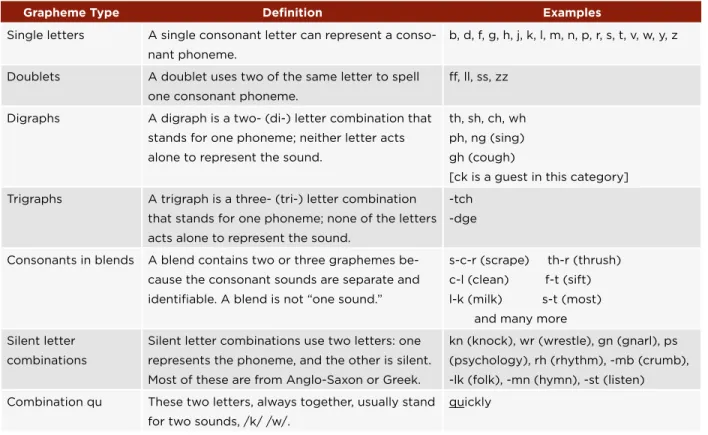
Figure 10: Consonant Graphemes with Definitions and Examples
Grapheme Type Definition Examples
Single letters A single consonant letter can represent a conso-nant phoneme.
b, d, f, g, h, j, k, l, m, n, p, r, s, t, v, w, y, z Doublets A doublet uses two of the same letter to spell
one consonant phoneme.
ff, ll, ss, zz Digraphs A digraph is a two- (di-) letter combination that
stands for one phoneme; neither letter acts alone to represent the sound.
th, sh, ch, wh ph, ng (sing) gh (cough)
[ck is a guest in this category] Trigraphs A trigraph is a three- (tri-) letter combination
that stands for one phoneme; none of the letters acts alone to represent the sound.
-tch -dge Consonants in blends A blend contains two or three graphemes
be-cause the consonant sounds are separate and identifiable. A blend is not “one sound.”
s-c-r (scrape) th-r (thrush) c-l (clean) f-t (sift) l-k (milk) s-t (most) and many more Silent letter
combinations
Silent letter combinations use two letters: one represents the phoneme, and the other is silent. Most of these are from Anglo-Saxon or Greek.
kn (knock), wr (wrestle), gn (gnarl), ps (psychology), rh (rhythm), -mb (crumb), -lk (folk), -mn (hymn), -st (listen) Combination qu These two letters, always together, usually stand
for two sounds, /k/ /w/.
appendix
a
|
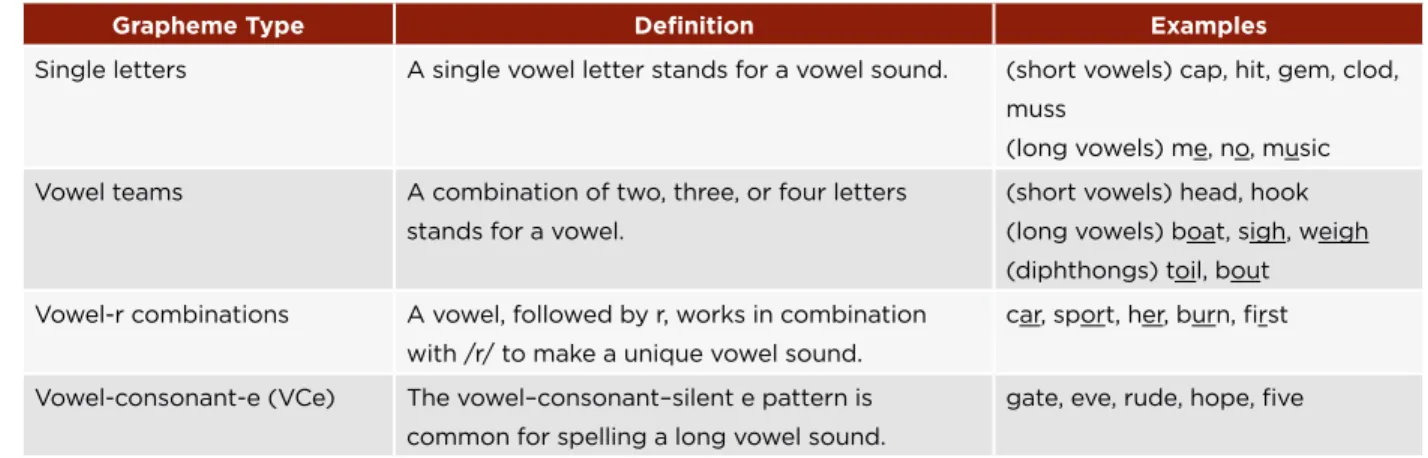
Figure 11: Vowel Graphemes with Definitions and Examples
Grapheme Type Definition Examples
Single letters A single vowel letter stands for a vowel sound. (short vowels)cap, hit, gem, clod, muss
(long vowels) me, no, music Vowel teams A combination of two, three, or four letters
stands for a vowel.
(short vowels) head, hook (long vowels) boat, sigh, weigh (diphthongs) toil, bout
Vowel-r combinations A vowel, followed by r, works in combination with /r/ to make a unique vowel sound.
car, sport, her, burn, first Vowel-consonant-e (VCe) The vowel–consonant–silent e pattern is
common for spelling a long vowel sound.
gate, eve, rude, hope, five
Figure 12: Six Types of Written Syllable Patterns
Syllable Type Definition Examples
Closed A syllable with a short vowel spelled with a single vowel letter ending in one or more con-sonants
dap-ple hos-tel bev-erage Vowel-C-e
(“Magic e”)
A syllable with a long vowel spelled with one
vowel + one consonant + silent e competedespite
Open A syllable that ends with a long vowel sound,
spelled with a single vowel letter programtable recent Vowel Team Syllables that use two to four letters to spell the
vowel beau-ti-fultrain-er
con-geal spoil-age Vowel-r
(r-controlled) A syllable with ciation often changes before /r/.er, ir, or, ar, or ur Vowel pronun- in-jur-iouscon-sort char-ter Consonant-le An unaccented final syllable containing a
conso-nant before /l/ followed by a silent e dribblebeagle little
Three Useful Principles for Chunking Longer Words into Syllables
1. VC-CV: Two or more consonants between two vowels
When syllables have two or more adjacent consonants between them, we divide between the consonants. The first syllable will be closed (with a short vowel).
sub-let nap-kin pen-ny emp-ty 2. V-CV and VC-V: One consonant between two vowels
a) First try dividing before the consonant. This makes the first syllable open and the vowel long. This strategy will work 75 percent of the time with VCV syllable division.
appendix
a
|
22
b) If the word is not recognized, try dividing after the consonant. This makes the first syllable closed and the vowel sound short. This strategy will work 25 percent of the time with VCV syllable division.
ev-er rab-id dec-ade riv-er
3. Consonant blends usually stick together. Do not separate digraphs when using the first two principles for decod-ing.
e-ther spec-trum se-quin
Morphemes Represented in English Orthography
Figure 13: Examples of Inflectional Suffixes in English
Inflection
Example
-s plural noun I had two eggs for breakfast. -s third person
singular verb She gets what she wants. -ed past tense verb We posted the notice.
-ing progressive tense verb We will be waiting a long time. -en past participle He had eaten his lunch. ’s possessive singular The frog’s spots were brown. -er comparative adjective He is taller than she is. -est superlative adjective Tom is the tallest of all.
Examples of Derivational Suffixes in English
Derivational suffixes, such as -ful, -ation, and -ity, are more numerous than inflections and work in ways that inflec-tional suffixes do not. Most derivainflec-tional suffixes in English come from the Latin layer of language. Derivainflec-tional suffixes mark or determine part of speech (verb, noun, adjective, adverb) of the suffixed word. Suffixes such as -ment, -ity, and -tion turn words into nouns; -ful, -ous, and -al turn words into adjectives; -ly turns words into adverbs.
nature (n. — from nat, birth) permit (n. or v.) natural (adj.) permission (n.) naturalize (v.) permissive (adj.) naturalizing (v.) permissible (adj.) naturalistic (adj.) permissibly (adv.)