Diphtheria, tetanus, pertussis
(whooping cough), polio and
Hib (
Haemophilus influenzae
type b)
vaccines for babies, young children
and teenagers
DTaP/IPV/Hib for babies
dTaP/IPV
DTaP/IPV
Td/IPV for teenagers
Timetable of the UK’s routine childhood immunisations
When to immunise What vaccine is given How it is given
Two, three and four months old Diphtheria, tetanus, acellular pertussis, One injection polio and Hib (DTaP/IPV/Hib)
MenC One injection
Around 13 months old Measles, mumps and rubella (MMR) One injection
Three years four months to Diphtheria, tetanus, One injection
five years old (pre-school) acellular pertussis and polio (dTaP/IPV, DTaP/IPV)
Measles, mumps and rubella (MMR) One injection
Ten to 14 years old BCG (against tuberculosis) Skin test, then
(and sometimes shortly one injection, if needed
after birth)
This factsheet provides information on the new vaccines in the
childhood immunisation programme.
What are the changes to the programme?
There are two changes:
• using inactivated polio vaccine (IPV) instead of live oral polio vaccine (OPV) for all ages
• using acellular pertussis (aP) vaccine instead of whole-cell pertussis vaccine to protect babies against whooping cough.
The changes are being made:
• because the risk of polio infection being brought into the UK is very low. This is because polio has now been eliminated from large parts of the world through a global vaccination programme. This means that a switch can be made from the live oral polio vaccine (OPV) that provides better community-wide protection, to inactivated polio vaccine (IPV) which provides effective individual protection
• because IPV does not carry any risk of causing vaccine associated paralytic polio, that occurred very rarely with OPV
• because the acellular pertussis vaccine now available is as effective as the whole-cell pertussis vaccine previously used, and
• because the new combined vaccine causes fewer minor reactions. Additionally there is no thiomersal in these vaccines.
The factsheet also provides detailed information on:
• the diseases – diphtheria, tetanus, pertussis (whooping cough), polio and Haemophilus influenzaetype b (Hib);
• the effectiveness of the vaccines; and
• safety issues.
A question and answer section, a glossary explaining technical terms and a list of references are also included.
Introduction 5
1 The diseases
Diphtheria 7
Tetanus 10
Pertussis (whooping cough) 12
Polio 16
Haemophilus influenzaetype b (Hib) 18
2 The vaccines
Primary immunisation with DTaP/IPV/Hib for babies at two, three and
four months of age 21
Pre-school booster vaccination with dTaP/IPV or DTaP/IPV for children
at three years four months to five years old 25
Teenage booster immunisation with Td/IPV vaccine at 13 to 18 years
of age 29
Questions and answers 33
Glossary 37
References 42
Introduction
Why do we immunise?
In the last 200 years the two most significant contributions to better health have been clean water supplies and vaccines – both have saved millions of lives throughout the world. In the UK, every child can have protection against preventable diseases, and it is important that all children are offered the chance to be vaccinated safely and effectively.
Diseases such as smallpox and polio used to cause illness, disability and death. Because of vaccination, smallpox has been eradicated from the world and polio has almost been eliminated. Most parents in the UK have never seen a child crippled with polio and wearing callipers.
Many more diseases that used to be major killers of children are now extremely rare. In the late 1990s, meningitis C was the commonest infectious cause of death overall in children in the UK aged one to five years. The UK was the first country in the world to introduce the MenC vaccine in 1999 and since then rates of meningitis C disease have plummeted. And since the introduction of Hib vaccine in 1992, epiglottitis (an acute and life-threatening blockage of the airway caused by Haemophilus influenzaetype b) is now rarely seen by paediatricians.
Because of the success of immunisation programmes, many of these infectious diseases are now hardly seen, and it is easy to think that they cannot occur today. But these diseases aren’t far away. For example, in the last four years in Ireland, the Netherlands, and Italy, there have been outbreaks of measles in which children and adults have died. Cases of diphtheria rose sharply in the former Soviet republics when immunisation rates fell following the break-up of the USSR. The enormous efforts of the World Health Organization (WHO) have almost eliminated polio but it is still seen in parts of India, Pakistan, Nigeria, Niger and Afghanistan. The UK childhood immunisation programme aims to give children the best protection against infectious diseases. Immunisation is offered to children at a very young age because some of these infectious diseases are real threats to small babies. The childhood immunisation programme ensures that children are protected from infancy, through their teenage years and on to adulthood.
The diseases
Diphtheria, tetanus, pertussis (whooping cough), polio and Hib are all serious diseases that can kill. They can all be prevented by immunisation.
Diphtheria
Diphtheria is caused by infection with a bacterium called Corynebacterium diphtheriae (C. diphtheriae)or by Corynebacterium ulcerans (C.ulcerans). These bacteria are usually spread in droplets of moisture coughed into the air. The bacteria then multiply in the mouth or throat of the individual who breathes them in. Symptoms of diphtheria begin two to five days after catching the disease (see below). Usually, the first sign is a mild sore throat and pain on swallowing.
It is usual to experience a low-grade fever, nausea, vomiting, headache and a fast heart rate. In most cases the bacteria produce a powerful toxin that can destroy nearby tissue and cause a membrane of dead cells to form. Without this toxin the bacteria only cause mild diseases such as a respiratory infection or skin rash. The membrane of dead cells can attach to the throat, tonsils or voice box (larynx), or form in the nose. It can narrow the airway or block it completely and can lead to death. Diphtheria can also affect the heart and nerves. Resulting damage to the heart muscle can lead to heart failure and sudden death. Nerves may be affected at different times: often nerves to the throat are affected during the first week of illness, making swallowing difficult; nerves to the arms and legs may become inflamed between the third and sixth weeks, causing weakness and numbness. Neurological complications such as these occur in approximately one in five cases (Ford, 1973).
KEY FACTS
The symptoms and possible complications of diphtheria Most common symptoms
• Low-grade fever (less than 38.5
˚
C) • Inflammation of the throat (mostcommonly the pharynx but can also affect the larynx (voice box) or nose)
• Formation of an exudate (thick liquid) which forms a thick greyish membrane • Swollen lymph nodes and glands (so called
bull-neck appearance) • Rapid, faint pulse • Pale, shocked appearance
Possible complications
• Respiratory obstruction • Pneumonia
• Otitis media (ear infection)
• Sinusitis (inflammation of the sinuses) • Acute systemic toxicity (organ failure) • Myocarditis (inflammation of the heart) • Peripheral neuritis (nerve condition) • Nephritis (inflammation of the kidney)
Diphtheria can also infect the skin through existing wounds or burns, causing shallow, non-healing ulcers to form. Very rarely, toxin can be absorbed from the ulcer and travel through the bloodstream to cause similar symptoms to those described above.
How serious is diphtheria?
Diphtheria is a serious disease requiring immediate hospitalisation. Artificial ventilation with a respirator may be necessary. A delay in treatment can result in death or long-term heart disease. Even with the correct treatment, diphtheria causes five to ten deaths in every 100 infected people. The disease is most serious in the very young or elderly.
Diphtheria is a serious disease requiring immediate hospitalisation. It is most serious in the very young and elderly.
How common is diphtheria?
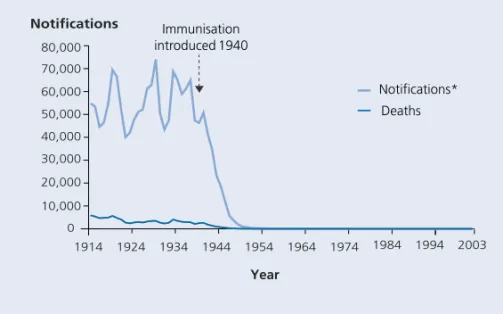
Following the introduction of immunisation against diphtheria on a national scale in 1940 there was a dramatic fall in the number of notified cases and deaths from the disease (Figure 1). From 1986 to 2002, 103 cases of toxigenic diphtheria were identified. Two deaths from diphtheria have been reported from this period – in 1994, an unvaccinated 14-year-old boy died fromC. diphtheriae infection that he caught abroad and in 2000, an elderly woman died with C. ulcerans infection acquired in the UK. About the same number of infections caused by C. diphtheriae are also caused by C. ulcerans, with these generally being acquired in the UK.
KEY FACTS
Figure 1. Diphtheria cases and deaths, England and Wales (1914–2003)
Source: Office for National Statistics; Health Protection Agency *Notifications up to 1985, laboratory confirmed cases 1986–2002
Diphtheria re-emerged in the Newly Independent States (NIS) of the former Soviet Union as the result of falling levels of immunisation. By 1998, more than 157,000 cases and 5000 deaths had been reported to the WHO (Dittman et al., 2000). Action has since been taken to improve immunisation uptake in these regions, and the number of diphtheria cases has now decreased. This outbreak showed how easily diphtheria can reappear if people stop being immunised.
1914 1924 1934 1944 1954 1964 1974 1984 1994 2003 Notifications* Deaths 0 10,000 20,000 30,000 40,000 50,000 60,000 70,000 80,000 Year Notifications Immunisation introduced 1940
Tetanus
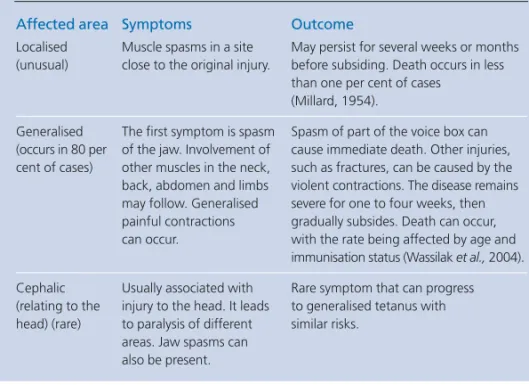
Tetanus is caused by a bacterium called Clostridium tetani. Spores of the bacteria are present in soil and manure and can be picked up through a puncture wound, burn or more serious injury. The bacteria release toxins which act locally at the site of an injury and are then transported to the central nervous system (CNS) where they cause the disease symptoms. Cases occur within four to 21 days of exposure, and most commonly, at about ten days. Unlike diphtheria and pertussis, tetanus is not passed from person to person. Tetanus is very rare in the UK because of the high levels of immunisation. The three characteristic types of symptoms are shown in Table 1.
Tetanus can never be eradicated because the spores are always present in soil.
How serious is tetanus?
Table 1 shows the symptoms and possible complications of tetanus.
Table 1. The characteristic symptoms and possible complications of tetanus Affected area Symptoms Outcome
Localised Muscle spasms in a site May persist for several weeks or months (unusual) close to the original injury. before subsiding. Death occurs in less
than one per cent of cases (Millard, 1954).
Generalised The first symptom is spasm Spasm of part of the voice box can (occurs in 80 per of the jaw. Involvement of cause immediate death. Other injuries, cent of cases) other muscles in the neck, such as fractures, can be caused by the back, abdomen and limbs violent contractions. The disease remains may follow. Generalised severe for one to four weeks, then painful contractions gradually subsides. Death can occur, can occur. with the rate being affected by age and
immunisation status (Wassilak et al.,2004). Cephalic Usually associated with Rare symptom that can progress (relating to the injury to the head. It leads to generalised tetanus with head) (rare) to paralysis of different similar risks.
areas. Jaw spasms can also be present. KEY
How common is tetanus?
The disease had almost disappeared in children under 15 years of age by the 1970s (Galbraith et al., 1981). This was because tetanus immunisation was introduced into the routine childhood immunisation programme in the mid-1950s in some areas and nationally from 1961 (Salisbury and Begg, 1996).
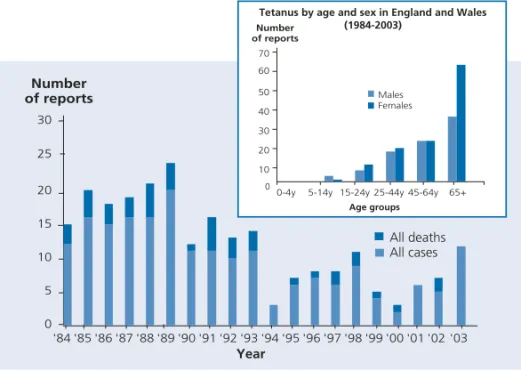
The total number of cases of tetanus reported to the Health Protection Agency by age and sex in England and Wales from 1984 to 2003 is shown in Figure 2. The highest incidence of tetanus cases during this period was in adults over 65 years of age, with no cases of tetanus reported in infants or children under five years of age (Rushdy et al., 2003). Over the last ten years, the number of cases of tetanus has been consistently low, with an average of just six cases each year.
Figure 2. Tetanus cases and deaths in England and Wales (1984–2003)
Source: reports to national tetanus surveillance, Health Protection Agency
Most cases of tetanus now occur in older people who would not have been routinely immunised as children. Infection usually occurs following injury outdoors (e.g. in the garden). In virtually every case the person was unimmunised or incompletely immunised. Year 0 '84 '85'86 '87'88 '89'90 '91 '92 '93'94'95'96 '97'98'99'00'01'02 '03 10 20 25 15 5 30 Number of reports All deaths All cases Year 0 0-4y Males Females
5-14y 15-24y 25-44y 45-64y 65+ Number of reports 10 20 30 40 50 60 70 Age groups
Tetanus by age and sex in England and Wales (1984-2003)
Tetanus used to be more common in women, than in men. This was because many men had been immunised when doing National Service. In the last few years this difference has largely disappeared and men and women are equally at risk (Rushdy et al., 2003).
Twenty cases of tetanus were reported in injecting drug users (IDUs) between July 2003 and 20 February 2004) (Health Protection Agency, 2004). Seven of these may have been caused by one contaminated batch of illicit drugs. Tetanus in the newborn remains a public health problem in some developing countries. It is usually caused by infection of the umbilical stump due to poor hygiene techniques. Tetanus in the new born no longer occurs in the UK and there have been no cases for more than 30 years.
Tetanus is rare in the UK because of the effectiveness of the immunisation programme. However, the bacteria that cause the disease are always present in soil. They cannot be eradicated from our environment. Consequently, anyone who is not fully protected against tetanus is at risk from the disease which, if it is not treated, can kill.
The only way to protect yourself against tetanus is by immunisation.
Pertussis (whooping cough)
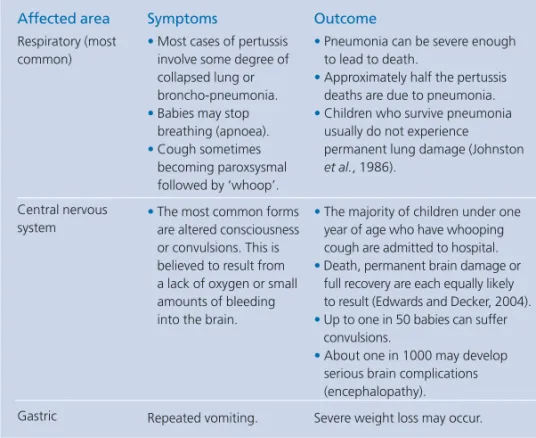
Pertussis is caused by infection with bacteria called Bordetella pertussis. These bacteria are spread in droplets of moisture breathed out by infected individuals. The incubation period is between six and 20 days. Pertussis ranges from a mild disease to one that is serious and can result in death. The illness progresses from a catarrhal stage with symptoms that may be similar to a common cold (runny nose, mild irritating cough and possible low-grade fever), to coughing and choking spells that can lead to difficulty in eating, drinking or breathing (Cherry, 1984). People are most infectious six days after exposure to three weeks after the start of the coughing and choking spells. Minor complications include subconjunctival haemorrhages (bleeding in the eye), epistaxis (nose-bleeds) secondary to coughing, facial oedema (swelling), ulceration of the tongue or surrounding area, and suppurative otitis media (ear infection). Three forms of major complication can arise separately or together (see Table 2).
The illness commonly lasts two to three months even when treated with antibiotics. A cough without the whoop can persist for many weeks.
KEY FACT
KEY FACT
For infants and young children, the coughing episodes are exhausting, and vomiting is common. Following the cough, there can be a loud ‘whoop’ sound as they struggle to inhale. In young infants, the typical ‘whoop’ may never develop and coughing spasms can be followed by periods of apnoea (cessation of breathing). For older children and adults the symptoms are usually milder and without the typical ‘whoop’.
How serious is pertussis?
The major complications of pertussis are shown in Table 2. The severity of the symptoms is related to age, and infection is most severe in infants. More than half of those infants under one year of age reported with pertussis are hospitalised. Approximately one in every 500 children under one year old with pertussis dies as a result of this illness: the risk is highest in younger babies (Crowcroft, et al.2003a). Serious illness is less common in older children. Approximately one in 15,000 to 21,000 older children with pertussis may die. Adults suffer at most a prolonged and severe coughing illness.
Table 2. Whooping cough complications and outcomes Symptoms
• Most cases of pertussis involve some degree of collapsed lung or broncho-pneumonia.
•Babies may stop breathing (apnoea).
•Cough sometimes becoming paroxsysmal followed by ‘whoop’.
•The most common forms are altered consciousness or convulsions. This is believed to result from a lack of oxygen or small amounts of bleeding into the brain.
Repeated vomiting. Affected area Respiratory (most common) Central nervous system Gastric Outcome
•Pneumonia can be severe enough to lead to death.
•Approximately half the pertussis deaths are due to pneumonia.
•Children who survive pneumonia usually do not experience permanent lung damage (Johnston
et al., 1986).
•The majority of children under one year of age who have whooping cough are admitted to hospital.
•Death, permanent brain damage or full recovery are each equally likely to result (Edwards and Decker, 2004).
•Up to one in 50 babies can suffer convulsions.
•About one in 1000 may develop serious brain complications (encephalopathy). Severe weight loss may occur.
Figure 3. Pertussis notifications and vaccine coverage for children by their second birthday, England and Wales (1940–2003)
Source: Health Protection Agency; Department of Health
How common is pertussis?
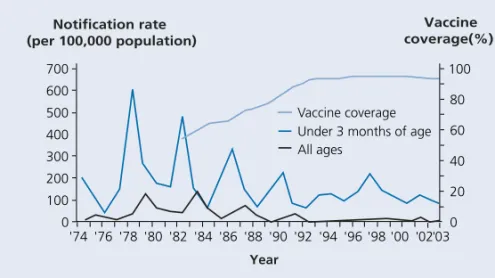
The number of pertussis notifications has declined substantially since the introduction of pertussis immunisation in the 1950s (Figure 3). However, pertussis re-emerged in the late 1970s following a scare (which proved unfounded) about the safety of pertussis vaccine. Figure 3 shows how the uptake of pertussis vaccine has varied since it began to be routinely measured in the late 1960s, and how quickly disease incidence increased when vaccination uptake fell.
Despite the fall in pertussis to its current low level, it remains a significant cause of illness and death in the very young. Over the last decade there has been no fall in the rate of pertussis notifications in young infants (Figure 4). Most hospital admissions due to pertussis have occurred in those under six months of age, some of whom were seriously ill and required admission to paediatric intensive care units (Crowcroft et al., 2003b). Year Notifications (000s) ▼ Immunisation introduced in the 1950s 0 20 40 60 80 100 120 140 160 180 200 1940 1950 1960 1970 1980 1990 2000 2003 Coverage Notifications Coverage (%) 0 20 40 60 80 100
Figure 4. Notification rate of whooping cough (in all ages and infants aged 0 to 2 months per 100,000 population) (1974–2003) and vaccine coverage at two years of age (1982–2003) England and Wales
Source: Department of Health; Health Protection Agency
As the burden of disease in infants under six months of age remains high, infants too young to be immunised can only be protected through high vaccination coverage. It is recognised that parents, and older unvaccinated siblings, are passing on pertussis to children too young to be immunised (Crowcroft et al., 2003b). There is good evidence that the number of cases and deaths reported is an underestimate of the real burden of pertussis disease, particularly in adolescents and adults where milder symptoms are likely to go undiagnosed (Miller et al., 2000).
Severe complications and deaths from pertussis occur most commonly in infants under six months of age.
KEY FACT Year Vaccine coverage(%) 0 '74 '76 '78 '80 '82 '84 '86 '88 '90 '92 '94'96'98 '00 '02'03 200 100 300 400 500 600 700 Notification rate (per 100,000 population) 0 20 40 60 80 100 Vaccine coverage Under 3 months of age All ages
Polio
Poliomyelitis (polio) is an infection caused by the polio virus. It is a highly infectious disease spread mainly through close contact with an infected person. The virus is commonly transmitted through the faecal-oral route (which usually means water contaminated with faeces), or through saliva.
The polio virus enters the body through the nose or mouth and infection starts in the gut. The virus then enters the bloodstream and is carried to other parts of the body. If the virus reaches the central nervous system it can lead to paralysis. The incubation period of polio ranges from three to 21 days. Cases are most infectious immediately before and one to two weeks after the onset of paralytic disease.
There are three strains of polio virus: type I, II and III. Type II has already been eradicated from the world.
How serious is polio?
Polio infection can be serious, and although the acute illness usually lasts less than two weeks, damage to the nerves can last a lifetime.
The severity of the disease varies, with some people having no symptoms, or a mild flu-like illness and others having a more serious condition such as aseptic meningitis or paralysis. Paralysis can occur in any part of the body and can range from mild to severe. Some people may die in the early phase of the infection or later from complications, especially if their respiratory muscles are paralysed. In addition to acute paralysis, individuals may experience late symptoms such as increasing weakness or even new paralysis many years later – this is called post-polio syndrome.
The likelihood of developing paralysis depends mainly on the polio virus type and the age at infection. Paralysis may occur in up to one in 1000 infected children and one in 75 infected adults. Older children and adults are most at risk of suffering severe paralysis. Pregnant women also have an increased risk of paralysis following polio infection.
How common is polio in the UK?
The last case of natural polio infection acquired in the UK was in 1984. Since then all cases of natural infection have been imported from other parts of the world where the disease still exists. The last case of polio to be imported from overseas occurred in 1993.
KEY FACT
Figure 5. Polio notifications for England and Wales (1912–2003)
Source: Health Protection Agency
How common is polio in other countries?
The World Health Organization (WHO) is working closely with countries to eradicate polio virus from the world. World-wide, polio cases have decreased by more than 99 per cent since 1988. In 1988, there were 35,251 cases reported to the WHO; only 677 cases were reported in 2003 (WHO, 2004a, provisional data). Polio is now endemic in only five countries. India, Pakistan and Nigeria are the main reservoirs for wild polio virus transmission with cases also occurring in Niger and Afghanistan (WHO, 2004a). In countries where the disease incidence is low, but transmission is still occurring, polio cases are seen sporadically or as outbreaks among unimmunised individuals.
In June 2002, the European region of the WHO was certified polio-free by an international commission (WHO, 2004b). The WHO regions of the Americas and the Western Pacific were certified polio-free in 1994 and 2000 respectively.
0 1000 2000 3000 4000 5000 6000 7000 1912 1922 1932 1942 1952 1962 1972 1982 1992 2003 Year Notifications ▼ ▼ Salk vaccine introduced 1956 Sabin vaccine introduced 1962
KEY FACT
Haemophilus influenzaetype b (Hib)
Haemophilus influenzaeinfections are caused by a family of bacteria. Six strains of Haemophilus influenzae bacteria are known to cause disease. The strain that used to cause the most disease in the UK is type b, usually referred to as Hib. Hib is spread by coughing, sneezing or close contact with an infected person. Not everyone who becomes infected with Hib develops the disease. Anyone can carry the Hib bacteria in their nose or throat without showing any signs of the disease but they can infect others. Before Hib vaccine was introduced, about four in every 100 children aged one to four years were Hib carriers (Howard et al., 1988). How serious is Hib disease?
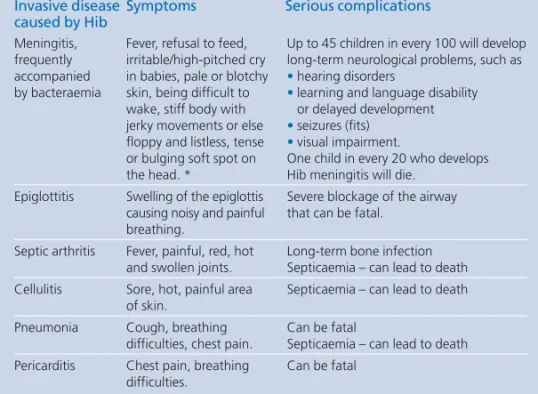
Most children who get Hib infections become very ill and need hospital care. Hib causes a number of serious diseases including meningitis, septicaemia (blood poisoning) and epiglottitis (see Table 3). The complications that arise from these diseases such as deafness, convulsions and intellectual impairment, can be devastating. Hib disease can be fatal; about one in 20 children who develop Hib meningitis die (Anderson et al., 1995). Symptoms and complications from Hib disease are summarised in Table 3.
Most children who get Hib infections become very ill and need hospital care.
How common is Hib?
Before Hib vaccine was introduced in 1992, around one in 600 children developed some form of Hib disease by their fifth birthday (Booy et al.,1993; Howard et al., 1991). Children under four years of age were at most risk from Hib disease. More than two-thirds of cases were in children less than two years of age and those most at risk were infants aged 10–11 months (Booy et al., 1993). Hib infection was the most common cause of bacterial meningitis in children, with eight to 11 children in every 100 developing long-term neurological problems following Hib meningitis in England and Wales. This resulted in around 30 deaths every year and left about 80 children with deafness and permanent brain damage (Tudor-Williamset al., 1990; Howard et al., 1991). However, the number of children suffering long-term problems may be an underestimate as studies in the US found that up to 45 children in every 100 suffered long-term neurological problems following Hib meningitis (Sell, 1987). The introduction of Hib vaccine in October 1992 had a dramatic impact on the rate of Hib disease (see Figure 6). When Hib vaccine was introduced in 1992, all children under the age of four years were offered the vaccine as part of a catch-up programme.
*Further information on the signs and symptoms of meningitis and septicaemia can be found on the websites www.immunisation.nhs.uk, www.meningitis.org (Meningitis Research Foundation, Freephone 24 hour helpline 080 8800 3344 ) www.meningitis-trust.org.uk (Meningitis Trust, tel 01453 768000), or call NHS Direct on 0845 46 47.
Following the introduction of the vaccine, laboratory-confirmed cases of Hib disease in children under five years of age fell by 98 per cent. Disease rates also declined in unvaccinated older children and adults because of the reduced circulation of Hib bacteria among vaccinated children. Similar marked declines of Hib disease have also been seen after the introduction of the vaccine in other European countries and in Australia, Canada and the USA (Peltola, 1998; Wenger, 1998).
Over the last ten years in the UK, it is estimated that this vaccination has prevented about 7300 cases of Hib disease and approximately 270 deaths in children under four years of age.*
Table 3. Symptoms and major complications of Hib disease Invasive disease Symptoms Serious complications caused by Hib
Meningitis, Fever, refusal to feed, Up to 45 children in every 100 will develop frequently irritable/high-pitched cry long-term neurological problems, such as accompanied in babies, pale or blotchy •hearing disorders
by bacteraemia skin, being difficult to •learning and language disability wake, stiff body with or delayed development jerky movements or else •seizures (fits)
floppy and listless, tense •visual impairment.
or bulging soft spot on One child in every 20 who develops the head. * Hib meningitis will die.
Epiglottitis Swelling of the epiglottis Severe blockage of the airway causing noisy and painful that can be fatal.
breathing.
Septic arthritis Fever, painful, red, hot Long-term bone infection and swollen joints. Septicaemia – can lead to death Cellulitis Sore, hot, painful area Septicaemia – can lead to death
of skin.
Pneumonia Cough, breathing Can be fatal
difficulties, chest pain. Septicaemia – can lead to death Pericarditis Chest pain, breathing Can be fatal
Figure 6. Laboratory reports of Hib disease in England and Wales (1990–2003)
Source: Health Protection Agency
What has happened to the levels of Hib disease in the last few years? Following the introduction of the vaccine in 1992, Hib disease cases fell dramatically with the almost complete disappearance of the disease in young children. Since 1999, there has been a small but gradual increase in the reported number of cases of Hib disease. In children under four years of age, the levels of these (130 in 2002) are much lower than the levels seen before the introduction of Hib vaccine (about 800 every year).
In 2003, there was a one-off immunisation programme to boost young children’s immunity to Hib, halting the increase of Hib disease in young children.
The best long-term way to maintain protection against Hib disease is being reviewed.
Before 1992, when Hib vaccine was introduced, Hib infection was the most common cause of bacterial meningitis in children.
Following the introduction of the vaccine, laboratory-confirmed cases of Hib disease in children under five years fell by 98 per cent.
Over the last ten years in the UK, it is estimated that this vaccination has prevented about 7300 cases of Hib disease and approximately 270 deaths in children under four years of age.*
KEY FACTS 0 50 100 150 200 250 300 350 Number of reports
Under five years of age All ages (incl. under five years)
▼
Hib vaccine introduced
Year
The vaccines
Primary immunisation with DTaP/IPV/Hib for babies at
two, three and four months of age
What is the vaccine?
The DTaP/IPV/Hib vaccine (diphtheria, tetanus, acellular pertussis, inactivated polio vaccine, Hib) is a combined vaccine that contains the following active ingredients:
• purified diphtheria toxoid
• purified tetanus toxoid
• five purified components of the Bordetella pertussisbacteria
• three strains of inactivated polio virus
• a purified component of Haemophilus influenzaetype b bacteria attached to a tetanus toxoid carrier protein.
What does this vaccine protect against?
A completed course of combined vaccine helps protect against the following diseases: • diphtheria • tetanus • pertussis • polio, and • Hib.
It does not protect against infections caused by any other bacteria or virus. When are children routinely given this vaccine?
Because babies can catch these diseases from birth it is important to protect them as soon as possible. The DTaP/IPV/Hib vaccine is given at two, three and four months of age. The complete routine childhood schedule is shown in the table on the inside front cover of this factsheet.
How is this vaccine given?
This vaccine is given intramuscularly in the thigh. It should not be given intravenously. Localised reactions are more common when vaccines are given subcutaneously (Diggle and Deeks, 2000; Zuckerman, 2000). For babies with a bleeding disorder, vaccines can be given by deep subcutaneous injection to reduce
How effective is this vaccine?
A DTaP/Hib/IPV vaccine has been used in the routine childhood programme in Canada for more than five years. It is highly effective in protecting against diphtheria, tetanus, pertussis, Hib and polio infections. The level of protection provided is similar to, or better than, that of vaccines used in the UK before 2004 (DTwP-Hib and oral polio vaccine).
Why are three doses of DTaP/IPV/Hib needed in the primary schedule? Three doses of vaccine are needed to ensure that a child’s body is able to make a good immune response to the diseases. The first dose of the vaccine does not provide lasting protection. A protective immune response may not fully develop until the second, or even third, dose.
How long does the protection from the new vaccine last?
Data from clinical trials show that the protection from acellular pertussis vaccines after a three-dose primary series lasts for around five years.
How safe is this vaccine?
Before being licensed, all medicines (including vaccines) are thoroughly tested to ensure that they are of high quality, and to assess their safety and immunogenicity. However, as with other medicines, vaccines can have side effects. These are outlined below.
What side effects may be seen?
Any side effects from this vaccine are most likely to occur within 24 hours of the vaccine being given.
The most commonly seen reactions are minor local reactions such as pain, swelling or redness. These occur more frequently after repeated doses. A small painless nodule may form at the injection site; this is harmless and usually disappears over time. The incidence of local reactions is lower with vaccines containing acellular pertussis than with whole-cell pertussis, and is similar to that after DT vaccine that was used previously (Miller, 1999; Tozzi and Olin, 1997).
Other mild side effects such as a slightly raised temperature, irritability, sickness, diarrhoea and loss of appetite may also occur.
High fevers, febrile seizures, unusual high-pitched screaming and episodes of pallor, cyanosis and limpness (hypotonic-hyporesponsive episodes (HHE)) have rarely been reported with this vaccine.
In Canada, where a DTaP/IPV/Hib vaccine has been used exclusively for more than five years, there has been a decrease in vaccine-associated adverse events compared to the rate with the Canadian whole-cell pertussis vaccine. There has been a decline in adverse events such as febrile seizures and hypotonic-hyporesponsive episodes, suggesting that DTaP/IPV/Hib is less likely to cause these reactions than the previous whole-cell vaccines (Le Saux et al., 2003).
Are there any reasons why a baby should not receive this vaccine? There are very few reasons why a baby should not be immunised. The only situations in which immunisation is contraindicated are where a baby has had:
• a confirmed anaphylactic reaction to a previous dose of vaccine or
• a confirmed anaphylactic reaction to any component of the vaccine (including neomycin, streptomycin and polymyxin B – antibiotics which may be present in tiny (trace) amounts).
This will affect very few babies (between 0.65 to 3 per million immunisations (Bohlke et al., 2003; Canadian Medical Association, 2002)).
If a baby is ill, with a fever, immunisation should be postponed until the child has recovered. This is to avoid wrongly associating any cause of fever, or its progression with the vaccine and to avoid increasing any pre-existing fever. Babies with a minor illness without a fever, e.g. a cold, should be offered immunisation. Are there any groups of babies who need particular care?
Even if a baby experiences a severe allergic reaction (which is not anaphylaxis) following immunisation they may be immunised as normal. However, advice should be sought from a child health specialist in this situation. If thought appropriate, arrangements may be made for the vaccine to be given in a special clinic.
The presence of a neurological condition is not a contraindication to immunisation. If a child has a stable neurological condition they should be immunised as normal. However, where there is evidence of a worsening neurological condition
immunisation should be deferred. This is to avoid wrongly associating the condition or its progression with the vaccine. Before continuing immunisation, such children should undergo investigation to try to identify the cause.
There will be very few occasions when deferral is required. The period of deferral should be minimised as it leaves the child unprotected. The circumstances in which deferral may be necessary are detailed below:
• If a baby has an evolving neurological condition, including poorly controlled epilepsy, advice from a paediatrician should be sought. DTaP/IPV/Hib immunisation should be delayed until the condition has become stable.
• If a baby experiences encephalopathy or encephalitis within seven days of immunisation, it is still unlikely to have been caused by the vaccine and should be investigated. Immunisation should be deferred if no underlying cause was found
andthe baby did not recover completely within seven days. Otherwise immunisation should proceed as recommended.
• When there is a personal or family history of febrile seizures, there is an increased risk of a baby experiencing a seizure following immunisation which leads to a fever. In these circumstances advice on the prevention and management of fever should be given before immunisation.
• In babies less than six months of age, febrile seizures are rare and should be investigated. If a febrile seizure occurs within 72 hours of an immunisation in babies under six months of age further immunisation should be deferred only if no underlying cause has been found and the child did not recover completely within 24 hours. Otherwise immunisation should continue as recommended. It is recommended that children with chronic immunodeficiency (such as those with HIV or on long-term immunosuppressive therapy) should be immunised even though they may not mount a full immune response and will only have limited protection. Re-immunisation should be considered when the individual has recovered from the condition or has completed and recovered from the treatment. Children with a bleeding disorder can be given this vaccine. It should be given by subcutaneous injection to reduce the risk of bleeding.
Can this vaccine be given with other vaccines?
Yes. This vaccine can be given at the same time as MenC, MMR and hepatitis B vaccines. Each vaccine should be given in separate sites at least 2.5 cm apart (American Academy of Pediatrics, 2003a) or in different limbs.
The DTaP/IPV/Hib vaccine is given to babies at two, three and four months of age. It is thiomersal-free and protects against five diseases in one injection.
KEY FACTS
Pre-school booster vaccination with dTaP/IPV or DTaP/IPV
for children at three years four months to five years old
What are the vaccines?
There are two combined vaccines available for boosting pre-school children – dTaP/IPV, and DTaP/IPV. They contain the following:
•purified diphtheria toxoid
•purified tetanus toxoid
•either five or three purified components of the Bordetella pertussisbacteria
•three strains of inactivated polio virus. What do these vaccines protect against?
Following a completed course of primary vaccination, these vaccines provide protection against the following diseases:
•diphtheria
•tetanus
•pertussis
•polio.
They do not protect against infections due to other bacteria or viruses. When are young children routinely given this vaccine?
The dTaP/IPV or DTaP/IPV vaccine is routinely given between the ages of three years, four months (i.e. three years after the last primary vaccination) and five years of age, as a pre-school booster (see table inside front cover).
How is the vaccine given?
This vaccine is given intramuscularly in the thigh or upper arm. It should not be given intravenously. Localised reactions are more common when vaccines are given subcutaneously (Zuckerman, 2000). For young children with a bleeding disorder vaccines can be given by deep subcutaneous injection to reduce the risk of bleeding. What is the difference between dTaP/IPV and DTaP/IPV?
Does the difference matter?
Diphtheria vaccines are produced in two strengths, depending on how much diphtheria toxoid they contain. The two strengths are abbreviated to ‘D’ for the high strength and ‘d’ for the low strength. There are two vaccines available for use in the pre-school booster – one containing the high strength diphtheria (DTaP/IPV) and the other containing low strength diphtheria (dTaP/IPV). Both vaccines have
been shown to provide good booster immune responses, so it doesn’t matter which one your child has for their pre-school booster.
It is important, however, that babies and children under ten years are first immunised with a high strength diphtheria vaccine and that is why only DTaP/IPV/Hib is used for primary immunisation.
Vaccines that contain the lower dose of diphtheria toxoid are used for all
immunisations (whether primary or booster doses) given to children over ten years, and adults. They have been shown to provide good immunity in these age groups and minimise the risk of local reactions that may occur with the high strength diphtheria vaccine in older children and adults.
How effective are these vaccines?
In clinical trials of children who had received a completed course of primary vaccination more than 99 per cent developed protective levels of tetanus, diphtheria, pertussis and polio antibodies four weeks after a booster dose of dTaP/IPV or DTaP/IPV vaccine.
How safe are the vaccines?
Before being licensed, all medicines (including vaccines) are thoroughly tested to ensure they are of a high quality and to assess their safety and immunogenicity. However, as with other medicines, vaccines can have side effects. These are outlined below.
What side effects may be seen?
Any side effects from this vaccine are most likely to occur within 24 hours of the vaccine being given.
The most commonly seen reactions are minor local reactions such as swelling, pain and redness, which occur more frequently following repeated doses. A small painless nodule may form at the injection site; this is harmless and usually disappears over time. The incidence of local reactions is lower with vaccines combined with acellular pertussis than with whole-cell pertussis and is similar to that after DT vaccine that used to be used (Miller, 1999; Tozzi and Olin, 1997).
Other mild side effects such as a slightly raised temperature, tiredness, and itching at site of injection may also occur. Severe swelling at the site of the injection may occur but this is temporary.
As with all vaccines there is a rare possibility of dTaP/IPV or DTaP/IPV causing a very severe allergic reaction (anaphylaxis). Other acute allergic reactions such as itchy swelling (urticaria), cyanosis or difficulty in breathing may be seen.
Why is a booster dose needed?
Antibodies may fall below protective levels after a few years. This phenomenon is most common for tetanus and diphtheria. The booster dose is given to raise the antibodies back to protective levels.
Are there any reasons why young children should not receive this vaccine? There are very few reasons why children should not be immunised. The only situations in which immunisation is contraindicated are where a child has had:
•a confirmed anaphylactic reaction to a previous dose of vaccine or
•a confirmed anaphylactic reaction to any component of the vaccine (including neomycin, streptomycin and polymyxin B – antibiotics which may be present in tiny (trace) amounts).
This will affect very few children (between 0.65 to 3 per million immunisations (Bohlke et al., 2003; Canadian Medical Association, 2002)).
If a child is ill, with a fever, immunisation should be postponed until he or she has recovered. This is to avoid wrongly associating any cause of fever, or its progression with the vaccine and to avoid increasing any pre-existing fever. Children with a minor illness without a fever, e.g. a cold, should be offered immunisation. Are there any groups of children who need particular care?
Even if a child experiences a severe allergic reaction (which is not anaphylaxis) following immunisation they may be immunised as normal. However, advice should be sought from a child health specialist in this situation. If thought appropriate, arrangements may be made for the vaccine to be given in a special clinic.
The presence of a neurological condition is not a contraindication to immunisation. If a child has a stable neurological condition they should be immunised as normal. However, where there is evidence of a worsening neurological condition
immunisation should be deferred. This is to avoid wrongly associating the condition or its progression with the vaccine. Before continuing immunisation, such children should undergo investigation to try to identify the cause.
There will be very few occasions when deferral is required. The period of deferral should be minimised as it leaves the child unprotected. The circumstances in which deferral may be necessary are detailed below:
• If a child has an evolving neurological condition, including poorly controlled epilepsy, advice from a paediatrician should be sought. DTaP/IPV/Hib immunisation should be delayed until the condition has become stable.
• If a child experiences encephalopathy or encephalitis within seven days of immunisation it is still unlikely to have been caused by the vaccine and should be investigated. Immunisation should be deferred if no underlying cause was found andthe child did not recover completely within seven days. Otherwise
immunisation should proceed as recommended.
• When there is a personal or family history of febrile seizures, there is an increased risk of a child experiencing a seizure following immunisation which leads to a fever. In these circumstances advice on the prevention and management of fever should be given before immunisation.
• Febrile seizures are most common in the second year of life. After this age the frequency falls and they are rarely seen after five years of age. If a febrile seizure occurs within 72 hours of an immunisation in a child of pre-school age further immunisation should be deferred only if no underlying cause has been found and the child did not recover completely within 24 hours. Otherwise immunisation should continue as recommended.
It is recommended that young children with chronic immunodeficiency (such as those with HIV or on long-term immunosuppressive therapy) should be immunised even though they may not mount a full immune response and will have only limited protection. Re-immunisation should be considered when the child has recovered from the condition or has completed and recovered from the treatment. Young children with a condition called thrombocytopenia or other bleeding disorders can be given this injection, but care should be taken when it is given because of the risk of bleeding. This vaccine may be given by subcutaneous injection if that is considered appropriate.
Can this vaccine be given with other vaccines?
Yes. This vaccine can be given at the same time as other vaccines (such as MMR) or immunoglobulins but they must be given in separate sites at least 2.5 cm apart (American Academy of Pediatrics, 2003a) or in different limbs.
The dTaP/IPV or DTaP/IPV booster vaccines are given to three year four months to five-year-old children before they start school. Unlike the vaccine given to babies, these vaccines do not contain any Hib vaccine because it is
not needed at this age.
KEY FACTS
Teenage booster immunisation with Td/IPV vaccine at
13 to 18 years of age
What is the vaccine?
The Td/IPV vaccine is a combined vaccine which contains the following:
•purified diphtheria toxoid (low dose)
•purified tetanus toxoid
•three strains of inactivated polio virus. What does this vaccine protect against?
Following a completed course of primary vaccination and a pre-school booster, this vaccine provides protection against the following diseases:
•diphtheria
•tetanus
•polio.
It does not protect against infections caused by other bacteria and viruses. When are teenagers routinely given this vaccine?
The Td/IPV vaccine is routinely given between 13 and 18 years of age. See the table inside the front cover for further information.
How is this vaccine given?
This vaccine is given intramuscularly, in the upper arm. It should not be given intravenously. Localised reactions are more common when vaccines are given subcutaneously (Mark et al, 1999; Zuckerman, 2000). For teenagers with a bleeding disorder vaccines can be given by deep subcutaneous injection to reduce the risk of bleeding.
How effective is this vaccine?
Clinical trials examined healthy adults who had received a full primary course of vaccine plus a booster dose of vaccine containing diphtheria and tetanus more than ten years ago. A dose of Td/IPV increased their level of antibodies against tetanus, diphtheria and polio, giving a boost to their protection.
Why is this booster dose needed?
A total of five doses of tetanus, diphtheria and polio vaccine at the appropriate intervals is considered sufficient to give satisfactory long-term protection in most circumstances.
How safe is the vaccine?
Before being licensed, all medicines (including vaccines) are thoroughly tested to ensure they are of a high quality and to assess their safety and immunogenicity. However, as with other medicines, vaccines can have side effects. These are outlined below.
What side effects may be seen?
Any side effects from this vaccine are most likely to occur within 24 hours of the vaccine being given.
The most commonly seen reactions are minor local reactions such as swelling, pain and redness, which occur more frequently following repeated doses. A small painless nodule may form at the injection site; this is harmless and usually disappears over time.
Other mild side effects such as a slightly raised temperature, dizziness, nausea, vomiting and headache may also occur. Aching muscles or joints may occur but this is uncommon.
As with all vaccines there is a rare possibility of Td/IPV causing anaphylaxis. Other acute allergic reactions such as a rash or swelling of the face may be seen. Are there any reasons why teenagers should not receive this vaccine?
There are very few reasons why an individual should not be immunised. The only situations in which immunisation is contraindicated are where an individual has had:
• a confirmed anaphylactic reaction to a previous dose of vaccine or
• a confirmed anaphylactic reaction to any component of the vaccine (including neomycin, streptomycin and polymyxin B - antibiotics which may be present in tiny (trace) amounts).
This will affect very few people (between 0.65 to 3 per million immunisations (Bohlke et al., 2003; Canadian Medical Association, 2002)).
If an individual is ill, with a fever, immunisation should be postponed until they have recovered. This is to avoid wrongly associating any cause of fever, or its progression with the vaccine and to avoid increasing any pre-existing fever. Individuals with a minor illness without a fever, e.g. a cold, should be offered immunisation.
Are there any groups of individuals that need particular care? If an individual experiences a severe allergic reaction (which is not anaphylaxis) following immunisation they may be immunised as normal. However, advice should be sought from a child health specialist in this situation. If thought appropriate, arrangements may be made for the vaccine to be given in a special clinic.
It is recommended that teenagers with chronic immunodeficiency (such as those with HIV or on long-term immunosuppressive therapy) should be immunised even though they may not mount a full immune response and will only have limited protection.
Re-immunisation should be considered where the individual has recovered from the condition or has completed and recovered from the treatment.
Teenagers with a condition called thrombocytopenia or other bleeding disorders can be given this injection but care should be taken when it is given due to the risk of bleeding. This vaccine may be given by subcutaneous injection if considered appropriate.
Can this vaccine be given with other vaccines?
Yes. This vaccine can be given at the same time as other vaccines (such as MMR or BCG) or immunoglobulins but they must be given in separate sites at least 2.5 cm apart (American Academy of Pediatrics, 2003a) or in different limbs.
The teenage dose of Td/IPV completes the five-dose course that provides protection against tetanus, diphtheria and polio.
KEY FACT
What should parents do if their child is unwell after receiving a vaccine? Children may develop a mild fever after immunisation. Children should be treated for a mild fever by making sure they have plenty of cool drinks and by giving them paracetamol or ibuprofen liquid. It is important to read the instructions on the bottle carefully and give the correct dose for the child’s age. This is especially important for ibuprofen where different dosages are only appropriate for children of certain ages and weights.
Parents should consult a doctor or NHS Direct on 0845 46 47 if they have any concerns about the health of their child or teenager after immunisation. It could be that the child is suffering from an illness totally unrelated to the vaccine. If a doctor, nurse, health visitor or pharmacist suspects that an adverse reaction to a vaccine has occurred in a child, they should report this to the Committee on Safety of Medicines (CSM), using the Yellow Card spontaneous reporting scheme.
Because the new vaccines are black triangle (▼) products, all suspected adverse reactions should be reported to the CSM.
Never give aspirin to children under 16 years of age.
KEY FACT
Questions and answers
Why should children be immunised if these diseases are so rare?
These diseases are rare in the UK because of the high levels of vaccine coverage. However, experience with whooping cough shows that these diseases come back if the number of immunised children falls.
In many countries where immunisation rates are low, or vaccination is not widely available, these diseases are still common. As more people travel abroad, there is a risk that they will come into contact with these diseases, become ill or bring them back into the UK. Even if travellers don’t become ill, they can still pass diseases on to others who are not immunised. Anyone who has not been immunised is at risk. Why are vaccines given to babies when they are so young?
These diseases can be serious in young babies. Pertussis is particularly dangerous in very young babies. Immunisations are therefore given as early as possible to protect babies against serious diseases.
How do we know vaccines are safe?
Before being licensed, all vaccines are thoroughly tested for safety, efficacy and quality. After vaccines have been licensed, monitoring of their safety continues. If any rare side effect occurs, this monitoring allows detection and further assessment. The safety of vaccines continues to be monitored for as long as they are in use. How will the safety and effectiveness of this vaccine in the childhood programme be monitored?
In the UK, there are good systems that monitor:
•levels of disease
•safety of vaccines
• vaccine uptake, and
•the impact of a vaccine on disease.
The safety of vaccines being used is monitored through the Yellow Card system by the Medicines and Healthcare products Regulatory Agency (MHRA) and the Committee on Safety of Medicines. Levels of disease and vaccine uptake are recorded by the Health Protection Agency in order to measure the impact of vaccines on disease.
Aren’t more vaccines being given than before?
No. The same number of vaccines is being offered against the same diseases but the vaccines are being combined into one injection. MenC will continue to be given as a
Do these vaccines work when they are mixed together?
The vaccines have been tested and the component parts have been shown to work effectively in these combinations.
Do these new combined vaccines contain more ingredients than the previous vaccines?
No, these vaccines contain fewer and more highly purified active ingredients or antigens than the vaccines previously used.
Can a child’s body cope with so many vaccines at one time?
As soon as a child is born it comes into contact with thousands of bacteria and viruses. From the moment of birth a baby’s immune system responds to all these challenges and prevents them from causing harm. The vaccines that babies receive in the first year of life are just a drop in the ocean compared to the tens of thousands of bacteria and viruses in the environment that babies cope with every day.
It has been estimated that the immune system of each infant has the capacity to respond to about 10,000 vaccines at any one time (Offit et al., 2002). It has been predicted that if 11 vaccines were given to an infant at one time, then about only a one-thousandth part of the immune system would be busy responding to the vaccines, and then only for a short period of time.
Can premature babies be immunised?
Premature babies tend to be at greater risk of infection than full-term babies. They should be immunised according to the recommended schedule from two months after birth, regardless of how premature they were (Slack et al.,2001). Why are three doses needed for babies?
Research has shown that babies need three doses to be protected. They’re immunised at two, three and four months of age to ensure they are protected as soon as possible.
Why are we changing back to IPV? This had been used in the past and was replaced with OPV.
Inactivated polio virus vaccine (IPV) was introduced in the UK in the 1950s. It was replaced in the 1960s by live, oral polio vaccine (OPV). OPV provides good individual protection and better community protection which is particularly important when the natural polio virus is circulating. Now that polio has been eliminated from large parts of the world, the risk of polio being imported is so low that it is an appropriate time to switch back to inactivated polio vaccine. The modern IPV, as well as being safer than OPV, is more effective than the vaccine available in the 1950s.
I’ve heard that you can get polio from the polio vaccine. Is that true? The inactivated polio vaccine does not cause polio.
There is an extremely small chance of developing polio from oral polio vaccine (OPV) – about one case in more than 1.5 million doses used. This is because the vaccine is a live virus, so very rarely it can cause symptoms similar to the wild polio virus. This type of polio disease is called vaccine-associated paralytic polio (VAPP). IPV does not cause VAPP because it is an inactivated vaccine.
Are unimmunised people at risk of catching polio from recently immunised children?
No. Inactivated polio vaccine is not a live vaccine and cannot pass the polio virus on to other people.
Why don’t we use whole-cell pertussis vaccine any more?
The acellular pertussis vaccine now available in the UK is as effective or even more effective than the whole-cell pertussis vaccines used previously. It also causes fewer localised reactions, particularly in older children.
Do these vaccines contain thiomersal?
No. None of the vaccines described in this factsheet contains thiomersal. What is thiomersal?
Thiomersal is a mercury-based preservative that was used in some vaccines to prevent microbial contamination, or in the process of producing inactivated vaccines.
Does thiomersal cause neurological problems?
The Committee on Safety of Medicines (CSM) has reviewed the safety of thiomersal-containing vaccines on a number of occasions.
The CSM has recently reviewed two large UK-based studies that have provided reassuring results about the safety of thiomersal in vaccines, in relation to neurodevelopmental disorders (CSM, 2003). One of these studies, which used the UK's General Practice Research Database (GPRD), specifically investigated whether there is any link between early thiomersal exposure through immunisation and autism. This study concluded that the administration of thiomersal through childhood immunisation in the UK was not associated with an increased risk
The CSM has carefully considered the results of a recent study, by Geier and Geier (Geier & Geier, 2003), that suggested an association between thiomersal exposure through the United States childhood-immunisation schedule and the development of autism and heart disease. CSM advised that the authors' conclusions about the association between thiomersal in vaccines and autism, speech disorders and heart disease, were not justified. The CSM has advised that, with the exception of allergic reactions such as redness and swelling at the injection site, there is no evidence of harm from the thiomersal contained in vaccines. The CSM advised that the benefits of immunisation with thiomersal-containing vaccines outweigh any potential risks.
This study has also been reviewed by the American Academy of Pediatrics (AAP Statement, 2003b). They felt that the methodology used was inappropriate and the paper contained numerous conceptual and scientific flaws, omissions of fact, inaccuracies and misstatements.
Is there a link between pertussis vaccine, neurological problems, allergies, epilepsy, asthma or other long-term illnesses?
No. There is no evidence that pertussis vaccines cause any of the problems described above.
Can children be taken swimming before they have completed their immunisations?
Yes. It is safe to take children swimming before they have begun or completed their immunisations. Children are no more at risk of catching the above childhood diseases in a swimming pool than they are anywhere else.
Most childhood diseases have not disappeared. Immunisation is the safest way to protect against them. The new DTaP/IPV/Hib immunisation provides protection against five diseases in one, thiomersal-free vaccine which is safer and has fewer side effects than those previously available.
KEY FACTS
BCG
Stands for Bacillus Calmette-Guérin after the two scientists who developed the vaccine that protects against TB.
Carrier
A person who is infected but does not show symptoms of a disease.
Cellulitis
A bacterial skin infection.
Central nervous system
The brain and spinal cord.
Cephalic
Relating to the head.
Chronic bronchitis
Inflammation of the air passages in the lung characterised by the coughing up of excessive mucus.
Conjugate vaccine
These vaccines are made with part of the germ which is combined (conjugated) with a protein (such as tetanus or diphtheria) which makes it work better and gives better protection over a long period of time. The conjugate vaccines in the childhood immunisation schedule are Hib and MenC.
Contraindication
A reason why a vaccine should not be given.
Convulsions
Uncontrolled, irregular movements of the limbs and body caused by rapid contractions and relaxations of the muscles, often accompanied by unconsciousness.
Cyanosis
Bluish coloration of the skin and mucous membranes, for example, the lining of the mouth, caused by too little oxygen in the blood.
Diphtheria
Diphtheria is a disease which usually begins with a sore throat and which can quickly cause problems with breathing. It can damage the heart and nervous system and, in severe cases, it can kill.
DT
The combined diphtheria and tetanus vaccine.
DTaP/Hib
Combined vaccine that protects against four different diseases – diphtheria, tetanus, pertussis (or whooping cough) and
Haemophilus influenzaetype b (Hib). Contains acellular pertussis vaccine.
Glossary
Acellular vaccine
Without whole cells. An acellular vaccine contains only parts of cells which can produce immunity in the person receiving the vaccine (see DTaP).
Acute systemic toxicity
Organ failure.
Adverse reaction
A side effect of a vaccine.
Allergic reactions
Sensitiveness to certain substances that can lead to conditions such as asthma, eczema, hay fever and headache.
Anaphylaxis
An immediate and severe allergic reaction.
Angioneurotic oedema
Painless swelling under the skin usually around the eyes, lips and tongue.
Antibodies
Proteins produced by the body to neutralise or destroy toxins and disease-carrying organisms.
Antigen
A substance which, under appropriate conditions, triggers an immune response. Vaccines are specially prepared antigens.
Apnoea
Cessation of breathing.
Arthralgia
Pain in the joints.
Asthenia
Weakness.
Axillary lymphadenopathy
Swelling of the glands in the armpit.
Bacteraemia
Where the bacteria have entered the bloodstream.
Bacterium/bacteria
Single cell micro-organisms. There are many different types or strains of bacteria, some of which cause disease. Others are essential for our bodies to work properly.
dTaP/IPV and DTaP/IPV
Combined vaccines that protect against diphtheria, tetanus, pertussis (whooping cough) and polio. Diphtheria vaccines are produced in two strengths, abbreviated to ‘D’ for high strength and ‘d’ for the low strength.
DTaP/IPV/Hib
Combined vaccine that protects against diphtheria, tetanus, pertussis (whooping cough), polio and Haemophilus influenzae
type b (Hib) disease.
DTwP-Hib
Combined vaccine that protects against four different diseases – diphtheria, tetanus, pertussis (or whooping cough) and
Haemophilus influenzaetype b (Hib). Contains whole-cell pertussis vaccine.
Dyspnoea
Difficulty in breathing.
Efficacy
The measure of a vaccine’s effectiveness. It is measured by the proportion of those who are immunised and who don’t get a disease when exposed to it, or by the number of antibodies produced by the immune system.
Encapsulated
Bacterium surrounded by a sugar coat.
Encephalitis
Inflammation of the brain.
Encephalopathy
Any disease or disorder affecting the brain.
Endemic
A disease restricted to a place, region or population.
Epiglottitis
Inflammation or swelling of the epiglottis that can cause a blockage of the airway, which can be fatal.
Epistaxis
A nose bleed.
Exudate
Thick liquid.
Febrile convulsion/seizure
Convulsion brought on by a high temperature or fever.
Formaldehyde
A chemical that is used as a preservative because of its powerful antiseptic properties. In vaccines it is highly diluted.
Gastric
Relating to or affecting the stomach.
Genetic
Inherited from a parent.
Haemophilus influenzae
The bacterium that causes Hib disease. It occurs in two forms – those with capsules (encapsulated) and those without (non-encapsulated). Serious disease is usually caused by the encapsulated organisms of which there are six types (a to f). Type b caused the majority of Hib disease before the vaccine was introduced. Non-encapsulated strains are associated mainly with ear and chest infections.
Herd immunity
The protection conferred on individuals who have not been immunised because sufficient numbers of the rest of the population have been immunised.
Hib
Hib is an infection that can cause a number of major illnesses such as meningitis, blood poisoning and pneumonia. All of these illnesses can kill if they are not treated quickly.
Hypotension
Low blood pressure.
Hypotonic-hyporesponsive
Abnormal muscle slackness leading to excessive limpness and a lack of responsiveness to stimuli.
Invasive disease
Serious disease in which the bacteria have spread through the body, because they have entered the bloodstream.
Immune response
The body’s response to an immunisation or infection.
Immunisation
The priming of the body’s immune system with a vaccine.
Immunodeficient
Lacking in complete immunity.
Immunogenicity
The ability to produce an immune response.
Immunoglobulins
Antibodies.
Immunosuppressive
Something that reduces the body’s ability to fight infection by suppressing the immune system.
Larynx
Voice box.
Lymphadenopathy
Swollen glands.
Measles
A disease caused by a very infectious virus that can lead to chest infections, fits, brain damage and even death.
MenC
Abbreviation referring to meningococcal C infection.
Meningitis
Meningitis is an inflammation of the lining of the brain. Hib can be a cause of meningitis and can also cause septicaemia (blood poisoning). Hib septicaemia differs from that caused by meningococcal bacteria in that there is only very rarely an accompanying rash. Babies and children under four years of age are at most risk from Hib meningitis or septicaemia.
Mercury
A heavy fluid metal which, with its salts, has been used in medicine for many years. Thiomersal, which contains ethyl mercury has been used as a preservative in vaccines but is gradually being
discontinued even though there has been no evidence of adverse effects from its use.
Metabolic
The body’s metabolism is the sum of all the chemical processes taking place within it.
MMR
The vaccine that protects against measles, mumps and rubella.
Myalgia
Pain in the muscles.
Myocarditis
Inflammation of the heart.
Morbidity
The state of being diseased. A country’s morbidity ratio is the proportion of diseased individuals to healthy ones.
Mortality
The death rate of a population or a group within it. Often expressed as so many deaths per 100,000 of the population.
Mumps
A disease caused by a virus that causes painful, swollen glands in the face, neck and jaw, fever and headache. It can lead to deafness, meningitis and encephalitis.
Nausea
Feeling that you are going to be sick.
Neomycin
A preservative used in vaccines to prevent them from being contaminated. It might lead to an allergic reaction in some people who have been vaccinated.
Nephritis
Inflammation of the kidney.
Neural
Relating to the nerves or nervous system.
Neurological
Relating to or affecting the nervous system/nerves.
Neurological condition
A disorder of the nervous system.
Oedema
An abnormal accumulation of fluid in the body tissues.
Osteomyelitis
Inflammation of the bone.
Otitis media
Inflammation of the middle ear, usually due to viral or bacterial infection.
Pallor
Unusually pale skin.
Peripheral neuritis
Neural condition.
Pericarditis
Inflammation of the lining of the heart.
Pertussis (whooping cough)
Whooping cough is a disease that can cause long bouts of coughing and choking which can make it hard to breathe. It can last for up to ten weeks. It is not usually serious in older children, but it can be very serious in babies under one year of age.
Pharynx
The passage connecting the back of the mouth and nose to the opening of the tube leading to the stomach (oesophagus).
Pneumonia