Review
Targeting the TAM Receptors in Leukemia
Madeline G. Huey1,†, Katherine A. Minson1,†, H. Shelton Earp2, Deborah DeRyckere1 and Douglas K. Graham1,*
1 Aflac Cancer Center of Children’s Healthcare of Atlanta, Department of Pediatrics, Emory University,
Atlanta, GA 30322, USA; [email protected] (M.G.H.); [email protected] (K.A.M.); [email protected] (D.D.)
2 UNC Lineberger Comprehensive Cancer Center, Departments of Medicine and Pharmacology,
University of North Carolina, Chapel Hill, NC 27514, USA; [email protected] * Correspondence: [email protected]; Tel.: +1-404-785-3874
† These authors contributed equally to this work.
Academic Editors: Deric L. Wheeler and Toni M. Brand
Received: 1 September 2016; Accepted: 1 November 2016; Published: 8 November 2016
Abstract:Targeted inhibition of members of the TAM (TYRO-3, AXL, MERTK) family of receptor tyrosine kinases has recently been investigated as a novel strategy for treatment of hematologic malignancies. The physiologic functions of the TAM receptors in innate immune control, natural killer (NK) cell differentiation, efferocytosis, clearance of apoptotic debris, and hemostasis have previously been described and more recent data implicate TAM kinases as important regulators of erythropoiesis and megakaryopoiesis. The TAM receptors are aberrantly or ectopically expressed in many hematologic malignancies including acute myeloid leukemia, B- and T-cell acute lymphoblastic leukemia, chronic lymphocytic leukemia, and multiple myeloma. TAM receptors contribute to leukemic phenotypes through activation of pro-survival signaling pathways and interplay with other oncogenic proteins such as FLT3, LYN, and FGFR3. The TAM receptors also contribute to resistance to both cytotoxic chemotherapeutics and targeted agents, making them attractive therapeutic targets. A number of translational strategies for TAM inhibition are in development, including small molecule inhibitors, ligand traps, and monoclonal antibodies. Emerging areas of research include modulation of TAM receptors to enhance anti-tumor immunity, potential roles for TYRO-3 in leukemogenesis, and the function of the bone marrow microenvironment in mediating resistance to TAM inhibition.
Keywords: TYRO3; AXL; MERTK; Gas6; leukemia; multiple myeloma; tyrosine kinase inhibitor; resistance; hematopoiesis; signaling pathways
1. Introduction
Leukemia and other lymphoid neoplasms, make up the fifth most common cancer type in the United States, with an estimated 162,020 new cases and approximately 56,630 deaths due to the disease per year [1]. Current intensive cytotoxic therapies are highly toxic and associated with short and long term side effects that are often prohibitive in older patients. The application of personalized medicine and targeted therapies such as tyrosine kinase inhibitors (TKI) has prolonged survival and reduced therapy-associated toxicity for some leukemia patients, but development of resistance is a significant problem. In addition, few targeted options for treatment of AML (acute myeloid leukemia) are available and prognosis for these patients is particularly poor with a five year overall survival of only 26.6% compared to 59.7% for patients with all types of leukemia [2]. Thus, new targets and therapies for leukemia treatment are needed to provide safer, more effective options for patients with leukemia and this need is particularly urgent for patients with AML. Ideally these therapies will be efficacious alone and extremely potent in combination with other therapeutics. These properties could allow for increased therapeutic efficacy and potentially dose de-escalation of cytotoxic chemotherapies while still
achieving durable remissions, such that patients who cannot tolerate high doses of chemotherapy could be successfully treated with a greatly reduced risk for long-term side effects. In addition, treatment with multiple targeted agents in combination could decrease the incidence of resistance relative to single agent therapies.
TYRO3, AXL, and MERTK comprise the TAM family of receptor tyrosine kinases (RTKs). Several TAM RTK ligands have been described, including Gas6 and Protein S, and they differentially activate the TAM family members [3,4]. Gas6 binds to all three TAM receptors with the highest affinity for AXL [5,6]. Similarly, Protein S mediates more potent activation of TYRO3 compared to Gas6, MERTK is activated by either ligand, and AXL is not responsive to Protein S. Activation of the TAM receptors is greatly increased in the presence of phosphatidylserine (PS) and calcium, as the optimal TAM RTK ligand in most cases is a complex of the protein ligand (e.g., Gas6, Protein S) and PS on apoptotic cells [6,7].
MERTK and AXL have been implicated in numerous hematopoietic malignancies, including acute leukemias (AML and acute lymphoblastic leukemia—ALL), chronic leukemias (chronic myeloid leukemia—CML and chronic lymphocytic leukemia—CLL), and multiple myeloma (MM). While TAM kinases are not strong drivers of proliferation like more traditional oncogenes, their aberrant or ectopic expression in leukemia cells activates pro-survival signaling to promote tumor cell survival. Thus, TAM kinase functions are most important under conditions of cell stress and may be particularly critical for tumor cell survival in the context of leukemia therapy. Multiple mutations in TAM kinases have been reported, but have not been fully characterized [6,8]. However, at least one reported translocation of MERTK, leading to production of a TMEM87B-MERTK fusion protein, transforms Ba/F3 cells to an IL3-independent phenotype. As prognostic factors, AXL and its ligand Gas6 have been identified as predictors of poor outcome in AML [9,10]. These and other data identify TAM RTKs as potential therapeutic targets in numerous hematopoietic malignancies.
In this review, we will discuss the TAM family of kinases in the context of leukemia, the mechanisms by which TAM RTKs promote cancer cell survival and tumorigenesis, and roles for TAM kinases in resistance to targeted agents and cytotoxic chemotherapies. Finally, as TYRO3, AXL, and MERTK are attractive therapeutic targets in leukemia, we will discuss recent advances toward introduction of small molecule inhibitors of MERTK and AXL into the clinic.
2. TAM Receptors in Normal Hematopoeisis
TAM RTKs have a vast array of physiologic functions; the most well described being their roles in innate immune control, NK cell differentiation, efferocytosis, clearance of apoptotic debris, and hemostasis. These aspects of TAM RTK function have been extensively reviewed elsewhere [6,11–14]. There is increasing evidence that TAM RTKs and their ligand, Gas6, are also critical in maintaining normal hematopoiesis, particularly in the erythroid and megakaryocytic lineages. Here we review these aspects of TAM RTK expression and function.
2.1. TAM RTK Expression in the Hematopoietic System
cells [16,25] and interestingly, by transcript level TAM RTKs are among the cell signaling receptors most differentially expressed in bone marrow mesenchymal stromal cells when compared to bone marrow cell-derived hematopoietic stem/progenitor cells [26].
RTKs are among the cell signaling receptors most differentially expressed in bone marrow mesenchymal stromal cells when compared to bone marrow cell-derived hematopoietic stem/progenitor cells [26].
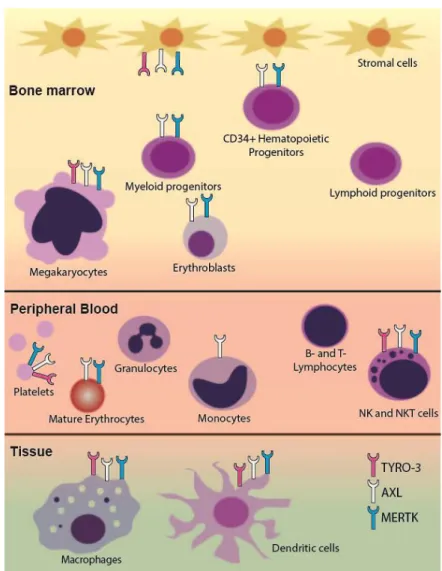
Figure 1. Schematic of TAM receptor expression in hematopoietic cells. Differential expression of TAM receptors in the hematopoietic system is shown. AXL protein and mRNA are expressed in bone marrow stromal cells. MERTK and AXL are expressed in CD34+ hematopoietic progenitors and some
stages of myeloid development including erythrocyte precursors in the bone marrow. All TAM receptors are present in megakaryocytes, mature platelets, tissue macrophages, and dendritic cells. MERTK is expressed in bone marrow monocytic precursors and tissue macrophages but not in circulating monocytes. Although TAM receptors are not expressed in lymphoid progenitors or mature lymphocytes, they are highly expressed in NK and NKT cells.
2.2. Regulation of Erythropoiesis
TAM receptors and their ligand, Gas6, play a critical role in erythropoiesis in mice [22,23]. Normal erythropoiesis is characterized by progression through five distinct stages of erythroid development—erythroid progenitors, proerythroblasts, basophilic erythroblasts, polychromatophilic erythroblasts, and orthochromatophilic erythroblasts. Both AXL and MERTK are expressed throughout erythroid development (Figure 1) [22] and TYRO3 mRNA and protein are expressed in murine splenic erythroblasts [23]. Interestingly, AXL−/−MERTK−/− double knockout mice accumulate
erythroid progenitors in the spleen, likely due to a block in proerythroblast development. Additionally, in models of acute hemolysis, while MERTK−/− single knockout mice are able to fully
recover to normal hematocrit levels, AXL−/−MERTK−/− and AXL−/− mice do not [22,23]. TYRO3−/− mice Figure 1. Schematic of TAM receptor expression in hematopoietic cells. Differential expression of TAM receptors in the hematopoietic system is shown. AXL protein and mRNA are expressed in bone marrow stromal cells. MERTK and AXL are expressed in CD34+ hematopoietic progenitors and some stages of myeloid development including erythrocyte precursors in the bone marrow. All TAM receptors are present in megakaryocytes, mature platelets, tissue macrophages, and dendritic cells. MERTK is expressed in bone marrow monocytic precursors and tissue macrophages but not in circulating monocytes. Although TAM receptors are not expressed in lymphoid progenitors or mature lymphocytes, they are highly expressed in NK and NKT cells.
2.2. Regulation of Erythropoiesis
hematocrit levels, AXL−/−MERTK−/−and AXL−/−mice do not [22,23]. TYRO3−/−mice have an intermediate phenotype [23]. These data indicate a crucial role for TAM RTKs and particularly for AXL in regulation of erythropoiesis in response to acute anemia.
TAM RTK knockout mice have normal hematologic parameters at resting state but impaired erythropoiesis in response to acute anemic stress, indicating that TAM RTKs may play a more prominent role in disease states. While the exact mechanisms of TAM RTK regulation of erythropoiesis have not yet been elucidated, there is evidence that TAM RTK functions are mediated through interplay of Gas6 and erythropoietin (EPO). Gas6 plasma levels are elevated in EPO-resistant patients undergoing hemodialysis [27]. Gas6 is upregulated in mice in response to acute hemolytic stress and in a human erythroblast cell line in response to stimulation by EPO. Treatment of mice with recombinant Gas6 hastens their recovery from both acute hemolytic anemia and acute blood loss anemia. This effect is abrogated in AXL−/− mice but is maintained in a model of chronic anemia secondary to EPO insufficiency [23]. These data suggest that Gas6 functions to increase erythropoiesis in pathological anemia states by increasing signaling through one or more of the TAM RTKs.
2.3. Role in Megakaryopoiesis
As with studies of the erythropoietic functions of TAM RTK, most of our understanding of their role in megakaryopoiesis comes from analyses of single, double, or triple TAM RTK knockout mice. Megakaryopoiesis occurs in a number of tightly regulated stages beginning with differentiation of megakaryocyte-erythroid progenitor cells into committed megakaryocyte precursors, then maturation into megakaryocytes, and finally, fragmentation into platelets. Mature megakaryocytes express all three TAM RTKs at relatively high levels [28] and expression of MERTK and AXL on platelets has been independently verified (Figure1) [29–31]. TYRO3 expression on mature platelets has been less well studied and there are some conflicting data [29,30], but platelets from TYRO3−/−mice do have deficiencies in aggregation [28,31,32]. Single or double TAM RTK knockout mice have normal platelet numbers [28,30] but mice deficient in all three receptors have marked thrombocytopenia with platelet levels <50% of controls [28]. This thrombocytopenia can be partially accounted for by the decreased bone marrow megakaryocyte number in triple knockout mice. Interestingly, although double knockout AXL−/−/MERTK−/− mice have normal platelet number, they too have decreased bone marrow megakaryocytes. In these mice there are also defects in proplatelet formation potentially due to defects in megakaryocyte maturation as indicated by an underdeveloped demarcation membrane system [28]. However, in triple or AXL−/−/MERTK−/−mice splenic megakaryocytopoiesis is increased which may account for the partially preserved platelet numbers. Additionally, there were no obvious deficits in maturation of splenic megakaryocytes, indicating that loss of TAM RTKs in the bone marrow microenvironment may be the mechanism of deficient megakaryocytopoiesis rather than loss of TAM RTKs on megakaryocytes themselves [28]. These data, along with data showing expression of TAM RTKs in bone marrow mesenchymal stromal cells [16,25,26], indicate that TAM RTKs may play a broader role in supporting hematopoiesis.
3. TAM Receptors in Hematopoietic Malignancies
3.1. Acute Leukemia
and secondary malignancies. Additionally, approximately 2/3 of patients experience some late effects of treatment [39–42].
In AML, FMS-like tyrosine kinase-3 (FLT-3) internal tandem duplication (ITD) mutations are present in approximately 23% and 14% of adult and pediatric AMLs, respectively [43]. The incidence of these mutations and their association with poor prognosis [44,45] prompted the development of FLT3 small molecule inhibitors, including quizartinib and midostaurin. Recent phase III placebo-controlled studies investigating midostaurin in combination with chemotherapy demonstrated improved overall and event free survival in patients treated with combination therapy [46]. While these agents have been effective in the clinic, they provide only short-term remissions as leukemias quickly develop resistance. One study investigating the clinical use of quizartinib reported an average duration of response <12 weeks [47]. In addition, only a subset of AMLs have a FLT3 mutation and targeted treatment options for leukemias without FLT3 mutation remain limited.
3.1.1. MERTK in Acute Myeloid and Acute Lymphoblastic Leukemia
Human MERTK was cloned by functional screening of a human B-lymphoblastoid expression library and later from a human glioblastoma library [17,48]. As described, mature myeloid cells lack expression of MERTK, however 80%–100% of diagnostic pediatric and adult AML patient samples and 85% of AML cell lines aberrantly express MERTK. There is no correlation between surface expression of MERTK and clinical features such as the French-American-British (FAB) or World Health Organization (WHO) classifications, cytogenetic abnormalities, and patient age at time of diagnosis [18]. Similarly, MERTK is ectopically expressed in approximately 50% of T-cell ALL (T-ALL) and 30% of B-cell ALL (B-ALL) patient samples collected at diagnosis [24,49]. In addition, in a transgenic mouse model forced MERTK expression leads to the development of a predominantly T-cell leukemia/lymphoma where transgenic mice have significantly lower tumor-free survival as compared to wild-type C57Bl/6 mice [50].
MERTK activation leads to phosphorylation of downstream signaling proteins ERK1/2, AKT, p38 and the STAT family of kinases in both AML and ALL cells (Figure2) [18,49]. ERK1/2 and AKT are known to modulate anti-apoptotic signaling in cancer [51,52], and shRNA-mediated knockdown of MERTK in ALL cell lines decreased expression of genes encoding pro-survival proteinsBCL2L1 (BCL-XL), PIK3R5 (phosphotidylinositol 3 kinase—PI3K), and PRKCB (protein kinase C—PKC). Conversely, shRNA knockdown of MERTK increased expression of genes encoding pro-apoptotic proteinsBAX,PMAIP1(NOXA), andBBC3(PUMA) [24]. These changes in downstream apoptotic signaling promote tumor cell survival and inhibition of MERTK using shRNA or small molecule inhibitors induced apoptosis and inhibited colony formation in AML and ALL cell lines and AML patient samples [24,53,54]. In orthotopic cell line and patient-derived xenograft models, MERTK inhibition decreased tumor burden and prolonged survival, implicating MERTK as a therapeutic target [24,49,54]. Additionally, inhibition of MERTK enhanced sensitivity to standard cytotoxic chemotherapies in B-ALL and T-ALL cell lines [24,49], suggesting that clinical application of MERTK inhibitors could be most therapeutically effective in combination with other agents, rather than as a monotherapy.
3.1.2. AXL in Acute Myeloid Leukemia
such that together, Gas6 and AXL contribute to tumor cell survival. As might be expected, in the presence of increased Gas6 there was greater AXL activation in AML cell lines. This activation was further increased following treatment with chemotherapy, suggesting the possibility that AXL mediates resistance to chemotherapy in this context. Indeed, treatment of AML cell lines with cytarabine and the AXL inhibitor BGB324 or a ligand sink consisting of the soluble extracellular domains of AXL (sAXL) increased the percentage of apoptotic and dead cells compared to either treatment alone. Additionally, combined treatment with subtherapeutic doses of doxorubicin and BGB324 reduced tumor growth in an AML xenograft model, whereas either single treatment had no effect. Importantly, AXL inhibition is effective regardless of FLT3 mutational status, thereby expanding the patient population that may benefit from a targeted AXL therapy [9,57].
Cancers 2016, 8, 101 6 of 22
to either treatment alone. Additionally, combined treatment with subtherapeutic doses of doxorubicin and BGB324 reduced tumor growth in an AML xenograft model, whereas either single treatment had no effect. Importantly, AXL inhibition is effective regardless of FLT3 mutational status, thereby expanding the patient population that may benefit from a targeted AXL therapy [9,57].
Figure 2. TAM signaling, regulation, and protein interactions in leukemia. TAM receptors signal through pro-survival and anti-apoptotic pathways and also have roles in migration and invasion. Key downstream signaling proteins and their oncogenic functions are depicted above. Specific proteins and response patterns are leukemia subtype dependent. Regulation of AXL by the E3-ligase CBL and miR-34a are also depicted. AXL physically interacts with the proteins FLT3, FGFR, TYRO3 and LYN. The consequences of these interactions are unknown.
The mechanisms by which AXL inhibition exerts anti-tumor effects are similar to those described for MERTK inhibition in AML and ALL. Roles for downstream signaling through the AKT/PI3K and MAPK pathways have been confirmed (Figure 2) [9,58] and AXL inhibition leads to increased expression of the anti-apoptotic protein PUMA and decreased expression of Bcl-2 [9].
3.2. Chronic Lymphocytic Leukemia
3.2.1. AXL and TYRO3 in Chronic Lymphocytic Leukemia
Each year the American Cancer Society compiles a list of cancer incidence, survival, and mortality in the United States. The 2016 report lists chronic lymphocytic leukemia as the second most common form of leukemia, next to AML, and estimates that in this year alone there will be 18,960 new diagnoses [1]. Cytotoxic therapies are used to achieve remissions but typically must be continued long-term and maintaining therapeutic doses in older adults has proven to be difficult in patients with CLL [59]. The recent FDA approval of ibrutinib, a reversible BTK inhibitor, for first-line Figure 2. TAM signaling, regulation, and protein interactions in leukemia. TAM receptors signal through pro-survival and anti-apoptotic pathways and also have roles in migration and invasion. Key downstream signaling proteins and their oncogenic functions are depicted above. Specific proteins and response patterns are leukemia subtype dependent. Regulation of AXL by the E3-ligase CBL and miR-34a are also depicted. AXL physically interacts with the proteins FLT3, FGFR, TYRO3 and LYN. The consequences of these interactions are unknown.
The mechanisms by which AXL inhibition exerts anti-tumor effects are similar to those described for MERTK inhibition in AML and ALL. Roles for downstream signaling through the AKT/PI3K and MAPK pathways have been confirmed (Figure2) [9,58] and AXL inhibition leads to increased expression of the anti-apoptotic protein PUMA and decreased expression of Bcl-2 [9].
3.2. Chronic Lymphocytic Leukemia
3.2.1. AXL and TYRO3 in Chronic Lymphocytic Leukemia
form of leukemia, next to AML, and estimates that in this year alone there will be 18,960 new diagnoses [1]. Cytotoxic therapies are used to achieve remissions but typically must be continued long-term and maintaining therapeutic doses in older adults has proven to be difficult in patients with CLL [59]. The recent FDA approval of ibrutinib, a reversible BTK inhibitor, for first-line treatment of patients with CLL provides a novel targeted option for these patients. However, resistance to cytotoxic and targeted therapies is common, highlighting the need for novel treatment options. AXL has been implicated in CLL and is constitutively activated in both patient samples and a CLL-derived cell line [60,61]. Transient siRNA-mediated knockdown of AXL in CLL patient samples led to induction of apoptosis that was replicated by targeted AXL inhibition using small molecule inhibitors, TP-0903 or R428. Treatment of CLL samples with either TKI led to decreased expression of critical anti-apoptotic proteins Bcl-2, Mcl-1, XIAP and increased PARP and caspase 3 cleavage (Figure2) [61]. Furthermore, even samples with as little as ~20% of cells expressing surface AXL were sensitive to TP-0903 treatment, including samples harboring genetic defects and high-risk mutations [61]. Importantly, AXL inhibition was able to induce apoptosis in CLL cells even in the presence of bone marrow stromal cells [61].
While MERTK expression has not been demonstrated in CLL, immunoblot analysis revealed a substantial increase in expression and activation of TYRO3 in B cells from patients with CLL compared to normal B cells [61]. Co-immunoprecipitation experiments also demonstrated a physical association between AXL and TYRO3 in CLL patient samples but the functional consequences of this interaction are unknown (Figure2).
AXL is also physically associated with LYN, a Src family kinase (SFK) (Figure2) [60]. Over expression of LYN in CLL contributes to high levels of protein tyrosine phosphorylation and low response rates to immunoglobulin M ligation therapy [62]. LYN and AXL co-immunoprecipitate and siRNA-mediated AXL knockdown or treatment with the small molecule inhibitor BGB324 (R428), decreased activation of LYN. In contrast, when CLL patient samples were treated with a Src-targeted inhibitor, there was no effect on activation of AXL, despite dramatically reduced phosphorylation of SFKs. These results demonstrate activation of LYN downstream of AXL and implicate LYN as a direct target of AXL kinase activity.
Finally, AXL and fibroblast growth factor receptor 3 (FGFR3) are concurrently expressed and activated in CLL cells (Figure2) [63]. The FGFR family is responsible for mediating cell processes that are important for oncogenesis, such as migration, proliferation, differentiation, and survival [64]. CLL B cells primarily express FGFR3 [63] and spontaneously secrete basicFGF (bFGF), the ligand for FGFR [65,66]. Constitutive activation of FGFR3 has been observed in CLL B cells coincident with p-AXL expression [63]. Studies in non-small cell lung cancer identified cross-talk between AXL and epidermal growth factor receptor [67], suggesting the possibility of a similar interaction between FGFR3 and AXL in CLL. Interestingly, inhibition of AXL with TP-0903 resulted in decreased levels ofp-FGFR [63]. This effect was phenocopied following siRNA-mediated knockdown of AXL in a breast cancer cell line. Further, stimulation with Gas6 led to an increase in activated FGFR3 without a dramatic effect on AXL phosphorylation, and inhibition with the FGFR-inhibitor TKI-258 did not result in decreasedp-AXL, implicating AXL activation upstream of FGFR. Consistent with this possibility, AXL and FGFR3 were detected in complex and found to co-localize in CLL cells.
Together these data demonstrate promiscuous interactions between AXL and other kinases that have been implicated in tumorigenesis; however, further work needs to be done in order to fully elucidate the nature and consequences of these interactions, and how they might be effectively targeted in the treatment of CLL.
3.2.2. Regulation of AXL Expression in Chronic Lymphocytic Leukemia
miR-34 is directly regulated by p53 and mediates p53-induced apoptosis [69]. Furthermore, miR-34 mutation has been associated with the TP53 mutation [70–72] and predicts adverse outcomes in CLL patients [71,72]. Together, these data implicate AXL inhibition by miR-34 as a downstream mediator of p53-induced apoptosis and suggest an additional mechanism for AXL inhibitors in CLL (Figure2). Consistent with this idea, AXL expression was decreased in patients who had previous doxorubicin treatment relative to patients without treatment [68].
3.3. Multiple Myeloma
MERTK in Multiple Myeloma
Multiple myeloma (MM) is a hematologic malignancy characterized by monoclonal expansion of malignant plasma cells, anemia, immunodeficiency, and decreased renal function [73]. To date treatment of MM has focused on stem cell transplantation, targeted agents such as the proteosome inhibitor bortezomib, immune modulation with lenalidomide, and standard and high dose cytotoxic chemotherapies. While many patients benefit from these therapies, relapse is common and new therapies are needed [74,75]. Recent areas of interest include immunotherapies that trigger the host anti-tumor immune response and thus far, the results are promising [75,76]. Therapeutic approaches include checkpoint inhibitors, MM vaccines, adoptive T Cell Transfer [77], and monoclonal antibodies. However, these new therapies are at early stages of development and identification of additional novel targets is warranted.
The bone marrow microenvironment contributes significantly to progression of MM [73,78] and given the implications of MERTK inhibition in other leukemias such as AML and ALL, researchers sought to determine its role in MM. Indeed, in bone marrow mononuclear cells from 17 MM patients MERTK and Gas6 mRNAs were increased compared to healthy controls, while AXL and TYRO3 mRNAs were undetectable [79]. Overexpression of MERTK and Gas6 was validated with a much larger cohort of samples using gene expression profiling, with greater than 90% of MM patients expressing MERTK and Gas6. Additionally, five different MM cell lines expressed high levels of MERTK, three of five expressed moderate levels of TYRO3, and AXL expression was low to undetectable. An analysis of MERTK and Gas6 expression in different cytogenetic subgroups of MM yielded no distinct association with low risk versus high-risk MM patient populations.
Similar to MERTK inhibition in AML/ALL, shRNA-mediated MERTK inhibition in MM cell lines decreased proliferation and induced apoptosis following serum starvation, decreased downstream signaling through AKT and ERK1/2, decreased expression of the anti-apoptotic protein Bcl-2, increased cleaved caspase 3, and prolonged survival in a mouse model of systemic myeloma (Figure2) [79]. Additionally, forced over expression of Gas6 in vivo shortened survival time, and conversely, pharmacologic inhibition of Gas6 by blocking y-carboxylation, which is necessary for Gas6 activity, led to decreased tumor burden and prolonged survival [79]. All of these results validate Gas6 and/or MERTK as potential therapeutic targets in MM. In addition, it has been hypothesized that the other TAM receptors may impact the way the microenvironment communicates with MM cells, but this remains unknown.
4. TAM Expression and Function in Therapeutic Resistance
4.1. AXL and Resistance in Chronic Myeloid Leukemia
The first and perhaps greatest success story proving the utility of targeted agents for treatment of leukemia was the development of BCR-ABL tyrosine kinase inhibitors for treatment of CML. The pathophysiology of CML is driven by the BCR-ABL fusion protein, which drives over-proliferation of myeloid precursors [85]. Historically, CML was treated with cytotoxic chemotherapy with minimal success, but the introduction of the BCR-ABL TKI Imatinib dramatically changed patient care [86–88]. Development of next generation inhibitors is a current priority to treat patients with acquired resistance to front-line BCR-ABL TKIs and to date there are five approved for front line therapy [89]. However, acquired resistance remains the largest hurdle for targeted therapies and new molecules that target BCR-ABL receptors with resistance-conferring mutations or compensatory signaling pathways are needed.
In CML, overexpression and increased activation of AXL has been observed in imatinib-resistant cell line derivatives compared to imatinib-sensitive parental lines [90]. Upregulation of AXL has also been observed in cell lines and patient samples resistant to other small molecule BCR-ABL inhibitors such as nilotinib and PD-166326 [90–92]. AXL knockdown via siRNA restored sensitivity to imatinib-resistant CML cell lines in functional assays [90]. Conversely, transfection of wild type AXL into imatinib-sensitive CML cells conferred protection against the anti-leukemic effects of imatinib treatment, such as alteration of cell metabolism and induction of apoptosis, when compared to transfection of kinase dead AXL. These results indicate that imatinib resistance in CML cell lines is mediated, at least partially, by AXL kinase activity.
AXL upregulation in response to BCR-ABL inhibition may be mediated through CBL. CBL is an E3-ligase that stabilizes AXL protein and mRNA, allowing for increased protein expression (Figure2) [92]. Following CBL depletion in nilotinib-sensitive cells,AXLmRNA and AXL protein increased, conversely CBL depletion in sensitive cells resulted in a further increase of AXL protein and mRNA. In cells resistant to nilotinib depletion of CBL returned levels of ubiquinated AXL protein back to those seen in nilotinib sensitive cells [92], indicating AXL regulation by CBL-mediated ubiquination and subsequent degradation of AXL protein. Consistent with these results, in primary hematopoietic cells forced expression of AXL conferred resistance against nilotinib treatment. Further, CBL decrease in CD34+cells results in increased AXL and is associated with nilotinib resistance. Other studies have implicated PKCαand β as regulators of AXL expression based upon the observation that treatment of imatinib-resistant CML cell lines with a PKC inhibitor leads to decreased AXL [90]. Similarly, dual siRNA mediated silencing of PKCα/βdecreased AXL and overexpression of PKCα/β
increased AXL in imatinib-sensitive cells. These results suggest a mechanism by which PKCα/βare responsible for increased transcription of AXL and the E3-ligase CBL then stabilizes AXL mRNA and protein, leading to increased AXL expression, increased downstream survival signaling, and ultimately therapy resistance.
4.2. AXL and Resistance in Acute Myeloid Leukemia
As discussed previously, studies have shown AXL overexpression and constitutive activation in AML cell lines and primary AML patient samples, and AXL has also been implicated in AML with acquired resistance to chemotherapy and/or targeted FLT3 inhibition. For instance, in an analysis of four paired diagnostic and relapsed samples collected from patients who developed resistance to a drug regime containing doxorubicin and cytarabine, all four of the resistant samples expressed higher levels of AXL [58]. Similarly, in an AML cell line chemotherapy treatment led to a dose-dependent induction of AXL expression, and stimulation with Gas6 conferred resistance to doxorubicin, VP16, and cisplatin treatment which was reversed by addition of the ligand trap, sAXL [58].
activation of AXL and treatment with PKC412 increased signaling through pathways downstream of AXL, including ERK1/2, AKT, and STAT5 [81]. AXL activation was inhibited by MEK/ERK and PI3K targeted inhibitors, indicating that the activation of AXL is mediated mainly through these pathways. Evaluation of PKC412 treated cells undergoing apoptosis showed increased AXL activation in the live population compared to the Annexin+cells. Interestingly, when PKC412-resistant AML cell lines were treated with the AXL inhibitor TP-0903 they were resensitized to FLT3 targeted therapy both in vitro and in vivo. The in vitro results were replicated using sAXL and shRNA-mediated AXL knockdown [81].
5. Therapeutic Targeting of TAM Receptors
5.1. Tyrosine Kinase Inhibitors
Given the validation of TAM RTKs as efficacious targets in many different tumor types, recent research has focused on developing targeted inhibitors for use in the clinic. While there are a number of small molecule inhibitors in preclinical and clinical development that have activity against TAM RTKs [6,93,94], many of these were not specifically designed as such and preferentially target other kinases. Here we review compounds rationally designed to target TAM RTKs (Table1).
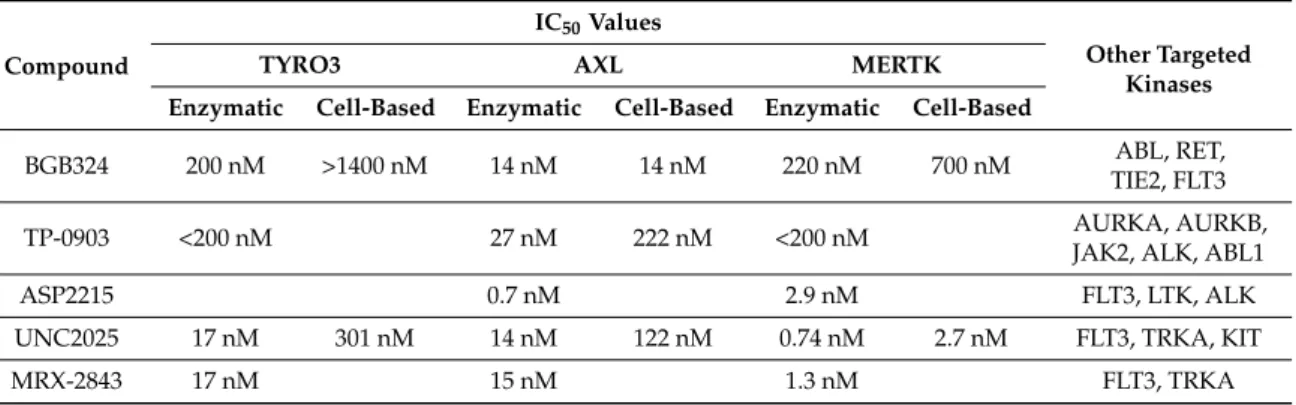
Table 1.TAM receptor small molecule inhibitors in development.
Compound
IC50Values
Other Targeted Kinases
TYRO3 AXL MERTK
Enzymatic Cell-Based Enzymatic Cell-Based Enzymatic Cell-Based
BGB324 200 nM >1400 nM 14 nM 14 nM 220 nM 700 nM ABL, RET,
TIE2, FLT3
TP-0903 <200 nM 27 nM 222 nM <200 nM AURKA, AURKB,
JAK2, ALK, ABL1
ASP2215 0.7 nM 2.9 nM FLT3, LTK, ALK
UNC2025 17 nM 301 nM 14 nM 122 nM 0.74 nM 2.7 nM FLT3, TRKA, KIT
MRX-2843 17 nM 15 nM 1.3 nM FLT3, TRKA
5.1.1. AXL
BGB324 (R428)
BGB324, also known as R428, is the first selective small molecule inhibitor of AXL to enter clinical development [95]. The compound precursor was first identified in a high-throughput screen and modifications were introduced based on structure-activity relationships (SAR) to enhance selectivity [96]. BGB324 is 50-fold selective for AXL relative to MERTK in cell-based assays and >100-fold selective over TYRO3. In mice, a single dose of 75 mg/kg resulted in a Cmax of 6.8µM with a plasma half-life of 13 h. Additionally, in two models of murine breast cancer, treatment with BGB324 blocked known AXL-mediated metastatic functions and synergized with cisplatin, a cytotoxic chemotherapy, to prevent liver micrometastases [96].
healthy bone marrow mononuclear cells were similarly resistant to BGB324 [9], underlining the potential for selective targeting of AXL as a therapeutic strategy in leukemia.
The promising results of preclinical studies such as these supported clinical development of BGB324 and in 2013, a phase I study in healthy volunteers was initiated to demonstrate safety and tolerability and provide pharmacokinetic data [95,98]. In 2015, a phase I multicenter trial of BGB324 as monotherapy and in combination with cytarabine in patients with relapsed or refractory AML or as monotherapy in patients with high-risk myelodysplastic syndrome (Multicenter Open-label Study of BGB324 as a Single Agent and in Combination With Cytarabine in Patients With AML, NCT02488408) [97].
TP-0903
TP-0903 is another compound in preclinical and clinical development as a potent AXL inhibitor with an IC50 of 27 nM in enzymatic assays. In biochemical assays, TP-0903 potently inhibits phosphorylation of AXL and its downstream target AKT with EC50(effective concentration) values of 222 and 350 nM, respectively [99]. However, it is also potent against TYRO3 and MERTK and the kinases Aurora A and B. Additionally, TP-0903 has a much lower IC50in cell viability assays indicating that functional effects may be mediated by off-target inhibition and not solely through AXL [93,99]. Despite this, evaluation of TP-0903 as an AXL inhibitor in solid tumors, AML, and CLL has moved forward [93].
In preclinical studies, treatment of CLL and AML cell cultures with TP-0903 resulted in decreased AXL phosphorylation and induction of apoptosis at concentrations achievable in vivo [61,81]. Interestingly, circulating CLL cells from patients treated for up to 4 weeks with the reversible BTK inhibitor ibrutinib retained ex vivo sensitivity to TP-0903 [100], but combined treatment with TP-0903 and ibrutinib was antagonistic in 7 of 11 patient samples [61]. The potential mechanism of this unfavorable interaction is unclear but this effect was not observed when TP-0903 was combined with another BTK inhibitor, TP-4216. Further investigation is needed prior to moving combination therapy with BTK and AXL inhibitors into clinical trials in CLL. As previously noted, in a FLT3-ITD AML cell line resistant to FLT3 inhibition, treatment with TP-0903 resensitized the cells to two different FLT3 small molecule inhibitors [81], implicating dual inhibition of FLT3 and AXL as an intriguing therapeutic strategy in AML.
A first in human phase I trial of TP-0903 is planned to open in late 2016 in patients with advanced solid tumors with future clinical development aimed towards patients with ibrutinib-resistant CLL and FLT3 inhibitor-resistant AML [97,101].
ASP2215 (gilteritinib)
5.1.2. MERTK
Although no MERTK-targeted small molecule inhibitor has been advanced into clinical trials, there are a number in preclinical development for leukemia. One of the first reported MERTK selective inhibitors was UNC569, which potently inhibited MERTK phosphorylation in B- and T-ALL cell lines [106,107] and had therapeutic efficacy in a zebrafish model of T-ALL [107]. Unfortunately, UNC569 has off-target activity towards hERG and suboptimal potency against MERTK [108]. Subsequent derivatives, UNC1062 and UNC1666, have decreased activity towards hERG and increased potency against MERTK but neither is suitable for translational studies due to pharmacokinetic profiles [53,108].
To optimize MERTK inhibitors for clinical use, further modifications of UNC1062 yielded UNC2025 [109]. UNC2025 is highly potent against MERTK with an IC50 of 2.7 nM and≥45-fold selective over TYRO3 or AXL in cell-based assays. A single oral dose of 3 mg/kg yielded a Cmax of 1.6µM with T1/2 of 3.8 h in mice. The compound has been well-tolerated with minimal and manageable toxicities in animal models [110]. Additionally, it mediates near complete inhibition of MERTK phosphorylation in the bone marrow of leukemia-bearing mice [109,110]. Treatment with UNC2025 inhibited MERTK-expressing leukemia cell proliferation and colony-forming potential, induced apoptosis, and in some cases induced polyploidy [110]. In cell line xenograft models of MERTK-dependent B-ALL, treatment with UNC2025 increased survival both alone and in combination with cytotoxic chemotherapy. Moreover, in a patient-derived AML xenograft model, treatment with monotherapy was sufficient to induce disease regression in the bone marrow, blood, and spleen. In addition, UNC2025 mediated potent anti-leukemia activity in approximately one third of 261 primary leukemia patient samples and the AML and T-ALL subsets were particularly sensitive, with 40% to 50% of samples responding to treatment with UNC2025, suggesting that a large portion of patients with leukemia could benefit from treatment with UNC2025 or similar compounds and supporting continued clinical development. Toward this end, MRX-2843, an analog to UNC2025 with a minor side chain substitution and similar PK properties and toxicity profile [54,109], was recently approved by the Food and Drug Administration (FDA) for clinical testing. Like UNC2025, MRX-2843 induced apoptosis, and inhibited colony formation in MERTK-expressing leukemia cell cultures. Additionally, MRX-2843 prolonged survival 2–3 fold compared to vehicle controls in both cell line and patient derived xenograft (PDX) models of AML. Importantly, these compounds are 10–20 fold more potent against leukemia cells compared to normal human cord blood mononuclear cells in colony formation assays, indicating potential for a wide therapeutic window [54,110].
Interestingly, UNC1666, UNC2025, and MRX-2843 are dual-specificity kinase inhibitors and are also highly potent against FLT3. UNC1666 and MRX-2843 both inhibited colony formation in FLT3-ITD patient samples [53,54], and MRX-2843 prolonged survival in orthotopic PDX models of FLT3-ITD AML. MRX-2843 potently inhibited activation of FLT3 in cell-based assays, even in the presence of clinically-relevant D835Y and F691L FLT3 point mutations, which confer resistance to many of the currently available FLT3 TKIs [54,111]. As previously described, upregulation of AXL has been implicated as a mechanism of resistance to FLT3 inhibition in AML and a dual FLT3/AXL inhibitor (ASP2215) is currently in clinical development, making further evaluation of MRX-2843 as a dual MERTK/FLT3 inhibitor particularly attractive. Finally, MRX-2843 has recently received FDA Investigational New Drug (IND) status and will be the first-in-class MERTK inhibitor used in clinical trials.
5.1.3. TYRO3
5.2. Biologic TAM RTK Inhibitors
Biologic TAM RTK inhibitors, such as monoclonal antibodies, ligand sinks, and aptamers [115], are also in preclinical development and potentially have the advantage of improved selectivity relative to small molecule inhibitors. To date, the majority of these studies have focused on solid tumor models, but the known roles for TAM RTKs suggest they will be applicable in leukemia as well. Monoclonal antibodies directed at the extracellular domains of TYRO3 [116], MERTK [117,118], or AXL [119–122] have all been developed and, in general, function by increasing receptor internalization and degradation. A monoclonal antibody that recognizes the extracellular domain of MERTK, Mer590, impeded activation of MERTK, inhibited colony formation, and synergistically enhanced carboplatin-induced apoptosis in NSCLC cells [117]. Additionally, Mer590 inhibited migration in glioblastoma multiforme cells [118]. A number of anti-AXL antibodies have also been described, including Mab173, 12A11, D9, and E8. Mab173 inhibited invasion and induced tumor regression in mouse models of Kaposi sarcoma [119], 12A11 inhibited growth of subcutaneous NSCLC xenografts [120], and D9 and E8 inhibited tumor cell migration and viability and prolonged survival in orthotopic murine models of pancreatic cancer [121]. Additionally, the anti-AXL antibody YW327.6S2 recognizes both human and murine AXL and is thus useful for preclinical evaluation of the effects of AXL inhibition in the tumor microenvironment [122]. Indeed, in NSCLC and breast cancer models, YW327.6S2 has direct anti-tumor effects and also enhances the effects of an anti-VEGF antibody on the tumor-associated vasculature. Although there are no published studies describing the use of these monoclonal antibodies in leukemia, they are effective in solid tumor models and are an attractive area for further research in hematologic malignancies.
Biologic agents that target TAM RTK ligands have also been effective in preclinical models. Decoy receptors have been engineered by fusing the extracellular domains of the TAM RTKs with the Fc domain from human IgG [56,123,124]. These receptors function as ligand sinks by binding to TAM RTK ligands and thereby inhibiting ligand-induced activation. To enhance the affinity for Gas6 binding, decoy receptors with engineered mutations in the AXL extracellular domain have been developed and treatment with these high affinity proteins decreased tumor metastasis in murine models of ovarian cancer and breast cancer [124]. Similarly, treatment with a Gas6 neutralizing antibody decreased tumor growth in a pancreatic ductal adenocarcinoma model [125]. Importantly, FLT3-ITD+AML cell cultures, treatment with AXL-Fc inhibited phosphorylation of AXL and decreased cell number by altering cell cycle progression and inducing apoptosis [57,81]. AXL-Fc treatment led to decreased tumor growth and prolonged survival in subcutaneous AML xenograft models [57], demonstrating the potential therapeutic application of TAM RTK ligand traps in leukemia.
6. Future Areas of Research
strategy with both direct anti-tumor effects and enhanced anti-tumor immunity mediated by inhibition of a single TAM RTK target. Given the recent dramatic successes of immunomodulatory therapies in hematologic and other malignancies, this should be an important area of further exploration.
With the advent of TAM RTK inhibitors into clinical trials, it will be important to understand mechanisms of resistance to TAM inhibition. A particular area of focus is the role of the bone marrow microenvironment in leukemia. Bone marrow stromal cells have long been implicated in protection of leukemia cells from therapeutic effects mediated by both cytotoxic chemotherapies and TKIs [130–132]. In terms of resistance to TAM RTK inhibition, this protection may be mediated through upregulation of Gas6 ligand, as multiple lines of evidence implicate Gas6 in therapeutic resistance in the bone marrow niche. Gas6 produced by stromal cells promotes the colony forming potential of hematopoietic stem cells [133] and has more recently been identified as an independent poor prognostic factor in AML [10], implying a role for Gas6 in maintaining the leukemia stem cell population. Additionally, in pre-B ALL, the Gas6/MERTK axis regulates homing to the bone marrow niche [134]. Indeed, primary human bone marrow stromal cells protected CLL cells from induction of apoptosis with the AXL inhibitor BGB324 [60]. Therapeutic strategies to overcome this resistance include combined treatment with ligand traps to sequester Gas6 or with bone marrow mobilizing agents such as the CXCR4 antagonist, plerixafor, which has been shown to enhance sensitivity to both cytotoxic chemotherapy and targeted agents in ALL models [132,135].
Finally, as described above, the roles of both AXL and MERTK in leukemia have been well described, but less is known about TYRO3. However, TYRO3 is aberrantly expressed in AML [10,136] and multiple myeloma [137] patient samples, and shRNA-mediated knockdown of TYRO3 in a melanoma model has a negative impact on cell survival in the majority of cell lines tested [116]. Thus, TYRO3 most likely contributes to leukemogenesis, resistance to therapy, or both, but the extent of its role is unknown. Further investigation into the role of TYRO3 in hematologic malignancies is warranted.
7. Concluding Remarks
In summary, targeted inhibition of members of the TAM (TYRO-3, AXL, MERTK) family of receptor tyrosine kinases has recently been investigated as a novel strategy for treatment of hematologic malignancies. The role of TAM RTKs in innate immune control mediated by regulation of efferocytosis and the inflammatory cytokine response has previously been well described. However, TAM RTKs also function to regulate erythropoiesis and they play important roles in platelet formation and activation. Further, the TAM family receptors are aberrantly or ectopically expressed in many hematologic malignancies, including acute myeloid leukemia, B- and T-cell acute lymphoblastic leukemia, chronic lymphoblastic leukemia, and multiple myeloma. TAM receptors contribute to leukemic phenotypes through activation of oncogenic signaling pathways leading to increased cell survival and proliferation, and resistance to both cytotoxic chemotherapeutics and targeted agents. The role of TAM receptors in chemoresistance makes them particularly attractive therapeutic targets and a number of translational strategies for TAM inhibition have been developed, including tyrosine kinase inhibitors (TKIs), ligand traps, and monoclonal antibodies. AXL-selective TKIs have shown promise in preclinical models, particularly in combination with targeted BCR-ABL and FLT3 inhibition in CML and AML, respectively, and clinical trials are currently underway combining AXL inhibition with standard chemotherapy in AML. Although efforts to target TAM receptors have thus far been primarily focused on AXL, MERTK-selective small molecule inhibitors have recently been described, are effective in preclinical models of ALL and AML, and are progressing toward clinical development. Emerging areas of research include modulation of TAM receptors to enhance anti-tumor immunity, mechanisms of resistance to TAM inhibition, and potential roles for TYRO-3 in leukemogenesis.
Conflicts of Interest:H. Shelton Earp, Deborah DeRyckere, and Douglas K. Graham have filed patents on targeting of the MERTK tyrosine kinase as cancer therapy. H. Shelton Earp, Deborah DeRyckere, and Douglas K. Graham have stock in Meryx, Inc. (a company developing novel therapeutic targets against MERTK). The remaining authors declare no conflict of interest.
References
1. Siegel, R.L.; Miller, K.D.; Jemal, A. Cancer statistics, 2016. CA Cancer J. Clin. 2016,66, 7–30. [CrossRef] [PubMed]
2. U.S. Cancer Statistics Working Group. United States Cancer Statistics: 1999–2013 Incidence and Mortality
Web-Based Report; Department of Health and Human Services, Center for Disease Control and Prevention
and National Cancer Institute: Atlanta, GA, USA, 2016.
3. Varnum, B.C.; Young, C.; Elliott, G.; Garcia, A.; Bartley, T.D.; Fridell, Y.W.; Hunt, R.W.; Trail, G.; Clogston, C.; Toso, R.J.; et al. Axl receptor tyrosine kinase stimulated by the vitamin k-dependent protein encoded by growth-arrest-specific gene 6.Nature1995,373, 623–626. [CrossRef] [PubMed]
4. Stitt, T.N.; Conn, G.; Gore, M.; Lai, C.; Bruno, J.; Radziejewski, C.; Mattsson, K.; Fisher, J.; Gies, D.R.; Jones, P.F.; et al. The anticoagulation factor protein s and its relative, gas6, are ligands for the tyro 3/axl family of receptor tyrosine kinases.Cell1995,80, 661–670. [CrossRef]
5. Tsou, W.I.; Nguyen, K.Q.; Calarese, D.A.; Garforth, S.J.; Antes, A.L.; Smirnov, S.V.; Almo, S.C.; Birge, R.B.; Kotenko, S.V. Receptor tyrosine kinases, TYRO3, AXL, and MER, demonstrate distinct patterns and complex regulation of ligand-induced activation.J. Biol. Chem.2014,289, 25750–25763. [CrossRef] [PubMed] 6. Graham, D.K.; DeRyckere, D.; Davies, K.D.; Earp, H.S. The TAM family: Phosphatidylserine sensing receptor
tyrosine kinases gone awry in cancer.Nat. Rev. Cancer2014,14, 769–785. [CrossRef] [PubMed]
7. Lew, E.D.; Oh, J.; Burrola, P.G.; Lax, I.; Zagorska, A.; Traves, P.G.; Schlessinger, J.; Lemke, G. Differential TAM receptor-ligand-phospholipid interactions delimit differential TAM bioactivities.eLife2014. [CrossRef] [PubMed]
8. Shaver, T.M.; Lehmann, B.D.; Beeler, J.S.; Li, C.I.; Li, Z.; Jin, H.; Stricker, T.P.; Shyr, Y.; Pietenpol, J.A. Diverse, biologically relevant, and targetable gene rearrangements in triple-negative breast cancer and other malignancies.Cancer Res.2016,76, 4850–4860. [CrossRef] [PubMed]
9. Ben-Batalla, I.; Schultze, A.; Wroblewski, M.; Erdmann, R.; Heuser, M.; Waizenegger, J.S.; Riecken, K.; Binder, M.; Schewe, D.; Sawall, S.; et al. Axl, a prognostic and therapeutic target in acute myeloid leukemia mediates paracrine crosstalk of leukemia cells with bone marrow stroma. Blood2013, 122, 2443–2452. [CrossRef] [PubMed]
10. Whitman, S.P.; Kohlschmidt, J.; Maharry, K.; Volinia, S.; Mrozek, K.; Nicolet, D.; Schwind, S.; Becker, H.; Metzeler, K.H.; Mendler, J.H.; et al. Gas6 expression identifies high-risk adult aml patients: Potential implications for therapy.Leukemia2014,28, 1252–1258. [CrossRef] [PubMed]
11. Brandao, L.; Migdall-Wilson, J.; Eisenman, K.; Graham, D.K. TAM receptors in leukemia: Expression, signaling, and therapeutic implications.Crit. Rev. Oncog.2011,16, 47–63. [CrossRef] [PubMed]
12. Lemke, G.; Rothlin, C.V. Immunobiology of the TAM receptors. Nat. Rev. Immunol. 2008, 8, 327–336. [CrossRef] [PubMed]
13. Van der Meer, J.H.; van der Poll, T.; van‘t Veer, C. TAM receptors, Gas6, and protein S: Roles in inflammation and hemostasis.Blood2014,123, 2460–2469. [CrossRef] [PubMed]
14. Rothlin, C.V.; Carrera-Silva, E.A.; Bosurgi, L.; Ghosh, S. TAM receptor signaling in immune homeostasis.
Annu. Rev. Immunol.2015,33, 355–391. [CrossRef] [PubMed]
15. Behrens, E.M.; Gadue, P.; Gong, S.Y.; Garrett, S.; Stein, P.L.; Cohen, P.L. The mer receptor tyrosine kinase: Expression and function suggest a role in innate immunity.Eur. J. Immunol.2003,33, 2160–2167. [CrossRef] [PubMed]
16. Neubauer, A.; Fiebeler, A.; Graham, D.K.; O’Bryan, J.P.; Schmidt, C.A.; Barckow, P.; Serke, S.; Siegert, W.; Snodgrass, H.R.; Huhn, D.; et al. Expression of axl, a transforming receptor tyrosine kinase, in normal and malignant hematopoiesis.Blood1994,84, 1931–1941. [PubMed]
18. Lee-Sherick, A.B.; Eisenman, K.M.; Sather, S.; McGranahan, A.; Armistead, P.M.; McGary, C.S.; Hunsucker, S.A.; Schlegel, J.; Martinson, H.; Cannon, C.; et al. Aberrant Mer receptor tyrosine kinase expression contributes to leukemogenesis in acute myeloid leukemia.Oncogene2013,32, 5359–5368. [CrossRef] [PubMed] 19. Bernsmeier, C.; Pop, O.T.; Singanayagam, A.; Triantafyllou, E.; Patel, V.C.; Weston, C.J.; Curbishley, S.;
Sadiq, F.; Vergis, N.; Khamri, W.; et al. Patients with acute-on-chronic liver failure have increased numbers of regulatory immune cells expressing the receptor tyrosine kinase MERTK.Gastroenterology2015. [CrossRef] [PubMed]
20. Hilliard, B.A.; Zizzo, G.; Ulas, M.; Linan, M.K.; Schreiter, J.; Cohen, P.L. Increased expression of Mer tyrosine kinase in circulating dendritic cells and monocytes of lupus patients: Correlations with plasma interferon activity and steroid therapy.Arthritis Res. Ther.2014. [CrossRef] [PubMed]
21. Guignant, C.; Venet, F.; Planel, S.; Demaret, J.; Gouel-Cheron, A.; Nougier, C.; Friggeri, A.; Allaouchiche, B.; Lepape, A.; Monneret, G. Increased MerTK expression in circulating innate immune cells of patients with septic shock.Intensive Care Med.2013,39, 1556–1564. [CrossRef] [PubMed]
22. Tang, H.; Chen, S.; Wang, H.; Wu, H.; Lu, Q.; Han, D. TAM receptors and the regulation of erythropoiesis in mice.Haematologica2009,94, 326–334. [CrossRef] [PubMed]
23. Angelillo-Scherrer, A.; Burnier, L.; Lambrechts, D.; Fish, R.J.; Tjwa, M.; Plaisance, S.; Sugamele, R.; DeMol, M.; Martinez-Soria, E.; Maxwell, P.H.; et al. Role of Gas6 in erythropoiesis and anemia in mice.J. Clin. Investig. 2008,118, 583–596. [CrossRef] [PubMed]
24. Linger, R.M.; Lee-Sherick, A.B.; DeRyckere, D.; Cohen, R.A.; Jacobsen, K.M.; McGranahan, A.; Brandao, L.N.; Winges, A.; Sawczyn, K.K.; Liang, X.; et al. Mer receptor tyrosine kinase is a therapeutic target in pre-B-cell acute lymphoblastic leukemia.Blood2013,122, 1599–1609. [CrossRef]
25. Satomura, K.; Derubeis, A.R.; Fedarko, N.S.; Ibaraki-O’Connor, K.; Kuznetsov, S.A.; Rowe, D.W.; Young, M.F.; Gehron Robey, P. Receptor tyrosine kinase expression in human bone marrow stromal cells.J. Cell. Physiol. 1998,177, 426–438. [CrossRef]
26. Anam, K.; Davis, T.A. Comparative analysis of gene transcripts for cell signaling receptors in bone marrow-derived hematopoietic stem/progenitor cell and mesenchymal stromal cell populations.Stem Cell
Res. Ther.2013. [CrossRef] [PubMed]
27. Chen, M.P.; Chen, C.W.; Chen, J.S.; Mao, H.C.; Chou, C.L. Circulating growth arrest-specific protein 6 levels are associated with erythropoietin resistance in hemodialysis patients.Springerplus2016. [CrossRef] [PubMed]
28. Wang, H.; Chen, S.; Chen, Y.; Wang, H.; Wu, H.; Tang, H.; Xiong, W.; Ma, J.; Ge, Y.; Lu, Q.; et al. The role of Tyro 3 subfamily receptors in the regulation of hemostasis and megakaryocytopoiesis.Haematologica2007, 92, 643–650. [CrossRef] [PubMed]
29. Angelillo-Scherrer, A.; de Frutos, P.; Aparicio, C.; Melis, E.; Savi, P.; Lupu, F.; Arnout, J.; Dewerchin, M.; Hoylaerts, M.; Herbert, J.; et al. Deficiency or inhibition of Gas6 causes platelet dysfunction and protects mice against thrombosis.Nat. Med.2001,7, 215–221. [CrossRef] [PubMed]
30. Chen, C.; Li, Q.; Darrow, A.L.; Wang, Y.; Derian, C.K.; Yang, J.; de Garavilla, L.; Andrade-Gordon, P.; Damiano, B.P. Mer receptor tyrosine kinase signaling participates in platelet function.Arterioscler. Thromb.
Vasc. Biol.2004,24, 1118–1123. [CrossRef] [PubMed]
31. Cosemans, J.M.; van Kruchten, R.; Olieslagers, S.; Schurgers, L.J.; Verheyen, F.K.; Munnix, I.C.; Waltenberger, J.; Angelillo-Scherrer, A.; Hoylaerts, M.F.; Carmeliet, P.; et al. Potentiating role of Gas6 and Tyro3, Axl and Mer (TAM) receptors in human and murine platelet activation and thrombus stabilization.
J. Thromb. Haemost.2010,8, 1797–1808. [CrossRef] [PubMed]
32. Angelillo-Scherrer, A.; Burnier, L.; Flores, N.; Savi, P.; DeMol, M.; Schaeffer, P.; Herbert, J.M.; Lemke, G.; Goff, S.P.; Matsushima, G.K.; et al. Role of Gas6 receptors in platelet signaling during thrombus stabilization and implications for antithrombotic therapy.J. Clin. Investig.2005,115, 237–246. [CrossRef] [PubMed] 33. Karol, S.E.; Coustan-Smith, E.; Cao, X.; Shurtleff, S.A.; Raimondi, S.C.; Choi, J.K.; Ribeiro, R.C.; Dahl, G.V.;
Bowman, W.P.; Taub, J.W.; et al. Prognostic factors in children with acute myeloid leukaemia and excellent response to remission induction therapy.Br. J. Haematol.2015,168, 94–101. [CrossRef] [PubMed]
35. Acharya, S.; Hsieh, S.; Shinohara, E.T.; DeWees, T.; Frangoul, H.; Perkins, S.M. Effects of race/ethnicity and socioeconomic status on outcome in childhood acute lymphoblastic leukemia. J. Pediatr. Hematol. Oncol. 2016,38, 350–354. [CrossRef] [PubMed]
36. Alvarnas, J.C.; Brown, P.A.; Aoun, P.; Ballen, K.K.; Bellam, N.; Blum, W.; Boyer, M.W.; Carraway, H.E.; Coccia, P.F.; Coutre, S.E.; et al. Acute lymphoblastic leukemia.J. Natl. Compr. Cancer Netw.2012,10, 858–914. 37. Brandwein, J.M.; Gupta, V.; Wells, R.A.; Schuh, A.C.; Schimmer, A.D.; Lipton, J.H.; Messner, H.A.; Yi, Q.L.; Chun, K.; Kamel-Reid, S.; et al. Treatment of elderly patients with acute lymphoblastic leukemia–evidence for a benefit of imatinib in BCR-ABL positive patients.Leuk. Res.2005,29, 1381–1386. [CrossRef] [PubMed] 38. Grimwade, D.; Hills, R.K.; Moorman, A.V.; Walker, H.; Chatters, S.; Goldstone, A.H.; Wheatley, K.;
Harrison, C.J.; Burnett, A.K. Refinement of cytogenetic classification in acute myeloid leukemia: Determination of prognostic significance of rare recurring chromosomal abnormalities among 5876 younger adult patients treated in the United Kingdom Medical Research Council trials. Blood2010,116, 354–365. [CrossRef] [PubMed]
39. Tarlock, K.; Meshinchi, S. Pediatric acute myeloid leukemia: Biology and therapeutic implications of genomic variants.Pediatr. Clin. N. Am.2015,62, 75–93. [CrossRef] [PubMed]
40. Leung, W.; Hudson, M.M.; Strickland, D.K.; Phipps, S.; Srivastava, D.K.; Ribeiro, R.C.; Rubnitz, J.E.; Sandlund, J.T.; Kun, L.E.; Bowman, L.C.; et al. Late effects of treatment in survivors of childhood acute myeloid leukemia.J. Clin. Oncol.2000,18, 3273–3279. [PubMed]
41. Kaspers, G.J. Pediatric acute myeloid leukemia.Expert Rev. Anticancer Ther.2012,12, 405–413. [CrossRef] [PubMed]
42. Mulrooney, D.A.; Dover, D.C.; Li, S.; Yasui, Y.; Ness, K.K.; Mertens, A.C.; Neglia, J.P.; Sklar, C.A.; Robison, L.L.; Davies, S.M. Twenty years of follow-up among survivors of childhood and young adult acute myeloid leukemia: A report from the Childhood Cancer Survivor Study.Cancer2008,112, 2071–2079. [CrossRef] [PubMed]
43. Brown, P.; Small, D. FLT3 inhibitors: A paradigm for the development of targeted therapeutics for paediatric cancer.Eur. J. Cancer2004,40, 707–721, discussion 722–724. [CrossRef] [PubMed]
44. Meshinchi, S.; Woods, W.G.; Stirewalt, D.L.; Sweetser, D.A.; Buckley, J.D.; Tjoa, T.K.; Bernstein, I.D.; Radich, J.P. Prevalence and prognostic significance of Flt3 internal tandem duplication in pediatric acute myeloid leukemia.Blood2001,97, 89–94. [CrossRef] [PubMed]
45. Kondo, M.; Horibe, K.; Takahashi, Y.; Matsumoto, K.; Fukuda, M.; Inaba, J.; Kato, K.; Kojima, S.; Matsuyama, T. Prognostic value of internal tandem duplication of the FLT3 gene in childhood acute myelogenous leukemia.Med. Pediatr. Oncol.1999,33, 525–529. [CrossRef]
46. Stone, R.M.; Mandrekar, S.; Sanford, B.L.; Geyer, S.; Bloomfield, C.D.; Dohner, K.; Thiede, C.; Marcucci, G.; Lo-Coco, F.; Klisovic, R.B.; et al. The Multi-Kinase Inhibitor Midostaurin (M) Prolongs Survival Compared with Placebo (P) in Combination with Daunorubicin (D)/Cytarabine (C) Induction (ind), High-Dose C Consolidation (consol), and As Maintenance (maint) Therapy in Newly Diagnosed Acute Myeloid Leukemia (AML) Patients (pts) Age 18–60 with FLT3 Mutations (muts): An International Prospective Randomized (rand) P-Controlled Double-Blind Trial (CALGB 10603/RATIFY [Alliance]).Blood2015,126, 6.
47. Levis, M.J.; Perl, A.E.; Dombret, H.; Döhner, H.; Steffen, B.; Rousselot, P.; Martinelli, G.; Estey, E.H.; Burnett, A.K.; Gammon, G.; et al. Final Results of a Phase 2 Open-Label, Monotherapy Efficacy and Safety Study of Quizartinib (AC220) in Patients with FLT3-ITD Positive or Negative Relapsed/Refractory Acute Myeloid Leukemia After Second-Line Chemotherapy or Hematopoietic Stem Cell Transplantation.Blood 2015,120, 673.
48. Kung, L.L.a.H.-J. Mitogenic signals and transforming potential of Nyk, a newly identified nueral cell adhesion molecule-related receptor tyrosine kinase.Mol. Cell. Biol.1995,15, 6582–6592.
49. Brandao, L.N.; Winges, A.; Christoph, S.; Sather, S.; Migdall-Wilson, J.; Schlegel, J.; McGranahan, A.; Gao, D.; Liang, X.; Deryckere, D.; et al. Inhibition of MerTK increases chemosensitivity and decreases oncogenic potential in T-cell acute lymphoblastic leukemia.Blood Cancer J.2013,3, e101. [CrossRef]
50. Keating, A.K.; Salzberg, D.B.; Sather, S.; Liang, X.; Nickoloff, S.; Anwar, A.; Deryckere, D.; Hill, K.; Joung, D.; Sawczyn, K.K.; et al. Lymphoblastic leukemia/lymphoma in mice overexpressing the Mer (MerTK) receptor tyrosine kinase.Oncogene2006,25, 6092–6100. [CrossRef]
53. Lee-Sherick, A.B.; Zhang, W.; Menachof, K.K.; Hill, A.A.; Rinella, S.; Kirkpatrick, G.; Page, L.S.; Stashko, M.A.; Jordan, C.T.; Wei, Q.; et al. Efficacy of a Mer and Flt3 tyrosine kinase small molecule inhibitor, UNC1666, in acute myeloid leukemia.Oncotarget2015,6, 6722–6736. [CrossRef]
54. Minson, K.A.; Smith, C.C.; DeRyckere, D.; Libbrecht, C.; Lee-Sherick, A.B.; Huey, M.G.; Lasater, E.A.; Kirkpatrick, G.D.; Stashko, M.A.; Zhang, W.; et al. The MERTK/FLT3 inhibitor MRX-2843 overcomes resistance-conferring FLT3 mutations in acute myeloid leukemia.JCI Insight2016,1, e85630. [CrossRef] 55. Rochlitz, C.; Lohri, A.; Bacchi, M.; Schmidt, M.; Nagel, S.; Fopp, M.; Fey, M.F.; Herrmann, R.; Neubauer, A.
Axl expression is associated with adverse prognosis and with expression of Bcl-1 and CD34 in de novo acute myeloid leukemia (AML): Results from a multicenter trial of the Swiss Group for Clinical Cancer Research (SAKK).Leukemia1999,13, 1352–1358. [CrossRef]
56. Nagata, K.; Ohashi, K.; Nakano, T.; Arita, H.; Zong, C.; Hanafusa, H.; Mizuno, K. Identification of the product of growth arrest-specific gene 6 as a common ligand for Axl, Sky, and Mer receptor tyrosine kinases.
J. Biol. Chem.1996,271, 30022–30027. [CrossRef]
57. Park, I.K.; Mishra, A.; Chandler, J.; Whitman, S.P.; Marcucci, G.; Caligiuri, M.A. Inhibition of the receptor tyrosine kinase Axl impedes activation of the FLT3 internal tandem duplication in human acute myeloid leukemia: Implications for Axl as a potential therapeutic target. Blood2013,121, 2064–2073. [CrossRef] [PubMed]
58. Hong, C.C.; Lay, J.D.; Huang, J.S.; Cheng, A.L.; Tang, J.L.; Lin, M.T.; Lai, G.M.; Chuang, S.E. Receptor tyrosine kinase AXL is induced by chemotherapy drugs and overexpression of AXL confers drug resistance in acute myeloid leukemia.Cancer Lett.2008,268, 314–324. [CrossRef] [PubMed]
59. Pleyer, L.; Egle, A.; Hartmann, T.N.; Greil, R. Molecular and cellular mechanisms of CLL: Novel therapeutic approaches.Nat. Rev. Clin. Oncol.2009,6, 405–418. [CrossRef] [PubMed]
60. Ghosh, A.K.; Secreto, C.; Boysen, J.; Sassoon, T.; Shanafelt, T.D.; Mukhopadhyay, D.; Kay, N.E. The novel receptor tyrosine kinase Axl is constitutively active in B-cell chronic lymphocytic leukemia and acts as a docking site of nonreceptor kinases: Implications for therapy. Blood2011,117, 1928–1937. [CrossRef] [PubMed]
61. Sinha, S.; Boysen, J.; Nelson, M.; Secreto, C.; Warner, S.L.; Bearss, D.J.; Lesnick, C.; Shanafelt, T.D.; Kay, N.E.; Ghosh, A.K. Targeted axl inhibition primes chronic lymphocytic leukemia B cells to apoptosis and shows synergistic/additive effects in combination with BTK inhibitors. Clin. Cancer Res. 2015,21, 2115–2126. [CrossRef] [PubMed]
62. Contri, A.; Brunati, A.M.; Trentin, L.; Cabrelle, A.; Miorin, M.; Cesaro, L.; Pinna, L.A.; Zambello, R.; Semenzato, G.; Donella-Deana, A. Chronic lymphocytic leukemia B cells contain anomalous Lyn tyrosine kinase, a putative contribution to defective apoptosis. J. Clin. Investig. 2005,115, 369–378. [CrossRef] [PubMed]
63. Sinha, S.; Boysen, J.; Nelson, M.; Warner, S.L.; Bearss, D.; Kay, N.E.; Ghosh, A.K. Axl activates fibroblast growth factor receptor pathway to potentiate survival signals in B-cell chronic lymphocytic leukemia cells.
Leukemia2016,30, 1431–1436. [CrossRef] [PubMed]
64. Basilico, C.; Moscatelli, D. The FGF family of growth factors and oncogenes. Adv. Cancer Res. 1992,59, 115–165. [PubMed]
65. Kay, N.E.; Bone, N.D.; Tschumper, R.C.; Howell, K.H.; Geyer, S.M.; Dewald, G.W.; Hanson, C.A.; Jelinek, D.F. B-CLL cells are capable of synthesis and secretion of both pro- and anti-angiogenic molecules.Leukemia2002, 16, 911–919. [CrossRef] [PubMed]
66. Menzel, T.; Rahman, Z.; Calleja, E.; White, K.; Wilson, E.L.; Wieder, R.; Gabrilove, J. Elevated intracellular level of basic fibroblast growth factor correlates with stage of chronic lymphocytic leukemia and is associated with resistance to fludarabine.Blood1996,87, 1056–1063. [PubMed]
67. Brand, T.M.; Iida, M.; Stein, A.P.; Corrigan, K.L.; Braverman, C.M.; Luthar, N.; Toulany, M.; Gill, P.S.; Salgia, R.; Kimple, R.J.; et al. AXL mediates resistance to cetuximab therapy.Cancer Res.2014,74, 5152–5164. [CrossRef] [PubMed]
69. Hermeking, H. The miR-34 family in cancer and apoptosis.Cell Death Differ.2010,17, 193–199. [CrossRef] [PubMed]
70. Zenz, T.; Mohr, J.; Eldering, E.; Kater, A.P.; Buhler, A.; Kienle, D.; Winkler, D.; Durig, J.; van Oers, M.H.; Mertens, D.; et al. miR-34a as part of the resistance network in chronic lymphocytic leukemia.Blood2009, 113, 3801–3808. [CrossRef] [PubMed]
71. Dijkstra, M.K.; van Lom, K.; Tielemans, D.; Elstrodt, F.; Langerak, A.W.; van’t Veer, M.B.; Jongen-Lavrencic, M. 17p13/TP53 deletion in B-CLL patients is associated with microRNA-34a downregulation.Leukemia2009,23, 625–627. [CrossRef] [PubMed]
72. Zenz, T.; Habe, S.; Denzel, T.; Mohr, J.; Winkler, D.; Buhler, A.; Sarno, A.; Groner, S.; Mertens, D.; Busch, R.; et al. Detailed analysis of p53 pathway defects in fludarabine-refractory chronic lymphocytic leukemia (CLL): Dissecting the contribution of 17p deletion, TP53 mutation, p53-p21 dysfunction, and miR34a in a prospective clinical trial.Blood2009,114, 2589–2597. [CrossRef] [PubMed]
73. Kuehl, W.M.; Bergsagel, P.L. Molecular pathogenesis of multiple myeloma and its premalignant precursor.
J. Clin. Investig.2012,122, 3456–3463. [CrossRef]
74. Kumar, S.K.; Lee, J.H.; Lahuerta, J.J.; Morgan, G.; Richardson, P.G.; Crowley, J.; Haessler, J.; Feather, J.; Hoering, A.; Moreau, P.; et al. Risk of progression and survival in multiple myeloma relapsing after therapy with IMiDs and bortezomib: A multicenter international myeloma working group study.Leukemia2012,26, 149–157. [CrossRef]
75. Al-Hujaily, E.M.; Oldham, R.A.; Hari, P.; Medin, J.A. Development of Novel Immunotherapies for Multiple Myeloma.Int. J. Mol. Sci.2016. [CrossRef]
76. Kocoglu, M.; Badros, A. The role of immunotherapy in multiple myeloma.Pharmaceuticals2016. [CrossRef] 77. Noonan, K.A.; Huff, C.A.; Davis, J.; Lemas, M.V.; Fiorino, S.; Bitzan, J.; Ferguson, A.; Emerling, A.; Luznik, L.; Matsui, W.; et al. Adoptive transfer of activated marrow-infiltrating lymphocytes induces measurable antitumor immunity in the bone marrow in multiple myeloma.Sci. Transl. Med.2015. [CrossRef]
78. Hideshima, T.; Mitsiades, C.; Tonon, G.; Richardson, P.G.; Anderson, K.C. Understanding multiple myeloma pathogenesis in the bone marrow to identify new therapeutic targets. Nat. Rev. Cancer2007,7, 585–598. [CrossRef]
79. Waizenegger, J.S.; Ben-Batalla, I.; Weinhold, N.; Meissner, T.; Wroblewski, M.; Janning, M.; Riecken, K.; Binder, M.; Atanackovic, D.; Taipaleenmaeki, H.; et al. Role of Growth arrest-specific gene 6-Mer axis in multiple myeloma.Leukemia2015,29, 696–704. [CrossRef]
80. Mahadevan, D.; Cooke, L.; Riley, C.; Swart, R.; Simons, B.; Della Croce, K.; Wisner, L.; Iorio, M.; Shakalya, K.; Garewal, H.; et al. A novel tyrosine kinase switch is a mechanism of imatinib resistance in gastrointestinal stromal tumors.Oncogene2007,26, 3909–3919. [CrossRef]
81. Park, I.K.; Mundy-Bosse, B.; Whitman, S.P.; Zhang, X.; Warner, S.L.; Bearss, D.J.; Blum, W.; Marcucci, G.; Caligiuri, M.A. Receptor tyrosine kinase Axl is required for resistance of leukemic cells to FLT3-targeted therapy in acute myeloid leukemia.Leukemia2015,29, 2382–2389. [CrossRef]
82. Macleod, K.; Mullen, P.; Sewell, J.; Rabiasz, G.; Lawrie, S.; Miller, E.; Smyth, J.F.; Langdon, S.P. Altered ErbB receptor signaling and gene expression in cisplatin-resistant ovarian cancer.Cancer Res.2005,65, 6789–6800. [CrossRef]
83. Liu, L.; Greger, J.; Shi, H.; Liu, Y.; Greshock, J.; Annan, R.; Halsey, W.; Sathe, G.M.; Martin, A.M.; Gilmer, T.M. Novel mechanism of lapatinib resistance in HER2-positive breast tumor cells: Activation of AXL.Cancer Res. 2009,69, 6871–6878. [CrossRef] [PubMed]
84. Huang, F.; Hurlburt, W.; Greer, A.; Reeves, K.A.; Hillerman, S.; Chang, H.; Fargnoli, J.; Graf Finckenstein, F.; Gottardis, M.M.; Carboni, J.M. Differential mechanisms of acquired resistance to insulin-like growth factor-i receptor antibody therapy or to a small-molecule inhibitor, BMS-754807, in a human rhabdomyosarcoma model.Cancer Res.2010,70, 7221–7231. [CrossRef] [PubMed]
85. Marum, J.E.; Branford, S. Current developments in molecular monitoring in chronic myeloid leukemia.
Ther. Adv. Hematol.2016,7, 237–251. [CrossRef] [PubMed]