EXAMINING THE ROLE OF RACIAL IDENTITY PRIMING ON AFRICAN AMERICAN YOUTHS’ EMOTIONAL RESPONSES TO RACISM: EXPOSURE IN
THE LABORATORY SETTING
Shawn C.T. Jones
A thesis submitted to the faculty of the University of North Carolina at Chapel Hill in partial fulfillment of the requirements for the degree of Master of Arts in the Department
of Psychology (Clinical)
Chapel Hill 2013
Approved By:
Enrique W. Neblett Jr., Ph.D. Deborah T. Jones, Ph.D.
Abstract
SHAWN C.T. JONES: Examining the Role of Racial Identity Priming on African American Youths’ Emotional Responses to Racism: Exposure in the Laboratory Setting
(Under the direction of Dr. Enrique Neblett)
To my mother (Frances Jones), my family, my friends, my community. Thank God for you all
Acknowledgements
I would first like to acknowledge Dr. Enrique Neblett for his undying support throughout this entire process. I can truly say that this project would not be possible without you. In addition, I would like to thank the African American Youth Wellness Lab and specifically Ashly Gaskin and Daniel Lee for critical input and feedback regarding this work. Finally, I would like to thank the American Psychological Association and the Nancy B. Forest and L. Michael Honaker Master’s Scholarship for Research in
TABLE OF CONTENTS
List of Tables………vii
List of Figures………...viii
Chapter I. Introduction………1
II. Study 1………...27
Method………...………27
Results………30
Discussion………..………31
III. Study 2………...33
Method………...34
Results………44
Discussion………..48
IV. General Discussion………49
Figures………63
Appendices………...67
LIST OF TABLES
Table
1. Endorsement of Racial Ideology beliefs by priming condition
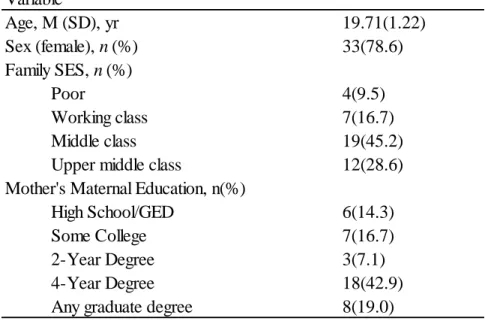
2. Summary of Sociodemographic Characteristics (n = 42)
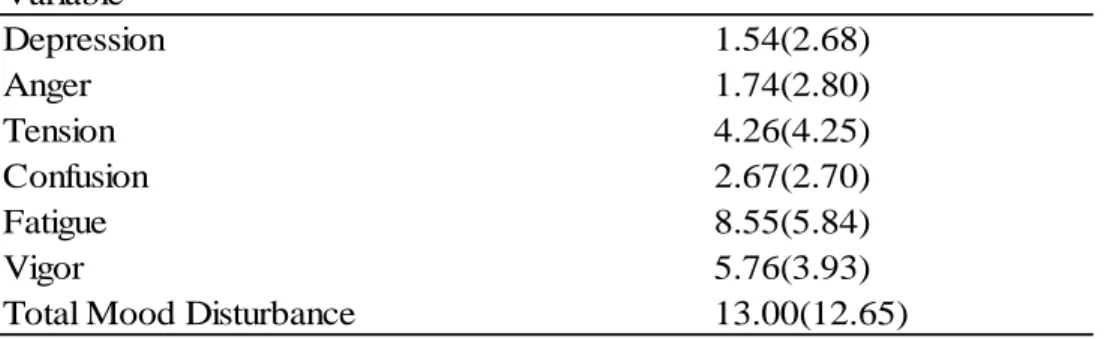
3. Means (and standard deviations) of baseline data for mood variables
LIST OF FIGURES
Figure
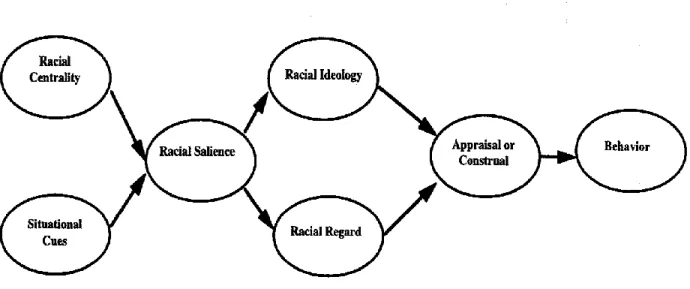
1. The process by which racial identity influences behavior at the level of a specific event. From Sellers et al., 1998.
2. Depressed Mood reactivity presented separately by racial ideology prime and type of discrimination experience
3. Depressed Mood reactivity presented separately by racial ideology prime and time period
Introduction
The impact of African Americans’ experiences with racism—prejudice and racial discrimination—has been studied since the famous Doll Preference studies by Mamie and Kenneth Clark (1947). Although research on this topic has continued to proliferate since the famous experiments, recent research has begun to elucidate the deleterious impact of racial discrimination on the physical, psychological, and emotional well-being of African Americans (e.g., see Paradies, 2006; Williams and Mohammed, 2009; Williams,
Neighbors, & Jackson, 2003 for reviews). Within this body of work, immediate emotional responses to discriminatory events have been identified as key to understanding the link between perceived racism and later outcomes (e.g., Smart Richman, Pek, Pascoe, & Bauer, 2010).
of more sophisticated coping responses to racial discrimination (Neblett et al., 2004; Rowley, Sellers, Chavous, & Smith, 1998).
Most of the current literature examines the relationship between self-reported measures of discrimination and current reports of psychological distress, making it difficult to study the effects of racial identity within the context of a specific racial discrimination event. Examining the effects of racial identity in the context of a specific event may have much to tell us about how experiences of racial discrimination lead to diminished psychological well-being. One innovative way to examine the role of racial identity in the context of a specific discriminatory event is to cognitively prime the construct. Previous research suggests that priming a social identity such as racial identity, can affect motivation, behavior, and attitudes (e.g., Bargh, Chen, & Burrows, 1996; Steele, 1997). What is less known is how priming aspects of racial identity might affect one’s immediate emotional responses to a discriminatory event. In light of these
limitations, this study seeks to investigate the feasibility of priming racial identity and investigate how priming African American undergraduates’ racial identity impacts their affective responses following exposure to a specific discriminatory event in a controlled laboratory setting.
Definition of Racism, Racial Discrimination, and Racial Prejudice
attitudes and beliefs toward racial outgroups, and discrimination, which is differential treatment of members of such outgroups, either by individuals or social institutions (Jones, 1997). An example of racial prejudice might be the internal belief that Whites are superior to other races and ethnicities, while discrimination could take the form of unequal housing or employment practices that unduly impact ethnic minorities. A related definition by Rodney Clark and colleagues (1999) conceptualizes racism as “beliefs, attitudes, institutional arrangements, and acts that tend to denigrate individuals or groups because of phenotypic characteristics [e.g., skin color] or ethnic group affiliation” (Clark et al., 1999). This definition highlights the ways in which attitudes and behaviors can interact to produce racism.
In addition to defining racism, it is important to understand how the type and overtness of racism can impact racism experiences. First, racism has been thought to take three primary forms: individual racism, which is the belief that another racial group is inferior and the behavioral enactments that maintain these beliefs, institutional racism, which is the systematic oppression and exploitation of a group, and cultural racism, which is a “racialized” world view reflective of beliefs in racial differences that favor one group over another (Jones, 1997). In addition, Jones notes that racism can be either overt/blatant (such as use of a racial slur) or covert/subtle (such as being skipped in line). There is research to suggest that African Americans may respond differently as a result of the blatantness of the racism. For example, work by Salvatore and Shelton (2007) found that subtle discrimination related to hiring practices was related to more negative
Related to the various forms of racism, Shelly Harrell (2000) offers four broad contexts through which racism operates: the sociopolitical (which concerns political discourse about race and policies affecting racial minorities), the cultural-symbolic (which involves images and impressions of minorities that are portrayed through various mediums), the collective (which includes aspects such as racial disparities and the education achievement gap), and interpersonal (which includes direct and vicarious experiences involving racial prejudice or discrimination). It is within this last context (interpersonal) that the bulk of research on the effects of racism—either through prejudice or discrimination, has focused. As such, the subsequent discussion on the detrimental effects of racism will primarily focus on direct and indirect interpersonal experiences. Finally, it is important to note that because of the nuanced ways in which racism is displayed, most scholars discuss perceived discrimination and prejudice, a phenomenological experience of the individual or group, rather than establishing “objective” measures of such experiences.
The Effects of Racism on Psychological Health
between racial discrimination and mental health (e.g., Pascoe & Smart Richman, 2009; Pieterse, Todd, Neville, & Carter, 2012). In all cases, a great number of the studies analyzed centered on outcomes for African Americans. For example, with regard to substance abuse, a longitudinal study of 889 Black families found that racial
discrimination was associated with subsequent use of alcohol and drugs (Gibbons et al., 2007). Several laboratory studies find that exposure to racism can result in declined cognitive functioning, particularly executive functioning. Salvatore and Shelton (2007) reported that reading fictional vignettes regarding hiring recommendations was
associated with cognitive depletion measured using the classic Stroop task (Salvatore & Shelton, 2007). In another study, listening to White confederates express support for racial profiling was associated with reduced persistence on a task (Bair & Steele, 2010).
In terms of internalizing and externalizing symptoms, both cross-sectional and longitudinal work has produced findings evidencing a positive association between perceived discrimination and increased symptomatology (e.g., Schulz et al., 2006; Simons, Simons, Burt, Drummund, Stewart, & Brody, 2006). For instance, a five-year, longitudinal study of 714 Black adolescents found a positive relationship between perceived discrimination and subsequent depressive symptoms and conduct problems (Brody et al., 2006). Another study examining everyday discrimination noted that these experiences were related to anxiety and depressive symptoms (Banks, Kohn-Wood, & Spencer, 2006).
(reported by 41%) and hopelessness (reported by nearly 20%) among Black women. Similar research has linked emotions such as threat, harm, anger, and nervousness with discrimination experiences (Brondolo, Thompson, Brady, Appel, Cassells, & Tobin, 2005; Broudy et al., 2007; Swim, Hyers, Cohen, Fitzgerald, & Bylsma, 2003). For instance, a diary methodology was utilized by Risa Broudy and colleagues to assess moods following social interactions, and the results indicated that baseline levels of perceived discrimination were associated with daily levels of anger and with the perception of social interactions as harassing and unfair (Broudy et al., 2007). These findings are particularly noteworthy because negative emotions have been identified as both symptoms of, and precursors to psychological disorders such as anxiety and conduct disorder (Cole, Michel, & Teti, 1994). Finally, experiences with racism have been linked to several indices of mental health such as psychological “well-being”, “adjustment”, and distress (Sellers & Shelton, 2003; Tynes, Giang, Williams, & Thompson, 2008).
While not nearly as extensive as the data regarding Black adults, there is growing research which has linked racism experiences to both internalizing (e.g., Fisher, Wallace, & Fenton, 2000; Lambert, Herman, Bynum, & Ialongo, 2009), and externalizing
psychological problems (e.g., Caldwell, Kohn-Wood, Schmeelk-Cone, Chavous, & Zimmerman, 2004) for African American youth. While experiences with racism can have a negative impact throughout the life course, African American youth, particularly
Models Explaining Racism’s Impact on Well-being
Historically, data linking experiences with racism to psychological well-being have been primarily cross-sectional in nature, causing problems with inferences of directionality. However, more recent prospective studies (e.g., Brody et al., 2006) confirm that it is perceived racial prejudice and discrimination that predict deleterious psychological outcomes. As such, the issue of how such experiences leave African Americans vulnerable has arisen as an important theoretical and empirical question. In the past several years, several conceptual models of how racism affects the well-being of African Americans have been offered. Without exception, these models identify racist experiences as stimuli that can be perceived as stressors. These models argue that when these experiences are perceived as distressing, subsequent emotional (and behavioral) responses predict the extent to which negative outcomes described occur. This sequence of events is based on Lazarus and Folkman‘s (1984) seminal theoretical model of stress, appraisal, and coping, which outlines how stressful events can impact an individual’s functioning. Briefly, stress is defined as the relationship between person and
environment (stimuli) that is perceived by individuals to exceed their resources.
Appraisal is the process which leads individuals to perceive situations as stressful or not. Finally, coping is defined as emotions, cognitions, and behaviors that represent attempts to ameliorate or overcome stress (Lazarus & Folkman, 1984).
Biopsychosocial Model
biopsychosocial model provides a theoretical framework for viewing the effects of perceived inter- and intragroup racism. According to Clark, Anderson, Clark, and Williams (1999), the perception of environmental stimuli as racially discriminatory or prejudiced leads to amplified psychological and physiological responses (p. 806). It is argued that the perception of these stimuli is influenced by constitutional factors (such as skin tone), sociodemographic factors (such as socioeconomic status), and psychological and behavioral factors (such as anger expression). These factors are all thought to influence whether an event, situation, comment or person is viewed as racist. In addition to influencing the perception of environmental stimuli, the above set of factors is also thought to moderate the psychological outcomes that stem from exposure to racial
Harrell’s Model of Racism-Related Stress
Harrell’s (2000) multidimensional conceptualization of racism-related stress for people of color also implicates stress as part of a process leading to negative outcomes for ethnic minorities. She defines racism-related stress as, “the race-related transactions between individuals or groups and their environment that emerge from the dynamics of racism, and that are perceived to tax or exceed existing individual and collective
resources or threaten well-being” (p.44). This definition is consistent with the
aforementioned definition of stress offered by Lazarus and Folkman in that it emphasizes that stress occurs when person-environment transactions are perceived as exceeding one’s available resources. According to Harrell (2000), these racism-related stressors take six forms: racism-related life events, vicarious racism experiences, daily racism
study of discrimination because they shed light on how specific events (perhaps varying in frequency and intensity) impact an individual’s well-being.
Vicarious experiences, while not as commonly studied, are important to consider, particularly in the context of individual and interpersonal types of racism (Jones, 1997). Vicarious experiences involve observation or reports of racism in others’ (relatives, friends, or even strangers) lives. These vicarious experiences are particularly important for African American youth, as often their first experiences with racism are vicarious in nature (Quintana & McKown, 2008). Finally, Harrell points out the importance of considering the impact of other stressors, either those related to one’s status (e.g., gender, sexual orientation) or generic stressors experienced by all of society. It is argued that these stressors may intersect with racism-related stress or that a person’s ethnic minority status may qualitatively impact how status or generic stressors are experienced (Harrell, 2000).
Regardless of the type of racism-related stressor, Harrell contends that psychological, as well as physical, social, functional, and spiritual well-being can be compromised by racism. According to Harrell, several factors at both the broader (e.g., community support) and individual (e.g., worldview, racial identity) level influence the association between racism and well-being. She notes that immediate emotional
both Clark and colleagues and Harrell note that all of the factors that influence the impact of racism on outcomes play out in different ways as a function of the situation. In other words, while a particular individual characteristic or emotional response might be
productive in one given scenario, another pattern of behaviors and emotions might better suit a different individual or type of racism. This critical point highlights the necessity of understanding how these factors operate in context.
The Importance of Racial Identity
Thankfully, not all African American youth who experience racism develop negative psychological outcomes. As Harrell remarks: “Exposure to racism-related stress does not result in a single inescapable outcome, nor does it inevitably place a ‘mark of oppression’ on the psyche of [youth] of color” (Harrell, 2000, p. 48). If it is possible for certain Black youth to remain resilient against the snares of racism, it is of the utmost importance from a prevention and intervention standpoint to identify the factors that contribute to these differential outcomes. Certainly both models described previously identify such factors through their discussion of mediating and moderating variables. Many of these variables (e.g., worldview, self-esteem, coping styles) have been studied as protective factors (e.g. Neblett et al., 2010).
The Multidimensional Model of Racial Identity (MMRI)
is relevant to both the assumptions and dimensions of the MMRI. Briefly, the MMRI assumes (1) that racial identity is both situationally influenced and contains stable, almost immutable properties; (2) that individuals rank identities in terms of subjective import; (3) that one’s perception of their RI is the most valid indicator of their identity; and, (4) that the MMRI is focused on the current status of one’s identity as opposed to the development of that identity (Sellers et al., 1998).
Four dimensions are discussed in the model: salience, centrality, regard, and ideology. Racial salience is defined as the extent to which one’s race is relevant at a particular moment or during a particular situation. This aspect of identity asks how vital race is to one’s self concept, given both the situation and the person (Sellers et al., 1998). Racial centrality is an extension of a concept that is the cornerstone of most models of group or social identity. It is defined as the degree to which individuals define
themselves with regard to race (Sellers et al., 1998, p. 25). Centrality is considered a more stable measure of the significance of race than racial salience.
of the Black race should conduct themselves in their interactions with the larger society. Sellers and colleagues offer four ideologies: an assimilationist philosophy, a humanist philosophy, an oppressed minority philosophy, and a nationalist philosophy. It is important to note that while individuals may portray one dominant ideology, they likely have aspects from multiple philosophies that inform how Black people should act (Sellers et al., 1998).
The assimilationist ideology is characterized by a mindset wherein the individual identifies the similarities between the African American experience and the broader American experience. The humanist perspective is an ideological leaning that views African Americans as belonging to the larger human race. The oppressed minority ideology stresses that the plight of African Americans should be viewed as similar to that of other oppressed groups (e.g., Jews). Finally, the nationalist ideology emphasizes the uniqueness of the Black experience, and as such individuals who endorse this ideology would contend that the experience of African Americans is unlike that of any other group.
stressor may vary either as a function of salience or as a function of the qualitative meaning of race for that individual. Moreover, the MMRI is important in that it
highlights the importance of context and situational components such as salience. In this way, individual differences in emotional responses may be at least partially due to differences in the significance and meaning one places on being African American.
Racial Identity as a Protective Factor
The earliest research examining the effects of the various aspects of racial identity focused on trans-situational phenomena (e.g., GPA, self-esteem; Rowley, Sellers,
Chavous, & Smith, 1998 ; Sellers, Chavous, & Cooke, 1998 ); however, in the years following Sellers and colleagues’ seminal work, researchers have begun to study the role of racial centrality, regard, and ideology in relation to racism-related stress. For instance, Sellers and Shelton (2003) found that racial centrality was associated with perceived racial discrimination in a sample of African American college students. The findings suggested that the more central being Black was to a student, the more racism they perceived in their lives. In addition, racial ideology and racial regard moderated the relationship between perceived discrimination and distress. More specifically, those with higher endorsement of nationalist ideology reported being less bothered by experiences with racial discrimination and also reported less global psychological distress (as measured by a composite depression, anxiety, and perceived stress scale). Similarly, those who had lower public regard (i.e., those who believed other groups had negative views of African Americans), also reported being less bothered by perceived
environmental stimuli as discriminatory, and buffer individuals from the negative precipitation of perceived racism.
Several studies report similar findings. Sellers and colleagues (2003) found that the link between perceived discrimination and perceived stress was weaker for those Black adults with higher race centrality. In another study, the protective effect of low public regard was found for Black adolescents (12-17), such that thinking that others perceive Blacks as less positive buffered the relationship between perceived
discrimination and higher psychological stress, higher depressive symptoms, and lower psychological well-being (Sellers, Linder, Martin, & Lewis, 2006). Work by Caldwell and colleagues (2004) found a moderating relationship of centrality and public regard on the relationship between racial discrimination and violent behaviors. Higher race
centrality in males was associated with attenuated engagement in violent behaviors (e.g. getting in fights) following racial discrimination, relative to those for whom race was less central. For both women and men, lower public regard buffered the relationship between racial discrimination and violent behaviors (Caldwell et al., 2004). These findings are identical to those found by Sellers and Shelton (2003), showing that these aspects of racial identity can be protective at both the emotional (distress) and behavioral (physical violence) level. In addition, the buffering effects of racial identity are found irrespective of sociodemographic factors such as age or gender.
Racial Identity as a Vulnerability Factor?
studies that have found these protective effects (e.g., Neblett , Shelton, & Sellers, 2004; Sellers & Shelton, 2003; Sellers et al., 2006) have also found that dimensions of racial identity such as racial centrality increased African Americans’ reports of perceiving racial discrimination, as well as the appraisal of ambiguous situations as racially discriminatory. In addition, recent research has indicated that aspects of racial identity can actually serve as a vulnerability factor in situations of racism-related stress. A study by Vernessa Clark and colleagues (2006) found that private racial regard, and
assimilationist and humanist ideologies were related to increased cardiovascular reactivity (e.g., cardiac blood output, heart rate) following African American men’s exposure to videotaped racial profiling scenes. In addition, a very recent study by Bair and Steele (2010) found that higher levels of racial centrality were associated with greater cognitive depletion (measured using a Stroop task) following exposure to a White
confederate who expressed racist views.
Taken together, these findings underscore the importance of considering the multiple ways in which racial identity may impact the individual during a racism-related event. As Sellers and colleagues (1998) have noted, and in keeping in line with the stress and coping framework, it is crucial to understand the mechanisms by which salience, centrality, regard, and ideology impact individuals’ responses to specific discriminatory or prejudice events, as a means of understanding (and predicting) mental health
Current Limitations in the Study of Racial Identity and Discrimination
While a mechanistic approach is vital to truly understanding how racial identity confers its effects, very few studies are designed in a way that can truly assess such processes. These limitations are found both in terms of the way that discrimination is operationalized, and in how racial identity is incorporated. Looking at racism-related stress, the majority of studies utilize a measure of lifetime or past year experiences with racism (either microstressors or life events; e.g., Harrell, 1994), as opposed to measuring responses based on specific racism events. The limitations of this retrospective approach have been made more apparent by the few studies that have attempted to measure
discrimination by alternative methods.
One notable example comes from a study by Janet Swim and colleagues (2003) who employed a daily diary method, and followed African American college students for two weeks. In the study, the researchers make an argument for the use of diary
methodology, because it allows for immediate emotional and behavior responses to be assessed (Swim et al., 2003, p.42). Swim and colleagues contend that evaluating these responses is integral to fully understanding experiences with racism. In another study also assessing racial discrimination through daily diaries, Broudy et al. (2007) argued that “when [racial] discrimination and symptoms and moods are assessed at the same time using retrospective questionnaires or interview, interpretation of the findings may be limited by the difficulties associated with common method variance and recall bias” (p.32).
analogues or scenes have been utilized in several recent studies (e.g., Clark et al., 2006; Jones et al., 1996) These studies develop laboratory analogues of racism encounters through various means (e.g., videotaped scenes, visual imagery paradigms, auditory scenarios), and the psychological, and often physiological responses to these scenes are captured (Harrell, Hall, & Taliaferro, 2003). In addition, the aforementioned study by Bair and Steele (2010) used Black and White confederates to serve as “live partners” (actually pre-recorded) in their delivery of a racial profiling stressor.
While these studies are certainly improvements upon the “self-report correlational studies” (Harrell et al., 2003), the extent to which these laboratory studies can be
interpreted and generalized is unknown, since it is unclear how responses to such stressors relate to “real-life” experiences (Broudy et al., 2007). One example of such an approach is a recent study by Kamakami, Dunn, Karmali, and Dovidio (2009) that used confederates to create a “real-life” scenario wherein non-Black ethnic minorities witnessed a White confederate call a Black confederate a racial slur. While there are several logistical (and indeed ethical) considerations in replicating such a study using Black participants, such a manipulation would provide a very “real-life” experience from which immediate emotional responses could be gauged.
appraisal and emotional responses, or may provide indirect influence through ideology and regard. In addition, Sellers and colleagues (1998) state: “one must be able to examine racial identity at the level of the specific situation” (Sellers et al., 1998, p.33).
Experimentally manipulating these aspects of an African American’s identity in the context of a specific racially stressful event would be one way to tease apart the effects of racial identity. In fact, it has been previously conjectured that the dynamic nature of salience makes it a construct that is best measured using experimental methods in which there is a manipulation of the social context (Shelton & Sellers, 1996). Despite the acknowledgment of the value of experimental approaches to unpack racial salience, a case has not been made for examining the more stable aspects of centrality, regard, and ideology in the context of a specific event. Classic work in the social-cognitive literature, however, suggests that priming may be a particularly useful means of manipulating even these cross-situational constructs.
Priming Racial Identity: An Exciting Prospect
particular construct of interest can either be induced once, right before the introduction of a stimulus (recent priming) or primed many times (frequent priming) (Higgins, 1996). In a classic example of recent priming, participants who were primed with the word
“stubborn” prior to evaluating a fictional character were more likely to evaluate the character’s neutral behaviors as stubborn. An example of frequent priming is provided by Devine (1989). In this study, subjects who were more frequently primed with constructs stereotypically associated with African Americans judged a target’s ambiguous behavior as more “hostile” (Devine, 1989).
In addition to priming affecting judgments, there is research supporting the notion that when a construct is primed, people tend to behave in a manner that is consistent with that construct (Williams, Turkheimer, Magee, & Guterbock, 2007). For instance,
participants who were primed with an elderly stereotype walked significantly more slowly down the hallway when exiting the experimental area than did control participants (Bargh, Chen, & Burrows, 1996). An example relevant to African Americans comes from the stereotype threat literature, with studies showing that simply listing an individual’s race on a form can lead them to perform in ways consistent with the stereotype of their ethnicity (e.g., high math performance in Asians; Shih, Pittinsky, & Ambady, 1999). Yet another study, utilizing Phinney’s (1992) MEIM, found that making African Americans’ race more salient through priming led them to endorse behaviors consistent with
contamination anxiety (associated with OCD) at a much higher rate than controls (Williams et al., 2007).
may play in the association between racism and emotional responses in the context of a specific racist event. Chronically accessible constructs are those that develop from frequent activation as a result of one’s life experiences (Shelton & Sellers, 2000). In contrast, temporarily accessible constructs are those that are activated by situational factors. The aforementioned work by Shelton and Sellers (2000) concerning the stability and variability of the four aspects of racial identity concluded that racial salience
conforms to temporal accessibility, while the other aspects (centrality, ideology, regard) are considered chronically accessible constructs. Fortunately, priming efforts can still be utilized on constructs that have chronic accessibility. The accessibility literature provides a model through which self-concepts such as racial identity might be primed. Since individuals are likely to use the most accessible construct in interpreting and responding to events, priming a particular aspect of identity (say, public regard) should lead a person to interpret and respond to an event in a way consistent with this construct (i.e.,
interpreting a comment as being supportive of Blacks). This priming would work particularly well for those already “chronic” for the particular aspect of racial identity. For example, a study by Bargh, Bond, Lombardi, and Tota (1986) found the greatest construct-consistent responses in the group for which the construct (kindness) was both chronically accessible and made temporarily accessible (via priming).
Knowing that African Americans are expected to have varying degrees of valence for all of the various aspects of identity, it may be important to consider how priming one aspect that is less chronic (say, priming a particular ideology when another ideology is more dominant) might impact which construct will be utilized for appraisal and
competing constructs are present, the primed construct will predict appraisal and response over the chronic construct, providing there is a short delay (15 seconds in their study) between priming and presentation of the stimulus or event. Using racial ideology as an example, the two properties of accessibility can be conceptualized. Imagine an African American male who endorses relatively more nationalist ideals. Though the MMRI does not purport that individuals have only one ideology, for the purposes of this example, we will call this individual a “nationalist”. The work by Bargh and colleagues (1986)
suggests that the strongest nationalist-consistent emotional and behavioral responses to a racism-related stressor would occur when this nationalist male (chronically accessible) was also primed using items most consistent with a nationalist perspective (temporarily accessible). Nevertheless, priming someone who endorsed a more assimilationist
perspective (non chronic) with these nationalist items should still result in a “nationalist-consistent” response. The findings on competing accessibility would suggest that were this “nationalist” male recently primed with a competing ideology (say, “humanist”), he would respond to the discrimination in a manner consistent with a humanist perspective. Both examples illustrate the promise of priming racial ideology, even for those with a conflicting, more chronic, ideological leaning.
Iconic Priming: An Innovative Technique
constructivist perspective. This perspective argues that culture is internalized as a network of knowledge structures such as categories or implicit theories (Hong et al., 2000). In addition, this perspective argues that an individual can possess several,
potentially contradictory or conflicting self-constructs (e.g., W.E.B. DuBois’ description of African Americans having “two souls, two thoughts…two warring ideals”) (DuBois, 1903; Hong et al., 2000). These self-constructs are thought to be activated using the aforementioned concept of accessibility. Thus, iconic priming uses the concept of accessibility effects to influence which cultural frame (or in this case ideological perspective) will be employed. As mentioned before, classic priming studies have presented words related to the construct of interest. However, many of these studies are designed to present primes to participants in an unrelated experiment, so that they are not aware of the influence of the prime on subsequent tasks (Hong et al.).
Iconic priming works by identifying cultural icons, which are images that evoke a frame of mind, without participants consciously connecting the prime with the
such as Black racial identity. As such, identifying “racial identity icons” may provide a unique method for subtly priming these constructs. An illustrative example would consist of using images consistent with a nationalist perspective (e.g., Malcolm X) or an
assimilationist perspective (e.g., Dr. Martin Luther King Jr.).
Overview and Hypotheses
Several studies find that Black racial identity buffers the inverse relationship between racism-related stress and various psychological outcomes. Despite these promising findings, the role of racial identity has rarely been studied with regard to a specific event, and the mechanisms through which racial identity affords its buffering effects remain unclear. While there are several psychological outcomes that can be examined in terms of the effect that racial discrimination has on them, immediate emotional responses to a racism-related stressor are paramount to understanding subsequent health outcomes (Harrell, 2000). Similarly, while unpacking the effects of each aspect of racial identity is important, the process model outlined by the MMRI cites the qualitative meaning of one’s race as being most proximal to those emotional
responses (Sellers et al., 1998). With these considerations in mind, two studies were developed to collectively examine the relationships among racism-related stress, racial identity (ideology), and immediate affective responses in the context of experimentally manipulated racist events. Specifically, I was interested in answering the following questions:
2) How do priming particular racial ideologies impact Black youths’ immediate emotional responses to a racist event in a controlled (laboratory) setting (i.e. which ideologies predict which pattern of responses?) (Study 2)
3) How does the blatantness or subtlety of the racist event interact with the type of ideology primed to influence Black youths’ emotional response? (Study 2) 4) How does Black youths’ chronic racial ideology interact with their primed
racial ideology to impact their emotional response? (Study 2)
for individuals possessing these ideological leanings (Sellers, Morgan, & Brown, 2001). While arguments by scholars lead to the assumption of increased threat emotions,
ideologies similar to humanist and assimilationist perspectives have been associated with anger suppression (Fischer, Tokar, & Serna, 1998). Thus, it may be that the strong pro-Black prescription of those primed with a nationalist perspective results in greater anger expression relative to those primed toward humanist or assimilationist ideological perspectives.
Study 1
Study 1 was developed as an attempt to conceptually replicate Hong and colleagues’ (1997, 2000) iconic priming studies. Specifically, I identified images that were rated as indicative of three of the racial ideology perspectives defined by the MMRI (i.e., Nationalist, Assimilationist, Humanist), and then tested whether priming African American college students with these images would impact their endorsement of ideology-consistent items from the racial identity questionnaire created by Sellers and colleagues (1998). I hypothesized that individuals’ endorsements of a particular ideology would be highest when participants were primed with icons of that perspective. Study 1 also served as an initial step for the development of Study 2.
Method
Participants
Fifty self-identified African American college students from a Southeastern university participated in the study. The sample was predominately female (80%; n = 40). Participants ranged in age from 18 to 29 (M=20.18, SD=2.34), and the median family socioeconomic status of the sample was ‘Middle Class’ (54%).
Procedure
Study 1 was approved by the Institutional Review Board at the university where the research was conducted. Participants were recruited via flier and listserv
were collected over one in-laboratory session, which took approximately thirty minutes. Upon arrival, participants reviewed the study with the examiner and consent was
obtained. Next, participants completed a very brief questionnaire that collected background information (e.g., gender, ethnicity, SES). Following completion of the questionnaire, participants were invited to participate in three brief (and purportedly independent) tasks. The first task consisted of participants looking at a series of five images consistent with an ideological perspective that was determined by random assignment prior to the participant’s arrival (i.e., assimilationist, humanist, nationalist, and neutral conditions). These images were presented one at a time, for thirty seconds each (via computer) and participants also answered a question about each image after viewing the image. The second task, which served as a filler task, required participants to work on an online Sudoku for exactly three minutes. Finally, participants completed (using pen and paper) ideology questions from a racial identity questionnaire. After all tasks were completed, participants were debriefed and compensated.
Materials
Priming Images. Consistent with the iconic priming paradigm outlined by Hong et al. (2000), data were analyzed for twenty color and black and white images selected to prime specific racial ideology beliefs. The images were chosen from a larger pool of images selected by the examiner, based on pilot testing and consultation with senior and junior scholars with extensive knowledge of the various racial ideological perspectives. There were five images in each of the four racial ideology categories (including a control condition): Nationalist (e.g., Malcolm X mural, Black Panther Party leaders),
scene), Humanist ideology (e.g., multicultural picnic scene, face with various shades), or Neutral (e.g., scenes from nature). Each image was displayed for thirty seconds, and then accompanied by a prompt related to the image (e.g., “What is going on in the image you just saw, and what does it symbolize?”, “Describe what this picture represents in two sentences”). Both images and prompts were presented one at a time, via a Qualtrics survey. See Appendix A for a complete listing of icons used in the present study.
Post-priming Ideology Questionnaire. In order to assess endorsement of racial ideology beliefs following the iconic priming paradigm, participants completed a 24-item ideology questionnaire. The questionnaire contained 12 ideology items from The
group in the United States (e.g., “Whenever possible, Blacks should buy from other Black businesses”) (2 items; α = .53; inter-item correlation = .36).
Results
Eight participants were excluded from analyses because the questionnaires they completed did not contain the necessary racial ideology items. As such, all analyses reported below were conducted on the remaining sample (n=42).
Preliminary Analysis
Across conditions, participants, on average, reported moderate levels of humanist (M = 4.79, SD = 1.16) and assimilationist ideology (M = 4.48, SD = .93), but generally endorsed low levels of nationalist ideology (M = 2.70, SD = .63).
Iconic Priming and MIBI domains
What is the feasibility of priming racial ideology through the use of icons? To address this question, a multivariate analysis of variance (MANOVA) was conducted to examine the impact of iconic prime condition on levels of assimilationist, humanist, and nationalist ideologies as measured by the MIBI-S.
MANOVA. The main effect of prime was not significant for assimilationist (p = .617, partial eta squared = .05), humanist (p = .267, partial eta squared = .10), or nationalist (p = .215, partial eta squared = .11) ideology as defined by the MIBI.
nationalist condition (M=2.43, SD=1.10) had significantly higher ratings of nationalist ideology than those in the humanist condition (M=1.58, SD =.61) (p=.041). No group differences emerged for assimilationist ideology. However, post-hoc exploratory analyses revealed that individuals in the assimilationist ideology condition had the strongest endorsement of the item “The plight of Blacks in America will improve only when Blacks are in important positions within the system” (M = 5.27, SD = 1.19) as compared to the humanist, nationalist and neutral conditions (Ms = 3.00, 4.29, 4.18, respectively). Individuals in the assimilationist condition endorsed this item at significantly higher levels than individuals in the humanist priming condition.
Discussion
Study 2
Understanding the mechanisms through which racial identity is protective, and in what contexts, requires examination at the level of a specific racism event (Sellers et al., 1998). In addition, immediate emotional responses to racism events are critical to
understanding the coping processes that may take place. Thus, in Study 2, I explored how racial identity (using the iconic priming paradigm) and racial discrimination impacted participants’ transient mood.
Study 2 was a 4 (Racial Ideology Prime: Nationalist vs. Assimilationist vs. Humanist vs. Neutral Prime) x 3 (Race-Related Stressor: Neutral vs. Subtle vs. Blatant) factorial design experiment. I examined the effects of racism and priming racial identity (ideology) on changes in mood (a within-subjects factor) across the racial ideology prime and racism-related stress and control conditions (between-subjects factors). I
Morgan, & Brown, 2001). In addition, models of stress and coping argue that threat-emotions may be heightened when the stressor is ambiguous in nature.
Method
Participants
The sample consisted of forty-two self-identified African American college students from the same university who did not participate in Study 1. This sample was comprised of 33 females (78.6%) and 9 males (21.4%). Participants’ ages ranged from 18 to 23 (M=19.71, SD=1.22). The median family socioeconomic status level was ‘Middle Class’ (45.2%). Complete sociodemographic characteristics of this sample are
summarized in Table 2.
Procedure
neighborhood. The survey was created using Qualtrics, a web-based data collection tool capable of aggregating and exporting data.
At least seventy-two hours following completion of the online study, participants were brought in for the experimental session. The experimental area consisted of a large room with several workstations with computers (See Appendix B for complete
schematic). The “active” workstations were indicated with signage, with two workstations on one side of the room (Area C), and the other workstation (where participants completed tasks) on the opposite side (Area B). In addition to the
workstations, there was also a desk area with a chair located near the center of the room, and this desk faced two other workstations where supposed additional participants (i.e., study confederates) would be completing the study (Area A). Finally, there was a smaller chamber within the large room where the experimenter sat for the majority of the session (area D). Upon arrival, participants were greeted in the waiting area by the experimenter, and then led into the experimental area, where the two confederates, one Black and one White, appeared to be already working on the study.1 The experimenter explained to the participants that they were participating in a study seeking to examine how different visual experiences in the laboratory (termed “visual immersions”) influence mood. Next, participants were consented into the study, and then asked to complete an initial
1
SF and Affect Grid (pre-manipulation measures) to gauge how they were feeling “at (that) moment”.
Following completion of the baseline mood measure, participants were led to a computer station (Area B), and the experimenter provided instructions for completing the first “visual immersion” task. Participants were told to examine the series of pictures that were presented, letting their eyes move around the entirety of each image, observing everything they can. They were then instructed to answer a question about each image. Consistent with Study 1, images were presented one at a time, for 30s each, with a
prompt following each image. After the priming task, participants were instructed (via the computer survey) to return to the area that faced the confederates’ workstation (Area A), to complete another POMS-SF and Affect Grid.
An altered version of the experimental manipulation outlined by Kawakami and colleagues (2008) was then employed: After the participant had been seated at the
workstation facing the confederates for approximately one minute, the Black confederate notified the experimenter that he had completed the study, at which point the
experimenter thanked the Black confederate and compensated him. At this point, the experimenter collected the mood measures from the participant and was told by the White confederate that he too had finished the study. The experimenter then left briefly, stating that he needed to run to his advisor’s office to retrieve more money. After asking both the participant and White confederate to excuse him, the experimenter left.
Approximately forty-five seconds after the experimenter’s departure, the Black
room, the White confederate took out his cell phone and placed a staged call near the experimental area’s exit. While on the phone, the confederate stated one of the following:
“Hey babe…yeah I will be there in a few minutes, I’m almost done…Oh nothing, this guy just totally bumped me…(angry and hushed) yeah he bumped me!....(half
laughs) Actually he was….I hate it when they2 do that…. yeah, but let me see if I
can find this research dude. See you soon” (subtle racist condition);
“Hey babe…yeah I will be there in a few minutes, I’m almost done…Oh nothing, this guy just totally bumped me…(angry and hushed) yeah he bumped me!....(half
laughs) Actually he was…Clumsy nigger…. Yeah, but let me see if I can find this
research dude. See you soon” (blatant racist condition); or
“Hey babe…yeah I will be there in a few minutes, I’m almost done…Oh nothing,
this guy just totally bumped me…(angry and hushed) yeah he bumped me!....(half
laughs) Actually he was…yeah, but let me see if I can find this research dude. See
you soon” (neutral condition).3
The conversation lasted roughly the same amount of time regardless of manipulation, with the White confederate exiting the experimental area within seconds of “hanging up”. Approximately fifteen seconds after the confederate’s exit, the experimenter returned, apologized for the delay, noted that he would ready the computer for the second visual immersion task, and had the participant fill out another POMS-SF and Affect Grid (the
2 “They” has been identified anecdotally as a racially ambiguous slur. The meaning is similar to “those people”, implying some other, lesser self.
3Pilot testing was conducted to validate the quality and consistency of the staged calls. This included
post-manipulation measures). Upon completion of the mood measure, the participant completed the final “visual immersion” task. This task, a filler, was similar in instruction to the priming task; however, images consisted only of scenes from nature (e.g., a river, a sand dune), and images were shown for only 15s. After completion of the visual
immersion task, participants completed a final set of mood measures. Finally, participants were thoroughly debriefed4, thanked, and compensated.
Manipulation Checks
During debriefing, a series of manipulation checks were conducted. First, since it was important to ensure that participants actually overheard the staged phone
conversation, participants were asked to confirm having heard the White confederate. In addition, although the situational factors of the racist event contain several aspects that are consistent with it being perceived as stressful (i.e. unpredictable, uncontrollable), it was crucial to confirm that participants actually perceived the event as such. To this end, participants completed a one-item measure (analogous to Harrell’s RaLES) to assess the extent to which the racist event was perceived as bothersome (1-5, 1=didn’t bother me at all, 5=bothers me extremely). Finally, previous research highlights the importance of ensuring the perceiver’s lack of awareness of the influence of the primes. As such, a modified contingency awareness funneled debriefing (Bargh, Chen, & Burrows, 1996; Page, 1969) was administered by the experimenter (See Appendix C for funneled debriefing). The debriefing contained items concerning the purpose of the study, participants’ suspicion that the purpose of the study was different from what the
4
experimenter had explained, the ways in which the different images could have
influenced participants’ emotional responses, whether the participants could predict the direction of any influences, what the images were related to (if anything), and if the participant had noticed any relation between the images and subsequent events during the experiment (Bargh, Chen, & Burrows).
Materials
Priming images. The twenty images identified in Study 1 (Appendix A) were used in the priming paradigm for Study 2. As previously stated, images were
accompanied with a prompt or question.
Humanist ideology assesses the belief that people should be viewed in light of their similarities with all human beings instead of social identities such as race (e.g., “Blacks should judge Whites as individuals and not as members of the White race”) (3 items; α = .56, inter-item correlation = .30). Oppressed minority ideology assesses the extent to which individuals view the similarities between Blacks and other oppressed minority groups (e.g., “The racism Blacks have experienced is similar to that of other minority groups”) (3 items; α = .56, inter-item correlation = .30). Nationalist ideology highlights the uniqueness of Blacks’ experiences as an oppressed group in the United States (e.g., “Whenever possible, Blacks should buy from other Black businesses”) (4 items; α = .63).
Perceived Racism-Related Stress. The Daily Life Experiences (DLE) scale of the Racism and Life Experiences Scales (RaLES; S.P. Harrell, 1997) was used to assess past experiences with racism and discrimination, as well as the perceived stress
stress. The RaLES has proven to be a reliable and valid measure of perceived
discrimination in previous studies (e.g., Neblett et al., 2004; Sellers & Shelton, 2003).
Perceived General Stress. Perceived general stress was assessed using the 10-item version of the Perceived Stress Scale (PSS; Cohen et al., 1983), a self-reported unidimensional instrument developed to measure perceived stress in response to
situations in a person’s life (α =.76). This variable was evaluated as a covariate since life stressors other than discrimination might also impact individuals’ emotional responses to the manipulation. Respondents report the prevalence of an item within the last month on a 5-point scale (1 = never to 5 = very often). Sample items include feeling nervous, feeling like difficulties were piling up, and being upset because of something that
happened unexpectedly. Scores were averaged across the 10 items such that higher scores on the scale denote greater stress. The Perceived Stress Scale (PSS) is the most widely used psychological instrument for measuring the perception of stress (Monroe, 2008).
Trait Mood. Participants’ affective disposition was measured using the Trait
subscales of the State-Trait Personality Inventory (STPI; Spielberger et al., 1979) and assessed as a covariate given the mood outcomes of interest. The STPI is an 80-item self-report scale constructed to measure state and trait anger, anxiety, curiosity, and
Outcome Measure-Transient Mood. Participants’ transient mood was measured
at four time points (i.e. pre-priming, post-priming, post racism manipulation, and post distracter task) using both the Profile of Mood States-Short Form (POMS-SF; Shacham, 1983) and the Affect Grid (Russell, Weiss, & Mendelsohn, 1989). The POMS-SF is an abbreviated version of the original 65-item POMS (McNair, Lorr, & Droppleman, 1971). The short form consists of 37 self-descriptive adjectives that are rated on a 5-point Likert scale (from 0 = not at all to 4 = extremely) to describe the participant’s mood state “right now.” The POMS-SF yields scores on six factors that describe a range of commonly experienced mood fluctuations: Depression, Tension, Anger, Vigor, Fatigue, and Confusion. In addition, Vigor is subtracted from the sum of the other five factors to create a Total Mood Disturbance (TMD) score. Scales historically have internal
consistency values ranging from .76 to .90 as well as correlations with the original POMS ranging from 0.93 to 0.98 (Bourgeois, LeUnes, & Myers, 2010).
The affect grid was designed as a rapidly administered, single-item measure of affect. It is comprised of a 9 x 9 square grid (see Appendix D) with the axes representing two orthogonal dimensions of mood: pleasure-displeasure and arousal-sleepiness. Both dimensions range from 1-9. The affect grid has established as being a moderately valid measure of transient mood (Killgore, 1998). Although this measure was used as a supplement to the POMS-SF, it was not used in formal analyses in this study.
Analytic Plan
To assess the research questions associated with Study 2 (Questions 2 – 4), mood data were analyzed using a hierarchical/multi-level repeated-measures analysis of
variance model. Mixed-effects models confer several advantages over traditional RMANOVA such as relaxing assumptions of independence, minimizing the effects of incomplete data over occasions, providing the ability to test individual differences in patterns of responses over the repeated measure and to generalize findings to the larger population, and allowing for the inclusion of time-varying covariates (Tabachnick & Fidell, 2007). Mean mood subscale scores for each race-related stressor condition were calculated for the pre-prime (treated as baseline), post-prime, post racism manipulation, and post distracter task time-points. Baseline (pre-prime) mood means across priming and race-related stressor conditions are shown in Table 3. Three difference scores were
calculated for each of the twelve conditions (i.e., four priming x three
racism/discrimination conditions): priming reactivity (post-prime – pre-prime); race-related stress reactivity (post-racism – pre-prime); and recovery reactivity (post-distracter – pre-prime), where positive difference scores reflect increases in the specific mood.
racial ideology prime and self-reported racial ideology was tested. Potential covariates, including trait mood (anger, anxiety, depression, curiosity), and race-related and general stress, were explored; however, these factors were largely unrelated to the various mood change scores, and I decided on the most parsimonious models (i.e. no inclusion of aforementioned covariates). Significant main effects and interactions were followed by examination of simple effects as required. Analyses were conducted using the SPSS Mixed module of IBM SPSS Statistics Version 20.
Results
Prior to conducting any formal analyses, all manipulation checks described above were performed. Based on these checks, the analytic sample for Phase II consisted of 31 individuals. Specifically, 11 participants reported that they did not hear the racist
comment in either the blatant (5) or subtle (6) condition. Additionally, among those that did report hearing the call, all indicated that they were at least bothered “A little bit”.
Preliminary Analysis
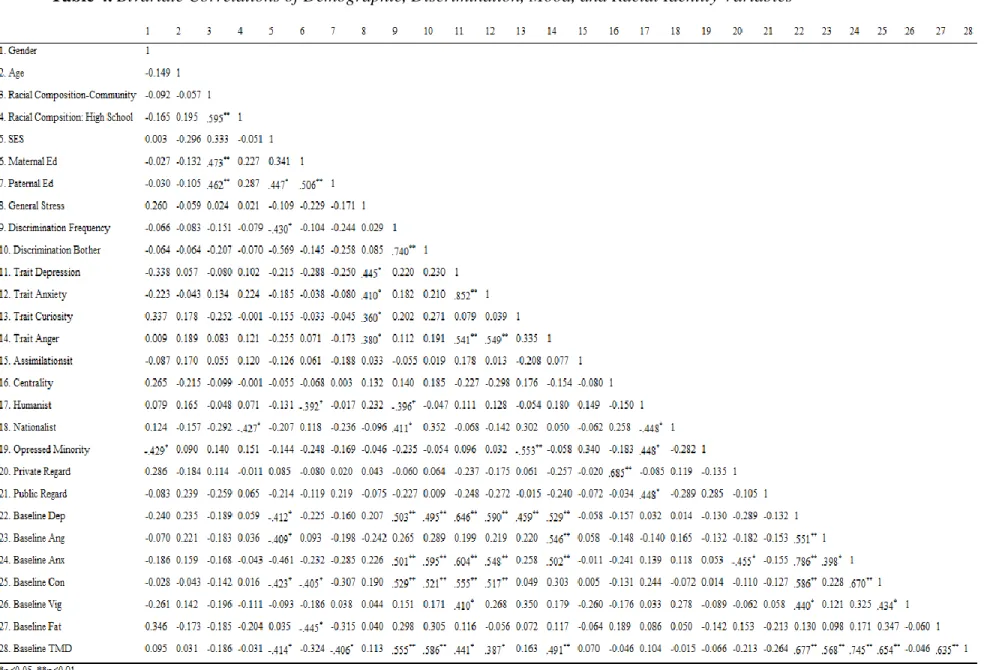
Preliminary analyses focused on descriptive statistics for correlations among the racial identity, prior racism, trait mood, and sociodemographic variables. Participants, on average, endorsed the highest levels of private regard (M = 5.96, SD = .89) and
“once” and “a few times a year” (M = 2.31, SD = .67). On average, these experiences bothered individuals “a little” (M = 2.74, SD = .83). In terms of trait mood, participants most endorsed curiosity (M = 28.03, SD = 5.96), followed by anxiety (M = 21.13, SD = 5.66), anger (M = 18.45, SD = 6.25), and finally depression (M = 17.10, SD = 7.23).
There were also significant bivariate correlations among racial identity, previous racial discrimination, and trait mood variables and between these variables and
sociodemographic variables. For example, humanist ideology was positively correlated with public regard and negatively correlated with nationalist ideology. Trait anger was positively correlated with trait depression and curiosity. Racial discrimination frequency was positively associated with being bothered by discrimination, and nationalist ideology, but negatively correlated with humanist ideology. Bivariate correlations for
socio-demographic correlates, racial identity subscales, and previous racism are summarized in Table 4.
Racial Identity and Emotional Responses to Racial Discrimination
Does priming racial ideology impact emotional responses to a racist event? Does the blatantness or subtlety of a racist event interact with the type of ideology primed to influence Black youths’ emotional responses? To examine these questions, I employed mixed-effects models, examining both the main effect of priming condition, as well as the interactions between discrimination event and priming condition for four of the mood states (i.e., Depression, Anger, Tension, and TMD). In addition, the effects of period (post-prime, post-discrimination, post-distracter) were also included in analyses.
discrimination by prime interaction, F (6, 16.97) = 19.78, p < .001. As depicted in Figure 2, individuals in the humanist condition exhibited increased depressed mood in the blatant condition (M = .98), as compared to decreased depressed mood in the racism-neutral condition (M = -1.41) (p =.005). For individuals in the racism-neutral priming condition, individuals who were also in the blatant discrimination condition endorsed increased depressed mood (M = 11.05), whereas those in the subtle (M = 1.66) and neutral (M = -.86) conditions reported decreased depressed mood (ps both <.001). There were also significant group differences within discrimination condition. Specifically, within the blatant condition, participants in the neutral priming condition experienced greater
depressed mood (relative to baseline; M = 11.05) compared to those in the humanist (M = .98), assimilationist (M = -.75), and nationalist (M = .09) conditions (ps all <.001).
Of note, the prime by period interaction approached significance, F (6, 36.02) = 2.07, p = .08, see Figure 3. Probing this interaction revealed that for each time point (post-prime, post-racism, post-distracter) participants in the neutral priming condition showed more depressed mood than those in the other three conditions (ps all <.001). Additionally, for those in the humanist condition, depressed mood decreased following the priming manipulation (M = -.48) and distracter task (M = -.60) but increased following the discrimination manipulation (M = .23), ps =.04 and .008, respectively.
Anger. The main effect of priming condition and higher order interactions were nonsignificant for anger.
Total Mood Disturbance. The main effect of priming condition was significant (F (3, 17.79) = 3.65, p = .033). Those in the assimilationist condition had decreased total mood disturbance (M = -10.82), compared to increased total mood disturbance in the humanist (M = 2.49) and neutral (M = 4.86) conditions, ps = .012, .009, respectively. There was also a trend for a discrimination by prime interaction, F (6, 17.77) = 2.32, p = .079. Probing this interactive trend revealed that for individuals in the neutral prime, total mood disturbance was increased in the blatant condition (M=30.96), but decreased in the subtle (M = -9.88) and neutral (M = -6.50) discrimination conditions, ps < .005 (See Figure 4). In addition, for individuals in the blatant condition, those receiving the neutral prime showed significantly increased TMD relative to the other three priming conditions (ps = .01 (nationalist), .001 (assimilationist), .05 (humanist)).
Self-Reported and Primed Racial Ideology and Emotional Responses to Racial
Discrimination
My final question was whether Black youths’ self-reported racial ideology would interact with their primed racial ideology to impact their emotional responses to the racial discrimination events. To address this question, I ran mixed-effect models that explored the interaction between racial ideology prime condition categories and participants’ self-reported racial ideology as a predictor of mood reactivity. As with the previous analysis, I also included the interaction of period. While these analyses revealed several significant interactions, follow-up analyses revealed that, due to the sample size, some cells
Discussion
General Discussion
Previous research has underscored the importance of understanding emotional responses to racial discrimination experiences (e.g., Carter & Reynolds, 2011; Jones et al., 1999; Morris-Prather et al, 1999) and how these responses might be related to various aspects of one’s racial identity (e.g., Jones, Lee, Gaskin, & Neblett, in press). The main objectives of my studies were to examine the feasibility of priming individuals using iconic images representative of racial ideologies and to investigate whether priming racial identity could, in turn, influence emotional responses to a vicarious racist event. I
expected that racial ideology icons would prime individuals along a particular ideological frame and differentially impact their emotional responses to a subsequent racially
stressful event. In Study 1, findings provided initial support for the iconic priming
paradigm as appropriate for priming racial ideology. In Study 2, though the findings were mixed, iconic priming influenced African American college students’ emotional
reactivity, particularly around depression and total mood disturbance and in the context of blatant discrimination.
The Feasibility of Iconic Priming for Racial Ideology
Innovative work by Yong-yi Hong and colleagues (1997, 2000) in the
students made predictable internal versus external attributions following exposure to the icons (Hong et al., 2000). These studies suggested that iconic priming might be a useful approach for studying other related cultural constructs, such as racial ideology. How then do the findings from Study 1 relate to and extend the work by Hong and colleagues?
Though I found no significant differences in endorsement of racial ideology items (from the MIBI) at the omnibus level, post-hoc analyses and the overall magnitude of mean values by priming condition could lend support to the feasibility of priming racial identity and the proposition that the images were affecting students’ affective responses. On the one hand, the Multidimensional Model of Racial Identity suggests that the various dimensions of racial identity (racial salience excluded) are stable across situations
more sensitive methods (e.g., an implicit association task). Moreover, even the iconic priming studies that employed direct methods (i.e. questionnaires) had much larger samples than the present study. Finally, it is notable that participants in Study 2 expressed differential emotional patterns, based on their priming condition. This result provides further support for the notion that the iconic priming paradigm was tapping into the relevant constructs. In sum, my study extends Hong’s methodological approach to the study of racial identity in African Americans. Initial findings from the iconic priming paradigm I used suggest that a relatively brief (e.g., 10-12 minute) priming task involving images indicative of racial ideologies is an adequate way to assess the differential impact of these ideologies on psychological outcomes.
The Impact of Racial Identity on Mood
Previous conceptual and empirical work has suggested that various aspects of racial identity can impact psychological and emotional responses to racial discrimination (e.g., Jones et al., in press). Sellers, Morgan, and Brown’s (2001) multidimensional approach to racial identity among African American youth posits different responses to stress as a function of the underlying significance and meaning of race. Findings by Carter, Pieterse, and Smith (2008) and Carter and Reynolds (2011) found that aspects of racial identity were related to anger, depression, confusion, and tension. The results from Study 2 extend these findings by elucidating how a less studied aspect of racial identity (i.e., racial ideology) can also impact emotional responses to discrimination.
were associated with increased depressive mood in instances of blatant racism. For total mood disturbance, only the neutral priming condition showed significantly increased emotionality, again for blatant discrimination. With respect to the humanist prime, the increases in depressed mood are supported by Sellers, Morgan, and Brown’s (2001) assertion that a less-Black central frame might lead individuals to either feel more threatened by, or less prepared to cope with, instances of discrimination. Notably, these findings are among the first to show the potential impact of humanist ideology on
psychological responses to discrimination. The implications of the findings for the neutral priming condition for depressed mood and total mood disturbance are less clear. That those in the non-active priming condition endorsed such high increases in depressed mood than those in the active priming conditions, and that this pattern only emerged for the blatant condition may speak to a protective role of making ideology (or racial identity more generally) salient in advance of such racist experiences. In other words, there may be something about viewing images with race-related content (context notwithstanding) that reduces the experience of depressed mood.
With regard to the neutral prime condition effects, it is unlikely that individuals in the neutral condition were devoid of racial ideological perspectives, as individuals
cognitions about these ideological perspectives, and it is perhaps the lack of activation that explains why those in the neutral condition were less protected emotionally. It is also noteworthy that only individuals in the assimilationist priming condition experienced decreased depressed mood and TMD. Although no statistically significant distinctions arose between assimilationist and the other active prime conditions, the direction of these effects suggests that assimilationist ideology is particularly protective against
experiencing depression and mood disturbance.
Extending Methodological Approaches to the Study of Racial Discrimination
In addition to extending the literature on iconic priming and on racial identity and mood, my studies extend the extant literature in terms of the methods that can be
employed to study racial discrimination and racial identity at the level of the event. As stated earlier, the work uses multidisciplinary methods and also addresses limitations related to both retrospective recall and analogue studies. By creating an actual