THE IMPACT OF DIMENSIONS OF EXPERIENCE ON BEHAVIOR: EXAMINING THE ROLE OF DEPRIVATION AND THREAT IN EARLY CHILDHOOD
Laura Machlin
A thesis submitted to the faculty at the University of North Carolina at Chapel Hill in partial fulfillment of the requirements for the degree of Master of Arts in the Department of Psychology
and Neuroscience in the College of Arts and Sciences (Clinical Psychology).
Chapel Hill 2018
ABSTRACT
Laura Machlin: The Impact of Dimensions of Experience on Behavior: Examining the Role of Deprivation and Threat in Early Childhood
(Under the direction of Margaret Sheridan)
TABLE OF CONTENTS
LIST OF FIGURES ... vi
LIST OF TABLES ... vii
LIST OF ABBREVIATIONS ... viii
Introduction ... 1
Deprivation ... 4
Executive Functioning ... 6
Exposure to Deprivation ... 7
Institutionalization ... 7
Low Socioeconomic Status (SES) ... 9
Threat ... 11
Exposure to Threatening Experiences ... 13
Abuse ... 13
Summary ... 16
Current Study ... 18
Methods... 19
Participants ... 19
Measures ... 20
Deprivation Measures ... 20
Threat Measures ... 21
Inverse Efficiency ... 22
Executive Function Assessments ... 22
Fear Conditioning Data Acquisition and Analyses ... 24
Data Analysis ... 25
Statistical Analyses ... 27
Results ... 29
Sample Characteristics ... 29
Deprivation and Threat Correlations ... 29
Cognitive Control... 30
Working Memory ... 30
Fear Acquisition and Extinction ... 31
Conclusions ... 34
Study Limitations and Future Directions ... 40
Summary ... 41
LIST OF FIGURES
Figure 1. Proposed dimensions of experience: deprivation and threat ... 42
Figure 2. Sample item from the MNBS-CR ... 43
Figure 3. Sample item from the VEX-R ... 44
Figure 4. Cognitive control task ... 45
Figure 5. Working memory task ... 46
Figure 6. First block of fear conditioning task ... 47
Figure 7. Histogram of deprivation dimension of experience ... 48
Figure 8. Histogram of threat dimension of experience ... 49
Figure 9. Partial regression plot of deprivation on cognitive control task performance ... 50
Figure 10. Partial regression plot of threat on fear extinction reaction time ... 51
Figure 11. Number of skin conductance responses to the CS+NR during fear extinction ... 52
LIST OF TABLES
Table 1. Means and standard deviations of sample characteristics. ... 54
Table 2. Correlations between measures of deprivation. ... 55
Table 3. Correlations between measures of threat ... 56
Table 4. Multiple regression analysis of cognitive control task ... 57
Table 5. Multiple regression analysis of working memory task ... 58
Table 6. Multiple regression analysis of fear acquisition behavioral performance ... 59
Table 7. Multiple regression analysis of fear extinction behavioral performance ... 60
Table 8. Repeated measures ANOVA of fear acquisition number of SCRs ... 61
Table 9. Repeated measures ANOVA of fear acquisition mean skin conductance level ... 62
Table 10. Repeated measures ANOVA of fear extinction number of SCRs ... 63
LIST OF ABBREVIATIONS
HPA Hypothalamic-pituitary-adrenal
SES Socioeconomic status
ADHD Attention-deficit/hyperactivity disorder
CS+ Conditioned stimulus
UCS Unconditioned stimulus
vmPFC Ventromedial prefrontal cortex
CS- Conditioned stimulus never paired with an UCS KBIT-2 Kaufman brief intelligence test
MNBS-CR Multidimensional neglectful behavior scale HSQ Home screening questionnaire
HOME Home observation for the measurement of the environment VEX-R Violence exposure scale for children-revised
CTS-2 Conflict tactics scales
CAPI Child abuse potential inventory
CS+R Conditioned stimulus reinforced with the UCS
CS+NR Conditioned stimulus non-reinforced without the UCS CAPI Child abuse potential inventory
ANOVA Analysis of variance
Introduction
Since the influential Adverse Childhood Experiences study, there has been a veritable explosion of research linking early adversity with negative developmental outcomes such as risk for psychopathology (Felitti et al., 1998). Early adversity is defined as “experiences that are likely to require significant adaptation by an average child and that represent a deviation from the expectable environment” (McLaughlin, 2016). There is considerable evidence that early adversity is very common, impacting an estimated 50% of the US population across multiple epidemiological samples (Green et al., 2010; McLaughlin et al., 2012; McLaughlin, 2016). Early adversity in childhood is associated with a number of adverse health outcomes, including
increased risk for psychopathology, heart disease, cancer, lung disease, liver disease, obesity, and self-rated health overall (Anda et al., 2005a; Felitti et al., 1998). Additionally, adverse childhood experiences show a dose-dependent relationship in which the number of adverse experiences relates to prevalence of and risk for the number of negative health outcomes (Anda et al., 2005a). In addition to risk for physical health, early adversity has a similar dose-dependent association with increased risk for psychopathology (Green et al., 2010).
substance use disorders, and disruptive behavior disorders with similar strengths of association across psychological disorders (Green et al., 2010; Kessler et al., 2010; McLaughlin et al., 2012). In fact, experiences of early adversity may influence specific risk for psychological disorders through shared vulnerability to externalizing and internalizing symptoms (Keyes et al., 2012).
Prior work proposes that negative developmental outcomes and heightened risk for psychopathology associated with early adversity are the result of exposure to stress (Anda et al., 2005; Nurius, Green, Logan-Greene, & Borja, 2015). Within a stress accumulation model, early adversity is proposed to have additive effects on stress across the lifespan, which results in increased risk of psychopathology (Hostinar & Gunnar, 2013; Hostinar, Lachman, Mroczek, Seeman, & Miller, 2015). Maladaptive stress response to early adversity, or toxic stress, is defined as a strong, frequent, or prolonged activation of the body’s stress responses system in the absence of buffering protection of a supporting, adult relationship (Shonkoff et al., 2012). The most widely studied biological mechanism for how early adversity impacts psychopathology is through alterations to the hypothalamic-pituitary-adrenal (HPA) axis, which produces cortisol in the context of stress (Cicchetti & Rogosch, 2001; Gunnar & Vazquez, 2001). Cortisol is a steroid hormone that binds with low affinity to glucocorticoid receptors throughout the brain and with high affinity to mineralocorticoid receptors in the amygdala and the hippocampus (Frodl & O’Keane, 2013; ter Heegde, De Rijk, & Vinkers, 2015). Once the system has been activated due to the experience of a stressor, negative feedback loops are triggered in multiple brain regions, including the hippocampus, to downregulate HPA axis activity.
To account for evidence of changes to the HPA axis from early adversity, multiple models have theorized pathways through which chronic stress from experiences of early
concept of allostatic load has provided a neurobiological model for the effect of stress on the brain and the body (McEwen, 1998; McEwen, 2000). Within this model, when an acute stressor occurs, HPA activation constitutes an adaptive response. However, chronic stressors can
fundamentally alter HPA activation in ways that contribute to negative outcomes. HPA axis dysregulation from adverse childhood experiences results in “wear and tear” on the body from increased allostatic load (Juster, McEwen, & Lupien, 2010). When the HPA axis is chronically overactive, the theory postulates that a ‘domino effect’ will occur diminishing the individual’s ability to cognitively and physiologically respond to stress in the future (Juster et al., 2010). Other models, such as the adaptive calibration model and the biological sensitivity to context model similarly focus on HPA axis as the primary mechanism through which experience influences the brain and behavior (Boyce & Ellis, 2005; Giudice, Ellis, & Shirtcliff, 2011; Hostinar & Gunnar, 2013).
Given that experiences of early adversity broadly increase risk for psychopathology, it is vital to better understand how to differentiate those at risk for specific outcomes among children who have experienced early adversity. More specific neurobiological mechanisms tied to
experience may be able to provide the link between early adverse experiences and risk for specific outcomes. Recently, a new theory has extended the framework for understanding the relationship between early adversity and later negative outcomes by distinguishing between different types of experiences.
Sheridan and McLaughlin have outlined a specific theoretical model differentiating between deprivation (the absence of expected cognitive and social learning experiences) and threat (the presence of atypical traumatic learning experiences) as differentially impacting brain structure and function (McLaughlin & Sheridan, 2016; McLaughlin, Sheridan, & Lambert, 2014; Sheridan & McLaughlin, 2014, 2016). Within the model, alterations to neurobiological processes based on dimensions of experience underlie differences in psychopathology. Deprivation and threat are theorized dimensions of experience that vary in frequency and severity (see Figure 1). Deprivation can be conceptualized as the result of low levels of parental interaction, reduced childhood exposure to complex language, or fewer opportunities for cognitive exploration or stimulation. Threat can be conceptualized as experiences including physical or sexual abuse, exposure to domestic violence, and direct exposure to community violence. I review current evidence for both dimensions of experience here.
Deprivation
emotional neglect. Additionally, children who are raised in families with low socioeconomic status (SES) are at higher risk for the absence of expected inputs, including less exposure to language and cognitive stimulation in the home (Bradley & Corwyn, 2002; Hart & Risley, 1995). In this case, low socioeconomic status serves as a marker of risk for experiences of deprivation.
Substantial work from animal models has established a framework for how deprivation may shape neural structure and function. Rodents placed in deprived environments show decreases in brain volume, synapses and dendritic branching (Diamond, Rosenzweig, Bennett, Lindner, & Lyon, 1972; Würbel, 2001).Rodents with less cognitive stimulation in their environment show decreased cortical weight and cortical thickness (Diamond et al., 1972; Uylings, Kuypers, Diamond, & Veltman, 1978) These effects are partially reversible through exposure to cognitively stimulating environments following the period of deprivation (Diamond et al., 1972).
prefrontal cortex, superior and inferior parietal cortex and superior temporal cortex have more prolonged developmental trajectories compared to primary sensory cortex (Gogtay et al., 2004; Huttenlocher, 1979). Therefore, experiences such as deprivation may have a greater impact on brain regions with longer developmental trajectories, such as association cortex, through the process of synaptic pruning.
Based on prior research on deprivation, children with lower levels of expected cognitive and social input would be predicted to have reductions in cortical thickness and surface area. Due to more extended developmental trajectories, children may show greater reductions in association cortex due to experience-dependent synaptic pruning which would continue to occur across a longer period of development. These differences in brain structure and function would be predicted to result in lower performance on executive functioning tasks. Below I review initial neural and behavioral evidence from children who have experienced institutionalization and poverty that supports these hypotheses.
Executive Functioning
Exposure to Deprivation
Exposure to deprivation includes experiences such as institutionalization and neglect. Additionally, children who live in poverty are at increased risk for exposure to deprivation. Currently, 12.7% of the United States population lives below the poverty line (Bureau, n.d.). The poverty rate for children is even higher, with 18% of children living below the poverty line (Bureau, n.d.). Overall prevalence estimates indicate that 16% of children have experienced physical neglect while 18% of children have experienced emotional neglect worldwide (Stoltenborgh, Bakermans-Kranenburg, & Ijzendoorn, 2013). Worldwide, it is estimated that between 2 million and 8 million children are institutionalized (Dozier, Zeanah, Wallin, &
Shauffer, 2012). To date, exposure to deprivation continues to impact young children both inside the United States and worldwide.
Institutionalization
These differences in behavior may be a result of changes in brain structure and function as a result of synaptic pruning. Consistent with this possibility, institutionalized children have decreased total grey matter volume and reductions in prefrontal, parietal and temporal cortical thickness (McLaughlin, Sheridan, Winter, et al., 2014; Sheridan, Fox, Zeanah, McLaughlin, & Nelson, 2012). There is mixed evidence for how institutionalization shapes brain structure in subcortical regions, such as the amygdala. While some research has indicated smaller amygdala volumes in institutionalized children (Hanson et al., 2015), others have demonstrated larger amygdala volumes in institutionalized samples (Mehta et al., 2009; Tottenham et al., 2010). There is evidence for differences in structural connectivity as well in institutionalized children, including reduced fractional anisotropy in the uncinated fasciculus, corona radiata, cingulum and interior longitudinal fasciculus (Bick et al., 2015; Eluvathingal, 2006; Hanson et al., 2013;
Kumar et al., 2014). Thus, there is substantial evidence of alterations to brain structure associated with institutionalization.
As a model to understand early experiences of deprivation, institutionalized samples provide a unique opportunity to explore differences in brain structure associated with changes in behavior. For example, Kreppner and colleagues have proposed that inattention and overactivity may represent a deprivation-specific syndrome (Kreppner, O’Connor, Rutter, & Team, n.d.). Overall, research on institutionalized children suggests that deprivation results in cognitive difficulties and executive function deficits. However, institutionalization is a profound
Low Socioeconomic Status (SES)
Low socioeconomic status is a risk factor associated with higher experiences of deprivation and higher experiences of threat. Socioeconomic status is typically comprised of parental education, parental occupation, and family income (Bradley & Corwyn, 2002). Children with low socioeconomic status on average have less access to the same resources and
experiences as other children. Children from low-income families are read to less frequently and have less access to a wide variety of important resources for cognitive development, such as books in their home, computers, or the ability to visit libraries or museums (Bradley, Corwyn, McAdoo, & García Coll, 2001; Evans, 2004). Children of low-income families receive less language input compared to their same-age peers (Hart & Risley, 1995). Overall, there is evidence that despite wide variability among children and families, children growing up in poverty have fewer cognitive opportunities compared to children of families with higher family income (Duncan & Brooks-Gunn, 1999).
that the effects of poverty disproportionately impact language and executive functioning systems in comparison to other neurocognitive systems (Hackman & Farah, 2009). Children growing up in poverty and children who have experienced institutionalization show deficits on similar complex cognitive tasks, although institutionalization is associated with more profound behavioral differences. This body of research provides initial support that these behavioral deficits may be related to deprivation as a dimension of experience.
There is evidence that the underlying mechanism through which poverty impacts behavior is through alterations in prefrontal cortex structure and function. Children who are raised in families with low SES show reductions in cortical thickness and surface area in the prefrontal cortex (Jednoróg et al., 2012; Lawson, Duda, Avants, Wu, & Farah, 2013; Noble et al., 2015). These differences in cortical thickness have been associated with achievement test
in behavioral deficits and alterations to brain structure and function suggesting commonalities in how these experiences “get under the skin” to influence children’s functioning.
Threat
Within the deprivation and threat model, threatening experiences are conceptualized as exposure to traumatic violence where one believes that oneself or a close other is in danger of being hurt badly or killed. Experiences on the threat dimension also differ in terms of severity, and include physical or sexual abuse, exposure to domestic violence or direct exposure to
community violence. Prior research has often categorized these experiences within maltreatment. However, experiences of neglect would not fit within the threat dimension of experience because neglect does not include exposure to traumatic violence.
The deprivation and threat theory postulates that threatening experiences alter the neural circuitry underlying fear learning. Fear is an emotion caused by the belief that an environment is dangerous or threatening to the individual (Steimer, 2002). Fear learning occurs when an animal or human learns to associate a stimulus with threat, allowing for quick or defensive responses to threatening stimuli. Substantial work using animal models has explored how threatening
experiences alter fear learning and shape brain structure and function. Below, I review fear learning paradigms and the evidence that early exposure to threat alters emotional functioning in animals and humans.
Fear Learning
or threatening unconditioned stimulus (UCS), such as an electric shock. After repeated pairings, as association is formed in which the CS+ elicits the behavioral and neurobiological responses associated with the UCS, which constitutes fear acquisition. Then, the CS is often paired with the absence of the UCS. Fear extinction occurs when the association between the CS and the absence of the UCS is learned by the subject (Phelps & LeDoux, 2005).
Animal research with rodents has identified that the amygdala plays a critical role in fear acquisition (Sevelinges et al., 2007; Thompson, Sullivan, & Wilson, 2008). The amygdala is essential to fear acquisition and the expression of the fear response following conditioning (Phelps & LeDoux, 2005). Lesion studies provide additional information about fear acquisition in humans. Patients with lesions to the amygdala do not show signs of fear acquisition, such as physiological responses of fear (Bechara, Tranel, Damasio, & Adolphs, 1995; LaBar, LeDoux, Spencer, & Phelps, 1995). Based on this body of work, the amygdala is required for fear acquisition and physiological responses to fear.
Animal research has demonstrated that threatening experiences alter the structure and function of the amygdala. Threatening experiences in childhood in rats leads to changes in amygdala structure and function, including increased dendritic spines in the amygdala and
associated anxiety and depression behaviors (Eiland, Ramroop, Hill, Manley, & McEwen, 2012). Based on animal research on experiences of threat, children who have experienced violence would be predicted to have alterations to amygdala function during fear acquisition, alterations to vmPFC function during fear extinction, and increased symptoms of psychopathology. During a fear acquisition and extinction paradigm, children with threatening experiences would be
predicted to have differences in physiological reactivity to fear acquisition and extinction. Below I review initial evidence linking behavior and neural activity in individuals who have a history of exposure to threat that supports these hypotheses.
Exposure to Threatening Experiences
In population-based samples, 4-8% of individuals report experiencing physical abuse, 6% of individuals report sexual abuse and 8% of individuals report violence within their family (Green et al., 2010; McLaughlin et al., 2012). Physical abuse, sexual and family violence are all associated with mood disorders, anxiety disorders, substance use, and disruptive behavior (Green et al., 2010; McLaughlin et al., 2012). Overall, these experiences statistically account for 7-8% of all psychological disorders (McLaughlin et al., 2012).
Abuse
2016). Additionally, there is evidence of specific reductions in volume in the orbitofrontal cortex (De Brito et al., 2013; Hanson et al., 2010), dorsolateral prefrontal cortex (Edmiston et al., 2011; Hanson et al., 2010), and ventromedial prefrontal cortex (Busso, 2016) associated with abuse. These reductions in volume may be driven by reductions in cortical thickness, with evidence of reduced thickness in the ventromedial prefrontal cortex associated with abuse (Gold et al., 2016). Abuse is associated with alterations to subcortical regions as well, including reduced amygdala and hippocampus volume (Hanson et al., 2015). Cumulatively, there is evidence that exposure to threat influences prefrontal brain structure and brain regions associated with fear acquisition and extinction processes.
Exposure to threatening experiences is associated with changes to behavior related to processing of emotion, and in particular threatening stimuli. Children with threatening experiences show heightened abilities to detect anger in facial expressions (Pollak & Kistler, 2002). After exposure to threat, children allocate more attention to angry faces, which mediates the relationship between physical abuse and negative affect (Gibb, Schofield, & Coles, 2008; McCrory, De Brito, & Viding, 2010; Shackman & Pollak, 2014; Shackman, Shackman, & Pollak, 2007). There is some evidence that children with threatening experiences are more attentive to fearful faces as well (Masten et al., 2008). Threatening experiences appear to alter sensitivity to threat-related information in the environment.
The mechanism through which exposure to threat may influence sensitivity to emotional information is through heightened amygdala activation following threatening stimuli. Exposure to threatening experiences in childhood is associated with heighted amygdala reactivity to threat-related emotional stimuli when stimuli are presented consciously and subconsciously
show increased amygdala reactivity in response to angry faces (McCrory et al., 2011). One quantitative meta-analysis has identified that maltreatment is associated with increased bilateral amygdala activation to emotional faces (Hein & Monk, 2016). While there is extensive research on differences in neural activation to emotional or threatening faces, there is little research investigating the neurobiological correlates of fear acquisition and extinction in children exposed to threat. Initial evidence suggests that threatening experiences alter responses to emotion stimuli and alter brain structure associated with fear acquisition and extinction. However, it is vital to identify if fear learning processes account for some of these differences in brain structure and behavior. By understanding the mechanisms through which children exposed to threat have alterations in brain structure and emotional learning identify and predict difficulties for children who have experienced threat, particularly in emotional contexts.
To date, there has been one study by McLaughlin and colleagues directly examining behavioral and physiological differences in fear conditioning and extinction associated with threat (McLaughlin et al., 2016). Children without maltreatment exposure showed physiological differences to the conditioned stimulus (CS+) compared to a control conditioned stimulus never paired with a UCS (CS-) during early conditioning. Maltreated children did not show
Summary
The literature reviewed provides support that depriving experiences result in lower performance on executive functioning and complex cognitive tasks. Separately, prior research supports the hypothesis that threatening experiences result in altered processing of threat-related stimuli and impaired fear learning during fear acquisition. In order to be able to differentiate between behavioral changes associated with deprivation and behavioral changes associated with threat, both dimensions of experience must be examined simultaneously. Sheridan, McLaughlin and colleagues have begun to examine depriving experiences and threatening experiences together to differentiate between associations with deprivation and associations with threat. Initial research has suggested that threat is associated with physiological reactivity in adolescence controlling for experiences of deprivation (Busso, 2016). When investigating deprivation and threat in the same model, threat was associated with automatic emotion
regulation deficits in adolescence, while deprivation was associated with worse cognitive control (Lambert, King, Monahan, & McLaughlin, 2017). Finally, deprivation in adolescence has been associated with worse executive functioning when controlling for threatening experiences (Sheridan, Peverill, Finn, & McLaughlin, 2017). Overall, evidence has been accumulating supporting the deprivation and threat model with distinct dimensions of experience predicting behavior in adolescence. However, no studies have examined the impact of experiences of deprivation and threat on behavior in early childhood.
changes in brain structure and function alter behavior. The deprivation and threat model predicts alterations in executive functioning and fear learning. Most research on executive functioning has focused on early childhood rather than adolescence (Best & Miller, 2010), which is likely because executive functioning shows rapid improvements across early childhood (Anderson, 2002; Davidson, Amso, Anderson, & Diamond, 2006). Across childhood, children also make significant gains in fear learning paradigms as well, in which older children show greater evidence of fear learning in fear conditioning and extinction paradigms (Glenn et al., 2011). Investigating the effects of deprivation and threat in early childhood has the potential to shed light on how dimensions of experience impact the development of executive functioning and fear learning as these abilities are beginning to emerge.
Additionally, by understanding the mechanisms of how dimensions of experience
influence behavior in early childhood, it may be possible to intervene early to assist children who are likely to have impairments in executive functioning or fear learning. Educational
interventions in early childhood have resulted in long-term gains in cognitive control, one component of executive functioning (Campbell, Pungello, Miller-Johnson, Burchinal, & Ramey, 2001). A diverse range of activities have been shown to improve children’s executive
Current Study
Methods
Participants
64 children ages 4-7 years old and a parent or legal guardian were recruited from Durham and Chapel Hill metropolitan area. Participants were recruited using listserv announcements, flyers, craigslist ads, and databases for participants. Parents provided written consent in
accordance with the University of North Carolina Institutional Review Board. Children provided verbal assent if between the ages of four and six years old. Children provided written assent if seven years old. Exclusion criteria for participants included: (1) major medical conditions (e.g., HIV, cancer), (2) neurological illness (e.g., seizure disorders, migraines, multiple sclerosis), (3) factors limiting participant’s ability to complete proposed research (e.g., English fluency), and (4) diagnostic history of psychosis, a pervasive developmental disorder (e.g., autism). Children were not excluded for other diagnoses of psychopathology or psychological symptoms. Of these participants, one participant was excluded for inability to complete any behavioral tasks. Thus, the final sample included 63 children.
Procedure
The present study was completed in one visit to the UNC campus at Howell Hall that lasted approximately three hours. Following informed consent procedures, parents of children in the study completed questionnaires assessing deprivation, threat, and symptoms of
memory, cognitive control, and a fear conditioning acquisition and extinction paradigm. During the fear conditioning paradigm, skin conductance, behavioral measures, and self-report measures were collected.
Measures
IQ. IQ was assessed through the Kaufman Brief Intelligence Test (KBIT-2) which is a brief IQ measure composed of verbal and nonverbal cognitive abilities for individuals 4 to 90 years old. The verbal scale is composed of Verbal Knowledge and Riddles subtests. The
nonverbal scale is composed of a Matrices subtest. The reliability of the composite IQ score from the KBIT is 0.93 in a normative sample (Bain & Jaspers, 2010).
Deprivation measures
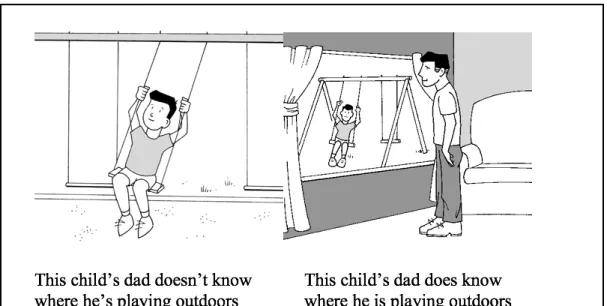
Neglect. Neglect was assessed through theMultidimensional Neglectful Behavior Scale (MNBS-CR), a child interview measure (Kantor et al., 2004). The MNBS-CR is an interview for young children to assess neglect using cartoon-based items tailored to the participant’s gender and the gender of their primary caregiver (Figure 2). The reliability of the neglect items ranges from 0.66 to 0.94 depending on the sample (Kantor et al., 2004). The present study assessed neglect using the emotional neglect, cognitive neglect, physical neglect, supervisory neglect, and abandonment items (44 items total).
Cognitive Stimulation. The level of age-appropriate scaffolded learning opportunities provided to the child was assessed using the Home Screening Questionnaire (HSQ)
(Frankenburg & Coons, 1986). The home screening questionnaire is a parent-report measure based on the Home Observation for the Measurement of the Environment (HOME), an
the same children in need of support 86% of the time, suggesting that the HSQ may be used if home observation is not possible. The HSQ has good test-retest reliability in children above three years old (0.86) (Frankenburg & Coons, 1986). The current study utilized the sum of the HSQ with five items removed that assessed spanking and parental decision-making in the household, which were not conceptualized as a part of cognitive stimulation (56 items in original scale, 51 items utilized).
Parental Education. Parental education was assessed using the Macarthur Scale of Subjective Social Status (Adler & Stewart, 2007). Parental education was measured as the average of educational attainment for both primary caregivers of the child. If there was one primary caregiver, then the parental education of the one primary caregiver was utilized. Possible responses ranged from “Less than high school diploma” to “Professional degree”.
Threat Measures
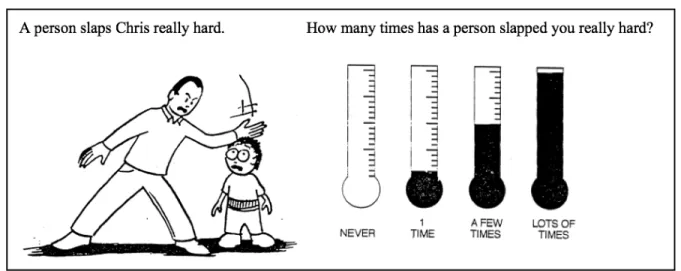
Violence Exposure. Exposure to violence was assessed using the Violence Exposure Scale for Children-Revised (VEX-R), a child interview measure (Fox & Leavitt, 1995). The VEX-R is a 21-item, cartoon-based interview used to assess young children's exposure to abuse, domestic violence and community violence (Figure 3). Responses are measured on a 4-point Likert scale. VEX-R has good internal consistency ranging from 0.80 to 0.86 (Kolko et al., 2010; Shahinfar, Fox, & Leavitt, 2000). The current study utilized the sum of the total items in which children reported on exposure to violence perpetrated by a teenager or an adult.
items). All subscales have good internal consistency (0.79 – 0.95) (Straus et al., 1996). The total sum of the physical assault, psychological aggression, injury, and sexual coercion subscales was used in the present study.
Physical Abuse. The likelihood of physical abuse was assessed using the Child Abuse Potential Inventory (CAPI), a parent-report measure (Milner, Charlesworth, Gold, Gold, & Friesen, 1988). The CAPI is a 160 item scale which screens for parental attitudes which indicate high risk for present or future physical abuse. Internal consistency with different populations ranges from 0.84 to 0.94 (Milner et al., 1988).
Inverse Efficiency
Behavioral task performance on the cognitive control and working memory tasks was assessed through inverse efficiency on the tasks. Inverse efficiency is a measure of behavioral performance that is commonly used on tasks that demonstrate a speed-accuracy tradeoff because the measure incorporates both speed and accuracy into one assessment of performance. Inverse efficiency can be calculated by dividing mean reaction time of correct responses by the
proportion of correct responses (Bruyer & Brysbaert, 2011).
Executive Function Assessments
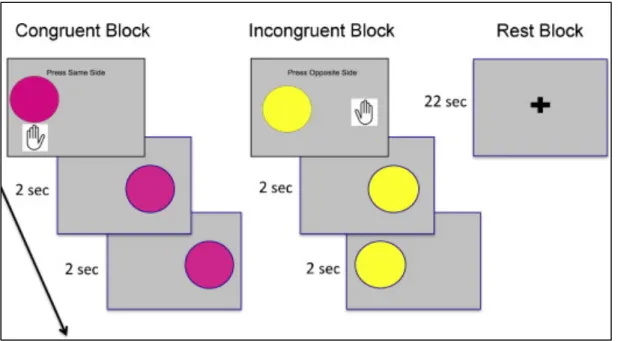
Cognitive Control. The Simon task assessing cognitive control is adapted from a prior cognitive control task for children (Kharitonova, Martin, Gabrieli, & Sheridan, 2013). In this task (Figure 4), children press a button on the same side of a screen if the stimulus is one color
Cognitive control task performance is measured by inverse efficiency for incongruent trial blocks compared to inverse efficiency for congruent trial blocks.
Working Memory. The task assessing working memory is adapted from (Kharitonova, Winter, & Sheridan, 2015). In this task (Figure 5), children are shown a cue for 500 milliseconds (ms) to indicate the start of the trial. Then, they are shown a visual array of one or two circles within a 3 × 4 grid for 750 ms (encoding period). In the low-load condition, the child sees one circle on the screen. In the high-load condition, children see two circles to encode on the screen. Children hold this array in working memory for 1700 ms and then make a judgment about whether the color of a single shape is different or the same as the encoding phrase (probe). The probe is presented for 2000 ms. On 50% of trials, the color of the shape remained the same (match trials), while on the remaining 50% of trials, the color of the probe changed (nonmatch trials). Location of the probe stayed constant across the encoding and probe periods. This task has been successfully completed previously in young children (Kharitonova, Winter, & Sheridan, 2015). Working memory performance is operationally defined as inverse efficiency on the high-load trials of the working memory task compared to low-high-load trials.
Cognitive control and working memory task performance data acquisition and
performance. Participants were considered outliers if their task performance exceeded two standard deviations from the group means. In the cognitive control task, two children were excluded due to outliers for a final sample of 58 children.
For the working memory task, six children were unable to complete the task due to difficulty for a total of 57 children that completed the task. Participants were excluded from the working memory task if they performed below chance on a low load condition of the working memory task (below 50% accuracy). Using the exclusion criteria, five children were excluded from the working memory analyses for a sample of 52 children. Additionally, participants were considered outliers if their task performance exceeded two standard deviations from the group means. In the working memory task, three children were excluded due to outliers for a final sample of 49 children in working memory analyses.
Fear Conditioning Data Acquisition and Analyses
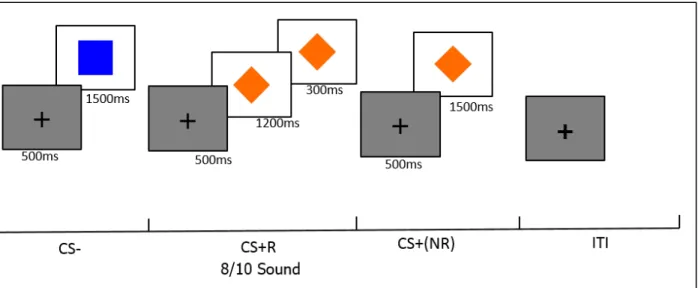
The present study uses a block design fear conditioning and extinction paradigm for young children. In the task, children will view two shapes (e.g.: blue square and orange
4 blocks of the CS-. Then, children will report memory of which shape was associated with the sound. On 2/10 of the trials in all blocks, children will press to a probe to measure attention during the task.
Behavioral performance data for fear acquisition and extinction paradigm was collected using E-Prime Version 2.0. Skin conductance response data was collected using Mindware. Descriptive statistics were calculated for all study variables. For behavioral performance data, two children did not consent or were unable to complete the task for a total sample of 61 children. Due to technical problems, data from four children was not obtained or was unusable. Six children aborted the task during fear acquisition or fear extinction for a total of 51 children with complete behavioral data.
For skin conductance data, the ten participants excluded from behavioral data were also excluded from skin conductance analyses. Three additional children were excluded due to unusable skin conductance data due to technical problems. Three children did not provide consent to collect skin conductance data. Thus, 45 children were included in skin conductance analyses with complete data.
Data Analysis
The primary aims of the study are as follows: (Aim 1) the deprivation dimension of experience will predict performance on executive functioning tasks controlling for threatening experiences and (Aim 2) the threat dimension of experience will predict poor fear learning controlling for depriving experiences. Aim 1 was tested separately for two dimensions of executive function: cognitive control and working memory.
and fear extinction. Physiological arousal is measured by number of skin conductance responses and the mean skin conductance level during acquisition and extinction for each trial block (CS+R, CS+NR, and CS-).
Deprivation Measure. The deprivation dimension of experience score was derived from the sum of parent measures (parental education, HSQ) and child measures (MNBS-CR)
assessing deprivation. First, the data from the HSQ and parental education was transformed. The total score for each child was subtracted from the maximum score possible on each measure so that for all measures, higher totals on the measure indicated a higher level of deprivation. Then, for each measure, each score was converted into a z-score compared to participants within the sample. The sum of the z-scores on each measure comprises the overall score on the deprivation dimension of experience. The deprivation variable was tested for violations of normality using the Shapiro-Wilks test indicating that the data were statistically normal (p > .05). Deprivation was also indicated to be normally distributed with a skewness of 0.4 (SE = 0.3) and kurtosis of 0.1 (SE = 0.6) (Figure 7).
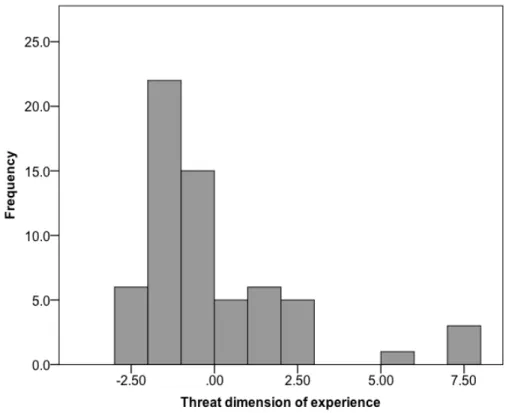
Threat Measure. The threat dimension of experience score was comprised of a score derived from the sum of parent and child measures assessing threat: the VEX-R, the CTS-2, and the CAPI. For each measure included, the relevant score was converted into a z-score. The sum of the z-scores on each measure comprises the overall score on the threat dimension of
outliers with high values of threat relative to rest of the sample (Figure 8). Due to theoretical interest in children with high threat scores, these individuals were retained in analyses.
Statistical Analyses
Multiple linear regression models were used to predict task performance on executive functioning tasks. For the analysis of cognitive control task performance, the dependent variable was inverse efficiency on incongruent trials. Higher levels of inverse efficiency indicate slower reaction time and/or lower accuracy. Predictors included inverse efficiency on congruent trials, age, gender, IQ, the threat dimension of experience, and the deprivation dimension of
experience. For the analysis of working memory task performance, the dependent variable was inverse efficiency on high-load trials. Predictors included inverse efficiency on low-load trials, age, gender, IQ, the threat dimension of experience, and the deprivation dimension of
experience.
During the fear acquisition and extinction paradigm, questionnaire data, reaction time data and skin conductance data were collected. Descriptive statistics (i.e., mean and standard deviations) were analyzed for questionnaire variables. Descriptive statistics were analyzed for behavioral variables. Paired t-tests were used to analyze main effects of reaction time. Multiple linear regression models were used to predict reaction time separately during fear acquisition and fear extinction. In the fear acquisition model, the dependent variable was reaction time to the CS+NR during fear acquisition. Predictors included reaction time to the CS- during acquisition, age, gender, IQ, the threat dimension of experience, and the deprivation dimension of
Repeated-measures analysis of variance (ANOVA) models were used to predict skin conductance response during the fear acquisition and extinction paradigm. Physiological data was collected using Mindware. Skin conductance is measured through two electrodes attached to the palm of the non-dominant hand. Data are sampled at 1000 Hz. Data are filtered and smoothed using Mindware. All data was manually examined and edited for each participant. Using
Mindware data analysis software, the number of skin conductance responses and the mean skin conductance level was collected for each trial type (CS+R, CS+NR, and CS-) across acquisition and extinction blocks.
Results
Sample Characteristics
In the sample, children ranged from four to seven years of age. The IQ of the sample represented a normal distribution of IQ with a mean of 99.6 and standard deviation of 15. The dimensional measures of deprivation and threat were constructed with a mean score of 0 from the sum of the z-scores of relevant measures. 36 children identified as female (56.3%) and 27 children identified as male (42.2%). Sample characteristics are presented in Table 1. Age, gender, and IQ were used as covariates in all analyses.
Deprivation and Threat Correlations
Correlations between measures of deprivation are presented in Table 2. Parental
Cognitive Control
Main Effects. Children responded with 84.2% accuracy on the task with 86.6% accuracy on congruent trials and 81.5% accuracy on incongruent trials. Children were more accurate on congruent trials than incongruent trials (t = 3.75, p < .001). Children completed trials overall in 721 ms on average with a mean of 697 ms to complete a congruent trial and a mean of 745 ms to complete an incongruent trial. Children were faster to complete congruent trials than incongruent trials (t = -4.79, p < .001). Children also performed significantly better on congruent trials than incongruent trials using the inverse efficiency measure (t = -6.35, p < .001).
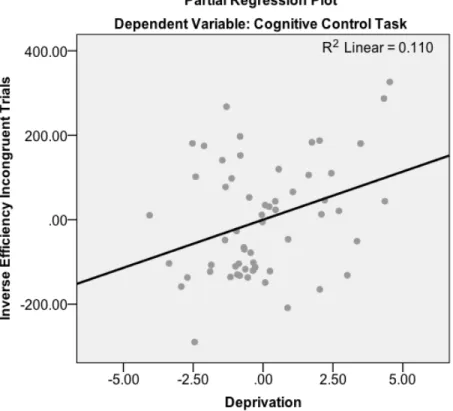
Associations with Experience. A multiple regression model significantly predicted inverse efficiency of incongruent trials during the cognitive control task F(6, 51) = 53.59, p < .001, adj. R2 = .85 (Table 4). As predicted, deprivation significantly predicted inverse efficiency
of incongruent trials when controlling for inverse efficiency of congruent trials, age, gender, IQ, and threatening experiences (b = 0.14, p < .05, Figure 9. Children with higher levels of depriving
experiences exhibited worse task performance on incongruent trials of the cognitive control task controlling for congruent trial performance, age, gender, IQ, and threatening experiences. Threatening experiences did not significantly predict cognitive control task performance. Age was significantly associated with task performance: older children performed better on
incongruent trials with the above covariates (b = -0.19, p < .05). Gender did not have a
significant effect on task performance. Higher IQ was associated with improved task performance on incongruent trials controlling for covariates (b = -0.12, p < .05).
Working Memory
low-load trials than high-low-load trials (t = 6.18, p < .001). Children completed trials overall in 1,399 ms on average with a mean of 1,355 to complete a low-load trial and a mean of 1,444 ms to
complete a high-load trial. Children were significantly faster to complete low-load trials than high-load trials (t = -5.92, p < .001). Children also performed significantly better on low-load trials than high-load trials using the inverse efficiency measure (t = -5.53, p < .001).
Associations with Experience. A multiple regression model significantly predicted inverse efficiency of high-load trials during the working memory task F(6, 42) = 27.91 p < .001, adj. R2 = .77 (Table 5). Deprivation was not significantly associated with inverse efficiency of
high-load trials when controlling for inverse efficiency of low-load trials, age, gender, IQ, and threatening experiences (b = -0.09, p = ns). Threatening experiences did not significantly predict
working memory task performance. Age was not significantly associated with working memory task performance. Gender did not have a significant effect on task performance. IQ was not associated with working memory task performance.
Fear Acquisition and Extinction
Descriptive Statistics. Following fear acquisition, 87% of children were able to
Fear Acquisition Reaction Time. A multiple regression model significantly predicted reaction time during fear acquisition F(6, 44) = 7.60 p < .001, adj. R2 = .44 (Table 6). Threat was
not significantly associated with reaction time to the CS+NR when controlling for reaction time to the CS-, age, gender, IQ, and depriving experiences (b = 0.01, p = ns). Depriving experiences
did not significantly predict reaction time during fear acquisition. Age was significantly associated with reaction time to the CS+NR during fear acquisition. Older children exhibited faster reaction time to the CS+NR when controlling for the CS-, gender, IQ, threatening experiences, and depriving experiences. Gender was not significantly associated with reaction time to the CS+NR during fear acquisition. IQ was not associated with reaction time to the CS+NR during fear acquisition.
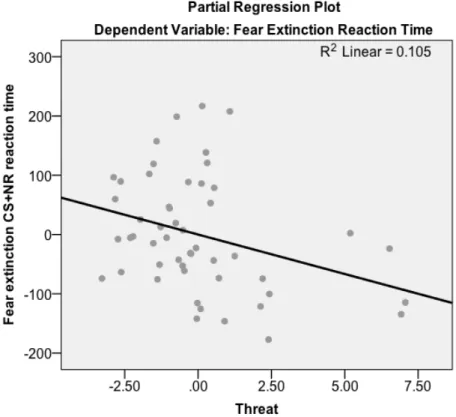
Fear Extinction Reaction Time. A multiple regression model significantly predicted reaction time during fear extinction F(6, 44) = 8.63 p < .001, adj. R2 = .48 (Table 7). Threat was
significantly associated with reaction time to the CS+NR during extinction when controlling for reaction time to the CS- during extinction, age, gender, IQ, and depriving experiences (b = -0.24,
p < .05) (Figure 10). Children with higher levels of threatening experiences were faster to
respond to the CS+NR controlling for the reaction time to the CS-, age, gender, IQ, and depriving experiences. Depriving experiences did not significantly predict reaction time to the CS+NR during fear extinction. Age, gender, and IQ were not significantly associated with reaction time to the CS+NR during fear extinction.
Fear Acquisition Skin Conductance. A repeated measures ANOVA was run to determine the impact of the threat dimension of experience on the total number of skin
observed. There was a significant main effect of age (F(1, 39) = 4.5, p < .05). Older children exhibited fewer skin conductance responses.
A repeated measures ANOVA was run to determine the impact of the threat dimension of experience on the mean skin conductance level during fear acquisition over time (four blocks of acquisition) and CS type (CS-, CS+NR) (Table 9). Again, in this model there were no significant interactions between time, CS type, and Threat. There was a significant main effect of age (F(1, 39) = 7.92, p < .05). Older children exhibited lower mean skin conductance levels.
Fear Extinction Skin Conductance. A repeated measures ANOVA was run to determine the impact of the threat dimension of experience on the total number of skin
conductance responses during fear extinction over time (four blocks) and CS type (CS-, CS+NR) (Table 10). There was a statistically significant interaction of Time x CS Type x Threat (F(3, 117) = 4.13, p < .01) (Figure 11, Figure 12). Earlier in extinction, threat predicted number of skin conductance responses to the CS+NR controlling for age, gender, IQ, and number of responses to the CS-. There was a significant main effect of gender (F(1, 39) = 2.1, p < .05). Female children exhibited fewer skin conductance responses.
Conclusions
The present study examined associations between deprivation, threatening experiences, and behavior in early childhood. The study hypothesized that deprivation would be associated with impaired executive functioning (operationalized as cognitive control and working memory) controlling for threatening experiences. The results suggest that deprivation is associated with impaired cognitive control in early childhood. Children with higher levels of deprivation exhibited worse performance on incongruent trials of the cognitive control task controlling for congruent trials, age, gender, IQ and threatening experiences. Thus, children with more
experiences of deprivation had more difficulty inhibiting a prepotent response in favor of another response.
growing body of evidence for the specificity of experiences of deprivation in impacting
inhibitory control by controlling for threatening experiences, which did not exhibit a significant effect on inhibitory control performance. Furthermore, the current study suggests that the specific effect of deprivation on inhibitory control begins in early childhood and continues to impact executive functioning through adolescence.
The study additionally hypothesized that deprivation would be associated with impaired working memory performance. The results of the present study suggest that deprivation is not associated with impaired working memory performance in early childhood, contrary to study hypotheses. In a previously institutionalized sample, children with a history of
institutionalization demonstrated worse working memory performance at eight years old (Tibu et al., 2016). While children from families with low socioeconomic status have consistently shown executive functioning deficits, some studies have identified working memory deficits (Farah et al., 2006; Hackman et al., 2015; Noble et al., 2007), while others have not demonstrated a significant effect of socioeconomic status on working memory (Engel, Santos, & Gathercole, 2008; Noble et al., 2005). Prior work examining the deprivation and threat model has found that low socioeconomic status was associated with impaired working memory performance and inefficient neural recruitment during working memory tasks in adolescence (Sheridan et al., 2017). While there is some evidence that deprivation is related to working memory performance in prior research, there is mixed evidence on when this relationship occurs developmentally. Our results indicate that effects of deprivation on working memory may not be evident in early childhood.
consistently associated with working memory deficits because working memory neural circuitry may not be adequately developed across early childhood. Prior work has suggested that the integrity of cortical and corticostriatal circuity is not adequately developed in children four years old (Luciana & Nelson, 1998). Some research has suggested that working memory components are present at four years old (Alloway Tracy Packiam, Gathercole, & Pickering, 2006). However, other studies have suggested that improvement of children’s performance on visuospatial
working memory tasks over time is dependent on recoding visually presented information into a phonological form (spontaneous rehearsal), a process which can be reliably used around eight years old (Gathercole, Pickering, Ambridge, & Wearing, 2004; Hitch, Halliday, Schaafstal, & Schraagen, 1988; Pickering, 2001). In contrast, children demonstrate inhibitory control at a substantially younger age. Preschoolers can successfully inhibit a prepotent response and
Next, the study hypothesized that threat would be associated with impaired fear learning processes during fear acquisition and fear extinction. Results indicate that threatening
experiences are associated atypical fear learning during fear extinction but not during fear acquisition in early childhood. Little prior research has examined the impact of threatening experiences on fear learning in early childhood. One prior study in children 6-18 years old found that children who had experienced maltreatment failed to differentiate between the CS+ and the CS- during fear conditioning, suggesting poor discrimination between threatening cues and safety cues. The present study suggests that young children with threatening experiences may have atypical discrimination between the CS+ and CS- in fear extinction.
in adults diagnosed with PTSD (Fani et al., 2012). However, some studies have found that children have an attentional bias away from threat in children who have experienced maltreatment (Pine et al., 2005).
Prior work on threat-related attention biases have used substantially different behavioral measures, typically using a visual-probe or “dot-probe” paradigm rather than behavioral data from a fear conditioning and extinction paradigm (Dalgleish et al., 2001; Dalgleish et al., 2003; Pollak & Tolley-Schell, 2003). Therefore, there is no prior work with directly comparable findings. The current study demonstrated that children with higher levels of threatening
experiences have a threat-related attention bias during fear extinction towards threat-related cues. The present study also provides initial evidence for the specificity of threat in impacting
attentional bias during fear extinction by controlling for depriving experiences, which did not exhibit a significant effect on behavior. Future work should aim to replicate these initial findings.
higher levels of threatening experiences are experiencing fear overgeneralization measured by physiological arousal during fear extinction.
While there is only one prior study assessing the impact of threat on fear conditioning in children or adolescents, there is substantial prior research on adults with PTSD, and children and adults with anxiety disorders. Adults with PTSD have demonstrated higher physiological arousal measured by fear-potential startle to the CS-, or a safety cue (Jovanovic et al., 2010). Adults with PTSD have also shown reduced ability to discriminate between the CS+ and the CS- (Blechert, Michael, Vriends, Margraf, & Wilhelm, 2007). Among individuals with anxiety disorders broadly, there is substantial evidence of the failure to inhibit a fear response in the presence of the CS-, a safety cue (Duits et al., 2015). As described in the most recent meta-analysis on fear conditioning in anxiety disorders, this effect may represent an impaired ability to inhibit fear in the presence of safety cues or an increased tendency to generalize fear responses to safe stimuli resembling a danger cue (Duits et al., 2015) Higher levels of physiological arousal to the safety cue has also been associated with anxiety disorders in childhood (Jovanovic et al., 2014). Overall, the present study indicates through behavioral and physiological markers of fear learning that children with more threatening experiences have a threat-related attentional bias in extinction and overgeneralization of physiological response to the CS- during extinction.
Given the specificity of deprivation and threat in their influences on behavior in early childhood, combining all measures of early adversity together may mask the associations between
dimensions of experience and behavior.
Additionally, the results suggest that deprivation and threat begin to impact children’s behavior in early childhood, as early as preschool-age in the youngest participants in the sample. Therefore, the results suggest an early and extended developmental trajectory for how
deprivation and threatening experiences influence behavior across childhood and adolescence. These results demonstrate a need for early intervention for children who have experienced deprivation and threat. The results predict different types of impairment in behavior based on the types of experiences that young children have faced. By understanding the relationship between dimensions of experience and behavior, future research can develop interventions for young children based on likely impairment associated with early adversity.
Study Limitations and Future Directions
differences in children who have experienced early adversity, such as measures of prenatal exposure to illegal substances, prenatal maternal stress, nutrition, lead exposure, and other environmental toxic exposures. Third, the results of the present study are correlational: experiences of deprivation and threat were not manipulated. For that reason, strong causal arguments are not possible within this model. Finally, the present study did not follow families longitudinally and did not examine how deprivation and threat are related to brain structure and function. Future work should investigate the relationship between deprivation and threat in its influence on brain structure and function in early childhood.
Summary
In summary, this study documents that deprivation is associated with impaired cognitive control and that threatening experiences are associated with impaired fear learning processes in extinction for young children 4-7 years old. We provide evidence of these associations