Reed M. Wood
A thesis submitted to the faculty of the University of North Carolina at Chapel Hill in partial fulfillment of the requirements for the degree of Master of Arts in the Department of Political Science.
Chapel Hill 2006
Approved by
Reed M. Wood
ABSTRACT
Reed M. Wood: Caught in the Vice: Economic Sanctions and State Repression in Developing Nations
(Under the direction of Mark Crescenzi)
Since the Second World War economic sanctions have become a favorite tool of foreign policy. However, the popularity of sanctions has been criticized both because of their
mixed success and the collateral damage they inflict on civilian populations. This paper examines the impact of United States and United Nations Security Council-imposed sanctions on human rights conditions in developing nations. I show that declining economic
conditions resulting from sanctions contribute to increases in state-sponsored repression of physical integrity rights. I employ Maximum Likelihood Estimation techniques to test this
relationship in a sample of 126 developing countries between 1976 and 2001. The results reveal that state-sponsored violations of physical integrity rights in the increase following the application of all US sanctions and comprehensive UN sanctions. This study further finds
ACKNOWLEDGEMENTS
I extend my sincerest gratitude to Mark Crescenzi, Layna Mosley, and Marco Steenbergen for all of their assistance in the completion of this project. I would also like to thank Mark Gibney for his useful comments, advice, and data. Many thanks are also owed to Ryan
Bakker and Joe Ura for cheerfully responding to an endless string of methods questions. I am indebted to Vanessa Lucas for challenging perspective. I thank Brian Pope for his
TABLE OF CONTENTS
LIST OF TABLES……….………..………..……….…vii
Introduction………1
Previous Research: The Efficacy and Effects of Sanctions...………...……….3
Sanctions and State Repression………...9
Toward a Theory of Sanctions and State Repression……….……….……12
Political Institutions and Social Outcomes………..………..…..13
Maintaining the Winning Coalition……….14
The Logic of Political Repression……….……….………..17
A Note About Sanctions and Democracies…..…………..………..22
Scope and Hypotheses………..………...23
Hypotheses……….……….………….24
Data and Operational Criteria………..………26
Measuring Human Rights………..…….….………26
Assessing the Severity of Sanctions………29
Control Variables……….31
Methodology………..………..34
A Note About Endogeneity and the Causal Arrow………..………37
Results………..………40
Conclusion………..…….49
LIST OF TABLES
Table 1: Democracy and US Sanctions……….………..23
Table 2: Democracy and UN Sanctions………..……….23
Table 3: Sanctions Events 1976-2001………..………30
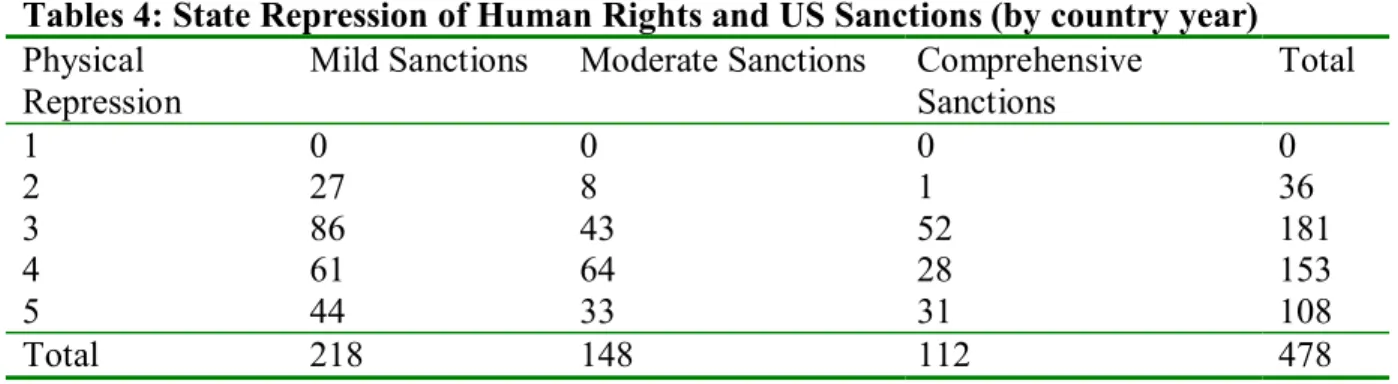
Table 4: State Repression of Human Rights and US Sanctions………..…….39
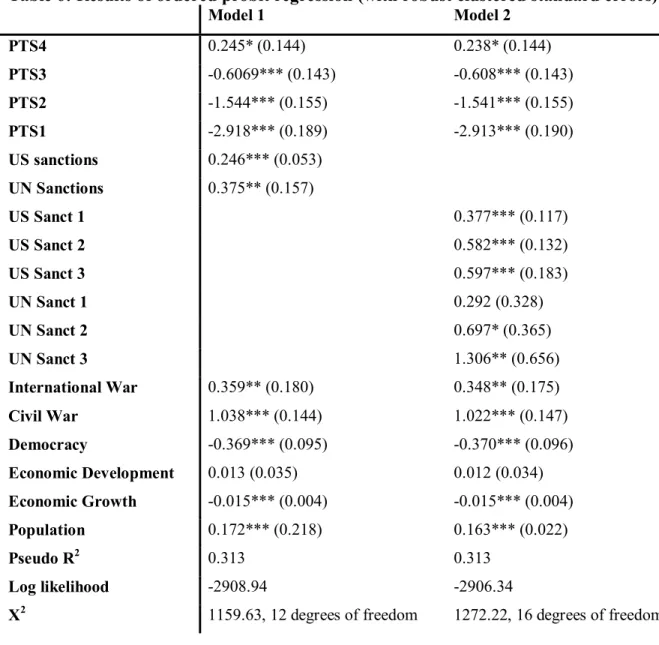
Table 5: State Repression of Human Rights and UN Sanctions………..…39
When you apply that boycott, you have got your hand upon the throat of the offending nation, and it is a proper punishment.
—Woodrow Wilson, 1919 Speech before the US Senate in support of the League of Nations. Sanctions, as is generally recognized, are a blunt instrument. They raise the ethical question of whether suffering inflicted on vulnerable groups in the target country is a legitimate means of exerting pressure on political leaders whose behavior is unlikely to be affected by the plight of their subjects.
—Bhoutros Bhoutros-Ghali, 1995 Agenda for Peace
Introduction
Following the end of the First Gulf War the World Health Organization (WHO),
UNICEF, and other humanitarian organizations increasingly voiced concern over the United Nations Oil-For-Food-Program. International health organizations and human rights NGOs
blamed UN-imposed economic sanctions for the impending humanitarian crisis facing Iraq and urged the UN and the United States to reconsider its decision to impose comprehensive sanctions on Iraq (see for example UNICEF, 2003 and WHO, 1996). The graphic evidence
from Iraq of the sanctions regime’s unintended consequences prompted then UN Secretary-General Bhoutros-Ghali acknowledged the “blunt instrument” of sanctions hampered the
work of humanitarian and human rights groups, resulted in long-term reversals in economic development in the target country, unjustly injured neighboring states, and could possibly strengthen the targeted regime (Bhoutros-Ghali, 1995: paragraphs 70-71). By the end of the
regime led many policy advisors, international lawyers, and scholars of international
relations to question both the efficacy and morality of economic sanctions.
While intended as a non-violent foreign policy alternative to war, sanctions have often worsened the human rights situation in the target country and led to increased physical
repression. Particularly vulnerable—and most commonly the target of sanctions—are the underdeveloped and developing nations of the global south. Academic researchers and
journalists have documented and analyzed the adverse social and economic impact of sanctions, including their deleterious effect on public health systems, the reduction of per capita GDP, rising prices of staple goods, increased unemployment, infant mortality,
malnutrition, the spread of infectious disease, migration, and the breakdown of traditional family structures.
This paper examines the relationship between sanctions and increased violations of physical integrity rights—a subset of human rights that includes freedom from abuses such as torture, extrajudicial execution, and disappearance— in the target country. Specifically, this
paper reveals that state-sponsored violations of physical integrity rights increase following the application of United States or United Nations Security Council economic sanctions on a
target country. This analysis offers support for many of the normative claims made by human rights activists and verifies the substantive arguments of previous case studies that have claimed sanctions impose undue political, physical, and social hardship on innocent
civilians.
The paper proceeds as follows: I first review prior research in the human rights
conduct a quantitative analysis using maximum likelihood estimation (MLE) that provides
evidence for the theoretical relationship between sanctions and increased violations of physical integrity rights. In the final sections, I discuss the results of this analysis and describe avenues for future research.
Previous Research: The Efficacy and Effects of Sanctions
While sanctions and other forms of economic statecraft are often presented as a modern, enlightened tool of foreign policy, the implementation of sanctions as a coercive
force or punitive measure dates to at least the early Greek city-states (Askari et al., 2003: 5; Hufbauer, Schott, and Elliot, 1983: 4). From the ancient world through the modern day,
economic warfare in the forms of embargos, blockades, and sieges has been a common tactic in the conduct of foreign policy (Askari et al., 2003; Hufbauer et al., 1983; Naylor, 2001; Simmons, 1999). During the interwar years of the 20th century, sanctions became a
legitimate instrument of international politics under the League of Nations as a perceived less destructive method of punishing rogue regimes and evoking changes in domestic or foreign
policies considered threatening to international peace and security.
In spite of the lengthy and colorful history enjoyed by sanctions, only recently have they become a favorite too of statecraft. According to a 1998 policy brief from the Institute for
International Economics, during the late 1990s the United States imposed or continued sanctions against 26 nations (Hufbauer, 1998; see also Weiss et al, 1997). These sanctions
ranged from foreign aid retractions to economic embargos, and by some counts affected the lives of nearly half of the world’s inhabitants. Sanctions had become such a common tool of US foreign policy by the late 1990s that president Bill Clinton, in a 1998 interview with CBS
The United States was not unique in this turn toward sanctions as a favorite choice
from the foreign policy toolbox. During the 1990s, international organizations and states alike increasingly employed economic sanctions. The United Nations, the Organization of American States (OAS), the Organization for African Unity (OAU), the European Union
(EU), France, the United Kingdom, and Japan imposed economic sanctions on developing states in order to restore or promote democracy, halt civil or international violence, promote
basic human rights, or stop nuclear proliferation. This trend toward sanctioning earned the 1990s the dubious title “The Sanctions Decade” (see for example Cortright and Lopez, 2000). Excluding UN cases, the use of sanctions increased 22% during the 1990s as
compared to the previous decade (IIE, 2005). More dramatically, prior to 1990 the United Nations Security Council invoked chapter VII of the UN Charter in order to impose sanctions
on only two nations: Southern Rhodesia and South Africa. However, since 1990 the Security Council approved sanctions against Afghanistan, Angola, Cote d’ Ivoire, Ethiopia, Eritrea, Haiti, Iraq, Liberia, Libya, Rwanda, Sierra Leone, Somalia, the Sudan, and Yugoslavia. This
represents approximately a 700% increase in the use of sanctions in just over a decade. Despite the increasing popularity of sanctions, significant debate exists as to their
effectiveness. According to Hufbauer et al. (1990), only one in three sanctions events between 1900 and 1990 and only one in four since 1973 achieved their stated goals or
resulted in discernible changes in the behavior of the target regime. Other scholars gauge the
success of sanctions as even lower. Robert Pape (1997), for example, concludes that the actual rate of success of sanctions in altering policy is likely closer to 5%. Likewise, Cooper
Drury (1998) asserts that Hufbauer et al.’s analysis of sanctions and their policy
conclude in their study. Other scholars, however, suggests that sanctions may be more
effective than earlier empirical research contends. Daniel Drezner (2003) asserts that sanctions are applied only to the toughest cases—that is, sanctions are only considered after negotiations and diplomatic approaches have failed. Moreover, he argues that the lack of
observed success in sanctions is the result of a selection bias in the research and not a failing of sanctions themselves. According to his analysis, the threat of sanctions is often enough to
prompt changes in the behavior of some states, and that focusing only on cases where sanctions are actually applied ignores the large number of episodes where the threat of economic coercion did result in policy changes (Drezner, 2003). There is also evidence that
sanctions may be effective in promoting domestic changes within the target state. Recently, Nikolay Marinov has shown that sanctions successfully destabilize targeted leaders and may
positively contribute to transition from authoritarianism to democracy (Marinov, 2005; unpublished manuscript).
A parallel debate has also emerged regarding the unexpected consequences of
sanctions. The well-publicized collateral damage caused by sanctions imposed on Iraq between 1990 and 2003 prompted questions regarding the trade off between the possibility of
future success and the likelihood of immediate civilian suffering. That is, sanctions may be a successful policy prescription in some cases. However they are perhaps more akin to
chemotherapy than strategic surgery—despite the chance of ultimate success, the side effects
of treatment may be as unpleasant as the disease itself.
Recently, a number of scholars have addressed this issue. According to one line of
both internal and external political threats (Galtung, 1967; Weiss et al., 1997; Kaempfer et
al., 2004). Furthermore, travel bans and other sanctions hinder the ability of NGOs to perform humanitarian services and may undermine political opposition by reducing their contact with international NGOs and other transnational actors (Cortright and Lopez, 2000:
214). Sanctions may bolster the incumbent regime, weaken political and civil society, and endanger potential political opposition. Consequently, the observed effect of sanctions is
often quite different from their intended effect.
Similarly, increased nationalist sentiment, support for the incumbent regime, and animosity toward the sender state(s) result because civilians rather than political elites often
endure the worst of the negative effects (Galtung, 1967; Haass, 1998: 201-202; Preeg, 1999: 7). Sanctions may also generate support for the regime and strengthen its resolve against the
sender nation, leading to diplomatic and political stalemate (Hufbauer et al., 1983: 11; Cortright and Lopez, 2002: 14-15). The upsurge in popular support of Milosevic’s
government following the application of US and UN sanctions stemmed from the regime’s
demonization of the US and its allies, the wide-spread belief in UN hidden agendas, and propaganda focused on western imperialist schemes “set upon suffocating the FRY
economy” (Heine-Ellison, 2001: 98). Sanctions consequently emboldened the regime to carry out further abuses against minorities and opposition groups and strengthened its resolve against the west.
Previous research demonstrates that sanctions reduce aggregate trade, lead to scarcities in staple goods, stifle economic development, inflate prices, worsen
Cortright and Lopez, 2000; Crawford, 1997; Garfield, 2002; Garfield and Santana, 1999;
Garfield, Devin and Fausey, 1995; Hoskins, 1997; Joyner, 2003; Weiss, Cortright, Lopez and Minear, 1997). While the extent of economic decline and relative privation varies from country to country, sanctions imposed on developing countries exacerbate the already poor
economic conditions.
Sanctions may result in detrimental changes in the economic and security structures
of the target state. Peter Andreas (2005) demonstrates that arms and fuel embargos and other sanctions imposed on Croatia and Yugoslavia contributed to smuggling, black market trade, crime syndicates, and other aspects of “uncivil society.” In his assessment,
sanctions—particularly long-term sanctions—create a symbiotic relationship between the state and organized crime that in time sublimates the natural economy of the country and
leads to the creation of black market or shadow economy, replete with severe social and economic ailments (336). The increasingly interconnected relationship between state authorities and crime syndicates produces illegal commodity monopolies, price increases,
and rising crime activity in the targeted country (Andreas, 2005; Heine-Ellison, 2001; Naylor, 2001: 3-4). Smuggling and the trafficking of drugs, weapons, women, children, and
illicit commodities also increase under the shadow economies created by sanctions. Such was the case in Iraq under the much-maligned Oil for Food Program in Iraq where both crime syndicates and the Hussein regime profited mightily from smuggling oil and other
commodities and in Yugoslavia and Croatia, where the imposition of sanctions created and fed fuel and arms smuggling rings that extended throughout the Balkans (Andreas, 2005;
Finally, sanctions produce unintended consequences beyond the target state. Several
studies suggest that sanctions may negatively affect the sender nation as well as the target state, leading to millions of dollars of lost revenue annually, job cuts, and price increases. According to some analyses, reductions in bilateral trade caused by unilateral sanctions cost
US companies between $5 and $20 billion annually (Hufbauer et al, 1997; Hufbauer and Oegg, 2003: 311; Lash, 1999: 13). These lost revenues further impacted the American
economy through the loss of thousands of export-related jobs during the 1990s (Hufbauer, 1999: 92; Lash, 1999: 15). Recent research also suggests sanctions negatively affect states not directly included in the foreign policy calculus of sanctions. These “innocent bystander”
states—typically nations contiguous to the target with a strong trade relationship— experience detrimental economic spill over from the target state (Askari et al., 2003: 186,
Ataov, 38: 1997; Haass, 1998: 201; Slavov, 2003). For example, the economic decline brought about by the imposition of US, OAS, and UN sanctions imposed on Haiti resulted in a swell of refugees to the Dominican Republic, the United States, and other neighboring
countries. Likewise, US and UN-embargoes imposed against Croatia and Yugoslavia led to fuel smuggling, arms trafficking, and other illicit trade in Romania, Bulgaria, and other
Balkan states (Andreas, 2005; Heine-Ellison, 2001).
The mixed evidence for the success of sanctions coupled with the potential for adverse consequences have led many politicians and policy makers to questions both the
appropriateness and the ethics of imposing sanctions. Policy briefs drafted for the Clinton administration addressed these issues, concluding that current US unilateral sanctions had
of the target countries (Collins and Bowdoin, 1999 and Johnston and Weintraub, 1999).
These briefs recommend alternatives to the use of sanctions and significant changes in sanctions when they were imposed.
Other nations and multinational organizations have also turned a more critical eye
toward sanctions policy. In 1998, 1999, and 2000 the German and Swiss governments, in association with NGOs, academics, and international lawyers, bankers, and diplomats,
sponsored seminars focusing on the development of smarter sanctions policy (Cortright and Lopez, 2002). The Interlaken Process and the Bonn-Berlin Process evaluated the impact of current sanctions and worked to develop more specifically targeted sanctions. The UN has
also recently begun to reevaluate its own sanctions policies. A policy assessment prepared in 1999 by the United Nations Sanctions Secretariat encouraged the Security to Council to
explore “smarter” sanctions (United Nations, 1999). Smart or targeted sanctions—arms embargoes, travel bans, and the freezes on public and/or private assets—are designed to minimize the collateral damage to civilians that often results from traditional sanctions
policies while still pinching political elites and limiting their capacity to carry out policies unfavorable to the international community (see also Hufbauer and Oegg, 2000).
Sanctions and State Repression
Sanctions may also contribute to an increase in political repression and the violation of physical security. The imposition of sanctions may create conditions that worsen
Sanctions are increasingly favored—particularly among Western states—as an
alternative to armed intervention in leveraging states toward compliance with international human rights laws and norms. Given their frequent use during the last decade, an expanding number of the world’s citizens are exposed to the effects of sanctions. Establishing a
relationship between sanctions and increased political and physical repression by the targeted government runs counter to the perceived legitimacy (and possibly legality) of sanctions as
an alternative to military intervention. Evidence of a causal connection places responsibility for increases in state repression at least partially in the hands of the sender nation.
This relationship proves particularly troubling for nations or organizations that use
the defense of human rights as a basis for the imposition of sanctions. Western states and the United Nations would then be forced to reconcile their desired foreign policy outcomes with
the possibility that the imposed sanctions regime would increase levels of political repression in the target state and might threaten the physical security of its citizens. When sanctions contribute to further violations of physical security in the target state, they should be viewed
not only as policy failures but also as morally contradictory policies.
In recent decades the individual states and multinational organizations have applied
sanctions to states that have exhibited gross and systematic violations of the human rights provisions enshrined in the United Nations Charter and the Universal Declaration of Human Rights. A cursory review of the case histories of sanctions applied by the United States (see
Hufbauer et al., 1990; Hufbauer, 1998; IIE, 2005) reveals that human rights concerns— political repression, political violence, genocide, torture, and unlawful imprisonments—
demonstrating a pattern of blatant disregard for basic human rights.1 If the promotion or
restoration of democracy is included as an aspect of human rights, then such concerns are among the most frequent justifications for the imposition of sanctions by the United States since the mid-1970s. In fact, language regarding human rights appears in roughly 60% of the
sanctions legislation imposed between 1975 and 1999.2 Similarly, the United Nations Security Council has cited human rights violations committed as the justification for
sanctions in accordance with the United Nations Charter. Resolutions specifying the legal arguments for the imposition of sanctions by the United Nations frequently refer to the gross abuse of basic physical integrity by the targeted government as one component of that
regime’s threat to international peace and stability.
While human rights concerns have often been the impetus for imposing sanctions
during the past three decades, empirical evidence suggests that rather than altering the behavior of abusive regimes, sanctions may directly and negatively impact human rights conditions in the target state. This presents sender states and institutions with an obvious
dilemma—can a policy that impinges upon human rights of citizens be a legitimate tool for the punishment of human rights abusing regimes? The possibility that sanctions could result
in greater political repression and declining respect for the physical security of citizens runs counter to the proposed objective of many sanctions imposed by the UN and a number of Western nations. The nature of this relationship deserves consideration. In this paper I
examine the effect of sanctions on government respect for physical integrity rights—the
1 I should note here that this legislation included clauses that exempted many states deemed as important to
national security, mostly US Cold War allies. Consequently, a number of serious human rights abusers were never the subjects of the sanctions intended by Congress.
2 This count is based on the justifications for the imposition of sanctions as reported in “Chronological
subset of human rights that includes freedom from extrajudicial execution, torture, political
imprisonment, and disappearances.
Toward a Theory of Sanctions and State Repression
While the impact of sanctions depends on factors such as the economic relationship
between sender and target, the severity and duration of the sanctions regime, and the availability of substitute trade or aid partners, sanctions almost invariable impose some economic burden on the target state. In less developed states in particular—the targets of
most of sanctions events—the imposition of sanctions often results in significant trade reductions, falling GDP, rising prices, and increased unemployment (Crawford, 1997;
Garfield and Santana, 1999; Joyner, 2003). Economic decline negatively affects both
political elites and citizens alike; however, the distribution of these negative consequences is mediated by the political and social structure of the target country. Specifically,
non-democratic political institutions allow political elites to shift costs onto the larger populations, thus shielding themselves from much of the damage.
The ability of incumbent leaders and political elites to transfer the cost of sanctions downward is central to the relationship between sanctions and increased state-sponsored violations of physical security rights. I argue that sanctions promote physical repression in
two ways. On the one hand, when the imposition of sanctions creates a “rally round the flag” effect the cost of repressing potential political rivals decreases. The strongly nationalistic
environment created by sanctions lowers the cost of repression and allows leaders to more easily pursue policies designed to undermine and eliminate potential challengers. On the other, the public may blame the national leadership for declining economic and social
increased support for the opposition. To suppress dissent and enforce loyalty, autocratic
leaders increasingly rely on repression. I discuss both scenarios in turn.
Political Institutions and Social Outcomes
The structural differences between autocracies and democracies determine the ability
of leaders to redistribute the costs of unfavorable policies such as sanctions. Because of the constraints placed on democratic leaders by the electoral process, democratic leaders cannot easily transfer the cost of sanctions onto the public without facing significant punishment
during the next election. While strong nationalistic sentiment may allow a leader to pursue policies that perpetuate sanctions, when economic decline resulting from sanctions exceeds
the willingness of the population to support the policies of its leaders, incumbents or their party will face removal from office. Therefore, there exists some limitation on the
government’s prerogative in democratic systems, preventing leaders from transferring the
adverse effects of policy decisions to the population as a whole or onto specific groups within in the country. In non-democratic systems national leaders are often more successful
at redistributing the costs of policy choices. Because of the absence of electoral constraints, autocratic leaders often act with impunity and disregard for the negative impact policy decisions may exert on citizens. This is not to say that autocrats act completely
independently; leaders of non-democratic regimes must maintain the support and loyalty of some group of political elites in order to sustain their positions of power. Because this core
while shielding this core group of political elites from significant negative effects, then the
leader need not fear immediate punitive response.
Maintaining the Winning Coalition
The dynamics of political survival are pivotal in understanding the relationship between economic sanctions and increased political repression. The well-known selectorate
model (Bueno de Mesquita et al., 2003) is useful in examining this relationship. According to this model, leaders maintain control by constructing and maintaining a winning coalition made up of members of the selectorate (the total body of persons able to select national
leadership). Failing to maintain the continued flow of resources and other benefits to the winning coalition increases the likelihood of defection and thus increases the probability of
loss of power. In order to prevent the defection of members of the winning coalition from the incumbent to a challenger—thereby threatening the stability of the regime—the incumbent must credibly promise more to his winning coalition than can the challenger.
When an incumbent can no longer commit to “deliver the goods” to his winning coalition, an opportunity for usurpation by a challenger presents itself.
This is exactly the logic behind the application of sanctions. By placing the leadership of a state in the vice of economic sanctions, sender nations attempt to pinch the incumbent to the point that he can no longer provide the necessary incentives to his winning
coalition, thereby creating the opportunity for regime change and emboldening domestic political opposition. The effectiveness of sanctions is contingent on the ability of the
enough of the regime’s supporters that the size of the opposition’s coalition exceeds that of
the incumbent’s supporters. Sufficient defections tip the balance of power, possibly resulting in the ouster of the incumbent regime.3 The likelihood of the success of sanctions thus increases when sanctions curtail the flow of resources from incumbent to supporters,
resulting in some number of defections from incumbent to opposition.
In order to prevent defection from the winning coalition, autocrats must employ some
combination of carrots and sticks. In the former, the incumbent regime continues to supply supporters with a flow of resources greater than those that could be promised by any challenger. In the latter, the regime resorts to punitive measures and repression in order
enforce loyalty. The imposition of economic sanctions makes the credible promise of resources more difficult because under sanctions economic constraints tighten and resource
availability declines throughout the sanctioned state. Therefore, sanctioned incumbents must either find alternative sources of income or increase their level of repression in order to maintain their coalition.
To maintain the flow of resources to the winning coalition, leaders may turn to
alternative sources of revenue such as smuggling and trade in illicit goods. The imposition of
economic sanctions may provide a boon for the leadership of the target state. Andreas (2005) shows that sanctions can create symbiotic relationship between the state and organized crime, leading to the sublimation the normal economy of the country and, over time, to the creation
of a shadow economy. Collusion between organized crime and the government of the sanctioned state allows the incumbent regime to collect significant rents through smuggling,
illegal trade, and sanctions busting. Kaempfer et al. (2004: 38) demonstrate that sanctions
3 This is the argument behind more recent targeted sanctions. That is, when sanctions can specifically target
allow incumbent autocrats to capture rents without increasing the cost of loyalty in the
wining coalition. These rents accrue directly to the regime and its wining coalition, which allows the incumbent to ensure a steady flow of resources and benefits to supporters despite economic decline in the rest of the county (39). Saddam Hussein garnered substantial rents
through oil smuggling and taxes and illegal surcharges billed to the UN Oil-for-Food Program while the Iraqi economy collapsed According to a recent Washington Post article,
the Hussein regime garnered some $1.7 billion in kickback from companies participating in the Oil-for-Food program and over $11 billion from oil smuggling (Lynch, 2005). Similarly, during the civil conflicts in the former Yugoslavia Slobodan Milosevic and his supporters
profited under sanctions through the creation of state-owned monopolies, fuel smuggling, and illicit trade, and in Croatia Tudjman’s regime earned rents through fuel and arms
smuggling from neighboring countries (Andreas, 2005; Heine-Ellison, 2001; Kaempfer and Lowenberg, 1999).
Despite the emergence of a shadow economy tacitly supported by the incumbent
regime and its apparatus, financial flows and the distribution of resources are unlikely to remain at pre-sanction levels. Autocrats may then rely on the stick in order to prevent
defection and enforce loyalty in both the winning coalition as well as rest of the selectorate. Political elites have access to sanctions rents or may receive side payments from the
incumbent.4 Most citizens, however, do not enjoy the same captured rents that benefit
political elites. The ability of the incumbent to transfer the cost of sanctions from the winning coalition to the rest of the population worsens the economic effects of sanctions in
4 Few if any sanctions regimes are 100% effective at restricting the flow of restricted goods. In the majority of
the rest of the country. As costs are redistributed and transferred downward, the negative
consequences of sanctions are likely to fall disproportionately on the most vulnerable segment of society (Preeg, 1999: 7).
The Logic of Political Repression
When an incumbent either cannot or will not continue to offer carrots—public goods or side payments—to the selectorate, he will necessarily turn to the stick in order to enforce stability and quash potential challengers. The unequal distribution of costs resulting from
sanctions contributes to tensions between the incumbent and some segments of the
selectorate. The severity of these tensions and the proportion of the selectorate to which they
extend are determined by the ability of the sanctioned leader to direct public blame toward the sender nations. When the leader can successfully shift blame for sanctions externally and toward the sender state, the rally round the flag effect will result in greater support for the
incumbent. If instead the public places the blame for its economic hardship at the feet of the incumbent, tensions between the incumbent and the public will increase. In either case,
sanctions are likely to contribute to an observable increase in physical repression and violations of personal security rights.
On the one hand, the incumbent is successful in shifting blame for failing economic
conditions from the leadership to the sender nation a “rally round the flag” effect will often lower the price of loyalty to the regime. International sanctions undermine political
potential challengers. Therefore, repression against opposition groups may increase under
sanctions. Kaempfer et al. (2004) employ a game theoretic model to demonstrate that when the rally round the flag effect dominates, the power of the regime increases relative to the power of the opposition. As the power of the opposition decreases, the cost of repression
decreases as well. Consequently, sanctions may increase the target regime’s incentive and ability to repress potential challengers by lowering the cost of repression. Sanctions imposed
on Yugoslavia and Iraq produced this effect. In both cases, the incumbent regimes successfully increased repression against their political opponents—Hussein increasingly targeted Kurds and Shiites, and Milosevic ratcheted up repression against ethnic Albanians in
Kosovo. As support for the incumbent regime and contempt for the sanctioning states grew, the power of the opposition declined. Owing to the upsurge of nationalistic sentiment,
political opponents became easy targets of state repression and violent reprisals. On the other hand, sanctions may create tensions between the public and the incumbent, leading to protest and instability and increasing support for the opposition. In
this case, the opposition increasingly poses a serious challenge to the incumbent regime. Dictators are typically aware of the degree of repression that is necessary to subdue political
challenges. Assuming leaders are rational actors, they are aware of the incentive to increase repression when exogenous shocks provoke a disaffected or dissatisfied public into protest, revolt, or other challenge to the status quo. As costs are increasingly transferred downward
from the incumbent and his coalition to the population, loyalty to the regime begins to waver. Correlatively, support for the opposition may increase as a politically and increasingly
Certainly there exists some threshold for rebellion or mass public demonstration
despite the possibility of severe consequences. At some point, the selectorate of a sanctioned state challenges the incumbent regime rather than continuing to endure the hardships
imposed by sanctions. This threshold is determined by a number of different factors and
varies from country to country. However, that some tipping point exists is a logical
assumption. Likewise, the type of response is contingent on a number of structural, social,
and historical factors. In countries with some level of respect for free expression citizens are likely to first turn to organized protests or public demonstrations in an attempt to alter the policy choice of incumbent regime. Faced with rising expressions of public dissatisfaction,
incumbents may employ more repressive measures in order to halt popular protests,
demonstrations, or other signs of political instability. For example, the use of excessive force
against public demonstrations, arbitrary detentions of protesters or activists, and the violent attacks against opposition leaders are common responses for transitional regimes and other quasi-democratic regimes that face pressure from a disaffected population.
In states where public expression of disfavor with the incumbent regime is strictly proscribed, support for potential political challengers may begin to increase. As pressure
from political opponents increases, reprisals from the incumbent regime also increase. Fearing the increased possibility of civil revolt or defection from the winning coalition to the coalition of the political opposition, incumbents will ratchet-up repression in the hopes of
quashing support for potential challengers. According to Bueno de Mesquita et al., “to restore deterrence the intensity of repression should increase with the gains a challenger can
likelihood of a challenge to the status quo. As this divide widens as a result of sanctions,
challenges to the incumbent increase. And as the probability of political challenge increases, the incumbent’s incentive to increase repression in order to “restore deterrence” increases as well.
This applies to potential political opposition from both the incumbent’s own winning coalition and selectorate as well those disenfranchised by the extant political structure. As
the likelihood of defections from the winning coalition increases, the incumbent resorts to violence in order to prevent future defections. The brutal and frequent political killings of military officers and cabinet members in the Hussein government graphically illustrate this
point. The same applies to selectors. As the potential benefit derived from unseating the incumbent increase, the leader’s incentive to use repression increases.
The disenfranchised have the greatest incentive to oppose the incumbent regime or support political opposition when the regime is based on a small wining coalition and provides few public goods. (Beuno de Mesquita et al., 2003: 342). As sanctions reduce the
availability of public resources and contribute to general economic decay, disenfranchised citizens have more incentive to participate in violent opposition. Non-democratic
incumbents must in turn increase repression in order to stamp out this opposition. Past research on the economic sources of revolution, political violence, and civil war supports the theoretical assertion that relative depravation increases the likelihood of political
instability, and therefore repression. Recent studies demonstrate that the likelihood of civil unrest and political violence declines as international trade, foreign investment increase, and
these indicators decline the reverse is also true. That is, under conditions of negative growth
protest, civil violence, and repression are likely to increase.
Similarly, when income inequality increases, the potential for civil violence increases (Cramer, 2003). Sanctions promote an inequitable redistribution of resources: incumbent
leaders transfer costs downward in order to protect the winning coalition and prevent defection. The economic divide between elites and average citizens increases under
sanctions, which increases tensions and may lead to civil unrest and violence. In response, the incumbent regime resorts to repressive measures in order to combat this unrest, maintain social stability, and prevent the growth of political dissent. This effect is particularly strong
in states where one ethnic or religious group receives disproportionate economic benefits (Besancon, 2005). Sanctions against Iraq, Rhodesia, South Africa, and Yugoslavia further
exacerbated existing racial, religious, or ethnic tensions and led to increased communal violence in the country and greater state repression during the sanctions years.
To summarize, in order to prevent defection from his coalition to the opponent’s
coalition (and thus the possible overthrow of the regime), the incumbent must therefore increase the flow of the resources to his own coalition. The budget constraints of the
incumbent, however, determine the ability to manipulate resource flows. When insufficient resources exist to maintain the winning coalition or to prevent mass social unrest such as public demonstrations, riots, or, depending on the strength of the opposition, revolt, the
incumbent will likely substitute repression for pay offs. That is, when there are not enough available resources to stave off competition and satisfy the demands of the public, an
physical terms into increases in the number of extrajudicial executions and politically
motivates assassinations, arbitrary detentions, the use of torture, and disappearances in order to eliminate potential political opponents and to terrorize the public.
A Note about Sanctions and Democracies
Thus far the theoretical model constructed here has assumed that sanctioned states are
most likely non-democratic regimes. The theory presented here suggests that sanctions may not exert the same effect in democratic compared to autocratic states. While sanctions contribute to the repression of human rights in autocracies, there is little relationship between
repression and economic sanctions in established democracies. This assumption follows logically from the model presented above. Because of the large size of the wining coalition
relative to the selectorate in democracies, leaders must pursue policies that benefit the largest number of citizens. Democratic leaders therefore expend resources on public goods as opposed to transferring private goods to political elites (Bueno de Mesquita et al., 2003). If
economic sanctions reduce the level of public goods, voters defect from the incumbent to the challenger, thereby removing the incumbent from office. In this case, the challenger alters
policies in order to remove sanctions, thus resuming the flow of public goods to the voters. This in part explains the rarity of sanctions against democrats.
Ideally, a more in depth examination of the relationship between government
structure and changes in state human rights performance under sanctions would be included in this paper. However, two factors complicate such as analysis. First, previous research
and Tate, 1994; Davenport and Armstrong, 2004). While democracies occasionally commit
significant rights abuses, these acts usually coincide with significant communal conflict, civil war, or terrorist violence such as in Colombia in the 1980s and 90s, Turkey in the late 1990s, and Israel during the First and Second Intifada. Moreover, it is often difficult to separate the
violence committed by government security forces from those committed by non-state actors.
Table 1: Democracy and US Sanctions (by country year)
Regime Type Mild Sanctions Moderate Sanctions Comprehensive Sanctions Total
Democracy 32 5 4 41
Non-Democ. 195 142 126 463
Total 227 147 130 504
Table 2: Democracy and UN Sanctions (by country year)
Regime Type Diplomatic Sanctions Moderate Sanctions Extensive Sanctions Total
Democracy 3 5 3 11
Non-Democ. 13 61 23 97
Total 16 66 26 108
Second, democracies represent a small minority of sanctions cases over the past 30 years. Furthermore, when democracies are subject to sanctions, the duration of the sanctions
averages two years or less. Tables 1 and 2 show the relationship between sanctions and governmental structure. The particularly small number of sanctions events against democracies in this sample—less than 10%—makes it difficult to achieve statistical
significance using quantitative analysis. In models containing an interaction variable for sanctions and democracy, the term did not approach standard levels of significance and left
the other results virtually unchanged.
Scope and Hypotheses
This study uses a pooled cross-sectional time-series analysis of 126 countries for the
specifically, the data set is limited to countries with a population of more than 500,000
persons and a per capita GDP of less than approximately $10,0005 for the majority of years included in the sample. While my analysis is limited to a subset of countries in the
international system, I believe that restricting the sample to developing countries is legitimate
given that the majority of sanctions events that occurred during this time period were imposed on countries with developing and transitional economies. In fact, each of the US
and UN sanctions events imposed during this time frame were directed against countries falling below this threshold. Therefore, the results from this analysis provide generalizable evidence of the relationship between sanctions events and changing human rights conditions.
Hypotheses
According to the theory presented above, sanctions negatively impact the general
economic climate of a target state. Economic constraints force incumbent leaders to divert resources from public goods and into the hands of the incumbent’s winning collation in order to prevent defections. Such economic redistribution also increases the opportunity of
challengers who can promise an end to sanctions in return for political victory. Furthermore, economic decline may promote dissent among the disenfranchised, potentially leading to
violence or revolt. As available resources diminish, incumbents must resort to greater
repression in order to deter potential political challengers and quash dissent. This lead to the initial set of hypotheses:
5 See appendix for countries in sample. The only states included within both this analysis and in the “high
H1: The imposition of sanctions by the United States increases the likelihood of repression of physical integrity rights in developing states.
H2: The imposition of sanctions by the United Nations increases the likelihood of repression of physical integrity rights in developing states.
Sanctions events differ significantly in terms of the nature of their constraints. Therefore, their effects on repression should differ based on both their comprehensiveness
and their severity. Sanctions that are more successful in restricting the resources available to incumbents are more likely to force incumbents to resort to increased repression compared to sanctions that sanctions that are less effective in restricting this flow. The ability of sanctions
to restrict this flow is dependent on the severity of the restrictions imposed and on the number of countries imposing these restrictions. Here severity refers to the specific
constraints imposed by the sanctions, while comprehensiveness refers to the number of countries imposing the sanctions. Severe sanctions such as embargoes impose more constraints on the resources available to incumbents compared to more moderate sanctions
such as aid retractions. Therefore, the likelihood of increased repression should be greater the more severe the sanctions. Similarly, the greater the number of nations participating in
sanctions events, the less opportunity exists for incumbents to find alternative flows of resources. Unilateral sanctions imposed by the United States, for example, still allow sanctioned incumbents to turn to other nations to fill the gap created by restriction on US aid
or trade. Multilateral sanctions, on the other hand, such as those imposed by the United Nations, severely limit alternative resource flows. As such, increases in both severity and
H3: Overall, UN-imposed sanctions will be more likely to contribute to increased physical repression than US-imposed sanctions
H4: More severe US-imposed sanctions will result in a greater likelihood of physical repression in developing state compared to less severe sanctions.
H5: More severe UN-imposed sanctions will result in a greater likelihood of physical repression in developing state compared to less severe sanctions.
Data and Operational Criteria
Measuring Human Rights and State Repression
While discussions of human rights-related issues are common in the fields of political
science and foreign policy, no consensus as to their appropriate measurement exists. Part of the inherent difficulty in measuring the level of human rights abuses present in a country comes from the ever-widening discourse regarding what are to be considered as human
rights. Customary international law, when speaking to the subject to human rights, tends to focus on protection of the physical person from heinous acts such as torture or extrajudicial
execution. This notion of human rights was formalized in the United Nations Charter ratified in 1945 and in the Universal Declaration of Human Rights drafted in 1948. Further iterations of “universally” accepted human rights norms were borne out in the two subsequent UN
human rights conventions the Convent on Civil and Political Rights and the Convention on Economic, Social, and Cultural Rights. In recent years perceptions of human rights have
evolved to include even educational and environmental rights. Therefore, any attempt to accurately measure a states compliance with international human rights norms is necessarily fraught with difficulty and imperfection (see Gibney and Dalton, 1997; Lopez and Stohl,
I have chosen to focus this analysis on the most clearly delineated aspect of human
rights: respect for the integrity of the person or physical integrity rights. This subset of human rights includes freedom from abuses such as torture, unlawful death, disappearance, and political imprisonment. The dependent variable is the Political Terror Scale (PTS). I
rely on two existing datasets for the measures of physical repression for the years covered in this analysis.6 Gibney’s PTS dataset begins in 1980 and is updated annually (see Gibney and
Dalton, 1997). Poe and Tate, using the same criteria as Gibney, generated repression data for additional nations not included in the original PTS and expanded the coverage back to 1976 for their own research needs (see Poe and Tate, 1994). I integrate information from the two
available datasets to produce data on physical repression in 126 developing states over twenty-six years. The PTS measures the extent of state-sponsored repression and violations
of physical integrity rights and is based on the annual reports of Amnesty International and the US State Department. The five-point index of state repression used for the PTS is
adapted from the standards developed by Gastil (1980). A country scoring a one is under the
secure rule of law and rarely commits acts of torture or political execution against its citizens (i.e. Canada or Costa Rica for most years). A nation scoring a five on the scale places no
limits on the “means and thoroughness” with which it pursues its goals. Political executions and/or torture are commonplace, and all citizens regardless of their interest or involvement in political or civic life are subject to sever violations of their physical integrity (i.e. Iraq,
1990-2000 or Rwanda, 1994-1998).7
6 Gibney’s data are available on Mark Gibney’s home page: www.unca.edu/politicalscience/faculty-staff/gibney.html. Last accessed 21December 2005. Poe and Tate’s data are available at
www.psci.unt.edu/ihrsc/poetate.thm. Last accessed 16 November 2005. I thank to both parties for sharing their data.
As a final note, the PTS presents two separate measures, one based on Amnesty
International Annual Country Reports, the other on the annual reports of the US State Department. Despite the high correlation between the two measures (approximately 0.75 in this sample), there is some evidence of systematic deviation during some years. A recent
analysis examining the differences between measures based on the Amnesty International reports and those based on the US State Department reports (Poe, Vasquez and Carey, 2001)
found some evidence of bias by the US State Department toward leftist governments during the 1980s. That is, the reports generated by the US State Department were at times more critical of socialist and communist regimes compared to rightist governments or military
dictatorships during the Regan and Bush years, but this bias diminishes in the early 1990s. In the past, both measures as well as averages of the two have been used to measure
the severity of physical repression. I rely on the US State Department data because it offers more consistent coverage over the time period of analysis, providing scores for more
countries and more years compared to the Amnesty International data. The thoroughness of
the State Department reports compared to the Amnesty International reports also suggests that the scores generated from the State Department reports may more accurately reflect the
human rights conditions in the country.8
Assessing the Severity of Sanctions
I generate the list of US sanctioned countries from Hufbauer et al. (1990), The Institute for International Economics (1999), Hufbauer (1998), and Hufbauer and Oegg
8 See Poe, Vasquez, and Carey, 2001 for full description and analysis of variations between Amnesty
International and State Department Scores.
(2000), and the US Treasury Office of Foreign Assets Control (2005).9 I compile
information on UN Sanctions from the web page of the Office of the Spokesman for the Secretary General (2005). While the simplest measure of sanctions would be a dummy variable indicating the presence of absence of sanctions, not all sanctions events are equal.
The severity of sanctions events can range from diplomatic wrist slaps such as travel bans on key persons or groups to full economic embargoes. As such, differentiation among the
various types of sanctions events seems more appropriate than a simple dichotomous
indicator. I therefore develop a scale of the severity of US and UN sanctions imposed on the target country. The severity of US-imposed sanctions is measured on a scale of 0 to 3 based
on the following criteria:
Level 0: No economic sanctions; normal economic relations.
Level 1: The imposition of light sanctions such as the retraction of previously promised or delivered military or development aid.
Level 2: The imposition of moderate sanctions such as arms embargoes, restrictions on the import or exports of primary commodities such as oil or manufactured goods, and/or other limited prohibitions against investment and trade.
Level 3: Comprehensive economic sanctions such as embargoes on all or most economic activities between the US and the target nation.
I include a similar scale to assess the severity of United Nations-imposed sanctions. Despite the differences in the scales, both are roughly congruent in their progression from no
sanctions to comprehensive sanctions regime and should capture similar information about
9 To check the robustness of this measure I also tested a model using a different sanctions dataset. Marinov
the influence of sanctions on a target country. The scale for UN-imposed sanctions is as
follows:
Level 0: No economic sanctions; normal economic relations.
Level 1: The imposition of light sanctions such as travel restrictions on a nation’s leadership, restrictions on air traffic into and out of the target country, or other diplomatic sanctions.
Level 2: The imposition of targeted moderate sanctions such as arms embargoes, restrictions on key commodities such as diamonds or fuel, or the freezing of public and/or private assets.
Level 3: Comprehensive economic sanctions such as embargoes on all or most economic activities between UN member states and the target nation.
Table 3 shows the number of country-years sanctions of each level of severity described here
have been applied by the US and the UN.
Table 3: Sanctions Events 1976-2001 (by country year)
Severity of Sanctions Event US UN Total
Level 1: Diplomatic or Mild Economic Sanctions 224 16 240 Level 2: Moderate Economic or Trade Sanctions 150 66 216
Level 3: Comprehensive Sanctions 129 26 155
Total 503 104 607
Though an imperfect measure of the severity of sanctions, these categories provide some information as to the severity of the impact of sanctions on a target state. As the severity of the sanctions regime increases, the level of physical integrity abuse is expected
increase accordingly. That is, the retraction of expected US foreign aid should result in a smaller increase in political repression compared to the imposition of comprehensive
leadership is unlikely to provoke it to severe increases in human rights abuses, imposing
comprehensive sanctions and virtually closing a state out of the global economic community is likely to produce a severe response from political elites as they attempt to shift the costs to citizens and ratchet up levels of repression in order to maintain control. Finally, because the
negative impact of sanctions on an economy is not generally immediately visible, any adverse effects resulting from sanctions imposed at t-1 are likely to produce changes in
human rights violations at t or later. Both sanctions variables are therefore lagged for one-year to account for this delay and to control for endogeneity.
Control Variables
The control variables included in this model are international conflict, civil war,
democracy, level of economic development, economic growth, and population size. Each of these variables, in some similar form, has previously been employed in models in which human rights or physical integrity was the dependent variable, and each is shown to exert a
statistically significant effect on changes in human rights conditions.
Previous studies of the predictors of human rights abuses have found a strong positive
relationship between involvement in international conflict and human rights abuse (Poe and Tate, 1994; Poe et al., 1999). Because of national security concerns and the danger posed by internal political division, regimes often employ more severe or repressive security measures
than they would during peacetime; moreover, the greater the threat and the longer the duration of the war, the more repression is likely to increase. International conflict is a
data set, representing involvement in a conflict that has produced over 1000 battlefield
deaths.
Similarly, the presence of civil conflict has consistently demonstrated a strong negative impact on human rights conditions. During a civil conflict, governments place
additional restrictions on civil and human rights (Poe and Tate, 1994; Poe et al., 1999). Human rights violations may increase during civil conflicts as governments resort to more
severe means in order to secure stability, combat internal dissent, and retaliate against political violence. Consequently, I hypothesize that state repression of physical integrity rights will increase during periods of civil conflict. Civil war is coded as a dummy variable
and is taken from the International Peace Research Institute, Oslo (PRIO) conflict dataset and reflects the existence of a conflict that produces1000 battlefield deaths per annum.
Democracy has proven to be among the most significant predictors of respect for physical integrity rights within a nation (Davenport and Armstrong, 2004; Poe and Tate 1994; Poe et al., 1999). In brief, owing to restraints on government authority and the ability
of citizens to sanction government leaders that employ abuses tactics, higher levels of democracies should correlate to lower levels physical integrity abuse. Countries whose
institutions provide for popular participation in government, frequent turnover in executive and representative bodies, separation of powers, and the just rule of law typically exhibit a high level of respect for fundamental human rights and only infrequently the rights of their
citizens. Most previous quantitative studies of human rights have upheld this proposition. However, Christian Davenport and David Armstrong (2004) demonstrate that the
increase in tandem with movements toward democracy; rather, only states that have achieved
a high level of democracy (greater than 7 on the Polity scale) show significant differences in their respect for these rights.
I operationalize democracy as a binary variable coded as 0 (non-democratic) for
countries scoring 6 and below and 1 (democratic) for countries scoring 7 or higher on the –10 to 10 Polity2 score of the Polity IV dataset (Jaggers and Gurr).10 This simplifies
interpretation of the effect of the variable and follows the recommendations of Jaggers and Gurr (1995, 479) and Alvarez et al. (1996). In line with past research, I hypothesize that coded in this manner democracy will have a positive impact on human rights practices.
Several studies have identified a relationship between economic development and human rights standards (Henderson, 1991; Poe and Tate, 1994; Poe et al., 1999). These
studies suggest that higher levels of economic development, measured in GDP or GDP per capita, produce lower levels of physical repression. Economic growth likewise positively affects state respect for human rights (Olson, 1963; Poe et al., 1999). Specifically, as the
“pie” increases and citizens have greater access to resources and wealth, instability decreases. As internal threats from disaffected factions of the population decrease, governments reduce
repression. Conversely, when GDP per capita falls and the pie shrinks—as is the case in sanctioned nations—instability and internal threat rise, and regimes tend toward greater repression. Economic decline should correlate to an increase in state repression. I log GDP
per capita in order to standardize it across the sample. Economic growth is the percent
10 I choose to operationalize democracy as 7 or higher on the Polity2 scale rather than using the more
change in the per capita GDP from year to year. Both measures come from the United
Nations Common statistics database.
Past studies of human rights and state repression have found that population size contributes to higher levels of state violence and human rights abuses (Poe et al., 1999). This
hypothesis is based on the notion that large populations absorb economic growth and increase stress on the government in their demands for public goods. When a government
cannot meet these demands civil unrest often occurs. Faced with growing dissent and civil turbulence, governments are likely to resort to measures that are more repressive. Increases in violations of physical integrity rights thus may occur as state security forces attempt to
subdue opposition and restore order. Larger populations may also simply provide more opportunities for state security forces or other government agents to repress the citizens of a
country.
Finally, human rights reports and indices relying raw events data or failing to control for population may capture total violations rather than risk to an individual. States with large
populations such as China, India, or Russia may therefore appear more systematic in their violations than states with smaller populations when in fact the per capita rate of violations is
similar. Based on previous research, I include an estimate of population size taken from the United Sanctions common statistics database. I log this estimate in order to standardize it across the sample. I hypothesize that larger populations will promote the use of physical
repression in a developing country.
Methodology
In this paper, I employ ordered probit models to analyze the relationship between the
the correlates of human rights abuses has relied on ordinary least squares (OLS) regression
analysis with control for autocorrelation via a lagged dependent variable (Apodaca, 2001; Poe and Tate, 1994; Poe et al., 1999). Recently however, some scholars have argued that standard OLS models are not well suited to evaluating dependent variables with ordinal or
interval scales (see for example Hafner-Burton, 2005; Richards et al., 2001). Given the categorical nature of most existing measures of human rights, maximum likelihood
estimation (MLE) techniques are more appropriate for such research and improve upon past research that has relied on OLS regressions. In this paper, I employ MLE techniques because it is methodologically appropriate given the categorical nature the nature of the dependent
variable, and because it provides information regarding the likelihood that the application of sanctions on a developing nation will lead to an increase in violations of human rights.
MLE methods offer a superior alternative to OLS regression given the nonlinear nature of the dependent variable. However, the common issue of autocorrelation in analyses of time series data remains problematic. In OLS regressions of time-series data, the inclusion
of a lagged dependent variable has most commonly been used to control for this problem. Beck and Katz (1995) demonstrated the effectiveness and appropriateness of this technique
as a means to control of autocorrelation in such models, and as a result, the inclusion of an independent variable representing a one-year lag of the dependent variable has become standard practice in quantitative studies of human rights. In addition to controlling for
autocorrelation, the lagged dependent variable has also shown substantive importance in human rights studies as it demonstrates the influence of recent history on human rights
Human rights conditions at t-1 are often the most significant predictor of human rights
conditions at t. The practice of lagging the dependent variable compensates for this path dependent relationship.
Because of the nonlinear nature of the categorical dependent variable used here,
however, lagging the dependent variable is not an appropriate method of controlling for autocorrelation (see for example Hafner-Burton, 2005). However, Emilie Hafner-Burton has
shown that the use of lagged binary indicators measuring a government’s previous level of repression is simple and effective substitute for the standard lagged dependent variable in MLE analyses. This method accounts for “dependence across the categories of the
dependent variable over time” and is more appropriate for logit and probit models than the typical lagged dependent variable (615, 2005).
In order to assess the effects of sanctions on physical repression I test two similar models. In the first model I use ordered probit estimation with the independent variables included as a 0-3 measure of severity of sanctions. This shows the general relationship
between sanctions and violations of physical integrity rights. I am also interested, however, in the effects of sanctions at different levels of severity. As such, in the second model I
create a series of dummy variables to represent each level of sanctions severity
independently. This model allows me to examine the individual impact of specific types of sanctions—i.e. foreign aid retractions, moderate sanctions, or comprehensive sanction—on
changes in government respect for physical integrity rights. In both models, I use Huber (1967) and White (1980) robust standard errors clustered on the country to control for
Presented in equation form, the models used in this analysis are:
Model 1
Physical integrity (PTS)jt= constant a + B1 PTS4j (t-1) + B2 PTS3j (t-1) B3 PTS2j (t-1) B4 PTS1j
(t-1) + B5 Severity of US Sanctionsj(t-1) + B6 severity of UN sanctionsj(t-1) + B7 Democracyjt + B8
Civil Warjt + B9 log GDP per capitajt + B10 Change in GDP per capitajt + B11 log Populationjt + e
Model 2
Physical integrity (PTS)jt= constant a + B1 PTS4j (t-1) + B2 PTS3j (t-1) B3 PTS2j (t-1) B4 PTS1j
(t-1) + B5 US Sanctions1j(t-1) + B6 US Sanctions2j(t-1) + B7 US Sanctions3j(t-1) + B8 UN
sanctions1j(t-1) + B9 UN sanctions2j(t-1) + B9 UN sanctions3j(t-1) + B10 Democracyjt + B11 Civil Warjt + B12 log GDP per capitajt + B13 Change in GDP per capitajt + B14 log Populationjt + e
A Note About Endogeneity and the Causal Arrow
Before proceeding to the results, it is necessary to discuss endogeneity and the direction of causality. Sanctions are externally imposed; however, the imposition of
sanctions is partially endogenous to the actions of the targeted regime. Given that human rights violations are often cited as a justification for sanctions, target states are likely to
already commit some significant level of abuse and repression prior to the imposition of sanctions. This then raises the question of causality. One could argue that any observed increase in repression following the imposition of sanctions is simply an artifact of the
pre-existing climate of declining respect for human rights rather than related to the sanctions regime itself. That is, sanctions could be the caused by increases in political repression and