The Blood of Our Heroes:
Race, Memory, and Iconography in Cuba, 1902-1962
Robert C. Nathan
A dissertation submitted to the faculty of the University of North Carolina at Chapel Hill in partial fulfillment of the requirements for the degree of Doctor of Philosophy in the
Department of History.
Chapel Hill 2012
Approved by: Louis A. Pérez, Jr. John Chasteen Laurent Dubois
ii
ABSTRACT
ROBERT C. NATHAN: The Blood of Our Heroes: Race, Memory, and Iconography in Cuba, 1902-1962
(Under the direction of Louis A. Pérez, Jr.)
This dissertation examines how Cubans mobilized the memory of their wars of independence as the symbolic and narrative foundations of their nationhood. “The Blood of Our Heroes” argues that the creation of a set of heroes, icons, and parables was crucial to to consolidation of the Cuban republic and to the establishment of political and racial norms that sustained it. Cuban independence was threatened from its outset by the prospect of U.S. intervention. In this context, securing political stability and social unity became matters of national survival. The sanctification of national heroes enabled Cubans to demonstrate the historical legitimacy of their fragile republic, and Cubans circulated narratives emphasizing the cooperation of black and white Cubans in the anti-colonial struggle to deny and forestall conflicts over racial inequality. Because of the authority Cubans assigned to these narratives and symbols, however, memory became a decisive weapon for oppositional movements. Throughout the republic, Cubans reframed the independence wars to undercut the legitimacy of republican governments and assert a claim to power, a process of historical revision that reached its apogee in the successful revolutionary movement of the late 1950s.
iii
TABLE OF CONTENTS Chapter
Introduction: Ends to Beginnings ... 1
I. Myths, Monuments, and Meanings: Cuban Civil Religion in the Early Republic ... 23
II. Black and Bronze: Memory, Race, and the Antonio Maceo Monument ... 68
III. “Yes, We Make Patriots”: Schools and the Socialization of National Narratives ... 122
IV. A People That Has Never Been Free: The New Politics of the Past ... 163
V. The Heroic Race: Blackness in the New Cuban Past ... 191
VI. Epilogue: Making History in the Cuban Revolution ... 229
iv
LIST OF ILLUSTRATIONS
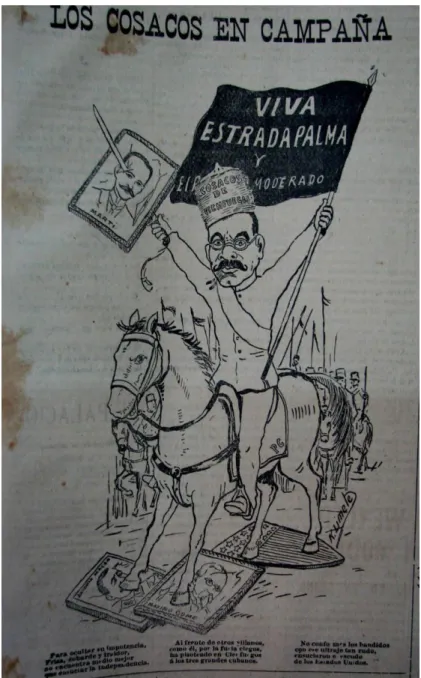
Figure 1: "The Cossacks in the Field." ... 53
Figure 2: Céspedes and Martí to Estrada Palma: "What have you done with the Republic?" ... 55
Figure 3: Céspedes freeing his slave, La Discusión, 1908 ... 61
Figure 4: The PIC as cannibals, 9 June 1912 ... 91
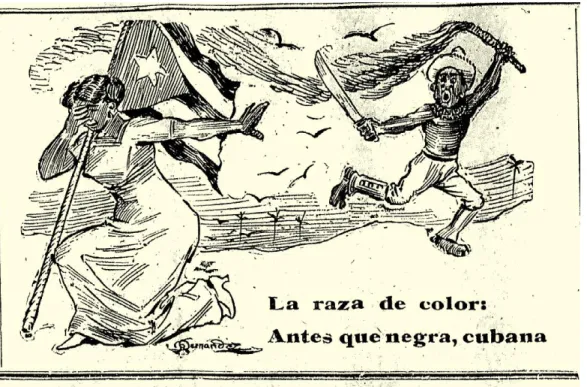
Figure 5: “The colored race: Cuban before black,” 10 June 1912 ... 92
Figure 6: Landing of Antonio Maceo at Duaba ... 136
Figure 7: Castro backed by Maceo, Martí, and Mella ... 254
Figure 8: Mella: 90 Years of Struggle ... 255
Figure 9: October 10 1868-1959 ... 256
Figure 10: Maceo carried in the Granma ... 262
Introduction: Ends to Beginnings
On the first of January, 1959, Fidel Castro and his surging army massed on the outskirts of Santiago de Cuba. The rebels had learned that the Cuban president Fulgencio Batista had fled the island, and sensed that, after nearly seven years of dictatorship and three years of armed insurrection, victory would soon be at hand. As a rapidly assembled military government in Havana pressed for negotiations to end the ongoing rebellion, Castro took to the airwaves of his movement’s radio station to address the people of Santiago de Cuba. The military rulers, he declared, “want to prohibit the entrance into Santiago to those who have liberated the patria.” As his 26 of July Movement assembled around the historic city, Castro issued a profound and powerful rejoinder to his opponents. “The history of 1895 will not be repeated!” he proclaimed. “This time, the mambises will enter Santiago de Cuba!”1 Castro entered Santiago, and his forces quickly converged on Havana. The revolution, it seemed, was triumphant.
Castro’s words announcing the revolution’s triumph, however, spoke to a sense of a deeper victory that stretched back to the nineteenth century. Indeed, as the army of the 26 of July Movement spread across the island to seize the reins of government, Fidel Castro looked back more than six decades to invoke the Cuban mambíses, the army that fought Cuba’s thirty year struggle for independence from Spain. Why, in this moment of profound
1 “Fragmentos de la alocución a Santiago de Cuba, leída por el Comandante en Jefe Fidel Castro,” in Ricardo
2
importance for the future of Cuban nationhood, did Castro look to the past as a rallying cry for victory?
This dissertation examines the ways that Cubans used the memory of their independence struggle as the foundation of their new nationhood and their national self-image. The wars for independence became a common narrative that established a shared Cuban identity during the unsteady transition from colony to republic, and from republic to revolution. Instead of only tracing the consolidation of stories and symbols in the service of national unity, this dissertation will reveal how the authority of historical memory in Cuba served to sustain dramatic challenges to the status quo and unsettle the political and social structures of the Cuban republic.
“The Blood of Our Heroes” argues that the memory of the nineteenth century independence struggle emerged as the lingua franca of political debate during the Cuban republic (1902-1959), and served as the ideological foundation of the revolutionary
3
However, as Castro’s invocation of the mambises at Santiago suggests, the memory of that glorious past was more complex and fraught than official commemorations would suggest. As quickly as some Cubans celebrated the heroic victories of Cuban insurgents as evidence of national fitness and unity, others challenged the claim that the ideals that motivated the Liberation Army had been achieved in the new republic. As narratives and icons could be deployed as symbols of the nationalist movement’s victory, so too might they be reconfigured to undercut those claims and promote alternate visions of the nation.
As its title indicates, “The Blood of Our Heroes” speaks to the power of shared glory and sacrifice in the Cuban imagination, as well as to the symbolic functions of race within those narratives. Cubans hoping to affirm national unity routinely recalled the blood spilled in the service of independence, while celebrating the mixture of the blood of black and white soldiers on the nation’s battlefields. I argue that race and memory were deeply entangled in Cuban life. My analysis centers on three questions: How did Cubans use narratives of the independence wars to create and sustain national unity and social cohesion? How did the memory of the alliance of black and white soldiers in those wars contribute to norms of inclusion and political participation for Cubans of color? And finally, how did critics of the republican conditions create alternative narratives of the nation’s history to challenge the dominant nationalist framework and assert claims to power?
When Castro announced that his forces would not be kept from entering Santiago, just over sixty years had passed since the last time a Cuban insurgent army had descended upon that city in the summer of 1898. Then as well, the rebels sensed the approach of
4
Spanish rule by freeing his slaves and inviting them, as citizens, to join the fight for independence. From that moment, the political independence of Cuba was joined with the pursuit of racial fraternity at the genesis of Cuban nationhood. The cross-racial alliance that assembled to overthrow Spanish rule challenged both colonial power and racial hierarchy, advancing through its composition and political program the proposition of a raceless nation. Cubans of color filled the ranks of the Liberation Army, including Antonio Maceo, who joined the rebellion two days after its start and quickly ascended to the rank of General.
In the spring of 1898, the United States declared war on Spain, and entered the ongoing war for Cuban independence. By that time, the Cuban uprising had spawned three distinct conflicts: The Ten Years’ War (1868-1878), the Little War (1879-1880), and the War of Independence (1895-1898). The Spanish army, already on the verge of collapse, held out only briefly against the newly arrived U.S. soldiers, and in July, Spanish forces surrendered to the United States. After three decades and three wars, the Cuban mambises were barred from accepting the Spanish capitulation or even entering the city.
The Cuban republic was born into instability in 1902. The Platt Amendment, which gave the United States the right to intervene in Cuban affairs, was forced into the new Cuban constitution as a condition of U.S. withdrawal. The fear that internal upheaval could prompt renewed U.S. occupation and threaten independence demanded that even greater emphasis be placed on maintaining social cohesion. As a consequence, the connection between the new republic and the long struggle to create it was at once fiercely asserted and profoundly tenuous.
5
projects, commemorative ceremonies, and nationalist mythologies in the early republic speaks to the desire of Cuban patriotic activists to demonstrate the country’s fitness for nationhood and symbolically affirm its unity around shared stories and icons. Through newspapers, poems, political speeches, and public rituals, Cuban nationalists crafted and sanctified a vision of their heroic and unifying past.
In addition to creating a sense of national community, representations of the nation’s history also established the terms of that unity and the beliefs that would structure national belonging. While ideologically committed to racial equality, the independence movement had been beset by anxieties over the empowerment of black and mulatto Cubans and fears that the African-descended population would ultimately challenge white authority. These fears persisted into the republic, and shaped how Cubans of all colors structured the memory of heroes like Antonio Maceo and others. My analysis will assess the construction of the black role in making Cuban nationhood, and examines the shifting and sometimes
intransigent meanings of race and blackness in national historical narratives.
In a study that spans the inauguration of the republic to the consolidation of the Cuban Revolution, “The Blood of Our Heroes” interrogates the function of memory in shaping Cuban political culture and establishing norms of national inclusion. The first years of the republic prompted Cubans to formulate a nationalist civil religion upon the icons and narratives of the independence wars, which were described and commemorated with
reverence and defended fiercely. The establishment of a new national identity called for the dissemination of stories to repeat and heroes to venerate.
6
ideology of national racelessness functioned retroactively, erasing blackness from the Cuban story. Even as the memory of the independence wars was crafted and disseminated to ensure social cohesion, narratives that that the power to unite were also imbued with great potential to unsettle. Challenges to the claim that racism and discrimination did not exist in the republic arose within the language of national memory, but repurposed nationalist symbols like Antonio Maceo in the service of a call for racial equality.
Periods of unrest animated the tensions embedded in national memory, unsettling the calm surface of the republic and fracturing the dominant narratives of the past. This
dissertation alternates between Cubans’ efforts to use memory to create and project national unity and the moments of political rupture that revealed what Tiffany Thomas Woodward has called “the soft underbelly of nationalist mythology.”2
These breakdowns, I argue, created space in which the meanings of the past could be overturned and redefined as the foundation of a new model of nationhood.
I view the presence and power of memory in Cuba as a story in itself. Historians have noted the prevalence of memory discourses in Cuba, citing the invocations of patriotic leaders like José Martí in political contests or references to the nation’s independence struggle in debates over racial inclusions, but these have generally described as isolated examples, a part of a different story. The research presented in “The Blood of Our Heroes” reveals a constellation and a shape where others have seen disparate examples. The ubiquity of memory might, ironically, belie its distinct authority to legitimate political and social programs and structure norms of national inclusion. Exploring the function of the narratives and symbols derived from the independence movement enables me to situate political
2 Tiffany A. Thomas-Woodard, “’Toward the Gates of Eternity’: Celia Sánchez Manduley and the Creation of
7
confrontations and social debates within a distinct cultural imaginary, and to describe the framework through which Cubans interpreted and addressed the challenges of an unsteady independence.
By recognizing the central role given to memory in shaping national discourse, this dissertation represents a new direction in the study of nationalism and race in Cuba. Rather than assessing the execution of official claims of racial equality in the republic, or treating racial politics as a separate point of analysis, “The Blood of Our Heroes” approaches beliefs about race within dominant narratives of the nation. Interrogating the narratives of national history that shaped debates during the Cuban republic reveals the deep entanglement of racial and national ideologies. Constructions of the nation’s history established and communicated the values of Cuban nationality, and beliefs about the meaning of race and the place of Cubans of color in national society were created within the same processes.
Racial beliefs existed within and through nationalist beliefs –the memory of black and white Cubans uniting in the anti-colonial fight was at the nucleus of nationalist ideology, the premise on which nationality was founded. The enduring power of that belief, I argue, rested on the repetition and affirmation of the memory on which it was predicated. Thus, while other scholars have used the “myth of racial equality” as a premise from which to study persistent inequality, I approach that belief as a narrative that was constantly circulated, challenged, and reinforced, and therefore was not an outcome but an ongoing process that continued throughout the Cuban republic and beyond
8
Although the focus on memory and narrative represents a new, innovative approach to the study of life in the Cuban republic, recent scholarship has begun to address the centrality of historical myths and symbols in structuring Cuban nationhood. There is no shortage of excellent scholarly work on the sources of Cuban nationalism and identity, but historians have been largely silent on the crucial function of memory and iconography in giving meaning to the nation.3 Several studies have drawn upon Castro's famous declaration, “History Will Absolve Me,” to discuss how his government has used the past as a source of legitimacy for its revolutionary project, but none has examined the cultural and political meaning of history and memory that underpinned that legitimacy.4 Moreover, these studies focus on the revolutionary period, when the government was able to exert great influence over the production of academic history. During the republic, the dominance of particular narratives illuminated the efforts of state power, but rested as well on the norms circulating through popular media and public events.
Recent scholarship suggests a growing interest in memory and iconography in Cuban studies. Lillian Guerra's 2005 monograph The Myth of José Martí focused on the symbolic uses of Martí in the early republic, as divergent nationalisms competed for primacy in national politics. Guerra joined other scholars, including João Felipe Gonçalves and Alfonso W. Quiroz in contributing essays to The Cuban Republic and José Martí, an edited volume that explored the variety of uses to which the image of Martí was put in republican and
3 Recent studies have focused on the development and content of Cuban identity. See, for example, Louis A.
Pérez, Jr., On Becoming Cuban: Identity, Nationality, and Culture (Chapel Hill: University of North Carolina Press, 1999); and Eduardo Torres-Cuevas, En busca de la cubanidad, 2 vols. (Havana: Editorial de Ciencias Sociales, 2006).
4
9
revolutionary societies.5 These studies built upon Richard Butler Gray’s foundational work, José Martí, Cuban Patriot, which was among the first works to comprehensively examine the uses of historical symbols in Cuba. His 1962 monograph explored the many forms of Martí iconography that emerged in the decades following Cuban independence, including a close study of the national hero’s image in official currency and postage. An inventive source base enabled Gray to illuminate the everyday encounters with iconography that shaped memory and circulated official representations of the national past.6
“The Blood of Our Heroes” mobilizes these methods to reveal memory and
iconography as the symbolic terrain on which struggles over the meaning of nation would be fought during the anxious decades of republic and revolution. By interrogating the memories that achieved dominance as well as counter-narratives that promoted new visions of the past and present, this project significantly advances our understanding of the republican era and the beliefs that shaped its course. Many of the challenges to orthodox memory that emerged during the republic arose from Cubans of color who challenged the claim that racial equality had been achieved during the independence wars.
Until fairly recently, scholars had approached the meaning and function of race in the Cuban republic through a political framework which privileged class divisions and
emphasized the distorting influence of the United States to explain the inequalities of the period. Interest in the conditions and cultures of African descended peoples under slavery in Cuba produced important work, notably the early and influential work of Cuban
5 Lillian Guerra, The Myth of José Martí: Conflicting Nationalisms in Early Twentieth-Century Cuba (Chapel
Hill: University of North Carolina Press, 2005); Mauricio A. Font and Alfonso W. Quiroz, eds., The Cuban Republic and José Martí: Reception and Use of a National Symbol (Lanham, MD: Lexington Books, 2006).
10
anthropologist Fernando Ortiz.7 More recently, scholarship has focused on the features of plantation slavery in Cuba and the uneven processes of emancipation that accompanied the rise of anti-colonial activity in the late 1900s.8 Important studies of slave rebellion and maronnage have reemphasized the agency and experience of slaves in Cuba, affirming the political and social connections between free and enslaved people in the development of colonial society and anti-colonial movements.9
A significant set of works emerged from the Cuban republic, emerging from the path breaking work of the ethnographer and anthropologist Fernando Ortiz, whose studies of Afro-Cuban culture and religion were later joined by research on race relations and nationalist ideology.10 Important works by Alberto Arredondo and Serafín Portuondo Linares attempted to illuminate the distinct struggles of African-descended Cubans in the colonial and national periods. Portuondo, an activist in the Communist Party and its anti-discrimination advocacy in the 1940s, produced a particularly distinguished scholarly lineage with his 1950 study of the Independent Party of Color, as historians like Aline Helg and Silvio Castro Fernández have continued to grapple with the anti-black violence that erupted
7 See, for example, Fernando Ortiz, Los negros esclavos (Havana: Editorial Revista Bimestre Cubana, 1916).
8 Influential studies of slavery and abolition include Raúl Cepero Bonilla, Azúcar y abolición (Havana:
Editorial Cinet, 1946); Franklin W. Knight, Slave Society in Cuba During the Nineteenth Century (Madison: University of Wisconsin Press, 1970); Rafael Duharte Jiménez, El negro en la sociedad colonial (Santiago de Cuba: Editorial Oriente, 1988), and Rebecca Scott, Slave Emancipation in Cuba: The Transition to Free Labor, 1860-1899 (Princeton: Princeton University Press, 1985); Olga Portuondo Zúniga, Entre esclavos y libres en Cuba colonial (Santiago de Cuba: Editorial Oriente, 2003).
9
For further analysis of slave rebellions and their consequences in colonial Cuba, see Rafael Duharte Jiménez, Nacionalidad e historia (Santiago de Cuba: Editorial Oriente, 1989), Robert L. Paquette, Sugar is Made with Blood: The Conspiracy of La Escalera and the Conflict between Empires over Slavery in Cuba (Middletown, CT: Wesleyan University Press, 1990); Gloria García, Conspiraciones y revueltas: la actividad de los negros en Cuba, 1790-1845 (Santiago de Cuba: Editorial Oriente, 2003); Matt D.Childs, The 1812 Aponte Rebellion in Cuba and the Struggle Against Atlantic Slavery (Chapel Hill: University of North Carolina Press, 2006).
10
11
after the party's armed protest of 1912.11 The organization and suppression of the country’s first political party organized to defend the interests of Cubans of color figures prominently in this study, both as an event in itself and as a memory that became deeply entangled with that of black participation in making the nation.
While race relations in the early republic and the events of 1912 have remained a focus of scholarly attention, the literature on race has grown increasingly diverse and sophisticated. A rich scholarship has also emerged on the contributions of African-descended Cubans to national culture and identity, with a strong focus on the contours of Afro-Cuban religions and folklore in Cuba.12 Writers have further elaborated the experiences of Afro-Cubans through diaries and testimonial works that have illuminated the functions of race and nationalist ideology in the lives of individual Cubans.13
The historiography on race relations and the problem of discrimination in the republic and revolution has developed rapidly in recent decades. The work of Tomás Fernández Robaina has been especially influential in the development of this literature. The publication of his Bibliografía de temas afrocubanas in 1985 and El negro en Cuba five years later helped to galvanize new scholarly interest in the question of racial inequality politics during the republican era, establishing new frameworks through which scholars began to assess the
11 Alberto Arredondo, El negro en Cuba (Havana: Editorial Alfa, 1939); Serafín Portuondo Linares, Los
independientes de color: historia del Partido Independiente de Color, 2 ed. (Havana: Editorial Caminos, 2002); Silvio Castro Fernández, La masacre de los independientes de color en 1912 (Havana: Editorial de Ciencias Sociales, 2002).
12 See, for example, Fernando Ortiz, Los negros brujos: apuntes sobre un estudio de etnología criminal 2d ed.
(Miami: Ediciones Universal, 1973); Lydia Cabrera, El monte (Havana: Editorial Letras Cubanas, 1993), Jorge
Duany, “Stones, Trees, and Blood: An Examination of a Cuban Santero Ritual,” Cuban Studies 12 (1982),
37-53
13
Notable examples of this genre include Miguel Barnet, Biografía de un cimarrón (Havana: Editorial Letras
Cubanas, 1980) and María de los Reyes Castillo Bueno, Reyita: testimonio de una negra cubana nonagenaria
12
causes and consequences of discrimination. His recent collection, Cuba: personalidades en el debate racial, explores the racial dimensions of Cuban republican life through essays on prominent writers and analyses of political debates.14
Scholarship on race has continued to grow as writers have assessed the continuities and contrasts between the republican era and the revolutionary period. In recent years, Esteban Morales Domínguez has written extensively on the past and present of Cuban race relations, notably in his 2007 monograph Desafíos de la problemática racial en Cuba and in subsequent pieces published in the Cuban journal La Jirabilla.15 Scholars have also brought trans-national perspectives to the study of race in Cuba, notably in the work of Frank Guridy and in a collection edited by Lisa Brock and Digna Castañeda Fuertes.16
Monographs by Aline Helg and Alejandro de la Fuente have shaped the study of Afro-Cuban political engagement, advancing the premise of a “myth of racial democracy” as the dominant framework of Cuban racial politics. In Our Rightful Share, Helg suggests that this ideology confronted Cubans of color with “an unsolvable dilemma,” as to accept the logic of myth was to endorse their continued marginalization, while contesting the myth itself
14 Tomás Fernández Robaina, Bibliografía de temas afrocubanas (Havana: Biblioteca Nacional “José Martí,”
1985), El negro en Cuba: apuntes para la historia de la lucha contra la discriminación racial (Havana: Editorial de Ciencias Sociales, 1990); Tomás Fernández Robaina, Cuba: personalidades en el debate racial (Havana: Editorial de Ciencias Sociales, 2007).
15 Esteban Morales Domínguez, Desafíos de la problemática racial en Cuba (Havana: Fundación Fernando
Ortiz, 2007); Esteban Morales Domínguez, “Cuba: raza y república,” La Jirabilla 6 (13-19 October, 2007), n.p. On the race in revolutionary Cuba, see especially John Clytus, Black Man in Red Cuba (Coral Gables:
University of Miami Press, 1970); Mark Q. Sawyer, Racial Politics in Post-Revolutionary Cuba (New York:
Cambridge University Press, 2006); Pedro Pérez Sarduy and Jean Stubbs, eds., Afro-Cuban Voices: On Race
and Identity in Contemporary Cuba (Gainsville, Fl: University Press of Florida, 2006).
16 Frank Guridy, Forging Diaspora: Afro-Cubans and African Americans in a World of Empire and Jim Crow
13
would prompt accusations of anti-nationalism or racism.17 De la Fuente allows for greater nuance and complexity in his treatment of race in Cuban political life, suggesting that a myth of racial equality in Cuba served as well to offer Cubans of color a powerful and resonant discourse through which to assert political power, and limited the options of the white political figures to marginalize or ignore their claims.18 This scholarship has focused on evaluating the veracity of that claim through exposing racial discrimination and assessing the political and economic strategies that Cubans of color advanced to redress inequality. Rather than exploring the electoral consequences of the equality myth, my study proposes that this national ideology is best approached as a process rather than as an outcome.
Moreover, exploring these processes through memory illuminates the entanglement of racial and national ideologies at the very foundation of Cuban identities.
Recent scholarship has begun to illuminate these decisive cultural components of nationality and nationalism. Works by Alejandra Bronfman and Robin Moore have suggested that the meanings of nationality were negotiated through symbolic practices as Cubans sought to define the social and cultural trajectory of the nation. In Nationalizing Blackness, Moore reveals that concerns about the modernity of the nation shaped how
Cubans perceived and represented African-derived cultural forms in the early republic, while Bronfman's research uncovers how intellectuals instrumentalized the growing symbolic power of science to legitimate racial categories and connect them to competing ideas of
17 Aline Helg, Our Rightful Share: The Afro-Cuban Struggle for Equality, 1886-1912 (Chapel Hill: University
of North Carolina Press, 1995), 7.
18 Alejandro de la Fuente, A Nation for All: Race, Politics, and Inequality in Twentieth-Century Cuba. (Chapel
14
nation.19 My research joins these inventive approaches to the study of race and nation with the growing international literature on memory and iconography to examine how anxieties about blackness and Cuban nationhood influenced representations of iconic Cubans of color, as well as how Cubans in turn mobilized alternative representations as a means of
refashioning the content of Cuban nationality.
Recent research into the origins of Cuban nationalist symbols and ideologies informs my approach and provides fertile ground in which to analyze the iconographic and narrative foundations of the republican era. Ada Ferrer's Insurgent Cuba locates the origins of Cuban national ideologies in the internal struggles over race in the armies of the nineteenth century independence wars. Ferrer masterfully addresses the complex relationship of race and Cuban nationalism in the crucial period wherein Cubans of all colors envisioned and fought for their nationhood. Moreover, she notes that memory of the independence movement was
constructed in the midst of the struggle, as nationalist writers began crafting narratives that emphasized racial fraternity and minimized the threat posed by black insurgents.20 These constructions of an idealized black soldier pervaded narratives of the independence wars that gained dominance in the Cuban republic.
Methods and Theory
While scholars have long recognized the power of history in Cuban life, recent academic interest in memory and the construction of national narratives has offered new
19
Alejandra Bronfman, Measures of Equality: Social Science, Citizenship, and Race in Cuba, 1902-1940
(Chapel Hill: University of North Carolina Press, 2004); Robin Moore, Nationalizing Blackness:
AfroCubanismo and Artistic Revolution in Havana, 1920-1940 (Pittsburgh: University of Pittsburgh Press, 1997).
20 Ada Ferrer, Insurgent Cuba: Race, Nation and Revolution, 1868-1898 (Chapel Hill: University of North
15
strategies and theoretical frameworks through which to assess popular and political
representations of the past. My methodological approach to the study of memory in Cuba is grounded in the deep connection between identities and the pasts that sustain them, and will draw upon the insights of scholars in a variety of fields whose work has traced the contexts and conflicts that shape how societies represent their pasts.
The growing scholarship on collective remembering offers new challenges and opportunities to historians of Cuba whose efforts to illuminate the tense structures of Cuban nationhood remain incomplete without attention to the narratives of the past upon which it has been built. Indeed, just as a nation can be understood to be an “imagined community,” that nation is defined by an imagined past. Benedict Anderson's famous conceptualization of nations as “imagined political communities” is the natural starting point for this study, but this dissertation will attempt to engage with memory to move beyond Anderson's elegant but ultimately limited formulation of nation and nationality.21
I use the term “memory” to describe the various ways Cubans represented the events, icons and meanings of their shared history. The term “memory” refers “not to the past, but to the past-present relation.”22 That is, memories are representations of the past as constructed through the context of the present. Of course, at a given moment, any society will produce or hold many visions of the past which compete for social resonance and political acceptance. John Narone and others have argued that nationalized collective memories like those
21 See Benedict Anderson, Imagined Communities: Reflections on the Origin and Spread of Nationalism
(London: Verso Press, 1983).
22Popular Memory Group, “Popular Memory: Theory, Politics and Method,” in The Oral History Reader 5th ed.,
16
promoted by the Cuban government tend away from complication and controversy and toward presenting “a unified society with a unified past.”23
The set of symbols, icons, and narratives that emerged from the independence wars served as the foundations of Cuban nationhood. Heroes like Antonio Maceo, José Martí, and Carlos Manuel de Céspedes became indispensable symbols of the nation, and were thus heavily laden with meaning. My approach follows that of scholars like Wilbur Zelinsky who have connected the construction of a mythology of the nation with the norms and ideologies they sustain. As symbols are venerated and stories retold, they develop into parables that represent the meaning of the nation and its people, the values and beliefs that connect them into a cohesive whole.24 In “The Blood of Our Heroes,” I examine the implications of these insights for Cuban national development by analyzing the creation and circulation of national memories, symbols, and stories, and I illuminate the ruptures that emerged when Cubans challenged the meanings of those heroes and advocated alternative narratives of the shared past.
Scholars of Latin American nationalism have long recognized the centrality of
historical representations in sustaining social cohesion and government legitimacy around the region. The case of Mexican state iconography has attracted significant attention from historians analyzing the creation of a mythology around that nation's long revolution of 1910-1920. Ilene O'Malley's 1986 study, The Myth of the Revolution traces the construction of “hero cults” around the major figures of that struggle, and illuminates the centrality of narrative representation in the circulation of an official nationalism in the first decades of
23John Narone, “Professional History and Social Memory,”
Communication 11 (1989): 93, 94.
24 Wilbur Zelinsky, Nation Into State: The Shifting Symbolic Foundations of American Nationalism (Chapel
17
post-revolution government in Mexico. More recently, Thomas Benjamin has looked beyond political discourse to analyze the content of national monuments and commemorative
festivals in the making of the Mexican revolutionary state.25
Scholars exploring the consolidation of nationalism elsewhere in the Americas have revealed the tense interaction of race and official iconographies. Mauricio Tenorio-Trillo has emphasized the nationalist resonance of indigenous iconography, revealing that the
idealization of a pre-conquest Aztec civilization helped Mexican elites resolve nationalist debates and project an image of modernity abroad in the early twentieth century. In The Return of the Native, Rebecca Earle argues the image of the pre-conquest Indian emerged as the central feature of national iconographies in many Latin American states. This vision of a glorified indigenous past provided newly independent states with symbols of a unifying and distinctive history around which to assert national legitimacy and offered a framework through which elites could reconcile aspirations to modernity with the racial composition of their nations.26
The anxieties of Cuban elites were similar, but the historical, ideological, and racial foundations of the nation were quite different. The analysis presented in “The Blood of Our Heroes” joins the methodological and theoretical insights of Earle’s work and the growing scholarship on collective memory to the study of Cuban nationalism, which historian Mariel
25 Ilene V. O'Malley, The Myth of the Revolution: Hero Cults and the Institutionalization of the Mexican State,
1920-1940 (New York: Greenwood Press, 1986); Thomas Benjamin, La Revolución: Mexico's Great Revolution as Memory, Myth, and History (Austin: University of Texas Press, 2000).
26
18
Iglesias Utset argues has taken “for granted the spontaneous manifestation of... 'el
sentimiento nacional' (national feeling) associated with the independence campaigns.”27 In her landmark study, Las metáforas del cambio en la vida cotidiana, Iglesias notes that “the construction of a metanarrative that finds in the independence struggles the glorious origins, the foundational deeds, and the emblematic images of the nation has been... little studied in Cuban historiography.”28
She argues that the transformations of statues, street names, flags, civic festivals, and other daily markers of group identity helped circulate nationalist sentiment and patriotism in the period of occupation by the United States that divided colony from nationhood in Cuba. My study expands on her research to trace the function of these “emblematic images of the nation” in the decades of republic that followed the U.S. occupation, and seeks apply her fruitful methods to the interaction of race and memory in the continuing construction Cuban nationality.
In attempting to illuminate the anxious relationship of race and nation that shaped the content and function of national iconography, the scholarship on divided memories in the U.S. South has offered both an inspiration and methodological model for this study. Indeed, the contentious effort to create and commemorate the Civil War in the racially divided Southern states offers useful parallels and instructive contrasts with Cuban representations of the national independence struggle. Kirk Savage's examination of monuments in the post-war South illuminates the challenges posed by contemplating the meaning of race in a public sculpture, and this dissertation seeks to apply those analytical insights to the selection and design of monuments to Afro-Cuban national heroes in the twentieth century. In his 2005
27 Mariel Iglesias Utset, Las metáforas del cambio en la vida cotidiana: Cuba 1898-1902 (Havana: Ediciones
Unión, 2003), 180.
19
monograph, Fitzhugh Brundage argues that “[t]he enduring presence of white memory in the South's public spaces and black resistance to it... is a central theme of the southern past.”29
The Cuban case differs from the U.S. South in many critical ways, and indeed these
constitute the basis of my intervention. While superficially, Cuba may appear to have “white memory” and “black memory,” my research seeks to demonstrate that the entanglement, not the separation of race, memory, and nation is crucial to understanding the continuing
processes of national becoming in Cuba.
The concept of narrative figures heavily in my analysis. Memories and symbols are not static devices or stable representations. I follow the pioneering work of Hayden White in finding meaning in the form in which stories are told. While representations of the past might be easily understood as objective descriptions of a former reality, White notes that the structure of a story – the ordering of events that implies causation, the choice of “important” elements for inclusion and the silence of those deemed irrelevant – speak to a series of choices and assumptions on the part of the narrator. The structure of a narrative, then, reveals some of the motives behind its construction. I use White’s important insight to ask new questions of historical narratives and icons in Cuba, recognizing that historical
narratives in popular memory can be examined as deeply as fiction can be, and can be even more revealing.30
29 Kirk Savage, Standing Soldiers, Kneeling Slaves: Race, War, and Monument in Nineteenth-Century America
(Princeton, NJ: Princeton University Press, 1997); W. Fitzhugh Brundage, The Southern Past: A Clash of Race and Memory (Cambridge, Mass: The Belknap Press of Harvard University Press, 2005), 7.
30Hayden White, The Content of the Form: Narrative Discourse and Historical Representation (Baltimore: The
20
Organization
The structure of this dissertation follows the ongoing contestation of national memory, alternately exploring the construction of narratives intended to symbolize and sustain national unity and the challenges that sought to overturn or re-imagine those
dominant narratives of the nation’s history. The first chapter centers on the consolidation of a nationalist iconography and set of sacred narratives in the first decade of independence. The first years of nationhood were marked by an effort, spearheaded by prominent
nationalists and veterans, to establish a pantheon of national heroes that would solidify the young nation’s unity and national character against the tangled specters of North American influence and internal instability. These projects were embarked upon without government sponsorship or support, and many languished for lack of funds or land.
With the proliferation of memory projects in the first years of republic came the rapid dissemination of a nationalist mythology that centered on the wars of independence. This chapter reveals the formulation of a nationalist civil religion in Cuba through the selection and veneration of patriotic heroes and sacred stories. As this iconography structured national self-image, the narratives that Cubans disseminated in this period established patriotic values and communicated norms of national belonging and political engagement.
21
posed by the PIC was closely tied to the memory of Antonio Maceo, a Cuban of color and among the most revered heroes of the anti-colonial struggle. As the Cuban government prepared to select a design for a monument to Maceo, the PIC rose in revolt against the government, initiating a violent repression against Cubans of color which, I argue, was activated by a claim that blacks had blasphemed against a racial covenant forged on the battlefields of the nineteenth century. In the aftermath of this racial violence, the victorious Cuban government inaugurated its monument to Antonio Maceo, a massive ritual that sutured a fragile national unity and signaled the rise of govermental authority over national memory.
22
a vision of the nation’s history that minimized the contributions of Cubans of color and seemed to endorse national whiteness.
By the 1920s, however, many Cubans of the post-war generation began challenging the republican government and its claim to the legacy of the nation’s founders. In Chapter Four, I examine the re-imagining of Cuban nationalist beliefs between the 1920s and 1940s, following a new generation of student revolutionaries, historians, and political leaders who developed new interpretations of the nation’s history to sustain an assault on republican state and society that was directed at the rule of President Gerardo Machado. After the collapse of his regime, a widening assembly of oppositional groups instrumentalized memory to steer the creation of a new republic. The memory of black contributions to Cuban nationhood became the source and rhetoric of a demand for an anti-discrimination clause in the new constitution being debated in 1940. At the same time, a new wave of historical writing marked the rise of a revisionist memory that emphasized the social philosophies and progressivism of the nation’s heroes.
By the early 1950s, with the republic again collapsing under authoritarian rule, an emerging movement adopted this revisionist narrative as the foundation of a revolutionary nationalism. My study concludes by revealing how the 26 of July Movement, led by Fidel Castro, used memory as a political ideology and call to arms, undercutting the legitimacy of the Cuban government and identifying its own insurrection as completing the unfinished work of the nation’s nineteenth century founders. Once in power, the 26 of July consolidated and disseminated this new historical narrative in support of its revolutionary project,
23
I
Myths, Monuments, and Meanings: Cuban Civil Religion in the Early Republic
In the spring of 1913, former Cuban army captain Felix Zahonet penned a furious, frantic letter and presented it to representatives of the Cuban legislature. His missive
excoriated the government for its failure to begin work on a proposed mausoleum in Havana, a “National Pantheon” that would house the remains of the country’s greatest heroes.
Zahonet, a veteran of the Cuban wars of independence and the Secretary of the project’s Managing Committee, had been advocating for the project for years. While the idea of a Pantheon had been first proposed in 1905, Zahonet took up the cause after it had languished through nearly a decade of national turmoil and instability. He wrote letters and manifestos detailing his design for a huge memorial in the capital, and even composed a sonnet about the project, titled “What the National Pantheon Must Be.”
Zahonet envisioned a massive monument, “at a minimum cost of $200, 000,” in which “it would be possible to build a vast crypt with a number of respectable tombs in which to place the bodies of our citizens. An ossuary to protect the remains. The land would be encircled by an enormous iron gate, and at the front of the pantheon, flowers and
24
Manuel de Céspedes, Igancio Agramonte, and Francisco Vicente Aguilera.1 The Senate had promised to organize celebrations to raise awareness and excitement behind the Pantheon project and to circulate “the idea of a National Pantheon is a high exponent of public spirit, entailing the most transcendental affirmation of the idea of the State."2
In the unsteady years that followed the end of Spanish authority on the island, Cubans sought to define the meaning of their nationhood and to establish a cohesive nationalism through the sacralization and commemoration of the past. The thirty year struggle for independence initiated by Carlos Manuel de Céspedes in 1868 emerged as the foundation of narratives of national becoming, the story of the nation that introduced and sanctified Cuba’s heroes, icons, and unifying parables. With the departure of Spanish authorities in 1899, Cubans began the process of elevating the memory of their independence struggle into the texts and symbols of a nationalist civil religion with which the nation’s citizens could identify and whose example they might emulate. Nationalist activists like Felix Zahonet worked to inscribe representations of heroes and history on the landscape and imagination of the young nation, enacting projects to build monuments and memorials to patriotic heroes. Commemorative ceremonies and written retellings of national glories enabled Cuban writers, elites, and political figures to circulate visions of the nation that affirmed social cohesion while normalizing the terms by which inclusion and unity would be structured.
In the first decade of independence, Cuban nationalists worked with varying degrees of success to replace Spanish symbols with a Cuban iconography drawn from the wars of
1 Felix Zahonet, “Diseño para el proyecto del monumento del Panteón Nacional,” n.d. [ca. 1913], Fondo
Academia de la Historia, Caja 500, Num. 5, Archivo Nacional de Cuba (Hereafter abbreviated as ANC), Havana, Cuba.
2 “Reglamento, programa del Comité Central, constituido para gestacionar la creación de un Panteón Nacional,”
25
independence. Although Zahonet had dreamed of a monument that would represent both national greatness and governmental power, the nascent Cuban government had little role in efforts to mark the newly independent nation with monuments to its heroes early in the republic. Many monument projects, including Zahonet’s elaborate National Pantheon, languished for lack of funding or governmental support. Nevertheless, the fervor with which Cubans worked to assemble a national iconography on the island illuminates the importance assigned to the memory and symbols of the independence struggle as a means of cultivating a national identity.
The narration of national history also served to affirm the cohesion and unity of the nation, both by sanctifying shared heroes and achievements and by minimizing the conflicts that marked the independence struggle. Nevertheless, representations of the past illuminated the very tensions and ambiguities that they set out to subsume into a unifying narrative. With their independence and nationhood threatened by internal social turmoil and the potential of further North American intervention, Cubans venerated heroic icons of cohesion and national strength. Building monuments and commemorating patriotic events also served to affirm durability of Cuban nationhood, as many Cubans viewed the proper commemoration and statuary representation of a nation’s heroes as an indication of a modern society comparable to the states of Europe and North America. The affirmation of national fitness also
necessitated minimizing or marginalizing potential sources of conflict by socializing Cubans into a normative nationalist mythology.
This chapter traces the creation of nationalist symbols and narratives in the first years of the Cuban republic. Through monuments and memorials, newspapers articles and
26
of the independence struggle into the eidolons and parables of a Cuban civil religion, wherein the nation, its myths, and its symbols served as a locus of para-religious worship and the sites of memory offer the possibility of social transcendence into the nation. First proposed by the sociologist Robert Bellah, the framework of “civil religion” has been used by scholars to describe the structures of North American patriotic belief especially, but the period
immediately following the withdrawal of Spanish forces from the island in 1898 reveals the slow but energetic ascendance of the heroes, events, and stories of national history to mythical stature that demanded adherence and sacrifice, but promised transcendence into a national community that was both timeless and powerful.3
The civil religion framework illuminates how the consolidation of Cuban nationhood was shaped by an intricate system of belief and blasphemy wherein nationalist ideologies were deeply and emotionally held. While observers of North American culture and politics have long drawn on the concept of civil religion to describe nationalist ideologies in the United States, scholars have not fully explored this phenomenon as it developed in Cuba, a country whose patriotic practices and rituals drew heavily on the influence of its North American occupiers. As Marial Iglesias has rightly argued, many Cuban ritual forms, such as the oath to the flag performed in public schools, were taken directly from North American traditions. Until recently, many observers of Cuba have treated the formulation and function of nationalist symbols as discrete or separate, discussing the role of heroes and narratives in support of other social or political analyses without noting their instructive ubiquity. Civil religion, as Michael Angrosino notes, “seems to give a coherent reality to a set of attitudes and behaviors that some observers would prefer to treat as separate (and hence less
27 meaningful).”4
In Cuba, these practices tended to focus on the events of the independence struggle which began with the Grito de Yara in 1868 and ended with the U.S. intervention of 1898 and the 1902 inauguration of the republic. The long anti-colonial effort emerged as a nationalist epic and the source of symbols and stories that could be used to represent what Cuba would be, what the nation should be.
Illuminating how Cubans created a system of nationalist belief enables us to assess the codes of conduct and norms of national inclusion that this system helped to circulate. The process of ritual and mythmaking that made the nation itself the focus of worship emerged from the profound instability of the Cuban republic, a condition built into its foundation, both in law and in narrative. The heroic story of Cuban independence from Spain was cut short by the intervention of the United States, complicating the narrative of a victorious Cuban revolution. That same intervention ended with the Platt Amendment, a clause that the United States forced into the Cuban constitution allowing U.S. intervention in Cuban affairs at its discretion, promising that even Cuba’s nominal independence could be withdrawn at the slightest sign of internal instability or conflict.
As Cubans emerged from thirty years of intermittent warfare and into a four year occupation by U.S. authorities, the consolidation of nation and republican government were foremost priorities. As we will see, the process of defining and sanctifying nationalist
symbols was fraught with failure and anxiety as efforts to commemorate heroes and stories of the national past confronted financial difficulties, a weak national infrastructure, and
enduring tensions over the role of race in the nation’s past. As Cubans began planning a broad array of monuments to signify the continuity and unity of the nation, their efforts to
28
define national memory served to affirm and disseminate the terms of that unity and underlying ideologies of racial inclusion.
Embodying the Nation: Myths of Antonio Maceo
On December 7, 1899, more than five thousand Cubans gathered in a small town in the outskirts of Havana to mark a powerful and somber date in island’s history. Trains left the capital twice hourly, while others loaded into coaches or pedaled their bicycles to El Cacahual to witness the reburial of Antonio Maceo famed leader of Cuba’s independence wars. The interment of Maceo and his aide, Francisco Gómez Toro, marked the end of a period of uncertainty and displacement that began with the pair’s battlefield deaths, the hasty recovery and secret burial of their bodies, and their disinterment by a council of Cuban political leaders. Maceo and Gómez, who was the young son of General Máximo Gómez, were killed in a Spanish ambush on December 7, 1896, on the outskirts of Havana. Their remains, retrieved and protected by Cuban soldiers, were secretly buried near the battlefield as Cubans continued their march across the island. Months after the 1899 withdrawal of Spanish authority, the bodies were retrieved and prepared for a ceremonial reburial that would bring solemn, ritual closure to the armed struggle for independence to which they had given their lives. From the moment of his death to the enormous patriotic celebrations that accompanied his reburial, the uneasy combination of reverence and anxiety with which Cubans treated the body of Antonio Maceo highlighted the anxious interaction of race, reverence, and memory produced by Cuba’s transition to nationhood.
29
1896, Patria, the newspaper of the Cuban Revolutionary Party, announced “the death of the generous paladin of Cuban liberty, the legendary hero of our wars of independence, the bravest among the brave.” In nearly thirty years of service to the revolutionary cause, Maceo had already achieved enormous fame, and patriotic writers rapidly began assembling the symbolic scaffolding of a Maceo mythology. Declaring the General “the victorious warrior of a hundred battles,” Patria emphasized Maceo’s size and corporal power as figurative evidence of the enduring strength of the independence armies.5 Ironically, by enabling his elevation to mythical status, Maceo’s death affirmed the invulnerability of the cause for which he died.
The first anniversary of his death offered the opportunity to establish Maceo’s meaning for the ongoing rebellion and to amplify the mythification of the hero. With a war against the Spanish raging, the revolutionary journal remembered Maceo as a warrior of unequaled strength in body and character, elaborating a vivid universe of metaphor to communicate his physical enormity, strength and invulnerability. The year of combat that passed since his death prompted a nationalist writer to lament that the ambush that killed Maceo had “deprived Cuba of one of the strongest arms among those who were laboring on the edifice of liberty.”6 Hagiographic poetry mourned “a man of iron” and the “last of a race
of titans.”7
“¡Oh, Maceo gigante!” cried one poet, “victim of your own superhuman courage.”8
Enrique José Varona, the editor of Patria and later Vice President of the Cuban
5 “Antonio Maceo,” Patria, 16 December 1896, 1.
6
“José Antonio Maceo,” Patria, 8 December 1897, 1.
7 “Nota biográfica,” Patria, 19 December 1896, 1; N.A. González, “Antonio Maceo,” Patria, 19 December
1896, 2.
30
republic, recalled that “in the first moments” after receiving news of Maceo’s death, “nobody believed it. Without thinking about it, we all had taken Maceo for invincible, like Achilles.”9 Nevertheless, that Maceo fell at the hands of the Spanish did little to discourage suggestions of invincibility. If anything, his death solidified this image. Ten years after his death, Havana’s La Lucha continued to describe Maceo as an “invincible gladiator.”10
As writers formulated a nationalist memory of Antonio Maceo, Cubans confronted a challenge to nationhood that Maceo himself had anticipated. The 1898 intervention of North American forces removed Spanish authority from Cuba, but denied Cubans not only the political but, crucially, the symbolic or narrative connection to victory and the nationhood that it would ultimately engender. Efforts to socialize Cubans into a nationalist ideology through commemorative ceremonies were often suppressed by the U.S. occupation
authorities. The presence of an occupying force prompted Cuban nationalists to assert and glorify national symbols with increased urgency, and Cubans found opportunities to commemorate their independence struggle even as independence itself was deferred.
In 1898, city of Santiago de Cuba, occupied by U.S. forces, saw one of the earliest and most powerful scenes of commemoration and nationalist ritual, even as the United States had yet to take formal control over the rest of the island. Two years after the death of
Antonio Maceo, the church bells of Santiago rang out to announce “a period of official mourning” which began, according to colonial ritual, “whenever its highest authority… had died.” Maceo, whose body remained buried at a secret location across the island, was mourned in the city of his birth by a swelling crowd of Santiagueros, flanked by a guard of Cuban soldiers and rebel leaders, including several Afro-Cuban generals. The funeral
9 Enrique José Varona, “Lo que significó Maceo,” El Fígaro 46 (10 December 1899), 474.
31
ceremony, accompanied by patriotic speeches, enabled Cubans to assert and celebrate their achievement of independence and to deny the United States a place in the nascent national narrative. Indeed, according to Emilio Bacardí, the speakers at the Reina Theater after the funeral rites “’made virtually no reference to the Americans,” instead “speaking about the independence that Cubans had won.”11
The occupation posed both practical and teleological problems for Cuban nationalists. North American hostility to Cuban patriotic celebrations limited opportunities for Cubans to consolidate national symbols, while rendering that process even more urgent. Moreover, the narratives of national origin that Cubans developed were complicated by the intrusion of foreign troops. The presence of the United States precluded the very Cubans who fought for independence from taking control of the island, but also denied the republic from a narrative continuity with the thirty year struggle to achieve nationhood. Cuban nation builders thus faced a struggle in writing a nationalist narrative. Any story connecting anti-colonial uprising to the Cuban republic would have to address the intervention of the United States and its implications for the independence movement. As we shall see, Cuban nation-builders responded by vigorously circulating a nationalist symbology, taking every opportunity to commemorate and celebrate the memory of the independence struggle.
The funeral rites for Antonio Maceo underscore the deep emotional desire to commemorate patriotic heroes, but also illuminate how efforts to sanctify the past were formulated through the political and social anxieties of the emerging nation. As Cubans began consolidating their nationhood under U.S. occupation, the body of Antonio Maceo became both a literal and figurative locus of national aspirations and anxieties, and the
11 Mariel Iglesias Utset, Las metáforas del cambio en la vida cotidiana: Cuba 1898-1902 (Havana: Ediciones
32
reverent ambivalence with which Cubans contemplated his mortal remains illuminates the deep tensions at the heart of the Cuban national project. Even as Cubans began
contemplating a monument to José Martí at the center of a new national capital, Antonio Maceo’s body was hidden, moved, measured, analyzed, sanctified, reburied. The memory and meaning of Antonio Maceo, like his body, was in flux in the years following his death. Even as Cubans reverently celebrated his military achievements in the service of
independence, his symbolic significance would be far more complicated.
Less than a year after the public funeral in Santiago de Cuba, a national commission prepared an equally solemn but more complex ceremony. On 17 September 1899, this commission presided over the exhumation of the bodies of Antonio Maceo and Panchito Gómez. Their bodies, once buried secretly to guard them from enemy hands, would now be moved to a new site where they could be publicly mourned and celebrated by the citizens of an independent Cuba. The commission presiding over the ritual reburial, however,
determined, as many Cubans would, that Maceo’s body was of a special significance. While the deification of Antonio Maceo had accelerated in the immediate aftermath of his death, his body now became a sacred site. Lyman Johnson has written on the importance of physical remains in the political and social imaginary of predominantly Catholic Latin America, noting that “the dead bodies and burial places of both saints and patriotic martyrs have proved useful, linking remembered acts of sacrifice and treasured virtues to specific places and times and attaching illustrative human narratives to abstract beliefs and ideals.12
The remains of Antonio Maceo came to embody not only the confluence of patriotic and religious worship, but also the interaction of Cuban racial ideologies and anxieties.
12 Lyman L. Johnson, “Why Dead Bodies Talk,” in Lyman L. Johnson, ed. Death, Dismemberment, and
33
Cubans attending the disinterment ceremony collected clothing scraps, bullets, and dirt that was found with Maceo’s body. Far from being illicit souvenirs, these became patriotic-religious relics of a sanctified icon, “the authenticity of which was confirmed in the presence of a notary at the very moment of exhumation.”13
The ceremony, then, joined religious and patriotic reverence with a nascent proto-state power in the form of the commission and its official notaries.
The physical remnants found in the grave of Antonio Maceo were not merely distributed among his relatives and collaborators. In a report published the following year, the “Comisión Popular Restos de Maceo-Gómez” recalled that “in the moments when the box containing the skeleton of Maceo was to be soldered, closed forever, the individuals who comprised the committee of exhumation understood that those remains merited something more than a dry anatomical description or a simple certification of identity.” Maceo’s body, they decided, should be measured and studied. In this moment, the commission members confirmed Maceo’s elevation to national icon and simultaneously illustrated the ambiguity at the heart of that symbol, confirming the scientific and symbolic importance of race for the still-forming nation. In order to determine, to a scientific certainty, Maceo’s racial category and to equip his race with symbolic meaning, the commission convened a research team composed of Drs. J.R. Montalvo, C. de la Torre and Luis Montané that would complete “a profound anthropological study… of the skull” of Antonio Maceo.14
Using methods popularized in Europe by Paul Broca and Paul Topinard, the Cuban doctors attempted to reconcile the physical dimensions of Maceo’s bones, and his skull in
13
Iglesias, 122.
14 José R. Montalvo, C. de la Torre and Luis Montané, El cráneo de Antonio Maceo: estudio antropólogico
34
particular, with positivist ideas about the biological basis of racial difference. The technique of skull measurement to determine both intelligence and racial difference – and the two categories were, in essence, the same – represented a cutting-edge, modern scientific strategy in the late nineteenth century. While nationalist ideologies had emphasized the patriotism and duty to country of black soldiers, while subsuming racial categories into the new, encompassing category of “Cuban,” the apparently uncontroversial decision to study
Maceo’s skull reveals an enduring fascination with his blackness, both as a component of his physical character and as a pillar of his symbolic significance for the nation.15
The study, first published in 1900 but reprinted in popular newspapers like La Lucha into the 1920s, is illuminating as much for the questions its authors asked as the conclusions they reached. Crucially, while both bodies were disinterred, neither the commission nor the anthropologists appear to have been interested in examining the skull of Panchito Gómez, Maceo’s white aide. The primary interest in undertaking such an “anthropological study” of Maceo was to assess and assert his racial identity while simultaneously demonstrating Cuba’s embrace of European scientific methods, thus affirming the modernity of the Cuban national project. Foremost in the minds of the “doctors,” however, was making scientific and social meaning of Maceo’s race. “We remember, as a prelude” began Montavalo and the other anthropologists in their report, “that Maceo was a mestizo; that the crossing of the white and the black, creates an advantageous group, when the influence of the first predominates; but an inferior group when the two influences are balanced, and even more so with the black is
15 For further discussion of the exhumation of Maceo’s remains, and a detailed analysis of the scientific
premises, methods, and theories undergirding the measurement of his skull, see Alejandra Bronfman, Measures
35
advantaged.”16 Thus, the conclusions were set in advance – measurements and dimensions assessed to be beneficial would be attributable to Maceo’s whiteness, any disadvantages would be the result of a too-high proportion of blackness.
Throughout the study, the authors located Maceo’s skull within a spectrum of cranial dimensions marked, on one extreme, by “Modern Parisians,” and on the other, by “African Negros, while occasionally including Basques or the Pariahs of India for comparison. “In general,” continued the study, “one can affirm that intellectual development is in direct relation to the development of the brain.” Maceo, whose skull was larger than even modern Frenchmen, seemed to have even exceeded the best of his racial lineage. Moreover, the study concluded, the frontal curve of Maceo’s skull, which corresponded to “elevated physical functions: intelligence, creative thinking, imagination, noble and generous beliefs” was much larger than his posterior slope, which related to the “animal part” of the brain, the “savage and material.”17
Their clear conclusion, then, was that Antonio Maceo had a mind of significant intellectual advancement and noble capacity.
The examining doctors, however, remained curious about the other consequences of Maceo’s blackness, the areas in which African lineage may have won out over the European in his physical form. “The study of the rest of the skeleton,” they suggested, would “provide us with interesting data from the point of view of stature and race.” After measuring the long arm and leg bones of the hero, whose physical strength and size were already becoming mythologized, Montalvo and his colleagues reached some perhaps inevitable but instructive conclusions. Citing European authorities from the preceding century, the anthropologists explained the different limb lengths of whites and blacks. The measurements of Maceo’s
16 José R. Montalvo, et al, El cráneo de Antonio Maceo, 4.
36
extremities, they declared, “prove that in these characteristics, Maceo was of the black race.” The so-called “Bronze Titan,” it seemed, had the skull and brain of a European and the body of a black man:
As we have seen… many anthropological characteristics reintegrate Maceo to the black type… But he approximates the white race, equals it, and even exceeds it in the general formation of the head, the likely weight of the brain, cranial capacity… [g]iven the race that he belonged to, and the ways he developed his activities, Antonio Maceo can rightfully be considered as a truly superior man.18
It should come as little surprise that the methodology of scientific racism enabled the examining anthropologists to reach a conclusion that would satisfy the needs of Cuban nation-builders. The study, motivated by anxiety over the meaning of Maceo’s blackness, ultimately allowed Cuban elites to reconcile his racial makeup with persistent racist ideologies and aspirations toward national fitness.
Locating blackness in his arms and legs, while centering white characteristics in his skull and brain, had multiple narrative advantages. First, it permitted the anthropologists and those who read their widely publicized report to minimize the blackness of their national hero in body and, by extension, in political and social ideology. If African lineage was peripheral in his body, white Cubans who feared the symbolic power Maceo held for Cubans of color might see blackness as peripheral to his social vision for the nation. Moreover, locating blackness in Maceo’s limbs drew upon persistent stereotypes of black physical prowess that neatly coincided with the growing mythology surrounding Maceo’s own strength and power. Ada Ferrer has argued that the nationalist literature of the independence wars sought to alleviate the anxieties of white Cubans fearful of arming Cubans of color in the fight against Spain by emphasizing the loyalty and docility of the black soldier, thus minimizing the threat