Infant and young child feeding counseling, decision-making, and
practices among HIV-infected women in Malawi’s Option B+
prevention of mother-to-child transmission program: a mixed
methods study
Valerie L. Flax1,2, Gloria Hamela3, Innocent Mofolo3, Mina C. Hosseinipour3,4, Irving Hoffman3,4, and Suzanne Maman5
1Department of Nutrition, Gillings School of Global Public Health, University of North Carolina,
Chapel Hill, NC
2Carolina Population Center, University of North Carolina, Chapel Hill, NC 3UNC Project – Malawi, Lilongwe, Malawi
4Department of Medicine, School of Medicine, University of North Carolina, Chapel Hill, NC 5Department of Health Behavior, Gillings School of Global Public Health, University of North,
Chapel Hill, NC
Abstract
This study examined infant and young child feeding (IYCF) counseling, decision-making, and practices among HIV-infected women with children 0–23 months participating in Malawi’s Option B+ prevention of mother-to-child transmission (PMTCT) program. We conducted 160 survey interviews, 32 in-depth interviews, and 32 observations of PMTCT visits. Surveys indicated that exclusive breastfeeding was common (75%) among children < 6 months, while minimum dietary diversity (41%) and minimum acceptable diet (40%) for children 6–23 months occurred less often. In-depth interviews supported these findings. Most women felt comfortable with current
breastfeeding recommendations, but chronic food insecurity made it difficult for them to follow complementary feeding guidelines. Women trusted IYCF advice from health workers, but mainly received it during pregnancy. During observations of postnatal PMTCT visits, health workers infrequently advised on breastfeeding (41% of visits) or complementary feeding (29% of visits). This represents a missed opportunity for health workers to support optimal IYCF practices within Option B+.
Keywords
breast feeding; complementary feeding; HIV; prevention of mother-to-child transmission; Option B+
Corresponding author: Valerie Flax, University of North Carolina, Department of Nutrition, 2200 McGavran-Greenberg Hall,
HHS Public Access
Author manuscript
AIDS Behav
. Author manuscript; available in PMC 2017 November 01.Published in final edited form as:
AIDS Behav. 2016 November ; 20(11): 2612–2623. doi:10.1007/s10461-016-1378-x.
A
uthor Man
uscr
ipt
A
uthor Man
uscr
ipt
A
uthor Man
uscr
ipt
A
uthor Man
uscr
INTRODUCTION
In resource-limited settings, use of antiretroviral therapy (ART) and adherence to infant and young child feeding (IYCF) guidelines are key methods for reducing HIV transmission through breastmilk (1). Postnatal transmission is <1% among infants who are exclusively breastfed for six months and whose mothers use ART during pregnancy and breastfeeding (2). Breastfeeding throughout the first year is also important for child survival (3, 4). The World Health Organization (WHO) recommends that all HIV-infected mothers exclusively breastfeed for the first six months, then introduce complementary foods and continue breastfeeding until 12 months (1). Breastfeeding should only stop when the child can be provided with an adequate and safe diet without breastmilk. Ministries of Health in some countries, like Malawi, recommend that HIV-infected women on ART continue
breastfeeding until 24 months. This modification to the WHO recommendations harmonizes breastfeeding guidelines for children of HIV-infected and HIV-uninfected women, so all women are given the message to breastfeed exclusively until six months and continue breastfeeding until 24 months (5).
Prevention of mother-to-child transmission (PMTCT) programs have evolved during the last several years. In 2010, the recommendation was to give ART either to the child (Option A) or the mother (Option B) only until breastfeeding was completed, and the decision to start lifelong ART depended on measuring a woman’s CD4 count or the stage of her infection (1). To simplify treatment protocols and improve treatment access, Malawi was the first country to adopt a third PMTCT strategy, known as Option B+. It provides lifelong ART to HIV-infected pregnant and breastfeeding women regardless of their clinical or immune status (6). Under Option B+, PMTCT participation increased in Malawi, and 80% of HIV-infected women in antenatal care initiated ART nationally (5). Based, in part, on Malawi’s experiences, Option B+ has been incorporated into WHO’s PMTCT guidelines (7), and the majority of countries with high HIV prevalence have shifted to Option B+ (8).
Much of the focus in Option B+ programs has been on identifying HIV-infected women, ensuring they have access to ART, and keeping them in care. There has been less attention to the IYCF component of PMTCT. Studies conducted prior to the advent of Option B+ found that HIV-infected women’s adherence to feeding recommendations was related to mother’s perceptions of their ability to exclusively breastfeed, cultural norms on when to introduce complementary food, support from relatives, and advice from health workers (9–12). Before ART was widely available in PMTCT programs in sub-Saharan Africa, health workers had difficulty providing consistent infant feeding messages to HIV-infected women (13–15). Women, in turn, grappled with advice to wean the child early to prevent HIV transmission when extended breastfeeding was the norm and was an integral part of being a mother, and early weaning could lead to stigmatization (11, 12, 16–19).
Little is known about HIV-infected women’s IYCF knowledge and practices, their sources of advice and support for IYCF, or other factors that influence their IYCF decision-making and practices while participating in Option B+. Further, most studies have focused only on infants (specifically on exclusive breastfeeding) and do not investigate complementary feeding advice or practices in the context of HIV. The present study explores breastfeeding
A
uthor Man
uscr
ipt
A
uthor Man
uscr
ipt
A
uthor Man
uscr
ipt
A
uthor Man
uscr
and complementary feeding counseling, practices, and decision-making within an established Option B+ PMTCT program. Our aims were to: 1) document the type and frequency of IYCF counseling offered to HIV-infected women during postnatal PMTCT visits; 2) examine IYCF knowledge and practices of HIV-infected mothers in Option B+ with children ranging from 0–23 months; and 3) study HIV-infected women’s IYCF decision-making and their perceptions of factors related to their IYCF practices.
METHODS
Study overview
This study was conducted in Lilongwe District, Malawi from July 2014-January 2015. We used a convergent or triangulation mixed methods design, including observations, a survey, and in-depth interviews to gain a detailed understanding of IYCF practices and counseling among HIV-infected women participating in PMTCT Option B+ (20). We collected data for each method separately and compared and contrasted the findings during the analysis (21). Observations were performed to document the types of IYCF advice and counseling received during usual postnatal PMTCT visits. Surveys were used to obtain data on current and past IYCF practices and on IYCF counseling among HIV-infected women with children in different age groups. In-depth interviews were designed to obtain details in women’s own words about what motivated IYCF practices and decision-making and what types of support and counseling they received for IYCF.
Setting
We chose to work in Lilongwe District because Option B+ has been implemented for the longest period in this part of Malawi. We purposefully selected two urban and two rural government clinics. Within each of those categories, we chose one large and one small clinic. These decisions were made to provide a sampling of clinic settings and participants in order to improve transferability of the findings (22).
In government clinics in Malawi, postnatal PMTCT visits are comprised of a fairly standard set of services, including maternal and child blood testing at specified intervals, dispensing of ART, well child services (e.g., growth monitoring and immunization), and counseling. The physical set up, number and type of staff, and division of tasks among staff may vary between clinics, but all facilities in this study provided the basic PMTCT services and had two or more types of health workers or volunteers who were responsible for educating or counseling women on IYCF and topics related to HIV care and treatment during PMTCT visits.
Sample
Women were eligible to participate in the study if they were HIV-infected, ≥ 18 years, currently participating in the Option B+ PMTCT program at one of the study clinics, and had a child < 24 months. We used a participant log to ensure that each woman participated in only one form of data collection (e.g., if she completed the survey, she was not asked to participate in an in-depth interview or an observation). Within each data collection method, we purposively sampled equal numbers of women with children in four age groups (0–5, 6–
A
uthor Man
uscr
ipt
A
uthor Man
uscr
ipt
A
uthor Man
uscr
ipt
A
uthor Man
uscr
11, 12–17, and 18–23 months) in order to capture the variation in feeding practices during the first two years of life (Figure 1). Research assistants approached women in the PMTCT clinics, assessed their eligibility, and invited them to participate until the pre-determined sample for each child age group was achieved for each data collection method. The sample size for the survey was 160 women – 40 per clinic. A total of 32 in-depth interviews and 32 observations were conducted – 8 each per clinic. We chose the sample sizes to ensure adequate descriptive data from each clinic and each age group and to attain saturation for the in-depth interviews (22). A minimum of six interviews is needed to achieve saturation in qualitative research (23). We pre-selected a slightly larger sample size per clinic (n=8) and age group (n=8) to assure that saturation would be attained within these sub-groupings because transcripts could not be translated and analyzed until after data collection was completed.
Data collection
Observation and in-depth interviews were conducted by a group of four Malawian research assistants. The observations were collected by following each woman throughout a PMTCT visit. We used a structured data collection tool to document presence or absence during the visit of specific advice on IYCF practices according to WHO guidelines for each age group.
Survey questionnaires were administered by a second team of four Malawian research assistants. The survey included questions on knowledge and practices related to
breastfeeding and types of food consumed during the previous 24 hours (24), the timing of introduction of fluids and foods (25), and feeding practices in the context of HIV. Women were also asked about the types of IYCF information they received and who had advised them.
In-depth interviews were used to triangulate findings from the other methods and to facilitate a deeper understanding. The interview guide consisted of open-ended questions followed by probes to assist interviewers to obtain more detailed information on advice for IYCF, IYCF practices, IYCF decision making, and actual and desired support for IYCF. Interviews were digitally recorded and transcribed verbatim in Chichewa then translated into English.
Data collection forms and interview guides were field tested prior to beginning data collection. All consent and data collection forms were developed in English and translated into Chichewa (English data collection tools are found in Online Supplementary Materials). Signed informed consent was obtained from all participants. The study burden on
participants was low. We had only one contact with each participant, which lasted 30–60 minutes for surveys or in-depth interviews and 1–3 hours for observations. Ethical approval for the study was obtained from the Institutional Review Board at the University of North Carolina and from the Malawi Ministry of Health’s National Health Services Research Committee.
Measures
We used our survey data to calculate WHO’s eight core indicators and two of the optional indicators for assessing IYCF practices (Table I) (26). Because little is known about feeding practices among HIV-infected women participating in Option B+, we included an indicator
A
uthor Man
uscr
ipt
A
uthor Man
uscr
ipt
A
uthor Man
uscr
ipt
A
uthor Man
uscr
for exclusive breastfeeding to 6 months among children 6–23 months. This was derived from a series of questions about the timing (in months) of introduction of water, other fluids, and food. Mother’s knowledge of WHO’s IYCF recommendations, from whom mothers received IYCF advice, and mother’s postnatal ART adherence was also determined from surveys (26).
Food insecurity was measured by asking all participants if there are times when they do not have food in their household and do not have money for food. If they said yes, they were asked how frequently their household is without food and without money for food.
Data analysis
For observation data, the occurrence of each item on the checklist was summed for
participants with a child in the relevant age range (e.g., 0–5 months or 6–23 months) at each clinic and overall. We counted items regardless of whether the provider offered specific counseling or the client directly asked for them; client-initiated IYCF interactions rarely occurred.
Survey data were analyzed by calculating the percent of mothers in each clinic and overall who reported that their children achieved IYCF indicators by using the formulas and age groups set out in the WHO indicator guide (24). For survey data on IYCF knowledge and attitudes, we calculated the percent for categorical responses.
In-depth interviews were entered into Dedoose (Version 5.0.11, SocioCultural Consultants LLC) and analyzed by applying deductive and inductive codes to the data and then grouping coded data into key themes (27). During the first round of coding, three research assistants’ used deductive codes based on the question guide (e.g., ARVs and breastfeeding, health worker IYCF advice, and husband’s role in IYCF). During the second round of coding, we applied inductive codes that emerged from the data during the first pass (e.g., early weaning and food insecurity). The coding team met weekly to discuss the codes and make changes to capture new ideas that emerged from the data. Ten percent of interviews were independently coded by the first author and compared with research assistants coding to ensure consistency across coders. Descriptive summaries of coded data for each participant were entered into data matrices to facilitate identification of themes and selection of illustrative quotes (28). We generated data matrices sorted by child age group and clinic in order to examine possible differences across these categories.
RESULTS
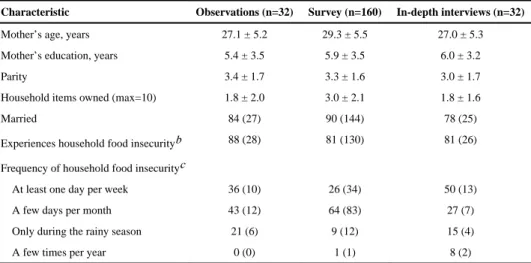
There were no refusals among eligible women approached to participate in the survey questionnaire (n=160) or observations (n=32). Research assistants approached 40 women for in-depth interviews, received 8 refusals, and enrolled 32 women. Background characteristics of participants are found in Table II. Notably, > 80% of all participants reported that they experience household food insecurity.
A
uthor Man
uscr
ipt
A
uthor Man
uscr
ipt
A
uthor Man
uscr
ipt
A
uthor Man
uscr
Observations
Overall, advice or counseling on IYCF practices during PMTCT visits was infrequent and varied little across clinics (Table III). Among all clients, the most common health worker action related to feeding was to ask mothers if they were breastfeeding (41% of visits). Health workers explained the importance of taking ART regularly to prevent HIV transmission through breastmilk during 25% of visits with all clients and they encouraged continued breastfeeding during 38% of visits with clients having children 6–23 months of age. Complementary feeding was discussed less often than breastfeeding. Health workers advised women with children 6–23 months of age to give the child four or more different food groups daily during 29% of visits, and other complementary feeding recommendations were mentioned less frequently. No IYCF visual aids were used with any of the clients we observed.
Survey
All women who completed the survey reported that they had ever breastfed their youngest child (Table IV). More than two-thirds of participants (70%) initiated breastfeeding within 1 hour of delivery. Exclusive breastfeeding was currently practiced by 75% of mothers with a child <6 months of age. Continuation of breastfeeding was high (91%) at one year, but low (27%) at two years. There were no notable differences in breastfeeding practices by clinic. Most mothers (88%) reported introducing complementary foods during the appropriate time frame (6–8 months). The majority of children (90%) achieved WHO’s recommended minimum meal frequency, but less than half (41%) had adequate dietary diversity, resulting in 40% of the children achieving a minimum acceptable diet. One of the rural clinics had fewer mothers who reported optimal complementary feeding practices than the other three clinics.
Feeding difficulties were reported by more than half of the mothers (58%, n=93). Among those mothers who described feeding problems, the most common issues were: child not accepting other foods (21%), child vomits after feeding (16%), and not enough breast milk (13%).
Most mothers knew that breastfeeding should be initiated within 1 hour of delivery (83%) and that it is possible to decrease the chance that the baby gets HIV through the breastmilk of a mother who is infected (85%) (Table V). Slightly more than one-quarter of the mothers knew that no other fluids or foods could be given during exclusive breastfeeding, whereas three-quarters knew that an HIV-positive woman taking ART can continue to breastfeed until 24 months. Knowledge of the number of times to feed a young child was high (96% for a child 6–8 months of age; 93% for a child 9–23 months of age), but knowledge of the number of food groups to feed per day was lower (64%). There was little variation in maternal knowledge of recommended IYCF practices by clinic.
When survey participants were asked to spontaneously list the types of IYCF information they had received, they most frequently recalled being advised to exclusively breastfeed until six months (72%) and continue breastfeeding up to 24 months (30%). Women did not often recall complementary feeding advice [e.g., start complementary feeding at six months
A
uthor Man
uscr
ipt
A
uthor Man
uscr
ipt
A
uthor Man
uscr
ipt
A
uthor Man
uscr
(11%); feed the child a variety of foods or feed the six Malawian food groups (5%)]. IYCF advice was most often received from nurses (90%), mother-to-mother workers (31%), and mothers or mothers-in-law (12%). Nurses were considered to be the most useful source of advice on IYCF by 87% of participants.
In-depth interviews
Using data matrices, we examined findings from our in-depth interviews with mothers in Option B+ by child age group and clinic. We found no differences across these categories; therefore, we present the combined data. Five key themes emerged: emphasis on exclusive breastfeeding until six months and continued breastfeeding until 24 months; inconsistent messaging on complementary feeding; role of food insecurity in provision of adequate complementary feeding; trust in health workers, especially nurses, as a source of IYCF advice; and importance of husbands and sisters in IYCF support.
Breastfeeding—Most mothers who participated in in-depth interviews understood that exclusive breastfeeding meant giving the child breastmilk with no other foods or fluids. For example, a mother with a child seven months of age (ID007) explained, “If we say exclusive, we mean continuous – without anything other than milk.” This contrasts with our survey data showing that many mothers said that they could give water or other fluids while exclusively breastfeeding. These differences may be explained by our in-depth interviews indicating that some mothers interpreted “exclusive” as meaning frequent. For example, when a mother with a child 17 months of age (ID024) was asked what exclusive breastfeeding meant, she said, “I should be breastfeeding and giving my child food at all times and not letting her be hungry.”
In terms of advice on breastfeeding practices, the majority of mothers reported that they were advised by health workers at the clinic at least once during or after pregnancy. When describing what they had been told, mothers mentioned exclusive breastfeeding until six months and continuing to breastfeed until 24 months while taking ART, which aligned with the data obtained from questionnaires. For example, a mother with a child 4 months of age (ID002) said,
“They [the health workers] explained that because we are taking the ART we should exclusively breastfeed our child because we already have the protection. We do not have to be worried that when we are breastfeeding the child might contract the disease, no.”
Some mothers were taught by health workers that exclusive breastfeeding until the age of six months was necessary because early introduction of complementary foods could harm the child’s gut and the child could acquire HIV in this way. According to a mother with a child 22 months of age (ID019), “The child is really young and its body is not mature enough, so the food can cut the intestines of the child and if the child is still breastfeeding it can get HIV through breast milk.”
Most women explained how ART taken by the mother protects the child from getting HIV through breastmilk, but a few were still worried about HIV transmission and decided to wean the child before 24 months. Several women talked about the possibility of the child
A
uthor Man
uscr
ipt
A
uthor Man
uscr
ipt
A
uthor Man
uscr
ipt
A
uthor Man
uscr
biting the mother’s breast and drawing blood while nursing, thereby increasing exposure to the virus. One mother with a child 13 months of age (ID015) explained,
“I was told [by the health workers] to breastfeed like any other woman without HIV. [They said] if I have money when the child has developed the first teeth it’s my choice to stop breastfeeding, because during this time the baby can be affected [by HIV]… Because most babies they get infected when they have bitten their mother’s breast and suck the blood and the breastmilk together.”
Other women were thankful that the current advice allowed them to continue breastfeeding for 24 months, as compared to the earlier recommendation to wean at six months. The following quote from a woman with a child 18 months of age (ID008) illustrates this point. She stated,
“Before I started taking the drugs, I heard that the child is supposed to be weaned at six months, but when I came for testing…that was when I was told that once the child is born he is supposed to be breastfed for two years. That’s a sign that things have improved.”
Complementary Feeding—When women talked about the complementary feeding advice they had received, it was evident that messaging on this topic was not consistent and rarely practical, which agrees with our findings from observations of IYCF counseling in clinics. Most women said they had been counseled on the importance of starting to give porridge at six months. Some mothers recalled receiving advice to feed the child frequently or a certain number of times per day. A mother with a child 4 months of age (ID002) explained,
“From this hospital I received the following advice, I was told that when my son is six months old …we have to give him the porridge frequently… and other foods also frequently, like yogie [liquid yogurt]… We have been encouraged to provide [food] three times a day.”
Some women also said they were advised to feed the child balanced meals and to “feed the child the six Malawian food groups”, but details about which foods to combine or how to create balanced meals with few resources were lacking.
Household Food Insecurity—During the interviews, many women spontaneously brought up the issue of household food insecurity, which aligned with our socioeconomic data showing that participants often did not have enough food in their homes. This made it hard for them to follow any complementary feeding advice received at the clinic and to regularly feed their children and themselves, which worried them because they were advised to eat well while taking ART. A mother with a child 16 months of age (ID009) described this issue,
“When I don’t have money, I get really worried about how I am going to feed my child. He gets really difficult and is hungry all the time and my husband is rarely at home. I have no money for food and I spend the whole day without food and eat only in the evening. I am taking ART, but I am not eating properly and that is a problem for me.”
A
uthor Man
uscr
ipt
A
uthor Man
uscr
ipt
A
uthor Man
uscr
ipt
A
uthor Man
uscr
Household food insecurity occasionally led some mothers to feed only breastmilk to children 6–23 months of age as a temporary replacement for complementary food. As one mother of a child 20 months of age (ID026) explained, “Sometimes I don’t have food to give to the child, so I just give breastmilk to the child to be able to sleep.” When asked what type of IYCF-related assistance they want and from whom, several participants mentioned that they would like the health facility to provide food to HIV-infected mothers and their children; others said they would be interested in obtaining funding to start a business so they could buy food and support themselves.
Sources of Advice on IYCF—Our data from in-depth interviews on sources of advice on IYCF was consistent with findings from survey interviews. Most women trusted health workers at the clinic for advice and support of their IYCF practices. One mother with a child 13 months of age (ID027) explained that the health workers’ advice was influential to her, “Because they [the health workers] are educated and they know what they are talking about.” However, not all mothers wanted or felt they could get advice on feeding from the health staff. A few had experiences like this mother with a child 16 months of age (ID009), who said,
“The doctors [health workers] here have no interest in us… For example, I came here early in the morning and the only thing they [health workers] will do is weigh my child on a scale. They won’t speak to us whatsoever. Then we go to get the drugs, then off home. They don’t give us any advice or encouragement. It’s just a quick process here.”
Advice on feeding provided at the clinics was focused on breastfeeding, which was in line with our observation data. Most mothers reported receiving advice on IYCF while they were pregnant or at delivery, and less often during postnatal PMTCT visits. About half of the mothers were counseled about IYCF on only one occasion. For example, one mother with a child seven months of age (ID017) said, “I was given [advice] during antenatal services… I have not received any advice since that day.” The availability of postpartum IYCF advice depended somewhat on the clinic. For example, one urban and one rural clinic had strong groups of volunteers who held regular group counseling sessions for HIV-infected mothers, where they discussed IYCF and other topics.
IYCF Decision-making and Role of Significant Others—Most women interviewed said that they were the main decision-makers about IYCF practices for their children. According to the women, only a minority of husbands played an active role in deciding how to feed the child. Very few of the women had their mothers or mothers-in-law living nearby, so these individuals did not influence IYCF decision-making. This exchange between an interviewer and a participant with a child 19 months of age (ID012) demonstrates the importance of mothers in making their own decisions about IYCF.
“Interviewer: I wanted to know about the time you were first giving fluids [to your child], who made that decision?
Participant: Myself, I just thought of giving the baby water.
Interviewer: What about porridge?
A
uthor Man
uscr
ipt
A
uthor Man
uscr
ipt
A
uthor Man
uscr
ipt
A
uthor Man
uscr
Participant: Still myself, I just thought of starting to give porridge. I live alone with my husband, so I just saw that now at this age… the baby was receiving the food.
Interviewer: You did not consult the father or ask his advice?
Participant: I did not ask. I just told him, Dad, the baby has started taking porridge. ’”
About half of the women interviewed said they would like to have their husband or sister present when they received advice from the clinic about IYCF because these individuals supported their IYCF practices. Most women explained that their husbands’ main role was to purchase food or to provide money for food. Their secondary role was to encourage the woman in relation to IYCF or, in some cases, to give her instructions about feeding the child. For example, a woman with a child eight months of age (ID021) explained, “[My husband] encourages me to feed the child in the morning and evening and [says] that [the child] should be given enough food and should be breastfed so that he can grow healthy.” While husbands usually provided monetary support for IYCF, sisters or other female relatives typically offered advice about IYCF and encouraged women to follow the information they received from health workers.
DISCUSSION
This study used three data collection methods to triangulate findings on IYCF counseling, decision-making, and practices among HIV-infected women participating in Malawi’s PMTCT Option B+ program. Our survey and in-depth interviews showed that women in our sample trusted the advice on IYCF they received from health workers in government clinics. In-depth interviews indicated that most counseling on IYCF by health workers occurred during pregnancy (especially the first antenatal visit) or delivery and was focused on breastfeeding practices. Data from postnatal observations of PMTCT clinic visits agreed with interview findings that breastfeeding counseling occurred infrequently during this period. Despite the lack of regularity in IYCF counseling, our survey and in-depth
interviews showed that messaging by health workers on exclusive breastfeeding, the dangers of mixed feeding, and the duration of breastfeeding was consistent and well understood by most women in our sample. This contrasts with pre-Option B+ studies in sub-Saharan Africa, which found that health workers provided inconsistent advice on breastfeeding practices prior to the 2010 WHO HIV and infant feeding guidelines (1), in part because the guidelines were incompatible with local cultural norms (15, 29, 30). During that time, HIV-infected women struggled with IYCF decision-making because neither exclusive
breastfeeding nor early weaning, which were the recommended options, fit with usual child feeding practices in their communities (11, 12, 16, 19). Women in the present study generally felt comfortable with the breastfeeding advice now available in Malawi’s PMTCT Option B+ program, and survey and in-depth interviews indicated that many of them implemented the recommendations. This is consistent with recent findings on the prevalence of exclusive breastfeeding (77%) among HIV-infected women in Tanzania (31).
However, in our study, there were still some women who stopped exclusive breastfeed before six months, who were unclear about the definition of exclusive breastfeeding, or who
A
uthor Man
uscr
ipt
A
uthor Man
uscr
ipt
A
uthor Man
uscr
ipt
A
uthor Man
uscr
were concerned about HIV transmission through breastmilk and wanted to wean before 24 months. It is important to close these gaps in breastfeeding knowledge and practice because the duration of exclusive breastfeeding and continued breastfeeding after six months of age contribute to reductions in infant and child morbidity and mortality, especially among those who are HIV-exposed (32, 33).
In contrast to breastfeeding counseling and practices, we found in our observations and in-depth interviews that women were given very little advice on complementary feeding during postnatal PMTCT visits. There was no consistent set of complementary feeding messages provided. The recommendations were not easy to apply in practice and tended to be directive (e.g., “feed the child the six Malawian food groups”). These findings agree with results from pre-Option B+ studies in southern Africa, which noted a lack of advice on complementary feeding and a low priority placed on IYCF within the PMTCT program (29, 30). They also point to the need to increase not only the frequency of IYCF counseling, but also the quality (18).
Household food insecurity emerged in our in-depth interviews as an important factor that made it difficult for women to apply any complementary feeding advice they received and likely contributed to the low levels of dietary diversity reported in our survey. Similar levels of food insecurity have been documented in other studies of HIV-infected populations (34, 35). In our study, women described how the presence of food insecurity added to their level of stress, both in terms of providing complementary foods to their child and ensuring that they had enough food themselves. High levels of household food insecurity among HIV-infected women indicate that simply counseling them on better feeding practices may not be sufficient for them to change their practices without access to food supplied by clinics or income-generating activities that could help them obtain funds to purchase more or better quality food. In HIV-infected populations with a significant burden of household food insecurity, better integration of PMTCT programs with other community-based programs that address improvements in women’s livelihoods is crucial. One example of this type of referral network from health facilities to community-based food security, microfinance, and other services for HIV-infected clients is currently being tested in Balaka district, Malawi as part of the USAID-funded Livelihoods & Food Security Technical Assistance project (36).
In terms of IYCF decision-making, we found that women saw themselves as bearing the main responsibility, which was consistent with the results of another study among HIV-infected women in Malawi (37). Husbands and sisters sometimes influenced women’s IYCF practices, but women mainly saw their husbands’ role as providing verbal and monetary support. In other studies, grandmothers or husbands have been flagged as the individuals who influence IYCF behaviors and whose support is needed for new practices (38–41). Research prior to 2010 indicates that mothers and mothers-in-law can have a negative impact on HIV-infected women’s ability to stick with their decision to exclusively breastfeed by pressuring them to give other fluids or foods (12, 42, 43). This type of influence was not evident in our study because very few of our participants lived with their older female relatives. Women in our sample signaled their interest in having their husbands or sisters present when they were being counseled on IYCF practices because these individuals encourage them. Incorporating sisters into PMTCT visits could be done using the infant
A
uthor Man
uscr
ipt
A
uthor Man
uscr
ipt
A
uthor Man
uscr
ipt
A
uthor Man
uscr
feeding buddies strategy tested in South Africa, where a female buddy to whom the mother had disclosed her HIV status attended PMTCT visits with her and provided various forms of support (44). There are a number of barriers to the inclusion of husbands or male partners in PMTCT visits (45); however, recent studies indicate promising interventions for male involvement in PMTCT and community-based strategies for integrating fathers into IYCF have been successful (46, 47).
This study had some potential limitations. First, we collected data only in Lilongwe District, so our findings may not be generalizable to other parts of Malawi. Second, we selected a small, purposive sample for the survey. However, as descriptive data combined with the observations and in-depth interviews, the findings from the survey help to provide a snapshot of the behaviors and issues related to IYCF among HIV-infected women
participating in Option B+. Third, we noted some differences in findings by data collection method. For example, we documented in our observations that less than half of the women were counseled on breastfeeding during postnatal PMTCT visits, whereas most women in in-depth interviews remembered advice they had received on breastfeeding. This difference is probably related to the short time frame of the observation (one clinic visit per participant) as compared to the longer recall period (all antenatal and postnatal visits) of women
participating in in-depth interviews. Fourth, although it is possible that we have overestimated the proportion of women who exclusively breastfed their children due to recall bias (48), our findings on IYCF practices are similar to those from Malawi’s national population-based survey (49). Finally, reactivity can be an issue in studies using
observational methods, but was minimized in the present research because health workers were told that we were studying PMTCT services and did not know that observations were specifically focused on IYCF counseling.
In conclusion, although HIV and infant feeding guidelines and PMTCT programs have changed greatly in the last five year, we echo the findings from the pre-Option B+ era that more emphasis on IYCF is needed in PMTCT programs (30). Our data indicate a gap in IYCF counseling across child age groups and in clinics of different sizes in urban and rural areas. Training on IYCF counseling for health workers involved in Option B+ service provision is necessary as is formative research with families of HIV-infected women to develop complementary feeding strategies that are feasible in settings with food insecurity. Further research is need to design and test creative interventions to integrate supportive family members into IYCF counseling and improve IYCF practices among HIV-infected women in Option B+ through networks linking clients to HIV support services or livelihoods interventions.
Supplementary Material
Refer to Web version on PubMed Central for supplementary material.
Acknowledgments
The authors would like to thank Francis Chapasuka, John Chapola, Madalo Kamanga, Rumbidzai Mlewah, Angela Nyirenda, Odala Sande, Shadreck Ulaya, and Aubrey Zoya for their help collecting the data and Ellie Carter, Nainisha Chintalapudi, and Samantha Croffut for their assistance coding the data. This study was supported by the
A
uthor Man
uscr
ipt
A
uthor Man
uscr
ipt
A
uthor Man
uscr
ipt
A
uthor Man
uscr
Eunice Kennedy Shriver National Institute of Child Health & Human Development grant 5KHD001441-15 BIRCWH Career Development Program (Flax – Scholar); a development grant from the University of North Carolina Center for AIDS Research (P30 AI50410); a University of North Carolina University Research Council small grant; and the Carolina Population Center (R24 HD050924).
References
1. WHO, UNICEF, UNFPA, UNAIDS. Guidelines on HIV and infant feeding 2010: principles and recommendations for infant feeding in the context of HIV and a summary of evidence. Geneva: WHO; 2010.
2. Tournoud M, Ecochard R, Kuhn L, Coutsoudis A. Diversity of risk of mother-to-child HIV-1 transmission according to feeding practices, CD4 cell count, and haemoglobin concentration in a South African cohort. Trop Med Int Health. 2008 Mar; 13(3):310–8. Epub 2008/04/10. eng. [PubMed: 18397394]
3. Coutsoudis A, Pillay K, Kuhn L, Spooner E, Tsai WY, Coovadia H. Method of feeding and transmission of HIV-1 from mothers to children by 15 months of age: prospective cohort study from Durban, South Africa. AIDS. 2001; 15:379–87. [PubMed: 11273218]
4. Becquet R, Ekouevi DK, Menan H, Amani-Bosse C, Bequet L, Viho I, et al. Early mixed feeding and breastfeeding beyond 6 months increase the risk of postnatal HIV transmission: ANRS 1201/1202 Ditrame Plus, Abidjan, Cote d’Ivoire. Prev Med. 2008 Jul; 47(1):27–33. Epub 2008/01/15. eng. [PubMed: 18190955]
5. World Health Organization Regional Office for Africa. Implementation of Option B+ for prevention of mother-to-child transmission: the Malawi experience. Brazzaville: Republic of Congo; 2014. 6. Management Sciences for Health. Option B+ in Malawi: origins and implementation of a global
health innovation webpage. 2012. [cited 2013 February 15]. Available from: http://www.msh.org/
news-bureau/a-conversation-with-dr-erik-schouten.cfm
7. World Health Organization. Consolidated guidelines on the use of antiretroviral drugs for treating and preventing HIV infection: recommendations for a public health approach June 2013. Geneva: WHO; 2013.
8. IATT. Option B+ countries and PMTCT regimen: The Interagency Task Team on the Prevention and Treatment of HIV Infection in Pregnant Women, Mothers, and Children. 2015. [cited 2015 April
29]. Available from: http://www.emtct-iatt.org/b-countries-and-pmtct-regimen/
9. Buskens I, Jaffe A, Mkhatshwa H. Infant feeding practices: realities and mind sets of mothers in South Africa. AIDS Care. 2007; 19:1101–9. [PubMed: 18058394]
10. Chisenga M, Siame J, Baisley K, Kasonka L, Filteau S. Determinants of infant feeding choices by Zambian mothers: a mixed quantitative and qualitative study. Matern Child Nutr. 2011; 7:148–59. [PubMed: 21410882]
11. Maman S, Cathcart R, Burkhardt G, Omba S, Thompson D, Behets F. The infant feeding choices and experiences of women living with HIV in Kinshasa, Democratic Republic of Congo. AIDS Care. 2012 Jul 25.24:259–65. Epub 2011/07/26. Eng. [PubMed: 21780955]
12. Ostergaard LR, Bula A. “They call our children “Nevirapine babies?””: a qualitative study about exclusive breastfeeding among HIV positive mothers in Malawi. Afr J Reprod Health. 2010; 14:213–22. [PubMed: 21495616]
13. Desclaux A, Alfieri C. Counseling and choosing between infant-feeding options: overall limits and local interpretations by health care providers and women living with HIV in resource-poor countries (Burkina Faso, Cambodia, Cameroon). Soc Sci Med. 2009; 69:821–9. [PubMed: 19559512]
14. Vaga BB, Moland KM, Evjen-Olsen B, Blystad A. Reflections on informed choice in resource-poor settings: the case of infant feeding counseling in PMTCT programmes in Tanzania. Soc Sci Med. 2014; 105:22–9. [PubMed: 24508717]
15. Tuthill EL, Chan J, Bulter LM. Challenges faced by health-care providers offering infant-feeding counseling to HIV-positive women in sub-Saharan Africa: a review of current research. AIDS Care. 2015; 27:17–24. [PubMed: 25208096]
16. Chikonde JR, Hem MH, Sundby J. HIV and infant feeding in Malawi: public health simplicity in complex social and cultural contexts. BMC Public Health. 2012; 12:700. [PubMed: 22925437]
A
uthor Man
uscr
ipt
A
uthor Man
uscr
ipt
A
uthor Man
uscr
ipt
A
uthor Man
uscr
17. Zullinger R, Abrams EJ, Myer L. Diversity of influences on infant feeding strategies in women living with HIV in Cape Town, South Africa: a mixed methods study. Trop Med Int Health. 2013; 18:1547–54. [PubMed: 24151822]
18. Lazarus R, Struthers H, Violari A. Promoting safe infant feeding practices - the importance of structural, social and contextual factors in Southern Africa. J Int AIDS Soc. 2013; 16:18037. [PubMed: 23394899]
19. Tuthill E, McGrath J, Young S. Commonalities and differences in infant feeding attitudes and practices in the context of HIV in Sub-Saharan Africa: a metasynthesis. AIDS Care. 2014; 26:214– 25. [PubMed: 23879637]
20. Creswell, JW., Plano Clark, VL. Mixed methods research. Thousand Oaks, CA: Sage Publication, Inc; 2007.
21. Creswell, JW. A concise introduction to mixed methods research. Thousand Oaks, CA: Sage Publications, Inc; 2015.
22. Patton, MQ. Qualitative research and evaluation methods. 3. Thousand Oaks, California, USA: Sage Publications; 2001.
23. Guest G, Bunce A, Johnson L. How many interviews are enough? An experiment with data saturation and variability. Field Methods. 2006; 18:59–82.
24. WHO, USAID, AED, FANTA-2, UC Davis, IFPRI, et al. Indicators for assessing infant and young child feeding practices: part 2 measurement. Geneva: World Health Organization; 2010.
25. Flax VL, Negerie M, Ibrahim AU, Leatherman S, Daza EJ, Bentley ME. Integrating group counseling, cell phone messaging, and participant-generated songs and dramas into a microcredit program increases Nigerian women’s adherence to international breastfeeding recommendations. J Nutr. 2014; 144:1120–4. [PubMed: 24812071]
26. WHO, USAID, AED, FANTA, UC Davis, IFPRI, et al. Indicators for assessing infant and young child feeding practices: part 1 definitions. Geneva: World Health Organization; 2008.
27. Gibbs, G. Analyzing qualitative data. Thousand Oaks, CA: Sage Publications Inc; 2007.
28. Miles, MB., Huberman, AM. Qualitative data analysis: an expanded sourcebook. Thousand Oaks, CA: Sage; 1994.
29. Israel-Ballard K, Waithaka M, Greiner T. Infant feeding counselling of HIV-infected women in two areas in Kenya in 2008. Int J STD AIDS. 2014; 25:921–8. [PubMed: 24594896]
30. Chopra M, Doherty T, Mehatru S, Tomlinson M. Rapid assessment of infant feeding support to HIV-positive women accessing prevention of mother-to-child transmission services in Kenya, Malawi and Zambia. Public Health Nutr. 2009; 12:2323–28. [PubMed: 19402947]
31. Williams AE, Chantry C, Geubbels EL, Ramaiya AK, Shemdoe AI, Tancredi DJ, et al. Breastfeeding and complementary feeding practices among HIV-exposed infants in coastal Tanzania. J Hum Lact. 2016; 32:112–22. [PubMed: 26628498]
32. WHO Collaborative Study Team on the Role of Breastfeeding on the Prevention of Infant Mortality. Effect of breastfeeding on infant and child mortality due to infectious diseases in less developed countries: a pooled analysis. Lancet. 2000; 355:451–5. [PubMed: 10841125] 33. Natchu UCM, Liu E, Duggan C, Msamanga G, Peterson KE, Aboud S, et al. Exclusive
breastfeeding reduces risk of mortality in infants up to 6 mo of age born to HIV-positive Tanzanian women. Am J Clin Nutr. 2012; 96:1071–8. [PubMed: 23053555]
34. Nagata JM, Magerenge RO, Young SL, Oguta JO, Weiser SD, Cohen CR. Social determinants, lived experiences, and consequences of household food insecurity among person living with HIV/ AIDS on the shore of Lake Victoria, Kenya. AIDS Care. 2011; 24:728–36. [PubMed: 22150119] 35. Bukusuba J, Kikafunda J, Whitehead R. Food security status in households of people living with
HIV/AIDS (PLWHA) in a Ugandan urban setting. Br J Nutr. 2007; 98:211–17. [PubMed: 17381879]
36. USAID, FHI360, LIFT II. Balaka’s referral system launches with encouraging progress. 2014.
[cited 2015 June 22]. Available from: http://theliftproject.org/balakas-referral-system-launch/
37. Bedell RA, van Lettow M, Landes M. Women’s choices regarding HIV testing, disclosure and partner involvement in infant feeding and care in a rural district of Malawi with high HIV prevalence. AIDS Care. 2014; 26:483–6. [PubMed: 24090356]
A
uthor Man
uscr
ipt
A
uthor Man
uscr
ipt
A
uthor Man
uscr
ipt
A
uthor Man
uscr
38. Aubel J, Toure I, Diagne M. Senegalese grandmothers promote improved maternal and child nutrition practices: the guardians of tradition are not averse to change. Soc Sci Med. 2004; 59:945– 59. [PubMed: 15186896]
39. Bezner Kerr R, Dakishoni L, Shumba L, Msachi R, Chirwa M. “We grandmothers know plenty”: breastfeeding, complementary feeding and the multifaceted role of grandmothers in Malawi. Soc Sci Med. 2008; 66:1095–105. [PubMed: 18155334]
40. Clifford J, McIntyre E. Who supports breastfeeding? Breastfeed Rev. 2008; 16:9–19.
41. Bich TH, Hoa DTP, Malqvist M. Fathers as supporters for improved exclusive breastfeeding in Viet Nam. Matern Chi Health J. 2014; 18:1444–53.
42. Doherty T, Chopra M, Nkonki L, Jackson D, Greiner T. Effect of the HIV epidemic on infant feeding in South Africa: “when they see me coming with the tins they laugh at me”. Bull World Health Organ. 2006; 84:90–6. [PubMed: 16501725]
43. Leshabari SC, Blystad A, Moland KM. Difficult choices: infant feeding experiences of HIV-positive mothers in northern Tanzania. SAHARA J. 2007; 4(1):544–55. [PubMed: 18040533] 44. Andreson J, Dana N, Hepfer B, King’ori E, Oketch J, Wojnar D, et al. Infant feeding buddies: a
strategy to support safe infant feeding for HIV-positive mothers. J Hum Lact. 2013; 29:90–3. [PubMed: 23277462]
45. Morfaw F, Mbuagbaw L, Thabane L, Rodrigues C, Wunderlich A-P, Nana P, et al. Male
involvement in prevention programs of mother to child transmission of HIV: a systematic review to identify barriers and facilitators. Syst Rev. 2013; 2:5. [PubMed: 23320454]
46. Mphonda SM, Rosenberg NE, Kamanga E, Mofolo I, Mwale G, Boa E, et al. Assessment of peer-based and structural strategies for increasing male participation in an antenatal setting in Lilongwe, Malawi. Afr J Reprod Health. 2014; 18:97–104. [PubMed: 25022146]
47. Jenkins AL, Tavengwa NV, Chasekwa B, Chatora K, Taruberekera N, Mushayi W, et al. Addressing social barriers and closing the gender knowledge gap: exposure to road shows is associated with more knowledge and more positive beliefs, attitudes and social norms regarding exclusive breastfeeding in rural Zimbabwe. Matern Chi Nutr. 2012; 8:459–70.
48. Bland RM, Rollins NC, Solarsh G, Van den Broeck J, Coovadia HM. for the Child Health Group. Maternal recall of exclusive breastfeeding duration. Arch Dis Child. 2003; 88:778–83. [PubMed: 12937095]
49. National Statistical Office (NSO) Malawi, ICF Macro. Malawi demographic and health survey 2010. Zomba, Malawi and Calverton, Maryland, USA: NSO and ICF Macro; 2011.
A
uthor Man
uscr
ipt
A
uthor Man
uscr
ipt
A
uthor Man
uscr
ipt
A
uthor Man
uscr
Figure 1.
Sample selection for a study of infant and young child feeding attitudes, practices, and counseling among HIV-infected women in Option B+ in Lilongwe District, Malawi. Women were recruited to participate in only one form of data collection.
A
uthor Man
uscr
ipt
A
uthor Man
uscr
ipt
A
uthor Man
uscr
ipt
A
uthor Man
uscr
A
uthor Man
uscr
ipt
A
uthor Man
uscr
ipt
A
uthor Man
uscr
ipt
A
uthor Man
uscr
ipt
Table I
IYCF indicator variable definitionsa
Indicator Definition
Core Indicators
Early initiation of breastfeeding Proportion of children 0–23 months of age who were put to the breast within one hour of birth
Exclusive breastfeeding to 6 months Proportion of infants 0–5 months of age who received only breastmilk on the previous day
Continued breastfeeding at 1 year Proportion of children 12–15 months of age who received breastmilk on the previous day
Introduction of complementary foods Proportion of infants 6–8 months of age who received solid, semi-solid or soft foods on the previous day
Minimum dietary diversity Proportion of children 6–23 months of age who received foods from ≥ 4 food groups on the previous day
Food groups: grains, roots and tubers; legumes and nuts; dairy products; flesh foods, eggs; vitamin-A rich fruits and vegetables; other fruits and vegetables
Minimum meal frequency Proportion of children 6–23 months of age who received complementary foods (or milk feeds for non-breastfed children) at least the minimum number of times on the previous day
Minimum: Breastfed children (6–8 months – 2 times; 9–23 months – 3 times); Non-breastfed children (6–23 months – 4 times)
Minimum acceptable diet Proportion of children 6–23 months of age who received minimum dietary diversity and minimum meal frequency on the previous day
Consumption of rich or iron-fortified foods
Proportion of children 6–23 months of age who received iron-rich or iron-fortified food (designed for infants and young children) on the previous day
Optional Indicators
Ever breastfed Proportion of children 0–23 months of age who were ever breastfed
Continued breastfeeding at 2 years Proportion of children 20–23 months of age who received breastmilk during the previous day
Additional Indicator
Exclusive breastfeeding to 6 months (retrospective)
Proportion of children 6-23 months who received no fluids or foods other than breastmilk from 0-5 months (based on reported timing of introduction of fluids and foods)
a
A
uthor Man
uscr
ipt
A
uthor Man
uscr
ipt
A
uthor Man
uscr
ipt
A
uthor Man
uscr
ipt
Table II
Background characteristics of HIV-infected mothers in Option B+ in Lilongwe, Malawi participating in a study on infant and young child feedinga
Characteristic Observations (n=32) Survey (n=160) In-depth interviews (n=32)
Mother’s age, years 27.1 ± 5.2 29.3 ± 5.5 27.0 ± 5.3
Mother’s education, years 5.4 ± 3.5 5.9 ± 3.5 6.0 ± 3.2
Parity 3.4 ± 1.7 3.3 ± 1.6 3.0 ± 1.7
Household items owned (max=10) 1.8 ± 2.0 3.0 ± 2.1 1.8 ± 1.6
Married 84 (27) 90 (144) 78 (25)
Experiences household food insecurityb 88 (28) 81 (130) 81 (26)
Frequency of household food insecurityc
At least one day per week 36 (10) 26 (34) 50 (13)
A few days per month 43 (12) 64 (83) 27 (7)
Only during the rainy season 21 (6) 9 (12) 15 (4)
A few times per year 0 (0) 1 (1) 8 (2)
a
Values are means ± SD or percentages.
b
Household food insecurity was assessed asking participants if there are times when they do not have food in their household and do not have money for food. If they said yes, they were asked how frequently their household is without food and without money for food.
c
A
uthor Man
uscr
ipt
A
uthor Man
uscr
ipt
A
uthor Man
uscr
ipt
A
uthor Man
uscr
ipt
T ab le III Observations of inf
ant and young child feeding counseling during PMTCT Option B+ clinic visits by w
omen with children 0–23 months of age at four
clinics in Lilongwe District, Mala
wi
T
ype of advice on infant and y
oung child feeding
Clinic T otal % Urban 1 Urban 2 Rural 1 Rural 2 F
or all childr
en 0-23 months
(n=8) (n=8) (n=8) (n=8) (n=32) Ask
ed if the client is breastfeeding
2 5 2 4 13 41 Ask
ed if the client is gi
ving inf ant formula 0 0 0 0 0 0 Ask
ed if the client has an
y problem related to feeding the child
1 3 2 1 5 16 Pro
vided advice about feeding problems
1 2 2 1 4 13
Explained the importance of taking AR
T re
gularly to pre
v
ent HIV transmission through breastmilk
2 3 2 3 8 25
Used visual aids for counseling on inf
ant and young child feeding
0 0 0 0 0 0 F
or infants <6 months only
(n=2) (n=2) (n=2) (n=2) (n=8) Ask
ed if the client is gi
ving the inf
ant w ater 0 0 0 1 1 13 Ask
ed if the client is gi
ving other fluids
0 1 0 2 3 38 Ask
ed if the client is gi
ving food 0 2 0 0 2 25
Advised the client when to start complementary feeding
1 1 0 0 2 25 F or childr
en 6-23 months only
(n=6)
(n=6)
(n=6)
(n=6)
(n=24)
Encouraged the client to continue breastfeeding
1 4 1 3 9 38
Advised the client on increasing the thickness of food as the child gets older
0 1 1 1 3 13
Advised the client to gi
v
e child 4 or more dif
ferent food groups daily
0 3 3 1 7 29
Advised the client on the correct number of times to feed the child daily
1 2 2 1 4 17
Advised the client on responsi
v e feeding 0 0 1 0 1 4
Advised the client ho
w to feeding the child during & after illness
A
uthor Man
uscr
ipt
A
uthor Man
uscr
ipt
A
uthor Man
uscr
ipt
A
uthor Man
uscr
ipt
T ab le IV Infant and young child feeding practices of HIV
-infected Mala
wian w
omen participating in Option B+ with children 0–23 months of age
Infant and Y
oung Child F
eeding Practices
Child’s Age (months)
Clinic T otal % Urban 1 Urban 2 Rural 1 Rural 2 Br
eastfeeding practices Ev
er breastfed (n=160)
0–23 40 40 40 40 160 100
Initiated breastfeeding within 1 hour of deli
v ery (n=160) 0–23 28 31 30 23 112 70 Currently e xclusi v
ely breastfed (n=40)
0–5 9 8 7 6 30 75 Exclusi v
ely breastfed to 6 months (n=120)
6–23 27 26 23 23 99 83
Continued breastfeeding at 1 year (n=34)
12–15 8 7 10 6 31 91
Continued breastfeeding at 2 years (n=22)
20–23 0 2 3 1 6 27
Complementary feeding practices
Solids or semi-solids introduced from 6–8 months (n=120)
6–23 28 28 24 26 106 88
Minimum dietary di
v ersity (n=120) 6–23 17 12 8 12 49 41
Minimum meal frequenc
y (n=120) 6–23 26 30 25 27 108 90
Minimum acceptable diet (n=120)
6–23 13 10 6 11 33 40
Consumption of iron-rich or iron-fortif
ied foods (n=120)
A
uthor Man
uscr
ipt
A
uthor Man
uscr
ipt
A
uthor Man
uscr
ipt
A
uthor Man
uscr
ipt
T ab le V Infant and young child feeding kno
wledge and attitudes of HIV
-infected Mala
wian w
omen participating in Option B+ with children 0–23 months of age
Infant and Y
oung Child F
eeding Kno
wledge and Attitudes
Clinic T otal (n=160) % Urban 1 (n=40) Urban 2 (n=40) Rural 1 (n=40) Rural 2 (n=40) Br eastfeeding kno
wledge and attitudes
Babies should be breastfed within 1 hour of deli
v ery 31 32 37 32 132 83 A w
oman who is e
xclusi
v
ely breastfeeding may not gi
v
e her child an
y other fluids or foods
9 12 11 11 43 27 A w
oman can decrease the chance that her baby gets HIV through breastmilk
37 34 30 35 136 85 A w
oman who is HIV
-positi
v
e and taking AR
T should stop breastfeeding completely when her
child is 24 months
27 34 37 22 120 75
Complementary feeding kno
wledge and attitudes
A 6–8 month old baby should be fed semi-solid or solid food at least 2 times per day
a 37 39 39 39 154 96
A 9–23 months old child should be fed semi-solid or solid food at least 3 times per day
a 35 36 38 39 148 93
A child 6–23 months should eat at least 4 food groups per day
29 23 29 22 103 64
a Number of feeds per day by age group based on Mala
wi Demographic and Health Surv
ey 2010, page 142 (
49