SENSE-MAKING AND STRATEGY DEVELOPMENT IN UNDERPERFORMING TEAMS
Virginia R. Stewart
A dissertation submitted to the faculty of the University of North Carolina at Chapel Hill in partial fulfillment of the requirements for the degree of Doctor of Philosophy in the
Kenan-Flagler Business School (Organizational Behavior).
Chapel Hill 2014
Approved by:
David A. Hofmann
Matthew J. Pearsall
Benson Rosen
Bradley R. Staats
Virginia R. Stewart: Sense-Making and Strategy Development in Underperforming Teams (Under the direction of Benson Rosen and David Hofmann)
This dissertation contributes to our understanding of how underperforming teams
adapt in response to negative team feedback about team outcomes. I focus my attention on
the transition phase that occurs between team performance cycles and identify retrospective
sense-making about the failure and prospective strategy development as key processes that
can help explain how teams react to underperformance feedback. I argue that the extent of
the team underperformance deficit and the accountability structure in place will influence
team sense-making about failure, revisions in team task execution strategies, and the
magnitude of changes in subsequent team performance.
After conducting a series of pilot studies to develop a laboratory methodology
appropriate for answering my research questions, I collected data from 43 teams that worked
together to assemble paper Ferraris during two production shifts. Following the first
production run, teams received feedback that they had underperformed relative to the mean
(slight or severe deficit) and that they would be held accountable for subsequent performance
(as a team or both as a team and individually). I relied on self-report, observational coding of
recorded team discussions, and observer evaluations of team product to assess my outcome
variables of interest.
Results indicate individuals who work on teams that received severe negative
underperformance but that collective sense-making processes yielded greater changes in role
responsibilities, more radical revisions in workflow, and more offers to help teammates going
forward. The accountability structure interacts with the size of the underperformance deficit
such that when a team has only slightly underperformed, introducing greater individual
accountability serves to inhibit team discussion of the causes of failure, yields more minor
revisions in individual responsibility and workflow patterns, and dampens offers of extra role
helping and participation in leading the team. The implication of these findings is that
frame-breaking changes in how a team carries out its work are most likely to occur naturally in new
teams that feel they have nothing to lose and that increasing individual accountability does
I would like to express my deep gratitude to Ben Rosen for his inspirational seminar
on groups and teams and for providing unwavering support and exceptional guidance through
my doctoral program. I am especially grateful to Dave Hofmann for chairing my dissertation
committee and to committee members Brad Staats, Matt Pearsall, and Paul Tesluk for
volunteering their expertise and for sharing with me their infectious enthusiasm for
investigating team processes. I am indebted to numerous current and former University of
North Carolina faculty for teaching and advising me, including Jeff Edwards, Dan Cable,
Francesca Gino, Alison Fragale, Sreedhari Desai, Mabel Miguel, Dick Blackburn, Mike
Christian, and Noah Eisenkraft. My heartfelt appreciation is extended to the management
faculty of Southern Methodist University for hosting me as a visiting lecturer while I
completed this project. I would also like to recognize Jennifer Fink and Ruth Winecoff for
providing outstanding assistance collecting and coding data. My special thanks are extended
to my fellow doctoral students Catherine Shea, Deirdre Snyder, Christina Rader, Erin Cooke,
Susan Cohen, Tali Kapadia, Jim Berry, John Sumanth, Kevin Miceli, Aaron Ratcliffe, and
Karthik Natarajan for enriching my time in North Carolina with their friendship and support.
My family is and always will be exceptional and I am forever thankful to them for their
LIST OF FIGURES ... x
LIST OF TABLES ... xi
CHAPTER 1: INTRODUCTION ... 1
CHAPTER 2: LITERATURE REVIEW ... 6
Transitional Team Processes... 6
Sense-making and Strategy Development in Response to Failure ... 8
Sensibility to Social Influences ... 12
Underperformance Deficit as a Key Construct ... 16
Accountability Structure as a Key Construct ... 18
Foundational Research Questions ... 23
CHAPTER 3. PILOT STUDIES... 25
Overview of Pilot Studies ... 25
Pilot Study 1 Methods... 26
Pilot Study 1 Results and Discussion ... 32
Pilot Study 2 Methods... 37
Pilot Study 2 Results and Discussion ... 39
Summary of Pilot Results ... 43
Hypothesis Development ... 44
Underperformance Deficit ... 44
Accountability Structure ... 51
Performance Improvements ... 54
CHAPTER 4. METHODOLOGY ... 56
Design ... 56
Participants ... 56
Procedure ... 57
Experimental Manipulations ... 58
Suspicion and Manipulation Checks ... 60
Measures ... 61
CHAPTER 5. RESULTS ... 64
Across Conditions ... 64
Main Effect of Performance Deficit ... 65
Interaction of Performance Deficit with Accountability ... 67
Subsequent Team Performance Improvements ... 69
Supplementary Analyses ... 70
Results Summary ... 71
CHAPTER 6: DISCUSSION ... 72
Limitations ... 79
Practical Implications... 85
Conclusion ... 86
APPENDICES ... 107
Appendix 1. Pilot Study Protocol ... 107
Appendix 2. Pilot Study Qualitative Analyses ... 114
Figure 1. Process Model of Response to Feedback ...102
Figure 2. Process Model of an Accountability Episode ...102
Figure 3. Loci of Team Accountability ...102
Figure 4. Integrated Process Model ...103
Figure 5. Interactive Effects of Accountability on Responses to Underperformance Feedback ...103
Figure 6. Plots of Significant Contrasts of Individual Sense-making Variables...104
Figure 7. Plots of Significant Contrasts of Team Sense-making & Strategy Development Variables ...105
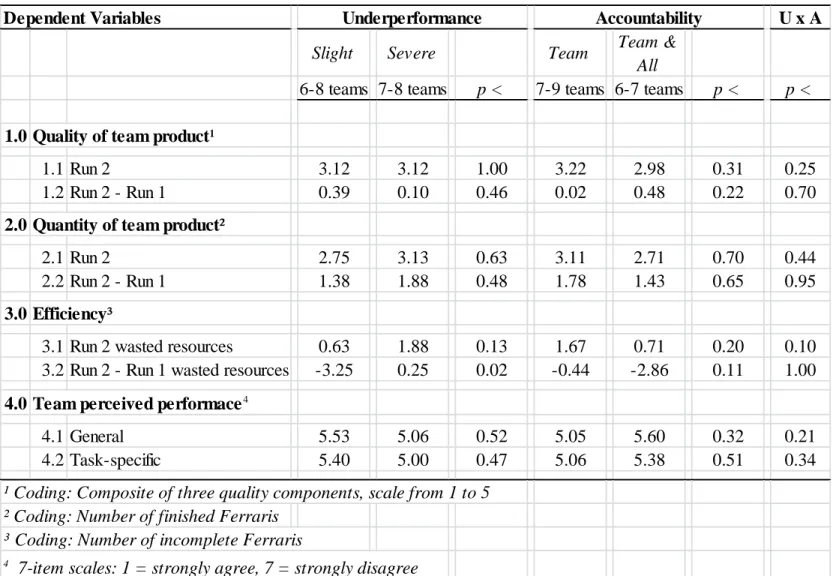
Table 1. Individual Sense-making after (Manipulated)
Team Underperformance Feedback ...88
Table 2. Team Sense-making of Production Run 1 Underperformance ...90
Table 3. Team Strategy Development for Production Run 2...91
Table 4. Team Performance on Production Run 2 ...92
Table 5. Descriptive Statistics for Team Performance in Pilot Study 2 ...93
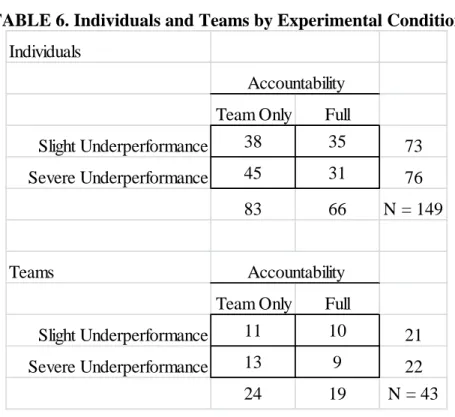
Table 6. Individuals and Teams by Experimental Condition ...93
Table 7. Descriptive Statistics for Individual Sense-making Variables ...94
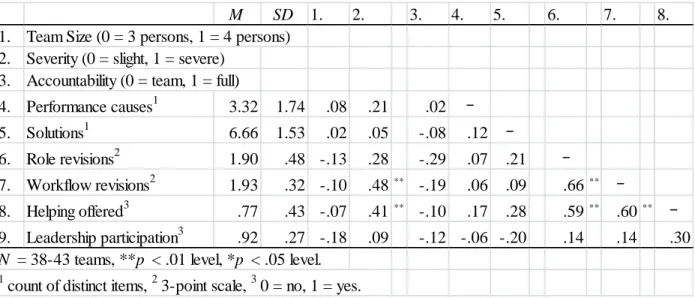
Table 8. Descriptive Statistics for Team Sense-making & Strategy Development Variables ...95
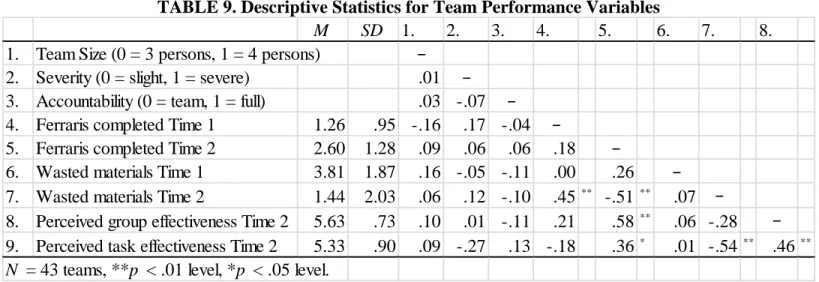
Table 9. Descriptive Statistics for Team Performance Variables ...96
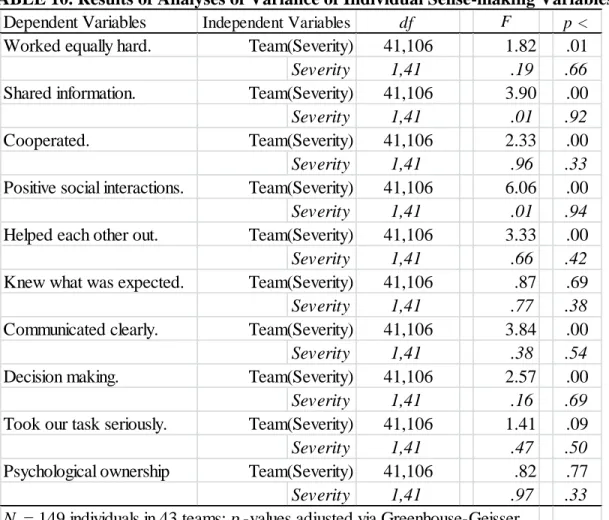
Table 10. Results of Analyses of Variance of Individual Sense-making Variables...97
Table 11. Cell Means and Planned Contrasts for Individual Sense-making Variables...98
Table 12. Cell Means and Planned Contrasts for Team Sense-making & Strategy Development Variables ...99
Table 13. Production Run 1 Team Performance Outcomes by Condition ...99
Table 14. Production Run 2 Team Performance Outcomes by Condition ...100
CHAPTER 1: INTRODUCTION
Despite organizations increasingly relying on teams to process and execute work
demands, teams do not always succeed. The dynamics on these failing teams can be
distressing to members and frustrating to managers. When I surveyed 139 experienced
project managers about the causes of and remedies to team underperformance, a theme of
powerlessness emerged. One participant recalled that “decisions were discussed over and
over again; focus in the status meetings was on finger pointing rather than identifying ways
to help each other to get items delivered.” Another participant described engaging in wishful
thinking that “things may get magically better, circumstances may occur that allow a group
outside to take the blame.” A third participant observed that “discussions sometimes turn into
blame-fixing exercise; faced with a decision between in-fighting or ignoring—many
managers will simply ignore and vow to do better next time; in other words, many times
there are no consequences.” Perhaps with the right managerial interventions underperforming
teams can be reliably turned around, but the managers I surveyed repeatedly reported a
shortage of skills in delivering negative feedback to a team in a way that fosters team growth.
According to team adaptation theory, adaption occurs when teams become aware of
the need for change and formulate and execute a revised task strategy, which leads to a
functional change in team performance (Burke, Stagl, Salas, Pierce, & Kendall, 2006).What
factors might explain when negative team feedback elicits effective task revisions and
improved team outcomes versus stagnation or even further deterioration? To begin
collective sense-making that occurs after teams receive negative performance feedback. I
argue that failing teams make sense of and act on negative performance feedback differently
based on two particular issues: the size of the performance deficit and also the nature of team
accountability mechanisms.
Although performance feedback is a cornerstone construct in a multitude of theories
designed to explain and predict behaviors, the diverse ways in which work teams process and
respond to performance feedback remains underexplored terrain in the prevailing
management literature. The vast majority of studies on performance feedback have focused
on its impact on individual motivation and performance (c.f. Kluger & DeNisi, 1996) which
leaves a gap in our knowledge of how performance feedback affects team processes and
outcomes. An expedient solution is to assume that team and individual reactions are parallel
in nature: negative performance feedback should drive adaptive changes and positive
performance feedback should maintain or even reduce the effort of both individuals working
alone or functioning as part of a team. Yet decades of social psychology studies have clearly
demonstrated that the real or imagined presence of others exerts tremendous authority on
individual behaviors through processes of social influence and social comparison.
Furthermore, the handful of frameworks that do specifically address team responses
to performance feedback tend to discount the differences between negative and positive
performance feedback despite evidence that they are inherently unique and researchers
should not treat them as “two sides of the same coin” (Bacharach, Bendoly, & Podsakoff,
2001). Whereas positive team performance feedback signals that no action is required and
that effort should therefore be maintained or even decreased, negative team performance
performance feedback is indeed a catalyst for teams to solidify commitment to collaboration
or to critically assess and revise their strategies for pursuing their goals. However, there is
also evidence that negative performance feedback can instead create conditions conducive to
discord, dithering, or distancing behaviors. For example, empirical studies indicate that
providing teams with negative performance feedback can drive down individual motivation
(Barr & Conlon, 1994), spur members’ desire for distance from the unit (Snyder, Lassegard,
& Ford, 1986), distort perceptions of organizational citizenship behaviors (Bacharach et. al,
2001), impair satisfaction with the team and undermine collective efficacy beliefs (Prussia &
Kinicki, 1996), and increase relationship conflict and impair subsequent performance
(Peterson & Behfar, 2003).
Examining the severity of the negative team performance feedback should help
explain when teams are more likely to increase their effort and less likely to reject or ignore
feedback. Low levels of negativity may be inspirational and help build confidence and
efficacy, whereas high levels of negativity may paralyze a team. The opposite could also
hold, where small performance slippages may fail to trigger adaptation, either because of
complacency or because a narrow miss could be more demoralizing.
A secondary concern is the expectation of being held accountable as an individual or
a team for how well a task has been performed and the extent to which these accountabilities
are visible. When a team succeeds, there is usually little need for individuals to explain or
justify their contributions, but when a team does not meet stipulated expectations, individuals
are prone to reflect by asking “whose fault is it?” while engaging in diagnosis and strategy
discussions. Under conditions of intense individual accountability, for example where
negative team performance feedback and strategy development are likely to differ compared
to when unique responsibilities and performance outcomes are not disclosed.
By focusing on the transition period between performance episodes when teams take
stock of their previous performance and revise their task strategies, my investigation
broadens our theoretical understanding of when and why critical changes do not occur
following failures in interdependent contexts. I propose that individual and team responses to
underperformance feedback depend in part on the severity of the deficit and accountability
structure. My research investigates the critical transition period between performance
episodes and examines the comparative, attributive, and interactive processes activated by
collective failure during a time when social interactions are still largely missing from the
study of groups (Cronin, Weingart, & Todorova, 2011). Practical implications of this work
include the identification and investigation of several organizational variables available for
managing team performance (House, Rousseau, & Thomas-Hunt, 1995).
The following chapter of this dissertation is a literature review, which starts by
positioning team response to performance feedback within major models of how teams work.
I then focus on how teams make sense of failure before narrowing to consider how social
influences can impede or enable adaptive responses to team underperformance. Based on the
literature I review, I identify the extent to which the team underperformed as well as the
performance accountability structure as two core constructs in understanding team
sense-making and strategy revision in response to underperformance feedback. I pose a set of
exploratory research questions about the ways in which the underperformance deficit and
accountability structure might independently and interactively affect team responses to
In the third chapter I summarize the methods and results of several pilot studies
intended develop manipulations of accountability and underperformance and which also
provide preliminary tests of the relevance of the accountability locus and underperformance
deficit in explaining my outcome variables of interest. The results of the literature review and
pilot studies inform the hypotheses I develop in the third section, which I formally test with
the methodology I present in the fourth chapter of this paper. I present my results in the fifth
chapter and conclude with a discussion of my findings and how they contribute to the
CHAPTER 2: LITERATURE REVIEW
Transitional Team Processes
A team is a small collective of individuals brought together to perform
organizationally relevant tasks and whose workflow is characterized by interdependency
(Kozlowski & Bell, 2003; Kozlowski & Ilgen, 2006). Although team performance
information has traditionally been viewed as an outcome rather than an input to team
processes (Cohen & Bailey, 1997; Ilgen, Hollenbeck, Johnson, & Jundt, 2005), there are
several theoretical models of how teams work in general that serve to broadly identify the
cognitions and activities instigated upon receipt of negative team performance feedback.
Theories of team motivation and goal-setting tend to focus on how performance
feedback has the power to influence proximal motivational states of the team, individuals on
the team, or both simultaneously or recursively. The idea at the core of these models is that
entities require such information to self-regulate their behaviors. These models suggest that
the value of performance feedback is that it permits actors to learn where they stand relative
to set goals and then redirect their efforts and strategies toward specific outputs (e.g., Chen &
Kanfer, 2006; DeShon, Kozlowski, Schmidt, Milner, & Wiechmann, 2004; Pritchard, Jones,
Roth, Stuebing, & Ekeberg, 1988).
In models that consider both individual and team responses to performance feedback,
the effects of feedback on emergent states and strategy development are argued to occur in
parallel at both the individual and team level (Chen & Kanfer, 2006; DeShon et al. 2004).
individual effort and individual strategies for goal pursuit while team performance feedback
influences team motivation and team goal striving. Although the narratives that accompany
these models focus on performance feedback in general rather than feedback related to poor
performance or of varying levels of severity, they do highlight that performance feedback
targeted at different audiences serves to draw attention to the activities of particular actors.
Inherent in the arguments of team motivation and goal-setting theories is the notion
that team performance is either observable or explicitly measured and then transmitted to the
team for consideration. The phase during which team members pause and take stock of how
well they performed during the previous episode and also ready themselves for subsequent
performance activities has been categorized as a transition period or point (Kozlowski, Gully,
Nason, & Smith, 1999; LePine, Piccolo, Jackson, Mathieu, & Saul, 2008; Marks, Mathieu, &
Zaccaro, 2001). During this time team members engage in different team processes than
when they are focused on work tied directly to goal accomplishment. Specifically, the
transition period is the phase when a team analyzes its mission, specifies and prioritizes
goals, and develops alternative courses of action for accomplishing the mission (Marks et al.,
2001). In a team that has completed a performance episode, members are especially likely to
spend time reevaluating performance goals and revising the ways in which they will perform
the task.
What such models of episodic team processes suggest is that a team is likely to
engage in strategy adjustments following negative performance feedback and that these
changes will influence subsequent team effectiveness. If the team has prepared contingency
plans, underperformance feedback is likely to trigger a backup plan. However, newly formed
adapt by reinventing the original plan or abandoning it and quickly developing a new
strategy.
The importance of formulating a team strategy in response to performance feedback
is also underlined in models of team adaptation (Burke et al., 2006; Randall, Resick, &
DeChurch, 2011), in which several preliminary processes are suggested to mediate the
relationship between performance feedback and team strategy development. Specifically,
Burke and colleagues develop the argument that the adaptive cycle of teams also consists of
an initial situation assessment phase during which team members individually gather
information about potential problems the team might encounter and then try to make sense of
the implications of these problems (2006). Cue recognition is crucial for teams operating in
highly complex and uncertain conditions, however it seems reasonable to expect that teams
that explicitly receive negative feedback on their performance are less likely to be tripped up
by failing to extract a change cue from an unstable environment. Although the team may
choose to ignore the underperformance feedback or deny its credibility, the team would be
hard pressed to argue they did not perceive the information.
Sense-making and Strategy Development in Response to Failure
Raw information by itself is insufficient for triggering team adaptation as an outcome.
Instead the information must be given meaning before the team can decide how to respond to
it (Rosen, Bedwell, Wildman, Fritzsche, Salas, & Burke, 2011). Starbuck & Milliken wrote
that “noticing determines whether people even consider responding to environmental events;
if events are noticed, people make sense of them” (1988: 60). Noticing subtle cues for change
is an important capability for teams operating under conditions of environmental uncertainty,
authority, the meanings that team members ascribe to the poor performance feedback seem
more essential to understanding team responses to negative feedback than whether or not
they engage in cue scanning activities (Burke et al., 2006).
Any significant event that affects us in important ways is likely to activate a basic
human motive to comprehend and understand our environment (Fiske, 2004: 18). To
construct the meaning of the negative team feedback, individuals on the team place the
performance information into a framework. To engage in sense-making is to “construct,
filter, frame, create facticity (Turner, 1987), and render the subjective into something more
tangible” (Weick, 1995: 14). Sense-making is therefore a higher-order construct that
encompasses categories of interpretations; for example, sense-making is more incipient and
emergent and continuous than decision making and more inventive and active than
interpretation (Weick, 1995).
Sense-making is a particularly likely response in situations that are confusing,
surprising, or negative. These events interrupt business as usual, thereby encouraging people
to immediately wonder “why?!” and to actively develop theories to explain what has
occurred. Underperformance feedback is especially likely to trigger individual sense-making
processes because we tend to attend to and puzzle over events and behaviors that are unusual
or unexpected, extreme or negative, and relevant to our current goals (Fiske & Taylor, 1991;
Weick, 1995: 47). For example, individual team members likely make sense of negative team
feedback by assessing retrospectively the sufficiency of their own contributions to the team
relative to others and also by estimating the impact of the negative team feedback on their
identity as a competent professional and as a teammate. Furthermore, when there is a strong,
in the work of the group, or receiving an outside intervention—individuals in groups are
particularly likely to explicitly rethink their routines and engage in mental simulations of
hypothetical team situations (Aspinwall & Taylor, 1997; Gersick & Hackman, 1990: 91).
The suggestion is not that sense-making abruptly stops and starts but that receiving
underperformance feedback during a marked transition episode between team action phases
serves to provoke individual sense-making processes. In the quest to build a coherent
narrative about the failure, individuals on a team retrospectively evaluate their own
contributions relative to those of other team members and consider how factors internal or
external to the team influenced the team’s performance. Through cognitions such as these,
individuals are able to reach an initial reactive determination of fault and possible
resolutions.
Such individual thoughts and intentions then become merged or synthesized into
face-to-face conversations and interactions (Wiley, 1988: 254). My argument is that through
team members’ interactions with each other, individual sense-making contributes to and is
informed by team members’ interpretations of the team’s poor performance. This
intersubjectivity emerges from the interchange and synthesis of two or more communicating
team members. The team serves as a sounding board for initial individual appraisals, which
may have been blatantly incorrect or premature due to avoidant, defensive, or incomplete
processing. Discussions of what happened and why and what to do about it, if anything,
compile to a team-level construal of what the performance feedback means and how the team
should move forward (Kozlowski et al., 1999: 250). This is not to say a shared or uniform
conceptions to construct an account that makes concerted action possible (Stigliani & Ravasi,
2012; Weick, 1995: 43).
Sense-making in response to negative team feedback is therefore grounded not only
in individual observations, analyses, and judgments but is also fundamentally a social
construction rather than a solitary process (Weick, 1995: 40). Individual thoughts about team
negative feedback are created in the context of interactions with teammates and are
contingent on the conduct and presence of others. Moving forward as a unit also requires
individuals on the team to link their interpretations of the negative performance feedback and
develop a collective task strategy. Through this process an individual may acquire new
information that may serve to clarify, moderate, reinforce, or revise individual sense-making.
Individual biases may sometimes be shared and insufficient processing of potentially
threatening stimuli can occur during team sense-making (Aspinwall & Taylor, 1997), but
teams that engage in an intellectualized focus on identifying team-centered influences on
team underperformance (versus emotionalized, defensive, or oversimplified problem
processing) should be in better position to develop strategies that correspond well to the
objective demands of the situation.
Figure 1 depicts a general process model of this sequence of events, to include the
effects of team sense-making on individual reinterpretations of the performance feedback.
My argument is that such social influences on individual sense-making and team construal of
the failure can help explain why team responses to negative performance feedback can lead
to insufficient strategy revision, which may hamper subsequent improvements in team
Sensibility to Social Influences
Nadler observed in his review of the experimental research on the effects of feedback
on task group behavior that individuals and teams do not automatically self-correct in the
way that mechanical systems do (1979). Instead, a host of intervening social factors hold
sway over how team performance feedback is interpreted, synthesized, and acted on. The
purpose of this section is to broadly review the social forces that specifically influence
individual sense-making of negative team performance feedback and subsequent team failure
construal and strategy development.
A key factor in individual sense-making of negative team feedback is the extent to
which an individual perceives responsibility for the outcome. However, there is quite robust
evidence that individuals working collectively as compared to individually can feel less
ownership for their actions (e.g., Jackson & Harkins, 1985; Karau & Williams, 1993; Kerr,
1983; Kerr & Bruun, 1983; Latané, 1981; Latané, Williams, & Harkins, 1979; Leary &
Forsyth, 1989). According to a meta-analysis of 78 studies of social loafing and free riding,
reductions in individual effort are particularly likely to emerge when individual contributions
to the team are anonymous or redundant, when the task or group membership is not
personally valued, and when the size of the group is large (Karau & Williams, 1993). For
team members to perceive a responsibility to take action, they must interpret the negative
performance feedback as an ‘emergency,’ feel their contributions will make a difference,
determine the correct course of action, and also follow through on implementation (Fiske,
2004: 336).
To interpret the negative team performance feedback as a call for action and to also
this is that the performance feedback is diluted across several targets rather than a laid on a
single individual. Thus, individuals on a team benefit from a reduction in intensity and
pressure (Latané et al., 1979) and are less inclined to make sense of the performance
feedback in a heedful way. Even if the negative team performance feedback is individually
interpreted as a wake-up call, the group can “force inaction on its members” (Latané &
Darley, 1968: 217). When everyone else appears to interpret an event as trivial, then the
apparent consensus favoring inertia will guide the individual perceiver to also reach the same
conclusion.
For many groups and tasks, individual action and ownership decrease to the extent the
individuals feel their contributions are irrelevant or anonymous. Dispensability of individual
effort is tied to the free rider effect. For example, on tasks in which performance is
determined primarily by the most capable group member, the least capable members tend to
free ride—e.g., “let George do it”—and on tasks in which performance is determined by the
additive outputs of all contributors, the most capable members tend to loaf—e.g., “I’ll do the
least I can get away with” (Kerr & Bruun, 1983). In both cases, certain individuals can
reasonably anticipate that team outcomes will be about the same regardless of whether they
contribute little or maximum effort. Identifiability of individual effort is also related to levels
of individual effort on collective tasks. For example, on tasks in which individual
contributions are anonymous, there is the possibility to “hide in the crowd” and avoid blame
for underperformance, but it is also possible to get “lost in the crowd” when it is reward time
(Davis, 1969).
The extent to which individuals make self-serving attributions for failure as opposed
When a group performs poorly, members who claim low responsibility are evaluated less
favorably than those who accept more responsibility (Forsyth, Berger, & Mitchell, 1981). In
situations where many members make egocentric attributions for failure, group unity may
suffer in response to undue finger pointing. If the blame game continues without resolution,
disgruntled members may deliberately shun future group involvement. In fact, unjustly
blamed group members are reportedly less satisfied with their teams, prefer to work with
other groups in the future, and tend to belittle the abilities of their teammates (Shaw & Breed,
1970). Such fallout from unfair blame aligns with research indicating that perceptions of
disrespectful treatment by teammates can inhibit group-serving behaviors (Simon & Stürmer,
2003).
When a team succeeds, individuals assign credit to the collective, but under
conditions of failure, individuals lean toward assigning blame to individual actors. Beyond
self-serving biases, one reason that individuals rather than the collective tend to be the focus
of team failure attributions is that individuals seem to develop a “peculiar blindness” to team
failure (Naquin & Tynan, 2003). The team halo effect is theorized to result from the
complexity of counterfactual thinking about collectives. People are much more likely to hold
developed schemas of individual behavior than of team dynamics. This means that
sense-making about how individuals contributed to team failure is easier and more accessible than
counterfactual thoughts about team interactions (Naquin & Tynan, 2003).
The inhibition of counterfactual thinking about team dynamics is one way in which
group membership may help prevent performance disillusionment and instead preserve
optimism in the face of failure. Several other socially influenced sense-making processes
feedback and realistic views of the team’s abilities (Heath & Jourden, 1997). Team
discussions may actually help members reframe the situation in terms of success rather than
failure in a way that individuals would find difficult to do by themselves. For example, when
conversations highlight the positive aspects of the team’s efforts, members focus on what
was accomplished rather than what was not and may dwell on the ways in which collective
effort exceeded what any single individual could have accomplished alone.
Furthermore, the more complex the task, the greater the flexibility that recipients have
in framing a performance shortcoming in a positive light, for example by directing attention
to what worked or how outcomes could have been worse or increasing the level of
abstraction of the performance standard (Jordan & Audia, 2012). Even when groups do
acknowledge a team performance shortcoming during a conversational post mortem, for
complex or ambiguous tasks they are hard pressed to reach a full understanding of all the
different causal links in task performance (Lindsley, Brass, & Thomas, 1995) and they are
better positioned to collectively determine that external factors such as a hostile environment
or an inherently difficult task are at fault. Group members may also support one another in
separating emotional reactions from performance perceptions, thereby buffering team
members from the negative affective reactions to poor performance feedback that prevail
more in individuals not working in groups (Heath & Jourden, 1997).
The surveyed literature indeed suggests that even a direct cue for team
improvement—such as explicit underperformance feedback—may be ignored, deflected, or
misinterpreted due to the social cognitions and interactions inherent in collective work
arrangements. The recurrent theme is that teams often have the motive and the means to
the commitment to revise team strategies, subsequent performance is likely to remain
depressed. The question then becomes what type of underperformance feedback is most
likely to inspire productive and collaborative strategy planning and implementation?
Underperformance Deficit as a Key Construct
An important yet overlooked contributor to how teams interpret and respond to
negative performance feedback involves the extent of the performance shortcoming.
Depending on the size of the shortfall, the perceived negative discrepancies are likely to
activate different sense-making reactions, which have distinct implications for subsequent
strategies and effort (Bandura & Cervone, 1986). Whether a team imploded or just missed
the mark is likely to play a key role in explaining the depth and direction of individual and
collective team sense-making processes.
Small performance slippages may enable a team to coast along because the
performance target seems attainable in future performance episodes without a need for
self-reflection or strategy revision. When a team only slightly underperforms, it is easy for
members to make downward comparisons about how much worse they could have performed
or to reframe the performance target as having some margin of error. In this situation, poor
team performance feedback is likely to be superficially digested with no real impetus for
strategy revision. People think as hard as the social situation requires (Fiske, 2004: 124) and
it is the teams that receive moderate to severe levels of underperformance feedback that are
likely to recognize the need for change, to instigate thoughtful diagnoses of how the team
went awry, and to engage in in-depth conversations about ways in which work flows and
resources can be revamped to meet objectives. This line of reasoning rests on the collective
People pay more attention to negative behavior and the more negative the behavior, the
longer they look (Fiske, 2004: 127).
A countervailing line of reasoning would posit the exact opposite, however; namely
that meaningful discourse on the drivers of team failure should be more prevalent under
conditions of small performance slippages. The logic is that even though awareness of the
need to change may be greater under severe levels of team underperformance, so too are
doubts about performance capabilities and motives to engage in defensive cognitions such as
psychological distancing and attributing failure to external or uncontrollable causes. For this
reason, meaningful sense-making about team failure causes may be more likely under more
neutral conditions of small performance slippages (Edmondson, 1999) than at the deep end of
underperformance where deficits may activate interfering cognitions and derailing behaviors.
Apathy, confidence loss, and relationship conflict are particularly likely in the context of
repeated failures (Lindsely et al., 1995) or limited experience working together (Duval,
Duval, & Mulalis, 1992; Peterson & Behfar, 2003), whereas scapegoating and finger pointing
are likely to occur as rewards and punishments are introduced (Dattner & Dahl, 2011).
It appears that the extent to which a team has underperformed can activate both
helpful and dysfunctional processes, likely at the same time. At this point of theory
development, my focus is on establishing causal links between underperformance and key
team processes without making precise predictions regarding the magnitude and direction of
the relationships. My basic expectation is that the extent of underperformance is linked to
dampened motivational states at the individual and team level (i.e., efficacy beliefs, team and
task commitment, and psychological ownership). My focus, however, is on the sense-making
failure is tied to situational awareness of the need for changes yet also triggers defensive
mechanisms that hinder team discussions of the causes of failure and solutions offered. My
preliminary expectation is that sense-making will be most thoughtful and helpful in terms of
revising team strategy at slight levels of underperformance. Even though individuals on these
teams may not as clearly see a need for thoughtful team discussion as individuals on severely
underperforming teams, they should preserve enough confidence and goodwill to avoid
getting mired in defensive cognitions, conflict, blame, defensiveness, or apathy, which
should enable them to more thoroughly discuss their predicament and how to move forward.
Accountability Structure as a Key Construct
Accountability differs from knowledge of results in that accountability involves
holding people answerable for their decisions and actions. Accountability flows from
assigned role or task responsibilities (Bergsteiner, 2012: 24) and refers to the “implicit or
explicit expectation that one may be called on to justify one’s beliefs, feelings, and actions to
others and usually implies that people who do not provide a satisfactory justification for their
actions will suffer negative consequences ranging from disdainful looks to loss of one’s
livelihood, liberty, or even life” (Lerner & Tetlock, 1999: 255). As depicted in the
accountability process model in Figure 2 (adapted from Bergsteiner, 2012: 190), causal
responsibility is established by linking the consequences of a behavior to the accountee. As
Hall and colleagues write, “There is perhaps no more foundational element of organizations
than accountability … without accountability, individuals would be able to do whatever they
wanted, whenever they wanted. The result would be chaos and the breakdown of
In general, holding people answerable for their decisions and actions should
encourage more deliberate and accurate sense-making processes, reason-giving, and more
effortful contributions to team performance. As Figure 2 depicts, establishing consequences
for an accountee’s behavior encourages reflection on the outcomes and subsequent
behavioral responses. Research on individual motivation in group settings consistently points
to the importance of accountability for inputs and outcomes in determining initial and
subsequent motivation and performance. When team members expect that what they say or
do will be linked to them personally and their performance is observable or identifiable,
motivation to shirk responsibility is suppressed (Sedikides, Herbst, Hardin, & Dardis, 2002).
Specifically, literature on social loafing suggest that accountability is one of the key factors
in ensuring that each team member contributes to the best of his or her ability (Miles &
Greenberg, 1993; Williams, Nida, Baca, & Latané, 1989). When team members expect to
give reasons for what they say or do, faulty attributions for failure should diminish and new
strategies should be encouraged. Indeed, accountability has been shown to reduce
group-think (Kroon, Van Kreveld, & Rabbie, 1992), safeguard against escalation of commitment
(Simonson & Staw, 1992), and decrease self-enhancement biases (Sedikides et al., 2002).
Accountability is a multi-faceted construct (Lerner & Tetlock, 1999) that I bound
along several dimensions to mirror an organizational team context. First, the accountability
implementation I investigate is established pre- rather than post-task performance. This
means that the team is informed of expected outcomes and individual roles are assigned
rather than emerging without any structure in place. If a team and its members expect to be
evaluated at the end of a task, they should carry out higher quality work because their
opposed to after the work is finished has been documented as a better inhibitor of
unproductive defensive bolstering and justification (Lerner & Tetlock, 1999).
Accountability can also vary by what one is accountable for doing. In the team
context, this can mean being held accountable for the processes by which work and
information are coordinated and shared or being held accountable for team outcomes.
Although process versus outcome accountability exert different effects on team information
processing and perceptions of control (Lerner & Tetlock, 1999; Scholten, van Knippenberg,
Nijstad, & De Dreu, 2007), in business contexts teams are more generally held accountable
for outcome-related performance, so this the type of accountability I am investigating.
The facet of accountability that I expect to influence individual and team responses to
underperformance feedback is who exactly is held accountable—in other words, the locus of
accountability. In a team context, who is held accountable can be individual team members,
some subset of team members, the collective as a whole, some combination of these entities,
or none at all. These are the receivers of accountability expectations from a sender or
principal, who is conceptualized here as a legitimate source, external to the team, with known
views about desired performance expectations (Lerner & Tetlock, 1999) and credible
expertise in evaluating team performance. Regardless of who is held accountable to whom,
and for what, and at what time, and through what type of accountability intervention, the
underlying principle of establishing causal responsibility through linking behaviors to
outcomes remains the same.
I anticipate that who is held accountable will inform attributions of responsibility for
team shortcomings and determine obligations, if any, to do things differently moving forward
are: team, team and self, and team and all individuals on the team. In the team-only
accountability situation, who is held accountable for team performance is the team as a unit.
Causal responsibility at the team level involves linking team behaviors to team
consequences, for example by establishing the expectation of evaluation at the team level,
providing team-level performance feedback, or rewarding or punishing members based on
team performance indicators. Individual behaviors are neither evaluated nor linked to team
consequences.
In the second and third accountability variations depicted in Figure 3, team
accountability is augmented by self-accountability for one’s team role. Monitoring individual
performance, introducing performance feedback tailored to one’s role responsibilities, or
increasing the identifiability of individual contributions to the team increases causal
responsibility by linking an individual’s team-role behaviors to individual consequences. In
the middle diagram, individual causal responsibility is partitioned from team accountabilities,
thereby allowing an individual team member to reflect on how his or her individual
contributions supported or undermined the collective. The far right diagram depicts a
condition of full transparency of individual contributions wherein each individual’s role
performance and outcomes are known to all team members. In this condition, the
accountability sender is implicitly expanded from an external legitimate source to include
fellow teammates.
As the locus of accountability drills down from the team level, individual
accountability generally increases by means of tightening the link between individual
behaviors and consequences. I anticipate that greater individual accountability should
also drive more productive strategy development post-failure feedback, particularly when
accountability is to a legitimate audience that is informed about how a task should be
optimally performed and expectations of evaluation are established prior to team task
performance (Lerner & Tetlock, 1999). In contrast, under conditions of limited visibility of
individual performance information, I expect it to be easier for individuals on the team to
coast and also to have more difficulty and less motivation to accurately diagnose who and
what contributed to underperformance, which should impede the development of effective
task strategies.
After a certain point, however, the returns from accountability may diminish. One
reason is that increased visibility of individual contributions and performance expectations
serves to highlight individual roles on the team, which could backfire by detracting from
collective task commitment. Theoretically, making an individual consider her own
performance more carefully through accountability interventions serves to shift cognitive
processes away from the team level (DeShon et al., 2004), which may be unhelpful for
aligning interpretations of the causes of failure and potential solutions. Research has also
demonstrated that individuals with low job self-efficacy respond to increases of perceived
accountability by decreasing organizational citizenship behaviors (Hall, Royle, Brymer,
Perrewé, Ferris, & Hochwater, 2006), which could include contributions to team
sense-making and strategy development and motivation on subsequent team tasks.
Another reason for diminishing returns of accountability is that too much perceived
accountability might provoke performance anxiety in team members and lead to team tension
and conflict. For example, high levels of individual accountability could inadvertently
George-Falvy, Mitchell, & Matthews, 1997) such as scapegoating of individual team
members, which creates a state of psychological vulnerability (Dattner & Dahl, 2011) This
would derail team discussions of the causes of underperformance. It may be particularly
problematic when individual accountability is high but autonomy is lacking, leading
underperformance to be interpreted as a threat rather than an opportunity (Frink et al., 2008;
Jackson & Dutton, 1988; Lerner & Tetlock, 1999). If accountability mechanisms are onerous
or excessive, team members might experience reactance, which can decrease motivation and
increase resentment from perceptions of being overly controlled (Brehm, 1966), perhaps
incentivizing cheating or discounting of the accountability system. Furthermore,
accountability to an audience with known views and high power can encourage conformity
and inhibit complex and self-critical counterfactual thoughts that focus on internal
attributions and make upward comparisons about how mistakes can be averted (Morris &
Moore, 2000).
Although accountability should generally help teams adapt in response to failure, the
preceding sense-making cognitions would detract from quality team discussions of failure
causes and remedies. I anticipate therefore that in the case of a significant performance
shortfall, the benefits of increased accountability will taper off or even reverse.
Foundational Research Questions
The reviewed literature and my interpretations and reasoning indicate sense-making
at both the individual and collective levels is an integral component of responses to team
underperformance and that both the severity of the performance shortfall and the locus of the
accountability structure will influence adaptive reactions and planning for subsequent
development processesFigure 2 outlined how responsibilities link behavior to consequences,
which motivate accountee reflection and responses. I present my integration of these
relationships into a process model of team responses to feedback in Figure 4. Specifically,
role and task responsibilities guide the behavior of team members. Performance feedback is a
consequence of team member behaviors. Causal responsibility, which is informed by
assigned roles and tasks, is established by connecting accountee behavior and performance
feedback. Performance feedback instigates reflections on results, which I deconstruct into
individual and collective sense-making, both of which inform the other. Collective
interpretations of team performance drive accountability responses, which include the
development and selection of team action strategies and subsequent task performance.
Performance outcomes then feed back into the sense-making cycle.
The foundational research questions I am asking are therefore:
Research Question 1. How do the size of the performance deficit and locus of
accountability affect individual sense-making of team underperformance?
Research Question 2. How do size of the performance deficit and locus of
accountability affect team-sense making of team underperformance?
Research Question 3: How do the size of the performance deficit and locus of
accountability affect team strategy revision for subsequent performance?
Research Question 4: How do the size of the performance deficit and locus of
CHAPTER 3. PILOT STUDIES
Overview of Pilot Studies
I conducted a trio of experimental pilot studies to begin answering my foundational
research questions about the effects of differing loci of accountability and the extent to which
a team had underperformed on sense-making about team performance and strategy revisions.
My secondary purpose was to cultivate a methodology for manipulating accountability and
underperformance in a precise and controlled manner and also to develop reliable
observational and artifact coding protocols of team interactions and performance.
In selecting my research methodology, the key issue was to determine which method
can best be expected to provide valid answers to my research questions (Campbell, 1986).
My questions are currently most appropriately investigated in a laboratory setting for several
reasons. First, this setting enables me to randomly create teams that are equivalent in size and
tenure and that work to complete an identical task in the same amount of time, while also
holding constant the selection criteria and reward structures. Because team experiences differ
only by the locus of accountability and severity of the underperformance deficit, I can
eliminate more alternate interpretations of my results, which will strengthen my confidence
in my conclusions (McGrath, 1982).
Second, I am trying to draw conclusions about the processes that team members
engage in on receipt of two specific interventions. To give the processes of interest a fair
hearing in a lab setting (Mook, 1983), high participant involvement is the field element I
interaction and is inherently enjoyable to perform. In addition to preserving the sense-making
and strategy development processes of interest, the laboratory venue allows me to observe
and record target processes that would be extremely difficult to capture in an organizational
setting due to timing and concerns about protecting employee privacy (Ilgen, 1986).
Furthermore, if I can demonstrate the power of simplified underperformance and
accountability interventions on these processes, even under limited conditions that ought to
inhibit their impact, my trust in my conclusions is all the stronger (Mook, 1983).
My first pilot study was designed to test the effects of three levels of accountability
and three levels of underperformance on the outcomes of interest. The intermediate levels of
the underperformance and accountability manipulations generated results that were
problematic to interpret, so I streamlined my analyses to focus only on the highest and lowest
levels of each condition. The results from my first pilot study also indicated that my initial
accountability manipulation needed strengthening, so in my second pilot study I held
underperformance constant and established the expectation of accounting to a credible
external authority for either team-only performance or team-and-all-individuals performance
(referred to as “full” accountability). I also extended the duration of the team tasks to widen
the range of possible team outcomes. I then conducted a third pilot study to fine-tune my
accountability manipulation checks.
Pilot Study 1 Methods
I describe the methods I used for my first pilot study in detail because my dissertation
methodology is based on this research design. The full protocol is available in the Appendix
Participants. The total sample size was 139 students enrolled in a Fall 2012 course on
the foundations of organizational behavior and divided into 36 teams. After removing the
intermediate levels of the two experimental conditions, the sample size was 61 participants
working on 16 teams of three to four members.
The mean age of this subset was 21.1 years, half were male, and 27.9 percent
self-reported as non-white or non-Caucasian. A small number of participants self-reported having
worked with at least one teammate on a previous academic or professional assignment or
being personal friends with one or more teammates (14.8 percent and 11.5 percent
respectively). 91.8 percent of the sample reported part-time or casual work experience
(average of 32.7 months), and 68.9 percent reported full-time work experience (average of
14.3 months).
Procedures. The team assignment was to manufacture paper Ferraris during two
12-minute production runs that required sequential collaboration. I selected this type of task
because effective team performance required a high level of interdependency but the
workflow also allowed the ostensible isolation of individual contributions for the full
accountability manipulation. Newly formed teams were used for convenience and also
because teams starting from scratch on a new task would have no prior performance
expectations or existing teamwork strategies, which could weaken the believability of the
underperformance manipulations.
On each team, individual members were randomly assigned to a specific role
responsibility (i.e., cutting out the vehicle body, applying paint, folding to prepare the body
for assembly, and assembling the vehicle with tape or glue). Skill differentiation and
not require any specialized knowledge or functional abilities and decision-making
responsibility was vested in the team as a whole rather than in a designated team leader.
Teams received performance feedback after their first Ferrari production run, reported
individual sense-making about the team’s performance while sitting at private computer
stations, and then had up to seven minutes for a videotaped group discussion of what went
well and what went poorly as well as what (if anything) to change going forward. After
filling out a team planning document and privately reporting on commitment to the team and
its strategic plan, the team reunited for a second Ferrari production run.
Experimental manipulations. The experimental manipulations of severity of
underperformance and outcome accountability occurred after the teams finished their first
production run. A research assistant collected the finished and unfinished vehicles in a box
marked “Quality Control” and took them to a separate area for quality inspection. Teams
earned points for each completed Ferrari and lost points for wasted resources and a
predetermined number of quality control failures (six for each team).
Rather than introduce an accountability locus at the beginning of the team session, I
deliberately decided to establish accountability expectations immediately prior to team
sense-making and strategy discussions for four reasons: (a) I needed to establish a measure of
initial team performance against which I could measure post-intervention performance gains;
(b) introducing the accountability locus earlier would have impacted both production runs
and team feedback only during the second run, which would make it difficult to assess their
differential effects; (c) my chosen timing increases the salience of the intervention on the key
processes of interest; and (d) teams would have a clearer sense of the task requirements and
Locus of accountability was manipulated at two levels and fully crossed with the two
levels of underperformance. In the team-only condition, members only received performance
information targeted at the team. Sixteen quality control issues were listed without any
specific individual role accountabilities. In the full accountability condition, members
received an additional performance report in which the 16 quality control issues were
connected to specific role responsibilities.
All teams also received deceptive feedback that their performance was under average
in comparison with other similar production lines. The extent of the performance shortfall
was pilot tested at slight (47th percentile) and severe (17th percentile). To ensure that the
deficit was attended to, in addition to providing each member of a team with an identical
team performance report, the numeric ranking was accompanied by a graphical distribution
marked with an arrow and a number (e.g., “-3”) in red ink that drew attention to how far
below the mean the team had performed. For those teams in the full accountability condition,
the feedback on how well an individual performed his role was based in part on actual
observable quantitative performance (e.g., “number of cars painted” or “number of cars
assembled”), but the information on relative individual performance was in the same
predetermined underperformance range as the team.
Measures. After receiving feedback on the first production run, individuals responded
to a series of questions intended to tap into private sense-making regarding their team’s
performance. Two counter-balanced items asked “to what do you attribute your team’s
success [shortcomings]” and provided space for open-ended responses. Sample attributions
for shortcomings include “poor communication,” “annoyance at one of the team members,”
of 18 statements about the team and its functioning as a group (adapted from Campion,
Medsker, & Higgs, 1993). Individuals also reported the extent to which they felt a sense of
psychological ownership for their work using five items adapted from van Dyne & Pierce
(2004); sample items include the extent to which participants felt “attached to the results of
your work” and “a sense of ownership for the vehicles you work on.” Cronbach’s alpha (α)
for this scale was .87.
Team sense-making and strategy development were assessed by observational coding
of recorded team discussions. Coding of team sense-making focused on problem
identification while strategy development coding focused on the suggestions of distinct
solutions to team underperformance. The strategy coding also included setting future quantity
and quality goals for the second production run as well as plans to revise the workflow and
role assignments. Team commitment to the revised strategy was assessed through four items
(α = .77). Sample statements include “I endorse our plan going forward” and “most members
of my team appear enthusiastic about how we intend to work together.”
Team performance was assessed through artifact coding of team product. Both
finished and unfinished Ferraris were collected at the end of each production run for counting
and quality evaluations. Inefficiencies were measured by counting wasted resources such as
the materials used for Ferraris that were not fully assembled by the end of a production run.
The quality of each of the 72 assembled Ferraris was assessed along three dimensions using a
5-point scale for each dimension and then summed to form a composite quality score for
each vehicle. Across all raters, the average total quality scored for a vehicle was 9.02 out of
15 possible points. Each Ferrari was evaluated by two independent raters. The average score
myself and the lab manager. For the 29 Ferraris evaluated by two research assistants
ICC(A,2) was equal to .77.
Specifically, each of the 72 assembled Ferraris was assessed along dimensions of
paint quality, cutting/folding quality, and structural integrity. Across all teams and production
runs, the three dimensions were relatively distinct from another (i.e., α = .48 for the three
items), which is predictable given the sequential assembly process. For example, a car could
be perfectly painted but due to time constraints was shoddily assembled. The highest
inter-item correlations were between contiguous processes, for example painting and cutting were
correlated at r = .20 (n.s.) and cutting and assembling were correlated at r = .50 (p < .01), but
the correlation between the first and last assembly phases (i.e., painting and assembling) was
just .03 (n.s.).
Additional items asked the extent to which respondents concurred with statements
about general and task-specific team performance during the second production shift. These
items were adapted from Kirkman & Rosen (1999) and include “my team successfully solved
problems that slowed down our work” and “my team avoided wasting inventory.” General
team performance perceptions were measured with six items (α = .92) and five items
assessed task-specific performance (α = .73). Team viability was also assessed with a 5-item
measure adapted from Marrone, Tesluk, & Carson (2007). Sample items include “most team
members would welcome another opportunity to work as a group” and “most team members
found being part of this team to be a satisfying experience” (α = .92).
Individuals on each team also reported motivational states after the first production
run (time 1), after the team strategy discussion (time 2), and after the second production run
Kirkman & Rosen (1999). Sample statements include “we are all committed to working
together” and “we care how well we do on our assignments” (time 1: α = .88; time 2: α = 89;
time 3: α = .93).
Individual task efficacy was measured with five items adapted from Edmondson
(1999). Sample individual items include “I can meet my responsibilities with reasonable time
and energy” and “my abilities are good enough to do my assignment” (time 1: α = .89; time
2: α = .90). Sample team items include “this team can meet its responsibilities with
reasonable time and energy” and “this team’s abilities are good enough to do our
assignment” (time 1: α = .89; time 2: α = .87).
Analyses. Participant explanations for team shortcomings were deconstructed into
component parts and the discrete attributions were placed into one of five actor categories:
structural obstacles (e.g., time limit), team blame (e.g., poor communication), self-reflection
(e.g., my performance), other team members (e.g., he worked slowly), and actor unclear (e.g.,
wasted materials). Video coding of team interactions was conducted blind to the
experimental condition, although dialogue sometimes contained reference to the extent to
which a team had underperformed. Regression analyses were conducted to determine the
whether the experimental conditions or their interaction predicted the sense-making and team
productivity outcomes of interest.
Pilot Study 1 Results and Discussion
Research Question 1. How do the size of the performance deficit and locus of
accountability affect individual sense-making of team underperformance?
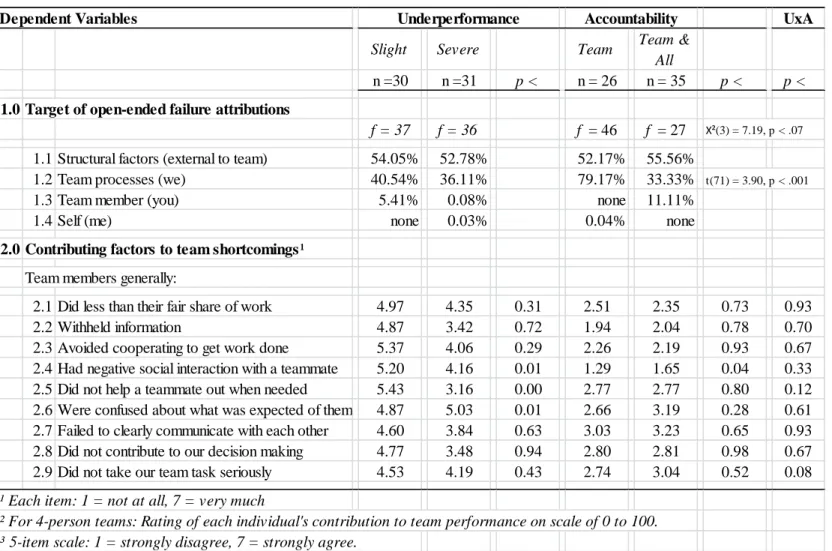
Table 1 presents an overview of my statistics (Individual Sense-making after
performed poorly, across all conditions, coded commentary pointed to external factors about
half the time and to team processes roughly a third of the time. The team halo effect—
whereby team processes are exempted from responsibility for failure and individuals are
assigned more responsibility—was not demonstrably present in these initial private
appraisals. Very few individuals indicated self-involvement or the actions of specific team
members, with the exception of the full accountability condition wherein 11.1 percent of the
comments were directed at specific teammate behaviors contributing to failure.
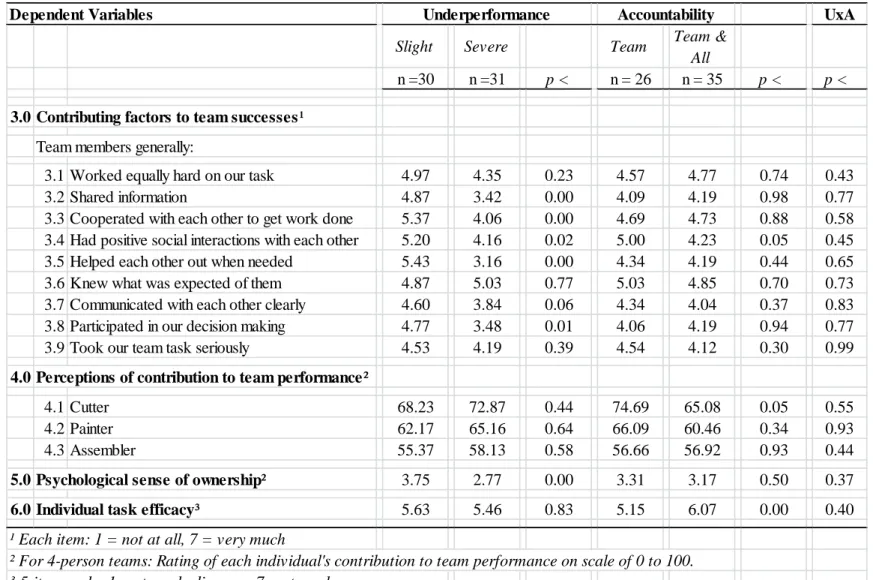
The extent to which a team underperformed exerted a significant effect on individual
sense-making about the failure. When asked explicitly to assess team processes that
contributed to team outcomes, participants in the severe underperformance condition were
significantly more critical than in the slight condition. That is, members of teams that had
been told they had severely underperformed felt their team had been handicapped by less
supportive behaviors, to include less cooperating, helping, communicating, participating in
decision making, and information sharing. Asking why one’s team had not succeeded as
opposed to why it had failed yielded greater differences, indicating to me that opportunity
versus threat framing influences individual sense-making of team failures. Participants in the
severe team underperformance condition also reported significantly reduced psychological
ownership for their individual responsibilities on the team.
The locus of accountability did not exert discernible effects on individual
sense-making and neither did it interact with the extent of the underperformance deficit. My
summary interpretation is that the initial individual meaning ascribed to team