Jo Ann Dowell
A dissertation submitted to the faculty of the University of North Carolina at
Chapel Hill in partial fulfillment of the requirement for the degree of Doctoral in the School of Nursing of
Chapel Hill 2011
iii ABSTRACT
Determining Intervention Fidelity from Chronological Field Notes (Under the direction of Linda Beeber)
Intervention fidelity (IF) is a relatively recent methodological consideration in nursing research that refers to the adherent and competent behaviors by the interventionist in the delivery of the intervention as planned (Santacroce, Maccarelli, & Grey, 2004; Stein,
Sargent, & Rafaels, 2007). Intervention fidelity is a major contributor to the internal validity of a study. When an intervention is delivered as prescribed, the inference that the outcome is caused by the intervention is supported. If intervention fidelity is low, the expected
iv
comparable to a study (Hill, 1992) that used traditional methods of transcribed audiotapes. This exploratory study provided support that an alternative methodological approach to determining intervention fidelity is feasible. Further research with a larger sample is needed to conclude with greater certainty that intervention fidelity can be determined using field notes.
v
ACKNOWLEDGEMENTS
One of the most interesting and exciting aspects of this study was having a network of a well--renowned experts in nursing science and supporters to guide me throughout the process. To the casual observer, a doctoral dissertation may appear to be solitary work. However, to complete a project of this magnitude requires a network of experts and
supporters, and I am indebted so many people. Although part of the work of the dissertation is in isolation, there was this envelope of protection that was provided by so many people in the School of Nursing and others.
Dr. Linda Beeber, PhD, PMHCNS, FAAN who chaired my committee, inspired me to pursue the integrity of intervention studies. I am most grateful to my mentor and my
strongest advocate, Dr. Beeber for her tireless mentoring and allowing me to explore new avenues of research related to a new methodological approach in determining the fidelity of an intervention. It is the endless hours sitting in her office reviewing and discussing from the time the idea was conceptualized to the final written document that probably felt to Dr. Beeber as a never ending process. However, this direction from an expert nursing research scientist who was willing to share her expertise has afforded me the knowledge toward developing a successful program of research.
vi
I am most humble to have committee members with enormous amount of expertise in nursing research to guide me throughout this journey with continuous support. Especially, I would like to thank Dr. Todd Schwartz for helping me to understand different ways of establishing the analyses for this study.
I am truly grateful to a friend and colleague, Brandy Mechling for her patience and willingness to learn about the role of the rater. Brandy’s participation as a volunteer second rater in this study contributed to the completion my research. I truly thank you for all of your contribution to this body of knowledge.
I also am most grateful for my family especially my mother, my daughter, Hawanya, my sisters and brothers for their support and extraordinary courage to be patience with me when I was too involved in the work to participate in family gatherings throughout this process.
To Ginny Lewis and all of Dr. Beeber’s Team past and present, I appreciate your support and continuous assistance in obtaining the tools that I needed to complete this work. It was their enduring patience and assistance with a smile that made my day a success
although I may have been doubtful.
Last, I would like to acknowledge Dr. Clara E. Hill, Professor of Psychology at the University of Maryland at Baltimore for permission to use the Collaborative Study
vii
TABLE OF CONTENTS
LIST OF TABLES………ix
LIST OF FIGURES………...xi
CHAPTERS I. INTRODUCTION……….………...1
Aims………...2
Conceptual Framework………...5
Operational Definitions………...7
II. LITERATURE REVIEW………...9
Fidelity and Internal Validity………...10
History of Intervention Fidelity in Psychotherapy Research………...15
Intervention Fidelity Studies in Nursing Research………...24
Methods of determining fidelity………...31
Limitations of Existing Systems of Measuring Fidelity………...40
III. METHODOLOGY………...45
Design………...45
Sample……….47
Methods………...50
Procedure...………...53
Rater Guidelines………...54
Data Preparation and ongoing management………...58
viii
Analysis………59
Limitations………...64
IV. RESULTS………...……….65
Characteristics of the intervention nurses……...65
Results by the Aims……….67
Aim 1………..67
Aim 2...…...76
Aim 3………...79
Aim 4………...80
Summary of results by Hypotheses………...84
V. DISCUSSION………...87
Rating from different observers….………...88
Summary of the findings……….89
Limitations………...93
IMPLICATIONS for Nursing Research...94
VI. Appendix A Collaborative Study Psychotherapy Rating Scale (IPT)...96
VII. Appendix B Collaborative Study Psychotherapy Rating Scale (CBT)…...106
VIII. Appendix C Rater Applied Performance Scale………...117
IX. Appendix D Intervention Fidelity: The rater’s manual………...118
X. Appendix E Program Evaluation………...120
ix
LIST OF TABLES Tables
II.1 Characteristics of Intervention research and IF………...24
II.2 Characteristics of nursing intervention research and IF………31
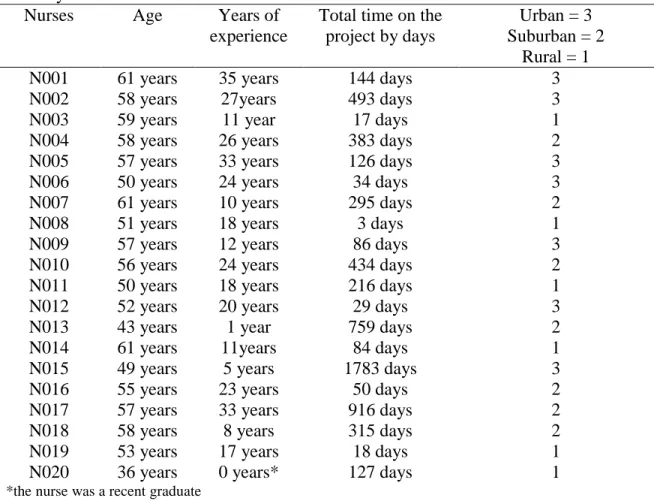
III.1 Nurses, geographic location and setting type………..47
IV.1 Nurses’ age, years of experience, length of time on the project and location of the delivery………...66
IV.2 Reliability with the master coder for each subscale total (MDS 1) in Trial 1………...71
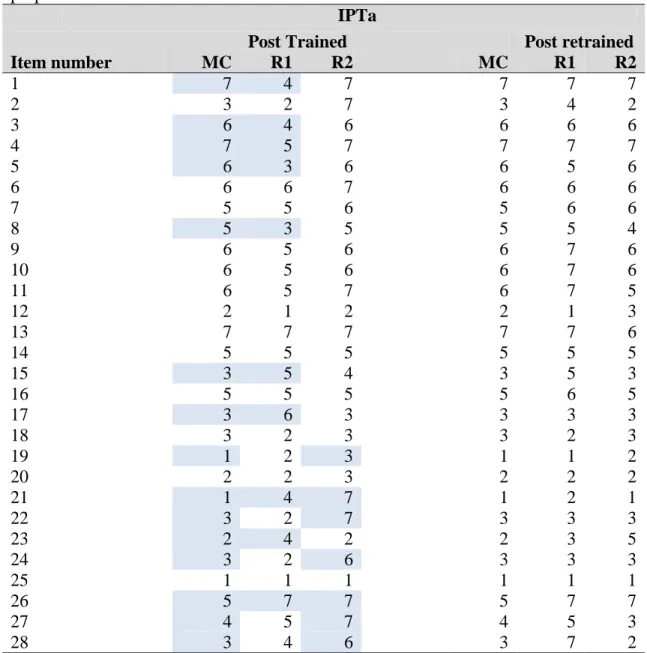
IV.3 An example of a grid of the raters’ and master coder’s ratings used for training purpose………...72
IV.4 Reliability with mater coder (MDS 2) in Trial 2 ………...74
IV.5 Inter-rater reliability (MDS 1) in Trial 1………...74
IV.6 Inter-rater reliability (MDS 2) in Trial 2………...75
IV.7 Level of agreement over time between the master coder and raters…………...75
IV.8 Level of agreement between raters over time………...75
IV.9 Means and Std. Deviation…...77
IV.10 Inter-rater reliability for IPT and CBT for the overall sample………...78
IV.11 Internal Consistency between the raters and for the first 10 field notes …...78
IV.12 Comparison from the study of subscale IPT & CBT on adherence with NIMH ………..79
IV.13 Inter-rater reliability and Cronbach alpha on IPT competence………80
IV.14 Correlations between adherence and competence on IPT and CBT plus between prescribed behaviors (IPT) and proscribed behaviors (CBT)………...81
x
IV.16 Bivariate correlation of the predictors on adherence and competence with
IPT………...82 IV.17 Linear regression predicting greater adherence (Models 1 & 2 and
competence (Models 3 & 4)………...83 IV.18 Multiple regressions for all factors predicting greater adherence and
xi
LIST OF FIGURES Figure
xii IF Intervention Fidelity
CFN Chronological Field Notes
CSPRS Collaborative Study Psychotherapy Rating Scale IRR Inter-rater reliability
IPT Interpersonal Psychotherapy CBT Cognitive Behavior Therapy CM Clinical Management FC Facilitative Conditions ED Explicit Directiveness
NIMH National Institute of Mental Health
INTRODUCTION
Intervention fidelity (IF) is defined as the adherent and competent behaviors by the interventionist nurse in the delivery of an intervention as planned (Santacroce, et al., 2004; Stein, et al., 2007). Intervention fidelity is a major contributor to the internal validity of an intervention study or the extent to which one can infer that an outcome occurred as a result of an intervention instead of uncontrolled, extraneous factors (Cook & Campbell, 1979; Nezu & Nezu, 2008). The domains of IF are adherence, defined as “the extent to which the
prescribed (desirable) elements of an intervention have been delivered and proscribed
(prohibited) elements avoided”, (Santacroce et al., 2004, p. 63; Waltz et al., 1993, p.630) and competence, defined as the extent to which the interventionist “has displayed behaviors that typically engage participants in the intervention and affect outcomes in the desired direction”
(Najavits & Weiss, 1994, p.679; Santacroce, et al., 2004, p. 63).
Traditionally, researchers have used observers, audio tapes and/or video recordings, or interventionists’ self-reports to gather data on IF (Moncher, 1991). The “gold standard”
2
intervention studies that require the revelation of sensitive issues may limit individuals from sharing this information. In addition, traditional IF procedures that use observational methods require labor-intensive work and high cost to complete.
An alternative device, field notes written at the time of delivery of the intervention, may be another basis for IF measurements, especially when sensitive topics or trust are issues. The proposed study explored the use of data retrieved from a standardized form of field documentation (chronological field notes [CFN]) using trained raters and a reliable measure of IF.
AIMS:
The overall aim of this study was to explore whether or not an alternative type of data collection method (chronological field notes [CFN]) could be used as the basis for the valid and reliable assessment of intervention fidelity (IF). To test the hypothesis we proposed the following specific aims:
AIM 1. Describe the process used to establish and maintain the reliability of the raters on the Collaborative Study Psychotherapy Rating Scale (CSPRS) applied to CFNs:
1a. Establish a master set of ratings by an expert intervention researcher for the CSPRS using CFNs that will not be used in the study.
1b. Develop a raters’ manual for determining the CSPRS item ratings. 1c. Develop a training program for raters.
1d. Train two raters using the materials developed in 1a-c. 1e. Evaluate the outcomes of the training program.
3
H1f1. Raters who receive comprehensive training will achieve adequate agreement with the master coder; that is, the level of agreement will reach a reliability coefficient of 0.9.
H1f2. Raters who receive comprehensive training will achieve an IRR with one another of greater than 0.9.
1g. Determine each rater’s level of agreement with the master coder and with one another over time.
H1g1. Raters will achieve a reliability coefficient of 0.9 with the master coder and an IRR of 0.9 on a master data set at a checkpoint conducted midway through the data.
AIM 2. Explore how the CSPRS ratings derived from CFNs function as a measure of the IF domain of adherence. Using the CSPRS adherence scale specifically:
2a: Compute IRR between the two raters and internal consistency on adherence for each of the theoretically-derived two subscales: interpersonal psychotherapy (IPT) and cognitive behavior therapy (CBT).
2b. Compare IRR and internal consistency of each CSPRS subscale on adherence using CFNs with the scores derived from observational transcribed data from the original National Institute of Mental Health (NIMH) study. We hypothesized:
H2b IRR and Cronbach’s alpha on adherence ratings for each of the two subscales (IPT and CBT) will be equal to the NIMH published scores for IRR (IPT - .78, CBT - .90,) and alphas (IPT - .90, CBT - .94).
4
3a. Compute IRR for the two raters and internal consistency on competence for each of the two subscales (IPT and CBT).
3b. Compare the internal consistency on competence for each of the five CSPRS subscales to established standards. Specifically:
H3a. IRR on competence for each of the two subscales (IPT and CBT) on competence will achieve a reliability coefficient of equal to or greater than 0.80.
H3b. Each of the two CSPRS subscales on competence will achieve a Cronbach’s alpha of .80.
Aim 4: To explore whether CSPRS ratings derived from CFNs reflect the expected relationships among nurses’ adherence, competence and relevant personal and contextual
factors. Specifically:
H4a. Adherence (score on IPT subscale) and competence (score on IPT subscale) will have a strong positive correlation.
H4b. IPT scores (prescribed behaviors) and CBT scores (proscribed behaviors) will have a strong negative correlation.
H4c. Greater age, years of experience, and length of time on project will predict greater adherence.
H4d. Greater age, years of experience, and length of time on project will predict greater competence.
5
The science of IF is essential and significant for the validity and reliability of nursing intervention research. The accomplishment of these aims will provide information on the reliability of chronological field notes as a source of data for determining IF. This study will move nursing forward toward establishing preliminary evidence that CFNs can be used as an alternative when other devices, such as tape or video recordings, are not feasible.
Conceptual Framework
The proposed framework for this study is based on the work of Waltz et al. (1993) on the behaviors that affect adherence and competence of the therapist (unique and essential, essential but not unique, acceptable but not necessary, and proscribed); the work of Barber et al. (1996, 2001) relating to interpersonal psychotherapy skills (IPT; e.g., warmth, empathy, congruence, and genuineness) by the therapist; and the work of Hollon et al. (1984) relating to preparation and engagement by the therapist.
Waltz’s Work on Adherence and Competence
The conceptual framework uses Waltz et al.’s (1993) definition of adherence and
competence. Waltz defined adherence as the extent to which the therapist applies the intervention per treatment protocol and avoids procedures proscribed by the manual, and competence as the level of skill, or the extent to which the interventionist displayed behaviors that typically engage the participants in the intervention and has an effect on the outcomes in the desired direction. Adherence includes prescribed behaviors (essential and unique,
6
could confuse interpretation of the results. Waltz’s definition of competence also accounts for contextual elements, i.e. the relevant aspects of the therapeutic frame of reference. This may include the a) participants’ degree of impairment, b) problems that manifested, c) life
situations and stressors of participants, and d) degree of improvement already achieved and appropriate sensitivity to the timing of intervention within a therapy session (Waltz, et al., 1993). For example, one treatment may require the therapist to be warm and empathic in delivering the treatment, whereas another treatment would not (Waltz, et al., 1993).
Waltz et al. made three recommendations for IF research. These are: 1)
interventionist competence in an IF research study must be defined relative to the protocol manual; 2) that adherence measures should include four types of therapist behaviors
(essential and unique to a particular treatment modality, essential but not unique, acceptable but not necessary, and behaviors that are proscribed); and 3) that therapists must establish their competence through independent measurement and verification, rather than
investigators assuming that experience level and training are equivalent to the skill level (Waltz, et al., 1993).
7
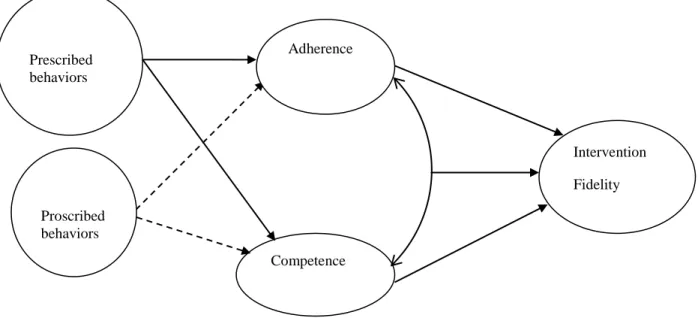
Figure I.1 Conceptual Framework Model for the Study
Operational Definitions
In this study, the following concepts and operational definitions will be used. Adherence:
Conceptual Definition: Adherenceis defined the extent to which the
prescribed elements of an intervention have been delivered and proscribed elements are avoided (Santacroce, et al., 2004; Waltz, et al., 1993). Operational Definition: In this study, adherence will be represented by
two ordinal ratings representing the degree to which interventionist nurses’ chronological field notes reflect: prescribed behaviors measured
by the IPT sub-scale of CSPRS and proscribed behaviors as measured by the CBT sub-scales of the CSPRS.
Adherence Prescribed
behaviors
Proscribed behaviors
Competence
Intervention
8 Competence:
Conceptual Definition: Competence is defined as the extent to which the
interventionist has displayed behaviors that typically engage the
participants in the intervention and affect outcomes in the desired direction (Najavits & Weiss, 1994; Santacroce, et al., 2004)
Operational Definition: In this study, competence will be represented by
an ordinal rating representing the degree to which interventionist nurses’
CHAPTER 2
LITERATURE REVIEW
The purpose of this chapter is to provide a synthesis of the literature on IF that includes the definition of IF, the relationship of IF to internal validity, the history of IF in psychotherapy and nursing research, and methods of determining intervention fidelity. The literature that was reviewed included a wide array of research on IF, especially within the past ten years. Several different disciplines were represented in the literature review, including public health, psychology, psychiatry, education, medicine, nursing, and social work. The literature on IF showed considerable variation in the methods of determining IF including face-to-face observations or the use of different devices such as audiotapes, videotapes, process notes, transcripts, or field notes. In addition, multiple measures of IF have been used as well.
Definition of Fidelity
10
Adherence has been defined as the therapist applying the prescribed ingredients of the treatment intervention and avoiding proscribed behaviors (Santacroce, et al., 2004; Stein, et al., 2007; Waltz, et al., 1993). There are interrelated conditions that affect the adherence of the interventionist such as the interventionist’s ability to provide some degree of congruence, quality of delivery, and appropriateness of the dose (Barber, Stratt, Halperin, & Connolly, 2001). Congruence relates to the degree to which the interventionist must come to grips with the inevitable restrictions that adherence to the protocol requires and maintain strategies conductive to the experimental condition (Weissman, Rounsaville, & Chevron, 1982). The interventionist’s lack of adherence to the prescribed protocol may lead to a diminished
quality of the delivery, producing a compromised outcome.
Competence, the second core component of IF, is defined as the extent to which the interventionist has displayed behaviors that typically engage participants in the intervention and affect outcomes in desired direction (Najavits & Weiss, 1994). The literature is limited on measures for competence of psychotherapists; however, Carroll, K. et al. (2000) reported in their article that competence was measured by how well the therapist performs. Waltz et al. (1993) moved away from the general therapeutic definition and focused instead on the contextual definition of competence. These contextual factors that may influence the interventionist’s competency are the client difficulty, the stage of therapy, or the client’s
characteristics, such as the presence or absence of collateral problems. Competency is defined relative to the intervention manual (Waltz et al.).
Fidelity and internal validity
11
(independent variable), rather than uncontrolled, extraneous factors, is responsible for observed effects (Cook & Campbell, 1979; Nezu & Nezu, 2008). These extraneous factors may include general threats to internal validity relating to the design of the intervention, its delivery, the manipulation process, the number of individuals participating in the study, and the behaviors of the interventionists. The threats to internal validity relating to the design of the study are a) history, the effect that events that are external to the study design have on the participants; b) selection, the effects of preexisting differences between the groups; c)
maturation, the developmental changes that take place within a participant over the course of the intervention study; d) testing effects, the effect from participants’ learning from the instruments and repeated responses to the questions; e) instrumentation, the effect of changes in data collection procedures or measurement tools over the course of the study; and f) mortality, the differential loss of participants from intervention and control groups (Kerlinger & Lee, 2000). In a scientific experimental intervention, randomized clinical trials (RCTs), the researcher maintains internal validity through the procedures and the processes built into the study’s design (Horner, Rew, & Torres, 2006) including the systematic delivery of the
intervention (Spillane, et al., 2007)
12
the actual co-varying relationship between a given independent variable (IV) and a given dependent variable (DV).
Methods for establishing reliable delivery are central to the integrity of any
randomized trial. Researchers have revealed that the more complex an intervention is, the more likely there is a negative effect on the delivery of the intervention (Calsyn, 2000; Horner, et al., 2006). The risk of variation may occur when the intervention is offered multiple times. Using multiple interventionists also increases the risk of deviation from the original study design (Calsyn, 2000). In addition, intervention studies that have multiple sessions may be at risk for variations in the delivery (Kerns & Prinz, 2002). For example, an interventionist may make minor adjustments to the protocol based on assessments from earlier sessions (Bellg, et al., 2004; Horner, et al., 2006). Further, as intervention studies become more complex, there is the risk of what is known as interventionist “drift.” This means that unplanned changes take place as the interventionist drifts from the protocol manual (Bellg, et al., 2004; Horner, et al., 2006; Nigg, Allegrante, & Ory, 2002; Santacroce, et al., 2004). Even though, there are some adjustments made during most intervention studies, it is this subsequent adjustment that may lead to further deviation from the original design. The more changes that occur during the intervention research, the more likely there will be deviation from the original design of the research study, which ultimately affects the validity of the study. To summarize, the researchers’ strategies to maintain the integrity of
13
intervention may fail to be adherent. This action affects the outcome and the integrity of the intervention.
To determine whether the independent variable (treatment) is responsible for changes in outcomes, manipulation checks such as IF monitoring should be completed (Brandt, Kirsch, Lewis, & Casey, 2004; Waltz, et al., 1993). Manipulation checks are necessary to provide information to support assumptions about ensuring internal validity (Mowbray, Holter, Teague, & Bybee, 2003). For the researcher, providing manipulation checks means IF monitoring, which includes examining both adherence and competence of the
interventionist during the intervention delivery. Waltz (1993) concluded that manipulation checks are essential to infer conclusions about the treatment intervention effects or the absence of an effect. In addition conducting manipulation checks such as IF monitoring throughout the study may provide information about the strengths and weakness of the interventionists and help researchers know whether extra training is needed to be able to infer a treatment effect.
Multiple interventionists can also increase the risk of deviation from the original study design (Calsyn, 2000). The increase in the number of research team members with different responsibilities may pose a threat to the validity (Whitmer, Sweeney, Slivjak, Sumner, & Barsevick, 2005). This means that the more people there are implementing the intervention, the more likely there will be some deviation from the original intended treatment. Studies have shown that intense training of the team members and ongoing
14
IF is also determined by the behavior of the interventionists. Literature on the behavior of interventionists in psychotherapy has described four behaviors: a) unique and essential, b) essential but not unique, c) acceptable but not necessary, and d) proscribed or prohibited (Waltz, et al., 1993). For the interventionists to maintain these behaviors there needs to be a close adherence to the protocol manual, which may provide instructions or guidelines in implementing the treatment intervention. Unique and essential behaviors by the interventionist include techniques that are specific to the treatment intervention. Essential but not unique behaviors relate to the techniques that are essential to the intervention but are not necessarily unique (Waltz, et al., 1993). Waltz et al. report that these behaviors may also be present in a comparison treatment group. Interventionists may also behave in ways that are acceptable but not necessary or included in the intervention protocol. For example, an interventionist may disclose personal information or incorporate motivational interviewing techniques during delivery of an intervention that is not intended to be included.
The interventionist may perform behaviors that are not prescribed in protocol manual and that may or may not have a negative effect on the outcome of the intervention or
intervention fidelity. There are behaviors that are prohibited and are not a part of the experimental condition. Researchers identify these behaviors as proscribed, which are in violation of the protocol manual.
15
History of Intervention Fidelity in Psychotherapy Research
Historically, the concept of intervention fidelity (IF) was identified in the 1970s and addressed in social and behavioral studies. The original guidelines of IF were initiated to further enhance internal validity (Hill, O'Grady, & Elkin, 1992; Moncher & Prinz, 1991). Prior to this date the term IF was used interchangeably with treatment integrity, but now IF has a distinct meaning of its own. The earlier definition of treatment integrity referred to the degree to which a treatment condition is implemented as intended over the duration of the study (Moncher & Prinz, 1991).
The demand for accountability in psychotherapy influenced the need for intervention fidelity (Moncher & Prinz, 1991). Despite the efforts by researchers, IF was not adequately addressed (Moncher & Prinz, 1991). Researchers’ concerns over validity of controlled clinical trials of psychotherapy were the focus of what constitutes the best method for empirically validating treatments (Ablon & Jones, 2002; Mowbray, et al., 2003; Santacroce, et al., 2004; Stein, et al., 2007). There were debates as to efficacy versus effectiveness being preferable for empirically validating treatments (Ablon & Jones, 2002). Efficacy studies emphasize the importance of being able to draw a causal inference between the treatment provided and the outcomes (Ablon & Jones, 2002; Leventhal & Friedman, 2004). Efficacy studies typically assign participants randomly to different treatment conditions whose parameters are closely controlled. An underlying assumption of these studies is that the interventions are the cause of the observed changes that constitute the study outcomes. Effectiveness studies, or testing an intervention under real world conditions, emphasize external validity (Ablon & Jones, 2002). External validity for an RCT refers to the
16
populations, settings, and variables (Nezu & Nezu, 2008). Participants in effectiveness studies may be selected without using exclusion criteria. These studies do not have a set number of sessions or a treatment manual.
Concerns over the validity of assumptions underlying clinical trials research led to the development of the National Institute of Mental Health (NIMH) Treatment of Depression Collaborative Research Program (TDCRP), which focused their attention on constructing a methodologically sound RCT comparing different forms of psychological therapy for
depression (Ablon & Jones, 2002). These researchers emphasized the utilization of program manuals for training and supervising the intervention staff to monitor program quality and performance in order to ensure fidelity (Borrelli, et al., 2005; Mowbray, et al., 2003). Although studies have implemented parts of treatment integrity, such as design, there were limited specific guidelines for reporting the process in which IF was monitored (Borrelli, et al., 2005).
17
that had been previously identified, i.e., (1) the study design, (2) training of the
interventionists, (3) delivery [IF], (4) how received, and (5) enactment (Ory, Jordan, & Bazzarre, 2002; Resnick, Inguito, et al., 2005).
18
To further understand the link between BCC guidelines and intervention fidelity, a full explanation will be provided. First, treatment fidelity as it relates to the study design ensures the study can adequately test its hypotheses in relation to the theory and clinical processes (Resnick, Bellg, et al., 2005). Secondly, training and supervision of the therapist indicate that the providers of the intervention have received adequate information and were monitored in the delivery of the intervention (Resnick, Bellg, et al., 2005). The third guideline, delivery, is associated with the process of monitoring interventionists or
behavioral performances that take place as the intervention is given to the participants. For example, questions about delivery ask under what circumstance the delivery was
19
accordance to the procedural elements as delineated in a treatment manual (Nezu & Nezu, 2008).
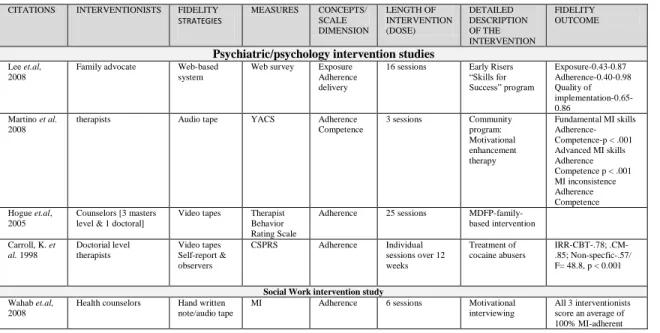
A specific group of studies have reported implementing IF procedures in the delivery of a psychotherapy treatment (Table II.1). Lee et al. (2008) used an innovative technology, e.g., a web-based monitoring system, to assess fidelity of a school-based intervention. The Early Risers “Skills for Success” program was an early-age preventive intervention for
children at risk for serious conduct problems that was delivered over 16 sessions of psychotherapy intervention to 28 independent elementary schools (by site visits to the schools and homes). Fidelity was measured by using an on-line monitoring system for documentation. The web-based fidelity system was developed to monitor the
implementation and to collect data on adherence. The therapists were trained using the Early Riser protocol manual. The measurement technology featured a fidelity monitoring system that required weekly reporting to assess exposure and adherence. Quality of delivery was assessed by using five telephone surveys of the interventionists. No measure of competence was used. The study showed that interventionists had higher adherence to the prescribed protocol around the fixed components of the intervention as opposed to the variable components of the intervention.
20
expert-led intensive workshops, audio taped practice cases, and protocol manuals. Each therapist’s adherence and competence were evaluated using the Independent Tape Rater
Scale (Ball et al. , 2002), adapted from the Yale Adherence Competence Scale (YAC-S) (Carroll, et al., 2000). Fundamental and advanced motivational strategies included
monitoring to prohibit behaviors of the interventionists. Using interclass correlations (ICC), the investigators analyzed adherence and competence between treatment conditions
(Motivation enhance therapy [MET] and Counseling-as-usual [CAU]), program sites, and therapists. The findings were that each of the first two dimensions (adherence and
competence) was significantly and positively related to client change (negative drug screens). Inconsistent strategies were significantly and negatively correlated with client change.
Adherence and competence were more variably related to other client outcomes (such as treatment retention and abstinence). The IF measures were limited to the YAC-S items; therefore other aspects of the performance by the therapists were mentioned in this study, for example, proscribed behaviors. Proscribed behaviors may be strength or a problem for the treatment outcomes.
Hogue, Liddle, Becker, & Johnson-Leckrone (2002) examined IF in a
multidimensional family prevention, a family-based prevention counseling model for
21
who provided family therapy to 43 adolescents and families (Hogue, Liddle, Becker, & Johnson-Leckrone, 2002). Nine raters were selected from undergraduate students in advanced psychology courses and one graduate student. The videotapes were coded by trained raters using TBRS-2 (Hogue, et al., 2002). The two dimensions of TBRS include intervention domain and intervention techniques. The raters were trained in group format for 90 minutes per week over a 4-month period to reach an adequate pre-study reliability (ICC > .65 for most study items). No other report was indicated for the raters’ reliability. Analysis
of variance (ANOVA) comparing average session length revealed no significance among the conditions: MDFP: M = 51.1 (SD = 24.1); MDFT: M = 52.8 (SD = 17.9); CBT: M = 45.9 (SD = 11.1); F (2.194) = p = 1.13. The Levene statistic = 7.97, p < .001 showed that there was variability in length for MDFP and MDFT greater than that in CBT. A MANOVA was used to conduct a multivariate analysis in which all levels of the dependent variable were measured on the same scale. The investigators found overall that the MDFP and MDFT were identical to one another and predictably different from CBT (2005). The major IF findings were that MDFP demonstrated adherence to its core intervention principles in comparison to MDFT and in contrast to CBT across two dimensions of model fidelity [intervention
parameters focused on dose in minutes and intervention techniques focused on adherence]. Carroll, K. et al (1998) study focused on a manual-based psychotherapy process ratings systems, the Collaborative Study Psychotherapy Rating Scale (CSPRS) as method of assessing treatment integrity and discriminability. A randomized clinical trial of
22
included 1) desipramine in combination with CBT; 2) desipramine in combination with clinical management (CM), a supportive psychotherapy control condition; 3) CBT plus placebo, and 4) CM plus placebo. All treatment sessions were videotaped for supervision and assessment. The authors evaluated discriminability of the two forms of psychotherapy and adherence to manual guidelines using independent observers who rated the session videotapes. The observers used the CBT and CM subscales from the CSPRS to rate adherence. The therapists also completed the CB checklist after each session. Both the therapists and raters received didactic training.
To analyze the outcomes, the authors computed psychometrics on the adapted rating scale and compared to those reported for the CSPRS (Hill et al, 1992). The coefficient alphas for the CBT subscale, CM and nonspecific factors were 0.90, 0.76, and 0.58, respectively. IRRs for the subscales were computed using ICC (CBT-.78; CM-.85, and nonspecific scale-.57). For the item discriminability, those on the CM subscale were higher than those on the CBT subscale. Results indicated earlier sessions were more reflected higher level of adherence to the treatment manuals (earlier-theta=.78 versus later sessions-theta =.55). Cognitive behavioral sessions were rated as significantly higher than clinical management sessions on nonspecific factors (CBT .31 versus CM.13). There was a gradual reduction across treatment weeks in the number of cognitive-behavioral interventions delivered (linearity F= 48.8, p < 0.001).
23
Group 3, motivational interviewing by telephone. The intervention fidelity study had focused on the delivery of the intervention from Group 3, motivational interviewing by telephone. Three interventionists were trained in motional interviewing according to a manual. Delivery is being measured by using the Motivational Interviewing Treatment Integrity scale (MITI). The authors have reported that supervision is essential to fidelity but have not specifically reported how interventionist fidelity is being measured.
24
competence. However, both are necessary for the delivery of an intervention. Martino et al. (2008) showed that high fidelity by the therapist correlated positively with the intervention outcomes. This study used the YAC scale which has items measuring both adherence and competence. Adherence alone strongly contributes to a high fidelity level, and future studies will benefit from separating competence and understanding its unique contribution to fidelity. Table II.1 Characteristics of intervention research and IF
CITATIONS INTERVENTIONISTS FIDELITY STRATEGIES
MEASURES CONCEPTS/ SCALE DIMENSION LENGTH OF INTERVENTION (DOSE) DETAILED DESCRIPTION OF THE INTERVENTION FIDELITY OUTCOME
Psychiatric/psychology intervention studies
Lee et.al, 2008
Family advocate Web-based system
Web survey Exposure Adherence delivery
16 sessions Early Risers “Skills for Success” program Exposure-0.43-0.87 Adherence-0.40-0.98 Quality of implementation-0.65-0.86
Martino et al. 2008
therapists Audio tape YACS Adherence Competence
3 sessions Community program: Motivational enhancement therapy
Fundamental MI skills Adherence- Competence-p < .001 Advanced MI skills Adherence Competence p < .001 MI inconsistence Adherence Competence Hogue et.al,
2005
Counselors [3 masters level & 1 doctoral]
Video tapes Therapist Behavior Rating Scale
Adherence 25 sessions MDFP-family-based intervention
Carroll, K. et al. 1998
Doctorial level therapists
Video tapes Self-report & observers
CSPRS Adherence Individual sessions over 12 weeks
Treatment of cocaine abusers
IRR-CBT-.78; .CM-.85; Non-specfic-.57/ F= 48.8, p < 0.001
Social Work intervention study
Wahab et.al, 2008
Health counselors Hand written note/audio tape
MI Adherence 6 sessions Motivational interviewing
All 3 interventionists score an average of 100% MI-adherent
Intervention Fidelity Studies in Nursing Research
25
interventions often are flexible, dynamic, and individualized to be sensitive to the unique characteristics of the participants. Nursing studies have addressed empirical support showing the extent to which the intervention was implemented as planned (Horner, et al., 2006; Resnick, Bellg, et al., 2005; Santacroce, et al., 2004; Stein, et al., 2007). Eight studies have reported implementing fidelity procedures in the delivery of nursing intervention.
A Res-Care intervention study was a randomized controlled trial that involved 12 nursing homes in which six were exposed to the Res-Care intervention and six received the control condition (Resnick, Galik, et al., 2009). The restorative care intervention in nursing home settings focused on teaching the nursing assistants how to motivate residents to engage in restorative activities and incorporate them into routine daily care. Res-Care Nurses (RCN) that were trained based on a training manual provided restorative care education to 256 nurse’s assistants (NA) for 20 hours per week during the 12 month duration of the
intervention. The dimensions of fidelity focused on design, training, delivery, receipt, and enactment. Fidelity was measured using a restorative care documentation flow sheet (Resnick, Galik, et al., 2009). Treatment fidelity was met if manual-based training was successfully provided by each of the five RCNs. Delivery fidelity was measured by the NAs’
26
27
race-by-income effect was observed for the mean number of attempts to contact the participants (p = 0.44). The overall outcome of the intervention was less effective.
Minnick et al. (2008) delivered an intervention that included the use of nurse coaches (NC) to assist primary care practices in adopting a new model of patient care called Virtual Integrated Practice (VIP). The main focus of VIP is better care management of the adult Type 2 diabetic, including a tool box approach for primary care practices. The three practices that participated were two internal medicine practices (seven physicians) and a family practice (three physicians). Three nurse coaches with Master’s degrees were trained as nurse coaches and on the VIP protocol. The dimensions measured were delivery and receipt. Delivery fidelity was determined using a Nurse Coach Process Marker record developed by the investigator, a 38-item self-report of the coaching activities associated with NC domains, as well as interviews from physicians and staff. The investigators found that the NC from two of the practices completed 94.7% of tasks. NC from the third practice completed 71.1% of tasks. The investigators reported verification from the physician and staff interviews. Receipt fidelity was determined by the lead physician and staff interviews. Each NC succeeded in facilitating the adoption of VIP processes in the assigned practice. The limitation in this fidelity study appears to be lack of information on adherence or competence of the nurses. Although the method for assessing intervention fidelity captured the activities and general time input of the NCs, there is limited information on the quality of the delivery and its impact on the outcomes for diabetic patients.
28
Two advanced practice nurses were trained in motivational interviewing. Fidelity and consistency in the delivery of the intervention were determined by a structured field-note guide and randomly-selected intervention visits that were audiotape recorded. Field notes were completed following the sessions. Fidelity was measured by the principal investigator and a research assistant reviewing and coding the audiotape recordings. The researchers review of field notes and audiotape helped to ensure that nurse interventionists adhered to the intervention. The investigator gave a descriptive analysis from the field notes and the
audiotapes of the parent-child-provider interactions and reported that they had an effect on families making changes to improve eating patterns and physical activity. The collaborating negotiation intervention overall outcome provided the families with a plan in managing their child’s obesity. Although the investigator’s intent was to report the interventionist nurses'
adherence, there was no report on the outcome of adherence or competency of the interventionist nurses.
Pbert et al. (2006) delivered a smoking cessation intervention to improve abstinence rates among adolescents interested in quitting. This one-on-one nurse-delivered smoking cessation intervention focused on 37 schools and 571 adolescents. School nurses were trained in the implementation of the intervention using an intervention manual. Fidelity
implementation was determined by adherence and dose. The measure of fidelity included self-report questionnaires from the students and the schools. The intervention effects on participants’ smoking status at six weeks and three months were significant (p < 0.001).
29
stronger intervention effect was observed at three months (OR = 5.9; 95% CI 3.6, 9.6). The investigators reported high fidelity by the nurses.
Although the previous nursing intervention studies did not include competence of the interventionists, investigators from two different intervention studies included both
adherence and competence of the interventionist nurses in the fidelity measures for their studies. Brandt et al. (2004) evaluated the strength and integrity of a pilot study of a behavioral intervention to assist mothers with breast cancer and their children in the home. The intervention study involved eight families and included five sessions over a 10-week period. The intervention investigator included a scripted protocol. There was no report as to how the interventionist was trained in the pilot intervention study. The primary dimensions of fidelity monitoring included purity as a measure of integrity or adherence to the scripted protocol, dose (number and duration of sessions), and competence (skill level). Adherence to the scripted protocol was obtained by using a checklist of expected behaviors to review two audio-recorded intervention sessions for each family intervention session. Dosage was determined by tracking the number of the sessions and completed homework assignments. The last dimension, competency, was determined by a self-report measure, the Working Alliance Inventory (WAI). The investigators found that no errors were found in the delivery of the content as outlined in the protocol; however, skill-building omissions by the
30
another family completed 60% of the assignments. For the competence of the
interventionist, descriptive statistics of WAI were calculated to determine the mutuality of goals between the mother and the interventionist. Using the Wilcoxon signed ranks test, the results of mother and interventionist pairs showed no statistically significant differences, which means that the mother and the interventionist had comparable perceptions about the working alliance formed with each other.
Bruckenthal et al. (2007) assessed IF in a pilot study of nurse practitioner-delivered pain Coping Skills Training (CST). This pilot intervention study included six patients who received ten sessions of training. The nurse practitioner received two days of training using a CST treatment manual, role playing, evaluation, and feedback. Fidelity dimensions were determined by adherence to the manual-based protocol and enactment. The measure of fidelity included a comprehensive checklist that provided information on delivery style and interpersonal skills. Adherence by the NP as measured by the interpersonal skills used during the delivery was determined by audiotapes, which were analyzed by two raters. The raters’ inter-rater reliability was 0.71, using the k statistics. Enactment was determined by a
post-treatment questionnaire given to the recipients concerning their ability to manage pain from their osteoarthritis. Nurses’ adherence to the training points of the manual was 86%.
The raters reported an overall effectiveness of the nurses in the delivery on a scale of 1= poor to 5 = excellent, with a final mean score of 4.4. The second rating of the nurses’
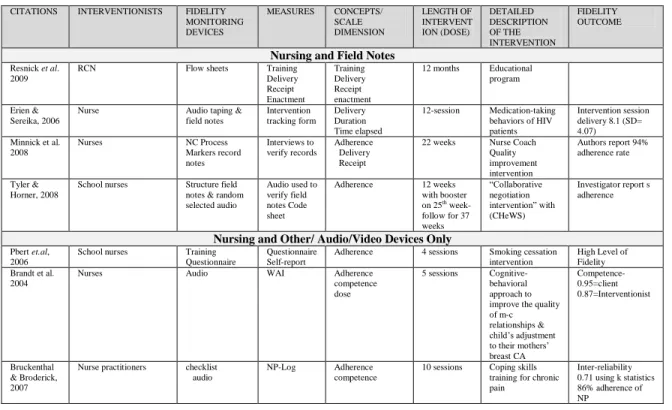
interpersonal skills by the raters gave a mean score of 4.5. Recipients reported a mean rating of 4.2 out of 5, indicating overall satisfaction with the treatment; 4.0 for ability to manage their osteoarthritis; and 4.8 in the nurses’ ability to be helpful. Table II.2 provides further
31
Table II.2 Characteristics of nursing intervention research and IF
CITATIONS INTERVENTIONISTS FIDELITY MONITORING DEVICES
MEASURES CONCEPTS/ SCALE DIMENSION LENGTH OF INTERVENT ION (DOSE) DETAILED DESCRIPTION OF THE INTERVENTION FIDELITY OUTCOME
Nursing and Field Notes
Resnick et al. 2009
RCN Flow sheets Training Delivery Receipt Enactment Training Delivery Receipt enactment
12 months Educational program
Erien & Sereika, 2006
Nurse Audio taping & field notes Intervention tracking form Delivery Duration Time elapsed
12-session Medication-taking behaviors of HIV patients
Intervention session delivery 8.1 (SD= 4.07) Minnick et al.
2008
Nurses NC Process Markers record notes Interviews to verify records Adherence Delivery Receipt
22 weeks Nurse Coach Quality improvement intervention
Authors report 94% adherence rate
Tyler & Horner, 2008
School nurses Structure field notes & random selected audio
Audio used to verify field notes Code sheet
Adherence 12 weeks with booster on 25th
week-follow for 37 weeks
“Collaborative negotiation intervention” with (CHeWS)
Investigator report s adherence
Nursing and Other/ Audio/Video Devices Only
Pbert et.al, 2006
School nurses Training Questionnaire
Questionnaire Self-report
Adherence 4 sessions Smoking cessation intervention
High Level of Fidelity Brandt et al.
2004
Nurses Audio WAI Adherence
competence dose
5 sessions Cognitive-behavioral approach to improve the quality of m-c relationships & child’s adjustment to their mothers’ breast CA Competence- 0.95=client 0.87=Interventionist Bruckenthal & Broderick, 2007
Nurse practitioners checklist audio
NP-Log Adherence competence
10 sessions Coping skills training for chronic pain
Inter-reliability 0.71 using k statistics 86% adherence of NP
In spite of the eight studies in which there were attempts to measure adherence of the interventionists, there continues to be limited information on the measures of these
dimensions. Further, there are only two nursing intervention studies that included the dimension of competence in the monitoring of fidelity. Competence of the interventionist provides information on the skill level and whether the interventionist preformed in a competent matter. It is essential to measure the competence of the interventionist for IF. As noted before, fidelity should include the adherence of the interventionist to the prescribed elements of the intervention and the competence, skill level, or performance of the interventionist to assure that delivery has occurred.
Methods of determining fidelity
32
& Prinz, 1991; Stein, et al., 2007). Hence, the data support that the theoretically predicted causal link between an intervention and behavioral change on outcomes in the participants has occurred (Bellg, et al., 2004; Moncher & Prinz, 1991; Resnick, Inguito, et al., 2005). Several structures have been developed to create these data: protocol manuals, which are used to determine consistent preparation and, later, the degree of interventionists’ adherence
to the protocol; methods to obtain data about the delivery directly and indirectly; and instrumentation to measure various dimensions of fidelity. This section will discuss each of these aspects.
To understand the essential features in providing instruction with randomized clinical trials of psychosocial intervention, the researcher needs to have some form of written
documentation explaining how the therapy is to be conducted (Carroll, et al., 2000). If no documentation were to exist, the source of the intervention effect would remain vulnerable to alternative interpretations. Researchers have met this need through the development of intervention protocols that are laid out in manuals to provide the basis for training
interventionists, guidelines as to how the intervention is to be conducted, and, also, the means by which to measure how well adherence has occurred. For example, Bruckenthal et al. (2007) reported that the protocol manual was utilized at two levels: both to train the nurses and to provide a guide for measurement of delivery.
33
adherence to the treatment manual and the degree to which their performance was competent (Waltz, et al., 1993).
Traditionally, studies have used direct and indirect observation and interventionists’ self-report to gather data on the fidelity of the intervention delivery (Resnick, Bellg, et al., 2005; Resnick, Inguito, et al., 2005). Direct observation is a method in which an independent rater reviews the interventionist providers as they deliver the intervention and records notes on all the activities that takes place. Indirect observation may include the use of recording devices such as video recorder, audio tape, or the interventionist’s hand-written notes. Another method of determining IF may be the interventionist therapist’s self-report.
Direct observations have been viewed as an unbiased source of information which is thought to be more closely associated with the actual outcomes (Dane & Schneider, 1998; Lee, et al., 2008). Direct observation was used in the earliest psychotherapy studies in only a few cases, possibly because direct observation of interventions may not be feasible. Direct observation has the potential to affect the intervention delivery process, and observation does not “capture” the delivery process for repeated viewing and teaching or for repeated
assessment to ascertain the reliability of a direct rater. Observed behaviors directly rely on supervisors or live raters using a fidelity scale to measure the activities between the
34
indirect observations have included audio or video taping or the field notes of the interventionists. The current gold standard consists of the method to which IF was
conducted. This includes random selection of the sample, treatment condition, and ongoing reliability of the raters (Santacroce, et al., 2004). Although there are several methods, the gold standard for IF is audio or audiovisual tapes and analysis for prescribed and proscribed behaviors of the interventionists (Stein, et al., 2007). In addition, observer ratings using multiple raters are a part of the gold standard as well (Carroll, et al., 2000).
In recent years researchers have attempted to use audiotapes and videotapes and the resulting transcripts as sources of data on IF (Bellg, et al., 2004; Resnick, Bellg, et al., 2005). Both methods require a labor-intensive coding process and the cost can be high, especially when multiple raters are used (Lee, et al., 2008). In fact the cost and time in using video recordings have forced researchers not to include these in their research. Cost and time to generate the technological training to use the equipment in different environments is a likely reason that studies have not routinely included audio or video tapings (Stein, et al., 2007). Taping can also be problematic in and of itself, since it can be distracting as well as affected by background noise. Although taping has decreased the negative effect of direct
observation on the intervention delivery, there continue to be concerns over recordings relative to sensitive material.
35
audio/video tapes. Several of the studies indicated problems related to the use of audio or video recording. These issues were the time to gather data with audio or video and the coding of the information gathered in this way. Even though researchers have proposed that audio tapes and video tapes provide the most information, there has been limited usage of them because of the challenges associated with collecting the data with these sources (Bruckenthal & Broderick, 2007; Wahab, et al., 2008). Audio recorders often may result in interruption of the data collection in order to manage the equipment or requests by the participants to stop the recordings, which may result in loss of time or information. Video recordings share these problems and in addition may require another individual to participate in the collection of data to manage the equipment. Researchers have suggested that the fear of being monitored and the invasion of participants’ privacy may have a negative effect on
these kinds of studies and hence the outcomes (Tyler & Horner, 2008).
Self-reported data from the interventionist that uses an evaluation questionnaire designed for the specific intervention study has been another source of collecting data on intervention fidelity. Self-reports have consisted of questionnaires that require the individual to respond to specific questions using a forced response scale. An interventionist who uses these evaluation questionnaires, however, may over-report fidelity outcomes (Carroll, et al., 2000). Researchers have used participants and interventionist therapist self-report
instruments to capture interventionist adherence and the competence of the interventionist (Minnick, Catrambone, Halstead, Rothschild, & Lapidos, 2008; Pbert, et al., 2006). A study that measured adherence using a self-reported 14-item component checklist from the
36
Validated questionnaires have been developed to organize data from raters who indirectly observe intervention delivery via audio or videotapes. Scientists have tried to measure two subconcepts, adherence and competence of the interventionists. The National Institute of Mental Health Treatment of Depression Collaborative Research Program (TDCRP) developed The Collaborative Study for Psychotherapy Rating Scale-Form 6 (CSPRS-6) (Hollon et al, 1984). This instrument has 96-items that use a 7-point Likert-type response scale to measure adherence. The CSPRS-6 has been shown to be a reliable general measure of interventionist psychotherapist adherence behaviors, with a Cronbach alpha of .90 overall. The CSPRS-6 has been tested in a variety of empirical studies (Hill, et al., 1992; Luty, S., et al., 2007). A study was conducted to explore adherence of therapists to behaviors specified in cognitive-behavior therapy, interpersonal psychotherapy, and clinical
management manuals (Hill, et al., 1992). Using CSPRS, the researchers found that the therapists exhibited behaviors specific to the individual therapy and also that the therapists used techniques from each other’s approach to the therapy. Few of the approaches were
associated with clinical management. Another study aimed to compare the efficacy of interpersonal psychotherapy and cognitive-behavioral therapy in people receiving out-patient treatment for depression and explore the responses in severe depression (MADRS score >30) and in melancholic depression (Luty, S. , et al., 2007). The analysis using the CSPRS
revealed that the therapists adhered to the treatment protocol and the sessions were classified correctly 100% of the time, with more than 90% of these having strict adherence to protocol.
37
rater should not consider the quality of the therapist behavior per se when rating with the CSPRS. The CSPRS includes (a) modality-specific scales (CBT, IPT, and CM), (b) three tangential modality scales, and (c) two non-modality specific scales (FC and ED). These are: I) CBT, containing 28 items in six subscales: cognitive rationale (3 items), assessing
cognitive processes (5 items), evaluating and changing beliefs (7 items), behavioral focus (4 items), homework (3 items), and collaborative structure (6 items) and (b) two tangential cognitive-behavior scales- alternative cognitive strategies (2) and operant approaches (2); [items-19-21;54-80]; II) IPT 28 items in seven subscales: interpersonal rationale (3), focus on feelings (4), assessing interpersonal relationships and tendencies (5), assisting changes in interpersonal functioning (4), role transitions (4), interpersonal disputes (4), and interpersonal deficits (4) and (b) tangential interpersonal behaviors (4); [items:25-53 (tangential
interpersonal therapy items-22-24, 47)]; III) clinical management scale (CMS) (20) with subscales: Pharmacology rationale (3), symptoms/illness focus (4), medication effects expected and achieved (4), medication regime (6) and side effects (3); [items 81-101]; and IV) Facilitative conditions (FC) (8) and Explicit directiveness (ED) (4). The interrater reliabilities for the CSPRS were CBT (.88); IPT (.78); CM (.80); FC (.47); and ED (.58) for the ICC random effect. The ICC fixed effect was CBT (.92); IPT (.82); CM (.92); FC (.58); and ED (.73). The overall internal consistency () was CBT (.79); IPT (.86); CM (.69); FC (.79); and ED (.50) (Hill, et al., 1992).
38
ranged from 0.80 to 0.95 for adherence ratings and from 0.71 to 0.97 for competence. It has been determined that the six subscales are highly reliable in measuring adherence and competence of therapists. An article reported on a systematic review of measures of fidelity in motivational enhancement as they relate to adherence and competence measures (Madson & Campbell, 2006). The authors reported psychometric properties of the YACS (p2 = .82). Although Carroll et al. (2000) found construct validity of YACS through confirmatory factor analysis and the goodness-fit indices for adherence (.92 to .99), Madson & Campbell found evidence of convergent and discriminant validity when compared with the Motivational Interviewing Supervision and Training Scale (MISTS). Santacroce et al. (2004) explored the use of a modification of this instrument, the Yale Adherence and Competence Scale for Nursing (YACS-N), in nursing research. Both the CSPRS-6 and the YACS instruments have been applied in a variety of studies (Luty, S., et al., 2007; Markowitz, Spielman, Scarvalone, & Perry, 2000; Martino, et al., 2008). In addition, there have been other instruments: the Penn Adherence-Competence Scale for Supportive-Expressive therapy (PACS-SE) (Barber & Critis-Christoph, 1996), a 45-item rating scale; the Therapist Competency/Adherence Scale Behavioral family management (Miklowitz & Goldstein, 1990), a thirteen item seven-point Likert-like scale; the Fidelity of Implementation Rating System (FIMP) (Knutson et al., 2003); and the Cognitive Therapy Adherence and Competence Scale (CTACS), consisting of 25 items with five sections. These previously mentioned instruments have measured
39
One alternative method that researchers have used to monitor IF is field notes of the interventionists (Davis, et al., 2002; Moncher & Prinz, 1991; Shadish, 2002; Tessaro, Campbell, & Benedict, 2002). Field notes written within reasonable timeafter the intervention may provide a solution to some the problems associated with audio or video recordings because they do not interrupt the intervention (Sanjek, 1990). Field notes can serve as a systematic data collection that includes a report of events which occurred during what was observed or asked (Roper & Shapira, 2000). An interventionist can be a
participant-as-observer, one who actually participates in the ongoing activities in the research setting (Hesse-Biber & Leavy, 2006). The interventionist has a direct view of the
participants and their environment and can become an account of the interventionists’ minute-to-minute experiences with the participants(Roper & Shapira, 2000). Historically, field notes are recorded raw data fromobservation, conversations, feelings, and
interpretations by an interventionist (Roper & Shapira, 2000). Sanjek (1990) contends that field notes are statements constituting an objective, uncontested world of interpretations, both indigenous and scientific. Anthropologists and ethnographers have provided scientific
40
description of the setting, the participant, and the interventionist (Hesse-Biber & Leavy, 2006).
Limitations of Existing Systems of Measuring Fidelity
Direct observational measures are thought to be the most accurate type of measure in behavioral science. However, the interventionist who knows treatment activity is monitored may have a reactive response (Addis & Waltz, 2002; Moncher & Prinz, 1991; Waltz, et al., 1993). A reactive response means that the therapist may conduct the intervention activity differently in response to being observed. Indirect observation using different devices have been an alternative to face-to-face observation.
Indirect observation may include audio/video recordings. Although most of the studies have used these various electronic devices for collecting the data [Table II.1 and Table II.2], there appear to be problems associated with using these devices. In the case of indirect observation, the recording of the intervention may pose limitations. For example, certain cultures are reluctant to have their family life photographed or their words recorded (Tyler & Horner, 2008). Also, if the intervention involves the exploration of sensitive issues, a participant may ask that the recording device be stopped. This impedes the accuracy of the observation, and may have an effect on the delivery of the intervention as well. An
41
their study that the audiotapes were of poor quality due to the low, soft voices of the
participants, background noise from extended family members in the room, or other activities in the clinic environment. Where tape recordings have not been feasible for reasons related to privacy, technology, or funding, some researchers have shown that alternate devices such as field notes can be a substitute (Crits-Christoph, Connolly, & Shaffer, 1999; Erlen & Sereika, 2006; Tyler & Horner, 2008). There has been less information on the comparison of IF measurement based on audio or video recordings and documentation based on methods such as the use of chronological field notes.
Although structured field notes are systematic data collection, i.e., the notes are a reflection of salient categories and behavior patterns of interest to a particular study, there are limitations (Roper & Shapira, 2000). Recorded observations or impressions intended to describe events, recollections, thoughts, and feelings are subjective information and are an individual’s personal account of the activities that transpired (Sanjek, 1990). Structured field
notes are either recorded during the delivery of an intervention or at a later time. Problems arise because information is missed or too much time has lapsed between collecting the data and writing the notes.
Field notes contain large amounts of data that require several hours of analysis. There are few checks of validity with field notes, that is, the degree to which the scientific observations recorded in field notes actually record what they purport to describe (Sanjek, 1990). Despite these shortcomings, the large volume of field notes collected over time in a single observation is a rich data source that may provide information on prescribed and
42
When audio- or video-recording is used, raters are trained to reliably code the interactions of the interventionists’ behaviors. One of the methodological problems of this approach is the rater’s bias specific to recordings (Hill, O'Grady, & Price, 1988). There is
limited research on raters’ bias specific to field notes. Raters who rate video-recordings may be subject to bias due to interpreting scale items differently or over time or due to developing a relationship with the client (Hill, et al., 1992; Hill, et al., 1988). Bias may also arise from changes in rater sensitivity over time, differences in raters’ qualifications, and raters’ training. A study exploring raters’ characteristics revealed that raters’ fatigue, a waning of
effort, and sensitivity affect their rating process (Hill et al., 1988). Waltz et al. (1993) recommended that the raters be required to be sufficiently experienced and sophisticated to understand the implications of the contextual variables described in the protocol manual. They further suggested that while a rater who is skilled in the given treatment may be appropriate, raters should have no affiliation with the treatment intervention. Another limiting factor mentioned in the literature was information on the raters and inter-rater reliability. The characteristics of the raters, such as experience or relationship to the study, may contribute to the effects of the intervention outcomes. Training the raters for reliability is thus essential for consistency (Forgatch, Patterson, & Degarmo, 2005). Multiple raters and rater’s reliability are essential to treatment fidelity. The limited literature on how researchers
have managed the raters suggests that future research is needed on the use of multiple raters and their inter-rater reliability. Although a single rater can be trained in the rating process, typically one rater provides less reliability than multiple raters. However, Hollon et al. (1988) determined that only two raters are necessary to establish reliability levels when using
43
rater error, such as the characteristic of the rater, consistency, and rater’s agreement. The
length and complexity of the measure increases the risk for rater error. This means a longer measure is more at risk for rater error as opposed to a measure with fewer items.
Another challenge to the measurement of fidelity has been the lack of a clear definition of the concepts comprising fidelity (Dusenbury, Brannigan, Falco, & Hansen, 2003; Shadish, 2002). For example, adherence and competence have been measured within the same scale with inadequate separation of the two concepts. For example, one study used one instrument to measure both adherence and competence (Martino, et al., 2008). Another study reporting fidelity outcome used a valid instrument, the WAI, to measure mutual alliance. Mutual alliance in the literature has been associated with the competence of the interventionist (Brandt, et al., 2004). The second and fourth recommendations of Waltz et al. (1993) suggest that researchers need to establish competence through independent measurements and formulate different frameworks for adherence and competence. The literature has revealed researchers’ belief that adherence is related to quantity, as shown with
the checklist approach. The checklist provides information on the number times treatment intervention take place. For example, if ten randomly selected treatment sessions were evaluated, two raters would use a checklist to determine the number of times the therapist applies the treatment and inter-rater reliability would be assessed (Bruckenthal & Broderick, 2007). Research scientists believe that competence is related to quality, a measure of
performance. For example, several studies measured the competence of the therapist by how well the therapist delivered the intervention (Bruckenthal & Broderick, 2007; Hogue,