EXAMINING LONGITUDINAL CHANGE IN STUDENT TALK IN SMALL-GROUP LITERATURE DISCUSSIONS
Brendan David Hendrick
A dissertation submitted to the faculty at the University of North Carolina at Chapel Hill in partial fulfillment of the requirements for the degree of Doctor of Philosophy in School
Psychology in the School of Education
Chapel Hill 2017
©2017
ABSTRACT
Brendan Hendrick: Examining Longitudinal Change in Student Talk in small-group Literature Discussions
(Under the direction of Dr. Jeffrey A. Greene)
Talk in classrooms has long been considered an avenue for the support of high-level critical thinking and comprehension. Quality Talk is one approach to small-group talk about and around literature that has shown promise in this regard. My study investigated changes over time in student talk during the Quality Talk approach. Two fourth grade classrooms participated in approximately 38 weeks of Quality Talk. Students were separated into heterogeneous groups and participated in Quality Talk discussions bi-weekly. Discussions were videotaped and
ACKNOWLEDGEMENTS
TABLE OF CONTENTS
LIST OF TABLES ... xii
LIST OF FIGURES ... xiii
LIST OF ABBREVIATIONS ... xiv
CHAPTER 1: INTRODUCTION ... 1
Quality Talk ... 6
Purpose of Study ... 8
Research Questions ... 10
CHAPTER 2: REVIEW OF LITERATURE ... 11
Introduction ... 11
Theoretical Basis ... 13
Constructivist theory. ... 13
Social constructivist theory ... 14
Summary of theories ... 18
Cognitive Model of Comprehension ... 19
Summary of comprehension model ... 22
Research on Classroom Discussion ... 23
Current definitions of discussion. ... 24
Describing classroom interactions. ... 24
Changing classroom interactions ... 27
Discussions Designed for Reading Comprehension ... 30
Historical context ... 31
Discussion stances ... 32
Whole group text-based discussion ... 34
Reciprocal Teaching ... 35
Questioning The Author ... 36
Paideia Seminars ... 37
Philosophy for Children ... 40
Summary of whole group approaches ... 41
Small group discussions for reading comprehension ... 42
Grand Conversations ... 43
Book Club ... 44
Literature Circles ... 46
Instructional Conversations ... 47
Collaborative Reasoning ... 49
Summary of small-group approaches ... 52
Quality Talk ... 53
Factors That Influence Student Talk ... 55
Expectation states theory ... 56
Reading ability ... 57
Gender ... 60
Summary of factors that influence student talk ... 65
Summary of Relevant Literature ... 65
CHAPTER 3: METHOD ... 68
Participants ... 68
Procedures ... 69
Student experience of Quality Talk. ... 70
Variation in group assignment. ... 73
Video recordings. ... 75
Oral reading fluency. ... 76
Student and text characteristics. ... 76
Data Preparation ... 77
Non-word and inaudible speech. ... 77
Beginning of relevant discussion. ... 77
Defining turns. ... 78
Interruptions. ... 79
Variables ... 80
Variables for research question 1. ... 82
Variables for research question 2. ... 83
Variables for research question 3. ... 83
Variables for research question 4. ... 84
Data Analysis ... 84
Multi-level longitudinal analysis. ... 85
Analysis for research question 1. ... 88
Analysis for research question 2. ... 90
Analysis for research question 3. ... 90
Analysis for research question 4. ... 90
Summary ... 91
CHAPTER 4: RESULTS ... 92
Descriptives and Missing Data ... 92
Research Question 1 ... 95
MLU Analyses. ... 97
Words/Min Analyses. ... 99
Turns/Min Analyses. ... 100
Research Question 2 ... 100
MLU Analyses. ... 101
Words/Min Analyses. ... 101
Turns/Min Analyses. ... 103
Research Question 3 ... 103
MLU analyses. ... 103
Words/Min analyses. ... 107
Turns/Min Analyses. ... 110
Research Question 4 ... 111
Summary of Results ... 115
CHAPTER 5: DISCUSSION ... 117
Final model of MLU ... 118
Final model of Words/Min. ... 122
Final model of Turns/min. ... 123
Summary of final LMLM models. ... 125
Research Question 4 ... 126
Limitations ... 128
Directions for Future Research ... 132
Gender and talk. ... 133
Oral reading fluency and talk. ... 134
Group dynamics and talk. ... 136
Conclusions ... 137
APPENDIX: TABLES AND FIGURES ... 140
LIST OF TABLES
Table 1 – Descriptive statistics of participants...69
Table 2 – Descriptive statistics of participants by group………...75
Table 3 – Quality Talk discussion weeks and text types...81
Table 4 – Variables and analysis methods by research question……….………..85
Table 5 – Descriptives of Level 1 and Level 2 variables ……….……….93
Table 6 – Descriptives of Level 1 variables, by group………..94
Table 7 – Correlation Matrices……….……….95
Table 8 – Teacher words/turns by group and time point………...96
Table 9 – p-values of group comparisons for MLU……….….…….………….105
Table 10 – p-values of group comparisons for Words/Min………..…….….……....………....109
Table 11 – p-values of group comparisons for Turns/Min……..………….……….…….111
LIST OF FIGURES
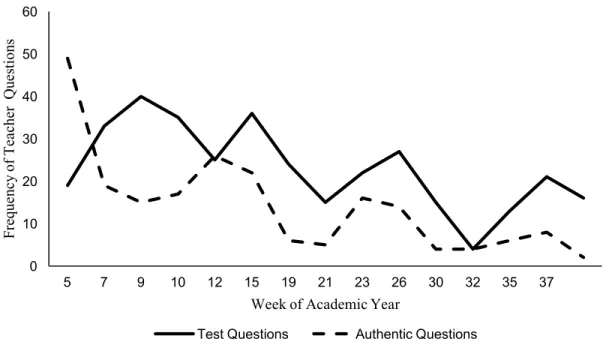
Figure 1 – Frequency of teacher questions by time point………..73
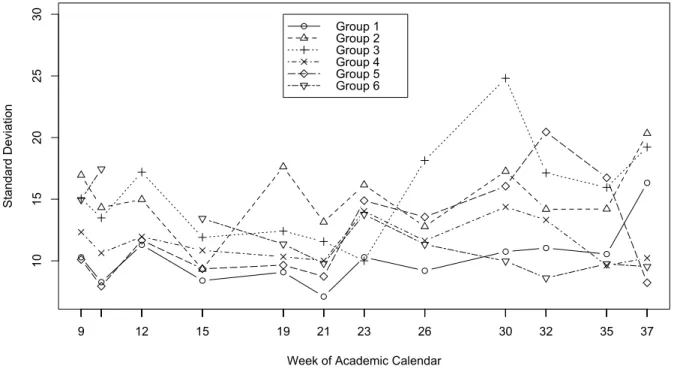
Figure 2 – Standard deviation of group utterances ………..………...112
Figure 3 – Standard deviation of group utterances, narrative stories………..113
LIST OF ABBREVIATIONS
AT: Accountable Talk
ANOVA: Analysis of Variance BC: Book Clubs
CR: Collaborative Reasoning CI: Construction-Integration Theory ELL: English language learners EST: Expectation States Theory GC: Grand Conversations IC: Instructional Conversations IES: Institute of Educational Sciences LMLM: Longitudinal Multi-Level Model MLM: Multi-Level Model
NAEP: National Assessment of Educational Progress NCLB: No Child Left Behind
OLS: Ordinary Least Squares QT: Quality Talk
QtA: Questioning the Author P4C: Philosophy For Children PS: Paideia Seminars
CHAPTER 1: INTRODUCTION
American students continue to struggle to achieve high-level comprehension of literature. Results of the recent National Assessments of Educational Progress (NAEP; National Center for Educational Statistics, 2013) indicated that most students in the United States did not
Deficits in comprehension have long been of concern to educational scholars (Levin, 2004; Murphy, Wilkinson, Soter, Hennessey, & Alexander, 2009; Smith & Szymanski, 2013). As early as the 1970s, institutions such as Center for the Study of Reading at the University of Illinois conducted comprehension research, calling attention to the lack of comprehension
instruction in typical classrooms (Kamil et al., 2011). More recently, increased attention has been given to teaching critical thinking, reasoning, and higher-order thinking skills (Chang-Wells & Wells, 1993; Murphy et al., 2009; Smith & Szymanski, 2013). Numerous scholars have
attempted to codify high-level comprehension skills in order to guide classroom practices (Smith & Szymanski, 2013). Wells (1990) used the term “literate thinking” (p. 13) to describe not just the absorption of information, but engagement with text to enhance meaning between and within student’s minds. It has been emphasized that this “literate thinking” is what makes the “evolution of higher mental processes” (Chang-Wells & Wells, 1993, p. 62) possible. Murphy et al. (2009) used the term “critical literacy” (p. 741) to describe understanding that reaches beyond simple facts to deeper concepts. Regardless of the specific term used, it is clear that high-level
comprehension is increasingly considered essential for student success (Levin, 2004; Trilling & Fadel, 2009).
Kuo, Glina, & Anderson, 2009; Soter et al., 2008). Historically, the goals of classroom discussion have evolved alongside the goals of school itself (Murphy, Wilkinson, & Soter, 2011). For decades, discussion was only used to assess student knowledge via recitation of facts (Henning, 2008). As pedagogical theories developed, educational thinkers embraced the utility of discussion as an intellectually beneficial activity. Beginning in the early 20th century, proponents of classroom discussion developed theories about the potential benefits of children talking to each other productively (Harnack, 1968; Henning, 2008; Thayer, 1928). It was during this time that educational thinkers also began to promote the idea that students were active participants in creating knowledge for themselves (Piaget, 1932; Vygotsky, 1978). According to Dewey (1910), discussion allowed students to experience each other’s thinking and then internalize meaning for themselves (Harnack, 1968). Vivian Thayer (1928) wrote that discussion between students supported engagement, intellectual risk taking, and development of thinking skills. These concepts have influenced the goals of both discussion research and education at large.
example, the reading comprehension standards include integration of complex themes and the critical evaluation of arguments in a text. The integration of discussion into these standards is further evidence that effective discussion has a critical role in best practices for learning.
Furthermore, discussion is increasingly seen as an element of so-called “21st century” skills (Kuhn, 2015; Reznitskaya, 2012; Trilling & Fadel, 2009). These are skills and behaviors thought to best prepare children for the fast pace of economic development and technology in the coming decades (Trilling & Fadel, 2009). According to this perspective, children will be more likely to thrive in future professions if classroom teachers focused on skills like collaboration and communication (Murnane & Levy, 1996). Results of economic research on the U.S. labor market further support the importance of discussion. Deming (2015) noted that beginning in the 1980s there has existed a clear trajectory of employment growth in jobs requiring social abilities, both in the highest and lowest paying positions. Classroom discussion can promote these 21st skills, by supporting student development of critical-thinking and collaboration while building knowledge (Murphy et al., 2009; Reznitskaya et al., 2001; Soter et al., 2008). Overall, quality classroom discussion promotes the development of skills that will better prepare students for the jobs that are likely to be available when they enter the labor market (Deming, 2015; Trilling & Fadel, 2009).
Unfortunately, high quality discussion continues to be a sporadic occurrence in modern classrooms (Nystrand, Wu, Gamoran, Zeiser, & Long, 2003; Reznitskaya, 2012). Teacher
controlled discussions have continued to be favored over discussion that supports critical analytic thinking and comprehension. Results of research by Nystrand et al. (2003) indicated a majority of classrooms studied did not feature open exchange of ideas, but rather teachers simply
classrooms have been offered by various researchers (Burbules, 1993; Henning, 2008). One proposed barrier was that teachers prefer a more “autocratic” (Henning, 2008, p. 3) teaching style. Others have noted that growing class sizes may make discussion less viable (Burbules, 1993; Henning, 2008). Also, though the proliferation of standardized assessments has accelerated research and turned attention towards higher-level comprehension, some have hypothesized that standardized testing has encouraged teachers to focus on rote facts instead of discussion
(Henning, 2008). Teachers who want to integrate discussion practices often use a patchwork of various interventions without any systematic measurement of outcomes (Henning, 2008). Regardless of these proposed barriers, more research is needed to provide evidence that discussion can positively impact communication skills, high-level comprehension, and critical analytic thinking. This additional evidence will hopefully energize the implementation of quality discussion in more classrooms across the U.S.
In sum, national assessment data has indicated that a majority of students in the United States fail to meet benchmarks for high-level comprehension. Quality classroom discussion approaches have been shown by research to be a valuable potential solution to this issue. The use of discussion is supported by current national standards initiatives and provides invaluable practice in skills necessary for the economies of the future. In spite of proponents in research and professional communities, quality discussion has yet to become a common feature of classrooms (Nystrand et al., 2003; Reznitskaya, 2012). Discussion approaches have been developed and researched in an attempt to provide teachers with effective and feasible frameworks for
discussion operate to enhance high-level comprehension, critical analytic thinking, and communication skills (Wilkinson, Soter, & Murphy, 2010).
Quality Talk
Quality Talk is a small-group literature discussion approach developed to bolster high-level comprehension and critical thinking through interaction about and around text (Wilkinson et al., 2010). This approach was developed in part as a result of a major meta-analysis of the empirical research on nine previously existing discussion approaches (Murphy et al., 2009). Quality Talk’s creators synthesized the most effective features of previous approaches to create an optimal framework for literature discussion (Wilkinson et al., 2010). The Quality Talk approach identifies student behaviors, teacher behaviors, and the underlying environmental conditions for high-quality discussion. These features were based on extensive reviews of effective discussion environments (Wilkinson et al., 2010). During the course of Quality Talk, students are taught discussion skills that bolster high-level comprehension. Each skill (i.e., high level questioning) was identified by empirical research to be strongly associated with
comprehension (Wilkinson et al., 2010). Strategies used by Quality Talk teachers were also identified via research on which explicit “teacher moves” (Wilkinson et al., 2010, p.154) were most helpful in implementing high quality discussions. Concurrently, pedagogical principles that support discussion are also explicitly stipulated in the Quality Talk model. Adherence to these principles creates a culture of inquiry wherein discussion is the means by which students create knowledge. Overall, Quality Talk was designed to be a culmination of the most effective
The theoretical concepts underlying Quality Talk further support its utility in producing high-level comprehension amongst students. From a social constructivist standpoint, Quality Talk features conditions for active engagement, scaffolding, and co-creation of meaning (Almasi & Garas-York, 2009; Vygotsky, 1978; Wilkinson et al., 2010). By questioning each other and providing explanations to peers, students in Quality Talk discussions can cooperatively
experience deeper understanding of the text. From a constructivist standpoint, students in Quality Talk discussions are challenged to explain their perspectives and integrate contrasting ideas to create knowledge for themselves. By talking through ideas about stories, knowledge is formed by individuals as they accommodate new ideas (Piaget, 1932; van Blankenstein, Dolmans, van der Vleuten, & Schmidt, 2009). In addition, Quality Talk discussion is aligned with current models of how comprehension occurs in students. According to Construction-Integration (CI) theory of comprehension, comprehension occurs when students construct meaningful mental models of the text and then integrate this information into prior-held notions and beliefs (Kintsch & Kintsch, 2005). Quality Talk discussions make the process of comprehension transparent as students elaborate on their thinking.
social constructivist standpoint, talk is considered a key mechanism by which students negotiate meaning and develop cognitive skills (Au & Mason, 1981; Baker, 2009; Chang-Wells & Wells, 1993; Palinscar, 1998). Thus, if a student’s talk does not increase in discussion, the student may not be engaging in the co-creation of meaning. From a constructivist standpoint, the presence of student talk in discussion suggests a student is engaging with new ideas to create new meaning for themselves (Mercer & Littleton, 2007; Piaget, 1932). A lack of increase in talk during the course of the Quality Talk intervention would indicate that discussions are not activating one important theoretical mechanism for bolstering high-level comprehension and critical analytic thinking (Palinscar, 1998).
Purpose of Study
production mechanisms, generally the research on “speech” is less suited to the analysis of how students and teachers co-create meaning through language. Research on “speech” is of a more individual and medical nature (e.g., speech disorders, verbal motor disorders) than research on talk (e.g., classroom talk analysis, analysis of student-student interactions, measurement of turns at talk, etc.). Thus, I used the term “talk” in order to clarify both the scope and conceptual framework for my study.
Research Questions
To investigate student talk outcomes associated with Quality Talk small-group literature discussions, the following research questions were proposed:
RQ 1: How does student talk change over time during small-group literature discussions? RQ 2: How is text type related to student talk during small-group literature discussions? RQ 3: What student characteristics explain change in student talk over time?
CHAPTER 2: REVIEW OF LITERATURE
Introduction
Classroom discussions can take many forms, ranging from teacher-led whole groups to peer-led small-groups. In discussion students talk, share ideas, answer questions, and question each other (Wilkinson, 2009). Effective discussions have the potential to increase engagement with text, increase critical analytic thinking skills, and support high-level comprehension
(Almasi & Garas-York, 2009; Keefer, Zeitz, & Resnick, 2000; Murphy et al., 2011; Wilkinson et al., 2010). Students are thought to benefit from discussions both cognitively and socially.
Consequently, scholars have sought to better understand how these benefits occur and how to maximize them (Gillies, 2014; Murphy et al., 2011).
Research on classroom discussion is diverse in scope and methodology. It also has been conducted over decades during which educational and empirical priorities have changed. Critically, research priorities have shifted from describing phenomena to establishing
(National Governors Association Center for Best Practicies & Council of Chief State School Officers, 2010; Snow, 2002). To this end, the strategic use of talk is commonly promoted as way of promoting critical thinking in today’s classrooms (Keefer et al., 2000; Kuhn, 2015). As Kuhn (2015) pointed out, however, the evidence regarding students’ intellectual engagement with each other is inconsistent and discussion “does not always yield identifiable benefits” (p. 1). In light of these developments, more research on classroom discussion approaches for high-level comprehension is warranted.
My goal is to review the research relevant to small-group literature discussions
highlighting changes in student talk associated with discussion. This goal includes establishing the research context for analysis of student talk outcomes and possible explanations of change in student talk. As research on discussions is informed by developmental theory, I will review relevant theories in order to contextualize the mechanisms by which discussions operate. Early research on classroom discussions demonstrated certain critical features and documented established patterns of interaction, thus informing subsequent research on teacher-student and student-student interaction (Cazden & Beck, 2003; Mehan, 1982; Nystrand, 2006). This research will be briefly reviewed, as well as research on approaches that promote higher quality
2014; Webb & Palinscar, 1996). I will synthesize this research as well; highlighting gaps with regard to student talk outcomes. In the next few sections I will review theories of development that have guided research on literature discussions approaches. Constructivist theory will be discussed first. Due to the fact that discussions, by definition, involve interactions between people, social constructivist theory will be also be reviewed.
Theoretical Basis
Constructivist theory. Constructivist theory helps to describe the mechanisms by which
discussion promotes conceptual change (Gillies, 2014; Murphy et al., 2011). Piaget (1932) theorized that learning occurs when students adjust their thinking to a new concept (Mercer & Littleton, 2007; Webb & Palinscar, 1996). This “accommodation” as it is called, is thought to be how students construct knowledge for themselves as individuals (Piaget, 1932). According to constructivist theory, the catalyst of learning is the conflict between a child’s prior schemas and the presentation of new schemas. When these new schemas come from others, it is a particular kind of conflict, termed “sociocognitive conflict” (Almasi, 1994; Webb & Palinscar, 1996, p. 844). With regard to this type of learning, Piaget (1976) wrote that interactions with adults were unlikely to lead to the same kind of conflict as peer interactions. His reasoning was that children were more apt to accommodate to their equals as opposed to a higher status adult. As an
illustration of this, McKeown, Beck, and Blake (2009) found that students who used strategies with each other to construct meaning from texts learned more than students exposed to direct instruction from an adult. This is just one instance in which students were observed
accommodating information from peers via interaction (McKeown et al., 2009).
2011). With these processes in mind (i.e., accommodation, sociocognitive conflict), interventions for highly effective classroom discourse can be designed and outcomes from these approaches can be measured (Murphy et al., 2011). Constructivist theory is not the only theoretical
viewpoint from which research into small-group discussions can be situated. Social constructivist theory also has a significant place in the research on classroom discussions.
Social constructivist theory. Social constructivist theory has guided many principles of
group learning, in general, including classroom discussions (Almasi & Garas-York, 2009, Palinscar, 1998). Social constructivist theory posits that the development of knowledge is a social process in which an individual creates new knowledge resulting from an interactive situation. The work of Russian thinker Lev Vygotsky (1978) is often cited as the basis for this theoretical framework. According to Vygotsky (1978), social interactions drive knowledge development and the cultural framework in which those interactions are situated is highly influential. In addition, Vygotsky thought of language as a cognitive tool, a social tool, and a pedagogic tool (Mercer et al., 1999; Vygotsky, 1978). These multiple functional perspectives on language have inspired research focused on interpersonal interactions as sites of learning and development (Palinscar, 1998). This stands in contrast to research that focused on interactions in classrooms as sociological events (e.g., Edelsky, 1981; Shultz, Florio, & Erickson, 1982).
To elaborate, from the social constructivist perspective, knowledge itself is thought to be the result of multiple actors engaged in mutually influential exchange (Baker, 2009). This concept was referred to by Baker (2009) as the “co-construction of knowledge” (p. 3). From this perspective, knowledge emerges from interaction where meaning is negotiated collaboratively with the participation of various contributors. Subsequently, the resultant collaborative
appropriates his or her own knowledge (Baker, 2009). Many discussion approaches are designed to both develop students’ higher-order thinking and advance students’ knowledge through teaching this negotiation of meaning, making social constructivist theory highly relevant to discussion research. Palinscar (1998) pointed out, however, that social relationships may sometimes work against group meaning making. For example, if a child feels they have lower status than the other group members, they may contribute less. Similarly, Nyikos and Hashimoto (1997) wrote that potential growth may be limited depending on whether group conditions are productive for learning. Even so, from a social constructivist perspective, coping with divergent perspectives has been noted as a key element in the development of critical thinking (Nyikos & Hashimoto, 1997). Vygotsky (1978) theorized that higher order critical thinking stemmed from social interaction and self-knowledge. Thus, comprehension would be achieved via an individual interacting with others and consciously thinking about his or her thinking (Almasi & Garas-York, 2009; Vygotsky, 1978; Webb & Palinscar, 1996). According to this perspective, students must participate in interactive experiences to gain comprehension skills, while using
metacognitive strategies to reflect on what they are constructing (Baker, 2009; Nyikos & Hashimoto, 1997; Palinscar, 1998). Interactions though talk have been seen as critical to the process by which higher-order thinking and comprehension are achieved (Nyikos & Hashimoto, 1997; Palinscar, 1998).
Pearson and Gallagher (1983) reviewed educational research and built on social
Gallagher, 1983). Although it shared some features with the explicit instruction model proposed by Rosenshine (1979), it was different in that it allowed for greater flexibility in classroom application. Many classroom discussion approaches are implemented with the gradual release of responsibility as an element of the intervention (Murphy et al., 2009; Soter et al., 2008). Without this idea, it would be unlikely that the genuine co-construction of mutually negotiated meaning could truly take place among the groups (Baker, 2009).
The concept of scaffolding has also influenced classroom discussion research and intervention. Wood, Bruner, and Ross (1976) first used this term to describe their research on how adults help children solve problems. As defined by Wood et al. (1976) scaffolding involves recruiting the participant in the task, making the task manageable, maintaining direction,
(p. 3), and independent student thought can be supported through these concepts when support is “faded” over time across experiences.
When specifically applied to discussion, scaffolding has been shown to take many forms during classroom discussions. Providing a few broad examples, Almasi and Garas-York (2009) articulated two categories of scaffolding that are present in classroom discussions, specifically. First they described “microgenetic scaffolding” (p. 474) in which support for high-level
comprehension through discussion is calibrated on a moment-by-moment basis during the act of discussion. Examples of this support include a teacher helping a student form a question, asking an open ended question, summarizing an idea, or helping a student understand another student’s perspective (Almasi & Garas-York, 2009; Nystrand et al., 2003; Wilkinson et al., 2010). This kind of scaffolding is prevalent in discussion approaches that are teacher led (e.g., Questioning the Author, Beck, McKeown, Hamilton, & Kucan, 1997; Paideia Seminars, National Paideia Center, 2015; Collaborative Reasoning, Waggoner, Chinn Yi, & Anderson, 1995; Philosophy for Children, Lipman, 1980) and support reasoning, thinking, and development of high-level
comprehension in a discussion environment. This type of scaffolding for students could also take place between the students themselves as they respond to each other’s reasoning as the
discussion plays out (Almasi & Garas-York, 2009).
were exposed to by peers through teacher-led reflection after discussion. In sum, effective
ontogenetic scaffolding results in students who are primed to co-create knowledge from the ideas of others. This type of scaffolding is most prevalent in classroom discussion approaches that de-emphasize the teacher’s role in direct discussion leading. These approaches hope to create a setting in which students can fully experience the advantages of interacting with each other (e.g., Book Clubs, Goatley, Brock, & Raphael, 1995; Literature Circles, Daniels, 2002). Both types of scaffolding are a part of many discussion approaches (e.g. Instructional Conversations, Thrarp & Gallimore, 1991; Quality Talk, Wilkinson, Soter, & Murphy, 2010) and provide only a few examples of how social constructivist theory has informed classroom discussion research.
Summary of theories. In summary, social constructivist theory has ample utility for the
study of classroom discussion, as it situates knowledge as the result of collaborative interaction using language as a tool for co-construction of meaning (Almasi & Garas-York, 2009; Palinscar, 1998; Vygotsky, 1978). Constructivist theory is also informative, as it situates knowledge as an internal process of change that takes place when prior schemas are challenged (Piaget, 1932). Although perhaps different with regard to some details, both theories adequately justify discussion as a catalyst for development of higher order critical thinking skills and comprehension. Thus, from either a social constructivist or constructivist perspective,
understanding changes in the quantity of student talk is of significant concern (Soter et al., 2008; van Blankenstein et al., 2009). These theoretical frameworks do not, however, provide an
adequate model of the mechanisms by which students comprehend what is being read prior to or said in literature discussions. In order to provide a complete theoretical foundation for
Cognitive Model of Comprehension
Models of comprehension vary due to differences in subject matter or measured outcome (McNamara & Magliano, 2009). For the purposes of my study, I will briefly review the
Construction-Integration model (CI). CI is a model of comprehension appropriate to the study of discussion, and is widely accepted (Kintsch, 1988; McNamara & Magliano, 2009; Murphy et al., 2011; Reninger & Wilkinson, 2010). The CI model has been helpful across many empirical studies of comprehension. As McNamara and Magliano (2009) pointed out, however, “it is challenging to describe all of the assumptions germane to a model that has been specified across three books and an uncountable number of experimental tests and demonstrations” (p. 308). Regardless, a few notable examples of empirical support for the underlying assumptions of the CI model will be reviewed next.
Broadly, the CI model is a framework for understanding how a student comes to
comprehend text and discourse (Kintsch & Kintsch, 2005; Reninger & Wilkinson, 2010). When a student reads a text the first thing that happens according to the CI model is the immediate recall of that text or related knowledge (i.e., construction). Next, the information is theorized to spread, activating other concepts that are linked to it (i.e., integration) (Kintsch, 1988). The CI model outlines three levels of comprehension, the surface structure, textbase, and the situational model (Kintsch, 1988; McNamara & Magliano, 2009).
The first level, surface structure, is defined as the exact wording and syntax of the discourse or text, which is held in the participant’s memory for a few seconds (McNamara & Magliano, 2009; Murphy et al., 2011). Although surface structure is a critical first step to
supports this conceptualization of a surface structure (Clark, 1979; Clark & Sengul, 1979; Jarvella, 1971). Jarvella (1971) studied the processes of immediate recall of long passages of spoken, connected discourse, analyzing the recall of long passages of sentences. It was found that the most recently heard clause (i.e., the immediate clause) was the most likely to be recalled verbatim compared with other sections of the passage. Jarvella (1971) also found that the farther away the phrase, the less likely it was to be recalled with accuracy. This evidence suggested that the surface structure was indeed the initial stage of processing information. Clark and Sengul (1979) found similar results regarding surface structure in their study of pronoun referents. By comparing how readers connected a pronoun to a previously referenced noun, they
experimentally showed that the clause was the most basic segment of recalled discourse (Clark & Sengul, 1979). Furthermore, they noted that the final clause read has a “privileged status” (Clark & Sengul, p. 40) compared to other clauses or sentences, meaning it was much easier to connect than other clauses. The results of these studies provided empirical support for the notion that the basic surface structure is the initial level of processing by demonstrating that the construction of information did indeed happen prior to other comprehension mechanisms (Kintsch, 1986)
The second level is referred to as the propositional textbase (Kintsch, 1998; Kintsch & Kintsch, 2005). The propositional textbase is the smallest unit of meaning available to the reader (Kintsch, 1998; McNamara & Magliano, 2009; Murphy et al., 2011). Within the propositional textbase exists both microstructure and macrostructure (Kintsch & van Dijk, 1978). The
macrostructure requires students to synthesize text into a broader informational structure, sometimes referred to as the “gist.” (Kintsch & Kintsch, 2005; McNamara & Magliano, 2009).
The concept of the propositional textbase has been validated by various empirical studies (Haberlandt, Berian, & Sandson, 1980; Kintsch, 1986; Kintsch & van Dijk, 1978; Lesgold, Roth, & Curtis, 1979; Ratcliff & McKoon, 1978). For example, results of experimental research by Haberlandt, Berian, and Sandson (1980) provided support for the CI model’s conceptualization of the propositional textbase at its various levels. The authors investigated how the micro and macrostructures related to each other around boundaries between episodes of discourse (Haberlandt et al., 1980). Results of these experiments showed that readers comprehended episodes as whole units (i.e., macroprocesses), while simultaneously encoding linked, adjacent prepositions in short term memory (i.e., microprocesses) (Haberlandt et al., 1980). Additionally, with regard to microproceseses of comprehension, results of experiments conducted by Lesgold, Roth, and Curtis (1979) provided additional support for the propositional textbase. Lesgold et al. (1979) investigated the interactions and integration of recently read propositions to surrounding propositions of varying salience. The authors found three ways that integration of a new sentence into comprehension takes place. First, it was found that during reading a small set of directly linked propositions were accessed immediately, second other propositions were understood after a delay when deemed relevant, and finally inference was needed when associated propositions are not directly linked (Lesgold et al., 1979). This process of inference when no salient
The third level of the CI model of comprehension is the situational model. The situational model is defined as any inference, emotional content, and/or imagery outside of the textbase which is recalled or generated by the reader (Kintsch & Kintsch, 2005; McNamara & Magliano, 2009). A situational model can be created or retrieved when the micro/Macrostructure is
integrated with a student’s prior knowledge or emotional state (Kintsch & Kintsch, 2005). The situational model was the last major element of the CI model to be thoroughly researched
(Kintsch, 1986). Kintch (1986) empirically investigated the relative contributions of the textbase and situational model in experiments conducted with first grade children. Using arithmetic word problems, Kintsch (1986) demonstrated the existence of the situation model, separate from the propositional textbase by examining the errors that children made. Other research has also verified the construct of the “situational model” (Bransford & Franks, 1971; Kintsch, Mandel, & Kozminsky, 1977; Perrig & Kintsch, 1985). For example, Zwaan, Graesser, and Magliano (1995) found that readers monitor both the temporal sequence and causality of the situation model during reading instruction. These findings illustrate how students in discussion may monitor the situation model of a discussion while participating.
Summary of comprehension model. The CI model applies to the text discussed and the
critical-analytic thinking prioritize integration (e.g., Collaborative Reasoning, Chinn, Anderson, & Waggoner, 2001; Paideia Seminars, National Paideia Center, 2015). Approaches that
emphasize personal connections to text may fall between construction and integration (e.g., Book Club, Raphael & McMahon, 1994; Literature Circles, Daniels, 2002; Grand Conversations, Eeds & Wells, 1989). As my study will investigate student discussion, the CI model is a reasonable model for the complex processes that take place during reading and talk about text. Both developmental theories and relevant models of comprehension help define the mechanisms by which students achieve high-level comprehension during discussion. The next section will further focus my review towards research on classroom interactions in order to move towards reviewing research on talk production during small-group literature discussions, specifically. Research on Classroom Discussion
Discussion in the classroom, in its broadest sense, could involve practically any
interaction between peers or between teachers and students. It is almost impossible to imagine a school setting in which communication between individuals does not take place. This broad definition does little to guide research on small-group literature discussions, however. Research over the past 40 years has resulted in helpful information regarding classroom talk and classroom researchers have identified various patterns, styles, and habits of discourse (Barnes & Todd, 1977; Cazden, 2001; Mehan, 1982; Shultz et al., 1982; Wells, 1989). The goals of early efforts were to establish what discussions were, how they affected learning, and what types of
recitation to dialog. Following this, the research documenting ways to create more discussion based classroom discourse will be reviewed. This will provide the basis for study of outcomes associated with classroom discussions about and around text for development of critical thinking skills.
Current definitions of discussion. Current definitions of productive classroom
discussion take inspiration from both social constructivist and constructivist theory. Wilkinson (2009) defined discussion as open-ended, collaborative episodes of communication among teachers and students, or among students, for the purpose of fostering student thinking, problem solving, comprehension, or appreciation. Almasi (2002) also defined discussion, calling it “a dialogic classroom event in which students and teachers are cognitively, socially, and affectively engaged in collaboratively constructing meaning or considering alternate interpretations of texts to arrive at new understandings”(p. 420). These two definitions broadly reflect the research on classroom discussion approaches. First, Almasi’s (2002) definition takes into account critical features of engagement and co-creation of meaning. Second, Wilkinson’s (2009) definition adds to this by including student thinking as a goal. These features are broadly agreed upon in every discussion approach that will be reviewed subsequently. Both of these definitions provide an important foundation for what is included in my review and help codify assumptions regarding what constitutes discussion.
Describing classroom interactions. These definitions reflect significant research in
have strategies to display the knowledge they have and who know how to interact according to the teacher’s expectations (Mehan, 1982). Mehan (1982) also identified the initiation act, reply act, and evaluation act (IRE) sequence to describe the way the majority of teacher student talk took place in the classroom. This was simultaneously described by Sinclair and Coulthard (1975), who used the terms “initiation, response, and feedback” or IRF interactions. In general, this style of interaction (i.e., IRE/F) was teacher dominated. Specifically, students were observed relying on teacher prompts to speak, and the teacher spoke after almost every student utterance (Cazden, 2001; Mehan, 1982; Sinclair & Coulthard, 1975). Subsequent researchers also
described the IRE/F discussion patterns as a “recitation” script, as students were observed simply reciting answers as opposed to engaging in discussion (Langer, 1993; Shachar & Sharan, 1994; Tharp & Gallimore, 1991).
The authors of the ORACLE project made significant contributions to the description of classroom discourse by observing classroom talk on a much larger scale than was typical (Galton, Simon, & Croll, 1980; Mercer & Littleton, 2007). Comprising over three years of systematic observations at 58 primary schools, the authors found that group interactions were often not collaborative. Although students working collaboratively were given an environment that could support the co-construction of knowledge, it was found that the they rarely
have greater ownership over knowledge gained in interaction compared to knowledge presented in a traditional instructional format (Barnes & Todd, 1977).
Understanding effective classroom interactions. Early research on classroom
interaction was a critical first step towards understanding how students talk and what talk was most productive. Many scholars noted the cognitive impositions on students’ thinking during an IRE/F model interaction (Cazden & Beck, 2003; Nystrand et al., 1993; Tharp & Gallimore, 1988). For example, Mehan (1982) noted that “once students have gained access to the floor, they must know what to do with it” (p. 75). He pointed out that students who do not naturally demonstrate communication skills will be thought of by teachers as “inattentive and
unexpressive” (Mehan, 1982, p. 80). Thus, IRE/F interaction was thought to have direct ramifications on how students demonstrate their thinking and how much talk results from classroom interaction. An IRE/F interchange leaves little to discuss, as the answers are predetermined and the teacher controls the discourse (Nystrand, Gamoran, Kachur, &
Changing classroom interactions. Alternatives to the IRE/F interaction were developed
as scholars attempted to encourage learning environments where students could benefit from the best of both constructivist and social constructivist theories of learning (Mercer & Littleton, 2007; Michaels et al., 2008). Classroom discourse approaches attempted to structure
accountability to reason was thought to encourage students to use logical, well-formulated statements in discussion. To this end, students were guided towards identifying underlying assumptions of others and to critically analyze their own thinking. Additionally, students were encouraged to use logic to justify statements (Michaels et al., 2008). As an example, Michaels et al. (2008) found that kindergarteners using AT could explain reasons and use evidence during a teacher-led discussion about shoe sizes.
The results of research on AT indicated that AT influenced critical thinking in classrooms, although questions remained regarding the effect of this approach on general cognitive ability (Resnick, Michaels, & O’Connor, 2010). Two studies of AT took place in the context of mathematics instruction and science instruction (Resnick et al., 2010). The evidence resulting from these studies suggested that AT student achievement increased on standardized tests of science and math (Adey & Shayer, 2001; Chapin & O’Connor, 2004). Interestingly, results of standardized achievement tests in English also increased, even though AT was
al., 2005). Accountable Talk is a broad framework for changing the social norms of discussion and there is little available evidence with regard to reading comprehension or student talk.
The Thinking Together (TT) curriculum is another example of teacher-led, whole class discussion approach. Neil Mercer, Lyn Dawes, Rupert Wegerif, and other scholars developed this curriculum for the purpose of developing critical thinking in classroom interaction in general (Mercer & Littleton, 2007). This approach teaches children to use language as a tool for
reasoning, recommends teacher moves to support rich discussion, and encourages an element of “controversy” (Mercer & Littleton, 2007; p. 74) so that students challenge each other. A central goal of the TT approach is to increase “exploratory talk” which was defined as the “embodiment of critical thinking” and “essential for successful participation in ‘educated’ communities of discourse” (Mercer & Littleton, 2007, p. 66). According to Mercer and Littleton (2007)
exploratory talk is talk in which participants “engage critically, but constructively with other’s ideas....[in exploratory talk] knowledge is made publically accountable and reasoning is visible” (p. 59).
The results research on TT suggested that TT changed students’ use of language.
Specifically, students exposed to TT offered much longer statements and held discussions about issues in much greater detail compared to students in a traditional classroom (Mercer et al., 1999). Research on TT was also carried out on a large sample of nine and ten year-old children using the TT curriculum with science and mathematics (Mercer, Dawes, Wegerif, & Sams, 2004). Results for student talk changes during this study showed significant increases in utterance length for the TT group compared to the control group (Mercer et al., 2004).
These results are relevant to my study of student talk outcomes during literature
way teachers have led discussions in many literature discussion approaches (e.g., Paideia Seminars, National Paideia Center, 2015; Philosophy for Children, Lipman, 1998). TT encourages students to talk with each other openly and students are taught to consider each other’s ideas. Questioning skills are also an element of the TT curriculum, and students were given support to achieve longer, richer discussions (Mercer et al., 2004).
Although the results of research on TT indicated increases in student talk, the authors did not describe the nature of the increase over time. No study of TT included analysis of change in length of utterance on the individual student level, which may hold important details on who benefited most from the intervention. In addition, it is unclear how the TT curriculum might influence increases in talk differently between students of different reading ability or across gender.
AT and TT were just a few examples of approaches designed to optimize classroom interactions for the development of critical thinking and high-level comprehension. These curriculum interventions were implemented with the goal of changing the way students talk in order to positively influence cognitive development via the cultural tool of language (Mercer & Littleton, 2007; Resnick et al., 2010; Vygotsky, 1978). Results of research on both approaches suggested that student language can be changed and students can be taught to engage with each other in more sophisticated ways. Research that specifically concerns student discussions for reading comprehension will be reviewed next.
Discussions Designed for Reading Comprehension
Research and practice broadly support the use of discussion in language arts
leadership of the teacher, the cognitive goal, the size of the group, and other factors can
differentiate the myriad ways text-based discussions take place (Chinn, Anderson, & Waggoner, 2001; Murphy et al., 2011). For the purposes of my review, I will include discussion approaches that have been the subject of peer-reviewed, empirical research. I will generally follow the inclusion criteria used by Murphy et al. (2009) in their meta-analysis of text-based classroom discussion approaches. As my study concerns student talk outcomes, specifically, studies lacking sufficient detail on student talk were excluded.
First, a brief review of historical context of reading comprehension research will be provided. Following this, I will explain three major categories or stances that can be used to describe text based discussion approaches. Subsequent sections will be organized by group size utilized for discussion. To begin, studies of whole group literature discussions will be reviewed. Following this section, the research on small-group literature discussions will be reviewed. The primary focus of my review will be on measures of student talk and limitations of the available research. I will show how examining change in talk over time is an appropriate addition to this important literature.
Historical context. Beginning in the 1970s, educational researchers sought to uncover
(Snow, 2002, p. 11). In this context, discussion was recognized as a potential strategy to deepen students’ interactions with text, support high-level comprehension, and foster critical thinking.
Discussion stances. The literary stance of a discussion approach towards the texts
discussed is a useful parameter for categorizing various approaches (Chinn et al., 2001; Murphy et al., 2009; Rosenblatt, 1994; Soter et al., 2008). In the broadest sense, the stance describes the relationship between the students and the text they are discussing or reading. Rosenblatt (1994) proposed two major stances, efferent and aesthetic. The efferent stance describes
reading/discussions designed to simply acquire information (Rosenblatt, 1994). The aesthetic stance described reading with the goal of living through experiences of characters or authors (Rosenblatt, 1994). Chinn et al. (2001) used these two stances to differentiate styles of interaction in their investigation of the Collaborative Reasoning (CR) discussion approach. Chinn et al. (2001) noted another stance, the critical-analytic stance, based in part on research by Wade, Thompson, and Watkins (1994). This stance refers to discussion focused on questioning the text, exploring alternatives, or challenging decisions of characters (Chinn et al., 2001; Wade et al., 1994). In a significant synthesis of the text-based discussion research, Murphy et al. (2009) found the aesthetic stance did not accurately describe any major discussion approaches reviewed. Instead, the authors utilized Jakobson’s (1987) concept of expressive stance. This stance
prioritizes a reader’s feelings and emotional connections to literature. The stance of the discussion may affect the nature of the implementation of the discussion. Some approaches prioritize a highly opened structure that results in putting students in control of discussion as much as possible. The Grand Conversations approach (GC) is expressive in nature and
critical-analytic stance. The stances are significant to any review of discussion approaches because they help categorize the goals of the discussion approach and help to explain the context around which measured increases in talk may or may not be observed. Since many approaches have similar broad goals such as supporting comprehension and engagement, it is important to highlight differences among them in underlying assumptions as they relate to how students behave.
Student talk outcomes were analyzed across nine major discussion approaches as a part of a project to synthesize the existing evidence base for text-based discussion (Murphy et al., 2009; Soter et al., 2008). The discussion approaches were categorized by stance and analyzed for indicators of high-level learning and comprehension (Soter et al., 2008). In order to compare approaches, Soter et al. (2008) solicited prototypical transcripts of each discussion approach. Once these transcripts were received, the authors coded each for high-level learning and
Although this research documented the differences in student talk amongst nine major literature discussion approaches, Soter et al. (2008) could not measure student talk production over time. Additionally, the distribution of talk across student participants was not analyzed. A few students may have been responsible for the majority of the discussion, as talk measures were averaged across the groups. The next sections will review relevant research on whole group and small-group literature discussions, focusing on student talk outcomes.
Whole group text-based discussion. A significant organizing factor in any review of
of any particular group discussion approach (Nystrand & Gamoran, 1991). For the purposes of my study it is relevant to highlight the potential ramifications of whole group language arts discussion approaches on student talk outcomes.
Although a variety of discussion approaches have been piloted in addition to those reviewed here (e.g., Reflective Teaching, Conversational Discussion Groups, Elaborated
Interrogation) a comprehensive review is beyond the scope of this project. Next, I will review the research on four specific, whole group literature discussion approaches: Reciprocal Teaching, Questioning the Author, Padiea Seminar, and Philosophy for Children. I will briefly discuss the available research, focusing on details regarding how these approaches affect student talk.
Reciprocal Teaching. Reciprocal Teaching (RT), was developed as a comprehensive
structure for bolstering comprehension through dialog between a teacher and a group of students (Palinscar & Brown, 1984; Rosenshine & Meister, 1994). RT represents an example of an approach with an efferent stance towards the text, as it is focused on the activation of accurate factual information from the text being discussed. RT occurs between teachers and a group of students about a text. During this dialog, four strategies are emphasized: summarizing, question generating, clarifying, and predicting. An important feature of this discussion approach is the transition from teacher-led instruction to student-student interaction (Rosenshine & Meister, 1994). Students are encouraged to “take over the major thinking role, while the teacher observes and helps only when needed” (Rosenshine & Meister, 1994, p. 481). How long the teacher remains as a active member before students take over may be highly variable in the RT
to comprehension, the students receiving RT were found to be superior to a control group on both standardized and experimenter-developed comprehension measures. With regard to quantity of student talk, only one study assessed student responses. The authors of this study found
students to elaborate more, participate more, and ask longer questions after experiencing the RT intervention (Palinscar & Brown, 1984). The increases in responses were only reported
qualitatively, and are thus difficult to compare to other measures of student talk in the research literature.
Questioning The Author. Another major discussion approach that exemplifies a
QtA was studied over a year of implementation in two fourth grade classrooms that the authors described as “inner-city” (Beck et al., 1996, p. 385). Evidence was gathered on student and teacher talk outcomes as well as measures of comprehension. A few important effects on student talk were found. During QtA the proportion of teacher talk decreased and the proportion of student talk increased compared to a baseline discussion (Beck et al., 1996). The authors also found that student commentary became more complex in QtA discussions compared to a
baseline discussion (Beck et al., 1996). Qualitative data from this investigation indicated increased participation in QtA compared to baseline, even among some students who had experienced little success in school (Beck et al., 1996).
Some other results regarding student talk during QtA have been found. Meta-analysis of research on QtA conducted by Murphy et al. (2009) across available empirical studies found that QtA produced minimal increases in teacher talk and slight decreases in student talk, overall. This may be explained by the dominant role of the teacher in QtA. Soter et al. (2008) also found teacher talk to be greater than student talk in terms of raw words, turns, and length of turn in QtA discussions. Thus, while QtA produces increases in talk, it was found to be a teacher dominated approach (Murphy et al., 2011; Soter et al., 2008). Throughout the available studies of QtA there was limited evidence regarding other explanatory variables for increases in student talk.
Furthermore, it was unclear if only a few students were responsible for the average increases in student talk or if student talk increased across many students.
Paideia Seminars. Paideia Seminar (PS) is another approach for whole class discussion,
Paideia Center, 2015). PS discussions take a critical-analytic stance towards reading
comprehension, in contrast to QtA and RT. One of the major goals of PS is discussion of the ideas and values around the chosen text (Billings & Fitzgerald, 2002). Thus, students create new meanings and connections through active dialog with each other (Billings & Fitzgerald, 2002). The teacher’s role is to promote reasoned criticism between students, as opposed to eliciting answers to questions. Although this is not necessarily a IRE/F style of discussion, the PS method does involve teacher direction that may influence the length of student responses. In addition, most PS discussions have been in high school settings where different dynamics may be at play than in elementary school language arts instruction.
Although many schools around the United States have adopted Paideia, there is
the three discussions observed (Billings & Fitzgerald, 2002). Qualitative evidence collected during this study of PS suggested some gender differences in participation as well. For example, the teacher was observed remarking, “I’m tired of hearing talkative guys and quiet girls”
(Billings & Fitzgerald, 2002, p. 923). It is unclear if this difference was present in other settings, however, as only one 11th grade classroom case study was investigated (Billings & Fitzgerald, 2002). It is important to note that the age of the students involved in this study may influence the potential effect of gender.
Two unpublished dissertations also collected data on the student talk outcomes of PS discussions (Howard, 1992; Robinson, 2006). In her study of middle school students, Howard (1992) found that PS discussions contained more student talk than a traditional lesson. The author noted, however, that the increase was far from desirable for PS implementation (Howard, 1992). Howard also analyzed student talk associated with both achievement and gender. It was found that PS discussions did not activate participation amongst lower achieving students. During PS discussions lower achieving students made only 15% of spoken remarks in one experimental site and did not participate at all at the other experimental site (Howard, 1992). With regard to talk and gender, the results of Howard’s analysis indicated that males made 81% and 40% of remarks in both sites, respectively.
2009). Overall, the results of the studies of PS indicate that student talk and participation are somewhat positively affected by PS discussions. Little available evidence exists with regard to how these changes in student talk develop over time and how this change varies. Possible explainers of differences in talk (e.g., gender, reading ability) were noted in a few investigations of this approach. More research is needed to understand changes in student talk over time during classroom discussion.
Philosophy for Children. Philosophy for Children (P4C) is an extensive curriculum
developed to create “communities of inquiry” (Lipman, 1998, p. 278) based on the Socratic method and social constructivist theory. P4C has a primarily critical-analytic stance towards the texts, which are specific to P4C and designed to instigate an ethical or moral dilemma (Lipman, 1980; Soter et al., 2008). The teacher initiates the discussion by soliciting a topic from the students and asking a broad question (Lipman, 1998; Soter et al., 2008). This approach requires facilitation by the teacher throughout the discussion, and the teacher’s role is not intended to diminish over time. In addition, prior to the discussion students are asked to state their position on the issue in question. This level of teacher control of the discussion may influence the
presence or absence of student talk and also may influence changes in quantity of talk over time. Experimental research on P4C has shown it to be associated with gains in reasoning and reading (Lipman, 1980). To examine effects on reasoning, two groups of 20 fifth-grade students were randomly assigned to either the P4C curriculum, taught by a philosophy teacher, or
Only one available study of P4C included measures of student talk outcomes, specifically. Chamberlain (1993) studied P4C over 11 weeks with 80 gifted fourth and fifth-grade students, randomly assigned to P4C or a traditional literature group. The treatment and control groups were compared on standardized tests of reasoning (i.e., New Jersey Reasoning Test and Ross Test of Reasoning) and audio tapes of discussions were analyzed (Chamberlain, 1993). The results on the measures of reasoning showed statistically significant increases in the P4C group on the New Jersey Reasoning Test (Chamberlain, 1993). According to transcript analysis, the percentage of student-student talk increased from 15% to 54% of total utterances from baseline to week 11 in the P4C group. By comparison, the control group student-student talk remained constant at 15% of total utterances over the length of the experiment
(Chamberlain, 1993). Soter et al.’s (2008) analysis of a prototypical P4C transcript corroborates these results. They found that in the P4C transcript analyzed, students spoke significantly more words than the teacher. Although students spoke more words, the teacher in the sampled P4C transcript took longer turns than the students, on average. Soter et al. (2008) hypothesized this to be due to the critical-analytic stance of P4C, because students may require much more modeling of logic and reasoning skills. In sum, the available data suggest that control is somewhat shared by teachers and student during P4C discussions, even if teachers spoke for longer segments of time (Chamberlain, 1993; Soter et al., 2008). No available research on P4C included evidence regarding student characteristic differences that could explain the increases in talk. Additionally, no studies including analysis of changes in talk over time were found.
Summary of whole group approaches. Whole group discussions have been shown to be
interventions differ across their features and result in different kinds of classroom outcomes (Murphy et al., 2011; Nystrand, 2006). Some approaches were associated with increased
responses, showing increases in student talk (e.g., P4C, QtA, RT). In other approaches, however, the research reviewed suggested the presence of teacher dominated discussion and some male dominated patterns of discussion (e.g., PS). Regardless, whole group discussions are not
expected to disappear from classrooms, thus these approaches represent potential improvements over the IRE/F style of interaction (Nystrand & Gamoran, 1991; Tharp & Gallimore, 1991). Research on literature discussion approaches that took place in small-groups will be reviewed next.
Small group discussions for reading comprehension. Early educational research was
unclear with regard to the benefits of small-group learning (Nystrand et al., 1993). Some scholars such as Slavin (1980) and Wells (1989) espoused the benefits of small-group learning. Others, by comparison, found no significant benefits in achievement or participation when compared to whole group instruction (Webb & Kenderski, 1984). More recent research has added to the evidence supporting the benefits of small-group interaction. At the current time, the broad consensus is that small-groups are well-suited to literature discussion (Murphy et al., 2011; Phillips & Twardosz, 2003).
one-on-one discussion to small-group discussion with kindergarten and first grade children, finding the small-group condition more beneficial for students’ comprehension of a storybook.
Correspondingly, Phillips and Twardosz (2003) found small-group interaction effective in increasing verbal interactions among preschoolers. Sweigart (1991) compared small-group, lecture, and whole group discussion with 58 twelfth-grade students. The small-group condition was found to be associated with much higher quality of discussion and better performance of a subsequent writing task compared to the other conditions. In other research investigating small-groups of high school students, small-group discussions were found to increase performance on simple recall language arts tests (Fall, Webb, & Chudowsky, 2000). With regard to motivation Wu, Anderson, Nguyen-Jahiel, and Miller (2013) found small-group discussions produced greater interest and motivation compared to whole class discussions. The next section of my review will focus on talk outcomes in research on small-group discussion approaches. Both teacher-led and student led discussion group approaches will be reviewed here.
Grand Conversations. Eeds and Wells (1989) conducted research on small-group
students as facilitators to minimize any notions how of discussions should be conducted (Eeds & Wells, 1989). The goal of the major study of GC was to investigate the ways students talk about stories when explicit teacher guidance was removed and to document the ways students co-constructed meaning beyond literal facts (Eeds & Wells, 1989).
In terms of student talk, the experiment resulted in more student turns than teacher turns in all four small-groups. In three groups the students only spoke slightly more, overall, than the teacher. In one group students produced significantly more talk, and the students spoke 230 more turns than the teacher (Eeds & Wells, 1989). Students also read different stories and had a
different teacher in each group. The authors noted potentially influential differences in teacher leadership. Specifically, one teacher was considered much less successful than the others (Eeds & Wells, 1989). Although this study provided evidence that equal student/teacher turns can be achieved in small-groups, it also left some unanswered questions. The authors provided little explanation for why one group was able to achieve more student-led discussion and none of the groups were used as controls for comparison. Additionally, although it took place over five weeks, talk data was not reported for each time point. This leaves unanswered the question of how student talk developed over time in this approach. Analysis of a GC transcript by Soter et al. (2008) was in agreement with the results of the research reviewed here, finding more student talk than teacher talk in the GC approach.
Book Club. The Book Club (BC) approach is an example of an expressive approach to
was based on social constructivist models of learning. To this end one goal of BC is the creation of a “community of readers” (Raphael & Mcmahon, 1994; p. 103) rather than emphasizing individuals. Importantly, BC discussions are entirely student-led, instead of facilitated by a teacher (Raphael & McMahon, 1994). This may impact the amount of talk that results, of course, because students in BC experience less teacher scaffolding during discussion.
Goatley et al. (1995) studied a five member group of diverse learners participating in BC during the final three weeks of the school year. The authors conducted frequency analysis of turns, by participant. The data showed that the two group members with the most experience in BC discussions contributed the most. Specifically, in four out of the five discussions, the same two experienced BC members spoke over 50% of the total turns (Goatley et al., 1995). The authors also noted that the two dominant students displayed leadership in different ways. One student had more background knowledge, while the other had pro-social skills that were frequently used to re-direct the conversation back to the topic (Goatley et al., 1995). Some change in interaction was qualitatively documented in this study in one case. Specifically, a relatively more aggressive student with social skill deficits changed his style of interaction to more appropriate methods during the three weeks of discussion (Goatley et al., 1995). It is notable as well that the contributions of the two more quiet students in the group did not change over time, according to this study (Goatley et al., 1995). Although the authors noted that quiet students often made appropriate contributions, these findings contrast the assumption that discussions result in more equal participation. Although all the group members engaged