1240 | P a g e
IS INDIA IN A STATE OF ADOPTING DIGITAL
PAYMENT SYSTEM
Aman Deol, Dr. Suruchi Mittal
Assistant Professor, Government College, Sri Muktsar Sahib Assistant Professor, Government College, Sri Muktsar Sahib
ABSTRACT
Payment system is changing at a faster pace. It has changed from cash transaction to digitalized way. Prompt payment of cash for buying goods and services is called cash transaction whereas digital payment system is the system in which payments are made electronically over the internet. Efforts are also made to cope up with the changes. Considering both the merits and demerits of cash transaction and digital transaction, the paper focuses on the different modes of digital payment system i.e. banking cards, USSD, internet banking, mobile banking, UPI and mobile wallet The paper further examines if India is ready for digital payment system or not. For that the conditions (financial stability, education level, smart phones/ laptops and internet connection and physical infrastructure) to be fulfilled for digital payment system is analysed. There are different issues involved in digital payment system which is also studied and focused upon.
INTRODUCTION
1241 | P a g e Traditional Payment System
In earlier days, conventional cash were most popular because they were the only payment type available.
Figure-1
Traditional payment scheme is the scheme in which goods and services were directly exchanged with cash. Prompt payment of cash for buying goods and services is called cash transaction. It is different from other type of transactions that include delayed remittance of payment or delayed supply of bought items like future contracts, forward contracts and credit transactions. In this system businessman supplies his product or services to the customers. Customer in return gives cash for the product or services availed. In budget 2017-18, a ban is imposed on cash transaction of more than Rs. 3 lakh. This amendment has been passed through Finance Act, 2017 and notified on 31 March 2017. As per Section 269 ST, any person who enters into a transaction of Rs. 2 lakh or above in cash will be liable to a penalty of amount equivalent to the amount of transaction. Payment through cash has many
advantages as follows.
Advantages of Cash Payment System
Less Marketing-When payment is made through cash mode, risk of being asked for
phone numbers and email address is less. Thus it will reduce some sort of email marketing.
Overspending-It is a psychological fact that it is difficult for someone to hand over
cash than to swipe cards, as existence of paper money in your wallets will let you aware of how much you have already spent. If customers want to spend more money thet have to goto ATM to withdraw money. The time that is involved will let consumer to think
twice before spending, thus it will reduce overspending of money.
Protects your identity – According to consumer fraud reporting, fraudulent use of
1242 | P a g e Acceptance by vendor – Credit or Debit cards are not accepted by every vendor or
supplier. On the other hand one can use cash anywhere which is acceptable everywhere. Non availability of online stores – One cannot approach or utilize thousands of online
stores but can physically visit the store and pay the cash for bought items.
Math skills –Cash transaction requires a lot of mathematical calculations, thus it
encourages the arithmetical development or skills can be improved.
For arranging transactions, payment system is used through which money can be transferred by various means i.e. institutions, instruments, people, rules, procedures, technologies etc. so that exchange of payment can be possible. It is a system in which
transfer of cash from suppliers to borrowers, from payers to the payee takes place. Payment system settles the transactions of customers, businesses and other
organizations. But the payment through cash suffers from drawbacks as follows: Missing opportunity of getting reward - The facility of credit card offers bonus,
rewards, perks to regular customers which cannot be availed in the case of cash payment.
Limited record keeping – Dealing of transactions done by using credit or debit card can be easily tracked through statements and online banking which is not possible in cash transactions
Not secured – If a customer finds that his card is lost and stolen he can cancel his
credit and debit cards soon. Carrying large amount of money bears a security threat. It is difficult to keep it in a secure place
Not helpful in emergencies – When the person is met with unforeseen and unexpected
expenses than one can make use of his debit or credit card where cash is not available with them.
NEED OF THE STUDY
Payment system is changing at a faster rate. It has changed from cash transaction to digitized
transaction. So, there is a need to determine what actually are the advantages and disadvantages of this change and to determine is India ready for digital payment system or not Further, the various modes of digital payment system is also examined.
1243 | P a g e The objectives of the study are as follows:
To identify the different modes of digital payment system To examine if India is ready for digital payment system or not To study the conditions to be fulfilled for digital payment system To give suggestions based on findings for improvement
RESEARCH METHODOLOGY
Research design used in the study for collection of data is descriptive and exploratory. Secondary data has been used in the study. Information has been collected from different
websites, newspapers, television and various research papers. ANALYSIS AND DISCUSSION
Prime Minister Narendra Modi by focusing on demonetization has pushed India to adopt cashless transactions. This is because of the demonetization of Rs.500 and Rs 1000 currency notes, which represented approximately 86 percent of India’s cash in circulation that digital
payment sector is growing to a larger extent. Digital India programme aims to transform Indian country into digitally empowered society. The proposed role of digital India is “Faceless, Paperless, cashless”.
WHAT ACTUALLY DIGITAL PAYMENT SYSTEM IS?
It is the system in which payments are made electronically over the internet. Earlier almost all the business transactions were done through cash payments but now IT revolution has led to the development of new forms of payment through digital modes. Digital payment system is a financial exchange that takes place online between buyers and sellers. In order to implement cash-less transactions, various modes of digital payments are available which are as follows:
1244 | P a g e Banking cards
These provide more convenience and security to the consumers than other payment methods. These cards can be debit card, credit card and prepaid cards. In order to ensure security, it provides 2 factor authentications e.g. OTP and PIN. The various examples of card payment systems are Mastercard, Visa, Rupay card.
In order to get it done
1. Users have to provide KYC (know your customer) information to open new account.
2. Then apply for card by choosing the option of Debit or credit card. 3. Finally you get the PIN and can carry out your transaction.
USSD
It stands for unstructured supplementary service data. Mobile banking transactions can be done using the basic features of mobile phones, internet service is not needed for using USSD based mobile banking.
For every common man across the country *99# service has been launched for banking services. It is “common number across all Telecom Services Providers (TSPs). The various service provided by *99# include balance inquiry, mini statement, interbank account to account fund transfer.
In order to get it done
1. Users have to provide their KYC information for opening new account. 2. There mobile numbers must be linked with bank account.
3. They have to register for Mobile/USSD banking to get MMID (Mobile Money Identifier) and MPIN(Mobile Pin)
Internet Banking
Internet banking also known by another names such as virtual banking, e-banking or online banking is an electronic payment system that allows customers of financial institution or banks to do financial transactions through institution’s website. Various types of online financial transactions are:
National Electronic Fund Transfer (NEFT)
Real Time Gross Settlement (RTGS)
1245 | P a g e
Immediate Payment Service (IMPS)
Mobile banking
It is a banking service that allows its customers to do different transactions using mobile phones or tablets. In order to conduct the different types of transactions, a software usually an app is provided by financial institutions or banks. Mobile banking App is provided by banks for various mobile platforms such as Android, iOS.
Unified Payment Interface
UNIFIED PAYMENT INTERFACE (UPI) is a system in which single mobile application of participating bank powers different bank accounts and merges various banking features, merchant payments and seamless fund rooting into single hood. Every bank provides the facility of it own UPI App for windows, Android and iOS platforms. In order to get this service
One must have bank account.
Mobile number must be linked with bank account
One must have smart phone that has facility of internet
One must have debit card to reset MPIN
Mobile Wallets
It is a digital way of carrying cash. Credit card or Debit card information can be linked to mobile wallet application or money can be transferred online to mobile wallet. Payment can be made using smart phones, tablet instead of using physical plastic card. In order to load money into digital wallet, account must be linked to it. Most of the banks provide facility of e wallets for example Airtel Money, Paytm, Mobiwik, SBI Buddy.
The various services Offered are:
Accept Money
Pay money
Balance Enquiry
Manage Profile
1246 | P a g e
BENEFITS TO BUYERS
Convenience of global acceptance - Electronic payment methods provide a wide
range of payment options and enhanced financial management tools through which individuals can pay for numerous different types of transactions ranging from parking payments to travel tickets pr payments in foreign currency.
Universal Acceptance - With electronic payment methods payments can be made
over the phone, on the internet, and through the post and accepted everywhere.
Greater Security - Electronic payment system is safe and secure as it follows strict
encrypted secure system for making payments keeping buyer’s identity and details completely confidential and reduced liability for stolen or misused cards.
Consumer Protection - The electronic payment system provides additional insurance
by facilitating disputes resolution in the case of unsatisfactory receipt of goods and services.
Accessibility to immediate credit - E-payment system allow consumers to transfer
funds, purchase stocks, and offer a variety of other services without having to handle physical cash. Using credit card it is very easy to make payments.
Better control over payments - Electronic payment also provides the ability to control payment for goods and services over time by allowing buyers to pay at will whenever they want or have sufficient funds to make payments.
BENEFITS OF DIGITAL PAYMENT SYSTEM
1247 | P a g e
BENEFITS TO SELLERS
• Speed and Security – Electronic payment system ensure faster processing of transaction from verification and authorization to clearing and settlement . It reduces the visibility of information.
• Reduce cost - DPS provides companies freedom from more costly labour, materials and accounting services hat are require in paper based processing.
• Efficiency - It leads to better management of cash flow, inventory and financial planning due to swift bank payment.
• Better Control - When used properly the electronic aspects of purchasing and prepaid cards can increase internal controls over high volume.
IS INDIA READY FOR DIGITAL PAYMENT SYSTEM???
While the digitization of records and availability of services online is one thing. But is India ready for it??? It is a big question that has to be looked upon.
For getting digitised, the following conditions must be fulfilled:
Financial Stability
Education Level
Smart phones/Laptops and Internet Connection
Physical Infrastructure FINANCIAL STABILITY World Bank Report
1248 | P a g e Figure-3
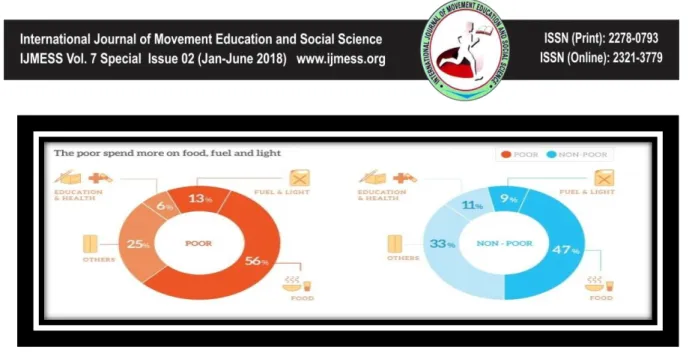
Figure 2 and 3 explains that according to World Bank Report 270,000,000 Indians are poor which is equal to 1 in 5 Indians and 80 per cent of Indians live in rural areas. The poor and non poor people spend more on food items as compared to others.
EDUCATION LEVEL: There’s a part of the population in India which still isn’t able to read and write. Literacy rate variations between states. India’s literacy rate is at 74.04
percent.
1249 | P a g e Figure 4 shows that 45 per cent of the poor are illiterate whereas 20 per cent of non poor are illiterate. Only 15 per cent of the poor people complete secondary education and above which is very low. The table further explains that 82 per cent of poor people are marginal land owners whereas 72 per cent of non poor people are marginal land owners.
SMART PHONES/ LAPTOPS AND INTERNET CONNECTIONS:
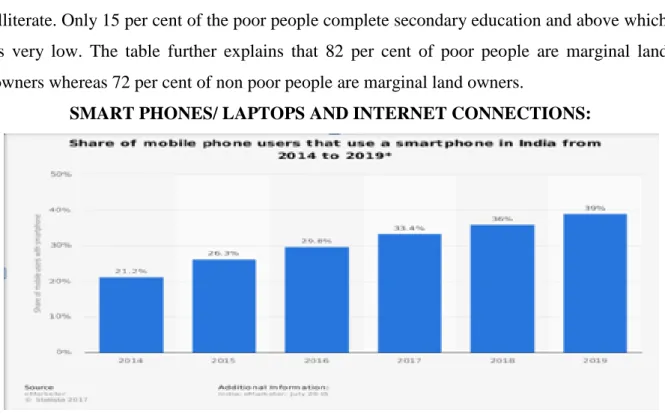
It is clear from figure 5 that the share of mobile phone users that use a smart phone in India is increasing. In the year 2014 it was 21.2 per cent which has increased to 36 per cent in the year 2018. It is estimated that it will increased to 39 per cent in the year 2019.
Figure 6
1250 | P a g e Figure 7
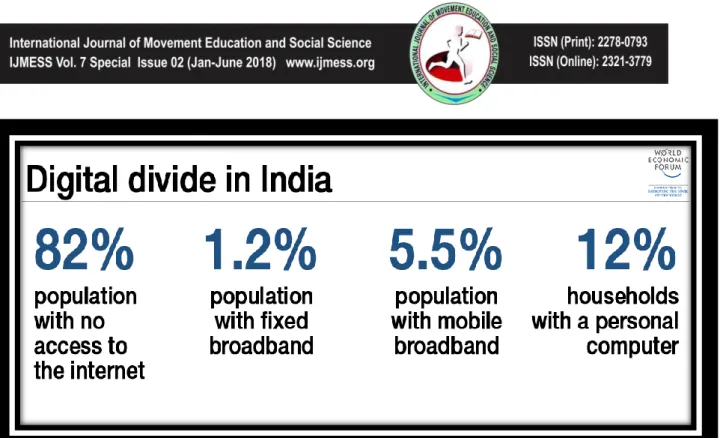
Figure 6 and 7 shows that internet connection is increasing at a fast pace but with slow rate. Further, 82 per cent of the population has no access to the internet.
PHYSICAL INFRASTRUCTURE: According to 2011 census of India
68.84 percent of Indians (around 833.1 million people) live in 6,40,867 different
villages.
Average 3-5 small shops exist in one village Total 19,22,601 (approx) shops owned in villages
Is it feasible to have digital payment system in these shops?????? ISSUES IN DIGITAL PAYMENT SYSTEM
Number of citizens on mobile- Not all Indians have mobiles. The latest figures from
the Indian telecom regulator TRAI show that, as on 31 July 2016, India had a teledensity of 83%, with Bihar, Assam, Madhya Pradesh and Uttar Pradesh with teledensity of less than 70%. Note that these are number of connections, not users. So do we have enough people with mobile connections in India.
Availability of reliable connectivity- “When we were doing Aadhaar, it will be an online infrastructure and identity”, TRAI Chairman RS Sharma said at an event. But still getting complaints that there isn’t a tower in a place and therefore we weren’t
1251 | P a g e Merchant acceptance: India had 712.5 million debit cards, and 130.53 million
transactions, as of August 2016. That’s around 18 transactions for every 100 cards.
Only 26.38 million in India as of August 2016, accounting for 83.95 million transactions. Demonetization might lend itself to greater utilization of cards, but there were only 1,461,672 point of sales machines in as of August 2016.
Payment and mobile network capacity: At present, there isn’t sufficient capacity
for the escalation in usage if everyone starts transacting digitally. More importantly, do we have the network capacity to deal with this? What happens in an emergency
situation, when networks are down because everyone is trying to call everyone, as we’ve seen previously in India? If you don’t have cash, and there is insufficient
connectivity, how will you be able to buy anything, use public transportation etc? Time taken for a transaction :
a) For a card- We need to place it in a PoS machine, get a user to input a PIN, and if there is connectivity, wait for the merchant to get a confirmation before you can leave.
b) For digital transactions-We need to get a user to scan a merchant QR code, authenticate with a PIN or we need the merchant to send a payment link to a customer, for the customer to receive it, open a page, type in details and complete a transaction. Then wait for the merchant to receive a confirmation of the transaction before we can leave.
Security issues - The weakest security link in any transaction is not the technology
system, but the user, and their lack of understanding of security issues.
Language Compatibility - Paytm has recently updated their application with some
features enabled in Indian languages. Ola is available in Indian languages only for drivers, not passengers. There’s a part of the population in India which still isn’t able to read and write. Literacy rate variations between states. India’s literacy rate is at
74.04 per cent. Cost:
1252 | P a g e b) Customer costs - Customer need a smart phone, an Internet connection and/or
have to pay charges and data charges when applicable.
CONCLUSION
No, doubt in the last few years some of the payment system electronically has been focused upon. After looking at the points, does it mean that there shouldn’t be any cashless transactions. Certainly not. The point is that we’re not ready yet. Issues mentioned above should be addressed properly and people should be given choice and government should ask people to switch gradually. Further, internet connectivity should be available. Mobile
network availability must strengthen in villages and awareness must be created amongst public to use digital technology.
REFERENCES
[1]. Bürk, Holger, and Pfitzmann, A. (1989), “Digital payment systems enabling security and unobservability”, Computers & Security, Vol. 8, No. 9, pp. 399-416.
[2]. Ignacio, M. and Radcliffe, D (2010), “Mobile payments go viral: M-PESA in Kenya, http://documents.worldbank.org/curated/en/638851468048259219/Mobile-payments-go-viral-M-PESA-in-Kenya.
[3]. Kaynak, E. and Harcar, T.C. (2005), “Consumer attitudes towards online banking: a new strategic marketing medium for commercial banks”, Technology Marketing, Vol. 1, No. 1.
[4]. Phil, J. and Waidner, M. (1996), “Electronic payment systems”, available on https://www.researchgate.net/publication/2624407_Electronic_Payment_Systems,assess ed on April 10, 2018.
[5]. https://en.wikipedia.org/wiki/Payment_and_settlement_systems_in_India [6]. https://en.wikipedia.org/wiki/Digital_India
http://www.bloombergquint.com/business/2016/11/09/the-beginning-of-the-end-of-the-parallel-economy-in-india