Auricular Acupuncture for Pain and Anxiety During Hip Fracture Rehabilitation: A Pilot ~
By
Gary AsherA Master's Paper submitted to the faculty of the University of North Carolina at Chapel Hill in partial fulfillment of the requirements for the degree of Master of Public Health in the
Public Health Leadership Program.
Chapel Hill
2008
10-.}:?.oJ
First Reader9-2
1-og,
Second Reader
ABSTRACT
More than 300,000 persons aged 65 and older are hospitalized annually in the United States because of hip fracture. Poorly controlled pain and anxiety during rehabilitation are associated with poor outcomes, including delayed functional recovery and long-term functional impairment. Medications to relieve these symptoms can themselves serve as barriers to successful
rehabilitation, due to adverse effects such as nausea, drowsiness, and confusion. For these reasons, non-pharmacologic techniques for pain and anxiety relief are promising alternatives and adjuncts to standard pharmacologic approaches.
SPECIFIC AIMS
More than 300,000 persons aged 65 and older are hospitalized annually in the United States because of hip fracture, with over 85% of hip fractures occurring in this age group. Poorly controlled pain and anxiety during hip fracture rehabilitation are associated with poor outcomes, including delayed functional recovery and long-term functional impairment. Medications to relieve these symptoms can themselves serve as barriers to successful rehabilitation due to adverse effects such as nausea, drowsiness, and confusion. For these reasons, non-pharmacologic techniques for pain and anxiety relief are promising adjuncts to standard pharmacologic approaches.
Auricular acupuncture is a safe and effective method of pain relief, and has been
demonstrated in randomized trials to relieve hip fracture-related pain during the pre-hospital transport, intraoperative, and postoperative phases of care. However, no studies have
investigated if auricular acupuncture can provide persistent pain relief during the rehabilitation phase of hip fracture recovery. Furthermore, no studies of auricular acupuncture have looked at the feasibility of long-term (i.e., four week) use of indwelling acupuncture needles, a relatively new technique that can easily and inexpensively be incorporated into rehabilitative care.
Therefore, we are proposing to gather pilot data to guide a subsequent randomized,
controlled efficacy trial, with the ultimate goal of evaluating whether auricular acupuncture is an effective complementary strategy to standard pharmacological therapy to reduce pain, lower analgesic use, shorten the duration of inpatient rehabilitation, and improve functional recovery. To achieve this objective, we propose to randomly allocate 38 persons aged 65 and older who have recently undergone surgical hip fracture repair to one of two study groups: ( 1) auricular acupuncture standardized to five points specific for pain reduction; (2) sham acupressure
Specific Aim 1: To estimate the eligibility. enrollment. dropout. adherence. and adverse event rates of a four-week auricular acupuncture intervention. Eligibility, enrollment and dropout rates will be determined by carefully identifying and tracking all patients at the study sites who have undergone surgical hip fracture repair. Treatment adherence will be measured by tracking refused treatments and dislodged needles between treatments, and by interviews and questionnaires designed to elucidate potential barriers to enrollment and protocol completion. Side effects and adverse events will be monitored at twice-weekly treatment and weekly data collection visits.
Specific Aim 2: To estimate mean scores, mean rates of change, and variances for
measures of pain. anxiety, analgesic medication use. functional mobility, and fear of falling for the intervention and control groups. Pain will be measured using the Short Form McGill Pain Questionnaire (SF-MPQ); anxiety will be measured using the Spielberger State-Trait Anxiety Inventory (STAI}; analgesic medication use will be measured using an analgesic burden scale; functional mobility will be measured with the Lower Extremity Gain Scale (LEGS); and fear of falling will be measured using the Falls Efficacy Scale (FES). Analyses will be run for each outcome using linear mixed models to estimate mean differences, rates of change, and their variances over the four-week intervention.
Participants will be recruited from the orthopedic services of the University of North Carolina Hospitals (Chapel Hill, NC) and Mission Hospitals (Asheville, NC).The intervention will begin at the onset of rehabilitation, and subjects will be followed until their discharge from rehabilitation or a maximum of four weeks. The research will be undertaken by an interdisciplinary team including a geriatrician, alternative medicine specialist, health services researcher,
BACKGROUND AND SIGNIFICANCE
A. Hip Fracture in the United States: a major, growing public health problem.
In 2004, hospital discharges for hip fracture in the United States totaled about 329,000.1 This estimate represents a 20% increase in the number of hospitalizations for hip fracture since 1994, even though during the same time period the per capita fracture rate was declining.2 With over 85% of hip fractures occurring in individuals age 65 and older, and the proportion of this population continuing to expand even further in the coming decades, the number of hip fractures is expected to continue to increase substantially.
Hip fracture is associated with significant morbidity, mortality, and cost. According to
one estimate, at one year after fracture up to two thirds of patients will have reduced capability to perform one or more basic activities of daily living (ADLs) and 80% of will be unable to perform instrumental activities of daily living (IADLs) as well as they could prior to the fracture.3 Additionally, one-year mortality after hip fracture is estimated to be almost 25%.4 Some of this mortality is related to comorbid conditions that predated the fracture; however, hip fracture both functions as an independent risk factor and as a cofactor that increases the likelihood of dying from a comorbid condition.5 Health care expenditures attributable to hip fractures in 1995 were estimated to be $8.7 billion, and the individual lifetime attributable cost approximately $80,000.6 During the 12 months following fracture, one analysis estimated that individual yearly health care costs increased by an additional $17,000 (in 1993 dollars).7
B. Physical Rehabilitation after Hip Fracture
Physical rehabilitation following hip fracture repair is a key component to reducing
post-fracture morbidity and mortality. Mobilization is a primary component of post-operative
improving physical performance. Though optimal training protocols remain unknown, results from several studies suggest that intensive rehabilitation, especially for frail elders with persistent mobility and ADL impairments, can significantly improve physical performance and mobility, reduce disability, and improve quality of life.8·9
Pain following hip fracture is a barrier to successful rehabilitation. Poorly controlled pain following hip fracture repair increases hospital length of stay by 1.5 days, leads to a 26% decrease in ambulation by day three, and is associated with long-term functional impairment.10 Furthermore, inadequate pain control during rehabilitation is associated with a nearly 60% increase in missed or shortened physical therapy sessions, as well as impaired long-term functional ability.11 Despite these data indicating adverse outcomes from poorly treated post-operative pain, patients, particularly elderly patients, frequently suffer from inadequate pain relief. 12 Studies indicate that concern that opioid-related side effects may lead to confusion, falls, and other adverse outcomes 13 leads to a justifiable reluctance to prescribe opioid medications 14.
Pain management after hip fracture repair most often includes narcotic medications whose adverse effects can be particularly deleterious for elderly patients. Use of narcotic medications in older persons, especially those with dementia, is associated with at least double the frequency of adverse events compared to younger adults, and the frequency rises as the number of medications increases. 15 The most common adverse effects associated with opioids include sedation (number needed to harm [NNH] 5.3), nausea (NNH 5.0), vomiting (NNH 8.1 ), constipation (NNH 3.4), and pruritis (NNH 13), but respiratory depression, neurotoxicity, and urinary retention can also occur.16·17·18
complementary pain reduction strategy may reduce the pain experienced during rehabilitation without the side effects associated with analgesic medications.
C. Acupuncture- A Promising Complement to Medication for Pain after Hip Surgery
Acupuncture is widely used in the U.S. Since its first popular appearance in the U.S. in
the 1970's 19, acupuncture has slowly made its way into Western scientific and clinical practice. In 1997, a National Institutes of Health consensus statement noted promising results for treating nausea, vomiting, and dental pain with acupuncture.20 More recent studies support its use for facial pad', labor pain22, knee osteoarthritis23, and fibromyalgia24 It has become an
increasingly popular form of complementary and alternative medicine (CAM); as of 2001, an estimated 8.2 million U.S. adults had used acupuncture, and 2.1 million U.S. adults had used it in the previous year. 25
Auricular acupuncture is a unique and advantageous acupuncture system. Several distinct acupuncture microsystems have been developed, including hand, scalp, and auricular systems. Auricular acupuncture, which uses the ear exclusively as the treatment site, dates back to use in China as early as the 61
Existing studies of auricular acupuncture have demonstrated beneficial effects on
pain and anxiety, including pain associated with cancer'8, knee arthroscopy'9, hip fracture, and
hip arthroplasty30. Several recent small studies have suggested that auricular acupuncture
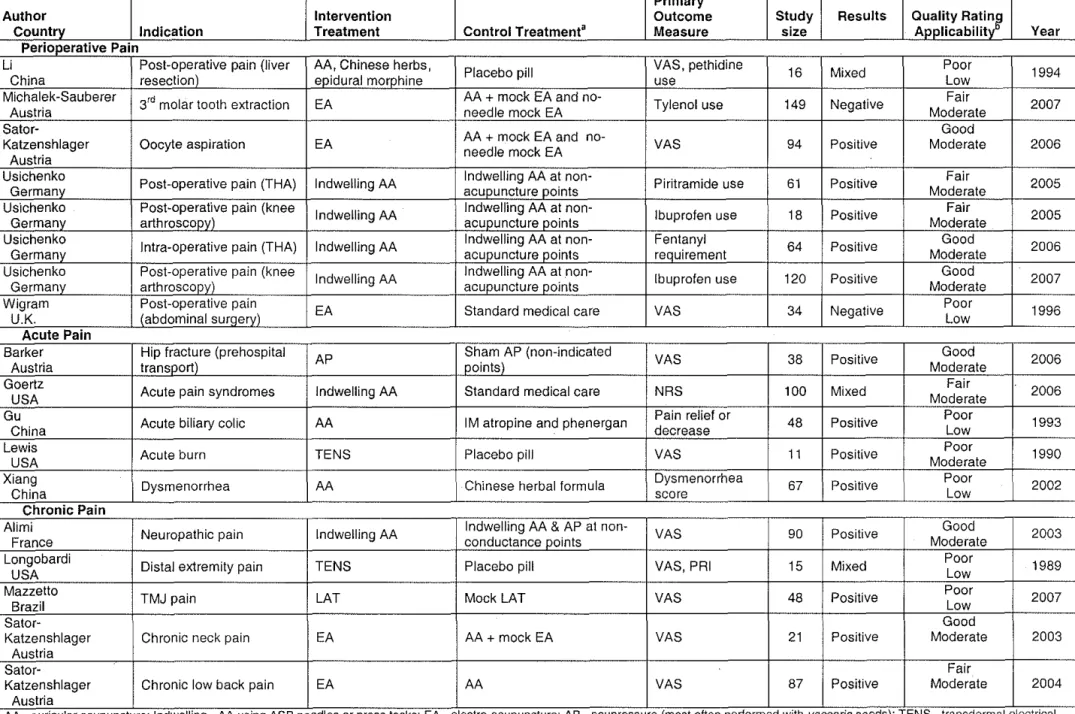
alone can relieve pain and anxiety in the prehospital transport phase of hip fracture,31·32 and it can reduce acute pain due to a variety of causes in the emergency department setting. 33 Table 4 (next page) summarizes randomized, controlled trials of auricular acupuncture published in English and indicates that, though results are mixed, the vast majority have demonstrated significant pain relief when auricular acupuncture was used. Additionally, several RCTs have shown auricular acupuncture can significantly reduce anxiety, especially anxiety related to surgical procedures.34·35·36•37·38 However, while efficacy has been established across multiple
studies and settings, no published studies have focused on efficacy during rehabilitation for hip fracture.
Adverse events due to auricular acupuncture appear to be very rare. There are
currently no systematic reviews of adverse events for auricular acupuncture, and not all
published studies of auricular acupuncture report on adverse events. However, a 2004 review of all acupuncture-related adverse events concluded that "the overall risk of acupuncture treatment is classified as 'very low' ... below that of many common medical treatments."27 This was based on an estimate of one serious adverse event (SAE) per 200,000 acupuncture
Table 1. A Summary of Published Randomized Controlled Trials of Auricular Acupuncture for Relief of Perioperative, Acute, and Chronic Pain Primary
Author Intervention Outcome Study Results Quality Ra~:l'
Country Indication Treatment Control Treatment' Measure size Applicabilit Year Perioperative Pain
Li Post-operative pain (liver AA, Chinese herbs,
Placebo pill VAS, pethidine 16 Mixed Poor 1994
China resection) epidural morphine use Low
Michalek·Sauberer
3rd molar tooth extraction EA AA + mock EA and no· Tylenol use 149 Negative Fair 2007
Austria needle mock EA Moderate
Sator-AA + mock EA and no· Good
Katzenshlager Oocyte aspiration EA
needle mock EA VAS 94 Positive Moderate 2006 Austria
Usichenko
Post-operative pain (THA) Indwelling AA Indwelling AA at non· Piritramide use 61 Positive Fair 2005
Germany acupuncture points Moderate
Us'1chenko Post-operative pain (knee
Indwelling AA Indwelling AA at non· Ibuprofen use 18 Positive Fair 2005
Germany arthroscopy) acupuncture points Moderate
Usichenko
Intra-operative pain (THA) Indwelling AA Indwelling AA at non· Fentanyl 64 Positive Good 2006
Germany acupuncture points requirement Moderate
Usichenko Post-operative pain (knee
Indwelling AA Indwelling AA at non· Ibuprofen use 120 Positive Good 2007
Germany arthroscopy) acupuncture points Moderate
Wig ram Post-operative pain
EA Standard medical care VAS 34 Negative Poor 1996
U.K. (abdominal surgery) Low
Acute Pain
Barker Hip fracture (prehospital
AP Sham AP (non-indicated VAS 38 Positive Good 2006
Austria transport) points) Moderate
Goertz
Acute pain syndromes Indwelling AA Standard medical care NRS 100 Mixed Fair 2006
USA Moderate
Gu
Acute biliary colic AA I M atropine and phenergan Pain relief or 48 Positive Poor 1993
China decrease Low
Lewis
Acute burn TENS Placebo pitt VAS 11 Positive Poor 1990
USA Moderate
Xiang
Dysmenorrhea AA Chinese herbal formula Dysmenorrhea 67 Positive Poor 2002
China score Low
Chronic Pain Alimi
Neuropathic pain Indwelling AA Indwelling AA & AP at non· VAS 90 Positive Good 2003
France conductance points Moderate
Longobardi
Distal extremity pain TENS Placebo pitt VAS, PRJ 15 Mixed Poor 1989
USA Low
Mazzetto
TMJ pain LAT Mock LAT VAS 48 Positive Poor 2007
Brazil Low
Sator· Good
Katzenshlager Chronic neck pain EA AA +mock EA VAS 21 Positive Moderate 2003
Austria
Sa tor· Fair
Katzenshlager Chronic tow back pain EA AA VAS 87 Positive Moderate 2004
Austria
D. A promising therapy for improving hip fracture rehabilitation and outcomes
In summary, auricular acupuncture is a novel complementary approach to standard pain and anxiety relief during the rehabilitation phase of hip fracture repair. It is minimally invasive, simple to use, and relatively inexpensive to administer in that needles cost about $0.50 each and require only a few seconds to place. Non-pharmacologic reduction of pain and anxiety has several advantages over typical pharmacologic therapy, especially for elderly patients
undergoing rehabilitation after hip fracture repair. Reducing pain, anxiety, and medication use associated with detrimental side effects for these patients may significantly improve their care and decrease the costs directly associated with hip fracture.
PRELIMINARY STUDIES
A. Experience Conducting Research Involving Study Participants Who Are Aged, Disabled, and Residing in Long-Term Care Facilities. The proposed study will be
undertaken under the auspices of the Collaborative Studies of Long-Term Care (CS-L TC). Co-directed by Drs. Philip Sloane and Sheryl Zimmerman, the CS-L TC is one of the nation's most experienced long-term care research programs, with notable expertise in research related to
aging, disability, and long-term care. Since 1996, 38 studies, including numerous clinical trials, have been funded under the auspices of the CS-L TC (the majority with federal funding), which have involved the participation of more than 700 long-term care facilities across 14 states.
The CS-L TC's approach to working with care providers and patients is one of partnership,
and it is notable that only 3% of facilities (other than those which closed) have withdrawn their participation. More than 6,500 facility residents, family members and staff have participated in CS-L TC projects examining topics such as quality and outcomes of care, falls prevention, dementia care, end-of-life care, transitions across settings, and family involvement.
Two books have highlighted the CS-L TC findings42.43 as have dozens of chapters, reports, peer-reviewed publications, and presentations. Completed clinical trials have included evaluations of bright light therapy as an alternative to medication for sleep, depression, and agitation44.45.46, specialized bathing tubs for impaired populations47, and techniques to improve bathing of persons with dementia48.49·50 Additional clinical trials in the field include a study of
falls prevention in assisted living facilities and a study of family-staff partnerships to enhance long-term care outcomes.
B. Feasibility Study of Auricular Acupuncture in Hip Fracture Patients.
The CS-L TC study group has long been concerned about hip fracture because of its
project, directed the Baltimore Hip Studies in the 1990's and remains an investigator in that longstanding series of primarily epidemiological projects.51·52•53·54·55·56·57·58·59·60·61 Dr. Philip Sloane, this study's co-PI, has through his prior work become very familiar with the heightened adverse effect profiles of pain and anxiety medications in frail elderly persons, particularly those with cognitive impairment. 62·63•64·65·66·67 Two years ago we became aware of intriguing
preliminary trials (see Table 1) suggesting that auriculotherapy could significantly reduce pain and anxiety of patients with hip fracture during ambulance transport and in the emergency department. Since successful rehabilitation is critical to reducing long-term morbidity from hip fracture, we were interested in extending this work to that area. When, in late 2007, Gary Asher, MD, an alternative medicine specialist, acupuncturist, and postdoctoral fellow in an NCCAM research training program, began working with the CS-L TC, a strong team had assembled to study this topic.
Methods. This feasibility study was undertaken to determine the most appropriate treatment
in terms of patient acceptance, tolerability, maintenance of needles in place, and side effects. Using internal funds, we planned and conducted a feasibility study of recruitment and treatment methods. The study proceeded as follows:
Recruitment and informed consent. Patient participants were recruited from the University of North Carolina (UNC) Hospitals in Chapel Hill, NC, using inclusion criteria and methods that, with minor refinement, have been incorporated into our current research plan. Eligible and interested individuals provided written informed consent and signed a HIPAA waiver, in accordance with the protocol approved by the UNC IRB.
• Conduct of the intervention. After baseline data were collected, the physician acupuncturist (Dr. Asher) visited the patient at his/her site of rehabilitation (for four this was UNC's
adverse events, and placed five sterile, nickel-free, gold-plated acupuncture needles unilaterally on the ear at the following acupuncture points: thalamus, cingulate gyrus, shen men, omega 2, and point zero points (these points are described later under research plan and illustrated in Figure 2a). After placement, the needles were covered with an adhesive patch and the date and place of placement were noted in the patient's treatment log.
• Study measures and data collection. The following measures were assessed at baseline, 1, and 2 weeks: the Lower Extremity Gain Scale (LEGS), the McGill Pain Questionnaire short form, the State-Trait Anxiety Inventory (STAI), the Falls Efficacy Scale (FES), medication use, and participant acceptance and satisfaction. Each has been incorporated into and will be described in more detail in our proposed research plan.
Results. This feasibility study was conducted between January and June, 2008. Results are summarized below:
• Participant recruitment and retention. Eligibility criteria included age 65 and older, English-speaking, post-unilateral hip repair, ability to ambulate pre-fracture, and ability to report pain; exclusion criteria included severe cognitive impairment, medical instability, metal allergy, and certain disease states associated with an increased susceptibility to infection or bleeding. Eleven patients were referred by hospital social workers for eligibility screening. Of these, 8 were eligible for participation (73%), 2 were ineligible (18%), and one (9%) was discharged before eligibility could be determined. Of the 8 eligible patients, 5 (63%) enrolled in the project and 3 (38%) refused participation. Of the 5 enrolled participants, 4 (80%) completed the three-week project period, and one individual (20%) discontinued participation before the first
treatment was received.
is largely reflective of the general population of individuals who undergo hip fracture repair annually (i.e., over the age of 65 and female)68
• Adherence. Of the 4 individuals who received the acupuncture treatment, all (1 00%) accepted the full 5-needle treatment during each treatment session. Of the approximately 20 needles inserted per participant (5 needles, twice a week for two weeks), on average, only 3 needles per participant fell out over the course of the entire study period. The majority of missing needles occurred during the treatment periods of the first two participants, when the intervention was new; subsequently the acupuncture protocol was modified to cover the sites with small adhesive bandages in order to better retain the needles in place.
• Side effects and symptoms. None of the four participants exhibited signs of infection or tissue damage. One participant asked the acupuncturist to remove one needle during one treatment session due to mild itching around the acupuncture site. In addition each participant was asked weekly if she had experienced any side effects or symptoms, regardless of
attribution. One participant reported each of the following symptoms, all of which were rated as "mild": itching, dizziness, and localized pain/discomfort around the acupuncture site. The individual who reported mild dizziness reported that it was a long-standing problem that occurred only when suddenly sitting or standing, and the participant who reported nausea reported that it was a side effect of a pain medication she was receiving. Thus, the side effects of the acupuncture treatment have been minimal.
• Adverse events. Each participant was monitored for hospitalizations, falls, seizures, death, and any other catastrophic event. None were experienced.
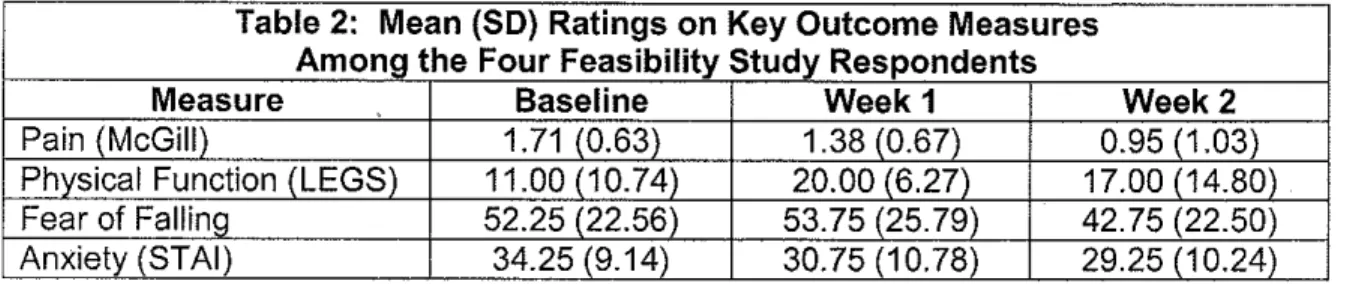
measures can be accurately and feasibly administered and scored, and that they appear to be sensitive to change in this population.
Table 2: Mean (SO) Ratings on Key Outcome Measures Among the Four Feasibility Study Respondents
Measure Baseline Week1 Week2
Pain (McGill) 1.71 (0.63) 1.38 (0.67) 0.95 (1.03)
Physical Function (LEGS) 11.00 (10.74) 20.00 (6.27) 17.00 (14.80) Fear of Falling 52.25 (22.56) 53.75 (25. 79) 42.75 (22.50) Anxiety (STAI) 34.25 (9.14) 30.75 (10.78) 29.25 (1 0.24) • Data quality. A secondary aim of this feasibility study was to assess the suitability of the proposed study measures, as well as the feasibility of their proposed administration and scheduling. Overall, participants were able to address all study questions, suggesting that the questions were suitable for this population. Further, data quality was high, with very little missing data.
• Participant satisfaction. At the end of the study period, all participants were asked questions to assess the acceptance of the study procedures. All reported that they were not bothered by the study procedures, including the questionnaires and the acupuncture treatment, nor the time required by the study. Further, when asked if they would be willing to participate in a longer version of the study, all participants reported that they would be willing to continue their participation in an identical study for two additional weeks.
Implications for the proposed pilot study. This feasibility study field tested and refined the
RESEARCH DESIGN AND METHODS
A. Overview
The long-term objective of this research is to determine the extent to which auricular acupuncture can improve rehabilitation outcomes for elderly patients after hip fracture by relieving pain and anxiety. In this pilot randomized, sham controlled trial we will compare pain, anxiety, medication use, functional mobility, and fear of falling between groups receiving either auricular acupuncture or sham. Additionally, we plan to investigate barriers to enrollment and continued participation to maximize future study participation. In order to achieve these aims, we plan to enroll 38 patients aged 65 or older with recent hip fracture repair and follow them for up to four weeks during their post-fracture rehabilitation, to achieve the goal of having complete data on a minimum of 30 study participants.
B.
Project Organization and ManagementProject team. To carry out the proposed study, we have assembled an interdisciplinary team with expertise in geriatric medicine, acupuncture, health services research, biostatistics, and project management. Key personnel include:
• Philip D. Sloane, MD, MPH, Elizabeth and Oscar Goodwin Distinguished Professor of Family Medicine and co-director of the Program on Aging, Disability, and Long-Term Care at the Cecil G. Sheps Center for Health Services Research (Sheps Center) at the University of North Carolina at Chapel Hill (UNC-CH). A senior investigator with expertise in geriatric medicine and health services research involving old and disabled persons, Dr. Sloane will serve as
co-principal investigator, providing oversight of all aspects of study design.
Asher will serve as co-principal investigator, working in tandem with Dr. Sloane to oversee all aspects of study design.
• Sheryl Zimmerman, PhD, Professor of Social Work and Public Health at UNC-CH and co-director of the Program on Aging, Disability, and Long-Term Care at the Sheps Center at UNC-CH. A senior gerontological researcher, Dr. Zimmerman is an expert on hip fracture recovery and has co-developed the study's primary functional outcome measure, the Lower Extremity Gain Scale (LEGS). She will contribute her expertise to all aspects of study design and implementation, and to interpretation of the study results.
• John Preisser, PhD, Professor of Biostatistics at UNC-CH, has worked with the Program on Aging, Disability, and Long-Term Care at the Sheps Center on numerous studies, and as such is familiar not only with research design and statistics but also with the methodological issues unique to conducting clinical trials in frail older persons with multiple comorbid conditions. He will serve as project biostatistician.
• Doug Dirschl, MD, Frank C. Wilson Distinguished Professor and Chair of Orthopedics at UNC-CH, will advise the study on accounting for severity of fracture and type of surgical repair in analyses.
• Lauren Cohen, MA, Research Associate at the Sheps Center, has coordinated multiple studies in long-term care facilities, including several multi-site and multi-state studies. She will serve as overall project coordinator.
• Lourdes Lorenz, RN, MSN, Research Coordinator at Mission Hospitals in Asheville, NC, will serve as project coordinator at the Asheville site. Ms. Lorenz has coordinated clinical studies for Mission Hospitals for several years and is highly familiar with project coordination, research assistant supervision, and protocol adherence.
Acupuncturists. The study will use licensed, experienced acupuncturists as interventionists, who will conduct the study interventions under the direction of Dr. Asher.
• In Chapel Hill the acupuncturist will be Wunian Chen, MD. Co-founder and principal acupuncturist at the UNC-CH Department of Family Medicine's acupuncture clinic, Dr. Chen has experience serving as the acupuncturist in controlled clinical trials. His biographical sketch is included in this application.
• In Asheville, where there are 30 practicing acupuncturists, the study acupuncturist will be selected after funding based on his/her ability to guarantee availability during the proposed intervention period. The two most likely candidates, both of whom have expressed interest in the project, are Mary Cissy Majebe, O.M.D., L.Ac., and James Whittle M.S., L.Ac. Ms. Majebe is Academic Dean of Daoist Traditions, College of Chinese Medical Arts in Asheville, N.C., has practiced in Asheville since 1985, and was the first chair of the North Carolina Acupuncture Licensing Board. Mr. Whittle completed a four year clinical Masters of Science (M.S.) degree in Acupuncture at Bastyr University in 2001, received a certificate in Chinese herbal medicine in 2002 and completed an 8-month internship at the Shanghai University of Traditional Chinese Medicine before coming to Asheville to found the Blue Ridge Acupuncture Clinic.
Project coordination. Study coordination in Chapel Hill will be done through the Cecil G. Sheps Center for Health Services Research and in Asheville through the Mission Hospitals Research Institute. Each site will have a team that includes a research coordinator (Chapel Hill - Lauren Cohen, MA; Asheville- Lourdes Lorenz, RN, MSN) to identify and enroll eligible patients; a licensed acupuncturist to provide treatments to both the experimental and control groups; and a data collector who will collect all baseline and follow-up data, and who will be blinded to study aims and participant intervention/control group status. Overall study
Consistency of reporting, supervision, and methods will be assured by: a) joint training of coordinators and data collectors; b) use of common protocols and forms for providing
information, obtaining informed consent, tracking participants, and data gathering; c) use of standardized intervention protocols and training to the acupuncturists regarding treatment protocols; d) monthly project team meetings (with Ms. Lorenz participating by conference call, supplemented by weekly or biweekly project conference calls between the two project
coordinators; e) data checking and editing by one coordinator (Ms. Cohen); and f) monthly in-person spot checks by the investigators and the study coordinators of the interventionists and data collectors.
Data Safety and Monitoring Board (DSMB). The project will have a DSMB, consisting of 3 scientists with expertise relevant to the study design who will meet every six months by conference call to review the study protocol and progress. Dr. Preisser, the study statistician, will serve as the liaison to the DSMB; he is experienced in clinical trials research and has served previously on DSMBs.
C. Study Sites
Two sites will be used to enroll patients: UNC Hospitals in Chapel Hill, NC and Mission Hospitals in Asheville, NC. Study participants will be recruited from the orthopedic units at UNC and Mission Hospitals. See Section 16 for letters of support from the Department of
D. Participant Enrollment and Randomization
All patients meeting study criteria will be approached for participation and randomized if enrolled. The goal of the study will be to enroll 5-6 persons per month over a 7 -month enrollment period (totaling 10 participants at UNC Hospitals and 28 at Mission Hospitals). Previous studies of auricular acupuncture and our feasibility study (described above under preliminary studies) reported dropout rates between 15-25%_79 Projecting a dropout rate of 20% would leave 30 patients for our final analyses. Table 3 provides site-specific estimates of eligible patients, enrollment, and completion during the study period. Our study timeline (figure 8) allots 10 months for enrollment to accommodate unanticipated problems in subject accrual.
[ Table 3: Estimated capacity of the proposed study to recruit participants over a 7 month period
UNC Asheville" Combined
Patients with hip fracture repair <!65yrs old
'
76 222 298Estimated number of eliaible patients c 53 155 208
Target number of enrolled participants c 10 28 38
Subjects who will complete study c 8 22 30
a Estimates based on patients with ICD-9 codes 820 AND 79 or 81 for each hospital during the years 2005-2007. b Asheville estimates are based on preliminary data from UNC.
c Based on an eligibility rate of 50%, enrollment rate of 25%, and dropout rate of 20%.
Note from Table 3 that the estimated number of eligible patients is between 5 (at UNC) and 7 (at Asheville) times the number of enrollees required. Based on our feasibility study, we have projected a refusal rate of approximately 50%. Therefore, during project months 1-3 we will revisit these estimates with our statistician to develop a strategy to assure that the final sample will be as representative as possible of the population of eligible patients.
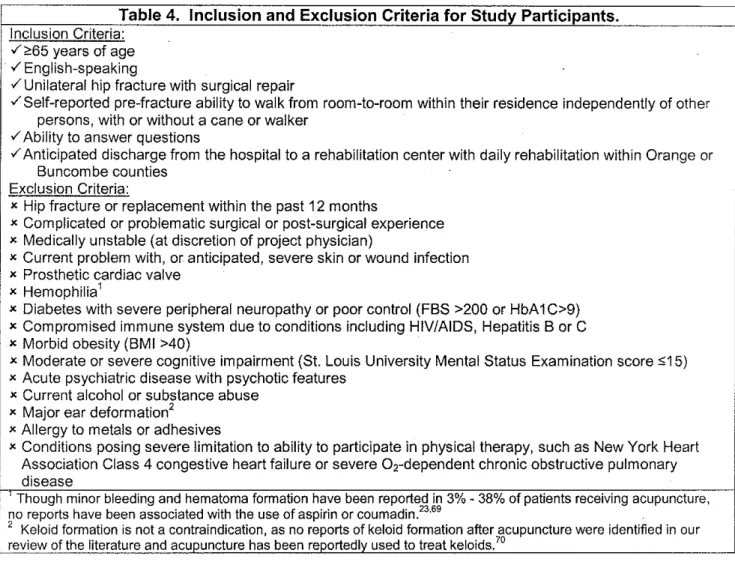
details the full list of inclusion and exclusion criteria. We have selected age 65 as a cut point because most hip fractures occur in patients over this age.
Table 4. Inclusion and Exclusion Criteria for Study Participants. Inclusion Criteria:
v' ;;,55 years of age v' English-speaking
/Unilateral hip fracture with surgical repair
/Self-reported pre-fracture ability to walk from room-to-room within their residence independently of other persons, with or without a cane or walker
v' Ability to answer questions
v' Anticipated discharge from the hospital to a rehabilitation center with daily rehabilitation within Orange or Buncombe counties
Exclusion Criteria:
x Hip fracture or replacement within the past 12 months
x Complicated or problematic surgical or post-surgical experience x Medically unstable (at discretion of project physician)
x Current problem with, or anticipated, severe skin or wound infection x Prosthetic cardiac valve
x Hemophilia1
x Diabetes with severe peripheral neuropathy or poor control (FBS >200 or HbA1C>9) x Compromised immune system due to conditions including HIV/AIDS, Hepatitis B or C x Morbid obesity (BMI >40)
x Moderate or severe cognitive impairment (St. Louis University Mental Status Examination score $15) x Acute psychiatric disease with psychotic features
x Current alcohol or substance abuse x Major ear deformation2
x Allergy to metals or adhesives
x Conditions posing severe limitation to ability to participate in physical therapy, such as New York Heart Association Class 4 congestive heart failure or severe 0,-dependent chronic obstructive pulmonary disease
Though minor bleeding and hematoma formation have been reported in 3%- 38% of patients receiving acupuncture,
no reports have been associated with the use of aspirin or coumadin.23'69 .
1 1
2
Keloid formation is not a contraindication, as no reports of keloid formation after acupuncture were identified in our review of the literature and acupuncture has been reoortedlv used to treat keloids. 70
Patient recruitment and informed consent. To accommodate the local hospital environment, recruitment procedures will be slightly different between the two sites. In Chapel Hill, surgical residents will alert the study coordinator of all potentially eligible patients they plan to bring to the operating room for surgical repair that day. In Asheville, the study coordinator will access electronically the daily operating room schedule to identify all potentially eligible patients. Similar methods have been use,d by Dr. Zimmerman in prior hip fracture recovery studies.
ambulation, ability to answer questions, and anticipated discharge in the county). Determination of which patients are to be approached for consent and which will be approached through a family/guardian will be determined using the "Evaluation to Sign Consent" measure developed by Resnick, et al. 71
Each patient meeting the eligibility criteria (and/or his family/guardian) will be approached by the study coordinator to discuss the study and potential participation, in accordance with
procedures approved by the IRB. This assumes that, as in the past, we obtain a HIPAA waiver to do so; if not, then orthopedic service social workers will do this, as was done in our feasibility study. This initial contact will include an explanation of the study, provision of a study brochure, a medical record review, and a brief interview to determine eligibility (see Table 4 above). Potential participants will be approached in this manner until 38 individuals who meet eligibility criteria agree to enroll in the study. As part of the informed consent process (and using IRS-approved methods) all participants will be invited to sign a HIPAA waiver and informed consent form. A letter indicating that the patient has agreed to participate in the study will be placed in the patient medical record.
These visits should occur within 48 hours of identification, while the patient is still in the hospital. In some cases, however, it may be necessary to visit the patient after arrival at the place of rehabilitation to explain the study and invite participation; if so, we will endeavor to make these visits within 24 hours of admission.
Post-enrollment procedure. Enrollment will occur while the patient is in the hospital. After enrollment, the study coordinator will remain in daily contact with the orthopedic service social worker and with the participant and/or guardian/proxy to monitor discharge plans.
Contact with the rehabilitation site. Although the rehabilitation facility will not be actively involved in the study protocol, care will be taken to assure that all rehabilitation facilities are informed about the study protocol and have someone to contact with questions or concerns. This procedure is standard for all of our subject contacts in prior hip fracture studies. Our process for working with facilities will be as follows:
a) Prior to initiation of the study, the administrator, medical director, and rehabilitation director at each of five facilities that receive the most referrals from our two study hospitals will receive a personal site visit. During that visit the study coordinator at that site will explain the study and discuss the possibility that one or more study participants may be placed in that facility;
b) When a study participant enters a facility, the administrator, attending physician, and rehabilitation director will receive a fax explaining the study;
c) On the first visit to the facility, the data collector will introduce him/herself to key facility staff and leave an explanatory note and copy of the signed consent form for insertion into the participant's medical record; and
d) Facility staff will be provided with the cell phone number of the study coordinator and invited to call if they have any questions or concerns.
Randomization. Stratified randomization by site will be performed using a
assignment will be determined by selecting the next numbered envelope at the time the patient is discharged from the hospital. Both the numbered envelope and the randomization sheet will be entered into the database for the selected patient by the study coordinator. Following randomization, the study coordinator will contact the acupuncturist and the data collector to coordinate the collection of the baseline measures and the first treatment.
E. Characteristics and Implementation of the Study Intervention
All participants in the study will have access to standard physical therapy and rehabilitation methods provided by their facility as well as pharmacological pain and anxiety control as prescribed by their physicians.
1. Experimental Group
Auricular acupuncture. All study participants in the experimental group will receive auricular acupuncture by a licensed acupuncturist using sterile nickel-free, gold-plated needles (Aiguille Semi-Permanents [ASP], Sedatelec, lrigny, France). The acupuncturist will meet with
participants twice weekly at their rehabilitation facility to remove existing needles and place new needles. During the initial treatment, needles will be placed in the ipsilateral ear to the site of the fracture; needle placement during follow-up treatments will alternate between the
contralateral and ipsilateral ears. The initial treatment will occur within 48 hours of baseline data collection. Participants will continue to have auricular needles placed until they are discharged from their rehabilitation facility or for a maximum of four weeks.
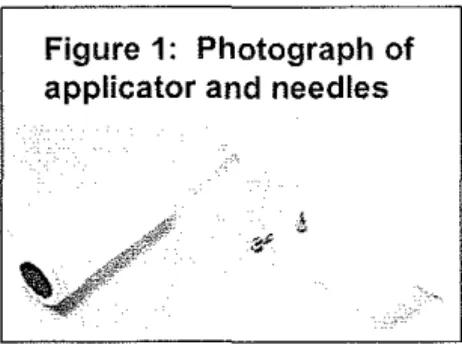
Acupuncture needles. Needles are 3.4 mm long and have a cylindrical head measuring 1.2 mm in diameter and height (see figure 1 ). Each needle is prepackaged in a sterile
applicator that requires minimal pressure at the application site to place the needle intradermally. After placement, needles
will be covered with a small adhesive patch to keep them in place. In this manner, needles typically stay in place for 5-7 days but have been reported to remain in place for up to 25 days. 28
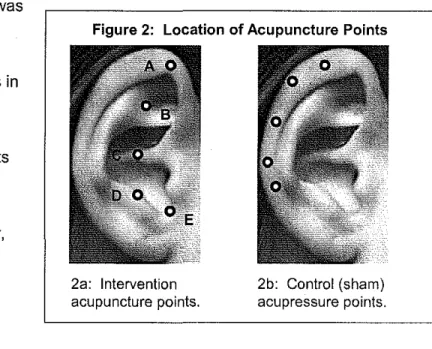
Point selection. Participants randomized into the true acupuncture group will have needles placed unilaterally at five predefined points associated with treatment for pain (figure 2a): omega 2 (point A), shen men (point B), point zero (point C), cingulate gyrus (point D), and thalamus (point E). Point selection was
based on the following information sources: (1) successful use of points in prior studies of ear acupuncture and acupressure,72•73·74 (2) clinical reports (Col. Richard Niemtzow, MD, PhD, MPH. Malcolm Grow Medical Center, Andrews Air Force Base, personal communication), and (3) experts' opinion for the treatment of pain.75
Figure 2: Location of Acupuncture Points
2a: Intervention acupuncture points.
2b: Control (sham) acupressure points.
Adherence. All participants will have a notification placed in their medical chart indicating that they are enrolled in a study and to report any missing needles or adverse events, such as possible infection, to the study coordinator. The acupuncturist will visit each participant two times per week. At each visit, a record will be kept of which needles have fallen out prior to that visit, as well as any adverse events related to the needle placements that might have occurred. During each weekly visit by the data collector, additional information concerning potential
2.
Control GroupSelection of an acupuncture control procedure. The definition of an appropriate control procedure in clinical trials of acupuncture remains controversial. Many types of controls exist, including penetrating and penetrating sham acupuncture located at either indicated or non-indicated acupuncture points or at non-acupuncture points. Additionally, some studies have used waiting list, placebo pill, or other non-acupuncture treatments as control procedures. Consensus recommendations by the International Acupuncture Research Forum suggest that the choice of controls should be guided by the effect to be measured;76 however, there is a considerable lack of agreement among acupuncture researchers concerning the best
applications of placebo acupuncture for control groups. Other issues related to the choice of control procedures include attempts to blind participants, practitioners, and data collectors.
There are thought to be three potential sources of "beneficial effects" from acupuncture: (1) placebo effects (e.g., patient suggestibility and expectancy, treatment environment, relationship with practitioner), (2) non-specific effects (e.g., needle sensation, local tissue irritation or
damage, distal neurological changes), and (3) specific effects due to the acupuncture itself. Many researchers in the acupuncture field consider placebo effects to be a subset of non-specific effects that are difficult to cleanly partition into a separate category. For this study, it is important to have a control procedure that will have minimal potential for therapeutic effect yet be believable by both participants and care providers as a true treatment. The use of vaccaria
seeds for auricular acupressure has a long history of use by acupuncturists as a credible method of acupuncture stimulation. The seeds are often affixed to auricular points with an adhesive tape, and patients are usually instructed to stimulate the points by applying manual pressure to the seeds throughout the day. To minimize the potential effect of the seeds, we will make two changes to the usual procedure for their use: a) seeds will be placed at
pressure to the seeds. In this way, the procedure will provide a credible control with minimal therapeutic effect. Patients, data collectors, and non-acupuncturist care providers can be masked with this type of control procedure; masking of acupuncture practitioners will be unlikely since the use of non-acupuncture points may be noted by experienced acupuncturists.
Procedure. Control participants will receive vaccaria seeds at five non-acupuncture points (Figure 2b), as defined by Margolin,77•78 and used in several recent trials of auricular
acupuncture.29·30·79·8
°
Control participants will be visited by the acupuncturist and data collector in the same way as participants in the true acupuncture group; the only differences in therapy will be the location of the auricular points and the use of seeds instead of indwelling needles.3. Timing of Intervention Administration
After all baseline data have been collected, the licensed acupuncturist will visit the participant to administer the initial treatment (as described above for the intervention and control groups). After placement, a digital photograph will be taken to confirm placement, the needles or ear seeds will be covered with the supplied adhesive patch, and the date and ear treated (i.e., right or left) noted in the participant's treatment log. The day that the acupuncture needles or seeds are placed will be called 'Intervention Day 1 '. Treatments will occur two times per week (i.e., every 3 to 4 days), with existing needles or seeds being removed and a new treatment placed at the appropriate points on the contralateral ear. All treatment visits will be performed at the participant's place of rehabilitation.
F. Variables and Measures
Methods Feasibility
1) Eligibility and enrollment
individuals who: a) have hip fractures repaired at the participating hospitals; b) are approached for screening; c) meet screening criteria; d) meet full eligibility criteria; e) agree to participate; f) are enrolled in the study; g) have baseline data collected; and h) complete the study. For individuals not meeting criteria, declining to participate, and withdrawing from the study, the reasons will be recorded and summarized.
2) Dropout
Subjects will be followed until they are either discharged from their rehabilitation facility or for a maximum of four weeks. The number of subjects dropping out of the study and their reasons for dropout will be summarized, particularly whether or not dropout is related to treatment.
3) Adherence
On each occasion of needle placement, we will record if, to what extent (i.e. how many), when (if available from the participant), and from which point(s) needles have become dislodged since the previous insertion. It is possible that some subjects may refuse placement of some or all needles. If so, reasons for refusal of needle placement will be documented.
4) Adverse events
Study participants will be monitored for adverse events on a regular basis. The
Outcome measures
1) Pain: McGill Pain Questionnaire Short Form (SF-MPQ)81
The short form of the McGill Pain Questionnaire consists of 15 sensory and affective descriptors that are rated on a 0-3 intensity scale, yielding a summary measure with a range from 0 to 45. Typical sensory descriptors include: throbbing, shooting, heavy; affective descriptors include: sickening, fearful, punishing. Pain scores are derived for the sensory, affective, and total descriptors. Additionally, the Present Pain Intensity (PPI) index (a six point Likert scale for current pain anchored at 'no pain' and 'excruciating pain') and a visual analog scale (VAS)- a 10 centimeter line anchored with 'no pain' at the left end and 'worst possible pain' at the right end- are also included to provide overall intensity scores.
SF-MPQ scores obtained from post-surgical and physiotherapy patients correlate highly with the full MPQ but can be gathered more quickly81 Two studies have demonstrated that the concurrent criterion validity of the SF-MPQ with the standard MPQ is good.81·82 Estimates for
the intra class correlation coefficients for the sensory, affective, and total scores (with 95% confidence intervals) for the SF-MPQ are 0.95 (0.92-0.97), 0.88 (0.81-0.93), and 0.96 (0.94-0.98) respectively indicating good test-retest reliability. The coefficient of repeatability (CoR) was 5.2 for the total score representing the amount of change in the total score necessary to be detected as a clinical change. These data were derived from a cohort of patients with a mean age of 65 years83 Sensitivity to change has been demonstrated as well.
2) Anxiety: State-Trait Anxiety Inventory (STAI)84
am worried. Each item is rated on a four-point Likert scale anchored at 'not at all' and 'very much so'. Respondents are also scored for refused items and 'don't know' responses. Data from community and psychiatric samples of older adults indicate adequate internal consistency and convergent validity. Cronbach's alpha for healthy and psychiatric subjects range from 0.85-0.94 for the state portion of the test and 0. 79-0.90 for the trait portion. Test-retest coefficients for the state and trait portions are 0.62 and 0.84 respectively85·86·87
3) Pain medication use (analgesic medications received)
There is no "gold standard" method of determining the total amount of analgesic medication being received by a given individual. Therefore, we will use two different methods and
instruments in the proposed study: the analgesic load of all medications received (primary measure), and the morphine equivalent daily dose of narcotics received (secondary measure). Analyses will be run using both measures so as to maximize validity of findings.
a. Analgesic load. We will measure analgesic load using the method developed by Sloane et al88 Each medication will be assigned a category and potency based on an expert
~ Doseyk x SRk
SL
=
L..." '"' ADMD, where
m is the number of analgesic medications for resident ion day j
Doseijk is the quantity of medication k received by resident ion day j (in same units as ADMD,)
SRk is the potency rating (1, 3, 6, 9) for analgesic medication
k
ADMD, is the average daily maintenance dose for medication k (determined based on · standard pharmacy references)
This results in a single continuous variable for each study participant and each data collection period. This variable can then be used in longitudinal analyses to control for changes in medications at the resident level across the data collection period.
b. Morphine equivalent daily dose (for narcotics only). Comparative potency ratings of narcotics have been used for several decades. Initially the term 'defined daily dose' was used, then 'defined daily dose for statistical purposes', and most recently the 'morphine equivalent daily dose'89'9
°
For each study participant day, we will calculated the morphine equivalent received by multiplying and summing the potency by the number of milligrams received of narcotics.4) Fear of falling: Falls Efficacy Scale (FES)91
The FES is designed to assess the degree of perceived efficacy at avoiding a fall during the performance each of ten ADL's (bathing, reaching into closet, meal preparation, walking around the house, getting in and out of bed, answering the door or phone, getting in and out of a chair, getting dressed and undressed, light housekeeping, simple shopping). This is useful in
5) Functional recovery: Lower Extremity Gain Scale (LEGS)94
The LEGS is a performance-based measurement designed specifically to assess recovery after hip fracture. It consists of timed scores for nine tasks (reaching for an item, putting on a shoe and sock, rising from a chair, walking ten feet, walking up and down stairs, and getting on and off a toilet). The summed total score has demonstrated sufficient sensitivity to change to be both clinically relevant and useful in the research environment. Cronbach's alpha for baseline to 2-month measurements is 0.98, and ICC for all of the nine tasks ranges from 0.63- 0.96. These data were developed and validated in a cohort of patients aged 65 years and older.s4.95 Clinically significant change is indicated by a change in score of two or more.
Other variables
In addition to data collection for the previously mentioned outcome measures, a variety of other data will be collected during the baseline examination, some of which will be repeated at each treatment and/or data collection visit (detailed below).
Additional baseline information collected by interview will include age, highest level of education, race, ethnicity, gender, marital status, self-reported health status, and cognitive status (using the St. Louis University Mental Status Examination, which is superior to the Mini-Mental State Examination for differentiation between levels of mild impairment).s6 In addition, we will administer the 4-item treatment expectancy scale developed by Mao, et al, which measures the expectation of improvement of illness, enhanced coping, increased vitality, and symptom alleviation as a result of acupuncture therapy, yielding a 20-item continuous measure that has a Cronbach's alpha of 0.82 and positive correlations with other measures of perceived efficacy.97
Missed and shortened physical therapy sessions will be recorded, and a descriptive account of therapy progress will be abstracted from the physical therapists' notes.
G. Data Collection
As soon as rehabilitation begins (usually after discharge to a skilled nursing facility or
rehabilitation hospital), the data collector will visit the participant at his/her place of rehabilitation to complete the baseline measures (i.e., the demographic and medical history questionnaire, SF-MPQ, LEGS, STAI, and the FES.) To assure good relationships with nursing homes or rehabilitation facilities to which each study participant is placed, study staff will distribute
materials to and meet with each facility as part of this entry process (see Section 18 [Appendix] for examples of materials). Initial intervention (acupuncture or sham) will begin within 48 hours after baseline measures have been collected.
The data collector will conduct return visits 8, 15, 22, and 29 days after baseline data collection (if the participant was discharged within 3 days prior to the scheduled visit, this final assessment will be made in the participant's home; otherwise the scores on the prior visit will be the final values obtained. Each visit will be scheduled for a time in the morning, preferably prior to any scheduled therapy sessions for that day. Questions concerning adverse events and symptoms will be asked at each visit.
Data collection and study participation will end after four weeks if the participant has not yet been discharged from their rehabilitation facility. In addition, early termination will be considered for any patients experiencing adverse side effects from the treatment (e.g., reaction to metals, intolerance to needle placement, infection or inflammatory response at needle placement sites) or at the request of the participant.
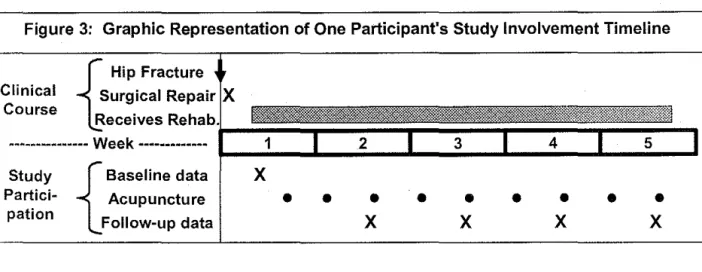
baseline data collection within 4-5 days after hip fracture. Following baseline data collection, the four-week clock for inpatient rehabilitation will begin with weekly follow-up data collection and twice-weekly acupuncture visits.
Figure 3: Graphic Representation of One Participant's Study Involvement Timeline
Study
Partici-pation {
Baseline data Acupuncture Follow-up data
H. Quality Control
X
• • •
•
X
X
•
•
X
• • •
X
To ensure that the intervention is implemented across sites and participants in accordance with protocol, significant time will be spent on acupuncturist training and fidelity assessments. The selected acupuncturists are both certified in medical acupuncture and have many years experience in acupuncture treatment. In Year 1, Dr. Asher (the project PI and a certified and experienced medical acupuncturist) will train each of the acupuncturists in the protocol requirements. Over a period of two days, Dr. Asher will meet with these individuals and demonstrate correct needle placement and technique for both intervention and control visits. The acupuncturists will then be asked to independently place the needles and will work with Dr. Asher until acceptable reliability and validity is achieved between and within the two individuals. In addition to this initial training session, Dr. Asher will accompany the acupuncturists on
The data collectors (one a previously trained and highly experienced data collector) will be trained in the project protocol by the project manager (Ms. Cohen). Prior to the initiation of the project, the data collectors from both sites will receive training in enrollment and consent procedures, interviewing techniques, monitoring for signs of infection, and data reporting. After data collectors have received training, the project manager will separately accompany both individuals in their respective first rounds of data collection to ensure accuracy and consistency. Also, throughout the data collection period, the project manager will accompany the data
collectors on approximately 5% of the data collection visits to ensure continued adherence to protocol. All members of the project team will meet twice monthly (by phone or in-person) to discuss any questions or concerns, and the project manager will be available at all times by phone to answer questions and provide consultation.
I. Data Management
All data forms will be edited twice, once by the data collector on the same day collection occurs, and once again upon return to the project office by a different member of the study team. The forms will be edited for accuracy, clarity, skipped questions, and outlying and impossible values. Data will be double entered into Microsoft Access databases by two members of the project team, and the project coordinator will periodically compare these data-entry and double-data data-entry databases to identify and correct typographical errors. Additionally, frequency and logic checks will be periodically performed to identify implausible values (such as those out of range) as well as suspicious values (such as outliers) and correct mistakes. These actions will be conducted throughout and at the end of the project and will help ensure high data quality.
secure, password-protected server, and only designated members of the project staff will have access to the database.
J. Sample size
A recruitment sample size of 38 participants has been chosen based on the feasibility aims of this proposal with the goal of having at least 30 participants complete the study. Previous studies of auricular acupuncture have reported dropout rates between 15-25%.79 Projecting a dropout rate of 20% would leave 30 patients for our final analyses. A sample size of 30 permits the estimation of proportions in Aim 1 (e.g., proportion of enrollment, dropout, and adverse events) with precision given by plus or minus 0.05 (e.g., a dropout rate of 20% will correspond to a completion rate of 80% with corresponding 95% confidence interval of 75%, 85%.)
For Aim 2, Table 5 below shows estimates of the rate of change of the outcomes, and their standard errors, from the preliminary data based upon n = 4 individuals (see preliminary studies) and as projected for the proposed study planned to have within-group sample sizes of 15. Table 5 does not include the McGill Pain Score since our preliminary feasibility study used
Table 5. Estimated precision of slope estimates for linear trend in outcome from a repeated measures model for the preliminary data and for simulated data based upon larger planned
sample size
Preliminary Data Estimates (n=4) Proposed Study Estimate (n=15)
Estimated slope (rate of weekly
Outcome Measure change) Standard error Standard error
-·-LEGS 3.568 2.483 1.221
Falls Efficacy Scale -4.750 2.302 1.127
STAI -2.500 1.600 0.787
..
the preliminary data set (n=4), increasing the sample size to 15 per group for the proposed study would provide ample data to detect changes at levels observed in the preliminary data. For example, a simulated data set of 15 subjects resulted in a 95% confidence interval for change in the LEGS scale of 1.175 to 4. 789 (3.568 +/- 1.96*1.221 ).
K. Data Analysis
Demographic information (e.g., age, race/ethnicity, gender, marital status, educational level) will be summarized overall and by treatment group. Other covariates including BMI, dementia, fracture type, and expectancy, will be summarized overall and by treatment group. Means and standard deviations will be used for continuous variables and frequencies for categorical variables. For the former, AN OVA adjusting for study site will be used to assess baseline balance, and for the latter, Mantei-Haenszel Chi-square tests will be used. Finally, the extent of differences in summary measures of baseline data by study site will be determined.
Specific Aim 1: Estimation of eligibility, enrollment, dropout, adherence, and adverse
event rates
future larger study to document the actual monthly rate of enrollment in the two sites participating in this pilot study.
Concomitant therapies. As every participant in the trial will have access to standard physical therapy and rehabilitation methods, it will be important to record the timing of these sessions and whether any were missed or shortened. Providing summarizations of the length and amount of sessions and the proportion of such sessions that were missed or shortened will reveal the subject-to-subject variability of attendance to physical therapy sessions and whether the extent of attendance would be an important covariate in the assessment of the efficacy of auricular acupuncture. Besides physical therapy, the use of pharmacological pain and anxiety control will be a critical factor in ascertaining the efficacy of acupuncture in the rehabilitative process. Therefore, the use of drugs to combat pain will be documented, coded, and summarized on a weekly basis in terms of average daily dose. Comparison will be made between the two treatment groups in terms of our summary variables, the analgesic load, and the morphine equivalent daily dose.
Dropout. Subjects will be followed from the time of entry into an inpatient rehabilitation facility until they are discharged from inpatient rehabilitation for up to a maximum of four weeks. The number of subjects dropping out of the study and their reasons for dropout will be summarized, particularly whether or not dropout is related to treatment. Dropouts will be summarized by treatment group.
session. A third measure, if able to determine, is the proportion of time a subject has each needle in place; this captures information between visits. A related measure will be the proportion of needles remaining in place between visits will be calculated for each of the five auricular points.
Adverse events. All adverse events will be described and characterized by severity, relation to treatment, length of occurrence, and resolution.
Specific Aim 2: Outcome estimation
The means and standard deviations of outcome measures will be computed at baseline and for each follow-up data collection visit by treatment group. Pain will be measured using the Short Form McGill Pain Questionnaire (SF-MPQ); anxiety will be measured using the Spielberger State-Trait Anxiety Inventory (STAI); analgesic use will be measured using a morphine equivalent daily dose formulation as well as a scale designed to measure total analgesic load, functional mobility will be measured with the Lower Extremity Gain Scale (LEGS); and fear of falling will be measured using the Falls Efficacy Scale (FES). Additionally, the mean within-subject change (standard deviation) of each measure with respect to baseline will be computed by visit for the acupuncture intervention and sham control. Psychometric properties of the measures (e.g., Cronbach's alpha) will be established for these measures in this study population.
analysis will adjust for differences in concomitant therapy use (physical therapy or drug use) during the trial. These analyses will be exploratory. The main purpose is to identify a modeling approach for use in a future larger study, as well as to obtain preliminary point estimates and measures of intra-subject correlation and variances to be used in the sample size calculations of a future confirmatory clinical trial.
L. Limitations and Potential Challenges
This pilot study is not intended to provide a definitive assessment of the efficacy of auricular acupuncture in hip fracture patients, but rather to gather feasibility and preliminary data needed to design a more definitive efficacy trial. As such, the study has inherent limitations related to its small size and relatively low power to detect small differences. Another limitation of the design is that there are only two arms: the acupuncture arm and a control arm involving sham
acupressure at non-acupuncture points. As such, it is impossible to blind interventionists. However this is a limitation insofar as one would want to compare treatments, and not with respect to establishing the feasibility of a larger trial. The future larger trial will improve blinding by incorporating a sham treatment characterized by the placement of needles in
non-acupuncture sites.
There are several potential challenges that we have attempted to address, but that could nevertheless pose problems. One is participant recruitment, which may suggest that a minority of potential subjects agree to participate in the project. Based on prior experience, we will maximize potential patient identification by simplifying the identification process for key
M. Project Timeline
The project will be conducted over a 24-month period, according to the timeline graphically represented in Figure 4 below. Note that intervention and data collection activities will last 8 months at each of the two study sites, with these activities being staggered so that they are begun 2 months earlier in Chapel Hill than in Asheville. This will allow us to work out final logistics near our project headquarters and to have the Asheville staff and acupuncturist come for training and observation after the project is up and running.
Data entry