Exercise Tolerance Testing to Screen for Coronary Heart Disease: A Systematic Review
By
Angela Fowler-Brown, MD
A Master's Paper submitted to the faculty of The University of North Carolina at Chapel Hill
In partial fulfillment of the requirements for The degree of Master of Public Health in
The Public Health Leadership Program
Chapel Hill
2004
Advisor
Second Reader
Lf/7/oy
L
Abstract
Background: Coronary heart disease is the leading cause of morbidity and
mortality in the United States. Exercise tolerance testing has been proposed as a
means of better identifying asymptomatic patients at high risk for coronary heart
disease events.
Purpose: To review the evidence on the use of exercise tolerance testing to screen
adults with no history of cardiovascular disease for coronary heart disease.
Data Sources: The MEDLINE database from 1966 through February 2003,
hand-searching of bibliographies, and expert input.
Study Selection: Eligible studies evaluated the benefits or harms of exercise
tolerance testing when added to traditional risk assessment for adults with no
known history of cardiovascular events.
Data Extraction: One reviewer extracted information from eligible articles into
evidence tables, and another reviewer checked the tables. Disagreements were
resolved by consensus.
Data Synthesis: No study has directly examined the effect of screening
asymptomatic patients with exercise tolerance testing on coronary heart disease
outcomes or risk-reducing behaviors or therapies. Multiple cohort studies
demonstrate that screening exercise tolerance testing identifies a small proportion
of asymptomatic persons (up to 2.7% of those screened) with severe coronary
artery obstruction who may benefit from revascularization. Several large
prospective cohort studies, conducted principally in middle-aged men, suggest
about the risk for future coronary heart disease events (relative risk with abnormal
exercise tolerance testing, 2.0 to 5.0). However, when the risk for coronary heart
disease events is low, most positive findings will be false and may result in
unnecessary further testing or worry. The risk level at which the benefits of
additional prognostic information outweigh the harms of false-positive results is
unclear and requires further study.
Conclusions: Although screening exercise tolerance testing detects severe
coronary artery obstruction in a small proportion of persons screened and can
provide independent prognostic information about the risk for coronary heart
disease events, the effect of this information on clinical management and disease
outcomes in asymptomatic patients is unclear.
Introduction
Coronary heart disease is the leading cause of death in the United States. Each
year, more than 1 million Americans experience nonfatal or fatal myocardial
infarction or sudden death from coronary heart disease. Coronary heart disease
can also present as angina, but only 20% of acute coronary events are preceded by
long-standing angina (I). An estimated 1 to 2 million middle-aged men have
asymptomatic but physiologically significant coronary artery obstruction, which
puts them at increased risk for coronary heart disease events (2, 3). The economic
burden of coronary heart disease is also substantial. The direct and indirect costs
of coronary heart disease in the United States are projected to total $129.9 billion
for 2003 (I). The clinical and economic impact of coronary heart disease is the
basis for considerable public health interest in the development of effective
strategies to reduce the incidence of coronary heart disease events.
In 1996, the U.S. Preventive Services Task Force considered the use of resting
electrocardiography or exercise tolerance testing to detect asymptomatic coronary
artery disease and prevent coronary heart disease events ( 4). The Task Force
found insufficient evidence to recommend for or against using these tests to
screen middle-aged and older men and women. They recommended against
screening children, adolescents, or young adults.
To update the evidence review and recommendations on screening for
asymptomatic coronary artery disease, the Task Force and the Agency for
Healthcare Research and Quality requested that the RTI International-University
'
L
'review beginning in 2001. The complete review considers resting
electrocardiography, exercise tolerance testing, and electron-beam computed
tomography for coronary calcium and is available at www.ahrq.gov. This article
describes the findings on exercise tolerance testing only. The recommendations
and rationale of the Task Force on screening for asymptomatic coronary artery
disease are available at www.ahrq.gov (5, 6).
Clinicians can use 2 general approaches to prevention of morbidity and mortality
from coronary heart disease. The first approach involves screening for and
treating the traditional modifiable risk factors for coronary heart disease, such as
hypertension, abnormal blood levels of lipids, diabetes, cigarette smoking,
physical inactivity, and diet. Such an approach may incorporate explicit
calculations of the patient's risk for coronary heart disease events by using risk
prediction equations derived from the Framingham Heart Study or other cohort
studies (7). The second strategy involves supplementation of screening based on
traditional risk factors with additional tests to provide further information about
future risk for coronary heart disease or to detect severe blockages of the coronary
arteries that might warrant treatment.
Detection of increased risk for future coronary heart disease events may lead to
intensified use of risk-reducing treatments. Some risk-reducing treatments are
directed at traditional risk factors (for example, therapy with statins for
hyperlipidemia), whereas others are not (for example, aspirin therapy).
Revascularization by using coronary artery bypass graft surgery or percutaneous
revascularization will reduce the risk for coronary heart disease events in persons
identified by screening is unknown.
Exercise tolerance testing is widely used as a diagnostic test in the initial
evaluation of patients with symptoms suggestive of myocardial ischemia and in
persons with previously recognized coronary heart disease. Although exercise
tolerance testing has been applied and studied as a screening or prognostic test in
asymptomatic persons, its utility in this group is controversial. The best measure
of the value of screening exercise tolerance testing would come from studies that
examined whether patients randomly assigned to undergo such tests had fewer
coronary heart disease events or received more appropriate risk-reducing
therapies than did patients assigned to receive treatments after standard risk factor
assessment.
Such direct evidence is not available. However, indirect evidence suggests that
screening exercise tolerance testing may be helpful in guiding medical
management (8). In the Multiple Risk Factor Intervention Trial Research study,
high-risk male participants were randomly assigned to receive a multimodal
intervention to reduce cardiovascular risk or usual care. Among participants with
an abnormal baseline result on exercise tolerance testing, those who received the
intervention had a significantly lower rate of mortality from coronary heart
disease during follow-up than did the group that received usual care. No effect
was seen among men with a normal baseline result on exercise tolerance testing.
risk profiles of participants with an abnormal result on exercise tolerance testing
at baseline differed significantly from those of participants with a normal result.
Because direct evidence on possible benefits of screening exercise tolerance
testing is lacking, we used data observational cohort studies to examine whether
screening exercise tolerance testing could detect clinically significant
asymptomatic obstructions of the coronary arteries or provide greater independent
prognostic information about the risk for future coronary heart disease events than
would be obtained solely by standard history, physical examination, and
measurement of traditional risk factors. We also sought information about harms
l
I
of screening, including the likelihood of false-positive results and the effect of
labeling a person as being "at high risk."
Methods
Literature Review
To identify the relevant literature, we searched the MEDLINE database from
1966 through February 2003 by using the exploded Medical Subject Headings
coronary heart disease, exercise test, and mass screening and the keywords
asymptomatic and screening. We limited the search to English-language articles
on human subjects. To supplement our literature searches, we hand-searched the
bibliographies of key articles, used other recent systematic reviews when
L
available, and included references provided by expert reviewers that had not been
identified by other mechanisms.
L
Two reviewers examined the abstracts of the articles identified in the initial
MEDLINE search and selected a subset for a full-text review. The same reviewers
examined the full text of the selected articles to determine final eligibility. One
reviewer extracted information from eligible articles into evidence tables, and
another reviewer checked the tables. They resolved disagreements by consensus.
To be eligible, studies had to have been performed in participants with no history
of cardiovascular disease or to provide subset analysis for this group. Included
studies on the detection of severe coronary artery obstruction reported the total
number of persons screened to obtain the sample of persons with an abnormal
result on exercise tolerance testing and the proportion of persons who were found
to have coronary heart disease on angiography. The yield of exercise tolerance
testing screening was determined by dividing the number of participants found to
have abnormal results on angiography by the total number screened.
For the prognostic benefit of exercise tolerance testing, included studies reported
L
the independent value of the test for predicting coronary heart disease events. We
included studies that examined the prognostic benefit of exercise testing by using
several different variables, including ST-segment depression, functional capacity,
chronotropic incompetence, heart rate recovery, and development of
exercise-induced premature ventricular contractions. We also included studies that used
nuclear medicine imaging to detect ischemia. We excluded studies that did not
use statistical methods to control for the effect of other risk factors (such as age or
result on exercise tolerance testing. Table I shows information on excluded
studies.
The studies used different means of characterizing the prognostic benefit of
screening with exercise tolerance testing. Many studies reported outcomes in
terms of independent relative risk associated with a positive (versus a negative)
screening test. Others used diagnostic test terminology, such as "sensitivity and
specificity" or "positive predictive value." In such cases, the terms are used to
indicate test accuracy over the entire follow-up period rather than at I point in
time.
To assess whether a relationship exists between sensitivity of exercise tolerance
testing for future coronary heart disease and duration of follow-up, we examined
the correlation between reported sensitivity and mean duration of follow-up by
using STAT A statistical software, version 7.0 (Stata Corp., Chicago, Illinois).
Data Summary and Quality Assessment
L
We rated the quality of the included articles according to criteria developed by the
U.S. Preventive Services Task Force Methods Work Group (9). Tables 3 and 4
show information only from studies judged "good." For the studies shown in
Table 2, we considered several factors that affect quality, chiefly the percentage
of patients with a positive exercise tolerance testing who underwent
catheterization and how completely outcomes were assessed. We used the final
set of eligible articles to create evidence tables and produce the larger evidence
report, which also included evaluation of resting electrocardiography and
evidence report was subjected to external peer review and revised on the basis of
the comments received; we used the revised report as the basis for this article.
Role of the Funding Agency
This evidence report was funded through a contract to the RTI-University of
North Carolina Evidence-based Practice Center from the Agency for Health care
Research and Quality. Staff of the funding agency contributed to the study design,
reviewed draft and final manuscripts, and made editing suggestions.
Results
We identified 713 articles for review. We reviewed the abstracts and retained 55
articles that examined the diagnostic or prognostic significance of screening with
exercise tolerance testing. After full article review, we kept 31 articles
representing 29 studies that met the inclusion criteria (10--40). We identified
another 11 articles for inclusion through review of reference lists and input of
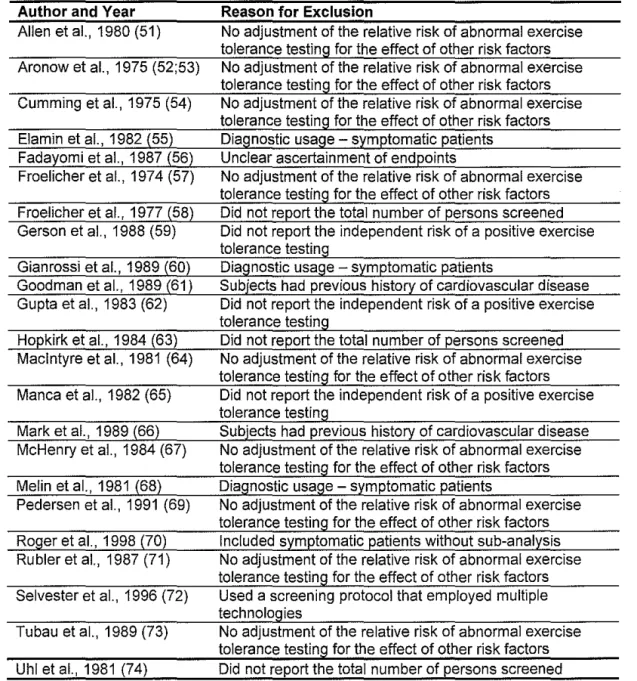
expert reviewers (8, 41--50). Table 1 lists articles that were excluded during
review of the full articles and the reason for exclusion (51--74).
We found no studies that directly tested whether screening asymptomatic persons
with exercise tolerance testing improves coronary heart disease and mortality.
Similarly, we found no studies that examined the effect of screening with exercise
tolerance testing on the subsequent use of risk-reducing interventions and
behaviors. However, we identified fair- or good-quality observational cohort
studies of asymptomatic adults that prospectively evaluated the value of exercise
tolerance testing in detecting asymptomatic coronary artery obstruction (14--18,
L
events, such as angina, myocardial infarction, and sudden death (8, I 0--!3,
19--21, 26, 29, 32--36, 38--50). We also identified 3 good-quality studies that
estimated the cost effectiveness of exercise tolerance testing to identify
asymptomatic, severe, prevalent coronary heart disease (24, 28, 37).
Exercise Tolerance Testing To Detect Asymptomatic Prevalent Disease
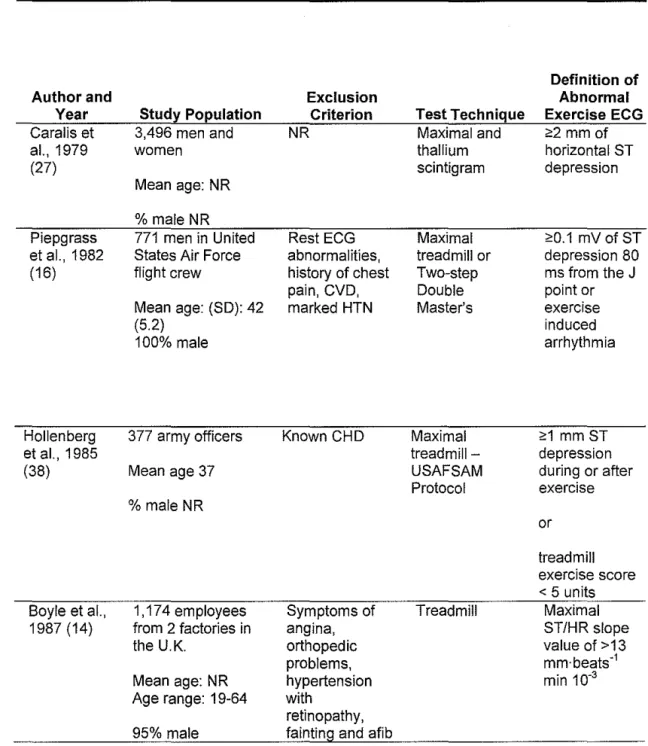
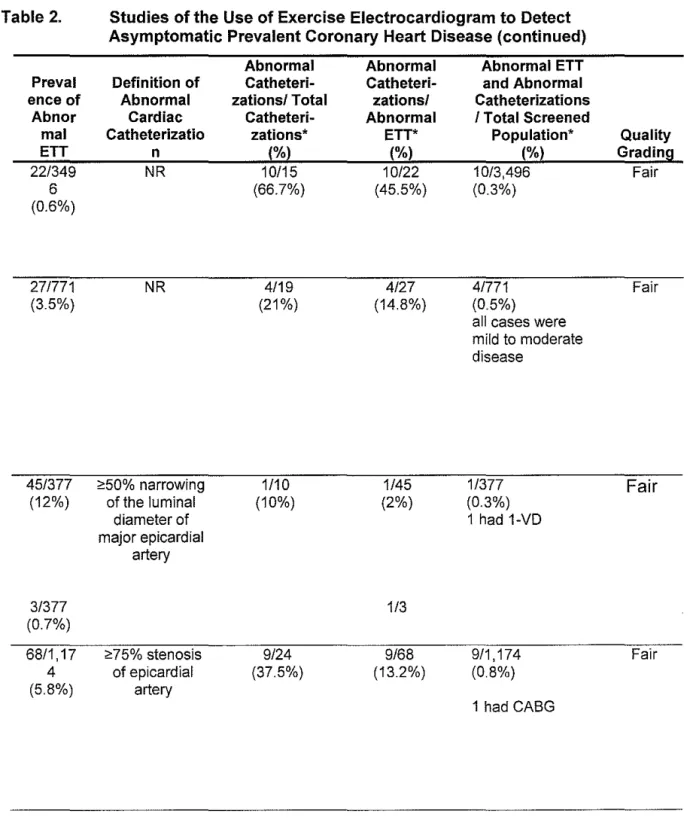
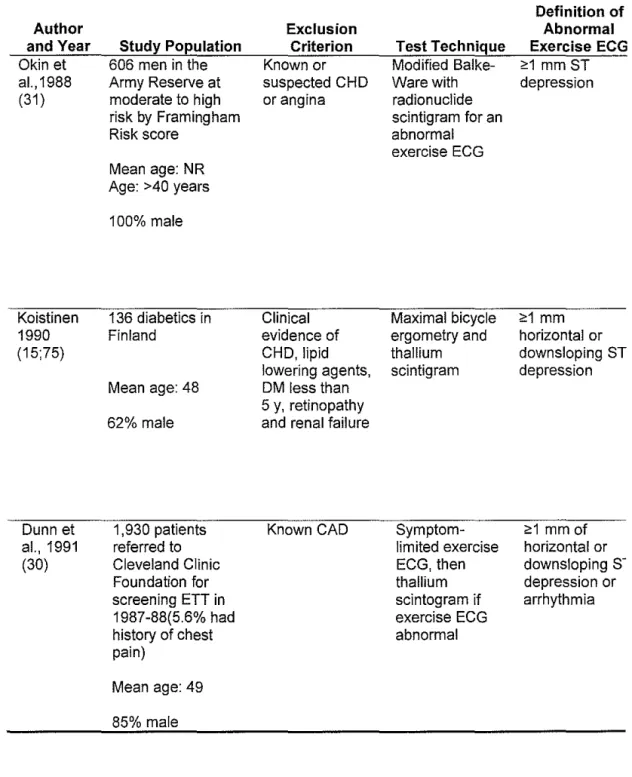
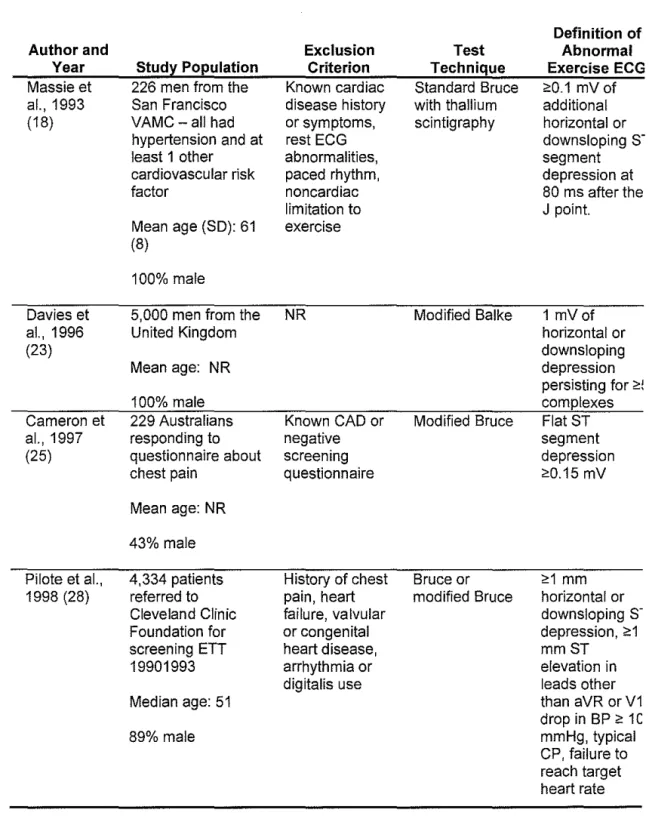
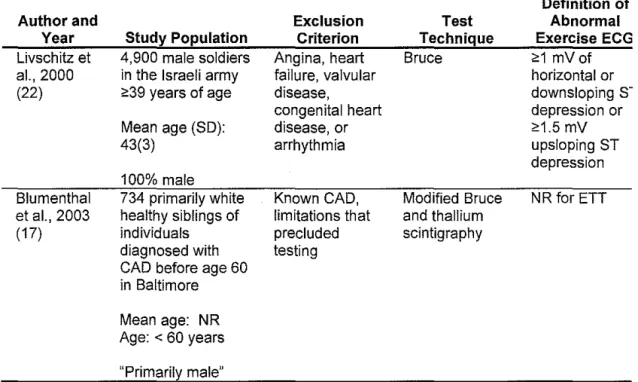
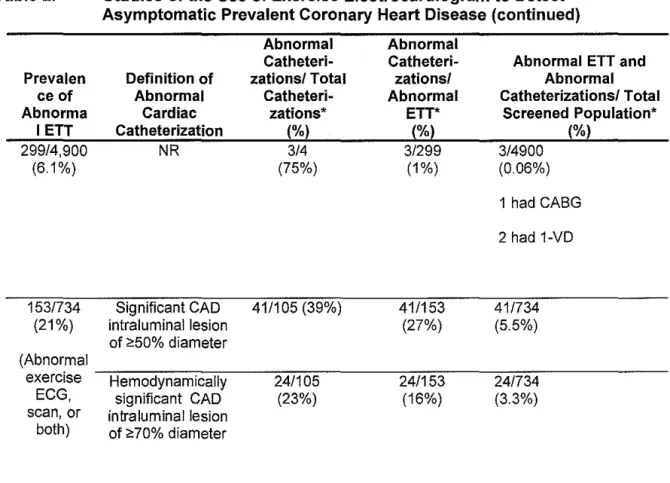
We identified 13 studies in 14 articles that examined the utility of exercise
tolerance testing to detect asymptomatic coronary artery obstruction (Table 2)
(14, 15, 18, 22, 23, 25, 27, 28, 30, 31, 38, 75). In these studies, the prevalence of
k_
r
abnormal exercise tolerance testing, usually defined as exercise-inducedST-segment depression of I mm or more, ranged from about 3% among aviators who
were presumed healthy (16) to 29% in a sample of diabetic persons in Finland
(15, 75). A portion of the participants with a positive exercise tolerance testing in
each study(!% to 60%) proceeded to evaluation with cardiac catheterization.
Screening with exercise tolerance testing yielded angiographically demonstrable
coronary heart disease, usually defined as greater than 50% stenosis of a major
coronary artery, in a minority of the screened patients.
The yield of screening exercise tolerance testing was greater in higher-risk
groups. Five studies in 6 articles evaluated diabetic persons (15, 75), those with
multiple risk factors (18, 31 ), those with siblings with coronary heart disease (17)
and those who were prescreened by using a chest pain questionnaire (25). In these
studies, the yield of screening for angiographically demonstrable coronary heart
disease ranged from 1.2% (31) to 9% (15, 18). Most cases of coronary artery
screened participants had significant left main or three-vessel disease (18) and as
many as 1.7% proceeded to revascularization after screening (25). Eight studies
screened unselected, low-risk patients (14, 16, 22, 23, 27, 28, 30, 38). These
studies demonstrated a yield of 0.06% to I .6% for asymptomatic coronary heart
disease on angiography.
Cost Effectiveness
Three studies attempted to estimate the cost -effectiveness of screening to identify
prevalent coronary artery obstruction. Sox and colleagues (24) used a
decision-analysis model to estimate the clinical effectiveness and cost-effectiveness of
exercise testing in asymptomatic adults. Their model was structured so that the
benefit of screening was achieved through detection of patients with severe
disease who would benefit from revascularization. Only direct costs were
considered. Levels were based on reimbursement rates at the time of the study
(late 1980s): $165 for exercise testing, $3595 for angiography, and $31 178 for
coronary artery bypass surgery. No discounting rate was given. Screening
60-year-old men had a cost per life-year saved of $24 600; for 60-60-year-old women,
the cost was $47 606. For persons 40 years of age, the cost-effectiveness ratios
were much higher: $80 349 per life-year saved for men and $216 496 per life-year
saved for women.
The presence or absence of risk factors for coronary heart disease affected the
cost-effectiveness ratios. The cost per life-year saved was $44 332 for 60-year-old
men with no risk factors and $20 504 for those with 1 or more risk factors. The
that it may be beneficial for persons at increased risk for coronary heart disease
(for example, older men with 1 or more risk factors). An earlier cost-effectiveness
analysis of screening exercise tolerance testing had similar findings (37).
Pilote and colleagues (28) performed a cost analysis of data from their study of
the clinical yield of screening exercise tolerance testing to detect unsuspected
severe coronary artery obstruction. They sampled more than 4000 persons
referred to the Cleveland Clinic for screening exercise tolerance testing. Data on
cost were obtained from 1994 Medicare reimbursement rates: $110 for exercise
testing, $1780 for angiography, and $27 270 for coronary artery bypass surgery.
Screening identified 19 patients with severe coronary artery obstruction (0.44% of
the cohort); of these, 14 had subsequent coronary artery bypass graft surgery. The
investigators estimated a cost of $39 623 to identifY 1 case of severe coronary
artery disease by screening exercise tolerance testing. The estimated cost per year
oflife saved was $55 274.
On the basis of these studies, it appears that screening with exercise treadmill
testing and performing bypass surgery on persons with severe obstructions is
relatively cost effective compared with other, better-accepted types of preventive
care, such as mammography in women 50 to 69 years of age (76).
Exercise Tolerance Testing as a Prediction Tool for Risk for Coronary Heart
Disease Events
Exercise tolerance testing can be used to provide information about a person's
risk for a future coronary heart disease event that may augment the predictive
ability of traditional risk assessment. Better risk assessment may help clinicians
l
!
b
and patients make better decisions about interventions for intermediate- and
long-term risk reduction.
ST-Segment Response
Traditionally, studies of the predictive value of exercise tolerance testing on
future coronary heart disease have examined ST -segment response to exercise as
the risk predictor. Most of these studies reported the total number of coronary
heart disease events (fatal and nonfatal myocardial infarction, new-onset stable or
unstable angina, and coronary death) as their main outcome. Others reported
death from coronary heart disease or from all causes as the main outcome or as
secondary outcomes. The mortality rate from coronary heart disease, and
particularly the total mortality rate, may be less subject to ascertainment bias than
is the total number of coronary heart disease events and hence may be more valid
measures. However, whether from coronary heart disease or other causes, death is
uncommon in the generally healthy, asymptomatic patients enrolled in these
studies, making it difficult to estimate the ability of exercise tolerance testing to
predict such events.
We identified 15 studies in 18 articles that examined the relationship between ST
segment response to exercise and risk for future coronary heart disease events
(Table 2) (8, 11--13, 19--21,26,29,32, 33, 36, 39--42,45, 50). Thirteen of these
studies (in 16 articles) found that ST -segment response during exercise predicted
future coronary heart disease events (8, 11--13, 19--21,26,29,33,36,39--41,45,
50). In 1 of these studies, only coronary heart disease events occurring during
analysis of the predictive utility for coronary heart disease events . Two studies
found that ST-segment response to exercise alone did not predict future coronary
heart disease events (32, 42).
Of the studies that found ST -segment response to be predictive of future coronary
heart disease events, 6 (published in 8 articles) selected persons for participation
on the basis of the presence of I or more risk factors: diabetes (13), multiple risk
factors (8, 33, 39, 50), hyperlipidemia (26, 41), and sedentary lifestyle and obesity
(29). The prevalence of an abnormal exercise tolerance testing, usually defined as
ST-segment depression of I mm or more, ranged from 12% to 52%. After
adjustment for other risk factors, the independent relative risk for coronary heart
disease events associated with an abnormal ST -segment response to exercise in
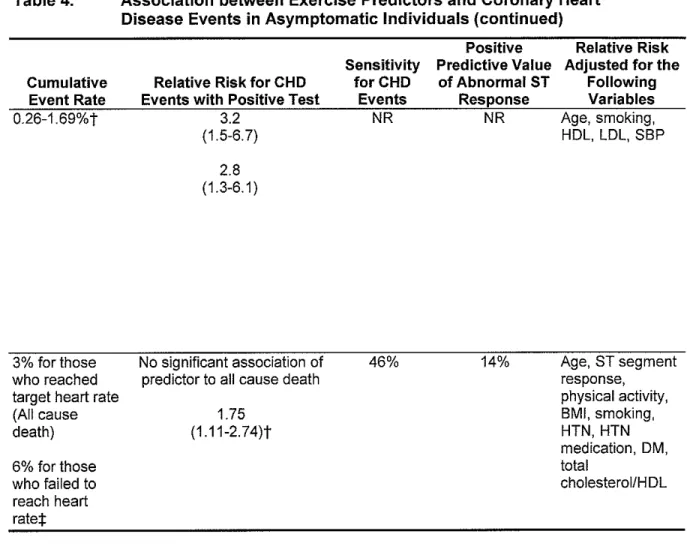
these higher-risk groups ranged from 3.5 (8, 50) to 21.0 (13). Sensitivity for
occurrence of coronary heart disease events over the duration of the studies (3 to 8
years) ranged from 30% to 100%. The positive predictive value of an abnormal
exercise tolerance testing ranged from 7.1% (26, 41) to 46% (29).
Seven studies (published in 8 articles) found ST-segment response to exercise to
be predictive of future coronary heart disease events in an unselected, low-risk
sample (11, 19--21,33,36,40, 45). The prevalence of an abnormal test tended to
be lower than that in the higher-risk sample, ranging from 3% (33) to 20% (11,
21 ). The independent relative risk for coronary heart disease events associated
with an abnormal exercise tolerance testing ranged from 1.6 (40) to 21 (33), with
the majority of the values between 2.0 and 5.0. Gibbons and colleagues (33)
investigators; however, the absolute event rate was low (0.08 to 2.8 events/1000
person-years) and the confidence interval was wide (6.9 to 63.3). The sensitivity
of exercise tolerance testing for coronary heart disease events was 10% ( 45) to
70% (11, 21). The positive predictive values ranged from 2.2% (33) to 24% (19).
Two of the studies added nuclear perfusion imaging to exercise
electrocardiography (19, 32). These studies reported positive predictive values of
about 50%. However, imaging is likely to increase screening program costs (19,
32).
As might be expected, the sensitivity of an abnormal exercise tolerance testing
decreased as the duration of follow-up increased (r = -0.56). Data from these
cohort studies suggest that the majority of asymptomatic persons with an
abnormal exercise tolerance testing do not go on to have coronary heart disease
events, at least within the time frame of follow-up. Persons who do have events
often develop angina rather than experience myocardial infarction or sudden
death. The prevalence of an abnormal result on exercise tolerance testing and its
predictive value among asymptomatic persons is greater in those at higher risk.
These data are consistent with those of other investigators and policymakers who
have suggested that the value of exercise tolerance testing is greater when it is
applied to patients with 1 or more risk factors for coronary heart disease because
selection of a higher-risk cohort for screening increases the prevalence of disease
and positive predictive value (1 0). Bruce and associates (1 0) reported that in the
Seattle Heart Watch Study of 4158 asymptomatic men and women, a positive
predictive value. However, among patients with 1 or more other risk factors for
coronary heart disease, the occurrence of 2 different types of abnormal response
to exercise tolerance testing (exercise risk predictors) was associated with a
15-fold increase in risk compared with patients who had a normal result.
Other Exercise Predictors
More recent studies of the value of exercise testing in asymptomatic persons have
examined the utility of other exercise-associated risk markers, including
functional capacity, chronotropic incompetence, heart rate recovery, and
development of exercise-induced premature ventricular contractions, for
predicting patients' risk for coronary heart disease events or death (Table 3) (21,
34, 35, 42--49). In contrast to ST-segment response, these exercise indicators may
not directly detect ischemic myocardium, but they probably indicate other
cardiovascular derangements, such as abnormal autonomic regulation, that predict
coronary heart disease events. In general, these findings are associated with moderate increases in risk for coronary heart disease after adjustment for other
risk factors for coronary heart disease (relative risk, 1.7 to 3.5). Some factors are
common: For example, failure to achieve target heart rate was noted in 21% of
patients in the Framingham Offspring Study (44).
Exercise Tolerance Testing in Women
Two recent studies contribute important information on the predictive value of
exercise tolerance testing in asymptomatic women ( 42, 43). The majority of other
studies that we identified did not include women or did not provide subgroup
Mora and colleagues ( 42) analyzed data from the female participants in the Lipid
Research Clinics Prevalence Study, many of whom had hyperlipidemia. They
found that unlike in studies whose samples comprised predominantly men,
ST-segment response did not predict future risk for coronary heart disease events
(relative risk, 0.88 [95% CI, 0.48 to 1.61]) in women (42). Low exercise capacity,
along with low heart rate recovery after exercise, was an independent predictor of
death from coronary heart disease (relative risk, 3.52 [95% CI, 1.57 to 7.86) and
of all-cause death (relative risk, 2.11 [95% CI, 1.47 to 3.04]) in women.
Gulati and coworkers (43) sampled asymptomatic female volunteers living in the
Chicago area. They found that exercise capacity predicts risk for all-cause death
in women. For every increase in exercise capacity of I metabolic equivalent, the
relative risk for death was 0.83 (95% CI, 0.78 to 0.89). The predictive utility of
exercise markers other than ST-segment response in these 2 studies of women is
consistent with the results of similar studies in which most participants were men.
Exercise Tolerance Testing before Beginning an Exercise Program
Exercise tolerance testing is frequently used as part of an evaluation of
middle-aged persons before they begin an exercise program. Few data are available to
determine the effectiveness of this approach in reducing the risk for
activity-related coronary heart disease events. Siscovick and colleagues (12) analyzed the
effectiveness of exercise tolerance testing to predict activity-related coronary
heart disease events in the Lipid Research Clinics cohort of asymptomatic
hypercholesterolemic men. After an initial exercise tolerance test, the cohort was
retrospective record review to identify coronary heart disease events that were
associated with moderate or intense activity. The cumulative incidence of
activity-related coronary heart disease events during follow-up was 2%. An
abnormal ST -segment response to exercise at the time of entry into the study was
associated with a relative risk of 2.6 (95% CI, 1.3 to 5.2) for activity-related
coronary heart disease events. The sensitivity of exercise testing for predicting the
events was 18%, and the predictive value of a positive test for coronary heart
disease events during exercise was 4%. Of the persons who had an
activity-associated coronary heart disease event, 80% had an initially normal ST -segment
response to exercise; 94% of persons with abnormal ST-segment response to
exercise did not have an activity-associated event during follow-up. Thus,
exercise testing appears to have limited ability to detect persons who will have
exercise-related coronary heart disease events.
Adverse Effects of Screening Exercise Tolerance Testing
Other than information on the frequency of false-positive results, we found no
studies that examined the potential harms of screening. No study reported rates of
complications from angiography of asymptomatic persons, measures of anxiety
from knowledge of an abnormal test result, or adverse events from medical
therapy initiated because of an abnormal test result.
Discussion
We identified no randomized trials that examined the effect of screening exercise
tolerance testing to guide management and improve health outcomes of coronary
Exercise tolerance testing of asymptomatic persons rarely detects previously
unrecognized, clinically important coronary artery obstruction (up to 2.7% of
screened persons). It does provide some independent prognostic information in at
least some persons (relative risk of about 2.0 to 5.0 for coronary heart disease
events associated with an abnormal result) above and beyond the prognostic
information that can be gained from traditional assessment of risk factors. The
effect of this additional information on clinical decision making, however, has not
been studied. The potential benefits of screening exercise tolerance testing are
likely to be small for groups in which the prevalence of the disease is low, such as
young adults; such screening would also produce many cases of false-positive
results. In such cases, the costs and harms associated with additional testing may
exceed any benefits from screening.
The value of screening exercise tolerance testing rests in large part on the
underlying incidence of coronary heart disease events and the prevalence of
serious artery obstructions in the screened sample. Exercise tolerance testing will
probably perform better when applied to higher-risk groups, such as persons with
1 or more risk factors coronary heart disease. Selection of a higher-risk group for
screening increases the prevalence of disease in those screened and, thus, the
predictive value of a positive test result. Whether the benefits of such tests exceed
the disadvantages, including costs, in higher-risk groups is still unclear at present
and requires investigation.
For persons at low risk for coronary heart disease events, a positive result on
positive. False-positive results in this context are concerning because they can
lead to unnecessary, and possibly injurious, additional procedures.
Screening has been advocated for people with high-risk occupations, but we did
not identify new studies on the effect of screening such patients. Data from
studies of patients with known coronary heart disease but no ischemic symptoms
suggest that treatment with medications, such as ~-blockers, or revascularization
can improve outcomes over no treatment, but whether patients with no history of
coronary heart disease would have the same results is unclear (77).
Exercise tolerance testing can be normal or nondiagnostic in an important
proportion of patients who will experience a coronary heart disease event, as
evidenced by the sensitivity values of 10% to 74% in the studies that evaluated
ST-segment depression as a risk marker (Table 3). In a defined cohort of low-risk
patients, a larger absolute number of coronary heart disease events occurs among
those with an initially normal result on exercise tolerance testing than among
those with an initially abnormal result. The suboptimal sensitivity of ST -segment
response for predicting coronary heart disease events may be explained in part by
the fact that ST-segment depression on exercise tolerance testing detects ischemia
from obstructed coronary arteries, but many acute coronary heart disease events
result from sudden occlusion of a previously nono bstructed segment of artery
(78). Use of other measures from the exercise test that are not as dependent on
identification of atherosclerotic obstructions may mitigate this dilemma (79).
The primary tangible harm of screening exercise tolerance testing is the potential
evaluate a positive result. Coronary angiography is generally considered a safe
procedure. Of all persons undergoing outpatient coronary angiography, however,
an estimated 0.08% will die as a result of the procedure and 1.8% will experience
a complication (80). Complications of coronary angiography include myocardial
infarction, stroke, arrhythmia, dissection of the aorta and coronary artery,
retroperitoneal bleeding, femoral artery aneurysm, renal dysfunction, and
systemic infection. Rates of complications are likely to be somewhat lower in
asymptomatic persons, but no good data are available. A positive result on
exercise tolerance testing may also be an impetus to initiate risk-reducing therapy;
hence, another potential harm of screening is use of with such therapies as aspirin
or statins to overtreat persons who would not otherwise require treatment (that is,
would be considered low risk) if they did not have an abnormal result on exercise
tolerance testing. Other potential harms, including the psychological
consequences of a false-positive test result, also have not been well studied.
Our findings are consistent with those ofthe American Heart
Association/ American College of Cardiology expert panel, which also examined
the effectiveness of screening exercise tolerance testing (33). They recommended
against routine exercise tolerance testing in asymptomatic adults because of
concerns about the positive and negative predictive value of screening exercise
tolerance testing and the potential harms of false-positive results. The American
Heart Association/ American College of Cardiology found that screening exercise
therapy or for sedentary middle-aged adults who wish to start a vigorous exercise
program is controversial but potentially beneficial.
Further studies are required to determine the balance of benefits and harms of
screening exercise tolerance testing for patients with different degrees of risk for
coronary heart disease. An adequately powered randomized trial of screening
exercise tolerance testing compared with management based on traditional risk
factors would greatly inform clinical decision making. Such a study should
compare a traditional global coronary heart disease risk assessment tool to a
screening strategy that also incorporates exercise tolerance testing. A broad
spectrum of patients should be enrolled, including a sufficient number of women.
Studies examining how providers and patients actually apply the additional
information from exercise tolerance testing will also be helpful. Finally, better
information about the adverse effects of screening is required if researchers are to
perform well-informed cost-effectiveness analyses of exercise tolerance testing
screening plus risk factor-based decision making compared with risk-factor-based
References
I. American Heart Association. Heart Disease and Stroke Statistics---2003
Update. Dallas, TX, American Heart Association; 2002.
2. Thaulow E, Erikssen J, Sandvik L, Erikssen G, Jorgensen L, Cohn PF. Initial
clinical presentation of cardiac disease in asymptomatic men with silent
myocardial ischemia and angiographically documented coronary artery disease
(the Oslo Ischemia Study). Am J Cardiol. 1993;72:629-33. [PMID: 8249835]
3. Cohn PF. Detection and prognosis of the asymptomatic patient with silent
myocardial ischemia. Am J Cardiol. 1988;61:4B-6B. [PMID: 3277364]
4. U.S. Preventive Services Task Force. Guide to Clinical Preventive Services.
2nd ed. Alexandria, VA: International Medical Publishing; 1996.
5. Fowler-Brown A, Pignone M, Pletcher M, Tice JA, Sutton SF, Lohr KN.
Exercise Tolerance Testing to Screen for Coronary Heart Disease in
Asymptomatic Adults: A Systematic Review for the U.S. Preventive Services
Task Force. Produced by the RTI-UNC EPC. Evidence Report/Technology
Assessment Number [to be provided by AHRQ]. Rockville, MD: Agency for
Healthcare Research and Quality; [In press].
6. U.S. Preventive Services Task Force. Exercise Tolerance Testing to Screen for
Coronary Heart Disease in Asymptomatic Adults: Recommendations and
Rationale Statement ofthe U.S. Preventive Services Task Force. Rockville, MD:
7. Wilson PW, D'Agostino RB, Levy D, Belanger AM, Silbershatz H, Kannel
WB. Prediction of coronary heart disease using risk factor categories. Circulation.
1998;97:1837-47. [PMID: 9603539]
8. Exercise electrocardiogram and coronary heart disease mortality in the Multiple
Risk Factor Intervention Trial. Multiple Risk Factor Intervention Trial Research
Group. Am J Cardiol. 1985;55:16-24. [PMID: 2857061]
9. Harris RP, Helfand M, WoolfSH, Lohr KN, Mulrow CD, Teutsch SM, eta!.
Current methods of the US Preventive Services Task Force: a review of the
process. Am J Prev Med. 2001;20:21-35. [PMID: 11306229]
10. Bruce RA, Hossack KF, DeRouen TA, Hofer V. Enhanced risk assessment for
primary coronary heart disease events by maximal exercise testing: I 0 years'
experience of Seattle Heart Watch. JAm Coli Cardiol. 1983;2:565-73. [PMID:
6875120]
11. Josephson RA, Shefrin E, Lakatta EG, Brant LJ, Fleg JL. Can serial exercise
testing improve the prediction of coronary events in asymptomatic individuals?
Circulation. 1990;81 :20-4. [PMID: 2297826]
12. Siscovick DS, Ekelund LG, Johnson JL, Truong Y, Adler A. Sensitivity of
exercise electrocardiography for acute cardiac events during moderate and
strenuous physical activity. The Lipid Research Clinics Coronary Primary
Prevention Trial. Arch Intern Med. 1991;151:325-30. [PMID: 1992960]
13. Rutter MK, W ahid ST, McComb JM, Marshall SM. Significance of silent
patients with type 2 diabetes. JAm Coli Cardiol. 2002;40:56-61. [PMID:
121 03256]
14. Boyle RM, Adlakha HL, Mary DA. Diagnostic value of the maximal ST
segment/heart rate slope in asymptomatic factory populations. J Electrocardiol.
1987;20 Suppl:128-34. [PMID: 3320257]
15. Koistinen MJ. Prevalence of asymptomatic myocardial ischaemia in diabetic
subjects. BMJ. 1990;301 :92-5. [PMID: 2390590]
16. Piepgrass SR, Uhl GS, Hickman JR Jr, Hopkirk JA, Plowman K. Limitations
of the exercise stress test in the detection of coronary artery disease in apparently
healthy men. Aviat Space Environ Med. 1982;53:379-82. [PMID: 7082255]
17. Blumenthal RS, Becker DM, Y anek LR, Aversano TR, Moy TF, Kral BG, et
al. Detecting occult coronary disease in a high-risk asymptomatic population.
Circulation. 2003;107:702-7. [PMID: 12578872]
18. Massie BM, Szlachcic Y, Tubau JF, O'Kelly BF, AmmonS, Chin W.
Scintigraphic and electrocardiographic evidence of silent coronary artery disease
in asymptomatic hypertension: a case-control study. JAm Coli Cardiol.
1993 ;22: 1598-606. [PMID: 8227826]
19. Fleg JL, Gerstenblith G, Zonderman AB, Becker LC, Weisfeldt ML, Costa PT
Jr, et al. Prevalence and prognostic significance of exercise-induced silent
myocardial ischemia detected by thallium scintigraphy and electrocardiography in
asymptomatic volunteers. Circulation. 1990;81:428-36. [PMID: 2297853]
20. Laukkanen JA, Kurl S, Lakka TA, Tuomainen TP, Rauramaa R, Salonen R, et
mortality in middle-aged men. JAm Col! Cardiol. 2001 ;38:72-9. [PMID:
11451298]
21. Rywik TM, O'Connor FC, Gittings NS, Wright JG, Khan AA, Fleg JL. Role
of nondiagnostic exercise-induced ST -segment abnormalities in predicting future
coronary events in asymptomatic volunteers. Circulation. 2002;106:2787-92.
[PMID: 12451004]
22. Livschitz S, Sharabi Y, Yushin J, Bar-On Z, Chouraqui P, Burstein M, eta!.
Limited clinical value of exercise stress test for the screening of coronary artery
disease in young, asymptomatic adult men. Am J Cardiol. 2000;86:462-4. [PMID:
10946046]
23. Davies B, Ashton WD, Rowlands DJ, El-Sayed M, Wallace PC, Duckett K, et
a!. Association of conventional and exertional coronary heart disease risk factors
in 5,000 apparently healthy men. Clin Cardiol. 1996;19:303-8. [PMID: 8706370]
24. Sox HC Jr, Littenberg B, Garber AM. The role of exercise testing in screening
for coronary artery disease. Ann Intern Med. 1989;110:456-69. [PMID: 2493211]
25. Cameron JD, Jennings GL, Kay S, Wahi S, Bennett KE, Reid C, eta!. A
self-administered questionnaire for detection of unrecognised coronary heart disease.
Aust N Z J Public Health. 1997;21 :545-7. [PMID: 9343902]
26. Ekelund LG, Suchindran CM, McMahon RP, Heiss G, Leon AS, Romhilt
DW, eta!. Coronary heart disease morbidity and mortality in
hypercholesterolemic men predicted from an exercise test: the Lipid Research
Clinics Coronary Primary Prevention Trial. JAm Col! Cardiol. 1989;14:556-63.
27. Caralis DG, Bailey I, Kennedy HL, Pitt B. Thallium-201 myocardial imaging
in evaluation of asymptomatic individuals with ischaemic ST segment depression
on exercise electrocardiogram. Br Heart J. 1979;42:562-7. [PMID: 518780]
28. Pilote L, Pashkow F, Thomas JD, Snader CE, Harvey SA, Marwick TH, eta!.
Clinical yield and cost of exercise treadmill testing to screen for coronary artery
disease in asymptomatic adults. Am J Cardiol. 1998;81:219-24. [PMID: 9591907]
29. Katzel LI, Sorkin JD, Goldberg AP. Exercise-induced silent myocardial
ischemia and future cardiac events in healthy, sedentary, middle-aged and older
men. JAm Geriatr Soc. 1999;47:923-9. [PMID: 10443851]
30. Durm RL, Matzen RN, V anderBrug-Medendorp S. Screening for the detection
of coronary artery disease by using the exercise tolerance test in a preventive
medicine population. Am J Prev Med. 1991;7:255-62. [PMID: 1790029] 31. Okin PM, Kligfield P, Milner MR, Goldstein SA, Lindsay J Jr. Heart rate
adjustment of ST -segment depression for reduction of false positive
electrocardiographic responses to exercise in asymptomatic men screened for
coronary artery disease. Am J Cardiol. 1988;62:1043-7. [PMID: 3189166] 32. Blumenthal RS, Becker DM, Moy TF, Coresh J, Wilder LB, Becker LC.
Exercise thallium tomography predicts future clinically manifest coronary heart
disease in a high-risk asymptomatic population. Circulation. 1996;93 :915-23.
[PMID: 8598082]
33. Gibbons LW, Mitchell TL, Wei M, Blair SN, Cooper KH. Maximal exercise
test as a predictor of risk for mortality from coronary heart disease in
asymptomatic men. Am J Cardiol. 2000;86:53-8. [PMID: I 0867092]
t
L
34. Cole CR, Foody JM, Blackstone EH, Lauer MS. Heart rate recovery after
submaximal exercise testing as a predictor of mortality in a cardiovascularly
healthy cohort. Ann Intern Med. 2000;132:552-5. [PMID: 10744592]
35. Ekelund LG, Haskell WL, Johnson JL, Whaley FS, Criqui MH, Sheps DS.
Physical fitness as a predictor of cardiovascular mortality in asymptomatic North
American men. The Lipid Research Clinics Mortality Follow-up Study. N Eng! J
Med. 1988;319:1379-84. [PMID: 3185648]
36. Giagnoni E, Secchi MB, Wu SC, Morabito A, Oltrona L, Mancarella S, eta!.
Prognostic value of exercise EKG testing in asymptomatic normotensive subjects.
A prospective matched study. N Eng! J Med. 1983 ;309:1085-9. [PMID:
6621650]
37. Stason WB, Fineberg HV. Implications of alternative strategies to diagnose
coronary artery disease. Circulation. 1982;66:III80-6. [PMID: 6812982]
38. Hollenberg M, Zoltick JM, Go M, Yaney SF, Daniels W, Davis RC Jr, eta!.
Comparison of a quantitative treadmill exercise score with standard
electrocardiographic criteria in screening asymptomatic young men for coronary
artery disease. N Eng! J Med. 1985;313:600-6. [PMID: 4022047]
39. Okin PM, Grandits G, Rautaharju PM, Prineas RJ, Cohen JD, Crow RS, eta!.
Prognostic value of heart rate adjustment of exercise-induced ST segment
depression in the multiple risk factor intervention trial. J Am Coli Cardiol.
40. Okin PM, Anderson KM, Levy D, Kligfield P. Heart rate adjustment of
exercise-induced ST segment depression. Improved risk stratification in the
Framingham Offspring Study. Circulation. 1991;83:866-74. [PMID: 1999037]
41. Gordon DJ, Ekelund LG, Karon JM, Probstfield JL, Rubenstein C, Sheffield
LT, et al. Predictive value of the exercise tolerance test for mortality in North
American men: the Lipid Research Clinics Mortality Follow-up Study.
Circulation. 1986;74:252-61. [PMID: 3731417]
42. MoraS, Redberg RF, Cui Y, Whiteman MK, Flaws JA, Sharrett AR, et al.
Ability of exercise testing to predict cardiovascular and all-cause death in
asymptomatic women: a 20-year follow-up of the lipid research clinics prevalence
study. JAMA. 2003;290:1600-7. [PMID: 14506119]
43. Gulati M, Pandey DK, ArnsdorfMF, Lauderdale DS, Thisted RA, Wicklund
RH, et al. Exercise capacity and the risk of death in women: the StJames Women
Take Heart Project. Circulation. 2003;108:1554-9. [PMID: 12975254]
44. Lauer MS, Okin PM, Larson MG, Evans JC, Levy D. Impaired heart rate
response to graded exercise. Prognostic implications of chronotropic
incompetence in the Framingham Heart Study. Circulation. 1996;93:1520-6.
[PMID: 8608620]
45. Jouven X, Ducimetiere P. Recovery of heart rate after exercise [Letter]. N
Eng! J Med. 2000;342:662-3. [PMID: 10702064]
46. Frolkis JP, Pothier CE, Blackstone EH, Lauer MS. Frequent ventricular
ectopy after exercise as a predictor of death. N Eng! J Med. 2003;348:781-90.
47. Morshedi-Meibodi A, Larson MG, Levy D, O'Donnell CJ, Vasan RS. Heart
rate recovery after treadmill exercise testing and risk of cardiovascular disease
events (The Framingham Heart Study). Am J Cardiol. 2002;90:848-52. [PMID:
12372572]
48. Wei M, Kampert JB, Barlow CE, Nichaman MZ, Gibbons LW, Paffenbarger
RS Jr, et al. Relationship between low cardiorespiratory fitness and mortality in
normal-weight, overweight, and obese men. JAMA. 1999;282:1547-53. [PMID:
10546694]
49. Blair SN, Kampert JB, Kohl HW 3rd, Barlow CE, Macera CA, Paffenbarger
RS Jr, eta!. Influences of cardiorespiratory fitness and other precursors on
cardiovascular disease and all-cause mortality in men and women. JAMA.
1996;276:205-10. [PMID: 8667564]
50. Rautaharju PM, Prineas RJ, Eifler WJ, Furberg CD, Neaton JD, Crow RS, et
a!. Prognostic value of exercise electrocardiogram in men at high risk of future
coronary heart disease: Multiple Risk Factor Intervention Trial experience. J Am
Coli Cardiol. 1986;8:1-10. [PMID: 3711503]
51. Allen WH, Aronow WS, Goodman P, Stinson P. Five-year follow-up of
maximal treadmill stress test in asymptomatic men and women. Circulation.
1980;62:522-7. [PMID: 7398012]
52. Aronow WS, Allen WH, De Cristofaro D, Ungermann S. Follow-up of mass
screening for coronary risk factors in 1817 adults. Circulation. 1975;51 :1038-45.
53. Aronow WS, Allen WH, De Cristofaro D, Ungermann S, Wan MK, Chun
GM, eta!. Mass screening for coronary risk factors in 2,524 asymptomatic adults.
JAm Geriatr Soc. 1975;23:121-6. [PMID: 1112961]
54. Cumming GR, Sannn J, Borysyk L, Kich L. Electrocardiographic changes
during exercise in asymptomatic men: 3-year follow-up. Can Med Assoc J.
1975;112:578-81. [PMID: 1116087]
55. Elamin MS, Boyle R, Kardash MM, Smith DR, Stoker JB, Whitaker W, eta!.
Accurate detection of coronary heart disease by new exercise test. Br Heart J.
1982;48:311-20. [PMID: 6127094]
56. Fadayomi MO, Akinroye KK. Implications of positive treadmill exercise tests
in asymptomatic adult African blacks. Eur Heart J. 1987;8:611-7. [PMID:
3622541]
57. Froelicher VF Jr, Thomas MM, Pillow C, Lancaster MC. Epidemiologic study
of asymptomatic men screened by maximal treadmill testing for latent coronary
artery disease. Am J Cardiol. 1974;34:770-6. [PMID: 4432807]
58. Froelicher VF Jr, Thompson AJ, Wolthuis R, Fuchs R, Balusek R, Longo MR
Jr, eta!. Angiographic findings in asymptomatic aircrewmen with
electrocardiographic abnormalities. Am J Cardiol. 1977;39:32-8. [PMID: 831426]
59. Gerson MC, Khoury JC, Hertzberg VS, Fischer EE, Scott RC. Prediction of
coronary artery disease in a population of insulin-requiring diabetic patients:
results of an 8-year follow-up study. Am Heart J. 1988;116:820-6. [PMID:
60. Gianrossi R, Detrano R, Mulvihill D, Lehmann K, Dubach P, Colombo A, et
a!. Exercise-induced ST depression in the diagnosis of coronary artery disease. A
meta-analysis. Circulation. 1989;80:87-98. [PMID: 2661056]
61. Goodman S, Rubler S, Bryk H, Sklar B, Glasser L. Arm exercise testing with
myocardial scintigraphy in asymptomatic patients with peripheral vascular
disease. Chest. 1989;95:740-6. [PMID: 2924603]
62. Gupta R, Gupta S. Value of maximal treadmill exercise test to screen
asymptomatic persons for coronary artery disease. J Assoc Physicians India.
1983;31:783-5. [PMID: 6674303]
63. Hopkirk JA, Uhl GS, Hickman JR Jr, Fischer J, Medina A. Discriminant value
..
of clinical and exercise variables in detecting significant coronary artery disease'
in asymptomatic men. JAm Col! Cardiol. 1984;3:887-94. [PMID: 6707355]
64. Macintyre NR, Kunkler JR, Mitchell RE, Oberman A, Graybiel A. Eight-year follow-up of exercise electrocardiograms in healthy, middle-aged aviators. Aviat
f
Space Environ Med. 1981;52:256-9. [PMID: 7283898]
65. Manca C, Barilli AL, Dei Cas L, Bernardini B, Bolognesi R, Visioli 0.
Multivariate analysis of exercise ST depression and coronary risk factors in
asymptomatic men. Eur Heart J. 1982;3:2-8. [PMID: 7075608]
66. Gibson RS. Comparative analysis of the diagnostic and prognostic value of
exercise ECG and thallium-201 scintigraphic markers of myocardial ischemia in
asymptomatic and symptomatic patients. Cardiol Clin. 1989;7:565-75. [PMID:
67. McHenry PL, O'Donnell J, Morris SN, Jordan JJ. The abnormal exercise
electrocardiogram in apparently healthy men: a predictor of angina pectoris as an
initial coronary event during long-term follow-up. Circulation. 1984;70:547-51.
[PMID: 6478560]
68. Melin JA, Piret LJ, Vanbutsele RJ, Rousseau MF, Cosyns J, Brasseur LA, et
a!. Diagnostic value of exercise electrocardiography and thallium myocardial
scintigraphy in patients without previous myocardial infarction: a Bayesian
approach. Circulation. 1981 ;63:1019-24. [PMID: 7471359]
69. Pedersen F, Sandoe E, Laerkeborg A. Prevalence and significance of an
abnormal exercise ECG in asymptomatic males. Outcome of thallium myocardial
scintigraphy. Eur Heart J. 1991;12:766-9. [PMID: 1889440]
70. Roger VL, Jacobsen SJ, Pellikka PA, Miller TD, Bailey KR, Gersh BJ.
Prognostic value of treadmill exercise testing: a population-based study in
Olmsted County, Minnesota. Circulation. 1998;98:2836-41. [PMID: 9860784]
71. Rubler S, Gerber D, Reitano J, Chokshi V, Fisher VJ. Predictive value of
clinical and exercise variables for detection of coronary artery disease in men with
diabetes mellitus. Am J Cardiol. 1987;59:1310-3. [PMID: 3591685]
72. Selvester RH, Ahmed J, Tolan GD. Asymptomatic coronary artery disease
detection: update 1996. A screening protocol using 16-lead high-resolution ECG,
ultrafast CT, exercise testing, and radionuclear imaging. J Electrocardiol. 1996;29
Suppl:135-44. [PMID: 9238390]
73. Tubau JF, Szlachcic J, Hollenberg M, Massie BM. Usefulness ofthallium-201
patients with left ventricular hypertrophy. Am J Cardiol. 1989;64:45-9. [PMID:
2525866]
74. Uhl GS, Kay TN, Hickman JR Jr. Computer-enhanced thallium scintigrams in
asymptomatic men with abnormal exercise tests. Am J Cardiol. 1981;48:1037-43.
[PMID: 6975560]
75. Koistinen MJ, Huikuri HV, Pirttiaho H, Linnaluoto MK, Takkunen JT.
Evaluation of exercise electrocardiography and thallium tomographic imaging in
detecting asymptomatic coronary artery disease in diabetic patients. Br Heart J.
1990;63:7-11. [PMID: 2310651]
76. Salzmann P, Kerlikowske K, Phillips K. Cost-effectiveness of extending
screening mammography guidelines to include women 40 to 49 years of age. Ann
IntemMed. 1997;127:955-65. [PMID: 9412300]
77. Conti CR, Bourassa MG, Chaitman BR, Geller NL, Knatterud GL, Pepine CJ,
et al. Asymptomatic cardiac ischemia pilot (ACIP). Trans Am Clin Climatol
Assoc. 1994;106:77-83. [PMID: 7483181]
78. Coplan NL, Fuster V. Limitations ofthe exercise test as a screen for acute
cardiac events in asymptomatic patients. Am Heart J. 1990;119:987-90. [PMID:
2321524]
79. Ashley EA, Myers J, Froelicher V. Exercise testing in clinical medicine.
Lancet. 2000;356:1592-7. [PMID: 11075788]
80. Bashore TM, Bates ER, Berger PB, Clark DA, Cusma JT, Dehmer GJ, et a!. American College of Cardiology/Society for Cardiac Angiography and
on Clinical Expert Consensus Documents. JAm Coli Cardiol. 2001;37:2170-214. [PMID: 11419904]
Table 1. Excluded Studies and Reasons for Exclusions
Author and Year
Allen et al., 1980 (51) Aronow et al., 1975 (52;53) Cumming et al., 1975 (54) Elamin et al., 1982 (55) Fadayomi et al., 1987 (56) Froelicher et al., 1974 (57) Froelicher et al., 1977 (58) Gerson et al., 1988 (59) Gianrossi et al., 1989 (60) Goodman etal., 1989 (61) Gupta et al., 1983 (62)
Hopkirk et al., 1984 (63) Macintyre et al., 1981 (64) Manca et al., 1982 (65) Mark et al., 1989 (66) McHenry et al., 1984 (67) Melin et al., 1981 (68) Pedersen et al., 1991 (69) Roger et al., 1998 (70) Rubler et al., 1987 (71) Selvester et al., 1996 (72) Tubau et al., 1989 (73)
Uhl et al., 1981 (74)
Reason for Exclusion
No adjustment of the relative risk of abnormal exercise tolerance testing for the effect of other risk factors No adjustment of the relative risk of abnormal exercise tolerance testing for the effect of other risk factors No adjustment of the relative risk of abnormal exercise tolerance testing for the effect of other risk factors Diagnostic usage - symptomatic patients
Unclear ascertainment of endpoints
No adjustment of the relative risk of abnormal exercise tolerance testing for the effect of other risk factors Did not report the total number of persons screened Did not report the independent risk of a positive exercise tolerance testing
Diagnostic usage- symptomatic patients
Subjects had previous history of cardiovascular disease Did not report the independent risk of a positive exercise tolerance testing
Did not report the total number of persons screened No adjustment of the relative risk of abnormal exercise tolerance testing for the effect of other risk factors Did not report the independent risk of a positive exercise tolerance testing
Subjects had previous history of cardiovascular disease No adjustment of the relative risk of abnormal exercise tolerance testing for the effect of other risk factors Diagnostic usage- symptomatic patients
No adjustment of the relative risk of abnormal exercise tolerance testing for the effect of other risk factors Included symptomatic patients without sub-analysis No adjustment of the relative risk of abnormal exercise tolerance testing for the effect of other risk factors Used a screening protocol that employed multiple technolo ies
Table 2. Studies of the Use of Exercise Electrocardiogram to Detect Asymptomatic Prevalent Coronary Heart Disease*
Author and Year
Caralis et al., 1979 (27)
Piepgrass et al., 1982 (16)
Hollenberg et al., 1985 (38)
Boyle et al., 1987 (14)
Stud~ Population
3,496 men and women Mean age: NR %male NR 771 men in United States Air Force flight crew
Mean age: (SO): 42 (5.2)
100% male
377 army officers Mean age 37 %male NR
1,174 employees from 2 factories in the U.K.
Mean age: NR Age range: 19-64 95% male Exclusion Criterion NR Rest EGG abnormalities, history of chest pain, CVD, marked HTN
Known CHD
Test Technique Maximal and thallium scintigram Maximal treadmill or Two-step Double Master's Maximal treadmiii-USAFSAM Protocol
Symptoms of Treadmill angina, orthopedic problems, hypertension with retinopathy, fainting and afib
Definition of Abnormal Exercise ECG
2:2 mm of horizontal ST depression
2:0.1 mV of ST depression 80 ms from the J
point or exercise induced arrhythmia
2:1 mm ST depression during or after exercise or treadmill exercise score
< 5 units Maximal ST/HR slope value of >13 mm·beats"1 min 10·3
*
CABG, Coronary artery bypass graph surgery; CAD, Coronary artery disease; CHD, Coronaryheart disease; CP, chest pain; CVD, Cardiovascular disease; DM, Diabetes mellitus; ECG, Electrocardiogram; ETT, Exercise tolerance test (treadmill); HTN, hypertension; J, Joules; mV, Millivolt; NR, Not reported; SD, Standard Deviation; VAMC, Veterans' Administration Medical
Table 2. Preval ence of Abnor mal ETT 22/349 6 (0.6%) 271771 (3.5%) 45/377 (12%) 3/377 (0.7%) 68/1,17 4 (5.8%)
Studies of the Use of Exercise Electrocardiogram to Detect Asymptomatic Prevalent Coronary Heart Disease (continued)
Definition of Abnormal Cardiac Catheterizatio n
NR
NR
;,sO% narrowing of the luminal
diameter of major epicardial artery ;,75% stenosis of epicardial artery Abnormal Catheteri-zations/ Total Catheteri-zations* !%! 10/15 (66.7%) 4/19 (21%) 1/10 (10%) 9/24 (37.5%) Abnormal Catheteri-zations/ Abnormal ETT* (%) 10/22 (45.5%) 4/27 (14.8%) 1/45 (2%) 1/3 9/68 (13.2%) Abnormal ETT and Abnormal Catheterizations
I Total Screened
Population* (%) 10/3,496 (0.3%) 4/771 (0.5%)
all cases were mild to moderate disease
1/377 (0.3%) 1 had 1-VD
9/1,174 (0 8%)
1 had CABG
Table 2. Studies of the Use of Exercise Electrocardiogram to Detect Asymptomatic Prevalent Coronary Heart Disease (continued)
Author and Year Okin et al., 1988 (31) Koistinen 1990 (15;75) Dunn et al., 1991 (30)
Study Population
606 men in the Army Reserve at moderate to high risk by Framingham Risk score
Mean age: NR Age: >40 years 100% male
136 diabetics in Finland
Mean age: 48
62% male
1,930 patients referred to Cleveland Clinic Foundation for screening ETT in 1987-88(5.6% had history of chest pain)
Mean age: 49 85% male
Exclusion Criterion Known or suspected CHD or angina Clinical evidence of CHD, lipid lowering agents, DM less than
5 y, retinopathy and renal failure
Known CAD
Test Technique
Modified Balke-Warewith radionuclide scintigram for an abnormal exercise ECG Maximal bicycle ergometry and thallium scintigram Symptom-limited exercise ECG, then thallium scintogram if exercise ECG abnormal Definition of Abnormal Exercise ECG
<:1 mm ST depression
<:1 mm horizontal or downsloping ST depression
Table 2.
Prevalen ce of Abnorm
al ETT 10/606 (positive-abnormal exercise EGG and scintigram ) (inconclu- sive-abnormal exercise EGG and normal scintigram ) 52/606 40/136 (29%) 155/1,93 0 (8%)
Studies of the Use of Exercise Electrocardiogram to Detect Asymptomatic Prevalent Coronary Heart Disease (continued)
Definition of Abnormal
Cardiac Catheterizatio
n <!50% narrowing of the luminal diameter
Significant <!50% narrowing of the luminal diameter
<!50% blockage of any major vessel Abnormal Catheteri-zations/ Total Catheteri-zations*
(%!
7/10 (70%) 12/34 (35%) CAD 25/41 (61%) Abnormal Catheteri-zations/ Abnormal ETT*!"/o!
7/10 (70%) 12/40 (30%) 25/155 (16.1%)Abnormal ETT and Abnormal Catheterizations
I Total Screened Population*
!%)
7/606 (1.2%) 2 had 3-VD, 2 had 2-VD, 3 had 1-VD
12/136 (9%) 5 had 1VD 5-had 2 VD 2-had 3 VD
25/1,930 (1.3%)
6 had CABG
Table 2. Studies of the Use of Exercise Electrocardiogram to Detect Asymptomatic Prevalent Coronary Heart Disease (continued)
Definition of
Author and Exclusion Test Abnormal
Year Stud:z: Population Criterion Technique Exercise ECG
Massie et 226 men from the Known cardiac Standard Bruce <:0.1 mV of al., 1993 San Francisco disease history with thallium additional (18) VAMC-all had or symptoms, scintigraphy horizontal or
hypertension and at rest EGG downsloping
s·
least 1 other abnormalities, segment
cardiovascular risk paced rhythm, depression at
factor noncardiac 80 ms after the
limitation to J point.
Mean age (SD): 61 exercise (8)
100% male
Davies et 5,000 men from the NR Modified Balke 1 mVof
al., 1996 United Kingdom horizontal or
(23) downsloping
Mean age: NR depression
persisting for <=!
100% male complexes
Cameron et 229 Australians Known CAD or Modified Bruce Flat ST
al., 1997 responding to negative segment
(25) questionnaire about screening depression
chest pain questionnaire <=0.15mV
Mean age: NR 43% male
Pilote et al., 4,334 patients History of chest Bruce or <=1 mm 1998 (28) referred to pain, heart modified Bruce horizontal or
Cleveland Clinic failure, valvular downsloping
s·
Foundation for or congenital depression, <:1screening ETT heart disease, mmST
19901993 arrhythmia or elevation in
digitalis use leads other
Median age: 51 than aVR or V1
drop in BP <: 1C
89% male mmHg, typical
Table 2. Studies of the Use of Exercise Electrocardiogram to Detect Asymptomatic Prevalent Coronary Heart Disease (continued)
Abnormal Abnormal Abnormal ETT
Prevale Definition of Catheteri- Catheteri- and Abnormal nee of Abnormal zations/ Total zations/ Catheterizations
Abner Cardiac Catheteri- Abnormal I Total Screened
mal Catheterizatio zations* ETT* Population*
ETT n (%) (%} (%)
Abnorm Intraluminal Abnormal Abnormal 20/226 Fair al lesion of <:50% exercise ECG exercise (9%)
exercise diameter of 14/26 14/67
ECG vessel in 2 (54%) (21%)
67/226 projections 6 had left main
(30%) disease or 3-VD;
5 had 2-VD; 7 had 1-VD
Abnorm Abnormal Abnormal
al scintigram scintigram
scintigra 18/21 18/29
m (86%) (62%)
41/226 (18%)
162/5,0 <:75% stenosis 67/86 67/162 67/5,000 Fair 00 epicardial artery (78%) (41.4%) (1.3%)
(3.2%)
26 had CABG
Males
NR
10/13 10/32 10/229 Fair15/98 (77%) (31%) (4%)
(15.3%)
Female 4 had CABG
s 17/131
(13%)
633/4,3 CAD <:1 71/126 71/633 71/4,334 Poor
34 coronary (56%) (11%) (1.6%)
Severe CAD-left main disease with <=50% stenosis or 3 vessel disease with
<: 70% stenosis
or proximal LAD and 2V with <=70% stenosis
19/126 (15%)
19/633 {3%)
19/4,334 (0.4%)
Table 2. Studies of the Use of Exercise Electrocardiogram to Detect Asymptomatic Prevalent Coronary Heart Disease (continued)
Definition of
Author and Exclusion Test Abnormal
Year Study Population Criterion Technique Exercise ECG
Livsch itz et 4,900 male soldiers Angina, heart Bruce <:1 mV of a!., 2000 in the Israeli army failure, valvular horizontal or (22) <:39 years of age disease, downsloping
s-congenital heart depression or Mean age (SO): disease, or <:1.5 mV
43(3) arrhythmia upsloping ST
depression 100% male
Blumenthal 734 primarily white Known CAD, Modified Bruce NR for ETT eta!., 2003 healthy siblings of limitations that and thallium
(17) individuals precluded scintigraphy diagnosed with testing
Table 2. Prevalen ce of Abnorma I ETT 299/4,900 (6.1%) 153/734 (21%) (Abnormal exercise ECG, scan, or
both)
Studies of the Use of Exercise Electrocardiogram to Detect Asymptomatic Prevalent Coronary Heart Disease (continued)
Definition of Abnormal Cardiac Catheterization
NR
Significant CAD intraluminal lesion of ;e50% diameterHemodynamically significant CAD intraluminal lesion of;, 70% diameter
Abnormal Catheteri-zations/ Total Catheteri-zations* (%) 3/4 (75%) 41/105 (39%) 24/105 (23%) Abnormal Catheteri-zations/ Abnormal ETT* (%) 3/299 (1%) 41/153 (27%) 24/153 (16%)
Abnormal ETT and Abnormal Catheterizations/ Total
Screened Population* (%)
3/4900 (0.06%) 1 had CABG 2 had 1-VD
41/734 (5.5%)
24/734 (3.3%)