The Insufficient Inclusion of Pregnant
Women in Biomedical Studies, and the
Disproportionate Consequences for Low
-‐
Income Persons of Color
By
Talene Ghazarian
A paper presented to the faculty of The University of North Carolina at Chapel Hill in partial fulfillment of the requirements
for the degree of Master of Public Health in the Department of Maternal and Child Health
April 5, 2013
Approved by:
_______________________________________________________
First Reader
_______________________________________________________
Table of Contents
Introduction ... 2
Background ... 2
What’s the problem? ... 9
Pregnant women are physiologically different ... 9
Concerns about fetal exposure ... 10
Lost therapeutic opportunities for pregnant women ... 12
Chronic disease ... 15
Who is disproportionately burdened? ... 16
Higher rates of chronic disease ... 16
Less likely to use preventive services ... 18
Higher rates of unintended pregnancy ... 21
Less likely to be a research subject ... 22
More financially constrained ... 22
Call for action ... 23
Ethical Arguments ... 24
Other Arguments ... 26
Recommendations for action ... 27
Develop more nuanced regulations ... 27
Pursue more innovative study designs ... 28
Alter labeling to more effectively communicate evidence-‐based guidance to medication use in pregnancy ... 29
Government intervention ... 31
Conclusion ... 35
References ... 37
Introduction
In the United States, women receive on average 1.3 prescriptions from each physician visit during pregnancy (Lee et al., 2006). Despite the considerable use of medications to manage and treat chronic and emergent conditions, the U.S. Food and Drug Administration (FDA) has approved only thirteen medications for use by pregnant women (Greenberg et al., 2011). This incongruity is largely a product of the complex problem of insufficient inclusion of pregnant women in biomedical research. This paper explores the consequences of exclusion, arguing that low-‐ income populations of color are disproportionately burdened by both the
insufficient inclusion of pregnant women in research and the resulting information gap on maternal-‐fetal drug safety and efficacy.
To provide some context, the paper will begin by providing background on the history of women and biomedical research. In the following section, the scope of the problem will be outlined, followed by discussion of consequences for low-‐
income persons of color. The final section will recognize both legal and non-‐legal challenges while presenting various recommendations for action.
Background
a human norm, and that women and minorities did not differ enough from the norm for their exclusion to present a concern for generalizability of results. Conversely some, epidemiologists argued that studying a more homogenous population would produce cleaner, simpler data that would make it easier to attribute effects to the experimental intervention. Third, a type of paternalism or chivalry may have been at play, as men attempted to shield women from the real or perceived risks of
participation in research studies. In addition, there has long been, and continues to be, concern for women and their potential offspring should they become pregnant during the course of the study (Dresser, 1992). What was not acknowledged, however, was that “protecting” women from research risks meant that they also weren’t afforded the direct benefits of either participation or data that could reasonably inform their care as a population.
The movement fighting for increased inclusion of women in health research began to take ground in the mid-‐1980s. During that time, AIDS activists working towards increasing access to experimental AIDS therapies offered the first formal challenge to the protectionist policies of preceding decades. These activists called for earlier release of AIDS drugs in the development process. As a result of these efforts the FDA issued regulations expanding access to experimental drugs used to treat life-‐threatening illnesses. The success of these activists energized the women’s health movement (Mastroianni et al., 1994).
the FDA had a policy that restricted women of childbearing potential from
participating in clinical research (HEW, 1977). The policy was largely in response to the thalidomide and diethylstilbestrol tragedies from earlier in the century. The women’s health movement began to take action by supporting female candidates, fund-‐raising for women’s issues and forming interest groups to educate themselves and pressure unresponsive bureaucrats (Mastroianni et al., 1994). Largely in
response to this pressure, the U.S. Preventive Services Task Force on Women’s Health Issues published a report, which concluded that:
The historical lack of research focus on women’s health concerns has compromised the quality and health information available to women as well as the health care they receive (HHS, 1985).
Following the release of the 1990 GAO report many practices and policies that had once been presented as protective were re-‐labeled as paternalistic and discriminatory. Largely in response to the report, the director of the NIH announced the creation of the Office of Research on Women’s Health (ORWH) (statutorily
authorized June 1993). The ORWH was given a three-‐part mandate (Mastroianni et al., 1994):
1. To strengthen and enhance research related to diseases, disorders and conditions that affect women and to ensure that the research conducted and supported by NIH adequately addresses issues regarding women’s health.
2. To ensure that women are appropriately represented in biomedical and behavioral research studies supported by NIH.
3. To foster the increased enrollment in biomedical research – especially in pivotal decision-‐making roles within both clinical medicine and the research environment.
1993 and President Clinton signed the NIH Revitalization Act into law June 10, 1993 (Mastroianni et al., 1994; IOM 2010). The 1994 NIH guidelines state that:
[I]n addition to the continuing inclusion of women and biomedical and behavioral research involving human subjects, the NIH must: ensure that women and members of minorities and their subpopulations are included in all human subject research; for Phase III clinical trials, ensure that women and minorities and their subpopulations must be included such that valid analyses of differences in intervention effect can be accomplished; not allow cost as an acceptable reason for excluding these groups; and, initiate programs and support for outreach efforts to recruit these groups into clinical studies (NIH, 1994).
In addition to the NIH policy change, other events stirred the public sentiment about paternalism, protectionism and discrimination. In 1991, the U.S. Supreme Court heard International Union, UAW v. Johnson Controls, a case involving a battery manufacturing company that had a workplace policy that barred women of reproductive age from performing certain jobs because of potential risk of fetal injury and subsequent issues of liability. The court ruled that the policy constituted sex discrimination and was therefore unconstitutional (IOM, 2010). In 1992, GAO released a second report addressing the inclusion of women in clinical studies. The report examined FDA policies and the pharmaceutical industry’s practices regarding experimental drug testing in women. The report concluded that although women were included in most of the drug studies reported, “for more than 60 percent of the drugs, the representation of women in the test population was less than the
consistently include “sufficient numbers of women in drug testing to identify gender-‐related differences” (GAO, 1992).
In March of 1993, the FDA announced that it would lift the 1977 restrictions on the inclusion of women of childbearing potential in early stages of clinical trials, including pharmacology studies and early therapeutic studies. The revised policy formalized the FDA’s expectations regarding analysis of clinical data by gender, assessment of potential pharmacokinetic differences between genders, and where appropriate, assessment of pharmacodynamics differences and recommendations for additional studies on women (FDA, 2009). In 1994, offices of women’s health were established in the FDA and the Centers for Disease Control and Prevention (CDC) (IOM, 2010).
Despite ostensible progress, in 2000 GAO issued a follow up audit of NIH that concluded that although women were in clinical trials at rates proportional to their numbers in the general population, “NIH has made less progress in implementing the requirement that certain clinical trials be designed and carried out to permit valid analysis by sex, which could reveal whether interventions affect women and men differently” (GAO, 2000). In addition, the GAO audit of FDA records in 2001 revealed that eight of the last ten drugs withdrawn from market had caused more adverse effects on women than in men (IOM, 2010). The final report revealed that of study documents examined, 30 percent failed to fulfill requirements for
inclusion of women and minorities as subjects in clinical research. The amended policy provides additional guidance on reporting analyses of sex/gender and racial/ethnic groups, particularly in Phase III clinical trials, so as to examine the differential effects on such groups (HHS, 2001).
More recently, the Patient Protection and Affordable Care Act (PPACA, 2010) formally codified the Offices of Women’s Health within Health and Human Services (HHS) and established Offices of Women’s Health in the director’s office of the Agency for Healthcare Research and Quality (AHRQ), CDC, FDA, Health Resources and Services Administration (HRSA) and the Substance Abuse and Mental Health Services Administration. In addition, PPACA formally established a HHS
Coordinating Committee on Women’s Health and the National Women’s Health Information Center. Each center was appropriated funds for FY 2010-‐2014 (IOM, 2010).
Women in Research” (Greenwood, 2011). The initiative is a collaborative academic effort between faculty at University of North Carolina at Chapel Hill, Georgetown University and Johns Hopkins University, to advocate for, and help find ethical and scientifically responsible solutions, for increasing the responsible inclusion of pregnant women (Second Wave Initiative, 2012).
The following section will discuss some of the reasons why the
underrepresentation of pregnant women in biomedical studies is problematic.
What’s the problem?
Pregnant women are physiologically different
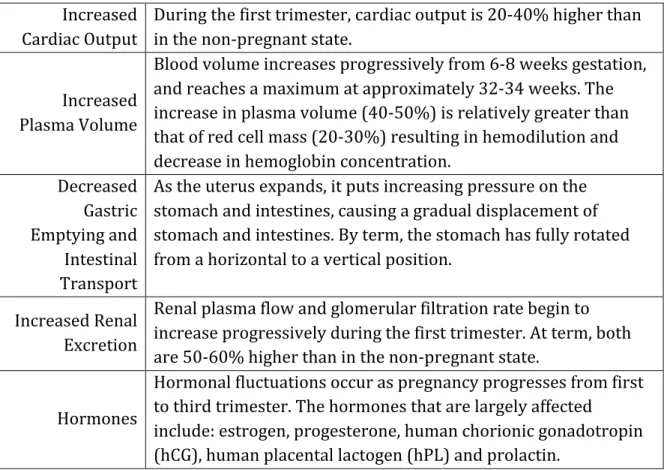
Physiologically, there are important differences between pregnant and non-‐ pregnant women (See Table 1). These differences affect pharmacokinetics, or the handling of a drug by a body, which includes how the drug is absorbed, distributed and eliminated, and how these processes determine plasma concentrations of the drug. Pharmacokinetics is not only different between pregnant and non-‐pregnant women, but these differences vary during the course of pregnancy. Lack of sufficient information about how pharmacokinetics of pregnant women affects drug
metabolism and efficacy means physicians cannot be certain that they are
prescribing safe and effective dosages of medications to pregnant women (Dawes et al., 2001).
women be treated with amoxicillin in the event of anthrax exposure. However, more recent pharmacokinetic research has indicated that the changes to kidney function during pregnancy make it impossible to give a pregnant woman a high enough dose of amoxicillin for it to be effective against anthrax (Andrew et al., 2007)
Table 1. Select physiological changes during pregnancy (Ciliberto et al., 1998; Witorsche, 1995).
Increased Cardiac Output
During the first trimester, cardiac output is 20-‐40% higher than in the non-‐pregnant state.
Increased Plasma Volume
Blood volume increases progressively from 6-‐8 weeks gestation, and reaches a maximum at approximately 32-‐34 weeks. The increase in plasma volume (40-‐50%) is relatively greater than that of red cell mass (20-‐30%) resulting in hemodilution and decrease in hemoglobin concentration.
Decreased Gastric Emptying and Intestinal Transport
As the uterus expands, it puts increasing pressure on the stomach and intestines, causing a gradual displacement of stomach and intestines. By term, the stomach has fully rotated from a horizontal to a vertical position.
Increased Renal Excretion
Renal plasma flow and glomerular filtration rate begin to increase progressively during the first trimester. At term, both are 50-‐60% higher than in the non-‐pregnant state.
Hormones
Hormonal fluctuations occur as pregnancy progresses from first to third trimester. The hormones that are largely affected
include: estrogen, progesterone, human chorionic gonadotropin (hCG), human placental lactogen (hPL) and prolactin.
Concerns about fetal exposure
A teratogen is any agent that acts to irreversibly alter growth, structure or function of a developing embryo or fetus. The risks and consequences of exposure to teratogenic agents are in part dependent on the stage of embryonic or fetal
In the United States approximately 49 percent (2001 data is most recent available) of pregnancies are unintended, meaning they were mistimed or
unplanned at the time of conception (CDC, 2012). Without having engaged in pre-‐ pregnancy planning or having expectations of becoming pregnant, these women are less likely to know that they are pregnant until weeks or months into the pregnancy (Cheng, 2009). Without knowledge of their pregnancy, these women may be more likely to be using potentially teratogenic essential and non-‐essential medications during critical phases of neural and cardiac development.
With only thirteen drugs FDA-‐approved for use by pregnant women,
pregnancy is in effect an off-‐label condition (IOM, 2010). This means that physicians work with little or no information regarding drug safety for pregnant women or their fetuses. As such, physicians have no choice but to write prescriptions and suggest therapies without being fully knowledgeable about the appropriate dosage or level of maternal-‐fetal risk (Lyerly et al., 2009b). When uncertain about the existence or extent of drug or therapy-‐induced malformations, physicians may recommend abortion of the fetus out of caution.
If a pregnant woman hadn’t originally intended to abort the fetus, but did so as a result of a misinformed, overly cautious recommendation from the physician, the medically unnecessary abortion would be a wrongful death (Lyerly et al., 2009b). The converse is also of concern such as when a malformed infant is born to a woman who would have chosen to abort the fetus had she known of its condition. The
identifies teratogens, and takes into consideration their varying effects during the course of pregnancy.
Lost therapeutic opportunities for pregnant women
Insufficient maternal-‐fetal research results in loss of therapeutic
opportunities for pregnant women through various means, including: denial of benefits of participation in research, prescription of older, presumably safer medicines, and the disinclination of women to use or physicians to prescribe medications during pregnancy.
Denial of benefits of participation in research
Clinical trials can in and of themselves function as a form of therapeutic intervention. Whether due to prohibitively expensive drug costs, drugs not yet available publicly or because the drug being tested is the patient’s last hope for effective treatment, participation in a clinical trial may be the only way for certain people to access necessary treatment (SWAP, 2012). However, despite the Institute of Medicine’s recommendation that pregnant women be presumed eligible for participation, pregnancy remains grounds for near-‐automatic exclusion from many clinical studies (Lyerly, 2008).
Prescription of older medications
absence of any reports of serious safety concerns during the drug’s relatively long history (Lyerly et al., 2009b). In addition to the potential health consequence of using inadequately tested drugs, regardless of how long ago they were inadequately tested, the hesitation to prescribe newer drugs denies pregnant women the
opportunity to use potentially more effective and better tolerated drugs, in effect, hindering the ability of these women to benefit from biomedical innovation.
Disinclination to use or prescribe medication during pregnancy
It is not uncommon for women to discontinue use or significantly reduce the dose of both essential and non-‐essential medications they were taking once they learn they are pregnant (Lyerly et al., 2008). This can be in response to a misguided recommendation from a health care professional, or personal reluctance to expose the fetus to potential teratogens. This reluctance can lead to poor adherence to drug regimens prescribed by the physician to manage existing conditions or treat
conditions that arise during or as a result of pregnancy (Lyerly et al., 2009b).
(Lyerly et al., 2009b). Unfortunately, these consequences are too often ignored and under reported.
With regards to depression, the National Alliance on Mental Illness (NAMI) admonishes women to “if possible, stop using the drugs before trying to conceive [and] do everything possible to avoid medication in the first trimester of
pregnancy”(NAMI, 2012). What often receives less attention is that women who discontinue medication use have significantly higher rates of relapse of major depression (68 percent) than those who continued medication (26 percent). In fact, untreated depression is associated with premature birth, low birth weight, fetal growth restriction and postnatal complications, in addition to decreased social support, poor weight gain, and alcohol and drug use (Blazer et al., 2007; Altshuler et al., 2006).
The disinclination to prescribe or use drugs during pregnancy, has also been observed amongst pregnant women with asthma. Studies have found that many pregnant women who suffer from asthma stop using their medications due to misinformed fear of fetal harm. Discontinuing use of asthma medications is
The disinclination of women to use, and physicians’ reluctance to prescribe drugs and other therapeutics to pregnant women is a direct result of insufficient information about safety and dosage of medications for pregnant women. In addition, including lack of due consideration of the significant consequences of under-‐treatment.
Chronic disease
As women delay childbearing, and chronic diseases such as obesity, diabetes and heart disease continue to ravage the nation, pregnant women will require evidence-‐based disease management (Bachman et al., 2008). According to the Centers for Disease Control and Prevention (CDC), obesity during pregnancy is now a common condition, affecting approximately 20 percent of pregnant women (CDC, 2011). Obesity is associated with increased complications during pregnancy. A prospective multi-‐center study of 16,192 women found that obese and morbidly obese women were 2.5 and 3.2 times (respectively) more likely to develop
gestational diabetes than the control group of normal weight women (Catalano et al., 2006). The more health complications, the more likely the women were to be taking medications to manage their conditions. A study examining over 13,000 pregnancies within the data system of a large U.S. group-‐practice health maintenance
Who is disproportionately burdened?
In the United States, one in five people live below 100 percent of the Federal Poverty Line (FPL). Based on the Census Bureau’s 2011 and 2012 Current Population Survey, despite the overall poverty rate of 20 percent, 33 percent of Hispanics and 35 percent of blacks live in poverty, as compared to a much smaller percentage of whites (13 percent). Furthermore, a disparity exists across genders as well, with 20 percent of women and a lesser 18 percent of males living in poverty (KFF, 2012).
The previous section highlighted some of the many ways in which the insufficient inclusion of pregnant women in medical research negatively affects women, children and their families. This section will outline select reasons why, and ways in which, low-‐income populations of color are disproportionately burdened by this research deficiency.
Higher rates of chronic disease
risk for preeclampsia. Preeclampsia rates were higher in these groups both with and without diabetes than in corresponding groups of white women (Bell et al., 2007).
In addition, although mental illness is a widespread problem that remains largely under-‐diagnosed and untreated throughout the United States, studies have found both a higher prevalence of mental illness and higher rate of under-‐treatment among minority populations (IOM, 2010). For instance, the lifetime prevalence of any psychiatric disorder among American Indian women is 41-‐46 percent higher than among the overall US population (Chapman et al., 2010). Evidence suggests that minority-‐group members who live with depression are less likely to get
treatment than white Americans. Furthermore, black women living with depression are less likely to receive high-‐quality treatment, leading to longer, more severe bouts of depression than white Americans (IOM, 2010).
Women with mental illness are at increased risk of negative outcomes for multiple reasons. First, they are more likely to require continuous use of
It follows that with higher rates of both chronic diseases and mental illness, that low-‐income women of color would have a higher prevalence of comorbidity of mental illness with chronic diseases (Chapman et al., 2010). Comorbid conditions, such as depression and diabetes, are associated with use of a greater number of medications and with lower rates of medication adherence (Cramer et al., 1998). A review of research on medication compliance in psychiatric treatment found that patients receiving antidepressants took 65 percent of the recommended amount (range 40-‐90 percent) (Cramer et al., 1998). Both the increased number of
medications and poor medication compliance increase a pregnant woman’s risk for negative health outcomes.
Less likely to use preventive services
blood pressure checks, mammograms, and cholesterol tests (Sambarmoorthi et al., 2003).
Timely use of evidence-‐based preventive services is associated with better health outcomes. For instance, routine cholesterol tests may result in the early diagnosis of high cholesterol. The early diagnosis allows for the health care provider to counsel the patient on diet and lifestyle factors that can be altered to manage their cholesterol. Preventing the progression of disease often helps lessen the number of medications required to manage or treat a more advanced stage of the disease. Therefore, a population, that has restricted access to preventive services, including disease management, is at increased risk for more serious health
complications, resulting in an increased reliance on prescription medications. Because of the inadequate research on medications in pregnancy, this is especially problematic for pregnant women.
available to individuals with incomes between 100 and 400 percent FPL who are purchasing insurance in the Health Benefit Exchange (KFF, 2009). Similarly, subsidies will be available for employers with 25 or fewer employees, and larger employees will be required to offer insurance or pay a penalty. Although there are some exemptions, the ACA also introduces an individual mandate that requires citizens and legal immigrants to be enrolled in qualified health insurance plan or pay a penalty (PPACA Sec. 1501(d)(2)-‐(4)-‐(e), 2010).
Furthermore, all qualified health plans (except those with grandfathered status) will be required to cover an essential benefits package which includes amongst other things, various preventive and wellness services. Clinical preventive services recommended with an A or B recommendation by the US Preventive
Services Task Force or immunizations recommended by the Advisory Committee for Immunization Practices must be covered by all plans (except grandfathered) with no cost sharing (PPACA Sec. 1001 10406, 2010).
The PPACA does much to expand health insurance coverage; however, lack of insurance is only one of many factors contributing to lower use of preventive
services by low-‐income women of color. Other barriers include access and
Higher rates of unintended pregnancy
Unintended pregnancies are defined as pregnancies that are either mistimed or unwanted (Guttmacher Institute, 2012). Although it is true that women of all ages and backgrounds may have unintended pregnancies, a study conducted by the Guttmacher Institute found that certain subgroups, such as women who are 18-‐24 years old, poor, or cohabiting had unintended pregnancy rates that were two or three times the national rate (Finer et al., 2011). Upon graphing the unintended pregnancy rates for women aged 15-‐44 from 1981-‐2006, it becomes clear that unintended pregnancy is becoming increasingly concentrated among low-‐income women (Guttmacher Institute, 2012). Although the US Department of Health and Human Services has identified reducing unintended pregnancies as an ongoing priority, the national rate has not been estimated since 2001 (Finer et al., 2011).
Births resulting from unintended or closely-‐spaced pregnancies are
associated with adverse health outcomes for both the mother and child; some such outcomes include: delayed initiation of prenatal care, premature birth, and negative mental and health impact for children (Guttmacher Institute, 2012). And as
Less likely to be a research subject
For reasons ranging from historical trauma and distrust to unsuitable study designs and scheduling conflicts, women of color remain underrepresented in clinical studies and trials (IOM, 2010). The insufficient inclusion of minority women, much like the insufficient inclusion of pregnant women in general, has myriad consequences. Perhaps the most notable consequence is that without a study population that represents the diversity of the populations to which the results will be applied, generalizability is diminished. Without sufficient inclusion, neither minority women nor their physicians can be confident that the recommendations that result from these studies are entirely applicable. As a result, there is a lower overall quality of care for these populations (Killien et al., 2000).
More financially constrained
Nearly 42 percent of uninsured CSHCN live in families that reported a financial problem, compared to 20 percent of those with only public coverage and 15 percent of those with private insurance. These problems are exacerbated if parents must stop working or cut their hours to care for their children, as 24 percent reported that they did (HRSA, 2006).
However, with the passing of PPACA families of CSHCN may experience some lessening of care-‐related financial burden. A report by the Health & Disability
Working Group at the Boston University School of Public Health outlines various provisions in the law and potential implications for CSHCN and their families. Some provisions of note include: coverage of pre-‐existing conditions and extension of coverage for young adults on their parent’s policy to age 26, eligibility simplification, limits on out-‐of-‐pocket expenditures and essential benefit coverage (Health and Disability Working Group, 2011).
Call for action
Ethicists have produced considerable literature regarding the moral implications of health inequalities such as those discussed in this paper
(Mastroianni et al., 1994; Beauchamp et al., 2001; Faden et al., 2006). Bioethicists, including feminist theorists, have employed various justice arguments to establish that these disparities are unjust and require redress. While the full breadth and details of these arguments is beyond the scope of this manuscript, I offer a brief review of major arguments below.
Ethical Arguments
In their book Principles of Biomedical Ethics (2001), bioethicists Beauchamp and Childress outline four principles of biomedical ethics. This framework offers broad consideration of both medical ethics issues generally and clinically, and is amongst the most widely used in the field. The four principles include:
1. Respect for autonomy – respecting the decision-‐ making capacities of autonomous persons; enabling individuals to make reasoned informed choices.
2. Beneficence – the balancing of benefits of treatment against the risks and costs; the healthcare professional should act in such a way that benefits the patient
3. Nonmaleficence – the healthcare professional should not harm the patient. If some harm is unavoidable, it should not be disproportionate to the benefits of treatment
4. Justice – distributing benefits, risks and costs fairly; the notion that patients in similar positions should be treated in a similar manner.
While the under-‐representation of pregnant women and the disparate impact with regard to race and socioeconomic status is problematic in terms of all four
equitably. In particular, they propose a society that recognizes “an enforceable right to a decent minimum of health care within a framework of allocation that
incorporates both utilitarian and egalitarian standards” (2001, p. 272).
Feminist ethicists, such as Young and DeBruin, go further; arguing that the distributive paradigm of justice fails to capture all there is to justice. Young argues: (1) not all concerns of justice are maters of distribution of benefits and burdens, (2)
oppression qualifies as a concern of justice, (3) an exclusive focus on individuals fails to capture important aspects of justice as people are oppressed not as individuals but as members of groups (DeBruin, 1994).
DeBruin (1994) holds that oppression: makes women invisible, makes them appear deviant and imposes gender norms on women, subordinating them to men. She argues that justice requires the elimination of oppression, and that our practices concerning the inclusion of women in studies are a both result and a cause of
oppression.
Ethicists Faden and Powers (2006) also stress that justice is concerned with more than just distributive principles, instead maintaining that it is concerned with six essential dimensions of well being: health, personal security, reasoning, respect attachment and self-‐determination. In their book Social Justice (2006), they write:
We contend that each of these dimensions is an essential feature of well-‐being such that a life substantially lacking in any one is a life seriously deficient in what is reasonable for anyone to want, whatever else they want (p.6).
Central to their argument is a sufficiency theory of justice, a form of egalitarianism in a broad sense. They view the central aspiration of justice to be sufficiency of well-‐ being, not equality of well-‐being. Therefore any inequity in the social determinants that contributes to persons falling below a level of sufficiency will be of high
importance. Faden and Powers argue for a unified theory of social determinants and well-‐being, as they recognize the densely woven, systematic patterns of
disadvantage. By claiming that social justice is the foundational moral justification of the institution of public health, they call public health to action (2006). Ultimately, the various theories of justice indicate that the disparities raised by the current approach to research with pregnant women should be redressed as a matter of ethically responsible public health and policy.
Other Arguments
In addition to the ethical concerns regarding fairness, the health disparities perpetuated by these injustices have impacts on a societal level. The American Public Health Association has argued that health disparities have negative economic and non-‐economic consequences for all Americans, regardless of race or ethnicity (Suthers, 2008). According to Healthy People 2010:
The health of the individual is almost inseparable from the health of the larger
community … the health of the larger community and … the health of every community and every State and territory determines the overall health status of the Nation (HHS, 2010).
With such an intermingled fate, it is in the interest of society to work towards the elimination of health disparities. The following section includes specific
Recommendations for action
The Institute of Medicine’s Committee on Women’s Health Research and the Second Wave Initiative have developed numerous recommendations for increasing the responsible inclusion of pregnant women into biomedical research. Many of the recommendations are inspired by successes in the pediatric arena. Although
children, like pregnant women, are deemed a vulnerable population, children are no longer considered “therapeutic orphans” due to various pieces of legislation that have supported their inclusion in research during the last fifteen years (Greenwood, 2011). Recommendations for addressing pertinent legal and non-‐legal challenges to adequate inclusion of pregnant women are discussed below.
Develop more nuanced regulations
The 1993 NIH Revitalization Act requires both the inclusion of women in all clinical research, and the analysis of results by sex for phase III (effectiveness confirming) clinical trials; however, despite this legislation, pregnant women remain largely excluded (IOM, 2010). Although it is admittedly difficult to strike an appropriate balance between fetal protections, permissible trade-‐offs in maternal and fetal risks, and sound scientific methodology, answering certain research questions requires the imposition of at least some risk to the fetus. Current regulations employ either highly restrictive bright-‐line criteria or ill-‐defined
distinctive context of pregnancy. The framework should consider indexing levels of acceptable fetal risk to the severity of need in pregnant women for the proposed therapeutic (Second Wave Initiative, 2012).
Pursue more innovative study designs
In addition to developing more nuanced research regulations, there is a need for innovation with regards to study designs. The IOM recommends that NIH and other federal agencies and relevant professional organizations convene conferences or meetings to develop study methods and statistical techniques that will facilitate analysis of data on subgroups without substantially increasing the overall size of a study population. Furthermore, they argue that the Department of Health and Human Services Office of the National Coordinator for Health Information Technology should support the development and application of mechanisms for pooling patient and subject data to answer research questions that are not definitively answered by single studies (IOM, 2010).
The National Children’s Study is the largest-‐ever study of children’s health. With a $3 billion investment by the federal government, the study aims to examine the effects of the environment on children from the fetal period to 21 years of age. Consequently, children in the study are selected through a sample of pregnant women, presenting a rare and valuable opportunity to study the health of women during and after pregnancy, in addition to the health of their children (Lyerly et al., 2009a). By expanding the scope of the study to include more complete information about the health status of pregnant women and pregnancy outcomes, as predictors for not only fetal and pediatric outcomes, but for women’s health itself, NCS could produce a wealth of much needed data, and would do so without introducing additional risk to pregnant women or their fetuses.
In order to accommodate innovative study designs that recruit pregnant women, IRB members should familiarize themselves with such designs, and think creatively about how to minimize and justify risks to mothers and fetuses by considering the potential gain to evidence-‐based treatment guidelines for use of medication during pregnancy (SWAP, 2012).
Alter labeling to more effectively communicate evidence-‐based guidance to medication use in pregnancy
Since 1975, the FDA has required drug labeling to include a subsection on a drug’s ability to cause birth defects and other effects on reproduction and
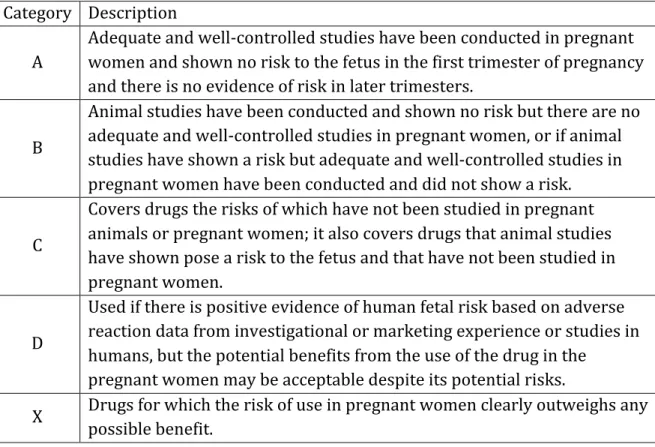
safe in clinical trials including pregnant women or animals. In 1997, a public hearing revealed that the category system was confusing and led to oversimplification as many assumed that the letters implied a gradation of risk (Meadows, 2001).
Table 2. Categories for drug use in pregnancy (Meadows, 2001). Category Description
A
Adequate and well-‐controlled studies have been conducted in pregnant women and shown no risk to the fetus in the first trimester of pregnancy and there is no evidence of risk in later trimesters.
B
Animal studies have been conducted and shown no risk but there are no adequate and well-‐controlled studies in pregnant women, or if animal studies have shown a risk but adequate and well-‐controlled studies in pregnant women have been conducted and did not show a risk.
C
Covers drugs the risks of which have not been studied in pregnant animals or pregnant women; it also covers drugs that animal studies have shown pose a risk to the fetus and that have not been studied in pregnant women.
D
Used if there is positive evidence of human fetal risk based on adverse reaction data from investigational or marketing experience or studies in humans, but the potential benefits from the use of the drug in the
pregnant women may be acceptable despite its potential risks.
X Drugs for which the risk of use in pregnant women clearly outweighs any possible benefit.
the drug during pregnancy and while breastfeeding (FDA, 2011). This proposition, although slow to be realized, must be highlighted and supported.
Government intervention
No matter the cause, the underproduction of maternal-‐fetal medication research by the private market warrants government intervention. Ideas for intervention include: (1) Eliminating the liability barrier facing pharmaceutical companies, (2) Incentivizing manufacturers by offering an extended period of exclusivity, (3) Government funded or mandated research. The following section will elaborate on all three propositions, before concluding that government-‐funded or mandated research is likely to be the most efficient and effective.
Eliminating the liability barrier facing pharmaceutical companies
The National Vaccine Injury Compensation Program (VICP), established in 1986, relieves companies from the unpredictability of tort reliability by
compensating them in an alternate system. Claimants are entitled to a presumption of causation if they show (via petition) that they were administered a vaccine listed on the VICP Vaccine Injury Table and sustained an injury within a certain time period. Should a claimant choose to decline compensation proffered, they may sue the vaccine’s administrator or manufacturer directly. Once in court vaccine
manufacturers are protected from various liabilities (HHS, 2012).
of children are vaccinated, the small risk of harm that a vaccine holds has real and predictable population level consequences. Without a no-‐fault compensation system costs of liability would be potentially crippling for manufacturers. Maternal-‐fetal medication risk is distinguishable from mass-‐inoculation in various important ways. For one, the smaller numbers of individuals involved suggest that the resultant liability would not be so crippling that a no-‐fault compensation system would be justified. Perhaps most importantly, there is little evidence to suggest that adoption of an alternative system would motivate manufacturers to implement robust
maternal-‐fetal research agendas (Greenwood, 2011)
Incentivizing manufacturers
In response to the information gap in drug efficacy and safety for children, Congress responded by enacting a pediatric exclusivity provision in 1997 (later reenacted as part of the Best Pharmaceuticals for Children Act (BPCA)). The
Government funded or mandate research
The most direct approach to closing the information gap would be for the government to fund or mandate such research. There are various examples in the pediatric arena. For one, in addition to the exclusivity provision, BPCA requires that NIH publish a list of the highest priority diseases or conditions in which medication-‐ related knowledge gaps negatively affect children who are living with these
conditions. Funds are then awarded to qualified entities to enable them to conduct drug studies or other research on the issues on the list (NIH, 2011). Adopting this strategy may be a more sensible approach to closing the information gap regarding drug safety and efficacy for pregnant women and fetuses. Although it would require the appropriation of a significant amount of funds, some believe that the
government would be able to conduct research for less than it would spend to incentivize it (Greenwood, 2011). Other advantages include that the government would not have to factor in whether or not drugs are on patent or in an exclusivity period. In addition, the government would be free to consider whether it would be preferable to perform basic research into pregnancy’s pharmacokinetic and – dynamic effects or into the mechanisms of teratogenicity (Greenwood, 2011).
The government could also require, in appropriate cases, drug
manufacturer declines to study the drug voluntarily and the Foundation for the National Institute of Health lacks funds to conduct the study, if one of the following circumstances are met:
(1) The drug is taken by a substantial number of children for the labeled indications and adequate labeling could benefit pediatric patients; (2) There is reason to believe the drug would be a meaningful
improvement over existing therapies for children for one of the labeled indications; or
(3) The absence of adequate labeling could pose a risk to pediatric patients (Greenwood, 2011, p320).
Pregnant women and fetuses would benefit from the extension of PREA to address the maternal-‐fetal medication information gap. Even if PREA is not
extended, FDA should make full use of its powers to require, where appropriate, the creation of a pregnancy exposure registry and a plan for post-‐marketing
surveillance as conditions of drug approval. The FDA defines pregnancy exposure registries as prospective observational studies that collect information on women who take medications and vaccines during pregnancy (FDA, 2012). Currently
registries exist in a non-‐cohesive patchwork. Furthermore should make full use of it power (authorized by FDA Amendments Act) to require post-‐marketing studies and clinical trials under certain circumstances (Greenwood, 2011).
during pregnancy (Greenwood, 2011). Another example of a promising public-‐ private partnership is the FDA’s Sentinel System. Section 905 of the FDA
Amendments Act requires that the FDA establish a post-‐market risk identification and analysis system to link and analyze safety data from multiple sources
(Greenwood, 2012). Once in place, this system has the potential to generate a multitude of valuable information about maternal-‐fetal medication risk.
Attempts to eliminate the liability barrier facing drug manufacturers are unlikely to be successful, while offering periods of exclusivity as incentives to private sector research is thought to be largely inefficient. On the other hand,
increased funding of public –private partnerships like MEDPREP and FDA’s Sentinel System, combined with legislation that mandates that drug companies research their products not only in children but in pregnant women and fetuses as well, are promising approaches to closing the information gap.
Conclusion
research may benefit from legislation that mirrors some of the successes in the pediatric arena. The creation of offices of women’s health in multiple federal agencies augurs well for such advancements in the maternal-‐fetal arena.
References
Agency for Healthcare Research and Quality. (2010) Health care for minority women: recent findings. http://www.ahrq.gov/research/minority.htm.
Altshuler, L.L., Burt, V.K., Cohen, L.S., Harlow, B.L., Hendrick, V.H., Lougehead, A., et al. (2006). Relapse of major depression during pregnancy in women who
maintain or discontinue antidepressant treatment. JAMA, 295(5). 499-‐170. Andrew, M.A., Easterling, T.R., Carr, D.B., Shen, D., Buchanan, M.L., Rutherford, R., et al. (2007). Amoxicillin pharmacokinetics in pregnant women: Modeling and simulations of dosage strategies. Clinical Pharmacology and Therapeutics, 81(4):547–56.
Bachman, D.J., Berg, C.J., Bruce, F.C., Callaghan, W.M., Chu, S.Y., Dietz, P.M., et al. (2008). Association between obesity during pregnancy and increased use of health care. N Engl J Med, 358(14):1444-‐53.
Bell, E., Hills, E., Jaamaa, G., Kaiser, M., Masako, T., McNutee, L., et al. (2007). Racial disparity in hypertensive disorders of pregnancy in New York State: a 10-‐ year longitudinal population-‐based study. Am J Public Health, 97(1): 163-‐170. Beauchamp, T.L., Childress, J.F. (2001). Principles of biomedical ethics. Oxford: Oxford University Press.
Blazer, D.G., James, S.A., Orr, S.T., Reiter, J.P. (2007). Depressive symptoms and indicators of maternal health status during pregnancy. Journal of Women’s Health, 16(4):535-‐542.
Catalano, P.M., Ehrenberg, H.M. (2006). The short-‐ and long-‐term implications of maternal obesity on the mother and her offspring. BJOG,113:1126-‐1133. Centers for Disease Control and Prevention (CDC). (2012) Unintended pregnancy prevention. Atlanta, GA: CDC. Retrieved from http://www.cdc.gov/reproductivehealth/unintendedpregnancy/
Centers for Disease Control and Prevention (CDC). (2011). Preventing and managing chronic disease to improve the health of women and infants. Atlanta, GA: CDC. Retrieved from
http://www.cdc.gov/reproductivehealth/womensrh/ChronicDiseaseandRep
roductiveHealth.htm.
Cheng, D., Schwarz, E.B., Douglas, E., Horon, I. (2009). Unintended pregnancy and associated maternal preconception, prenatal and postpartum behaviors. Contraception, 79(3):194-‐198.
Ciliberto, C.F., Marx, G.F. (1998). Physiological changes associated with pregnancy. World Anaesthesia, 9.2:1-‐3.
Claxton, G., Damico, A., Kenword, K., Rae, M., Onsei-‐Anto, A., Panchal, N. et al. (2012). Health benefits in 2012: moderate premium increases for employer sponsored plans; young adults gained coverage under ACA. Health Aff, 31(10).
Cramer, J.A., Rosenheck, R. (1998). Compliance with medication regimens for mental and physical disorders. Psychiatric Services, 49(2).
Dawes, M., Chowienczyk, P.J. (2001). Pharmacokinetics in pregnancy. Best Practice & Research Clinical Obstetrics and Gynaecology, 15.6: 819-‐826.
DeBruin, D.A. (1994). Justice and the inclusion of women in clinical studies: An argument for further reform. Kennedy Institute of Ethics Journal. 4(2): 117-‐ 146.
Faden , R., Powers, M., (2006). Social justice. Oxford: Oxford University Press.
Finer, L.B., Zolna, M.R. (2011). Unintended pregnancy in the United States: Incidence and disparities, 2006. Contraception, 84(5):478-‐485.
Greenberg, J.A., Norwitz, E.R. (2011). FDA approval for use of medications in pregnancy: An uphill battle. Rev Obstet Gynecol, 4(2):39-‐41.
Guttmacher Institute. (2012). Facts on unintended pregnancy in the United States. Retrieved from http://www.guttmacher.org/pubs/FB-‐Unintended-‐ Pregnancy-‐US.html.
Health & Disability Working Group. (2011). The affordable care act: a side by side-‐ by-‐side comparison of major provisions and the implications for children and youth with special health care needs. Boston, MA: Boston University School of Public Health.
Health Resources and Services Administration (HRSA). (2006). The national survey of children with special health care needs chartbook 2005-‐2006. Rockville, Maryland: United States Department of Health and Human Services. Institute of Medicine (IOM), Committee on Women’s Health Research. (2010) Women’s health research: Progress, pitfalls, and promise. Washington, DC. Kaiser Family Foundation (KFF). (2009). Explaining health care reform: what are health insurance subsidies. Menlo Park, CA.