I. Executive Summary
Over the past several decades, chronic disease and obesity have become increasingly urgent public health challenges in the United States. Today, 68% of US adults are overweight or obese and the leading causes of death are diet-related chronic conditions (i.e., cardiovascular disease, cancer, and stroke)1. For decades the Dietary Guidelines for Americans (DGA) has been one of the most prominent nutrition-related national health promotion efforts to improve health outcomes by improving the nutrition and dietary patterns in the US population. The 2010 DGA aims to promote health, reduce the risk of diet-related chronic disease, and reduce the prevalence of overweight and obesity in the American public2.
Today the vast majority of Americans still consume a diet inconsistent with DGA recommendations3, 4. In addition, a 2010 study of consumer health-related knowledge
demonstrated that while the majority of consumers are aware of the Dietary Guidelines (71%), most have a poor knowledge of the recommendations and the underlying concept of individual calorie needs5. In their recent report, the 2010 DGAC concluded, “Now, as in the past, a disconnect exists between dietary recommendations and what Americans actually consume. In the literature, many suggest the impact of environmental factors and communication of the
Dietary Guidelines to the public influence adoption of the DGA recommendations in the American public6, 7.
This report emphasizes the importance of communication methods in Dietary Guidelines -related health promotion efforts to impact dietary behaviors in the American public by
influencing intrapersonal factors that effect food choice and dietary patterns such as knowledge, attitudes, and self-efficacy. The specific objectives of this report are to investigate the use of health communications strategies to translate the Dietary Guidelines to the public on an
intrapersonal level to support individual dietary behavior change, and suggest future directions for improving communication of the DGA to the American public.
This review suggests gaps in the planning, evaluation, and coordination of past DGA-related communication strategies for the American public, which has resulted in evidence gaps regarding to the overall effectiveness of the Dietary Guidelines and related health promotion efforts at achieving dietary behavior change in the American public. Currently there is a need for research into how past efforts to communicate the Dietary Guidelines to the general public have effected intrapersonal determinants of dietary behaviors such as knowledge, attitudes, and self-efficacy, and if changes in these factors are associated with positive changes in food choices and dietary patterns. This research data would strengthen evidence on what motivates individuals on an individual level to adopt recommended dietary behaviors, and would help public health professionals develop more effective health promotion and communication strategies to influence these factors and improve dietary patterns in the American public.
There is also a need for to monitor trends in existing SES health disparities related to knowledge, awareness, and self-efficacy of the Dietary Guidelines. Future research should investigate how past and future communication efforts for the general public may affect existing health disparities in at-risk segments of the population such as African Americans and
individuals of low-SES. These disparate populations often experience increased rates of illness and mortality related to poor diet and lifestyle, so it is crucial health promotion efforts related to the Dietary Guidelines do no have negative unintended consequences on existing health
In conclusion, incorporating effective health communication strategies into existing or future Dietary Guidelines-related health promotion efforts may result in improved knowledge, awareness, attitudes, and self-efficacy of adopting federal dietary guidance in the American public, and ultimately support individual dietary behavior change. While health communication strategies alone will not likely influence the dietary patterns of the American public, they can improve Dietary Guidelines health promotion and nutrition education efforts, which can then better support existing public policy efforts. Through increased research funding and better use of existing data collection methods, public health professionals and health promotion program planners could gain a better understanding of how communication of the Dietary Guidelines
influences individual factors that affect dietary behaviors, and improve health promotion efforts to influence food choices and dietary patterns in the American public.
II. Introduction
Over the past several decades, chronic disease and obesity have become increasingly urgent public health challenges in the United States. Today, 68% of US adults are overweight or obese and the leading causes of death are diet-related chronic conditions (i.e., cardiovascular disease, cancer, and stroke)1. Over the past year, adult obesity rates increased in sixteen of the fifty states, and decreased in none1. Studies show overweight and obesity drastically increases the risk of these and other chronic, and is also associated with increases in all-cause mortality5, 10.
Obesity is a condition characterized by excess body fat that results from a complex interplay of social, economic, environmental, psychological, and physiological factors. While some risk factors for obesity and chronic disease cannot be modified (i.e., genotype, age, gender, ethnicity, etc.), there is strong evidence to support the relationship between modifiable lifestyle factors such as diet and physical activity and obesity and chronic illness8. In the US, nutrition-related public health approaches to chronic disease and obesity prevention occur on multiple social levels in a number of settings. Historically, diet-related health promotion efforts have targeted individual behavior change to improve nutrition.
Today, one of the most prominent nutrition-related national health promotion efforts is a collection of federally issued science-based dietary recommendations known as the Dietary Guidelines for Americans (DGA). Since 1980, the US Department of Agriculture (USDA) and the Department of Health and Human Services (HHS) Secretaries have jointly published a set of DGA recommendations every five years, as mandated by National Nutrition Monitoring and Related Research Act of 199011. By law, the DGA must reflect the current body of scientific and
medical knowledge2. In short, prior to the developing the Dietary Guidelines the USDA-HHS appoints a team of prominent government and non-government nutrition and health experts to a committee called the Dietary Guidelines Advisory Committee (DGAC) for two-year terms5. During this time the DGAC is responsible for conducting a systematic review of scientific evidence and issuing consensus findings and recommendations to Department Secretaries in a publically available report that guides the development of DGA11.
of questions, creating a literature research protocol for those questions, and performing a literature search using the NEL4, 5. After a thorough review of the existing scientific literature, the DGAC drafts summaries and conclusion statements that are used to guide the DGAC recommendations for their final report5. For the 2010 DGAC Report, the Committee initially
identified a little less than 200 specific questions related to dietary guidance recommendations, most of which were addressed in their Report4.
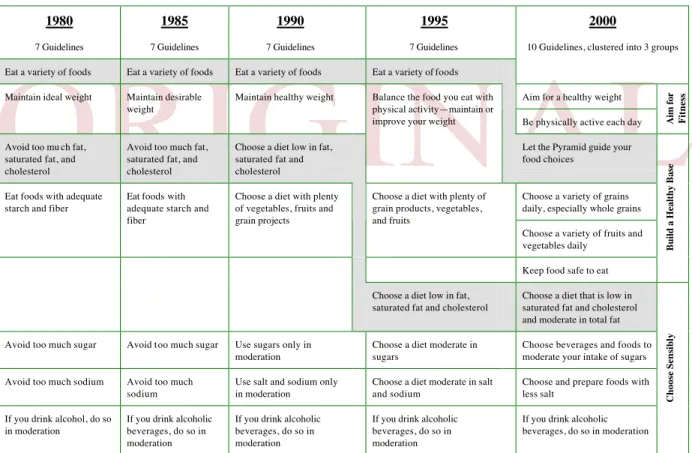
The key DGA recommendations have remained virtually unchanged since 1980 and support a total diet approach to healthy eating based on the principles of variety, moderation, and balance (Table 1)13. Each edition of the Dietary Guidelines has encouraged Americans to
consume a variety of vegetables, fruits, grains, and dairy products; limit dietary fat, saturated fat, cholesterol, sugar, and sodium; moderate alcohol intake; and maintain an ideal body weight5.
While the Dietary Guidelines provides some recommendations for specific segments of the populations (i.e., women who are pregnant or breastfeeding), key recommendations are intended for the general public, including healthy Americans over the age of 2 and those at increased risk of diet-related chronic diseases2, 14, 15, 16.
Table 1. Dietary Guidelines for Americans Recommendations from 1980 – 200019.
According to the USDA-HHS, the primary health objectives of the current Dietary Guidelines are to promote health, reduce the risk of diet-related chronic disease, and reduce the prevalence of overweight and obesity in the American public2. By law the Dietary Guidelines
establishes the scientific and policy foundation for all federal nutrition policy and promotion, including food assistance programs, research, education, and nutrition labeling11 Historically, the
DIETARY GUIDELINES FOR AMERICANS, 1980 TO 2000
1980 1985 1990 1995 2000
7 Guidelines 7 Guidelines 7 Guidelines 7 Guidelines 10 Guidelines, clustered into 3 groups
Eat a variety of foods Eat a variety of foods Eat a variety of foods Eat a variety of foods
Aim for a healthy weight Maintain ideal weight Maintain desirable
weight
Maintain healthy weight Balance the food you eat with physical activity—maintain or
improve your weight Be physically active each day Aim
for
Fitness
Avoid too mu ch fat, saturated fat, and cholesterol
Avoid too much fat, saturated fat, and cholesterol
Choose a diet low in fat, saturated fat and cholesterol
Let the Pyramid guide your food choices
Choose a variety of grains daily, especially whole grains Eat foods with adequate
starch and fiber
Eat foods with adequate starch and fiber
Choose a diet with plenty of vegetables, fruits and grain projects
Choose a diet with plenty of grain products, vegetables, and fruits
Choose a variety of fruits and vegetables daily
Keep food safe to eat
Build
a
Healthy
Base
Choose a diet low in fat, saturated fat and cholesterol
Choose a diet that is low in saturated fat and cholesterol and moderate in total fat
Avoid too much sugar Avoid too much sugar Use sugars only in moderation
Choose a diet moderate in sugars
Choose beverages and foods to moderate your intake of sugars
Avoid too much sodium Avoid too much sodium
Use salt and sodium only in moderation
Choose a diet moderate in salt and sodium
Choose and prepare foods with less salt
If you drink alcohol, do so in moderation
If you drink alcoholic beverages, do so in moderation
If you drink alcoholic beverages, do so in moderation
If you drink alcoholic beverages, do so in moderation
If you drink alcoholic beverages, do so in moderation
Choose
Sensibly
Shading indicates how the order in which the guidelines are presented has changed over time.
DGA objectives have been supported by federal health promotion and public policy strategies aimed at influencing individual dietary patterns7. The DGA influences, among other initiatives, meals served through the National School Lunch Programs, Congregate and Home-Delivered Nutrition Services, and Child and Adult Care Food Programs, Nutrition Facts Panel and front-of-package nutrition labeling, food allowances for the US military, and allocation of research and health promotion funding5, 17. Today the Dietary Guidelines are written primarily for
policymakers, healthcare providers, nutritionists, and nutrition educators, and intended to guide the development of nutrition policy, communication messages and materials, and nutrition-related health promotion programs to help Americans adopt dietary recommendations17, 18. Despite the significant impact of the Dietary Guidelines on federal public policy and health promotion, the DGA seems to have been ineffective at achieving dietary behavior change in the American public6. Today the vast majority of Americans still consume a diet inconsistent with DGA recommendations3, 4. In their recent report, the 2010 DGAC concluded, “Now, as in the past, a disconnect exists between dietary recommendations and what Americans actually consume. On average, Americans of all ages consume too few vegetables, fruits, high-fiber whole grains, low-fat [dairy], and seafood and they eat too much added sugars, solid fats, refined grains, and sodium.4” These findings are supported by 2005 Healthy Eating Index (HEI) scores, a standardized measure of diet quality that assesses compliance with federal dietary guidance, which suggests intakes in the general public are low for all the food groups encouraged by the DGA: fruits, vegetables, whole grains, and fat-free or low-fat dairy20. Furthermore, according to 2010 data from the CDC, fruit and vegetable consumption are still far below recommended intake levels, and fruit intake actually declined following the 2000 and 2005 DGA, while
vegetable intake remained the same21. There are also disparities in compliance among ethnically diverse populations such as African Americans and those of low-SES22. Data from NHANES
1988 and 2002 demonstrates non-Hispanic blacks were also less likely to meet DGA
recommendations for fruit and vegetable intake than non-Hispanic whites, while higher income and greater levels of education were significantly associated with meeting DGA
recommendations for fruit and vegetable consumption in both data sets22.
Although evidence demonstrates a clear disconnect between federal dietary guidance and Americans’ dietary patterns, it is not entirely clear why this disconnect persists. In the literature, many suggest the impact of environmental factors and communication of the Dietary Guidelines
to the public can influence adoption of the DGA recommendations6, 7. When applied to the
Dietary Guidelines, the Socio-Ecological Model (SEM) can help identify barriers to adopting recommended dietary behaviors in the American public2. The SEM demonstrates multiple levels
of social influence impact individual dietary behaviors, including intrapersonal (i.e., individual characteristics like beliefs, knowledge, and attitudes), interpersonal (i.e., personal relationships, role identity, and social support), organizational (i.e., rules, policies, and regulations),
community (i.e., social norms, networks, and standards), and public policy (i.e., federal, state, and local policies and laws)8.
While public policy initiatives can help Americans overcome environmental barriers to adopting the Dietary Guidelines like higher food costs through federal food assistance programs, for example, health promotion and communication strategies can help Americans overcome intrapersonal barriers such as a lack of knowledge. For instance, higher cost of food
recommended by the Dietary Guidelines is likely a significant socioeconomic barrier to Americans adopting the DGA, particularly for those at lower-SES who would spend a higher portion of their income on food costs4, 23. However, a USDA study found that buying fruits and vegetables is relatively cost-effective compared to less nutritious, more energy-dense foods, where for less than the price of a three-ounce candy bar, consumers can eat a serving of one of 127 different fruit and vegetables24. The study suggested increasing the awareness of the relative costs associated with meeting fruit and vegetable recommendations in low-income consumers, which may be achieved through effective communication strategeis24.
The focus of this paper emphasizes the importance of communication in efforts to promote the Dietary Guidelines to the American public and effect dietary behaviors on an intrapersonal level. Health behavior theories describe intrapersonal characteristics like attitudes, knowledge, and self-efficacy as critical behavioral determinants, and suggest individual behavior change may be derived from a shift in a one’s intrapersonal characteristics about a particular behavior25. The literature demonstrates dietary behavior change interventions often target factors such as knowledge, awareness, perceptions, and self-efficacy to influence individual behaviors36.
For instance, according to a recent review of literature, fruit and vegetable intake in blacks were most impacted by a lack of knowledge and/or belief in the association between diet and health, and self-efficacy8. In a review of twelve studies addressing fruit and vegetable intake among African Americans, researchers found all of the reviewed studies indicated intrapersonal or individual factors contribute significantly to the dietary behaviors of African Americans, and suggested interventions include strategies targeting the intrapersonal level of influence such as knowledge, attitudes, and skills8. In this case, health promotion efforts can incorporate the principles of communication theory to develop strategies for changing fruit and vegetable consumption in low-income African American populations by increasing attitudes and self-efficacy. Strategic communication priorities may be to increase awareness of health benefits of fruits and vegetables and the diet–disease relationship or improve self-efficacy through meal planning, food preparation, and reading food labels8.
Similarly, communication theory suggests the most fundamental level of health-related communication is the intrapersonal level, where communication strategies can be used to
influence individual awareness, knowledge, attitudes, self-efficacy, and skills of a health-related behavior26. This health promotion strategy is known as health communication and is defined by the CDC as, “the study and use of communication strategies to inform and influence individual and community decisions that enhance health26.” The key elements of health communication strategies are the target audience, the health-related message (i.e., “Make half your plate fruits and vegetables”), the communicator (i.e., dietitian, health professionals, etc.), and channels used to deliver the message (i.e., radio, Internet, print publications, etc.)25. These elements can be applied to Dietary Guidelines health promotion efforts on all levels to influence dietary behaviors in the American public, but are particularly important when targeting intrapersonal behavioral determinants.
tailored nutrition messages based on their attitudes about certain foods retained more food-related knowledge and adopted more recommended dietary changes than individuals who received a general non-tailored message27. Another study demonstrated that participants who received tailored health-related materials versus a standard American Heart Association (AHA) brochure or materials with the AHA content formatted to look like tailored material reported more positive attitudes about the materials and more positive thoughts indicating behavioral intentions than participants in either of the other two groups9. Finally, in a faith-based intervention to promote fruit and vegetable intake in African Americans, Campbell et al. demonstrated participants who received a church bulletin with a nutrition message from the church’s pastor reported a significantly higher level of trust of the message than individuals who received a bulletin with scientific nutrition messages9.
Although health communication strategies alone will not likely influence the dietary patterns of the American public, they may be used to improve Dietary Guidelines health promotion and nutrition education efforts, which can then better support existing public policy efforts. The purpose of this report is to investigate the use of health communications strategies to translate the Dietary Guidelines to the public on an intrapersonal level to support individual dietary behavior change, and suggest future directions for DGA-related communications to improve the public’s compliance with the Dietary Guidelines.
III. Communication of the Dietary Guidelines to the Public, 1980 – 2011
Beginning in the 1980s, the DGAC and the USDA-HHS recognized the importance of effectively communicating the Dietary Guidelines to the American public, but strategic and deliberate use of health communication has been a persistent weakness of the DGA. The 1990 DGAC Report to the USDA-HHS was the first to discuss communication of the Dietary
Guidelines to the general public and consumers. According to this report, the USDA contracted with the University of Wisconsin-Madison in the late 1980s to conduct a study investigating the reach and use of the 1985 DGA in the American public28. During this two-phase research study, qualitative data was collected from 300 national and state nutrition education professionals (i.e., Cooperative Extension Nutrition Specialists, public health nutrition education directors, nutrition professional organizations) and 178 community practitioners (i.e., teachers, RDs, RNs, extension agents) 28.
Based on data from nutrition professionals, researchers concluded the 1985 Dietary Guidelines bulletin was most effective with middle-income, literate, well-educated adults28. The
study suggested the Dietary Guidelines had reached most nutrition professionals on the local level; however, there was a need to both improve and increase DGA-related communications to the general public28. In particular, researchers recommended the USDA-HHS coordinate joint communication planning between educators, industry, and the government to develop and disseminate high-quality communication messages and materials for different age groups and cultures28.
At the same time, Pennsylvania State University conducted consumer focus groups to evaluate the usefulness of a small (4X9 inch) DGA brochure in influencing the food choices of moms28. Based on feedback from focus group participants, researchers recommended the USDA-HHS communicate the DGA to consumers in a more visually appealing publication that included definitions of technical terms, and provided more specific food-related guidance to help
Over the next decade, the USDA-HHS made modest improvements to the communication of the Dietary Guidelines with the public. In 1992, the USDA introduced a tool to help the public adopt the DGA known as the Food Guide Pyramid29. The USDA developed the Food Guide Pyramid to illustrate diet recommendations and underlying concepts of variety, moderation, and proportion29. According to the USDA, the pyramid concept was created using consumer
research “to bring awareness to the new food patterns”29. Although the Food Guide Pyramid was used to communicate the Dietary Guidelines for more than ten years, it is unclear if further consumer research was conducted to evaluate the effectiveness of the Food Guide Pyramid at increasing awareness of the Dietary Guidelines in consumers.
In 1994, the Center for Nutrition Policy and Promotion (CNPP) was established within the USDA with a mission of “improving the health of Americans by developing and promoting dietary guidance that links scientific research to the nutrition needs of consumers30. The CNPP aimed to reach its mission by “(1) advancing and promoting food and nutrition guidance for all Americans; (2) assessing diet quality; and (3) advancing consumer, nutrition, and food economic knowledge30.” The CNPP was tasked with important public health functions that required staff to understand and apply theories of health behavior change, health communication, health policy, and health education to ultimately influence the dietary patterns of the entire US population.
Thereafter, the CNPP became central to communicating the Dietary Guidelines to the American public. The CNPP is composed primarily of nutrition professionals (i.e., registered dietitians, nutritionists, and nutrition scientists), economists, and policy experts who, among things, develop and coordinate nutrition education policy within USDA, and translate nutrition research into messages and materials for various audiences, including consumers, policymakers, nutrition and health professionals, educators, industry, and media30. However, the CNPP’s health promotion efforts to influence individual dietary behavior would not become widely visible to the American public until 2000, when the DGAC presented the Secretaries a robust critique of the implementation and effectiveness the Dietary Guidelines in their 2000 Report.
The DGAC Report for the 2000 Dietary Guidelines was different than previous Reports in several important ways. First, after 20 years of federal dietary guidance and no improvements in health outcomes, the Committee reported significant existing information gaps in the overall development, implementation, and monitoring of the DGA31. In particular, the DGAC addressed a gross lack of strategic communication efforts in previous DGA-related health promotion activities and proposed significant improvements to the government’s communication of dietary guidance to the public. The DGAC proposed a reorganization of the recommendations into basic messages that were clear, meaningful and memorable, as well as a shift in writing style from mostly informative to targeted and action-oriented31.
The Committee also recognized that health communication was typically outside the scope of their collective expertise and urged the USDA to improve the integration of
communication expertise into the development of the DGA31. The DGAC requested input from communication experts to improve the use of communications strategies for various audiences31. The report addressed the need for intervention studies to guide the development of health
promotion strategies, education materials, and programs designed to promote dietary behavior change at both the individual and population levels, as well as research into what motivates Americans, on an individual and societal level, to adopt recommendations for healthy diet and lifestyle behaviors31. As in all health promotion efforts, systematic formative research is vital to
The Committee also brought attention to widespread controversies regarding the intended uses and users of the Dietary Guidelines. In particular, the DGAC called on the USDA to clarify if the Dietary Guidelines are intended for consumers as an educational tool or for policymakers as a policy guide, or for both31. Of concern, of course, is that after 20 years of the Dietary Guidelines as the cornerstone of nutrition policy and promotion, individuals directly involved in the development of federal dietary guidance were unsure of the primary intentions of their recommendations.
The 2000 DGAC Report to the USDA and HHS Secretaries is an important public health milestone for the Dietary Guidelines that addressed significant knowledge gaps and disconnects between the DGA recommendations and the public’s dietary patterns. This report brought about a recognizable shift and progression in the communication of the Dietary Guidelines, particularly related to consumer messaging and material development. Health communication efforts over the next ten years improved and increased drastically in favor of developing effective, high-quality consumer messages and materials for the Dietary Guidelines; however, other important
communication elements, such as identifying appropriate communicators and delivery channels for target audiences gained far less attention until the release of the 2010 DGA.
In lieu of the Committee’s communication recommendations, the 2000 DGA was presented as a larger, more attractive booklet with three simple consumer messages intended to represent the “ABC’s for Good Health” (i.e., Aim for Fitness, Build a Healthy Base, and Choose Sensibly)32. Over the next several years, the USDA and HHS would also develop and publish five consumer brochures to help consumer adopt the DGA known as the “Putting the Guidelines
into Practice” series30. Although the handouts were developed to be visually appealing, simple, and effective with consumers, it is unclear what the communication goals of the materials were (i.e., to increase knowledge, increase awareness, etc.), if they were pre-tested for effectiveness in consumers, and if their use and reach were monitored over time. This pattern of developing and implementing consumer-targeted communication strategies without explicit communication goals, or plans for monitoring and evaluating their effectiveness would be evident in federal dietary guidance over the next ten years.
The USDA-HHS demonstrated their renewed focus on communicating the 2000 Dietary Guidelines to the public when the President of the United States announced the release of the DGA from the Oval Office during Memorial Day weekend, when many Americans enjoyed family and community events with the radio playing in the background33. Effective
communicators like the President can influence weather or not individuals consider health communication messages to be meaningful, credible, and relevant, and ultimately weather or not they change their behavior25. As such, President Clinton used a radio address to communicate directly with the American public regarding population-wide dietary behaviors, which were grossly inconsistent with federal dietary guidance33. The President also addressed the association between poor dietary and lifestyle behaviors, and growing US obesity trends, and pointed to the Dietary Guidelines as “… the gold standard of nutritional information33.”
messages encouraged individuals to adopt healthy dietary patterns and implied that while it was a role of government to provide sound science-based nutrition recommendations for the public it was the individual’s responsibility to translate that information into action33. In his closing statement, the President stated, “Providing citizens with accurate information that affects their lives is one of government's most vital responsibilities. But citizens have a responsibility to use that information wisely as well, especially when it comes to the food they provide their children, and the habits they encourage in them33.”
The sixth edition of the Dietary Guidelines directly addressed the intrinsic difficulty of applying dietary recommendations at the individual level to improve population health outcomes and attempted to clarify widespread confusion about the intended users and purpose of the recommendations. The USDA-HHS made major changes to the 2005 DGA that lead to a fundamental shift in the translation of federal dietary guidance to influence individual behavior change. In particular, the 2005 DGA was the first to be presented not as a consumer bulletin, but as a comprehensive policy document intended for key stakeholders that influence consumers’ adoption of recommendations, including policymakers, healthcare providers, nutritionists, and nutrition educators18. The primary intended purpose of the DGA was not to guide individual food choices, but to guide the development of communication strategies and materials, health
promotion programs, and nutrition policy to help Americans apply the DGA18.
The 2005 DGA was the first to demonstrate a core focus on effective communication between the USDA-HHS and all stakeholders, including policymakers, health professionals, and consumers. The USDA-HHS issued a Federal Register to solicit existing communications research pertinent to the development of communication messages and materials for the 2005
Dietary Guidelines18. These messages included: “Make smart choices from every food group”; “Find your balance between food and physical activity”; and “Get the most nutrition out of your calories.” The USDA-HHS also developed a collection of attractive communication materials to help Americans implement the DGA, including DGA eating plans, reproducible worksheets and tip sheets, consumer brochures, “Health Facts” sheets, and posters, which were bundled into a toolkit for health professionals18. Finally, the USDA contracted the large public relations firm Porter Novelli to update the Food Guide Pyramid with current Dietary Guidelines and in 2005 released a simplified illustration known as “MyPyramid”29. Only five years later the USDA would release yet another food guide visual to replace MyPyramid known as “MyPlate”. Unlike other federal dietary guidance symbols, the MyPlate icon is not intended to provide specific dietary messages and instead serves as a reminder for healthy eating34.
Essentially, these changes demonstrated a shift in the government’s role in
Furthermore, the Knowledge Gap Hypothesis suggests that over time merely increasing the flow of information into a social system may perpetuate inequities based on socioeconomic status (SES)35. The knowledge gap theory suggests communication channels influence both the reach and impact of information in SES groups, even if the content appeals to a broad range of populations35. When applied to the Dietary Guidelines, haphazard communication of nutrition and dietary guidance over a long period of time could have serious consequences on health behaviors and outcomes in disparate populations. Without deliberate communications planning, implementation, and evaluation, it is difficult to determine the reach and effectiveness of
messages and materials in consumers. In particular, it was unclear if and how materials were being used by professionals and educators, if consumers found the messages and materials culturally appropriate, relevant, and meaningful, and ultimately if consumers changed their dietary behaviors.
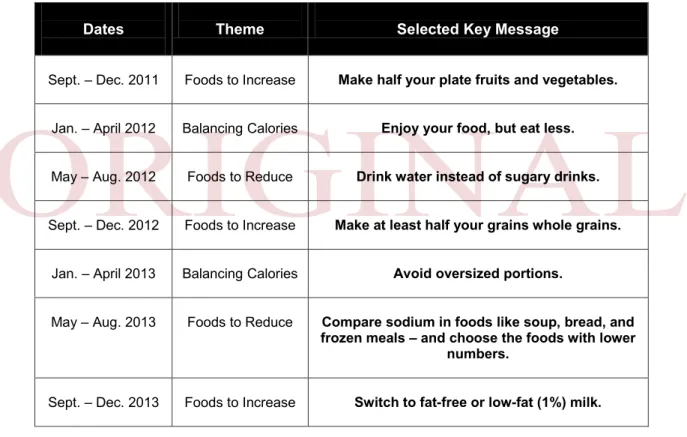
Table 2. Dietary Guidelines for Americans Communications Message Calendar34.
In their Report, the DGAC concluded that merely repeating dietary recommendations is not an effective method to change dietary behaviors in the American public4. They recognized population-wide adoption of the Dietary Guidelines required a coordinated strategic plan
involving all sectors of society, and again called on the USDA-HHS to take action4. The DGAC encouraged a strategic plan that involved individuals, families, educators, and communities; physicians, health professionals, and public health advocates; policy makers, scientists, and small and large businesses (e.g., farmers, agricultural producers, food scientists, food manufacturers, and food retailers of all kinds)4.
!"#$%&'((% USDA 2010 Dietary Guidelines Communications Message Calendar
September 2011 – December 2013
%
% !"#$"%&'(%&)*$%+$+(#&
,(-+./&0#1&,%(2($+(#&
USDA’s Center for Nutrition Policy and Promotion will lead a coordinated messaging approach among public and private sector partners to help USDA amplify the reach of the primary DGA consumer themes and nutrition messages through media and stakeholder outlets. The following calendar outlines the selected key messages that will be promoted through December 2013.
x Resources, such as “how-tos,” supporting messages, and educational materials, will be provided to support each message at )))*+,--.$3/,-0$"*/-0.
x Partners will receive updates and information prior to each key message rollout.
x For more information about the Partnership program, please visit ,112344)))*+,--.$3/,-0$"*/-045671#$7.,82.48#9$:*,1;<.
Dates Theme Selected Key Message
Sept. – Dec. 2011 Foods to Increase Make half your plate fruits and vegetables.
Jan. – April 2012 Balancing Calories Enjoy your food, but eat less.
May – Aug. 2012 Foods to Reduce Drink water instead of sugary drinks.
Sept. – Dec. 2012 Foods to Increase Make at least half your grains whole grains.
Jan. – April 2013 Balancing Calories Avoid oversized portions.
May – Aug. 2013 Foods to Reduce Compare sodium in foods like soup, bread, and frozen meals – and choose the foods with lower
numbers.
Sept. – Dec. 2013 Foods to Increase Switch to fat-free or low-fat (1%) milk.
&
Additional Theme: “Be Active Your Way” will be emphasized throughout this initiative.
After three decades of Dietary Guidelines, in 2010 the USDA-HHS made the first
concerted effort to coordinate strategic efforts with external partners to communicate the DGA to the public to promote and support adoption of healthy food patterns in the American public. In June 2011, the CNPP introduced an initiative known as the USDA/CNPP Nutrition
Communicators Network to increase the reach and impact of the 2010 DGA consumer messages. The Nutrition Communicators Network involves both large, national organizations known as National Strategic Partners and Community Partners who together will communicate the Dietary Guidelines to consumers with USDA through timed, coordinated releases (Table 2)34. Currently, there are over 40 National Strategic Partners (Appendix I) and more than 5,000 Community Partners, including healthcare corporations, media outlets, grocery retailers, health professional associations, restaurant chains, food manufacturers, dietitians, educators, community programs, doctors, schools, and authors34. This multiyear communication strategy aims to coordinate and streamline message delivery to consumers in both the public and private sectors, and on a local level to maintain momentum of the Dietary Guidelines34.
During this time, National Strategic and Community Partners will play important roles in the planning, translation, and evaluation of the Dietary Guidelines communication efforts. Over the next several years, the National Strategic Partners participate in joint communications planning for the Dietary Guidelines to develop communication goals, strategies, and tactics to improve and expand Dietary Guidelines communications to consumers. The primary goal for the National Strategic Partnership is to promote DGA consumer messages in the marketplace, but also to provide actionable guidance to help consumers achieve recommended dietary behavior change34. At the same time the Community Partners will take on various tasks such as evaluating message dissemination and/or reach in their communities; promoting messages though social media networks; developing mobile applications; creating culturally appropriate recipes/menus using the DGA; or developing Public Service Announcements34.
IV. Discussion and Future Directions of the Dietary Guidelines Communication to the Public
This review of the USDA-HHS’s communication of the Dietary Guidelines to the public suggests gaps in the planning, evaluation, and coordination of DGA-related communication strategies for the American public. Traditionally, communication methods for the general public have focused on the development of simple, informative messages and communication materials that appear to have been widely disseminated. However, there is a lack of evidence describing the goals of past communication methods (i.e., increase knowledge, change attitudes, etc.), planning and implementation processes, and methods of monitoring and evaluation, making it difficult to assess the effectiveness of past communication strategies. This has also resulted in evidence gaps related to the overall effectiveness of the Dietary Guidelines and related health promotion efforts at achieving dietary behavior change in the American public.
A recent article in the British Journal of Nutrition reported similar findings in a review of the literature on consumer awareness, understanding, and use of food-based dietary guidelines (FBDG) such as the Dietary Guidelines. The article indicated FBDG are many times promoted without direct evaluation of their effectiveness, which is necessary to determine the efficacy and success of FBDG36. The authors suggested future studies aim to evaluate FBDG based on the
Currently there is a need for future research to investigate how communication of federal dietary guidance to the public may have effected individual factors related to the Dietary
Guidelines, and ultimately adoption of dietary recommendations in the American public. Although not described explicitly in the literature, past efforts to communicate the Dietary Guidelines to Americans seem to have focused on increasing knowledge of nutrition concepts and dietary recommendations, improving attitudes around healthy diet patterns by motivating and empowering individuals to live healthier lives, and increasing self-efficacy and skills to apply the DGA recommendations on a daily basis by providing tools and resources. There is a lack of evidence demonstrating if past efforts to communicate the Dietary Guidelines to the general public have effected these intrapersonal determinants of dietary behaviors, and if
changes in these factors are associated with positive changes in food choices and dietary patterns. Annual national surveys of the American public such as the National Health and
Nutrition Examination Survey (NHANES) provide the government opportunities to utilize existing infrastructure to monitor the public’s knowledge, attitudes, and self-efficacy of the
Dietary Guidelines. In the past, NHANES has been used to assess the US population’s awareness of the Dietary Guidelines. Although the 2009 – 2010 NHANES questionnaire did not include questions related to federal dietary guidance, data from 2005 – 2006 NHANES demonstrated 49% of Americans 16 years of age and older reported having heard of the Dietary Guidelines and about 81% reported having heard of the Food Guide Pyramid9. In the future, questions can be included in the NHANES questionnaires to collect data on the Dietary Guidelines. In particular, future research should address the following areas: What are the perceptions and self-efficacy of the general public related the DGA recommendations? For example, do Americans find the recommendations relevant, meaningful, and realistic? Do Americans believe they can apply the
Dietary Guidelines on a daily basis? Are there disparities in attitudes or self-efficacy among different racial or ethnic populations related to DGA recommendations? Where do Americans most often hear about the Dietary Guidelines? And perhaps most importantly, is increased
awareness, knowledge, self-efficacy, etc. related to adoption of recommended dietary behaviors? Although alone health communication strategies may not change dietary patterns in the US population, they can be incorporated into existing or future health promotion efforts to support individual dietary behavior change. For this to occur it is vital research strengthen the evidence on what motivates individuals on a intrapersonal level to adopt recommended dietary behaviors and how health promotion and communication can be used to best influence these factors. With a better understanding of these and other behavioral determinants of dietary behaviors in the American public, existing Dietary Guidelines health promotion efforts can be enhanced with communication strategies to influence individual or intrapersonal factors.
In the future it is alsoit important to consider how communication efforts for the general public affect at-risk segments of the population and existing health disparities. Over several decades ineffective communication of the Dietary Guidelines to the public may have resulted in unintended consequences on health outcomes and health inequities. As suggested by the
Knowledge Gap Hypothesis, communication channels influence both the reach and impact of information in different SES groups, and merely increasing the flow of information into a social system may exacerbate existing SES inequities35.
In the late 1980s, for example, a survey supported by the USDA demonstrated the 1985
Dietary Guidelines bulletin was most effective with middle-income, literate, well-educated adults28; however, until 2000, the DGA bulletin remained virtually unchanged and continued to be the primary channel in which Dietary Guidelines were communicated to the public. Some studies suggest confusion over implementing the Dietary Guidelines may discourage individuals from trying to meet fruit and vegetable recommendations, while a lack of formal education and/or access to accurate information may prevent many Americans from receiving DGA messages about fruits and vegetables22. Although research is needed to draw additional conclusions about the reach or impact of the early DGA bulletins, this potential weakness in communication methods may have ultimately effected adoption of dietary recommendations in various SES groups in the US population. Even more, traditionally the chief communicators of the Dietary Guidelines to the public have been dietitians, nutrition educators, and health professionals. Thus, communication messages, materials, and resources may not have reached individuals of low-SES, those without healthcare insurance coverage, or those who lack access to dietitians or nutrition educators.
It is important future research monitor trends in existing SES health disparities related to knowledge, awareness, and self-efficacy of the Dietary Guidelines. Research suggests African American and low-income populations have the highest morbidity and mortality rates from obesity and chronic disease, and 2005 – 2006 NHANES data demonstrate significant differences in awareness of DGA and other federal dietary guidance efforts (i.e., Food Guide Pyramid, 5 A Day) among racial/ethnic and SES groups8, 9. While more than 90% of non-Hispanic whites had heard of at least one of the three federal guidance efforts, 70% of non-Hispanic blacks were aware of at least one of the efforts, and 55% of Mexican Americans were aware of at least one of the guidance efforts9. There were also statistically significant trends of increasing awareness of
federal dietary guidance with increasing education and increase income levels9. A study of eating patterns in college students, for instance, demonstrated increased knowledge of dietary guidance is associated with more healthful eating patterns, where students with a higher level of nutrition knowledge were more likely to meet the DGA and have overall better dietary patterns37.
In conclusion, incorporating effective health communication strategies into existing or future Dietary Guidelines-related health promotion efforts may result in improved knowledge, awareness, attitudes, and self-efficacy of adopting federal dietary guidance, and ultimately support individual dietary behavior change in the American public. While health communication strategies alone will not likely influence the dietary patterns of the American public, they can improve Dietary Guidelines health promotion and nutrition education efforts, which can then better support existing public policy efforts. As always, it is important public health
gain a better understanding of how communication of the Dietary Guidelines influences
Appendix I. USDA/CNPP Nutrition Communicators Network National Strategic Partners
• American Diabetes Association Schoolwalk for Diabetes • American Dietetic Association
• American Medical Association • American Society for Nutrition • Birds Eye
• Chiquita Brands International • Compass Group/ Chartwells • Del Monte Foods
• Dole
• DUDA Farm Fresh Foods • Egg Nutrition Center • Food Marketing Institute • General Electric (GE)
• International Food Information Council Foundation • Institute of Food Technologists
• Kellogg’s • Ketchum • Lose It!
• National Restaurant Association • Produce for Better Health Foundation • Produce Marketing Association • School Nutrition Association • Seneca Foods
• Sports Illustrated Kids • Stemilt
• Sunkist • Time for Kids
• Turkey the Perfect Protein
• United Fresh Produce Association • USA Pears
• USA Rice Federation • Vestcom
• WebMD
• Weight Watchers
• Nutrition Education Partners • Food and Health Communications • Learning Seed
• Learning ZoneXpress • Nasco Nutrition
• NCES
References
1. Trust for America’s Health. F as in Fat: How obesity threatens America’s future: Issue Report. June 2011.
2. U.S Department of Agriculture (USDA), U.S. Department of Health and Human Services (HHS). Dietary Guidelines for Americans 2010. Washington DC, U.S. Government Printing Office, 2010.
3. Krebs-Smith SM, Guenther PM, Subar AF, Kirkpatrick SI. Americans do not meet federal dietary recommendations. J. Nutr. 2010;140:1832–1838.
4. Dietary Guidelines Advisory Committee (DGAC). Report of the Dietary Guidelines Advisory Committee on the Dietary Guidelines for Americans, 2010. Washington DC: U.S. Department of Agriculture, Agricultural Research Service, May 2010.
5. Watts ML, Hager MH, Toner CD, and Weber JA. The art of translating nutritional science into dietary guidance: history and evolution of the Dietary Guidelines for Americans. Nutrition Reviews. 2011;69(7):404 – 412.
6. Rowe S, Alexander N, Almeida NG, et al. Translating the Dietary Guidelines for
Americans 2010 to bring about real behavior change. J of Am Diet Assoc. 2011;111:28 – 39.
7. Krebs-Smith SM, Reedy J, Bosire C. Healthfulness of the U.S. food supply: Little
improvement despite decades of dietary guidance. Am J Prev Med. 2010;38(5):472 – 477. 8. Robinson, T. Applying the Socio-ecological Model to Improving Fruit and Vegetable
Intake Among Low-Income African Americans. J Community Health (2008) 33:395–406. 9. Wright JD, Wang C. Awareness of Federal Dietary Guidance in Persons Aged 16 Years
and Older: Results from the National Health and Nutrition Examination Survey 2005-2006.
10. CDC Data and statistics: Adult obesity. Accessed from
http://www.cdc.gov/obesity/data/adult.html.
11. U.S Department of Agriculture (USDA), Center for Nutrition Policy and Promotion. 2010 Dietary Guidelines for Americans Backgrounder: History and Process. Washington DC, 2010.
12. Dietary Guidelines Advisory Committee (DGAC). Report of the Dietary Guidelines Advisory Committee on the Dietary Guidelines for Americans, 2005. Washington DC: U.S. Department of Agriculture, Agricultural Research Service, Jan 2005.
13. Dietary Guidelines for Americans: A Historical Overview September 2008. Accessed from http://www.nal.usda.gov/fnic/pubs/bibs/gen/DGA.pdf.
14. U.S Department of Agriculture (USDA), U.S. Department of Health and Human Services (HHS). Dietary Guidelines for Americans 1985. Washington DC, U.S. Government Printing Office, 1985.
15. U.S. Department of Agriculture and U.S. Department of Health and Human Services. Nutrition and Your Health: Dietary Guideline for Americans, 3rd ed. Home and Garden Bulletin No. 232, 1990.
17. U.S Department of Agriculture (USDA), Center for Nutrition Policy and Promotion. 2010 Dietary Guidelines for Americans Backgrounder: Questions and Answers. Washington DC, 2010.
18. U.S Department of Agriculture (USDA), U.S. Department of Health and Human Services (HHS). Dietary Guidelines for Americans 2005. Washington DC, U.S. Government Printing Office, 2005.
19. U.S Department of Agriculture (USDA), Center for Nutrition Policy and Promotion (CNPP). 2000 Guidelines. Accessed on October 22, 2011 from
http://www.cnpp.usda.gov/DGAs2000Guidelines.htm.
20. US Department of Agriculture, Center for Nutrition Policy and Promotion. Diet quality of Americans in 1994-96 and 2001-02 as measured by the Healthy Eating Index-2005. Nutrition Insight 37. Published December 2007. Revised August 2008. Accessed on December 6, 2011 from
http://www.cnpp.usda.gov/Publications/NutritionInsights/Insight37.pdf.
21. Centers for Disease Control and Prevention. State-specific trends in fruit and vegetable consumption among adults—United States, 2000-2009. MMWR Morb Mortal Wkly Rep. 2010;59:1125-1130.
22. Casagrande, S., Wang, Y., Anderson, C., & Gary, T. (2007). Have Americans increased their fruit and vegetable intake? The trends between 1988 and 2002. American Journal of Preventive Medicine, 32, 257–263.
23. Monsivais P, Aggaral A, Drewnowski A. Following federal guidelines to increase nutrient consumption may lead to higher food costs for consumers. Health Affairs. 2011;30(8): 1471 – 1477.
24. Mushi-Brunt C, Haire-Joshu D, Elliott M. Food Spending Behaviors and Perceptions Are Associated With Fruit and Vegetable Intake Among Parents and Their Preadolescent Children. J Nutr Educ Behav. 2007;39:26-30.
25. Institute of Medicine (IOM). Committee on Communication for Behavior Change in the 21st Century: Improving the Health of Diverse Populations. Speaking of health: assessing health communication strategies for diverse populations. Washington DC, U.S. The National Academies Press, 2002.
26. U.S. Department of Health and Human Services (HHS), National Cancer Institute (NCI). Making Health Communications Programs Work. 1989.
27. Brinberg D, Axelson ML, Prince S. Changing food knowledge, food choice, and dietary fiber consumption by using tailored messages. Appetite. 2000;35:35 – 43.
28. Dietary Guidelines Advisory Committee (DGAC). Report of the Dietary Guidelines Advisory Committee on the Dietary Guidelines for Americans, 1990. Washington DC: U.S. Department of Agriculture, Agricultural Research Service, May 1990.
29. U.S Department of Agriculture (USDA), Center for Nutrition Policy and Promotion. Brief History of the Food Guide Pyramids. Washington DC, 2011.
30. U.S. Department of Agriculture (USDA), Center for Nutrition Policy and Promotion (CNPP). About Us. 2011. Accessed on October 16 from
http://www.cnpp.usda.gov/AboutUs.htm.
32. U.S. Department of Agriculture and U.S. Department of Health and Human Services. Nutrition and Your Health: Dietary Guideline for Americans, 5th ed. Home and Garden Bulletin No. 232, 2000.
33. Radio address by the President to the Nation. The White House, Office of the Press Secretary. 2000. Accessed on October 20, 2011 from
http://www.health.gov/dietaryguidelines/dga2000/president.txt.
34. U.S Department of Agriculture (USDA). USDA/CNPP Nutrition Communicators Network. Accessed on September 10, 2011 from
http://www.choosemyplate.gov/Partnerships/index.aspx.
35. Glanz K, Rimer BK, Viswanath K, editors. Health Behavior and Health Education: theory, research, and practice, 4th ed. San Francisco, CA: Jon Wiley & Sons, Inc., 2008. 36. Brown KA, Timotijevic L, Barnett J, Shepherd R, Lahteenma L, Raats MM. A review of
consumer awareness, understanding and use of food-based dietary guidelines. British Journal of Nutrition (2011);106:15–26.