Outcomes of Hip Fractures at Teaching Hospitals
Versus Non-Teaching Hospitals
By
Star L. Schreier, MD
A Master's Paper submitted to the faculty of the University of North Carolina at Chapel Hill
in partial fulfillment of the requirements for the degree of Master of Public Health in
the Public Health Leadership Program.
ABSTRACT
Hip fractures in adults are associated with a large burden of suffering in the United States and are a major focus of various advocacy groups, professional organizations and government agencies. Strategies for prevention of hip fractures include primary prevention of osteoporosis, secondary prevention of fractures in patients with asymptomatic osteoporosis, tertiary prevention of
complications in patients with hip fractures, and quarternary prevention of long-term disability from hip fracture. As a tertiary prevention option, surgery to repair a hip fracture has many benefits but is still associated with negative outcomes. This research establishes the evidence base and proposes a secondary analysis for determining whether patients treated for hip fracture at teaching hospitals experience fewer negative outcomes than do patients treated at non-teaching hospitals. A systematic review of the literature does not permit the drawing of firm conclusions
about teaching hospital status, but a secondary analysis of data from the Nationwide Inpatient Sample (NIS) database could advance our understanding of the context of hip fracture outcomes. A study sample, based on patients with ICD-9 diagnosis codes for hip fracture, can be drawn
from admissions represented in the NIS database, and outcomes including rates of mortality, rates of various postoperative complications, lengths of stay, cost, and discharge dispositions can be correlated with forms of treatment and teaching hospital status.
TABLE OF CONTENTS
ABSTRACT ... ii
TABLE OF CONTENTS ... iii
INTRODUCTION AND BACKGROUND ... 1
BURDEN OF SUFFERING- THE PO PULA TJON PERSPECTIVE ... 1
BURDEN OF SUFFERING- THE PATIENT PERSPECTIVE ... 2
PREVENTION AND TREATMENT OF HIP FRACTURES ... 3
THE ROLE OF TEACHING HOSPITALS ... 5
SYSTEMATIC REVIEW ... 7
STUDY SELECTION ... 7
ASSESSING THE QUALITY OF LITERATURE ... 9
Study question ... 9
Study population ... I 0 Comparability of subjects ... I 0 Exposure or intervention ... 11
Outcome measurement ... I] Statistical analysis and reporting of data ... I3 Conclusions ... I3 RESULTS OF THE SYSTEMATIC REVIEW ... 14
Charges ... I4 Length of stay (LOS) ... I4 In-hospital mortality ... I5 Complications and morbidity ... I6 GENERALIZABILITY OF RESULTS AND FUTURE STUDIES ... 16
METHODS ... 17
DESIGN ... 17
ETHICS ... 18
DATABASE ... 18
SAMPLE SELECTION ... 19
MAIN OUTCOMES MEASURES ... 20
MAIN EFFECT ... 20
COVARIATES ... 21
RESULTS ... 21
DISCUSSION ... 22
ACKNOWLEDGEMENTS ... 255
APPENDIX: TABLES AND FIGURES ... 266
INTRODUCTION AND BACKGROUND
Hip fractures in adults are associated with a large burden of suffering in the United States and are a major focus of various advocacy groups, professional organizations and govermnent
agencies. Each of the two main mechanisms for the fracture of any bone is associated with different risk factors, strategies for prevention, and treatment options. Therefore, any attempt to describe treatment and prevention of hip fracture in adults should account for the differences in
pathogenesis in order to tailor research or interventions toward one or the other.
First are the fractures occurring as a result of high energy trauma, such as those
happening during a motor vehicle collision. Individuals at greatest risk for high energy trauma tend to be younger, more active, and male. The second important cause of fractures in adults is associated with bone fragility, such that even a low-energy mechanism of trauma, like a fall from the same level, causes a fracture. Bone fragility is attributable to diseases that increase the rate
of bone resorption in comparison to bone creation, such that bone is made weaker over time. Although many diseases are capable of weakening bone, such as chronic renal disease and
Paget's disease, an overwhelming majority of fragility fractures of the hip are linked to . 21
osteoporosis.
Burden of Suffering- the population perspective
A report by the Surgeon General in 2004 estimated that 10 million people in the United States, aged 50 and older have osteoporosis of the hip. Three times that number of people in the same population have osteopenia of the hip, putting them at increased risk for developing
burden of disease affects both men and women of all racial backgrounds and is expected to increase as the population ages. In fact, the report estimates that I out of every 2 patients over the age of 50 will get, or be at risk for, osteoporosis of the hip.21
The cost of providing care to patients with osteoporotic fractures is concomitant with the estimate oflifetime prevalence: today, we spend approximately $17 billion on the problem each
year in the United States, and the annual cost is expected to approach $50 billion dollars by the year 2040.22•23 Average total charges in 2003 (in U.S. dollars) for a hip fracture hospitalization were $28,200 for women and $32,200 for men. These charges, however, do not reflect the cost associated with care provided at skilled nursing facilities or other post-hospital continuing care centers.24
Burden of suffering - the patient perspective
Of the 1.5 million osteoporotic fractures occurring in the United States each year, almost
300,000 are hip fractures. Of the three major sites for fragility fracture (hip, spine and forearm), those that occur in the hip are associated with the greatest morbidity and mortality.21 Thirty-day mortality has been estimated at I 0 percent. Twenty to 30 percent of patients die within one year after having surgery for a fractured hip. 25
A study of mortality after orthopedic surgery found an overall in-hospital mortality rate of 0.9 percent with half of the deaths occurring after surgery for hip fracture. Compared to other patients having orthopedic surgery, patients with hip fractures had a much higher rate of dying in
of mortality due solely to hip fracture.26 However, there is no debate that hip fracture itself
places patients at increased risk for morbidity and mortality.
During hospitalization for hip fracture, patients are at increased risk for complications
such as delirium, pneumonia, urinary tract infections and pressure sores, as well as complications resulting from surgery such as wound infections and complications ofanesthesia.27'28 An often
overlooked problem after having a broken hip is the fear of falling and having another fracture, fear that can reach the point that even patients who have the physical capacity to do so do not resume their usual pre-fracture activities,?7• 28
After discharge, hip fracture patients often require temporary or permanent care in post-hospital care facilities. Continuing institutional care (CIC) centers, including skilled nursing facilities, are playing an increasingly large part in the treatment ofthese patients. In just one decade (1993 to 2003) the percentage of patients transferred to CIC following hospital admission for hip fracture increased substantially, from 72.4 to 84.6 percent of all women and from 67.1 to
79.3 percent of all men. 24
Prevention and Treatment of Hip Fractures
Several strategies prevent hip fractures. Primary prevention strategies involve prevention
of osteoporosis through vitamin D and calcium supplementation as well as weight-bearing exercise. Secondary prevention involves identifying and treating patients in the asymptomatic stage. People at risk, especially postmenopausal women aged 65 years and over, are screened for osteoporosis with dual-energy x-ray absorptiometry (DXA). Patients with osteoporosis and
osteopenia of the hip identified by screening are often treated with bisphonates, vitamin D and calcium in order to increase bone mass.1 Tertiary prevention in patients with hip fractures
involves decreasing the rate and impact of associated complications, and strategies at this stage are mainly surgical. Depending on the type of fracture, surgery typically encompasses either internal fixation or hemiarthroplasty.2 The benefit of internal fixation and hemiarthroplasty over non-operative treatments is that patients begin weight-bearing almost immediately after surgery, thus strengthening the damaged bone, encouraging healing, and preventing some of the
complications of bed rest, such as urinary tract infections, decubitus ulcers, delirium, and pneumonia. Following treatment, quarternary prevention includes strategies to rehabilitate, restore function, prevent new falls, and protect the hip from future damage. 29
Despite the benefits of surgery, many complications can result from hip fracture repair. Negative outcomes can often be attributed to the risks associated with hospitalization, bed rest,
surgery, anesthesia, advanced age, and pre-existing medical conditions. Even in patients who are mobilized on postoperative day one, bed rest is not completely avoidable, as patients often must
wait until co-morbidities are assessed and treated before they can undergo surgery. Surgery itself can lead to complications including bleeding, wound infection, deep vein thrombosis, pulmonary embolism, failure of implanted devices, and even death.
Given the fact that health care costs for treating osteoporotic fractures are projected to soar in the future, and that acute complications of hip fractures lead to an increased cost of care,
The Role of Teaching Hospitals
Teaching hospitals occupy a unique and important niche in the American health care system. As the name implies, these hospitals are responsible for the training and professional development of physicians, nurses, pharmacists and other health care professionals.
Consequently, teaching hospitals are often on the cutting edge in terms of research and use of newer and experimental teclmologies. In addition, these hospitals often provide specialized services not available at other facilities, such as burn care and bone marrow transplantation, and act as a "safety net" for patients who may not otherwise be able to obtain care.4' 30
Several different classification systems delineate the difference between a teaching
hospital and a non-teaching hospital, a distinction that is especially important for policymakers who are responsible for determining reimbursement rates. Reimbursement rates for teaching hospitals are often different than those for non-teaching hospitals, especially reimbursement rates for Medicare and Medicaid patients, who comprise a large percentage of those served by
teaching hospitals. For purposes of this paper, a teaching hospital is one that fulfils the AHA criteria of having an American Medical Association-approved residency program or it is a member ofthe Council of Teaching Hospitals (COTH).31
Teaching hospitals are associated with higher costs of care, a factor that may be
undesirable to managed care organizations. Of the major safety net hospitals in the U.S. (those
hospitals that provide higher rates of charity care and underwrite greater amounts of "bad debt"), 82 percent are teaching hospitals. Furthermore, academic medical centers (AMCs)- those teaching hospitals with a medical school, hospital, outpatient centers, and faculty practice plan, which only make up 2 percent of the total hospital population, provide 23 percent of the $28.1 billion of uncompensated care. These reasons all contribute to the higher cost of care at teaching
hospitals and the even higher cost of care at the subset of teaching hospitals that are also
AMCs.30 The care ofunderserved populations is increasingly falling on AMCsY
Like most hospitals, teaching hospitals rely heavily on the income generated by provision of routine services. Historically, the higher charges paid by private payers and the U.S.
government for provision of these services helped subsidize the academic and charitable
missions of teaching hospitals. Teaching hospitals could claim that higher charges are a result of the better quality of care provided, a claim indirectly supported by public opinion surveys that
frequently rank teaching hospitals higher than non-teaching hospitals.4
It is not clear that these claims of superior care are actually supported by the data. One author has proposed that teaching hospitals are less likely to provide proper care during the treatment of common afflictions because of the increased involvement of inexperienced trainees
and the decreased involvement of senior attending physicians. 4 Hip fractures are not uncommon,
and procedures to repair these fractures are performed at various types of hospitals throughout the U.S. Given the fact that charges for hip fracture hospitalizations have been rising and are projected to continue rising, it is important to determine whether teaching hospitals can justify their higher costs.
It is the purpose of this paper to test the hypothesis that patients treated for hip fracture at teaching hospitals have fewer negative outcomes than do patients treated at non-teaching
hospitals. To do this, I will review the current literature on care provided by teaching hospitals
SYSTEMATIC REVIEW
I performed a systematic review of the literature to determine whether previous studies appear to support or refute the hypothesis that patients admitted to teaching hospitals for hip
fractures experience better outcomes, such as lower rates of in-hospital mortality, decreased length of stay (LOS), lower overall costs as measured by edited charges for hospitalizations, and fewer postoperative complications such as infection or decupitus ulcers.
Study Selection
I began by querying the list of all published studies using the Nationwide Inpatient Sample (NIS) database, which is provided on the Health Care Utilization Project (HCUP)
website of the Agency for Healthcare Research and Quality (AHRQ).33 After copying all ofthe citations from the list of publications into Microsoft Word, I employed the software's "Find" function to search individually through the titles of the 458 citations for the terms teaching, academic,fracture, and hip. I also skimmed through these citations looking for publications that
appeared to be related to AMCs, including the terms hospital characteristics, hospital factors,
and medical school-affiliated hospitals. This technique produced a total of32 studies for further
rev1ew.
Next, I searched PubMed. To find publications related to the NIS database that may not
have been included on the HCUP website, I queried the PubMed database using the search term
Nationwide Inpatient Sample, limiting the results to human studies and English articles. This
search yielded 270 studies for further review.
Finally, I searched PubMed for articles associated with outcomes of health care obtained in teaching hospitals. Limiting my results to human studies, English publications, clinical trials, meta-analyses, randomized control trials, and review articles, I combined search terms related to quality with search terms related to hospital type using the Boolean operator AND. I combined
the related search terms within each subject group using the Boolean operator OR. The
appearance of the final query was (outcomes OR mortality OR morbidity OR complications OR quality) AND (hospital type OR hospital characteristics OR teaching status). This algorithm
returned 141 studies for further review.
I evaluated the abstracts ofthese 443 studies produced by all three search strategies to determine if they met the criteria of describing the outcomes of health care in a particular group
of patients, and using the hospital's teaching status as a major variable of interest. Ifl read an abstract and could not tell if these themes were explored, I skimmed the full-length article to determine ifthe study should be included or excluded for review.
Many of the 443 total studies described differences in outcomes for different types of hospitals. The majority of the studies involved a description of how varying levels in the volume of procedures performed either by surgeons or by hospitals influenced outcomes in patients having that procedure. Other hospital characteristics studied extensively included the hospital
region (Northeast, Midwest, South or West) and type of ownership (public or private). Only 17 of the 443 articles described differences in outcomes for teaching versus non-teaching hospitals.
Fifteen of the 17 studies were secondary analyses of observational data, and I assessed these for content and quality. The other two studies were systematic reviews; I compare their results with my results in the Discussion section of this paper (see pp. 22-24 below). None of the
assessment of differences in outcomes between teaching hospitals and non-teaching hospitals int this literature can be discussed only for other procedures, but this discussion may suggest
variables for analysis of hip fracture outcomes in the NIS database. In the pages to follow, I discuss the results of this review of the literature of outcomes in teaching hospitals and non-teaching hospitals for a variety of diagnoses other than hip fractures.
Assessing the quality of literature
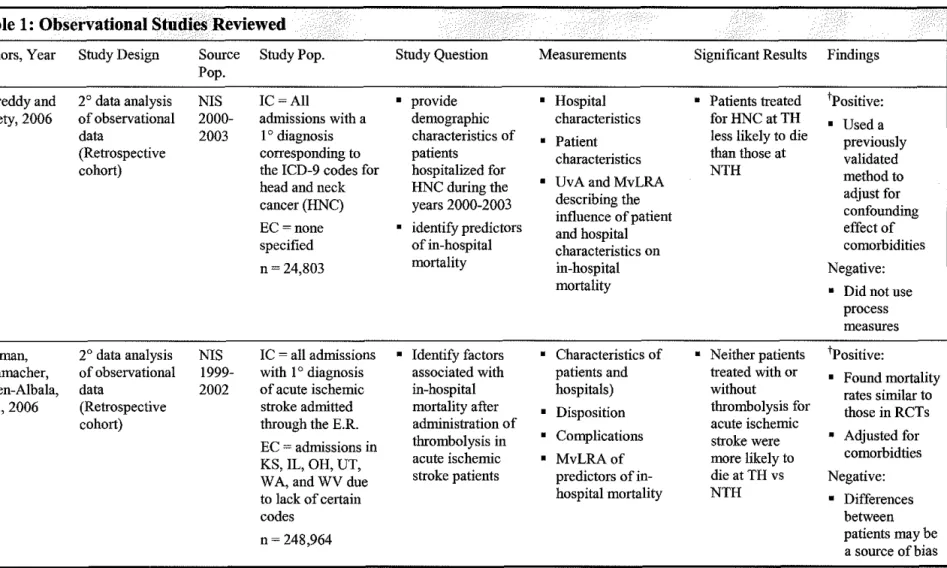
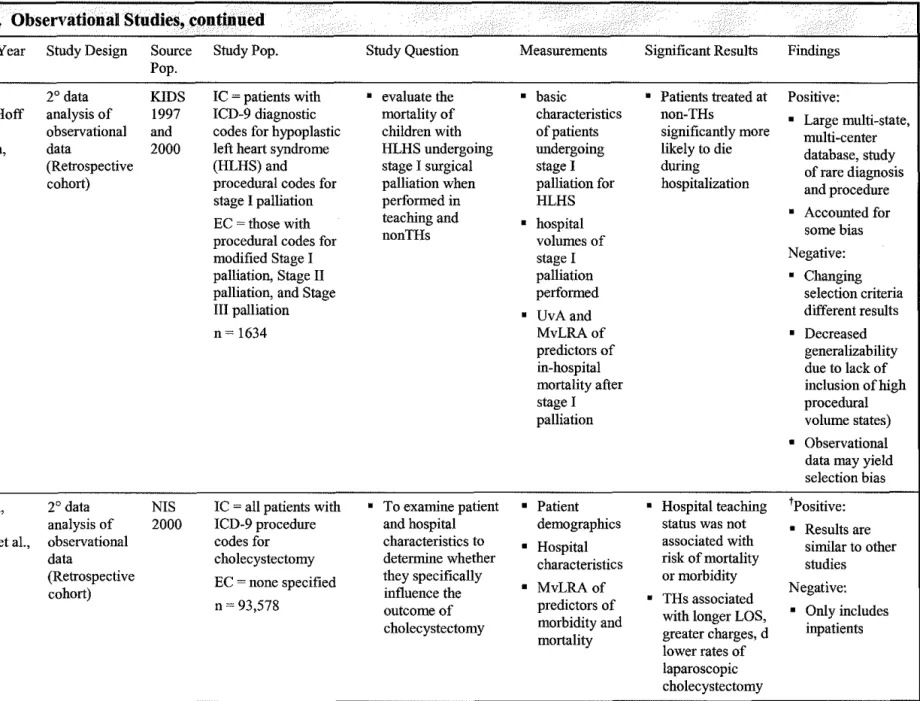
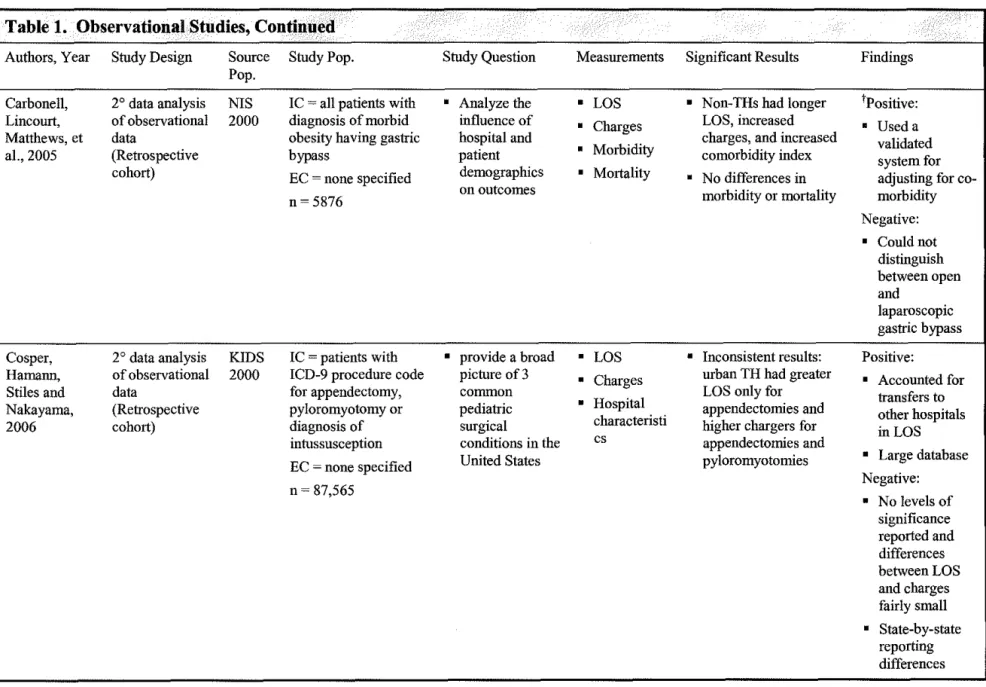
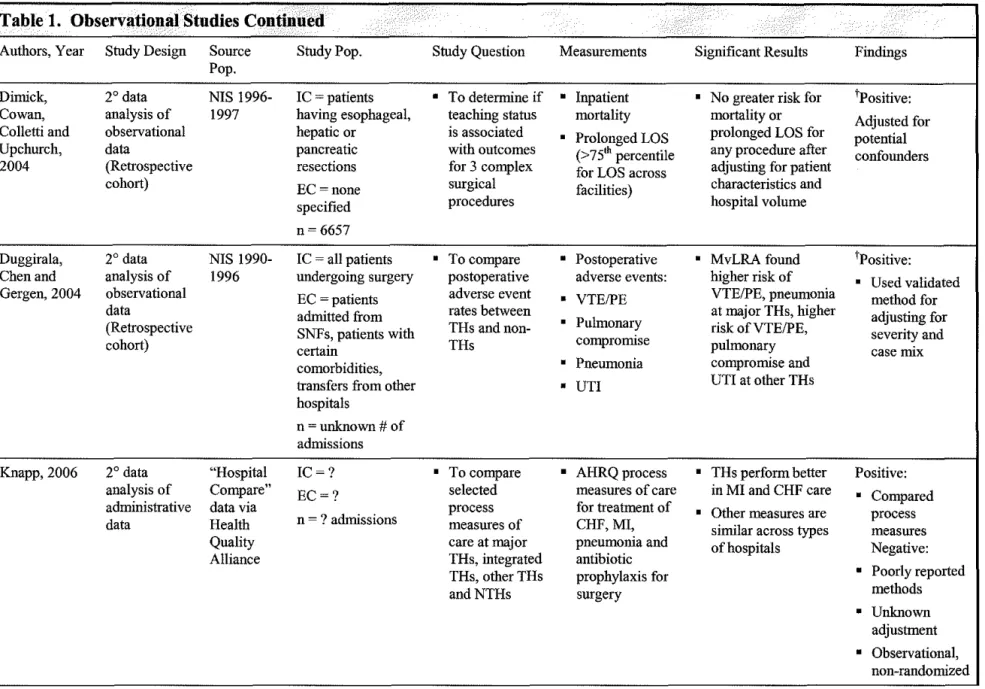
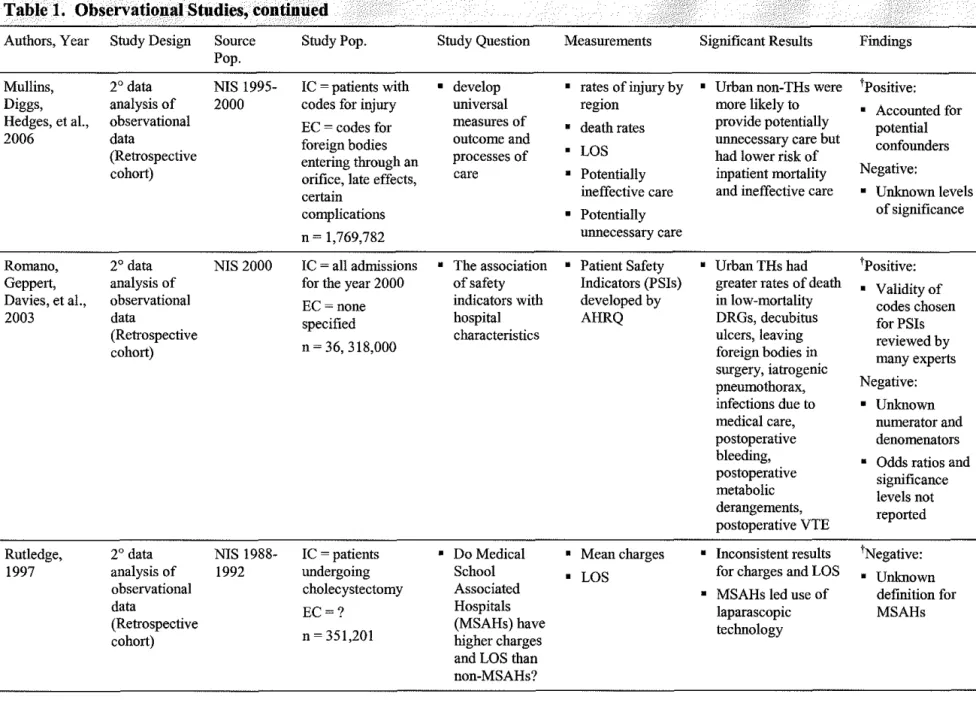
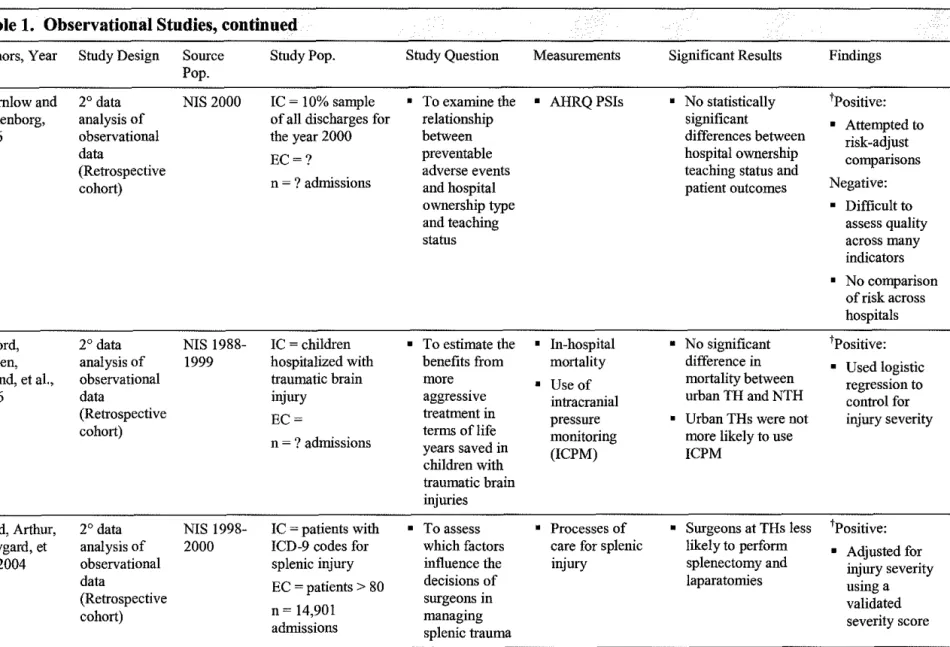
I reviewed the 15 secondary analyses of observational data and abstracted information about each study using a uniform method. The abstraction results, presented in Table I (pp.
26-31 below), include the type of study design, study source population, study population,
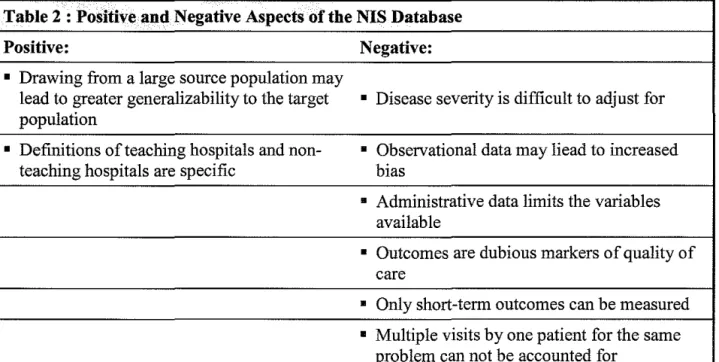
measurements used, significant results, and the study's strengths and weaknesses. Many of the studies contained similar strengths and weaknesses, and these are synthesized in Table 2 (p 31
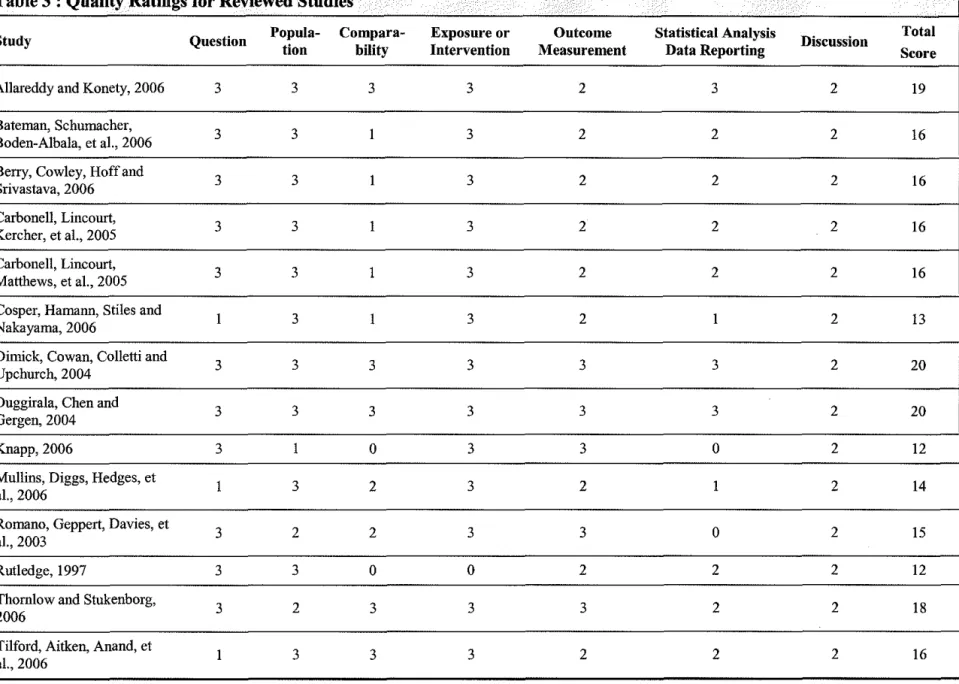
below). After I completed data abstraction, I reviewed each study using AHRQ's
recommendations for assessing the quality of observational studies. 34 I assigned ratings within each of the AHRQ evidence quality categories using a 0 to 3 scale (O=poor, 1 =fair, 2=good, and 3=excellent), and I concluded by totaling the category scores for a final evidence quality score
(see Table 3, p. 33 below).
Study question. I reviewed each study for clarity, focus, and appropriateness of its study
question,34 and gave all but four of the studies ratings of"excellent" in this category. I gave an "excellent" rating to studies that appropriatly narrowed the study question and identified a
'fi I . . . . d 3 s.s 10 13 19 35-37 S d' th t d'd t
spec1 1c popu atwn, mterventwn, companson an outcome. · ' ' ' ' tu 1es a 1 no receive this rating had questions that were too broad or that could not be answered using the
methods described within the study.9• 3840
Study population. According to AHRQ, study populations in observational studies
should be adequately described with sample size justification. 34 The populations from which researchers drew samples were well-described in twelve of the fifteen studies and earned ratings of "excellent." What these studies had in common was that each used a large administrative database (Kids' Inpatient Database or NIS) from which to draw samples. Documentation about Kids' Inpatient Database (KID) and NIS is easily found online, and most papers using such a
database simply paraphrase the sponsor's documentation for each database when describing the study population.3• 5'10• 13• 3840 Romano et al only received a "good" rating in this category for not
providing an estimate for the number of admissions upon which the source population was based?8 Thomlow and Stukenborg also only received a "good" rating for not justifying the
sample size, though like most studies they provided a complete description of the NIS .19 Knapp received the lowest score in the group for doing only a fair job at describing the population of patients that make up the "Hospital Compare" data set. 35
Comparability of subjects. Comparability of subjects in observational studies should be
based on explicit inclusion and exclusion criteria; similarity of groups at baseline; and similarity ofthe study population to the source population.34 One of the benefits of using the NIS is that it allows for the study of health care in the United States across various hospitals, regions, payers, providers, and diseases. Therefore, the study population drawn from the NIS is comparable to
the entire United States population. The NIS also allows for explicit inclusion and exclusion criteria to be applied in most cases. Many studies earned "excellent" ratings in this category because they benefited from the attributes of generalizability and comparability of the NIS.3' 10• 13•
19
Two studies received only "good" ratings for failing to provide clear justification for the chosen exclusion criteria. 36· 38 Differences in coding for variables within the NIS or KID
databases limited comparability of subjects leading to potential confounding in three studies and ratings of only "fair" in this category. 5" 6· 9 One study was unable to include patients having procedures performed at outpatient surgery centers, thus limiting comparability to the target population. 7 Another study was unable to group patients according to type of gastric bypass surgery performed (open versus laparoscopic ), which may be a confounding factor in the analysis of the effect of teaching hospital status on patient outcomes. 8 These two studies were also given ratings of"fair."
The two papers with poor comparability between groups and between the source study populations were by Rutledge and Knapp. Rutledge did not compare the group of patients
admitted to Medical School-Associated Hospitals (MSAHs) with the group admitted to non-MSAHs.37 Knapp provided absolutely no description of baseline characteristics between groups; nor did this study specify inclusion or exclusion criteria. 35
Exposure or intervention. For a study to receive a rating of"excellent," it had to define
the exposure or intervention in question clearly; measure the exposure in a standard, valid and reliable way; and be measured equally across study groups.34 All studies except for one were rated as "excellent" in this category because the NIS and KID databases reliably and clearly define teaching versus non-teaching hospitals across admissions.3· 5"10· 13· 19· 36· 3840 Knapp
distinguished between teaching and non-teaching hospitals in a different, but still reliable and valid manner.36 The only study to receive a "poor" rating in this category did not describe how MSAH and non-MSAH were defined, and how these were measured using the NIS database.37
Outcome measurement. Outcomes, the point of the studies, require particularly careful
definition. AHRQ says that excellent observational studies should clearly define outcomes; blind assessors to exposure status; and use a validated, reliable standard for assessing outcome.34
Because these were secondary analyses, none of the studies could address blinding. All of the studies relied on de-identified administrative data containing elements related to both exposure and outcomes, both of which had already been measured and coded prior to being analyzed by researchers. It is doubtful that researchers changed the already-coded data to yield results more or less favorable results in regards to outcomes at teaching hospitals.
As for clearly defining primary and secondary outcomes a priori and using a standard
method in assessing outcomes, most studies excelled. No studies earned "fair" or "poor" ratings in this part of the analysis. However, one clear distinction led to studies being labeled either "good" or "excellent." All of the studies in this review tried to measure quality of care at
teaching versus non-teaching hospitals based on either outcome measures or process measures of quality. Though it is hotly debated in the literature, it seems that process measures of quality are regarded as the more valid of the two types of quality measures. 4" 11" 41 For this reason, I only gave top ratings to studies that used validated process measures of quality. Of the studies, five
met this criterion. 10• 13• 19• 35• 36 One study used a process measure of quality that has not been validated so it received only a "good" rating.40
The nine studies that relied on outcome measures, as opposed to process measures, as surrogate markers for quality varied in the number and types of measures employed. The most
Statistical analysis and reporting of data. Observational studies are subject to bias and
so a good observational study requires the use of appropriate statistical tests as well as
assessment of confounding and application of multivariate logistic regression analysis such that
the results report an appropriate measure of effect and statistical precision. 34 Only three out of the fifteen studies employed these criteria and were rated "excellent. "3• 10• 13 The paper by Knapp was the only one not to address confounding. In fact, Knapp received the "poor" rating for not describing how any of the results presented in the paper were derived. 35 Another study, by Romano et al., received the same rating for not describing the numerator and denominators used in frequency calculations. 37
Two studies received "fair" ratings for performing appropriate analyses and adjusting for
confounding, but not reporting levels of significance. 9' 38 Of the eight studies that received "good" ratings, six received this rating for not providing appropriate measure of risk of having an
outcome based on the exposure. 7' 8• 19' 37' 39' 40 The other two studies also met all of the criteria specified by AHRQ, but in one case researchers were unable to account for potential selection bias due to limitations of the NIS dataset. 5 In the other case, researchers provided two different
analyses arriving at different results but only one method of analysis was specified a priori.6
Conclusions. Of all the papers reviewed, none of the authors made erroneous
conclusions that were not supported by the data or failed to account for potential biases and limitations. Nevertheless, all of the studies were based on observational data extracted from administrative databases leading to limitations in choosing the most appropriate measures of quality of care and leading to potentially-biased results. Unfortunately, it is nearly impossible to
account for every potential confounder in an observational study because some confounding factors have yet to be elucidated. It is for this reason that I could not rate any of the studies as
"excellent." By its very nature, an observational study is subject to biases that are less likely to be present in well-designed randomized control trials. However, I did grant each of the studies a "good" rating for doing the best job possible given the limitations imposed by the data and
discussing these limitations in detail.
Results of the systematic review
The main difficulty I encountered when rating and comparing results of each study was that the studies used a variety of proxy measures for quality of care provided at teaching versus non-teaching hospitals. Furthermore, the inclusion and exclusion criteria were very different
across studies. Therefore, we can only rely on the trends suggested by the evidence and cannot, for example, compare results for, for example, actual charges, lengths of stay, or in-hospital
mortality rates.
Charges. Three studies compared charges for specific procedures between teaching
hospitals and non-teachings hospitals. After controlling for case severity and inflation, only two of the three studies found a significant difference between charges based on teaching status. The study by Cosper and colleagues found no significant difference (p>0.05) between the charges at
teaching hospitals and non-teaching hospitals, though for two out of the three procedures they studied there seemed to be a trend towards greater charges at the teaching hospitals. 9 The two studies with significant results (p<O.OOOl), however, reported opposite findings- one study finding higher charges for cholecystectomies and the other finding lower charges for gastric
bypass at teaching hospitals (see Figure 1).7• 8
Length of stay (LOS). All but one of the four studies that compared the LOS at teaching
hospitals).7-9 One study used prolonged LOS (PLOS), defined as LOS greater than the 751h percentile for the particular procedures across all hospitals, but did not find a significant difference in PLOS according to teaching status.10 Two of the studies reported a statistically
significant increase in LOS for cholecystectomies and gastric bypasses performed at teaching hospitals (p<O.OOOl ). Another study that compared actual LOS for different procedures found
different results for each procedure and did not provide an estimate of significance. 9 Figure 2 is a bar graph of these three studies, with the statistically significant shown to the left.
In-hospital mortality. Based on the information that I gathered in this review, it is
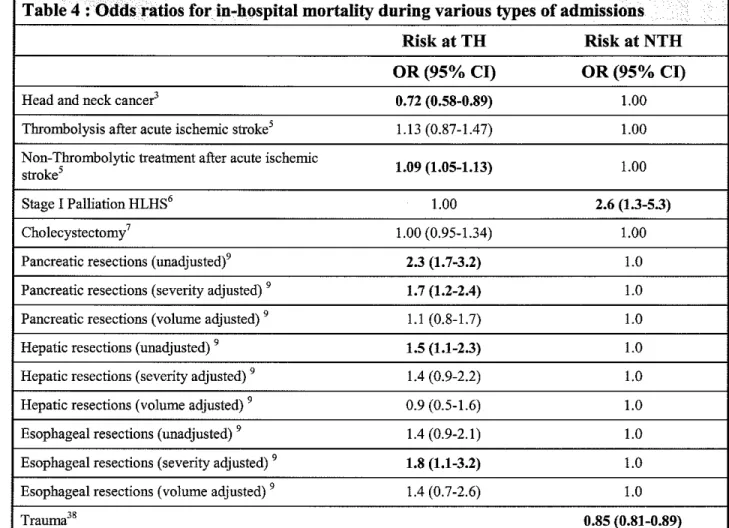
difficult to say for certain whether patients treated at teaching hospitals experience better or worse outcomes than do those treated at non-teaching hospitals. Six of the 15 studies I reviewed presented mortality risk according to the hospital's teaching status. These six studies estimated the risk for nine groups of patients undergoing treatment and the results were varied (see Table
4). Except where noted, each of the odds ratios is adjusted for case severity and only the items in bold are statistically significant.
Patients treated for head and neck cancer (HNC) and hypoplastic left heart syndrome (HLHS) were more likely to die during admissions at non-teaching hospitals.3• 6 However, in
cases of trauma and stroke for which thrombolytics were not used, patients were more likely to die at a teaching hospital.5' 38 Relationships between in-hospital mortality and teaching status for hepatic, pancreatic and esophageal resection was slightly confusing. The greater risk of
in-hospital mortality at teaching in-hospitals following hepatic resection lost statistical significance after controlling for the volume of such procedures performed at the hospital and severity of the case. Pancreatic resections were associated with a statistically significant higher risk of inpatient
mortality after controlling for severity but not after controlling for procedural volume. Only the severity adjusted odds ratio was statistically significant for esophageal resections.10
Complications and morbidity. Few of the authors found significantly different
complication rates and post-operative morbidity between teaching and non-teaching hospitals. Using AHRQ's Patient Safety Indicators, Duggirala eta! attempted to compare the rates of
certain postoperative events based on teaching status but found conflicting results. Their multivariate analysis revealed that patients at "major teaching hospitals," a term which was poorly defined, were more likely to experience venous thromboses, pulmonary embolism and pneumonia than those at non-teaching hospitals. Patients treated at "other teaching hospitals" (also poorly defmed) were more likely to experience venous thromboses, pulmonary embolism, urinary tract infections, and pulmonary compromise.13 Other attempts to compare quality of care across differing hospitals found that patients at teaching hospitals were at a higher risk of
receiving potentially ineffective care, but lower risk of receiving potentially unnecessary care.38
Generalizability of resnlts and future studies.
The generalizability of these study results to the target population, patients admitted to hospitals in the United States, can be summarized as fair to good. Factors that favor
generalizability of results are that the majority of studies drew samples from large, representative
source populations and that most studies specified reasonable inclusion and exclusion criteria. Limitations to generalizability are mainly based on the potential for bias that exists as a result of observational study designs as well as the wide variability in results, as discussed above.
Variability may be attributable to the fact that each study in the systematic review
mortality following Stage I palliation for HLHS could be a function of services that are more widely available at teaching hospitals, including pediatric intensive care and greater accessibility
to specialists. 6 Whereas non-thrombolytic treatment for acute ischemic stroke may not require the availability of a broad variety of specialists or as intensive care, reducing the risk of inpatient mortality at non-teaching hospitals. 5
Overall, a few conclusions can be drawn from this systematic review. Future studies are needed to further explore the relationship between quality of care provided at teaching and non-teaching hospitals. As the gold standard for testing hypotheses, randomized control trials may be an option for assessing quality differences, although ethical issues regarding randomizing
patients might arise, especially for emergent or urgent admissions. Even if randomization were performed only in elective cases, blinding patients and providers would be nearly impossible.
For these reasons, and for reasons of practicality, I have designed a study using the NIS database to examine differences in outcomes of hip fracture for patients admitted to teaching versus
non-teaching hospitals.
METHODS
Design
The purpose of this study was to determine if short-term outcomes following hip fracture repair are associated with a hospital's teaching status. I hypothesize that teaching hospitals have
better short-term outcomes than do non-teaching hospitals. In order to answer this question, I will perform a secondary analysis of data within the Nationwide Inpatient Sample (NIS)
database.
Ethics
This study was declared exempt from review by the Institutional Review Boards of the School of Public Health at the University ofNorth Carolina (Chapel Hill, NC) and Duke University Health System (Durham, NC).
Database
The NIS database is part of the Healthcare Cost and Utilization Project (HCUP),
sponsored by AHRQ. It contains data about inpatient hospitalizations as represented by hospital discharge abstracts and is the largest source of publicly available information regarding such hospitalizations in the United States. The purpose of this database is to allow researchers and
policymakers to examine trends in both discharge-level outcomes and hospital-level outcomes. Examples of discharge outcomes include length of stay, cost, effectiveness, and access to hospital care. Hospital outcomes include mortality rates, complication rates, and patterns of
care. Using the NIS, policymakers and researchers can examine outcomes across various geographic regions, payers, hospital types, and providers.
The study sample will be drawn from the population of hospital inpatient discharges
represented in the NIS databases for the years of 1990 through 2003
?
0 Each annual database contains every hospital discharge from the approximately I 000 hospitals sampled. Hospitals in what the AHRQ refers to as the sample's "target universe" are all hospitals within the UnitedStates that are categorized by the American Hospital Association (AHA) as community
facilities, rehabilitation hospitals, psychiatric hospitals, and chemical dependence treatment centers.42 To ensure that the NIS is representative of the target population, AHRQ bases the
sample on a twenty percent stratified sampling model representing a sampling frame of 90% of all hospital discharges in the United States, using the following hospital characteristics as strata: geographic region (Northeast, North Central, West, or South), hospital ownership (public, private, not-for-profit, or private investor-owned), location (urban versus rural), teaching status (teaching versus non-teaching), and bed size (small, medium, or large).43 Sampling probabilities are proportional to the number of institutions represented within each stratum.
The NIS database contains publicly available, de-identified information that can be derived from a typical hospital discharge abstract. Such data include primary and secondary
diagnoses; primary and secondary procedures; admission and discharge status; total charges; length of stay; hospital characteristics; and patient demographic information. Despite the
limitations imposed by data collection based on discharge abstracts, the NIS contains the largest, most nationally representative data regarding hospitalizations in the United States. The results of each annual NIS data collection are validated against other national databases including the
National Hospital Discharge Survey (NHDS), the Medicare Provider Analysis and Review (MedP AR), and the AHA Annual Survey database. 44 Missing data were excluded from this analysis. See the database's website, at http://www.hcup-us.ahrg.gov/nisoverview.jsp, for further information about the nature of the sample, and technical documentation.
Sample Selection
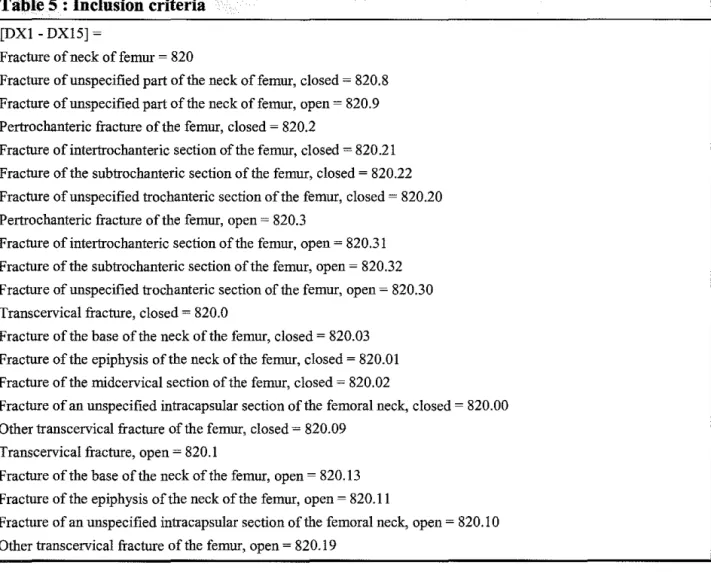
From the NIS, I have selected those records with an ICD-9 primary diagnosis code related to fracture of the hip for inclusion in this study's sample. I excluded discharge records from analysis if patients had primary or secondary diagnoses suggestive of pathologic fracture
due to primary bone malignancy or metastatic cancer. I also eliminated the records of patients under the age of 55 years old to limit the number of cases in which fracture was a result of high energy trauma. Figure 3 shows a map of the sample selection with inclusion and exclusion criteria. Tables 5 and 6 give the actual ICD-9 codes and NIS variable names used in including and excluding subjects.
Main Outcomes Measures
Table 7 shows the actual variable names and codes used to extract outcomes from the
NIS database. Outcomes of interest for this study include rates of mortality, rates of various postoperative complications, lengths of stay, cost, and discharge dispositions. The postoperative complications that were identified a priori are postoperative infection, pulmonary embolism,
deep vein thrombosis, pneumonia, need for blood transfusion, decubitus ulcers, sciatic nerve injury, and implant failure. Discharge dispositions will be grouped according to routine
discharge versus other types of discharge as a measure of postoperative disability. Non-routine
discharges included transfers to short -term hospitals, skilled nursing facilities, intermediate care facilities and other non-specified types of facilitites. Discharges with home health care and patients leaving against medical advice will also included in the non-routine discharges group. Outcomes will be stratified according to patient age (less than or greater than 70 years old).
Main Effect
for negative outcomes on univariate analysis will be included in a multivariate logistic regression analysis.
Covariates
I have identified several potential patient and hospital-specific covariates within the NIS database. These potential confounders were identified a priori and included patient sex, patient age, patient race, median household income for the patient's zip code, admission source, and
hospital size. Because teaching hospitals may treat more complicated patients, in order control for confounding, I created a clinical comorbidity score to represent each patient's other
comorbidities using the well-known Charlson and colleagues risk index, as modified by Deyo and colleagues - now often called the Charlson!Deyo Index -- for use with administrative
databases dependent on ICD-9 codes.45 The paper by Deyo and colleagues describes two different methods for creating a co-morbidity score to be used, depending on the availability of
prior diagnoses. The de-identified data in the NIS obviate the possibility of identifying prior hospitalizations and linking them to a patient's index hospitalization. In the absence of the index hospitalization information, we used the method for creating an index that accounts for the lack of availability of a patient's prior medical history. Using Deyo's methods, I grouped patients into categories based on comorbidity scores of 0, 1, 2, and 3 or more.
RESULTS
I have yet to complete the data analysis. As the results become available, I will present
them as described and displayed in the shells for Tables 8-l 0. Table 8 will provide the baseline characteristics of patients admitted for hip fracture to teaching and non-teaching hospitals. Table
9 will present findings by type of hospital; the data in Table 9 will begin providing the test of the central hypothesis of better outcomes in teaching hospitals. Table 10 will represent the
differences as risk -adjusted odds ratios for different outcomes by hospital type, once again testing the central hypothesis.
DISCUSSION
Hip fractures are a major public health problem in the United States; studying their
outcomes is of great importance. One variable in patient outcomes for many kinds of hospital admissions is the teaching status of the hospital. At present, we lack a straightforward analysis of differences in hip fracture outcomes by hospital type, leaving us to extrapolate the results of other studies to the problem of hip fractures. These other studies are based on observational data
and are subject to inherent biases, and their results conflict with one another.
Two other published systematic reviews confirmed my own finding of inconsistent results in comparisons of quality across teaching and non-teaching hospitals. These reviews4• 41
also found that any analysis of this issue is limited by the quality of the data analyzed and
variations in defining "teaching hospital." Despite the benefits to analysts oflarge administrative databases, such as increased generalizability and availability of data, these databases are far from perfect as research tools, since they were created as claims databates, and any conclusions drawn from their use should be treated with some skepticism. Nevertheless, each reviews identified a small trend toward provision of better care at teaching hospitals, 4•41 and one of the reviews made a point of noting that for common conditions, especially in elderly patients, major teaching
We need further analyses, and more tests of evidence, of the quality of care for hip fractures treated at teaching and nonteaching hospitals. If, after controlling for other variables known to influence outcomes, teaching hospitals appear to be associated with better quality, this finding would be important in itself. The finding would also generate a new research agenda, to try to determine what about teaching hospitals is responsible for the improved outcomes, and
how those features might be incorporated into the care provided by nonteaching hospitals. My systematic review ofthe literature led to the hypothesis that patients with hip fractures will experience better outcomes, such as decreased charges, shorter LOS, and lower
rates of in-hospital mortality, if they are treated at teaching hospitals. I have designed a
retrospective cohort study to test that hypothesis. The NIS data enables me to compare outcomes in teaching and non-teaching hospitals, controlling for other differences in hospitals, such as
volume of procedures and private versus public hospital ownership, as well as potential
differences in patient populations. Limitations of the database, similar to the limitations of the studies evaluated in my systematic review, are also described. The only data obtainable from hospital discharge records, the basis of the NIS database, are subject to administrative coding errors. Nonetheless, the database is the largest all-payer hospital discharge database in the
country and is representative of the hospitalized United States population.
This proposed test of hypotheses in an established secondary database, grounded in a systematic review of the literature, creates an opportunity to determine whether teaching
hospitals appear to provide higher quality of care to patients admitted for hip fractures, and whether better quality of care appears to be associated with better patient outcomes, as measured by lower rates of in-hospital mortality, lower charges, shorter length of stay, and fewer
postsurgical complications. I hope to present the results of my analysis in a future paper and
ACKNOWLEDGEMENTS
The Centers for Excellence in Surgical Outcomes at Duke University has been a great resource for me in designing this study and I doubt that I would have gotten this far without the
help of faculty and collaborators at the center. I would also like to thauk Dr. Andra James, also at Duke University, for reviewing my first draft and making suggestions for improvement. As my mother and role model, she has been my greatest mentor in life. Finally, I would especially
like to thauk my readers for their patience in awaiting my manuscript.
I
APPENDIX : TABLES AND FIGURES
Table 1: Observational Studies Reviewed · ..•... .• .
.
Authors, Year Study Design Source Study Pop. Study Question Measurements Significant Results Findings Pop.
Allareddy and 2° data analysis NIS IC ~All • provide • Hospital • Patients treated tPositive:
Konety, 2006 of observational 2000- admissions with a demographic characteristics forHNCatTH • Used a data 2003 1 o diagnosis characteristics of
• Patient less likely to die previously
(Retrospective corresponding to patients characteristics than those at validated cohort) the ICD-9 codes for hospitalized for NTH method to
head and neck HNC during the • UvA and MvLRA adjust for cancer (HNC) years 2000-2003 describing the confounding
influence of patient
EC~none • identify predictors and hospital effect of specified of in-hospital characteristics on comorbidities n~ 24,803 mortality in-hospital Negative:
mortality • Did not use
process measures
Bateman, 2° data analysis NIS IC ~all admissions • Identify factors • Characteristics of • Neither patients tPositive:
Schumacher, of observational 1999- with 1° diagnosis associated with patients and treated with or • Found mortality Boden-Albala, data 2002 of acute ischemic in-hospital hospitals) without rates similar to et al., 2006 (Retrospective stroke admitted mortality after • Disposition thrombolysis for those in RCTs
cohort) through the E.R. administration of acute ischemic
EC ~ admissions in thrombolysis in • Complications stroke were • Adjusted for
acute ischemic • MvLRAof more likely to comorbidties
KS, IL, OH, UT,
W A, and WV due stroke patients predictors of in- die at TH vs Negative: to lack of certain hospital mortality NTH • Differences
codes between
n~ 248,964 patients may be
a source of bias
Table 1. Observational Studies, continued
Authors, Year Study Design Source Study Pop. Study Question Measurements Significant Results Findings Pop.
Berry, 2° data KIDS IC ~patients with • evaluate the • basic • Patients treated at Positive:
Cowley, Hoff analysis of 1997 ICD-9 diagnostic mortality of characteristics non-THs • Large multi-state, and observational and codes for hypoplastic children with of patients significantly more multi-center
Srivastava, data 2000 left heart syndrome HLHS undergoing undergoing likely to die database, study 2006 (Retrospective (HLHS) and stage I surgical stage I during of rare diagnosis
cohort) procedural codes for palliation when palliation for hospitalization and procedure stage I palliation performed in HLHS
teaching and • Accounted for
EC ~ those with • hospital some bias
procedural codes for nonTHs volumes of
modified Stage I stage I Negative:
palliation, Stage II palliation • Changing palliation, and Stage performed selection criteria
III palliation • UvAand different results
n ~ 1634 MvLRAof • Decreased
predictors of generalizability in-hospital due to lack of mortality after inclusion of high
stage I procedural
palliation volume states)
• Observational data may yield
selection bias
Carbonell, 2° data NIS IC ~ all patients with • To examine patient • Patient • Hospital teaching tPositive:
Lincourt, analysis of 2000 ICD-9 procedure and hospital demographics status was not • Results are
Kercher, et al., observational codes for characteristics to • Hospital associated with similar to other
2005 data cholecystectomy determine whether characteristics risk of mortality studies (Retrospective EC ~ none specified they specifically
• MvLRAof or morbidity Negative:
cohort) influence the
n ~ 93,578 outcome of predictors of • THs associated
with longer LOS, • Only includes cholecystectomy morbidity and inpatients
mortality greater charges, d lower rates of laparoscopic cholecystectomy
Table 1. Observational Studies, Continued •
.
Authors, Year Study Design Source Study Pop. Study Question Measurements Significant Results Findings Pop.
Carbonell, 2° data analysis NIS IC =all patients with • Analyze tbe • LOS • Non-THs had longer 1Positive: Lin court, of observational 2000 diagnosis of morbid influence of • Charges LOS, increased
• Used a
Matthews, et data obesity having gastric hospital and charges, and increased validated
al.,2005 (Retrospective bypass patient • Morbidity comorbidity index system for cohort) EC = none specified demographics • Mortality • No differences in adjusting for
co-on outcomes morbidity or mortality morbidity
n= 5876
Negative:
• Could not distinguish between open and
laparoscopic gastric bypass
Cosper, 2° data analysis KIDS IC =patients with • provide a broad • LOS • Inconsistent results: Positive:
Hamann, of observational 2000 ICD-9 procedure code picture of3 • Charges urban TH had greater • Accounted for
Stiles and data for appendectomy, common LOS only for transfers to Nakayama, (Retrospective pyloromyotomy or pediatric • Hospital appendectomies and other hospitals
I
2006 cohort) diagnosis of surgical characteristi higher chargers for in LOS
intussusception conditions in the cs appendectomies and
EC = none specified United States pyloromyotomies • Large database
n= 87,565 Negative:
• No levels of
significance reported and differences between LOS and charges fairly small
Table 1. Observational Studies Continued · ..
-Authors, Year Study Design Source Study Pop. Study Question Measurements Significant Results Findings Pop.
Dimick, 2° data NIS 1996- IC =patients • To determine if • Inpatient • No greater risk for tPositive:
Cowan, analysis of 1997 having esophageal, teaching status mortality mortality or Adjusted for
Colletti and observational hepatic or is associated • Prolonged LOS prolonged LOS for potential Upchurch, data pancreatic with outcomes (>751
h percentile any procedure after confounders
2004 (Retrospective resections for 3 complex for LOS across adjusting for patient cohort) EC=none surgical facilities) characteristics and
specified procedures hospital volume
n= 6657
Duggirala, 2° data NIS 1990- IC = all patients • To compare • Postoperative • MvLRA found 1Positive: Chen and analysis of 1996 undergoing surgery postoperative adverse events: higher risk of • Used validated Gergen, 2004 observational EC = patients adverse event • VTE/PE VTE/PE, pneumonia method for
data admitted from rates between at major THs, higher adjusting for (Retrospective SNFs, patients with THs and non- • Pulmonary risk ofVTE/PE, severity and
cohort) certain THs compromise pulmonary case mix
comorbidities, • Pneumonia compromise and
transfers from other • UTI UTI at other THs hospitals
n =unknown# of
admissions
Knapp, 2006 2° data "Hospital IC=? • To compare • AHRQ process • THs perform better Positive:
analysis of Compare" EC=? selected measures of care in MI and CHF care • Compared
administrative data via process for treatment of • Other measures are process
data Health n = ? admissions measures of CHF,MI, similar across types measures Quality care at major pneumonia and of hospitals Negative:
Alliance THs, integrated antibiotic
THs, other THs prophylaxis for • Poorly reported
andNTHs surgery methods
• Unknown
adjustment
• Observational,
non-randomized
Table 1. Observational Studies, conti11ued ... ··• · ..
. ( f
<• ••••••••••••• Authors, Year Study Design Source Study Pop. Study Question Measurements Significant Results Findings
Pop.
Mullins, 2° data NIS 1995- IC ~patients with • develop • rates of injury by • Urban non-THs were tPositive:
Diggs, analysis of 2000 codes for injury universal region more likely to • Accounted for Hedges, et aL, observational EC ~ codes for measures of • death rates provide potentially potential 2006 data foreign bodies outcome and unnecessary care but confounders
(Retrospective entering through an processes of • LOS had lower risk of
cohort) orifice, late effects, care • Potentially inpatient mortality Negative:
certain ineffective care and ineffective care • Unknown levels
complications • Potentially of significance
n ~ 1,769,782 unnecessary care
Romano, 2° data NIS 2000 IC ~ all admissions • The association • Patient Safety • Urban THs had tPositive:
Geppert, analysis of for the year 2000 of safety Indicators (PSis) greater rates of death • Validity of
Davies, et al., observational EC ~none indicators with developed by in low-mortality codes chosen 2003 data specified hospital AHRQ DRGs, decubitus for PSis
(Retrospective characteristics ulcers, leaving reviewed by
cohort) n ~ 36, 318,000 foreign bodies in
surgery, iatrogenic many experts pneumothorax, Negative: infections due to • Unknown
medical care, numerator and
postoperative denomenators
bleeding, • Odds ratios and postoperative significance metabolic levels not derangements,
reported postoperative VTE
Rutledge, 2° data NIS 1988- IC ~patients • Do Medical • Mean charges • Inconsistent results 1Negative: 1997 analysis of 1992 undergoing School • LOS for charges and LOS • Unlmown
observational cholecystectomy Associated • MSAHs led use of definition for
data EC~? Hospitals laparascopic MSAHs
(Retrospective
n ~ 351,201 (MSAHs) have technology
cohort) higher charges
Table 1. Observational Studies, continued
Authors, Year Study Design Source Study Pop. Study Question Measurements Significant Results Findings Pop.
I
Thomlowand 2° data NIS 2000 IC ~ 10% sample • To examine the • AHRQPS!s • No statistically 1Positive: Stukenborg, analysis of of all discharges for relationship significant • Attempted to 2006 observational the year 2000 between differences between risk -adjust
data EC~? preventable hospital ownership comparisons
(Retrospective adverse events teaching status and
cohort) n = ? admissions and hospital patient outcomes Negative:
ownership type • Difficult to
and teaching assess quality
status across many
indicators
• No comparison
of risk across
hospitals
Tilford, 2° data NIS 1988- IC ~ children • To estimate the • In-hospital • No significant tPositive:
A ilk en, analysis of 1999 hospitalized with benefits from mortality difference in • Used logistic
Anand, et al., observational traumatic brain more • Use of mortality between regression to
2006 data injury aggressive intracranial urban TH and NTH control for (Retrospective EC~ treatment in pressure • Urban THs were not irUury severity
cohort) terms of life monitoring more likely to use
n = ? admissions years saved in
(ICPM) !CPM children with
traumatic brain injuries
Todd, Arthur, 2° data NIS 1998- IC ~patients with • To assess • Processes of • Surgeons at THs less tPositive:
Newgard, et analysis of 2000 ICD-9 codes for which factors care for splenic likely to perform • Adjusted for al.,2004 observational splenic injury influence the InJury splenectomy and injury severity
data EC ~ patients > 80 decisions of laparatomies using a
(Retrospective
n ~ 14,901 surgeons in validated
cohort) managing severity score
admissions splenic trauma
Table 2: Positive and Negative Aspects of the NIS Database
Positive: Negative:
• Drawing from a large source population may
lead to greater generalizability to the target • Disease severity is difficult to adjust for population
• Definitions of teaching hospitals and non- • Observational data may liead to increased teaching hospitals are specific bias
• Administrative data limits the variables available
• Outcomes are dubious markers of quality of care
• Only short-term outcomes can be measured • Multiple visits by one patient for the same
Table 3 : Quality Ratings for Reviewed Studies . . · . . .·
Study Question Popula- Compara- Exposure or Outcome Statistical Analysis Discussion Total
tion bility Intervention Measurement Data Reporting Score
Allareddy and Konety, 2006 3 3 3 3 2 3 2 19
Bateman, Schumacher,
3 3 I 3 2 2 2 16
Boden-A1bala, et al., 2006
Berry, Cowley, Hoff and
3 3 1 3 2 2 2 16
Srivastava, 2006
Carbonell, Lincourt,
3 3 1 3 2 2 2 16
Kercher, et al., 2005
Carbonell, Lincourt,
3 3 1 3 2 2 2 16
Matthews, et al., 2005
Cosper, Hamann, Stiles and
1 3 1 3 2 1 2 13
Nakayama, 2006
Dimick, Cowan, Colletti and
3 3 3 3 3 3 2 20
• Upchurch, 2004
Duggira1a, Chen and
3 3 3 3 3 3 2 20
I
Gergen, 2004
Knapp, 2006 3 1 0 3 3 0 2 12
Mullins, Diggs, Hedges, et
1 3 2 3 2 1 2 14
al.,2006
Romano, Geppert, Davies, et
3 2 2 3 3 0 2 15
al., 2003
Rutledge, 1997 3 3 0 0 2 2 2 12
Thornlow and Stukenborg,
3 2 3 3 3 2 2 18
2006
Tilford, Aitken, Anand, et
1 3 3 3 2 2 2 16
al.,2006
Table 4 : Odds ratios for in-hospital mortality during various types of admissions .
RiskatTH Risk at NTH
OR(95% CI) OR(95% CI)
Head and neck cancer3 0. 72 (0.58-0.89) 1.00
Thrombolysis after acute ischemic stroke' 1.13 (0.87-1.47) 1.00
Non-Thrombolytic treatment after acute ischemic
1.09 (1.05-1.13) 1.00
stroke'
Stage I Palliation HLHS6 1.00 2.6 (1.3-5.3)
Cholecystectomy' 1.00 (0.95-1.34) 1.00
Pancreatic resections (unadjusted)' 2.3 (1. 7-3.2) 1.0 Pancreatic resections (severity adjusted) 9 1.7 (1.2-2.4) 1.0 Pancreatic resections (volume adjusted) 9 1.1 (0.8-1.7) 1.0
Hepatic resections (unadjusted) 9 1.5 (1.1-2.3) 1.0 Hepatic resections (severity adjusted) 9 1.4 (0.9-2.2) 1.0
Hepatic resections (volume adjusted) 9 0.9 (0.5-1.6) 1.0
Esophageal resections (unadjusted) 9 1.4 (0.9-2.1) 1.0
Esophageal resections (severity adjusted) 9 1.8 (1.1-3.2) 1.0 Esophageal resections (volume adjusted) 9 1.4 (0.7-2.6) 1.0
Trauma38 0.85 (0.81-0.89)
Table 5 : Inclusion criteria
[DX! - DX15] ~
Fracture of neck of femnr ~ 820
Fracture of unspecified part of the neck offemnr, closed~ 820.8
Fracture of unspecified part of the neck offemnr, open~ 820.9
Pertrochanteric fracture of the femnr, closed~ 820.2
Fracture of intertrochanteric section of the femnr, closed~ 820.21
Fracture of the subtrochanteric section of the femnr, closed~ 820.22
Fracture of unspecified trochanteric section of the femnr, closed~ 820.20
Pertrochanteric fracture of the femnr, open~ 820.3
Fracture of intertrochanteric section of the femnr, open~ 820.31
Fracture of the snbtrochanteric section of the femnr, open~ 820.32
Fracture of unspecified trochanteric section of the femnr, open~ 820.30
Transcervical fracture, closed~ 820.0
Fracture of the base of the neck of the femnr, closed~ 820.03
Fracture of the epiphysis of the neck of the femnr, closed~ 820.01
Fracture of the midcervical section ofthe femnr, closed~ 820.02
Fracture of an unspecified intracapsular section of the femoral neck, closed~ 820.00
Other transcervical fracture of the femnr, closed~ 820.09
Transcervical fracture, open~ 820.1
Fracture of the base of the neck of the femnr, open~ 820.13
Fracture of the epiphysis of the neck of the femnr, open~ 820.11
Fracture of an unspecified intracapsular section of the femoral neck, open~ 820.10
Other transcervical fracture of the femnr, open~ 820.19
Table 6 : Exclusion criteria
[DXl - DX15] ~
Malignant neoplasm of bone or articular cartilage~ 170
Malignant neoplasm oflower extremity~ 170.7
Malignant neoplasm, site unspecified~ 170.9
Secondary malignant neoplasm~ 198
Secondary malignant neoplasm of bone or bone marrow~ 198.5
Secondary malignant neoplasm of lower limb ~ 196.5
Neoplasm, uncertain behavior~ 238.9
Neosplasm, unspecified site within bones of the lower limb~ 239.9
Pathologic fracture (cause unknown)~ 733.10
'J;able 7 : Outcome variable codes .
Main outcome variables NIS and ICD-9 codes
Mortality [DIED]~ I (died during hospitalization)
Postoperative complications: [DX1-DX15] ~(See below for ICD-9 codes)
Postoperative infection Post-operative wound infection~ 998.59
Postoperative wound infection, unspecified~ 686.9
Pulmonary embolism Pulmonary embolism and infarction ~ 415.19 Postoperative pulmonary embolism~ 415.11
Thrombophlebitis during or resulting from a procedure NEC ~ 997.2
Thrombophlebitis of the deep veins of the lower extremities~ 451.1
Deep vein thrombosis Thrombophlebitis of the femoral vein~ 451.11
Thrombophlebitis of the deep vessels of the lower extremity, NEC ~ 451.19
Thrombophlebitis of the lower extremity, not specified~ 451.2
Viral pneumonia~ 480
Pneumococcal pneumonia = 481
Other bacterial pneumonia~ 482
Pneumonia Pneumonia due to other specific organism~ 483
Pneumonia in other infectious disease = 484
Bronchopneumonia, organism not specified= 485
Pneumonia, organism unspecified~ 486
Transfusion ofblood and blood components~ 99.0
Perioperative autologous transfusion of whole blood or blood components~
99.00
Exchange transfusion~ 99.01
Transfusion of previously collected autologous blood~ 99.02
Other transfusion of whole blood~ 99.03 Need for blood transfusion
Transfusion of packed cells~ 99.04
Transfusion of platelets~ 99.05
Transfusion of coagulation factors~ 99.06
Transfusion of other serum~ 99.07
Transfusion ofblood expander~ 99.08
Transfusion of other substance, including blood surrogate~ 99.09
Decubitus ulcers Decubitus ulcers~ 707.0
Sciatic nerve injury Sciatic nerve injury~ 956.0 Lesion of sciatic nerve= 355.0
Table 7: Outcome variable codes (continued) .·.·
Main outcome variables NIS and ICD-9 codes
Mechanical complication of internal orthopedic device, implant, and graft~
996.4
Implant failure Mechanical complication of other specified prosthetic device, implant and graft ~ 996.5
Inflammation reaction due to internal prosthetic device, implant, and graft~
996.6] Other complication of internal device, implant, and graft~ 996.7
Length of stay [LOS]
Cost [TOTCH] ~ edited total charges
Discharge dispositions 1990-1997: [DISP]
1998-2003: [DISPUNIFORM]
Routine [DISP] ~ (I) routine
[DISPUNIFORM] ~ (I) routine
[DISP] ~ (2) short-term hospital, (3) SNF, (4) intermediate care, (5) another type of facility, (6) home health care, (7) AMA, (20) died
Non-routine [DISPUNIFORM] ~ (2) transfer to short term hospital, (5) other transfers
>
Table 8 : Baseline characteristics of patients admitted for hip fractures
Baseline characteristics Teaching Hosuitals Non-teaching hosnitals
Age<70 Age>70 Age<70 Age> 70
Freq (%}/Mean Freq (%)/Mean Freq (%}/Mean or Freq (%}/Mean or or Median
or Median (50%)
(50%)- Median (50%}- Median (50%}-- S.D/25(50%}--75%
S.D/25-75% S.D/25-75% S.D/25-75%
Sex Male
Female
Missing
Race White
Nonwhite
Missing
Mean Deyo Score
Discharge
Routine
disposition
Non-routine
Missing
Mean income (by
$1-25,000 zip code)
$25,001-35,000
> $35,000
Missing
Admission source ED
Other
Missing
Hospital size Small
Medium
Large
Table 9 : Outcomes of hip fractures by hospital teaching status
Main Outcomes Teaching Hosj;1itals Non-teaching hos11itals
Age<70 Age>70 Age< 70 Age> 70
Freq (%)/Mean or Freq (%)/Mean Freq Freq (%)/Mean or (%)/Mean or Median (50%)- or Median (50%)
Median (50%) Median (50%) S.D/25-75% - S.D/25-75%
- S.D/25-75% - S.D/25-75%
In-hospital mortality
postoperative complications:
postoperative infection
pulmonary embolism
deep vein thrombosis
pneumonia
need for blood transfusion
decubitns ulcers
sciatic nerve injury
implant failure
Length of Stay
Cost
discharge dispositions
routine