Access and Attitudes:
A Qualitative Approach to Understanding Mexican Immigrants’ Health-seeking Behaviors and Interest in Health Insurance
By
Carolyn Ziemer
A Master’s Paper submitted to the faculty of the University of North Carolina at Chapel Hill
in partial fulfillment of the requirements for the degree of Master of Public Health in
the Public Health Leadership Program
Chapel Hill
2012
First Reader:
Date
Second Reader:
Table of Contents
Systematic Review
Abstract………3
Systematic Review………...5
References………..14
Figures………..……….……….16
Tables……….………17
Original Manuscript
Abstract………..21Original Manuscript………...22
References……….……….35
Figures………...…….38
Tables……….39
Why do Mexican Immigrants Return to Mexico for Health Care?
A Systematic Review of Qualitative Evidence
Abstract
Background: Mexican immigrants to the United States (U.S.) have poorer access to and
utilization of health care than native citizens. Lack of insurance, low education, low
socioeconomic status, limited English-proficiency and lack of legal documentation are among
the barriers to receiving health care for this population. One unique strategy used by Mexican
immigrants to circumvent these barriers is to seek health care in Mexico.
Objectives: To identify and summarize the available qualitative studies describing immigrants’
reasons for returning to Mexico for care.
Search strategy: We searched the PubMed and Web of Science databases from inception through
February, 2012 to identify relevant publications. Reference lists from articles meeting inclusion
criteria were hand-searched to identify additional relevant publications missed by the database
searches.
Selection criteria: Our inclusion criteria required that the studies: 1) target Mexican immigrants
living in the United States 2) address reasons for medical returns to Mexico and 3) employ
in-depth, qualitative methods to answer the study question. Only publications with
English-language full-text were considered for review.
weaknesses. Quality was assigned using criteria established by the National Critical Appraisal
Skills Programme (CASP) for Qualitative Methodologies.
Main results: The initial search identified 563 articles, 19 of which underwent full-text readings.
Three articles met inclusion criteria for review. Two were given fair quality ratings and one was
rated as good quality. All three of the studies reviewed employed in-depth, semi-structured
interviews to explore the reasons that immigrants return to Mexico for care. Two themes
emerged consistently across the reviewed studies: Mexican immigrants often preferred the
quality of care in Mexico and favored the lower cost of care across the border.
Authors' conclusions: There is a paucity of qualitative research describing immigrant motives for
seeking health care in Mexico. In addition, the studies reviewed only sampled immigrants living
in California. Despite these limitations, consistencies in the findings of the three articles
highlight reasons for border-crossing that are less-emphasized in the quantitative studies.
Qualitative data points to cultural competence, perceived quality of care and accessibility of
Why do Mexican Immigrants Return to Mexico for Health Care? A Systematic Review of Qualitative Evidence
INTRODUCTION
Mexican immigrants to the United States (U.S.) have poorer access to and utilization of
health care than native citizens. Approximately 34.4% of Mexicans in the U.S. are uninsured,
slightly higher than the 32.4% rate for all Hispanics, and much higher than the 13.6% rate for
non-Hispanic individuals (1,2). The disparities are more pronounced for foreign-born Mexicans,
a group shown to have 55% lower odds of having a regular doctor as native-born non-Hispanic
whites after adjusting for socioeconomic and health-related factors (3).
The barriers to health utilization for Mexican immigrants are manifold. While lack of
health insurance is perhaps the foremost of these barriers, there are several other obstacles that
prevent this vulnerable population from accessing care. Mexican immigrants living in the U.S.
have low education and high poverty rates compared to national averages (4). Undocumented
immigration status prohibits many from receiving public assistance from Medicaid or Medicare.
Fear of deportation also deters health-seeking behavior. In addition to these socioeconomic and
legal factors, individuals are also hindered by cultural and linguistic barriers (5). Latinos report
less trust in physicians and more discrimination by the health care system than other ethnic
groups (6).
One unique strategy used by Mexican immigrants to circumvent such barriers is to seek
health care in Mexico. Lack of insurance, high cost of care in U.S., delay seeking care, proximity
to Mexico, and limited English proficiency have been identified as predictors of border-crossing
behavior (7-10). Discharge data indicate that elective procedures and treatment of diabetes
While a large body of demographic, socioeconomic, and migration data have been used
to suggest predictors of medical returns, research investigating personal motives for
border-crossing is less prominent in the literature. The purpose of this review is to identify and
summarize the available qualitative studies describing immigrants’ reasons for returning to
Mexico for care.
METHODS
Search strategy
One author (CZ) searched Pub Med and Web of Science databases from inception
through February, 2012 to identify relevant publications. The following MeSH terms and search
strategy was used in Pub Med: (mexico OR mexican americans OR latino OR Hispanic) AND
(accessibility of health services OR health services/utilization OR delivery of health care OR
health services) AND (travel OR medical tourism OR emigrants and immigrants OR migrants). Web of Science was searched for key terms “immigrant,” “health,” and “Mexico.” The search
was limited to English-language articles only. Reference lists from articles meeting inclusion
criteria were hand-searched to identify additional relevant publications missed by the database
searches.
Article selection
The titles of studies were reviewed to determine relevance to the study question. Only
original research articles published in peer-reviewed journals were considered. To be included,
studies had to: 1) target Mexican immigrants living in the United States 2) address reasons for
question. There is some debate about whether survey and questionnaire designs should be
considered qualitative methods. While these designs may include open-ended items, participant
responses are often limited by time and structure constraints. As such, studies using only survey
or questionnaire data were excluded from this analysis. Studies examining medical returns to
countries other than Mexico were excluded. Only publications with English-language full text
were considered for review.
Data extraction
Each included study was analyzed by one author (CZ). Relevant study characteristics
were abstracted into an evidence table to aid in study comparison and quality assessment.
Characteristics incorporated in the table included study aims, design, sample, findings, and
strengths/weaknesses.
Quality assessment
Quality was assigned using criteria established by the National Critical Appraisal Skills
Programme (CASP) for Qualitative Methodologies (12). The CASP assessment tool considers
ten aspects of qualitative methodology: study aims, appropriateness of qualitative methodology,
appropriate research design, sampling, data collection, reflexivity, ethical issues, data analysis,
findings and value of the research. For reviewed publications, scores of 0 (poor), 0.5(fair), or
1(good) were assigned for each of the aforementioned quality variables. Scores were summed
and a quality rating was reported out of ten possible points.
Search Results
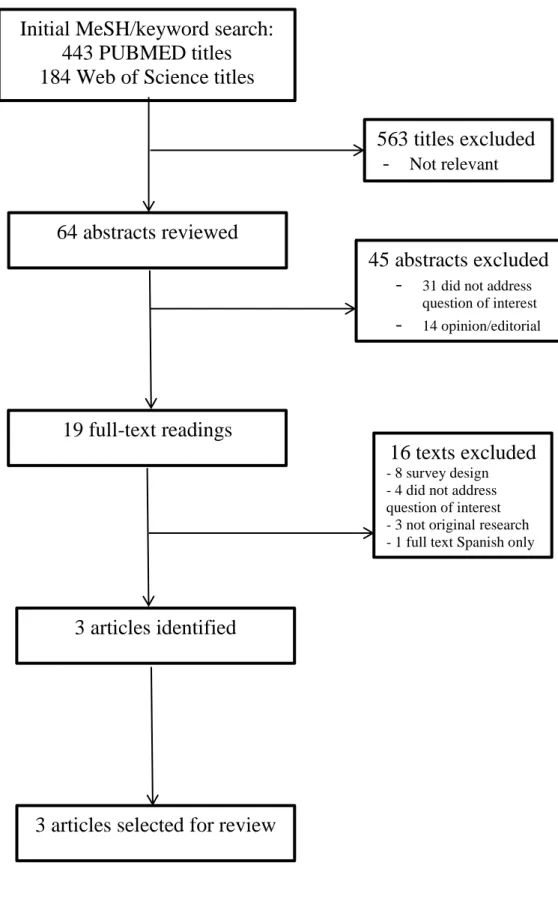
After reviewing titles, 563 articles were excluded, and 64 abstracts were studied for
relevance. A total of 19 articles underwent full text review. Of this number, 16 were excluded for
the following reasons: use of survey design (n=8), did not address returns for medical purposes
(n=4), not original research (n=3) and no English full-text available (n=1). A hand search of the
reference lists of the three remaining studies identified no other additional articles meeting
inclusion criteria (Figure 1).
Study design and quality
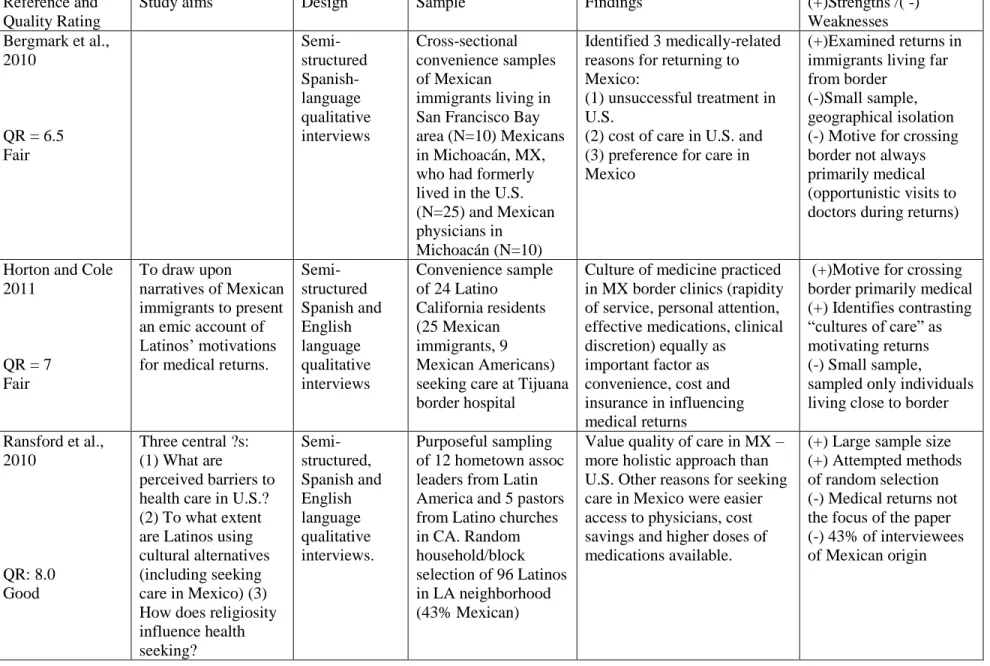
Of the three studies reviewed (13-15), two were given fair quality ratings and one was
rated as good quality. All three of the studies reviewed employed in-depth, semi-structured
interviews to explore the reasons that immigrants return to Mexico for care (Table I).
Bergmark et al.(13) used convenience sampling to solicit interviews with Mexican
immigrants living in San Francisco Bay area (N=10), Mexicans in Michoacán, MX, who had
formerly lived in the U.S. (N=25), and Mexican physicians in Michoacán (N=10). The biggest
strength of this study is that it sampled a population of immigrants who lived far from the border,
setting it apart from much literature on the topic which focuses on residents of border towns.
Limits to this study were its small sample size and geographic isolation. In addition, participants
queried were not actively seeking cross-border care. As such, the primary motive for crossing to
Mexico was not always for health-related reasons. Some participants engaged in opportunistic
use of the medical system while staying in Mexico for family or work-related reasons. For these
weaknesses and several others (Table II), the Bergmark et al study was given a quality rating of
Horton and Cole (14) used convenience sampling to obtain interviews with 24 California
residents (25 Mexican immigrants, 9 Mexican Americans) seeking care at Tijuana border
hospital. Unlike the Bergmark et al., this study sought individuals actively seeking cross-border
care; all participants were recruited in the waiting room of a border hospital. However, a small
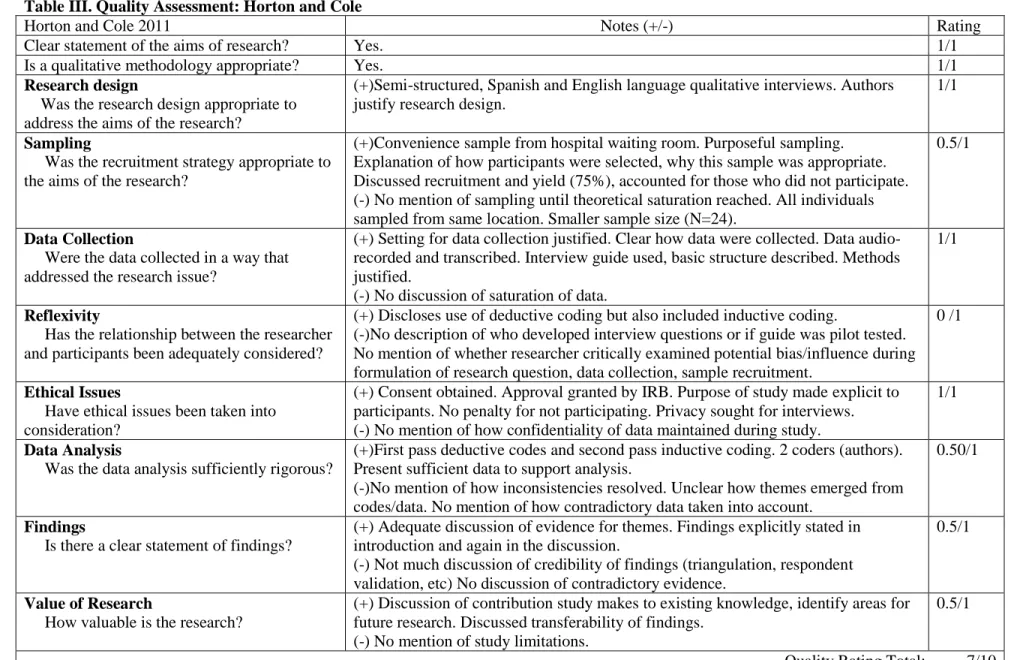
sample size, obscure description of data analysis, and failure to disclose limitations (Table III)
contributed to the assignment of a fair quality rating (7.0).
The most methodologically sound of the three studies, Ransford et al. (15) consulted a
random household sampling of 96 Latinos in a Los Angeles neighborhood. One of the strengths
of this study was the use of method triangulation; interviews with key informants (12 hometown
association leaders in Latin America and 5 pastors of Latino churches in LA) were used to shape
the topic guide given to participants. The large sample size and random selection methods were
perhaps the greatest strengths of the study; however, only 43% of interviewees were of Mexican
origin. In addition, the examination of reasons for returning to Mexico for care was only part of
several key questions addressed in the interviews. As such, the topic may not have been
discussed to the extent or detail to which it was addressed in the other studies. While the paper
received a quality rating of good (8.0), the discussion of medical returns was not as thorough as
in the other publications (Table IV).
Weakness common to all studies were failure to discuss whether sample size was
sufficient to achieve theoretical saturation of the data. Additionally, no studies reported on
reflexivity during the development and execution of the research. Reflexivity requires that the
relationship between the researcher and the participants be explicitly considered, particularly as a
source of potential bias and influence during formulation of research questions and data
Common themes
While the sample characteristics of each study varied considerably, there was significant
overlap in reasons for returning to Mexico for care. Two themes emerged consistently across the
reviewed studies: Mexican immigrants often preferred the quality of care in Mexico and favored
the lower cost of care across the border.
Quality of care
The perception of superior quality of care was emphasized as a prominent reason for
medical returns in all three studies. Indeed, two of the studies(13,14) reported that quality of care
was as important as cost in influencing medical returns, while one study (15) proposed that
quality was more important than cost in motivating border-crossing for care. Higher quality was
attributed to several characteristics, the most redundant of which were superior effectiveness of
treatments, a holistic culture of medicine in Mexico, and more accessible care. Perhaps the most
consistent finding across the studies was the perception that medical treatments were more
effective in Mexico. In each study, participants commented on the higher strengths of
medications available in Mexico. Participants in the Bergmark et al. study noted that Mexican
treatments provided superior symptom relief compared to those available in the U.S. (13) These
sentiments were echoed by interviewees in the Horton and Cole study, who associated the
low-potency therapies prescribed in the U.S. with physician apathy (14).
A robust theme that emerged in Ransford et al.’s work was the perception that Mexican
physicians practiced more holistic medicine. Participants commented on the time invested by
physicians to get to know the entire person, not merely treat disease (15). This time and attention
Mexico spend more time examining patients, making them more effective diagnosticians. In
contrast, interviewees reported American physicians relied on quick consultations, imaging tests,
and referrals, which immigrants perceive as impersonal and sometimes inferior (14)
Finally, accessibility was an important part of perceived quality of care. Accessibility was
defined variably by the studies. Accessibility was perceived as easier appointment scheduling
and physician access (15), rapidity of diagnostic and therapeutic services (14), and lack of
communication barriers (13).A recurring value across studies was the desire for rapid attention,
which was often hindered in the U.S. by lengthy waiting times for appointment, difficulty
obtaining referrals, and insurance plan protocols (14). These services were appreciated more by
immigrants with legal documentation permitting cross-border travel.
Cost
Cost was also a prominent reason that immigrants to the U.S. sought treatment back in
Mexico. Bergmark et al. reported that dental care was the most commonly cited reason to return.
Surgery was another frequent reason for crossing; with procedures at highly-rated Mexican
hospitals costing a fraction of the cost in U.S. hospitals (13).The theme of prohibitive care costs
in the U.S. and the cost-savings found across the border was reiterated in the other studies. Of
note, Horton and Cole observed that a significant fraction of immigrants with U.S. health
insurance preferred border hospitals in Mexico (14).
DISCUSSION
There is a paucity of qualitative research describing immigrant motives for seeking health
care in Mexico. The quality of the available studies is fair to good; however, rating qualitative
studies poses challenges in itself. Guba and Lincoln propose that indicators of quantitative
validity and external validity; whereas corresponding qualitative criteria are credibility and
transferability, respectively (16).The aim of qualitative research is to describe a particular
phenomenon from the perspective of the participant. As such, the participant is best-suited to
judge the credibility of the findings, not a third-party reader. The “transferability” criterion is
also difficult to rate. The goal of qualitative research is not to be generalizable; however, the
degree to which results may be “transferred,” or applied to another context, could be considered
on a case by case basis, taking into account the assumptions that guided the research.
All of the studies reviewed sampled immigrants living in California. While distances
from the border differed, there are likely characteristics of the Mexican population in California
that are distinct from other states. In particular, it would be useful to examine attitudes in Texas,
which shares the longest border with Mexico and has more border health care resources than
California. In contrast, interviewing individuals living in high-migration states that do not share a
border with Mexico could provide a unique and valuable perspective on medical returns. The
risk of crossing the border may be much greater in a state further away; as such, the motives for
journeying may be distinct from those proposed by the studies reviewed.
Notwithstanding such limitations, consistencies in the findings of the three articles
highlight reasons for border-crossing that are less-emphasized in the quantitative studies. Medical returns are frequently characterized as a “pushing” of immigrants to Mexico due
barriers to care in the U.S. However, qualitative data points to an equally compelling “pulling”
force drawing immigrants back to Mexico for care. Whereas cost, insurance status and language
barriers push migrants out of the U.S., cultural competence, perceived quality of care and
While immigrants perceive benefits to returning to Mexico, crossing the border for care is
burdensome. Travel expenses, missed work and potential danger in border-crossing make the
option hazardous. While the most effective strategies for improving access to care in the U.S.
must involve immigration and insurance reform, barriers to care will persist if immigrants
distrust the culture of medicine in the U.S. The findings of this review suggest that efforts to
increase the accessibility and affordability of health care and promote a bilingual, culturally
REFERENCES
1) U.S. Census Bureau, Current Population Survey, Annual Social and Economic Supplement, 2010. Table 42. Health Insurance Status by Sex, Age, and Hispanic Origin Type: 2010.
http://www.census.gov/population/www/socdemo/hispanic/cps2010.html. Last accessed 7 February 7, 2012.
2) U.S. Census Bureau, Current Population Survey, Annual Social and Economic Supplement, 2010Table 41. Health Insurance Status by Sex, Age, Hispanic Origin, and Race: 2010.
http://www.census.gov/population/www/socdemo/hispanic/cps2010.html. Las accessed 7 February 2012.
3) LeBrun, LA, and Shi, L. Nativity status and access to care in Canada and the U.S.: Factoring in the roles of race/ethnicity and socioeconomic status Journal of Health Care for the Poor and Underserved.2011. 22(3), pp. 1075-1100.
4) Patrick A. Rivers, Fausto G. Patino. Barriers to health care access for latino immigrants in the USA. International Journal of Social Economics. 2006;33(3):207-220.
5) Flores G, Fuentes-Afflick E, Barbot O, et al. The health of latino children: Urgent priorities, unanswered questions, and a research agenda. JAMA. 2002;288(1):82-90.
6) Kaiser Family Foundation (1999), "Race, ethnicity & medical care: a survey of public perceptions and experiences." www.kff.org/content/1999/1528/. Last accessed 03/09/12.
7) Wallace SP, Mendez-Luck C, Castaneda X. Heading south: Why Mexican immigrants in california seek health services in Mexico. Med Care. 2009;47(6):662-669.
8) Landeck M, Garza C. Utilization of physician health care services in Mexico by U.S. Hispanic border residents. Health Mark Q. 2002;20(1):3-16.
9) Macias EP, Morales LS. Crossing the border for health care. J Health Care Poor Underserved. 2001;12(1):77-87.
10) Guendelman S. Health care users residing on the mexican border. what factors determine choice of the U.S. or Mexican health system? Med Care. 1991;29(5):419-429.
11) Gonzalez-Block MA, de la Sierra-de la Vega,L.A. "Hospital utilization by Mexican migrants returning to Mexico due to health needs". BMC Public Health. 2011;11:241.
12) Critical Appraisal Skills Programme. 10 Questions to help you make sense of qualitative research. Public Health Resource Unit, England. 2006. http://www.sph.nhs.uk/sph-files/casp-appraisal-tools/Qualitative%20Appraisal %20Tool.pdf. Last accessed 03/09/12.
14) Horton S, Cole S. Medical returns: Seeking health care in Mexico. Soc Sci Med. 2011;72(11):1846-1852.
15) Ransford HE, Carrillo FR, Rivera Y. Health care-seeking among latino immigrants: Blocked access, use of traditional medicine, and the role of religion. J Health Care Poor Underserved. 2010;21(3):862-878.
Figure 1. Flow Chart
Initial MeSH/keyword search:
443 PUBMED titles
184 Web of Science titles
64 abstracts reviewed
19 full-text readings
3 articles identified
3 articles selected for review
563 titles excluded
-
Not relevant45 abstracts excluded
-
31 did not addressquestion of interest
-
14 opinion/editorial16 texts excluded
- 8 survey design - 4 did not address question of interest - 3 not original research - 1 full text Spanish onlyTable I. Summary of Evidence
Reference and Quality Rating
Study aims Design Sample Findings (+)Strengths /( -)
Weaknesses Bergmark et al.,
2010
QR = 6.5 Fair Semi-structured Spanish-language qualitative interviews Cross-sectional convenience samples of Mexican
immigrants living in San Francisco Bay area (N=10) Mexicans in Michoacán, MX, who had formerly lived in the U.S. (N=25) and Mexican physicians in
Michoacán (N=10)
Identified 3 medically-related reasons for returning to Mexico:
(1) unsuccessful treatment in U.S.
(2) cost of care in U.S. and (3) preference for care in Mexico
(+)Examined returns in immigrants living far from border
(-)Small sample, geographical isolation (-) Motive for crossing border not always primarily medical (opportunistic visits to doctors during returns)
Horton and Cole 2011
QR = 7 Fair
To draw upon
narratives of Mexican immigrants to present an emic account of Latinos’ motivations for medical returns.
Semi-structured Spanish and English language qualitative interviews Convenience sample of 24 Latino
California residents (25 Mexican immigrants, 9 Mexican Americans) seeking care at Tijuana border hospital
Culture of medicine practiced in MX border clinics (rapidity of service, personal attention, effective medications, clinical discretion) equally as
important factor as convenience, cost and insurance in influencing medical returns
(+)Motive for crossing border primarily medical (+) Identifies contrasting “cultures of care” as motivating returns (-) Small sample,
sampled only individuals living close to border
Ransford et al., 2010
QR: 8.0 Good
Three central ?s: (1) What are
perceived barriers to health care in U.S.? (2) To what extent are Latinos using cultural alternatives (including seeking care in Mexico) (3) How does religiosity influence health Semi-structured, Spanish and English language qualitative interviews. Purposeful sampling of 12 hometown assoc leaders from Latin America and 5 pastors from Latino churches in CA. Random household/block selection of 96 Latinos in LA neighborhood (43% Mexican)
Value quality of care in MX – more holistic approach than U.S. Other reasons for seeking care in Mexico were easier access to physicians, cost savings and higher doses of medications available.
Table II. Quality Assessment: Bergmark et al.
Bergmark et al. 2008 Notes (+/-) Rating
Clear statement of the aims of research? Yes. 1/1
Is a qualitative methodology appropriate? Yes. 1/1
Research design
Was the research design appropriate to address the aims of the research?
(+)Semi-structured, Spanish language qualitative interviews.
(-)No research design justification by authors, no discussion of how authors decided which methods to use.
0.5/1
Sampling
Was the recruitment strategy appropriate to the aims of the research?
(+)Cross-sectional convenience sample. Purposeful sampling, attempted diversification within sample. Explanation of how participants were selected, why this sample was appropriate and geographically relevant. Attempted to justify shortcomings with recruitment (yield<30%).
(-)Sampling until theoretical saturation reached not discussed. Geographically limited.
0.5/1
Data Collection
Were the data collected in a way that addressed the research issue?
(+) Setting for data collection justified. Clear how data were collected. Data audio-recorded and transcribed. Interview guide used.
(-) No justification of methods chosen. Structure of interview guide not explicit. No discussion of saturation of data.
0.5/1
Reflexivity
Has the relationship between the researcher and participants been adequately considered?
(+) Interview questions developed by PI, reviewed by 2 professors. Pilot-tested. (-) No mention of whether researcher critically examined potential bias/influence during formulation of research question, data collection, sample recruitment.
0/1
Ethical Issues
Have ethical issues been taken into consideration?
(+) Oral consent obtained. Approval granted by IRB. Monetary incentives for participation.
(-) No details of how the research was explained to participants. Unclear if interviews conducted in private settings. No mention of how confidentiality of data maintained during study.
0.5/1
Data Analysis
Was the data analysis sufficiently rigorous?
(+) NVivo software used. First and second pass coding. Discussion of how themes emerged. Codes developed and reviewed w 2 research experts.
(-) Unclear who, how many coded data. No mention of how inconsistencies resolved.
1/1
Findings
Is there a clear statement of findings?
(+) Three main medically-related reasons for returning to Mexico identified.
Triangulation of findings. Representative quotations. Discussed contradictory evidence (-)Distinction between receiving care while in Mexico (opportunism) and actively seeking care in Mexico not clear.
1/1
Value of Research
How valuable is the research?
(+) Discuss relevance and context of findings. Identify several areas for future research. Acknowledge limitations
(-)Transferability of findings
0.5/1
Table III. Quality Assessment: Horton and Cole
Horton and Cole 2011 Notes (+/-) Rating
Clear statement of the aims of research? Yes. 1/1
Is a qualitative methodology appropriate? Yes. 1/1
Research design
Was the research design appropriate to address the aims of the research?
(+)Semi-structured, Spanish and English language qualitative interviews. Authors justify research design.
1/1
Sampling
Was the recruitment strategy appropriate to the aims of the research?
(+)Convenience sample from hospital waiting room. Purposeful sampling. Explanation of how participants were selected, why this sample was appropriate. Discussed recruitment and yield (75%), accounted for those who did not participate. (-) No mention of sampling until theoretical saturation reached. All individuals sampled from same location. Smaller sample size (N=24).
0.5/1
Data Collection
Were the data collected in a way that addressed the research issue?
(+) Setting for data collection justified. Clear how data were collected. Data audio-recorded and transcribed. Interview guide used, basic structure described. Methods justified.
(-) No discussion of saturation of data.
1/1
Reflexivity
Has the relationship between the researcher and participants been adequately considered?
(+) Discloses use of deductive coding but also included inductive coding.
(-)No description of who developed interview questions or if guide was pilot tested. No mention of whether researcher critically examined potential bias/influence during formulation of research question, data collection, sample recruitment.
0 /1
Ethical Issues
Have ethical issues been taken into consideration?
(+) Consent obtained. Approval granted by IRB. Purpose of study made explicit to participants. No penalty for not participating. Privacy sought for interviews. (-) No mention of how confidentiality of data maintained during study.
1/1
Data Analysis
Was the data analysis sufficiently rigorous?
(+)First pass deductive codes and second pass inductive coding. 2 coders (authors). Present sufficient data to support analysis.
(-)No mention of how inconsistencies resolved. Unclear how themes emerged from codes/data. No mention of how contradictory data taken into account.
0.50/1
Findings
Is there a clear statement of findings?
(+) Adequate discussion of evidence for themes. Findings explicitly stated in introduction and again in the discussion.
(-) Not much discussion of credibility of findings (triangulation, respondent validation, etc) No discussion of contradictory evidence.
0.5/1
Value of Research
How valuable is the research?
(+) Discussion of contribution study makes to existing knowledge, identify areas for future research. Discussed transferability of findings.
(-) No mention of study limitations.
0.5/1
Table IV. Quality Assessment: Ransford et al.
Ransford et al. 2010 Rating
Clear statement of the aims of research? Yes. 1/1
Is a qualitative methodology appropriate? Yes. 1/1
Research design
Was the research design appropriate to address the aims of the research?
(+)Semi-structured, Spanish and English language qualitative interviews. Authors justify research design.
1/1
Sampling
Was the recruitment strategy appropriate to the aims of the research?
(+)96 Community respondents from Pico-Union LA area, chance methods of
selection (random households and blocks) attempted. Explanation of how participants were selected, why this sample was appropriate. Discussed recruitment and yield (70%), attempted to account for those who did not participate. Large sample size (-) No mention of sampling until theoretical saturation reached.
1/1
Data Collection
Were the data collected in a way that addressed the research issue?
(+) Setting for data collection justified. Clear how data were collected. Data audio-recorded and transcribed. Interview guide used, described in detail. Methods justified.
(-) No discussion of saturation of data.
1/1
Reflexivity
Has the relationship between the researcher and participants been adequately considered?
(+) No deductive coding. Clear description of how interview guide was developed w help of key informants.
(-)No mention of whether researcher critically examined potential bias/influence during formulation of research question, data collection, sample recruitment.
0.5/1
Ethical Issues
Have ethical issues been taken into consideration?
(+) Written consent obtained. IRB approved. Purpose of study made explicit to participants.
(-) No mention of how confidentiality of data maintained during study. Unclear if privacy sought for interviews.
0.5/1
Data Analysis
Was the data analysis sufficiently rigorous?
(+) 2-pass coding by 2 authors. Clear description of how themes were derived. Explained how data presented were selected from the original sample.
(-) No mention of how inconsistencies resolved.
1/1
Findings
Is there a clear statement of findings?
(+) Findings made explicit, organized according to original question. Credibility of findings (triangulation, more than one analyst). Adequate discussion of evidence for arguments. Includes contradictory evidence.
1/1
Value of Research
How valuable is the research?
(+)Discusses findings in context of relevant research. Mentions limitations in transferability.
(-) No mention of new areas for study. No explicit mention of limitations. Mexican immigrants/returns only a small component of research question.
0/1
Mexican Immigrants’ Attitudes and Interest in Health Insurance: A
Qualitative Descriptive Study
Abstract
Background: Mexican immigrants to the U.S. are nearly three times more likely to be without
health insurance than non-Hispanic native citizens. To inform strategies to increase the number of insured within this population, we elicited immigrants’ understanding of health insurance and
preferences for coverage.
Methods: Nine focus groups with Mexican immigrants were conducted across the State of North Carolina. Qualitative, descriptive methods were used to assess people’s understanding of health
insurance, identify their perceived need for health insurance, describe perceived barriers to
obtaining coverage, and prioritize the components of insurance that immigrants value most.
Results: Individuals have a basic understanding of health insurance and perceive it as necessary.
Participants most valued insurance that would cover emergencies, make care affordable, and
protect family members. Barriers to obtaining insurance included cost, concerns about
immigration status discovery, and communication issues.
Discussion: Strategies that address immigrants’ preferences for and barriers to insurance should
INTRODUCTION
The number of Hispanics living in the United States (U.S.) surpassed 50 million in 2010,
a 43% increase since 2000 (1). North Carolina has consistently ranked in the top ten U.S. states
for Hispanic population growth, with a growth rate of nearly 400% from 1990-2000 and 111%
from 2000-2010 (1, 2). About 60% of Hispanics living in North Carolina, as in the U.S. as a
whole, are of Mexican origin (3).
Mexican immigrants to the U.S. have poorer access to and lower utilization of health care
than native citizens. Approximately 34% of individuals of Mexican origin in the U.S. are
uninsured, similar to the 32% rate for all Hispanics, and much higher than the 14% rate for
non-Hispanics (4, 5).
There are several well-described barriers to insurance for this vulnerable population.
Mexican immigrants living in the U.S. have less education and higher poverty rates than national
averages (6). Undocumented immigrants are prohibited by federal law from receiving public
assistance through Medicaid and Medicare. Fear of deportation also deters some parents from
seeking publicly supported insurance and care for eligible children (7). Obtaining insurance is
also hindered by cultural and linguistic barriers (8).
While these numbers describe the characteristics and epidemiology of the uninsured population, less is known about Mexican immigrants’ attitudes towards health insurance. To
develop strategies for increasing the number of insured within this population, it is important to evaluate immigrants’ understanding of health insurance and preferences for coverage.
The purpose of this study was to assess interest in and preferences for health insurance
coverage among Mexican immigrants in North Carolina. We conducted focus groups with
assess Mexican immigrants' understanding of health insurance, determine their perceived need
for health insurance, describe perceived barriers to obtaining coverage, and prioritize their
desired components of insurance plan coverage.
METHODS
Subjects and Recruitment
Nine focus groups of Mexican immigrants to North Carolina were conducted between
December, 2007 and July, 2009. Inclusion criteria required participants to be 18 years or older
and Mexican immigrants to the U.S. Individuals who had emigrated from Mexico to the U.S. at
any point in time were recruited. There were no exclusions based on duration of stay in the U.S.
or citizenship status.
The focus groups were chosen to represent the spectrum of Mexican immigrants in the
State. Participants were sampled from the eastern (2 groups), central (4 groups), and western (3
groups) regions of the state (Figure 1). At each site, a community contact approached individuals
to solicit participation. These contacts included a lay health advisor, community health center
outreach coordinators, the coordinator of a farmworker health program, and staff from several
Latino advocacy groups across the State. The settings of recruitment varied and included
meetings of Latino advocacy and community groups, a Head Start Program, a farmworker
outreach program, a community health center and a Latino health fair. This purposeful sampling
included individuals employed in agriculture, poultry, housekeeping, restaurant and hotel
industries, and homemakers. Five of the nine groups were divided by gender in an effort to increase the participants’ comfort with sharing their opinions, which could have been hindered in
mixed gender groups. Finally, groups were chosen in areas with varying access to federally
scale fee which might affect perceptions of the necessity of health insurance. All meetings were
conducted in Spanish with a bilingual facilitator previously unknown to the participants. The
facilitator introduced herself to participants as they attended sessions and explained the purpose
of the study. Group sessions were also attended by the bilingual principal investigator (SBD),
who helped to clarify any questions during meetings.
Institutional Review Board approval was obtained from the University of North Carolina
at Chapel Hill. Before each session, individuals were informed that no identifiable information would be shared, and participants were asked not to share information about the group’s
discussion outside the group. Participants were also informed that discussions would be
audio-recorded. The purpose and format of the focus group discussions were described and the
facilitator obtained verbal informed consent from all participants. Dinner and babysitting service
were provided free of charge.
Data Collection and Measures
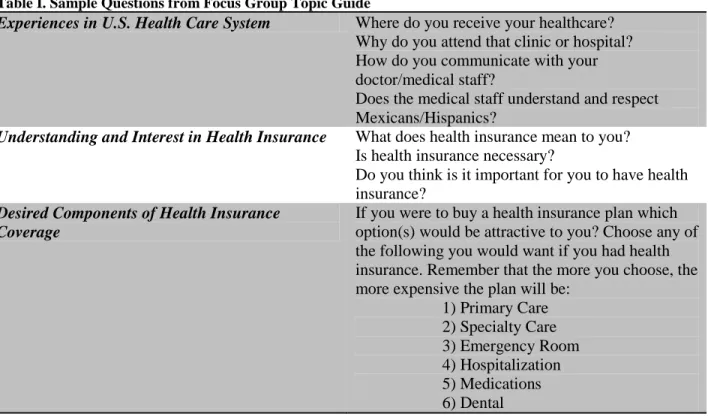
Focus group facilitators used a 15 item topic guide to steer and promote discussion (Table I). This guide aimed at understanding: 1) the participants’ experiences with health care in
the U.S.; 2) their understanding of and interest in health insurance; 3) perceived barriers to health
insurance coverage; and 4) which components of health insurance were most important to them,
such as coverage of primary care or emergency room care. For this final aim, the facilitator read
aloud a list of potential components of health insurance coverage and participants wrote down
the component(s) that were most important to them. These responses were collected and
tabulated. The facilitator obtained verbal responses from low-literacy participants.
Each focus group session lasted approximately 90 minutes. Audiotapes were transcribed
Analysis
English transcripts were entered as text into Microsoft Word and uploaded into Atlas.ti
qualitative analysis software (version 6.2, Atlas.ti, Berlin). Transcripts were analyzed by one
investigator (CZ) who identified common response issues and assigned descriptive codes to these
issues using an editing analysis method (9). Select sections of transcripts were reread by a second
investigator (SBD) who assigned the same codes while blinded to the original coding. There
were negligible coding differences between the two coders.
RESULTS
Participants
The nine focus groups included between 6 and 15 adult Mexican immigrants each, with a
total of 81 participants. Four of the groups were all female, two groups were all male, and the
remaining three groups were mixed-gender. To protect privacy and encourage openness,
participants were not required to share demographic information other than Mexican state of
origin. Many participants did volunteer personal information, such as age, occupation and
immigration status. In the six groups that provided age, participants spanned from 17 to 74 years.
From voluntary disclosures, we know that all participants in at least two groups had full legal
documentation or were in the process of obtaining permanent resident status. Individuals
originated from Mexico City (Distrito Federal) and 17 different Mexican states from all regions
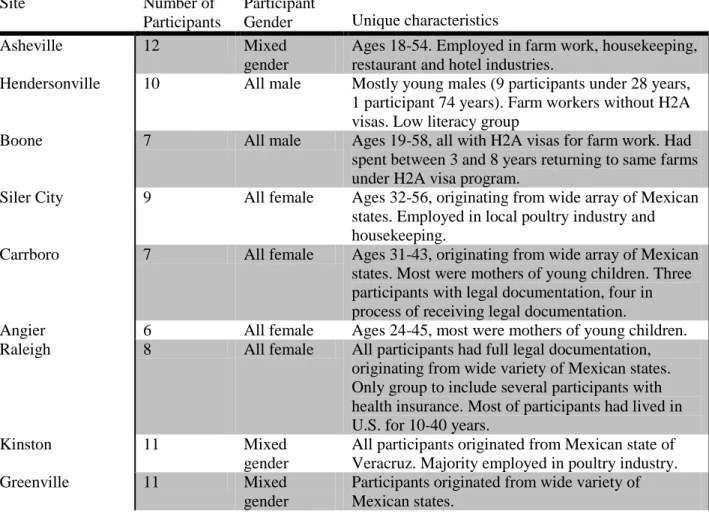
of the country. Unique characteristics of each group are shown in Table II. Important issues and
representative quotations are presented.
Most participants had accessed medical care at community health centers (CHCs), with
generally positive experiences. Overall, participants were satisfied with availability of providers
at CHCs, including those who could speak Spanish, and with affordability of care. Furthermore,
two groups explicitly credited health outreach workers from CHCs with facilitating medical access. These “health navigators” sought workers out at places of employment, provided
transportation to clinics, and helped to ensure continuity of care.
In contrast, participants who received care in the emergency department or urgent care
settings largely viewed these interactions as negative. Complaints of high costs, long waiting
times, and discriminatory treatment recurred in many discussions.
“… I had to take my husband [to the ER] for an allergy and we had to wait a long time, from 8 am to 3 pm. While I was taking a nap, they took an X-ray and just for that we were charged $ 2,300!...For that price, I should have taken my nap in a luxury hotel! And the truth is, you can’t afford the luxury of emergency services because they are too expensive.”
“I’ve also heard this from my friends: You go to the hospital with pain and they don’t give you the usual kind of treatment if you don’t have ‘papers,’ – they only give you something to calm the pain momentarily. That’s happening a lot now.”
Understanding of Health Insurance
Overall, participants understood fundamental concepts of health insurance coverage. In
all but one of the groups, participants were able to describe several basic elements of insurance
policies, such as co-pays, coverage of only certain medical services, and employer-sponsored
insurance. Participants frequently noted that some health insurance plans were more
comprehensive than others.
Most groups commented the comparatively lower cost of obtaining health insurance
through an employer. However, even participants offered insurance through an employer
sometimes found the policies unaffordable.
“If you are working in a company, insurance costs you less, but if you stop working and want to pay on your own, then it is more expensive.”
“Where I work I could get insurance, but one needs to pay, and I, as head of the family, prefer to save this little bit for other needs.”
In a few groups, participants with higher education levels demonstrated more nuanced
comprehension of health insurance. In these discussions, participants navigated well the
complexities of deductibles, premiums, catastrophic coverage.
“You have to recognize that we are in a country where, unfortunately, medicine is quite expensive. It is very important as a citizen or resident of the U.S. to have insurance. Without health insurance, you could pay up to $10,000 or more for one day in the hospital. But if you have insurance…even though you have to pay your monthly
premiums and your deductible, it is much less than paying $40,000 for the four days that you were hospitalized.”
In contrast, none of the members of one group (Asheville) were able to answer the facilitator’s broad question, “What is health insurance?” A few participants in other groups
confused health insurance with life insurance or worker’s compensation. Furthermore, a few
participants in several groups assumed that most health insurance plans always included dental
or eye care.
When participants were asked why someone might need health insurance, five main
issues emerged. Participants described the importance of insurance to cover emergencies, to
make medical care affordable, to improve access to physicians, to provide for family members
and to promote emotional well-being.
Emergency care
There was general agreement within all groups that insurance was most needed to cover
serious unanticipated illnesses. Participants mentioned the severity of illness and the high cost of
acute care when justifying the need for this coverage.
“You have to go to the emergency room when you are seriously ill, that’s when you really need to see a doctor.”
The provision of insurance to cover preventive medical services rarely came up in the
discussion. In response to the facilitator asking why an individual would not need health insurance, one respondent said, “only if they never get sick!” When participants mentioned
seeking attention from a primary care provider, it was for the purpose of treating chronic or acute
illness, not for disease prevention.
Cost
Health insurance was perceived as necessary to shield families from the high cost of care
in the U.S. Participants were aware of how quickly health costs could escalate for families and
“I have seen people here who have saved money for years, but when their children became ill, they lost all of their savings…If someone does not have health insurance and gets sick here in the U.S., well, there go all of their savings.”
Many described instances of deferring seeking medical attention due to prohibitive fees.
This postponement of care had disastrous financial consequences for some participants, who
described the high costs of receiving hospital care for preventable exacerbations of chronic
illnesses.
Access
The perception that the insured had much better access to physicians than the uninsured
was noted across all groups. Shorter waiting time for scheduling appointments was a principal mentioned component of improved access. As one recently insured participant observed, “health
insurance is very necessary because when you have insurance, you are seen more quickly in most places.” Others remarked that health insurance was essential because many providers did not
accept uninsured patients.
For those without Social Security numbers, health insurance cards granted access to care that
they had previously avoided. Several participants noted that if they provided proof of health
insurance when seeking care, they would not be asked for a Social Security number, which
would reveal their documentation status.
“In the case of a medical emergency, they also start asking you a bunch of questions about your social security number, and that is when you really have problems. If you have insurance, it’s better.”
In general, participants prioritized health insurance for family members above personal
coverage. The need of health insurance for children was particularly emphasized, with several
participants noting that the fear of disclosing immigration status and the lack of financial
resources prevented them from seeking care for their children.
“[Health insurance] is very necessary because there are people who have sick children… and sometimes they do not take them to the doctor because they will have to pay.”
The need for insurance to cover family members was especially salient in the all-male
groups. In one group of men, there was general consensus that health insurance was not as
important for adult men, because they perceived themselves as healthier than women or children.
“I think about my wife and daughter…about what could happen to them if they get sick and I don’t have the money needed to help them. This is a situation where insurance is necessary…When you’re a young man, you almost never get sick…but having a family insurance plan is good for the family.”
Emotional well-being
Several participants remarked that health insurance was important for promoting
emotional well-being. Fear of illness and the inability to pay for care was a source of
considerable anxiety among those without insurance. The few participants who did have
insurance commented on the immense relief that accompanied the coverage.
Barriers to Insurance Coverage
Commonly expressed barriers to seeking health insurance were cost, immigration status,
and communication issues. Just as readily as participants acknowledged the necessity of health
insurance to reduce medical expenses, they also remarked that the cost of insurance plans was
prohibitively high. For many, other competing financial needs put health insurance out of reach.
“I know that it’s not much, but in order to pay $60 for every member of the family, you have to choose between paying for insurance or eating and paying the rent.”
Many individuals remarked that without legal documentation, they were ineligible to
receive affordable health insurance coverage.
“Health insurance is very beneficial, because it covers a percentage of the doctor’s visit and medications. We can’t enjoy these benefits because we don’t have documentation, and we don’t earn enough to pay for insurance; insurance is very expensive.”
Finally, several participants cited frustrations in communicating with health insurance
companies as obstacles to obtaining coverage. For some, the poor availability of
Spanish-speaking staff made the process too difficult. Others complained that the Spanish-Spanish-speaking
personnel answering phones were poorly equipped to answer specific questions about policies:
“The majority of insurance companies do not have this service [Spanish-speaking staff]. Also, often when they have the service, it’s very limited. Only on certain days or at certain times.”
Participants in each group selected what they perceived as the most desirable components
of health insurance coverage (Table III). In general, emergency, primary and dental care were
prioritized over hospital care and medication coverage. The male groups tended to prefer
emergency, primary, and specialty care, whereas the female and mixed groups tended to have a
broader range of desired components of health insurance. Overall, primary care was less desired
by the groups who already had access to affordable care at community health centers.
DISCUSSION
The results of this study indicate that Mexican immigrants in North Carolina have a basic
understanding of health insurance and perceive a need for coverage. Our findings suggest that
insurance plans that offset the cost of emergency care services would be most desirable to this
population. Other valued insurance characteristics include affordability and family coverage.
Despite the desire for health insurance, the cost of purchasing plans was an insurmountable
barrier for many. Participants in this study did not prioritize preventive care, consistent with a
national trend of underutilization of primary and preventive care for Mexican immigrants
(10-13).
Of note, this study population was unique in that most individuals had access to primary
care at Community Health Centers, and expressed satisfaction with this care. Despite this access,
participants commonly described delaying seeking care until the severity of the condition
warranted emergency attention. In general, participants expressed dissatisfaction with the high
We acknowledge several limitations of this study. Our findings are limited to Mexican
immigrants living in North Carolina, and as such may not directly apply to other immigrant
populations or Mexican immigrants in other states. Additionally, in the selection of our groups,
we only considered gender and no other demographic variables in order to protect participant
confidentiality. As such, we cannot compare differences in group responses by occupation, age,
income or other descriptive characteristics. While our findings summarize perceptions of health
insurance and barriers to coverage, future research is needed to more fully address behaviors
discussed by participants, such as deferring seeking medical attention and putting family needs
above self.
Our findings suggest that providing high deductible plans with emergency care coverage
and low premiums may be one way to meet the top health insurance priorities of Mexican
immigrants. Unfortunately, these plans would not fulfill this population’s desire for coverage of
primary or dental care. Making routine care geographically accessible and affordable through
federally-supported community health centers also may help to meet this population’s need for
primary care. While increasing access to these centers could reduce preventable emergency room
visits (14-15), this option would not meet the need for emergency care. One way to respond to
the need for affordable acute care would be to expand the hours of operation and spectrum of
care offered by community health centers.
Local strategies may be useful for overcoming access barriers. Hispanic lay health
workers, or promotoras de salud, could seek out individuals with health needs and aid them in
navigating available health resources. To date, community promotora programs have been
particularly successful at increasing appropriate screening practices in adults and promoting
primary care and avoidance of inappropriate use of the emergency department have the potential
to improve access and decrease costs for undocumented immigrants. More research is needed to
determine the effectiveness of such programs.
Another strategy used by Mexican immigrants to circumvent access barriers in the U.S. is
to seek lower-cost health care in Mexico (19-22). Binational insurance options are emerging as
another possible solution, with several private insurance companies currently offering such
coverage in California (23). Though these binational plans may be attractive to immigrants living
near Mexico, cross-border travel is not feasible for immigrants who live in states far from the
Mexican border and those without legal documentation. Large advances in access to health care for undocumented individuals will be difficult to achieve without immigration reform.
In the Patient Protection and Affordable Care Act, low-income citizens will gain access
to health insurance through public and private sector programs, but undocumented immigrants
will be excluded from the provisions (24). By 2019, when the Act is to be fully in effect, this
vulnerable population will comprise 25% of the 19 million non-elderly uninsured (25). As this
generally young and healthy population ages, their health care needs will increase. Until an
REFERENCES
1. Pew Hispanic Center: Census 2010: 50 Million Latinos Hispanics Account for More Than Half of Nation’s Growth in Past Decade. 2011.
http://www.pewhispanic.org/files/reports/140.pdf. Last accessed 27 June 2012.
2. Pew Hispanic Center: The New Latino South. 2005.
http://pewhispanic.org/files/reports/50.pdf. Last accessed 27 June 2012.
3. U.S. Census Bureau: Profile of General Population and Housing Characteristics: 2010. 2010 Demographic Profile Data, North Carolina.
http://factfinder2.census.gov/faces/tableservices/jsf/pages/productview.xhtml?pid=DEC_10_DP_ DPDP1&prodType=table. Last accessed 27 June 2012.
4. U.S. Census Bureau: Current Population Survey, Annual Social and Economic Supplement. 2010. Table 42. Health Insurance Status by Sex, Age, and Hispanic Origin Type: 2010.
http://www.census.gov/population/www/socdemo/hispanic/cps2010.html. Last accessed 27 June 2012.
5. U.S. Census Bureau: Current Population Survey, Annual Social and Economic Supplement. 2010. Table 41. Health Insurance Status by Sex, Age, Hispanic Origin, and Race: 2010.
http://www.census.gov/population/www/socdemo/hispanic/cps2010.html. Last accessed 27 June 2012.
6. Rivers PA, Patino FG: Barriers to health care access for latino immigrants in the USA. International Journal of Social Economics. 2006; 33(3):207-220.
7. Perry MJ, Stark E, Valdez RB: Barriers to Medi-Cal Enrollment and Ideas for Improving Enrollment: Findings from Eight Focus Groups in California with Parents of Potentially Eligible Children. 1998. Kaiser Family Foundation.
www.kff.org/medicaid/loader.cfm?url=/commonspot/security/getfile.cfm&PageID=14649. Last accessed 27 June 2012.
8. Flores G, Fuentes-Afflick E, Barbot O, et al.: The health of latino children: Urgent priorities, unanswered questions, and a research agenda. JAMA. 2002;288(1):82-90.
9. Miller WL, Crabtree, BF: Primary care research: A multimethod typology and qualitative road map. In Crabtree BF & Miller WL, eds. Doing qualitative research. Newbury Park, CA: Sage; 1992:3-28
10. Derose KP, Escarce JJ, Lurie N: Immigrants and Health Care: Sources of vulnerability. Health Affairs. 2007;26(5):1258-68.
12. Ku L: Health insurance coverage and medical expenditures of immigrants and native-born citizens in the United States. Am J Public Health. 2009;99(7):1322-8.
13. Tarraf W, Miranda PY, González HM: Medical Expenditures Among Immigrant and Nonimmigrant Groups in the United States: Findings from the Medical Expenditures Panel Survey (2000-2008). Med. Care. 2012;50(3):233-42.
14. Streeter S, Braithwaite S, Ipakchi N, et al.: The Effect of Community Health Centers on Healthcare Spending and Utilization. National Association of Community Health Centers. 2009.
http://www.nachc.org/client/Avalere_NACHC_Report_Final_10.2.09.PDF. Last accessed 27 June 2012.
15. Epstein AJ:The Role of Public Clinics in Preventable Hospitalizations Among Vulnerable Populations. Health Serv Res. 2001;32(2):405–20
16. Viswanathan M, Kraschnewski J, Nishikawa B, et al.: Outcomes of community health worker interventions. Evid Rep Technol Assess. 2009;181:1-144, A1-2, B1-14
17. Gibbons MC, Tyus NC. Systematic review of U.S.-based randomized controlled trials using community health workers. Prog. Community Health Partnersh. 2007; 1(4):371-81.
18. Lewin S, Munabi-Babigumira S, Glenton C, et al.: Lay health workers in primary and community health care for maternal and child health and the management of infectious diseases. Cochrane Database Syst. Rev. 2010; 3:CD004015.
19. Wallace SP, Mendez-Luck C, Castaneda X: Heading south: Why Mexican Immigrants in California Seek Health Services in Mexico. Med Care. 2009;47(6):662-669.
20. Landeck M, Garza C: Utilization of Physician Health Care Services in Mexico by U.S. Hispanic Border Residents. Health Mark Q. 2002;20(1):3-16.
21. Macias EP, Morales LS: Crossing the Border for Health Care. J Health Care Poor Underserved. 2001;12(1):77-87.
22. Guendelman S: Health Care Users Residing on the Mexican Border: What factors determine choice of the U.S. or Mexican health system? Med Care. 1991;29(5):419-429.
23. Schulz AT, Medlin C: Cross Border Health Care Plans. Health Policy Monitor. 2007. http://www.hpm.org/survey/us/d7/4. Last accessed 27 June 2012.
Figure 1. Locations of Focus Groups in North Carolina (26)
Table I. Sample Questions from Focus Group Topic Guide
Experiences in U.S. Health Care System Where do you receive your healthcare?
Why do you attend that clinic or hospital? How do you communicate with your doctor/medical staff?
Does the medical staff understand and respect Mexicans/Hispanics?
Understanding and Interest in Health Insurance What does health insurance mean to you?
Is health insurance necessary?
Do you think is it important for you to have health insurance?
Desired Components of Health Insurance Coverage
If you were to buy a health insurance plan which option(s) would be attractive to you? Choose any of the following you would want if you had health insurance. Remember that the more you choose, the more expensive the plan will be:
Table II. Focus Group Characteristics
Site Number of
Participants
Participant
Gender Unique characteristics
Asheville 12 Mixed
gender
Ages 18-54. Employed in farm work, housekeeping, restaurant and hotel industries.
Hendersonville 10 All male Mostly young males (9 participants under 28 years,
1 participant 74 years). Farm workers without H2A visas. Low literacy group
Boone 7 All male Ages 19-58, all with H2A visas for farm work. Had
spent between 3 and 8 years returning to same farms under H2A visa program.
Siler City 9 All female Ages 32-56, originating from wide array of Mexican
states. Employed in local poultry industry and housekeeping.
Carrboro 7 All female Ages 31-43, originating from wide array of Mexican
states. Most were mothers of young children. Three participants with legal documentation, four in process of receiving legal documentation.
Angier 6 All female Ages 24-45, most were mothers of young children.
Raleigh 8 All female All participants had full legal documentation,
originating from wide variety of Mexican states. Only group to include several participants with health insurance. Most of participants had lived in U.S. for 10-40 years.
Kinston 11 Mixed
gender
All participants originated from Mexican state of Veracruz. Majority employed in poultry industry.
Greenville 11 Mixed
gender
Table III. Desired Components of Health Insurance; percentages of participants, by site *
Site (N) Percentage of
Respondents in Group Desiring Component
Asheville (12)
Hendersonville (10)
Boone (7)
Carrboro (7)
Angier (6)
Raleigh (8)
Kinston (11)
Greenville (11)
ER 17 100 43 100 33 38 55 36
Primary Care 50 100 71 14 83 75 64 45
Specialty Care 25 0 43 86 50 63 0 18
Hospitalization 35 0 0 86 0 0 55 27
Dental 50 0 14 86 17 63 18 73
Medications 8 0 0 29 0 50 45 9
ACKNOWLEDGEMENTS
Many thanks to Dr. Sylvia Becker-Dreps for letting me participate in this project, and for her kindness, guidance, and mentorship. Thanks also to Dr. Anthony Viera for his availability, enthusiasm, and critical eye. Dr. Donald Pathman provided invaluable direction and feedback for the manuscript. Paul Mihas was very generous in sharing his time and qualitative research expertise. I am grateful to the other authors of the manuscript, Melida Colindres, Scott Robinson and Milton Butterworth, for their time, energy and contributions.
Manuscript acknowledgements: