The Public Health Implications of Pre-Exposure Prophylaxis for HIV Infection in High Risk Individuals
by
Caryn G. Morse, MD March 20, 2005
A Master's paper submitted to the faculty of the University ofNorth Carolina at Chapel Hill in partial fulfillment of the requirements for the degree of Master of Public Health in
TABLE OF CONTENTS
ABSTRACT ... iii
ABSTRACT ... iii
INTRODUCTION ... 1
THE HIV EPIDEMIC ... 2
Global Outlook ... , ... 3
United States ... 4
North Carolina ... 5
PREVENTING HIV INFECTION ... 5
HIV Vaccine ... 6
Microbicides ... 6
BIOMEDICAL PROPHYLAXIS: LESSONS FROM CURRENT STRATEGIES ... 7
HIV Post Exposure Prophylaxis ... 8
Prevention of Mother to Child Transmission ... 10
Additional Examples of Pre-Exposure Prophylaxis ... 12
Malaria Chemoprophylaxis ... 12
Mass Treatment of Sexually Transmitted Infections ... l3 PRE-EXPOSURE PROPHYLAXIS: SUPPORTING EVIDENCE ... 13
Tenofovir ... 15
OVERVIEW OF PLANNED PRE-EXPOSURE PROPHYLAXIS RESEARCH STUDIES ... 16
Family Health International/Gates Foundation ... 17
CDC Sponsored Trials ... 17
Volunteer Protections ... 18
CLINICAL TRIALS CONTROVERSY ... 20
Cambodia ... 21
Cameroon ... 22
Thailand ... 23
Community Involvement in Research Design and Implementation ... 24
Drug Toxicity ... 26
Behavior Change ... 27
Adherence and Acceptability ... 27
Drug Resistance ... 28
Access and Economics ... 28
RECOMMENDATIONS FOR POLICY ACTION AT THE STATE AND LOCAL PUBLIC HEALTH LEVELS ... 29
CONCLUSIONS ... 31
ABSTRACT
Pre-exposure prophylaxis (PrEP) is a novel approach to human immunodeficiency virus (HN) infection prevention in which antiretroviral medication is used prior to potential HN exposure to reduce the likelihood of infection. PrEP may be a useful adjunct to current
prevention approaches in the absence of an effective HN vaccine or microbicide. Current and planned clinical trials seek to answer critical questions about the safety and efficacy of PrEP in at-risk populations. While these clinical trials are likely to answer many questions about the role of PrEP in HIV prevention, additional clinical, social, and ethical questions will be raised. In anticipation of the results of these trials, the public health community should act proactively to answer many of the questions surrounding the use of PrEP in populations outside the context of clinical trials. By beginning to answer the myriad of questions likely to arise with this prevention strategy now, the public health system can better prepare
INTRODUCTION
Pre-exposure prophylaxis (PrEP) is a novel approach to human immunodeficiency virus (HN) infection prevention in which antiretroviral medication is used prior to potential HN exposure to reduce the likelihood of infection. In the absence of an effective vaccine or microbicide, PrEP has gained popularity as a possible adjunct to current prevention strategies. Clinical trials investigating the safety, efficacy and viability of pre-exposure prophylaxis strategies among high-risk populations are now underway in the United States and internationally.
It is not yet known if PrEP will be a safe or effective approach to HN prevention. The planned and on-going clinical research studies seek to answer questions of safety and effectiveness. If clinical trials do demonstrate safety and efficacy, public health officials will be faced with significant clinical, ethical and logistical challenges related to the
implementation of PrEP in their communities. Additional studies will be necessary to help determine how PrEP will be used in clinical and public health practice. Guidelines for use in at-risk populations will need to be developed quickly. Persons at-risk will need to be rapidly identified and appropriate education and outreach initiated.
PrEP should be distinguished from post exposure prophylaxis (PEP), a prevention strategy in which antiretroviral medication is administered closely following a potential HN exposure. PEP has been extensively studied in prevention ofHN infection following
occupational exposures and has recently been expanded for use following high-risk sexual exposures.
HIV PEP and strategies for preventing the transmission ofHIV infection from mother to child. Additional scientific evidence supporting the use of PrEP will be summarized and the major clinical trials of PrEP currently planned or emolling will be reviewed. Finally, current and anticipated challenges to the national, regional and local public health systems will be reviewed and recommendations for action provided.
THE HIV EPIDEMIC
In June 1981, the U.S. Center for Disease Control and Prevention (CDCYissued its first warning about a rare form of pneumonia occurring among a small group of young gay men in California. The unusual pneumonia was later included in a case definition of a new syndrome, Acquired Immune Deficiency Syndrome (AIDS), a term established in 1982. In 1983, the U.S. Public Health Service issued recommendations for preventing the transmission of AIDS through sexual conduct and blood transfusion. That same year, female sexual partners of men with AIDS were added as the fifth at-risk group, joining a list of risk factors that already included male homosexuality, intravenous drug abuse, Haitian origin and
hemophilia A. In 1984, the agent responsible for AIDS, HIV, was discovered. Also in 1984, the CDC recommended abstinence from intravenous drug use and reduction of needle sharing as the primary strategy to reduce the transmission of the HIV virus among intravenous drug users (IDU).1 Since that time, over 60 million people have been infected with HIV
worldwide, including the approximately 40 million persons estimated to be living with HIV I AIDS today.
~--consistent and correct condom use, avoidance of intravenous drug use and ~--consistent use of sterile equipment by those unable to cease intravenous drug use, remain the most effective prevention measures. The most widely used prevention methods, including abstinence,
partner reduction and condom use, have shown efficacy in preventing the transmission ofHIV and, in certain settings, these behavioral interventions have been shown to slow the rate of HIV transmission. Unfortunately, behavioral interventions are inconsistently utilized, fail to be universally effective, and therefore have been inadequate to control the HIV pandemic.
Global Outlook
HIV I AIDS cases have been reported in all regions of the world, though the majority of persons of living with HIVIAIDS (95 percent) and the majority of new HIV infections and HIVI AIDS related deaths occur in low- and middle-income countries. The nations of sub-Saharan Africa carry the highest burden of disease with a prevalence rate estimated to be over 20 percent in six sub-Saharan African nations. 2
UNAIDS/WHO estimates that over 14,000 persons were infected with HIV each day in 2003.2 Of the new infections, 12,000 occurred in persons aged 15 to 49 years of age, 50 percent of who were 15 to 24 years old. Nearly 2,000 of the new infections occurred in children under 15 years of age. 3
Women comprise an increasing portion of adults living with HIV I AIDS, comprising nearly half of all AIDS cases at the end of2004. While this trend is occurring in most regions of the world, it is particularly notable in sub-Saharan Africa where women represent
economic status and in access to prevention and care services increases the vulnerability of women to HIV.4
Global Summary of the HIV/AIDS Epidemic
December 2004
Total Persons Living with HIV/AIDS in 2004
Total 39.4 million (35.9-44.3 million)
Adults 37.2 million (33.8-41. 7 million)
Women 17.6 million (16.3-19.5 million)
Children under 15 years 2.2 million (2.0-2.6 million)
Total Persons Infected with HIV in 2004
Total 4.9 million (4.3-6.4 million)
Adults 4.3 million (3.7-5.7 million)
Children under 15 years 640,000 (570,000-750,000)
Death from HIV/AIDS in 2004
Total 3.1 million (2.8-3.5 million)
Adults 2.6 million (2.3-2.9 million)
Children under 15 years 510,000 (460,000-600,000)
• 0
Source: UNAIDSIWHO Global Summary of the HIVIAIDS Ep1dem1c
United States
females in racial and etlmic minority populations to reduce the number of cases of HIV/AIDS.5
North Carolina
Over 2,100 new cases ofHIV disease (HIV and AIDS cases) were reported in North Carolina in 2003. The overall infection rate for HIV was 25.2 per 100,000 persons. Rates of HIV I AIDS have remained stable over the past five years, though increases are noted among African Americans and Hispanics. Sexually transmitted infections, including HIV infection, remain disproportionately represented among racial and etlmic minorities. The rate ofHIV for Hispanics (25.4 per 100,000) is over two and a halftimes greater than that for whites and the rate for non-Hispanic blacks (76.6 per I 00,000) is eight times greater than that for whites. Also of note, the infectiqn rate for black females (51.9 per 100,000) was over 14 times higher than that for white, non-Hispanic females (3.6 per 100,000).6
PREVENTING HIV INFECTION
HIVVaccine
There are many scientific challenges to the development of an effective HIV vaccine and, unfortunately, the vaccine candidates currently under investigation appear unable to produce protective immunity. The first phase III HN/AIDS vaccine trials have shown a complete lack of efficacy. Given the difficult, and currently unresolved, scientific challenges to eliciting antibodies by vaccination that are capable of neutralizing HN, these negative results were expected by many investigators in the field. 7 Since current vaccine candidates are unlikely to be adequately effective, behavioral interventions remain critical to HN prevention.
Microbicides
The development of safe and effective vaginal microbicides, chemical compounds that can be applied topically to inactivate HIV, is another focus of current prevention research. Microbicides may be especially important to women, especially in the developing world, when male sex partners are unwilling to use condoms consistently or at all. Current efforts are aimed at developing intravaginal and intrarectal topical formulations that either directly inactivates HN, stop HN from attaching or entering, or prevent HN replication and dissemination. Ideally, an anti-HN microbicide would act against HN in multiple ways, combining these approaches. Additionally, a microbicide should ideally act as a
A safe and effective anti-HIV microbicide is not yet available; however there are 23 microbicide products in various stages of clinical development. Multicenter phase IIII safety and phase II/III efficacy studies are currently planned or underway in diverse geographic locations. For the majority of these products, no information is available regarding mucosal safety or efficacy following extended vaginal or rectal exposure.9 The ultimate role of microbicides in HIV prevention efforts remains to be determined and the time course for broad clinical trials of a microbicide suggests that it will be several years before a microbicide is available for widespread clinical use.
BIOMEDICAL PROPHYLAXIS: LESSONS FROM CURRENT STRATEGIES
With an effective HIV vaccine or microbicide still years away, HIV prevention experts have begun to explore alternative biomedical approaches to the prevention of new infection. One approach that has gained significant support in the past 3 years is pre-exposure
prophylaxis (PrEP). Animal studies suggest the possible effectiveness of a single agent antiretroviral for the prevention of new infection and clinical researchers are now exploring the use of antiretrovirals as a preventative treatment in HIV negative humans.
have also raised many important questions that should be considered as PrEP strategies are developed and studied.
HIV Post Exposure Prophylaxis
Medical treatment following exposure is less effective than preventing HN infection by avoiding exposure.10 However, post exposure prophylaxis (PEP) is an accepted HN prevention strategy in a select group of at-risk individuals. PEP has been primarily studied and utilized in occupational exposure settings. PEP was widely accepted after the publication of a retrospective, case-control study of health care workers having occupational,
percutaneous exposure to HN-infected blood. After controlling for other risk factors for HN transmission, post exposure use of zidovudine (AZT) reduced the odd of acquiring HN infection by more than 80 percent II
Subsequent studies have examined the use of PEP for non-occupational exposure (for example, sexual or drug use) to HIV. Recent studies have suggested that it is indeed safe, feasible and cost-effective to deliver PEP to reduce the risk ofHN infection in non-occupational exposures. I2.I3
behaviors and 83 percent did not request additional PEP.15 Another study found that PEP was
sought and utilized most commonly by individuals who usually practice safe sexual or
injection drug practices but experience a lapse. However, the same study also found that it
was difficult to deliver PEP in a timely manner following exposure to HN, perhaps
diminishing its efficacy.12
A high-risk cohort of200 HN negative homosexual males in Brazil received
preventive counseling, PEP instruction and 4-day starter packs of two HN antiretroviral
medications to be administered immediately after exposure to blood or semen. Participants
reporting any high-risk sexual exposure at baseline and 18 months were 57 and 54 percent
respectively. During the study period PEP was initiated 92 times by 65 participants. Men
who began taking PEP after a self-identified high-risk exposure were evaluated within 96
hours; 92 percent met the event eligibility criteria (clinician-defined high-risk exposure).
Seroincidence was 0.7 per 100 person-years (one seroconversion) among men who took PEP
and 4.1 per 100 person-years among men who did not take nPEP (11 seroconversions). After
analysis of the trial results, study authors concluded that reported high-risk behaviors declined
in the cohort with access to PEP. A lower HIV seroincidence was noted among PEP users,
though the limited statistical design and power ofthe analysis did not allow direct
measurement of PEP efficacy.16 Additional studies, including cohort studies of rape
survivors, have suggested a benefit to PEP when initiated within 72-96 hours of possible
exposure.12
The CDC has issued guidelines for occupational PEP. 17 Additional recommendations
for the use of PEP in non-occupational exposures are also available from the CDC, however
Guidelines released in F ebl:uary 2005 now include recommendations for the use of a 28 day course of combination antiretroviral therapy for persons who have had non-occupational exposure to blood, genital secretions or other potentially infected body fluids of a person known to be HIV infected, or when the exposure represents a substantial risk for HIV transmission, and when the person seeks care within 72 hours of exposure.12
State guidelines for non-occupational PEP have been developed and issued in New York, Rhode Island and Califomia.19"20 .2l Massachusetts has issued a clinical advisory recommending that clinics create protocols to address PEP issues.22 Recommendations for the use of PEP following sexual assault have been adopted in many states as well.
Internationally, many nations, including South Africa, France, Italy, Spain and Australia, have policies recommending the use of PEP for non-occupational exposures.Z3
Overall, PEP for non-occupational exposure was well tolerated. According to the U.S. Non-occupational PEP Surveillance Registry, for 107 high risk exposures for which PEP was taken, the regimen initially prescribed was stopped or modified in 22 percent of cases; modifications or stops were reported because of side effects in half of these instances.24
Prevention of Mother to Child Transmission
The use of antiretrovirals to prevent the transmission ofHIV from an infected mother to her infant has been one of the most successful HIV prevention strategies to date.
Administration of antiretroviral medication to an HIV-infected mother during labor, or earlier in pregnancy, and to the infant postpartum dramatically reduces the rate of peri-natal HIV infection. In 1994, a prospective, randomized controlled trial demonstrated AZT
following delivery reduced peri-natal transmission by 67 percent, from 25.5 percent to 8.3 percent. 25 Similar approaches, using the antiretroviral agent nevirapine or combination antiretroviral therapy combined with elective caesarean section and avoidance of
breastfeeding, have reduced transmission rates to 1-2 percent.26 The mechanisms for these reductions are multi-factorial and are likely to involve both pre- and post exposure effects. Pre-exposure, antiretroviral treatment prevents cross-placental and intrapartum HIV
transmission by reducing the viral load of the mother. Antiretroviral medications that cross the placental barrier also offer drug exposure to the fetus. Administration of antiretroviral therapy to the infant following delivery comprises the post exposure prophylactic component.
Information on the safety of the various antiretroviral therapy regimens suggests that short-course regimens are generally well tolerated with mild and rare side effects for the woman and her infant. Concern is greater for women taking antiretroviral therapy for extended periods oftirne, especially those women who would not otherwise require
Additional Examples of Pre-Exposure Prophylaxis
Prophylactic strategies are utilized in non-HN settings as well. One of the most widely accepted prophylactic strategies is the use of anti-malarial medications to prevent or attenuate malaria infection in visitors to malaria endemic areas. Additionally, pre-exposure prophylaxis of sexually transmitted infections has demonstrated usefulness in certain
populations and during outbreaks.
Malaria Chemoprophylaxis
Mass Treatment of Sexually Transmitted Infections
The epidemiologic approach to the treatment of sexually transmitted infections (STI) involves the administration of antibiotic therapy to a population based on increased risk rather than for symptoms or proven infection. In high-prevalence populations where rates of
exposure to STI are high, mass treatment likely works both by preventing and treating infections. Although mass treatment is not standard practice in the United States, the approach has been studied in international setting for the prevention and control of STI including Chlamydia, gonorrhea and syphilis. Additionally several trials have demonstrated that STI treatment can reduce the transmission ofHIV.30 •31 "32 •33 The degree to which this approach may be effective depends on a variety of factors including pathogen and host factors. Problems with mass treatment include the cost of providing treatment, difficulties with adherence, challenges eliciting community support, and the risk of emerging drug resistance. 34 Similar issues arise with the use of antiretrovirals for HIV PrEP.
PRE-EXPOSURE PROPHYLAXIS: SUPPORTING EVIDENCE
As discussed above, antiretrovirals appear to prevent or reduce HIV transmission in post-exposure prophylaxis and in mother-to-child transmission settings. Additional evidence supporting the use of PrEP for HIV prevention comes from animal studies and several small clinical trials.
The first studies using animal models of pre-exposure prophylaxis were conducted using the antiretroviral agent nevirapine. A variety of animal models demonstrated the effectiveness of nevirapine in preventing or delaying HN infection. 35
One of the first reports on the feasibility of PrEP for the prevention of new HN infection in humans was first presented in 2002 at the XVth International AIDS Conference in Barcelona. This phase I/II trial, known as HNHOP 101, provided a 200mg tablet of
nevirapine once weekly, twice weekly, or every other day to a cohort of men and women in the Baltimore area at high risk for HIV infection. The group included sex partners ofHN-positive persons, gay men and injecting drug users. In this trial, none of the participants reported significant side effects from the medication, though increases in liver function tests were seen more frequently in participants receiving the higher doses of nevirapine. 36 The authors reported that risk -taking did not increase during the study and none of the participants became HIV positive during the course of the trial. However, the trial was designed to assess the safety of the use of antiretroviral medications as PrEP, not to assess the effectiveness of PrEP nor its impact on risk behavior. However, the study was successful as "proof of concept".
occurred in HIV -positive people (at a rate ofless than 1 percent), they have tended to be when
CD4 counts were high. They conclude, "Although precise estimates of the risk for severe
hepatotoxicity are not available, the risk appears to be higher than in HIV infected persons ....
Therefore, non-HIV infected individuals should not receive PEP or other prophylaxis
regimens that include multiple doses of nevirapine."37 These findings have raised concerns
about the safety of using nevirapine in pre-exposure settings. Subsequently, planned clinical
trials using nevirapine in HIV negative persons have been discontinued.
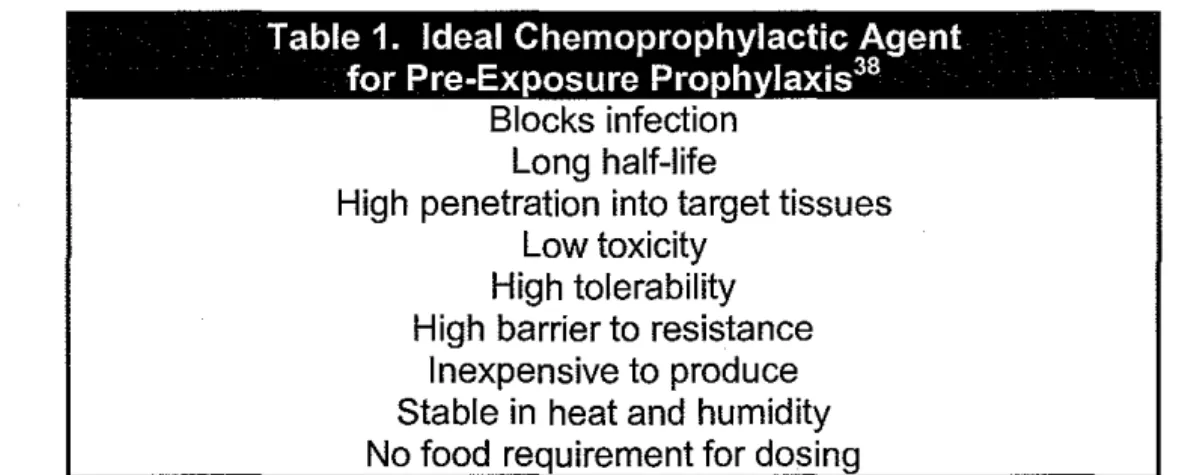
Table 1. Ideal Chemoprophylactic Agent
for Pre-Exposure Pro h laxis38
Blocks infection Long half-life
High penetration into target tissues Low toxicity
High tolerability High barrier to resistance
Inexpensive to produce Stable in heat and humidity No food requirement for dosing
Adapted from Grant R. Pre-exposure prophylaxis. Twelfth Conference on Retrovirnses and
Opportunistic Infections, Boston, abstract 137, 2005.
Tenofovir
Given significant concerns about the safety of nevirapine in HIV negative persons,
attention turned to other antiretroviral agents with an excellent safety profile and other
features conducive to PrEP. The antiretroviral medication tenofovir has been selected for
planned trials of PrEP because of its safety and efficacy. Animal studies with tenofovir have
shown that tenofovir, administered before and immediately after a single retroviral exposure,
can prevent the transmission of a virus similar to HIV in monkeys and delay and attenuate
1). Approved by the Food and Drug Administration in 2001, experience with tenofovir in the treatment of HIV infection is extensive. Adverse effects with tenofovir are rarely reported with the most common side effects including nausea, decreased appetite and flatulence. Tenofovir can be dosed as one pill taken once daily and reports document excellent
adherence.41 The CDC cites these features when explaining the rationale behind the use of tenofovir in multiple international clinical trials,
Tenofovir has been selected for investigation as chemoprophylaxis against HIV in high-risk individuals because of its unique pharmacologic profile. In addition to the
convenience ofbeing a once-daily single tablet with a safety profile comparable to placebo among HIV-infected persons, it has striking anti-HIV potency and a low potential for selection of resistant viruses. Each of these properties is necessary given the realities of the intended target populations.42
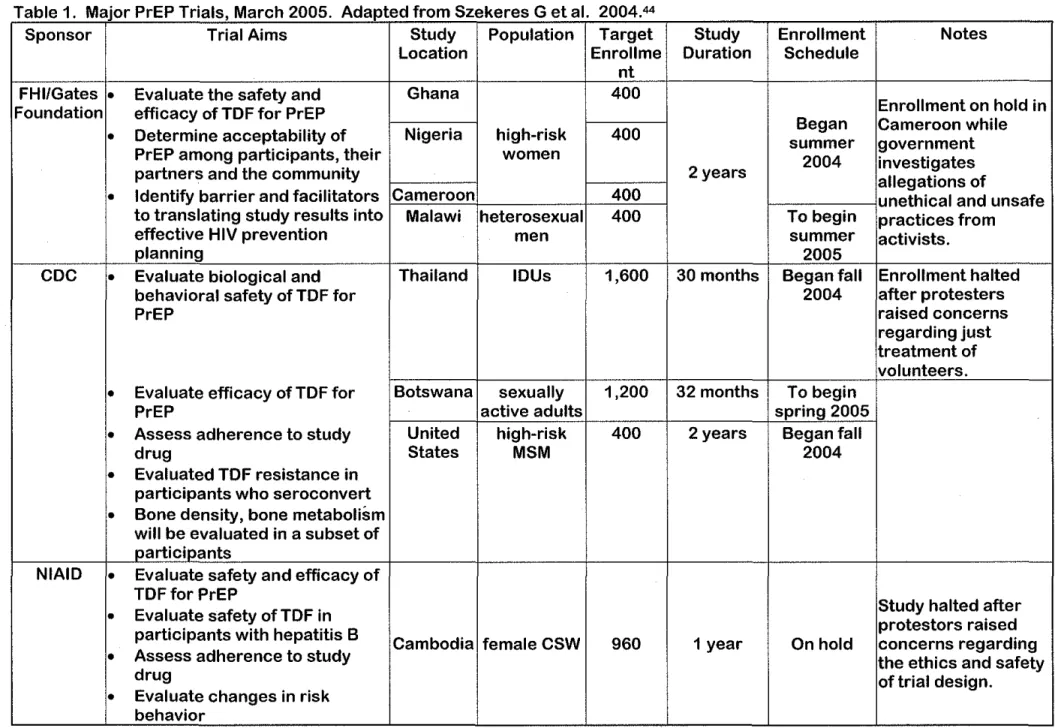
OVERVIEW OF PLANNED PRE-EXPOSURE PROPHYLAXIS RESEARCH STUDIES As of April2005, there are several major human trials ofHIV PrEP underway or in the planning stages. These trials focus on the safety and/or efficacy of PrEP in high-risk women (Cameroon, Ghana, Nigeria), high-risk men (Malawi), sexually active young adults (Botswana), injection drug users (Thailand) and MSM (United States). These planned or ongoing trials are summarized in Table 2. A planned National Institutes of Health trial of PrEP in commercial sex workers in Cambodia has been placed on hold after sex workers, activists and the Cambodian Department of Health raised concerns about the ethics of the trial design. Additionally, activists have opposed trials in Cameroon and Thailand citing concerns about the safety of the trial design and ethical treatment of trial volunteers. These
Family Health International/Gates Foundation
Family Health International (PHI) received a grant from the Bill and Melinda Gates Foundation to conduct phase II studies of PrEP in high-risk, HIV -negative adults in Ghana, Nigeria, Cameroon and Malawi. The trials are double-blinded, randomized and placebo-controlled. The trials are anticipated to last approximately 2 years, beginning with a 6 month screening phase followed by a 6 month recruitment phase and 12 months of study drug use for participants. The primary endpoints of the study are safety and efficacy. The safety of tenofovir for PrEP will be determined by adverse event reports and laboratory measurements.
For the PHI trials, efficacy oftenofovir for the prevention ofHN acquisition will be determined by the rate of HN seroconversion. Trial volunteers will receive counseling that they are participating in a research study and that they may be receiving placebo. Participants will receive counseling in HN prevention including education on safer sexual practices and be provided with condoms. Overlapping behavioral research is also being conducted to determine the acceptability of the intervention among participants, their partners, and the community. Additionally the barriers and facilitators to the PrEP strategy will be studied to assist in the translation of trial results to HN prevention program planning. Study completion is scheduled for mid-2006 after which trial results will begin to become available.
CDC Sponsored Trials
if once daily tenofovir is safe and effective in reducing HN transmission among heterosexual and intravenous drug users, respectively. The U.S. trial is designed to assess the tolerability oftenofovir in men who have sex with men (MSM) but is not adequately powered to assess efficacy in this population. Subsequent trials with larger numbers of participants would be required to demonstrate effectiveness in the MSM population.43
The CDC studies are also designed to address issues pertinent to the design of future PrEP trials and to the implementation of similar PrEP strategies. These issues include the impact of PrEP on risk behavior, medication adherence and acceptability, and drug resistance.
Volunteer Protections
Table 1. Major PrEP Trials, March 2005. Adapted from Szekeres G et al. 2004 44
Sponsor Trial Aims Study Population Target Study Enrollment Notes Location Enroll me Duration Schedule
nt FHI/Gates • Evaluate the safety and Ghana 400
Enrollment on hold in Foundation efficacy of TDF for PrEP
Began Cameroon while
•
Determine acceptability of Nigeria high-risk 400 summergovernment PrEP among participants, their women 2004
investigates partners and the community 2 years
allegations of
•
Identify barrier and facilitators Cameroon 400 unethical and unsafe to translating study results into Malawi heterosexual 400 To begin practices from effective HIV prevention men summer activists.planning 2005
CDC
•
Evaluate biological and Thailand IDUs 1,600 30 months Began fall Enrollment halted behavioral safety ofTDF for 2004 after protestersPrEP raised concerns
regarding just treatment of volunteers.
•
Evaluate efficacy of TDF for Botswana sexually 1,200 32 months To beginPrEP active adults spring 2005
•
Assess adherence to study United high-risk 400 2 years Began falldrug States MSM 2004
•
Evaluated TDF resistance in participants who seroconvert•
Bone density, bone metabolism will be evaluated in a subset of participantsNIAID
•
Evaluate safety and efficacy of TDFfor PrEPStudy halted after
•
Evaluate safety ofTDF inprotestors raised participants with hepatitis B
Cambodia female CSW 960 1 year On hold concerns regarding
•
Assess adherence to study the ethics and safetydrug oftrial design.
CLINICAL TRIALS CONTROVERSY
In certain participating countries, the PrEP trials have met significant resistance from
HN I AIDS advocacy groups. These protests illustrate many of the challenges facing researchers
and pharmaceutical companies when conducting clinical trials in developing nations. In recent
years, the increasingly global nature of health research has highlighted questions regarding the
ethics of trial design, conduct and follow-up. While research studies conducted by scientists
from more prosperous nations in poorer countries more heavily burdened by disease may reflect
efforts to help address a public health problem, these studies may reflect an assessment that a
foreign location is more convenient, inexpensive, and efficient. This may impose ethically
inappropriate burdens on the host country and on trial participants. This potential for
exploitation has lead to an effort to ensure that protections are in place for participants in
international clinical trials.
Sponsoring or conducting research in developing countries often poses special challenges
arising from cultural differences, such as distinct histories, political, judicial and economic
systems. In countries with a significant burden of poverty, primary health care services are often
inadequate and a majority of the population cannot access basic health care services. As a result
of these adverse conditions, persons in these countries are often vulnerable in situations in which
the improved health care is offered, including clinical trials. Further, participants in developing
nations may not fully understand the nature of informed consent and may lack adequate funds to
obtain health care following trial participation. Groups such as commercial sex workers and
intravenous drug users are seen as especially vulnerable because they lack political or economic
bargaining power to negotiate the terms of a trial as well as the resources to acquire the
The National Bioethics Advisory Committee (NBAC) issued a report in 2001 titled "Ethical and Policy Issues in International Research: Clinical Trials in Developing Countries."46 The NBAC report outlines the essential requirements for the ethical conduct of clinical trials. These requirements include both procedural and substantive items and builds on the three basic ethical principles outlined for research involving human participants in the 1979 Belmont Report: respect for persons, beneficence and justice. 47 The expanded recommendations include several principles that are crucial to the design and success of international trials ofPrEP. The conflicts over PrEP trials in Cambodia, Cameroon, and Thailand highlight the importance of community involvement, assessment and outreach in trial design and early implementation.
l
Cambodia
t
Cameroon
On February 3, 2005, the Ministry of Health of Cameroon announced that it was suspending the FHI sponsored clinical trial oftenofovir for HN PrEP, citing "failings
in .. .implementation." The trial, which involves HN-negative commercial sex workers in the city of Douala, came under fire from activist groups, most notably ACT UP/Paris, who alleged that the trial violated ethical norms and called for it to be halted. ACT UP/Paris claims that the study recruited vulnerable participants without providing adequate HN/AIDS prevention information or treatment. Cameroon's Health Minister, Urbain Awono, stated, "The decision to suspend the trial comes after an audit commission of doctors recently delivered a report on how the trial was being conducted." A spokesperson for FHI denied the accusations. FHI is
addressing the health minister's concerns and making progress towards implementing
"Tenofovir makes me vomit." ACT UP activists staged demonstrations against the PrEP trials at the 15th International AIDS Conference. From Science Now, 2005. 49
Thailand
In December 2004 Thai protesters released a statement to the national press accusing trial organizers of ignoring international ethical standards and exploiting injecting drug users. 50 On March 9, 2005, one day after a proposed trial of 1,600 IDUs in Bangkok received approval from Thailand's ethical review body, Thai AIDS advocacy organizations, lead by the Thai Drug Users' Network (TDN), held a press conference expressing their concerns regarding the planned trial. Patient's rights advocates criticized the failure of trial organizers to supply clean injecting equipment and expressed concern that different standards were being applied to the IDU
participation. TDN and several other HIV advocacy organizations called on UNAIDS to intervene and postpone the start of the trial in order to allow better community involvement and resolution of perceived trial problems. Seree Jintakanon, chairman ofTDN, said,
We 100 percent support research into new and better options for HIV prevention. But, tenofovir, which would have to be taken every day for the rest of one's life, costs nearly US$500/month. Trial participants would only get it free for one year. We are not hopeful that this method of prevention would be available for IDU or for ANY Thai person for that matter, ever. IfiDU and PLWHA were invited to be part of the process from the beginning, however, we might have negotiated better post-trial access. 51
Community Involvement in Research Design and Implementation
and prior to the implementation of PrEP strategies in local communities, community assessment must be completed and community partnerships formed.
MODELING THE IMP ACT OF PRE-EXPOSURE PROPHYLAXIS
PrEP is unlikely to be completely effective in preventing the transmission ofHIV infection. Previously developed theoretical models for HIV preventive vaccines can be used to estimate the impact of PrEP efficacy, range of coverage, possible increases in risk behavior, and epidemic control. A model developed by Anderson and Garnett for low-efficacy HIV vaccines identifies several parameters that define the impact of the intervention, vaccine in this case, on the
individual and the community. 52 Factors impacting at the individual level include: • Apparent efficacy of the intervention (vaccine or prophylaxis)
• Duration of protection
• Failure rate (fraction of individuals receiving the intervention who be come infected when exposed to the virus)
• Relative infectiousness of individuals infected while receiving the intervention (vaccine or prophylaxis) compared with that of untreated individuals
• Relative length of incubation period in individuals infected while receiving the intervention compared with that of untreated individuals
Community factors to consider include the changes in sexual behavior after the introduction of the intervention, the partner exchange rate in the population and sex acts per partner.
HIV infection. Additionally, with the use of behavioral and other prevention approaches, PrEP
may act synergistically to further reduce the burden ofHN disease.
PRE-EXPOSURE PROPHYLAXIS CHALLENGES
Potential risks of antiretroviral PrEP include drug toxicity, reduced utilization of
behavioral HN prevention measures and the acquisition of antiretroviral-resistant HN strains.
Additional challenges exist with ensuring fair and equal access to prevention education and
prevention strategies, including PrEP, and with assuring funding for PrEP medication and
monitoring.
Drug Toxicity
As discussed above, tenofovir has been selected for the current trials of PrEP because of
an excellent safety and tolerability profile. The most significant concerns regarding the safety of
tenofovir relate to it's potential for kidney damage. Reports oftenofovir-associated renal
toxicity in HN positive patients receiving combination antiretroviral therapy have increased in
the medial literature. 53•54 Also, toxicities described for other nucleoside analogues, a class of HN
medications that includes tenofovir, may apply to tenofovir as welL These toxicities include
serious medical conditions such as lactic acidosis and lipodystrophy.55 The ongoing and planned
clinical trials offer 1-2 years of monitoring following trial participation. It is possible that
previously umecognized risks and adverse effects might develop in HIV negative recipients of
PrEP. Given that with PrEP antiretroviral agents like tenofovir may be used either continuously
or intermittently for prolonged periods of time, ongoing monitoring will be a critical part of
safety monitoring for PrEP remains to be determined and future trials may be required to
determine the optimal monitoring strategy.
Behavior Change
Current and future clinical trials will work to understand the impact of a daily drug
regimen on HIV risk behaviors. Further study into the impact of PrEP on risk behaviors will be
critical should tenofovir or another agent prove effective in reducing HIV transmission. One of
the greatest risks is that persons at risk for HIV infection will reduce use of proven behavioral
prevention strategies such as condom use. However, limited data on the use of PEP in high-risk
persons suggests there is not an increase in risk -behavior in persons receiving PEP.
Because it is likely that no single prevention strategy will be 100 percent effective against
HIV transmission, reducing transmission will require determining how to integrate available
prevention strategies, biomedical and behavioral, to optimize benefit. 44 Data collection on
beliefs about PrEP and the development of educational strategies based on these findings must be
completed prior to adoption of PrEP approaches.
Adherence and Acceptability
If clinical trials demonstrate that daily PrEP is effective and safe, implementation of PrEP
strategies in a broader public health context will require that patients be willing to comply with
daily dosing of medication. Future research must be aimed at assessing whether persons at risk
are willing and able to maintain the daily regimen. Barriers to strict adherence will need to be
Drug Resistance
As discussed above, clinical experience with the antiretroviral nevirapine has
demonstrated the development of drug resistance in mothers and infants exposed to a single dose of nevirapine. Although resistance to tenofovir is uncommon among HN infected persons when used in combination with other antiretroviral medications, it is unclear how often resistance may develop if prophylaxis fails and PrEP recipients become infected with HN while taking
tenofovir alone. For PrEP recipients who do develop HN infection during participation, concern exists that drug resistance may develop to the prophylactic agent, possibly limiting future HIV treatment options for the individual.
Current clinical trials have adopted a strategy of frequent, regular HN testing to monitor for the development of new HN infection in trial participants: if study volunteers become infected, study medication will be immediately discontinued. Additionally, resistance testing will be provided to all persons infected during the trial and repeated 12 months after infection is detected. It is hoped that these data will provide important information on the frequency with which resistance occurs and will help guide treatment decisions as infected persons are referred to treatment and care. How to best monitor PrEP recipients outside of trial settings will need to be determined by additional studies. A balance will need to be met between safety, cost, and convenience in the monitoring strategy adopted for broad use.
Access and Economics
risk reduction counseling and in the provision of medication. Determining how best to cover the
costs of PrEP will require collaboration between public health officials, community groups,
representatives from the health industry, health insurers, and government officials
RECOMMENDATIONS FOR POLICY ACTION AT THE STATE AND LOCAL PUBLIC
HEALTH LEVELS
Important findings on the effectiveness of PrEP strategies for the prevention ofHIV
infection are likely to become available in the next three years. Safety information will be
available as well, though the long-term effect of PrEP will only be determined by more extensive
and prolonged follow up. If clinical trials suggest that PrEP is safe and effective, numerous
clinical questions will need to be resolved prior to widespread implementation of PrEP strategies
at the local public health levels. Since the systems developed within the context of a clinical
trial are rarely reproducible in the community, a number of questions will need to be answered
prior to implementing PrEP in local communities.
In North Carolina, targeting PrEP interventions to the highest risk persons will require a
complete analysis of populations at high risk for HN infection. The intervention would most
likely target HN negative partners ofHN positive persons, men who have sex with men
(MSM), female partners of MSM, and intravenous drug users and their partners. Other
individuals who might be considered for PrEP could include commercial sex workers and
persons in situations where HN risk is elevated, such as prisoners. A local assessment of
Prior to the availability of results from the ongoing and planned clinical trials of PrEP, the North Carolina public health system can begin to prepare for the possibility that the
intervention will prove successful. The following recommendations outline important steps in preparation for the adoption of PrEP.
• Convene a panel of key stakeholders to address if and how PrEP programs would be implemented and covered in the state ofNorth Carolina. The panel should include state government officials, representatives from state and local public health systems, HIV clinicians, health insurers, PrEP and prevention researchers, prevention counselors, community leaders and representatives from the conui:mnities most impacted by HIV. Issues to be address by the statewide stakeholder panel include:
o Funding allocations for all aspects of PrEP: behavioral, social and biomedical
• Convene an expert panel of researchers, prevention experts, clinicians and community representatives to develop recommendations for state-specific research that will need to be conducted prior to the implementation of PrEP programs. Specific questions to answer include:
How to select candidates for PrEP
o How to screen and counsel PrEP recipients for sexually transmitted diseases including HIV
o How and by whom prophylactic medications will be provided (primary care physician, public health clinic)
o How to best monitor patients receiving PrEP
• Conduct a community assessment in the communities most likely to be impacted by PrEP will need to be performed to answer a number of questions critical to the success of PrEP programs. Issues to address include:
o Current use of safer sexual practices and other prevention methods
o Impact of PrEP availability on risk behaviors and use of other prevention methods o Determining the extent of pre-existing PEP and PrEP use among at-risk
individuals
o The optimal approach to introducing and marketing PrEP to at-risk populations o Issues of access to healthcare services including role of race and gender in access
CONCLUSIONS
PrEP offers a novel approach to HIV prevention that may be a useful adjunct to current prevention approaches in the absence of an effective HN vaccine or microbicide. Current and planned clinical trials seek to answer critical questions about the safety and efficacy of PrEP in at-risk populations. While these clinical trials are likely to answer many questions about the role of PrEP in HN prevention, additional clinical, social and ethical questions will be raised. In anticipation of the results of these trials, the public health community should act proactively to answer many of the questions surrounding the use of PrEP in populations outside the context of clinical trials. By beginning to answer the myriad of questions likely to arise with this
prevention strategy now, the public health system can better prepare themselves and the
REFERENCES 1
Kaiser Family Foundation, The Global HN/AIDS Epidemic: A Time line of Key Milestones, www.kff.org/hivaids/timeline/index.cfin, accessed January 8, 2005.
2
UNAIDS, AIDS Epidemic Update, December 2004, \Hvw.tmaids.org/wad2004/report.html, accessed January 12, 2005.
3 UNAIDS, 2004 Report on the Global AIDS Epidemic, July 2004.
www.unaids.org/wad2004/EPiupdate2004 html en/Epi04 02 en.htm#P16 3133, accessed January 12, 2005.
4
Kaiser Family Foundation HN/AIDS Policy Fact Sheet on the Global HN/AIDS Epidemic, December 2004, accessed January 8, 2005.
5
CDC, HN/AIDS Surveillance Report, Vol. 15, 2004, W\vw.cdc.gov/hiv/stats/hasrlink.HTM, accessed January 8, 2005.
6
Health Disparities and Trends in HN/STDS/AIDS, October 2004, North Carolina Department of Health and Human Services Epidemiology Section,
www.epi.state.nc.us/epi/hiv/surveillance.html, accessed January 8, 2005. 7
Garber DA, Silvestri G, Feinberg MB. Prospects for an AIDS vaccine: three big questions, no easy answers. Lancet Infectious Diseases 2004 July; 4:397-413.
8
D'Cruz OJ, Uckun FM. Clinical development ofmicrobicides for the prevention ofHN infection. Current Pharm Des. 2004; 10(3):315-36.
9
World Health Organization, Microbicides,
www.who.int/hiv/topics/microbicides/microbicides/en/, accessed February 4, 2005.
10 Centers for Disease Control and Prevention. Management of Possible Sexual, mjection-Drug-U se, or Other Nonoccupational Exposure to HN, Including Considerations Related to
Antiretroviral Therapy. MMWRMorb Mortal Wkly Rep. 2005; 54(RR02); 1-20. 11
Cardo DM, Culver DH, Ciesielski CA, et a!. A case-control study ofHN seroconversion in health care workers after percutaneous exposure. New England Journal of Medicine
1997;337:1485-90. 12
13
Schechter M, Lago RF, Ismerio R, Mendelsohn AB, Harrison LH. Acceptability, Behavioral Impact, and Possible Efficacy of Post-Sexual-Exposure Chemoprophylaxis (PEP) for HN. 9th Conference on Retroviruses and Opportunistic Infections, Seattle, W A; February 24-28, 2002, Abstract 15.
14
Ackers ML et a!. Post-exposure prophylaxis among HN -uninfected participants in a phase III HIV vaccine efficacy trial. XN International AIDS Conference, Barcelona, abstract
WePpD2105, 2002. 15
Martin JN, Roland ME, Neilands TB, Krone MR, Bamberger JD, Kohn RP, Chesney MA, Franses K, Kahn JO, Coates TJ, Katz MH. Use ofpostexposure prophylaxis against HN
infection following sexual exposure does not lead to increases in high-risk behavior. AIDS. 2004 Mar 26;18(5):787-92.
16
Schechter M, Lago R, Moreira R, Mendelsohn A, Harrison L. Behavioral impact of the availability of post-sexual-exposure chemoprophylaxis (PEP) for HN: a prospective cohort study [abstract 154]. Presented at the 1st lAS Conference on Pathogenesis and Treatment, Buenos Aires, Argentina, July 9-11, 2001. http://w-ww.ias.se/abstract/show.asp?abstract_id=l54, accessed February 24, 2005.
17
Centers for Disease Control and Prevention. Updated U.S. Public Health Service Guidelines for the Management of Occupational Exposures to HBV, HCV, and HN and Recommendations for Postexposure Prophylaxis. MMWR Morb Mortal Wkly Rep. 2001;50: 1-42.
18
Centers for Disease Control and Prevention. Management of Possible Sexual, Injection-Drug-Use, or Other Nonoccupational Exposure to HN, Including Considerations Related to
Antiretroviral Therapy. MMWR Morb Mortal WklyRep. 1998;47:1-14. 19
New York State Department of Health AIDS Institute, HN Prophylaxis Folowing Non-Occupational Exposure Including Sexual Assault,
ww-w.hivguidelines.org/public html/npep/npep.htm, accessed February 19, 2005. 20
Brown University AIDS Program, Rhode Island's Guidelines for Non-Occupational Postexposure Prophylaxis, www.brown.edu/Departments/BRUNAP!backnpep.htm, accessed February 19,2005.
21
California Task Force on Non-Occupational PEP and the California Department of Health Services, Office of AIDS. Offering HN Post-Exposure Prophylaxis (PEP) Following Non-Occupational Exposures. June 2004. www.dhs.ca.gov/AIDS/Resources/
22
Commonwealth of Massachusetts Department ofPnblic Health, Clinical Advisiory on HIV Prophylaxis for Non-Occupational Exposures,
www.mass.gov/dphlaids/guidelines/ca exposure nonwork.htm, accessed February 19, 2005.
23
Rey D, Den Diane M, Maotti J. Prophylaxis after non occupational HIV exposure: an overview of the policies implemented in 27 European countries. XIII International AIDS Conference. Durban, South Africa; July 9-14,2000.
24
Hamers FF, Lot F, Larsen C, Laporte, A. Cost-effectiveness of prophylaxis following non-occupational exposure to HIV infection in France [Abstract 230]. Presented at the 8th Conference on Retroviruses and Opportunistic Infections, Chicago, Illinois, February 2--4, 2001.
25
Connor EM, Sperling RS, Gelber R, Kiselev P, Scott G, O'Sullivan MJ, VanDyke R, Bey M, Shearer W, Jacobson RL. Reduction of maternal-infant transmission of human
immunodeficiency virus type 1 with zidovudine treatment. Pediatric AIDS Clinical Trials Group Protocol 076 Study Group. N Eng! J Med. 1994 Nov; 331(18):1173-80.
26
Thome C, Newell ML. Mother-to-child transmission ofHIV infection and its prevention. Current HIV Research 2003 Oct; 1(4): 447-62.
27
Eshleman SH, Jackson JB, AIDS Rev 2002, Apr-Jun; 4(2):59-63.
28
WHO. Anitretroviral drugs for treating pregnant women and prevention HIV infection in infants: guidelines on care, treatment and support for women living with HIV I AIDS and their children in resource-constrained settings 2004.
www.who.int/hiv/pub/mtct/en/arvdrugsguidelines.pdf, accessed January 25, 2005.
29
Conner BA. Expert recommendations for antimalarial prophylaxis. J Travel Med. 2001 Dec;S(Suppl 3):S57-64.
3
°
Fleming DT, Wasserheit JN. From epidemiological synergy to public health policy and practice: The contribution of other sexually transmitted diseases to sexual transmission of HIV infection. Sexually Transmitted Infections. 1999; 75:3-17.
31
Grosskurth H, Mosha F, Todd J, eta!. 1995. Impact of improved treatment of sexually transmitted diseases on HIV infection in rural Tanzania: Randomized controlled trial. Lancet 346:630-6.
32
33
Wawer MJ, Sewankambo NK, Serwadda D., eta!. 1999. Control of sexually transmitted diseases for AIDS prevention in Uganda: a randomized community trial. Rakai Project Study Group. Lancet. 353(9152):525-35.
34
Handsfield HH. Perspectives on Presumptive Therapy as a Sexually Transmitted Disease Control Strategy: on "The Use of Epidemiologic Mass Treatment and Syndrome Management for Sexually Transmitted Diesease Control". Sexually Transmitted Disease 1999; 26(4) Supplement: S21-S22.
35
Grob PM, Cao Y, Muchmore E, Ho DD, Norris S, Pav JW, Shih CK, Adams J. Prophylaxis against HN -1 infection in chimpanzees by nevirapine, a nonnucleoside inhibitor of reverse transcriptase. Nat Med. 1997 Jun;3(6):665-70.
36
Jackson JB, Barnett S, Piwowar-Mauning E, Apuzzo L, Raines C, Hendrix C, Hamzeh F, Gallant J. A phase I/II study of nevirapine for pre-exposure prophylaxis of HN -1 transmission in uninfected subjects at high risk. AIDS. 2003 Mar 7;17(4): 547-53.
37
Patel SM, Johnson S, Belknap SM, Chan J, Sha BE, Bennett C. Severe adverse cutaneous and hepatic toxicities associated with nevirapine use by non-HN-infected individuals. JAIDS. 2004 Feb 1;35 (2):120-125.
38
Grant R. Pre-exposure prophylaxis. Twelfth Conference on Retroviruses and Opportunistic Infections, Boston, abstract 137, February 2005.
39
Van Rompay K et a! . Two low doses of tenofovir protect newborn macaques against oral simian immunodeficiency virus infection. Journal of Infectious Diseases 2001; 184:429-438. 40
Subbarao S, Otten R, Ramos A, Jackson E, Adams D, Kim C, Bashirian S, Johnson J, Monsour M, Janssen R, Paxton L, Greenberg A and Folks T. Chemoprophylaxis with oral tenofovir dispropoxil fumarate delays but does not prevent infection in rhesus macaques given repeated rectal challenges of SHN. Twelfth Conference on Retroviruses and Opportunistic Infections, Boston, abstract 136LB, 2005.
41
Viread (tenofovir) Prescribing Information 2004, ~>.rww.Viread.com, accessed February 20, 2005.
42
CDC. CDC Trials of Daily Oral Tenofovir for HN Prevention: Research Rationale,
www .cdc. govlhiv/pubs/faq/ResearchRationale.htm#RRA 1, accessed January 15, 2005. 43
44
Szekeres G, Coates TJ, FrostS, Leibowitz A, Shoptaw S. Anticipating the Efficacy ofHIV Pre-Exposure Prophylaxis (PrEP) and the Needs of At-Risk Californians. Monograph. AIDS Partnership California. 2004, \VWw.aidspartnershipca.org/assets/PrepReportll 04.pdf, accessed January 8, 2005.
45 Chase M, Naik G. AIDS Study in Cambodia Now in Jeopardy. Wall Street Journal. August 12, 2004; Bl.
46
National Bioethics Advisory Commission. 2001. Ethical and Policy Issues in International Research: Clinical Trials in Developing Countries. 2 vols. Bethesda, MD: U.S. Government Printing Office.
47
Belmont Report: Ethical Principles and Guidelines for the Protection of Human Subjects of Research (Belmont Report), National Commission 1979, Washington, D.C.: U.S. Government Printing Office.
48
Daily HIV/ AIDS Report, February 24, 2004, KaiserNetwork.org,
www.kaisernetwork.org/dailv reports/rep index.cfu1?hint=l&DR ID=28320, accessed March 1, 2005.
49
Cohen J. Cameroon Suspends AIDS Study. 2005 Feb 4.
www.sciencenow.sciencemag.org/cgiicontent/full/2005/204, accessed March 1, 2005. 50
Thai Activists Speak Out On Tenofovir Trials in IDUs. 2004 Dec 8.
www.aidsinfonyc.org/tag/activism/thaiTenofovir.html, accessed March 10,2005. 51
Alcorn, Keith. Thai tenofovir trial runs into trouble after ethics protests from drug users. AIDSMAP. 2005 March 10. www.aidsmap.com/enlnews/AFOB8B91-A54B-4632-9736-03F66FE37CF5.asp, accessed March 10, 2005.
52
Anderson RM, Garnett GP. Low-efficacy HIV vaccines: potential for community-based intervention progranunes. Lancet. 1996 Oct 12;348(9033):1010-3.
53
Mauss S, Berger F, Schmutz G. Antiretroviral therapy with tenofovir is associated with mild renal dysfunction. AIDS. 2005 Jan 3;19(1):93-5.
54
Tenofovir and renal toxicity. BriefReport. AIDS Patient Care STDS. 2004 Oct;18(10):615-6. 55