RECONCEPTUALIZING PROFESSIONAL DEVELOPMENT:
A CASE STUDY OF PROFESSIONAL LEARNING COMMUNITY ACTIVITIES AND TEACHER IMPROVEMENT IN A FIRST-YEAR MIDDLE SCHOOL
By Parry Graham
A dissertation submitted to the faculty of the University of North Carolina at Chapel Hill in partial fulfillment of the requirements for the degree of Doctor of Education in the School of Education.
Chapel Hill 2006
Approved By:
________________________________________ Advisor: Dr. Fenwick English
________________________________________ Reader: Dr. William Malloy
________________________________________ Reader: Dr. Neil Shipman
ABSTRACT
PARRY GRAHAM: Reconceptualizing professional development: A case study of professional learning community activities and teacher improvement in a first-year
middle school
(Under the direction of Dr Fenwick English)
Using a theoretical model developed from recent research on organizational behavior and professional development, the purpose of this concurrent triangulation, mixed method case study was to describe in detail the relationship between professional learning community activities and teacher improvement for core middle school teachers in a first year school adopting DuFour’s (2004b) professional learning community principles. Specifically, the study focused on three areas: the features of professional learning community activities that exhibited a relationship to changes in teachers’ content and pedagogical knowledge and skills, along with changes in teachers’ instructional practices; the efficacy of professional learning community activities in relation to teacher grade level, subject area, and years of teaching experience; and organizational and leadership factors that influenced the efficacy of professional learning community activities.
The study used a case study format and focused on a first-year middle school that had incorporated DuFour’s (2004b) professional learning community principles. After selecting an appropriate test site using a set protocol, the study relied on three types of data. Quantitative data focusing on the nature of professional learning community activities were collected from core academic 6th, 7th, and 8th grade teachers using Garet et al.’s (1999) Teacher Activity Survey. Qualitative data were collected from interviews with a purposefully selected group of ten teachers and from a review of school
A comparative analysis of quantitative and qualitative data indicated that
ACKNOWLEDGMENTS
This dissertation represents four years of work and the collective support and encouragement of numerous people. I would like to acknowledge and thank all those who helped me to reach this point in my career and professional growth.
First and foremost, I would like to thank the staff of Central Middle School. They graciously allowed me access to their thoughts, ideas, and experiences, and I can only hope that my work might somehow support the development of their school.
I would like to thank my dissertation committee—Dr. William Malloy, Dr. Neil Shipman, and Dr. Jim Veitch—whose support, tutelage, and professional feedback were invaluable throughout my doctoral program. I would especially like to thank Dr. Fenwick English, my committee chair, whose consistent exhortations to “KEEP WORKING”, and whose thoughtful and insightful feedback pushed me to make this dissertation something of which I believe I can be proud.
I would like to thank my friends and colleagues, whose words of encouragement and praise meant more than they probably realized. Among this group, I would especially like to thank Adam, Bill, Matt, and Thad—your questions and feedback helped me to understand and clarify the ideas contained in this dissertation—and I would like to thank Melissa, to whom I still owe dinner for helping me with my data collection.
TABLE OF CONTENTS
Page
LIST OF TABLES………... x
LIST OF FIGURES………. xiv
Chapter
I. INTRODUCTION………...
• Statement of the Problem………
• Purpose of the Study………...
• Research Design……….…….
• Assumptions of the Study………...
• Limitations of the Study………..
• Research Questions and Hypotheses………...
• Definition of Terms……….
1 9 10 12 15 16 19 22
II. LITERATURE REVIEW………
• The Relationship Between Student Achievement and Teacher Characteristics………. • Teacher Improvement: Connections to Professional Development
and Organizational Management………
o The Features of High-Quality Professional Development…..
o The Features of Effective Organizational Management……. • The Professional Learning Community Model of Organizational
Management………
25
28
32 34 43
• The Connection Between PLC Principles and Professional
Development………... • The Need for Local Research………..
53 54
III. METHODOLOGY………..
• Research Purpose and Theoretical Lens……….. • Selection of Central Middle School As the Research Site…………..
o Demographic Data………...
o Fidelity to Professional Learning Community Principles…...
o Summary……….
• Research Design and Population……….
• Data Collection Techniques………
o Quantitative Data Collection and Instrumentation…………..
o Qualitative Data Collection and Interview Questions……….
56 56 59 60 62 70 70 74 74 78 IV. RESULTS………
• Results of Teacher Responses to the Teacher Activity Survey……...
o Summary of Survey Response Rates………..
o Relationships Between Professional Development Features and Outcomes……….…….
o Detailed Survey Results by Professional Development Feature and Outcome………..
o Summary of Survey Data in Relation to Research Questions. • Results of Document Review and Teacher Interviews………...
82 83 84 86 93 119 124
• Effectiveness of Study Design and Garet et al.’s (1999) Framework.
o Efficacy of Case Study Design………
o Efficacy of Garet et al.’s (1999) Professional Development Framework……….……. • Discussion and Explanation of Results………...
o Facilitating Collaboration……….………...
o Mediating
Conversations...………...
o Developing Community……….…….
• Implications of the Study………
o Using the PLC Model As a Site-Based Tool For Teacher Improvement………...
o Implementing Leadership Efforts at Multiple Levels……….
o Encouraging and Balancing Conversation and Conflict……. • Recommendations for Future Research………..
141 142
143 147 150
151 154 159
160 162 165 166
References……… 169
Appendices………... 182
Appendix A: Theoretical model of the relationship between professional
LIST OF TABLES
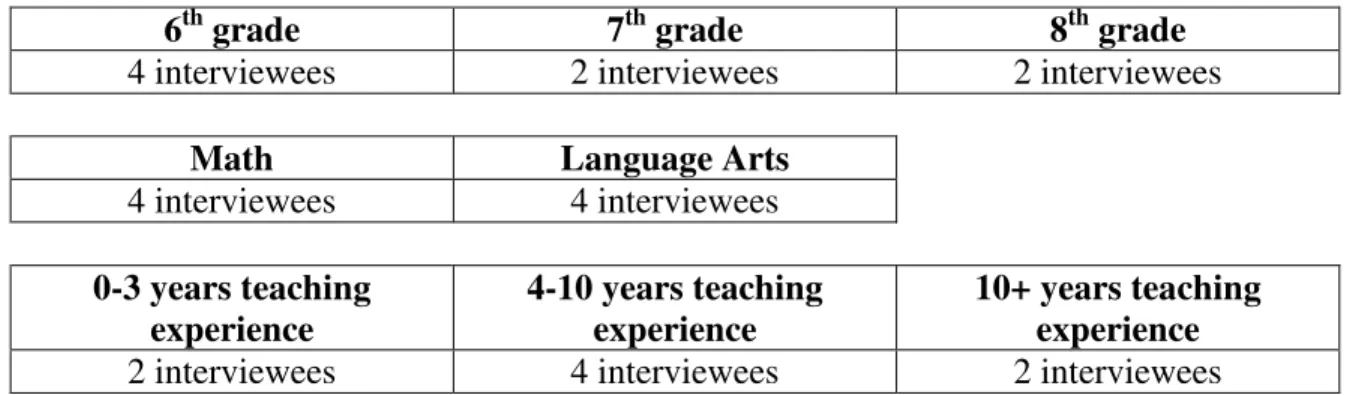
Table 1 2004-05 demographic information for Central Middle’s teachers…... 60 Table 2 Teacher interviewees broken down by grade level, subject area, and
years of teaching experience……… 62
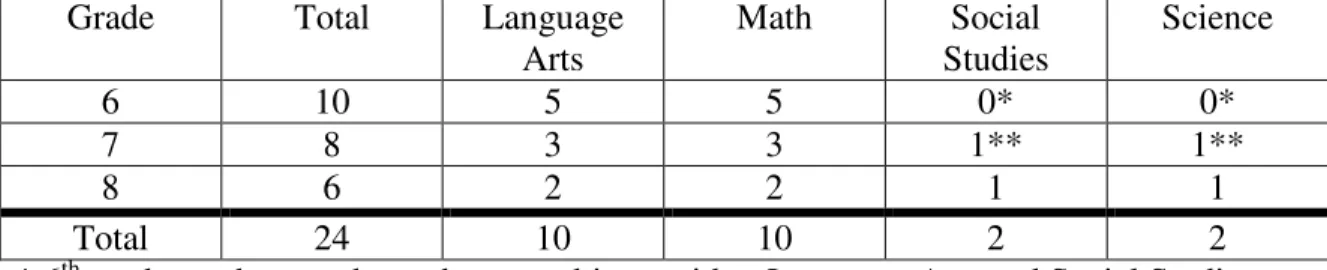
Table 3 Breakdown of core academic teachers for the 2004-05 school year… 84 Table 4 Teacher Activity Survey response rates by grade level and subject
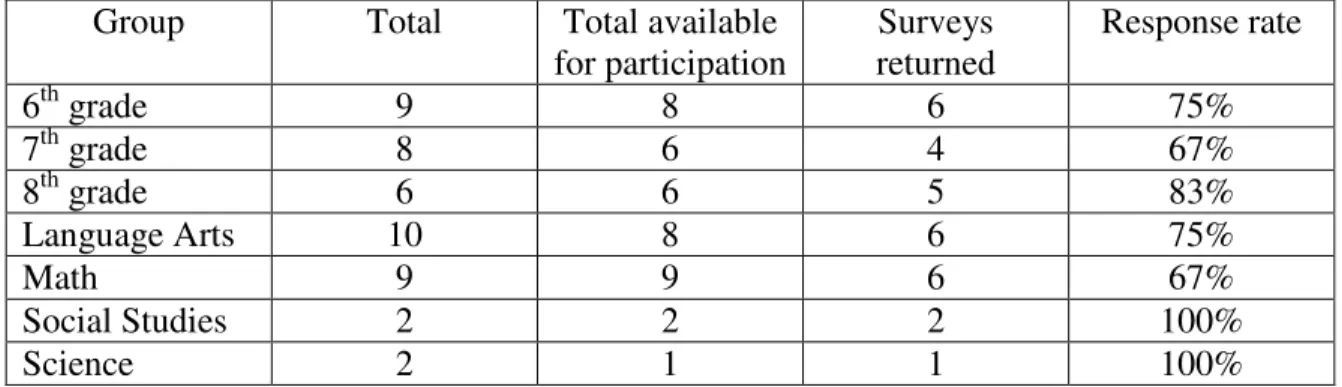
area………... 85
Table 5 Relationship between professional development features and
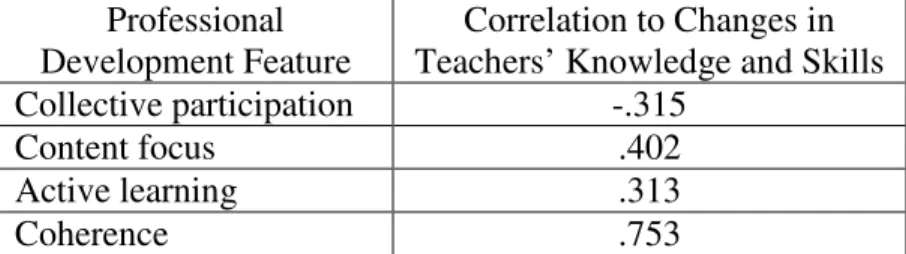
changes in teachers’ knowledge and skills………... 87 Table 6 Relationship between professional development features and
changes in teaching practices………... 90 Table 7 Levels of collective participation in PLC activities (Results reported
for all respondents and by grade level)……… 95 Table 8 Levels of collective participation in PLC activities (Results reported
for all respondents and by teaching discipline)……… 96 Table 9 Levels of collective participation in PLC activities (Results reported
for all respondents and by years of experience)………... 96 Table 10 Level of emphasis in PLC activities on developing participants’
content knowledge (Results reported for all respondents and by
grade level)………... 98
Table 11 Level of emphasis in PLC activities on developing participants’ content knowledge (Results reported for all respondents and by
teaching discipline)……….. 98
Table 12 Level of emphasis in PLC activities on developing participants’ content knowledge (Results reported for all respondents and by
years of experience)………. 98
Table 13 Total number of opportunities for active learning in PLC activities
(Results reported for all respondents and by grade level)……… 101 Table 14 Total number of opportunities for active learning in PLC activities
(Results reported for all respondents and by years of experience)….. 101 Table 16 Percent of teachers reporting that professional learning community
activities included specific active learning components, organized by active learning categories (Results reported for all respondents
and by grade level)………... 102
Table 17 Percent of teachers reporting that professional learning community activities included specific active learning components, organized by active learning categories (Results reported for all respondents
and by teaching discipline)………... 103 Table 18 Percent of teachers reporting that professional learning community
activities included specific active learning components, organized by active learning categories (Results reported for all respondents
and by years of experience)……….. 104
Table 19 Degree to which professional learning community activities fostered
coherence (Results reported for all respondents and by grade level)... 106 Table 20 Degree to which professional learning community activities fostered
coherence (Results reported for all respondents and by teaching
discipline)………. 107
Table 21 Degree to which professional learning community activities fostered coherence (Results reported for all respondents and by years of
experience)………... 107
Table 22 Percent of teachers reporting that professional learning community activities included specific coherence components (for the first five components, either a score of 4 or 5 on a 5-point scale), organized by coherence categories (Results reported for all respondents and by
grade level)………... 108
Table 23 Percent of teachers reporting that professional learning community activities included specific coherence components (for the first five components, either a score of 4 or 5 on a 5-point scale), organized by coherence categories (Results reported for all respondents and by
teaching discipline)……….. 109
Table 24 Percent of teachers reporting that professional learning community activities included specific coherence components (for the first five components, either a score of 4 or 5 on a 5-point scale), organized by coherence categories (Results reported for all respondents and by
Table 25 Extent to which participation in professional learning community activities enhanced knowledge and skills (Results reported for all
respondents and by grade level)………... 112 Table 26 Extent to which participation in professional learning community
activities enhanced knowledge and skills (Results reported for all
respondents and by teaching discipline)………... 112 Table 27 Extent to which participation in professional learning community
activities enhanced knowledge and skills (Results reported for all
respondents and by years of experience)……….. 113 Table 28 Percent of teachers reporting enhanced knowledge and skills due to
participation in professional learning community activities (either a score of 4 or 5 on a 5-point scale) (Results reported for all
respondents and by grade level)………... 113 Table 29 Percent of teachers reporting enhanced knowledge and skills due to
participation in professional learning community activities (either a score of 4 or 5 on a 5-point scale) (Results reported for all
respondents and by teaching discipline)………... 114 Table 30 Percent of teachers reporting enhanced knowledge and skills due to
participation in professional learning community activities (either a score of 4 or 5 on a 5-point scale) (Results reported for all
respondents and by years of experience)……….. 114 Table 31 Degree of improvement in classroom teaching practices due to
participation in professional learning community activities (Results
reported for all respondents and by grade level)……….. 117 Table 32 Degree of improvement in classroom teaching practices due to
participation in professional learning community activities (Results
reported for all respondents and by teaching discipline)……….. 117 Table 33 Degree of improvement in classroom teaching practices due to
participation in professional learning community activities (Results
reported for all respondents and by years of experience)………. 117 Table 34 Percent of teachers reporting improvement in classroom teaching
practices due to participation in professional learning community activities (either a score of 2 or 3 on a 0 to 3 point scale) (Results
reported for all respondents and by grade level)……….. 118 Table 35 Percent of teachers reporting improvement in classroom teaching
activities (either a score of 2 or 3 on a 0 to 3 point scale) (Results
reported for all respondents and by teaching discipline)……….. 118 Table 36 Percent of teachers reporting improvement in classroom teaching
practices due to participation in professional learning community activities (either a score of 2 or 3 on a 0 to 3 point scale) (Results
reported for all respondents and by years of experience)………. 119 Table 37 Number of teacher interviewees broken down by grade level, subject
LIST OF FIGURES
Figure 1 Professional development features related to instructional
improvements………... 5
Figure 2 Concurrent Triangulation research design (Creswell, 2003, p.214)… 15 Figure 3 Garet et al.’s relationships of features of professional development
to teacher outcomes (1999, p. 3-53)……… 35 Figure 4 DuFour’s (2004b) professional learning community activities and
their relationship to Garet’s (1999) features of high-quality
professional development………. 54
Figure 5 Concurrent Triangulation research design (Creswell, 2003, p.214)… 73 Figure 6 Measurements of internal consistency for Garet et al’s (1999)
professional development features and outcomes using Cronbach’s
alpha (p.E-15)………... 76
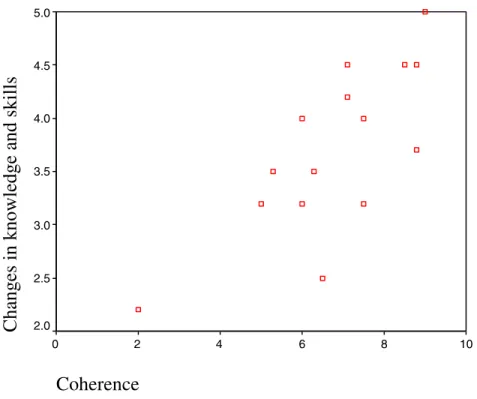
Figure 7 Relationship between coherence and changes in teachers’
knowledge and skills……… 88
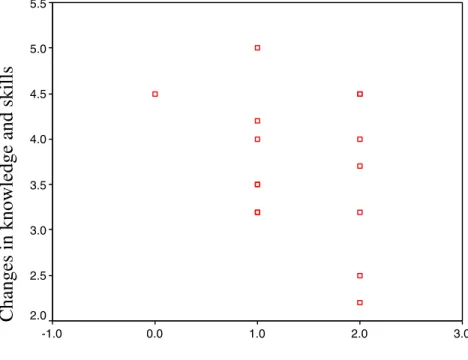
Figure 8 Relationship between collective participation and changes in
teachers’ knowledge and skills………. 89
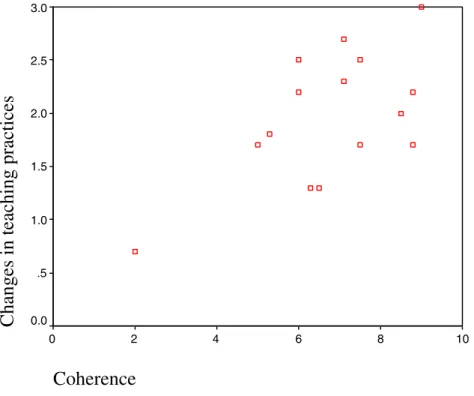
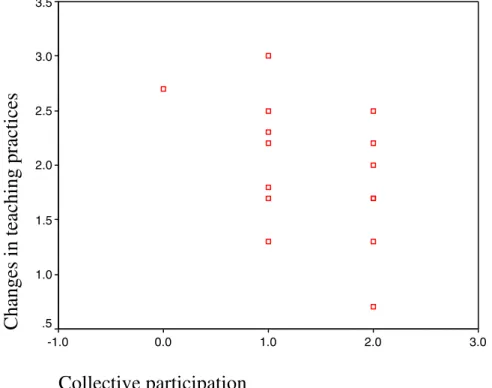
Figure 9 Relationship between coherence and changes in teaching practices… 90 Figure 10 Relationship between collective participation and changes in
teaching practices………. 92
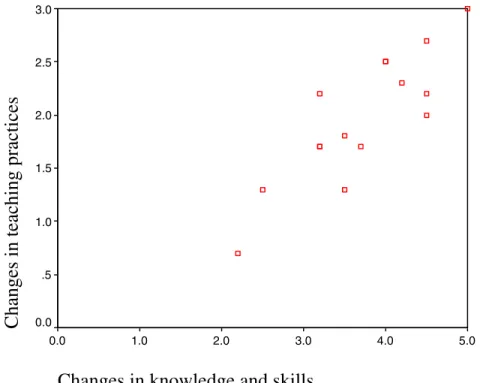
Figure 11 Relationship between changes in teachers’ knowledge and skills and
changes in teaching practices………... 93 Figure 12 The relationship between professional learning community activities
Chapter 1
Introduction
While education has been an important issue in the United States for many years, passage of the No Child Left Behind Act in 2001 pushed issues of teaching and learning to the forefront of the American consciousness. The national debate over the most effective means of improving K-12 education encompasses topics as far-ranging as the promise of new technologies, the injection of market competition via school vouchers, and the use of high-stakes accountability testing. Figuring prominently in the federal education budget, however, is a more traditional focus—increased funding for teacher training and recruitment. In 2002, for example, the federal government authorized more than 3 billion dollars for teacher and principal training and recruiting (No Child Left Behind, 2002). And this focus is not arbitrary: while always recognized anecdotally, over the last 15 years teacher effectiveness has become the subject of considerable quantitative and qualitative research, with a growing body of literature suggesting that the classroom teacher can have a significant impact on student learning and achievement (Darling-Hammond, 2000; McCaffrey et al., 2003; Sanders & Rivers, 1996; Wenglinsky, 2002; Wright et al., 1997).
between teacher inputs and teacher effectiveness (Darling-Hammond & Youngs, 2002; Wenglinsky, 2000). According to Wenglinsky (2000), “Research has not consistently demonstrated a link between teacher inputs, such as salaries and education levels, and student outcomes, such as scores on standardized tests” (p.6). Instead, a counter body of research makes a compelling case that teachers’ impact on student achievement is less dependent on teacher inputs and more a function of daily, classroom-level curricular and instructional decision-making (Joyce & Showers, 2002; Stigler & Hiebert, 1999;
Wenglinsky, 2000, 2002).
Given these insights—that teachers are a primary school-based link to student achievement, and that pedagogical quality is the key lever in the teacher-student
dynamic—the federal support of teacher professional improvement represents a logical and important investment. And, for school-based leaders working to maximize student learning and achievement, identifying opportunities to encourage and support classroom-level teacher improvement is a top priority. This is especially true at the middle school level, where issues of student learning and teacher quality are manifest. In a review of data from the Third International Math and Science Study (TIMSS), Heller et al. (2002) noted that, “In mathematics and science, U.S. fourth-graders reached a higher
classrooms, too many teachers in the middle grades have too little knowledge of the subjects they teach” (p.1). For the middle school principal, supporting teacher improvement is critical.
Recognizing the importance of teacher effectiveness in the arena of student achievement and school improvement, this study attempted to explore the way in which teacher effectiveness can be impacted by organizational structure. Specifically, this study focused on the relationship between professional learning community activities and teacher improvement in a first-year middle school. The professional learning community model represents an organizational approach that emphasizes faculty commitment to a mission of ensuring student learning, high levels of collaboration, and regular reflection on student and school data. Using a case study approach, the professional learning community structure was explored as an alternative approach to teacher improvement.
development studies have been completed in the last decade that identify in detail those features of professional development that research suggests are most likely to lead to improvements in teacher effectiveness (Garet et al., 1999, 2001; US Department of Education, 2000). Specifically, these studies identify six structural and core features (identified in Figure 1) that have been identified as relating to instructional
improvements. In general, the three structural features support or mediate the
Figure 1: Professional development features related to instructional improvements
Structural Features Core Features Type of activity: For example,
traditional workshop versus reform models, such as study groups or peer mentoring (Ball, 1996; Darling-Hammond, 1996; Little, 1994; Loucks-Horsley et al., 2003; Sparks, 1994; Stiles et al., 1996)
Focus on content: The degree to which professional development develops teacher knowledge of content area (Cohen & Hill, 1998; Kennedy, 1998; Sparks, 1994; Stigler & Hiebert, 1999)
Duration: Includes both contact hours and span of time covered (Cohen & Hill, 1998; Little, 1994; Stiles et al., 1996; Wenglinsky, 2000).
Promoting active learning: Includes four dimensions, specifically 1) observing and being observed in the classroom; 2) planning classroom implementation (e.g., practicing under simulated conditions, discussing classroom implementation with colleagues); 3) reviewing student work; and 4)
presenting, leading, and writing (e.g., giving a lecture or presentation, conducting a demonstration of a lesson) (Darling-Hammond and McLaughlin, 1996; Finley et. al., 2000; Garry & Graham, 2004; Loucks-Horsley et. al., 2003)
Collective participation:
Grouping participants by some common characteristic, such as grade level, discipline, school, etc. (Ball, 1996; DuFour, 2004b; Hirsh, 2004; Loucks-Horsley et al., 2003; Newmann & Associates, 1996)
Fostering coherence: Includes three dimensions, specifically 1) connecting with goals and other activities (e.g., teachers’ professional development goals); 2) aligning with state and district standards and assessment; and 3) communicating with other teachers (Darling-Hammond and McLaughlin, 1996; Finley et. al., 2000; Garry & Graham, 2004; Laine, 2000; National Staff Development Council, 2001)
workshops or conferences that traditionally comprise professional development offerings (Ball, 1996; Darling-Hammond, 1996; Garet et al. 2001; Little, 1994; Sparks, 1994), a variety of alternative, or reform-type professional development activities have become increasingly popular. Examples of these alternative types include study groups,
professional networks, and mentoring relationships (Loucks-Horsley et al., 2003), and many researchers and experts have suggested that these reform-type activities may respond more effectively to teachers’ needs (Ball, 1996) and demonstrate a greater propensity to lead to changes in teacher instructional behaviors (Darling-Hammond, 1996; Loucks-Horsley et al., 2003; Stiles et al., 1996). Nevertheless, effective and consistent school-based professional development programs are few and far between (Ball, 1996; Darling-Hammond, 1996; Garet et al. 2001; Little, 1994; Sparks, 1994; U.S. Department of Education, 2000).
Rick DuFour (2004a) takes the concept of alternative professional development one step further. He argues that, rather than treating professional development as a distinct and separate entity or area of focus (which is the common approach), teacher improvement should be approached as a natural byproduct of larger organizational
management strategies. While consistent with the notion of reform-type professional
learning, this approach changes the conceptualization of professional development per se. Within this model, a school leader addresses teacher improvement tangentially,
behaviors, i.e., organizational structure becomes a primary agent directly mediating teacher professional growth. In DuFour’s words, “the best staff development happens in the workplace rather than in a workshop” (DuFour, 2004a, p.63).
DuFour’s assertion that organizational structure and philosophy can connect to educational outcomes is supported by a growing literature base (Darling-Hammond, 1996; Hord, 1997; Little et al., 1994; McLaughlin & Talbert, 1993; Rosenholtz, 1989). For example, in a summary of five years of research conducted at the Center for Research on the Context of Secondary School Teaching, McLaughlin and Talbert (1993) noted that “teachers’ responses to today’s students and notions of good teaching practices are heavily mediated by the character of the professional communities in which they work” (p.8, emphasis in original). In an evaluation of high school restructuring efforts, Lee et al. (1995) found that schools organized under an “organic” model (which includes certain structural elements, such as reduced hierarchy and increased collaboration) experienced higher achievement rates and smaller achievement gaps than more traditionally structured schools.
In commenting on Lee et al.’s (1995) work, however, Rowan (1995) cautioned that, “It is not structural change per se that creates successful schools. Instead, structural changes succeed in improving school performance only if they are consistent with, and support changes in, work practices (e.g., authentic instruction), and only if they are undertaken by a committed work force of teachers.” (p.15) DuFour’s model of
learning community, school leaders should require teachers to establish individual and organizational commitment to a common mission and goals centered around ensuring student learning; collaborate regularly on curricular, instructional, and organizational decisions; and collect and analyze organizational data and results. Echoing Rowan’s (1995) focus on work practices, DuFour (2004a) argues that:
When teachers work together to develop curriculum that delineates the essential knowledge and skills each student is to acquire, when they create frequent common assessments to monitor each student's learning on a timely basis, when they collectively analyze results from those
assessments to identify strengths and weaknesses, and when they help each other develop and implement strategies to improve current levels of student learning, they are engaged in the kind of professional development that builds teacher capacity and sustains school improvement. (p.63)
At first blush, then, the professional learning community model appears to offer an alternative path to teacher improvement, incorporating professional learning
improvement, any connections between the PLC model and teacher improvement in
practice, especially at the middle school level, remain identified and
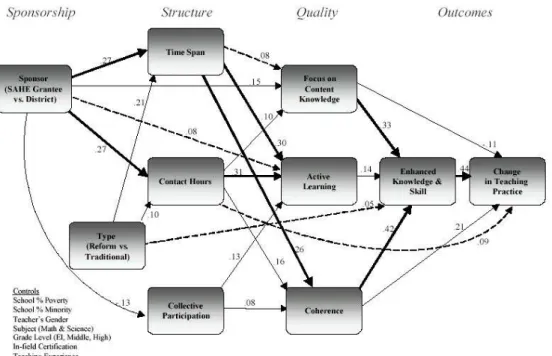
under-explained. Returning to the professional development literature, Garet et al.’s (1999) study provides a possible link in describing any potential connections. Garet et al.’s (1999) study identified the features of “high quality” professional learning experiences that connect to improvements in teacher content and pedagogical knowledge and skills, and to improvements in teacher instructional practices; their study therefore provides a specific language and framework to describe and explore the relationship between professional learning community strategies and changes in teacher effectiveness (for a graphical representation of this model, see Appendix A). For the middle school leader wishing to act on DuFour’s advice and use the professional learning community model as a possible means to achieve improvements in teaching and learning, connecting the dots between organizational strategies and educational outcomes is neither simple nor
assured—as is true in so many facets of educational leadership, the devil rests in the details. As a model for teacher improvement, the professional learning community framework is still not understood.
Statement of the Problem
practice of flexible scheduling and team-based collaboration (Heller et al., 2002). But little research exists describing either whether or how the professional learning
community model can support teacher improvement. This study addressed this challenge by focusing on the following three problems:
1. It is unclear which features of professional learning community activities, if any, demonstrate a significant relationship with changes in teachers’ content and pedagogical knowledge and skills and with changes in teachers’ instructional practices for middle school teachers.
2. It is unclear whether or not the features of professional learning community activities, along with changes in teachers’ content and pedagogical knowledge and skills and instructional practices, vary based on middle school teachers’ years of experience, grade level, or subject area.
3. It is unclear how organizational and personnel factors—specifically, intra-organizational social dynamics, the personality and leadership style of the principal, structured planning time, and use of a block schedule—influence the teacher improvement efficacy of professional learning community activities for middle school teachers.
Purpose of the Study
school teachers in a first year school adopting DuFour’s (2004b) professional learning community principles. In particular, this study was undertaken to provide middle school leaders with a detailed model of the efficacy of PLC principles as an alternative
professional development vehicle for teacher improvement. The case study began with a review of a possible research site, in which teacher interview data and school documents were analyzed using a designated protocol to determine the fidelity of application of DuFour’s (2004b) professional learning community principles. After the test site was determined, the case study relied on both quantitative and qualitative components to address the research question. In the quantitative stage of the study, the professional development survey developed by Garet et al. (1999) was used to collect data from all core academic teachers at the research site to: A) identify the features of professional learning community activities, if any, that demonstrated a significant relationship with changes in both teachers’ content and pedagogical knowledge and skills and teachers’ instructional practices; and B) identify any variation in the features of professional learning community activities, along with changes in teachers’ content and pedagogical knowledge and skills and instructional practices, based on years of teaching experience, grade level taught, and subject taught. In the qualitative stage of the study, teacher interviews and school documents were analyzed to explore in greater depth the inter-relationship of professional learning community activities, professional development features, teacher and school characteristics, improvements in individual teachers’
Carolina, utilizing professional development survey and interview data, along with school documents, to address the research question: What is the relationship between
professional learning community activities and teacher improvement in schools adopting DuFour’s (2004b) model of a PLC?
Research Design
The study used a case study format and focused on a first-year school that had incorporated DuFour’s (2004b) professional learning community principles. Because schools are complex organizations, and any relationship between professional learning community activities and teacher improvement is likely to reflect that complexity, the case study approach was well suited for the study—according to Merriam (1998), “The case study offers a means of investigating complex social units consisting of multiple variables of potential importance in understanding the phenomenon” (p.41). Furthermore, the intent of the study was to research a specific phenomenon in depth, exploring the detailed interconnectedness of professional learning community activities and teacher improvement. Given this research intent, working with a single case study made sense: “a single case or small nonrandom sample is selected precisely because the researcher wishes to understand the particular in depth” (Merriam, 1998, p.209, emphasis in the original). In addition, the use of a first-year school increased the chances of schoolwide fidelity to professional learning community principles. Most, if not all school community members in a first-year school have been present from the outset, suggesting that
existing school, thereby broadening the opportunity for data collection. In their own study of a teacher learning community, Grossman et al. (2001) recognized the challenges inherent in studying the formation of community in existing schools, noting that, “What we did not appreciate until later was how working with a group of teachers who already knew each other would affect the formation of community. In many ways, starting with a group of colleagues who have worked together may be worse than convening a group of perfect strangers” (p.949).
any variation in the features of professional learning community activities, along with changes in teachers’ content and pedagogical knowledge and skills and instructional practices, based on years of teaching experience, grade level taught, and subject taught. Second, a purposefully selected group of teachers from the same school participated in qualitative interviews focusing on the inter-relationship of professional learning community activities, professional development features, teacher and school characteristics, improvements in individual teachers’ knowledge and skills, and
individual teacher instructional behavior changes. School documents were also analyzed to support the analysis of these relationships.
The case study relied on a concurrent triangulation approach, which uses two complementary research methods to confirm, cross-validate, or corroborate findings within one study (Creswell, 2003; Greene et al., 1989). According to Greene et al. (1989), “[W]hen two or more methods that have offsetting biases are used to assess a given phenomenon, and the results of these methods converge or corroborate one another, then the validity of inquiry findings is enhanced” (p.256). Data from the surveys were
collected concurrently but separately from interview and document data, and results were then compared during the data analysis and interpretation stages (see Figure 2). Because of the interpretive and descriptive nature of the study, coupled with the intent to identify schoolwide relationships, a mixed-methods approach was preferable to a single
larger organizational context. In this way, the research question was addressed at both the macro (i.e., organizational) and micro (i.e., individual) levels, drawing a final picture that is intended to be both valid in its interpretations and rich in its descriptions.
Figure 2: Concurrent Triangulation research design (Creswell, 2003, p.214)
QUANTITATIVE
+
QUALITATIVEQuantitative Data Collection Qualitative Data Collection
Quantitative Data Analysis
Data Results Compared
Qualitative Data Analysis
Assumptions of the Study The following assumptions existed in the study:
1. Teacher characteristics have an impact on student achievement.
2. Teacher effectiveness relates to teacher use of curricular and instructional strategies.
3. Teacher effectiveness relates to student achievement.
4. Teacher effectiveness is an acquired and dynamic characteristic that can change over time.
5. There is a positive relationship between defined professional development characteristics and teacher effectiveness.
8. Professional learning community activities can support teacher development and improvement.
9. The professional development features identified by Garet et al. (1999), which were developed with data from math and science teachers, also apply to
professional development efforts with language arts and social studies teachers. 10. The types of instructional changes identified in Garet et al.’s (1999) Teacher
Activity Survey represent instructional improvements; that is, instructional changes that are likely to result in increased student learning.
11. Any impact of professional learning community activities on teacher development can be qualitatively distinguished from additional organizational- and personnel-related factors that may influence teacher development.
12. The test site met DuFour’s (2004b) definition of an active professional learning community.
Limitations of the Study The study was limited by the following factors:
1. Theoretical model: The study used a specific theoretical model to define the
the study used DuFour’s (2004b) definition of a professional learning community. Other definitions of a professional learning community exist in the literature base, and by choosing Dufour’s definition some components of the professional
learning community model emphasized by other authors may not have been considered.
2. Characteristics of the school and participants: The test site was a first-year middle school that serves a high achieving (as measured by state standardized tests) and predominately majority, high SES student population. In addition, the school’s faculty was new to the school and was selected based on specific criteria by the building principal. While these characteristics made the test site an
excellent candidate for a case study, any identified relationships between professional learning community activities, professional development characteristics, and teacher development should not be seen as specifically generalizeable to general school and teacher populations.
3. Specific professional learning community activities: The study aimed to examine
the relationship between professional learning community activities, professional development features, and teacher development, but any conclusions are limited to the specific professional learning community activities documented at the research site.
4. Teacher perceptions: Teacher surveys and interviews rely on teacher perceptions
data when evaluating professional development efficacy (Mullens et al., 1996), but they represent only one perspective.
5. Purposefully sampled teacher interviews: The proposed study relied on
purposeful sampling for teacher interviews. In purposeful sampling, the
researcher selects “participants…that will best help the researcher understand the problem and the research question” (Creswell, 2003, p.185), and the purposeful sample in the study included representatives from all grade levels and subject areas of the targeted teacher population, along with various levels of teaching experience. Nevertheless, the information that was gained from purposefully selected interviews may not represent the experiences of the entire teacher population at the test site.
6. Alternative organizational and personnel factors contributing to teacher
development: Through qualitative interviews and document review, the study
7. Researcher relationship to proposed test site: The researcher spent ten months working as an administrative intern at the test site prior to the advent of the study. While this allowed the researcher expanded insight into the context of
professional learning activities at the proposed research site, it might also have affected the way in which teachers reacted to interview questions (e.g., teachers may have felt compelled to provide overly positive information or to censor information because of the researcher’s previous position as an administrator and relationship with existing administrators), and might have biased both the types of questions asked by the researcher and the interpretation of interview data (e.g., the researcher may have failed to ask some questions because the answers seemed obvious to one who worked in the school, or the researcher may have interpreted data partially through the lens of pre-conceived notions based on personal experiences). In an attempt to address this bias in the data gathering process, a second interviewer with no relationship to the school or district conducted several of the interviews, and the data analysis process included a comparison of the data from both interviewers.
Research Questions and Hypotheses
The study was designed to address the following research questions and hypotheses:
pedagogical knowledge and skills and with changes in teachers’ instructional practices for core academic middle school teachers in a first year school?
Hypotheses related to question #1:
• The following professional development features, as components of professional learning community activities, will have no relationship to improvements in teacher content and pedagogical knowledge and skills: collective participation, focus on content, promoting active learning, and fostering coherence.
• The following professional development features, as components of professional learning community activities, will have no relationship to changes in teacher instructional practice: collective participation, focus on content, promoting active learning, and fostering coherence.
Question #2: Do the features of professional learning community activities, along with changes in teachers’ content and pedagogical knowledge and skills and instructional practices, vary based on specific teacher characteristics—including years of teaching experience (divided into the three categories reported by North Carolina schools: 0-3 years, 4-10 years, and 10+ years), grade level taught, and subject taught— for core academic middle school teachers in a first year school?
Hypotheses related to question #2:
• There will be no difference in the identified level of focus on content (+/- .5 point on 0 to 2 point scale), as a feature of professional learning community activities, based on respondents’ years of teaching experience, grade level taught, or subject taught.
• There will be no difference in the identified level of promoting active learning (+/- 5 points on a 0 to 20 point scale), as a feature of professional learning community activities, based on respondents’ years of teaching experience, grade level taught, or subject taught.
• There will be no difference in the identified level of fostering coherence (+/-2.25 points on a 0 to 9 point scale), as a feature of professional learning community activities, based on respondents’ years of teaching experience, grade level taught, or subject taught.
• There will be no difference in the identified level of changes in content and pedagogical knowledge and skills (+/- 1 point on a 1 to 5 point scale), as a result of professional learning community activities, based on respondents’ years of teaching experience, grade level taught, or subject taught.
• There will be no difference in the identified level of changes in instructional practice (+/- .75 on a 0 to 3 point scale), as a result of professional learning community activities, based on respondents’ years of teaching experience, grade level taught, or subject taught.
improvement efficacy of professional learning community activities for core academic middle school teachers in a first year school?
Definition of Terms
For the purposes of this study, the following definitions were used:
• Teacher effectiveness—The ability of a teacher to “make students learn”
(Wenglinsky, 2000, p.3), which is a direct function of a teacher’s knowledge of and skills in:
o Content, which includes “both the topics of instruction… and the teacher’s
expectations for student performance” (Garet et al., 1999, p.2-4); and
o Pedagogy, which includes “the types of activities used in instruction”
(Garet et al., 1999, p.2-4).
• Teacher improvement, teacher development, teacher growth (used synonymously
throughout)—Enhancements in classroom teaching that are likely to result in
improved student learning (Garet et al., 1999, p.2-1). These enhancements in classroom teaching result from changes in a teacher’s knowledge and skills related to content and pedagogy (see teacher effectiveness above).
• Professional development—“[T]he provision of activities designed to advance the
knowledge, skills, and understanding of teachers in ways that lead to changes in their thinking and classroom behavior” (Fenstermacher & Berliner, 1985, p.283).
• High quality professional development—Professional development that
incorporates the structural and core features identified by Garet et al. (1999).
o Type of activity, e.g., traditional workshop versus reform models, such as study groups or peer mentoring;
o Duration, which includes both contact hours and span of time covered;
o Collective participation, i.e., grouping participants by some common
characteristic, such as grade level, discipline, school, etc.
• Core professional development features—Includes:
o Content, i.e., the degree to which professional development develops
teacher knowledge of content area;
o Promoting active learning, which includes four dimensions, specifically 1)
observing and being observed in the classroom; 2) planning classroom implementation (e.g., practicing under simulated conditions, discussing classroom implementation with colleagues); 3) reviewing student work; and 4) presenting, leading, and writing (e.g., giving a lecture or
presentation, conducting a demonstration of a lesson);
o Fostering coherence, which includes three dimensions, specifically 1)
connecting with goals and other activities (e.g., teachers’ professional development goals); 2) aligning with state and district standards and assessment; and 3) communicating with other teachers.
• Professional learning community—A model of school organizational
• Core academic teachers—Teachers who teach any one of the academic subjects Language Arts, Math, Science, or Social Studies.
Chapter 2
Literature Review
The premise is that the improvement of American education relies centrally on the development of a highly qualified teacher workforce imbued with the knowledge, skills, and dispositions to encourage
exceptional learning in all the nation’s students. The related hypothesis is that the key to producing well-qualified teachers is to greatly enhance their professional learning across the continuum of a career in the classroom. (Sykes, 1999, p. xv)
authorized more than $3 billion for teacher and principal training and recruiting as part of the No Child Left Behind legislation (No Child Left Behind, 2002).
The most effective means of improving teacher quality, however, is a topic of debate. Numerous studies and policy proposals have explored a focus on teacher inputs at the pre-service front end—for example, by increasing teacher salaries, recruiting candidates with higher education levels, or tightening certification requirements—as a means to improve teacher efficacy (Darling-Hammond & Youngs, 2002; Ehrenberg & Brewer, 1995; Fetler, 1999; Goldhaber & Brewer, 2000; Greenwald et al., 1996; Rowan et al., 1997; U.S. Department of Education, 2003a; Wilson et al., 2001). A separate body of research suggests that efforts to improve existing teachers’ instructional strategies and classroom decision-making represent a more effective path (Joyce & Showers, 2002; Stigler & Hiebert, 1999; Wenglinsky, 2000, 2002), while a third line of inquiry suggests that specific organizational management strategies can serve to mediate and support improvements in teacher quality (Darling-Hammond, 1996a; DuFour 2004a, 2004b; DuFour & Eaker, 1998; Lee et al., 1995).
community model, this section concludes with a discussion of the conceptual relationship between professional learning community activities (DuFour, 2004b) and Garet’s (1999) features of high-quality professional development.
For a definition of the professional learning community model, this study used that provided by Rick DuFour (2004b). While DuFour is not the only researcher to define the professional learning community concept (for example, Hord, 1997), his definition is prominent in the literature, it was the definition that had been used at the research site, and it is a definition that shares much in common with other professional learning community descriptions. According to DuFour (2004b), a professional learning
community is an organization that emphasizes individual and organizational commitment to common goals, collaborative work and decision-making, and an attention to
organizational data and results.
In defining high-quality professional development, this study relied on the characteristics identified by Garet et al. (1999) in their three-year, national study, which related professional development characteristics to changes in teachers’ knowledge, skills, and instructional behaviors. Garet et al. (1999) identified six structural and core professional development features:
• Type of activity • Duration
• Collective participation • Focus on content
While there have been numerous lists of high-quality professional development characteristics identified in the literature in the last decade (for example, American Federation of Teachers, 2002; Kent & Lingman, 2000; National Staff Development Council, 2001), Garet’s (1999) six features provided an ideal theoretical lens for this study for four reasons. First, Garet’s (1999) list shares many of the primary features identified by other lists (Guskey, 2003). Second, Garet’s (1999) list is based on features that relate directly to changes in teacher instructional behaviors, the variable most likely to lead to improvements in student achievement (Garet et al., 1999, 2001; Joyce & Showers, 2002; U.S. Department of Education, 2000; Wenglinsky, 2002). Third, Garet’s (1999) features have been used before as a theoretical lens in conducting educational research (Odden et al., 2002). And fourth, while many other professional development lists are based solely on qualitative data and expert opinion, Garet’s (1999) list is based on both qualitative and quantitative analyses, focusing on professional development features that have demonstrated a statistical relationship to teacher instructional behavior changes in large data sets (Garet et al., 1999, 2001; U.S. Department of Education, 2000).
The Relationship Between Student Achievement and Teacher Characteristics The passage of the No Child Left Behind Act in 2001 re-emphasized an almost 20-year focus at the federal level on student achievement. Beginning in 1983 with the publication of A Nation at Risk and punctuated from time to time by national and
crisis. Addressing this “crisis”, however, is a complex and politically charged endeavor, hinging in large part on one’s assumptions about the complex inter-relationship between student and school-based characteristics and student achievement. Going back almost 40 years, the Coleman Report (officially titled Equality of Educational Opportunity) held as one of its major findings that student background had a far greater impact on student achievement than did school characteristics (Coleman et al., 1966), suggesting that efforts within the public school system could have limited influence on student learning.
Research since then has both supported and contradicted this finding, with the current climate at a bit of a stalemate: student background and family characteristics strongly influence student achievement, but schooling factors can also have a significant impact (McCaffrey, 2003; Sanders & Rivers, 1996; Stigler & Hiebert, 1999; Wenglinsky, 2000, 2002; Wright et al., 1997).
Among the school-based factors contributing to student achievement, recent research suggests that teacher effectiveness is by far the most important
(Darling-Hammond, 2000; Sanders & Rivers, 1996; Wenglinsky, 2000, 2002; Wright et al., 1997). While a strong relationship between teacher effectiveness and student achievement has been well documented in both the qualitative and quantitative literature bases, identifying exactly what constitutes “teacher effectiveness” has nevertheless proved to be a difficult task. In one direction, numerous studies and policy proposals have reviewed or
emphasized the importance of teacher inputs—such as salary, education level, scores on literacy exams, and certification requirements—as the primary indicators and
et al., 1997; U.S. Department of Education, 2003a; Wilson et al., 2001). Despite the national policy focus in the area of inputs, however, the link between teacher inputs and student achievement has been shown to be somewhat tenuous (Darling-Hammond & Youngs, 2002; Wenglinsky, 2000). According to Wenglinsky (2000), “Research has not consistently demonstrated a link between teacher inputs, such as salaries and education levels, and student outcomes, such as scores on standardized tests” (p.6).
Instead, a growing body of qualitative and quantitative research suggests that teachers’ impact on student achievement is primarily a function of curricular and instructional strategies and classroom decision-making (Joyce & Showers, 2002; Wenglinsky, 2000, 2002). For example, in a follow-up to the TIMSS report, which identified international disparities in terms of student achievement in math and science, Stigler & Hibert (1999) videotaped eighth grade math teachers in the U.S., Germany, and Japan, and then worked with a panel of experts to identify patterns in instructional
practice. As they reviewed the tapes, one expert offered his interpretation of what he saw: Actually, I believe I can summarize the main differences among the
mathematics; I just see interactions between students and teachers. (p. 25-26)
In general, the project researchers came to typify instruction by U.S. teachers as emphasizing “learning terms and practicing procedures”, as opposed to Japanese “structured problem solving” and German “developing advanced procedures” (p.27). Throughout the study, it was the quality of instruction and patterns of explicit
instructional strategies related to the content that, for the researchers, explained student achievement disparities.
In another particularly compelling study, Wenglinsky (2002) used 1996 NAEP scores from eighth grade mathematics students to examine the relationships between student achievement and teacher classroom practices, teacher professional development, and the aforementioned “teacher inputs”, controlling for student-based factors, such as SES. Wenglinsky (2002) found that, taken together, teacher practices, professional
development, and a single teacher input, teacher major (i.e., having majored in the subject taught), had at least an equivalent impact on student achievement as did student SES (to some extent contradicting the earlier findings of the aforementioned Coleman Report, Coleman et al., 1966). Among the school-based variables, teacher major had a slight impact, professional development dealing with special student populations (i.e.,
individualizing instruction) and focusing on developing students' higher-order thinking skills had a moderate impact, and teaching strategies focusing on higher-order thinking skills, problem-solving skills, and hands-on learning had a significant impact.
of a teacher’s access to high-quality professional development (depending upon the type of professional development), and largely a result of the specific classroom practices a teacher chooses to employ.
In a study reminiscent of Wenglinsky (2002), Niemi & Smith (2001) looked at the relationship between course content, instructional methods, and student achievement scores on 1994 history NAEP scores. While course content correlated positively with student achievement, it proved to be less important that instructional practice; according to Niemi & Smith (2001), “[I]t is clear that instructional changes have the most powerful relationship to student performance” (p.38). Specifically:
[S]tudents who experienced instruction that used more primary reading sources, required more and longer writing tasks, engaged students in active discussion, and utilized learning tools beyond simple textbooks did much better on these achievement scales.” (p. 37)
Niemi & Smith’s (2001) findings echo Wenglinsky’s (2002): students achieve at higher levels when teachers focus on specific course content and favor specific pedagogical strategies.
Teacher Improvement: Connections to Professional Development and Organizational Management
The concept of teacher improvement, therefore, is strongly connected in the literature base to notions of teachers’ content knowledge and pedagogical knowledge
instruction… and the teacher’s expectations for student performance” (Garet et al., 1999, p.2-4), while pedagogical knowledge refers to “the types of activities used in instruction” (Garet et al., 1999, p.2-4). Traditionally, efforts to improve teachers’ content and
pedagogical knowledge have fallen under the umbrella of professional development. Unfortunately, for many educators the term “professional development” conjures up images of one-time in-service workshops or conferences, focused on a topic poorly aligned with teachers’ needs and interests, and delivered in a “spray and pray” approach that lacks both follow up and collegial interaction (Ball, 1996; Darling-Hammond, 1996; Garet et al. 2001; Little, 1994; Sparks, 1994). More broadly defined, however,
professional development refers to “the provision of activities designed to advance the knowledge, skills, and understanding of teachers in ways that lead to changes in their thinking and classroom behavior” (Fenstermacher & Berliner, 1985, p.283).
In an alternative approach, some educational thinkers describe teacher
improvement through the lens of organizational management (Darling-Hammond, 1996; DuFour, 2004a; DuFour & Eaker, 1998; Hord, 1997; Lee et al., 1995; McLaughlin & Talbert, 1993; Rosenholtz, 1989). Within this model, the school environment and organizational strategies emphasized by school leaders are seen as both supporting and mediating changes in teacher skills, knowledge, and instructional behaviors. More
specifically, DuFour (2004a) conceptualizes professional development as both an integral part and natural byproduct of comprehensive organizational strategies that stress
can influence teacher effectiveness, identifying the professional development features and organizational strategies that research suggests are most likely to support improvements in teacher quality.
The Features of High-Quality Professional Development
The research evidence overwhelmingly suggests that professional development efforts can have a positive impact on teacher effectiveness (Cohen & Hill, 1998; Kennedy, 1998; Garet et al., 1999, 2002; Little, 1994; Stiles et al., 1996; Wenglinsky, 2000). Nevertheless, while the literature is replete with anecdotal articles and earnest exhortations concerning the best recipes for professional development, it is only recently that researchers have begun to focus on connecting professional development features in a quantitative way to the types of teacher attitudes and behaviors most likely to impact student achievement (Garet et al., 2001). For this reason, Garet et al.’s (1999) study represents a significant step forward in defining the features of high-quality professional development. The study spanned three years and focused on professional development programs throughout the country that had been funded through the Eisenhower
Figure 3: Garet et al.’s relationships of features of professional development to
teacher outcomes (1999, p. 3-53)
Because Garet’s features (1999) will be used as the theoretical lens in the
proposed study, it will be helpful to provide a concise review of the literature supporting each of Garet’s (1999) six identified features. As previously stated, Garet et al. (1999) identified three structural and three core features of high-quality professional
development. In general, the structural features support or mediate the effectiveness of the core features, serving as the “wrapper” within which professional learning takes place. The core features comprise the “agenda” of training: the training curriculum, the nature of activities, etc. Garet’s (1999) six features are:
• Structural features
o Duration
o Collective participation • Core features
o Focus on content
o Promoting active learning
o Fostering coherence
Structural feature: Type of activity
The type of activity refers to the form of the professional development; for example, whether the professional development is a traditional workshop or a reform model, such as a study group or peer mentoring relationship. Traditionally, teacher professional development has taken the form of isolated, one-time workshops or
conferences, which have been consistently criticized in the literature as being ineffective and failing to meet teachers’ professional needs (Ball, 1996; Darling-Hammond, 1996b; Garet et al. 2001; Little, 1994; Sparks, 1994). A variety of alternative, or reform-type professional development activities have become increasingly popular—examples include study groups, professional networks, mentoring relationships, and others (Loucks-Horsley et al., 2003)—and many researchers and experts have suggested that these reform-type activities may respond more effectively to teachers’ needs (Ball, 1996) and demonstrate a greater propensity to lead to changes in teacher instructional behaviors (Darling-Hammond, 1996b; Loucks-Horsley et al., 2003; Stiles et al., 1996).
Department of Education, 2000), the effects of activity type were somewhat counter-intuitive, given the literature base. As is shown in Figure 3, the type of activity had a direct impact on the professional development time span and total number of contact hours, but no direct correlation with changes in teaching practice. That is, reform-type professional development tended to include more contact hours and occurred over a greater span of time than did traditional workshops, but the type of activity was not in-and-of-itself an influencing factor; traditional workshops of equivalent duration were as effective as reform-type activities (Garet et al., 2001, p. 935-936). This suggests that a focus on workshop format is less important that a focus on sustained, in-depth learning that addresses the “core” professional development features.
Structural feature: Duration
including active learning, coherence, and a focus on content knowledge. According to Garet et al. (2001):
Longer activities tend to include substantially more opportunities for active learning, such as the opportunity to plan for classroom
implementation, observe and be observed teaching, review students’ work, and give presentations and demonstrations. Longer activities also tend to promote coherence including connections to a teacher’s goals and experiences, alignment with standards, and professional communication with other teachers. Time span and contact hours also have a moderately positive influence on the emphasis given to content knowledge” (p.933).
Structural feature: Collective participation
Collective participation refers to the grouping of participants in professional development by some common characteristic, such as grade level, discipline, or even school. While there is little direct research focusing on collective participation as an independent variable in professional development, there is much to suggest that common grouping practices are likely to support improved training results. For example, in a study of 24 schools going through a restructuring process across 18 different states, Newmann & Associates (1996) found that more successful schools utilized professional
numerous professional development experts affirm the importance of collective participation (for example, DuFour, 2004; Hirsh, 2004; Loucks-Horsley et al., 2003).
Analyses of the relationships between Garet’s (1999) professional development features and changes in teacher instructional behaviors (Garet et al., 1999, 2001; U.S. Department of Education, 2000) suggest that collective participation has a moderate positive relationship with coherence and active learning (both discussed in more detail below). That is, professional development activities that use common grouping practices are more likely to help teachers connect learning to previous knowledge, provide teachers with opportunities to discuss issues with colleagues, and provide opportunities for active engagement with new information (see Figure 3).
Core feature: Focus on content
behaviors” (p.9). Kennedy’s assertion, based on an analysis of multiple studies linking professional development to student learning, is part of a growing emphasis throughout the professional development literature on the importance of content (for example, Cohen & Hill, 1998; Sparks, 1994; Stigler & Hiebert, 1999).
In analyses of the relationships between Garet’s (1999) professional development features and changes in teacher instructional behaviors (Garet et al., 1999, 2001; U.S. Department of Education, 2000), a focus on content knowledge was found to have a positive relationship with both the enhancement of teachers’ knowledge and skills and changes in teaching practice (see Figure 3). This makes intuitive sense: as teachers learn more about their subject and how to teach it—for example, studying primary documents from World War II and learning how to use them with students—they are more likely to change their teaching practices in line with their new knowledge and skills: in our
example, they are then more likely to use primary documents when teaching about World War II. A particularly interesting finding concerning the relationship between content focus and changes in teaching behaviors was that, when a content focus did not lead to increased knowledge and skills (that is, teachers participated in professional development around their content area but did not learn anything new), there was a negative
Core feature: Promoting active learning
Promoting active learning includes four dimensions, all of which focus on opportunities for teachers to directly cognitively engage with new knowledge and skills. Those four dimensions are: 1) observing and being observed in the classroom; 2)
planning classroom implementation (e.g., practicing under simulated conditions,
discussing classroom implementation with colleagues); 3) reviewing student work; and 4) presenting, leading, and writing (e.g., giving a lecture or presentation, conducting a demonstration of a lesson). Given that teachers, like other learners, learn best when they construct knowledge over time, when they can relate new information to existing
knowledge, and when learning is presented as an active process (Finley et. al., 2000; Bransford, Brown, and Cocking, 1999, as cited in Loucks-Horsley et. al., 2003), it makes intuitive sense that active learning opportunities would positively influence the
acquisition of new knowledge and skills, given that they allow for richer and more
powerful cognitive engagement. The research literature similarly supports the importance of active learning as an important component of effective professional development, stressing opportunities for teachers to engage directly in concrete tasks focused on the curricular and instructional components of teaching (Darling-Hammond and McLaughlin, 1996; Finley et. al., 2000; Garry & Graham, 2004; Loucks-Horsley et. al., 2003).
Active learning plays a role in enhancing teachers’ knowledge and skills, according to analyses of the relationships between Garet’s (1999) professional
practices, it seems that the active learning opportunities must first focus on increasing teachers’ knowledge and skills, and only through those enhancements can active learning play a role in modifying instructional behaviors.
Core feature: Fostering coherence
“Coherence”, as defined by Garet et al. (1999), includes three dimensions: first, connecting professional development with teacher and school goals and other
professional activities; second, aligning training content and pedagogy emphasized in the training with state and district standards and assessments; and third, providing
opportunities for professional communication among teachers engaged in similar efforts. Multiple studies and publications echo the importance of explicit connections between larger school goals and training goals (Darling-Hammond and McLaughlin, 1996; Laine, 2000; National Staff Development Council, 2001) and of opportunities to work and dialogue with colleagues around issues of teaching and learning (Darling-Hammond and McLaughlin, 1996; Finley et. al., 2000; Garry & Graham, 2004).
Loucks-Horsley et. al., 2003; Finley et. al., 2000), it makes sense that training connected explicitly to teacher goals and curriculum, supported by opportunities to communicate with like-minded colleagues, would support professional growth.
The Features of Effective Organizational Management
The link between school management practices and teacher behavior described in the current literature (for example, Darling-Hammond, 1996a; Fullan, 2001; Hord, 1997; Lee et al., 1995; McLaughlin & Talbert, 1993; Rosenholtz, 1989) incorporates certain assumptions about organizational behavior: for example, relationships among school employees are complex and multi-faceted, cause and effect occur in a web of patterned circumstances, and intangibles such as employee “perceptions” or “levels of
commitment” influence individual behaviors. These assumptions, however, have not always existed in the literature, but instead have evolved over time. To understand the current conception of “organizational behavior”, and the way in which organizational management strategies are conceived to impact teacher development, it is important to begin with a brief history of the organizational management literature, especially as it relates to the professional learning community model.
responsible for goal setting, planning, supervising, and establishing and revising worker objectives based on organizational goals and scientifically measured job performance. (Owens, 2001, p.35-41) Classical organization theory moved from a focus on the individual worker to a focus on the total organization. According to Owens (2001), “Classical organization theorists have sought to identify and describe some set of fixed ‘principles’ (in the sense of ‘rules’) that would establish the basis for management” (p.41). Classical organization theory describes organizations through the use of hierarchical models of authority and responsibility, and its “organization charts” and principle of “unity of command” (which addresses the idea that no person in an organization should receive orders from more than one superordinate) are still widely used in schools and school districts. (Owens, 2001, p.39-43)