Zachary Yukio Kerr
A dissertation submitted to the faculty of the University of North Carolina at Chapel Hill in partial fulfillment of the requirements for the degree of Doctor of Philosophy in the
Department of Epidemiology.
Chapel Hill 2013
ABSTRACT
ZACHARY YUKIO KERR: The association of concussion history and mental health in former collegiate athletes
(Under the direction of Stephen Marshall)
and clinically-documented concussion histories was low (ICC: 0.21; 95% CI: 0.05, 0.37), but higher for females (ICC=0.65; 95% CI: 0.44, 0.79) and those playing more recently (2005-2012: ICC=0.39; 95% CI: 0.01, 0.67). Of those sustaining college sports-related concussions (40.8%), 39.6% believed they had sustained concussions that went undiagnosed, and 20.8% admitted non-disclosure of suspected concussions. Common reasons for non-disclosure included: did not think injury was serious enough (90.9%); did not know it was a concussion (72.7%); and did not want to leave the game/practice (72.7%). In summary, former
ACKNOWLEDGEMENTS
Ten years ago, my first academic mentor, Dr. Keith R. Stamm of the University of Washington, encouraged me to nurture my inquisitive nature and pursue graduate work. It was through his support that I made the decision to pursue a PhD. As I progressed through my graduate studies at The Ohio State University and HIV-prevention work in Central Ohio, I have been privileged to work alongside many great academics such as: Dr. Brenda Dervin, who taught me to always consider the world “outside of the box;” Dr. Randi Love, who introduced me to the world of Public Health; and Dr. R. Dawn Comstock, who helped me discover my passion for and dedication to injury prevention research.
“toolbox.” Last, Dr. Wayne Rosamond’s knowledge of epidemiology, coupled with his unique perspective as a former collegiate athlete, provided incomparable feedback. I am grateful to all five committee members for their direction, feedback, and encouragement. More importantly, I aim to be the same type of mentor to future students.
This dissertation also relied upon the support of many other individuals. Dr. Karla Thompson met with me on multiple occasions to provide feedback as I developed the survey instrument and progressed through analysis. The staff from the Matthew Gfeller Sports-Related Traumatic Brain Injury Research Center and Center for the Study of Retired Athletes, as well as the doctoral students from the Human Movement Science Curriculum and Epidemiology, also assisted with survey development. These individuals include: Dr. Julianne Schmidt, Ashley Littleton, Missy Fraser, Rob Lynall, Breton Asken, Eleanna
Varangis, Amy Matthews, Candace Goerger, Dr. JD DeFreese, Leah Cox, Michael Clark, Liz Teel, Derek Pamukoff, Tim Mauntel, Lizzie Hibberd, Rebecca Yau, Katie Harmon, Karen Roos, Barnett Frank, and Shiho Goto.
Dr. Dio Kavalieratos guided my exploration of qualitative methodologies. Dr. Derek Applewhite assisted in recruitment of former athletes to pre-test the survey instrument. Recruitment for this dissertation would have not been possible with the help from the UNC Alumni Association, particularly: Roger Nelsen, Director of Alumni Records and Information
Systems; Douglas S. Dibbert, President of the UNC General Alumni Association; and Eric Montross, Director of the UNC Rams Club.
individuals serve to remind me that throughout all my future successes and failures, I must always remember to find ways to reciprocate the love and support that they have and will continue to provide.
TABLE OF CONTENTS
LIST OF TABLES ... xii
LIST OF FIGURES ... xiv
LIST OF ABBREVIATIONS ... xv
1. INTRODUCTION ... 1
2. REVIEW OF THE LITERATURE ... 3
2.1 Concussion ... 3
2.2 Sex Differences Related to Concussions ... 5
2.3 The Association of Recurrent Concussion and Mental Health ... 7
2.3.1 Theories Related to the Association of Recurrent Concussion and Mental Health ... 7
2.4 Measurement of Mental Health ... 13
2.4.1 Usage of Scale Measures of Mental Health ... 13
2.5 Measurement of Concussion History ... 14
2.5.1 Athlete-Recalled Concussion History ... 16
2.5.1.1 Reliability of Athlete-Recalled Concussion History ... 18
2.5.1.2 Validity of Athlete-Recalled Concussion History ... 19
2.5.2 Comparing Athlete-Recalled and Clinically- Documented Concussion Data ... 22
2.6 Summary ... 23
3. STATEMENT OF SPECIFIC AIMS ... 25
4.1 Former Collegiate Athlete Cohort ... 30
4.1.1 Data Collection of Former Collegiate Athlete Cohort ... 30
4.1.2 Online Questionnaire ... 31
4.1.2.1 Athlete-Recalled Concussion History ... 33
4.1.2.2 Patient Health Questionnaire for Depression ... 35
4.1.2.3 Short Form of the Barratt Impulsiveness Scale ... 35
4.1.2.4 12-item Short Form of the Buss-Perry Aggression Questionnaire ... 36
4.1.2.5 Alcohol Dependence and Other Compulsive Behaviors ... 37
4.1.2.6 Medical History ... 37
4.1.2.7 Sports History ... 38
4.1.2.8 Demographics ... 38
4.1.3 Clinical Data ... 39
4.2 Statistical Analysis ... 40
4.2.1 Analysis for Aim 1 ... 41
4.2.2 Analysis for Aim 2 ... 45
5. RESULTS FOR AIM 1: Association between recurrent concussion and current mental health in former collegiate athletes ... 47
5.1 Introduction ... 47
5.2 Methods... 49
5.4 Discussion ... 57
5.4.1 Limitations ... 60
5.4.2 Conclusion ... 61
6. RESULTS FOR AIM 2: Agreement between athlete-recalled and clinically-documented concussion histories in a cohort of former collegiate athletes ... 69
6.1 Introduction ... 69
6.2 Methods... 71
6.2.1 Cohort definition and contact ... 72
6.2.2 Athlete-recalled concussion history ... 72
6.2.3 Clinically-documented concussions ... 74
6.2.4 Linking questionnaire and clinical data ... 75
6.2.5 Statistical analysis ... 75
6.3 Results ... 77
6.3.1 Agreement between athlete-recalled and clinically- documented concussions ... 77
6.3.2 Reported reasons for non-disclosure and sources of information on concussion ... 78
6.4 Discussion ... 79
6.4.1 Limitations ... 82
6.4.2 Conclusion ... 83
7. DISCUSSION ... 89
7.1 Summary of findings ... 89
7.2 Strengths ... 91
7.3 Limitations ... 91
7.4 Public health implications ... 93
7.4.2 Provision of care to former collegiate athletes ... 95
7.5 Future research ... 97
APPENDIX ... 100
LIST OF TABLES
Table 2.1. Theories explaining larger frequency of concussions
in females than males ... 7
Table 2.2. Theories explaining association between concussion and mental health outcomes ... 9
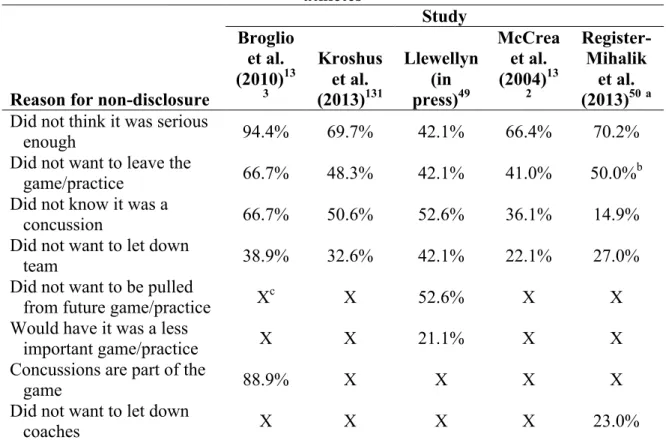
Table 2.3. Study findings regarding reasons for non-disclosure of concussion among athletes ... 21
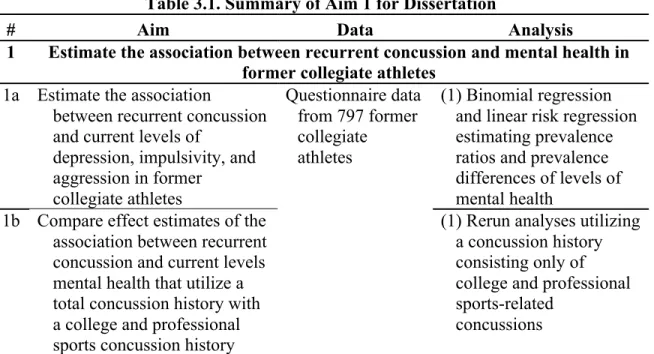
Table 3.1. Summary of Aim 1 for Dissertation ... 27
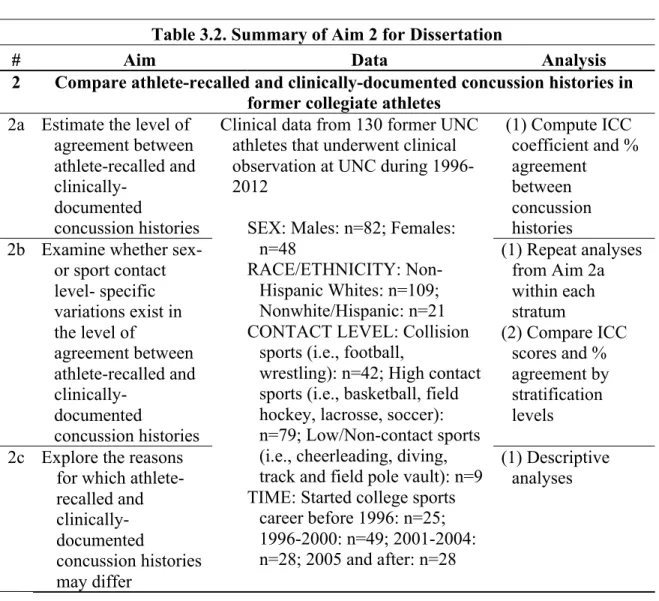
Table 3.2. Summary of Aim 2 for Dissertation ... 29
Table 4.1. Content of former collegiate athlete cohort online questionnaire ... 32
Table 4.2. Distributions of former collegiate cohort and 2013/14 school year athlete roster, by sport ... 33
Table 5.1. Sociodemographics and sports history of former collegiate athlete cohort (n=797) ... 62
Table 5.2. Distribution and mean values of mental health outcomes, by self-reported total concussion history ... 64
Table 5.3. Prevalence ratios and prevalence differences of mental health outcomes, by self-reported total concussion history ... 65
Table 5.4. Prevalence ratios and prevalence differences of mental health outcomes, by self-reported college and professional sport concussion history ... 66
Table 5.5. Prevalence ratios and prevalence differences of mental health outcomes, by self-reported college and professional sport concussion history ... 67
Table 5.6. Prevalence ratios of mental health outcomes, by self- reported sports- and non-sports-related concussion history ... 68
Table 6.1. Former collegiate athletes with clinical data, by sport (n=130) ... 84
Table 6.3. Distribution of concussions that were athlete-recalled and clinically-documented in former collegiate athletes (n=130),
by sex, race/ethnicity, level of contact in sport, and time ... 86 Table 7.1 Strategies to enhance social support among former collegiate athletes ... 96 Table 7.2 Current knowledge and recommendations for future research
related to the measurement of concussion history and its
LIST OF FIGURES
Figure 2.1. Socio-ecological framework regarding athlete disclosure
of concussions ... 18 Figure 4.1. Statistical model for Aim 1a (Estimate the association
between recurrent concussion and severity of depression, impulsivity, and aggression in former collegiate athletes):
Depression outcome ... 43 Figure 4.2. Statistical model for Aim 1a (Estimate the association
between recurrent concussion and severity of depression, impulsivity, and aggression in former collegiate athletes):
Impulsivity outcome ... 44 Figure 4.3. Statistical model for Aim 1a (Estimate the association
between recurrent concussion and severity of depression, impulsivity, and aggression in former collegiate athletes):
Aggression outcome ... 45 Figure 4.4. Comparing concussions reported by online questionnaire
LIST OF ABBREVIATIONS
AT Athletic Trainer
BPAQ Buss-Perry Aggression Questionnaire
BPAQ-SF 12-item Short Form of the Buss-Perry Aggression Questionnaire BIS-11 Barratt Impulsiveness Scale
BIS15 Short Form of the Barratt Impulsiveness Scale
BMI Body Mass Index
BRFSS Behavioral Risk Factor Surveillance System CDC Centers for Disease Control and Prevention CI Confidence Interval
CSRA Center for the Study of Retired Athletes CTE Chronic Traumatic Encephalopathy
DSM-IV Diagnostic and Statistical Manual of Mental Disorders, 4th edition
ED Emergency Department
ICC Intraclass Correlation Coefficient
NCAA National Collegiate Athletic Association NFL National Football League
TBI Traumatic Brain Injury
UNC University of North Carolina at Chapel Hill
US United States
CHAPTER 1 INTRODUCTION
Sports place high levels of mental and physical demands on athletes. Athletes undertake a long duration and high intensity of training, frequently specialize in their sport from an early age, experience high numbers of repetition of specific sport skills, and
constantly seek to elevate the difficulty of the athletic skills they practice and possess.1 The performance-oriented paradigm of sport encourages many athletes to constantly push their bodies in an effort to optimize performance, sometimes ignoring recovery demands and their bodies’ warning signs of pain and overuse.2 Severe injuries can disrupt athletes’ quality of life in the short- and long-term, by negatively affecting their health and causing them to miss a large part, if not all, of their playing season.3 Severe injuries are also more likely to require surgery and other advanced medical treatments.3 As participation in organized sports at the youth, high school, and college levels continue to increase,4-6 it is important to accurately characterize the burden of sports injury on athlete well-being and health.
reported diagnoses of mild cognitive impairment and depression.7,9,10 Another study of former NFL players found that 49% had experienced bodily pain and 15% currently met diagnostic criteria for major depression.11 Furthermore, there is growing concern about the potential development of chronic traumatic encephalopathy (CTE),12 as related
CHAPTER 2
REVIEW OF THE LITERATURE
2.1 Concussion
Concussion, a common type of traumatic brain injury (TBI), is a highly-publicized injury.21 Sports-related physical activity and motor vehicle crashes are responsible for the majority of concussions.22 The Centers for Disease Control and Prevention (CDC) estimates that each year, up to 3.8 million sport-related concussions occur in the United States (US).23 Of all reported injuries occurring in high school sports in 2008-2010, approximately 13.2% were concussions.24 An additional study also found that within three seasons, 5.1% of high school and collegiate football players sustained concussions.25
exhibited more severe symptoms, cognitive impairment, and balance problems immediately after sustaining a concussion. However, these symptoms resolved within 3-7 days.
Recurrent concussion has also been found to have additional negative acute and cumulative effects.25,29 A study of collegiate and high school football players found that approximately 15% of concussed players experienced a second concussion in the same season.25 Compared to collegiate football players reporting no previous history of
concussion, collegiate football players reporting three or more concussions before the study period were three times as likely to have sustained a concussion during the study period.29 Furthermore, players with a previous concussion history that had sustained concussions during the study period had slower recovery from symptoms than players without a previous concussion history.29
Recurrent concussion also places athletes at risk for second impact syndrome, which occurs when a second concussion is sustained before the symptomatology from a previous concussion has resolved.30-32 The cause of second impact syndrome is unknown, although it is hypothesized that the second concussion causes the brain’s arterioles to lose control of cerebral blood flow, which causes cerebral edema.31 Approximately 50% of known cases of second impact syndrome have resulted in mortality, partially because medical intervention to reverse complications occurs too late.33 Examination of second impact syndrome is limited, although in 1980-1993, 35 cases of second impact syndrome were recorded.31 It is widely assumed that better identification and monitoring of sports-related concussions can help to minimize the potential frequency of second impact syndrome and its substantial effects.
lacrosse.24,35,36 In particular, the concussion rate in football exceeds that of all other sports.24 Data from high school sports-related injury surveillance have reported football concussion rates of 0.47-0.64 per 1,000 athlete exposures (AEs) (i.e., one athlete’s participation in one practice or one competition).24,36 Similar concussion rates (0.61 per 1,000 AEs) have been reported in college football.36 In the NFL, an average 0.41 concussions occur per game.37 The National Center for Catastrophic Sport Injury Research examined football-related fatalities in 1931-2008 and found that brain trauma was the second-most common cause of fatalities (behind cardiac-related injuries and illnesses).38
2.2 Sex Differences Related to Concussions
There is also growing concern over sex differences related to concussions.39,40 In a meta-analysis that included samples of individuals sustaining sports-, fall-, and motor vehicle crash-related concussions, females experienced worse concussion-related outcomes than males, such as a larger number of post concussive symptoms and a longer length of
hospitalization.39 In a pharmacological trial of patients aged 50 years and younger, females had a greater frequency of brain swelling and intracranial hypertension than did males.40
Multiple reasons may underlie the higher frequency of reported concussions in females than males (Table 2.1). Differences may be attributable to
anatomical/neuromuscular differences. Girls may be at higher risk due to having less muscle strength in their necks or less mass in their neck and heads.46 In sports with ball-contact, a smaller ball-to-head ratio may increase risk.36 Social-environment factors also affect the diagnosis and reporting of concussions. Society may also be more protective of females than males, thereby making clinicians more likely to diagnose hard hits sustained by females as concussions. Females may also be more willing to disclose injuries more than males.47 Alternatively, it is also possible that female athletes may play contact sports such as a soccer and basketball more aggressively, perhaps to over-compensate for traditional role model expectations that suggest that women should be physically non-assertive.48 Last, equipment differences may confound the association between sex and concussion rates. For example, men’s lacrosse requires protective headgear, whereas women’s lacrosse does not (although it must be noted that this protective headgear is not intended to prevent concussions).
Table 2.1. Theories explaining larger frequency of concussions in females than males Anatomical/neuromuscular differences
Females have weaker necks
Females have less mass in heads/necks
In sports utilizing playing ball, females have smaller ball-to-head ratio than males Social-environment factors
Society wanting to be more protective of women leads to more diagnosed concussions Females disclose more injuries
Females play sports more aggressively
More protective equipment in certain males sports
2.3 The Association of Recurrent Concussion and Mental Health
The public health significance of concussion is further highlighted by findings that suggest recurrent concussion is associated with the onset of negative mental health outcomes, such as depression, mild cognitive impairment, and Alzheimer’s disease.7,9,10 Understanding the causes of negative mental health outcomes is important in public health terms.
Depression and Alzheimer’s disease are associated with significantly higher health care costs.51,52 Depression can also affect one’s ability to maintain self-care, relationships, and work productivity.53 Mild cognitive impairment must also be monitored because it is an established diagnostic criterion for assessing risk for dementia and Alzheimer’s disease in older individuals.54-57 Given the large numbers of sports participants and concussed athletes, further exploration of how concussions contribute to the onset of such mental health
their apparent association with “tauopathies”, aggregations of tau proteins in the brain that were identified on pathologic examination of deceased individuals with a history of head trauma.13,15-18 Although tau proteins are integral in properly functioning cognition, an over-accumulation is potentially associated with cognitive decline and depressive tendencies.18 Neurodegeneration related to one form of taupathy, chronic traumatic encephalopathy (CTE),12 was first observed in the early 20th century, when many former boxers exhibited abnormalities related to cognition, behavior, and motor skills13. Evidence in the latter half of the 20th century also found CTE-related neurodegeneration among former athletes from other sports with high levels of player to player contact, such as football, hockey, and soccer.14-20
CTE is considered a form of tauopathy but is unique in that it targets particular areas of the brain, such as the superficial layers of the cerebral cortex.18 CTE may also be
associated with depression, impulsivity, and aggression.18,58 Because CTE is also associated with severe neurological changes such as dementia, gait and speech abnormalities, and parkinsonism, it may be misdiagnosed as Alzheimer’s disease.13,59
structures.65 These structures are interconnected and are believed to compose a “neuroanatomical circuit”66 that plays a key role in mood regulation.
Genetics may also affect the brain’s response to injury. The human ApoE gene has three allelic forms (ApoE e2, e3, e4). Having the e2 allele may be protective against Alzheimer’s disease; however, having the e4 allele may increase the risk of Alzheimer’s disease and negatively affect recovery from TBI.56,67-70 Furthermore, cognitive impairment further increases when athletes carry the e4 allele and also sustain multiple concussions.71,72 Exploration of genetic variations is of particular concern as it is estimated that 30% of the US population carries the e4 allele.73 But, the exact mechanism by which the e4 allele increases risk is under investigated. It is suggested that the e4 allele is associated with the build-up of beta-amyloids, which have been found at high levels in the brains of patients with
Alzheimer’s Disease.74 This is in contrast to other allelic forms of the human ApoE gene, which may be more apt to break down such beta-amyloid build-up.74
Table 2.2. Theories for association between concussion and mental health outcomes Tauopathies (brain accumulates an excess of tau proteins)
Over-accumulation caused by repetitive head impacts may be associated with cognitive decline
Genetics
e4 allele may negatively affect recovery from traumatic brain injury
e4 allele associated with the build-up of beta-amyloids, which have been found at high levels in the brains of patients with Alzheimer’s disease
2.3.2 Findings Related to the Association of Recurrent Concussion and Mental Health Despite these numerous theories, much is still unknown regarding recurrent
concussion’s impact on mental health outcomes. First, CTE cannot be diagnosed in living individuals at the current point in time. Despite profound limitations due to potential selection bias,13 the existing brain autopsy studies of deceased athletes have contributed to increased public/media recognition and a better understanding of CTE. Omalu et al.15-17 generated a case series of deceased retired NFL players diagnosed with CTE. Medical reports of all three cases noted: a long latent period between draft into the NFL and manifestation of symptoms; deterioration in social/cognitive functioning (e.g., loss of memory, language and coherence); exaggerated responses to stress (e.g., social phobias, anger and agitation over minor issues, mood swings); depression; suicidal thoughts; and headaches/body aches. Furthermore, all three autopsies confirmed the presence of cerebral taupathy.
Gavett et al.13 examined the brains of 12 of the 321 former professional football players that had died between February 2008-June 2010. All 12 brains showed evidence of CTE. Gavett et al.13 asserted:
“If one assumes that all deceased players who did not come to autopsy did not have CTE and that the amount of head trauma in professional football has remained fairly constant over the past 5 decades, a prevalence of 3.7% [12 autopsied players / 321 total players] would result.”
Findings from living retired athletes and the general population suggest that recurrent concussions may also accelerate the onset long-term mental health outcomes, particularly depression and Alzheimer’s disease.29,70,75-87 At all playing levels, concussed athletes have been found to have greater neuropsychological deficits than non-concussed athletes.7,88-92
Despite the building evidence and posited theories, additional studies have failed to find an association between recurrent concussion and mental health outcomes.7,67-69,93-96 The lack of associations may be attributable to measurement error related to both concussion history and health outcomes. However, some studies may have lacked sufficient sample sizes and resulting statistical power to detect associations.67,93,95 Additionally, the research to date has limited generalizability, as former athletes that are female or from sports with lower levels of intentional contact are rarely examined. Soccer, for example, has a high frequency of concussion at the high school, collegiate, and professional levels.36,97,98 At the same time, the Retired NFL Players Cohort is comprised of an older population, making it difficult to ascertain outcomes that may affect individuals at a younger age. There is therefore a need for further research on this topic.
Furthermore, a large number of collegiate athletes never reach the professional level. In football, an estimated 1.6% of all NCAA senior student-athletes are drafted into
professional leagues.99 The proportion drafted also varies among other sports, ranging from 0.7% in men’s soccer to 9.7% baseball.99 With over 450,000 NCAA student-athletes in the 2011/12 school year,6 former collegiate athletes are an important population of former athletes in need of further study.
data from a younger population of former athletes may contribute to a better understanding of how recurrent concussion affects mental health across the lifespan.
2.4 Measurement of Mental Health
In addition, health data in the study of the former NFL players has its limitations. First, diagnosis of a health outcome is dependent on the recall of retired athletes. For
example, individuals with a depression diagnosis have been shown to demonstrate difficulties with retrieval of specific autobiographical memories.101-104 Thus, findings may be limited to some extent by a recall bias. The method for each health outcome diagnosis for each retired player is also unknown. With depression, the utilization of different diagnosis procedures for depression (e.g., Hamilton Depression Scale; NIMH diagnostic interview) may have
contributed to possible misclassification error. Also, cases involving single episodes of depression are often collapsed with cases involving recurrent episodes of depression. Such a collapse of data consequently prohibits further examination of depression, particularly recurrence or severity.
2.4.1 Usage of Scale Measures of Mental Health
The usage of validated scale measures may serve as an alternative method of
that of the general population, alongside a strong correlation between moderate/severe depression and having difficulty from pain.11 A recent case-control study also found that compared to non-NFL participants, retired NFL players had higher depression symptom severity, as indicated by the Beck Depression Inventory II.105 In addition, the number of lifetime concussions was associated with depression symptom severity.105 The one study to our knowledge utilizing collegiate athletes found that scores on the Wakefield Depression Scale were higher for current collegiate athletes than for former collegiate athletes.106
Other scale measures of mental health have been utilized in the study of sports participation and may be useful in the study of the association of recurrent concussion and mental health. For example, previous research has explored impulsivity’s association with participation in “explosive” sports such as tennis, hockey, and baseball,107 and sports with high risk for injury.107 Aggression has also been studied in athletes,108-111 with results suggesting that aggression was associated with penalty minutes designated in ice hockey,110 and that no difference in aggression levels existed between athletes and non-athletes.111 However, research has yet to explore impulsivity and aggression in former athletes, particularly as related to recurrent concussions.
2.5 Measurement of Concussion History
the 2001 baseline and 2010 follow-up health surveys defined concussion as “an injury resulting from a blow to the head followed by a variety of symptoms that may include any of the following: headache, dizziness, loss of balance, blurred vision, seeing stars, feeling in a fog or slowed down, memory problems, poor concentration, nausea, or throwing-up.”10 Participants were also reminded that they did not need to be “knocked out” or unconscious to sustain a concussion. One fault of such a definition, however, is that concussions can occur without a direct blow to the head.
Furthermore, numerous studies do not define concussion with reporting
various studies. This limitation is particularly exacerbated when reporting criteria for concussions are left completely undocumented in manuscripts.
2.5.1 Athlete-Recalled Concussion History
Despite the limits of self-reported health data such as athlete-recalled concussion history, proponents note their many advantages. First, self-report data requires less labor and cost to collect. Literature has also reported selective preservation of older information in participants with Alzheimer’s disease-related dementia, suggesting that recollection of all past injuries may be likely in former athletes.119 On the other hand, athlete-recalled concussion history may be attenuated for those players who have been retired the longest. For example, retired NFL players that had played in the 1950s would have to recall sports-related concussions that occurred approximately 60 years ago, whereas those that had played in the 1990s would have to recall sports-related concussions that occurred approximately 20 years ago. Assessment of this type of recall decay is complicated by fact that our diagnostic assessment of concussion has evolved over time, particularly in recent years. Thus, former athletes may have had more undiagnosed concussions than current athletes. The effects of recall decay are intractably intertwined with the evolution of our diagnostic methods and criteria.
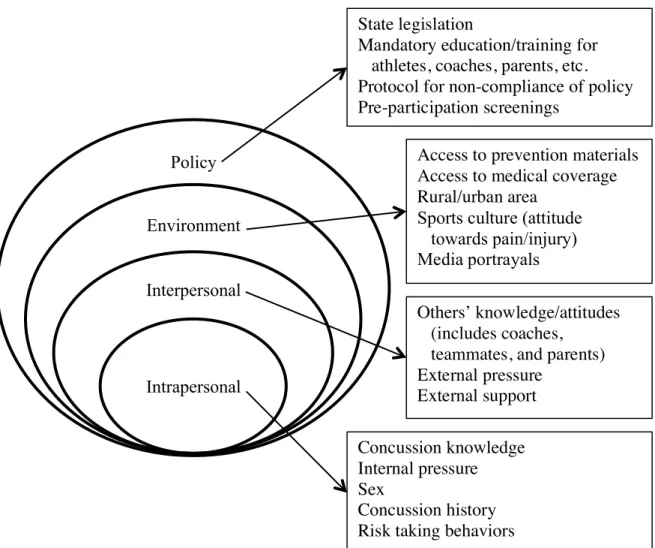
Figure 2.1. Socio-ecological framework regarding athlete disclosure of concussions
2.5.1.1 Reliability of Athlete-Recalled Concussion History
Reliability is defined as “the extent to which an experiment, test, or any measuring procedure yields the same results on repeated trials.”121 The research on the reliability of athlete-recalled concussion history is limited. To our knowledge, only one study has
examined reliability related to athlete-recalled concussion history. Kerr et al.122 assessed the stability (i.e., the consistency of repeated measurements)123 of athlete-recalled concussion history in retired NFL players. At the 2001 baseline and 2010 follow-up administrations of the Retired NFL Players Cohort study, retired players reported the number of concussions
Policy
Environment
Interpersonal
Intrapersonal
State legislation
Mandatory education/training for athletes, coaches, parents, etc. Protocol for non-compliance of policy Pre-participation screenings
Access to prevention materials Access to medical coverage Rural/urban area
Sports culture (attitude towards pain/injury) Media portrayals
Others’ knowledge/attitudes (includes coaches,
they sustained during their professional playing careers. Overall agreement was moderate (weighted Cohen’s Kappa=0.48).
However, 31.4% of the cohort reported more concussions at the follow-up
administration.122 Inherent issues related to any self-report injury data, such as imperfect recall, may have resulted in the change in recall over time. Kerr et al.122 also speculated that “social cognitive theory,” which suggests that individuals acquire knowledge through
research pertaining to concussions is limited to concussion symptomatology and recovery, 126-130 as opposed to detection and diagnosis. Examinations of valid detection and diagnosis are
warranted as 35.2-62.1% of athletes not reporting all sustained concussions to coaches and/or team medical staff.49,50,131-133 As a result, it is essential to ensure that all factors contributing to imperfect recall are considered in any validation study pertaining to athlete-recalled concussion history.
First, inaccurate detection of concussion is exacerbated by players’ lack of knowledge about concussions (Table 2.3). Despite recent concussion education programs such as the CDC’s “Heads Up” intervention,134 athletes may still not able to appropriately identify concussions and their less common symptoms, such as nausea.67 Athletes may have also believed that injuries were not serious enough to warrant disclosure. A recent study135 surveyed a sample of high school student-athletes on the number of “bell-ringers” they sustained alongside concussions. “Bell-ringers” were loosely defined as the events in which athletes had their “bell rung” or were “dinged.” “Bell-ringers” typically are not seen as serious of injuries as concussions; however, the authors believed that athletes may
Table 2.3. Study findings regarding reasons for non-disclosure of concussion among athletes
Study
Reason for non-disclosure
Broglio et al. (2010)13 3 Kroshus et al. (2013)131 Llewellyn (in press)49 McCrea et al. (2004)13 2 Register-Mihalik et al. (2013)50a Did not think it was serious
enough 94.4% 69.7% 42.1% 66.4% 70.2%
Did not want to leave the
game/practice 66.7% 48.3% 42.1% 41.0% 50.0%b
Did not know it was a
concussion 66.7% 50.6% 52.6% 36.1% 14.9%
Did not want to let down
team 38.9% 32.6% 42.1% 22.1% 27.0%
Did not want to be pulled
from future game/practice Xc X 52.6% X X
Would have it was a less
important game/practice X X 21.1% X X
Concussions are part of the
game 88.9% X X X X
Did not want to let down
coaches X X X X 23.0%
NOTE: Respondents could endorse multiple items, therefore items sum to more than 100%
aPercentages for non-disclosure also include “bell-ringer” events
bSum of percentages of not wanting to be removed from game (36.5%) and not wanting to be removed from practice (13.5%)
cX = was not included in study's list of potential responses
will help drive the development of interventions designed to help athletes recognize concussion symptomology and understand the importance of disclosing concussions.
2.5.2 Comparing Athlete-Recalled and Clinically-Documented Concussion Data The lack of evidence supporting the validity of athlete-recalled concussion history highlights the need to establish concurrent validity (i.e., the extent to which instruments are able to measure the same concept at the same time) with other sources of concussion history, such as clinical records. An appropriate “gold standard” of concussion frequency originating from clinical data is hard to define and potentially may not be readily available. Past
clinically-documented concussion histories may be incomplete and thus insensitive to accurately detecting concussions.112 Detecting and diagnosing concussion has also been limited due to the lack of a standard definition related to symptomatology, as well as a biologic marker to detect injury.
medicine professionals with proper and up-to-date training on identifying and diagnosing concussions are on-site during any sports activity, and if athletes willingly disclose all concussions otherwise undetected. Unfortunately, such circumstances are infrequent.
2.6 Summary
The large number of NCAA student-athletes that never play in the professional level99 warrants examination of the current health of former collegiate athletes. In addition, the association of recurrent concussion and mental health has been solely studied among former male athletes in high contact professional-level sports, as opposed to female athletes and non-football athletes. Furthermore, outcome measures utilized in previous studies are limited, mostly relying upon self-reported recall of clinical diagnosis. Validated scale measures of mental health (e.g., depression, impulsivity, aggression) are also underutilized.
Athletes’ recall of concussions is associated with numerous influences that operate at multiple levels, as posited by the socio-ecological framework (Figure 2.1). However,
research on the evidence for the validity of athlete-recalled concussion history is very limited. Without further examination, the literature on recurrent concussion’s association with mental health will remain limited by its samples and usage of self-reported measures of concussion history.
will encourage proper reporting of injuries, and consequently help develop a legitimate “gold-standard” of concussion history.
The proposed dissertation will examine the following general research questions: RQ1: What is the association of recurrent concussion and mental health in former collegiate athletes?
CHAPTER 3
STATEMENT OF SPECIFIC AIMS
This dissertation, the first study to examine the health of former collegiate athletes, addresses three specific aims (Tables 3.1 to 3.2).
Aim 1: Estimate the association between recurrent concussion and mental health in former collegiate athletes (Table 3.1)
Aim 1a: Estimate the association between recurrent concussion and current levels of depression, impulsivity, and aggression in former collegiate athletes
Aim 1b: Compare effect estimates of the association between recurrent concussion and current levels mental health that utilize a total concussion history with a college and professional sports concussion history
Hypotheses:
high contact sports. As a result, these findings may not be generalizable to former athletes that are female or from sports with lower contact levels, such as soccer and basketball. Our sample included former athletes, both male and female, that had played in 27 sports during college.
At the same time, previous measurements of health outcomes are limited by utilizing self-reported recall of diagnoses of conditions, which are prone to recall bias. Outcomes, such as Alzheimer’s disease are also more likely to affect older individuals. However, CTE may often be misdiagnosed as Alzheimer’s disease.13,59 As a result, it may be better to examine mental health outcomes such as depression, impulsivity, and aggression18,58 that may be associated with CTE and more prevalent in younger populations.
In addition, in studies, only concussions sustained during professional careers were considered in analyses. Consequently, a proportion of the “non-exposed” athletes (i.e., no professional sport concussions) in previous studies may have sustained concussions in other sports and non-sports settings. It may be more appropriate to consider a complete concussion history that includes all sports-related and non-sports related concussions sustained across the lifespan.
Table 3.1. Summary of Aim 1 for Dissertation
# Aim Data Analysis
1 Estimate the association between recurrent concussion and mental health in former collegiate athletes
1a Estimate the association
between recurrent concussion and current levels of
depression, impulsivity, and aggression in former
collegiate athletes
Questionnaire data from 797 former collegiate athletes
(1) Binomial regression and linear risk regression estimating prevalence ratios and prevalence differences of levels of mental health
1b Compare effect estimates of the association between recurrent concussion and current levels mental health that utilize a total concussion history with a college and professional sports concussion history
(1) Rerun analyses utilizing a concussion history consisting only of college and professional sports-related
Aim 2: Compare athlete-recalled and clinically-documented concussion histories in former collegiate athletes (Table 3.2)
Aim 2a: Estimate the level of agreement between athlete-recalled and clinically-documented concussion histories
Aim 2b: Examine whether sex- or sport contact level- specific variations exist in the level of agreement between athlete-recalled and clinically-documented concussion histories
Aim 2c: Explore the reasons for which athlete-recalled and clinically-documented concussion histories may differ
Hypotheses:
H1: The number of athlete-recalled concussions will be higher than the number of clinically-documented concussions in former collegiate athletes. H2: Factors such as sex- and sport contact level-specific variations affects the level of agreement between athlete-recalled and clinically-documented
concussion histories in former collegiate athletes.
H3: Former collegiate athletes will indicate reasons for which athlete-recalled concussions were not reported by clinically-documented concussions.
Data: We identified 130 former UNC athletes that had completed an online questionnaire and also had clinical data from their collegiate sports careers available.
Table 3.2. Summary of Aim 2 for Dissertation
# Aim Data Analysis
2 Compare athlete-recalled and clinically-documented concussion histories in former collegiate athletes
2a Estimate the level of agreement between athlete-recalled and
clinically-documented
concussion histories
Clinical data from 130 former UNC athletes that underwent clinical observation at UNC during 1996-2012
SEX: Males: n=82; Females: n=48
RACE/ETHNICITY: Non-Hispanic Whites: n=109; Nonwhite/Hispanic: n=21 CONTACT LEVEL: Collision
sports (i.e., football,
wrestling): n=42; High contact sports (i.e., basketball, field hockey, lacrosse, soccer): n=79; Low/Non-contact sports (i.e., cheerleading, diving, track and field pole vault): n=9 TIME: Started college sports
career before 1996: n=25; 1996-2000: n=49; 2001-2004: n=28; 2005 and after: n=28
(1) Compute ICC coefficient and % agreement
between concussion histories
2b Examine whether sex- or sport contact level- specific variations exist in the level of
agreement between athlete-recalled and
clinically-documented
concussion histories
(1) Repeat analyses from Aim 2a within each stratum
(2) Compare ICC scores and % agreement by stratification levels
CHAPTER 4 METHODS
4.1 Former Collegiate Athlete Cohort
Our eligible study population was comprised of former collegiate athletes that played at least one season of a collegiate sport at UNC between 1987-2012. We contacted the UNC Alumni Association, who provided the names and graduation years of 5,153 former athletes, 3,657 of whom had valid email addresses.
4.1.1 Data Collection of Former Collegiate Athlete Cohort
The target sample was emailed an invitation to participate in the research study with the URL to the online questionnaire. The inclusion criteria for eligibility into the study cohort were: (1) played at least one season of a collegiate sport between 1987 and 2012; (2) aged 18 years or older; (3) had a working email address provided by the university alumni association; and (4) able to read and understand English. Upon clicking the link and
4.1.2 Online Questionnaire
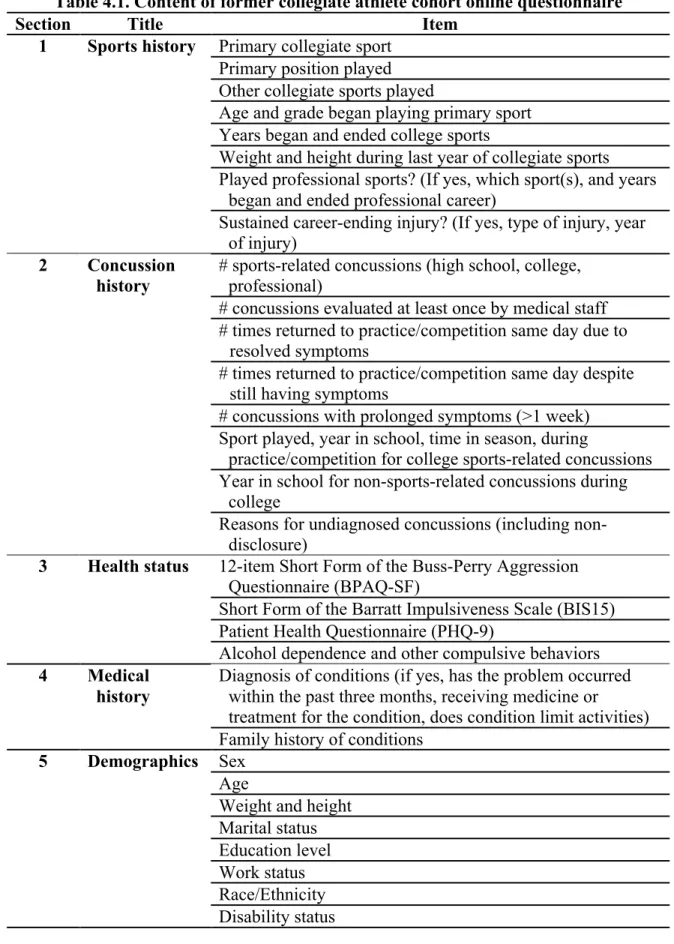
The online questionnaire was based upon the Retired NFL Athletes Cohort health survey.10 It collected information on sports history and health status (Table 4.1). The questionnaire was piloted in a convenience sample of four former Division I student-athletes and eight ATs from one university that provided care to collegiate athletes. The
questionnaire was then revised based on their feedback prior to deployment.
We received data from 808 former UNC student-athletes. Of those, 11 did not complete the online questionnaire, leaving 797 available for analysis. In addition, ten
Table 4.1. Content of former collegiate athlete cohort online questionnaire
Section Title Item
1 Sports history Primary collegiate sport Primary position played Other collegiate sports played
Age and grade began playing primary sport Years began and ended college sports
Weight and height during last year of collegiate sports Played professional sports? (If yes, which sport(s), and years
began and ended professional career)
Sustained career-ending injury? (If yes, type of injury, year of injury)
2 Concussion history
# sports-related concussions (high school, college, professional)
# concussions evaluated at least once by medical staff # times returned to practice/competition same day due to
resolved symptoms
# times returned to practice/competition same day despite still having symptoms
# concussions with prolonged symptoms (>1 week) Sport played, year in school, time in season, during
practice/competition for college sports-related concussions Year in school for non-sports-related concussions during
college
Reasons for undiagnosed concussions (including non-disclosure)
3 Health status 12-item Short Form of the Buss-Perry Aggression Questionnaire (BPAQ-SF)
Short Form of the Barratt Impulsiveness Scale (BIS15) Patient Health Questionnaire (PHQ-9)
Alcohol dependence and other compulsive behaviors 4 Medical
history
Diagnosis of conditions (if yes, has the problem occurred within the past three months, receiving medicine or
treatment for the condition, does condition limit activities) Family history of conditions
5 Demographics Sex Age
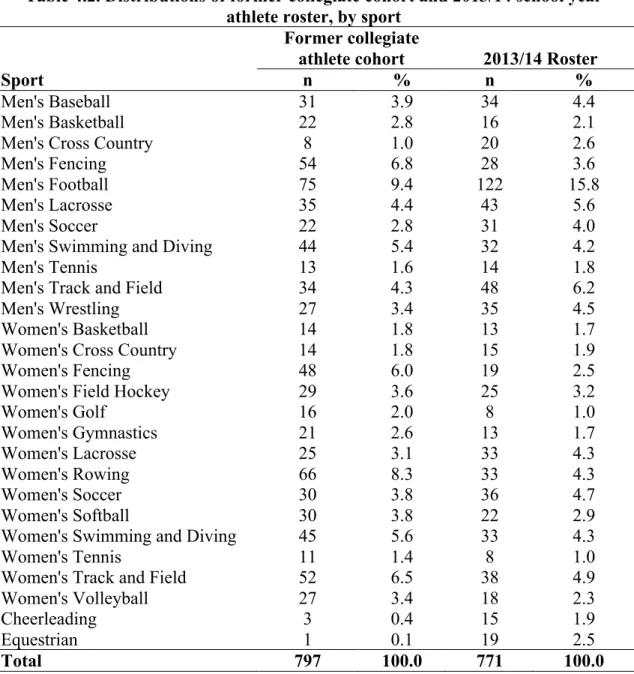
Table 4.2. Distributions of former collegiate cohort and 2013/14 school year athlete roster, by sport
Sport
Former collegiate
athlete cohort 2013/14 Roster
n % n %
Men's Baseball 31 3.9 34 4.4
Men's Basketball 22 2.8 16 2.1
Men's Cross Country 8 1.0 20 2.6
Men's Fencing 54 6.8 28 3.6
Men's Football 75 9.4 122 15.8
Men's Lacrosse 35 4.4 43 5.6
Men's Soccer 22 2.8 31 4.0
Men's Swimming and Diving 44 5.4 32 4.2
Men's Tennis 13 1.6 14 1.8
Men's Track and Field 34 4.3 48 6.2
Men's Wrestling 27 3.4 35 4.5
Women's Basketball 14 1.8 13 1.7
Women's Cross Country 14 1.8 15 1.9
Women's Fencing 48 6.0 19 2.5
Women's Field Hockey 29 3.6 25 3.2
Women's Golf 16 2.0 8 1.0
Women's Gymnastics 21 2.6 13 1.7
Women's Lacrosse 25 3.1 33 4.3
Women's Rowing 66 8.3 33 4.3
Women's Soccer 30 3.8 36 4.7
Women's Softball 30 3.8 22 2.9
Women's Swimming and Diving 45 5.6 33 4.3
Women's Tennis 11 1.4 8 1.0
Women's Track and Field 52 6.5 38 4.9
Women's Volleyball 27 3.4 18 2.3
Cheerleading 3 0.4 15 1.9
Equestrian 1 0.1 19 2.5
Total 797 100.0 771 100.0
remember. Concussions were defined as: “occurring typically, but not necessarily, from a blow to the head followed by a variety of symptoms that may include any of the following: headache, dizziness, loss of balance, blurred vision, ‘seeing stars’, feeling in a fog, or slowed down, memory problems, poor concentration, nausea, or throwing-up. Getting ‘knocked out’ or being unconscious does not always occur with a concussion.” This definition was
modified from the Retired NFL Athletes Cohort health survey10 to indicate that concussions need not result from direct impacts to the head.
For sports-related concussions, respondents reported the number of concussions that: (1) were evaluated at least once by a physician or AT; (2) resulted in being returned to practice/ competition on same day because symptoms resolved; (3) resulted to being returned to practice/ competition on same day despite still experiencing symptoms; and (4) resulted in prolonged symptoms (more than one week). For non-sports related concussions, respondents were also asked to reported the number of concussions that were: (1) evaluated at least once by a physician; and (2) resulted in prolonged symptoms (more than one week).
Next, respondents were asked about “any other hard hits, bell-ringers, or dings” that were sustained during participation in college sports and should have been diagnosed by team medical staff as concussions, but were not. Respondents then answered why they thought these concussions went undiagnosed, as well as the sources of information that helped them subsequently understand that these “hard hits, bell-ringers, or dings” may have been undiagnosed concussions. All respondents who reported that they did not disclose all college sports-related concussions were asked the reason for non-disclosure, using a closed-response list originating from McCrea et al.132
4.1.2.2 Patient Health Questionnaire for Depression
The Patient Health Questionnaire (PHQ) is the self-administered version of the PRIME-MD diagnostic tool that is used to screen and diagnose health disorders. The depression module (PHQ-9) (α=0.85) consists of the nine criteria from the Diagnostic and Statistical Manual of Mental Disorders, 4th edition (DSM-IV) that were scored from "0" (not at all) to "3" (nearly every day). The PHQ-9 has been found to be a reliable and valid
and non-planning (11 items). Internal consistency has validated the measure in various populations.147 The Short Form of the Barratt Impulsiveness scale (BIS15) (α=0.84) was created using a convenience sample of 700 non-institutionalized adults.148 The 15 items that had the highest loadings on the three factors of the scale comprised the BIS15. The BIS15 was also found to have strong correlations with The Frontal Systems Behavior Scale, which measures neurobehavioral traits associated with prefrontal systems, and linked to
impulsivity.148 The BIS-11 and the BIS15 have yet to be used in the study of former athletes.
4.1.2.4 12-item Short Form of the Buss-Perry Aggression Questionnaire
The Buss-Perry Aggression Questionnaire (BPAQ) consists of 29-items answered on a five-point scale (1=”extremely uncharacteristic of me”; 5=” extremely characteristic of me”). On the basis of factor analyses,149 items in the BPAQ can be separated into four subscales: physical aggression (9 items); verbal aggression (5 items); anger (7 items), and hostility (8 items). Test-retest reliability had been previously established for all four
4.1.2.5 Alcohol Dependence and Other Compulsive Behaviors
The CAGE questionnaire is a four-item questionnaire used to screen for alcohol dependence.151 Scores of 3 and 4 (3-4 of questions answered “yes”) have good positive predictive value (i.e., individuals with these scores are likely to actually suffer from alcohol dependence).152 The measure has been validated in multiple clinical and research settings with samples of both men and women.152,153
Respondents also identified if they ever felt that they had problems with other behaviors that they could not control, such as gambling, substance use other than alcohol (e.g., illicit drugs, prescription drugs), and uncontrolled eating (i.e., binge eating, purging).
4.1.2.6 Medical History
had daily activities (e.g., housework, exercise, or social activities) limited due to the condition.
A number of conditions listed on Retired NFL Players Cohort health survey were included on the questionnaire (e.g., depression; sleep apnea; coronary heart disease/heart attack; learning disability). However, because we expected a younger population of respondents, we excluded medical conditions that generally have a later onset (e.g.,
Alzheimer’s disease; dementia). In addition, we included additional medical conditions (e.g., diabetes; anxiety; attention deficit disorder, with or without hyperactivity; bipolar disorder; impulse control disorder/conduct disorder).
4.1.2.7 Sports History
Sports history included measures related to: sports played in college and primary positions or events (defined as the positions or events that respondents played the most during their college sports careers); the year in which respondents began and ended their college sports careers; and weight and height during the final year of respondents’ college sports careers. Respondents also noted the age and grade in which they began playing their primary sport (defined as the one sport in which they were most invested during college) and if they played at the professional level (and if so, which sports, and in what years). Finally, respondents indicated if they had sustained a career ending injury, including the type of injury and when the injury occurred.
4.1.2.8 Demographics
Retired NFL Players Cohort health survey,10 and the Behavioral Risk Factor Surveillance Survey (BFRSS) questionnaire.154
4.1.3 Clinical Data
Beginning in 2001, UNC required preseason baseline testing as part of an ongoing clinical program for sports including basketball, cheerleading, diving, field hockey, football, lacrosse, soccer, track and field pole vault, and wrestling. Data from pilot testing of
procedures (prior to mandate) was also available for some former athletes from these sports that played from 1996-2000. Baseline testing included a clinical evaluation, athlete-recalled symptom checklist, postural control assessment, and neurocognitive testing.114,115 These tests were repeated after athletes sustained a concussion (sports- and non-sport-related) in order to track recovery progress and help inform return-to-play decision-making. Clinical data also included qualitative information that specified the circumstances around injury (e.g., mechanism of injury, specific competition at which injury occurred).
disturbance rather than a structural injury; (4) Concussion results in a graded set of clinical symptoms that may or may not involve loss of consciousness. Resolution of the clinical and cognitive symptoms typically follows a sequential course; however, it is important to note that in a small percentage of cases, postconcussive symptoms may be prolonged; and (5) No abnormality on standard structural neuroimaging studies is seen in concussion.”115 Other post concussive symptoms may include loss of consciousness, post-traumatic amnesia, and blurred vision.
The primary purpose of this clinical dataset was to track neurological recovery from concussions sustained during participation in collegiate sports. However, this dataset also provides credible clinically-documented concussion histories that utilize: (1) a uniform and widely-accepted definition of concussion; (2) data management from accomplished and well-respected experts in concussions; and (3) insight from sports medicine professionals that have received extensive up-to-date training on recognizing and treating concussions.
From this clinical data, we collected clinically-documented concussion histories from 130 athletes in total. Additional data related to the ascertainment of clinically-documented concussions and matching online questionnaire and clinical data can be found in Sections 6.3.3 and 6.3.4.
4.2 Statistical Analysis
approval from the Institutional Review Board at UNC; all respondents provided informed consent.
4.2.1 Analysis for Aim 1
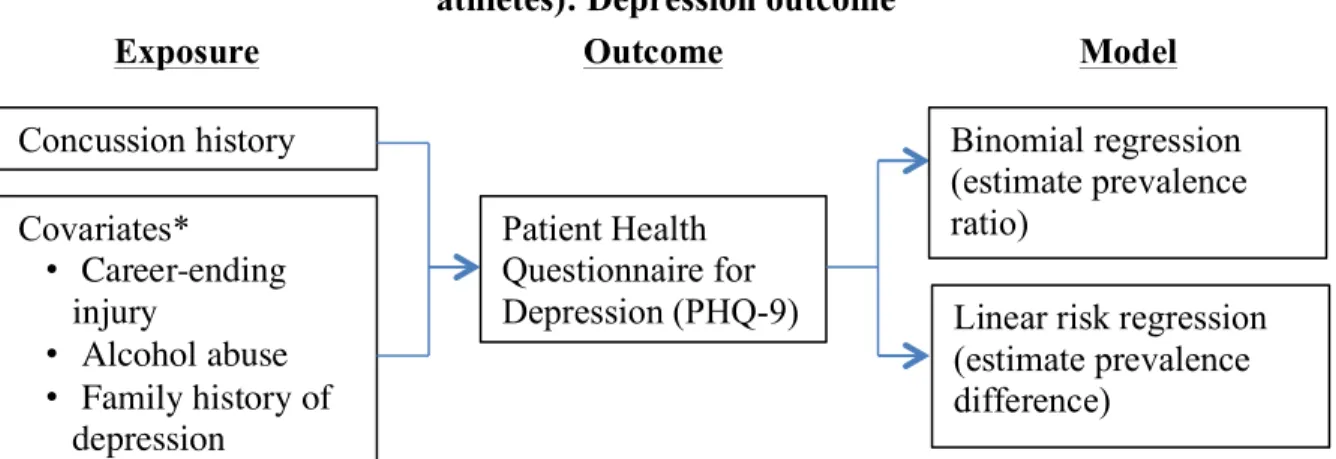
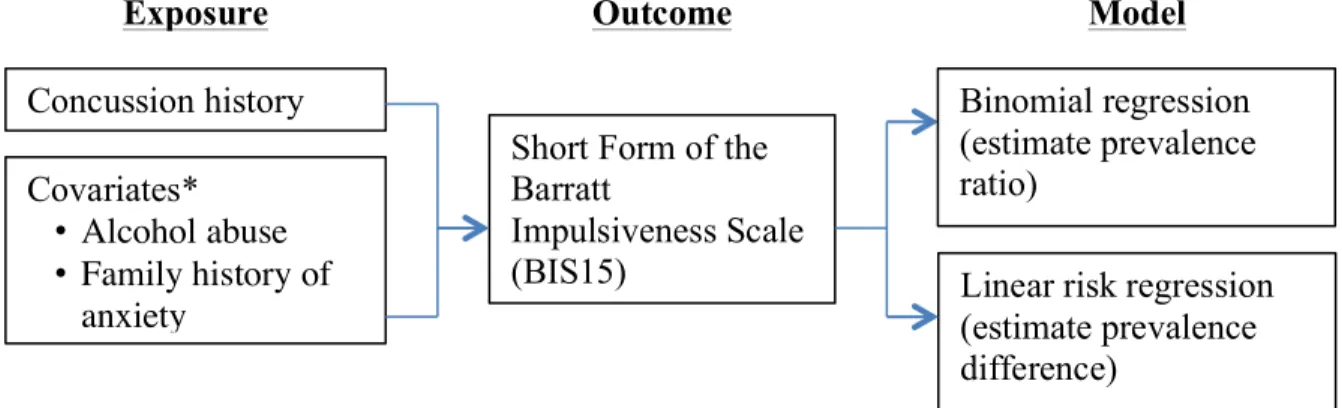
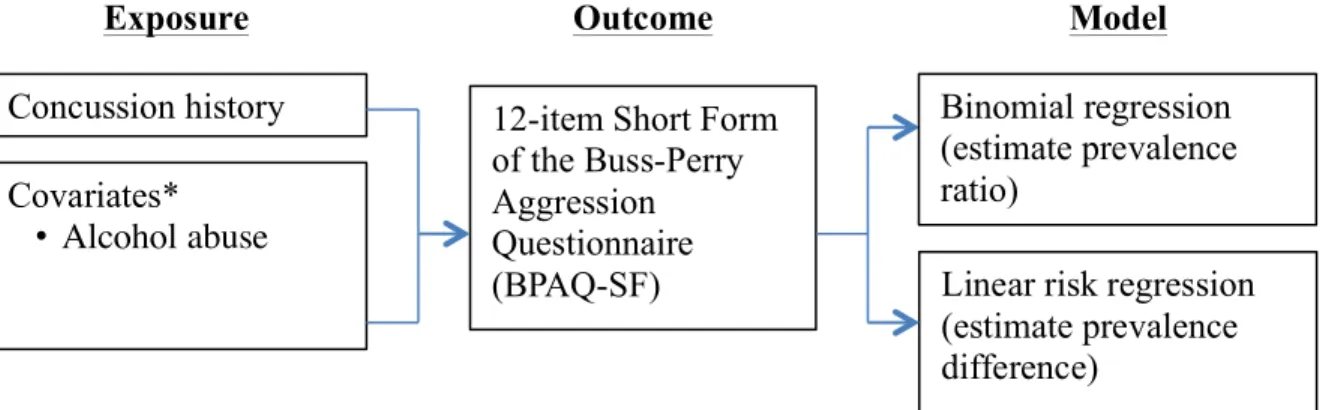
Crude prevalence ratios (PR) and prevalence differences (PD) were obtained with classical tabular methods. Adjusted PR and PD were estimated using binomial regression and linear risk regression,155 respectively (Figures 4.1 to 4.3). Fitting algorithms for
binomial and linear risk regression models were stabilized using Poisson residual and robust variance estimation.155-157 Each model was run with total concussion history (i.e., all sport- and non-sport-related concussions) as the main exposure. We stratified total concussion history data into three categories: zero (referent), one to two, and three or more concussions.
We then reran all analyses utilizing a concussion history that considered college and professional sports-related concussion history to determine how effect estimates may change. It is important to note that individuals in the referent category of zero college and
professional sports-related concussions may not be “non-exposed” due to having sustained concussions in other sports and non-sports settings. Instead, this analysis will determine the usefulness of utilizing a segment of total concussion history as a proxy. Additional analyses are described in Section 5.3.4.
Figure 4.1. Statistical model for Aim 1a (Estimate the association between recurrent concussion and severity of depression, impulsivity, and aggression in former collegiate
athletes): Depression outcome
Exposure Outcome Model
Concussion history
Covariates* • Career-ending
injury
• Alcohol abuse
• Family history of
depression
Patient Health Questionnaire for Depression (PHQ-9)
*Other covariates considered: sex; age; body mass index; relationship status; education;
work status; disability status; race/ethnicity; primary college sport played (by level of
playing contact: collision; high contact; low/non-contact); number of years since played college sports; and whether respondents played professional sports.
Linear risk regression (estimate prevalence difference)
Figure 4.2. Statistical model for Aim 1a (Estimate the association between recurrent concussion and severity of depression, impulsivity, and aggression in former collegiate
athletes): Impulsivity outcome
Exposure Outcome Model
Concussion history
Covariates* • Alcohol abuse • Family history of
anxiety
Short Form of the Barratt
Impulsiveness Scale (BIS15)
*Other covariates considered: sex; age; body mass index; relationship status; education; work status; disability status; race/ethnicity; primary college sport played (by level of playing contact: collision; high contact; low/non-contact); number of years since played college sports; and whether respondents played professional sports.
Linear risk regression (estimate prevalence difference)
Figure 4.3. Statistical model for Aim 1a (Estimate the association between recurrent concussion and severity of depression, impulsivity, and aggression in former collegiate
athletes): Aggression outcome
4.2.2 Analysis for Aim 2
Our study assessed the comparability between athlete-recalled and
clinically-documented concussion histories. Athlete-recalled concussions were provided by 130 former collegiate athletes using the online questionnaire and individually linked to
previously-collected clinical data that tracked medically-diagnosed concussions at UNC between 1996 and 2012.
Intraclass correlation coefficients (ICC)163 assessed agreement between athlete-recalled and clinically-documented concussion histories. A value of 1.00 indicated perfect
Exposure Outcome Model
Concussion history
Covariates* • Alcohol abuse
12-item Short Form of the Buss-Perry Aggression Questionnaire (BPAQ-SF)
*Other covariates considered: sex; age; body mass index; relationship status; education;
work status; disability status; race/ethnicity; primary college sport played (by level of
playing contact: collision; high contact; low/non-contact); number of years since played college sports; and whether respondents played professional sports.
Linear risk regression (estimate prevalence difference)
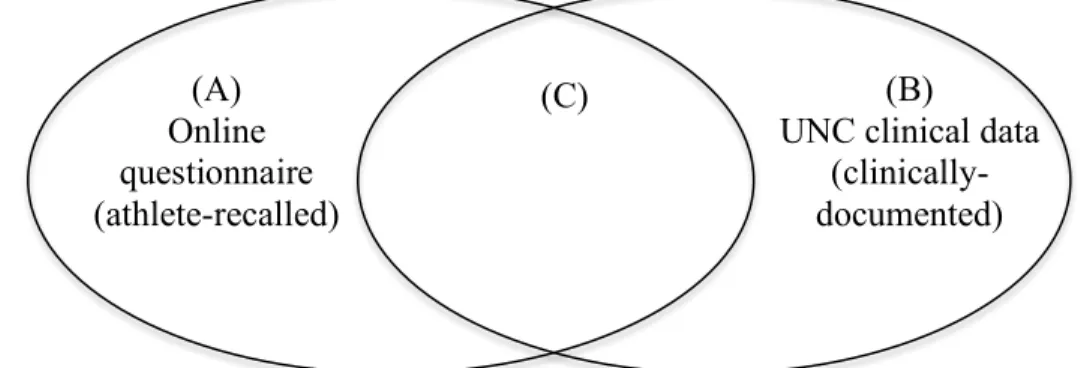
We also categorized concussions by those reported: (1) only by athlete-recalled concussion history data; (2) only by clinically-documented concussion history data; and (3) by both athlete-recalled and clinically-documented concussion history data (Figure 4.4).
Figure 4.4. Comparing concussions reported by online questionnaire and UNC clinical dataset
C/(A+C) = proportion of all concussions reported by online questionnaire that were also reported by clinical data
C/(B+C) = proportion of all concussions reported by clinical data that were also reported by online questionnaire
Section 6.3.5 includes additional information regarding: the calculation of percent agreement between athlete-recalled and clinically-documented concussion histories, overall and by strata; and descriptive analyses related to undiagnosed and undisclosed concussions, and sources of information for concussion knowledge.
(A) Online questionnaire (athlete-recalled)
(B)
UNC clinical data
(clinically
-documented) (C)
CHAPTER 5
RESULTS FOR AIM 1: Association between recurrent concussion and current mental health in former collegiate athletes
5.1 Introduction
The Centers for Disease Control and Prevention (CDC) estimates that each year, up to 3.8 million sport-related concussions occur in the United States (US).23 Sport-related
physical activity is responsible for a large proportion of concussions,22 thereby placing many athletes at risk of concussion and its long-term consequences.24,34 Concussion rates are higher in sports permitting body contact such as football, soccer, hockey, and lacrosse than in low/non-contact sports such volleyball, and swimming.24,35,36
male-only samples that had played collision sports such as football and ice
hockey.7,9,10,75,76,105 Thus, it is difficult to generalize findings to former athletes that are younger, female, and from sports with lower levels of contact. Second, with the exception of a few recent studies,11,105,106 prior research has relied on single-item questions and has made limited use of validated scales to assess mental health outcomes. Third, in many cases, only concussions sustained during professional careers were considered in analyses. However, some of the “non-exposed” athletes (i.e., no professional sport concussions) in previous studies may have sustained concussions in other sport-related and non-sport-related settings. This could lead to biased effect estimates. A moderate correlation was found between the reported number of concussions sustained during one’s professional and collegiate career;100 however, it would be more appropriate to consider a complete concussion history that includes all sport-related and non-sports related concussions sustained across the lifespan. Researchers have limited concussion history to those concussions sustained during college and professional sports because former athletes probably have better recall of these
concussions than earlier concussions due to memory decay effects. In addition, on-site clinical coverage during college and professional sports may have led to better detection and diagnoses of college and professional sport-related concussions. Finally, although depression has been previously studied in relation to recurrent concussion, there has been limited
research to date on other mental health outcomes that have been speculatively linked to concussion, such as impulsivity and aggression.
considered only college and professional sport-related concussions would influence effect estimates, relative to a concussion history that considered all sport-related and non-sport-related concussions. Compared to previous studies,7,9,10,75,76,105 our cohort consisted of a younger population of former athletes, most of whom had not played professionally. Our sample drew from a diverse range of collegiate sports in order to include females and
individuals that played sports with little or no body contact, but still were at risk of sustaining head injuries.
5.2 Methods
The study utilized a cross-sectional design. We received the email addresses of 3,657 former collegiate athletes from an alumni association of a Division I university in the
southern US. These former collegiate athletes received an invitation to complete an online self-administered questionnaire. The questionnaire included a detailed concussion history, and previously-utilized multi-item scales for assessing depression, impulsivity, and
aggression.
current physical and mental health, and sociodemographics. An initial version of the
questionnaire was pilot-tested on a group of 12 former student-athletes and certified athletic trainers providing care to collegiate athletes. The Institutional Review Board at (name removed for blinded review) approved all aspects of this study; all respondents provided informed consent.
5.2.1 Self-reported concussion history
Respondents reported the number of concussions they sustained during participation in sports, including at the high school, college, and (if applicable) professional levels. In addition, respondents reported the number of non-sports related concussions (e.g., from a car crash, fall, or violence). We reminded respondents that these non-sports related concussions may also include any childhood injuries that they had been told about, but may not
remember. Concussions were defined as: “occurring typically, but not necessarily, from a blow to the head followed by a variety of symptoms that may include any of the following: headache, dizziness, loss of balance, blurred vision, ‘seeing stars’, feeling in a fog, or slowed down, memory problems, poor concentration, nausea, or throwing-up.” Participants were reminded that “getting ‘knocked out’ or being unconscious does not always occur with a concussion.”
5.2.2 Outcome measures of depression, impulsivity, and aggression
depression module (PHQ-9) (α=0.85) consists of the nine criteria, scored from "0" (not at all) to "3" (nearly every day), that were provided by the Diagnostic and Statistical Manual of Mental Disorders, 4th edition (DSM-IV). To assess impulsivity, respondents completed The Short Form of the Barratt Impulsiveness scale (BIS15) (α=0.84), an abbreviated version of the Barratt Impulsiveness scale (BIS-11).148 The BIS15 consists of 15 items answered on a four-point scale (1=”rarely/never”; 4=”almost always”). Questions focused on: task-focus (attentional); acting without thinking (motor); and not thinking about the future (non-planning). To assess aggression, we used the 12-item Short Form of the Buss-Perry
Aggression Questionnaire (BPAQ-SF) (α=0.89) is an abbreviated version of The Buss-Perry Aggression Questionnaire (BPAQ) that utilizes a five-point scale (1=”extremely
uncharacteristic of me”; 5=” extremely characteristic of me”).150 Questions focused on physical aggression, verbal aggression, anger, and hostility.
5.2.3 Covariates
college were asked to identify the primary sport in which they were most invested. Last, we collected data on sex, current age, weight, height, relationship status, education level, work status, race/ethnicity, and disability status. From weight and height, we calculated
respondents’ body mass index (BMI).
5.2.4 Statistical analyses
Outcome measures were analyzed dichotomously. PHQ-9 scores ≥10 were classified as meeting diagnostic criteria for major depression.145 Kroenke and Spitzer145 found that 88% of patients without major depression had PHQ-9 scores <10, and 88% of patients with major depression had scores ≥10. Thus, we categorized those with PHQ-9 scores <10 as not meeting diagnostic criteria for major depression (n=759). PHQ-9 is not able to account for those individuals that may score low due to being treated for depression so we excluded those respondents with PHQ-9 scores <10 that were currently being treated/medicated for depression (n=28). Because validated diagnostic cutpoints for impulsivity and aggression do not exist, we explored various methods for categorizing BIS15 and BPAQ-SF scores before deciding to utilize a median split for both measures. Results utilizing these other forms did not considerably change from those presented in the results section below.
main exposure. We stratified total concussion history data into three categories: zero (referent), one to two, and three or more concussions.
Covariates considered for all models included the previously described
sociodemographic and sports history variables: sex (male/female), current age (continuous), current BMI (continuous); relationship status (single vs. in a relationship); education level (obtained graduate degree vs. did not obtain graduate degree); work status (currently employed at least part time vs. not currently employed at least part time); disability status (disabled vs. non-disabled); race/ethnicity (Non-Hispanic White vs. all other race/ethnicity combinations); primary college sport played (categorized by level of playing contact: collision, high contact; low/non-contact); number of years since played college sports
(continuous); and played professional sports (yes/no). Specific covariates were also added to each model based on previous research suggesting associations with outcomes.158-162 For models predicting depression, we also considered: alcohol dependence (continuous); sustaining a career-ending injury (yes/no); and having a blood relative that had been diagnosed or treated for depression (yes/no). For models predicting impulsivity, we considered: alcohol dependence (continuous); and having a blood relative that had been diagnosed or treated for anxiety (yes/no). For models predicting aggression, we considered alcohol dependence (continuous).