Cover Page
The handle
http://hdl.handle.net/1887/29964
holds various files of this Leiden University
dissertation.
Author: Verbiest, Marjolein Elisabeth Anna
SmokIng CeSSaTIon Care
In general praCTICe
Leiden University Medical Centre
Department of Public Health and Primary Care © Marjolein E.A. Verbiest, 2014
Lay-out Optima BV Rotterdam
Cover ‘Portraits of Peuken’ by Peter Janssen, www.portraits-of.nl Print Optima BV Rotterdam
ISBN 978-90-9028611-2
This book is printed on recycled paper
SmokIng CeSSaTIon Care
In general praCTICe
Proefschrift ter verkrijging van
de graad van Doctor aan de Universiteit Leiden, op gezag van Rector Magnificus prof. mr. C.J.J.M. Stolker,
te verdedigen op dinsdag 2 december 2014 klokke 13:45 uur
door
Marjolein Elisabeth Anna Verbiest geboren te Bergen op Zoom
Promotores Prof. dr. W.J.J. Assendelft Prof. dr. A.A. Kaptein
Co-promotores Dr. M.R. Crone
Dr. N.H. Chavannes
Overige leden Prof. dr. A.M. van Dulmen, Radboud Universiteit Nijmegen
Prof. dr. M.E. Numans
Chapter 1 General introduction 7
Chapter 2 Training health professionals in smoking cessation care 23
Chapter 3 One-hour training for general practitioners in reducing the implementation gap of smoking cessation care: A cluster-randomized controlled trial
83
Chapter 4 Use of action planning to increase provision of smoking cessation care by general practitioners: Role of plan specificity and enactment
103
Chapter 5 Sequence-analysis of video-recorded practitioner-patient communication about smoking in general practice: Do smokers express negative statements about quitting?
127
Chapter 6 An increase in primary care prescriptions of stop-smoking medication as a result of health insurance coverage in the Netherlands: Population based study
151
Chapter 7 General discussion 169
Chapter 8 Summary 185
Nederlandse samenvatting 199
Curriculum vitae 203
1
1 2 3 4 5 6 7 8 9 10 11 12 13 14 15 16 17 18 19 20 21 22 23 24 25 26 27 28 29 30 31 32 33 34 35 36 37 38 39
Custome lothsome to the eye, hatefull to the nose, harmefull to the braine, dangerous to the lungs, and in the blacke stinking fume thereof, neerest resembling the horrible Stigian smoke of the pit that is bottomelesse.
King James I of England 1566 - 1625
The history of smoking starts in the Americas and dates back to as early as 5,000 BC.1 Native Americans not only used tobacco for religious and recreational purposes, it was also often part of rituals such as healing practices. Experienced medicine men used tobacco as a painkiller for ear- and toothache. In addition, a mix of tobacco and local vegetation was thought to be a particularly good rem-edy for tuberculosis and asthma. With the arrival of Europeans in the sixteenth century, the consumption, cultivation, and trading of tobacco quickly spread. Tobacco smoking was then adopted for pleasure or as a socializing tool. With the modernization of cigarette consumption, adverse health effects became increas-ingly noticeable.
The first formal statistical evidence on the association between tobacco and lung cancer was identified in Germany in the late 1920s.2 Thereafter, scientific studies on the health effects of smoking continued, and British epidemiologists published the clear relationship between smoking and cancer in the British Medical Journal in 1954.3 After years of intensive research this resulted in a wide recognition of the negative influence of tobacco smoking on overall health. Po-litical action against the usage of tobacco was prompted and resulted in multiple governmental policies which were all aimed at the discouragement of tobacco usage. Nowadays, it is widely recognized that tobacco smoking is one of the largest contributors to non-communicable disease, primarily including cancers, cardiovascular and chronic lung diseases, which account for 63% of all deaths worldwide.4 For this reason, the World Health Organization (WHO) indicates the tobacco epidemic as one of the biggest public health threats the world has ever faced.5
1 2 3 4 5 6 7 8 9 10 11 12 13 14 15 16 17 18 19 20 21 22 23 24 25 26 27 28 29 30 31 32 33 34 35 36 37 38 39
taxes on tobacco. Despite substantial progress in many countries – a third of the world’s population is now covered by at least one of these measures – tobacco use continues to be the leading global cause of preventable death.4
The global prevalence of daily tobacco smoking was approximately 18.6% in 2012; 31.3% for men and 6.2% for women aged 15 years and older.6 Prevalence rates are substantially higher in developing countries than in developed coun-tries. At the beginning of the 21st century, 80% of the approximately one billion smokers worldwide live in low- and middle-income countries, such as Armenia, Indonesia, and Russia, where daily smoking among men rises up to 54.0%, 55.8%, and 48.8%, respectively.6 In Northern and Western Europe, North America and the Western Pacific region, tobacco use is on a decline. However, a still relatively high prevalence of tobacco smoking is measured in the Netherlands when com-pared to other developed countries; 22.4% of Dutch adults aged 15 years or older smoked in 2012, compared to only 18.4% in New Zealand, 17.2% in the United States, 15.9% in Iceland, and 12.3% in Sweden.6
SmokIng CeSSaTIon
The UN High-Level Meeting on Non-Communicable Diseases in New York identi-fied tobacco control as the “most urgent and immediate priority” intervention to reduce the prevalence of non-communicable diseases.7 However, smokers report substantial difficulties when attempting to give up smoking; smoking is more than an ingrained habit. The substance nicotine, which is present in all types of cigarettes, has a highly addictive character and is known to elicit reinforcing ef-fects, such as relaxation, reduced stress, enhanced vigilance, improved cognitive function, mood modulation, and lower body weight. In addition, smokers report negative reinforcing effects of nicotine which refer to withdrawal symptoms in the context of physical dependence, such as nervousness, restlessness, irrita-bility, anxiety, impaired concentration, impaired cognitive function, increased appetite, and weight gain.8;9
1 2 3 4 5 6 7 8 9 10 11 12 13 14 15 16 17 18 19 20 21 22 23 24 25 26 27 28 29 30 31 32 33 34 35 36 37 38 39
Therefore, it may come as no surprise that, overall, 80% of the smokers report their willingness to quit in the nearby future.12;13 The percentage of smokers reporting a quit attempt in a given year is estimated to range from 28-46%.12-14 Without any support most relapses occur within eight days after the quit at-tempt due to nicotine craving and insufficient plans regarding how to cope with these moments of craving or temptation.15 Evidence-based behavioural support delivered by healthcare professionals, nicotine replacement therapy (NRT), and stop-smoking medication can assist smokers and facilitate smoking abstinence.16 In recent years, a series of randomized controlled trials, reviews, and reviews of reviews have been performed on the effectiveness of various types of smoking cessation interventions. The following interventions were found to significantly benefit long-term quit rates compared to no intervention or a placebo: tailored (written) quit smoking advice17-19, individual (telephone) counseling18-22, group behavioural interventions18;19, tailored self-help interventions18;20, pharmaco-therapy, including bupropion18;19;23;24, varencline24, nortriptyline19;23-25, multiple types of NRT18;19;24;26;27, as well as a combination of behavioural interventions and pharmacotherapy.28;29 Additionally, meta-analyses show the cost-effectiveness of different forms of cessation support, such as NRT26;30, stop-smoking
medica-tion31;32, telephone counseling26;33-35, and face-to-face (motivational interviewing)
cessation interventions36, when compared to unsupported cessation.
general praCTICe
1 2 3 4 5 6 7 8 9 10 11 12 13 14 15 16 17 18 19 20 21 22 23 24 25 26 27 28 29 30 31 32 33 34 35 36 37 38 39
Guideline on smoking cessation care
The first Dutch multidisciplinary guideline for the treatment of tobacco depen-dence in health care was published in 2004.42 Subsequently, the NHG developed the first guideline for the treatment of tobacco dependence in general practice in 2007.43 This guideline is based on the widely accepted 5A-Model.44-48 The model recommends GPs to actively Ask patients about their smoking behaviour. If a patient smokes, GPs are urged to provide a patient-tailored Advise to quit, which emphasizes the relevance of quitting and provides a direct link with the current health status of the patient. Evidence shows that this intervention is time-efficient and can increase cessation rates with 2-3% compared to unassisted quit rates.49;50 Although this effect may seem small from a clinician’s point of view, it has the potential to result in substantial positive effects on public health level if systematically provided.
Regardless of the smoker’s motivation to quit, GPs are recommended to provide the patient with information on the possibilities of quit smoking support in gen-eral practice and offer them a follow-up appointment. The GP can also provide the patient with educational leaflets. GPs are further recommended to Assess the patient’s willingness to quit and register the smoking status and degree of the patient’s quit intention systematically in the electronic patient record. Patients who indicate their unwillingness to quit are asked their permission to discuss smoking cessation during a future consultation.
1 2 3 4 5 6 7 8 9 10 11 12 13 14 15 16 17 18 19 20 21 22 23 24 25 26 27 28 29 30 31 32 33 34 35 36 37 38 39
Studies have shown that a successful implementation of the 5A-Model for smoking cessation care in general practice reduces smoking rates in patients compared to no intervention.46-48 Nevertheless, the introduction of innovations in healthcare, such as the 5A-Model for the treatment of tobacco dependence in Dutch general practice, is widely known to be a complex process.51
ImplemenTaTIon gap
A study published in 2010 found that, over the years, lifestyle counseling has been given more priority in Dutch general practice.53 Nevertheless, smoking is currently discussed in only a minority of all consultations (8.3%).53 In addition, around 80% of all smokers and 40% of smokers who discuss smoking with their GP do not receive a quit smoking advice.54 With regard to more intensive quit smoking support, GPs do not routinely refer their patients to PNs or external quit support.53;55 Also, these professionals apply motivational interviewing tech-niques only to a minor extent.53;55 Apparently, a substantial gap exists between the evidence-based knowledge on the treatment of tobacco dependence and real-world practices of primary care professionals.
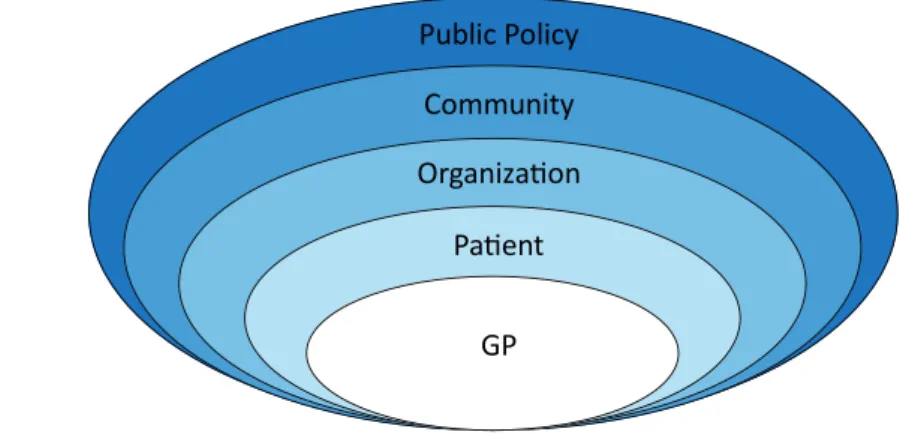
GPs report numerous factors that influence their uptake of clinical guidelines for smoking cessation care. Figure 1 depicts a five-level social-ecological model in order to better understand these factors. This model looks beyond the indi-vidual GP and considers the complex interplay between all factors that influence the implementation of smoking cessation care in general practice. These factors are related to the GP, patient, organization, community, and public policy.
Patient
Organization
Public Policy
GP
Community
1 2 3 4 5 6 7 8 9 10 11 12 13 14 15 16 17 18 19 20 21 22 23 24 25 26 27 28 29 30 31 32 33 34 35 36 37 38 39
GP level
The first level of the model identifies GP-related determinants of implementa-tion, including GPs’ attitudes and beliefs, such as doubts regarding the (cost-) effectiveness of routinely intervening on their patients’ smoking behaviour56-58, a lack of sufficient skills to deliver quit smoking support56;57;59 or low confidence in these skills57, and a lack of health education or training.58-61
Patient level
The second level comprises patient-related determinants of implementation, including the absence of smoke-related complaints59;62, reluctance of the pa-tient to discuss smoking cessation63-65, a high nicotine dependence, and a lack of motivation to quit.56;58-60 This level also includes the interaction between GPs and patients which may influence the likelihood of a successful implementa-tion of smoking cessaimplementa-tion care. These factors include GPs’ fear for resistance of patients56;66, unpleasant personal experiences57, and concerns about the doctor-patient relationship.58
Organization level
The third level addresses determinants of implementation within the general practice, including a lack of time56-58;60, the presence of a PN, and availability of quit smoking interventions within the own organization.56
Community level
The fourth level of the social-ecological model includes determinants of imple-mentation within the community. These include a lack of overview of health promoting programmes in the community, a lack of accessible and affordable quit smoking programmes, and a lack of collaboration between general practices and hospitals.56
Public policy level
1 2 3 4 5 6 7 8 9 10 11 12 13 14 15 16 17 18 19 20 21 22 23 24 25 26 27 28 29 30 31 32 33 34 35 36 37 38 39
FaCIlITaTIon oF guIdelIne ImplemenTaTIon
A number of theoretical frameworks have been developed in order to assess implementation processes, explain implementation problems, and inform im-plementation interventions.68-74 Several of these frameworks integrate behaviour change theories that can be used to design implementation interventions.74;75 The field of psychology includes an extensive body of evidence regarding such theo-ries to predict and change human behaviour. In the past decade, researchers in this field have acknowledged that clinical behaviour of healthcare professionals can be regarded as a form of human behaviour.75-79 Therefore, a growing number of interventions that aim to facilitate guideline implementation in healthcare integrate such behaviour change theories. These theory-driven interventions aim to improve guideline-recommended clinical behaviours of healthcare pro-fessionals, thereby increasing the number of patients who receive care according to these guidelines.
aIm oF dISSerTaTIon
1 2 3 4 5 6 7 8 9 10 11 12 13 14 15 16 17 18 19 20 21 22 23 24 25 26 27 28 29 30 31 32 33 34 35 36 37 38 39
1 2 3 4 5 6 7 8 9 10 11 12 13 14 15 16 17 18 19 20 21 22 23 24 25 26 27 28 29 30 31 32 33 34 35 36 37 38 39
reFerenCeS
1. Nies JE. Native American History. A Chronology of the Vast Achievements of a Cul-ture and Their Links to World Events. The Random House Publishing Group; 1996. 2. Roffo AH. The carcinogenic effects of tobacco. Monatsschrift fur Krebsbekampfung
1940; 8(5).
3. Doll R, Hill AB. The mortality of doctors in relation to their smoking habits; a prelimi-nary report. Brit Med J 1954; 1(4877):1451-1455.
4. World Health Organization. WHO Report on the Global Tobacco Epidemic 2013: Enforcing bans on tobacco advertising, promotion and sponsorship. 2013. Ge-neva, Switzerland, World Health Organization. http://apps.who.int/iris/bitstre am/10665/85380/1/9789241505871_eng.pdf?ua=1
5. World Health Organization. Tobacco factsheet. 2012. Geneve, Switzerland, World Health Organization. http://www.who.int/mediacentre/factsheets/fs339/en/ 6. Ng M, Freeman MK, Fleming TD, Robinson M, Dwyer-Lindgren L, Thomson B et al.
Smoking prevalence and cigarette consumption in 187 countries, 1980-2012. JAMA-J Am Med Assoc 2014; 311(2):183-192.
7. Beaglehole R, Bonita R, Horton R, Adams C, Alleyne G, Asaria P et al. Priority actions for the non-communicable disease crisis. Lancet 2011; 377(9775):1438-1447.
8. Benowitz NL. Pharmacology of nicotine: addiction and therapeutics. Annu Rev Phar-macol 1996; 36:597-613.
9. Hughes JR, Hatsukami D. Signs and symptoms of tobacco withdrawal. Arch Gen Psychiat 1986; 43(3):289-294.
10. U.S Department of Health and Human Services. What happens after you quit smok-ing? The benefits of quitting smoking timeline. 2013. http://www.healthline.com/ health-slideshow/quit-smoking-timeline
11. Knol K, Hilvering C, Wagener DJTH, Willemsen M. Tabaksgebruik. Gevolgen en Be-strijding. [Tabacco Use. Consequences and Control]. Utrecht: Uitgeverij LEMMA BV; 2005.
12. Borland R, Partos TR, Yong HH, Cummings KM, Hyland A. How much unsuccessful quitting activity is going on among adult smokers? Data from the International Tobacco Control Four Country cohort survey. Addiction 2012; 107(3):673-682.
13. STIVORO. Core figures of smoking in the Netherlands: An overview of recent Dutch data regarding smoking behaviour. [Kerncijfers roken in Nederlands: Een overzicht van recente Nederlandse basisgegevens over rookgedrag]. 2013. The Hague, the Netherlands, STIVORO - For a smokefree future. http://stivoro.nl/wp-content/up-loads/factsheets/20130419%20Kerncijfers%20roken%20in%20Nederland %202012. pdf
14. West R. Feasibility of a national longitudinal study (‘The Smoking Toolkit Study’) to monitor smoking cessation and attempts at harm reduction in the UK. 2006. London, United Kingdom, Cancer Research UK Health Behaviour Unit, University College London. file:///C:/Users/meaverbiest/Downloads/stp001.pdf
15. Hughes JR, Keely J, Naud S. Shape of the relapse curve and long-term abstinence among untreated smokers. Addiction 2004; 99(1):29-38.
1 2 3 4 5 6 7 8 9 10 11 12 13 14 15 16 17 18 19 20 21 22 23 24 25 26 27 28 29 30 31 32 33 34 35 36 37 38 39
17. Aveyard P, Begh R, Parsons A, West R. Brief opportunistic smoking cessation inter-ventions: a systematic review and meta-analysis to compare advice to quit and offer of assistance. Addiction 2011; 107(6):1066-1073.
18. Lemmers V, Oenema A, Klepp Knut I, Brug J. Effectiveness of smoking cessation intervention among adults: a systematic review of reviews. Eur J of Canc Prev 2007; 17(5):535-544.
19. Willemsen MC, Wagena EJ, van Schayck CP. The efficacy of smoking cessation meth-ods available in the Netherlands: a systematic review based on Cochrane data. Neth J Med 2003; 147(19):922-927.
20. Lancaster T, Stead LF. Individual behavioural counseling for smoking cessation. Cochrane Database of Systematic Reviews 2008; (4).
21. Stead LF, Perera R, Lancaster T. Telephone counseling for smoking cessation. Co-chrane Database of Systematic Reviews 2006; (3).
22. Stead LF, Perera R, Lancaster T. A systematic review of interventions for smokers who contact quitlines. Tob Control 2007; 16:3-8.
23. Hughes JR, Stead LF, Lancaster T. Antidepressants for smoking cessation. Cochrane Database of Systematic Reviews 2007; (1)
24. Cahill K, Stevens S, Perera R, Lancaster T. Pharmacological interventions for smoking cessation: an overview and network meta-analysis. Cochrane Database of System-atic Reviews 2013; (5)
25. Hughes JR, Stead LF, Lancaster T. Nortriptyline for smoking cessation: a review.
Nicotine & Tobacco Research 2005; 7(4):491-499.
26. Saul JE, Lien R, Schillo B, Kavanaugh A, Wendling A, Luxenberg M et al. Outcomes and cost-effectiveness of two nicotine replacement treatment delivery models for a tobacco quitline. Internal Journal of Environmental Research and Public Health 2011; 8(5):1547-1559.
27. Stead LF, Perera R, Bullen C, Mant D, Lancaster T. Nicotine replacement therapy for smoking cessation. Cochrane Database of Systematic Reviews 2008; (1)
28. Stead LF, Lancaster T. Combined pharmacotherapy and behavioural interventions for smoking cessation. Cochrane Database of Systematic Reviews 2012; (10)
29. Stead LF, Lancaster T. Behavioural interventions as adjuncts to pharmacotherapy for smoking cessation. Cochrane Database of Systematic Reviews 2012; (12)
30. Wasley MA, McNagny SE, Phillips VL, Ahluwalia JS. The cost-effectiveness of the nicotine transdermal patch for smoking cessation. Prev Med 1997; 26(2):264-270. 31. Linden K, Jormanainen V, Linna M, Sintonen H, Wilson K, Kotomaki T. Cost
effective-ness of varenicline versus bupropion and unaided cessation for smoking cessation in a cohort of Finnish adult smokers. Curr Med Res Opi 2010; 26(3):549-560.
32. Cornuz J, Gilbert A, Pinget C, McDonald P, Slama K, Salto E et al. Cost-effectiveness of pharmacotherapies for nicotine dependence in primary care settings: a multina-tional comparison. Tob Control 2007; 15(3):152-159.
33. Fellows JL, Bush T, McAfee T, Dickerson J. Cost effectiveness of the Oregon quitline “free patch initiative”. Tob Control 2007; 16(1):47-52.
1 2 3 4 5 6 7 8 9 10 11 12 13 14 15 16 17 18 19 20 21 22 23 24 25 26 27 28 29 30 31 32 33 34 35 36 37 38 39
35. Parker DR, Windsor RA, Roberts MB, Hecht J, Hardy NV, Strolla LO et al. Feasibil-ity, cost, and cost-effectiveness of a telephone-based motivational intervention for underserved pregnant smokers. Nicotine & Tobacco Research 2007; 9(10):1043-1051. 36. Feenstra TL, Hamberg-van Reenen HH, Hoogenveen RT, Rutten-van Molken MP.
Cost-effectiveness of face-to-face smoking cessation interventions: a dynamic modeling study. Value in Health 2005; 8(3):178-190.
37. Schellevis FG, Westert GP, de Bakker DH. [The actual role of general practice in the dutch health-care system. Results of the second dutch national survey of general practice]. Med Klin 2005; 100(10):656-661.
38. Drenthen T. Challenges to prevention in Dutch general practice. Am J Clin Nutr 1997; 65:194-1945.
39. Verheij R.A., Schellevis FC, Hingstman L, de Bakker DH. Wat is huisartsenzorg? [Gen-eral practice: How large is the usage and what does it consist of?] Nationaal Kompas Volksgezondheid 2012. Bilthoven, the Netherlands.
40. Deveugele M, Derese A, Brink-Muinen A, Bensing J, De MJ. Consultation length in general practice: cross sectional study in six European countries. Brit Med J 2002; 325(7362):472.
41. Heiligers PJM, Noordman J, Korevaar J, Dorsman S, Hingstman L, van Dulmen AM et al. Praktijkondersteuners in de huisartspraktijk (POH’s), klaar voor de toekomst? [Practice nurses in general practice (PNs), ready for the future?]. 2012. Utrecht, the Netherlands, NIVEL.
42. Kwaliteitsinstituut voor de Gezondheidszorg CBO. Richtlijn Behandeling van Tabaks-verslaving [Guideline Treatment of Tobacco Dependence]. Alphen aan den Rijn, the Netherlands: Van Zuiden Communications B.V.; 2009.
43. Chavannes NH, Kaper J, Frijling BD, Van der Laan JR, Jansen PWM, Guerrouj S et al. NHG-Standaard Stoppen met roken [Dutch College of General Practitioners Guide-line for Smoking Cessation]. Huisarts Wet 2007; 50(7):306-314.
44. Fiore MC, Wetter DW, Bailey WC, Blennett G, Cohen SJ, Dorfman SF et al. The Agency for Health Care Policy and Research Smoking Cessation Clinical Practice Guideline. JAMA-J Am Med Assoc 1996; 275(16):1270-1280.
45. Fiore MC, Jaén CR, Baker TB, Bailey WC, Bennett G, Benowitz NL et al. A clinical practice guideline for treating tobacco use and dependence: 2008 update. A U.S. Public Health Service report. Am J Prev Med 2008; 35(2):158-176.
46. Pieterse ME, Seydel ER, de Vries H, Mudde AN, Kok GJ. Effectiveness of a minimal contact smoking cessation program for Dutch general practitioners: a randomized controlled trial. Prev Med 2001; 32(2):182-190.
47. Puschel K, Thompson B, Coronado G, Huang Y, Gonzalez L, Rivera S. Effectiveness of a brief intervention based on the ‘5A’ model for smoking cessation at the primary care level in Santiago, Chile. Health Promot Int 2008; 23(3):240-250.
48. Takahashi K, Saso H, Saka H, Saso H, Iwata M, Hashimoto I et al. A pilot study on inducement of smoking cessation by a simple 5A (asking, advice, assess, assist, and arrange) approach at outpatient clinics. Asian Pac J Canc Prev 2006; 7(1):131-135. 49. Ashenden R, Silagy C, Weller D. A systematic review of the effectiveness of
promot-ing lifestyle change in general practice. Fam Pract 1997; 14(2):169-176.
1 2 3 4 5 6 7 8 9 10 11 12 13 14 15 16 17 18 19 20 21 22 23 24 25 26 27 28 29 30 31 32 33 34 35 36 37 38 39
51. Fleuren M, Wiefferink K, Paulussen T. Determinants of innovation within health care organizations: literature review and Delphi study. Int J Qual Health C 2004; 16(2):107-123.
52. Francke AL, Smit MC, de Veer AJ, Mistiaen P. Factors influencing the implementation of clinical guidelines for health care professionals: a systematic meta-review. Med Inform Decis Mak 2008; 8:38.
53. Noordman J, Verhaak P, van Dulmen S. Discussing patient’s lifestyle choices in the consulting room: analysis of GP-patient consultations between 1975 and 2008. Fam Pract 2010; 11(87).
54. de Korte D, Nagelhout GE, Willemsen MC. Themapublicatie Stoppen-met-rokenadvi-sering door huisartsen in Nederlands 2001-2009 [Smoking cessation advisement in Dutch general practice 2001-2009] 2010. The Hague, the Netherlands, STIVORO - for a smoke-free future.
55. Noordman J, Koopmans B, Korevaar JC, van der Weijden T, van Dulmen S. Exploring lifestyle counseling in routine primary care consultations: the professionals’ role.
Fam Pract 2012; 30(3):332-340.
56. Geense WW, van de Glind IM, Visscher TL, van Achterberg T. Barriers, facilitators and attitudes influencing health promotion activities in general practice: an explorative pilot study. Fam Pract 2013; 14(20).
57. Vogt F, Hall S, Marteau TM. General practitioners’ and family physicians’ negative beliefs and attitudes towards discussing smoking cessation with patients: a system-atic review. Addiction 2005; 100(10):1423-1431.
58. Young JM, Ward JE. Implementing guidelines for smoking cessation advice in Austra-lian general practice: opinions, current practices, readiness to change and perceived barriers. Fam Pract 2001; 18(1):14-20.
59. Stead M, Angus K, Holme I, Cohen D, Tait G. Factors influencing European GPs’ engagement in smoking cessation: a multi-country literature review. Brit J Gen Pract
2009; 59(566):682-690.
60. Pipe A, Sorensen M, Reid R. Physician smoking status, attitudes toward smoking, and cessation advice to patients: an international survey. Patient Educ Counseling 2009; 74(1):118-123.
61. Twardella D, Brenner H. Lack of training as a central barrier to the promotion of smoking cessation: a survey among general practitioners in Germany. Eur J Public Health 2005; 15(2):140-145.
62. Hutchison BG, Abelson J, Woodward CA, Norman G. Preventive care and barriers to effective prevention. How do family physicians see it? Can Fam Physician 1996; 42:1693-1700.
63. Coleman T, Murphy E, Cheater F. Factors influencing discussion of smoking between general practitioners and patients who smoke: a qualitative study. Brit J Gen Pract
2000; 50(452):207-210.
64. Coleman T, Cheater F, Murphy E. Qualitative study investigating the process of giv-ing anti-smokgiv-ing advice in general practice. Pat Educ Counseling 2004; 52:159-163. 65. Stead M, Angus K, Holme I, Cohen D, Tait G. Factors influencing European GPs’
engagement in smoking cessation: a multi-country literature review. Brit J Gen Pract
1 2 3 4 5 6 7 8 9 10 11 12 13 14 15 16 17 18 19 20 21 22 23 24 25 26 27 28 29 30 31 32 33 34 35 36 37 38 39
66. Francis N, Rollnick S, McCambridge J, Butler C, Lane C, Hood K. When smokers are resistant to change: experimental analysis of the effect of patient resistance on practitioner behaviour. Addiction 2005; 100(8):1175-1182.
67. Krist AH, Woolf SH, Johnson RE, Rothemich SF, Cunningham TD, Jones RM et al. Patient costs as a barrier to intensive health behaviour counseling. Am J Prev Med
2010; 38(3):344-348.
68. Cabana MD, Rand CS, Powe NR, Wu AW, Wilson MH, Abboud PA et al. Why don’t physicians follow clinical practice guidelines? A framework for improvement. JAMA-J Am Med Assoc 1999; 282(15):1458-1465.
69. Ferlie EB, Shortell SM. Improving the quality of health care in the United Kingdom and the United States: a framework for change. Milbank Q 2001; 79(2):281-315. 70. Fleuren M, Wiefferink K, Paulussen T. Determinants of innovation within health care
organizations: literature review and Delphi study. Int J Qual Health C 2004; 16(2):107-123.
71. Grol RP, Bosch MC, Hulscher ME, Eccles MP, Wensing M. Planning and studying improvement in patient care: the use of theoretical perspectives. Milbank Q 2007; 85(1):93-138.
72. Chaudoir SR, Dugan AG, Barr CH. Measuring factors affecting implementation of health innovations: a systematic review of structural, organizational, provider, patient, and innovation level measures. Implement Sci 2013; 8:22.
73. Flottorp SA, Oxman AD, Krause J, Musila NR, Wensing M, Godycki-Cwirko M et al. A checklist for identifying determinants of practice: a systematic review and synthesis of frameworks and taxonomies of factors that prevent or enable improvements in healthcare professional practice. Implement Sci 2013; 8:35.
74. Huijg JM, Gebhardt WA, Crone MR, Dusseldorp E, Presseau J. Discriminant content validity of a theoretical domains framework questionnaire for use in implementa-tion research. Implementation Sci 2014; 9:11.
75. Michie S, Johnston M, Abraham C, Lawton R, Parker D, Walker A. Making psychologi-cal theory useful for implementing evidence based practice: a consensus approach.
Qual Safet Health C 2005; 14(1):26-33.
76. Eccles MP, Grimshaw J, Walker A, Johnston M, Pitts N. Changing the behaviour of healthcare professionals: the use of theory in promoting the uptake of research findings. J Clin Epidemiol 2005; 58(2):107-112.
77. Eccles MP, Hrisos S, Francis J, Kaner EF, Dickinson HO, Beyer F et al. Do self- reported intentions predict clinicians’ behaviour: a systematic review. Implementation Sci 2006; 1(21).
78. Godin G, Belanger-Gravel A, Eccles M, Grimshaw J. Healthcare professionals’ inten-tions and behaviours: a systematic review of studies based on social cognitive theories. Implementation Sci 2008; 3(36).
2
Training health professionals in
smoking cessation care
Kirsten V. Carson
1, Marjolein E.A. Verbiest
2,
Mathilde R. Crone
2, Malcolm P. Brinn
1, Adrian J. Esterman
3,
Willem J.J. Assendelft
2& Brian J. Smith
4(2012)
1 Clinical Practice Unit, the Queen Elizabeth Hospital, Adelaide, Australia
2 Department Public Health and Primary Care, Leiden University Medical Centre, Leiden, the Netherlands
3 University of South Australia, Adelaide, Australia
4 Department of Medicine, University of Adelaide, the Queen Elizabeth Hospital, Adelaide, Australia
1 2 3 4 5 6 7 8 9 10 11 12 13 14 15 16 17 18 19 20 21 22 23 24 25 26 27 28 29 30 31 32 33 34 35 36 37 38 39
abSTraCT
Background
Cigarette smoking is one of the leading causes of preventable death worldwide. There is good evidence that brief interventions from health professionals can in-crease smoking cessation attempts. A number of trials have examined whether skills training for health professionals can lead them to have greater success in helping their patients who smoke.
Objectives
To determine the effectiveness of training health care professionals in the de-livery of smoking cessation interventions to their patients, and to assess the ad-ditional effects of training characteristics such as intervention content, delivery method and intensity.
Search methods
The Cochrane Tobacco Addiction Group’s Specialised Register, electronic data-bases and the bibliographies of identified studies were searched and raw data was requested from study authors where needed. Searches were updated in March 2012.
Selection criteria
Randomized trials in which the intervention was training of health care profes-sionals in smoking cessation. Trials were considered if they reported outcomes for patient smoking at least six months after the intervention. Process outcomes needed to be reported, however trials that reported effects only on process out-comes and not smoking behaviour were excluded.
Data collection and analysis
Information relating to the characteristics of each included study for interven-tions, participants, outcomes and methods were extracted by two independent reviewers. Studies were combined in a meta-analysis where possible and re-ported in narrative synthesis in text and table.
Main results
1 2 3 4 5 6 7 8 9 10 11 12 13 14 15 16 17 18 19 20 21 22 23 24 25 26 27 28 29 30 31 32 33 34 35 36 37 38 39
0.004). Meta-analysis of eight studies that reported continuous abstinence was also statistically significant (OR 1.60, 95% CI 1.26 to 2.03, p= 0.03). Healthcare professionals who had received training were more likely to perform tasks of smoking cessation than untrained controls, including: asking patients to set a quit date (p< 0.0001), make follow-up appointments (p< 0.00001), counseling of smokers (p<0.00001), provision of self-help material (p< 0.0001) and prescription of a quit date (p< 0.00001). No evidence of an effect was observed for the provi-sion of nicotine gum/replacement therapy.
Conclusions
Training health professionals to provide smoking cessation interventions had a measurable effect on the point prevalence of smoking, continuous abstinence and professional performance. The one exception was the provision of nicotine gum or replacement therapy, which did not differ between groups.
InTroduCTIon
Every year approximately 5.4 million people die from tobacco-related diseases, translating to 1 in every 10 deaths among adults worldwide.1 Approximately 80% of those deaths are from people living in less developed countries and by 2030 this figure will increase to more than 8 million per year if no action is taken.1 If current trends continue on this trajectory, an estimated 500 million people alive today will be killed by tobacco. In the 27 countries that form the European Union, over 25% of cancer deaths and 15% of all deaths can be attributed to smoking . Smoked tobacco is known to cause up to 90% of all lung cancers and is a significant risk factor for strokes and fatal heart attacks. In addition, tobacco use is linked to the development and treatment of many oral diseases2;3 includ-ing oral cancer, delayed wound healinclud-ing and peridentitis contributinclud-ing to loss of teeth and edentulism.4;5
Description of the intervention
1 2 3 4 5 6 7 8 9 10 11 12 13 14 15 16 17 18 19 20 21 22 23 24 25 26 27 28 29 30 31 32 33 34 35 36 37 38 39
Providing training in smoking cessation care is one possible method for increasing the number and quality of delivered interventions by primary care health professionals, and a variety of training methods are available.12-14 To date, individual studies have shown an effect of training on physician’s activities, but there have been doubts about the extent to which this translates into changes in patient behaviour and actual smoking abstinence.15-17 Training health pro-fessionals to deliver smoking cessation messages has been known to increase the frequency with which interventions are offered to patients in the clinical context.18
How the intervention might work
Provision of advice and support to smokers by healthcare professionals in primary care settings has been shown to be the most cost-effective preventive service and has a small but significant effect on cessation rates.19-21 Even though these rates appear low from the perspective of many clinicians, they could translate into a substantial public health benefit if consistently provided, as ap-proximately 70-80% of adults have contact with a health care practitioner, usu-ally in primary care, at least once each year.6-8;22 It is therefore disappointing that despite ongoing developments in this field worldwide, the number of patients who report receiving advice on smoking cessation from health professionals is still low.23
Why it is important to do this review
On a worldwide scale, tobacco use currently costs hundreds of billions of dollars each year.24 Data on the global impact of tobacco is incomplete, however it is known to be high, with annual tobacco related health care costs being US$81 billion for the USA, US$7 billion for Germany and US$1 billion for Australia.25
The first systematic review on this topic was published over a decade ago and showed that training health professionals to provide smoking cessation interventions had a positive effect on professional performance. However, there was no strong evidence that it changed smoking behaviour of patients.26 Since then, a number of new trials have examined whether specific skills training for health professionals leads them to overcome frequently mentioned barriers and to have greater success in helping their patients to quit smoking.
1 2 3 4 5 6 7 8 9 10 11 12 13 14 15 16 17 18 19 20 21 22 23 24 25 26 27 28 29 30 31 32 33 34 35 36 37 38 39
Objectives
The aim of this review was to assess the effectiveness of training health care professionals to deliver smoking cessation interventions to their patients, and to assess the effects of training characteristics (such as contents, setting, delivery and intensity).
meThodS
Criteria for considering studies for this review
Types of studies
We considered only randomized controlled trials.
Types of participants
We considered trials in which the unit of randomization was a healthcare prac-titioner or practice, and that reported the effects on patients who were smokers.
Types of interventions
We considered interventions in which healthcare professionals were trained in methods to promote smoking cessation among their patients. To be included in the review studies had to have allocated healthcare professionals to at least two groups (including one which received some form of training) by a formal randomization process. Studies that used historical controls were excluded. We included studies that compared a trained group to an untrained control group, and studies that examined the effectiveness of adding prompts and reminders to training.
Types of outcome measures
The primary outcome measure was abstinence from smoking six months or more after the start of the intervention, assessed as:
• point prevalence (defined as not smoking at a set period (e.g., seven days) prior to the follow-up), and
• continuous abstinence (defined as not smoking for an extended/prolonged period at follow-up)
1 2 3 4 5 6 7 8 9 10 11 12 13 14 15 16 17 18 19 20 21 22 23 24 25 26 27 28 29 30 31 32 33 34 35 36 37 38 39
met the criteria for biochemically confirmed abstinence were regarded as being abstinent. Those lost to follow-up were regarded as being continuing smokers. Secondary ‘patient level’ outcome measures included process variables such as the number of smokers who were:
• asked to set a date for stopping (quit date) • given a follow-up appointment
• counselled
• given self-help materials
• offered nicotine gum/replacement therapy • prescribed a quit date, and
• cost effectiveness for interventions.
Secondary ‘physician level’ outcome measures include the number of referrals made (to local smoking cessation services). To be included in the review, studies had to assess changes in the long term smoking behaviour of patients. Stud-ies which only assessed the effect of training on the consultation process were excluded.
Search methods for identification of studies
1 2 3 4 5 6 7 8 9 10 11 12 13 14 15 16 17 18 19 20 21 22 23 24 25 26 27 28 29 30 31 32 33 34 35 36 37 38 39
Data collection and analysis
Selection of studies
Two reviewers (KC, MV) pre-screened all study reports identified from the Spe-cialised Register (limited to papers published after 1999 for this update). Articles were rejected if the title and/or abstract did not meet the inclusion/exclusion criteria. In instances where the study could not be categorically rejected, the full text was obtained and screened. Reference lists of screened articles were scanned for other potentially relevant articles. Two reviewers then independent-ly assessed the relevant studies for inclusion (KC and MV), with discrepancies resolved by consensus.
Data extraction and management
A combination of two reviewers independently extracted data from published reports (KC, MV, and MB). Disagreements were resolved by referral to a third party. No attempt was made to blind any of these reviewers to either the results of the primary studies or the intervention the subjects received. The data extrac-tion process identified informaextrac-tion on the following design characteristics:
• Country and setting of study
• Description of training delivery method, duration, content
• Number of therapists (intervention, control, post randomization dropouts) • Number of patient participants (intervention, control, losses to follow-up in
each condition), method of identification/enrolment • Number of patients per therapist (range and/or average) • Description of intervention and control conditions
• Definition of abstinence for smoking cessation outcome(s), duration of follow-up, method of biochemical validation if used
• Secondary outcomes reported
Data was extracted and entered into Review Manager for the following outcome variables, where reported:
• Point prevalence abstinence at longest follow-up (preferred outcome for meta-analysis is continuous or sustained abstinence)
1 2 3 4 5 6 7 8 9 10 11 12 13 14 15 16 17 18 19 20 21 22 23 24 25 26 27 28 29 30 31 32 33 34 35 36 37 38 39
We also extracted data on process outcomes where reported. These included patient reported or documented delivery of interventions, such as: setting a quit date, making a follow-up appointment, number of smokers counselled, provi-sion of self-help materials, prescription of nicotine replacement therapy and/or prescription of a quit date.
Assessment of risk of bias in included studies
Two reviewers independently assessed the full text versions of all included papers for risk of bias using the Cochrane Handbook guidelines, using a domain-based evaluation.27 In addition, extra criteria developed by the Cochrane EPOC Group (2009) were used to address potential sources of bias related to clustering effects. These domains included sequence generation, allocation concealment, blind-ing for participants, blindblind-ing for outcome assessors, incomplete outcome data, selective reporting, imbalance of outcome measures at baseline, comparability of intervention and control group characteristics at baseline, protection against contamination, selective recruitment of participants and any other sources of potential biases. The risk of bias was assessed for each domain as ’high risk’, ’low risk’, and ’unclear risk’ (using the guidelines from Table 8.5.c of the Cochrane Handbook27). Two of three reviewers (KC, MV or MB) independently assessed the included studies for risk of bias. Conflicts were resolved by consensus or by referring to a third party if disagreement persisted.
Unit of analysis issues
1 2 3 4 5 6 7 8 9 10 11 12 13 14 15 16 17 18 19 20 21 22 23 24 25 26 27 28 29 30 31 32 33 34 35 36 37 38 39
homogenous via a combination of the statistical I² test in addition to homogene-ity expressed in the visual inspection of a Funnel plot we meta-analysed using a fixed effect model. However in the presence of significant heterogeneity (as defined below under ‘Data Synthesis’) the random effects model was used. In the case of multi-arm trials each pair-wise comparison was included separately, but with shared intervention groups divided out approximately evenly among the comparators. However, if the intervention groups were deemed similar enough to be pooled, the groups were combined using appropriate formulas in the Co-chrane Handbook.27
Dealing with missing data
Missing participant data were evaluated on an available case analysis basis as described in Chapter 16.2.2 of the Cochrane Handbook.27 Missing standard deviations were addressed by imputing data from the studies within the same meta-analysis or from a different meta-analysis as long as these use the same measurement scale, have the same degree of measurement error and the same time periods (between baseline and final value measurement, as per Chapter 16.1.3.2 of the Cochrane Handbook)27. Where statistics essential for analysis were missing (e.g. group means and standard deviations for both groups are not reported) and could not be calculated from other data, we attempted to contact the authors to obtain data. Loss of participants that occurred prior to performance of baseline measurements was assumed to have no effect on the eventual outcome data of the study. Losses after the baseline measurement were taken were assessed and discussed. Studies that had more than 30% attrition (i.e., deaths and withdrawals) were reported in text only and excluded from the meta-analysis. We made an attempt to contact all authors for verification of methodological quality, classification of the intervention(s) and outcomes data. We attempted to contact the second author if we were unsuccessful in contact-ing the first author.
Assessment of heterogeneity
1 2 3 4 5 6 7 8 9 10 11 12 13 14 15 16 17 18 19 20 21 22 23 24 25 26 27 28 29 30 31 32 33 34 35 36 37 38 39
• ‘treatment type’ (e.g., counseling alone, counseling plus nicotine replacement therapy, counseling plus request for additional appointments, etc.)
• ‘treatment intensity’ (number of sessions) • ‘treatment intensity’ (total exposure)
• ‘mode of delivery’ (e.g., face-to-face, group sessions or both)
• ‘behavioural change techniques’ (e.g., prompting, providing feedback, use of behavioural change theories)
• ‘type of professional being trained’ (e.g., dentist, doctor, health care worker etc.)
• ‘length of follow-up’ (i.e., >6 to <9 months, >9 to <12 months, >12 to <24 months), and
• ‘risk of bias’ (i.e., high risk of bias for: < 2 domains, 3 – 5 domains, 6 - 8 domains or > 9 domains).
The likelihood of false positive results among subgroup analyses increase with the number of potential effect modifiers being investigated.27 As such we have adjusted these analyses using a Holm-Bonferroni method using α= 0.05.
Assessment of reporting biases
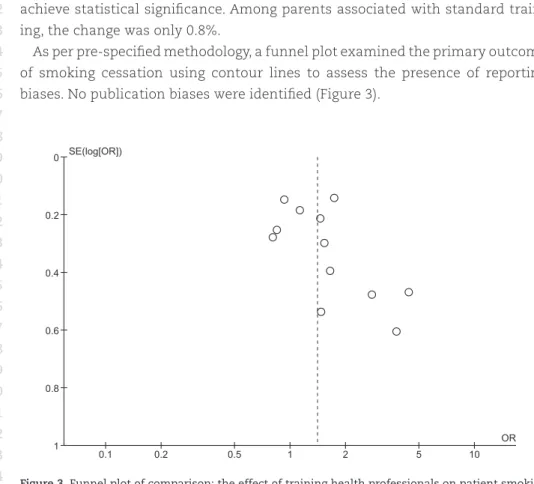
With the inclusion of more than ten included studies, potential reporting biases were assessed using a funnel plot. Asymmetry in the plot could be attributed to publication bias, but may well be due to true heterogeneity, poor methodologi-cal design or artefact. Contour lines corresponding to perceived milestones of statistical significance (p= 0.01, 0.05, 0.1 etc.) were applied to funnel plots, which may help to differentiate between asymmetry due to publication bias from that due to other factors.27
Data synthesis
1 2 3 4 5 6 7 8 9 10 11 12 13 14 15 16 17 18 19 20 21 22 23 24 25 26 27 28 29 30 31 32 33 34 35 36 37 38 39
For continuous outcomes, a fixed effect model with a weighted mean dif-ference (WMD) or standardised mean difdif-ference (SMD) with 95% confidence intervals were calculated as appropriate. However, in the presence of significant heterogeneity (as defined above) the random effects model was used in place of the fixed effect model.
Sensitivity analysis
Sensitivity analysis was conducted on studies with an unclear or high risk of bias for sequence generation and/or allocation concealment.
reSulTS
Description of studies
Table 1 (p. 58) shows the characteristics of included studies.
Results of the search
Of 381 articles screened, 17 studies met all of the inclusion criteria (see Figure 1).
Included studies
Design
All 17 included studies used a randomized controlled trial design with clustering and eleven studies also adopted nesting of participants within practices/hospi-tals.4;15;17;29-35 One study incorporated a 2x2 factorial design with randomization to: training plus incentive, training plus medication, training plus incentive and medication or usual care.12
Sample sizes
1 2 3 4 5 6 7 8 9 10 11 12 13 14 15 16 17 18 19 20 21 22 23 24 25 26 27 28 29 30 31 32 33 34 35 36 37 38 39
had the smallest number of residents at baseline and follow-up (n= 27 for both). Seven studies also reported baseline cluster sizes at the practice level: Lennox 1998 (n= 16); Sinclair 1998 (n= 62); Swartz 2002 (n= 50); Joseph 2004 (n= 20); Hymowitz 2007 (n= 16); Twardella 2007 (n= 82); and Gordon 2010 (n= 14).
Setting
Eleven of the 17 studies were conducted in the USA, one in Canada34, one in Tai-wan36, one in Scotland37, one in the United Kingdom35, one in Switzerland38 and one in Germany.12 Two studies were performed in a dentistry setting4;30, whilst the remaining 15 were conducted within primary care clinics, HMO (Health
283 records identified through database searching
1 study identified through hand searching
bibliographies 8 studies included from the
previous version of this review ’30 May 2000’
194 articles excluded from screening of title and
abstract 288 full-text articles
assessed for eligibility (after 4 updates removed)
57 articles (51 studies) excluded but relevant:
x18 consultation process only
x11 not randomized
x11 smoking-related outcome
data not reported
x10 no control group
x1 smokeless tobacco only
94 articles required full-text screening
37 articles (17 studies) included in qualitative (narrative) synthesis
15 of 17 studies were able to be included in quantitative synthesis (meta-analysis) for the
primary outcome
1 2 3 4 5 6 7 8 9 10 11 12 13 14 15 16 17 18 19 20 21 22 23 24 25 26 27 28 29 30 31 32 33 34 35 36 37 38 39
Maintenance Organisation) medical centres15;39, VAMC’s (Veterans Affairs Medi-cal Centres)40 and one in a pharmacy setting.37
Participants
At the health professional level, two studies were performed with dentists4;30, six studies included only primary care physicians12;15;17;29;33;34, two studies were con-ducted with residents31;38, three studies incorporated a combination of primary care physicians and internists15;32;36, one study used pharmacists37, whilst the remaining three studies used a combination of health professionals including physicians, nurse practitioners, physician assistants, psychologists, pharmacists and other health visitors.35;39;40
The individual patients in 16 of the 17 included studies were those visiting their health professional during the recruitment phase of each study. They were recruited during standard GP, dentist or outpatient visits, emergency depart-ment visits or from waiting rooms. The Hymowitz 2007 study was the only one to perform the training in a paediatric setting, targeting the parents/guardians of children visiting 16 primary care clinics.31
Interventions
Treatment type
1 2 3 4 5 6 7 8 9 10 11 12 13 14 15 16 17 18 19 20 21 22 23 24 25 26 27 28 29 30 31 32 33 34 35 36 37 38 39
Treatment intensity
The level of training intensity for health professionals ranged from one 40-min-ute session in the Unrod 2007 study, to four or five day long sessions in the Joseph 2004 study. Nine studies had a training session for one day or less: Wilson 1988 (four hours), Cohen (Dent) 1989 (one hour), Cohen (Doc) 1989 (one hour), Kottke 1989 (6 hours), Lennox 1998 (one day), Sinclair 1998 (two hours), Twardella 2007 (two hours), Unrod 2007 (40 minutes) and Gordon 2010 (three hours). Four studies had two separate sessions: Strecher 1991 (two, one hour sessions scheduled two weeks apart), Wang 1994 (two sessions of unknown duration), Cornuz 2002 (two, four hour training sessions scheduled two weeks apart) and Swartz 2002 (two, 20 minute training sessions and another session of unknown duration, where resi-dents were able to practice counseling techniques with standardised patients). Four studies had three or more sessions: Cummings (Priv) 1989 and Cummings 1989 both had three, one hour sessions over a four to five week period, Hymowitz 2007 had four, one hour sessions, four times a year and Joseph 2004 had four to five, day long sessions within six months.
Mode of intervention delivery
Three different modes of intervention delivery were used being groups ses-sions, one or a combination of the two. Two studies only used one-on-one sessions33;40, eleven studies delivered the intervention in a group setting
only4;12;15;17;31;32;34-37;39 with an eighth study using group delivery as the primary
mode, however doctors who were unable to attend received a private session in their office.15 Finally three studies used both modes of intervention delivery29;30;38, with health professionals in the two Cohen et al studies provided the option of a group or individual session.29;30
Theoretical model - behavioural change technique
Nine studies used behavioural change theories to underpin the intervention techniques. These included the ’stages of change’ (also known as the trans-theoretical) model12;17;32;35-38 and the ’5A’ (Ask, Assess, Advise, Assist and Arrange) approach.4;33 Three studies incorporated prompting or reminders to ask about tobacco use29-31 and four provided feedback to the health providers, for example number of patients counselled.33;38-40
Type of professional being trained
combina-1 2 3 4 5 6 7 8 9 10 11 12 13 14 15 16 17 18 19 20 21 22 23 24 25 26 27 28 29 30 31 32 33 34 35 36 37 38 39
tion of physicians and internists.15 Three other studies included training to other health care workers as well as doctors: Lennox 1998 also involved nurses and other health visitors; Swartz 2002 also trained nurse practitioners, physicians assistants and other health professionals; and, in addition to doctors, Joseph 2004 included nurses, psychologists and pharmacists.
Length of follow-up
Eight studies reported follow-up periods between six and nine months post intervention4;29;30;32;33;35-37, eleven studies presented 12 month follow-up
data4;12;15;17;29;30;34;36;38-40 and two studies assessed extended follow-up periods of
14 months35 and four years.31 However, only two-year post intervention data was available for Hymowitz 2007 at the time of writing.
Outcomes
1 2 3 4 5 6 7 8 9 10 11 12 13 14 15 16 17 18 19 20 21 22 23 24 25 26 27 28 29 30 31 32 33 34 35 36 37 38 39
in the Hymowitz 2007 study were unable to be pooled as only change scores from baseline were presented.
Excluded studies
Sixty-five studies (71 articles) were excluded for the following reasons: 21 in-cluded consultation process only, 18 did not include a control group, 13 failed to measure smoking related outcome data, 12 were considered to be inadequately randomized and one only reported on smokeless tobacco use.
Risk of bias in included studies
Key methodological features are summarised in Figure 2.
Random sequence generation (selection bias)
Five studies reported adequate methods of sequence generation12;15;31;33;38, two had inadequate methods17;32 whilst the remaining ten did not provide enough in-formation to assess risk of bias for sequence generation and were hence judged to be at unclear risk in this category. Adequate methods included the use of a random number generator or coin toss, whilst unclear methods were described as being ’random’ in design, however methods were not described. The Kottke 1989 study required some physicians to be re-assigned due to inappropriate al-location methods during assignment. For the Strecher 1991 study appropriate randomization did not occur as residents were randomly assigned by clinic half-day session to one of four groups, which risks introducing bias. All 17 trials used cluster randomization, with five studies inadequately accounting for potential clustering effects in the data, requiring manual clustering adjustments.15-17;34;36 Only two studies17;31 reported outcome data at the level of randomization. No authors reported that differences in the method of analysis affected the results.
Allocation concealment (selection bias)
1 2 3 4 5 6 7 8 9 10 11 12 13 14 15 16 17 18 19 20 21 22 23 24 25 26 27 28 29 30 31 32 33 34 35 36 37 38
39 Figure 2.
Risk of bias gr
aph: r
evie
w authors’ judg
ement a
bout eac
h risk of bias pr
esented as per
centa
ges acr
1 2 3 4 5 6 7 8 9 10 11 12 13 14 15 16 17 18 19 20 21 22 23 24 25 26 27 28 29 30 31 32 33 34 35 36 37 38 39
Blinding of participants (performance bias and detection bias)
Only one study reported adequately blinding participants to the intervention38, as residents were not informed about the aim of the trial and were advised only that a survey on cardiovascular risk factors and prevention would be conducted. Authors announced that a training programme in clinical prevention that in-cluded sessions on smoking cessation and management of dyslipidemia was being conducted. Authors also report that patients were blinded to the aim of the study and group allocation of their physician. Due to the nature of the interven-tion, blinding of participants was not possible for the remaining 16 studies. An attempt was made to blind physicians in the Unrod 2007 study, with physicians learning their group assignment only after signing the informed consent, how-ever they were not blinded during the study intervention period and follow-up.
Blinding of outcome assessors (performance bias and detection bias)
Three studies reported methods blinding of outcome assessors that we judged at low risk of bias. Authors of Cummings (Priv) 1989 stated that ’outcome assessors were blinded’, authors of the Joseph 2004 study report interviewers collecting patient outcomes were blinded to subject treatment status and authors in the Strecher 1991 study report that telephone interviewers, who were blinded to residents’ and patients’ group assignments, obtained the patient reports. The remaining 14 studies did not report any attempts to blind outcome assessors and as such are unclear for this category.
Incomplete outcome data (attrition bias)
Incomplete outcome data was adequately addressed in three studies4;15;16 and unclear in the remaining 14 studies. The Cummings (Priv) 1989 and Cummings 1989 studies reported that missing data was accounted for in analyses, whilst the Gordon 2010 study reported the use of multiple imputation procedures to account for missing data with participants lost to attrition discussed in the text. All unclear studies failed to mention if there was any missing outcome data and if so, how this was addressed when reporting results.
Selective reporting (reporting bias)