FORGING OUR CULTURAL COMMONWEALTH: THE IMPORTANCE OF DIGITAL CURATION IN THE DIGITAL HUMANITIES
Alex H. Poole
A dissertation submitted to the faculty at the University of North Carolina at Chapel Hill in partial fulfillment of the requirements for the degree of Doctor of Philosophy in the
School of Information and Library Science.
Chapel Hill 2015
Approved by: Helen R. Tibbo Christopher A. Lee Ryan B. Shaw
iii ABSTRACT
Alex H. Poole: Forging Our Cultural Commonwealth: The Importance of Digital Curation in the Digital Humanities
(Under the direction of Helen R. Tibbo)
New forms of digital data and tools or methods, for instance those that cross academic disciplines and domains, those that feature teams of scholars instead of single scholars, and those that involve individuals from outside the academy, can enable new forms of scholarship and teaching in the digital humanities. Such scholarship can promote reuse of digital data, provoke new research questions, and cultivate new audiences. Digital curation, the process of managing a trusted body of information for current and future use, can help maximize the value of research in the digital humanities.
This exploratory qualitative study centered on the salience of digital curation to the digital humanities. A case study predicated upon semi-structured interviews, it explored the creation, use, storage, and planned reuse of data by 45 interviewees involved with nineteen Office of Digital Humanities Start-Up Grant (SUG) projects. Similarly, the study sought to determine what digital curation skills had been employed in these projects and what digital curation skills project personnel felt were most important in doing such work. Interviewees grappled with challenges surrounding data, collaboration and communication, planning and project management, awareness and outreach, resources, and technology.
iv
v
ACKNOWLEDGEMENTS
vii
TABLE OF CONTENTS
LIST OF FIGURES ... xv
LIST OF TABLES ... xvi
Chapter 1: Introduction ... 1
Introduction ... 1
Digital Curation Education: The Current Landscape ... 6
Research Questions ... 8
The National Endowment for the Humanities’s Office of Digital Humanities ... 9
Structure of the Dissertation ... 10
Chapter 2: The Conceptual Landscape of Digital Curation ... 15
Introduction ... 15
Digital Curation ... 16
Digital Curators ... 18
Data ... 19
Defining Data ... 19
Big Data ... 20
The Data Lifecycle and Lifecycle Models ... 21
viii
Sharing and Reuse... 24
Sharing ... 24
Reuse ... 27
Scholarship ... 28
Cyberscholarship... 28
Citation ... 29
Copyright ... 31
Institutional Sites for Digital Curation ... 32
Archives ... 32
Centers ... 33
Research Libraries ... 34
Digital Curation Profiles (DCPs) ... 37
DataNet ... 38
Institutional Repositories ... 39
Overarching Concerns ... 40
Governance and Policy ... 40
Planning and Data Management Plans (DMPs) ... 42
Planning Tools ... 44
Trustworthiness ... 45
ix
Metrics ... 48
Standards ... 49
Sustainability... 50
Conclusion ... 52
Researcher Practices ... 52
Outreach ... 53
Chapter 3: The Trading Zone, the Meeting Place: the Digital Humanities ... 55
Introduction: the Digital Humanities and the Humanities ... 55
Computing in the Humanities, Humanities Computing, and the Cradle of the Digital Humanities ... 57
The Digital Humanities: Definition, Scope, Inclusivity, and Criticism ... 63
Definition ... 63
Scope ... 64
Inclusivity ... 66
Criticism ... 67
The Digital Humanities and/in the Academy... 68
Scholarly Communication ... 68
Social Media ... 69
Publication ... 71
x
Institutional Position ... 73
Centers ... 73
Libraries ... 75
Alt-ac Careers ... 76
Digital Humanities Work ... 78
Tools ... 83
Conclusions ... 85
Collaboration... 85
Project Management ... 87
Sustainability... 89
Chapter 4: Digital Curation and Digital Humanities Education in North America ... 92
Introduction ... 93
Digital Curation Education ... 94
Digital Humanities Education ... 95
Digital Curation Professionals ... 96
The Role for Library and Information Science ... 98
Key Initiatives: Capacity-building, Specializations, Certificates, and Workshops ... 101
Capacity-building ... 102
Required Courses ... 104
xi
Lessons Learned... 108
Specializations ... 109
Required Courses ... 110
Lessons Learned... 112
Certificates ... 113
Required Courses ... 114
Lessons Learned... 117
Workshops ... 117
Lessons Learned... 118
Overall Lessons Learned... 119
Conclusion ... 128
Chapter 5: Research Methods ... 130
Research Questions ... 130
Participants: The Office of Digital Humanities Start-Up Grants ... 131
Sampling ... 132
Snowball Sampling ... 133
Rationale for Qualitative Research and a Naturalistic Approach ... 134
Naturalistic Inquiry ... 134
The Case Study Approach ... 135
xii
Trustworthiness ... 136
Data Collection ... 137
Rationale for Qualitative Interviewing ... 138
The Interview Process ... 139
Data Collection ... 141
Documentary Evidence ... 142
Data Analysis ... 143
Grounded Theory ... 144
Coding ... 145
Chapter 6: Study Results ... 147
Projects Examined ... 147
Interviewee Demographics ... 148
Self-Identified Digital Humanist... 150
Education, Training, and Skilling Up ... 153
Formal Education in Digital Curation... 153
Principal Investigators ... 155
Graduate Students ... 156
Challenges Faced and Lessons Learned ... 160
Data Issues ... 160
xiii
Collaboration... 161
Communication ... 165
Librarians ... 166
Center/Institute Personnel ... 168
Archivists ... 168
Planning and Project Management ... 169
Duration of Grant ... 170
Awareness and Outreach... 170
Resources ... 171
Technology ... 171
Conclusion ... 171
Chapter 7: Analysis and Discussion ... 173
The Research Study ... 173
Research Question 1: What types of data have digital humanists (whether faculty, “alternative-academics,” (alt-acs) or graduate students) created, reused, stored, or planned to reuse in their SUG project? ... 175
Reuse of Previously-Generated Data ... 175
Data Created... 176
File Formats ... 178
Data Management Plans ... 179
xiv
Project Websites... 185
Plan to Reuse Project Data ... 186
Research Question 2: What digital curation skills (if any) did they employ and how did they acquire them? ... 189
Research Question 3: Are digital humanists interested in acquiring skills to help curate their data and if so, what content would they like to learn? ... 191
Research Question 4: What sort of educational framework would be most useful to help them learn more about curating (managing) their data? ... 193
Empirical Findings ... 194
Digital Curator Vocational Education Europe (DigCurV) ... 194
Mapping the DigCurV Skill Identifiers to Proposed Researcher Lens ... 196
A Researcher Lens for Digital Curation in Digital Humanities ... 207
Implications and Limitations ... 208
Implications... 208
Limitations ... 208
Future Research ... 209
APPENDIX A: INTERVIEW QUESTIONNAIRE ... 213
APPENDIX B: SCRIPT FOR PARTICIPANT RECRUITMENT ... 214
xv
LIST OF FIGURES
Figure 1: Self-Identified Digital Humanist ... 151
Figure 2: Formal Education in Digital Curation ... 154
Figure 3: Librarian Involvement in Projects ... 167
Figure 4: Center/Institute Personnel Involvement in Projects ... 168
Figure 5: Archivist Involvement in Projects ... 169
Figure 7: Reuse of Previously Generated Data ... 175
Figure 6: Data Management Plan Created ... 180
Figure 8: Institutional Storage ... 182
Figure 9: Project Website Created ... 186
Figure 10: Plans to Reuse Data Created During Project ... 187
Figure 11: Plans to Reuse Project Data: Principal Investigators (PIs) ... 189
xvi
LIST OF TABLES
Table 1: Typology of Data Standards (Gilliland 2008) ... 23
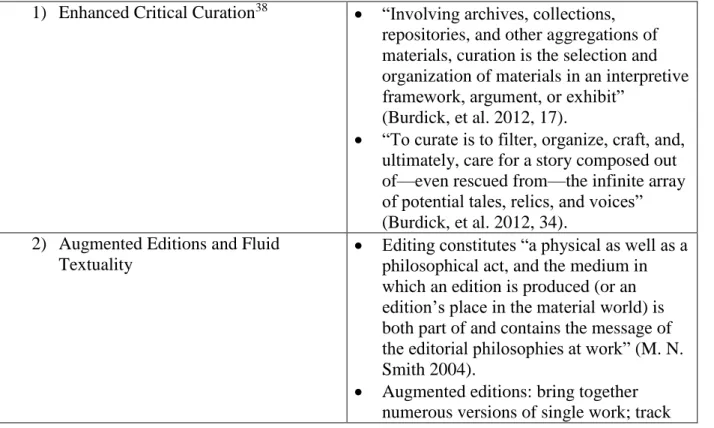
Table 2: Categories of Digital Humanities Work (Burdick, et al. 2012) ... 78
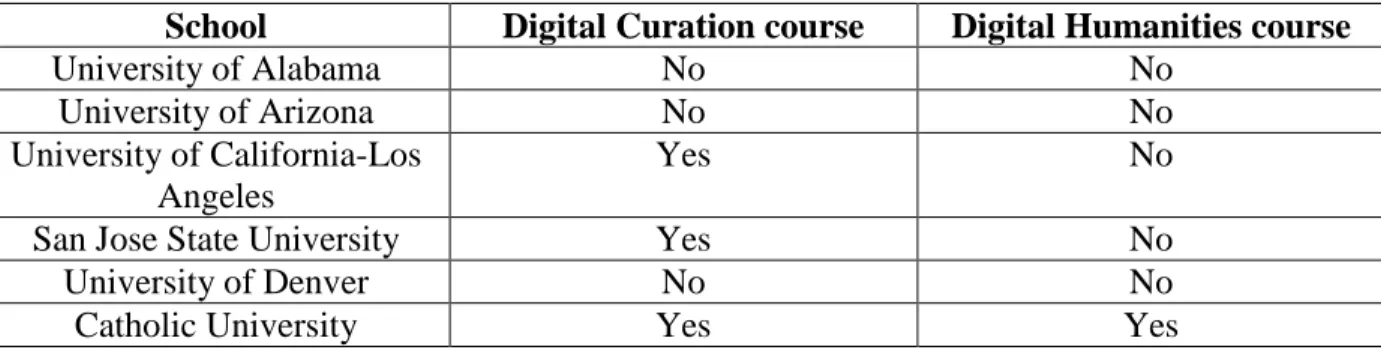
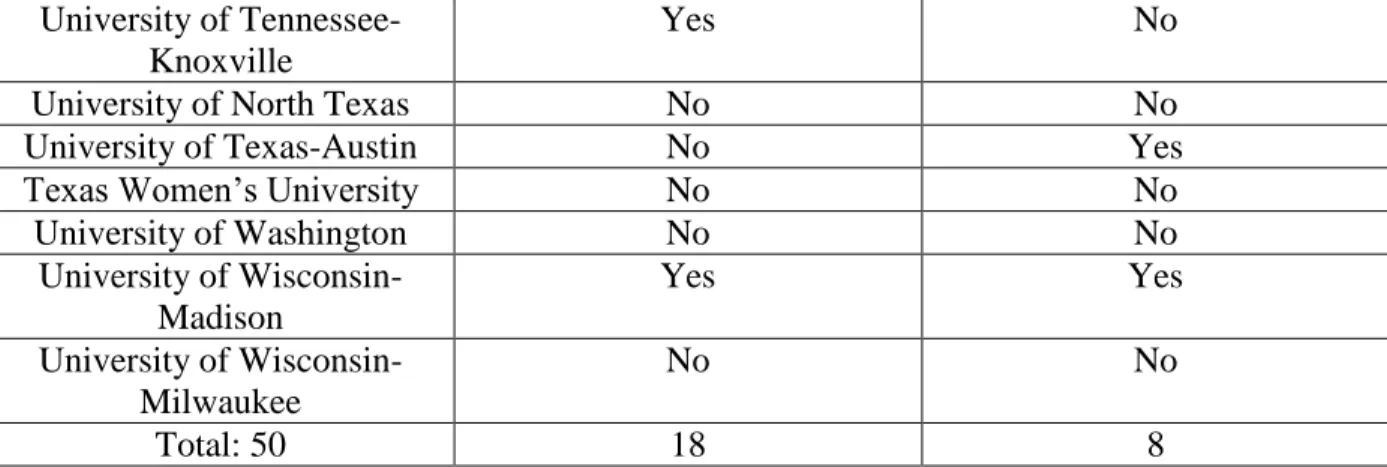
Table 3: LIS programs in United States (50): Digital Curation and Digital Humanities Courses ... 99
Table 4: LIS programs in Canada: Digital Curation and Digital Humanities Courses ... 101
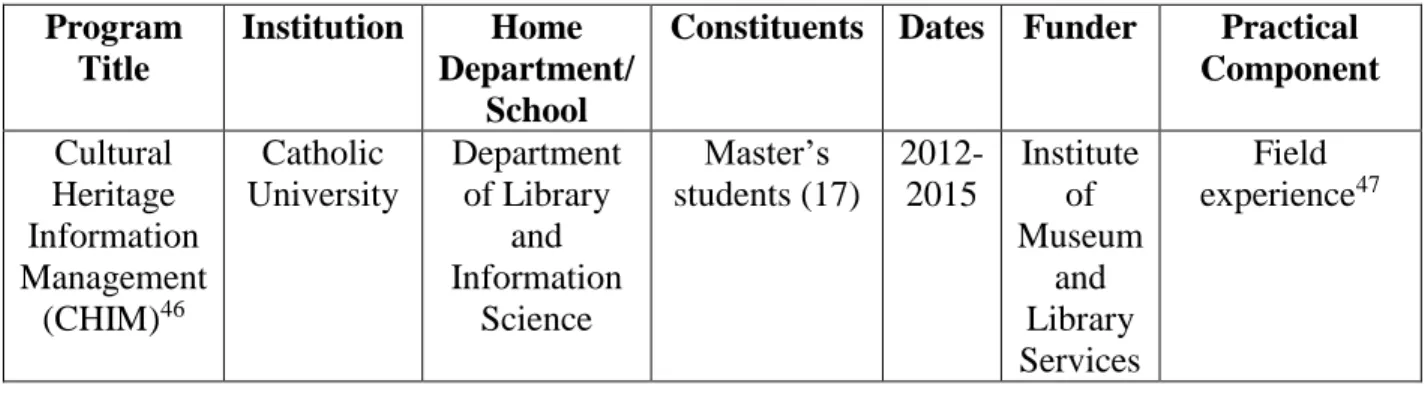
Table 5: Capacity-Building Initiatives ... 102
Table 6: Required Courses (Capacity-Building)... 104
Table 7: Consolidated Course Topics (Capacity-Building) ... 105
Table 8: Outcomes (Capacity-Building) ... 106
Table 9: Capacity-Building Programs’ Outcomes (Consolidated) ... 107
Table 10: Digital Curation Specializations ... 109
Table 11: Required Courses ... 110
Table 12: Consolidated Course Topics (Specializations) ... 112
Table 13: Digital Curation Certificates ... 113
Table 14: Required Courses ... 114
Table 15: Consolidated Course Topics (Certificates) ... 116
Table 16: Digital Curation Workshops ... 117
Table 17: Ten Most Frequently Listed Topics in Required Courses ... 120
Table 18: Potential Criteria for Digital Curation Education Programs (Rank Order) ... 120
Table 19: Projects Examined ... 147
Table 20: Interviewee Demographics ... 148
Table 21: Data Issues ... 161
xvii
Table 23: Project Personnel’s Mode of Communication ... 165
Table 24: Planning and Project Management Issues ... 169
Table 25: Awareness and Outreach Issues... 170
Table 26: Types of Data Created ... 177
Table 27: Data Formats ... 179
Table 28: Possible Data Reuses ... 187
1
Chapter 1: Introduction
A revolution in digital information is occurring across all realms of human endeavor. -National Research Council of the National Academies (2015), 7.
We swim in a sea of data…and the sea level is rising rapidly. -Anderson & Rainie (2012)
Virtually no one in academia perceives that they have a professional responsibility or
mandate for research data management functions.
Council on Library and Information Resources (2013), 6.
Introduction
“Contemplating the digital universe is a little like contemplating Avogadro’s number,” claim Gantz and his colleagues (2008). “It’s big. Bigger than anything we can touch, feel, or see, and thus impossible to understand in context” (3). One study concludes, “Every day, we create 2.5 quintillion bytes of data—so much that 90% of the data in the world today has been created in the last two years alone.”1 In 2014, there existed 1.7 megabytes per minute for every
inhabitant of Earth (EMC Digital Universe 2014). The amount of research data in the sciences alone increases by as much as 30% per year (Pryor 2012). The data deluge is truly upon us.
2
Data is “notoriously fragile, short-lived, and easy to manipulate without leaving obvious evidence of fraud” (American Council of Learned Societies 2006, 18). It is also unprecedentedly vast in scale and scope. “In almost every laboratory,” Bell et al. (2009) report, “‘born digital’ data proliferate in files, spreadsheets, or databases stored on hard drives, digital notebooks, Web sites, blogs, and wikis” (1297). Haendel et al. (2012) contend, “Where researchers once managed discrete, controllable building blocks of knowledge, they must now contend with a tsunami of information that paradoxically feeds the growing scientific output while simultaneously crushing researchers with its weight” (1). Yet “data icebergs” persist (Hey, Tansley and Tolle 2009).
The data deluge presents unprecedented challenges with regard to preserving digital assets. Rothenberg (1995) offers an apothegm: “Digital objects last forever—or five years, whichever comes first” (42). Other scholars worry about the potential loss of important data, identifying “A Public Trust at Risk” (Heritage Preservation 2005), data’s “shameful neglect” (Data's Shameful Neglect 2009), or the specter of a “digital dark age” (Bollacker 2010).
3
Beagrie (2006) asserts, “For society and individuals, it can be argued that digital knowledge if it is to be useful and usable must be continuously updated, maintained, and
accessed” (12-13). An umbrella term, digital curation manages a trusted body of information for current and future use. Predicated upon a lifecycle approach, digital curation helps to safeguard data’s longevity, integrity, authenticity, and accessibility (Higgins 2008) (Higgins 2012). Digital curation can benefit data creators by increasing the data’s and the research’s visibility, by
increasing the number of citations received by the work, and by helping creators develop risk management strategies, and by assisting creators demonstrate compliance to funding and legal bodies and to publishers (Harvey 2010).
Digital humanities work focuses on “what it means to be a human being in the networked information age and to participate in fluid communities of practice, asking and answering
research questions than cannot be reduced to a single genre, medium, discipline, or institution” (Burdick, et al. 2012, vii). Digital humanities may be conceived of as a continuum: a discipline of its own, on one end, or as shorthand for digitally-enabled humanities work, on the other. In any case, digital tools and methods pervade humanities study and scholarship.
In this vein, the digital humanities embrace a wide variety of work practices. Scholars may work on cultural criticism, archives, mapping, text markup, encoding, and analysis, digitization, data mining, aggregation, visualization, gaming, databases, and code and software studies. Given the depth and breadth of its scope, the digital humanities can serve as “a
laboratory, innovation agency, portal and collaborative initiator for the humanities, and as a
respectful meeting place or trading zone for the humanities, technology and culture, extending
across research, education and innovation” (Svensson, Envisioning the Digital Humanities
4
Two programs exemplify innovative digital humanities research that pivot on digital curation: 1) those projects funded as Start-Up Grants by the National Endowment for the Humanities’s Office of Digital Humanities (ODH); and 2) those projects sponsored by the National Endowment for the Humanities under the auspices of the three “Digging into Data” challenges (2009-present). Both of these initiatives dovetail with the National Science
Foundation’s efforts to promote digital curation through its grant-making process. In fact, the ODH adopted much of its agenda from the NSF’s instantiation of a data management plan requirement beginning in 2011.
First, between the first round of awards in 2006 and the ninth round in 2014, 2,057 scholarly teams have applied for Start-Up Grant awards and 280 (13.6%) have succeeded. The Office’s 2010 report reflected, “Like a basic research grant program in the sciences, the
guidelines were designed to encourage applicants to propose innovative projects that had long-term potential but in the short long-term needed finds to do preliminary work, to test out ideas, to develop prototypes, to get their planning in order, and perform other tasks necessary for the successful implementation of a digital project” (National Endowment for the Humanities, Office of Digital Humanities 2010, 5). More important, the ODH added a provision in 2011 that
mandated the inclusion of data management plans in each grant application.
5
projects supported by ten funders from the US, Canada, the UK, and the Netherlands. Such projects suggest “a digital ecology of data, algorithms, metadata, analytical and visualization tools, and new forms of scholarly expression” (Williford and Henry 2012, 2). They may even hint at a “new era” in which “revelatory explorations of our cultural heritage that will lead us to new insights and knowledge, and to a more nuanced and expansive understanding of the human condition” (Williford and Henry 2012, 1).
But despite the promise of Start-Up Grants and Digging into Data projects, practical and methodological challenges abound. The, the full scholarly potential of work in the digital humanities depends upon digital curation.
Digital curation in the digital humanities typically focuses on a wide range of work products, e.g. scholarly editions, text corpora, marked-up text, thematic research collections, data accompanied by annotation or analysis, and finding aids or information maps such as
bibliographies (Flanders and Munoz 2012). Tasks may include translating or migrating data into new formats, adding contextual information or markup, or linking datasets (Flanders and Munoz 2012). Digital curation helps ensure long-term access; facilitate discovery, retrieval, use, and reuse; and maximize the usefulness of the curated digital content (Harvey 2010). By making data as functional as possible, digital curation can enable better research in the digital humanities.
Digital curation and the digital humanities share concerns, practices, and objectives. Both digital curation professionals and digital humanists add value to digital assets: they help
6
and the valuation of their work as scholarship. Finally, digital curation and digital humanities are both areas of practice and research. Henry (2014) notes, “Humanities data is some of the richest information available and provides some of the greatest challenges for digital curation” (370). The potential symbioses between the two areas, particularly in fostering education, training, and skilling up, merits study. Digital curation can contribute much to the digital humanities—and vice versa.
Digital Curation Education: The Current Landscape
Digital curation is a burgeoning area of interest in Library and Information Science given job opportunities, funding, and new programs. This dissertation focuses on digital curation education for three reasons. First, examining digital curation education efforts allow us to discern how the field and its knowledge, skills, and competencies are presently defined by key
stakeholders. Second, an examination of digital curation education permits us to determine possible needs and opportunities in the field. Third, although digital curation is expanding its reach, it is only partially addressing the needs of digital humanities researchers.
As of 2012, 22% (13 of 58) of accredited Library and Information Science programs in North America offered courses in digital curation (Creamer, Morales, et al. 2012). In March of 2015, I found that 21 (36.2%) schools currently offer such a course, a marked increase. (Nine of 58 programs offer digital humanities course, suggesting potential for collaborative digital curation and digital humanities work in Library and Information Science.)
7
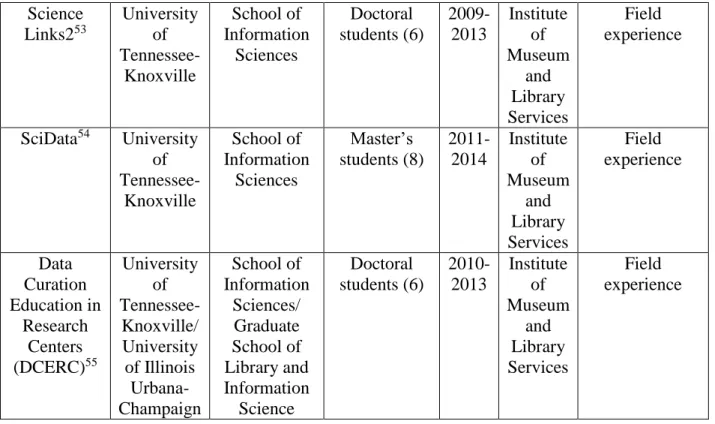
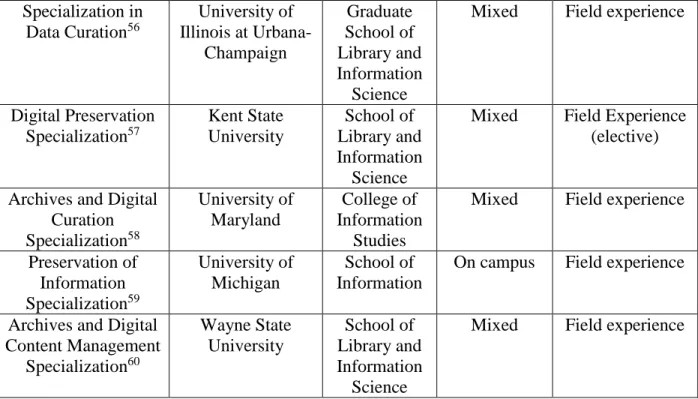
initiatives stand out: ten capacity-building programs,2 two Master’s degrees,3 four specializations,4 ten certificates (graduate, professional, or both),5 and six workshops.6
Despite these efforts, digital curation remains an immature field that lacks coordination overall (Dallas, An Agency-Oriented Approach to Digital Curation Theory and Practice 2007). A recent report noted, “Although the benefits of digital curation are poorly understood and not well articulated, significant opportunities exist to embed digital curation deeply into an organization’s practices to reduce costs and increase benefits” (National Research Council of the National Academies 2015, 2). LIS programs not only can train librarians and archivists to engage in digital curation work, but also can teach digital humanists how best to curate their own data. Digital curation of digital humanities data can facilitate the sharing and reuse of data, thereby promoting new research questions and new audiences as well as justifying the public investment in the digital humanities.
2 Catholic University’s Cultural Heritage Information Management (CHIM), University of Illinois at
Urbana-Champaign’s (UIUC’s) Data Curation Education Program (DCEP), UIUC’s Data Curation Education Program-Humanities (DCEP-H), University of North Carolina at Chapel Hill’s (UNCCH’s) DigCCurr I, UNCCH’s DigCCurr II, University of North Texas’s Information: Curate, Archive, Manage, Preserve (iCAMP), Pratt Institute’s Cultural Heritage Access Research and Technology (CHART), University of Tennessee-Knoxville (UTK) and UIUC’s Data Curation Education in Research Centers, UTK’s Science Links2, and UTK’s SciData.
3 King’s College’s MA in Digital Curation and San Jose State University Master’s in Archives and Records
Administration (MARA).
4 UIUC’s Specialization in Data Curation, University of Maryland’s Specialization in Archives and Digital Curation,
University of Michigan’s Specialization in Preservation of Information, and Wayne State University’s Specialization in Digital Content Management.
5 University of Arizona’s Digital Information Graduate Certificate (DigIn), Dominican University’s Certificate in
Digital Curation, Kent State University’s Certificate of Advanced Study in Digital Curation, Johns Hopkins University’s Certificate in Digital Curation, University of North Carolina’s Master’s Certificate in Digital Curation, University of North Carolina’s Post-Master’s Certificate in Data Curation, University of Maine’s Digital Curation Graduate Certificate, San Jose State University’s Post-Master’s Certificate in Digital Curation, Simmons College’s Digital Stewardship Certificate, and Syracuse University’s Certificate of Advanced Study in Data Science.
6 University of Massachusetts-Amherst and Worcester Polytechnic Institute’s New England Collaborative Data
8 Research Questions
Digital humanists likely have much to gain from working with digital curator in their training and education efforts as well as in their daily work (Poole 2013). In an effort to establish a baseline of current practice, and to suggest areas of pedagogical coordination and collaboration between digital curation and digital humanities, this dissertation centers on four research
questions:
What types of data have digital humanists (whether faculty, “alternative-academics,”7 (alt-acs) or graduate students) created, reused, stored, and planned to reuse in their SUG project?
What (if any) digital curation skills did they employ and how did they acquire them? Are these digital humanists interested in acquiring skills to help curate their data and if
so, what content would they like to learn?
What sort of educational framework would be useful to help them learn more about curating their data?
These questions will be addressed by an examination of selected awardees of Start-Up Grants from the National Endowment for the Humanities’s Office of Digital Humanities. These projects represent seminal examples of current and emergent digital humanities work; they will be contextualized, moreover, in the broader literature of digital curation and digital humanities.
7 As Bethany Nowviskie puts it, “The #alt-ac label speaks to a broad set of hybrid, humanities-oriented professions
9
The National Endowment for the Humanities’s Office of Digital Humanities
Established in 2007 by the National Endowment for the Humanities, the Office of Digital Humanities (ODH) propounds, “The ways we read, write, learn, communicate, and play have fundamentally changed due to the advent of networked digital technologies. These changes are being addressed in fascinating ways by scholars from across the humanities, often working in collaboration with scientists, librarians, museum staff, and members of the public.”8
Consonant with this evolution, the ODH began offering Start-Up Grants in 2007 “to support the initial phases of projects offering innovative approaches to the use of emerging technologies in the humanities.”9 Head of the ODH Brett Bobley (2007) remarks, “I chose the name ‘start-up grant’ because it reminded me of the tech world, a tech start-up like the two Apple Computer guys in their garage.”
Of the “high risk, high reward” variety, ODH-funded projects foreground research innovation. The ODH sponsors two types of Start-Up Grants, each of which may run up to eighteen months in duration. Disbursing up to $30,000, Level I grants underwrite brainstorming sessions, workshops or conferences, alpha-level prototypes, or initial planning. Likely outcomes include reports, position papers, or plans for future work. Level II grants support more mature projects, generally those that prepare for implementation or that show proof of concept. Receiving up to $60,000, these grants produce more concrete deliverables than Level I grants, for instance prototypes, test beds, or demonstration projects.
All Start-Up Grants grant applications require Data Management Plans. Plans focus on the types of data the project will produce and the grantee’s plan for managing that data during
8http://www.neh.gov/divisions/odh/about
10
and after the grant.10 The ODH defines data broadly: “Many variables govern what constitutes ‘data’ and the management of data, and each discipline has its own culture regarding data.”11 The ODH classifies data as materials generated or collected such as citations, code, algorithms, digital tools, documentation, databases, geospatial coordinates, reports, and articles. Conversely, it excludes materials such as drafts or preliminary analyses, plans for future work, peer-review assessments, communications with colleagues, and confidential or private material. The ODH expects grantees to disseminate their findings and their data to scholarly and public audiences.
The ODH’s efforts since 2011 suggest the possibilities of digital curation work in the digital humanities. Humanists increasingly realize that they reuse and create “data” and thus can profit by making this data sharable and reusable, especially when their work depends upon public monies. The Start-Up Grant projects examined in this study illustrate the potential for coordination, communication, and collaboration among digital curation professionals and digital humanists. They provide a useful way of studying the practices of key stakeholders.
Structure of the Dissertation
Including this introductory chapter, this dissertation comprises seven chapters. Chapter two describes the landscape of digital curation in six parts. First, it discusses the definition of digital curation and the roles and responsibilities of digital curators. Next, it probes the definition
10http://www.neh.gov/files/grants/data_management_plans_2014.pdf. Data management plans comprise four areas.
First, the plans spell out data rights and obligations, relevant legal or ethical issues, costs, and roles and
responsibilities. Second, plans deal with expected data, namely its types and formats, the ways in which it will be managed and maintained until shared, and its level of aggregation. Third, plans address sharing, primarily the mechanisms in place for sharing, how the data was generated, procedural information, and metadata. Fourth, plans address dissemination. Dissemination issues include strategies to promote public access, formats, resources, any privacy, confidentiality, security, or intellectual property issues, the archival storage location of data, and the period of retention.
11 From application instructions for applications due in 2012 (projects starting May 2013). I have relied on these
11
of data and examines Big Data, the data lifecycle and data lifecycle models, metadata, and data sharing and reuse. Third, the chapter considers digital curation in the context of scholarship, focusing on cyberscholarship, citation, and copyright. Fourth, it turns to institutions that play a foundational role in digital curation: archives, centers, libraries, and institutional repositories. Fifth, the chapter looks at higher-level concerns such as governance and policy, planning and data management plans, planning tools, trust, risk management, metrics, standards, and sustainability. Finally, it stresses the need for examining actual researcher practices and conducting outreach and raising awareness.
Chapter three explores the digital humanities, also in six parts. It first sets forth the historical trajectory of the digital humanities. Second, it examines the definition, scope, and inclusivity of the field. Third, it addresses digital humanities work as scholarship. Digital humanists often struggle to demonstrate the scholarly worth of their work to more traditionally-minded colleagues, just as do digital curation professionals. Fourth, the chapter tackles the institutional position of digital humanities, highlighting the importance of libraries and centers as well as the notion of the “alt-ac” career. Like digital curation, digital humanities often operates in an insecure position on campus. Fifth, the chapter describes further the types of work digital humanities scholars do. Data used in such work needs to be curated. Finally, it stresses the overarching importance in digital humanities of sustainability, collaboration, and project management. All three of these areas, too, are vital to successful digital curation.
12
workshop. Both structurally and conceptually these initiatives provide helpful suggestions for educational model and program development.
The fifth chapter offers an overview of the dissertation’s methodology, unpacks qualitative and naturalistic approaches. It then covers research design, research questions, and data collection. Next, it addresses research methods, primarily the affordances of a case study approach, semi-structured interviewing, purposive sampling, and documentary evidence. Finally, the chapter discusses grounded analysis and open coding. Overall, this study sought “a nuanced, expressive and information-rich understanding of scholarly practices and needs” (Benardou, Constantopoulos and Dallas 2013, 106).
Chapter six discusses the results of the study. First, it describes the nineteen projects. Next, it provides demographic information about the 45 interviewees. Third, it focuses on education, training, and skilling up experiences, both formal and informal, undertaken by the interviewees. Fourth, it discusses challenges faced by interviewees during the projects and lessons learned. Data, collaboration and communication, planning and project management, awareness and outreach, resources, technological issues—all were key issues for interviewees.
13
appropriately. Fifth, the chapter describes implications and limitations of the study. Last, the chapter suggests directions for future research. Three possibilities stand out.
A first set of questions centers on refining the proposed learning framework. First, how can the proposed learning framework be converted into a full-fledged curriculum model?
Second, how can such a curriculum subsequently be propagated across social science and natural science disciplines? Third, how can such a curriculum be implemented at diverse types of
institutions?
Second, future work might sample other types of scholars doing digital humanities work. Given the apparent similarity of many of the participants’ affiliations in this study (only four of 29 Carnegie classification categories were represented), what other digital humanities
populations’ digital curation practices would be useful to study? For instance, what are the digital curation practices (and education practices) for digital humanities scholars at liberal arts colleges, traditionally women’s colleges, Historically Black Colleges and Universities (HBCUs), community colleges, and Master’s level institutions? Along these lines, what activities are happening at institutions that have not received grant funding? This issue of sampling channels into a final question: what digital curation skills are employed by personnel pursuing digital humanities projects more advanced (i.e. involving more data and data of greater complexity and variety) than the Start-Up Grants?
14
(DMPs) as more important than they did before? How can we measure DMP improvement (or lack of improvement)? Finally, have the roles of librarians’ and archivists’ roles in digital curation evolved or increased?
15
Chapter 2: The Conceptual Landscape of Digital Curation
Data becomes dark because nobody is paying attention. -Heidorn (2008), 290.
Fulfilling all of these research data management tasks is a complex sociotechnical challenge that all stakeholders, whether they are research funders, higher
education institutions publishers, researchers or regulators, are currently ill prepared to meet.
-Proctor, Halfpenny, & Voss (2012), 135.
Introduction
16
This chapter first defines digital curation and sets out the roles of curators. Second, it defines data and then proceeds to discuss Big Data, the data lifecycle, metadata, and sharing and reuse. Third, it addresses scholarship, namely the possibilities inhering in cyberscholarship and complicating issues such as citation and copyright. Fourth, it considers the place of institutions in digital curation, focusing on archives, centers, libraries, and institutional repositories. Fifth, it turns to high-level concerns: governance and policy, planning and data management plans, planning tools, trustworthiness, risk management, metrics, standards and best practices, and sustainability. Finally, it addresses the importance of actual researcher practices and of raising awareness.
Digital Curation
Though preserving electronic records harkens back to the early 1960s at the National Archives, the notion of the digital preservation of data came about only in 1990 (Hirtle 2007). Digital preservation constitutes “the planning, resource allocation, and application of
preservation methods and technologies necessary to ensure that digital information of continuing value remains accessible and usable” (Hedstrom 1998, 190). As a result, digital curation, a notion that crystallized in 2001, “carries with it the traditions, research subject, and objects of enquiry of digital preservation; indeed, digital preservation is considered to a necessary—and immediate—if not sufficient condition for achieving the goals of digital curation” (Dallas, An Agency-Oriented Approach to Digital Curation Theory and Practice 2007, 5). Indeed, digital preservation represents an important stage in the digital curation lifecycle model (Higgins 2008).
17
dissertation adopts.12 Digital curation thus centers on “planned, systematic, purposeful, and directed actions that make digital information fit for a purpose” (National Research Council of the National Academies 2015, 10).
Digital curation bridges disciplines and surmounts temporality and geography. It holds forth “the promise of linking research, practice, and education relating to digital resources in all forms and disciplines, as well as the potential for better aligning data management across all types of repositories, from science data centers to cultural heritage organizations” (Ray 2009, 367). Curation activities are “highly interconnected within a system of systems, including institutional, national, scientific, cultural, and social practices as well as economic and technological systems” (A. Gold 2010, 3).
Given the diversity of its stakeholders and the environments in which it is conducted, digital curation has many definitions and includes many stakeholders (Winget, et al. 2009). Digital curation potentially involves anyone who interacts with digital information during its lifecycle (Dallas, An Agency-Oriented Approach to Digital Curation Theory and Practice 2007). Dallas (2007) elaborates:
The generality of essential conceptual tools underlying digital curation advocacy— information lifecycle stewardship; multidisciplinary scope including financial, scientific, technical, legal and sociological points of view; primacy of future ‘fitness of use’—as well as the perceived need to deal with problems of great magnitude, dependent on universal infrastructures, tools and procedures, and equally applicable to the curation of information resources in diverse fields…produced a motive to unite in the short term,
18
under the digital curation banner, a broad cross-sectoral and multi-disciplinary community of researchers and practitioners (4).
One recent study found that more than 90% of doctoral supervisors and more than 90% of their students see digital curation as moderately or extremely important to their research work (Abbott 2015).
Despite the long-term importance of digital curation, researchers tend to postpone it as “that extra burden…in the queue behind meeting the conference deadline and writing the grant application” (Rusbridge 2007). Digital curation projects have developed at an “alarmingly fast rate, producing a useful but bewildering array of theoretical frameworks, diagrams, software and services” (Prom 2011, 142). Complicating matters, researchers may not discuss digital curation, so they have no way of comparing their practices with other researchers (Alexogiannopoulos, McKenney and Pickton 2010). The vocabulary of digital curation seems both abstruse and technical to many stakeholders (Pryor 2013). Finally, lack of standards, authority control, hardware and software, and storage space complicate the digital curation endeavor (Latham and Poe 2012). Researchers’ need for assistance with digital curation persists: digital curation represents “a community, a set of practices, and a field of theoretical and policy concern still in its infancy” (Dallas, An Agency-Oriented Approach to Digital Curation Theory and Practice 2007, 15).
Digital Curators
19
negotiation, team-building, and problem solving (Harvey 2010). People skills are at a premium (Swan and Brown 2008).
Digital curators constitute “the human element of a knowledge infrastructure supporting contemporary scholarly practices and are key to developing and sustaining a global system of interoperable digital data and tools across the natural, physical, and social sciences, as well as the humanities” (Weber, Palmer and Chao 2012, 307). Harvey (2010) calls attention to a dearth of such professionals. Educational programs should cultivate “professional allrounders like a [sic] Swiss army knife” (Osswald 2013).
Digital curators embrace a wide variety of duties.13 Digital curation work may seem “a service-oriented back office activity with high requirements concerning functionality and perfection” (Osswald 2013). But digital curators ensure long-term access, facilitate discovery, retrieval, use, and reuse, and help users maximize the usefulness of the curated digital content (Harvey 2010).
Data
Defining Data
Data is “A reinterpretable representation of information in a formalized manner suitable for communication, interpretation, or processing.”14 It represents “the output from any systematic investigation involving a process of observation, experiment or the testing of a hypothesis, which when assembled in context and interpreted expertly will produce new knowledge” (Pryor 2012,
13 They manage digital information (ideally) from its point of creation and advise the information’s creators; develop
and implement policies, plans, and services; negotiate donor agreements and ensure submission of objects; maintain links between digital objects and publications; ensure data quality; perform archival activities such as selection, appraisal, and retention while maintaining archival principles such as authenticity, integrity, and provenance over time; promote interoperability; effect preservation activities; manage risk; and ensure destruction of deaccessioned objects (Harvey, 2010).
20
3). “Data is a mundane idea,” Cole (2008) notes, “but fundamental to disciplinary knowledge, as well as central to an understanding of information streams” (240). It constitutes “the raw stuff of the scientific record, and the basis for verifiability” (Rusbridge 2007).
The definition of data is heavily contextual, reliant upon “a multiplicity of distinct vocabularies of data-related terms [and] associated with various communities of practice and disciplinary traditions” (Cole 2008, 240). It is hardly surprising that “considerable confusion exists as to what ‘counts’ as data” (Steinhart, Chen, et al. 2012, 67). Indeed, “Researchers are often unaware, or minimally aware, of what their partners consider to be valid and reliable data” (Borgman, Wallis and Mayernik. 2012, 519). Hence “data, like beauty, exist in the eye of the beholder” (Borgman, Wallis and Mayernik. 2012, 517). The Office of Digital Humanities defines data as “Materials generated or collected during the course of conducting research,” the
definition this dissertation uses.15 Data in the ODH’s view can thus include citations, software code, algorithms, digital tools, documentation, databases, geospatial coordinates, and
publications. Big Data
Big Data appears “the next frontier for innovation, competition, and productivity” (Manyika, et al. 2011); as the World Economic Forum states, “big data, big impact” (World Economic Forum 2012). Yet Big Data “is less about data that is big than it is about a capacity to search, aggregate, and cross-reference large data sets” (Boyd and Crawford 2012, 663). It has different degrees of “bigness” based on its size, its long-term significance, and its descriptive challenges (Lynch 2008).
21
Nonetheless, Big Data is not necessarily better data. Taken out of context, Big Data loses its meaning. Big Data also triggers new ethical issues, e.g. new digital divides (Boyd and
Crawford 2012). “One of the most persistent, unresolved questions,” Bollier (2011) opines, “is whether Big Data truly yields new insights—or whether it simply sows more confusion and false confidence.” (14). At the least, though, Big Data “enables more people to crunch the same numbers and come up with their own novel interpretations” (Bollier 2011, 15).
Along these lines, the first Digging into Data challenge (2009-2010) introduced “a new paradigm: a digital ecology of data, algorithms, metadata, analytical and visualization tools, and new forms of scholarly expression that result from this research” (Williford and Henry 2012, 2). The projects demonstrated that data management and organization cannot be separated from data analysis. Rather, they are “deeply interdependent and that work in both is iterative and cyclical rather than sequential” (Williford and Henry 2012, 25). Whether big data’s promise will be fulfilled remains an open question.
The Data Lifecycle and Lifecycle Models
Tibbo (2015) asserts, “Never before in the history of librarianship or archivy has there been such a clear notion of the need to curate content over its entire lifespan” (151). Digital curation follows a lifecycle approach, which involves numerous components: appraisal, ingest, classification, indexing, cataloging, knowledge enhancement, presentation, publication,
dissemination, use experience, repository management, preservation, goal and usage modeling, domain modeling, and authority management (Constantopoulos and Dallas 2007)—hence the importance of stakeholder involvement early or even before data creation (A. Ball 2012).
22
and usability of digital material” (Higgins 2008, 135). Lifecycle models comprise three types: individual, organization, and community. They describe how maintaining or preserving data as well as adding value to it can be effected throughout the lifecycle (Pryor 2012). Models allow researchers to map their work against the lifecycle, to determine vulnerabilities, to encourage documentation, to develop standards, and to identify tools and services.
Eight research lifecycle and digital curation models16 merit consideration by digital curation stakeholders: the Digital Curation Center Curation Lifecycle Model (Higgins 2008), the I2S2 Idealized Scientific Research Activity Lifecycle Model,17 the DDI Combined Life Cycle Model,18 ANDS Data Sharing Verbs,19 the DataONE Data Lifecycle,20 the Research360 Institutional Research Lifecycle,21 the Capability Maturity Model for Scientific Data Management,22 and the UK Data Archive Data Lifecycle.23
In developing or following an appropriate lifecycle model, designers might consider issues such as scope (what level of services will be offered and to what audiences), best practices and community standards, and how best to represent real world activities (J. Carlson 2014). Lifecycle models constitute vital resources for digital curation work.
16 While not a lifecycle model per se, the Open Archival Information System Model has been a key influence on
other lifecycle models (C. A. Lee 2005) (C. A. Lee 2009).
17http://www.ukoln.ac.uk/projects/I2S2/documents/I2S2-ResearchActivityLifecycleModel-110407.pdf 18http://www.ddialliance.org/Specification/DDI-Lifecycle/3.2/
19http://www.ijdc.net/index.php/ijdc/article/view/133
20http://www.cell.com/trends/ecology-evolution/pdf/S0169-5347%2811%2900339-9.pdf 21http://www2.le.ac.uk/services/research-data/images/new_institution.PNG/view
23 Metadata
Metadata “addresses data attributes that describe, provide context, indicate the quality, or document other object (or data) characteristics” (Greenberg 2005, 20). Increasingly expansive in definition, it constitutes “the sum total of what one can say about any information object at any level of aggregation” (Gilliland 2008, 2). Indeed, Riley (2014) insists that metadata “drives virtually all of the…steps in the curation life cycle…from preservation actions to access and reuse” (150). Because metadata captures all levels of a digital object’s properties, it is tantamount in importance to data itself (Levine 2014).
More specifically, metadata provides stakeholders not only with a controlled vocabulary, but also with information on related objects, on intellectual property, on user information, on versioning, on integrity checks, and on preservation actions (Harvey 2010). It may prove a “Rosetta stone that will make it possible to decode information objects and their transformation into knowledge in the cultural heritage information systems of the future” (Gilliland 2008, 19). Evolving over time and with use, metadata is foundational in enabling use, sharing, and reuse of data.
Table 1: Typology of Data Standards (Gilliland 2008)
Type Examples
Data structure standards (metadata element sets, schemas); are “categories” or
“containers” of data that comprise a record or other IO
MARC fields; EAD; Dublin Core Metadata Element Set (DCMES); Categories for the Description of Works of Art (CDWA); VRA Core Categories
Data value standards (controlled vocab, thesauri, controlled lists); are terms, names, other values used to populate data structure standards or metadata element sets
LCSH; LC Name Authority File (LCNAF); LC Thesaurus for Graphical Materials (TGM); Medical Subject Headings (MeSH); Art and Architecture Thesaurus (AAT); Union List of Artist Names (ULAN); Getty Thesaurus of Geographic Names (TGN) Data content standards (cataloging rules and
codes); are guidelines for format and syntax
24 of data values used to populate metadata
elements
Description (ISBD); Cataloging Cultural Objects (CCO); DACS
Data format/technical interchange standards (metadata standards expressed in machine-readable form); this type of standard is often am infestation of a particular data structure standard encoded or marked up for machine processing
MARC21; MARCXML; EAD XML DTD; METS; MODS; CDWA Lite XML schema; Simple Dublin Core XML schema
Sharing and Reuse Sharing
Sharing data allows scholars to reproduce or verify research findings, to make findings generated by publicly-funded research available, to permit other researchers to ask new
questions, to facilitate meta-analysis, to increase citation, to reduce loss, to promote teaching and learning, and to foster economic development (C. Borgman 2012) (Faniel and Zimmerman 2011) (Lyon 2009) (McLure, et al. 2014) (Organisation for Economic Co-Operation and Development 2007) (Parsons and Duerr 2005) (Ray 2014) (Tenopir, Allard, et al. 2011) (Whitlock 2011). Sharing and reuse allow researchers to obtain “new knowledge from old data” (Zimmerman 2008).
Rationales for sharing vary. Perhaps most important, trust nurtured through personal relationships and collaborations often undergirds sharing (Akmon, et al. 2011) (Cragin, et al. 2010); (Faniel and Jacobsen 2010) (Kroll and Forsman 2010) (Pryor 2009) (Sayogo and Pardo 2013). Such personal exchange renders documentation and tacit knowledge more effective in transfer (Birnholtz and Bietz 2003) (Wallis, Rolando and Borgman 2013). Still, trust alone cannot ensure effective sharing (Zimmerman 2008).
25
it available online through a personal, project, or institutional website; and through peer to peer exchange (Van den Eynden, et al. 2010).
Policy and enforcement practices, infrastructure, credit mechanisms, rights and licensing, data usage agreements, best practices, educational modules—all facilitate sharing (M. Smith 2014). But stakeholders who consider sharing must know which data can be shared and why, by and with whom and under what conditions, and to what effect (C. Borgman 2012). Before sharing, moreover, data must be gathered and structured (Haendel, Vasilevsky and Wirz 2012). Even with considerable data management and documentation, sharing remains difficult at best (Akmon, et al. 2011). Indeed, making data accessible is not equivalent to making it usable (Wallis, Rolando and Borgman 2013).
Personnel involved in sharing may include the project director; the staff who collects, processes, and analyzes the data; external contractors or collaborators; support staff; IT staff; reviewers; meta-analysts; students; and external data centers or web services archives (Van den Eynden, et al. 2010) (Whitlock 2011). Kroll and Forsman found that direct contact among faculty and other professionals remains the elemental precondition for collaboration (Kroll and Forsman 2010). Community buy-in is essential (Haendel, Vasilevsky and Wirz 2012).
Conversely, disincentives to share data persist. First, researchers fear they will not
receive credit for such labors. What is more, writing data documentation is time-intensive. Third, creators of data worry about misuse, primarily about misinterpretation, but also about intellectual property. Fourth, confidentiality or privacy concerns play a role (C. Borgman 2012). Researchers deal with “the carrot of the continued vitality of the community and relationships between
26
One strategy is to allow original authors to review any publications that make extensive reuse of their original dataset (Whitlock 2011).
In one study, researchers wanted the right to publish the results of their work before sharing. They also stressed the importance of proper attribution, the amount of effort prerequisite to sharing, and the role of funder’s expectations. Finally, they preferred to be familiar with the potential re-user (Wallis, Rolando and Borgman 2013).
Another study found that 95% of respondents thought they would be able to share their data at some stage in their research. But more than two thirds (68%) wanted to wait at least six months after their data analysis to do so. Reasons not to share included researchers’ concerns regarding privacy and confidentiality (54%) or their sense that their data is of little use to others (48%) (Steinhart, Chen, et al. 2012).
A third study found the vast majority of its participants willing to share data, but nearly half of those participants prefer not to share their data with project funders. The most common form of sharing overall is through emailing data on request (Akers and Doty 2013).
But disciplinary variations regarding sharing behaviors prevail. For example, arts and humanities researchers are less willing overall than basic science researchers, medical science researchers, or social science researchers to share their data. On the other hand, arts and
humanities researchers are the most willing of the four groups to share their data with the general public.
27
Finally, basic and medical sciences are least likely to share because of patent or commercial issues.
Methods of sharing also vary across disciplines. For example, social sciences researchers are least likely to share data via email. Meanwhile, medical science researchers are least likely to mount their data on personal websites. Third, basic science researchers are most likely to share their data by linking it to journal articles or posting it on department or university websites. Finally, no arts and humanities researchers share their data via repositories or databanks. Perhaps most important, many researchers struggle to imagine future reuse possibilities of their data (Wallis, Rolando and Borgman 2013). Unsurprisingly, they are not familiar with documenting or creating metadata to enable others to understand their data as a result (Akers and Doty 2013).
In deciding whether to prepare their data for sharing, stakeholders need first to discern data’s potential reuse value and subsequently to determine how many resources should be allocated to ensure future fit for purpose (Palmer, Weber and Cragin 2011). Most problematic, a “stated ‘willingness to share’ may bear little relationship to actual release of data” (Wallis, Rolando and Borgman 2013, 12). Small wonder sharing can seem “a thorny, almost byzantine concept” (Carlson, et al. 2011, 647). Complicating matters, Lynch (2014) postulates, “The vast majority of faculty will, at least in the near term, see little real benefit for making their data available for sharing” (397).
Reuse
Reuse may include migrating data, creating new visualizations of data or enhancing existing data, aggregating data, or applying new analytical techniques to examine it. (McLeod, Childs and Lomas 2013). But reuse of shared data invites further challenges: first, the
28
additional policies, but also mechanisms for policy enforcement and compliance. Third and most important, potential reusers must be able to understand the data in order to reuse it; describing their methods may be creators’ best strategy to enable reuse (Zimmerman 2008).
It can be tough to enforce or to align terms of use or data usage agreements (M. Smith 2014). Hence both a discipline’s history and the configuration of its research community are key variables in contextualization and documentation (Carlson and Anderson 2007). Guidelines and policy stipulations cannot always ensure data deposit and sharing occurs in practice (Schofield, et al. 2009). Researchers often defer to disciplinary norms or conventional wisdom. The greatest uptick in sharing will occur in communities that realize direct benefits in sharing or in situations in which infrastructure is in place (S. Jones 2012).
Nicholson and Bennett (2011) conclude, “While informal paths to data access and sharing may serve some members of a research community, it seems that maintaining…a haphazard and idiosyncratic system of data sharing—especially when better methods are available—is contradictory to fundamental principles of scholarly practices supported by sound and consistent methodologies” (513). Wallis et al. (2013) report:
The originating investigator bears the cost of data preparation. Other entities such as data repositories, universities, libraries, and funding agencies are likely to bear the cost of curating those data for sustainable access. Unknown—and often nonexistent—reusers reap the benefits. This equation is not viable in economic or social terms (15).
Scholarship Cyberscholarship
29
recordings, maps, and GIS (Green and Roy 2008). Its promise inheres in its potential for fluid access to and sharing of digital data (Green and Roy 2008). Cyberscholarship therefore allows new forms of research such as building digital collections of information for further analysis, developing tools for collection-building and for analysis and study of such collections, and creating new intellectual products by leveraging those tools (American Council of Learned Societies 2006). It also allows for further peer review or auditing of research work. Waters (2007) comments:
Although the systematic exploration of large quantities of information is not a new scholarly practice, what does seem new is the formalization of the very traditional interpretive activities of data-mining, pattern-matching, and simulation in powerful algorithms that represent large and complex sets of data in terms of multiple features and variables that can be analyzed, tested, replicated, and changed at the scale and speed afforded by advanced computation” (8).
The development of infrastructure for cyberscholarship may depend upon national, international, and interdisciplinary coordination (Arms and Larsen 2007). Additionally, it requires domain and computational knowledge and a common language to transcend these boundaries (Bowker and Star 2009). A substantial shift in scholarly culture is wanting (Green and Roy 2008). Lack of expertise may prove the most notable hindrance to the maturity of cyberscholarship (Arms 2008).
Citation
30
retrieval, and attribution of data and incentivizing sharing and reuse, thus promoting overall scholarly productivity (Mooney and Newton 2012).
Though increasingly common, data citation remains exceptional. Mayernik (2012) discerns “strong cultural inertia against data citations within many research communities” (24). Researchers may not know that they should cite data; they might not know how to cite data even if they are aware that they should do so. Journals’ author instructions seldom provide guidance on data citation. One study found data citation both “infrequent and haphazard” (Mooney and Newton 2012).
Digital curation stakeholders should follow ten “first principles” (Brase, et al. 2014). First, data citations should get the same cachet as traditional citations. Second, citations should give credit and legal attribution to appropriate parties. Third, citations should be persistent. A persistent digital identifier should have clear referencing and cross-referencing, authentication, and validation. Fourth, citations should enable access to data, metadata, and documentation.
Brase et al.’s other six principles concentrate on accessibility: citations should help users discover data and documentation, establish provenance, support granular description for
identification purposes, permit unambiguous identification of data, rely upon widely embraced metadata standards, and be sufficiently flexible not only to deal with different domain practices but also to allow communication across domains (Brase, et al. 2014).
31
conditions” (52). In the end, as an incentive recognition may well outstrip federal or funder mandates in effectiveness (Haendel, Vasilevsky and Wirz 2012, 3).
Ultimately, citations constitute “one step toward more integrated and transparent data collections and supplement parallel movements promoting linked data approaches to digital information provenance tracking” (M. Mayernik 2012, 27). They represent a “necessary corollary” to data publication (Mooney and Newton 2012). Ball and Duke (2012) offer useful guidance on the mechanics of data citation and linking.
Copyright
Copyright law seems both “ubiquitous and yet not at all intuitive” (Levine 2014, 140). Nonetheless, as Smith (2014) sums up, “Copyright law, while complex and nuanced, is largely harmonized (in the sense that it is structured, interpreted, and enforced in the same way) worldwide, unlike other types of intellectual property law (e.g., sui generis database rights or patent rights)” (46).
Four legal issues are interwoven in digital curation work. First, technological change always outstrips legal change. Second, different countries’ copyright laws vary. Third,
disciplinary practices vary. Fair use necessitates case-by-case scrutiny; what is more, stakeholder familiarity and comfort with openness remains far from uniform (Levine 2014).
Overall, copyright “is usually framed as a ‘problem,’ but the real impediment seems more diffuse: a disincentive to share, difficulty in credit and attribution, low value in the tenure
32 Institutional Sites for Digital Curation
At least four classes of institution have crucial roles to play in digital curation: archives, centers, libraries, and institutional repositories (Poole 2015).
Archives
“Records such as email, spreadsheets, digital photographs, blogs and other informal or unpublished materials,” states Prom (2011), “are heirs to the analog records formats that have long constituted the stock in trade of archives and special collections libraries” (143).
Archivists have much experience selecting records, preserving records’ context, and making records interpretable and usable (Akmon, et al. 2011) (Prom 2011). In fact, the National Archives became concerned with machine-readable data as early as 1964, first appraised
machine-readable records in 1969, and developed the first general records schedule for such records in 1972 (Alldredge 1972) (Dollar 1978) (Fishbein 1972) (Peterson 1985). But digital materials have traditionally been acquired by archives incidentally (Redwine, et al. 2013). Notwithstanding the complexity of digital curation tasks, archivists already face existing backlogs of paper materials (Prom 2011). Indeed, 34% of repositories in one study had more than half of their holdings unprocessed (Greene and Meissner 2005). Moreover, archivists often see data as not useful for historical research; they favor placing data with possible long-term value in discipline-specific repositories maintained by the government or laboratories (Akmon, et al. 2011).
33
2012) (Shankar 2007). Wallis and her colleagues (2008) stump for implementing archival practices as early as possible in the data lifecycle.
Archivists can serve as digital curation participants or consultants or both. A repository’s mission statement and collection development policy should determine its involvement (Noonan and Chute 2014). A recent survey of university archivists who work at ARL member institutions found 57% of respondents involved in campus conversations about curation. Nearly half of respondents, moreover, reported collecting institutional or research data. Nonetheless,
institutional size mattered: the largest institutions featured the most archivist involvement. The vast majority of participants (86%) believe archivists should be involved with digital curation on some level, whether on a continuous or a case-by-case basis, but only 54% of these respondents felt capable of fulfilling their perceived roles (Noonan and Chute 2014). Prom (2011) concludes, “The need is great and the archival community is receptive” (148).
Centers
Centers can improve research efficiency, increase return on investment, enable data discovery, create data or store reusable data, and raise awareness of data’s disciplinary
34
international infrastructure to build on, interoperate with and support those services” (Pryor 2013, 182). Yet centers struggle to sustain themselves. Collins (2012) laments, “The value of research data centers is perhaps brought into its clearest focus when the services that they offer are no longer available” (169).
Research Libraries
Research libraries have a pivotal role to play in supporting and educating researchers, as numerous scholars suggest.24 Abram (2014) insists, “The most popular buzzword in library land these days is curation” (25).
“Responsible stewardship is at the heart of professional librarianship” note Price and Smith (2000, iv). Corrall (2012) elaborates:
Powerful synergies exist between the longstanding library commitment to open access and the philosophy of open science, between the principles underpinning library collection management and emerging protocols for curating digital data, between the track record of libraries and in technology adoption and systems development and the complex demands for integrated infrastructure and novel workflows, and between the teaching mission of librarians and the educational agenda for e-research (126-127). Consulting with researchers about their data represents an opening wedge, given its similarity to the reference interview (Brandt 2014). Librarians are well-familiar with metadata creation, collection management, information literacy, scholarly communication, open access, and institutional repositories as well (Corrall, Kennan and Afzal 2013). Subject specialists,
24 Key readings include: (Akers and Green 2014) (J. Carlson 2012) (J. Carlson 2013) (Corrall, Kennan and Afzal
35
metadata librarians, institutional repository coordinators, data curators, systems or IT librarians, copyright specialists, collection managers, and acquisitions librarians—all can be involved. But librarians need competencies: knowledge of disciplinary and domain cultures, research methods, workflows, lifecycles, technology, relationship building and institutional contexts (Corrall 2012).
Librarians who work with data may do so more or less in isolation (Steinhart 2014). Even so, they have made much progress in supporting course- or department-specific information literacy programs (Carlson, Johnston, et al. 2013). Purdue University Libraries’s Digital
Information Literacy effort, for instance, balances workshops and semester-length courses while aligning outreach with current disciplinary research practices (Carlson, Johnston, et al. 2013). DIL is “grounded in the culture of the discipline in which it is embedded…but certainly imbued with the greater, communal perspective possessed by an inter- or extra-disciplinary librarian” (Carlson, et al. 2011, 653).
Yet the commitment of libraries to digital curation is inconsistent (Council on Library and Information Resources 2013). Price and Smith (2000) note, “Most libraries have traditionally focused more on the costs of acquiring and maintaining collections than on their potential as assets that are vital to institutional productivity” (1). Moreover, determining data’s place in the library’s operations is hardly intuitive (Steinhart 2014). Assuming a research life cycle approach, for example, represents a sea change for libraries. Similarly, “the prospect of providing
specialized services to selected researchers collides with deeply rooted professional values of equal service and access to information for all” (Steinhart 2014, 320).
36
2014). Ultimately, “The involvement of academic libraries in e-science/e-research has been seen as a natural extension of their electronic resource management and digital stewardship
responsibilities but also questioned because of the level of technical know-how and domain understanding required” (Corrall, Kennan and Afzal 2013, 666).
Complicating matters, though researchers lament their inability to create sharable metadata and to manage their data efficiently, they show little awareness that libraries and librarians can help (Kroll and Forsman 2010). They see the library only as a “dispenser of goods,” not as a support system (Jahnke and Asher 2012, 4). There remains “much concern that researchers will not think to consult librarians—which could lead to inaccuracies,
misinformation, or unrealistic expectations in the plans themselves” (Hswe and Holt 2011, 15). Ideally, as loci of support for and education of researchers, libraries will evolve into “vibrant knowledge branches that…provide curatorial guidance and expertise for digital content” (Walters and Skinner 2011, 5). “Research libraries cannot provide RDM services alone, and it is essential to be proactive in working with the full range of stakeholders and interested parties,” claims Westra (2014, 385). Libraries and librarians can increase awareness of digital curation’s importance, can provide archiving and preservation services, and can cultivate new professional practices (Swan and Brown 2008). Perhaps most important, digital curation facilitates librarians’ further embedding themselves in research processes (Nicholls, et al. 2014). Partnering with disciplinary data repositories such as Dyad is one strategy for doing so (Akers and Green 2014).
37 Digital Curation Profiles (DCPs)
Developed at Purdue University Libraries, Digital Curation Profiles are a key resource for librarians (Witt, Carlson, et al. 2009). DCPs represent digital curation needs from the perspective of the data creator using her own language. They provide information about data creation or use, data management, and the curation needs of the researcher. As important, DCPs are easily comprehensible to non-specialists and are amenable to comparison across fields and disciplines (J. Carlson 2013).
A recent study reported on twelve workshops geared toward training librarians to use DCPs. Of 259 participants, 237 had data responsibilities of some sort, whether formally assigned or fortuitously acquired. All the same, these participants encountered barriers to digital curation work, primarily organizational support, time, staffing, and resources. The workshops
successfully boosted attendee’s digital curation confidence levels, but their levels of engagement remained “relatively stagnant” (J. Carlson 2013, 24). Therefore, librarians have yet to parlay their stated investment in digital curation into action (Carlson, Johnston, et al. 2013). As Carlson (2013) queries, “how does one actually ‘do data?’” (30).
The DCP initiative also developed a Digital Curation Profiles Toolkit (DCPT). In the end, “Most respondents feel they can understand the DCPT well enough to use it but would like support in adapting and customizing it for their own purposes” (Zhang, et al. 2015, 57). But aside from the time investment necessary to use the DCP Toolkit, attendees expressed concerns about the tool’s applicability, about getting training and help, and about the DCP Toolkit’s