The
OHIO
Journal of
Teacher Education
The
OHIO
Journal of
Teacher Education
SPRING 2015 .VOLUME 29 . NUMBER 1
PUBLISHED BY THE OHIO ASSOCIATION OF TEACHER EDUCATORS
Dr. Leslie Ann Prosak-Beres, Xavier University
Dr. Suzanne Mac Donald, University of Akron
CONTENTS
Message from the Editors 1
Editorial Board 3
A Call for Editorial Board Membership 4
ARTICLES
Memory Strategies Used By Teachers
Sau Hou Chang, Indiana University Southeast 5
Prospective Teachers’ Understandings of Common Core Mathematical Practice: Making Sense of Mathematics
Carla Gerberry, Xavier University
Lindsay Keazer, Michigan State University 21
Building Collaborative Partnerships in Teacher Education based on Perceptions, Experiences, and Insights from Mentoring Teachers and Teacher Candidates
Crystal Ratican, Ph.D., Youngstown State University 33
Global Competence and the Common Core: Designing Engaging Units That Incorporate Both
Amy Mullins, Ph.D., Bluffton University 45
Amy Wood, M.A., M.Ed., Marion City Schools
Revising, Renewing, and Reimagining:
The Development of a Dyslexia Certificate Program
Mary-Kate Sableski, Ph.D., University of Dayton 57 Co-Teaching as Transformative Practice in Early Childhood Clinical Settings:
Reflections from Teacher Educators in Ohio
Mary Barbara Trube, Ed.D. , Ohio University Chillicothe Deborah J. Ranz-Smith, Ph.D., Mount Saint Joseph University Qiuping Cao, Ph.D., Ohio University Lancaster
Lynn S. Kline, Ph.D., University of Akron
Hannah Nissen, Ph.D., Ohio University Zanesville Pam Owen, Ed.D., Mount Vernon Nazarene University Dr. Paula Me Murray-Schwartz, Ohio University Eastern
Marcy Keifer Kennedy, M.Ed., Ohio University Athens 69
A MESSAGE FROM THE EDITORS
Welcome from the The OHIO Journal of Teacher Education Editorial
Team. At present, Xavier University, Cincinnati, Ohio, is the institutional home of The OHIO Journal of Teacher Education under the new editorship of co-editors Dr. Leslie Ann Prosak-Beres, Xavier University ([email protected]) and Dr. Suzanne Mac Donald, University of Akron ([email protected]).
The OHIO Journal of Teacher Education (OJTE) is now officially online! After some initial chal- lenges in the fall, our second journal, Spring 2015 has gone to cyber-print. To those new to our journal, and OATE, we welcome you and hope that in the future you will consider submitting a manuscript for publication. To those with continuing membership, welcome to the spring edition of the OJTE journal.
The OHIO Journal of Teacher Education (OJTE) provides a forum for the exchange of informa- tion and ideas concerning the improvement of teaching and teacher education. Articles submitted should reflect this mission. Their focus should concern concepts, practices and/or results of re- search that have practical dimensions, implications, or applicability for practitioners involved with teacher education. OJTE’s journal articles cover topics such as research to classroom practice and using strategies to help all learners succeed. The journal is regional in scope and is online to reach more readership and as a benefit of membership in the Ohio Association of Teacher Education. Points of view are those of the individual authors and are not necessarily those of either OATE or OCTEO Association.
As co-editors, we aim to achieve a strategic balance among the areas of preservice and inservice teacher education practice, policy, and research, bringing those areas to bear on one another in challenging and productive ways. We offer a forum for diverse work of teacher education research- ers (university and non-university based), teacher education practitioners (e.g., university, state, district, community college), and policy makers at all levels. Linking research and practice is para- mount to our vision for the OJTE.
We are pleased that this issue of the Spring OJTE journal includes important topical research offer- ings: Memory Strategies, Development of a Dyslexia Certificate Program, Understanding the Com- mon Core in Mathematics and Global Competence, Developing Partnerships in Teacher Education Mentoring, as well as Reflection Co-Teaching as Transformative Practice in Early Childhood Educa- tion.
If you are interested in submitting a manuscript for The OHIO Journal of Teacher Education, please reference our Publication Guidelines at the end of the journal.
Best,
Note: The editors of this journal wish to thank Ms. Sarah Dulle,
([email protected], 513-746-0920) graphic designer, for her creativity, time and professional design for our online edition of The OHIO
EDITORIAL BOARD
Michele Beery, Ph.D.
Wilmington College
Cynthia Bertelsen, Ph.D.
Bowling Green State University
Beth Clark-Thomas, Ph.D.
Malone College
Joy Cowdery, Ph.D.
Muskingum University
Charolette M. Harris, Ed. D.
Wright State University
Martha Hendericks, Ed. D.
Wilmington College
Lynn Kline, Ph.D.
University of Akron
Carol Ramsay, Ed. D.
Lake Erie College
Linda Ingling Rogness, Ph.D.
Muskingum University
Marlissa Stauffer, Ph.D.
Ohio Dominican University
Winston Vaughan, Ph. D.
Xavier University
Megan Wereley, Ed. D.
College of Wooster
A CALL FOR EDITORIAL BOARD
MEMBERSHIP
The Ohio Journal of Teacher Education (OJTE) is looking for interested individuals to join the Editorial Board of the journal. We are looking to establish a board that represents the Colleges and Universities of Ohio as well as offers a broad spectrum of
content expertise.
If interested, please submit a one page letter of intent that includes your College or Uni- versity, your educational background, and your content area of interest
to the co-editors.
Dr. Leslie Ann Prosak-Beres: [email protected] Dr. Suzanne Mac Donald: [email protected]
We look forward to hearing from you. We would like to hear from you by July 1, 2015, so that we can better plan for our Fall 2015 and Spring 2016 editions
of the OJTE Journal.
Memory Strategies Used By Teachers
Sau Hou Chang
Indiana University Southeast
Abstract
The current study examines how teachers use memory strategies to present their lessons. Two research questions are asked. First, what memory strategies do teachers use to teach their lessons? Second, how do teachers use memory strategies in their instruction? Eleven teachers complete an open-ended questionnaire to identify the memory strategies they use and give exam- ples how they use these strategies to teach. Rehearsal is found to be the most frequently used strategy, followed by mental imagery, elaboration, mnemonics, and organization. Representative examples and activities of these memory strategies are given to show how teachers use these strategies in their classrooms.
Keywords: memory strategies, teachers, instruction
Memory Strategies Used By Teachers
School learning involves memorizing a variety of information. Whether used by teachers or students, memory strategies, such 5 as elaboration, mental imagery, mnemonics,
organization, and rehearsal, are helpful in remembering information. Most studies on memory strategies in classrooms focus on how students use these strategies, e.g., elabo- ration (Willoughby, Porter, Belsito, & Years- ley, 1999), mental imagery (Bozorgmanesh & Mohmmad, 2012), mnemonics (Scruggs, Mastropieri, Berkeley, & Marshak, 2010), or- ganization (Pang, 1991), and rehearsal (Tam, Jarrold, Baddeley, & Sabatos-DeVito, 2010).
Only a few studies on memory strate- gies in classrooms focus on how teachers use these strategies. Pressley, Allington, Whar- ton-McDonald, Block, and Morrow (2001) noted that teachers’ instruction of memory strategy is lacking in the intensity necessary for students to learn how to use memory strategies effectively. In addition, Ornstein, Coffman, and Grammer (2009) found that teachers vary considerably in how much they use memory-relevant language, such as strate- gies and metacognitive questions (questions related to students’ knowledge of how memo- ry works) that encourage students to remem- ber information.
Memory Strategies
to teachers and students include elaboration, mental imagery, mnemonics, organization, and rehearsal (Santrock, 2011; Schunk, 2012; Woolfolk, 2013). Discussion of each of these strategies is given as follows for teachers and students to adopt.
Elaboration.
Adding distinctiveness to new infor- mation exemplifies the strategy of elabora- tion. Woolfolk (2013) explained that elabo- ration assists encoding and retrieval of new information because it links new information to older information. Ways to elaborate include generating self-reference examples and constructing meaningful sentences. For example, to remember how to spell the word, rendezvous, students can use elaboration to make a meaningful sentence (e.g., the restau- rant will be our rendezvous). Another way to elaborate is to answer questions about new content. For example, to remember the fact that the Western Spotted Skunk lives in a hole in the ground, students can ask, “Why would that fact be true?” When students generate answers to why questions, they relate what they already know to the new information. After examining elaboration strategy use as a function of prior knowledge with students in elementary schools, Willoughby, Porter, Belsito and Yearsley (1999) got positive find- ings for elaboration for all grade levels when learners have access to an extensive network of information. In fact, elaboration is an effective memory strategy for both children and adults across a variety of learning tasks (Pressley, Wood, Woloshyn, Mmartin, King, & Menke, 1992).
Mental imagery.
Visualizing images of verbal
information lead to the construction of men- tal imagery. The dual coding theory (Paiv- io, 1971) states that memory for linguistic information is enhanced if relevant imaginal information is activated, and such activation of both verbal and nonverbal systems results in the dual coding of information. Schunk (2012) suggested different ways to elicit stu- dents’ mental imagery, such as having stu- dents close their eyes and think about a story scene, steps of an experiment, or dance move- ment, etc. For example, to remember a histor- ic incident, students can use mental imagery to visualize a battlefield with eyes closed. After reviewing the use of mental imagery in
classrooms, Douville (2004) concluded that mental imagery is best used in facilitating deep-level engagement in reading, generating descriptive words in writing, and concretizing abstract mathematical concepts.
Mnemonics.
Erie, and Superior), method of loci (e.g., use the logical movement after supper to remem- ber “a tiger” on the countertop, “a monkey” in the sink, “a hippo” in the dishwasher, and “a bald eagle” on the sofa), keyword meth- od (e.g., connect vivid images of two apples getting married to remember “Annapolis is the capital of Maryland”). After reviewing educationally-relevant mnemonic strategy research, Levin (1994) stated that mnemonic strategies equip students with skills to acquire straightforward factual information, but fail to promote students’ independent transfer and application of information.
Organization.
Connecting items to one another can organize information in such a way that recalling one item also recalls other items linked to it. Santrock (2011) explained that organization makes large amounts of infor- mation more manageable and more meaning- ful. Woolfolk (2013) recommended the use of hierarchy to integrate pieces of information, the use of chunking to group information into higher-order units to be remembered as single units, or the use of outline to orga- nize information. For example, to remember the 50 states, students can organize states by region (West, South, Midwest, Northeast, East, etc). To remember vocabulary, students can group semantically related words by meanings (categories, instances, associates, 7 synonyms, etc.). Banerjee and White (2015)
found that organizational strategy is highly specific to the demands and goals of individu- al tasks even when tasks share commonalities such as involving the same cognitive domain. It means that organizing words on the ba- sis of semantic category enhances memory of a word-list learning task, but organizing words on the basis of nonsemantic, phonemic characteristics enhances language fluency of a word-generation task. Therefore, organization strategy is one of the most efficient means of improving free recall in the absence of cogni- tive support.
Rehearsal.
Consciously rehearsing information over and over can somewhat slightly extend the length of time it stays in memory. San- trock (2011) stated that rehearsal works best when encoding and remembering of a list of items for a brief period of time, but it does not work well when for retaining informa- tion over the long term. Woolfolk (2013) also mentioned that rehearsal works well with highly overlearned material, such as multipli- cation facts, spelling words, or a play script, but it does not work well for remembering more complex and meaningful information. For example, to remember multiplication facts, students can repeat them over and over verbally or in written form. However, Har- ris and Qualls (2000) stated that rehearsal is primarily used for disposable memory traces, such as a single-use telephone number that would be forgotten immediately after its use.
Memory Strategies in the Classroom
grade. They observed how teachers structured classroom learning activities in a range of subjects and how they monitored and direct- ed children’s study. To do so, they developed a coding system to record many aspects of the teaching process, and used factor analyses to identify four factors: teachers’ responses to error; positive interactive teaching; communi- cating task-related information; and cognitive processes and strategies. Among these factors, cognitive processes and strategies included instances in which teachers gave suggestions about studying or learning, such as offering rationales for strategy use, providing infor- mation about appropriate cognitive processes for task performance; advising of the need for memory activity, telling children not to en- gage in certain study strategies, and request- ing children’s questions or problems.
The authors found that the most commonly coded teacher behaviors included requests for answers to questions. Instruction that called for children to engage in cognitive processing and strategy use occurred rather infrequently. Teachers of grade 4 and above provided rationales for the use of strategies more often than teachers of younger children. Teachers of lessons involving mathematics activity and language arts suggested students use such strategies more than those teaching lessons involving other activities. Teachers instructing language arts suggested deduc- tion strategies most often whereas teachers instructing mixed subject matter (including math) most often promoted the use of spe- cific aids for problem solving. Rehearsal was the memory strategy taught most often by all teachers, followed by elaboration, and mental imagery. Subsequent training in the use of the memory strategy of organization was also given to children. Among average and low achievers of the group, those whose teachers
were relatively high in strategy suggestions showed improved memory performance and more deliberate use of the organization strat- egy than did children whose teachers rarely made strategy suggestions.
observe them in their classrooms. During each visit, one observer employed the Taxon- omy and another observer prepared a detailed contextual narrative of each lesson.
The authors found that instructional activity was the most frequent activity and memory request was the second-most fre- quent activity. The narratives showed that most of these memory-related requests were implied deliberate, in which the demand for the use of memory was implicit without an expressed prompt to remember or not to for- get, and a small percentage of these requests were expressed deliberate, in which memory demands were explicitly stated. In addition, they also found that the achievement of low-achieving students increased when they were placed in classrooms in which teachers were categorized as “high-mnemonic teach- ers” who frequently embedded memory-rele- vant information in their teaching.
Purpose of the Present Study
Previous studies on how teachers use memory strategies focused on the types of memory strategy teachers teach their students and the types of memory-relevant language they use in the class. Moely, Hart, Leal, Santulli, Rao, Johnson, and Hamilton (1992) investigated how and when teachers ask students to use study and memory strat- egies in the elementary school classroom. Ornstein and his colleagues (Coffman et. al., 9 2008; Ornstein, Coffman, & Grammer, 2009;
Ornstein, Coffman, Grammer, San Souci, & McCall 2010) examined the memory-relevant language teachers use to encourage students to use memory strategies during the course of instruction in elementary school classrooms. The current study further examines how teachers use memory strategies but the focus is on the types of memory strategies teachers use to present their lessons. Two research questions are asked. First, what memory strat- egies do teachers use to teach their lessons? Second, how do teachers use memory strat- egies in their instruction? Getting to know the memory strategies other teachers use help teachers make informed decisions how and when to use these strategies in their own instruction.
Method
Participants
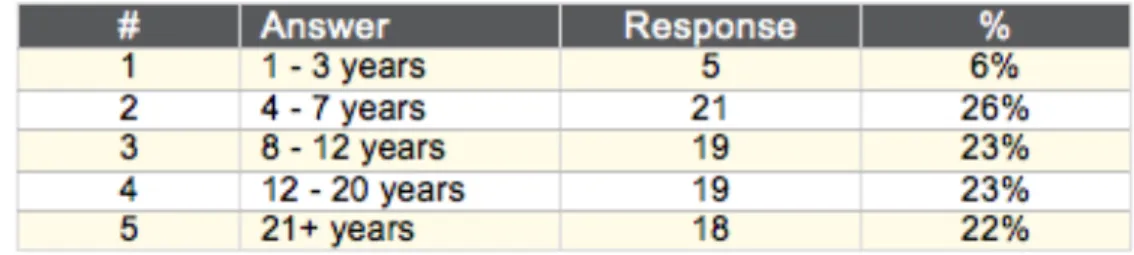
The participants in this study were 11 mathematics teachers enrolled in a graduate program in education at a Midwestern state university. There were 3 males and 8 females with a mean age of 29.6 years, ranging from 22 to 44 years old. The average length of teaching experience was 6.15 years, ranging from 1 to 21 years. One participant taught first grade, two taught second-grade, four taught fourth-grade, and four taught fifth- grade.
Procedure
organization strategies according to Schunk (2012).
Results
Table 1 (See Appendix page 12) pres- ents the memory strategies teachers use to teach their lessons. Out of the 238 examples of memory strategies used, 111 (46.64%) were rehearsal, 54 (22.69%) were mental imagery, 46 (19.33%) were elaboration, 17 (7.14%) were mnemonic, and 10 (4.2%) were organi- zation.
Representative examples and ac- tivities of these memory strategies explain how teachers use these strategies in their classrooms. For example, teachers use drill and practice, and a variety of games to help students rehearse what they have learned (see Table 2 in Appendix on page 13). One teach- er wrote, “We created flashcards to practice memorizing common conversions that were the building blocks for more complex conver- sion.” Rehearsal was used widely from first to fifth grade no matter how much teach experi- ence the teachers had.
To generate mental imagery, teachers use realia and visual aids, or engage students in mental math or visualization (see Table 3 in Appendix on page 14). One teacher wrote, “As I described unit to unit conversion, stu- dents imagined what this looked like in both units.” Mental imagery was used widely in different elementary grade levels by teachers with less than five years of teaching experi- ences.
in Appendix page 15). One teacher wrote, “I used what the kids already knew and built on it.” Elaboration was used mainly by fourth and fifth-grade teachers no matter how much teaching experience they had.
Acronyms, phrases, and songs are mnemonics teachers use in different subjects (see Table 5 in Appendix on page 16). One teacher wrote, “Tablespoon and teaspoon both start with the letter T, T rhymes with 3, so there are 3 teaspoons in a tablespoon.” Mnemonics were used mainly by fourth and fifth-grade teachers with less than five years of teaching experiences.
Teachers also use anchor charts, concept maps, check sheets, and bookmarks, or engage in chunking to organize the infor- mation for students to remember (see Table 6 in Appendix on page 83). One teacher wrote, “We made a web of words that often gave clues as to whether a person should add or deduct.” Organization was used mainly in fourth and fifth grades by teachers with less than five years of teaching experiences.
General Discussion
The current study examines the types of memory strategies teachers use to present their lessons. Rehearsal and mental imagery were used widely by first to fifth-grade teach- ers whereas elaboration, mnemonics and organization were used mainly by fourth and
fifth-grade teachers. Rehearsal and elabora- tion were used by teachers regardless of their teaching experiences whereas mental imag- ery, mnemonics and organization were used by teachers with less than five years of teach- ing experiences.
Rehearsal is found to be the most frequently used strategy, followed by mental imagery, elaboration, mnemonics, and or- ganization. Previous study also found that rehearsal is the memory strategy taught most often by teachers to their students (Moely et al., 1992). The high percentage of teachers using rehearsal in the classroom (46.64%) indicates that teachers frequently use drill and practice, as well as games, to repeat founda- tional information for students to remember. As reviewed, rehearsal works well in remem- bering a list of items, arithmetic facts, spell- ing words, and scripts but is less effective for remembering more complex and meaningful information and/or information over the long term (Santrock, 2011; Woolfolk, 2013). From the examples given by teachers, rehearsal is used appropriately for students to remem- ber foundational matter that is continuously revisited and built upon. In fact, rehearsal is the strategy to encode information to work- ing memory where information is stored long enough to be processed to complete a task.
When the information is deemed important, other memory strategies are needed to move it to long-term memory. 11 Memory strategies which move information
from working memory to long-term memory are elaboration, mental imagery, mnemonics and organization. However, the percentage of teachers using rehearsal (46.64%) to encode information in working memory is much higher than the percentage of
teachers using any of those strategies which move information to long-term memory. To move information to long-term memory, teachers should adopt these strategies more often and more widely. In planning lessons individually or as a team, these memory strat- egies can be incorporated into instructional activities of a variety of topics.
The memory strategies discussed in the current study may benefit other teachers or educators who would like to apply memory strategies in their own educational settings. With exposure to how other teachers use memory strategies, teachers or educators can equip themselves with a number of strategies before developing their own versions. How- ever, caution has to be taken when reading these strategies because they are ascertained from teachers’ self-reported responses to an open-ended question. In the real classroom, teachers who participated in this study may not use these memory strategies or may not implement these strategies in the ways they describe. Nevertheless, exposure to a teacher who teaches memory strategies would lead students toward more effective learning (Mo- ely, et al., 1992). Further studies might com- pare students’ academic performance under teachers who use more memory strategies and those who use fewer memory strategies in presenting the lessons, or examine memory strategies by content matter and grade level.
Conclusions
in working memory, whereas elaboration, mental imagery, mnemonics and organiza- tion are helpful in moving information from working memory to long-term memory. Therefore, teachers are encouraged to learn from other teachers how to incorporate these memory strategies in presenting lessons to their students.
References
Banerjee, P. & White, D. A. (2015, January 5). Clinical assessment of organization strategy: An examination of healthy adults. Psychological Assessment. Ad- vance online publication. http://dx.doi. org/10.1037/pas0000077
Bozorgmanesh, A. A., & Mohmmad, H. (2012). The effect of mental imagery on visual and verbal memory performance in students. Journal of Psychology, 16, 3-15.
Coffman, J. L., Ornstein, P. A., McCall, L. E., & Curran, P. J. (2008). Linking teach- ers’ memory-relevant language and the development of children’s memory skills. Developmental Psychology, 44, 1640- 1654.
Douville, P. (2004). Use mental imagery across the curriculum. Preventing School Failure, 49, 36-39.
Levin, J. R. (1994). Memory strategies and classroom learning: A twenty-year report card. The Elementary School Journal, 94, 235-244.
Moely, B. E., Hart, S. S., Leal, L., Santulli, K. A., Rao, N., Johnson, T., & Hamilton, L. B. (1992). The teacher’s role in facilitating memory and study strategy development in the elementary school classroom. Child Development, 63, 653-672.
Harris, J. L., & Qualls, C. D. (2000). The association of elaborative or maintenance rehearsal with age, reading comprehen- sion, and verbal working memory perfor- mance. Aphasiology, 14, 515-526.
Ornstein, P. A., Coffman, J. L., & Grammer, J. K. (2009). Learning to remember. In O.A. Barbarin & B. H. Wasil (Eds.), Handbook of child development and early education. New York: Guilford.
Ornstein, P. A., Coffman, J., Grammer, J., San Souci, P., & McCall, L. (2010). Linking the classroom context and the development of children’s memory skills. In J. Meece & J. Ec- cles (Eds.), Handbook of research on schools, schooling, and human development, Oxford, UK: Routledge.
Paivio, A. (1971). Imagery and verbal
processes. New York: Holt, Rinehart, & Win- ston.
Pang, H. (1991). The development of
children’s knowledge of organization strategy and memory monitoring and their relation to memory behavior. Psychological Science (China), 6, 23-27.
Pressley, M., Wood, E., Woloshyn, V. E., Martin, V., King, A., & Menke, D. (1992). Encouraging mindful use of prior knowledge: Attempting to construct explanatory answers facilitates learning. Educational Psychologist,
Author
Sau Hou Chang, School of Education, Indiana University Southeast.
Correspondence concerning this article should be addressed to Sau Hou Chang, School of Education, Indiana University Southeast at 4201 Grant Line Road, New Albany, IN 47150. E-mail: sauchang@ius. edu
Pressley, M., Allington, R.,
Wharton-McDonald, R., Block, C. C., & Mor- row, L. M. (2001). Learning to read: Lessons from exemplary first grades. New York: Guil- ford.
Santrock, J. W. (2011). Educational Psychology. (5th ed.). New York: Mc- Graw-Hill.Schunk, D. H. (2012). Learning theories: An educational perspective (6th ed.). Boston, MA: Pearson.
Scruggs, T. E., Mastropieri, M. A., Berkeley, S. L., & Marshak, L. (2010). Mnemonic strat- egies: Evidence-based practice and prac- tice-based evidence. Intervention in School and Clinic, 46, 79-86.
Tam, H., Jarrold, C., Baddeley, A., &
Sabatos-DeVito (2010). The development of memory maintenance: Children’s use of phonological rehearsal and attentional refresh- ment in working memory tasks. Journal of Experimental Child Psychology, 107, 306-324.
Willoughby, T., Porter, L., Belsito, L. & Yearsley, T. (1999). Use of elaboration strategies by stu- dents in grades two, four, and six. The Elemen- tary School Journal, 99, 221-231.
For more information about
submitting a manuscript for
Prospective Teachers’ Understandings of
Common Core Mathematical Practice:
Making Sense of Mathematics
Carla Gerberry, Xavier University
Lindsay Keazer, Michigan State University
Abstract
The Standards for Mathematical Practice that accompany the Common Core necessitate a shift in mathematics teaching to emphasize conceptual understanding and reasoning. Thus, many prospective teachers must learn to teach in ways distinct from how they learned. This study examines prospective early
childhood teachers’ understandings of CCSS.MP.1, which emphasizes making sense of mathematics. Approximately one third of students demonstrated an understanding of the emphasis on students’ thinking strategies, while another third interpreted the process as one that could be minimized to a procedure. This holds implications for teacher educators to explore ways to develop prospective teach- ers’ understandings of this important distinc- tion.
Keywords: Sense making, Common Core Standards of Mathematical Practice, prospective teachers
Introduction
The National Council of Teachers of Mathematics (NCTM) (2000) and the Na- tional Research Council (2001) have made recommendations that teaching for concep- tual understanding should be a major goal for mathematics teacher education. They suggest 21 that traditional ways of teaching have reduced
mathematics to a focus on skills and proce- dures, and failed to help prospective teachers make sense of mathematics. The Common Core State Standards (CCSS) (National Governors Association Center & Council of Chief State School Officers, 2010), adopted by the majority of U.S. states and territories, built upon the work of these groups with the establishment of the Standards for Mathemat- ical Practice. The eight Standards for Mathe- matical Practice (SMP) describe the expertise that teachers should develop in their students, and require that mathematics learning have a conceptual basis.
students in developing them.
Several of the SMP emphasize that students need to be able to reason conceptual- ly about mathematics. In order to teach in this manner, research has recognized that teachers themselves need a conceptual understanding of mathematics (e.g., Ball, Hill, & Bass, 2005). Research suggests, however, that prospective teachers in the U.S. are not adequately pre- pared to teach the demanding mathematics curriculum required by the CCSS (Educa- tion Policy Center, 2011). Therefore, teacher education programs must consider how to support prospective teachers’ development of understandings of the SMP.
Purpose
This study sought to contribute to this need by exploring prospective teachers’ understandings of the first SMP (CCSS.MP.1) through the lens of their past experiences. This standard requires students to “make sense of problems and persevere in solving them.” More specifically, we investigated the following question: What are prospective teachers’ interpretations of the CCSS.MP.1 based on their past experiences? Examina- tions of prospective teachers’ interpretations of the SMP are informative to teacher edu- cators interested in supporting prospective teachers in learning to foster these important practices in their future classrooms. In this study we focus specifically on CCSS.MP.1 as it is a core practice with broad application to all levels of mathematics. In addition, this practice represents a key shift from traditional mathematics teaching practices with its focus on student thinking and persistence through solving non-routine problems. Inquiry-based learning requires teachers to pose mathemat- ics problems that are open-ended and allow
several different paths to a solution. With this comes the need for students to develop perse- verance and deduction.
In the following sections, we review the literature on teacher preparation for the SMP, and specifically related to “making sense,” the emphasis of CCSS.MP.1 that we focused on in this study.
Preparation for Teaching for the SMP
As of yet, little research has assessed teachers’ understandings of or implementa- tion of the SMP. A database search of “mathe- matical practice”, “Common Core”, and “sense making” yielded no entries that were directly related to prospective teachers learning about the CCSS. There were two practitioner arti- cles found: one article (i.e., Thomas & Edson, 2014) discusses similarities and differences between the CCSS and the NCTM standards, and the second article (i.e., Stephan, 2014) discusses a teacher’s implementation of all eight SMP in her classroom. We found no research that addresses prospective teachers’ learning about the SMP.
Newton, Wood, Spangler, Wilson, Drake, and Kasten (2013) conducted a survey of mathematics teacher educators (MTEs) to understand what changes are being made to teacher education programs in light of the CCSS. They found that many MTE’s acknowledged that more changes should be made to teacher education programs in order to prepare prospective teachers for teaching according to the CCSS. MTEs cited the need 23 for change most prominently in the field
experience component, and also in other areas: assessment, content preparation, and pedagogical preparation. When surveyed about changes that had been made to the curriculum thus far, Newton et al. found that 91% reported at least minor changes, and 24% reported major changes to their own courses. The most common changes specified were attention to specific mathematics con- tent or practices (73%) and linking already existing course activities to the CCSS (62%). In many cases, however, changes being made were instructor-dependent rather than formal programmatic changes. These findings sug- gest that while some changes have been made, more are needed, as well as a common under- standing of what those changes should look like as MTEs learn more about how prospec- tive teachers make sense of the SMP.
Making Sense of Mathematics
In this study we focus on prospective teachers’ understandings of the first SMP: “make sense of problems and persevere in solving them.” This practice emphasizes the need for prospective teachers to devel- op thinking strategies and persist to solve non-routine problems. This SMP aligns close- ly with the reasoning and sense making prac- tice emphasized by the National Council of Teachers of Mathematics (2009). This practice describes a way of thinking, or making sense, that is necessary for all mathematical activity. It is closely related to the idea of reasoning conceptualized broadly as “the way of think- ing, adopted to produce assertions and reach conclusions” (Bergqvist, Lithner, & Sumpter, 2008, p. 2).
memorization and an emphasis on skill over understanding. New efforts are being made to help prospective teachers come to see mathe- matics as a “discipline of reasoned sense mak- ing” (Schoenfeld, 2009, p. 171), as indicated by the creation of CCSS.MP.1. Moreover, this practice is essential to all areas of mathemat- ics.
Examining how prospective early childhood teachers interpret and understand CCSS.MP.1 is of particular importance, because research has indicated that early childhood teachers have limited mathemat- ical knowledge related to this practice (see Stylianides, Stylianides, & Shilling-Traina, 2013). In this study we examine prospective teachers’ early understandings so that future research can address ways of developing their understanding of this practice.
Methods
Population
This study was conducted in two sections of a Number Theory content course designed for prospective teachers of early childhood education and middle childhood education at a private university in the Mid- west. Prospective teachers were in their fresh- man or sophomore year and this was their first mathematics course at the university. The population consisted of 41 prospective teach- ers: 38 females and 3 males. Eleven of the students were enrolled in a middle childhood education program, and 30 were enrolled in an early childhood education program. The courses utilized the same textbook, although certain topics were covered more in-depth for middle childhood students.
from an online survey given prior to the first day of class. We asked demographic questions as well as items pertaining to attitudes and beliefs. The focus of this study was on pre-ser- vice teachers’ knowledge of CCSS.MP.1 and how they make sense of it through the lens of their past experiences as students. More spe- cifically, the survey asked prospective teachers to read the description of CCSS.MP.1 and think about what it meant to them. “Describe any past experience you have had as a student of math, in which you feel like you partici- pated in a way that met this standard.” The description of CCSS.MP.1 that was provided to the prospective teachers matched what was provided in the SMP descriptions (National Governors Association Center & Council of Chief State School Officers, 2010).
Analysis
Qualitative data was imported into an Excel spreadsheet and identifying infor- mation was removed. The two co-authors began the grounded theory process (Glaser & Strauss, 1967) by reading and rereading all prospective teachers’ responses, and engaging in constant comparison to search for possible themes. We met to discuss initial observa- tions and concluded that an observable vari- ation between responses was whether or not the individual described the “making sense” process as one that involved problem solving with non-routine thinking, or as a process of
Data
determination. When responses emphasized prescriptive steps and did not indicate the use of their own thought processes in arriving at a solution, we concluded that it did not offer substantial evidence to indicate understand- ing of CCSS.MP.1. Once all responses were categorized according to whether or not they indicated an understanding of the practice, we conducted further analysis by reading and rereading the responses within each category, and noting themes that emerged within each group. In the following sections, we describe the findings.
following prescriptive steps. After discussing this variation, we separately returned to the data and categorized responses according to these two categories. This categorization was done by reading and rereading responses and underlining words or phrases that indicated an understanding of problem solving as either a thinking process, or a process of relying on prescriptive steps. After we each separately conducted this analysis, we met to compare our categorizations and to discuss the re- sponses that were particularly difficult to classify. This process of categorizing, sharing, and discussing helped us to further clarify our understanding of the criteria that differentiat- ed responses in each category.
The prospective teachers’ responses that we categorized as demonstrating an un- derstanding of the practice were those which indicated that thinking and reasoning was an integral part in coming to a mathematical solution. Some examples of phrases used by prospective teachers that indicated the impor- tance of reasoning to support solutions were: “thinking about the problem critically and from different angles”, “support our answers”, “problem solve and explain our reasoning to how we got our answers”. Responses that we did not categorize as demonstrating an understanding of the practice fell into one of two cases: a) they indicated a reliance on rules, steps, or procedures rather than their own thinking, or b) they were vague and 25 lacked enough detail to make a
Findings
A distinguishing feature that divided prospective teachers’ responses was whether or not they recognized “making sense” as a thinking process in which students developed their own processes to solve a problem. While some responses did describe a thinking pro- cess used to find a solution, others described solving problems in ways that attempted to rely on a procedure or steps, similar to tradi- tional methods.
Evidence of Making Sense as a Thinking Process
Of the 41 responses, 13 demonstrated an understanding of CCSS.MP.1 as repre- senting a thinking process. Here we present 3 illustrative examples in Table 1 (see Appendix on page 30). In each example, we added our own underlining of their discourse, to em- phasize the particular phrases that justified the prospective teacher’s understanding of the standard as a student-centered thinking process. Here, we present three illustrative responses that vary in length and level of detail, to illustrate the different ways students articulated an understanding of the standard.
out…”). In the three responses above, stu- dent-centered thinking is indicated through verbs and phrases such as: plan, questioning, pondering, discovering, think out, thoroughly considers the question, determine the best way to solve.
As we looked further across the 13 prospective teachers who demonstrated an understanding of CCSS.MP.1, we noticed other common ideas expressed. In 9 of the 13 responses, prospective teachers mentioned the existence of “different methods” to solve. Four of those responses also mention a goal of trying to come up with the best solution or determine the best way to solve the problem. Additionally, some responses indicated com- mon contexts for using this standard. Three of the 13 responses included a reference to a geometry course as a context in which they had practiced CCSS.MP.1, and four respons- es referenced “word problems,” as a context. Below is an example of a prospective teach- er’s response that includes reference to both contexts, which we highlighted in bold text. Our underlining is also included to indicate the phrases that we saw as evidence of under- standing the standard.
When I took Geometry, in order to complete a proof you must analyze the problem and think thoroughly. Word problems have always been involved in every math course I have taken especially Algebra. I took Physics last semester and we had to problem solve and explain our reasoning to how we got our answers. We had to support our answers. In high school, during Trigonometry our teacher had us explain lessons to one another to make sure we truly understood the material.
Evidence of Procedural Knowledge
Of the 41 prospective teachers who completed the survey, 28 did not show ample evidence to demonstrate an understanding
of CCSS.MP.1 as a thinking process. In 15 of these 28 cases, the prospective teacher restat- ed jargon or phrases directly from the stan- dard or gave a vague response and did not provide any elaboration on what the standard meant to them or how they had experienced it. Thus, we felt there was not enough ev- idence to justify that they understood the meaning of the standard. We recognized that they could have chosen to use words directly from the standard in order to try to give us the desirable answer, and thus we looked for evidence of understanding that went beyond directly restating what had been provided in the description of the standard. These 15 responses we categorized as “not enough information,” meaning they could have an understanding of this standard but they were unable to demonstrate it within their re- sponse to the survey question.
important information in the word problems and ignored other information that I didn’t need.” Some other responses referenced a general need to follow steps, such as a pro- spective teacher who described their future students’ needs by saying, “I believe as a teacher this means students will need to learn certain steps to solve a mathematical prob- lem.”
Further analysis revealed addition- al themes among the 28 responses that did not indicate understanding. Seven of the 28 respondents described general strategies that have been found to be help scaffold the prob- lem solving process (i.e. draw a picture, use manipulatives, guess and check) but did not reference a need to use their own thinking. These responses seemed similar to attempts to follow Polya’s (1957) approach of solving a problem by relying on a recommended strat- egy, but they did not indicate the important thinking process that would also be required. For example, in the following response we underline the phrases suggesting the use of general problem solving strategies:
I think the idea of relying on objects or pic- tures to help solve a problem is very important in early childhood education. Many times works include erasers, beads, or pictures to help prospective teachers visually see the math they are doing. It also helps children apply math to the real world. I am a visual learner so I do believe strongly in drawing pictures,
27 graphs, and diagrams to promote hands on
learning of math that can be an abstract con- cept to learn.
This response indicated reliance on pictures and manipulatives to help prospec- tive teachers, but did not express understand- ing to the level of emphasizing the need for prospective teachers’ own thinking.
Another theme that surfaced from our analysis was that 7 of the 28 responses emphasized the importance of checking and rechecking their work using multiple meth- ods. These responses also did not contain any mention of student thinking or demon- strate an understanding of CCSS.MP.1. Some sample responses include: “I would often use a variety of methods to check my answer. Among these different ways, my favorite was guess and check,” and “When taught multiple ways to solve a problem, I use the process that makes the most sense to me and then use one or two of the other methods to check my work.” Each of these responses emphasize the importance of using multiple methods to solve a problem or check their answer, but they do not distinguish that these methods of solving should be generated by the students’ thinking, rather than prescribed or explicitly taught by the teacher.
Discussion
Just under a third of the prospec- tive teachers were able to show evidence of understanding that CCSS.MP.1 was about a student-centered thinking process, by giving examples or drawing on their past experienc- es. Of those prospective teachers who showed evidence of understanding CCSS.MP.1, about half of them referenced geometry or word problems as contexts in which they had had opportunities to participate in this standard in the past. These findings suggest that pro- spective teachers’ past experiences may have offered them little opportunities outside of those two contexts to engage in the practice promoted by CCSS.MP.1.
The high school geometry course and the context of “word problems” have
traditionally been known as the sites where problem solving and reasoning activities took place. The geometry course was a place where reasoning and proving activities were traditionally introduced (NCTM, 2009), and “word problems” have been broadly interpret- ed as sites where problem solving takes place, despite the fact that traditional textbook word problems often do not include the criteria necessary to foster non-routine problem solv- ing (Kabiri & Smith, 2003; Stein, Remillard, & Smith, 2007).
Mathematics education reform since the 1980’s has emphasized “problem solving,” fueled by An Agenda for Action (NCTM, 1980) and subsequent policy documents (NCTM, 1989; NRC, 1989). The ambiguity of “problem solving” as a focus proved problem- atic, as the phrase has been broadly inter- preted to include solving almost any problem (Schoenfeld, 2009) instead of shifting math- ematics teaching towards student-centered inquiry. Now, however, the emphasis on
problem solving is being replaced by an emphasis on “reasoning and sense making” (NCTM, 2009) and “make sense of prob- lems and persevere in solving them.” These ideas clearly delineate the need for prospec- tive teachers to develop their own thinking strategies for working through non-routine problem solving, and necessitate that these practices become a part of “every mathemat- ics classroom every day” (NCTM, 2009, p. 5) instead of limited to narrow contexts such as geometry and word problems.
There is risk that prospective teachers who do not understand that reasoning and sense making is about developing students’ thinking strategies may attempt to reduce the ideas to procedural steps. Just under one third of the prospective teachers we sur- veyed interpreted CCSS.MP.1 as describing a problem solving process that could be done with minimal thinking and minimized to a procedure. They emphasized activities such as circling, highlighting, underlining, and double-checking, rather than activities that develop students’ own thinking strategies.
Conclusions
responsible for promoting and developing students’ understanding of the mathemati- cal practices in their future classrooms. The findings from this study are significant as they illuminate prospective teachers’ early under- standings of the SMP, and identify a need for teacher educators to support further develop- ment of their understandings.
Without extra support, teachers (both prospective and practicing) are limited to the examples provided within the CCSS docu- ments. Their past experiences may not have provided them with the relevant skills needed to enable them to generalize the meanings of each of the SMPs. Thus, mathematics teacher educators should explore ways to help pro- spective teachers unpack and understand these ideas through engagement in mathe- matical inquiry and subsequent reflection, aimed to help them understand the thinking processes that should be an inherent part of doing mathematics.
Further research is needed to ex- plore ways of supporting the development of
prospective teachers understandings of these ideas, and to examine the conditions that help prospective teachers come to see mathematics as a sense making process.
Chicago Press.
National Council of Teachers of Mathematics. (1980). An agenda for action. Reston, VA: NCTM.
National Council of Teachers of Mathematics. (1989). Curriculum and evaluation stan- dards for school mathematics. Reston, VA: NCTM.
References
Ball, D. L., Hill, H. C., & Bass, H. (2005).
Knowing mathematics for teaching: Who knows mathematics well enough to teach third grade, and how can we decide? American Educator, 29(3), 14–22, 43–46.
Bergqvist, T., Lithner, J., & Sumpter, L. (2008). Upper secondary prospective teachers’ task reasoning. International Journal of Matematical Education in Science and Technology, 39, 1-12.
Education Policy Center. (2011). TEDS-M and the study of teacher preparation in early reading instruction: Implications for teacher education policy and practice (Working Paper No. 25). East Lansing, MI: Michigan State University.
Glaser, B. G. & Strauss, A. S. (1967) Discovery of grounded theory: Strategies for qualita- tive research. Chicago: Aldine.
Kabiri, M. S., & Smith, N. L. (2003). Turning traditional textbook problems into open-ended problems. Mathematics Teaching in the Middle School, 9, 186- 192.
Lortie, D. C. (1975). Schoolteacher: A
31 sociological study. Chicago: University of
National Council of Teachers of Mathematics. (2000). Principles and standards for school mathematics. Reston, VA: NCTM.
National Council of Teachers of Mathematics. (2009). Focus in high school mathematics: Reasoning and sense making. Reston, VA: NCTM.
National Governors Association Center for Best Practices & Council of Chief State School Officers. (2010). Common core state standards for mathematics. Wash- ington, DC: Authors. Retrieved from http://www.corestandards.org/Math/
National Research Council. (1989).
Everybody counts: A report to the nation on the future of mathematics education. Washington, DC: National Academy Press.
National Research Council. (2001). Adding it up: Helping children learn mathematics. Washington, DC: National Academy Press.
Newton, J., Wood, M., Spangler, D., Wilson, P., Drake, C. and Kasten, S. (2013, Fall). Investigating the impact of the common core state standards for mathematics on mathematics teacher preparation. AMTE Connections, 9-11.
Stephan, M. L. (2014) Establishing standards for mathematical practice. Mathematics Teaching in the Middle School, 19, 532- 538.
Schoenfeld, A. H. (2009). A welcome focus: An essay review of the NCTM high school curriculum project. The Mathematics Teacher, 103, 168-171.
Stein, M. K., Remillard, J. T. & Smith, M. S., (2007). How curriculum influences student learning. In F. K. Lester (Ed.). Second handbook of research on math- ematics teaching and learning (pp. 319- 369). Greenwich, CT: Information Age Publishing
Stylianides, G. J., Stylianides, A. J., &
Shilling-Traina, L. N. (2013). Prospective teachers’ challenges in teaching reason- ing-and-proving. International Journal of Science and Mathematics Education, 11, 1463-1490.
Thomas, A., & Edson, A. (2014). How
common is the common core. The Mathe- matics Teacher, 108, 382-386.
Authors
Dr. Carla Gerberry, PhD. Xavier University
Dr. Carla Gerberry is an assistant professor of Mathematics Education at Xavier University. Her research areas include females in STEM and prospective teachers ideas about future
teaching and their perceptions of ability to teach mathematics.
Lindsay M. Keazer, PhD Michigan State University [email protected]
Building Collaborative Partnerships in Teacher Education
based on Perceptions, Experiences, and Insights from
Mentoring Teachers
Crystal Ratican, Ph.D.
Youngstown State University
Abstract
Student teaching and pre-clinical field experiences are an instrumental component of teacher education programs within most universities nationwide. A successful pro- gram must have two essential parts: effective clinical placement settings and highly quali- fied mentoring teachers. With the new CAEP (Council for the Accreditation of Educator Preparation) standards surrounding the edu- cation field for building effective partnerships and creating high-quality clinical programs, many are taking notice that there is a gap in the literature surrounding the perspectives of mentoring teachers in partnering school districts where our teacher candidates spend vast amounts of time to complete the require- ments to receive teacher licensure (Torrez & Krebs, 2012; Clift & Brady, 2005; Veal & Ri- kard, 1998; Graham, 2006). To better develop coherence across clinical and academic com- ponents of preparation of teacher candidates, all voices must be heard; all perspectives need to be outlined in current literature to form a shared responsibility and accountability.
For this article, the perspectives of mentoring teachers and teacher candidates 33 from early childhood placements were
collected and analyzed to determine the cur- rent state of collaborative partnerships per- taining to student learning and development, implementation, assessment, and continuous improvement of a teacher education program. The overarching research question, “How do universities and partners begin to form a collaborative partnership to develop and establish mutually agreeable expectations to create student success within teacher educator programs?” guided this research to examine the perceptions, experiences, and insights of mentoring teachers in early childhood classrooms to strengthen current teacher education programs. The ultimate goal of this research was to gain an understanding of the current thinking of more stakeholders and to use the information to begin the process of mutually designing the programs to en- sure sufficient depth and breadth, reflection, pedagogical skills, and increased vigor for our teacher education programs.
Review of Related Literature:
strong, mutual relationship is imperative between the faculty of universities and the mentoring teachers within the local school districts (American Association of Colleges for Teacher Education, 2010). Field expe- riences need to be designed mutually by all invested partners to provide teacher candi- dates with opportunities to grow as educators. Teacher candidates need to be able to try new strategies, receive positive and constructive feedback, and develop an understanding of grade-level appropriate content and best practices without added stress of inappro- priate placements and unwilling mentoring teachers. In general, the design of the specific field experiences are decided by individual universities; decisions ranging from choosing placement sites to selecting mentoring teach- ers are controlled by the universities without collaborative input from various partners such as local school districts and the mentor
teachers.
In the Unites States, field experiences, in general, characterize two different models; earlier field experiences in degree programs are integrated with course work and students take the role of observer or assistant inside the classroom. Most teacher education pro- grams are completed with a student teaching experience, where the students are in the field every day and assume more of the respon- sibilities of an actual teacher while being mentored by an experienced teacher (Ron- feldt and Reininger, 2012). Both types of field experiences are traditional designs that have occurred for numerous years within univer- sities to help pre-service teachers become familiar with the field of teaching. It enables them to learn real-life authentic experiences from highly qualified teachers who are willing to pass their expertise to neophytes. Accord- ing the National Council for Accreditation
of Teacher Education, Blue Ribbon Report, (2010), there is no other experience in teacher education programs that has a more monu- mental impact on the effectiveness of future teachers. Many other various research ar- ticles concurred with the notion that field experiences are the most beneficial experi- ence in the development and effectiveness of future teachers (Borko and Mayfield, 1995; Grimmett and Ratzlaff, 1986). It is the intent of teacher education programs, that students exit the programs feeling more prepared and confident while exuding the passion and knowledge needed for exceling in the field of education.
with field experiences provide training for their mentors to help them with the process (National Council for Accreditation of Teach- er Education, 2010). Research conducted by Ronfeldt and Reininger (2012) indicated the quality of the mentoring teacher is the stron- gest predictor of the effectiveness of teacher candidates in regards to preparedness and efficiency. Many other research studies con- cur with the statement, ranging from current to several decades old research (Cook, 2007; Karmos and Jacko, 1977; Manning, 1977; Smagorisnsky et al., 2006; Torrez and Krebs, 2012). With this in mind, it is imperative for universities to provide training to mentor teachers to ensure they are aware of expecta- tions and prepared to handle the role of being a mentor. By collaboratively working together, teacher education programs must partner with the mentoring teachers to ensure that prospective teachers acquire the knowledge, beliefs, and skills necessary to succeed in the field of teaching.
The task at hand of providing train- ing for mentoring teachers may seem like a simple solution, but there are many other challenges, according to research, to add to the conundrum. Several research studies reported insufficient communication skills between the university supervisor, teacher candidate, and mentoring teacher as creating the largest struggle for producing an effec- tive experience (Veal and Rikard, 1998; Bain, 35 1991; Kauffman, 1992; Koehler, 1998; Ryan,
1982). Mentoring teachers may feel as if they have a strained relationship with the univer- sity supervisor, possibly because of the infre- quent visits from university supervisors to the placements or a result of the power struggle as to which individual is known as the knowl- edge/content expert among the two groups (Veal and Rikard, 1998). Some mentoring teachers reported unclear procedures and lack of support from university supervisors, while some mentoring teachers reported they felt uncomfortable and intimidated by sharing ideas and methods with the university super- visors (Koehler, 1998; Valencia, et al., 2009; Veal and Rikard, 1998). Another challenge that occurs is mentoring teachers accepting teacher candidates in their classroom be- cause they are dependent on the extra set of hands rather than wanting to help a future teacher to develop. These mentoring teachers may be less likely to take an active role in the preparation process of the teacher candidate. Teacher candidates have reported feeling unwelcomed, which as a result minimizes opportunities for taking risks and trying out new strategies inside the classrooms (Borko and Mayfield, 1995)
Unfortunately, when teacher can- didates lack the comfort level and have a decreased level of understanding, often- times this results in a relationship of tension between the mentoring teacher and teacher candidate. A variety of belief systems, past experiences, and future expectations all play a vital role in developing a safe and conducive learning environment between the mentoring teacher and teacher candidate (Valencia, et al., 2009). Understanding the personalities, belief systems, and qualities of profession- alism of each party is needed to ensure an appropriate connection between the mentor- ing teacher and teacher candidate to allow the student teacher to feel a sense of comfort in which they are empowered to take risks and try new strategies without the fear of failure.
of uncorroborated efforts between mentoring teachers and universities, it was the current goal to highlight the voices of the mentoring teachers in a way that would utilize the per- spectives to strengthen our teacher education program.
Method
To begin the study, the overarching research question was generated to help im- prove our teacher education program: “How do universities and partners begin to form a collaborative partnership to develop and establish mutually agreeable expectations to create student success within teacher educator programs?” To begin to address this question, the perspectives of all individuals needed be taken into account. The perspectives of the in- dividuals involved at the university level have been well documented, but the perspectives of the mentoring teachers were exponentially overlooked. A survey was developed based on current research and guiding questions to begin to collect information from mentoring teachers on their thoughts and perspectives of our early childhood education field program. Questions addressed basic demographics, obtaining opinions surrounding the cur- rent structure of the placements, provid- ing suggestions for increased involvement, documenting challenges and benefits of the current program, and detailing recommenda- tions to create a more vigorous and effective field placement during future semesters.
At the conclusion of the spring 2014 semester, mentoring teachers and teacher candidates were invited to participate in the online survey. The researcher surveyed the teacher candidates and their mentor- ing teachers from an early childhood field education program at a four-year, public
university in the Midwest. The grade levels of the placements ranged from kindergar- ten to third grade, with the majority of the placements being first grade. The expertise of the mentoring teachers ranged from three years of experience to more than 15 years of experience, with the majority having three to eight years of experience. There was an equal distribution between the percentage of teachers teaching in rural versus urban school districts. The survey was sent to the individuals the week after final grades were posted; teacher candidates and mentoring teachers were aware that their perspectives were anonymous and confidential. Twenty mentoring teachers participated in this study, which was 71% of the surveyed population. Concerning the teacher candidates, a similar survey was sent with the same parameters; 50% of the 28 teacher candidates responded to the survey.
observed two lessons, and the field coordina- tor additionally visited on two separate occasions to offer assistance and guidance. The supervisors and the teacher candidates met periodically for content classes on cam- pus where the students were asked about the current continual status of the placements. Beyond those encounters, additional contact between the schools and university were not formed.
Results and Findings
Several different questions were asked to mentoring teachers and teacher candidates to determine a clear picture of the current state of the early childhood field experience program in comparison to the current litera- ture. The findings are presented as they relate to the perspectives of mentoring teachers and teacher candidates to determine the current state of collaborative partnerships pertaining to student learning and development, im- plementation, assessment, and continuous improvement of a teacher education program.
Intentions of Participation and Emotional Involvement
To best understand the current think- ing of the mentoring teachers and to begin the survey, the question of “Why do you participate in the teacher education program as a resource teacher?” was asked to the 37 mentoring teachers. This question was asked
to determine how many of our mentoring teachers were involved in the program with the goal of helping the teacher candidates succeed. An overwhelming response of 90% replied: “To positively contribute to the field of education.” Not a single teacher reported that either the administration required them to accept a teacher candidate or that of they simply needed an extra set of hands in the classroom. A few mentoring teachers report- ed that they accepted a teacher candidate to learn new information or to be reinvigorated with fresh ideas. The results of this discovery were insightful and uplifting to know that the mentoring teachers were accepting neophyte teacher candidates into their classrooms along the premises of helping future generations rather than focusing on the demands of the current moment.
Concerning emotional involvement, the question: “Did you enjoy being a resource teacher and the experience that came along with it?” was asked to the mentoring teachers. This question was based on the research by Borko and Mayfield (1995) as to the no- tion that the lack of empathy and emotional involvement could hinder the outcome of po- tential success within the teacher candidates. Eighty-five percent of the mentoring teachers reported that they enjoyed the experience; in addition 25% of mentoring teachers claimed that they might consider hosting a teach- er candidate again in the future, while 75% claimed they would volunteer to be a men- toring teaching again. Several teachers stated open-ended responses, which illuminated the positive experience that they had during the 16-week placements. Several comments fur- ther showcased these results, such as: “I had a wonderful experience with my TEC student. She was excited and motivated to learn. I feel the amount of time we spent together, along with her positive attitude had a significant impact on her learning experience” and “I truly enjoyed having a university student and would welcome any at any time!”