SYNTHESIS AND CHARACTERIZATION OF
γ
-LACTAMS
THROUGH IMINE INTERMEDIATES
Assala Salam Jebur
[a]and Mahmood Shakir Magtoof
[a]*Keywords:γ- lactams, imines, NMR.
This study is concerned with the synthesis and characterization of γ-lactams (3a-3h). γ-Lactams were prepared by reacting phenylsuccinic anhydride with the appropriate Schiff bases (imines) by heating at 51-61 °C in chloroform with moderate yields (51-75 %). The structures of these compounds were established on the basis of the spectral studies using IR, 1H-NMR, 13C-NMR , 13C- NMR DEPT and MS.
Corresponding Authors Tel: 009647813199256
E-Mail: [email protected]
[a] Department of Chemistry, Science, College,Thiqar University, Thiqar, Nashyria , Iraq
Introduction
2-Oxopyrrolidine γ-lactam is five-membered ring lactams (Figure 1). γ-Lactams exist in many natural products and biologically active compounds and are one of the most
important classes of compounds for drug discovery.1-3
Substituted γ-lactams, in particular, have potential
application in drug synthesis, but the development of stereoselective synthesis of chiral γ-lactams remains a challenge.4,5 Developing effective and simple synthetic
methods is important so that the drug candidates can be screened.
Figure 1.γ-Lactam ring
Stereoselective addition to a γ-lactam skeleton provides a direct and efficient method for synthesizing various γ-lactam derivatives. However, the most commonly used methods
for synthesizing chiral γ-lactams are based on the
cyclization or cycloaddition of N-containing precursors, which are synthesized stereoselectively, and there are limited studies on the stereoselective additions to γ-lactam skeletons. 6-8
Experimental
The 1H-NMR spectra were recorded using VARIAN
spectrophotometer (500 MHz), the 13C-NMR spectra were
recorded using VARIAN spectrophotometer (75 MHz).The
chemical shift values are expressed in δ (ppm), using
Preparation of mono-imines (2a-2d)
In general, the mono-imines (2a-2d) are prepared by the reaction of the mixture of 0.01 mole amine with 0.01 mol aldehyde in 25 mL of methanol or ethanol and 4-6 drops of glacial acetic acid, the reaction mixture is refluxed with stirring for 0.5-9 h, the progress of the reaction is followed by TLC using hexane : ethyl acetate (6:4) as eluent. After completion, the solvent evaporates and then recrystallizes from a suitable solvent.9-11
(E)-3-((4-Bromophenyl)imino)indolin-2-one (2a)
The compound was prepared by reacting 1.169 g (0.01 mol) of 4-bromoaniline and 1 g (0.01 mol) of indoline-2,3-dione. Yield 75 %, m.p. 273-275 ºC, colour orange, IR (KBr disk) 1608 cm-1 (C=N).
(E)-2-(((4-Bromophenyl)imino)methyl)-6-ethoxyphenol (2b)
The compound was prepared by reacting 1.036 g (0.01 mol) of 4-bromoaniline and 1.169 g (0.01 mol) of 3-ethoxy-2-hydroxybenzaldehyde. Yield 79 %, m.p. 89-90 ºC, colour orange, IR (KBr disk) 1681 cm-1 (C=N).
(E)-4-Bromo-2-(((4-nitrophenyl)imino)methyl)phenol (2c)
The compound was prepared by reacting 0.68g (0.01 mol) of 4-nitroaniline and 1 g (0.01 mol) of 5-bromo-2-hydroxybenzaldehyde. Yield 69 %, m.p. 178-180 ºC, colour yellowish, IR (KBr disk) 1618 cm-1 (C=N).
(E)-4-Bromo-2-((naphthalen-1-ylimino) methyl)phenol (2d)
The compound was prepared by reacting 0.71g (0.01 mol) of naphthalen-1-amine and 1 g (0.01 mol) of 5-bromo-2-hydroxybenzaldehyde. Yield 87.5 %, m.p. 105-106 ºC, colour maronite, IR (KBr disk) 1620 cm-1 (C=N).
Preparation of bis-imines (2e-2g)
in 25 mL of methanol or ethanol and 4-6 drops of glacial acetic acid, the reaction mixture is refluxed for 1-9 h, the progress of the reaction is followed by TLC using hexane : ethyl acetate 6:4 as eluent. After completion, the solvent was evaporated and the product was then recrystallized from a suitable solvent.
6,6'-((1E,1'E)-((Methylenebis(4,1-phenylene)) bis(azany-lylidene)) bis(methanybis(azany-lylidene))bis(2-ethoxyphenol) (2e)
The compound was prepared by reacting 0.595 g (0.01 mol) of 4,4'-methylenedianiline with 1g (0.02 mol) of 3-ethoxy-2-hydroxybenzaldehyde. Yield 87.6 %, m.p.157-158 ºC, colour yellowish, IR (KBr disk)1624 cm-1 (C=N).
6,6'-((1E,1'E)-(Naphthalene-1,5-diylbis(azanylylidene))-bis(methan ylylidene))bis(2-ethoxyphenol) (2f)
The compound was prepared by reacting 0.452 g (0.01 mol) of 1,5-diaminonaphthalene with 0.95 g (0.02 mol) of 3-ethoxy-2-hydroxybenzaldehyde .Yield 96 %, m.p. 133-136ºC, colour chartreuse, IR (KBr disk)1618 cm-1 (C=N).
(N1E,N5E)-N1,N5-Bis(4-chlorobenzylidene)naphthalen-e-1,5-diamine (2g)
The compound was prepared by reacting 0.562 g (0.01 mol) of 1,5-diaminonaphthalene with1 g (0.02mol) of 4-chlorobenzaldehyde. Yield 96.5 %, m.p. 190-192ºC, colour green, IR (KBr disk) 1621 cm-1 (C=N).
General procedure for the preparation of γ-lactams 3a-3g
Preparation of mono-γ-lactams 3a-3d.
In general, the mono-γ- lactams (3a-3d) were prepared by reacting a mixture of 0.01 mol of monoimine (2a-2d) with 0.01 mol of phenylsuccinic anhydride in 25 mL of chloroform and heating the mixture in water bath at 51-61 °C. The reaction mixture was then refluxed for 12-30 h with stirring. The progress of the reaction was followed by TLC. After completion, the solvent was evaporated, and the residue was recrystallized from a suitable solvent. 12-13
1'-(4-Bromophenyl)-2,5'-dioxo-3'-phenylspiro[indoline-3, 2'-pyrrolidine]-3'-carboxylic acid (3a)
The compound was prepared by reacting 0.5 g (0.01 mol) of 2a with 0.292 g (0.01 mol) of phenylsuccinic anhydride. Yield 51 %, m.p. 192-195 ºC, colour orange. IR (KBr): 1650 cm-1 (HO–C=O), 1721 cm-1 (–N–C=O).1H-NMR (500 MHz,
DMSO) δ = 3.3 (s, 2H, γ-Lactam ring;), 7.2-8.21 (m, 13H,
Ar-H), 9.4 (s, 1H, -NHC=O), 11.3 (s, 1H, OHC=O). 13
C-NMR (75 MHz, DMSO) δ = 48 (s, C4H), 52(-C2-), 58(s, C3
-H), 116-151 (m, C-Ar), 174 (s, CH2-C=O), 175(s, HN-C=O),
179(s, HO-C=O).
1-(4-Bromophenyl)-2-(3-ethoxy-2-hydroxyphenyl)-5-oxo-3-phenylpyrrolidine-3-carboxylic acid (3b)
The compound was prepared by reacting 0.8 g (0.01mol) of 2b with 0.43 g (0.01 mol) of phenylsuccinic anhydride. Yield 74 %, m.p. 83-85 ºC, colour orange. IR (KBr): 1656
cm-1 (HO–C=O), 1722 cm-1 (–N–C=O). 1H-NMR (500
MHz, DMSO) δ = 3.6 (s, 2H, C4-H), 3.8 (s, 2H, CH2-O),
1.78 (3H, -CH3), 7.72 - 8.28 (m, 12H, Ar-H), 4.02 (s, 1H,
C2-H), 10.8 (s, 1H, OHC=O), 9.6 (s, 1H, Ar-OH). 13C-NMR
(75 MHz, DMSO) δ = 29 (s, -CH3), 42 (s, -CH2-), 44 (s,
CH2-O), 49 (s, -CH-), 59 (s, -COOH), 115-158 (m, C-Ar),
173 (s, CH2-C=O), 180 (s, HO-C=O).
2-(5-Bromo-2-hydroxyphenyl)-1-(4-nitrophenyl)-5-oxo-3-phenylpyrrolidine-3-carboxylic acid (3c)
The compound was prepared by reacting 0.8 g (0.01mol) of 2c with 0.438 g (0.01 mol) of phenylsuccinic anhydride. Yield 65 %, m.p. 110-112 ºC, colour yellow. IR (KBr): 1682
cm-1 (HO–C=O), 1725 cm-1 (–N–C=O). 1H-NMR (500
MHz, DMSO) δ = 3.7 (s, 2H, C4-H), 4.1 (s, 1H, C2-H),
7.28-8.15 (m, 12H, H), 11.0 (s, 1H, OHC=O), 9.4 (s, 1H, Ar-OH).13 C-NMR (75 MHz, DMSO) δ = 44 ( s, -CH
2-O), 46 (s,
CH2-), 52 (s, -CH-), 57 (s, COOH), 120-156 (m, C-Ar), 181
(s, HO-C=O), 178 (s, CH2-C=O).
2-(5-Bromo-2-hydroxyphenyl)-1-(naphthalen-1-yl)-5-oxo-3-phenylpyrrolidine-3-carboxylic acid (3d)
The compound was prepared by reacting 0.6 g (0.01 mol) of 2d with 0.323g (0.01 mol) of phenylsuccinic anhydride. Yield 69 %, m.p. 190-192 ºC, colour brown. IR (KBr):1690 cm-1 (HO-C=O), 1721 cm-1 (–N–C=O). 1H-NMR (500 MHz,
DMSO) δ = 3.7 (s, 2H, C4-H), 4.3 (s, 1H, C2-H), 7.20-8.52
(m,15H, Ar-H), 10.9 (s, 1H, OHC=O), 9.6 (s, 1H, Ar-OH).13
C-NMR (75 MHz, DMSO) δ = 42 (s, -CH2-O), 45 (s ,-CH2),
53(s, -CH-), 56 (s, -COOH), 112-154 (m, C-Ar), 175 (s, HO-C=O), 178(s, CH2-C=O).
Preparation of bis-γ-lactams (3e-3g)
In general, the bis-γ-lactams (3e-3g) were prepared by reacting 0.01 mol bis-imines (2e-2g) with 0.02 mol of phenylsuccinic anhydride in 25 mL of chloroform under heating in water bath at 51-61 °C. The reaction mixture was refluxed for 12-16 h with stirring. The progress of the reaction was followed by TLC. After completion, the solvent was evaporated and the residue was recrystallized from a suitable solvent.
1,1'-(Methylenebis(4,1-phenylene))bis(2-(3-ethoxy-2-hyd-roxyphenyl)-5-oxo-3-phenylpyrrolidine-3-carboxylic acid ) (3e)
1H-NMR (500 MHz, DMSO) δ = 1.78 (s, 6H, -CH 3), 3.6
(s, 4H, C4-H), 3.85 (s, 2H, -CH2-), 4.1 (s, -CH2-),7.2-8.58 (m,
24H, Ar-H), 9.4 (s, 2H, Ar-OH), 10.73 (s, 2H, OHC=O).13
C-NMR (75 MHz, DMSO) δ = 41 (d, -CH2O), 29 (d,
-CH3),31 (s, Ar-CH2-Ar), 42 (d, -CH2), 57 (d, CH), 55 (d,
-COOH), 111-158 (m, C-Ar),171 (d, CH 2-C=O), 173 (d,
HN-C=O),178 (d, HO-C=O).
1,1'-(Naphthalene-1,5-diyl)bis(2-(3-ethoxy-2-hydroxyphe-nyl)-5-oxo-3-phenylpyrrolidine-3-carboxylic acid) (3f)
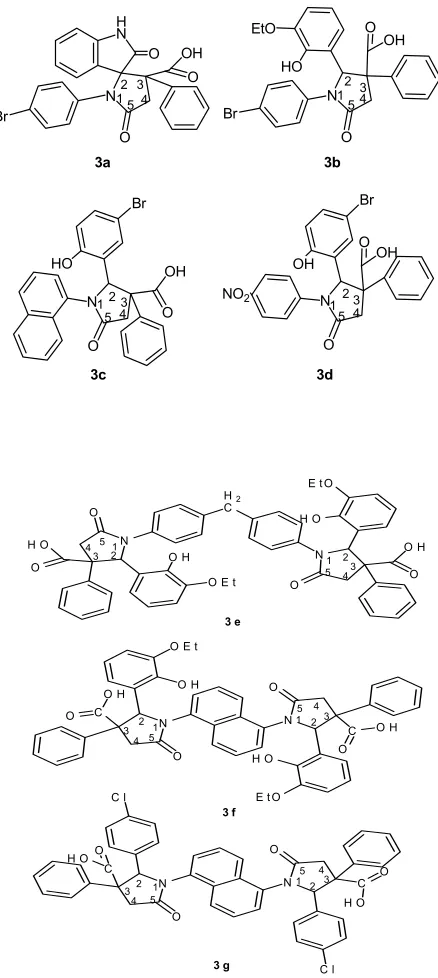
Figure 2. Structures of the compounds (3a-3g).
The compound was prepared by reacting 0.454 g (0.01mol) of 2f with 0.352 g (0.02 mol) of phenylsuccinic
NMR (500 MHz, DMSO) δ = 1.86 (d, 6H, -CH3), 3.7 (d, 4H,
CH2-O), 4.05 (d, 4H, C4-H), 4.7 (d, 2H, -C2-H), 7.4-8.5 (m,
24H, Ar-H), 9.5 (d, 2H, -OH), 10.7 (d, 2H, OHC=O).
1,1'-(Naphthalene-1,5-diyl)bis(2-(4-chlorophenyl)-5-oxo-3-phenylpyrrolidine-3-carboxylic acid) (3g)
The compound was prepared by reacting 0.6 g (0.01 mol) of 2g with 0.525 g (0.02 mol) of phenylsuccinic anhydride. Yield 75 %, m.p. 190-193 ºC, colour greenish. IR (KBr): 1656 cm-1 (HO-C=O), 1706 cm-1 (–N–C=O). 1H-NMR (500
MHz, DMSO) δ = 3.5 (d, 4H, C4-H), 4.45 (d, 2H, -C2-H),
7.6-8.3 (m, 24H, Ar-H), 11.0 (d, 2H, OHC=O).
Results and discussion
The structural skeleton of chiral lactams are found in a broad range of natural and biologically active molecules, such as penicillins, cephalosporins, carbapenems, monobactams, salinosporamide A, rolipram and brivaracetam.
In the present investigation, γ-lactams are obtained by the reaction of imines with phenylsuccinic anhydride to in a suitable solvent (dioxane or chloroform). The structures of the compounds 3a–3g, as established by spectral analysis, are given in Fig. 2. A probable mechanism for synthesis has been suggested (Schemes 1 - 4).
Scheme 1. Synthesis of mono γ-lactam
N O Br H N O OH O N O Br HO EtO OH O N O Br NO2 OH OH O N O Br HO OH O 3a 3b 3c 3d
12 354
12 3 4 5 1 1 2 2 3 3 4 4 5 5 N O H O
E t O H2
C
N O
O H
O E t
O H H O O O 3 e 1 2 3 4 5 1 2 3 4 5 N N O O C C O H O O
O H O H
O E t
H O
E t O
N O C N O C C l C l H O H O O O 3 f 3 g 1 2 3 4 5 1 1 1 2 2 2 3 3 3 4 4 4 5 5 5 R1 H R2 O O O + C N R2 O R1
HO2C
N
R1 H
R2 O O O + N C
R2 C
R1 H
C O O O tau to mer iz at ion N C
R2 C
R1 H
C O OH O C N CH C CH2 C O OH R1 R2 O
Scheme 3. Synthesis of bis γ-lactam
Scheme 4. Probable mechanism of the formation of bis-γ-lactams.
Analysis of infrared spectra
The IR spectra of mono and bis γ-lactams (3a-3g) are characterized by the seven bands corresponding to the stretching vibration of the aromatic C-H, aliphatic C-H, carbonyl carboxylic group, carbonyl amide group, aromatic C=C, C-N band and the substituted ring which occurs within the ranges 3126-3030, 2990- 2878, 1733-1706, 1699-1636, 1603-1568, 1340-1325, and 925-617 cm-1 respectively.
Analysis of 1H-NMR spectra
The 1H-NMR spectra (Figure 3) of 3a showed γ-lactam
ring singlet signal at δ = 3.3 ppm for methylene group (CH2), multiplet signal at δ = 7.2 - 8.21 ppm for aromatic
protons (m, 13H, Ar-H), singlet signal for one proton in γ -lactam ring at δ= 9.4 ppm for NH, and finally showed singlet signal for proton carboxylic acid at δ = 11.3 ppm.
Figure 3.1H-NMR spectra of 3a.
Analysis of 13C-NMR spectra
The 13C-NMR spectra (Figure 4) of 3a showed in γ-lactam
ring singlet signal at δ = 48 ppm for methylene group (C4
-H2), at 52 ppm for C2-ring, at 58 ppm for C3-ring, at 174
ppm for O=C-ring, multiplet at 114-151 ppm for aromatic
protons (m, C-Ar), at δ 175ppm for HN-C=O, and at 179
ppm for HO-C=O.
Figure 4. 13C-NMR spectra of 3a.
Analysis of mass spectra
The mass spectrum of 3a shows the molecular ion peak corresponding to the particular compound at 477 m/z, and the fragmentation of 3a showed the peaks at 346, 301, 198, 132, 104, 90 ,77,65 m/z which are attributed to the fragments of C16H12BrNO3+, C15H11BrNO+, C7H4BrNO+,
C8H6NO+, C7H6N+, C7H6+, C6H5+ and C5H5+ respectively.
R1
N R2 N
R1
O
O O
N R1
O HO2C
R2 N
CO2H
R1
O
The mass spectrum of 3b shows the molecular ion peak corresponding to the compound at 496 m/z. The fragmentation of 3b showed the peaks at 428, 467, 439, 422, 387, 329, 198, 131, 77 and 65 m/z which are attributed to the fragments of C24H20BrNO5+, C23H17BrNO5+,
C22H17BrNO4+, C22H16BrNO3+, C23H17NO5+, C16H11BrNO2+,
C7H4BrNO+, C9H7O+, C6H5+, C5H5+ respectively.
The mass spectrum of 3c shows the molecular ion peak corresponding to the compound at 497 m/z. The fragmentation of 3c showed the peaks at 312, 295, 267, 225, 174, 77 and 65 m/z which are attributed to the fragments of C16H12N2O3+, C16H11N2O4+, C13H9N2O2+, C9H9N2O2+ ,
C6H5+ and C5H5+ respectively.
Analysis of 13C-NMR DEPT spectra
13C-NMR DEPT spectral of 3a showed in γ-lactam ring
singlet signal at δ = 48 (negative) ppm for methylene group (C4-H2), at 52 (positive) ppm for (C2-ring), at 58 (positive)
ppm for (C3-ring), at 174 (positive) ppm for (O=C-ring) a
multiplet signal at 116-151 (positive) ppm for aromatic protons (m, C-Ar), at 175 (positive) ppm for (HN-C=O) and a signal at 179 (positive ) ppm for (HO-C=O).
13C-NMR DEPTspectral of 3b showed in γ-lactam ring
singlet signal at δ = 42.11 (negative) ppm for methylene group (C4-ring), at 49.17 (positive) ppm for C2-ring, at 58.18
(positive) ppm for C3-ring, at 173 (positive) ppm for
O=C-ring, a multiplet at 115-158 (positive) ppm for aromatic protons (m, C-Ar), at 180 (positive) ppm for (HO-C=O), at 29 (positive) ppm for -CH3 and a signal at 42 (negative)
ppm for O-CH2.
Acknowledgements
This work is sponsored by the university of Thi-Qar as a part of research development and higher studies projects.
References
1Catalani, M.., Alvaro, G., Bernasconi, G., Bettini, E., Bromidge, S.
M., Heer, J., Tedesco, G., Tommasi, S., Bioorg. Med. Chem. Lett., 2011, 21, 6899–6904.
2Lee, C., Choi, E., Cho, M., Lee, B., Oh, S. J., Park, S. K., Lee, K.,
Kim, H. M., Han, G., Bioorg. Med. Chem. Lett., 2012, 22,
4189–4192.
3Cornut, D., Lemoine, H., Kanishchev, O., Okada, E., Albrieux, F.,
Beavogui, A. H., Bienvenu, A.-L., Picot, S., Bouillion, J.-P., Médebielle, M., J. Med. Chem., 2013, 56, 73–83.
4Zhao, X., DiRocco, D. A., Rovis, T., J. Am. Chem. Soc., 2011,
133,12466–12469.
5Comesse, S., Sanselme, M., Daïch, A., J. Org. Chem., 2008, 73,
5566–5569.
6Zhang, Y., Shao, Y.-L., Xu, H.-S., Wang, W., J. Org. Chem., 2011,
76, 1472–1474.
7Shao, C., Yu, H.-J., Wu, N.-Y., Tian, P., Wang, R., Feng, C.-G.,
Lin, G.-Q., Org. Lett., 2011, 13, 788–791.
8Lin, L., Zhang, J., Ma, X., Fu, X., Wang, R., Org. Lett., 2011, 13,
6410–6413.
9Hello, K. M., Iraqi J. Chem., 2000, 24, 266. 10Krishnaswamy, D., Tetrahedron., 2002, 34, 4567.
11Abdulrhman, Y. K., Mahmood, S. M., Best J., 2014, 2(5), 37-48. 12Burdzhiev, N. T., Stanoeva, E. R., Z. Naturforsch., 2008, 63b,
313-320.
13Majeed, N. N., Esaa, A. H., Turki, A. A., Pharm. Chem., 2014,
6(2), 288-293.