The Contribution of Word Webbing to
Project-based Learning in Teaching Vocabulary: A
Comparative Study in an EFL Context
Maryam Reisi
Department of English Language Teaching, Faculty of Persian Literature and Foreign Languages, Roudehen Branch, Islamic Azad University, Roudehen, Iran
Andisheh Saniei
Department of English Language Teaching, Faculty of Persian Literature and Foreign Languages, Roudehen Branch, Islamic Azad University, Roudehen, Iran
Abstract—This study was an attempt to investigate the effect of applying word web strategy with and without project based learning (PBL) on EFL learners’ vocabulary learning. Ninety female EFL learners from a high school in Tehran were the participants of this study. They were at intermediate level of language proficiency and in three intact classes of 30 members. The three classes were randomly assigned as one control and two experimental groups. The homogeneity of three intact groups in terms of general language proficiency and knowledge of vocabulary was determined by comparing their mean scores after performing on a PET and a pretest of vocabulary respectively. After that, the participants received 12- session treatment, including teaching vocabulary using word web (WW) strategy without PBL for one experimental group, and using WW with PBL for another while the control group received the usual instruction of the teacher for the same new words without WW and PBL. At the end of the treatment, the teacher- made vocabulary posttest was administered to the study groups. To test the hypotheses of the study with respect to the violation of the normality assumption, Kruskal-Wallis test was run on participants’ scores. The results showed that the participants in both experimental groups significantly outperformed the participants in the control group in terms of vocabulary learning. The results also showed that the students who received WW with PBL outperformed those who received it without PBL.
Index Terms—project based learning, word webbing, WW with PBL, WW without PBL, EFL context
I. INTRODUCTION
The significant role of vocabulary as a key element in learning a language can hardly be denied. Vocabulary knowledge is valuable because it involves the words we must know to access our background knowledge, express our beliefs and ideas, communicate successfully, and learn new notions (Rupley, Logan, & Nichols, 1999). As Thornbury (2002) states, “if you spend most of your time studying grammar, your English will not improve very much, but if you learn many words and expressions; you will see the most enhancement” (p.114). According to Morin and Goebel (2001), despite different procedures that teachers apply in vocabulary teaching, strategies are the best tools for developing vocabulary knowledge and they can apply them as a facilitator to raise the efficiency of teaching.
Among different vocabulary learning strategies, graphic organizers are highly recommended as they provide learners with visual scaffolds (Chularut & DeBacker, 2003). Word webbing is a kind of graphic organizer that according to Pierson, Cerutti, and Swab (2006) is appropriate for developing and reviewing vocabulary. Kagan (2001) states that word webbing is a graphical way of organizing words that make connections between similar words or ideas which are known by various names, including clustering and web maps.
On the other hand, Demirhan (2002) states that “Project-based learning is a comprehensive approach to classroom teaching and learning that has been designed to engage students to investigate complex, authentic problems and carefully designed products and tasks” (p.38). With respect to the vital role of vocabulary knowledge in effective communication and considering the deficiencies that stil exists in the domain of vocabulary teaching, the authors of this paper sought to find an appropriate strategy to be applied in EFL classes to help learners overcome some of their problems with vocabulary learning. From among various vocabulary learning strategies, word webbing could be the one that looked both interesting and innovative. Levy (1997) states that many students are interested in webbing technique as it applies their ability to think and visualize. It provides structure for ideas and facts and gives students a flexible framework for organizing and prioritizing information.
involvement in the learning process, that is, learner centered teaching style. A number of empirical studies have confirmed that word web strategy and PBL have significant effect on EFL learners’ skill (Agustini & Sianipar, 2013; Cha'vez, 2013; Rahmawati, 2011). As a result, this study was conducted to integrate word webbing as one of the vocabulary learning strategy with PBL and to investigate the viable effect that WW with and without PBL might have on Iranian EFL Learners’ vocabulary learning. It’s worth mentioning here that word webbing with PBL is operationalized in this study as requiring the students to prepare wall paper or the power point in order to present the word webs they have developed collaboratively.
II. RESEARCH QUESTIONS AND HYPOTHESES
With respect to the significant role that both word webbing and PBL have proved to have in different areas of second language learning and considering the lack of research related to the application of these teaching tools in the field of vocabulary learning in an EFL context, such as Iran, this research is hoped to have contribution to the attempt being done in this field. Considering these points, the following research questions were addressed in the present study:
Q1. Does applying word webbing without PBL have any significant effect on EFL learners’ vocabulary learning? Q2. Does applying word webbing with PBL have any significant effect on EFL learners’ vocabulary learning? Q3. Is there any significant difference between the vocabulary achievement of learners who receive WW with PBL and those who receive WW without PBL?
With respect to the raised research questions, the following null hypotheses were formulated:
H01. Applying word webbing without PBL has no significant effect on EFL learners’ vocabulary learning.
H02. Applying word webbing with PBL has no significant effect on EFL learners’ vocabulary learning.
H03. There is no significant difference between the vocabulary achievement of learners who receive WW with PBL
and those who receive WW without PBL.
III. METHOD
A. Participants
The participants of the present study were 90 female Iranian high school students of third grade in Tehran. They were at the intermediate level of general language proficiency and were at three intact classes of 30 members with the age range of 16 to 17. The homogeneity of three intact groups in terms of general language proficiency and knowledge of vocabulary was determined by comparing their mean scores after performing on a PET and a pretest of vocabulary respectively. One class was assigned randomly to the experimental group one, who received word web strategy without PBL as their treatment, while the other thirty-member class was assigned to another experimental group, group two, who received word web strategy with PBL. Also thirty learners from the third class were assigned to the control group
B. Instruments
In order to obtain measurable data with which the results of the study could be statistically analyzed, the following instruments were utilized:
1. Preliminary English Test (PET)
To determine the study groups’ homogeneity in terms of their general English proficiency, PET was administered at the outset of the study. It is worth mentioning that concerning the ease of administration and the ease of scoring, and also school time limitation, the speaking and writing parts were excluded from the test. Therefore, the administered test consisted of 60 items as a whole, including 35 reading questions and 25 listening questions. Moreover, the reliability of the test was calculated as .783 through Cronbach's Alpha.
2. Vocabulary test as the pretest/posttest
Prior to the treatment, a teacher-made vocabulary test including 40-item was used as the pretest. The test consisted of 40 questions 25 of which were of recognition type and 15 others as production type. The vocabulary items were mostly developed based on the content of students’ course book, with the purpose of evaluating the EFL learners’ enhancement of vocabulary knowledge (receptive and productive) after familiarity with words instructed in each section. The time allocated for taking the test was around 40 minutes that was estimated by the researcher after a pilot study.
The pretest was administered in order to make sure that the participants were homogeneous with respect to their vocabulary knowledge at the beginning of the study. As mentioned before, the test was already piloted with a group of 30 students with almost the same characteristics of the target group and after doing item analysis, four items were modified. For ensuring the content validity of the test, the researcher asked three experienced EFL/ESL professors to offer their comments. After some minor modifications, the reliability index of the test was calculated through Cronbach's Alpha as .742 in the second pilot study.
At the end of the treatment, the same pretest was administered as the posttest in order to investigate the students’ vocabulary achievement. In other words, the posttest was administered to compare the performance of the three groups to see whether or not there were any significant differences between them.
The same course book was used for the three groups of the study. The course book was the students’ “English three”, used in Iranian high schools for third grade learners. It is published by the ministry of education and contains six units, each of which includes a text developed based on a given topic and followed by a set of exercises which mainly focuses on vocabulary and grammar. The subjects in this study were expected to cover each unit in two sessions as they had been offered a particularly intensive class held by schools' principal to help them get ready for their main English class. Therefore, the whole six units were covered in 12 sessions and the content of treatment was somehow based on the key words used in each unit.
C. Procedure
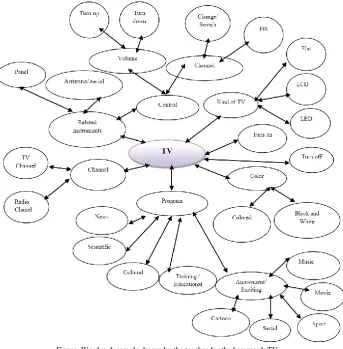
The piloted PET was given to three 30- member classes of participants to ensure they are homogenous in terms of their language proficiency. The result of a one way Anova confirmed the homogeneity of three classes. After making sure about the homogeneity of the three groups regarding their vocabulary knowledge as well, via one way ANOVA, the treatment phase was commenced. In all three classes, the teacher taught the reading passage and defined the key words in each text and answered the reading comprehension questions with the help of the students. In the experimental group A, the teacher created the word web to show the related words and ideas with respect to the key words of the previously instructed reading text. To make a word web, the teacher wrote a word chosen from the reading text in the center circle including its synonyms and antonyms (if any). This way, she drew a line out from the circle to create a link and wrote a related word to the center one. More links could be added to the major links to introduce some more related words. The figure below shows the word web sample provided for the key word, TV.
Figure. Word web sample drown by the teacher for the key word, TV
that the teacher acted as a facilitator in the class and helped each group to explain about the new words when necessary or to correct their word webs in case of containing any errors.
In the control group, the teacher had the conventional way of teaching new words included in a reading book through giving definitions for the key words in one session and asking students to look up the new words in dictionary and to find and write their definitions, as well as its synonyms and antonyms (if there were any), for the next sessions. Then the students were asked to read aloud whatever they had looked up to be corrected by the teacher.
At the end of the 12 session treatment, the same 40-item researcher-made pretest of vocabulary was given to all three groups as the posttest to compare their performances and to see whether or not the given treatment had any significant influence on their vocabulary learning.
IV. RESULTS AND DISCUSSION
In order to answer the afore-mentioned research questions, a series of pertinent calculations and statistical routines were conducted and the following results were came up.
A. Pretesting
At the outset of the study, the piloted proficiency test (PET) was administered to 90 students who participated in the study. They were in three intact classes, each including thirty students. In order to make sure that the three groups manifested no significant difference in terms of their general language proficiency, a one-way ANOVA test was run. Table 1 shows the descriptive statistics of each group’s scores for PET.
TABLE 1
DESCRIPTIVE STATISTICS FOR PET PET at Outset
N Mean Std.
Deviation
Std. Error 95% Confidence Interval for Mean
Minimum Maximum
Lower Bound Upper Bound
Control 30 38.0000 2.66523 .4866 37.0048 38.9952 33.00 42.00 Experimental one 30 38.1333 2.90936 .5311 37.0470 39.2197 32.00 42.00 Experimental two 30 37.9000 2.75869 .5036 36.8699 38.9301 32.00 42.00
Total 90 38.0111 2.74985 .2898 37.4352 38.5871 32.00 42.00
Before running ANOVA, the assumption of homogeneity of variances had to be checked. The result of Levene’s test of equality variances showed that the variances among the three groups were not significant (Levene’sF (2,87) = .92, p> .05); thus the assumption was met. As it is evident from Table 2 (F(2,87) = .05, p = .95 > .05), the three groups were almost the same regarding the general English proficiency at the outset.
TABLE 2 ANOVA;PET AT THE OUTSET PET at Outset
Sum of Squares Df Mean Square F Sig.
Between Groups .822 2 .411 .053 .948
Within Groups 672.167 87 7.726
Total 672.989 89
The piloted researcher-made vocabulary test was also administered to the homogenous study groups in order to make sure that the participants of the three groups were not significantly different from each other in terms of their vocabulary knowledge at the outset. Table 3 shows the descriptive statistics resulted from the test.
TABLE 3
DESCRIPTIVE STATISTICS FOR THE PRETEST OF VOCABULARY AT THE OUTSET N Mean Std.
Deviation
Std. Error 95% Confidence Interval for Mean Minimum Maximum Lower Bound Upper Bound
Control 30 9.2667 1.57422 .28741 8.6788 9.8545 7.00 13.00
Experimental 1 30 9.2333 1.52414 .27827 8.6642 9.8025 6.00 12.00 Experimental 2 30 9.1000 1.39827 .25529 8.5779 9.6221 6.00 12.00
Total 90 9.2000 1.48551 .15659 8.8889 9.5111 6.00 13.00
TABLE 4.
TEST OF NORMALITY;VOCABULARY PRETEST
Group Kolmogorov-Smirnova Shapiro-Wilk
Statistic Df Sig. Statistic df Sig.
Vocabulary at Outset Control .201 30 .003 .909 30 .014
Experimental one .161 30 .046 .950 30 .174
Experimental two .195 30 .005 .935 30 .068
a. Lilliefors Significance Correction
As it is evident form Table 5, the three groups were almost the same (p = .932 > .05) in terms of their vocabulary knowledge at the beginning of the study. So, any differences in the knowledge of vocabulary at the end of the treatment could be attributed to the effects of treatments.
TABLE 5
KRUSKAL WALLIS TEST STATISTICSA,B;VOCABULARY PRETEST
Chi-Square .142
Df 2
Asymp. Sig. .932
a. Kruskal Wallis Test b. Grouping Variable: Group
B. Posttesting
The researcher administered the same test of vocabulary that was used as the pretest at the end of the treatment as the posttest. Followings are the descriptive statistics obtained from the results. The mean differences between three groups can be spied. The experimental group two had the largest mean (30.37), followed by the experimental group one (M = 27.43). The control group had obtained the lowest mean (24.47). Moreover, by calculating the skewness ratio (statistics/ std. error) for each set of scores, it could be concluded that the normality of distribution in both experimental groups was violated. So, the researcher decided to run non-parametric tests to answer the research questions.
To test the null hypotheses of the study, the researcher conducted Kruskal Wallis test because, as mentioned above, the assumption of normality of distributions was violated. Table 6 shows the result of Kruskal Wallis test on scores obtained from vocabulary posttest by three groups. The result of Kruskal Wallis test showed that there was a significant difference (p = .000 < .05) among the performances of the three groups in vocabulary learning posttest.
TABLE 6
KRUSKAL WALLIS TEST STATISTICSA,B;VOCABULARY POSTTEST Vocabulary Learning Posttest
Chi-Square 33.772
Df 2
Asymp. Sig. .000
a. Kruskal Wallis Test b. Grouping Variable: Group
In order to test the first research hypothesis, a Mann-Whitney U test was run between the performances of control group and Experimental group one. As it is evident from Table 7, there was a significant difference (Z = -.3.056, p = .002 <.05) between the performances of two groups in the vocabulary learning posttest, indicating that the experimental group one, who received word web strategy without PBL significantly outperformed control group; thus the first null hypothesis was rejected.
TABLE 7
MANN-WHITNEY UTEST STATISTICSA;CONTROL AND EXPERIMENTAL ONE GROUP S’PERFORMANCES
Mann-Whitney U 244.500
Wilcoxon W 709.500
Z -3.056
Asymp. Sig. (2-tailed) .002 a. Grouping Variable: Group
TABLE 8
MANN-WHITNEY UTEST STATISTICSA FOR THE POSTTEST;CONTROL AND EXPERIMENTAL TWO
Mann-Whitney U 71.500
Wilcoxon W 536.500
Z -5.616
Asymp. Sig. (2-tailed) .000 a. Grouping Variable: Group
In order to answer the third research question, a Mann-Whitney U test was run between the performances of Experimental groups one and two. As Table 9 shows, there was a significant difference (Z = -3.102, p = .002 <.05) between the performances of two groups on the vocabulary posttest, indicating that the experimental group two significantly outperformed experimental group one; thus the third null hypothesis was also rejected.
TABLE 9
MANN-WHITNEY UTEST STATISTICSA FOR THE POSTTEST ;EXPERIMENTAL GROUPS ONE AND TWO
Mann-Whitney U 241.000
Wilcoxon W 706.000
Z -3.102
Asymp. Sig. (2-tailed) .002 a. Grouping Variable: Group
C. Discussion
The result of the present study is somehow in line with those found by Cooper (1999) and Rahmawati (2011) who conducted the studies on the usefulness of word web technique on learners’ reading comprehension and concluded that webbing is a good technique for students to learn and improve reading comprehension achievement to construct, organize and communicate the students’ knowledge. This study’s findings showed the enhancement of students’ vocabulary learning as one of the components of reading comprehension as well.
With respect to the role of PBL in meaningful learning, the present findings support the findings of the previous research conducted by Shafaei (2011) who investigated a study on the effectiveness of using PBL on vocabulary learning. Similarly, the outcomes of this analysis indicated that PBL had a significant effect on learners’ vocabulary learning. Moreover, the PBL group performed better than the control one. The present findings also support the findings of Zarei and SahamiGilani, (2013) who examined the various collaborative techniques on L2 learners. They found that word webbing was the best technique that had a significant effect on vocabulary learning.
In addition, the present findings support those of Soleimani, Rahimi, and Sadeghi’s (2015) study that investigated the effects of PBL on learners' language performance, based on the factual information obtained from pre-test and post- test. The analysis of the collected data through out of this study confirm that, the PBL group's progress in all measured scopes were statistically significant. The researchers believe that using project-based learning in Iranian EFL courses positively affects the learners' reading ability and accelerates their vocabulary learning.
V. CONCLUSIONS,IMPLICATIONS, AND SUGGESTIONS
A. Findings
This research was an attempt to suggest two effective teaching aids, namely word webbing and project-based learning, for presenting vocabulary in EFL classrooms which might reinforce the learners’ achievement. The results revealed that the participants in both experimental groups performed better than those in the control group.
Word Webbing, which is also known as semantic/concept mapping, gives students an opportunity to think deeply about the relationship between the terms being learned and the previously learned words in order to visualize them semantically and learn them meaningfully, accordingly. In other words, word webbing can support meaningful learning of vocabulary.
Project-based learning, on the other hand, can give the students the opportunity to practice their understanding on the instructed words through interacting and communicating with their peers in the groups. PBL is actually a student- driven method of instruction (Bell, 2010) that helps students organize their learning through creating their own projects. And finally, integrating word webbing with PBL is believed to reinforce learners' motivation as it enables them to make their own decisions and choices and to apply their creativity in their learning process. As a result, students could have more ownership over their learning and a deeper understanding of what they have been instructed (Bezon et al., 2007). In other words, assigning the students to do their projects collaboratively would lead to a different type of learning in which the learners share their understanding and the responsibility of the learning process.
B. Implications
The opportunity to work in a cooperative learning environment, on the other hand, can help the students to learn and practice a new and different way of learning that ultimately enhances their vocabulary achievement. Moreover, involving learners in word webbing can help them to learn more meaningfully through giving them an active role in their learning process as well as activating their visualization and enabling them to establish the relationship between the terms being learned.
Syllabus designers and materials developers may also wish to enhance the quality of the materials with appropriate tasks that familiarize learners with vocabulary learning through word web strategy and add more interest and creativity to students' learning process. Moreover, requiring students to do tasks that could be accomplished as projects may enhance both cooperative and meaningful learning among L2 learners.
C. Suggestions for Further Research
The present study employed WWS with and without PBL to investigate their effect on EFL learners' vocabulary learning. Further studies may be needed to investigate the effectiveness of the same learning aids on the learning of other language skills or components. The study was carried out among female students. A similar research could have been done with male learners to see whether the gender would be a significant factor or not. And finally, this research was conducted with young EFL learners at public schools; the same experiment could be carried out with other age groups to see whether or not age is a determining factor.
REFERENCES
[1] Agustini, I., & Sianipar, Y. A. (2015). Improving students’ vocabulary achievement through word webbing technique. Journal
of English Language Teaching and Learning of FBS UNIMED, 4(1), 1-13.
[2] Bell, S. (2010). Project- based learning for the 21st century: Skills for the future. The Clearing House, 83(2), 39-43.
[3] Bezon, J., Haar, J., Hugg, R., & Wurdinger, S. (2007). A qualitative study using project-based learning in a mainstream middle
school. Improving Schools, 10(2), 150-161
[4] Cha'vez, A.M.A. (2013). Application of project-based learning (PBL) to motivate English learning of ninth year students of
unidad educativa particulareloy Alfaro of Machala city, during the first term of 2012-2013 academic years. Army Polytechnic
School Department of Language. Retrieved in June 2015 from
http://www.google.com/url?url=http://megaslides.com/doc/3101094/application-of-project-based-learning-
[5] Chularut, P., & DeBacker, T. K. (2003).The influence of concept mapping on achievement, self-regulation, and self-efficacy in
students of English as a second language. Contemporary Educational Psychology, 29(4), 248-263.
[6] Cooper, J. M. (1999). Classroom teaching skills. Boston: Houghton Mifflin Company.
[7] Demirhan, C. (2002). The Difficulties Encountered in the Practice of Project-based Learning Method in Elementary Science
Teaching Method and the Precautions that have to be Taken (Unpublished Master’s Thesis). Northern Michigan University, Michigan.
[8] Kagan, S. (2001). Planning guides and teaching technique plus activities and projector working. Retrieved in June 2015 from
www.youthlearn.orglearning/teaching/webbing.html.
[9] Levy, M. (1997). Project-based learning for language teachers: Reflecting on the process. In R. Debski, J. Gassin, & M. Smith
(Eds.), Language learning through social computing, (pp. 181-191). Melbourne: Applied Linguistic Association of Australia
and Horwood Language Center.
[10] Morin, R., &Goebel, J. (2001). Basic vocabulary instruction: Tteaching strategies or teaching words? Foreign Language Annals,
34 (1), 1-16. doi: 10.1111/j.1944-9720.2001.tb02797.x.
[11] Pierson, C., Cerutti, M., & Swab, B. (2006).Tools and techniques for effective international in the adult ESL classroom. ITBE
Newsletter, 34 (3), 1-5.
[12] Rahmawati, B. (2011). The effect of topical webbing technique on the eighth grade Students’ reading comprehension
achievement (Unpublished master’s thesis). FKIP Jember University, Indonesia.
[13] Rupley, W. H., Logan, J.W., & Nichols, W. D. (1999). Vocabulary instruction in a balanced reading program. The Reading
Teacher, 52 (4), 336-346.
[14] Shafaei, A., (2011). Effect of project-based learning on vocabulary recall and retention, case study from Iran: LAP Lambert
Academic Publishing. Retrieved in June 2015 from https://www.lappublishing.com/catalog/details/store/fr/book/978-3-8465-2665-1/.
[15] Soleimani, H., Rahimi, Z., & Sadeghi, H. (2015). Project-based learning and its positive effects on Iranian intermediate EFL
learners’ reading ability and vocabulary achievement. International Journal of English Language and Literature Study, 4(1),
1-9.
[16] Thornbury, S. (2002). How to teach vocabulary. London: Longman.
[17] Zarei,A., & SahamiGilani, M. (2013). L2 vocabulary learning through collaborative techniques. International Journal of
Language Learning and Applied Linguistics World, 4 (1), 71-84.