ISSN-L: 2501 - 1235 Available on-line at: www.oapub.org/edu
doi: 10.5281/zenodo.3596020 Volume 5 │ Issue 12 │ 2019
EFFECTS OF 6 WEEKS CORE TRAINING ON BALANCE,
STRENGTH AND SERVICE PERFORMANCE
IN VOLLEYBALL PLAYERS
Ayşegül Yapıcıi Pamukkale University, Faculty of Sport Sciences,
Denizli, Turkey
Abstract:
The aim of this study is to investigate the effects of 6 weeks core exercises on balance, strength and service performance. This study was conducted on 32 female volleyball players who played in Denizlispor A team. 16 experimental group (average age 16,62±1.04 years; mean body height 164.62±8.72 cm; mean body mass 54.69±8.56 kg) and 16 control group (average age 16.71±1.34 years; mean body height 169±7.88 cm; mean body mass 55.63±8.25 kg) participated in this study voluntarily. For each player, core strength, static and dynamic balance, service accuracy score test and velocity of the service performance was measured. All test measurements of the experimental and control groups were carried out before and after the 6-week training program. Mann Whitney U test for paired comparison of the groups and Wilcoxcon test for the comparison of pre- and post-tests of the groups were used. The significance level was taken as p<0.05. There was no statistically significant difference between the pre-test values of all measurements of the experimental and control groups (p>0.05). There was a statistically significant difference between the pre and post-test values of the experimental group between right-left leg dynamic balance, core strength values, service accuracy score test performance and velocity of the service performance values (p<0.05). There was no statistically significant difference between static balance values (p>0.05). There was statistically significant difference between the post-test right-left leg dynamic balance, core strength values, service accuracy score test performance and velocity of the service performance in experimental and control groups (p<0.05). The results of this study; taking into account the possible effects of strength training on the athletes on the trainers' core training programs, they should be included in volleyball season training as well as strength training.
Keywords: volleyball, throwing velocity, core training
1. Introduction
Team sport activities are comprised of varying explosive movements like forward and backward shuffles, runs at different intensities and sustained forceful contractions to control ball against defensive pressure. Volleyball is a sport in which technical-tactical features and basic and supporting bio-motor abilities are used excessively. Volleyball is a highly demanding game in which the players are subjected to numerous actions that require high aerobic and repeated sprint capacity, muscular strength and endurance, agility, quickness, and flexibility (Forthomme et al., 2005). The game at high level of competition requires quick, sudden movement and fast reactions. Volleyball matches have no time limit and matches can last several hours if the teams are evenly matched and for this the player has to be very sound physically as well as psychologically (Sandhu, 1989). Volleyball has the characteristics feature of a dynamic activity with measured intensity in which moments of quick and explosive action are followed by a moment of relative relaxation. It also requires fast acceleration in order to be able to sprint to advantageous positions while attacking or counter attacking. To become a successful player, one needs quickness in visual perception, reaction time and a high degree of accuracy in the performance of different movements. In the game of Volleyball at present many standardized objective skill tests are available such as AAHPER Volleyball Test, Russell-Lange Volleyball Test, French-cooper Volleyball Test etc. Russell-Lange Volleyball test was found to be quite effective to finding out the serving and volleyball ability of the players.
The serve is a fundamental aspect of modern elite volleyball (Monge, 2007). It is the first play through which a point can be scored, preceding all other point-scoring plays such as spiking or blocking (Ejem, 2001). The spike is the most effective technical action for scoring in a volleyball rally (Palao, Santos, & Ureña, 2005; Zhang, 2000). Volleyball game; it should not be considered as simply passing the ball to the opponent's field to start the game. Tactical services that can be thrown to the target (player-zone) in order to prevent or reduce the effectiveness of the opponent's defense and offensive organizations can be considered as the start of the attack (Singh & Rathore, 2013).
Given that sport rules the characteristics of the ball (type, pressure, etc.) and that players have a standardized hand position in the spike, different ball speeds achieved by players are due to their ability to generate speed with their hitting hand (Vint &
Hinrichs, 2004). The hand’s hitting speed is determined by the execution of movements of a kinetic chain, which involves the, trunk, shoulders, hips, the elbow, and the wrist (Gutiérrez et al., 1994; Rokito, Jobe, Pink, Perry, & Brault, 1998), and it depends on extension velocity in the elbow and shoulder (Ferris, Signorile, & Caruso, 1995), muscle coordination during the kinetic chain performance (Masumura, Marquez, & Ae, 2009), and reach height (Gutiérrez et al., 1994).
connective tissues) (Behm et al., 2010; Fig. 2005; Hibbs et al., 2008; Axel, 2013; Samson et al., 2007). Balance in terms of sports sciences; is the ability to evaluate the central
nervous system and skeletal-muscular system for the intended movement (Muratlı,
2003).
Core exercises are suggested to healthy individuals in order to increase their functional capacity and to improve athletic skills (Willardson, 2007; Jim et al., 2013). Core training has been getting tremendous attention in recent years and have become a major element of training plans (Riewald, 2003). Core training is a kind of exercises
done with the individual’s own body weight and aiming to strengthen the lumbo pelvic
muscles and deep muscles that keep the spine balanced (Atan, 2013). Core trainings are preferred because they can be done in any field without any need for tools, and they contribute to strength development in a short time. Motor skills can be improved by core exercises. The coaches play a key role in assessing, supporting and teaching players with special theorical and practice needs in core training. Coaches have to create appropriate learning methods and use visual demonstrations during core training. Demonstrations help communicate the key components of a fundamental motor skill of players.
Physical core training and motoric capabilities, especially strength development can be provided more easily with their own body weights (Basset and Leach, 2011; Okada et al., 2011). The purpose of this study is to investigate the effects of teaching 6 weeks core exercises on balance, strength and service performance in female volleyball players. This research is important to evaluate the effect of core zone studies on static and dynamic balance, some strength parameters and service performance training in volleyball.
2. Materials and Methods
2.1 Participants
32 female healthy volleyball players 16 experimental group (average age 16,62±1.04 years; mean body height 164.62±8.72 cm; mean body mass 54.69 ± 8.56 kg) and 16 control group (average age 16.71 ± 1.34 years; mean body height 169±7.88 cm; mean body mass 55.63 ± 8.25 kg) aged 15-18 in the played in Denizlispor A team participated in the study voluntarily. The subjects were informed about the possible risks and benefits of the study and gave their informed consent to participate in this study, which was approved by the Clinical Research Ethical Committee of Pamukkale University.
2.2 Experimental Design
The study was conducted over a 1-week period, during which the players did not participate in any other training or matches. On the first day, anthropometric measurements, core strength measurements, static and dynamic balance test were performed respectively. On the third day, players underwent Russel-Lange volleyball
measured. All measurements were taken during the preparation period at the beginning of the season.
2.3 Velocity of The Serve Measurements
Bushnell Sports Radar (Sports Radar, Bushnell, USA), which has a velocity range of
16-177 km·h-1 and can detect velocities up to 27 meters with an error margin of ± 2
km·h-1was used for the throwing velocity measurements of the players. For the measurements carried out at the Pamukkale University sports hall, a regular volleyball field was set before the test, which was used for training purpose and all the throws were sent to the regular volleyball service. Since one of the primary data the study focused on was the throwing velocity, the players were asked to throw the ball to a point they wanted by focusing well and at the highest possible velocity. Each player has made 10 service shots and their average value is taken. Prior to the service positions, the players warmed up 10-15 minutes running and passing, and throwing to the goal from different positions and forms for 10 minutes. In order to reduce the margin of error of the throws taken by the players and to determine the correct velocity the radar was located behind the goal at a 0° angle to the throwing position (direct line).
2.4 Service Accuracy Score Test
Since one of the primary data the study focused on was the throwing velocity, the players were asked to throw the ball to a point they wanted by focusing well and at the highest possible velocity. Russel-Lange volleyball service test was used. The court with special markings as shown in the Figure 1 is first prepared which certain in each of the marked areas are chalked number to indicate the score value of the respective areas.
Figure 1: The court with special markings
occur are scored zero marks. Two trials will be given for each trial (Johnson and Nelson, 1973).
2.5 Core Strength Test Measurements
Before the Core strength test (Sport-Specific Core Muscle Strength & Stability Plank Test), all participants were demonstrated the correct plank posture, i.e., the body is supported on palms, elbows, and toes with the spine in a neutral position while keeping the head, torso, and legs aligned (NSCA-National Strength & Conditioning Association. Developing the core (Champaign, IL: Human Kinetics, 2014). The total duration of the protocol is 3 minutes. The stages of the SEPT were as follows: (A) Hold the basic plank for 60 seconds; (B) lift the right arm off the ground for 15 seconds; (C) lower the right arm and lift the left arm for 15 seconds; (D) lower the left arm and lift the right leg for 15 seconds; (E) lower the right leg and lift the left leg for 15 seconds; (F) lift the left leg and right arm off for 15 seconds; (G) lower the left leg and right arm and lift the right leg and left arm for 15 seconds; (H) return to the basic plank for 30 seconds; and (I) repeat stages (A) through (H) until the participants fail to maintain the plank posture. Whether the correct position was maintained during the test was recorded
with a meter based on the players’ starting position, and if the appropriate position was
impaired, the test was terminated and the present time was accepted. Each player was given a resting interval of 15 minutes and 2 measurements were taken and the best score was recorded.
2.6 Static Balance Test Measurements
To evaluate the static balance of participants one-leg standing balance was used. This test was calculated while the period the participant could sit on single feet with unopened eyes, the free leg bended and both hands held on the opposed shoulder. The test was continued till the participant was able to keep the mentioned position and the test was stopped if the participant could keep the condition for more than 180 seconds (Bohannon et al., 1984). For dominant leg two trials were conducted, and the best period of time was recorded.
2.7 Dynamic Balance Test Measurements
position by placing the reaching leg within 5 in. (12.7 cm) of the stance leg. The trial was repeated if she lost balance, lost foot contact, or was unable to return the reaching foot
to the starting position. Reach distance was normalized to the participant’s leg length.
For normalization, the mean reach distance of the 3 trials was divided by leg length (cm) and multiplied by 100 for a percentage score. The composite reach distance was calculated using the sum of the 3 normalized reach distances divided by 3 times the leg length, multiplied by 100 (Coughlan et al., 2012).
2.8 Core Training Programme
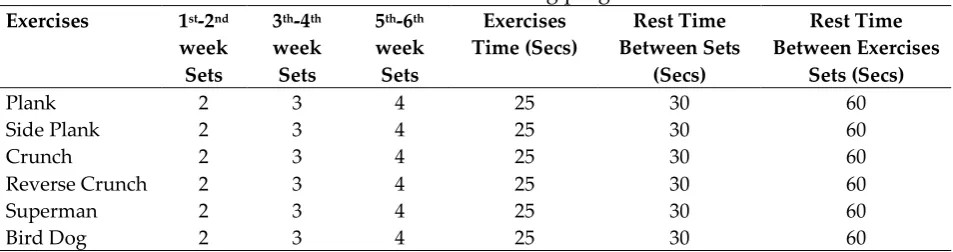
For the study, 6 exercise movements selected according to their own body weights were applied as two sets for 25 seconds for the first 2 weeks, three sets for 25 seconds next 2 weeks, four sets for 25 seconds next 2 weeks (Table 1). Core exercises were done 6 weeks to the subjects located in experimental group in addition to volleyball training. Each movement was applied for 25 seconds with 60 seconds rest between movements and complete 30 seconds rest between sets. Before starting the core training program, experimental group were applied core exercises for 2 weeks. Experienced conditioning coaches demonstrated proper exercise technique throughout the study period. Coaches consistently encouraged the subjects to maintain proper technique performance. If a player fatigued and could not perform an exercise correctly, the exercise was stopped. The subjects located in control group were asked to continue their normal training and any additional program was not applied. Measurements were performed twice, including before and after trainings.
Table 1: 6 weeks core training programme Exercises 1st-2nd
week Sets
3th-4th
week Sets
5th-6th
week Sets
Exercises Time (Secs)
Rest Time Between Sets
(Secs)
Rest Time Between Exercises
Sets (Secs)
Plank 2 3 4 25 30 60
Side Plank 2 3 4 25 30 60
Crunch 2 3 4 25 30 60
Reverse Crunch 2 3 4 25 30 60
Superman 2 3 4 25 30 60
Bird Dog 2 3 4 25 30 60
2.9 Statistical Analyses
The data are reported as means and standard deviations. Mann Whitney U test for paired comparison of the groups and Wilcoxcon test for the comparison of pre- and post-tests of the groups were used. All analysis was executed in SPSS for Windows version 22.0 and the significance level was taken as p<0.05.
3. Results
Table 2: Volleyball players’ experimental (n=16) ve control (n=16) physical characteristics
Min Max Ss
Experimental
Age (years) 15 18 16.62 1.04
Height (m) 160 175 164.62 8.72
Weight (kg) 50 64 54.69 8.56
Control
Age (years) 15 18 16.71 1.34
Height (m) 159 175 169 7.88
Weight (kg) 51 62 55.63 8.25
Table 3: The Mann Whitney U analysis of pre-test values of all measurements of the experimental and control groups
Static balance
Right dynamic balance
Left dynamic balance
Core strength
Service accuracy
score
Velocity of the service
±Ss ±Ss ±Ss ±Ss ±Ss ±Ss
Experimental 144.42±37.58 122.77±10.22 115.92±11.62 120.99±26.13 3.70±0.48 31,23±1,59 Control 118.5±47.28 116.67±9.24 109.74±10.49 80.11±36.15 2.54±0.33 29.74±0.49
U 27.5 22.5 24 22 0.48 27.5
p 0.64 0.32 0.40 0.29 0.09 0.64
*p<0.05
At the beginning of the study, groups divided into the homogeneous. There was no
statistically significant difference between the pre-test values of all measurements of the experimental and control groups (Table 3) (p>0.05).
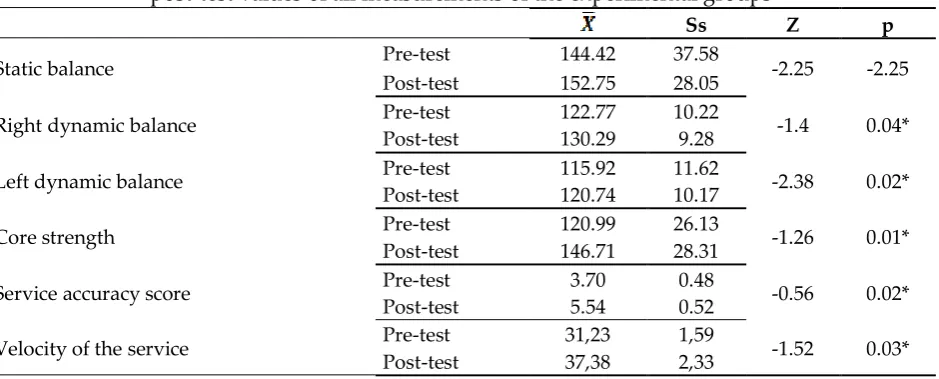
Table 4: Wilcoxon analysis of pre-test and
post-test values of all measurements of the experimental groups
Ss Z p
Static balance Pre-test 144.42 37.58 -2.25 -2.25
Post-test 152.75 28.05
Right dynamic balance Pre-test 122.77 10.22 -1.4 0.04* Post-test 130.29 9.28
Left dynamic balance Pre-test 115.92 11.62 -2.38 0.02* Post-test 120.74 10.17
Core strength Pre-test 120.99 26.13 -1.26 0.01*
Post-test 146.71 28.31
Service accuracy score Pre-test 3.70 0.48 -0.56 0.02*
Post-test 5.54 0.52
Velocity of the service Pre-test 31,23 1,59 -1.52 0.03* Post-test 37,38 2,33
*p<0.05
(p<0.05). There was no statistically significant difference between static balance values (p>0.05).
Table 5: Wilcoxon analysis of pre-test and post-test values of all measurements of the control groups
Ss Z p
Static balance Pre-test 118.5 47.28 -1.28 0.2
Post-test 120.31 36.24
Right dynamic balance Pre-test 116.67 9.24 -1.26 0.21
Post-test 121.75 10.33
Left dynamic balance Pre-test 109.74 10.49 -2.52 0.01* Post-test 112.25 11.26
Core strength Pre-test 80.11 36.15 -2.53 0.01*
Post-test 84.25 40.13
Service accuracy score Pre-test 2.54 0.33 -0.85 0.39
Post-test 3.80 1.24
Velocity of the service Pre-test 29.74 0.49
Post-test 31.15 1,56 -1.97 0.28 *p<0.05
The pre-test and post-test analysis of static balance, right-left leg dynamic balance, core strength values, service accuracy score test and velocity of the service performance measurements of the control groups, as it can be seen in Table 5. There was a statistically significant difference between the pre and post-test values of the control group between left leg dynamic balance and core strength performance values (p<0.05).
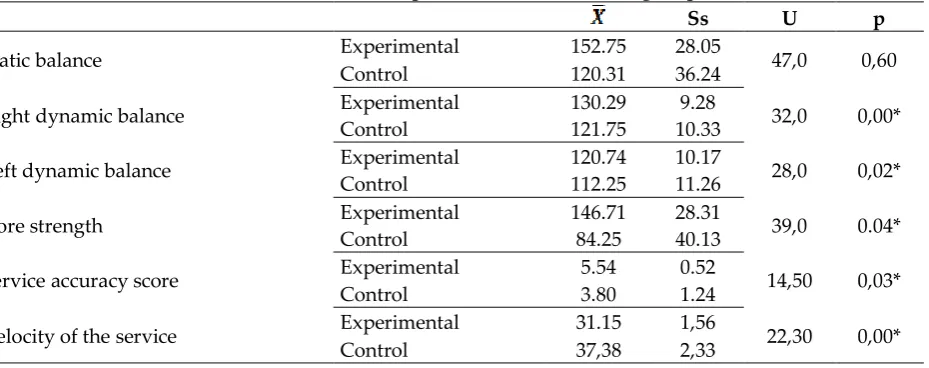
Table 6: The Mann Whitney U analysis of post-test values of all measurements of experimental and control groups
Ss U p
Static balance Experimental 152.75 28.05 47,0 0,60
Control 120.31 36.24
Right dynamic balance Experimental 130.29 9.28 32,0 0,00*
Control 121.75 10.33
Left dynamic balance Experimental 120.74 10.17 28,0 0,02*
Control 112.25 11.26
Core strength Experimental 146.71 28.31 39,0 0.04*
Control 84.25 40.13
Service accuracy score Experimental 5.54 0.52 14,50 0,03*
Control 3.80 1.24
Velocity of the service Experimental 31.15 1,56 22,30 0,00*
Control 37,38 2,33
*p<0.05
4. Discussion
The purpose of this study is to investigate the effects of 6 weeks core exercises on balance, strength and service performance. There is no significant difference was found in any of the variables of pre-test values of the groups. At the beginning of the study, groups divided into the homogeneous. There was a statistically significant difference between the pre and post-test values of the experimental group between right-left leg dynamic balance, core strength values, service accuracy score test performance and velocity of the service performance values. There was no statistically significant difference between static balance values. Sekendiz et al (2007) investigate the effects of Swiss-ball core strength training on trunk extensor (abdominal)/ flexor (lower back) and lower limb extensor (quadriceps)/flexor (hamstring) muscular strength, abdominal, lower back and leg endurance, flexibility and dynamic balance in sedentary women. The results support the fact that Swiss-ball core strength training exercises can be used to provide improvement in the aforementioned measures in sedentary women.
Dynamic balance, pelvic stability and trunk control are required for good landing. Therefore, core strengthen play important role to stability of pelvic and trunk (Kilber et al, 2006). This study has warranted the effects of core exercise on the dynamic balance of volleyball players. Akutota, et al, (2008) demonstrated that lack of sufficient coordination in core muscular can lead to decrease efficiency of movement and injury. Dynamic balance was influence by core exercise and was measured in this study via SEBT, which is proposed in the study of (Herrington, Hatcher, Hatcher, & McNicholas, 2009; Plisky, Rauh, Kaminski, & Underwood, 2006), as a dynamic balance measurement tool. The findings of the current study are consonant with previous research; provide clinicians with a method of improving dynamic balance by improving core strength.
Sekendiz et al (2010) reported that balance training, which consists of wobble board and core stability exercises in addition to American football training, may improve balance performance during the preparation season. Sharma et al (2012) establish the effects of core strengthening exercise program on trunk instability in response to vertical jump performances and static balance variables in volleyball players. They found nine-week strategic core strengthening exercise program increases trunk stability and in turn improves block difference. As examined the researches related to core training, a study by Prieska et al. (2015), which investigates conducted on young players, besides of regular training program the implementation of core
exercises has been reported to cause positive changes to the players’ performance levels
of 10 and 20 m.
jump and reach in those with an unstable spine. Participation in core training alone may not be an effective method for improving serve velocity, but may be effective with the addition of upper- and lower body strength and conditioning.
Mendeş’ s (2016) in a study done, 6 weeks of core training program was investigated the effect on anaerobic power, speed and agility in soccer and the end of the study, the players were observed to 10 m and 20 m sprint performance value
significant changes as compared to the week however it wasn’t observe to anaerobic
power and agility performance a significant changes. Motor skills can be improved by core exercises. This is because players with enhanced core stability means are able to apply force more efficiently when running, jumping and balance, generate more power when kicking a ball, and stand up better when being tackled (Behm et al., 2010; Reilly et al., 2000). Among 14 to 18-year-old players, physical core training and motoric capabilities, especially strength development is important. The coaches also play a key role in assessing, supporting and teaching players with special theorical and practice needs in core training. Coaches have to use visual demonstrations during core training. Coaches use words and phrases that are easily understood, and repeated practice is needed for players to important skills (flexibility, muscular endurance, muscular
strength, speed and agility) (Yapıcı, 2016). Coaches consistently encouraged the subjects
to maintain proper technique performance. If a player fatigued and could not perform an exercise correctly, the exercise was stopped. The subjects located in control group were asked to continue their normal training and any additional program was not applied. Control group wasn't provided with the explanations on the correct teaching of core training techniques and the attainments to be achieved. In our findings, it is possible to say that giving explanations is important during proper technical teaching in volleyball players.
Core trainings have been widely used by trainers recently in order to improve game performance of volleyball, basketball, soccer players. Core strength training was emphasized to benefit lower extremity strength balance in young volleyball players in the case of application in addition to the basic training (Okada et al., 2011; Singh & Rathore, 2013). Prieska et al., (2015) in their study, 9-week core exercises applied additionally to the trainings was informed to contribute positively to 10-20-meter sprint performance. It was reported that 12-week core trainings applied to 16-age group football players on 20-m speed parameter, 12-week combined strength and power trainings of U-14 young football players on 10-m and 30-m sprint times (Wong et al., 2010) and 6-week static core exercises on dynamic balance (Kelly et al., 2011) made a positive contribution. The obtained results showed a significant effect of core stability exercises on the performance of athletes.
executing these exercises in their training programs. The results of this study; taking into account the possible effects of strength training on the athletes on the trainers' core training programs, they should be included in volleyball season training as well as strength training.
Conflicts of interest
The author declares no conflict of interest.
Acknowledgements
The author would like to thank all athletes for their willingness to participate in this study.
References
Atan, T., Kabadayı, M., Eliöz, M., Cilhoroz, T. B., Akyol, P. (2013). Effect of jogging and core training after supramaximal exercise on recovery. TJSE, 15(1): 73-77.
Akuthota, V., Ferreiro, A., Moore, T., & Fredericson, M. (2008). Core Stability Exercise Principles. Curr Sport Med Rep, 7(1), 39-44.
Axel, TA. (2013): The effects of a core strength training program on field testing performance out-comes in junior elite surf athletes. California State University, Long Beach. Basset, S. H., Leach, L. L. (2011). The effect of an eight-week training programme on
core stability in junior female elite gymnasts. Afr J Phys Health Educ, pp. 9-19. Behm, D. G., Drinkwater, E. J., Willardson, J. M. et al. (2010): The use of instability to
train the core musculature. Appl Physiol, Nutrit Me, 35(1), 91-108.
Bohannon, R. W., Larkin, P. A., Cook, A. C., Gear, J., & Singer, J. (1984). Decrease in Timed Balance Test Scores with Aging. Phys Ther, 64(7), 1067-1070.
Coughlan, G. F., Fullam, K., et al. (2012). A comparison Between Performance on Selected Directions of the Star Excursion Balance Test and Y Balance Test. J Athl Train, 5(3), 41.
Ejem, M. (2001). Brief technical evaluation of the 27th Olympiad in Sydney. Coach, 1: 6-12.
Ferris, D., Signorile, J. F., & Caruso, J. F. (1995). The relationship between physical and physiological variables and volleyball spiking velocity. J Strength Cond Res, 9(1), 32-36.
Fig, G. (2005). Strength Training for Swimmers: Training the Core. Strength Con J, 27(2), 40-42.
Forthomme, B., Croisier, J. L., Ciccarone, G., Crielaard, J. M., & Cloes, M. (2005). Factors correlated with volleyball spike velocity. Am J Sports Med, 33(10), 1513-1519. Gutiérrez, M., Ureña, A., & Soto, V. (1994). Biomechanical analysis of the hit in the
Herrington, L., Hatcher, J., Hatcher, A., & McNicholas, M. (2009). A comparison of Star Excursion Balance Test reach distances between ACL deficient patients and asymptomatic controls. The Knee, 16(2), 149-152.
Hibbs, A. E., Thompson, K. G., French, D. et al. (2008). Optimizing performance by improving core stability and core strength. Sport Med, 38(12), 995- 1008.
Jim, F., Schilling, J. C., Murphy, J. R., Bonney, J. L. (2013). Effect of core strength and endurance training on performance in college students: Randomized pilot study. J Bodyw Mov Ther, 17(3): 278-290.
Johnson, L. Barry and Nelson, K. (1982). Practical measurement for Evaluation in physical Education, 1st Indian Reprint, (Delhi: Surjeet Publication).
Kelly, L., Parkhouse, N. B. (2011). Influence of dynamic versus static core exercises on performance in field-based fitness tests. J Bodyw Mov Ther, 15(4): 517-524.
Kibler, W. B., Press, J. and Sciascia, A. (2006). The Role of Core Stability in Athletic Function. Sport Med, 36 (3), 189-198.
Masumura, M., Marquez, WQ., & Ae, M. (2009). Front and pipe spikes in female elite volleyball players: Implications for the improvement of pipe spike techniques. In Proceedings of XXVI Symposium of the International Society of Biomechanics in Sport (pp. 723-726). Limerick: ISBS.
Mendes, B. (2016). The effects of core training applied to footballers on anaerobic power, speed and agility performance. Anthropol, 23(3): 361-366.
Monge, M. A. (2007). Construccion de un sistema observacional para el analisis de la accion de juego en voleibol. A Coruna: Universidad de A Coruna. Servicio de Publicaciones.
Muratlı, S. (2003): Çocuk ve Spor-Antrenman Bilimi Yaklaşımıyla, Nobel Basımevi, Ankara,
1: Baskı.
NSCA -National Strength & Conditioning Association. Developing the core. Champaign,
IL: Human Kinetics; 2014.
Okada, T., Huxel, K. C., Nesse, T. W. (2011). Relationship between core stability, functional movement and performance. J Strength Cond Res, 25(1): 252-261.
Palao, J. M., Santos, J. A., and Urena, A. (2005). The effect of the setter’s position on the
spike in volleyball. J Hum Mov Stud, 48: 25-40.
Plisky, P., Rauh, M., Kaminski, T., & Underwood, F. (2006). Star Excursion Balance Test as a predictor of lower extremity injury in high school basketball players. J orthop sports phys ther, 36(12), 911.
Prieske, O., Muehlbauer, T., Borde, R., Gube M., Bruhn S., Behm, D. G., Granacher, U. (2015). Neuromuscular and athletic performance following core strength training in elite youth soccer: Role of instability. Scand J Med Sci Sport, 26(1): 48-56.
Reilly, T., Williams, A. M., Nevill, A., Franks, A. (2000). A multidisciplinary approach to talent identification in soccer. J Sport Sci, 18: 695-702.
Rokito, S., Jobe, FW., Pink, M. M., Perry, J., & Brault, J. (1998). Electromyographic analysis of the shoulder function during the volleyball serve and spike. J Shoulder Elb Surg, 7(3), 256-63.
Samson, K. M, Sandrey, M. A., Hetrick, A. (2007): A core stabilization training program for tennis athletes. Athlet Ther Today, 12(3), 41.
Sandhu, G. S. (1989). Volleyball basic and advanced. Chandigarh: The Sports People
Publishers of Sports Literature, 3-4 & 34.
Sekendiz, B., Cug, M. and Korkusuz, F. (2010). Effects of swiss-ball core strength training on strength, endurance, flexibility, and balance in sedentary women. J Strength Cond Res, 24(11), 3032-3040.
Sekendiz, B., Altun, O., Korkusuz, F., and Akin, S. (2007). Effects of Pilates exercise on trunk strength, endurance and flexibility in sedentary adult females. J Bodyw Mov Ther, 11: 318-326.
Sharma, A, Geovinson, SG, Singh Sandhu, J. (2012). Effects of a nine-week core strengthening exercise program on vertical jump performances and static balance in volleyball players with trunk instability. J Sport Med Phys Fitness, 52(6):606-15. Singh, A. B., & Rathore, V. S. (2013). Kinematic factors of off-speed and power spike
techniques in volleyball. J Educ Prac, 4(7), 112-117.
Vint, P. F., & Hinrichs, R. N. (2004). Factors related to the development of ball speed and to the incidence of one-legged landings in the front-row volleyball attack. In Proceedings of the XXII Symposium of the International Society of Biomechanics in Sport (pp. 135-138). Ottawa: ISBS.
Yapıcı, A. (2016). Investigation of the Effects of Teaching Core Exercises on Young Soccer Players. Int J Envıron Scı Educ, Vol. 11, No. 16, 9410-9421.
Willardson, J. M. (2007). Core Stability Training: Applications to Sports Conditioning Programs. J Strength Cond Res, 21(3):979-85.
Wong, P. L., Chamari, K., Wisloff, U. (2010). Effects of 12- week on-field combined strength and power training on physical performance among U-14 young soccer players. J Strength Cond Res, 24(3): 644-652.
Creative Commons licensing terms
Authors will retain the copyright of their published articles agreeing that a Creative Commons Attribution 4.0 International License (CC BY 4.0) terms will be applied to their work. Under the terms of this license, no permission is required from the author(s) or publisher for members of the community to copy, distribute, transmit or adapt the article content, providing a proper, prominent and unambiguous attribution to the authors in a manner that makes clear that the materials are being reused under permission of a Creative Commons License. Views, opinions and conclusions expressed in this research article are views, opinions and conclusions of the author(s). Open Access Publishing Group and European Journal of Physical Education and Sport Science shall not be responsible or answerable for any loss, damage or liability caused in relation to/arising out of conflict of interests, copyright violations and inappropriate or inaccurate use of any kind content related or integrated on the research work. All the published works are meeting the Open Access Publishing requirements and can be freely accessed, shared, modified, distributed and used in educational, commercial and