ARTIGO ORIGINAL
Pharmacovigilance in Portugal: Activity of the
Central Pharmacovigilance Unit
Farmacovigilância em Portugal: Atividade da Unidade Regional do Centro
1. Unidade de Farmacovigilância. Centro AIBILI – Associação para Investigação Biomédica e Inovação em Luz e Imagem. Coimbra. Portugal. 2. Faculdade de Farmácia. Universidade de Coimbra. Coimbra. Portugal.
3. Centro Hospitalar e Universitário de Coimbra. Coimbra. Portugal. 4. Faculdade de Medicina. Universidade de Coimbra. Coimbra. Portugal.
5. Faculdade de Ciências da Saúde. Universidade da Beira Interior. Covilhã. Portugal.
Recebido: 31 de Julho de 2014 - Aceite: 16 de Fevereiro de 2015 | Copyright © Ordem dos Médicos 2015
Francisco BATEL-MARQUES1,2, Diogo MENDES1,2, Carlos ALVES1,2, Ana PENEDONES1, Patricia DIAS1,3,4, Angelina MARTINS1,3, Luiz Miguel SANTIAGO1,5, Carlos FONTES-RIBEIRO1,4, Margarida CARAMONA1,2, Tice MACEDO1,4 Acta Med Port 2015 Mar-Apr;28(2):222-232
RESUMO
Introdução: Caracterizar as notificações espontâneas de eventos adversos a medicamentos recebidas pela Unidade de Farmaco-vigilância do Centro.
Material e Métodos: Consideraram-se todas as notificações reportadas entre 01/2001 e 12/2013. Estimaram-se taxas de notificação anuais. Os casos foram caracterizados quanto à gravidade, conhecimento prévio, causalidade imputada, origem e grupo profissional do notificador, tipo de evento adverso e grupos farmacoterapêuticos onde se incluem os medicamentos suspeitos com maior prevalên-cia de notificação.
Resultados: A Unidade recebeu 2408 notificações, que continham 5749 eventos adversos. No ano de 2013 foi registada uma taxa de notificação de 171 notificações/milhão de habitantes. Do total de notificações, 55% foram classificadas como graves. Das notifi-cações com causalidade imputada, 90% tinham uma relação pelo menos possível com o medicamento suspeito. Os medicamentos que originaram maior número de notificações foram os anti-infeciosos para uso sistémico (n = 809; 33%), e os eventos adversos mais frequentemente notificados foram as “Afeções dos tecidos cutâneos e subcutâneos” (n = 1139; 20%). Registaram-se 154 (6,4%) casos de risco de vida e/ou morte e 88 (3,6%) continham pelo menos um evento adverso classificado simultaneamente como grave, desconhecido e definitivo ou provável.
Discussão: Os resultados deste estudo são consistentes com os de outros estudos, designadamente no que diz respeito à gravidade, aos grupos farmacoterapêuticos onde se incluem os medicamentos suspeitos e aos tipos de eventos adversos reportados.
Conclusão: Ao longo do período avaliado, a UFC solidificou a sua atividade, tendo verificado um crescimento da taxa de notificação em geral e um aumento da notificação de reações adversas graves e desconhecidas.
Palavras-chave: Farmacovigilância; Portugal; Sistemas de Notificação de Reações Adversas a Medicamentos.
ABSTRACT
Introduction: The aim of this study was to characterize the spontaneous reports of adverse events that were received by the Central Portugal Regional Pharmacovigilance Unit.
Material and Methods: Spontaneous reports received between 01/2001 and 12/2013 were considered. The annual reporting ratios were estimated. The cases were characterized according to their seriousness, previous description, causality assessment, origin and professional group of the reporter, type of adverse event and pharmacotherapeutic groups of the suspected drugs most frequently reported.
Results: The Pharmacovigilance Unit received 2,408 reports that contained 5,749 adverse events. In 2013, the reporting rate was estimated at 171 reports per million inhabitants. Fifty-five percent of the reports were assessed as serious. Ninety percent of the cases were assessed as being at least possibly related with the suspected drug. The suspected drugs most frequently reported were anti-infectives for systemic use (n = 809, 33%). The most frequently reported adverse events were “Skin and subcutaneous tissue disorders” (n = 1,139, 20%). There were 154 (6.4%) reports resulting in life-threatening situations and/or death, and 88 (3.6%) containing at least one adverse event assessed as serious, unknown and certain or probable.
Discussion: The present results are in line with those found in other studies, namely the seriousness and type of the adverse events and the pharmacotherapeutic groups of the most frequently reported suspected drugs.
Conclusion: In the last years, the Central Portugal Regional Pharmacovigilance Unit has registered a growth in the reporting rate in general, as well as an increase in the reporting of unknown and serious adverse drug reactions.
Keywords: Adverse Drug Reaction Reporting Systems; Pharmacovigilance; Portugal.
INTRODUCTION
An adverse event is defined as any undesired harmful effect resulting from the use of a medication.1 These events may arise when a drug is used according to its marketing introduction authorization, drug abuse or misuse situations, therapeutic errors or off-label use (outside
ARTIGO ORIGINAL
medication and an adverse event may be established, i.e. when this association is considered in the least possible, by the notifier or through a causality imputation method.2 Iatrogenic drug effects have a significant impact on public health, are responsible for relevant morbidity and mortality.3 and their incidence has been assessed through several studies. An adverse event incidence between 4 and 91/1,000 persons-month has been estimated in patients attending an outpatient setting.4 About 5% of hospital admissions are due to adverse drug reactions.5-7 The incidence of adverse events varies according to the age group: the percentage of elderly patients admitted to the hospital is higher when compared to other adult and children patients (10.7% vs. 6.3% vs. 4.1%, respectively).6 It is estimated that about 0.3 to 5% of patients die due to suspected drug-related adverse reactions.8-11
The identification of adverse drug effects and the monitoring of its impact in the population led to the development of Pharmacovigilance,12 a specific discipline originating in Pharmacoepidemiology, , aimed at ensuring that medication risks are not beyond benefits.1 The Portuguese Sistema Nacional de Farmacovigilância was started in 1992, embedded into the Despacho Normativo
n.º 107/92, from 27th June and subsequently decentralised
in 2000 with the creation of the Unidades Regionais de
Farmacovigilância (URF) (Pharmacovigilance Regional
Units) and distributed according to the Administrações
Regionais de Saúde (Health Regional Administrations).13
Patients, beyond health professionals, have also been allowed to notify suspected drug-related adverse reactions, since the entrance into force of the more recent European legislation regarding Pharmacovigilance in 2012.14
The URF implementation allowed for higher interaction with notifiers and higher disclosure of the Sistema Nacional
de Farmacovigilância (Pharmacovigilance National
System), which represented a significant contribution to a stepwise increase in the number of notified suspected adverse reactions over the years.15 The URF works on research within drug safety, augmenting Pharmacovigilance, beyond the validation, data processing and assessment of notifications performed by health professionals and patients.16
Our study aimed to characterise spontaneous notifi-cations received by the UFC (Unidade de Farmacovigilância
do Centro – Pharmacovigilance Unit of the Centre of
Portugal) according to its source, to the place of professional activity of notifiers, to the pharmacotherapeutic group of suspicious medication, seriousness, previous knowledge and causality nature of the notified adverse events.
MATERIAL AND METHODS
This was an observational, cross-sectional and descriptive study involving all spontaneous notifications of adverse events reported to the Unidade de
Farmaco-vigilância do Centro between 1 January 2001 and 31
December 2013. Spontaneous notifications meeting primary validation criteria (patient’s identification, suspicious medication, adverse event and notifier) were included. The number of notifications per million inhabitants per year in 2011, 2012 and 2013 was calculated. The population covered by the Administração Regional de Saúde do
Centro de Portugal was obtained from the Anuário
Estatístico da Região Centro and 1,719,973 inhabitants
were identified.17
Spontaneous notifications were characterised according to its source (hospital, outpatient, pharmacy or other) and to the notifier’s professional group (physician, pharmacist, nurse, other health professional or user). The term ‘Outpatient’ was used to identify notified cases with an origin in primary healthcare network institutions.
Each spontaneous notification refers to one single case (one patient) although it may include one or more adverse events associated to the use of one of more suspicious drugs. Patient’s demographic characteristics were analysed (gender and age).
Suspicious drugs were classified according to the WHO (World Health Organization) ATC (Anatomical Therapeutic Chemical Code) Classification System at the first (anatomical main group) and the third level (pharmacological subgroup). According to this classification system, active substances are divided into different groups according to the organ or system on which they act and their therapeutic, pharmacological and chemical properties.18
Since each spontaneous notification contains at least one adverse event, each event was isolated and coded according to the MedDRA (Medical Dictionary for Regulatory Activities), version 17.0 [Maintenance and Support Services Organization (MSSO) McLean, VA, USA] dictionary, under the System Organ Class (SOC) and the Preferred Term (PT) levels.19-21 The MedDRA coding system uses a specific and standardized terminology developed by the International Conference of Harmonisation to facilitate sharing of regulatory information between regulatory authorities and pharmaceutical industry regarding medical products (pharmaceuticals and medical devices) used by humans. It is used for the registration, documentation and safety monitoring of medical products both before and after a product has been authorised for sale (research, development and post-marketing monitoring).22
ARTIGO ORIGINAL when these were described in the Summary of Product Characteristics of the suspected medication. The causal relationship between exposure to the suspected medication and the occurrence of the adverse events was assessed by the UFC’s Scientific Council according to the global introspection method. An adverse event may be ranked as definitely, probably, possibly or not related, conditional / not classified or unavailable / unclassifiable.24 The global introspection method involves the assessment of causality between the exposure to a medication and the occurrence of an adverse event by an expert panel, considering the Bradford Hill criteria: strength, consistency, specificity, temporality, biological gradient, plausibility, coherence, experimental evidence and analogy.25 This method resembles the clinical diagnosis process and depends on the expert’s knowledge and expertise.26 It has a moderate to high degree of correspondence with decision algorithms for adverse reactions most probably related to the suspected medication.16
Analyses were carried out aimed to characterise two subgroups of spontaneous notifications of adverse events: life-threatening events and/or those related to patient’s death, regardless of the causal relationship with suspected medication and those simultaneously ranked as serious, unexpected and definitely or probably related to the suspected medications.
The Microsoft Excel® 2010 (Microsoft Corporation, Santa Rosa, CA, USA) software was used for statistical processing of data.
RESULTS
In total, 2,408 spontaneous notifications of adverse events were reported to the UFC between January 2001 and December 2013.
Notification rate
A notification rate of 101, 123 and 171 notifications/ million inhabitant/year was found in 2011, 2012 and 2013, respectively.
Notification source and type of notifier
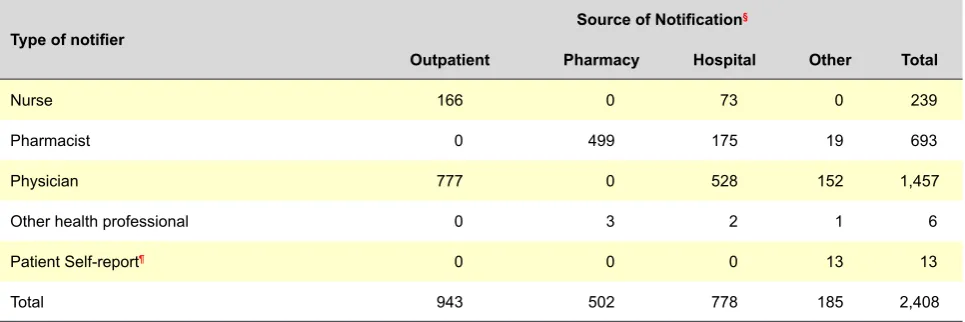
The distribution of reported spontaneous notifications by source of notification and type of notifier is shown in Table 1. From all the cases, 943 (40%) originated in outpatient settings, 778 (32%) in the hospital, 502 (21%) in community pharmacies and 185 (8%) in other workplaces or, in the case of users, in their home address. The health professionals that more frequently notified were physicians (1,457; 61%), followed by pharmacists (693; 29%) and nurses (239; 10%). Thirteen cases (0.5%) were notified by users.
Demographic characteristics of patients
Most spontaneous notifications regarded female patients (n = 1,594; 66%). Median age of patients was 53 (minimum 2 months, maximum 96 years) at the time when the adverse event took place. Most patients were aged between 15 and 65 (n = 1,385; 58%). In total, 269 (11%) and 683 (28%) patients were below 15 and above 65 years of age, respectively. The patient’s age was unavailable in 72 cases.
Suspected medications
In thirty cases reported to the UFC (1%) more than medication was suspected. In total, 2,448 medications were suspected. The ATC classes more frequently related to suspected medications are shown in Table 2. According to the 1st level ATC, the medications that were mostly related to spontaneous notifications were anti-infectious agents for systemic use (n = 809; 33%), those acting in the musculoskeletal system (n = 322; 13%) and in the nervous system (n = 312; 13%).
The suspected medications included in the group of vaccines were the most frequently notified, involving patients aged 0-15 (n = 191; 69%). In the remaining age groups, non-steroid anti-inflammatory drugs were the most frequently notified (n = 209; 10%).
Adverse Events
From the 2,408 cases reported to the UFC, 1,540 (64%)
Table 1– Spontaneous notifications distribution according to notifier and the source of notification
Type of notifier Source of Notification
§
Outpatient Pharmacy Hospital Other Total
Nurse 166 0 73 0 239
Pharmacist 0 499 175 19 693
Physician 777 0 528 152 1,457
Other health professional 0 3 2 1 6
Patient Self-report¶ 0 0 0 13 13
Total 943 502 778 185 2,408
ARTIGO ORIGINAL
Table 2 – Suspected medications, classified in the 3rd level ATC, more frequently notified (frequency ≥ 0.5%)
Suspected medications n %
J07B Viral vaccines 236 9.64%
M01A Anti-inflammatory and anti-rheumatic products, non-steroids 218 8.91%
J07A Bacterial vaccines 173 7.07%
N06A Antidepressants 102 4.17%
L01X Other antineoplastic agents 97 3.96%
J01C Beta-lactam antibacterials: penicillins 96 3.92%
C10A Lipid modifying agents, plain 86 3.51%
J01M Quinolone antibacterials 82 3.35%
L01C Plant alkaloids and other natural products 70 2.86%
J01D Other beta-lactam antibacterials 59 2.41%
C09A ACE inhibitors, plain 51 2.08%
B01A Antithrombotic agents 50 2.04%
J01F Macrolides, lincosamide and streptogramins 47 1.92%
N03A Anti-epileptics 47 1.92%
N02B Other analgesics and antipyretics 46 1.88%
A02B Drugs for peptic ulcer and gastro-oesophageal reflux disease 43 1.76%
M05B Drugs affecting bone structure and mineralization 43 1.76%
M04A Anti-gout preparations 36 1.47%
J01X Other antibacterials 30 1.23%
G03A Hormonal contraceptive for systemic use 29 1.18%
J01E Sulphonamides and trimethoprim 27 1.10%
C08C Selective calcium channel blockers with mainly vascular effects 26 1.06%
L01B Antimetabolites 25 1.02%
L04A Immunosuppressants 25 1.02%
N02A Opioids 23 0.94%
N05A Antipsychotics 22 0.90%
L02B Hormone antagonists and related agents 20 0.82%
V08A X-ray contrast media, iodinated 20 0.82%
N05B Anxiolytics 19 0.78%
N05C Hypnotics and sedatives 17 0.69%
C09B ACE inhibitors, combinations 16 0.65%
C09C Angiotensin II antagonists. plain 16 0.65%
L03A Immunostimulants 16 0.65%
R05C Expectorants, excluding combinations with cough suppressants 16 0.65%
J07C Bacterial and viral vaccines, combined 15 0.61%
R06A Antihistamines for systemic use 14 0.57%
G04C Drugs used in benign prostatic hypertrophy 13 0.53%
H02A Corticosteroids for systemic use, plain 13 0.53%
M03B Muscle relaxants, centrally acting agents 13 0.53%
Others 448 18.30%
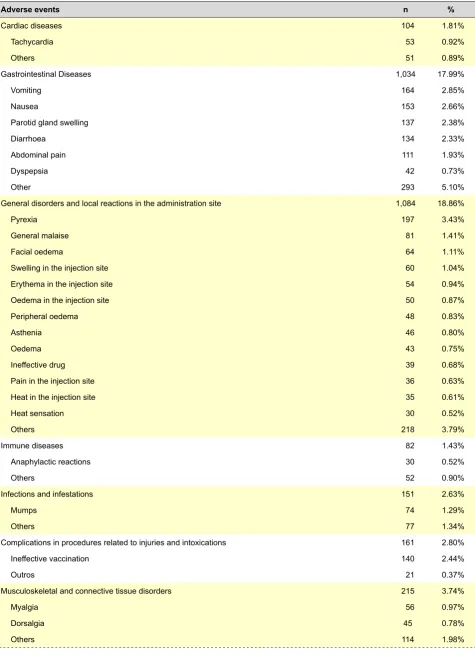
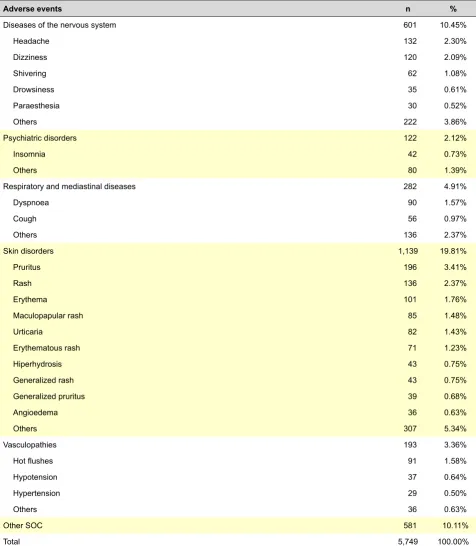
ARTIGO ORIGINAL concerned more than one adverse event. In total, 5,749 adverse events were reported. The most frequently notified adverse events, coded according to the PT and grouped by SOC, are shown in Table 3. ‘Skin and subcutaneous tissue disorders’ was the SOC most frequently related to adverse events (n = 1,139; 20%), followed by ‘General disorders and administration site conditions’ (n = 1,084; 19%) and ‘Gastrointestinal disorders’ (n = 1,034; 18%). These three groups were related to 57% of the reported adverse events. The more frequently reported adverse events in patients aged 0-15 were related to vaccination, namely to ‘vaccination failure’, ‘parotid gland enlargement’ and ‘pyrexia’. ‘Pruritus’, ‘diarrhoea’ and ‘vomiting’ were the most frequent adverse events in patients aged ≥ 65.
Life-threatening and/or death-related adverse events
From the 2,408 spontaneous notifications, 1,316 (55%) were classified as serious. From these, 154 (6.4%) were life-threatening and/or death related and 118 (76.6%) were notified by physicians, 20 (13%) by pharmacists, 15 (9.7%) by nurses and 1 (0.6%) by the user (pulmonary embolism). Most spontaneous notifications were related to female patients (n = 97; 63%). Median age of patients was 56 (minimum 2 months, maximum 93 years) at the time when the adverse event took place. The most frequently reported ATC classes regarding suspected medications and life-threatening and/or death-related adverse events are shown in Table 4 and 5, respectively. The medications used in oncological diseases, including antineoplastic agents (n = 21; 13%), alkaloid (n = 10; 6%), antimetabolite drugs (n = 4; 3%) and alkylating agents (n = 4; 3%), were the most frequently associated to these cases. Anaphylaxis events, which may include ‘anaphylactic reaction’ (n = 21; 5%), ‘anaphylactic shock’ (n = 16; 4%), ‘dyspnoea’ (n = 15; 4%), ‘hypotension’ (n = 11; 3%) and ‘larynx oedema’ (n = 9; 2%) were the most frequently related to life-threatening and/or death-related events.
Serious, unknown and definitive or probably-related
adverse events
The UFC received 88 spontaneous notifications involving at least one adverse event classified as serious, unexpected and definitely or probably-related. The reported suspected medications are shown in Table 6. Anti-infectious agents for systemic use (n = 27; 30%), antineoplastics (n = 21; 23%) and medications acting in the musculoskeletal system (n = 12; 13%) were the most prevalent suspected medications.
DISCUSSION
Spontaneous notification is a type of pharmacovigilance methodology which allows for the identification of adverse events, involving all the medications on the market used for all patients, particularly those included in populations
under-represented in clinical trials, such as the elderly, pregnant mothers and children. Spontaneous notification also enables the detection of rare adverse events including those with long-term latency.27-29
The notification rate is one of the indicators of the activity of the URF. When compared to the results obtained in a previous study, we found an increase in the number of spontaneous notifications per million inhabitants per year reaching the UFC over the last 3 years (maximum of 171 cases/million inhabitants/year in 2013).24 This result approaches the WHO recommendation (≥ 200 cases/ million inhabitants/year).24,30
More than half of the cases (55%) that reached the UFC were classified as serious. This result is in line with the proportion of serious iatrogenic events found in other URFs in Portugal and also with the results obtained by studies assessing the pharmacovigilance systems in other European countries.15,31,32 Every adverse events should be notified to the regulatory authorities. It is tempting to speculate that a bias may result from the fact that health professionals are particularly prompted to only report serious adverse events, as these are associated to an increase in morbidity and in health costs.32
Most spontaneous notifications received by the UFC during its period of activity were reported by physicians, in line with the results found in other studies,15,31-34 followed by the pharmacists and the nurses. When compared to a previous study, with the same design and involving the spontaneous notifications reported to the UFC between 2001 and 2011, the percentage of cases notified by nurses has considerably increased.24 This is partly due to the awareness actions carried out by the UFC with these health professionals aimed at increasing their knowledge regarding the relevance of reporting iatrogenic events and notification procedures.35 Within their professional practice, nurses are in close contact with patients.35 These professionals are responsible for therapy administration and monitoring, and especially in the case of elderly patients, are in a unique position to identify any adverse reactions.35-39
ARTIGO ORIGINAL
Table 3 – More frequently notified adverse events (frequency ≥ 0.5%), classified under the PT of the MedDRA classification
Adverse events n %
Cardiac diseases 104 1.81%
Tachycardia 53 0.92%
Others 51 0.89%
Gastrointestinal Diseases 1,034 17.99%
Vomiting 164 2.85%
Nausea 153 2.66%
Parotid gland swelling 137 2.38%
Diarrhoea 134 2.33%
Abdominal pain 111 1.93%
Dyspepsia 42 0.73%
Other 293 5.10%
General disorders and local reactions in the administration site 1,084 18.86%
Pyrexia 197 3.43%
General malaise 81 1.41%
Facial oedema 64 1.11%
Swelling in the injection site 60 1.04%
Erythema in the injection site 54 0.94%
Oedema in the injection site 50 0.87%
Peripheral oedema 48 0.83%
Asthenia 46 0.80%
Oedema 43 0.75%
Ineffective drug 39 0.68%
Pain in the injection site 36 0.63%
Heat in the injection site 35 0.61%
Heat sensation 30 0.52%
Others 218 3.79%
Immune diseases 82 1.43%
Anaphylactic reactions 30 0.52%
Others 52 0.90%
Infections and infestations 151 2.63%
Mumps 74 1.29%
Others 77 1.34%
Complications in procedures related to injuries and intoxications 161 2.80%
Ineffective vaccination 140 2.44%
Outros 21 0.37%
Musculoskeletal and connective tissue disorders 215 3.74%
Myalgia 56 0.97%
Dorsalgia 45 0.78%
Others 114 1.98%
ARTIGO ORIGINAL Table 3 Adverse events – More frequently notified adverse events (frequency ≥ 0.5%), classified under the PT of the MedDRA classificationn %
Diseases of the nervous system 601 10.45%
Headache 132 2.30%
Dizziness 120 2.09%
Shivering 62 1.08%
Drowsiness 35 0.61%
Paraesthesia 30 0.52%
Others 222 3.86%
Psychiatric disorders 122 2.12%
Insomnia 42 0.73%
Others 80 1.39%
Respiratory and mediastinal diseases 282 4.91%
Dyspnoea 90 1.57%
Cough 56 0.97%
Others 136 2.37%
Skin disorders 1,139 19.81%
Pruritus 196 3.41%
Rash 136 2.37%
Erythema 101 1.76%
Maculopapular rash 85 1.48%
Urticaria 82 1.43%
Erythematous rash 71 1.23%
Hiperhydrosis 43 0.75%
Generalized rash 43 0.75%
Generalized pruritus 39 0.68%
Angioedema 36 0.63%
Others 307 5.34%
Vasculopathies 193 3.36%
Hot flushes 91 1.58%
Hypotension 37 0.64%
Hypertension 29 0.50%
Others 36 0.63%
Other SOC 581 10.11%
Total 5,749 100.00%
notification of suspected adverse reactions, in which the former are more focused in causality and the latter in seriousness and impact on their quality of life. As such, it is important to receive notifications from both groups in order to obtain a better assessment of the event’s nature.44 The outpatient setting was the most frequently source of spontaneous notifications, followed by the hospitals and the community pharmacy. The hospital was described in
ARTIGO ORIGINAL
time or problems related to data confidentiality.46
The most frequently notified suspected medications reaching the UFC were anti-infectious drugs for systemic use, including vaccines and antibiotics, followed by medications acting in the musculoskeletal system, mostly non-steroid inflammatory drugs and medications acting on the nervous system, mainly antidepressant, antipsychotic and anxiolytic agents. These results are in line with national data.15 It must be said that, over the last two years, the UFC has received a relevant number of spontaneous notifications regarding the mumps vaccine, an outbreak of this disease having occurred in the central region of Portugal.47 However, despite the increase in this particular case, the results found for the UFC are still in line with those obtained by other studies.32,48 The medications included in these therapeutic classes are amongst the mostly used in clinical practice, which may explain their involvement in such high percentage of suspected cases reported to the UFC.49 There are medications with a more disadvantageous risk/benefit balance when compared to the most frequently reported suspected medications involved in this study with a therapeutic indication for more serious pathologies such as cancer or autoimmune diseases. Therefore, when we limited our analysis to life-threatening or death-related serious cases, the medications used for the treatment of
Table 4 – Suspected medications notified in life-threatening and/or death related events
Suspected medications n %
L01X Other antineoplastic agents 21 13.29%
M01A Anti-inflammatory and anti-rheumatic products, non-steroids 17 10.76%
L01C Plant alkaloids and other natural products 10 6.33%
N02B Other analgesic and antipyretics 7 4.43%
B01A Antithrombotic agents 6 3.80%
J01D Other beta-lactam antibacterials 5 3.16%
M04A Anti-gout preparations 5 3.16%
J01E Sulphonamides and trimethoprim 5 3.16%
J07B Viral vaccines 5 3.16%
V08A X-ray contrast media, iodinated 4 2.53%
L01B Antimetabolites 4 2.53%
A10B Blood glucose lowering drugs, excluding insulins 4 2.53%
L04A Immunosuppressants 4 2.53%
L01A Alkylating agents 4 2.53%
Other 58 36.48%
Total 159 100.00%
oncological diseases were the most frequently notified. These results were somewhat expectable as tolerance to the risk of serious adverse event occurrence generally tends to be higher if the medication is used in the treatment of serious diseases.50 The fact that these medications are administered in the hospital setting under close supervision of health professionals allows for the detection of adverse events from a very early stage and for an immediate action aimed to revert these. Despite the presence and application of procedures aimed to prevent the occurrence of adverse events associated to antineoplastic therapy, including the previous administration of steroids and antihistamines, anaphylactic-type reactions continue to occur in oncology patients.51 The efficacy of preventive measures is worthy of a deeper future research effort.
ARTIGO ORIGINAL
adverse events more frequently involved in clinical practice and correspond to a considerable percentage of the notifications reported to the UFC.
Eighty-eight notifications involved at least one adverse
event simultaneously ranked as serious, unexpected and definitely or probably-related. The two selected levels of casualty mean a stronger association between the exposure to a suspected medication and the occurrence of an adverse event, with serious clinical consequences and unexpectedly occurring. These cases deserve special attention as they represent the new knowledge arising from the activity of the UFC. When compared to the results obtained in a previous study, the absolute number of cases with such characteristics more than doubled in about two and a half years.24 Results suggest the increasing relevance and importance of UFC and notifier activity in the centre region of Portugal, working together to produce new knowledge regarding drug safety.
Evidence on the risks is mostly obtained from post-marketing data, including spontaneous notification, case reports and observational studies.53 Most regulation decisions produced by the regulatory authorities regarding drug safety, including market withdrawal and safety alert disclosure, has been mostly based on spontaneous notifications.49,53-58 More than half of the safety alerts issued by regulatory authorities between 2010 and 2012 were based on spontaneous notifications, from which 20% were exclusively based on this evidence.49 These results suggest the importance of spontaneous notifications in producing new knowledge regarding drug safety. However, Table 5 – Life-threatening and/or death-related notified adverse
events
Adverse events n %
Anaphylactic reaction 21 5.33%
Anaphylactic shock 16 4.06%
Dyspnoea 15 3.81%
Hypotension 11 2.79%
Larynx oedema 9 2.28%
Vomiting 9 2.28%
Erythema 9 2.28%
Angioedema 8 2.03%
Urticaria 7 1.78%
Pruritus 7 1.78%
Other 282 71.57%
Total 394 100.00%
Table 6 – Suspected medications notified in serious, unexpected and definitely or probably-related events
Suspected medications n %
J Anti-infectious agents for systemic use 27 29.67%
L Anti-neoplastic and immunomodulator agents 21 23.08%
M Musculoskeletal system 12 13.19%
N Nervous system 8 8.79%
C Cardiovascular system 5 5.49%
V Various 4 4.40%
A Alimentary tract and metabolism 4 4.40%
B Blood and blood forming organs 3 3.30%
R Respiratory system 2 2.20%
S Sensory organs 2 2.20%
G Genitourinary system and sex hormones 1 1.10%
D Dermatological preparations 1 1.10%
H Systemic hormonal preparations, excluding sex hormones and insulins 1 1.10%
ARTIGO ORIGINAL
the difficulty in recognizing, diagnosing and establishing a causal relationship between an adverse event and the use of a medication act as barriers to spontaneous notifications.59 Under-notification by health professionals is a cross-cutting issue to every Pharmacovigilance system.19,24,35,60
CONCLUSIONS
Health professionals from the centre region of Portugal have increased their contribution to the production of new knowledge regarding drug safety. This fact suggests the importance and relevance of the UFC’s activity, which has found an increasing global notification rate of adverse reactions simultaneously serious and unexpected. The increased rate of spontaneous notifications, based on a
higher compliance of health professionals with this method of drug safety monitoring in clinical practice will allow for the production of more knowledge leading to a better assessment of risk/benefit balance of medications and to higher safety for patients.
CONFLICTS OF INTEREST
The authors declare there were no conflicts of interest in writing this manuscript.
FINANCIAL SUPPORT
The authors declare there was no financial support for writing this manuscript.
REFERENCES
1. European Medicines Agency. New EU pharmacovigilance legislation - Key concepts. EMA/186974/2012; 2013; [consultado 2014 Jul 22]. Disponível em: http://www.ema.europa.eu/docs/en_GB/document_ library/Other/2012/07/WC500129593.pdf.
2. Lindquist M. The need for definitions in pharmacovigilance. Drug Saf. 2007;30:825-30.
3. Gandhi TK, Weingart SN, Borus J, Seger AC, Peterson J, Burdick E, et al. Adverse events in ambulatory care. N Engl J Med. 2003;348:1556-64.
4. Thomsen LA, Winterstein AG, Søndergaard B, Haugbølle LS, Melander A.Systematic review of the incidence and characteristics of preventable adverse drug events in ambulatory care. Ann Pharmacother. 2007;41:1411-26.
5. Beijer HJ, de Blaey CJ. Hospitalisations caused by adverse drug reactions (ADR): a meta-analysis of observational studies. Pharm World Sci. 2002;24:46-54.
6. Kongkaew C, Noyce PR, Ashcroft DM. Hospital admissions associated with adverse drug reactions: a systematic review of prospective observational studies. Ann Pharmacother. 2008;42:1017-25.
7. Brvar M, Fokter N, Bunc M, Mozina M. The frequency of adverse drug reaction related admissions according to method of detection, admission urgency and medical department specialty. BMC Clin Pharmacol. 2009;9:8.
8. van der Hooft CS, Dieleman JP, Siemes C, Aarnoudse AJ, Verhamme KM, Stricker BH, et al. Adverse drug reaction-related hospitalisations: a population-based cohort study. Pharmacoepidemiol Drug Saf. 2008;17:365-71.
9. Lazarou J, Pomeranz BH, Corey PN. Incidence of adverse drug reactions in hospitalized patients: a meta-analysis of prospective studies.JAMA. 1998;279:1200-5.
10. Wester K, Jönsson AK, Spigset O, Druid H, Hägg S. Incidence of fatal adverse drug reactions: a population based study. Br J Clin Pharmacol. 2008;65:573-9.
11. Pardo Cabello AJ, González Contreras LG, Manzano Gamero MV, Gómez Jiménez FJ, Puche Cañas E. Prevalence of fatal adverse drug reactions in hospitalized patients. Int J Clin Pharmacol Ther. 2009;47:596-602.
12. Rawlins MD. The challenge to pharmacoepidemiology. Pharmacoepidemiol Drug Saf. 1995;4:5-9.
13. Herdeiro MT, Ferreira M, Ribeiro-Vaz I, Junqueira Polónia J, Costa-Pereira A. O sistema português de farmacovigilância. Acta Med Port. 2012;25:241-9.
14. Directiva 2010/84/EU do Parlamento Europeu e do Conselho de 15 de Dezembro de 2010 que altera, no que diz respeito à farmacovigilância, a Directiva 2001/83/CE que estabelece um código comunitário relativo aos medicamentos para uso humano. Jornal oficial L348, 31/12/2010, p.74-99; [consultado 2014 Jul 14]. Disponível em: http://ec.europa.eu/ health/files/eudralex/vol-1/dir_2010_84/dir_2010_84_en.pdf.
15. Cabrita da Silva J, Soares MA, Martins SO. Reações adversas a medicamentos: Análise da base de dados do Sistema Nacional de Farmacovigilância (SVIG) 2009-2011. Relatório Final. (2012);
[consultado 2014 Jul 22]. Disponível em: https://www.infarmed.pt/ portal/page/portal/INFARMED/MEDICAMENTOS_USO_HUMANO/ FARMACOVIGILANCIA/Relatorio_analise_dados_SVIG_2009_2011. pdf.
16. Jones J. Assessing causality of case reports of suspected adverse events. In: Strom B, Kimmel S, Hennessy S, editors. Pharmacoepidemiology. 5th ed. Chichester: John Wiley & Sons; 2012. p. 583-600.
17. Instituto Nacional de Estatística. Anuário Estatístico da Região Centro 2012. (2013); [consultado 2014 Jul 29]. Disponível em: http://www.ine.pt/ xportal/xmain?xpid=INE&xpgid=ine_publicacoes&PUBLICACOESpub_ boui=209571958&PUBLICACOESmodo=2.
18. WHO Collaboration Centre for Drug Statistics Methodology. ATC/DDD Index 2014; [consultado 2014 Jul 22]. Disponível em: http://www.whocc. no/atc_ddd_index/.
19. Mendes D, Alves C, Batel-Marques F. Safety of biologics approved for treating rheumatoid arthritis: analysis of spontaneous reports of adverse events. Clin Rheumatol. 2013;32:1207-14.
20. Mendes D, Alves C, Batel-Marques F. Safety profiles of adalimumab, etanercept and infliximab: a pharmacovigilance study using a measure of disproportionality in a database of spontaneously reported adverse events. J Clin Pharm Ther. 2014;39:307-13.
21. Alves C, Batel-Marques F, Macedo AF. Data sources on drug safety evaluation: a review of recent published meta-analyses. Pharmacoepidemiol Drug Saf. 2012;21:21-33.
22. International Conference on Harmonisation of Technical Requirements for Registration of Pharmaceuticals for Human Use (ICH). Medical Dictionary for Regulatory Activities (MedDRA); [consultado 2014 Jul 22]. Disponível em: http://www.ich.org/products/meddra.html.
23. ICH Harmonized Tripartite Guideline. Clinical safety data management: definitions and standards for expedited reporting E2A. International conference on harmonisation of technical requirements for registration of pharmaceuticals for human use. 1994; [consultado 2014 Jul 22]. Disponível em: http://www.ich.org/fileadmin/Public_Web_Site/ICH_ Products/Guidelines/Efficacy/E2A/Step4/E2A_Guideline.pdf.
24. Mendes D, Alves C, Batel Marques F. Iatrogenia grave desconhecida, notificações e notificadores: Resultados da actividade da Unidade de Farmacovigilância do Centro. Rev Port Med Geral Fam. 2012;28:34-40. 25. Hill BA. The environment and disease: Association or causation? Proc R
Soc Med. 1965; 58: 295-300.
26. Agbabiaka TB, Savovíc J, Ernst E. Methods for causality assessment of adverse drug reactions: a systematic review. Drug Saf. 2008;31:21-37. 27. Meyboom RH, Hekster YA, Egber AC, Gribnau FW, Edwards IR. Causal
or casual? The role of causality assessment in pharmacovigilance. Drug Saf. 1997;17:374-89.
28. Goldman SA. Limitations and strengths of spontaneous reports data. Clin Ther. 1998;20:C40-4.
29. Hartmann K, Doser AK, Kuhn M. Postmarketing safety information: how useful are spontaneous reports? Pharmacoepidemiol Drug Saf. 1999;8:S65-71.
http://who-ARTIGO ORIGINAL
umc.org/DynPage.aspx?id=108476&mn1=7347&mn2=7252&mn3=732 2&mn4=7558.
31. Kopečná E, Deščíková V, Vlček J, Mladá J. Adverse drug reaction reporting in the Czech Republic 2005-2009. Int J Clin Pharm. 2011;33:683-9.
32. Marques J, Ribeiro-Vaz I, Pereira AC, Polónia J. A survey of spontaneous reporting of adverse drug reactions in 10 years of activity in a pharmacovigilance centre in Portugal. Int J Pharm Pract. 2014;22:275-82.
33. Scicchitano F, Giofrè C, Palleria C, Mazzitello C, Ciriaco M, Gallelli L, et al. Pharmacovigilance and drug safety 2011 in Calabria (Italy): adverse events analysis. J Res Med Sci. 2012;17:872–5.
34. Giofrè C, Scicchitano F, Palleria C, Mazzitello C, Ciriaco M, Gallelli L, et al. Pharmacovigilance and drug safety in Calabria (Italy): 2012 adverse events analysis. J Pharmacol Pharmacother. 2013;4:S55-60.
35. Mendes D, Alves C, Batel Marques F. Nurses’ spontaneous reporting of adverse drug reactions: expert review of routine reports. J Nurs Manag. 2014;22:322-30.
36. Bäckström M, Mjörndal T, Dahlqvist R. Spontaneous reporting of adverse drug reactions by nurses. Pharmacoepidemiol Drug Saf. 2002;11:647-50.
37. Hall M, McCormack P, Arthurs N, Feely J. The spontaneous reporting of adverse drug reactions by nurses. Br J Clin Pharmacol. 1995;40:173-5. 38. Morrison-Griffiths S, Walley TJ, Park BK, Breckenridge AM,
Pirmohamed M. Reporting of adverse drug reactions by nurses. Lancet. 2003;361:1347-8.
39. Ulfvarson J, Mejyr S, Bergman U. Nurses are increasingly involved in pharmacovigilance in Sweden. Pharmacoepidemiol Drug Saf. 2007;16:532-7.
40. Guerra LN, Clérigo MI. Relatório anual 2013 – Notificações e Casos de RAM recebidos no SNF (Sistema Nacional de Farmacovigilância). Infarmed (2013); [consultado em 2014 Dez 16]. Disponível em http:// www.infarmed.pt/portal/page/portal/INFARMED/MEDICAMENTOS_ USO_HUMANO/FARMACOVIGILANCIA/NOTIFICACAO_DE_RAM/ RELATORIOS_ANALISE_PERIODICA_DADOS/Relatorio%20anual. pdf.
41. Blenkinsopp A, Wilkie P, Wang M, Routledge PA. Patient reporting of suspected adverse drug reactions: a review of published literature and international experience. Br J Clin Pharmacol. 2007;63:148-56. 42. de Langen J, van Hunsel F, Passier A, de Jong-van den Berg L, van
Grootheest K. Adverse drug reaction reporting by patients in the Netherlands: three years of experience. Drug Saf. 2008;31:515-24. 43. Mitchell AS, Henry DA, Sanson-Fisher R, O’Connell DL. Patients
as a direct source of information on adverse drug reactions. BMJ. 1988;297:891-3.
44. Rolfes L, Wilkes S, van Hunsel F, van Puijenbroek E, van Grootheest K. Important information regarding reporting of adverse drug reactions: a qualitative study. Int J Pharm Pract. 2014;22:231-3.
45. Hazell L, Shakir SA. Under-reporting of adverse drug reactions: a systematic review. Drug Saf. 2006;29:385-96.
46. Vallano A, Cereza G, Pedròs C, Agustí A, Danés I, Aguilera C, et al.
Obstacles and solutions for spontaneous reporting of adverse drug reactions in the hospital. Br J Clin Pharmacol. 2005;60:653-8. 47. Ferreira M, Rodrigues F, Brown K, Palminha P, Cordeiro E. Surto de
parotidite epidémica em população com elevada taxa de vacinação: 2012-2013. Acta Pediátr Port. 2013;44:S39.
48. Baniasadi S, Fahimi F, Shalviri G. Developing an adverse drug reaction reporting system at a teaching hospital. Basic Clin Pharmacol Toxicol. 2008;102:408-11.
49. Alves C, Macedo AF, Batel Marques F. Sources of information used by regulatory agencies on the generation of drug safety alerts. Eur J Clin Pharmacol. 2013;69:2083-94.
50. Arnott J, Hesselgreaves H, Nunn AJ, Peak M, Pirmohamed M, Smyth RL, et al. Enhancing communication about paediatric medicines: lessons from a qualitative study of parents’ experiences of their child’s suspected adverse drug reaction. PLoS One. 2012;7:e46022. 51. Barata I, Alves C, Mendes D, Fontes Ribeiro C, Batel Marques F. The
preventability of adverse drug reactions occuring with antineoplastic drugs – an evaluation of spontaneously reported cases. Drug Saf. 2013;36:831.
52. Suh DC, Woodall BS, Shin SK, Hermes-De Santis ER. Clinical and economic impact of adverse drug reactions in hospitalized patients. Ann Pharmacother. 2000;34:1373-9.
53. Arnaiz JA, Carné X, Riba N, Codina C, Ribas J, Trilla A. The use of evidence in pharmacovigilance. Case reports as the reference source for drug withdrawals. Eur J Clin Pharmacol. 2001;57:89-91.
54. Wysowski DK, Swartz L. Adverse drug event surveillance and drug withdrawals in the United States, 1969-2002: the importance of reporting suspected reactions. Arch Intern Med. 2005;165:1363-29.
55. Olivier P, Montastruc JL. The nature of the scientific evidence leading to drug withdrawals for pharmacovigilance reasons in France. Pharmacoepidemiol Drug Saf. 2006;15:808-12.
56. Clarke A, Deeks JJ, Shakir SA. An assessment of the publicly disseminated evidence of safety used in decisions to withdraw medicinal products from the UK and US markets. Drug Saf. 2006;29:175-81. 57. Paludetto MN, Olivier-Abbal P, Montastruc JL. Is spontaneous reporting
always the most important information supporting drug withdrawals for pharmacovigilance reasons in France? Pharmacoepidemiol Drug Saf. 2012;21:1289-94.
58. McNaughton R, Huet G, Shakir S. An investigation into drug products withdrawn from the EU market between 2002 and 2011 for safety reasons and the evidence used to support the decision-making. BMJ Open. 2014;4:e004221.
59. Palleria C, Leporini C, Chimirri S, Marrazzo G, Sacchetta S, Bruno L, et al. Limitations and obstacles of the spontaneous adverse drugs reactions reporting: Two “challenging” case reports. J Pharmacol Pharmacother. 2013;4:S66-72.
Francisco BATEL-MARQUES, Diogo MENDES, Carlos ALVES, Ana PENEDONES, Patricia DIAS, Angelina MARTINS, Luiz Miguel SANTIAGO, Carlos FONTES-RIBEIRO, Margarida CARAMONA, Tice MACEDO